Book to boost ties between Mogao Grottoes, Angkor Wat
Zhejiang University Press published a book to further promote exchanges between China's Mogao Grottoes and Cambodia's Angkor Wat in late August.
Zhejiang University Press published a book to further promote exchanges between China's Mogao Grottoes and Cambodia's Angkor Wat in late August.
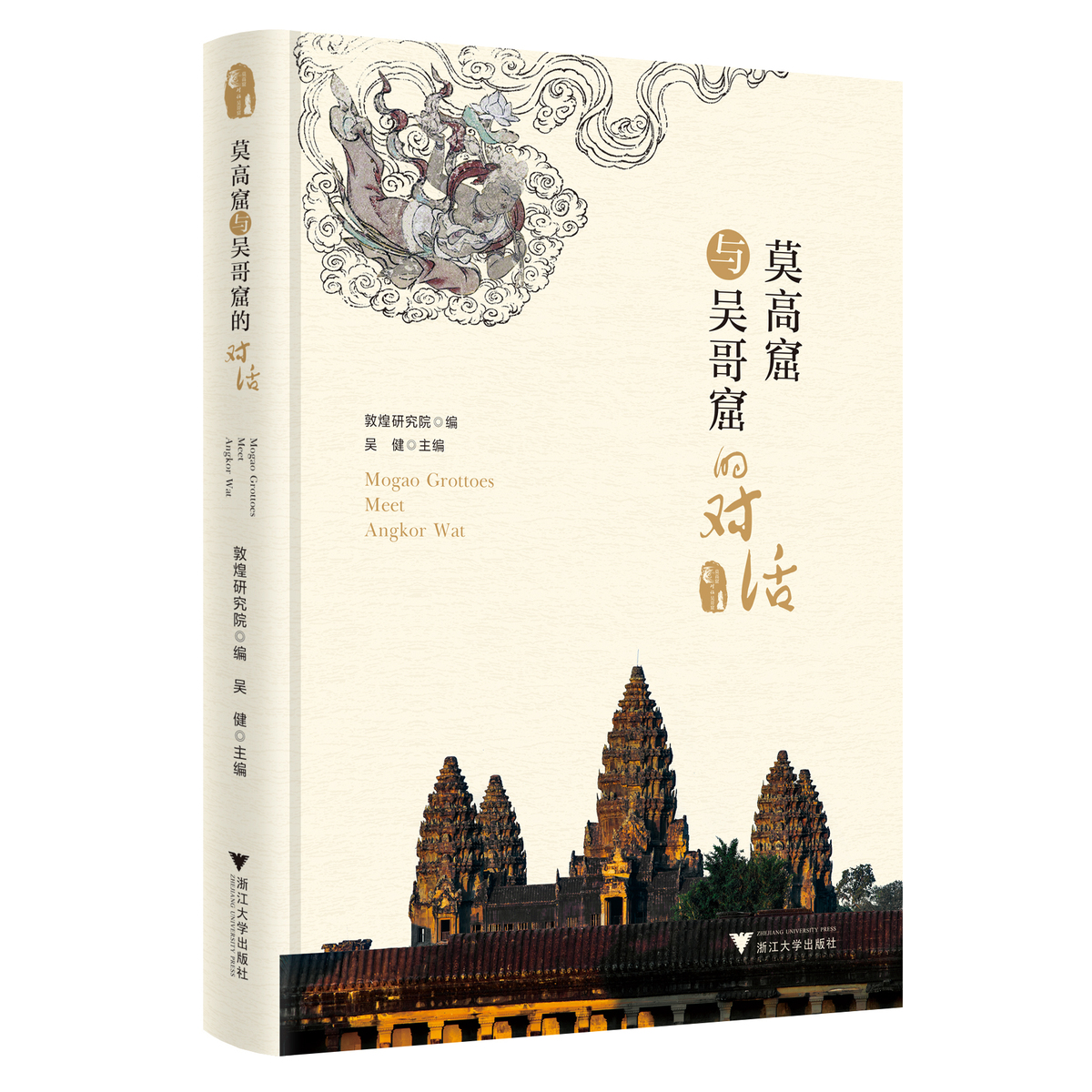
As a major highlight of the closing ceremony of the fourth Silk Road (Dunhuang) International Cultural Expo held in Dunhuang, northwest China's Gansu province, the book "Mogao Grottoes Meet Angkor Wat" introduced the development of the land Silk Road and the Maritime Silk Road, the history of the Mogao Grottoes and Angkor Wat, and the rise and fall of the Dunhuang and Angkor civilizations.
"The publication aims to promote cultural exchanges between China and Cambodia, and raise people's awareness about protecting world heritage. It, as a successor to the ancient Silk Road, also opens a new window to friendly exchanges between countries," said Wu Jian, chief editor of the book and also the director of the Heritage Digitization Institute of the Dunhuang Academy.
"The exchanges between the two sites serve as a prelude to such dialogues themed on UNESCO World Heritage, which will boost the mutual trust and cooperation between China and other countries," Lu Dongming, president of Zhejiang University Press, told China Daily website during an interview.
"Despite the far geographical distance, the two places are both a significant part of the Belt and Road and vivid examples of world cultural heritage and human civilization," said Wu.
Located in a desert in northwest China, the Mogao Grottoes represent one of the largest, best-preserved and richest treasure houses of Buddhist art in the world. The Mogao caves were designated as a World Heritage Site by UNESCO in 1987 due to their cultural significance.
Sitting in a tropical jungle of Cambodia, Angkor Wat is the largest religious monument in the world. Built by the Khmer King Suryavarman II in the early 12th century, Angkor Wat, added to the World Heritage List in 1992, is a popular destination for Chinese tourists.

