Greek port part of BRI success story
Piraeus' success is just one example of the immense business potential made possible through the growing trade and connectivity between China and Europe, highlighted by the Belt and Road Initiative, also known as the BRI.
On the coast 32 kilometers from Athens, the Greek capital, a forest of cranes at the Port of Piraeus is busy 24 hours a day loading and unloading thousands of containers transported between Asia and Europe.
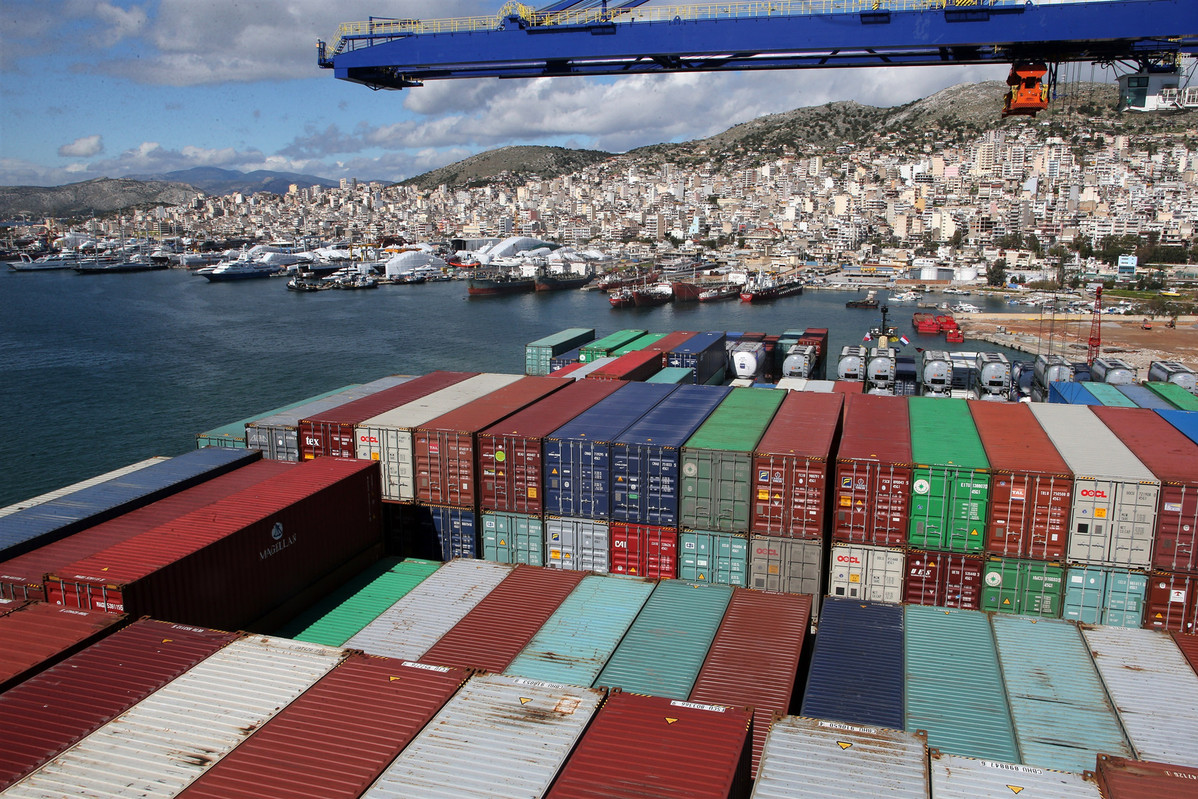
China COSCO Shipping containers stand at Piraeus. [Photo/China Daily]
Flourishing trade volumes have created nearly 2,000 local jobs in less than a decade, transforming Piraeus into the Mediterranean's busiest port.
The key to this success is investment made since 2008 by China COSCO Shipping to upgrade infrastructure. In that year, the Greek government decided to privatize the port's operations amid the economic problems facing the country, and COSCO Shipping won a 35-year contract to operate the facility.
Thanks to COSCO's investment, Piraeus became the world's 38th-busiest container port in 2010, rising in the rankings from 93rd place. Since then, Piraeus has seen its handling volumes grow about sevenfold.
"We are witnessing a new era in the history of Piraeus," said Tassos Vamvakidis, commercial manager of Piraeus Container Terminal, a COSCO subsidiary.
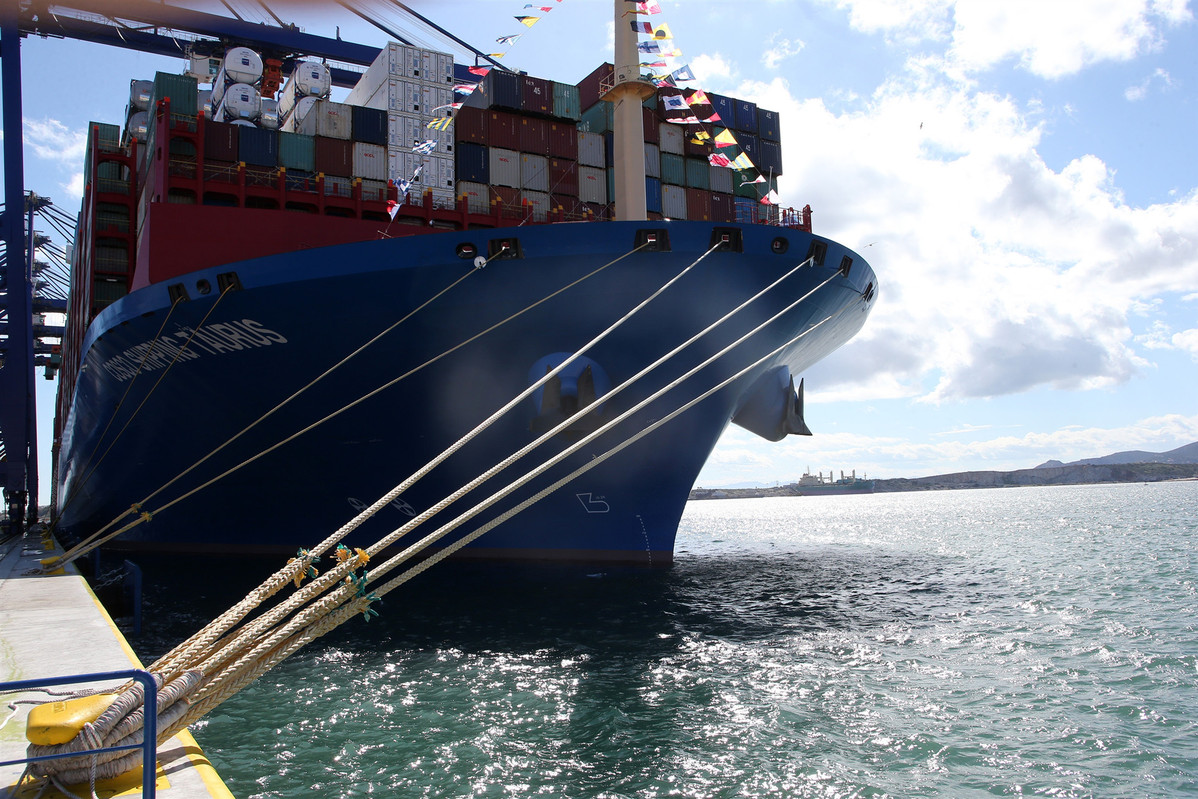
A China COSCO vessel docks at the Greek port. [Photo/China Daily]
Vamvakidis said that out of the 1,900 PCT employees, only a handful are Chinese and the rest are locals. "COSCO has created local jobs and boosted our economy. I am proud to be working for this company," he said.
Piraeus' success is just one example of the immense business potential made possible through the growing trade and connectivity between China and Europe, highlighted by the Belt and Road Initiative, also known as the BRI.
Proposed by President Xi Jinping in 2013, the BRI advocates improved connectivity of infrastructure, trade, ideas and knowledge between Europe and Asia.
Frequently cited as the "project of the century", the initiative involves nearly 70 countries and more than 4.8 billion people. It covers economies worth a combined US$21 trillion, accounting for 62 percent of global GDP.

