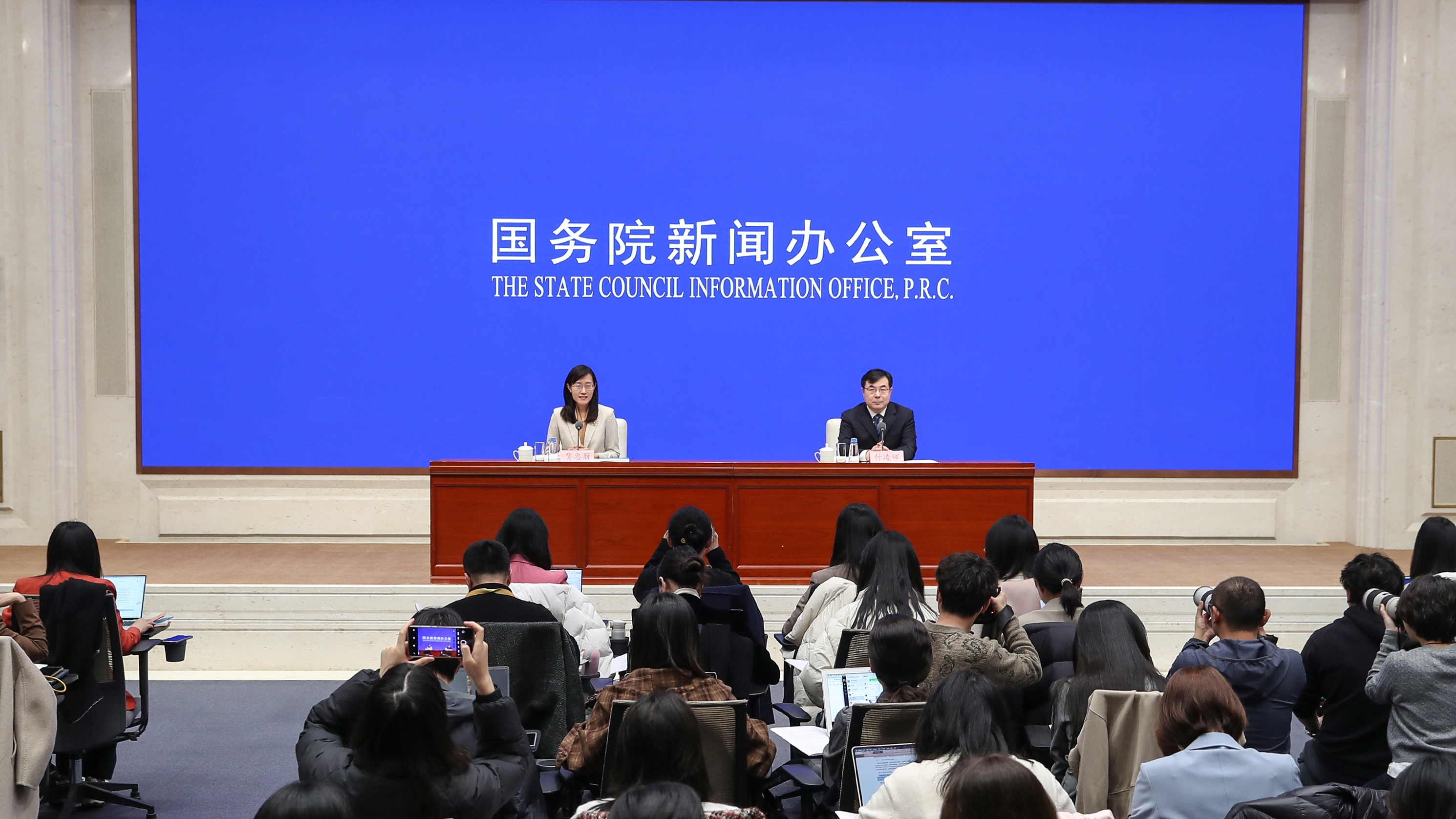

SCIO briefing on China's economic performance in first 2 months of 2026
Beijing | 10 a.m. March 16, 2026
Speaker

Fu Linghui, spokesperson and chief economist of the National Bureau of Statistics (NBS) and director general of the Department of Comprehensive Statistics of the NBS
Chairperson
Speaker:
Mr. Fu Linghui, spokesperson and chief economist of the National Bureau of Statistics (NBS) and director general of the Department of Comprehensive Statistics of the NBS
Chairperson:
Ms. Jia Huili, deputy director general of the Press Bureau of the State Council Information Office (SCIO) and spokesperson of the SCIO
Date:
March 16, 2026
Jia Huili:
Ladies and gentlemen, good morning. Welcome to this press conference held by the State Council Information Office (SCIO). This is a regular briefing on China's economic data. Today, we are joined by Mr. Fu Linghui, spokesperson and chief economist of the National Bureau of Statistics (NBS) and director general of its Department of Comprehensive Statistics. Mr. Fu will brief you on China's economic performance in the first two months of 2026 and then take your questions.
Now, I would like to give the floor to Mr. Fu for his introduction.
Fu Linghui:
Thank you, Ms. Jia. Good morning, everyone. I will start by briefing you on the main economic indicators for the first two months of 2026 and then take your questions.
In January-February, the national economy got off to a robust and promising start.
In the first two months, under the strong leadership of the Central Committee of the Communist Party of China (CPC) with Comrade Xi Jinping at its core, all regions and departments conscientiously implemented the decisions and arrangements made by the CPC Central Committee and the State Council, adhered to the general principle of pursuing progress while ensuring stability, implemented more proactive and effective macro policies, and stepped up counter- and cross-cyclical adjustments. All regions and departments further boosted domestic demand, improved supply and optimized the allocation of new resources while making the best use of existing ones. As a result, production and supply accelerated, market demand maintained a steady growth, employment and prices were generally stable, and new quality productive forces developed and thrived. The national economy got off to a robust and promising start.
First, industrial production accelerated and equipment manufacturing and high-tech manufacturing showed good growth momentum.
In the first two months, the total value added of industrial enterprises above designated size grew by 6.3% year on year, 1.1 percentage points faster than that in December. In terms of sectors, the value added of mining went up by 6.1% year on year, manufacturing up by 6.6%, and the production and supply of electricity, thermal power, gas and water up by 4.7%. The value added of equipment manufacturing increased by 9.3% year on year, and that of high-tech manufacturing rose by 13.1%, which were 3 percentage points and 6.8 percentage points faster than that of industrial enterprises above designated size, respectively. In terms of ownership, the value added of state-holding enterprises increased by 4.2% year on year; that of share-holding enterprises was up by 6.9%; that of enterprises funded by foreign investors or investors from Hong Kong, Macao and Taiwan was up by 4%; and that of private enterprises was up by 7.4%. In terms of products, the output of 3D printing devices, lithium-ion batteries and industrial robots grew by 54.1%, 42.6% and 31.1% year on year, respectively. In February, the total value added of industrial enterprises above designated size went up by 0.83% month on month. In February, the Manufacturing Purchasing Managers' Index stood at 49%, and the Production and Operation Expectation Index was 53.2%, 0.6 percentage point higher than that of the previous month.
Second, the service sector grew rapidly and modern services developed quickly.
In the first two months, the Index of Services Production grew by 5.2% year on year, 0.2 percentage point faster than that in December. Specifically, the production index of information transmission, software and information technology services, leasing and business services, finance, transportation, storage and postal services, and hotels and catering services grew by 10.1%, 8.2%, 7%, 6.3% and 5.4%, respectively. In February, the Business Activity Index for Services was 49.7%, 0.2 percentage point higher than that of the previous month, and the Business Activity Expectation Index for Services was 55.8%. Specifically, the Business Activity Index for hotels, catering, and culture, sports and entertainment stayed within the high expansion range of 60% and above.
Third, growth of market sales picked up and service retails grew quickly.
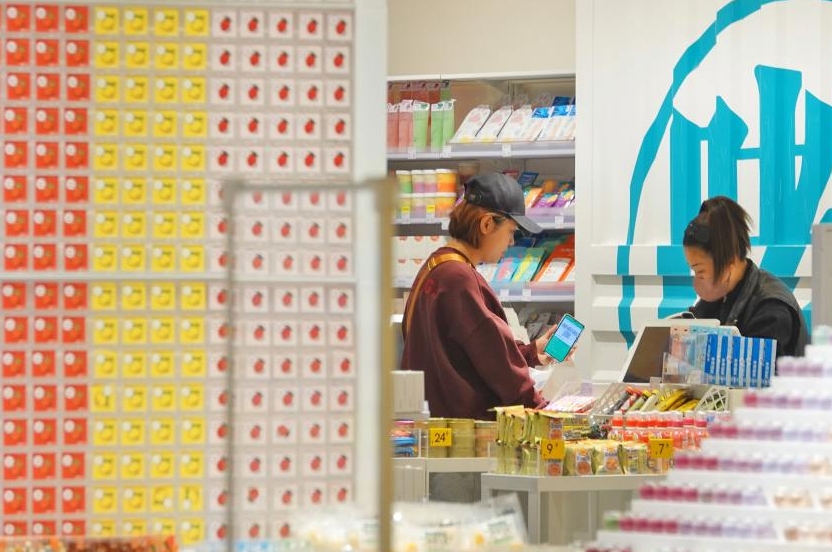
In the first two months, the total retail sales of consumer goods reached 8,607.9 billion yuan ($1,249.6 billion), up by 2.8% year on year, 1.9 percentage points faster than that in December. Analyzed by different areas, retail sales of consumer goods in urban areas reached 7,444.9 billion yuan, up by 2.7%; and that in rural areas reached 1,163 billion yuan, up by 3.2%. Grouped by consumption patterns, retail sales of goods were 7,581.5 billion yuan, up by 2.5%; and the income of catering was 1,026.4 billion yuan, up by 4.8%. Sales of basic living goods and certain upgraded goods grew quickly. The retail sales of clothes, shoes, hats and textiles, of grain, oil and food, of communication equipment, and of gold, silver and jewelry by enterprises above designated size increased by 10.4%, 10.2%, 17.8% and 13% year on year, respectively. In February, total retail sales of consumer goods increased by 0.81% month on month. In the first two months, retail sales of services went up by 5.6% year on year, 0.1 percentage point faster than that of last year. Specifically, that of communication information services, tourism consultation and rental services, and cultural, sports and leisure services grew quickly. In the first two months, the online retail sales of goods and services reached 3,254.6 billion yuan, up by 9.2% year on year. Specifically, the online retail sales of goods were 2,081.2 billion yuan, up by 10.3%, accounting for 24.2% of the total retail sales of consumer goods. The online retail sales of services totaled 1,173.4 billion yuan, up by 7.3%.
Fourth, fixed-asset investment shifted from decline to growth and infrastructure investment grew relatively rapidly.
In the first two months, the national investment in fixed assets (excluding rural households) reached 5.2721 trillion yuan, up by 1.8% year on year. It dropped by 3.8% in 2025. Investment in fixed assets was up by 5.2% with the investment in real estate development deducted. Specifically, investment in infrastructure grew by 11.4% year on year, that in manufacturing grew by 3.1%, and that in real estate development declined by 11.1%. The floor space of new commercial buildings sold was 92.93 million square meters, down by 13.5% year on year; and the total sales of new commercial buildings were 818.6 billion yuan, down by 20.2%. By industry, investment in the primary industry went up by 17.4% year on year, that in the secondary industry was up by 5.4%, and that in the tertiary industry was down by 0.4%. Private investment decreased by 2.6% year on year, with the decline narrowing by 3.8 percentage points compared with the whole of last year. Excluding real estate development investment, private investment grew by 1.0%. Investment in high-tech industries increased by 5.1% year on year, among which investment in the manufacture of aircraft, spacecraft and related equipment, R&D and design services sector, and information services sector increased by 20.2%, 20.6% and 16.5%, respectively. In February, fixed-asset investment (excluding rural households) increased by 0.39% month on month.
Fifth, imports and exports of goods grew quickly and the trade structure continued to be optimized.
From January to February, the total imports and exports of goods was 7.7321 trillion yuan, an increase of 18.3% year on year, accelerating by 13.4 percentage points compared with December. The total value of exports was 4.6178 trillion yuan, up by 19.2%; and the total value of imports was 3.1143 trillion yuan, up by 17.1%. General trade imports and exports increased by 13.5% year on year. Imports and exports with Belt and Road partner countries grew by 20.0%. Imports and exports by private enterprises increased by 22.8%. Exports of mechanical and electrical products increased by 24.3%.
Sixth, employment was generally stable and the surveyed urban unemployment rate was unchanged year on year.
In the first two months, the average surveyed urban unemployment rate nationwide was 5.3%, unchanged from the same period last year. In February, the national surveyed urban unemployment rate was 5.3%, 0.1 percentage point higher than that of the previous month. The surveyed unemployment rate of population with local household registration was 5.4%; and that of population with non-local household registration was 5.0%, among which, the rate of the population with non-local agricultural household registration was 5.2%. The surveyed urban unemployment rate in 31 major cities was 5.1%. Employees of enterprises worked an average of 48.1 hours per week.
Seventh, the growth of consumer prices increased and the decline of producer prices for industrial products narrowed.
From January to February, the national Consumer Price Index (CPI) increased by 0.8% year on year, rising by 0.2% in January and 1.3% in February. Grouped by commodity categories, in the first two months, prices for food, tobacco, alcohol, and catering services were up by 0.6% year on year; clothing up by 1.9%; housing down by 0.1%; articles and services for daily use up by 2.7%; transportation and communication down by 2.1%; education, culture and recreation up by 1.0%; medical services and health care up by 1.8%; and other articles and services up by 14.3%. Within the category of food, tobacco, alcohol and catering services, prices for pork went down by 11.2%, grain down by 0.2%, fresh fruits up by 4.5%, and fresh vegetables up by 8.8%. The core CPI, excluding the prices of food and energy, went up by 1.3% year on year. From a month-on-month perspective, the national CPI rose by 0.2% in January, and by 1.0% in February.
From January to February, the national Producer Price Index (PPI) for industrial products fell by 1.2% year on year. On a monthly basis, January decreased by 1.4% year on year and rose by 0.4% month on month, and February decreased by 0.9% year on year and rose by 0.4% month on month. From January to February, the purchasing prices for industrial producers nationwide fell by 1.1% year on year.
Overall, from January to February, major economic indicators rebounded significantly and the national economy got off to a good start. However, it should also be noted that the impact of changes in the external environment has deepened, geopolitical risks continue to increase, and there remain old problems and new challenges in domestic economic development and transformation, with some enterprises experiencing difficulties in operation. In the next stage, we must adhere to Xi Jinping Thought on Socialism with Chinese Characteristics for a New Era as our guide, thoroughly implement the guiding principles of the 20th CPC National Congress and the plenary sessions of the 20th CPC Central Committee, and earnestly carry out the decisions and arrangements of the Central Conference on Economic Work and the national "two sessions." We will fully, accurately and comprehensively apply the new development philosophy, accelerate the building of a new development pattern, and focus on promoting high-quality development. We will uphold the general principle of pursuing progress while ensuring stability, implement a more proactive and effective macro policy, and develop new quality productive forces based on local conditions. We will focus on stabilizing employment, enterprises, markets and expectations, and promote effective qualitative improvement and reasonable quantitative growth of the economy. Thank you.
_ueditor_page_break_tag_Jia Huili:
Thank you, Mr. Fu. The floor is now open for questions. Please identify the news outlet you represent before asking your questions.
Yicai:
The year 2026 is the first year of the 15th Five-Year Plan period, and January-February is also a barometer for the whole year. How would you evaluate the performance of China's economic operation in these two months? What are the main highlights and positive changes? Thank you.
Fu Linghui:
Thank you for your questions. This year marks the first year of the 15th Five-Year Plan period, and China's economic performance in January and February has drawn widespread attention. Since the beginning of this year, the international environment has been volatile with rising external risks, especially the spillover risks of geopolitical conflicts. Even so, under the strong leadership of the CPC Central Committee, all regions and departments have earnestly implemented more proactive and effective macroeconomic policies, focusing on maximizing the integrated effect of existing and new policies. In the January-February period, production and supply grew rapidly, domestic demand expanded steadily, employment and prices remained generally stable, and new quality productive forces were fostered and strengthened. Put simply, the economy got off to a strong start in the January-February period. The characteristics were as follows:
First, production grew at a relatively rapid pace. In the industrial sector, the total value added of industrial enterprises above designated size increased 6.3% year on year in the first two months, 1.1 percentage points faster than in December. This growth was mainly driven by improved domestic demand, stronger export momentum and the continued effect of macroeconomic policies. Within the sector, equipment manufacturing made a particularly notable contribution to overall industrial growth. Its value added rose 9.3% year on year, accounting for 47.4% of total growth among industrial enterprises above designated size. In the service sector, growth accelerated due to the combined effects of the Spring Festival and consumption-promoting policies. In the first two months, the Index of Services Production grew 5.2% year on year, 0.2 percentage point faster than in December. The development of artificial intelligence also notably boosted demand for information services. In the first two months, the production index of information transmission, software and IT services increased 10.1% year on year, continuing the rapid growth the sector has sustained in recent years. Meanwhile, boosted by the Spring Festival, the production index for transportation, accommodation and catering services rebounded notably in January-February from December.
Second, domestic demand expanded. In terms of consumption, the extended Spring Festival holiday provided a strong boost to start the year, while consumer goods trade-in programs continued to take effect. Cultural tourism, leisure and entertainment activities remained lively, service spending grew rapidly, and overall market sales posted a clear rebound. In the first two months, total retail sales of consumer goods increased 2.8% year on year, 1.9 percentage points faster than in December — a figure that primarily covers goods transactions. Retail sales of services increased 5.6%, significantly outpacing those of goods. In terms of investment, with 2026 marking the first year of the 15th Five-Year Plan period, efforts were made across the board to seize opportunities and accelerate the launch and construction of major projects, driving a rebound in investment. In the first two months, investment in fixed assets increased 1.8% year on year, while that of the previous year was down 3.8%, thus reversing the downward trend. Specifically, investment in infrastructure grew 11.4% year on year, well above the full-year growth rate of 2025.
Third, foreign trade maintained strong growth. In the first two months, foreign trade grew rapidly on the combined strength of improving global demand, the rise of emerging industries worldwide, and the growing competitiveness of China's advantageous products. In the first two months, the total value of imports and exports of goods increased 18.3% year on year, accelerating sharply compared with overall growth in 2025. Looking at major trading partners, imports and exports with ASEAN, the EU and Belt and Road partner countries all grew at around 20%. The rapid growth of imports and exports reflects the strong resilience and vitality of China's foreign trade.
Fourth, employment and prices remained generally stable. In terms of employment, affected by Spring Festival dynamics, the national urban surveyed unemployment rate rose slightly in January and February compared with last December. However, the average rate for the first two months held steady at 5.3%, unchanged from the same period last year, indicating that the stable employment situation in China has not changed. Among key groups, rural migrant workers returned to their jobs after the Spring Festival holiday in a steady manner, keeping employment stable. In terms of prices, the CPI recovered moderately in the first two months, buoyed by recovering market demand and the boost from the Spring Festival. In January-February, China's CPI rose 0.8% year on year, the same as last December, but higher than in the fourth quarter and the whole of 2025. Excluding food and energy, categories known for their outsized influence on price swings, core CPI rose 1.3% year on year in January-February, also picking up from December. These trends indicate a positive momentum in price.
Fifth, new growth drivers developed at an accelerated pace. The sound economic performance in the first two months was inseparable from the cultivation of new quality productive forces and the growth and strengthening of new growth drivers. The deep integration of sci-tech and industrial innovation, the accelerated expansion of the "AI plus" initiative, and the sound development of the digital economy all contributed to improvements across the industrial chain. In the first two months, the value added of computer, communication and other electronic equipment manufacturing increased 14.2% year on year. The rapid growth of the electronics industry also drove growth in upstream raw material sectors, especially the chemical industry. In the first two months, the value added of chemical raw materials and chemical products manufacturing increased 7.6% year on year, sustaining relatively fast growth. At the same time, the development of AI and the rising demand for computing power significantly boosted upstream energy industries. In the first two months, the value added of electricity and heat production and supply industries increased 5.1% year on year, 4 percentage points faster than last December. New growth drivers played an even stronger enabling role along the industrial chain. It should also be noted that, as the green transition advances, the manufacturing of new energy equipment has accelerated significantly, with many such products maintaining rapid growth. All these factors have injected new momentum into economic growth.
Overall, China's economy got off to a strong start in the January-February period and continued to move toward new growth drivers and improved performance. At the same time, we are aware that the external environment remains complex, with rising risks from geopolitical conflicts and increasing uncertainty in their spillover effects. Domestically, the mismatch between strong supply and relatively weak demand persists, and some enterprises are facing operational difficulties. Looking ahead, we will fully implement the decisions and arrangements made at the Central Conference on Economic Work and the annual sessions of the National People's Congress and the Chinese People's Political Consultative Conference. We will carry out more proactive and effective macroeconomic policies, continue to expand domestic demand and optimize supply, and develop new quality productive forces based on local conditions. We will also further advance the construction of a national unified market, thereby promoting sustained and sound economic growth and better ensuring and improving people's well-being. Thank you.
_ueditor_page_break_tag_Phoenix TV:
We have noted that the decline in PPI continued to narrow in February. Meanwhile, international oil prices have fluctuated significantly, pushing up shipping and insurance costs. How do you assess the impact of such imported inflationary pressure on future PPI trends and industrial prices? Thank you.
Fu Linghui:
Thank you for your question. Indeed, rising geopolitical risks have led to sharp fluctuations in international oil prices, raising concerns about market price trends. Since the beginning of this year, producer prices have generally shown a narrowing year-on-year decline. In February, the PPI fell 0.9% year on year, with the rate of decline easing by 0.5 percentage point from the previous month, marking the third consecutive month of narrowing. On a month-on-month basis, producer prices have risen for five consecutive months. The improvement in producer prices is mainly driven by expanding demand in certain domestic industries, the boost to industrial product prices from the growth of new drivers, and rising international commodity prices. These factors have jointly contributed to the recovery. As I noted earlier when introducing the economic performance for January and February, new growth drivers have played a supportive role in economic development, and this is also reflected in price trends.
The February figures show that the narrowing of the PPI decline was mainly driven by the following factors. First, industrial upgrading has boosted demand for high-end equipment, pushing up prices in related sectors. In February, aircraft manufacturing prices rose 7.7% year on year, largely driven by the growth of the domestic commercial aviation sector. Meanwhile, prices for shipbuilding and related equipment manufacturing rose 0.5% year on year. Second, the advancement of industrial digitalization and green transformation has spurred demand, pushing up prices in related sectors. With the rapid development of the "AI Plus" initiative, prices for electronic components and specialized electronic materials rose 4.9% year on year in February. The recent rise in prices of products such as memory chips is largely driven by growing domestic demand for computing power. Under the continued push for green transformation, prices for biomass fuel processing rose 3.2% year on year in February. Third, improvements in market competition order have driven price gains in certain sectors. Efforts to address overcapacity and curb involution-style competition in key industries have continued. In February, price declines in cement manufacturing and ferrous metal smelting and rolling processing narrowed by 1.5 percentage points and 0.3 percentage point, respectively, compared with the previous month. In addition, rising international energy and non-ferrous metal prices also contributed to the rebound in producer prices. In February, prices in non-ferrous metal smelting and rolling processing rose 22.1% year on year, a notably large increase.
Overall, producer prices have shown positive changes, which bodes well for improving business operations and corporate confidence. Recently, geopolitical tensions in the Middle East have led to fluctuations in international oil prices, raising market concerns. However, China has a strong capacity to ensure energy supply and is well-positioned to cope with external market volatility. At present, significant uncertainties remain over global energy prices, and the pass-through impact on domestic prices warrants close monitoring. Going forward, we will continue to expand domestic demand and optimize supply, develop new quality productive forces suited to local conditions, and further advance the development of a national unified market. These efforts will bring industrial product prices back to a reasonable range, improve economic circulation, and promote the sustained and healthy development of the industrial economy. Thank you.
_ueditor_page_break_tag_CNBC:
The Report on the Work of the Government has set an economic growth target of 4.5% to 5% for this year. Based on the economic performance in the first two months, which end of this target range is more likely to reach? What are the main challenges in achieving the annual growth target? Thank you.
Fu Linghui:
Thank you for your questions. This is indeed an issue of broad interest. This year marks the beginning of the 15th Five-Year Plan period. Economic performance at the start of the year serves as an important indicator for assessing the overall economic trend for the year, and has therefore attracted wide attention. Ahead of the release of key macroeconomic data, a number of market institutions made forecasts for major indicators in the January and February period, with considerable divergences among them, indicating the difficulty of assessing economic conditions during this period. The data released today came in significantly better than market expectations overall, reflecting the strong vitality and resilience of the Chinese economy. We have every reason to be confident in China's economic prospects.
Looking ahead, domestic and international challenges remain complex and intertwined, with numerous uncertainties and instabilities. However, the fundamental conditions supporting China's long-term economic trajectory remain unchanged. With the cultivation and expansion of new quality productive forces, the accelerated building of a new development pattern, and the enhanced effectiveness of macroeconomic policies, the national economy is expected to maintain steady momentum, continuously advancing toward greater innovation and higher quality. What is the basis for this assessment? I would point to the following reasons:
First, the economy has gotten off to a strong start this year. From January to February, China's production and demand showed steady improvement, with key economic indicators picking up significantly. Positive factors accumulated and strengthened, laying a solid foundation for full-year growth. During this period, the growth rates of industrial value added for enterprises above designated size and total retail sales of consumer goods rose by 1.3 percentage points and 1.1 percentage points, respectively, compared with the fourth quarter of last year. Goods exports grew notably faster, and fixed-asset investment shifted from decline to growth. Alongside improvements in key supply and demand indicators, prices posted a modest recovery, driven in part by better market supply-demand dynamics. Consumer prices rose at a slightly faster pace in January and February, while the PPI decline continued to narrow, contributing to increased incomes for businesses and households.
Second, expanding demand provides strong momentum. By adhering to the principle of mutual benefit, expanding economic and trade exchanges with countries worldwide, advancing high-quality Belt and Road cooperation, and actively promoting digital and green trade, China will open up new space for foreign trade development. In January-February, China's imports and exports with ASEAN, the EU and Belt and Road partner countries all grew at around 20%. As the opening year of the 15th Five-Year Plan gets underway, efforts across sectors to boost new types of infrastructure and public welfare infrastructure, and to strengthen project support, resource and funding guarantees, will help drive investment growth. In January-February, infrastructure investment rose 11.4% year on year. This year's government work report proposes formulating and implementing an income growth plan for urban and rural residents, promoting the expansion and upgrading of goods consumption, and launching initiatives to upgrade services to the benefit of consumers. These measures will help boost residents' ability and willingness to spend. The consumer confidence index rose 1 point in February, continuing its upward trend for the second consecutive month.
Third, industrial upgrading offers robust support. Innovation-driven development is playing a stronger leading role, with emerging industries expanding rapidly and providing greater support for production. In January-February, value added in high-tech manufacturing industries above designated size grew 13.1% year on year, while that of digital product manufacturing rose 8.8%, both significantly outpacing overall industrial growth. The rapid application of new technologies like AI is increasingly driving the transformation and upgrading of traditional industries and the development of emerging sectors. During this period, value added in railway, shipbuilding, aerospace and other transportation equipment manufacturing grew 13.7% year on year, while that in electrical machinery and equipment manufacturing rose 8.7%. The vigorous growth of green industries has injected new momentum into industrial upgrading. In January-February, output of wind turbine generators surged 28.7% year on year, while output of lithium-ion batteries for energy storage soared 84%. Over recent years, steady progress in green energy transformation has yielded significant results, with the development of new energy sources such as wind and solar driving increased demand for energy storage and spurring substantial growth in related products.
Fourth, macroeconomic policies provide strong safeguards. The Central Conference on Economic Work and the "two sessions" have comprehensively mapped out this year's economic work. Fiscal policy will be more proactive, with spending set to exceed 30 trillion yuan for the first time. Monetary policy will remain moderately loose, ensuring reasonable and ample liquidity, keeping overall social financing costs low, and strengthening the synergy between reform measures and macroeconomic policies. This will help boost economic momentum and vitality. In terms of policy implementation, efforts to implement major national strategies, enhance security capacity in key areas, and carry out large-scale equipment upgrades and consumer goods trade-in programs have gradually shown results in expanding domestic demand and boosting confidence since the start of the year. In January-February, investment in equipment and tool purchases, which is closely linked to equipment renewal, maintained rapid growth. Sales of goods covered by consumer goods trade-in programs also rebounded significantly year on year.
Taking all these factors into account, China's economy is expected to maintain stable growth with steady progress in the period ahead, laying a solid foundation for meeting this year's annual targets and objectives. Thank you.
_ueditor_page_break_tag_CCTV:
We have noted that the CPI increased 1.3% year on year in February. Could you explain what drove this increase? How would you assess this phenomenon? Thank you.
Fu Linghui:
Thank you for your questions. The price outlook is a topic of broad public concern. In the first two months of this year, the CPI showed an overall upward trend. On a month-on-month basis, consumer prices rose 0.2% in January and 1% in February. The sharper increase in February was mainly driven by the Spring Festival holiday. With the Spring Festival falling in January last year but in February this year, the month-on-month increase in consumer prices was notably larger in February. Year on year, the CPI rose 0.2% in January and 1.3% in February, driven by both the Spring Festival and improved domestic demand. The sharper February reading partly reflects the Spring Festival falling in different months this year and last.
In February, the year-on-year CPI increase hit a three-year high. The main contributing factors were as follows. First, service prices growth accelerated significantly. With the extended Spring Festival holiday this year, residents significantly increased travel, visits to relatives and other outings. A notable feature of this year's Spring Festival was that many residents returned to their hometowns first and then traveled, pushing up prices for transportation, accommodation, dining and other services. In February, air ticket prices rose 29.1% year on year, vehicle rental prices climbed 19.8%, and vehicle repair and maintenance prices increased 12%. Travel-related prices also rose year on year, with travel agency fees up 12.5%, hotel accommodation up 5.4%, and takeout and dining prices up 5.6%. Driven by these factors, service prices in February increased 1.6% year on year, significantly above the January reading. This drove up the CPI by about 0.75 percentage point for the month, making it the single largest contributor to the overall gain. Second, food prices rose after a fall. During the Spring Festival holiday, more residents visited relatives and gathered with friends, boosting demand for food and pushing up prices of related goods. In February, prices of fresh vegetables, beef, mutton and fresh fruit rose between 5.9% and 10.9% year on year, with all gains accelerating from the previous month. Accordingly, in February, food prices turned from a year-on-year decrease of 0.7% in January to an increase of 1.7% in February, contributing about 0.3 percentage point to the CPI rise. Together, service and food prices contributed about 1 percentage point to the month's CPI increase. Third, industrial consumer goods prices rose at a faster pace. In February, industrial consumer goods prices rose 1.1% year on year, up 0.2 percentage point from January. Among them, household appliances climbed 5.3%, daily household goods rose 2.6% and clothing prices increased 2%.
Given that February CPI figures were heavily affected by the Spring Festival holiday, it is more useful to look at the combined January-February data for a clearer comparison. In the first two months, the CPI rose 0.8% year on year, matching the pace in December last year but outpacing both the fourth quarter and the full year of last year, indicating a mild recovery trend. Core CPI excluding food and energy rose 1.3% year on year, expanding 0.1 percentage point from December last year and slightly outpacing the fourth quarter of last year, also pointing to a mild recovery.
A moderate rebound in consumer prices helps improve business operations, supports employment and income growth among residents, and facilitates broader economic circulation. Looking ahead, although recent volatility in international energy prices has exerted some imported inflationary pressure on domestic prices, China's goods and service markets retain ample supply capacity, and the foundation for price stability remains intact. We will implement more proactive and effective macroeconomic policies to expand domestic demand and optimize supply. We will also roll out income-growth plans for urban and rural residents, cultivate new consumption scenarios, and further improve the consumption environment, all of which will support a continued improvement in price conditions. Thank you.
_ueditor_page_break_tag_21st Century Business Herald:
I am interested in investment. How would you assess investment performance in January and February? What were the highlights? Thank you.
Fu Linghui:
Thank you for your questions. As I noted earlier, there have been positive developments in investment since the start of this year. Due to multiple factors, fixed-asset investment declined year on year throughout 2025. Since the start of this year, a series of policy measures to expand effective investment have driven investment growth from negative to positive. In particular, investment in key areas has grown rapidly, helping to optimize the supply structure and expand market demand. In the first two months, fixed-asset investment rose 1.8% year on year. The main characteristics are as follows:
First, investment growth in key areas has accelerated. This year marks the beginning of the 15th Five-Year Plan period. A number of major infrastructure projects have broken ground, spurring relatively rapid growth in related investment. In January and February, infrastructure investment grew 11.4% year on year, 10.8 percentage points faster than the whole of last year, contributing 3 percentage points to overall investment growth. Meanwhile, the pace of large-scale project construction has accelerated, with investment in projects with a planned total investment of 100 million yuan or more growing 5% year on year in January-February. Fueled by industrial upgrading and development, the growing demand for the transformation of traditional industries and the growth of emerging industries has driven a rebound in manufacturing investment. In the first two months, manufacturing investment grew 3.1% year on year, 2.5 percentage points faster than the whole of last year.
Second, investment in new growth drivers has shown strong momentum. Across different regions, new quality productive forces are being developed in line with local conditions, with sci-tech innovation deeply integrated with industrial innovation. This has driven rapid growth in investment tied to new growth drivers. In the first two months, investment in high-tech industries grew 5.1% year on year, with investment in aerospace equipment manufacturing rising 20.2% and investment in information services climbing 16.5%. Thanks to improving industrial technological capabilities, high-end equipment manufacturing has performed well, with investment growing at a relatively rapid pace. In January-February, investment in the manufacturing of railway, ship, aerospace and other transportation equipment grew 31.1%. China's green energy transition is advancing steadily, with installed capacity of wind power, photovoltaic and other new energy sources rising steadily, and related investment continuing to grow. In January-February, investment in the production and supply of electricity and heat grew 13.1%.
Third, the effects of policies to expand effective investment have yielded results. Since the start of this year, regions and various departments have steadily stepped up efforts to implement major national strategies and enhance security capacity in key areas , continued to support large-scale equipment upgrades, and increased funding support for projects, thereby boosting investment growth. In January-February, state-controlled investment grew 7.7% year on year, significantly faster than the full-year rate of last year. Meanwhile, investment in equipment and tools purchases grew 11.5% year on year. At the same time, policies and measures to promote private investment were actively implemented, helping boost its vitality. In January-February, private investment in infrastructure grew 9% year on year. These figures clearly show that government investment has played a clear role in guiding and stimulating private investment.
While acknowledging these positive developments, it should also be noted that the international environment remains complex and challenging, and factors such as ongoing adjustments in the domestic real estate market and weak corporate profitability continue to weigh on investment growth. In response, this year's government work report calls for fully unleashing the potential of effective investment. By allocating central budget investment, issuing ultra-long-term special treasury bonds, and rolling out new policy-based financial instruments, efforts will be made to strengthen market-driven, effective investment momentum and invigorate private investment. Looking ahead, we will implement the guiding principles of the Central Conference on Economic Work and the "two sessions." With a focus on key areas such as the development of new quality productive forces, new urbanization, and the comprehensive development of people, we will combine "investment in things" with "investment in people" to better drive economic development and improve people's livelihoods. Thank you.
_ueditor_page_break_tag_South China Morning Post:
Boosting consumption is a key priority of government work this year. After the holiday spending surge, how does the NBS project the consumption trajectory for the remainder of this year? Thank you.
Fu Linghui:
Thank you for your question. Consumption is also a topic of great public interest. Its development not only relates to expanding domestic demand but also bears directly on improving living standards. When assessing the current consumption landscape, we need to look not only at the total retail sales of consumer goods but also at service retail sales. This is because consumption encompasses not only goods, but services as well. While total retail sales of consumer goods mainly reflect spending in goods, tracking developments in the service sector requires a greater focus on service retail figures. To assess how consumption will perform this year, we need to evaluate the overall trend based on the performance in January and February.
Since the beginning of this year, driven by policies aimed at boosting consumption and influenced by the extended Spring Festival holiday, market sales have rebounded notably. The potential for service consumption has been unlocked, and the momentum of new forms of consumption has strengthened. This is reflected in several key indicators. In January and February, the total retail sales of consumer goods grew by 2.8% year on year, with the growth rate accelerating 1.9 percentage points from December last year and 1.1 percentage points from the fourth quarter of last year. Service retail sales rose 5.6% year on year, up 0.1 percentage point from the previous year's growth rate, continuing to outpace goods retail sales. The main characteristics are as follows:
First, service consumption expanded steadily. Boosted by the Spring Festival holiday, spending on cultural and tourism activities rose markedly, driving growth in related service sales. In the first two months, retail sales in sectors such as travel advisory and rental services, as well as cultural, sports and leisure services, maintained a rapid growth rate of over 10%. During the Spring Festival, domestic trips approached 600 million, and total travel spending exceeded 800 billion yuan, both reaching historic highs. At the same time, the expansion of the visa-free entry policy drove an increase in inbound tourists, further boosting domestic market sales. Increased gatherings and social activities during the holiday also drove a significant expansion in dining-out consumption. In the first two months, catering revenue increased 4.8% year on year, with growth accelerating by 2.6 percentage points from December last year.
Second, goods consumption is upgrading with improved quality. The quality of household consumption has steadily improved, and boosted by Spring Festival holiday spending, sales of some essential daily necessities expanded markedly. In the first two months, retail sales for grain, oil and food products by enterprises above designated size rose by 10.2%, while retail sales of clothing, shoes, hats and textile products increased by 10.4%. The main reason for the rapid growth in essential daily necessities is that residents are placing higher demands on the quality and grade of goods. For example, while overall food consumption is relatively stable in volume terms, the increase in sales value largely stems from growing demand for green and healthy foods. At the same time, driven by the upgrading of consumer spending, retail sales of goods related to aspirational and quality-of-life needs also posted relatively strong growth. In the first two months, retail sales of gold, silver and jewelry by enterprises above designated size increased by 13% year on year. The effect of policies promoting consumer goods trade-ins continued to be evident. In the first two months, retail sales of communications equipment by enterprises above designated size grew 17.8%, sustaining rapid growth. Retail sales of household appliances and audiovisual equipment increased 3.3%, marking a clear rebound compared with December last year. Among household appliances and audiovisual equipment, sales of high-efficiency products maintained double-digit growth, reflecting the expanding demand for green products.
Third, new forms of consumption are developing well. As online and digital consumption gained momentum, online retail sales continued to expand. In the first two months, online retail sales of goods and services increased by 9.2% year on year, significantly outpacing the growth rate of total retail sales of consumer goods. Of this, online retail sales of goods rose 10.3%, outpacing the growth of total retail sales of goods, further strengthening their role in driving consumption. The popularity of online services continues to rise. Retail sales of online services grew by 7.3% year on year in the first two months, also outpacing the growth of total service retail sales. Since the beginning of this year, the online micro-drama market has been particularly vibrant. Platform monitoring figures show that in January-February, the transaction volume on micro-drama platforms surged more than 30%. At the same time, green consumption, health-oriented consumption, and the debut economy are playing an increasingly prominent role in boosting consumption.
Overall, market sales showed positive changes in January and February, with growth momentum picking up. This was driven by the combined effects of pro-consumption policies, consumption upgrading, and the rise of new consumption drivers. Looking ahead, the upgrading of the household consumption structure and expansion of new consumption drivers will remain important factors influencing consumption growth. The rollout of a series of pro-consumption policies will further reinforce this trend, and consumption is expected to maintain steady growth. That said, sustained efforts are still needed to build a strong domestic market and to stimulate the endogenous dynamism of household consumption. Moving forward, we need to leverage the strengths of China's enormous market, advance special initiatives to boost consumption, formulate and implement an income growth plan for both urban and rural residents, promote the expansion and upgrading of goods consumption, and introduce initiatives to improve service consumption for public benefit. Efforts will also be made to continuously optimize the consumption environment, unlock the consumption potential in areas such as culture and tourism, sports events and health care, invigorate consumption vitality, facilitate smoother economic circulation, and steadily improve living standards. Thank you.
_ueditor_page_break_tag_Dazhong Daily:
How did industrial production perform in January and February? Has the role of new drivers in boosting industrial production further strengthened? Thank you.
Fu Linghui:
Thank you for your questions. Industrial production was a notable highlight in the economic performance of the first two months of this year. Industrial production accelerated markedly in January and February, driven by more proactive and effective macroeconomic policies continuing to take effect, solid progress in implementing major national strategies and enhancing security capacity in key areas, the continued rollout of policies advancing a new round of large-scale equipment upgrades and consumer goods trade-in programs, faster growth of new drivers, and stronger support from exports. The industrial structure has been optimized and upgraded, and the quality of development has continued to improve. This was mainly reflected in the following aspects.
First, industrial production continued to accelerate. In terms of growth rate, the value added of industries above designated size grew by 6.3% year on year in January and February, accelerating by 1.1 percentage points from December last year. By sector and product, most industries and products saw a pickup in growth. In January and February, 31 of the 41 industrial sectors posted faster growth compared with December last year, accounting for 75.6% of the total. Among the more than 600 key products monitored, over 350 saw their growth rates pick up compared with December last year, representing nearly 60% of the total.
Second, equipment manufacturing provided strong support. As mentioned earlier, in recent years, equipment manufacturing has become a key pillar driving industrial growth as both competitiveness and capabilities improve. With advances in industrial technology, China's high-end equipment manufacturing has maintained solid growth, with the broader equipment manufacturing sector seeing rapid growth. In the first two months, the value-added of equipment manufacturing enterprises above designated size increased by 9.3%, accounting for 33.5% of all industrial enterprises above the designated size. To be specific, the value-added of computer, communications and other electronic equipment manufacturing enterprises rose by 14.2%. That of the railway, ship, aerospace, and other transportation equipment manufacturing enterprises rose by 13.7%. These are all technology-intensive industries.
Third, some traditional industries were optimized and upgraded. Transformation and upgrading of traditional manufacturing industries progressed steadily, with new growth drivers gradually gathering momentum. In the energy sector, the value-added of the petroleum processing industry increased by 10.2% year on year in January and February, while the biomass fuel processing industry surged by 55.3%. In the chemical sector, the value-added of chemical fiber industry grew by 6.1%, with bio-based materials manufacturing up by 25.1%, contributing 30.1% to the overall growth of the chemical fiber industry. These figures indicated steady transformation and upgrading in traditional manufacturing industries as well as the emergence of new growth points in some industries.
Fourth, emerging industries grew faster. With the ongoing digital and intelligent transformation of industry, new growth drivers continued to expand steadily. In the first two months, the value-added of high-tech manufacturing enterprises above designated size increased by 13.1% year on year, and that of digital product manufacturing industry increased by 8.8%. The value-added of intelligent vehicle-mounted equipment manufacturing and smart unmanned aerial vehicle manufacturing grew by 46.3% and 26.6%, respectively. This indicates the expanding demand for intelligent products in China's industrial production. Driven by green transformation, the new energy and green materials industries showed strong momentum. In the first two months, the output of lithium-ion power batteries for automobiles increased by 28.4%, and that of lithium carbonate and bio-based chemical fibers rose by 29.3% and 11.2%, respectively. This reflects strong progress in new energy utilization and new material development.
Overall, industrial production accelerated in January and February, and new quality productive forces were fostered and strengthened, supporting high-quality economic growth. However, it must be noted that the impact of international geopolitical conflicts is still evolving, external uncertainties remain high, and the domestic market still faces an imbalance between strong supply and weak demand. Industrial production still faces considerable pressure. Going forward, efforts will be intensified to build a strong domestic market and step up the building of a unified national market. We will also deepen the integration of technological innovation and industrial innovation, and continue to upgrade traditional industries and nurture and expand emerging industries and the industries of the future. We will develop the modernized industrial system at a faster pace, and promote the sustained and sound growth of the industrial economy. Thank you.
_ueditor_page_break_tag_Jia Huili:
Due to the time limit, we'll take two final questions.
Elephant News:
We have noticed that the newly released data include a new indicator of online retail sales of goods and services. What is the rationale behind this? What does it cover? Thank you.
Fu Linghui:
Thank you for your questions. There is an important change in this year's consumption-related indicators, with the indicator tracking "online retail sales of goods and services" being published for the first time, with the "online retail sales" indicator being discontinued. The "online retail sales of goods and services" indicator is obtained by optimizing and improving the previous "online retail sales" indicator. The main difference is that the "online retail sales of goods and services" indicator expands the statistical scope of online service platforms and strengthens the calculation of online services retail sales. The previously published "online retail sales" indicator mainly included two items. The first is the online retail sales of physical goods, mainly reflecting the online sales of goods. The second is the online retail sales of non-physical goods, mainly reflecting the service retail sales on major platforms.
In recent years, with the rapid development of online services, the NBS has strengthened the statistics on online service retail. Based on the previous indicator of "online retail sales of non-physical goods," the NBS optimized and improved the indicator by bringing more online service retail platforms into the scope of statistical surveys, calculating and releasing the "online service retail sales" indicator. At the same time, the name of the previously released "online retail sales of physical goods" indicator has been adjusted to "online retail sales of goods" indicator, with its statistical scope and connotation unchanged. The name of "online retail sales" indicator has been adjusted to "online retail sales of goods and services". After the adjustment, the total volume of online retail sales of goods and services has expanded, compared to the previous online retail sales, mainly due to the increase in online service retail sales.
Next, the NBS will further strengthen statistical monitoring of market sales to better reflect the development of consumption, and provide high-quality statistical information to all sectors of society. We also welcome valuable suggestions on statistical work from media friends and the general public. We will continuously improve related statistical work based on your suggestions to better serve high-quality economic and social development. Thank you.
_ueditor_page_break_tag_Jia Huili:
The last question, please.
Economic Daily:
In the context of global economic uncertainty still being relatively high, how do you evaluate the performance of import and export data for the first two months of the year? Thank you.
Fu Linghui:
Thank you for your question. Regarding the performance of foreign trade at the beginning of the year, the China Customs has already released the relevant data. The data exceeded expectations, indicating that the development of foreign trade this year is very impressive. Last year, with the complex changes in the international situation, China's foreign trade pressed forward against pressure and achieved steady progress. This year marks the beginning of the 15th Five-Year Plan period. Based on the relatively strong growth in foreign trade last year, the growth achieved at the beginning of the year reflects the strong vitality and resilience of China's foreign trade. According to the released data, in the first two months, China's imports and exports of goods grew rapidly, and the trade structure continued to be optimized. Improvement in both quantity and quality was evident, highlighting the development vigor. The main features are as follows.
First, imports and exports have accelerated significantly. Affected by factors such as the marginal rebound in global trade demand, positive development in artificial intelligence applications, and the Spring Festival holiday, from January to February, the total value of goods imports and exports increased by 18.3% year-on-year, with the growth rate significantly higher than that of the whole year last year. Both exports and imports saw a rebound in growth from January to February with goods exports growing by 19.2%, 13.1 percentage points higher than that of the whole year last year. Goods imports grew by 17.1%, increasing by 16.6 percentage points. It should be noted that the rebound in goods import growth outpaced that of exports, which on one hand reflects that improved domestic demand is driving imports, and at the same time, it also suggests that new opportunities are provided for trade development of countries around the world.
Second, the strategy of foreign trade diversification has continued to yield positive results. On the basis of mutual benefit and win-win cooperation, China has expanded trade exchanges with countries around the world, promoted by high-quality Belt and Road cooperation. It is this unilateral and voluntary opening up in an orderly manner, as well as the advanced construction of pilot free trade zones, that has continued the support and growth of foreign trade. In the first two months, China's total imports and exports with ASEAN and the EU increased by 20.3% and 19.9% respectively, and imports and exports with countries and regions participating in the Belt and Road Initiative grew by 20%. China's circle of friends in foreign trade is steadily expanding.
Third, new growth drivers have been gaining strength. With China's industrial upgrading, the competitiveness of export products has increased, the proportion of industrial manufactured goods in total exports has risen, and exports of mechanical and electrical products as well as high-tech products have grown rapidly, driving the growth of foreign trade. From January to February, exports of mechanical and electrical products increased by 24.3%, and exports of high-tech products increased by 24.2%. Exports of products with higher technical content such as integrated circuits and ships have maintained a good growth momentum. At the same time, the positive development of digital trade and green trade is also conducive to forming new growth drivers.
Fourth, development vitality has continued to be unleashed. The energy of China's foreign trade is reflected in the rapid growth of new business forms and models. Within these proactive efforts to explore overseas markets and open up new spaces, new opportunities have been created for foreign trade. In the first two months, imports and exports of private enterprises increased by 22.8% year-on-year, outpacing the total growth rate. Imports and exports of foreign-invested enterprises grew by 15.3%, maintaining rapid growth. Several factors are crucial for viewing foreign trade development. First is global demand. China’s products, in terms of both quality and standards, are highly adaptable to the needs of the foreign markets. Second is that China has high-quality supply. This is reflected not only in the quality of the competitiveness of products, but also in the ability to ensure stable procurement. Against the backdrop of an international landscape fraught with instability and changes, China can consistently and steadily provide high-quality products to various countries. Third, China's foreign trade development has always been built on the basis of mutual benefit and win-win results. It not only provides the world with high-quality products but also actively expands the imports. By hosting the China International Import Expo, China offers its development opportunities to the global community.
Overall, China's imports and exports of goods have maintained sound growth since the beginning of this year, with a solid foundation and strong vitality driving the development of foreign trade. However, we should also recognize that the external environment remains complex, with many unstable and uncertain factors. The stabilization of foreign trade continues to face pressure. In the next stage, we will adhere to win-win cooperation, steadily expand institutional opening-up, actively advance autonomous opening-up, promote the stable scale and optimized structure of foreign trade, cultivate and strengthen new drivers of foreign trade development, advance high-quality BRI cooperation, further expand imports, and promote the balanced development of foreign trade. Thank you.
Jia Huili:
Today's press conference has now concluded. Thank you to our speakers and to our friends from the media. See you next time.
Translated and edited by Yang Chuanli, You Jiaxin, Zhu Bochen, Wang Ziteng, Liu Caiyi, Lin Liyao, Liao Jiaxin, Xu Xiaoxuan, Xu Kailin, Zhang Tingting, Jay Ian Birbeck, David Ball, Tudor Bentley Finneran, Wang Wei, Fan Junmei, Zhou Jing, Zhang Junmian, Huang Shan, Li Huiru, Yuan Fang. In case of any discrepancy between the English and Chinese texts, the Chinese version is deemed to prevail.

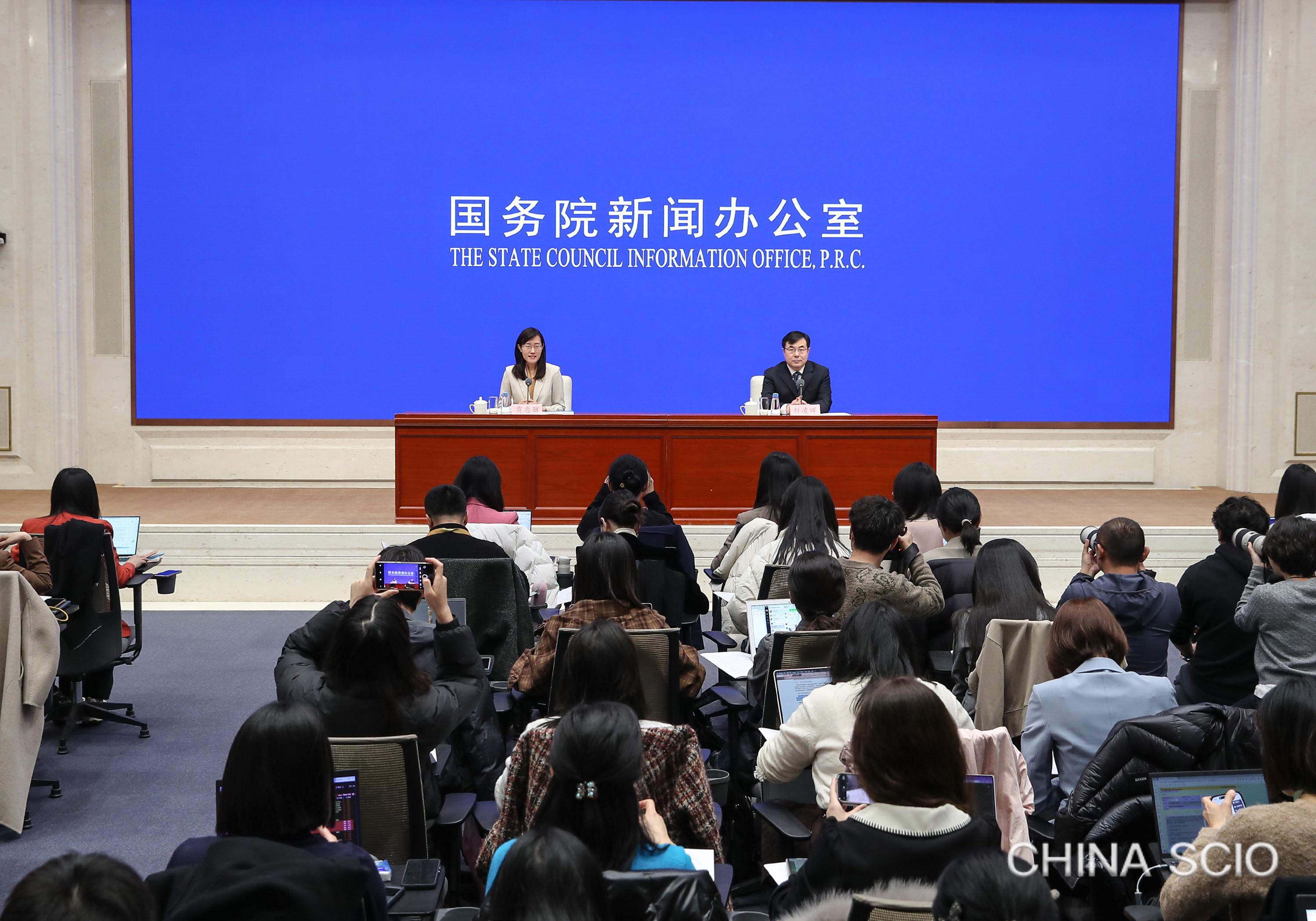
/3 Group photo
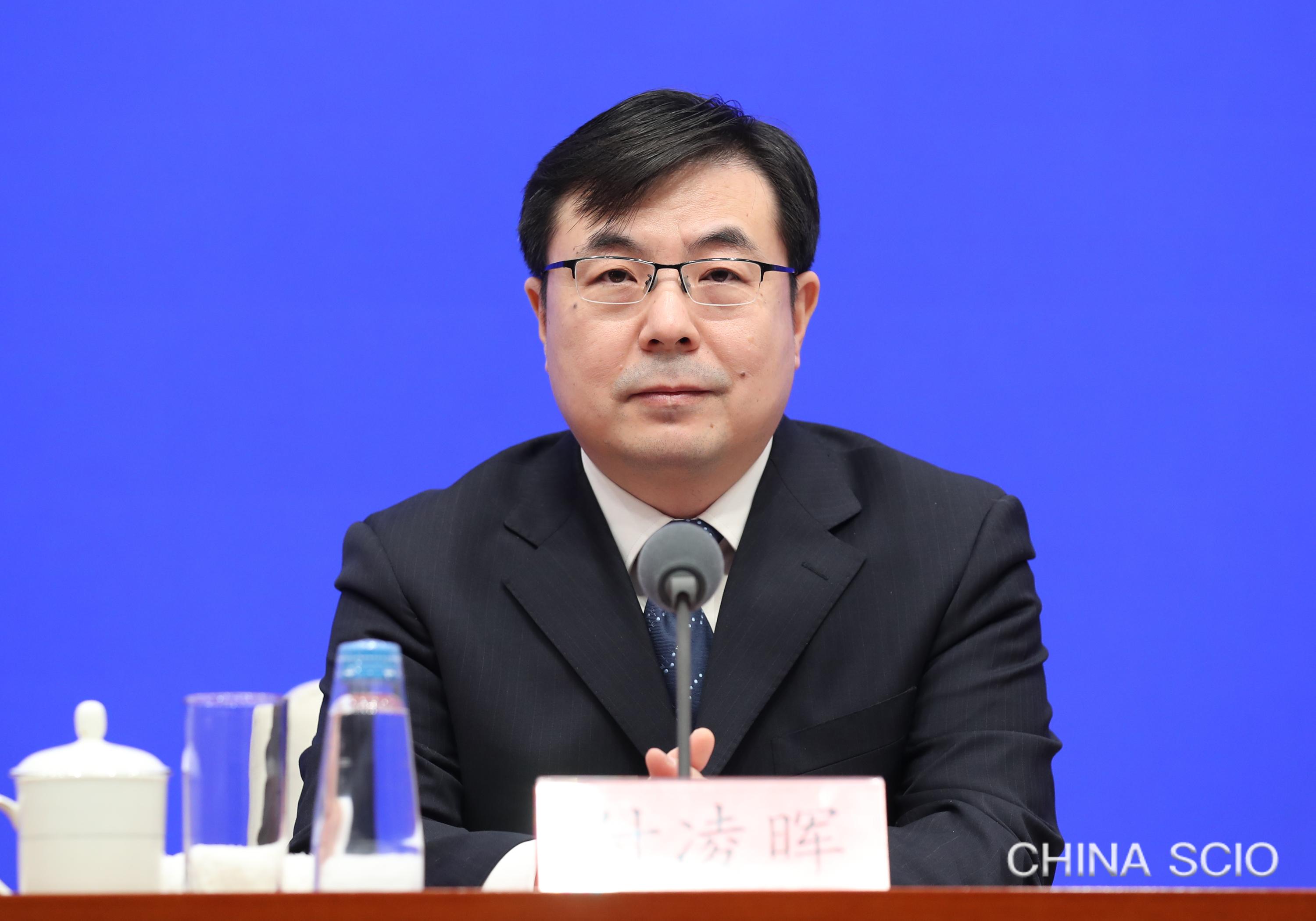
/3 Fu Linghui
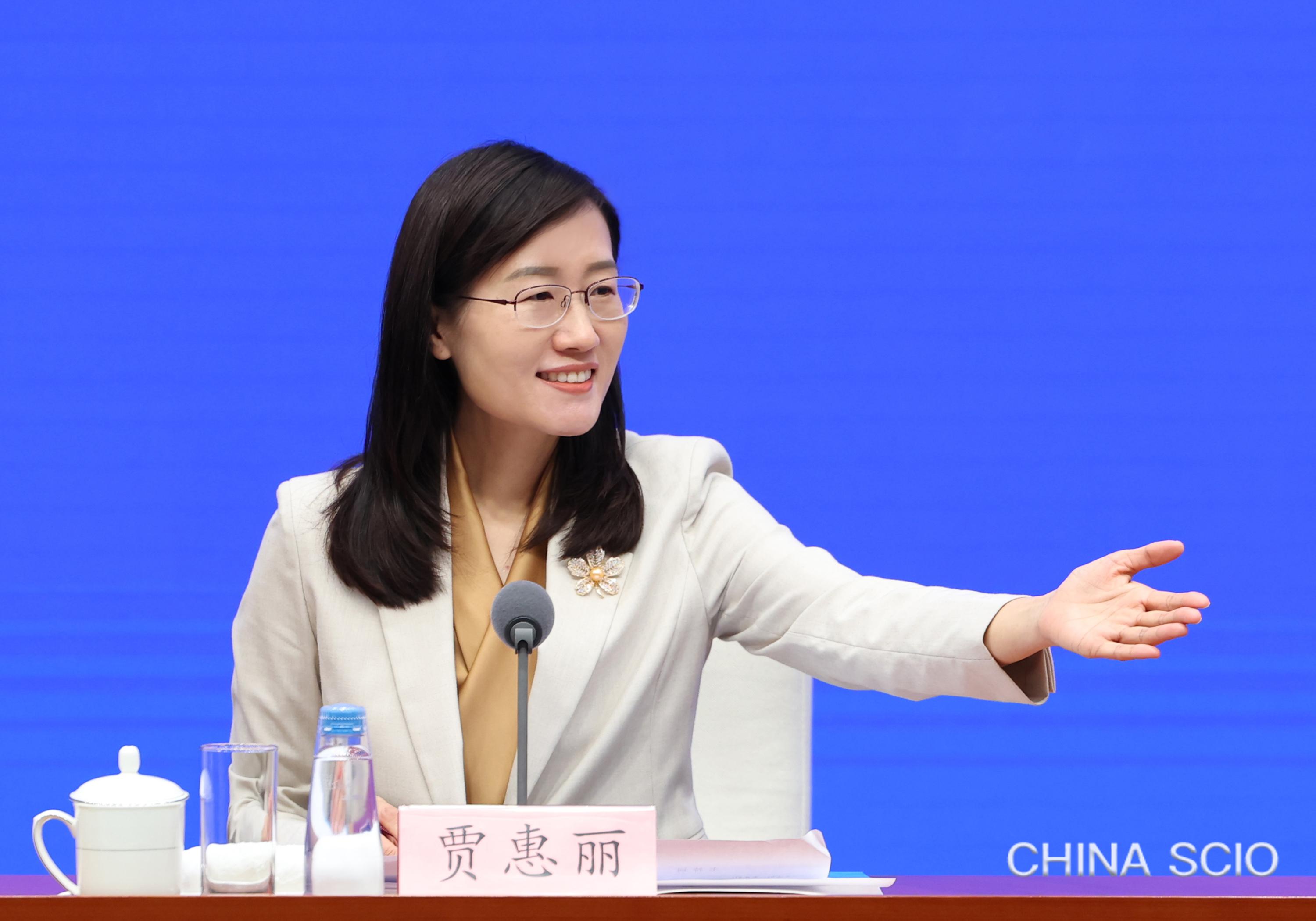
/3 Jia Huili
SCIO briefing on the draft Outline of the 15th Five-Year Plan
March 7, 2026SCIO briefing about the Report on the Work of the Government
March 5, 2026SCIO briefing on Spatial Coordination Plan for the Modern Capital Metropolitan Area (2023-2035)
February 12, 2026