
SCIO briefing on the draft Outline of the 15th Five-Year Plan
Beijing | 3 p.m. March 7, 2026
Speakers

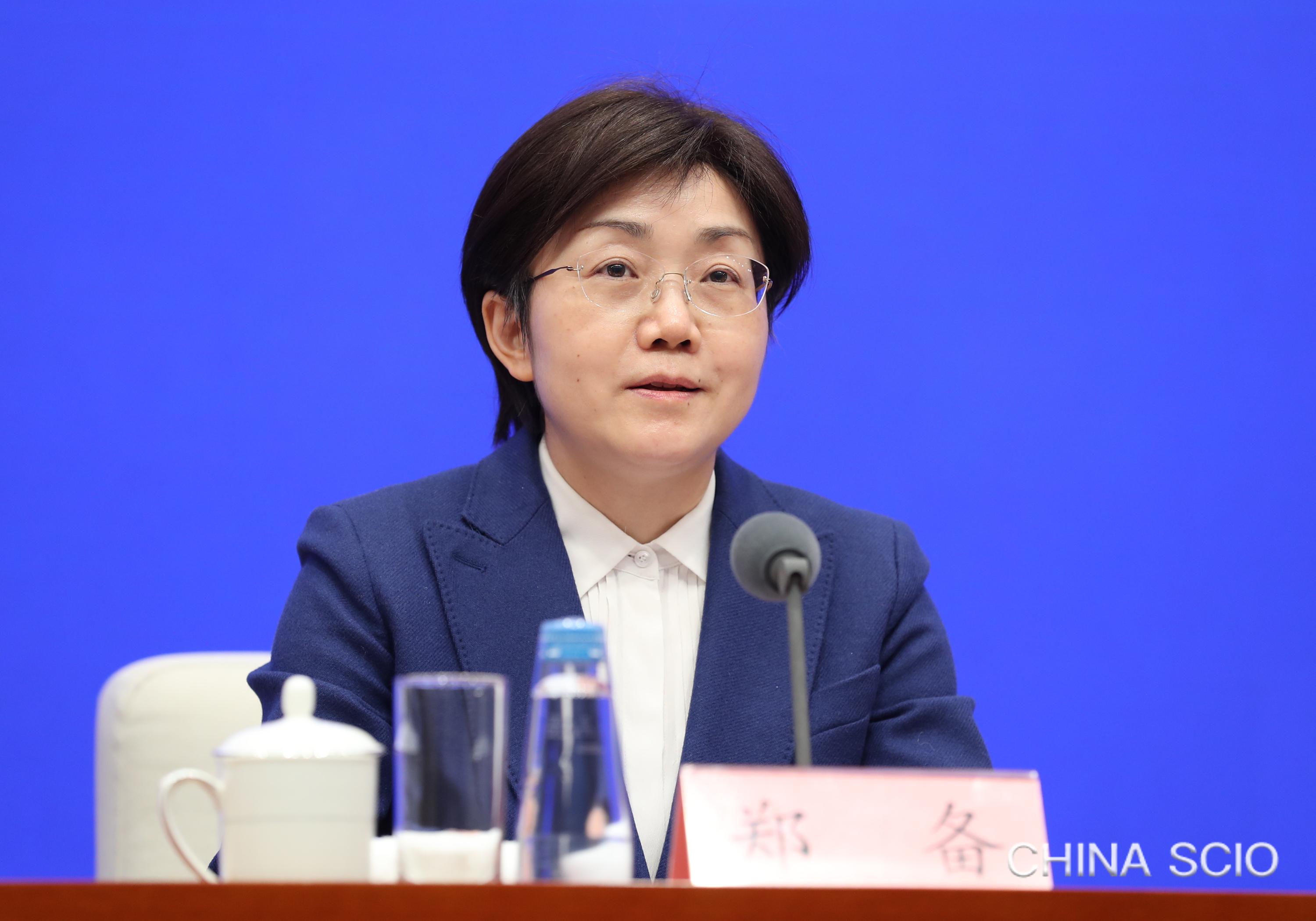
Zheng Bei, vice chairperson of the National Development and Reform Commission (NDRC)
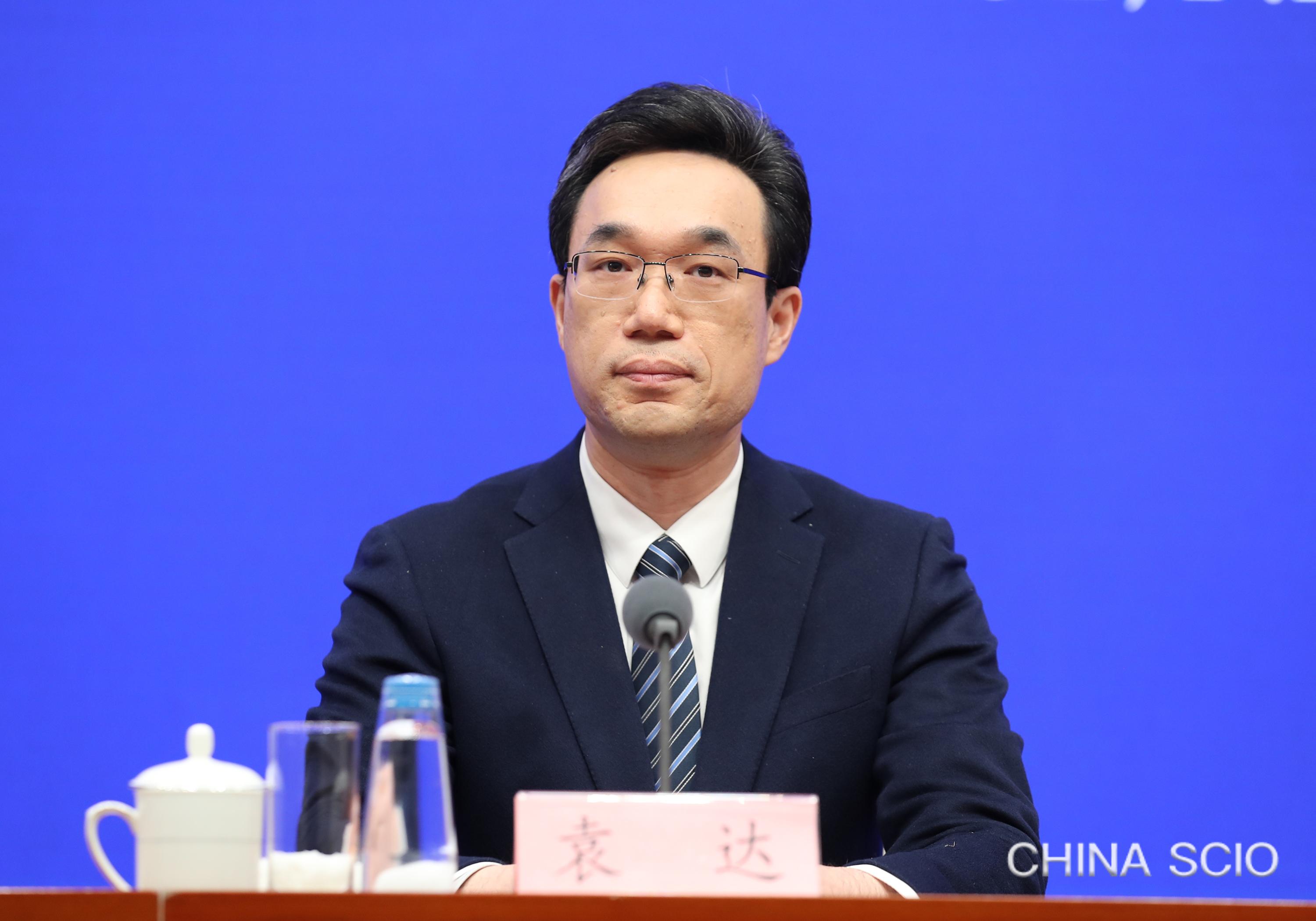
Yuan Da, secretary-general of the NDRC
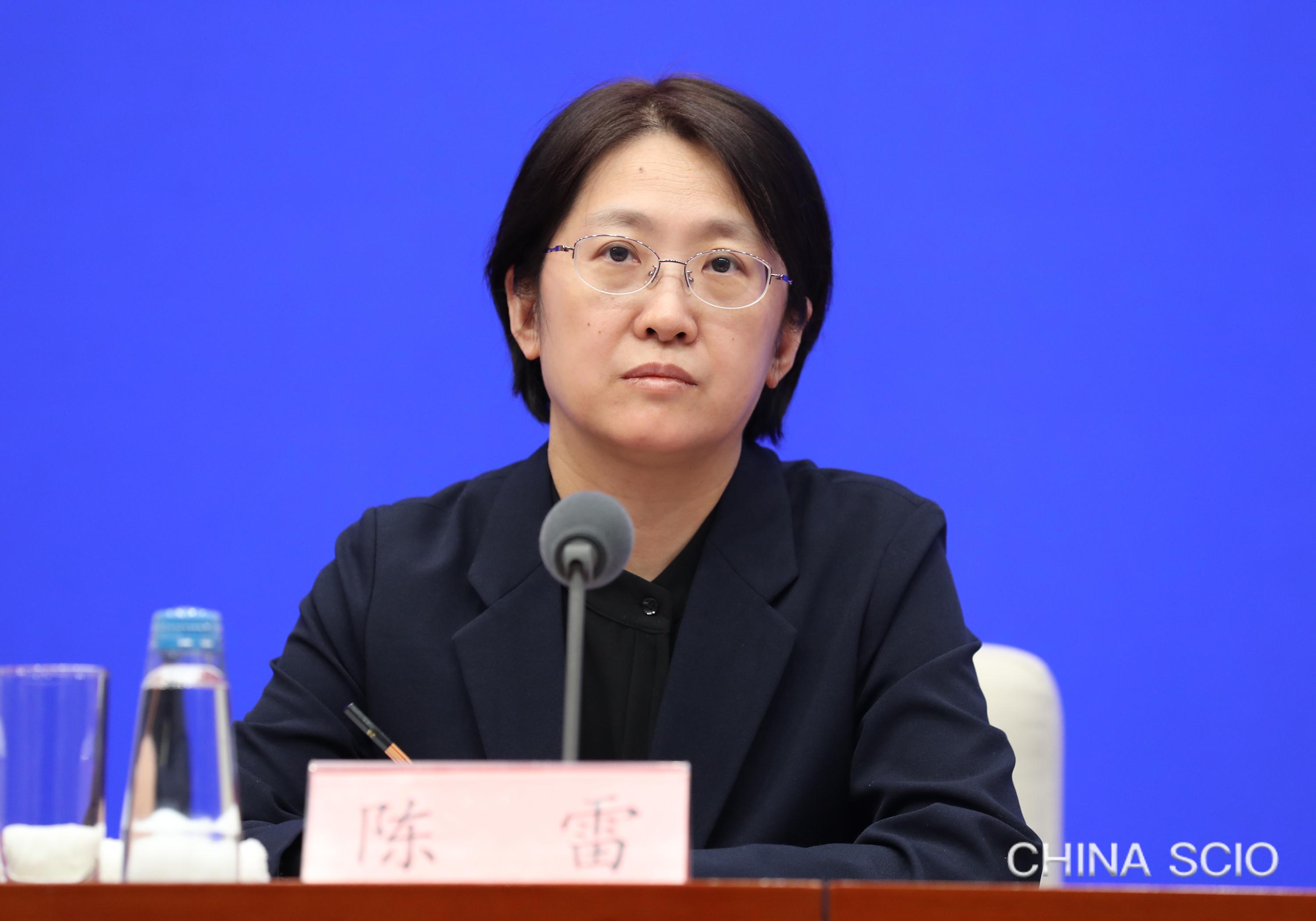
Chen Lei, director general of the Department of Development Planning of the NDRC
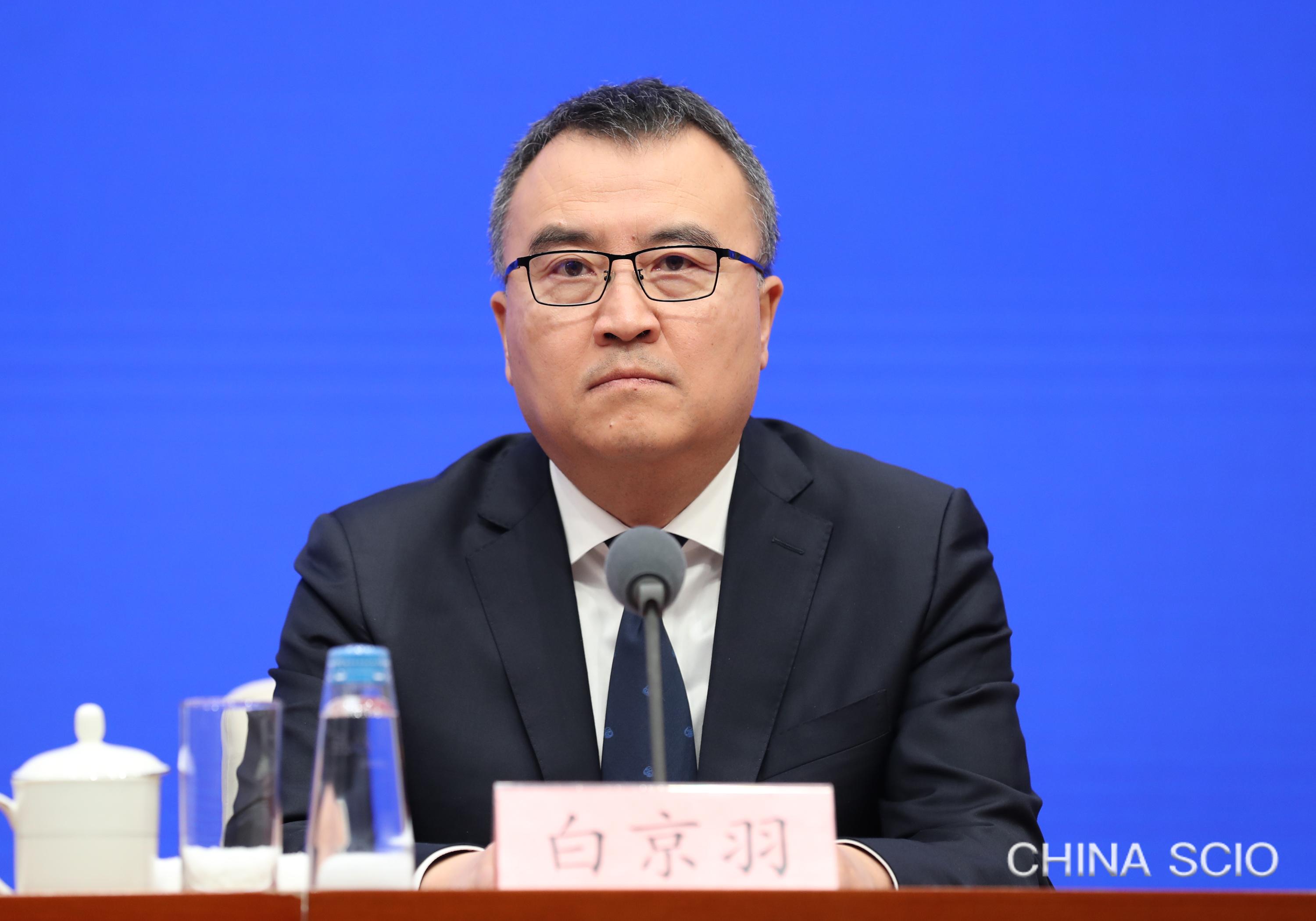
Bai Jingyu, director general of the Department of Innovation and High-Tech Development of the NDRC
Liu Dechun, director general of the Department of Social Development of the NDRC
Chairperson
Speakers:
Ms. Zheng Bei, vice chairperson of the National Development and Reform Commission (NDRC)
Mr. Yuan Da, secretary-general of the NDRC
Ms. Chen Lei, director general of the Department of Development Planning of the NDRC
Mr. Bai Jingyu, director general of the Department of Innovation and High-Tech Development of the NDRC
Mr. Liu Dechun, director general of the Department of Social Development of the NDRC
Chairperson:
Mr. Zhou Jianshe, deputy director general of the Press Bureau of the State Council Information Office (SCIO) and spokesperson of the SCIO
Date:
March 7, 2026
Shou Xiaoli:
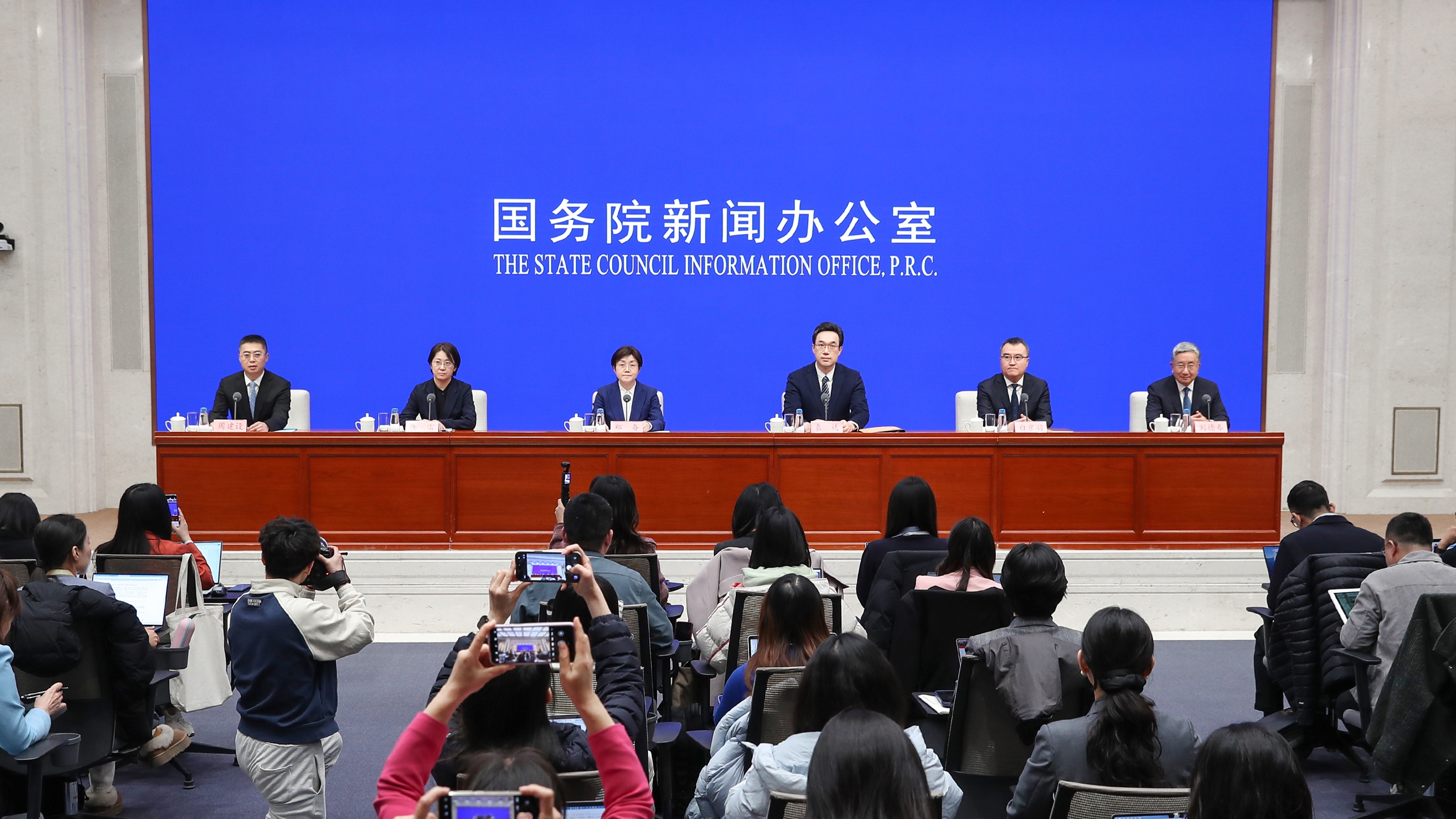
Ladies and gentlemen, good afternoon. Welcome to this briefing held by the State Council Information Office (SCIO). Today we have invited Ms. Zheng Bei, vice chairperson of the National Development and Reform Commission (NDRC), to interpret the draft Outline of the 15th Five-Year Plan (2026-2030) and answer your questions. Also attending today's briefing are: Mr. Yuan Da, secretary-general of the NDRC; Ms. Chen Lei, director general of the Department of Development Planning of the NDRC; Mr. Bai Jingyu, director general of the Department of Innovation and High-Tech Development of the NDRC; and Mr. Liu Dechun, director general of the Department of Social Development of the NDRC.
Now, I'll give the floor to Ms. Zheng for her introduction.
Zheng Bei:
Friends from the media, ladies and gentlemen, good afternoon. Since the opening of the "two sessions," all sectors have paid close attention to Outline of the 15th Five-Year Plan. Premier Li Qiang has delivered a report explaining the draft Outline of the 15th Five-Year Plan. To help you better understand it, my colleagues and I will now provide further briefing.
The scientific formulation and consistent implementation of five-year plans has been an important experience in the governance and administration of state affairs by the Communist Party of China (CPC) and a key political strength of the socialism system with Chinese characteristics. The CPC Central Committee and the State Council have attached great importance to the drafting of the 15th Five-Year Plan. General Secretary Xi Jinping has provided overall guidance for the planning process, personally led the drafting work throughout, delivered many important speeches, and issued a series of important instructions and directives. Recommendations for the 15th Five-Year Plan reviewed and approved by the fourth plenary session of the 20th CPC Central Committee provided important guidance for the drafting of the Outline. According to the requirements of the CPC Central Committee, the State Council formed a leading group and drafting group for the preparation of the draft Outline, while Premier Li Qiang chaired multiple meetings to conduct special research and deployments focusing on implementing the spirit of the fourth plenary session of the 20th CPC Central Committee and ensuring high-quality preparation of the Outline.
Following General Secretary Xi Jinping's important instructions that planning should promote democracy, pool collective wisdom and build broad consensus, the Outline of the 15th Five-Year Plan adopts an open and participatory approach, with a focus on conducting in-depth research and rigorous assessment.
First, in-depth research and rigorous assessment have been carried out on major issues. The drafting work focused on the key areas and difficult issues during the 15th Five-Year Plan period (2026-2030), with high-level research institutions organized to produce nearly 200 support reports, carefully studying and thoroughly calculating the main goals, indicators and important tasks and measures for the 15th Five-Year period. Local governments and departments were organized to systematically plan major projects, and multiple rounds of assessment were conducted on their necessity and feasibility.
Second, we have solicited opinions and suggestions through multiple channels and methods. Last year, over 40 research visits were made to various types of regions, and more than 50 special symposiums were held. The National Development Planning Expert Committee was organized for consultation and assessment, public opinions were solicited online, and nearly 70,000 high-quality suggestions were compiled after sorting and analysis. Extensive consultations were also carried out with key groups, including people in flexible employment, young people, migrant workers, and people with disabilities. In addition, deputies to the National People's Congress (NPC) and members of the Chinese People's Political Consultative Conference (CPPCC) put forward many valuable suggestions. The drafting group analyzed all the opinions and suggestions and considered them for adoption.
Third, we have steadily and orderly advanced the drafting of the Outline of the 15th Five-Year Plan. On the basis of the above work, studies have been carried out on the overall approach and framework of the Outline. After the convening of the fourth plenary session of the 20th CPC Central Committee, we fully aligned our work with the guiding principles of the Central Committee's Recommendations and formulated the draft Outline of the 15th Five-Year Plan. The document has undergone multiple rounds of revision and improvement following repeated review and refinement. From January to February this year, the State Council organized multiple symposiums to further solicit opinions from experts, entrepreneurs, non-CPC individuals and local governments at all levels. After a series of revisions and improvements, with the consent of the CPC Central Committee and the State Council, the document was submitted to this year's NPC and CPPCC sessions for review and deliberation.
The draft outline adheres to the guidance of Xi Jinping Thought on Socialism with Chinese Characteristics for a New Era, thoroughly applies the guiding principles from the Party's 20th National Congress and the plenary sessions of the 20th CPC Central Committee, earnestly carries out the deployments of the fourth plenary session of the 20th CPC Central Committee, and transforms the grand blueprint drawn by the CPC Central Committee into a pragmatic and feasible construction plan. It consists of 18 parts, 62 chapters and 171 subsections, and is divided into three major sections. The first section is the general overview, which corresponds to part 1. It covers the development environment, guiding principles and main objectives. Its main purpose is to implement the guiding ideology, principles and goal requirements specified in the recommendations adopted at the fourth plenary session of the 20th CPC Central Committee, and proposes 20 main indicators for socioeconomic development during the 15th Five-Year Plan period. The second section covers the major strategic tasks, and corresponds to parts 2 to 17. It sets out the main tasks and major measures from 16 aspects: industrial development, scientific and technological innovation, digital-intelligent development, the domestic market, deepening reform, opening up, rural revitalization, coordinated regional development, cultural development, population development, public wellbeing, green development, security and development, national defense, democracy and rule of law, and the policy of One Country, Two Systems. Specifically, in line with the development trend of digital technology and AI, the improvement of digital-intelligent development is presented separately; and based on the features of population development at the current stage, high-quality population development is also presented separately. The third section covers the guarantees for planning implementation, and corresponds to part 18. It elaborates on adhering to and strengthening the Party Central Committee's centralized, unified leadership, improving the planning implementation mechanism, mobilizing the enthusiasm, initiative and creativity of the whole society, and ensuring that the decisions and deployments of the CPC Central Committee are fully implemented.
The draft will be further revised and improved based on the opinions of the deputies to the NPC deputies and the CPPCC National Committee members following their review and discussion during the "two sessions." Our objective is to produce a high-quality plan that is grounded in reality, meets expectations of the public and provides guidance for the future.
Next, my colleagues and I are happy to answer questions you have related to the draft. Thank you.
_ueditor_page_break_tag_Zhou Jianshe:
Thank you, Ms. Zheng, for your introduction. The floor is now open for questions. Please identify the media outlet you represent before asking your questions.
CCTV:
The 15th Five-Year Plan is the first five-year plan formulated after the 20th CPC National Congress, and is the construction blueprint for economic and social development in the next five years based on the recommendations adopted at the fourth plenary session of the 20th CPC Central Committee. Could you please introduce the main features and highlights of the draft? Thank you.
Zheng Bei:
Thank you for your question. I will take this one. As you just said, the draft fully implements the requirements of the recommendations adopted at the fourth plenary session of the 20th CPC Central Committee, focuses on planning major initiatives with a reform and innovation mindset, and further refines and clarifies necessary quantitative requirements and specific work arrangements. Yesterday, Mr. Zheng Shanjie explained the main contents of the draft at a press conference. I will offer you some further details here. In general, the draft is characterized by four prominent features:
First, in terms of its strategic positioning, the draft builds on past successes to break new ground, and focuses on strengthening the foundation and making comprehensive efforts. According to the strategic plan of the CPC Central Committee, the transition from the completion of a moderately prosperous society in all respects to the basic realization of socialist modernization will require three five-year plans. The 14th Five-Year Plan was the first and has already achieved a good start, the 16th Five-Year Plan will be the concluding period, while the 15th Five-Year Plan occupies a pivotal position in linking past and future. The draft has been formulated based on this positioning. It systematically reviews development achievements, comprehensively assesses the development environment, and focuses on consolidating and expanding advantages, removing bottlenecks and constraints, and strengthening weaknesses. It proposes the main goals and indicators for socioeconomic development during the 15th Five-Year Plan period, clarifies major strategic tasks and measures, and implements a consistent blueprint to ensure decisive progress in basically realizing socialist modernization.
Second, in terms of development orientation, it closely aligns with high-quality development, focusing on structural optimization and qualitative improvements. The recommendations clearly set promoting high-quality development as the theme, and the draft closely revolves around this theme, setting indicators, laying out tasks and planing projects, to guide the effective improvements of quality and the reasonable growth of quantity. In terms of the main target indicators, implementing the seven aspects of goals specified in the recommendations, and in accordance with the requirements for high-quality development, the indicator settings cover five areas: economic development, innovation-driven, public wellbeing, green and low-carbon, and security. The target values have all been scientifically calculated and comprehensively balanced, which will help create a synergy for promoting high-quality development.
Third, in terms of setting tasks, it emphasizes pragmatic and practical measures, prioritizing precision, effectiveness and robust support. The draft outline adheres to a combination of goal-oriented and problem-oriented approaches, and coordinates overall planning with highlighting key points. It deploys 16 major strategic tasks covering key areas and critical links of economic and social development, especially proposing targeted innovative measures such as promoting integrated development of education, sci-tech and talent, insisting on closely combining investment in things and investment in people, and promoting coordinated regional development. At the same time, it proposes 109 major projects in six areas, including a series of landmark infrastructure projects such as the Yaxia Hydropower Project, the new Three Gorges Waterway Channel, and satellite internet. These pragmatic measures and major projects will strongly support the realization of the goals and tasks of the outline.
Fourth, in terms of value orientation, it upholds putting the people first, focusing on concrete and effective results. The general secretary emphasized that in planning economic and social development during the 15th Five-Year Plan period, we must stay true to our original aspiration and place the well-being of the people at the heart of our fundamental values. The draft outline of 15th Five-Year Plan adheres to the principle of doing the best within our means, making solid efforts to promote the common prosperity of all people. In terms of major indicators, key tasks and significant projects, it highlights the development's focus on the well-being of the people. The main indicators cover employment, income, education, health, elderly care and child care — which are the most pressing, immediate issues of utmost concern to the people. The key tasks clearly specify a package of pragmatic measures such as implementing actions to stabilize jobs, expand capacity and improve quality, as well as urban and rural residents' income growth plans, high-quality insurance enrollment, and social care services improvement projects. The major projects propose a series of heart-warming initiatives that can help improve living standards, such as expanding high-quality higher education resources, strengthening medical and health foundations, and enhancing the capacity for integration of medical care and elderly care. Each measure closely focuses on solving urgent, difficult and troublesome matters of public concern, striving to do practical things for the people that truly resonate with them.
I hope that this introduction to these four areas of focus can help you better understand the draft outline. Thank you.
_ueditor_page_break_tag_Red Star News:
The 15th Five-Year Plan period is very critical for promoting carbon peak work. Compared with the 14th Five-Year Plan period, what new arrangements does the draft outline of the 15th Five-Year Plan make for the comprehensive green transformation of economic and social development, and how will they be implemented? Thank you.
Zheng Bei:
During the 14th Five-Year Plan period, we have indeed achieved historic accomplishments in green development. The draft outline of the 15th Five-Year Plan has also made arrangements in this area. I would like to invite Mr. Yuan to answer this question.
Yuan Da:
Thank you for your question. The 15th Five-Year Plan period is a key period for accelerating the comprehensive green transformation of economic and social development, and also a decisive period for achieving the carbon peak goal. Compared with the 14th Five-Year Plan, the draft outline of the 15th Five-Year Plan highlights the "low-carbon" requirement more prominently in implementing the concept of green development. First, it explicitly proposes taking carbon peaking and carbon neutrality as the driving force to promote carbon reduction, pollution reduction, greening and growth in a coordinated manner. Second, it fully implements the dual control system of total carbon emissions and emission intensity. It should be noted that energy activities are the main source of carbon emissions, and shifting from dual control of energy consumption to dual control of carbon emissions does not mean relaxing energy-saving efforts. Energy saving is still the most direct, economical and effective way to reduce carbon.
In this regard, the draft outline emphasizes building "one mechanism" and carrying out "three tasks."
The "one mechanism" refers to an incentive and constraint mechanism covering all types of entities. We will promote the introduction of the Comprehensive Evaluation and Assessment Measures for Carbon Peaking and Carbon Neutrality, scientifically and reasonably allocate the dual control targets for carbon emissions, strengthen responsibilities for achieving carbon emission targets, and carry out local carbon assessments in an orderly manner. At the same time, we will adhere to the combination of policy guidance and market incentives, establish and improve the policy and legal system, and steadily implement industry carbon control, enterprise carbon management, project carbon evaluation and product carbon footprints.
The "three tasks" will be carried out in depth around three aspects: energy, industry, and production and lifestyle.
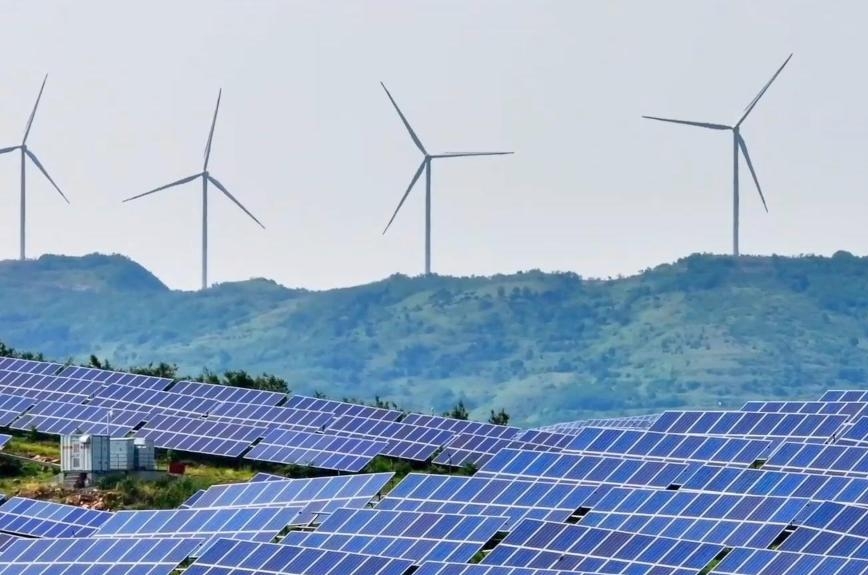
First, we will accelerate the move toward new and green energy. During the 14th Five-Year Plan period, China's installed capacity of renewable energy accounted for about 60% of total capacity, with its contribution to global newly installed renewable energy continuing to exceed 50%. During the 15th Five-Year Plan period, we will make greater efforts to develop non-fossil energy, accelerate the construction of a new type of power system, speed up the process whereby new electricity demand is covered by newly generated clean energy, and promote the peaking of coal and oil consumption.
Second, we will accelerate industrial carbon reduction and advance green development. On one hand, we will pursue "additive" strategies: vigorously developing green and low-carbon technologies and industries, facilitating the orderly transfer of eligible energy-intensive industries to regions with high concentrations of renewable energy resources, establishing about 100 national zero-carbon parks, and planning more than 10,000 kilometers of zero-carbon transportation corridors. On the other hand, we will pursue "subtractive" strategies: implementing major projects for energy-saving and carbon-reducing transformation in key industries, accelerating the phasing out of outdated and inefficient production capacity, effectively controlling high energy consumption and high emissions projects, promoting low-carbon substitution of transportation power, and improving energy efficiency in emerging fields such as computing power facilities and 5G base stations.
Third, we will accelerate resource conservation and efficiency enhancements in production and daily life. We will prioritize conservation, strengthen whole-process management and full-chain saving of water, land, minerals and other resources, vigorously develop the circular economy, and support the growth and expansion of the remanufacturing industry. We will carry out nationwide green and low-carbon actions to jointly practice a lifestyle and consumption pattern that is simple, moderate, green, low-carbon, civilized and healthy.
_ueditor_page_break_tag_The Poster News APP:
Five-year plans are as much a matter of the country as they are for every household. Over the next five years, in the fields of public services such as education, health care and social security, what key measures will be introduced to give the public a stronger sense of gain? Thank you.
Zheng Bei:
No matter is too small when it comes to the people's well-being. I would like to invite Mr. Liu to answer this question.
Liu Dechun:
Thank you for your question. Public services concern the most immediate, practical and vital interests of the people. China has set the goal of achieving equal access to basic public services by 2035, which is an important requirement for basically realizing socialist modernization. The draft Outline of the 15th Five-Year Plan makes a series of arrangements in the areas of education, health care and social security.
Specifically, in terms of education, efforts will be made to accelerate improvements to the education resource allocation mechanism that adapts to population changes. We aim to increase the average schooling years of the working-age population by another 0.4 years, raising it from the current 11.3 years to 11.7 years. Basic education will focus more on expanding excellence and improving quality. We will comprehensively promote high-quality, inclusive preschool education, and high-quality, balanced compulsory education. We will steadily expand access to free education, explore extending the years of compulsory education, and build, renovate or expand 1,000 high-quality senior high schools. The focus in vocational education will be on industry-education integration. We will support the establishment of 500 new high-level industry-education integration training bases, deepen industry-education integration and school-enterprise cooperation, and promote vocational education to match industrial needs in terms of scale, structure and quality. The focus in higher education will be on improving quality and expanding capacity. We will moderately expand our initiative to develop world-class universities and academic disciplines, support efforts to foster new research-oriented universities, promote high-level collaboration with overseas universities to establish joint institutions and programs in China, and increase the enrollment scale of high-quality undergraduate education in an orderly manner.
In health care, we will continue to strengthen public health capabilities, optimize the roles and layout of medical institutions, and work toward raising average life expectancy to 80 years — bringing it broadly in line with that of high-income countries. Our efforts will focus on three key areas: First, we will strengthen the foundation of medical and health care services by building 1,000 integrated county-level medical communities to meet the public's needs for medical treatment near their homes. Second, we will expand and improve rehabilitation and nursing care. We will support a number of secondary-level hospitals in cities to develop specialized services such as rehabilitation and nursing care based on their actual conditions, while also comprehensively strengthening the construction of multi-level and diversified rehabilitation, nursing and hospice care service systems. Third, we will balance the distribution of high-quality medical resources. Efforts will be made to enhance the quality and efficiency of 125 national regional medical centers, while supporting a number of high-level provincial hospitals in strengthening their clinical diagnosis and treatment capabilities and fully realizing their potential. These measures aim to ensure that patients can receive treatment for major illnesses within their own province.
In terms of social security, we will steadily promote the expansion and upgrading of social security coverage, and firmly safeguard the bottom line of basic livelihoods. The focus of expansion will be on enlarging the coverage of unemployment and work-related injury insurance, establishing and improving the occupational injury protection system, and increasing the participation rate of flexible employees, migrant workers and those in new forms of employment. The focus of upgrading will be on improving the determination and adjustment mechanism of basic pension insurance benefits, gradually increasing the basic pension for urban and rural residents, and reasonably raising the subsidy standards for urban and rural residents' medical insurance.
In the next five years, we will move forward with people-centered new urbanization, improve mechanisms for allocating public resources according to the size of permanent resident population, promote the effective coverage of basic urban public services to ensure they cover all permanent residents, narrow the gap in basic public services between urban and rural areas, so as to ensure that rural areas enjoy the same basic public services as urban areas. Thank you.
_ueditor_page_break_tag_Yicai:
We know that the draft outline of the15th Five-Year Plan (2026-30) has proposed 20 main indicators, which are of great concern to everyone. May I ask what are the main considerations in setting these indicators? Could you introduce how the economic growth indicators are set, and what new features there are in setting indicators in areas including public wellbeing that people care about? Thank you.
Zheng Bei:
Thanks for your questions. I will answer them. Main indicators are the key drivers for the implementation of the Five-Year Plan. Coordinating needs and possibilities, quantity and quality, the draft outline of the 15th Five-Year Plan sets 20 main indicators in five areas. The indicator setting adheres to considering both long- and near-term needs, upholding fundamental principles and breaking new ground, ensuring overall balance, and achieving precision and effectiveness. They are aligned with the goals of basically realizing socialist modernization by 2035 and building China into a great modern socialist country in all respects by the middle of this century, and strongly supporting the continued implementation of the modernization strategy.
Regarding the economic growth target, which has drawn widespread attention, the draft outline proposes keeping economic expansion within an "appropriate range," calibrating subsequent annual rates to shifting realities, and laying a solid foundation for doubling the 2020 per capita GDP by 2035 to reach the level of a moderately developed country. This target integrates quantitative goals into a qualitative framework, which is consistent with the goal proposed in the Party Central Committee's "Recommendations," detailing that "the economy keeps growing within an appropriate range" and is in line with the wording of the Outline of the 14th Five-Year Plan. It fully reflects the clear orientation of promoting high-quality development, guiding all parties to pursue tangible growth, allowing room for shifting development patterns, adjusting structures, and promoting reforms, and providing support for employment and income growth among residents. At the same time, "doubling" embodies an expectation for the average annual GDP growth over the next decades, and aligns with the long-term positive trend of China's economic development. "Laying a solid foundation" means striving for better outcomes in the actual work during the 15th Five-Year Plan period, laying a more solid foundation for development in the 16th Five-Year Plan period (2031-2035). This year's Government Work Report proposes that this year's annual GDP growth target will be 4.5%—5%, and local two sessions have set their own local economic growth targets based on their actual situations. This demonstrates the organic connection between annual plans and medium- and long-term plans, as well as between local plans and national plans.
You also mentioned indicators concerning public wellbeing, which the CPC Central Committee and the State Council attach great importance to. The draft outline focuses on resolving the pressing difficulties and problems that concern the people most, setting seven targets concerning people's wellbeing, accounting for more than one-third of the major development targets. For example, it sets targets to increase the average years of education for the working-age population, the average life expectancy, and the number of medical staff per 1,000 people, to tangibly improve the education and health standards of the people. Regarding the elderly and childcare services that concern everyone, the draft outline has added an indicator for the proportion of nursing beds in elderly care institutions, mainly to guide elderly care institutions to provide more high-quality nursing services and better meet the care needs of elderly people with functional disabilities or dementia. At the same time, the draft outline sets a target to increase the rate of kindergarten enrollment of infants under the age of 3, comprehensively reflecting the extent to which childcare needs are met, guiding all regions to continuously improve the quality of childcare services, and enhancing the sense of gain among the public.
In addition, focusing on key tasks such as raising the country's capacity for innovation, achieving peak carbon emissions, and ensuring food and energy security, the draft outline sets targeted indicators such as growth in nationwide R&D spending, reduction of carbon dioxide emissions per unit of GDP, total grain production capacity and overall energy production capacity. These major targets drive the strategic tasks in the 15th Five-Year Plan and will be implemented through tailored measures based on their specific categories. Thank you.
_ueditor_page_break_tag_Market News International:
During the 15th Five-Year Plan, can the negative list for foreign investment access be further shortened? What specific opening-up measures can take place in the services sector, such as telecommunications, healthcare, and education? And do you have a clear timetable for this?
Zheng Bei:
Thank you for your questions. We will unswervingly advance high-standard opening up. I would like to invite Ms. Chen Lei, director general of the NDRC's Department of Development Planning, to answer these questions.
Chen Lei:
Thank you for your questions. Continuously optimizing the environment for overseas investment through measures including expanding access is crucial for advancing high-standard opening up. The CPC Central Committee's recommendations clarify that upholding opening up and cooperation for mutual benefit is an essential requirement for Chinese modernization. The draft outline of the 15th Five-Year Plan (2026-2030) implements the deployment of the CPC Central Committee's recommendations, offering a comprehensive explanation on actively expanding self-initiated opening up, improving the quality and level of trade and investment cooperation, pursuing high-quality Belt and Road cooperation and promoting the building of a community with a shared future for humanity. The aim is to develop new institutions for a higher-standard open economy, and share opportunities with the rest of the world and promote common development. Here, I would like to highlight three measures.
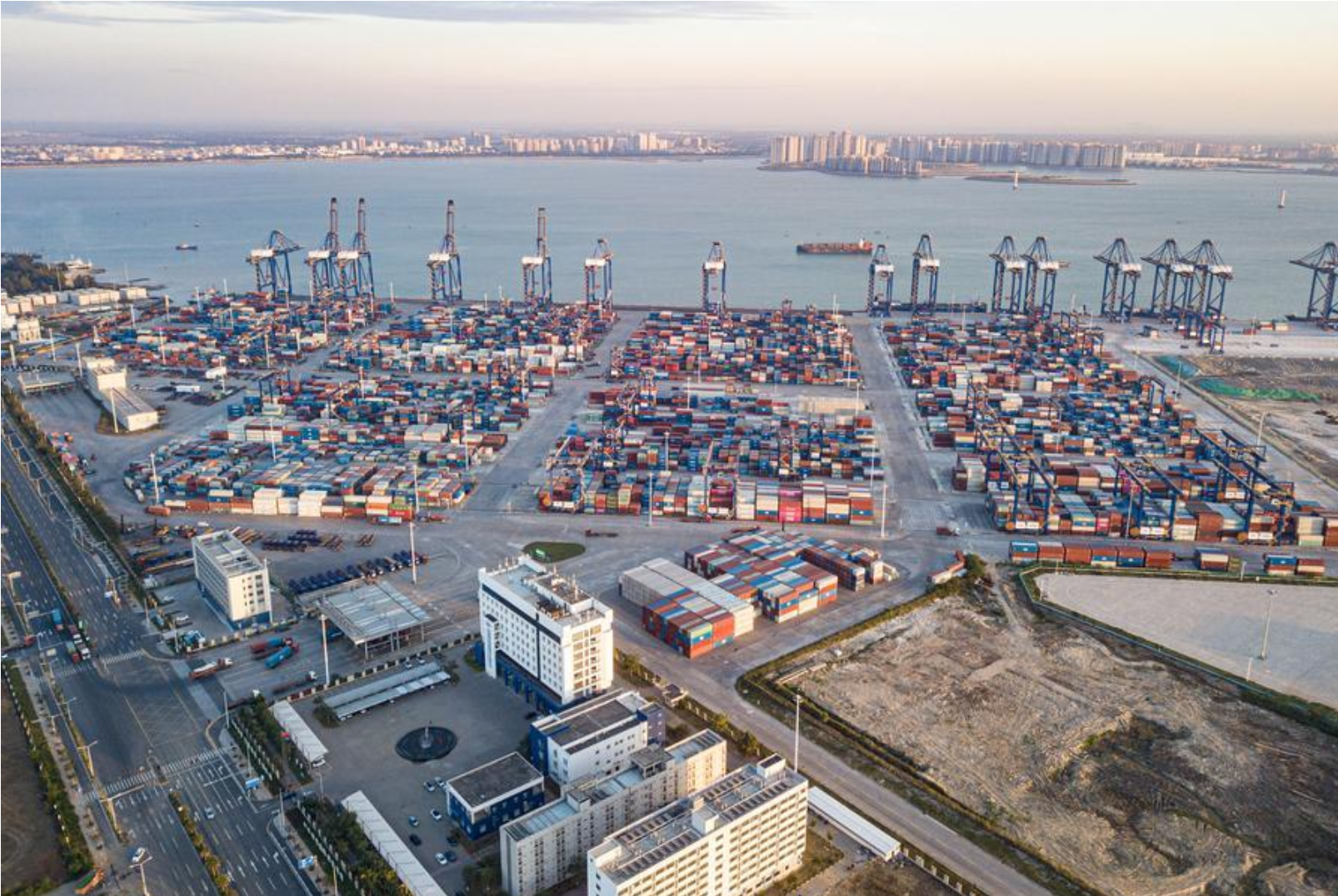
First, we should proactively expand self-initiated opening up. In recent years, China's level of opening up has been continuously improving. The negative list for foreign investment has been reduced to 29 items, with all restrictions on foreign investment in the manufacturing sector being eliminated. Next, we will expand market access and open up more areas, particularly in the service sector. We will promote orderly expansion of opening up in telecommunications, the internet, education, culture, medical care, and other sectors, advance comprehensive pilot demonstrations for expanding opening up in the service industry, and reduce the negative list for foreign investment. Our goal is to create a broader investment space for foreign enterprises in China. Meanwhile, a diverse array of pacesetters in promoting opening up will be established. At the end of 2025, the Hainan Free Trade Port officially launched island-wide special customs operations. During the 15th Five-Year Plan period, we will continue to advance opening up in key areas including trade, investment, and the flow of production factors. The strategy to upgrade pilot free trade zones (FTZs) will be implemented to encourage eligible pilot FTZs to carry out more pioneering trials in areas such as digital economy, technological innovation, and offshore trade.
Second, we should promote the innovative development of trade. In 2025, China's total goods trade import and export reached 6.35 trillion U.S. dollars, while service trade exceeded 1 trillion U.S. dollars. China has become the primary trade partner of over 160 countries and regions around the world. During the 15th Five-Year Plan period, efforts will be made to improve the quality and efficiency of foreign trade, promote balanced development of imports and exports, revise the catalog of technologies, products, and services that the country encourages for import, improve the negative list management system for cross-border service trade, and enhance policy environments for bonded repair and remanufacturing, as well as new types of offshore trade. We will also continue to hold major exhibitions, including the China International Import Expo, the Canton Fair, and the China International Fair for Trade in Services, offering countries around the world with broader market opportunities.
Third, we should create greater space for two-way investment cooperation. During the 14th Five-Year Plan period, China attracted over 750 billion U.S. dollars in foreign investment, and extended its overseas investments to 190 countries and regions. For the 15th Five-Year Plan period, we will continue to improve the environment for foreign investment, fully implement national treatment for foreign-funded enterprises, and improve the service and support system for foreign investors. By ensuring both easy market access and accommodating business environments, we welcome more foreign-funded enterprises to invest in China and share the huge development space in advanced manufacturing, modern services, high-tech industries, energy conservation and environmental protection. At the same time, we will improve comprehensive overseas services to support qualified enterprises in pursuing mutually-beneficial overseas investment cooperation.
We believe that by continuously expanding high-standard opening up, and promoting reform and development through opening up, we will effectively promote unimpeded domestic and international economic flows, sharing development opportunities with the rest of the world, and better creating new horizons for mutually beneficial cooperation. Thank you.
_ueditor_page_break_tag_CNBC:
What are the details of the 15th Five-Year Plan regarding emerging and frontier industries? And how will AI be integrated into the development and manufacture of these industries?
Zheng Bei:
This question may be a concern for everyone, and it also involves the high-tech field. I would like to invite Mr. Bai Jingyu, director general of the NDRC's Department of Innovation and High-Tech Development, to address the question.
Bai Jingyu:
Thank you for your questions. A new wave of scientific and technological revolution and industrial transformation is driving rapid breakthroughs, giving rise to a large number of new technologies, industries, business forms and models. This presents valuable opportunities for China's modernization. In order to firmly seize this rare historical opportunity, the draft outline includes dedicated arrangements for nurturing and expanding emerging and future industries, as well as for advancing digital and intelligent development. The major tasks can be summarized into three aspects: phased layout, ecosystem improvement, and digital and intelligent empowerment.
First, pursuing a tiered deployment. We will establish a development sequence for emerging industries composed of strategic emerging industries, emerging pillar industries, and future industries, integrating near-, medium-, and long-term planning. In the near term, we will continue to advance the development of strategic emerging industries such as next-generation information technology and new energy, and develop industrial clusters with distinctive features and with complementary strengths in light of local conditions. In the medium term, we will focus on fostering emerging pillar industries, including integrated circuits, biomedicine, and aerospace, to form new pillars to support the national economy. Looking further ahead, we will make forward-looking arrangements for future industries such as quantum technology, brain-computer interfaces, and embodied intelligence, cultivating the strategic emerging industries of tomorrow and the pillar industries of the future.
Second, we will focus on the fostering of a sound ecosystem characterized by innovation-driven growth, demand-led development, factor aggregation, locally tailored approaches, and effective regulation. To strengthen innovation leadership, we will organize and implement a number of industrial innovation initiatives, promote decisive breakthroughs in key and core technologies in priority areas across the entire innovation chain, and create new demand through new supply. To leverage application scenarios, we will launch demonstration programs, for the large-scale application of new technologies, new products, and new scenarios, allowing new demand to guide new supply. To promote factor aggregation, we will establish mechanisms to increase investment in future industries and share risks, strengthen talent cultivation in key fields, and optimize the layout of national-level science and technological innovation platforms, thereby providing strong support for industrial development. To ensure development suited to local conditions, we will strictly implement the arrangements for the layouts of major productive forces, guiding all parties to carry out their work in a scientific, rational, and pragmatic manner. To ensure effective regulation, we will advance legislation in emerging sectors, improve the market access system, and innovate regulatory approaches, properly balancing development and security, thereby energizing the market while ensuring sound regulation.
Third, promoting digital and intelligent empowerment. By ensuring the efficient supply of computing power, algorithms, and data, and leveraging digital and intelligent technologies, we will empower economic and social development and further advance the building of a Digital China. In terms of computing power, we will accelerate the development of a national integrated computing power network, promoting the scaled, intensive, green, and inclusive development of computing resources. In terms of algorithms, we will strive for breakthroughs in the basic theories and core technologies of artificial intelligence, strengthen the development of key algorithms, and promote iterative innovation in models and algorithms. In terms of data, we will improve the foundational institutions for data elements and deepen the development and utilization of data resources. In terms of empowerment, we will fully implement the "AI Plus" initiative, enabling all sectors and industries and promoting profound changes in production methods as well as the transformative leap in productivity. Thank you.
_ueditor_page_break_tag_Zhonghongwang.com:
The recommendations for the 15th Five-Year Plan states that a strong domestic market provides strategic support for Chinese modernization. Could you elaborate on what concrete measures are included in the draft outline of the 15th Five-Year Plan to implement this deployment, particularly in advancing the development of a unified national market and promoting consumption? Thank you.
Zheng Bei:
Your question covers several aspects. I will invite Mr. Yuan Da to answer it.
Yuan Da:
Thank you for your question. A strong domestic market is a key advantage of a large economy. Practice has shown that it also provides us with confidence and resilience in responding to various risks and challenges.
During the 15th Five-Year Plan period, China's development environment will face profound and complex changes. Strategic opportunities will coexist with risks and challenges, and uncertainties that are difficult to predict will increase. The draft outline of the 15th Five-Year Plan proposes building a strong domestic market, achieving a higher-level dynamic balance between supply and demand, and enhancing the endogenous momentum and reliability of domestic economic circulation. Let me briefly introduce the arrangements from three aspects: supply, domestic demand, and circulation.
First, optimizing the supply structure. Focusing on the areas that are in shortage, weak, traditional, and emerging, we will further improve the quality and capacity of the supply system. For areas where supply is currently insufficient, we will accelerate breakthroughs in key technologies. Efforts will be made across the entire innovation chain to achieve decisive breakthroughs in key and core technologies in priority fields such as integrated circuits, industrial machine tools, high-end instruments, basic software, advanced materials, and bio-manufacturing, thereby enhancing the self-reliance and controllability of industrial chains. For the areas where we need improvement, we will move at increased speed to address all shortcomings. We will implement initiatives to improve quality and expand capacity in the service sector, deepen reform and opening-up in services, improve the supporting policy system, strengthen weak links in producer services, and vigorously foster the "China Services" brand. For traditional industries, we will accelerate upgrading and optimization. Following sector-specific approaches, we will develop high-quality steel bases, world-class petrochemical bases, and high-end shipbuilding and marine engineering equipment bases. This will in turn promote innovation across the entire industrial chain of machinery and equipment, whilst expanding the supply of quality products in sectors such as light industry and textiles. For emerging industries, we will accelerate their cultivation and expansion. As Mr. Bai has already introduced this earlier, I will just add two points. The first is to develop stronger strategic emerging industry clusters in areas such as next-generation information technology, new energy, robotics, and aerospace, all of which are in line with local conditions. The other is to promote faster development of future industries, including quantum technology, brain-computer interfaces, embodied intelligence, and 6G.
Second, we will boost domestic demand. We will adhere to the "three integrations" and continuously consolidate and enhance the strength of China's enormous market. Firstly, we will continue to integrate adopted and new policies. We will deeply implement special actions to boost consumption and improve the effectiveness of adopted policies, including the implementation of major national strategies and security capacity building in key areas, a new round of large-scale equipment upgrades and consumer goods trade-in programs, and new policy-backed financial tools. At the same time, we will speed up the implementation of new measures, such as a package of fiscal and financial coordination policies to promote domestic demand, and fully leverage the synergy of these policies. Secondly, we will continue to closely integrate improving people's living standards and promoting consumption. We will formulate and implement an income growth plan for both urban and rural residents, steadily raise the minimum wage standard, and increase government funds for promoting public well-being. At the same time, we will promote the expansion and upgrading of commodity consumption and release the potential of service consumption. Thirdly, we will continue to closely integrate investment in physical assets and people. We will optimize the government investment structure, and increase the proportion of livelihood-related government investment. We will stimulate the vitality of private investment, promote the opening of application scenarios in emerging fields to private enterprises, and equally ensure the demand for factors.
Third, we will strengthen the domestic economy. Focusing on the principle of "improving rules, maintaining order and optimizing facilities," we will accelerate the formation of a unified national market. We will improve rules, with a focus on improving the basic market institutional rules. We will promote the construction of systems such as those for property rights protection, market access, information disclosure, social credit, mergers and reorganizations, and market exit, and also improve statistics, fiscal and taxation, and evaluation systems that are conducive to building a unified market. We will maintain order, with a focus on maintaining fair competition market order, promote the improvement of market supervision rules, unification of benchmarks and enhancement of capabilities, regulate the economic promotion behavior of local governments, formulate lists of encouragements and prohibitions for local government investment promotion, and strengthen anti-monopoly and anti-unfair competition law enforcement and judiciary. We will optimize facilities, with a focus on building high-standard interconnected market facilities. We will promote the connectivity and rule alignment of distribution and logistics, market information, trading platforms and other facilities, improve the efficient and smooth modern distribution system, and reduce logistics costs for the whole of society. Thank you.
_ueditor_page_break_tag_Shangyou News:
My question is regarding the content related to developing a modern infrastructure system. The draft plan proposes 23 projects targeting a national comprehensive and multidimensional transportation network, a new type of energy system, and new types of infrastructure. How can we understand the direction of modern infrastructure development over the next five years? What are the key tasks in the fields of transportation, energy, water conservancy and new infrastructure? Thank you.
Zheng Bei:
Building a modern infrastructure system is an important strategic task in the plan. I would like to invite Ms. Chen to answer this question.
Chen Lei:
Thank you for your questions. Infrastructure is an important support for economic and social development. In order to implement the requirements of the Proposals from the CPC Central Committee, the draft 15th Five-Year Plan includes a chapter dedicated to building a modern infrastructure system, covering not only transportation, water conservancy and energy infrastructure, but also major science and technology infrastructure, information and communication networks, and computing power networks as new types of infrastructure. The general direction is to better coordinate the plan to improve its layout and structure, drive integrated development, and ensure that infrastructure is safe, resilient and sustainable. Looking at it by field:
In terms of transportation, during the 15th Five-Year Plan period, we will improve the modern comprehensive transportation system, basically complete the "eight vertical and eight horizontal" corridors for high-speed railway and the national expressway network, advance the quality and upgrading of high-grade inland waterways, basically complete world-class port clusters and airport clusters, and implement a number of major projects such as opening high-standard high-speed railway corridors along the Yangtze River, building a new Three Gorges shipping channel, and improving highway safety resilience. At the same time, we will strengthen coverage and access guarantees in weak areas, and promote the renewal, renovation and maintenance of transportation infrastructure.
In terms of energy, we will focus on building a new energy system that is clean, low-carbon, safe and efficient; pursue the simultaneous development of wind, solar, hydro and nuclear energy; and implement a decade-long campaign to double the share of non-fossil energy, promoting the safe, reliable and orderly replacement of fossil fuels. During the 15th Five-Year Plan period, major projects will be implemented, including a hydropower project on the lower reaches of the Yarlung Zangbo River, new energy bases in desert areas, the Gobi, and other arid areas, and new electricity transmission channels. Together, these will push west-to-east power transmission capacity to more than 420 million kilowatts. By 2030, non-fossil energy will account for 25% of total energy consumption.
In terms of water conservancy, the primary framework and key arteries of the national water network have been gradually taking shape in recent years. During the 15th Five-Year Plan period, efforts will focus on building a modern water infrastructure network. Major projects will be assessed and rolled out across river management, flood control reservoirs, large-scale water diversion schemes, and the construction and upgrading of large and medium-sized irrigation areas. These efforts will strengthen China's capacity to defend against flood disasters, coordinate water resource allocation, and ensure a reliable water supply for both urban and rural areas.
In terms of new infrastructure, we will strengthen coordinated efforts to advance construction and ensure more intensive and efficient use. We will systematically plan and deploy major sci-tech infrastructure that is strategically oriented, application-supported and forward-looking. We will promote the deployment and application of 10-gigabit optical networks and the large-scale commercial use of 5G-A mobile communication networks. We will build a national integrated computing network and coordinate the construction of satellite communication, navigation and remote sensing systems. We will also develop low-altitude infrastructure guided by expanding real-world use cases, thereby providing solid support for industrial upgrading, and digital and intelligent development during the 15th Five-Year Plan period and beyond. Thank you.
_ueditor_page_break_tag_Top News:
We have noticed that the draft outline of the 15th Five-Year Plan proposes a number of major projects aimed at driving the development of new quality productive forces, with the full integration between technological and industrial innovation as a key focus. What plans and arrangements are there in this regard? Thank you.
Zheng Bei:
I would like to invite my colleague, Mr. Bai, to answer this question.
Bai Jingyu:
Thank you for your question. Promoting the full integration between technological and industrial innovation is a key priority set out in the CPC Central Committee's recommendations and a fundamental path for cultivating and developing new quality productive forces. I will now provide a brief overview of the related content in the draft outline from three angles: the foundation, the key and the pathway for the full integration between technological and industrial innovation.
First, we will consolidate the foundation for full integration by expanding the availability of high-quality scientific and technological outputs. In terms of planning, we will target the global frontiers of scientific and technological development, and strengthen the strategic, forward-looking and systematic layout of basic research. We will proactively deploy major national science and technology projects oriented toward 2035 to produce more landmark original achievements. On the capacity-building front, we will coordinate the layout of the country's strategic scientific and technological resources, including national laboratories, national research institutions, top-tier research universities, and leading scientific and technological enterprises. We will also promote interaction and coordination among various innovation entities and resources to improve system-wide innovation capacity. On the supply-demand side, we will focus on strategically critical areas and weak links in industrial and supply chains, and drive decisive breakthroughs in core technologies across entire chains in key fields. The goal is to build a modern industrial system that is self-supporting and risk-resilient, secure and reliable, and highly competitive.
Second, we will reinforce the principal role of enterprises in technological innovation, which is the key to achieving full integration. We will support enterprises in taking the lead in setting the agenda for scientific and technological innovation, increasing their participation in major national technological innovation decision-making, and designating their needs for the key generic technologies as a priority direction for national scientific and technological program funding. We will support enterprises in taking on the role of orchestrators of innovation activities, urge them to play a greater role in major national science and technology programs, and encourage them to carry out joint scientific and technological research with universities and research institutes. We will support enterprises in serving as the evaluators of research outcomes, make enterprise assessments an important basis for the acceptance review of scientific and technological projects, and ensure that those who apply the results are the ones who assess them.
Third, we will promote better application of scientific and technological advances to open pathways for full integration. On the institutional front, we will optimize the environment for application of scientific and technological advances by establishing a system to place scientific and technological outputs produced on the job under separate management and deepening reforms to grant researchers corresponding rights over these outputs. In terms of building platforms, we will advance the development of technology transfer and scientific and technological service systems, and coordinate efforts to build platforms and bases for scientific and technological innovation. We will also establish generic technology platforms and pilot-scale testing platforms to serve as a stronger bridge for the application of scientific and technological advances. In terms of policy support, we will increase the provision of inclusive policies. We will also guide higher education institutions and research institutes in authorizing the use of their proprietary scientific and technological advances by micro, small, and medium enterprises on a "use first, pay later" basis. We will develop a financial system for scientific and technological innovation, and refine policies for supporting the investment in projects at the early stages, in small enterprises, over long time horizons, and in advanced and core technologies. In terms of cultivating talent, we will advance the integrated development of education, science, technology and human resources. Orienting talent cultivation toward technological innovation, industrial development, and national strategic needs, we will foster positive interplay between indigenous technological innovation and the training of homegrown talent. Thank you.
_ueditor_page_break_tag_Economic Herald:
We have noticed that China's marine economy surpassed 10 trillion yuan in 2025. The draft outline of the 15th Five-Year Plan proposes promoting the high-quality development of the marine economy. How do you view this arrangement? How will this be implemented going forward? Thank you.
Zheng Bei:
I would like to invite Mr. Yuan to answer this question.
Yuan Da:
Thank you for your questions. As both a major land country and a major maritime country, China boasts a mainland coastline of about 18,000 kilometers and a sea area of nearly 3 million square kilometers. Strengthening the development, utilization, and protection of marine resources, and promoting the high-quality development of the marine economy are key priorities. Both provide important support for optimizing the national land spatial development pattern and advancing coordinated regional development.
A separate chapter is dedicated to this initiative in the draft outline of the 15th Five-Year Plan, which calls for increasing the capacity for sea management, stepping up efforts to build china into a strong maritime country, and forging a Chinese path of leveraging marine resources to achieve strength. In terms of the tasks laid out, the plan places emphasis on five key priorities.
First, we will place greater emphasis on innovation-driven development to advance high-level self-reliance and strength in marine science and technology. We will strengthen the strategic sci-tech forces in the marine sector, make more breakthroughs in key core technologies and equipment, and create more national heavyweights. We will improve the marine sci-tech innovation ecosystem, promote digital and intelligent transformation in the marine sector, and promote the development of marine education, science and technology, and talent.
Second, we will place greater emphasis on efficient coordination to optimize the layout of marine economic development. We will promote coordinated land-sea development planning and build marine economic development demonstration zones and modern marine cities as growth engines. We will also encourage coastal and inland regions to strengthen cooperation in the marine economy, actively promote the three-dimensional utilization of sea areas, and advance island development in a categorized and orderly manner. In addition, we will improve the support and guarantee system for deep-sea and polar exploration.
Third, we will place greater emphasis on industrial upgrading to strengthen, optimize and expand the marine industry. China ranks first in the world in shipbuilding and ocean engineering equipment, marine fisheries, and offshore wind power. We will further consolidate and enhance the advantages of the marine equipment manufacturing industry, while fostering and expanding emerging industries such as marine biomedicine. We will also raise the development level of modern shipping, marine tourism and other service industries, and accelerate the efficient utilization of marine energy and resources.
Fourth, we will place greater emphasis on harmony between humans and the sea to comprehensively improve the quality of the marine ecological environment. We will carry out a new round of comprehensive marine surveys, advance pollution prevention and control in key sea areas, and push forward shoreline improvement, ecological protection and restoration efforts. We will also strictly control land reclamation from the sea, strengthen the cleanup and resource utilization of marine waste, and enhance the stability of marine ecosystems.
Fifth, we will place greater emphasis on win-win cooperation to firmly safeguard maritime security and maritime rights and interests. We will actively promote the building of a maritime community with a shared future and play an active role in shaping international rules on ocean governance. We will also deepen international cooperation in marine scientific research and surveys, disaster prevention and mitigation, and the blue economy. In addition, we will strengthen risk prevention and legal efforts and improve the systems and mechanisms for safeguarding our maritime rights and interests. Thank you.
_ueditor_page_break_tag_Xinhua Finance:
The draft outline of the 15th Five-Year Plan sets out the direction of development for the next five years. What measures and mechanisms will be put in place to ensure the effective implementation of all tasks and initiatives and the successful achievement of goals and targets? We have also noted that the current NPC is reviewing the draft National Development Planning Law. What role will this play in ensuring the implementation of the outline of the 15th Five-Year Plan? Thank you.
Zheng Bei:
Thanks for your questions. I will answer them. On March 5, while joining deliberations with his fellow deputies from the Jiangsu delegation, General Secretary Xi Jinping emphasized that formulating plans must be accompanied by implementation. Sound planning and strong implementation must go hand in hand. After this year's NPC reviews and approves the outline of the 15th Five-Year Plan, we will, in accordance with the arrangements of the CPC Central Committee and the State Council, further strengthen the full-cycle mechanism for plan implementation and push forward with a nail-driving spirit. We will focus on four key areas to ensure effective delivery.
First, we will strengthen the planning system to ensure effective implementation. To achieve the goals and tasks set out in the 15th Five-Year Plan, we will firmly establish and apply a correct approach to evaluating governmental performance. National special plans and regional implementation schemes will be developed and managed through a checklist approach. Key tasks in the outline will be further detailed and extended across areas, including technological innovation, Digital China, agricultural and rural modernization, equal access to basic public services, and Beautiful China. We will also make special arrangements for regional strategic priorities. At the same time, we will strengthen coordination across plans at all levels and categories, reducing their number while raising their quality, to ensure that major industrial development and key infrastructure projects align with the national strategic layout.
Second, we will strengthen implementation through annual plans and policy coordination. We will ensure the annual plans provide continuous support for the implementation of the outline by translating its objectives, targets, tasks and measures into detailed, concrete and actionable steps in annual plans. We will also refine the mechanism for coordinating policies to better implement the plan. This includes strengthening the provision and guarantee of public resources — including fiscal budgets, government investment and land supply — to support major strategic tasks, policy measures and projects defined in the plan.
Third, we will strengthen implementation through monitoring and evaluation. We will strengthen dynamic monitoring, midterm evaluation, and final assessment of planning implementation, keeping a close watch on changing circumstances and progress. We will regularly review the completion status of key goals and indicators, particularly binding targets, alongside the progress of priority tasks and major projects. Where gaps emerge, we will move quickly to strengthen and improve implementation, ensuring all goals and tasks are met on schedule.
Fourth, we will ensure implementation by strengthening the rule of law. Through decades of formulating and implementing five-year plans, upholding the principle of planning by law has proven to be one of the most valuable lessons learned. As you said, this year's NPC is currently reviewing the National Development Planning Law, which is a milestone event. This law codifies our Party's proven practices in using medium- to long-term planning to guide economic and social development under socialist market economy conditions. The enactment and implementation of the National Development Planning Law will, through legal means, clarify the responsibilities and specific arrangements for plan implementation, ensuring that national development planning proceeds smoothly along the path of the rule of law.
The blueprint has been drawn, and now is the time to forge ahead. We believe that, under the strong leadership of the CPC Central Committee with Comrade Xi Jinping at its core, and through the concerted efforts of all sides, the draft outline of the 15th Five-Year Plan will be effectively implemented. Over the next five years, we will reach new heights in economic and social development, make major breakthroughs in strategic tasks of overarching importance, and lay a more solid foundation for basically realizing socialist modernization, delivering a result people can be proud of. Thank you.
_ueditor_page_break_tag_Zhou Jianshe:
Due to time constraints, we'll take one last question.
Nanfang Daily, Nanfang Plus:
The welfare of the elderly and children affects people's livelihoods and well-being, touching the lives of hundreds of millions of families and therefore drawing significant public attention. Could you share what policy measures the draft outline of the 15th Five-Year Plan contains in this regard? Thank you.
Zheng Bei:
The welfare of the elderly and children is indeed a major concern for many families. I'll hand over to Mr. Liu to respond.
Liu Dechun:
Thank you for your question. General Secretary Xi Jinping has noted that the elderly are our treasure and children are our future. Services for the elderly and children are a practical issue of great public concern, and a key area for investment in people during the 15th Five-Year Plan period. The draft outline of the 15th Five-Year Plan devotes two dedicated chapters to actively addressing population aging and building a childbirth-friendly society. Mr. Zheng has just outlined the goals for elderly and child services. I will now walk us through the specific tasks and measures.
In terms of actively addressing population aging, we have the following: The first priority is ensuring dignified care for the elderly in their later years. We will improve the mechanism for determining and adjusting basic pension insurance benefits, gradually raise the basic pension for urban and rural residents, and advance the development of long-term care insurance. We will also develop community-embedded elderly care services, home-based care beds, and mutual-aid care models. At the same time, we will renovate and upgrade 2,000 public elderly care facilities, raising the share of nursing-type beds to 73%. Second, we will support the elderly in continuing to contribute to society. We will strengthen the age-friendly renovations of public facilities, create diverse employment opportunities suitable to older workers, optimize age limits in employment and social security, and carry out the "Silver Age Action" initiative to create better conditions for elderly participation in social activities. Third, we will help the elderly to enjoy their later years to the fullest. We will strengthen preferential treatment and rights protection for the elderly, foster and grow the silver economy, expand the range of age-friendly products and services, and develop seniors universities to meet their cultural and intellectual needs, further enhancing their sense of fulfillment and well-being.
In terms of building a childbirth-friendly society, the draft outline sets out the following measures: First, we will strengthen maternity support. We will expand coverage of the maternity insurance system, raise the level of medical expense reimbursement for prenatal check-ups, regulate and promote the orderly application of assisted reproductive technology, and fully implement the maternity leave system. These efforts will provide better basic protection for families with newborns. Second, we will improve child care services. We will support kindergartens in developing integrated child care and preschool services, increase the supply of public child care slots, and encourage non-governmental providers to offer diverse and affordable child care services. We will also achieve full coverage of city-level comprehensive child care service centers and raise the enrollment rate of infants under 3 years old by 6 percentage points, making public-interest child care services more accessible and convenient. Third, we will reduce the burden of child-rearing. We will leverage policies such as special additional deductions for personal income tax, explore establishing a dynamic adjustment mechanism for child care subsidies, and improve family development policies. We will also increase support for multi-child families in education, housing and other areas, effectively reducing the costs of childbirth, child-rearing and education.
In addition, the draft outline dedicates a full section to optimizing and upgrading elderly and child services, setting out five key priority areas: elderly care institutions, community-based elderly care, the integration of medical care and elderly care, public-interest child care, and maternity medical services. By coordinating hard investment and soft development, we will optimize and upgrade capacity for elderly care and child care services, better serving hundreds of millions of families and caring for both the elderly and children. Thank you.
Zhou Jianshe:
Thank you to all speakers and journalists. Today's press conference is hereby concluded. Goodbye, everyone.
Translated and edited by Wang Xingguang, Yang Xi, Li Congrong, Yan Xiaojing, Zhang Yuxin. Chen Xinyan, Liu Caiyi, Wang Ziteng, Xu Kailin, Zhang Tingting, Liao Jiaxin, Yang Chuanli, Wang Yiming, Li Huiru, Wang Qian, Wang Wei, Huang Shan, Li Xiao, Gong Yingchun, Zhou Jing, Ma Yujia, Li Sitong, Mi Xingang, David Ball, Jay Birbeck, and Tudor Finneran. In case of any discrepancy between the English and Chinese texts, the Chinese version is deemed to prevail.

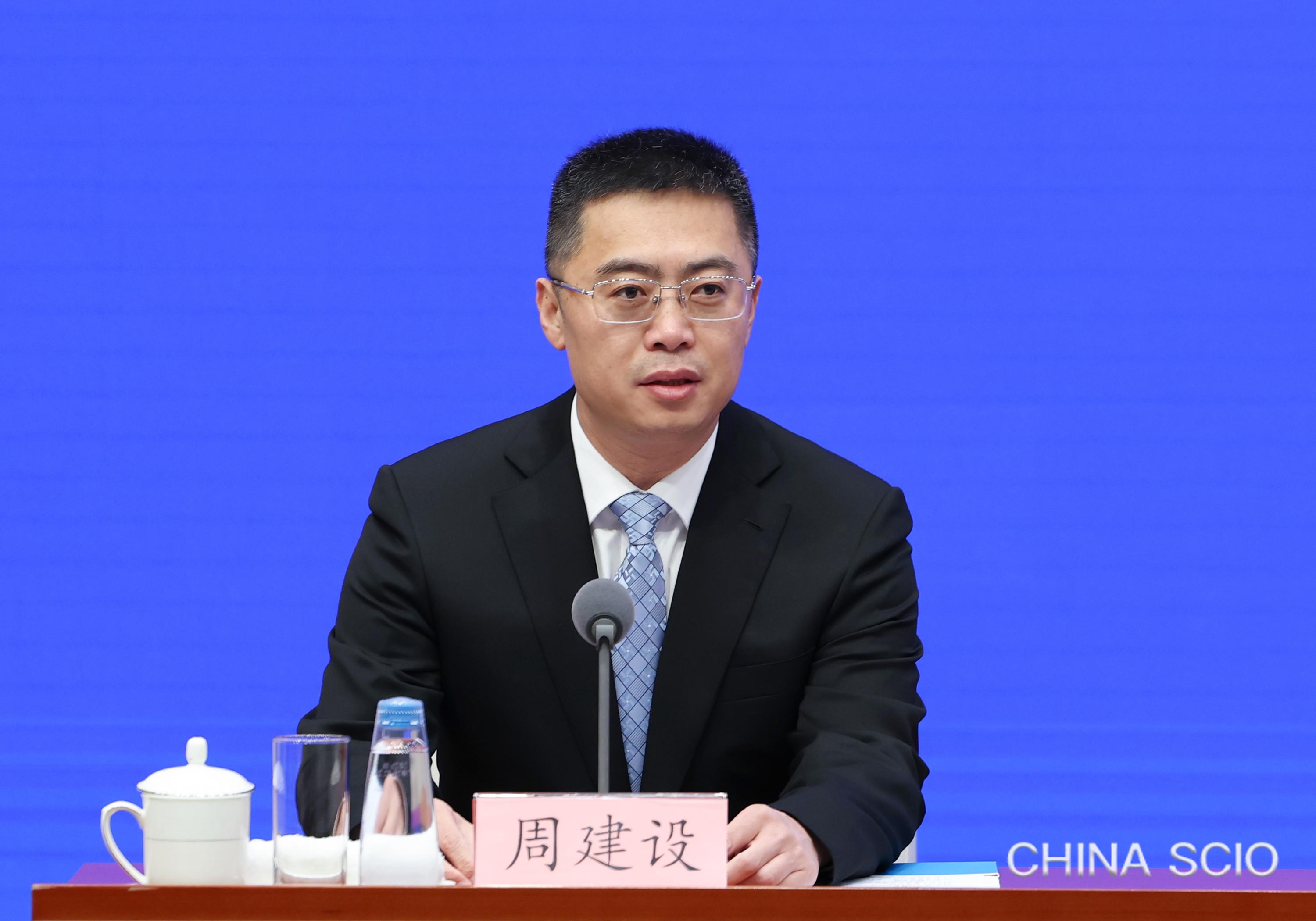
/7 Zhou Jianshe
/7 Zheng Bei
/7 Yuan Da
/7 Chen Lei
/7 Bai Jingyu
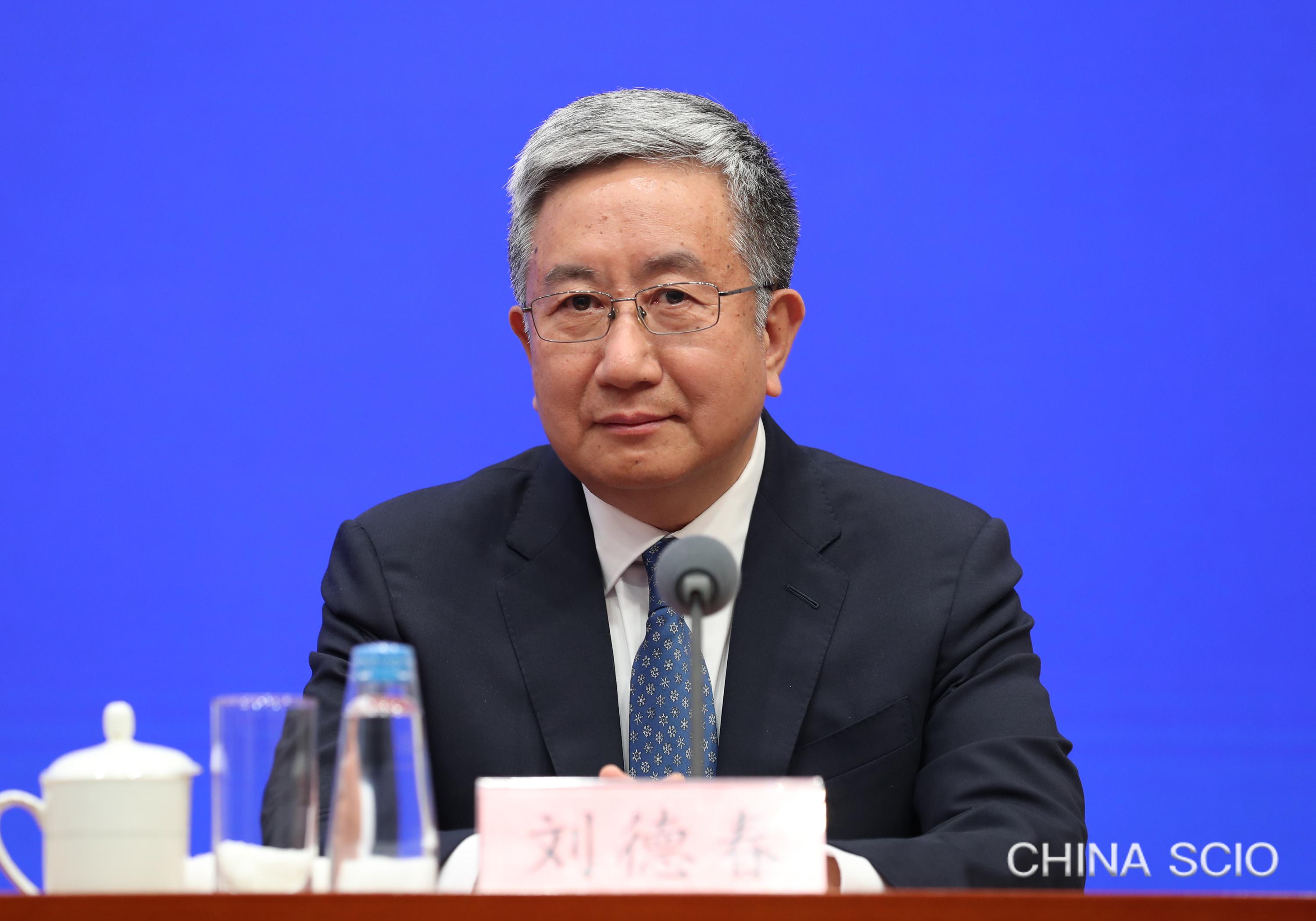
/7 Liu Dechun
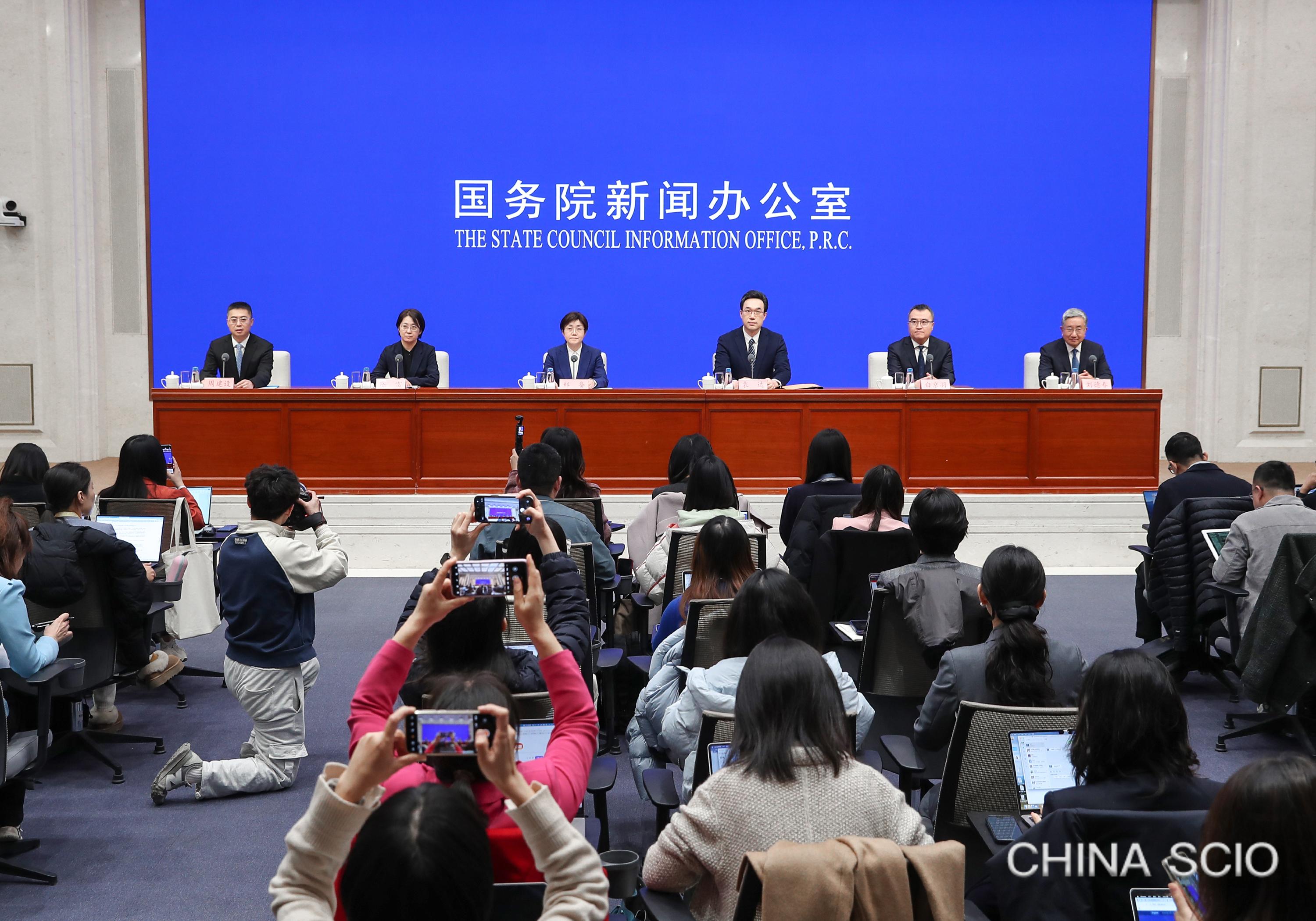
/7 Group photo
SCIO briefing about the Report on the Work of the Government
March 5, 2026SCIO briefing on Spatial Coordination Plan for the Modern Capital Metropolitan Area (2023-2035)
February 12, 2026SCIO briefing on market regulation services for high-quality development
February 5, 2026