- SCIO briefing on securing market order to support work and production resumption
Speakers:
Tang Jun, vice director of State Administration for Market Regulation
Yan Jiangying, vice director of National Medical Products Administration
He Zhimin, vice director of China National Intellectual Property Administration
Chen Xu, inspector of the Department of Food Operation of State Administration for Market Regulation
Chairperson:
Hu Kaihong, spokesperson of the State Council Information Office
Date:
Feb. 25, 2020
_ueditor_page_break_tag_Hu Kaihong:
Ladies and gentlemen, good morning. Welcome to the press conference of Joint Prevention and Control Mechanism of the State Council. Today, we have invited Mr. Tang Jun, vice director of State Administration for Market Regulation (SAMR), Ms. Yan Jiangying, vice director of National Medical Products Administration (NMPA), and Mr. He Zhimin, vice director of China National Intellectual Property Administration (CNIPA). They will explain measures taken to maintain market order and support resumption of work and production. They will also take questions. Also present is Mr. Chen Xu, inspector of the Department of Food Operation of SAMR. Now, I will give the floor to Mr. Tang Jun.
Tang Jun:
Friends from the media, good morning. First, I'd like to express my heartfelt thanks to all of you attending this press conference wearing masks at such a special time. Thank you for your attention and support for the work related to market regulation. Thank you for all your hard work. Now, I will provide a general picture of the measures we've taken to support work resumption. After that, you are welcome to ask questions.
General Secretary Xi Jinping attaches great importance to prevention and control of the COVID-19 epidemic as well as economic and social development. He has emphasized on many occasions that on top of solid epidemic prevention and control work, efforts should be made to fully support and organize various enterprises to resume production and ensure the stability of the industrial chain. At the Central Deployment Work Conference on February 23, General Secretary Xi Jinping made an important speech. He reiterated the position of promoting epidemic prevention and control and resumption of work and production in a coordinately manner. He outlined clear requirements for orderly resumption of work and production. Premier Li Keqiang has also guided enterprises' resumption of work and production extensively. SAMR has resolutely implemented decisions and work arrangements. We maintain a problem-oriented approach and implement precise policy measures. Together with NMPA and CNIPA, SAMR quickly promulgated Ten Policies and Measures to Support the Resumption of Work and Production.
In general, the fact that multiple measures have been taken is the first takeaway. Various functions of market regulation have been integrated to guide the whole regulation process. Multiple coordinated measures have been taken to enhance regulation effects. Second, swift action has been taken. SAMR acted quickly upon receiving the order. On February 15, we introduced ten measures to support the orderly resumption of work and production. Local administrations for market regulation quickly followed with corresponding measures. Third, strong steps have been taken to change governmental functions. Normal procedures have been amended. Regulation methods have been reformed and service measures have been innovated. All these efforts aim to improve the services of market regulation authorities.
These measures mainly cover five aspects. First, online services have been promoted. We are striving to drive reform to a deeper level and improve the "internet +" services model. Enterprise registration, applying for permits for food production and business, requesting qualification certificates for inspection and testing institutions and asking for anti-trust review on concentrations of undertakings can all be conducted online. We aim to make the whole process related to such services able to be completed online. Second, regular procedures have been simplified and streamlined. We've introduced numerous measures to streamline examination and approval procedures so as to reduce time and costs. We simplified the procedures that can be simplified, combined procedures that can be combined, and cut procedures that can be cut. For example, we reduced the time necessary to issue production permits to enterprises resuming or switching production as well as the wait for examination and approval of compulsory certificates. We streamlined procedures to obtain food production and operation permits. Third, urgent issues have been addressed immediately. For enterprises that shifted to production of emergency supplies such as masks and protective suits or producing drugs for epidemic prevention and control and even patent and trademark registrations related to the epidemic, green channels have been established to provide service to them and tackle special and urgent issues. For enterprises qualified for production but unable to submit required documents at present, production permits can be issued on the spot if they pledge to submit the documents later. For some qualified food production and operation enterprises, business licenses can be issued first and on-site checks can be conducted later.
Fourth, costs and burdens have been reduced. Strict measures have been taken to crack down on the collection of arbitrary charges and illegal fees. Based on the previous reduction and exemption of related fees, various certifying bodies and other technical institutes under the SAMR further has reduced technical services fees by 50 percent. Enterprises in Hubei Province, the epicenter of the COVID-19 outbreak, have been exempted from all kinds of verification, calibration, inspection and testing fees. Fifth, technical assistance and support has been carried out. Resumption of work and production requires services related to measurement, standards, certification, inspection and testing. These are the things we do as administrators of market regulation. We must ask enterprises what they need before taking the initiative to provide them with services and help including going directly to the enterprises to provide on-site services.
After the introduction of the ten measures to support resumption of work and production, we went straight to implementation and have already achieved early results. First, we stepped up efforts to facilitate enterprises' resumption of work and production. We have extended licenses for special equipment and renewed licenses by exempting reviews for 87 enterprises affected by the COVID-19 epidemic. A total of 22 inspection and testing institutes in 10 provinces and municipalities were authorized to handle 110 project expansions. Beijing alone has expedited issuance of business licenses and permits for 19 enterprises producing and selling epidemic prevention products. Procedures to apply for permits have been greatly streamlined. Implementation of notification-promise mechanism has made obtaining production permits for five raw materials for producing disinfectants used heavily in epidemic prevention and control period including calcium hypochlorite, sodium hypochlorite, bleaching powder, ethanol and peroxyacetic acid, as well as for two types of fertilizers for spring farming including complex fertilizer and phosphate fertilizer. The procedures took only one day, down from 30 days and 10 days, respectively.
Second, supervision has become more flexible. We are organizing sampling inspections on emergency medical supplies including protective suits produced by designated enterprises. We have strengthened quality supervision while ensuring that sampling inspections don't affect the normal operation of enterprises. During quality inspection of masks, for the small number of enterprises who failed to produce qualified masks, we neither fined them nor stopped their operations. Instead, we organized technical experts to visit the enterprises to help them improve product quality, determine the causes of problems and devise solutions. We strive to guarantee product quality without affecting regular production and operation of enterprises. Many provinces, autonomous regions and municipalities have optimized the management of the enterprise directory, establishing credit repair mechanisms and fostering better conditions for corporate financing. Third, technical support has been robust and timely. SAMR published a list of 55 national-level inspection and testing institutions on medical devices and protective equipment. We have also released information on over 170 provincial-level inspection and testing institutions across the country. As of February 24, 16,765 test applications for masks, protective clothing, and gloves have been accepted, and 11,089 tests have been completed, which effectively provides the necessary technical support to ensure the quality of medical protective equipment.
On the whole, we are serving enterprises heart and soul. We endeavor to understand their troubles, sympathize with their worries and help them solve problems. We will implement future measures with more details and greater effectiveness. Thank you.
_ueditor_page_break_tag_Hu Kaihong:
Thank you, Mr. Tang. The floor is now open for questions. Please let us know your outlet when asking.
CCTV:
I have a question for Mr. Tang Jun. You just outlined ten major measures to help enterprises resume production. Do you know of any targeted measures the administration has carried out to solve specific problems enterprises are now encountering? Thank you.
Tang Jun:
Thank you. This is a very good question. It is universally acknowledged that enterprises are facing many difficulties. Our support for the resumption of enterprise operation almost all qualifies as targeted measures tailored to meet the most urgent needs.
First, we have widely encouraged "face-away-from-face" business processing to reduce personnel movement during the period of epidemic prevention and control. In recent years, market supervising authorities have gradually implementing a complete procedure for online business processing. During this period, we have strengthened existing measures and applied them in more regions. We have implemented online processing for the registration of enterprises, issuance of food production license and qualification for inspection and testing institutions.
Second, realizing that administrative licensing and compulsory certification were affecting resumption of operations, we introduced a notification-promise mechanism. Enterprises that have shifted to production of materials related to epidemic prevention and control still need licenses. Generally, it takes some time to file all the necessary paperwork. But now we will approve the production license immediately if the enterprise is well-equipped for production and pledges to produce the required files within a certain period. We have also adopted a special approach for food producers. While maintaining standards to ensure food quality and safety, a few food companies, especially companies with low risk, will get certificates issued before inspection. Other companies already have production licenses that are set to expire. Usually they last five years before you must apply for an extension. We have postponed the extension procedure. These are specific measures targeting difficulties now facing enterprises.
Third, we accelerated the conversion between international and domestic standards to help many export-oriented enterprises resume production faster. Many China's manufacturers export to the international market. Their products produced according to international or foreign standards cannot be sold in China according to existing regulations. So, we streamlined the shift between international standards and domestic standards, tapped their production potential, and supported resumption of foreign trade enterprises.
Fourth, prudent management of a list of enterprises engaging in irregular operations will help repair corporate credit. Some enterprises from across the country are on the anomalous directory. Getting on this list means restrictions for them in realms of governmental procurement, bidding and financing. We have announced that if they correct the thing that got them there, we will conduct credit repair so they can easily go back to normal production.
We have also proposed a series of measures in other aspects in terms of measurement standards, certification and accreditation, inspections and testing. These came about due to specific urgent requests from enterprises, for which we have been consistently proposing solutions like the ones I mentioned. Thank you.
_ueditor_page_break_tag_China Daily:
We have a question about the "green channel" for administrative licenses related to medicines and equipment for the epidemic in the ten policies and measures. As you established this green channel for administrative licensing, what measures did the National Medical Products Administration take and what are they doing now? Thank you.
Yan Jiangying:
Thank you for your question. This is another very important issue. As we all know, medicines and medical devices are significant players in prevention and control of the epidemic. Since the outbreak, the National Medical Products Administration has fully implemented instructions from General Secretary Xi Jinping as well as arrangements from the leading group of the Communist Party of China (CPC) Central Committee on the prevention and control of the novel coronavirus outbreak and met requirements of the joint prevention and control mechanism of the State Council. Epidemic prevention and control are our top priority. We quickly opened a green channel to quickly approve medicines and medical devices to guarantee supply of materials, medicines and medical devices for epidemic prevention and control. The major measures are as follows:
First, relevant policies go effective immediately and work plans for fast approval of medicines and medical devices are developed quickly. An expedited working mechanism for examination and approval of medicines has been established and a special expert group for examination and approval of medicines and medical devices has been organized to ensure emergency examination and approval of medicines and medical devices still happen in a scientific and orderly manner. At the same time, we order provincial medicines regulatory bodies to support and encourage companies involved in producing medicine and medical equipment to quickly resume production and expand capacity.
Second, review and approval procedures are being accelerated, so products related to epidemic prevention can be released as quickly as possible. Registration of medicines used for epidemic prevention and control is being expedited while ensuring product safety and effectiveness. Special measures for the registration, production licensing, inspections and testing of medical products such as medical masks and medical protective clothing have been carried out. Approval processes have also been merged. For enterprises that shift to production of medical equipment, we have implemented emergency approval measures to deliver medical device registration certificates and production licenses lawfully while meeting the urgency of epidemic prevention. In the early stages, the National Medical Products Administration approved five new drugs including remdesivir and favipiravir for clinical trials. We also approved the nucleic acid diagnostic reagents produced by seven companies. Another three diagnostic products were approved on February 22. These three products included two diagnostic reagent for antibody (colloidal gold) and one nucleic acid detection reagent (isothermal amplification chip). The products of these three companies help provide rapid detection. By February 24, we issued a total of 134 registration certificates for medical protective clothing and medical devices, of which 93 were urgently approved during the epidemic prevention period. Of 84 registration certificates for medical protective masks, 21 were approved through emergency response. Of 225 medical surgical mask registration certificates, 67 were expedited. And 65 of 396 single-use medical mask registration certificates were issued through the emergency channel.
Third, we are providing timely support for enterprises and helping expand production capacity. Medical supervision authorities are strengthening guidance of enterprises through organization of a special working group. One-on-one service, full consultation, technical support and policy guidance will be provided to pharmaceutical and medical device manufacturers involved in epidemic prevention and control. For emergency supplies such as masks and protective suits produced by enterprises shifting production, the approval procedure for production qualification has been simplified. Inspection, the product registration certificate and production licensing has been integrated, and a fast inspection and testing procedure is being adopted. Meanwhile, we are also temporarily approving some self-inspection reports from enterprises. After on-site confirmation of the qualified enterprises, we immediately proceed to product registration and issuance of a production license. As for medicals supplies for epidemic prevention and control, provincial pharmaceutical regulatory departments have guided enterprises to arrange production to unleash production capacity and guarantee clinical supplies. As of February 24, daily production of medical protective suits, medical masks, nucleic acid detection kits and antibody detection kits reached 330,000, 844,000, 1.7 million and 350,000 per day, respectively.
Fourth, we have reduced registration fees in an effort to lift burdens on enterprises. We are exempting registration fees for coronavirus prevention and control products undergoing the emergency approval process for medical devices. The exemption also covers the registration fee for coronavirus treatment and prevention medicines in the special drug approval process.
Next, the National Medical Products Administration will put into action of the guiding principles from the important speech by General Secretary Xi Jinping at the meeting to advance the work on coordinating the prevention and control of the COVID-19 and economic and social development and start enforcing requirements to resume production. We will focus on the following tasks: First, we will speed up emergency examination and approval of medical and pharmaceutical equipment for epidemic prevention and control. Second, we will ensure provincial drug supervision and administration departments thoroughly implement requirements for epidemic prevention and control, strengthen guidance, serve and supervise enterprises performing transferred or expanded production, vigorously support enterprises in resuming production, and fully ensure the quality and safety of the medical devices needed for epidemic prevention and control. Thank you.
_ueditor_page_break_tag_TheCover.cn:
There was a report that remdesivir, a drug developed by Gilead Sciences, Inc. in the U.S., has shown effectiveness in treating COVID-19. What is the patent situation in China? We saw some Chinese pharmaceutical companies claim to produce a generic version of the drug remdesivir. Has the State Intellectual Property Office commented on this? Thank you.
He Zhimin:
Thank you for your question. According to multiple reports, remdesivir is a new drug in development by U.S.-based Gilead Sciences, Inc. It was first used to treat diseases such as Ebola and Middle East respiratory syndrome. This drug has not yet been taken to market in any country in the world and remains in the clinical stage. Some U.S. news outlet reported that remdesivir had shown preliminary effectiveness in treating COVID-19. China has started clinical trials of the drug in several hospitals in Wuhan. Trials are under way, and we won't get the results until April 27. We are paying close attention to the findings of the trials.
According to the current public information, Gilead Sciences, Inc. has applied for eight patents in China related to remdesivir. At present, three patents have been granted and five remain under review. The protection scope of these eight patent applications covers the core structure and similar structure of the compound, crystal form, related manufacturing methods and application.
Medicine is a special commodity crucial for many people's life and health. At the same time, because of the huge required investment, long time and great risk of drug research and development, the industry needs strong intellectual property protection. According to the provisions of the Patent Law of China, after patent right are granted, except for exceptions provided for in the law, no entity or individual may manufacture, use, promise to sell, sell or import a patented products for the purpose of production and operation without the permission of the patent holder. What are the exceptions? They include patented technology for scientific research and test purposes, as well as the import of patented medicine to provide information needed for administrative examination and approval.
Medicine is also special products, whether developed through original research or generics, in that they need strict approval by the regulatory department before they can be put on the market. Pharmaceutical enterprises must produce and market patented products according to law, not only through medicine regulatory authorities, but also while respecting the property rights of patent holders. If a patent holder sees infringement, he or she can bring a lawsuit or submit a request for administrative arbitration. We will protect the legitimate rights and interests of the patent holder within the framework of the Patent Law.
Now that remdesivir is currently in clinical trials, we are quite concerned about its effectiveness and safety. We are also looking forward to the emergence of numerous other medicines that have shown promise in treating COVID-19 including existing medicines. At present, the prevention and control of novel coronavirus pneumonia epidemic has reached the most critical stage. We, along with scientific research workers and pharmaceutical enterprises, should keep the people's safety and health at the top of the agenda and show a strong force of solidarity and cooperation to win the battle. Thank you.
_ueditor_page_break_tag_China Business Network:
I have a question on food security, which is closely related to people's lives. During epidemic prevention and control, what preferential measures have market regulation administrations introduced to help food production and operation enterprises resume work in an orderly way? Thank you.
Chen Xu:
Thank you for your question. During the unexpected COVID-19 outbreak, food remains the top concern related to people's daily lives among all the basic needs. According to features and regulatory requirements of food consumption during the epidemic prevention and control period, the SAMR issued a notice deploying market regulation administrations at all levels to strengthen food supervision in key fields, venues and links to ensure food security for all people. It especially encourages food enterprises to actively participate in the "three guarantees" campaign of stabilizing prices, maintaining quality and ensuring supply. Now, nearly half of the 7,000 enterprises participating in the campaign are leading food enterprises above designated size. They are playing an important role in the campaign by contributing greatly in driving the whole food industry to resume work and production in an orderly way to ensure the food supply and maintain market stability.
In addition to ensuring food security, market regulation administrations at all levels are analyzing the real situation of epidemic prevention and control as they leverage their assistance abilities and employ a wide variety of strategies to support food production and operation enterprises in resumption of work. Measures include the following:
First, licensing can be extended. During the period of epidemic prevention and control, if a food production and operation license expires, local administrations for market regulation can extend its validity until the epidemic situation lifts, which is a great convenience for relevant people.
Second, a license can be issued after a food production enterprise makes commitments. During the epidemic prevention and control, local administrations for market regulation can explore and implement a promissory commitment mechanism in combination with food security risk classification management. For new enterprises applying for food production licensing and enterprises applying for a change in food production licensing that normally requires on-site verification, provincial-level market regulation administrations can pilot in accepting promissory commitments from low-risk food enterprises and granting permissions for operation before inspection, which means they issue the licenses for production first, and then conduct on-site inspection within 30 working days.
Third, the whole license application procedure can be done online. Market regulation administrations are harnessing "internet plus" technology to process applications for food production and operation licensing including acceptance, examinations, certification, inquiries and publicity. The administrations are promoting issuance of electronic licenses, which enables enterprises to apply for licensing online and improves efficiency.
Fourth, the licensing approval process can be accelerated. Since implementation of epidemic prevention and control measures, market regulation administrations at all levels have accelerated the approval process of food production and operation licensing to support food enterprises in increasing production, ensuring quality, stabilizing development and overcoming difficulties. This has created good conditions for enterprises to resume work and production.
For the next step, the SAMR will guide and support leading food enterprises to further enhance the effects of the "three guarantees" campaign. Great efforts are being made to expand the role of online platforms in facilitating contactless transactions and promote distribution modes that create a healthier food consumption environment. Since the number of people eating out and purchasing food outside has sharply decreased during the epidemic, offline food enterprises have been encouraged to develop online operations to help offset the loss of offline business. We are encouraging e-commerce platforms to launch more preferential measures to help consumers and merchants using them.
The SAMR will continue to work with all sectors of society to fully prepare for total recovery by promoting innovation and development of the food industry during and after the outbreak. Thank you.
_ueditor_page_break_tag_Economic Daily and China Economic Net:
I have a question for Mr. Tang Jun. We understand that the "three guarantees" campaign involves stabilizing price, maintaining quality and ensuring supply. What progress has this campaign achieved so far? What role have participating enterprises played in the fight against the epidemic? Thank you.
Tang Jun:
The "three guarantees" campaign was officially launched on January 29, 2020. Its purpose is to mobilize social resources, especially enterprises and retailers, to maintain market order, ensure supply of epidemic prevention products and guarantee the basic needs of daily life. Since the launch, the action has attracted a robust response. As of February 24, 7,324 enterprises have participated in the action including producers and distributors, e-commerce platforms, shopping malls, supermarkets and franchised convenience stores. Most major enterprises in China are participating in the action, and its effects can be seen in more than 200,000 offline stores covering large, medium and small cities and rural areas. The action has achieved obvious effects.
Market regulation administrations are doing everything they can to stabilize prices. You've probably noticed reports of timely investigation and sanctioning of enterprises marking up the price of masks. As of February 24, more than 4,500 enterprises have been investigated and fined, and over 11,000 cases have been filed alleging price gouging of other medical protective equipment and important commodities for daily life. We work with national and local media to expose such behavior quickly and widely.
But many enterprises are taking active measures and utilizing e-commerce to control prices. E-commerce platforms participating in our action have removed more than 200,000 marked up masks from more than 36,000 stores. Enterprises committed to ensuring quality have been closely checking the quality of goods, strictly controlling purchasing channels, and quickly recalling defective products.
In terms of ensuring supply, many enterprises participating in the "three guarantees" campaign have actively responded to the call to resume work and production. About 98.9 percent of enterprises in the supermarket industry have resumed work and production, and more than 70 percent of enterprises in the food production sector have resumed work and production. E-commerce platforms have helped by strengthening information collection and transaction coordination, timely and accurately connecting supply and demand ends, and effectively guaranteeing supply.
We have seen a lot of promising results since the launch of the campaign. I would like to take this opportunity to ask even more enterprises to participate. The market regulation administrations will work with enterprises to maintain market order and ensure supply of basic commodities. Thank you.
_ueditor_page_break_tag_China News Service:
We know that intellectual property pledge financing remains a big concern for small and medium-sized enterprises (SMEs). In these difficult times, what measures will the CNIPA take to support financing and renewal of loans to alleviate corporate financial difficulties and support resumption of work and production? Thank you.
He Zhimin:
Thank you for your question and for bringing attention to the financing difficulties SMEs have experienced. As we all know, many SMEs are indeed facing financing strains due to the epidemic. Solving their financing problems is an important task. Intellectual property pledge financing is an effective way to help SMEs, especially technology-based ones, alleviating capital shortage.
In accordance with decisions and arrangements of the CPC Central Committee and the State Council, CNIPA has actively promoted work on intellectual property pledge financing. In 2019, the total amount of pledge financing of patents and trademarks reached 151.5 billion yuan (US$21.6 billion), which helped nearly 10,000 enterprises solve the problem of capital shortage. After the COVID-19 outbreak, CNIPA studied and implemented the guidelines of General Secretary Xi Jinping and decisions and arrangements of the CPC Central Committee and State Council through a series of concrete measures. These measures include facilitating services on intellectual property-related business, relaxing deadlines and restoring rights, promoting intellectual property pledge financing, providing services on patent information and optimizing window service.
Regarding support for enterprises' intellectual property pledge financing, we are currently focusing on three areas:
First, we have established a green channel for pledge registration. According to the needs of enterprises and banks, we respond immediately and accelerate processing with an aim to finish online registration within one working day. Enterprises producing emergency supplies for epidemic prevention and control can complete procedures instantaneously. We will never allow the registration process to slow down loans to be used to produce supplies for epidemic prevention and control.
Second, we have organized local administrations to investigate pledge demands and available projects. When we understand demands for patent and trademark pledges related to epidemic prevention and control, as well as the repayment abilities of the enterprises with available projects, we can carry out door-to-door services and make better use of relevant policy tools to actively coordinate the bank's loan dispersal and renewal to those enterprises.
Third, we are increasing policy integration and fostering innovation. Where conditions permit, we encourage local administrations to integrate various support policies such as loan discounts, risk compensation, insurance and subsidies. We also encourage them to innovate methods of the internet and new media project aligning and of policy publicity, and to bring IPR's role in increasing credit and loans to enterprises into full play, thus supporting enterprises' resumption of work and production.
We are happy to find that some local administrations have taken strong measures to promote intellectual property pledge financing. Their efforts are winning great acclaim from relevant enterprises and the whole society. For example, Guangdong Provincial Intellectual Property Administration issued a notice demanding authorities enhance intellectual property pledge financing work to help enterprises to overcome current difficulties. Accordingly, Dongguan City of Guangdong assumed a lead role in support of enterprises. It loaned out 15 million yuan (US$2.13 million) to a medical enterprise with three utility model patents as collateral, greatly relieving its operational pressure and expanding its production capacity. The Intellectual Property Office of Jiangsu Province also has boosted intellectual property pledge financing work. They launched a special program which allowed 37 enterprises to receive pledge loans of 114 million yuan (US$16.25 million) since the epidemic outbreak. There are also many other examples, but I will not list them one by one.
Next, CNIPA will strengthen coordination with local authorities to actively promote useful experience and effective practices. We will fully support qualified enterprises in need of quick financing and contribute to helping them resume and expand production. Thank you.
_ueditor_page_break_tag_China Review News Agency (Hong Kong):
You just mentioned that the NMPA approved a group of drugs and medical devices for epidemic prevention and control within a short period of time due to the pressing need. How are you sure of the quality of these medicines and medical devices? What measures has the NMPA adopted to strengthen management of medicine and medicinal equipment used for epidemic prevention and control? Thank you.
Yan Jiangying:
This is a very good and important question. Everyone knows that drugs and medical devices are special commodities. We need to double and triple check them for quality and safety. First, we need to check their quality and safety before they go into market. Second, we need to check their quality and safety after they're already in the market. We have launched an emergency approval process. Before they go to market, we firmly adhere to the principle of "safety first, evidence of efficacy, quality assurance and unconventional review." Based on this guiding principle, we uphold the premise of safety and effectiveness, and accelerate review and approval, which is a key procedure before they go to market.
While speeding up review and approval, we are tightening supervision after medicines and medical devices for epidemic prevention and control go to market. NMPA has strengthened supervision especially on emergency medicines and medical devices, as well as drugs used in treatments suggested by the National Health Commission. We have focused our work in the following ways:
First, we strictly enforce a bottom line for quality and safety, and strictly enforce the supervisory responsibilities of related departments in overseeing enterprises fulfilling their responsibilities. We have strengthened supervision and inspection of drugs and medical devices for epidemic prevention and control, especially emergency products which have enjoyed quick approvals. Additionally, we are increasing checks and sampling inspections while strengthening pharmacovigilance. We require manufacturers to organize production in strict accordance with production quality management standards. Released products are strictly controlled. At the same time, we supervise enterprises in strengthening complete quality management including purchasing channels, purchase and sales records, storage and transportation conditions. We have stationed inspectors in pharmaceutical and medical device manufacturing factories and tasked them with overseeing strict quality management to ensure the quality, safety and effectiveness of products.
Second, we have dispatched inspection teams to strengthen supervision of key products for epidemic prevention and control. We have conducted closed cooperation with industrial and information departments and market regulation administrations to reinforce supervision and inspection of designated enterprises, in order to identify problems and solve problems quickly. So far, NMPA has sent 13 working teams in two waves to increase supervision and inspection of drugs and medical devices to be used in epidemic prevention and control alongside local medical products administrations. We are urging enterprises to practice strict self-discipline and ensure product quality and safety.
Third, we are also cracking down on crimes. With the help from authorities in public security, health and market regulation, we have accelerated investigating and prosecution of illegal and criminal acts related to drugs and medical devices in accordance with the law. Criminals will face heavier punishments in accordance with the law. We will do everything we can to ensure medicine and medical device safety during this period.
Next, we will continue to strengthen supervision of the quality and safety of medicine and medical devices while continuing emergency reviews and approval work. Thank you.
Hu Kaihong:
The press conference is hereby concluded. Thanks to the four speakers, and thanks to you all.
Translated and edited by Yin Xing, Zhao Yue, Wang Shuya, Zhou Xin, Xu Shuyuan and Scott Huntsman. In case of any dispute over a discrepancy, the Chinese version is deemed to prevail.
- SCIO briefing on efforts to coordinate COVID-19 control with economic, social development
Speakers:
Cong Liang, a member of the Leading Party Members' Group of the National Development and Reform Commission (NDRC) and secretary general of NDRC
Tian Yulong, a member of the Leading Party Members' Group of the Ministry of Industry and Information Technology (MIIT) and chief engineer of MIIT
Ou Wenhan, assistant minister of the Ministry of Finance (MOF) and a member of the Leading Party Members' Group of MOF
You Jun, vice minister of the Ministry of Human Resources and Social Security (MOHRSS) and a member of the Leading Party Members' Group of MOHRSS
Ren Hongbin, assistant minister of the Ministry of Commerce (MOC) and a member of the Leading Party Members' Group of MOC
Chen Yulu, a member of the Party Committee of People's Bank of China (PBOC) and deputy governor of PBOC
Chairperson:
Hu Kaihong, spokesperson of the State Council Information Office
Date:
Feb. 24, 2020
_ueditor_page_break_tag_Hu Kaihong:
Ladies and gentlemen, good morning. Welcome to this press conference. General Secretary Xi Jinping and the Central Committee of the Communist Party of China (CPC) have recently issued instructions on the work to coordinate the prevention and control of the COVID-19 epidemic with economic and social development. Today, we have invited Mr. Cong Liang, a member of the Leading Party Members' Group of the National Development and Reform Commission (NDRC) and secretary general of NDRC; Mr. Tian Yulong, a member of the Leading Party Members' Group of the Ministry of Industry and Information Technology (MIIT) and chief engineer of MIIT; Mr. Ou Wenhan, assistant minister of the Ministry of Finance (MOF) and a member of the Leading Party Members' Group of MOF; Mr. You Jun, vice minister of the Ministry of Human Resources and Social Security (MOHRSS) and a member of the Leading Party Members' Group of MOHRSS; Mr. Ren Hongbin, assistant minister of the Ministry of Commerce (MOC) and a member of the Leading Party Members' Group of MOC and Mr. Chen Yulu, a member of the Party Committee of People's Bank of China (PBOC) and deputy governor of PBOC. They will introduce the measures being taken to implement the instructions given by General Secretary Xi Jinping and the CPC Central Committee. They will also answer your questions. First, I will give the floor to Mr. Cong.
Cong Liang:
Ladies and gentlemen, friends from the media, good morning. The impact of the COVID-19 epidemic on China's economic and social development is currently a major concern for all sectors of society. The CPC Central Committee and the State Council have attached great importance to the work on promoting economic and social development amid the outbreak. General Secretary Xi Jinping leads and arranges the related work personally. He has called many meetings, heard reports and delivered important speeches. General Secretary Xi has emphasized that the work of coordinating epidemic prevention and control with economic and social development is of vital importance. He has demanded great efforts to achieve this year's economic and social development goals and tasks, and secure finishing the building of a moderately prosperous society in all respects, meeting the goal of eliminating poverty and completing the 13th Five-Year Plan. Premier Li Keqiang has chaired State Council executive meetings, stressing coordination in advancing economic and social development along with unremitting epidemic control efforts so as to ensure normal running of society and the economy. The Joint Prevention and Control Mechanism of the State Council has also held many meetings to discuss and make arrangements for relevant work.
While continuing anti-epidemic efforts, the NDRC, in cooperation with other departments, is offering guidance for local authorities to establish economic and social order based on the epidemic situation, promote orderly resumption of work and production according to the categories of the various enterprises involved, and ensure key supplies are provided on time. The latest statistics show that the resumption of work and production is well underway, with large enterprises being ahead of small and medium-sized ones in this regard. Compared to downstream industries and labor-intensive enterprises, upstream participants and capital and technology-intensive companies report faster resumption of production. More and more industrial enterprises above designated size are gradually resuming production. More than 90% of such enterprises in Zhejiang province, for example, have restarted production, and the figure is above 70% in Jiangsu, Shandong, Fujian, Liaoning, Guangdong and Jiangxi provinces. In terms of key industries, 67.4% of steelmaking enterprises have restored production, and those in non-ferrous metal business have reached 86.3%. In particular, enterprises in key sectors that directly concern national stability and our people's wellbeing are accelerating their drive for resumption of normal production, and some are already operating in high gear around the clock. The production capability of face masks has been expanded to 110% of the normal level. More than 70% of the grain processing capacity for emergency response has been restored. A total of 76% of firms in the coal sector have restored production. Rail loadings have reached around 95% of the normal level before the Spring Festival holiday. Civil aviation, ports and waterway network are also operating as normal.
The epidemic did inflict a big impact on China's economic performance, undermining consumption and hitting the services sector during the Spring Festival holiday, along with delaying the resumption of work and production thereafter. Some enterprises, especially small and medium-sized ones, encountered great difficulties in their production and operation. In response, local authorities and various central departments have acted based on the decisions made by the CPC Central Committee and the State Council, rolling out strong and effective measures to mitigate the impact. These measures include cutting the energy consumption costs of enterprises; promoting special re-lending programs totaling 300 billion yuan (about $43 billion) to provide low-interest loans to key manufacturers of supplies needed for epidemic control; provisionally reducing or waiving employers' social insurance and medical insurance contributions and deferring their payments to the housing provident fund; as well as reducing value-added tax and income tax for some industries and individuals.
Here I must stress that the short-term impact brought about by COVID-19 on our economy and society is controllable and will not change the fundamentals of China's long-term economic development. With gradual progress made in epidemic prevention and control work, and effective policies to offset repercussions, we have the confidence, ability, and conditions to minimize the impact of the epidemic and sustain steady economic and social development.
Next, in accordance with the decisions and deployments made by the Party Central Committee and the State Council, the National Development and Reform Commission will work with other relevant departments to strengthen the prevention and control of the epidemic, as well as to promote the orderly resumption of production based on different areas and epidemic situations. To safeguard the orderly flow of people, materials, and capital, we need to focus on the following tasks:
First, we will step up macro policy adjustments. We will fully implement all the deployments made at the Central Economic Work Conference, pursuing a more proactive fiscal policy as well as a prudent monetary policy that retained an appropriate degree of flexibility. We will also consider adopting targeted measures to cut taxes and fees to help micro, small, and medium enterprises pull through the crisis. We will actively expand domestic demands, spur consumption recovery, and unleash potential. We will also give full play to the key role of effective investment and provide stronger support to major sectors, including labor, land use, and funding, to accelerate the construction of ongoing and newly started projects. We will coordinate all work to maintain stability in six key areas, namely, employment, finance, foreign trade, foreign investment, domestic investment, and expectation.
Second, we will work to ensure that emergency policies and measures that have already been issued are fully implemented. We will step up support and assistance to key industries, as well as small and medium enterprises, by fully implementing policies on reducing taxes and fees, providing financial services, offering rent cuts and exemptions, and providing subsidies to enterprises that maintain stable employee numbers. We will coordinate all work to ensure stable production and supply of daily necessities to meet people's basic needs. We will also ensure timely agriculture work in the spring, resolutely accomplish the task of alleviating poverty, step up efforts to keep employment stable with all-round measures, and strive to meet the needs of daily protective supplies for enterprises that have already resumed production or prepare to do so.
Third, we will work hard to address inadequacies in our work and shore up points of weakness. The prevention and control of the epidemic have exposed some inadequacies in our work, which should be improved with more significant and more precise efforts after we draw on the experience and lessons. All these will provide new opportunities for us to boost domestic demand and promote economic growth, help create and develop new areas of growth, and, more importantly, lay a sound foundation for China's economic and social progress. Meanwhile, we will continue to monitor the economic performance closely, as well as to formulate and adopt relevant policies, measures, and contingency plans based on the changing situation to ensure a stable economic and social performance.
_ueditor_page_break_tag_CNR:
Premier Li Keqiang recently required related enterprises to race against the clock and work hard to expand production capacity while inspecting the production of face masks in Beijing. During his visit, the premier expressed his wish that the daily production capacity of masks nationwide should exceed 100 million at an early date. What measures will you take to constantly expand production capacity and ensure supply? How is the resumption of production going with producers of key medical supplies? Thank you.
Tian Yulong:
Thank you for your question. Since the outbreak of the epidemic, both the Party Central Committee and the State Council have placed great importance on the provision of medical supplies. General Secretary Xi Jinping has given important instructions on various occasions. As the leading unit of the medical supplies group of the Joint Prevention and Control Mechanism of the State Council, the Ministry of Industry and Information Technology has worked with other member units to adopt various measures and hold mobilization meetings to prioritize and accelerate the resumption of the production of medical supplies. We have mobilized enterprises to resume, expand or switch production to medical protective supplies, disinfection and sterilization supplies, test reagents, medicines, and medical equipment, as well as raw materials needed for manufacturing these products. In particular, we have held meetings to mobilize and make deployments for enterprises to expand or switch production to medical protective suits.
The joint efforts of all sectors from across society, various government departments and localities, have ensured that key medical supply companies are resuming work and production at a high rate. The output rate of these companies has reached and, in some cases, exceeded 100%, as some companies have expanded production. The capacity of key medical supplies has increased and now frontline medical staff in Hubei are guaranteed adequate supplies. The output of medical protective clothing has risen from less than 10,000 pieces per day on Jan. 28 to more than 200,000. The number of producers has already increased from less than 20 to more than 50 producing at maximum capacity, with nearly a hundred more applying for new licenses to start production. Over two million pieces of protective clothing have been sent to Hubei so far, which has guaranteed supplies on the frontline, Beijing and other parts of the country where the epidemic has been relatively severe. Regarding the masks, Mr. Cong Liang will talk about it for a while, which is also good in general.
We have also guaranteed the production and supply of isolation clothing, and offered Wuhan over 700,000 pieces. 40,000 medical goggles and masks are now being produced per day, which has effectively met demand on the frontline. The work resumption rate of sanitizer and disinfectant companies currently stands at over 80%. The production capacity and output of 84 products of disinfectant, no-rinse hand sanitizer and medical alcohol is large enough to meet the needs of Hubei and even the whole country. So far, more than 1,500 metric tons of disinfectants and 115 metric tons of hand sanitizers have been transported to Hubei. At the same time, we are organizing e-commerce platforms and wholesale pharmaceutical companies to cooperate and provide sanitizers, online and in-store, as soon as possible, so we can meet the needs of the general public as work resumes.
Meanwhile, ten categories of medical equipment are in urgent need on the frontline, including negative pressure ambulances, ventilators, electrocardiogram (ECG) monitors, and various thermometers. But we are making sure the frontline is getting what it needs. For example, more than 10,000 ventilators and monitors, and 140,000 hand-held thermometers have arrived in Wuhan and played an important role in medical treatment.
Of course, the current epidemic situation is relatively severe, and controlling it is still at a critical stage. I should add that supplying medical materials is still relatively arduous, and key medical supply companies still require continuous, steady and high-quality support. Therefore, the Ministry of Industry and Information Technology (MIIT) will cooperate with other government departments in epidemic prevention and control; work and production resumption; coordinating upstream and downstream industrial chains; prioritizing the urgent needs of the frontline; and meeting the needs of Beijing and the country to win the battle against the epidemic. Thank you.
Cong Liang:
Thank you for your question. I would like to add something about face masks. When inspecting the production of masks, Premier Li emphasized that masks are a weapon for medical personnel to fight the epidemic, a shield to protect the health of the people, and a guarantee for the orderly resumption of work and production of enterprises. In accordance with the arrangements of the CPC Central Committee and the State Council, the National Development and Reform Commission (NDRC) will work with relevant government departments to ensure the production and supply of masks.
Since Feb. 1, we have helped mask manufacturers to solve problems in terms of labor, capital, and raw materials, and made every effort to ensure the supply of masks. It can be roughly divided into two stages: the first stage was mainly to respond to the epidemic and to protect front-line medical staff, so we focused on expanding the production of medical N95 masks. As a result, the N95 daily output on Feb. 22 has reached 919,000, which is 8.6 times that of Feb. 1. We have transferred 3.3 million masks from provinces producing N95 masks to Wuhan, Beijing and other localities without N95 production capacity since February, among which 2.68 million were transferred to Wuhan. The recent daily transfer remains more than 150,000, and more than 300,000 N95 masks are provided across Wuhan every day, which can more than meet the needs of the 60,000 plus frontline medical staff.
For recent days, the resumption of work and production has seen an explosive growth in demand of face masks. We are now turning focus to ensuring the supply of ordinary medical and non-medical masks. The work will be carried out in the following three aspects:
First, production will be resumed to the fullest extent to meet demand. We will continue to ensure an overall resumption of face-mask production. In doing so, we prioritize supply of the labor force, funds, logistic services and key raw materials to meet the demand of the manufacturers concerned and stimulate them to work at full steam under the premise of epidemic prevention and safe and quality-centered production.
Second, the growth of productivity and the expansion of production capacities will be fully supported. We have launched a special campaign to expand the production capacity of face-masks for medical use since the beginning of this month. Enterprises were organized into three groups to increase productivity, expand capacity and switch production by means of technological improvement, so that greater supply could be secured. In the next phase, we will continue to draw up policies to support the endeavor of epidemic prevention and control, if necessary.
Third, concerted efforts will be made to ensure the smooth operation of the industrial chain. Viewing the entire industry, we will help accelerate the production of key raw materials and facilities, including melt-blown non-woven fabric, mask making machines and parts, to satisfy the urgent needs of face-mask manufacturers and raise industrial efficiency.
So far, new mask production lines have been launched in 30 provinces, autonomous regions and municipalities, with Tibet excluded, and there will be more on the way. By Feb. 22, the daily output of face masks had reached 54.77 million, growing 2.8 times the figure on Feb. 1. A total of 570 million face masks have been produced over the past 20 days.
We believe, with our concerted efforts, production will keep growing rapidly to better meet the demand as work and production resume amid the ongoing fight against the epidemic. Thank you.
_ueditor_page_break_tag_Nihon Keizai Shimbun:
China set its economic growth target at the Central Economic Work Conference held last December. Will there be any change of the target due to the epidemic? Thank you.
Cong Liang:
Thank you for your question. This year marks the end of the 13th Five-Year Plan and China is set to achieve its goal of completing the building a moderately prosperous society in all respects. Based on that, China set this year's economic and social development goals and mapped out major tasks at the Central Economic Work Conference held last year, including: implementing the new development philosophy, stepping up efforts in the "three tough battles" against major risks, poverty and pollution, improving people's livelihood, creating better use of fiscal and monetary policies, boosting high-quality development and deepening the reform of the economic system. Despite the impact of the COVID-19 outbreak, China still has plenty of ways to complete the tasks and reach the goals of economic and social development drawn up at the conference.
First, the epidemic won't change the long-term sound development trend of the national economy. The impact of the epidemic on the world's second largest economy is temporary and short lived. Consumption, supposed to release its potential after the epidemic, has merely been postponed, not lost. For instance, growth of retail sales dived to 4.3% in May 2003, when the Severe Acute Respiratory Syndrome (SARS) affected the country. However, two months later, the growth jumped to 9.8%. To take another example, industries like online shopping, online education, remote office work, online entertainment and smart manufacturing, have bucked the negative impact of the current epidemic to attain substantial growth. Those altogether reflect the great resilience and potential of China's economy.
Second, emergency policies and measures have been adopted to counteract the impact of the epidemic. In accordance with the decisions of the CPC Central Committee and the State Council, authorities in different regions and at different levels have mapped out a series of measures to safeguard the stable performance of national economy, namely, stabilizing employment, the financial sector, foreign trade, domestic and foreign investment, and market expectations. In recent days, we have rolled out more effective policies to offset the impact of the epidemic, such as promoting the orderly resumption of work and production, cutting taxes and fees, expanding financial services, reducing or exempting rents, and providing job subsidies. We believe that those policies and measures will alleviate the economic impact, especially the difficulties that small and medium-sized enterprises are facing.
Third, normal order of production and operation is being restored. Under the premise of containing the epidemic, we adhere to the principles of scientific prevention, adopting targeted measures based on different levels of risks from low to high, and taking a differentiated approach to promote resumption of work and production. We have made efforts to address the congestion problem. For areas of low risk, traffic restrictions will be lifted completely. We will promote the resumption of work and production in the upstream and downstream sectors of the industrial chain in a coordinated manner. Simultaneous resumption of operation will be realized in key sectors such as medical supplies, daily necessities, and logistics, so as to ensure normal operation of the industrial chain. We will fulfill the requirement of "implementing policies before companies run into any difficulties." Difficulties facing businesses will be addressed, especially those in key regions, including labor, capital, and raw material supplies. We will step up efforts to support key industries and SMEs. Under the premise of preventing and controlling the epidemic, we will make sure enterprises can still operate, and the economy will continue to run smoothly.
Fourth, we have enough development potential and policy reserves. As I mentioned, weaknesses were exposed in many areas during this outbreak, for example, social governance, public health facilities, emergency response and material reserve. But these are also the potential for future investment and space for future development. We will strive to make up for any shortcomings and improve the quality and efficiency of economic development. Meanwhile, we will step up economic monitoring, forecasting, early warning, and policy research reserves. Relevant policies will be introduced at appropriate time. Macro-control efforts will be strengthened. In these ways, we can maintain a stable, healthy, and sustainable economic and social development.
I'm confident that, as long as we unite, implement the arrangements of the Central Economic Work Conference, expand domestic effective demand, and introduce the right policy, we can attain this year's economic and social development targets. Thank you.
_ueditor_page_break_tag_Economic Daily:
Now, we are paying more attention to stable economic development. What effective measures have been put in place by the financial departments to stabilize the economy? What further steps will be taken in implementing a proactive fiscal policy? Thank you.
Ou Wenhan:
Thank you for your question. The COVID-19 is not only threatening people's lives and health, but also impacting the economy. The financial and fiscal department are earnestly implementing the decisions made by the CPC Central Committee and the State Council. While ensuring capital and material supplies, we seek to leverage the role of fiscal policies in a targeted manner to counter economic fallout from the coronavirus outbreak.
First, we have provided preferential tax policies for hard-hit industries, including the transportation, catering, accommodation and tourism sectors. We have adjusted the corporate income tax policy to provide timely support for industries closely related to people's livelihood, such as public transportation and express delivery. Measures for exempting value-added tax have been introduced to reduce the burden in a targeted manner and help the enterprises overcome difficulties.
Second, we have introduced general fee reduction policies. Working with relevant departments, we have introduced policies such as a phased reduction of social insurance as well as medical insurance, and deferring payment of housing provident funds, which benefit a large number of people. On top of last year's policy of cutting social insurance rate, these policies will help offset the impact of the epidemic on business.
Third, we have intensified support to help enterprises maintain steady employment. We have been working with the Ministry of Human Resources and Social Security and other departments to support the business to keep more people on their payroll, by returning the unemployment insurance premium and providing vocational training subsidies. At the same time, for SMEs and individuals affected by the epidemic, we have introduced special policies to reduce their financing guarantee fees in order to address their difficulties in financing. These policy measures will play an important role in building up social expectations and boosting corporate confidence. With resumption of work and production, policies will further take effect.
Next, we will continue to earnestly implement General Secretary Xi Jinping's important instructions at the meeting to advance the work on coordinating the prevention and control of the COVID-19 and economic and social development. We will strengthen the counter-cyclical adjustment of macroeconomic policies. Fiscal policies will be more proactive to ensure that the decisions of the CPC Central Committee and the State Council are put in place.
On the one hand, we will promote the implementation of relevant policies that have already been introduced, such as fiscally subsidized interest rates, fees reduction on a large scale, and deferring tax payments, so as to ensure these polices can produce desirable results as soon as possible. On the other hand, we will take more proactive approaches and intensify policy efforts to ensure the economy can continue to perform within an appropriate range, and prevent the short-term impact from evolving into a long-term trend.
First, we will continue to study and introduce more targeted interim policies in cutting taxes and fees, focus on resumption of work and production in key industries, and help micro, small and medium-sized firms tide over any short-term difficulties. Second, we will utilize the available funds of some departments of the central government for the epidemic prevention and control work, with a focus on ensuring funding for priority areas such as poverty alleviation and completing the building of a moderately prosperous society in all respects. Third, we will increase transfer payments. We intend to allocate more to severely affected areas to guarantee salary payments, business operations and protection of people's basic livelihood. Fourth, we will expand the issuance of special bonds by local governments. In line with the principle of "capital follows projects," we will guide them to work for establishment of project reserves and preliminary preparations, so as to make effective investment as soon as possible.
Through systematic planning, targeted policies and pragmatic implementation, we will be able to prevent and control the epidemic while advancing economic and social development. As long as we are able to unleash the great potential and powerful driving forces of development, we will surely achieve this year's economic and social development targets, and secure alleviating poverty and completing the building of a moderately prosperous society in all respects. Thank you.
_ueditor_page_break_tag_CCTV:
My question is to Mr. You Jun. We have noticed that the outbreak of the epidemic has affected employment in some industries and in regard to medium- and small-sized enterprises. How will it impact employment as a whole? What kind of measures will you take to deal with the impact? Thank you.
You Jun:
Thanks for your concern. Employment has always been a matter of great concern to everyone in society. Generally speaking, the current employment situation in China as a whole remains stable. Last year, 13.52 million new urban jobs were created, meaning the number topped 13 million for the seventh straight year. At the end of last year, the national surveyed urban unemployment rate was 5.2%, lower than expected.
According to the data of January, the main employment index was running within an appropriate range. However, the outbreak of the epidemic has inevitably brought great impact to our economy, and this will surely affect employment. Employers delayed the resumption of work and production, so naturally employees could not return to work as planned. Service sector industries, like tourism and catering, and medium- and small-sized enterprises have been encountering increased difficulties. Due to faltering demand of market recruitment, college graduates, migrant workers and other key groups have to face tougher situation. Therefore, the structural contradiction between the difficulties of employers and employees became more prominent, which really poses some challenges for employment this year.
However, we should also see that the impact of the epidemic is temporary and generally manageable, and it will certainly not change the fundamentals of China's long-term sound economic growth, as well as the general stable employment. With large scale and wide market space, our economy features great resilience and potential. In recent years, the economy has played an increasingly important role in boosting employment, which provided steady support for keeping stable employment. In particular, the CPC Central Committee with Comrade Xi Jinping at the core attaches great importance to employment, and takes it as the first priority in maintaining stability in the six key areas, namely employment, finance, foreign trade, foreign investment, domestic investment, and expectation. Greater efforts have been exerted to implement employment priority policies, and a series of measures taken to keep stable employment amid the outbreak of the epidemic. Yesterday, General Secretary Xi Jinping again urged unremitting efforts to keep employment stable. Therefore, we have confidence and capability to maintain overall stability of the employment this year. At present, we will focus on the following aspects:
You Jun:
First, priority should be given to expanding employment in overall economic and social development. Policies for every sector should focus on this aspect. We should step up collaboration and linkages between economic policies (fiscal and financial) and employment policies, and support and develop the service industry, micro-, small- and medium-sized businesses, and labor-intensive industries that are able to create more job opportunities. We should also encourage entrepreneurship and innovation, develop new forms of employment and prop up flexible employment with multiple channels.
Second, it is vital to ensure employment stability. Policies should be adjusted along with changes in the employment environment. Equal emphasis should be laid upon alleviating burdens, stabilizing and expanding employment. We should implement the policies made for reducing or exempting social insurance charges in a phased way, offering refund of unemployment insurances to enterprises that limit their layoffs to a designated ratio, and offering employment subsidies, to help enterprises, especially micro-, small- and medium-sized ones, overcome their difficulties and keep employment stable.
Third, we will ensure employment for key groups of people. We attach great emphasis to college graduate employment by coordinating graduation, employment exams and recruitment, initiating online recruitment activities, setting up cloud classes on career guidance, and advising employers to postpone interviews, physical examination, contract signing and the enrollment schedule, so as to help college graduates obtain jobs in a smooth way. We also help migrant workers return to work, urging those in the low-risk epidemic areas to return to their positions as soon as possible and offering "point-to-point" direct transportation for them. We implement a 24-hour labor dispatching guaranteeing system for key enterprises. We will also realize a precise linkage between labor output and input units, give priority to assisting the poor to resume work in an orderly way, and support poverty alleviation flagship enterprises and workshops to resume operation as soon as possible so as to absorb local labors. We will carry out measures suited to local conditions and people, make targeted efforts, and guarantee key employment groups can find jobs.
Fourth, more steps will be taken to promote employment. On the one hand, we will enhance employment services to promote efficient linkage between supply and demand through online platforms offering job position information dynamically. On the other hand, we will launch activities to improve people's professional skills, establish free online training platforms, provide timely training courses for occupations in short supply and sharpen laborers' employment abilities.
Fifth, we will guarantee the bottom line of the people's wellbeing. We will offer employment aid to people experiencing difficulty finding a job due to the epidemic, offer public welfare positions for those that cannot find jobs in the market, accelerate online unemployment registration, speed up online application of unemployment insurance benefits, and ensure that unemployed people enjoy the insurances as they are entitled to. Areas hard hit by the epidemic should create temporary public welfare positions and grant unemployment benefits so as to guarantee the bottom line of the people's wellbeing.
Pivotal to the people's living, employment is concerned with one's personal development, happiness of families, social stability and long-term stability of a country. We will follow the decisions and plans made by the CPC Central Committee and the State Council to coordinate epidemic control and economic and social development, enhance employment stability measures in an all-round way, make sure that every policy is considerate and effective, and endeavor to assist the people in securing their jobs.
_ueditor_page_break_tag_Singapore Lianhe Zaobao:
Will China issue strong stimulus monetary or financial policy measures to alleviate the epidemic's impact on the economy? Thank you.
Chen Yulu:
Thank you for your question. Monetary and financial policies are an important tool to address emergencies and restore economic growth. Since the outbreak of the epidemic, in line with the decisions and plans of the CPC Central Committee and the State Council, the People's Bank of China has pursued a prudent monetary policy that is flexible and appropriate, intensified counter-cyclical adjustments, and released a string of measures. First, we have provided enhanced liquidity to guarantee the abundance of liquidity of the banking system and money market and stabilize the market sentiment in time. Second, we have established a 300-billion-yuan low-cost special re-lending to provide targeted support for key enterprises combating the epidemic. Third, the People's Bank of China and five other departments have jointly issued 30 measures on the control and prevention of the epidemic so as to offer financial security for containing the epidemic and restoring production. So far the measures have all taken effect.
Next, the People's Bank of China (PBOC) will firmly implement the spirit invoked by the important speeches of General Secretary Xi Jinping and promote a prudent monetary policy that is more flexible and appropriate. We will strengthen the following three major categories of measures:
First, we will continue to maintain reasonably sufficient liquidity, and make good use of the guiding role of the policy interest rate to ensure the overall market interest rate continues to fall, this lowering enterprises' financing costs.
Second, we will make better use of structural monetary policy tools. On the one hand, we will continue to make good use of the 300 billion yuan ($42.97 billion) of special re-lending funds and offer credit support to enterprises in need as soon as possible. Presently, nearly 1,000 enterprises have obtained such special loans. Next, we will continue to implement the policy with targeted measures. On the other hand, we will make good use of existing inclusive monetary policy tools, such as relending and rediscount for farmers and small businesses. We will step up our policy support in this regard. We will shortly adopt an annualized dynamic adjustment to the targeted reserve requirement ratio (RRR) for inclusive financing, and more qualified banks will enjoy the preferential policy. Third, we will bring into full play the role of policy-based financing. In the previous stage, the three policy banks actively took many financial measures to support anti-epidemic efforts, and these measures have worked well. In the future, the PBOC will give more support to the three policy banks to help them better play their role: It will support China Development Bank, the Export-Import Bank of China and the Agricultural Development Bank of China to intensify financing support to businesses in manufacturing, foreign trade, and the whole industrial chain of hog production, respectively.
We are formulating relevant plans for implementation of these measures and will roll them out at the earliest possible moment. Presently, China's monetary policy space and policy tools remain sufficient, so we are confident and capable of winning the battle against this epidemic, and supporting the orderly resumption of work and production for quick recovery of economic growth. Thank you.
Ou Wenhan:
As for the fiscal policies, I touched upon them when answering questions. They mainly focus on two aspects: First, we will fully implement various policy measures that have already been introduced; second, we will make our proactive fiscal policy more active, and stage some new measures in the light of the trend of our economic development. Thank you.
_ueditor_page_break_tag_Bloomberg:
I have a question about your support measures for small and medium-sized enterprises. What actually will you be doing to help small companies in China deal with both the supply shocks that they can't get what they need, and demand shocks that they can't serve their customers? And the deputy governor of the PBOC, Fan Yifei, said recently that the tolerance for non-performing loans, especially from small companies, will be increased. How high will you increase the tolerance for those kinds of loans? Thank you.
Tian Yulong:
Thank you for your questions.
The CPC Central Committee and the State Council attach great importance to the sound development of small and medium-sized enterprises, and have required that assistance be increased to key industries and SMEs. Proactive policies should be formulated in advance to prevent enterprises from getting stuck in difficulties and should be fully implemented with targeted measures. As we know, securing the stable development of SMEs is to secure stable employment, so it is very important to mitigate the epidemic's impact on SMEs.
Since the outbreak of the virus, all member units of the State Council leading group for promoting the development of SMEs have undertaken strong coordination and cooperation to produce many supportive policies and measures. Especially on Feb. 9, the Ministry of Industry and Information Technology issued a notice on the work programs to help SMEs resume operations, and overcome difficulties caused by COVID-19 epidemic. The notice specifies that all-out efforts will be exerted to help SMEs resume production in an orderly way, and strengthen support to them with 20 specific measures in six aspects, including fiscal support, financial support, innovation support, public services and overall coordination. The Ministry of Finance and the PBOC have just mentioned the relevant measures.
According to the current monitoring, small and medium-sized enterprises (SMEs) have overcome their difficulties and resume operations one after another. In particular, with strong support of local governments and their departments at all levels, the overall work resumption rate has gradually rebounded. At present, monitoring shows the operating rate is close to 30%. At present, SMEs mainly face "five difficulties" when resuming work and production. Just now several fellow leaders also talked about the difficulties. First, it is simply difficult to get work started again. In order to ensure the safety requirements of epidemic prevention and control, local governments have been asking for a large number of approval and evidentiary documents, and so on, so there are still some checkpoints to pass through. Second, the difficulty of employment has not been completely resolved. Due to the impact of the epidemic, the flow of people is not that smooth and is still blocked to a certain degree. Third, industrial chain support is relatively difficult, as logistic operations are far from smooth, raw materials cannot come in, and the finished products cannot be delivered. So, the upstream and downstream links of the industrial chain have not achieved simultaneous resumption, which has a great impact on the normal operation of enterprises. Fourth, funding support is difficult. The funding pressure on SMEs is relatively big, and rigid costs and expenditures are relatively large. However, the subsequent implementation of fiscal and financial policies will hopefully ease the pressure. Fifth, order delivery is difficult. SMEs now have orders in hand, but there is no way to carry out production in a timely manner, and they will have to bear the risk of default.
Generally speaking, there are still many challenges for the steady recovery. In the follow-up progress, we will resolutely follow the spirit of General Secretary Xi Jinping's important instructions. Especially, we will implement General Secretary Xi Jinping's eight-point demand for work and production resumption. which he raised at a meeting yesterday to advance coordination of prevention and control of the COVID-19 and economic and social development. The member departments of the State Council leading group for promoting the development of SMEs will work together to implement various policies to assist small, medium and micro-sized enterprises. Here are five specific measures:
First, we will promote the precise resumption of normal operations by region and classification as soon as possible. This is of great significance to SMEs, because they are scattered across the country, and the geospatial range is relatively wide. We will further increase the work resumption rate of micro, small and medium-sized enterprises, and coordinate with local governments at all levels to vigorously promote the simultaneous work resumption of upstream and downstream SMEs along the industrial chain. Raw materials and auxiliary materials are the factors that will affect the product, so simultaneous resumption of all operations is a very important link now.
Second, we will implement the preferential policies of the finance sector. We will ensure the benefits for SMMEs can be realized, including fees exemption of pensions, unemployment, work injury and insurance premiums, as well as realizing exemption from highway vehicle tolls, and deferred payment of social insurance, etc., in order to alleviate the financial pressure on SMMEs.
Third, all departments will work together to effectively coordinate and solve the practical difficulties encountered by SMMEs when they resume work and production. In particular, for guaranteeing various production factors, the supply of raw materials, the supply guarantee in regard to preventive and control materials, and the practical problems that occur in logistics and transportation. These things should be addressed under the overall joint prevention and control mechanism of the epidemic. All departments should work together in this regard, while ensuring and increasing support for the guaranteed provision of medical supplies, they should adopt this mechanism to support the work and production resumption of SMMEs.
Fourth, we will give full play to the leading roles of central enterprises, state-owned enterprises and major enterprises in the industrial chain, which can help SMMEs in resuming production as soon as possible, and then to achieve output goals, to transform and upgrade, so as to improve their market competitiveness, and make sure their products can sell. The orders can be driven by major enterprises, in this way, the recovery of SMMEs can be accelerated.
Finally, we have to guide and help the SMMEs to prevent and control the epidemic during their resumption of work and production, which is also quite difficult. The joint prevention and control mechanism of the State Council has issued guidelines on epidemic prevention measures for work and production resumption, in order to avoid recurrence of cluster infections. The purpose of these measures is to help SMMEs achieve the goals of reducing burden, stabilizing jobs and maintaining employment as soon as possible. We believe that, with the concerted efforts of various departments and local governments, and with the practical and precise implementation of various measures, SMMEs can speed up the orderly resumption of work and production. SMMEs can definitely overcome the difficulties and ride out the storms through the help of the central government and their own efforts. Thank you all.
_ueditor_page_break_tag_Phoenix TV:
With regard to the foreign trade, how great an impact does the outbreak on imports and exports? What measures will be taken to reduce such impact? What will be done to stabilize foreign trade throughout the year? Thank you.
Ren Hongbin:
Thank you for your question. As one of the three driving forces of economic growth, foreign trade is highly valued by the CPC Central Committee and the State Council and is of wide concern. The impact of the coronavirus outbreak on foreign trade is currently temporary and short-term. China's foreign trade is highly competitive with strong resilience, especially shown in enterprises' innovative ideas and the ability to explore markets. Therefore, the long-term positive trend of the foreign trade will not change.
Since the outbreak, the Ministry of Commerce has resolutely implemented the policy decisions and plans of the CPC Central Committee and the State Council, guided the national business system to monitor the foreign trade operation so as to take targeted measures in helping enterprises. As we all know, foreign trade enterprises are facing several external factors including the difficulties in taking orders and fulfilling their contract obligations, poor international logistics and the increase of trade barriers in addition to the common problems facing domestic enterprises, both of which make the foreign trade situation even more complicated and severe.
In order to help enterprises resume work and production so as to guarantee their ability to accept orders, fulfill their obligations and maintain their market share, the Ministry of Commerce has introduced 20 policies aimed at coping with the outbreak to stabilize foreign trade and foreign investment and promote consumption, and also issued the Notice on Promoting Orderly Resumption of Work and Production in Business Enterprises on the Premise of Effectively Preventing the Epidemic. The Ministry of Finance, State Taxation Administration, the Financial and Tax Department, the People's Bank of China, the General Administration of Customs and China Export and Credit Insurance Cooperation have also developed various supportive policies. Meanwhile, a total of 16 local governments including the provinces of Guangdong, Zhejiang, Henan and Gansu have taken measures to help foreign trade enterprises to pull through. Foreign trade enterprises have taken the initiative to prevent the epidemic affecting their business and ensure early resumption of their operations. So far, foreign trade provinces and provincial city including Guangdong, Jiangsu, Beijing and Sichuan have seen a quick resumption of work. In Zhejiang province, 90% of businesses valued more than $10 million have resumed their operations. For instances, Yiwu city of Zhejiang province has met the targeted needs of transporting holidaying employees back to their base by using charter flights, trains and buses in order to achieve rapid resumption of work and production. With regard to financing difficulties, many local governments have introduced practical and effective policies. In Suzhou, for example, the import and export bank has been encouraged to offer bailout funding in an innovative way. As deputy-governor Chen mentioned, import and export banks have been supported by the central government to increase lending to help out foreign trade enterprises. The Shandong government has introduced timely policies and measures to encourage enterprises to participate in foreign exhibitions and explore international markets.
Next, by thoroughly implementing the guiding principle of the meeting of the Political Bureau of the CPC Central Committee and following the spirit of the important speeches made by General Secretary Xi Jinping at the Work Deployment Meeting on Promoting Prevention and Control of COVID-19 Outbreak and Socio-Economic Development, the Ministry of Commerce will do its best to stabilize the fundamentals of foreign trade while preventing and controlling the outbreak. The focus will be as follows:
First, we will further enrich our policy toolbox, with focus on promoting export tax rebates, trade financing, export credit insurance, and trade facilitation.
Second, we will further improve arrangements for the international market. We will implement different policies for key markets along the Belt and Road to facilitate trade.
Third, we will take more targeted measures to support enterprises. We will summarize and promote good methods and experience in the resumption of work and production and in stabilizing the supply chain, and provide legal aids to minimize the loss of enterprises.
Fourth, we will support the rapid growth of new foreign trade types of businesses including cross-border e-commerce and marketing purchase to speed up building international marketing network.
Fifth, we will deepen opening-up to expand imports. We will ensure we are fully prepared to host the third China International Import Expo (CIIE) and build it as an innovative model for promoting imports.
Sixth, we will strengthen communications and coordination with our trade partners and call on WTO members to lift unnecessary restrictions as soon as possible to create a favorable international trade environment and work together to maintain the stable and sound development of the global supply chain.
Next, we will follow the decisions and arrangements made by the CPC Central Committee and the State Council, strengthen our confidence, and work hard to resolutely win the battle against the outbreak. We will spare no efforts to achieve the goal of ensuring steady and qualitative progress of foreign trade for the year, promote high-quality growth of trade and make positive contributions to the building of a moderately well-off society in an all-round way. Thank you.
_ueditor_page_break_tag_Hu Kaihong:
The question of Bloomberg is addressed to the People's Bank of China. I'll give floor to Mr. Chen.
Chen Yulu:
To ease the financing difficulty and high cost of financing of small and medium-sized micro enterprises and private enterprises is an important task of our financial supply-side structural reform, and also the focus of the work of the People's Bank of China all the time. Traditional services and the labor-intensive manufacturing are two worst hit industries since the outbreak of the epidemic. Most of these industries are micro, small and medium-sized enterprises. Therefore, the financial departments giving full support for micro, small and medium-sized enterprises to get through the crisis matters the overall situation of epidemic prevention and control, work and production resumption, employment, and economic recovery. On Feb.1, the five departments, including the People's Bank of China, jointly issued 30 measures, many of them are aimed at supporting micro, small and medium-sized enterprises. The measures required financial institutions to increase credit supply for micro, small and medium-sized enterprises, and should not blindly withdraw, rescind or delay loans. At the same time, these micro, small and medium-sized enterprises who are facing difficulties in repayment can be granted a roll-over and renewal of the loan. In the list of targeted companies with 300 billion re-lending fund, most are micro, small and medium-sized enterprises.
For the next step, the financial support for micro, small and medium-sized enterprises is mainly showed in the following aspects:
First, we should support commercial banks with sufficient fund to issue loans to micro, small and medium-sized enterprises. In addition to the aforementioned monetary policy tools including targeted cuts to required reserve ratios, supply to meet the needs of agriculture, relending of support small enterprises, and re-discounts, etc., we must strengthen the issuance of financial special bonds to help ensure commercial bank have sufficient funding.
Second, there is a need to support the three policy banks to increase their credit support for small, medium and micro enterprises in the production chain such as manufacturing, foreign trade, spring ploughing and live pig production.
Third, for these micro, small and medium-sized enterprises that have been hard hit by the epidemic, if overdue loans occur during a period of time, the overdue loans can not be reported, and can be given preferential support in the risk-based loan classification.
Fourth, we should guide commercial banks to make full use of the available financial technology with first-mover advantages to comprehensively improve their capacity of risk identification and risk management to decrease the possibility of a rise in non-performing loans. However, it should be pointed out that the average ratio of non-performing loans in China's commercial banks was only 1.86% in 2019, and, although the ratio for micro, small and medium-sized enterprises is slightly higher than the average level, it remains far below the regulatory standard of 5%. In addition, China's commercial banks' provision coverage ratio stands above 180%, so they also have sufficient resources and capabilities to deal with the impact of the epidemic on micro, small and medium-sized enterprises and the national economy. Thank you.
_ueditor_page_break_tag_China News Service
What impact does the epidemic have on stabilizing foreign investment? What measures has the Ministry of Commerce taken? How to implement the work arranged by the central government to stabilize foreign investment in the next step? Thank you.
Ren Hongbin:
Since the epidemic outbreak, factors, such as constraints on labor and logistics, disruption to supplies of raw materials, have created some impact and difficulties to the production and operation of foreign-funded enterprises. At the same time, some foreign investors have adopted a wait-and-see attitude. It is expected that the epidemic will have a great impact on attracting foreign capital in the first quarter of this year, but the impact is periodic and controllable. In the long run, China's comprehensive competitive advantages in attracting foreign investment remain the same, and most multinational corporations have maintained their confidence and strategy in investing in China. China remains a top destination for investment of global enterprises.
For implementing arrangements in regard to stabilizing foreign investment by the CPC Central Committee and the State Council, the Ministry of Commerce (MOC) has taken timely action to introduce two policies to guide local commercial authorities to give precise support for stable operation of foreign-invested companies, do more to strengthen services for them and attract more investment, in order to minimize the influence of the epidemic. Currently, we have started to see some results, and major foreign-invested enterprises in Shanghai, Shandong and Hunan have resumed to a level of 80% of their production capacity. A total of 32 South Korea-invested auto parts enterprises in Shandong have been operated at full capacity since Feb. 15, a big step in stabilizing the global auto supply chain.
On Feb. 23, General Secretary Xi Jinping delivered an important speech at a meeting to advance the work on coordinating prevention and control of COVID-19 and economic and social development and issued important instructions to stabilize foreign investment, which the MOC is conscientiously and strictly enforcing in the following six ways to minimize the influence of epidemic.
First, we will promote more foreign-invested enterprises to restore their production in an orderly way, among which, leading enterprises will be given priority so as to ensure a return to stable in global supply chains.
Second, we will speed up the implementation of major foreign investment projects, keep a close eye on the major projects still under negotiation, and seek to remove difficulties and push ahead with their implementation.
Third, we will continually open up sectors like telecommunication, medicine, education, culture and finance wider to foreign investment, and shorten the negative list for foreign investment in the country including free trade zones.
Fourth, we will keep promoting opening-up platforms and give guidance to free trade zones in speeding up pilot reform and opening-up innovative programs, and ensure national economic development zones can better play their role as dynamic forces in stabilizing foreign trade and investment.
Fifth, more efforts will be made to protect the lawful rights of foreign companies, and a sound service system for foreign investment will be established.
Sixth, we will continue to improve the environment for foreign investors. We will make sure that the Foreign Investment Law and its implementation regulations are well implemented, so as to boost foreign investors' confidence of long-term investment and business operation in China. Thank you.
_ueditor_page_break_tag_Reuters:
What is the fiscal situation like in these hard-hit provinces in China? How will they handle the extra fiscal burden this year? Thank you.
Ou Wenhan:
Thank you for your question. Since the outbreak of COVID-19, finance departments have been fully implementing the instructions of the CPC Central Committee and the State Council, and working to ensure adequacy of funding for epidemic prevention and control. We are sparing no effort to ensure people can get medical treatment without worrying about money, also that budget problems across China will not stand in the way of saving lives and containing the spread of the virus. As of Feb. 23, a total 99.5 billion yuan have been issued by finance departments of all levels to achieve the aforesaid goals, 25.52 billion yuan of which has come from the central government. Meanwhile, a series of policies have been introduced. This include further ensuring the supply of key materials, improving incentives for medical staff, issuing preferential tax policies to encourage more donations from society, as well as setting up a "green channel" for government procurement, just to name a few.
We have noticed that after the epidemic outbreak, the balance in government revenue and expenditures, especially those in the hard-hit provinces, have been somewhat affected. With this in mind, finance departments of all levels should make a big push to cut the general expenditure, sparing no effort to raise more funds and optimizing the structure of expenditures. The government revenue and expenditures of all categories should be coordinated with the premise that the funding for epidemic prevention and control is ensured, so as to achieve sound fiscal operations.
The central government has increased transfer payments to local governments, especially general transfer payments. In order to alleviate the pressure on local fiscal expenditures, we arranged, in accordance with the fact the increase in general transfer payments is significantly higher than the increase in central-level expenditures, to alleviate pressure at the local level. It has also speeded up fund disbursement. For example, in order to support local governments to ensure they do a good job in epidemic prevention and control, as well as in ensuring wages, transportation and people's livelihood at the grassroots level, the central government recently allocated 70 billion yuan of balanced transfer payment and 40.6 billion yuan of awards and subsidies under the county-level basic financial support mechanism. The third step is to strengthen treasury dispatch management. We have been paying close attention to the situation related to local treasury funds, the balance of financial revenue and expenditure of Hubei province and other provinces affected by the epidemic, and strengthened capital allocation to ensure that funds for epidemic prevention and control and funds regard to the "Three Guarantees" are allocated in full and on time.
The epidemic has a certain impact on both financial and economic sectors, but overall, the economic fundamentals have not changed. Economic development is the source of financial revenue. We believe that, with the improvement of the epidemic situation and the gradual recovery of production, and with the strong support of economic development, we can achieve the stable fiscal operations across the country. Thank you.
_ueditor_page_break_tag_China Daily:
The COVID-19 outbreak has indeed brought about a big impact on the Chinese economy, so how will it affect the process of financial opening-up?
Chen Yulu:
Opening-up is China's fundamental State policy, and being open and inclusive is our cultural tradition. Since 2018, the financial system has firmly implemented the spirit of President Xi Jinping's speech during the Boao Forum for Asia Annual Conference, and has unveiled more than 40 measures to expand financial openness. All these measures are powerful and influential, and most of them have been well implemented. The other measures should be implemented in a timely way after the revision of relevant laws and regulations.
Since the outbreak of the epidemic, the financial system has been unsparing in efforts to support prevention and control of the epidemic and ensure orderly work resumption; in addition, it has been putting financial opening-up measures into place without pause. For instance, the People's Bank of China (PBOC) and China Banking and Insurance Regulatory Commission approved the application of Mastercard's Chinese joint venture to set up a bank card clearing institution on Feb 11, which is a very good example. On Feb. 14, the PBOC in collaboration with relevant departments released a guideline regarding speeding up efforts to build up Shanghai as an international financial hub as well as being the source of financial support for the integrated development of the Yangtze River Delta area. Among the 30 newly introduced measures, 11 involve further promoting high-level financial opening-up in Shanghai.
The international community has positively commented on these financial opening-up measures unveiled in the midst of the outbreak prevention and control. This year is very crucial for China's financial openness, because the lifting of foreign ownership caps in securities, fund management and futures has been moved up from 2021 to 2020. We are now working intensively to assist related departments to advance the revision of relevant laws and regulations to make sure all these measures are implemented on time.
The implementation of all these measures lay a solid foundation for further promoting the pre-establishment national treatment and negative list. Of course, we have also been improving our ability to prevent and control risks while further opening up the financial sector. We will strengthen the macroprudential management and building of modern financial regulatory framework to establish a risk prevention and control system that is compatible with opening-up at an even higher level.
Hu Kaihong:
The press conference concludes here, so, thank you all.
Translated and edited by Zhang Liying, Li Xiao, Zhang Jiaqi, Wu Jin, Wang Yiming, Lin Liyao, Mi Xingang, Zhang Junmian, Zhang Rui, Duan Yaying, Wang Yanfang, Zhu Bochen, Li Huiru, Yang Xi, Huang Shan, Wang Wei, Yuan Fang, He Shan, Zhou Jing, Wang Qian, Guo Xiaohong, Jay Birbeck, Laura Zheng, Geoffrey Murray. In case of any dispute over a discrepancy, the Chinese version is deemed to prevail.
- SCIO briefing on stories of frontline workers fighting against COVID-19
Speakers:
Zhang Xiaohong, member of the Standing Committee of the CPC Committee of Qiaokou District, Wuhan; secretary of the CPC Committee and director of Qiaokou Branch of Wuhan Municipal Public Security Bureau
Yu Ting, director of the Southern Fourth Ward at Wuhan Jinyintan Hospital
Zhao Peiyu, leader of the nursing group of the medical team sent by China-Japan Friendship Hospital (in Beijing) to Hubei province
Wu Hui, deliveryman in Wuhan
Hua Yuchen, music teacher at Ganghua Elementary School of Qingshan District, Wuhan
Chairperson:
Xi Yanchun, spokesperson of the State Council Information Office of China
Date:
Feb. 23, 2020
_ueditor_page_break_tag_Xi Yanchun:
Friends from the media, good afternoon. Welcome to this third press conference held by the State Council Information Office in Wuhan, capital of Hubei province. Since the COVID-19 outbreak began, numerous ordinary workers have dedicated themselves to the anti-virus battle with a sense of great solidarity, making a significant contribution towards containing the epidemic. Today, as the chief information outlet of the Chinese government we have invited five typical representatives to share their stories with you. They are Yu Ting, director of the Southern Fourth Ward at Wuhan Jinyintan Hospital; Zhao Peiyu, leader of the nursing group of the medical team sent by China-Japan Friendship Hospital (in Beijing) to Hubei province; Zhang Xiaohong, director of Qiaokou Branch of Wuhan Municipal Public Security Bureau; Wu Hui, a deliveryman working in Wuhan; and Hua Yuchen, a music teacher at Ganghua Elementary School of Qingshan District in Wuhan. Each will first make some opening remarks.
Yu Ting:
Good afternoon, everyone. My name is Yu Ting. I'm the director in charge of the Southern Fourth Inpatient Ward of Wuhan Jinyintan Hospital, as well as a member of the Communist Party of China. On Dec. 29, 2019, our hospital gave instructions to establish a new isolation ward to combat the COVID-19 epidemic. For over 50 days, my team and I have been making strenuous efforts to fulfill our responsibilities. At present, there are six doctors and 20 nurses working on our ward. So far, we have received and treated nearly 200 COVID-19 patients, among whom 150 have been cured and discharged from the hospital.
What we face now is different from our previous work. Every day, we enter the isolation ward wearing airtight protective suits. The ward is packed with patients without any accompanying family members. Some elderly patients are even unable to take care of themselves. Every time we leave the ward bathed in sweat, with droplets upon our face masks. However, we will soon return to the intense work after quickly changing suits.
In the face of the epidemic, as medical workers, we are also under great pressure. We are afraid to return home. Some of us stay at the duty room, and others move into nearby hotels. By doing so, we can assemble immediately in case of any emergency; also, we can protect our families from COVID-19 infection. Our families worry about us constantly, but they always show their care and encouragement.
The prevention and control of the epidemic outbreak is currently at its most crucial stage. I believe that, with the concerted efforts of all our medical workers, we will be able to win the battle against the epidemic with great unity, mutual encouragement and strong confidence.
I always tell my team that, although we are all very tired, we must not be mentally exhausted or allow a spiritual collapse. Whenever we don this white uniform, we should always keep our noble mission firmly in mind, healing and saving lives with boundless love as a medical worker should always do.
Xi Yanchun:
Thank you, Doctor Yu Ting. Your hard work is greatly appreciated. I know that you are in protective suit most of the time when you are working. Many patients may never see your face under the mask when they are fully recovered and discharged from the hospital. Here, I suggest that our friends from the media take a close-up image of Doctor Yu once again, especially for those recovered patients to see clearly the doctor who has cured them. Thanks again, Doctor Yu. Next, let's give the floor to Ms. Zhao Peiyu.
Zhao Peiyu:
Hello, everyone! I am Zhao Peiyu, head of the nursing group of the medical team sent by the China-Japan Friendship Hospital in support of Hubei province. I have been in Wuhan for 20 days.
Since the outbreak of the epidemic, the hospital organized the staff to register to provide support for Wuhan. Everyone responded actively. I remember that more than 930 nurses had signed up. Some people said they had experience in treating SARS. Some people said they are a member of the Communist Party of China (CPC). Some people said they do not have too much family burden. As a member of the CPC, I feel very proud of being a member of the medical team to make my own contribution to combating the epidemic.
The hospital sent the best nursing team for treating respiratory diseases and critically-ill patients. We brought the best protective materials and living materials for comprehensive guarantee. In more than 20 days, we received more than 60 critically-ill patients. So far, 20 of them have recovered and been discharged from hospital after careful treatment and care.
In the invisible war, we are not only angels in white, but also soldiers. We can provide the most professional care for the patients and treat them like family members. We are confident that we will be able to win this war. I want to tell the patient family that you can entrust your family members to us. Please rest assured. Thank you!
Xi Yanchun:
Thank you, Zhao Peiyu. How long have you been in Wuhan?
Zhao Peiyu:
20 days.
Xi Yanchun:
That's nearly three weeks, do you miss your family?
Zhao Peiyu:
To be honest, a little.
Xi Yanchun:
Is it possible for the camera to give a close-up to Ms. Zhao? She can take this opportunity to speak to her family and please let Ms. Zhao speak to their families on behalf of more than 30,000 medical workers offering support in Wuhan.
Zhao Peiyu:
I want to tell my family that you can all rest assured. I am fine here in Wuhan, and the work is going well. I am part of a team of honor. We are undertaking an arduous mission and I believe we will successfully complete it. Rest assured.
Xi Yanchun:
Thank you, Peiyu. Now, we give the floor to Zhang Xiaohong, director of the public security bureau of Qiaokou district of Wuhan.
Zhang Xiaohong:
Hello, everyone! I am Zhang Xiaohong, head of the Qiaokou branch of Wuhan Municipal Public Security Bureau. At 1:30 a.m. on Jan. 23, I received an order from the municipal bureau to mobilize 300 police officers within two hours to be posted at Wuhan Tianhe Airport for traffic regulation. At that moment, I realized that the battle against the novel coronavirus had started in Wuhan.
In the course of over one month, 1,500 police officers from our Qiaokou branch have worked around the clock at various traffic points, communities and hospitals, ensuring public security and providing services for people's convenience. In this fight without smoke, we have, without a single word of complaint, taken each and every order from the municipal and provincial bureaus and fulfilled their assigned tasks conscientiously. There is a popular slogan in our branch, saying, "My participation makes the victory a sure thing." I am deeply proud of all my heroic colleagues. Thanks to all of them.
Xi Yanchun:
During my talk with Mr. Zhang, he said a lot about his colleagues, about their tireless and patiently quiet work. There will be more time later for story sharing. At this moment, let me express gratitude on behalf of the people to all the police officers. Thank you all! Now, I would like to give the floor to Mr. Wu Hui.
Wu Hui:
Hello, everyone! My name is Wu Hui. I am known as "Laoji" on the internet. I am a deliveryman in Wuhan. I have a special feeling for this city because I spent four years studying here. Last July, I came back to work as a deliveryman.
It was said that there would be more online orders during the Spring Festival. So, I planned to keep working during the holiday to make more money. However, as the epidemic got worse, I felt scared and decided to have a break starting from Jan. 24. That night, I was scrolling through the Weibo feed while eating my hot pot dinner. Knowing that some front-line medical workers could only have instant noodles for their dinner, I felt so upset that I thought I should do something. Then, I decided to continue working during the holiday.
My first order on the first day of the Lunar New Year took me to the Respiratory Medicine Department at the Zhongnan Hospital of Wuhan University. I was really nervous, actually. Not until I got there and saw that everything was going on in an orderly way, did I finally calm down. Since then, I have received various kinds of orders, met various people and at the same time been touched by various heartwarming moments. After sharing all those moments on my Weibo account, I received support and encouragement from numerous netizens across the country. Because of such support and encouragement, together with the help from a growing number of deliverymen, I no longer have any fear.
Gradually, I found that a new meaning has been embedded in the work of deliverymen. We have become the "ferrymen" to maintain the smooth running of the city. I believe that Wuhan will never be alone as long as we stay here.
Xi Yanchun:
Thanks, Wu Hui. His username on the internet is "Laoji." Deliverymen like Wu, as well as those sanitation workers, are ordinary people that we frequently see but tend to pay little heed to. Although we seldom pay attention to what they look like, they have definitely contributed a lot in a quiet way to the smooth running of the city. Thank you, Wu Hui. Now let's welcome our last speaker Hua Yuchen, a post-90s girl.
Hua Yuchen:
Good afternoon! My name is Hua Yuchen. I'm a music teacher from Ganghua Primary School in Qingshan District, Wuhan City. I'm also a post-90s Wuhan native.
Since the outbreak of the epidemic in my hometown, I've paid close attention to it and been very worried. However, I'm neither a doctor who can save lives at the frontline nor someone who has resources to supply. Being an ordinary citizen, especially an ordinary young man in the city, I'm very eager to make my own contribution and therefore I signed up as a volunteer.
Just like other volunteers, I go to work wherever needed. I once served as a driver picking up medical staff, a body temperature measurer at a toll station, a porter moving supplies, and now I'm a volunteer broadcaster at the Qingshan Improvised Hospital.
Every day we broadcast music, proses and related news about progress of the treatment so as to relieve patient stress. Though I'm not a professional broadcaster, I try to do my very best every time. For example, on Feb. 14, I said: "Maybe we're not the people whose company you want the most, but we are staying here together now. So, I call on everyone to smile at the people around you and give them your best wishes. Let's show our gratitude to the medical staff. Let's all promise to recover as early as possible and go home together."
Though I did not know their responses and facial expressions due to the wall between us, afterwards I heard that they had truly encouraged each other. I thought what I did was meaningful since I brought warmth to others and also myself. Thank you.
Xi Yanchun:
Thank you. Your words move me very much. I know that volunteers are of different ages. Many of them are the elderly, and there are also many young people. So, we truly hope more people can join the volunteer group.
Now, this is the end of the first part of this press conference. Now, we'll take questions from the press. Once again, we'll use video connection. Before asking your questions, please inform us the media organization you represent. Now let's begin.
_ueditor_page_break_tag_CCTV:
All walks of life contribute to the epidemic control battle this time. My question is: what impresses you most as a person working at the frontline?
Zhang Xiaohong:
What impresses me most is the spirit of the police embodied by the grassroots policemen during the battle. Since the outbreak of the epidemic, they have dealt with patients every day, with a risk of becoming infected anytime. Being director of a branch bureau, I'm worried about their safety. But our policemen have bravely joined in the fight despite the risk of being infected. Our policemen are stationed at 47 hospitals and quarantine sites. At one improvised hospital, six CPC-member police officers wrote applications to work in the hospital for 28 days in a row without going back home. Together with nurses, they help and comfort patients, patrol the place, and mediate disputes. They could be infected anytime.
I asked team leader Peng Cong, "Are you afraid working at the hospital?" He replied: "Yes. But when people are all afraid, if the police do not go to the front, who will?" I can only say to them: "Call you family every day and give them a message of safety."
"The police force will never pull back from the battle against COVID-19." These are not only the words written in our letter of volunteering, but also truly represents our duty as police officers.
My colleagues who drive patients to hospital in a police car are also at high risk of infection. So far, we have convoyed more than 1,200 patients to hospital. Last week, there was a patient living in Zongguan Street unable to care for themselves. As this patient was suddenly in critical condition and had to go to hospital, a call was made to the police. Yi Xin, a 24-year-old colleague of mine at Zongguan Police Station, hurried to the patient's house. It was on the sixth floor in an old-fashioned residential building with no elevator. Yi Xin rushed to the sixth floor and carried the patient on his back to go downstairs. As this patient was vomiting a lot, Yi had to move step by step to help relieve the obvious discomfort. Finally, Yi carried this patient to the ground floor, and brought this person to the pulmonary care department by car. The patient's family members were very grateful. "Thank you so much," they kept saying to Yi Xin.
Where there are difficulties there are policemen to help. Where there is epidemic spreading, there are policemen engaged in the fight. Although there are still many challenges facing us, we have faith that the victory against COVID-19 in Wuhan will finally be achieved with nationwide support. Never once did I doubt the arrival of a beautiful spring. This harsh winter of COVID-19 will be over soon. Thank you.
Xi Yanchun:
Anyone else want to say a few words?
Hua Yuchen:
I would like to add a few words. What strikes me most these days is probably the struggle I feel every night before I go home. I am a volunteer working amid an epidemic. I was born in the 1990s, and now I live with my parents, so I go home every night. At first, I was afraid to tell my parents that I had volunteered to help tackle the COVID-19 outbreak. I lied and told them that I was on my shift. I was afraid that they would become overly-worried about me. I was terrified that they might stop me from volunteering. I felt bad, and I struggled a lot every night before going home. I was afraid that I might carry home the virus, and I might put my parents in danger. It's true. I never scared of anything when picking up frontline medical staff or walking into temporary hospitals. But I really struggled when stepping into my parents' house.
I finally confessed to my parents because I was afraid they would neglect protecting themselves if they had no idea about what I was doing. I still remember my mother's reflection after hearing my words. She sat on the couch with her eyes wide open, looking very upset. Then she asked me why I didn't talk it over with them before making such a big decision. She asked, "Don't you know how dangerous it is outside?" It was a long time before my father asked where I was working. I replied, "On the Erqi Bridge." He said he would like to work there instead of me. I refused and said, "You're now with a high risk, my immunity is stronger than yours." He faltered, "Does your team still need some person? I just want to go with you together. I won't worry only if I see your working environment."
Now, they know I'm a volunteer. However, they have said neither "we support you" nor "don't go out." Every night, no matter how late I come home, they are waiting for me, helping me with disinfection, and bringing me chicken soup after I take a shower. They always tell me to eat more, drink more, so as to improve my immunity. I know in my deep heart that they are supporting and protecting me in their own way.
Just like thousands of volunteers, we work hard outside every day, but are afraid to go back home every night. Because at home, there are our parents and children; we are worried bringing danger there.
Just few days ago, one of our friends sacrificed his life when delivering supplies. He told his son that he went to Wuhan to beat monsters instead of working as a volunteer. We prefer white lies because we are really afraid our families will feel scared when they know the truth. In fact, we are struggling with our own choices every day, but we still insist on what we chose to do. We hope to stay with Wuhan all through the fight. We vow to advance and retreat with Wuhan together. Thank you.
Zhao Peiyu:
I would also like to say a few more words. The support and encouragement we've received have deeply moved me. We have heard messages of reassurance from our families that everything is well at home; wishes of a triumphant victory from our colleagues in Beijing; as well as messages of gratitude from local people in Wuhan, who have greatly supported us and guaranteed our supplies of necessities. These are all so touching and inspiring for us. I believe that the efforts of people across the country will allow us to overcome the epidemic. Thank you.
_ueditor_page_break_tag_Voice of Hubei, Radio News Channel of Hubei Radio and TV Station:
These days, food deliveries in Wuhan have not been easy to order. Therefore, we especially admire the courage and devotion demonstrated by the delivery drivers here. May I ask you to share with us the stories about the people or events that have impressed you most?
Wu Hui:
I would like to tell you something about a doctor's family. It happened late one evening when I was finishing work. Just as I was getting ready to head home, a delivery request came through with a note saying, "this is a meal for my father cooked by my mother. He is a doctor at frontlines. Thank you." My eyes brimmed with tears; this was a delivery I must accept. Their home was not far away, so I arrived there soon and called the girl. She said her father's surname was Chen, and he was a doctor at the front line fighting the epidemic. He was afraid of cross-infection and stayed in a hotel near the hospital after work. The girl asked me again, if I could give the meal to her father soon.
Her mother gave me dinner. I hurried to the hotel where Dr. Chen was staying. However, upon my arrival, I discovered the doctor had already been summoned by the hospital. I felt so sorry that I hadn't fulfilled the wish of the little girl. I don't know the full name of Dr. Chen, nor do I know the hospital where he works. All I know is that he is a dedicated doctor and a good father. He had a good daughter who is so proud of him and a wife who supports him by enabling him to concentrate on his work. I felt so honored to be able to convey the love among the members of a family like that. They are an ordinary family, and they are a great family.
I wish Dr. Chen and his family safety and happiness.
_ueditor_page_break_tag_Guang Ming Daily:
Over the past few weeks, we've heard stories about medical staff that have melted our hearts. This question is for the medical staff: Have you ever been impressed by the patients you have treated? Would you please tell us some of their stories? Thank you.
Yu Ting:
There was an 82-year-old man who was admitted to the hospital when he was in a critical condition. During first few days, he was not able to live independently, as he became breathless once he left the bed to walk and was unable to speak coherently. However, after a fortnight of clinical treatment and intensive care, involving not only therapeutic approaches but also emotional support, the elderly man was discharged from hospital. On that day, when I congratulated him on his recovery, he firmly held my hand and said, "thank you, Dr. Yu, thank you, you have saved my life. May I ask you a favor? Can you take a photo with me? It would be the most precious picture of my life." So, on that day, we stood in front of the media cameras, and we both shouted: "Stay strong, Jinyintan! Stay strong, Wuhan! Stay strong, China!"
Watching a patient overcome the illness, after fighting day and night with the disease, and leave the hospital with a smile is very exciting. This was also a relief to our medical staff, not only a psychological relief, but also a relief for our tired bodies. Thank you.
Zhao Peiyu:
I also want to share with you a story that happened in the ICU. We had performed a bronchotomy for a female critical patient and put her on a ventilator, so the patient was unable to talk. When I was making my rounds, she was writing on the quilt with her finger. I looked closer and realized that she was writing the character for "water." I asked her if she was thirsty and she blinked. I felt very sad. I told her, "you can't drink water yet. Please hang on, okay?" The patient blinked again and gave me a thumbs-up. I can actually feel their longing for life and also the trust and support for us medical staff. Fortunately, after careful treatment, this patient no longer need the ventilator and has entered the recovery stage. Thank you.
_ueditor_page_break_tag_China Youth Daily, Youth.cn:
Lots of volunteers from Hubei province have participated in this battle against the COVID-19 outbreak, among whom are many post-90s and post-95s generation. Could you please share with us your feelings working as a volunteer for these days? Thank you.
Hua Yuchen:
I feel very proud that I can sign up for the volunteer work at this special time. I got a lot of positive energy from working within this team. We volunteers come from all walks of life and different age groups. When the epidemic is over and we take off our masks, we may not recognize each other if we encounter them on the street. But at this moment, we have united spontaneously because we all want to protect our hometown.
Every day, I see my fellow volunteers fighting in every corner where they are needed, and I feel positive and powerful. At Beihu Toll Station, I saw huge trucks and lorries delivering materials entering Wuhan from all directions. The vehicles carried banners saying "Wuhan, don't be afraid, we're here to help you!" I was deeply moved. A village head from Wenchuan, Sichuan province impressed me most. Along with his villagers, he drove for more than 20 hours to deliver supplies to Wuhan. Later, I heard the story behind this action. Wuhan extended a helping hand in the aftermath of the Wenchuan earthquake in 2008. Children of their village were arranged to stay in Wuhan at that time. So, their banner says "Wuhan, hang in there! Wenchuan comes with gratitude!" Words are powerless to describe such moving and uplifting scenes. At those moments, you will feel no fear and you know Wuhan will win.
Also, I would like to say I am very proud that among the medical staff and volunteers, there are many post-80s, post-90s, and even members of the post-95 generation. Our generation of young people have the courage and ability to shoulder the responsibility. We can take on the tasks entrusted to us in this era. I hope the whole society can give us more encouragement and believe that we can.
I am only one of many volunteers who devote their time and energy, busily working in various streets. I hope more people can join us. The epidemic is not over yet. We need more people to join us to protect our hometown and defend our Wuhan. Thank you!
_ueditor_page_break_tag_The Beijing News:
Since the outbreak, medical workers have been fighting at the forefront of the epidemic. Ms. Zhao Peiyu, you are the only speaker here today who is not a Wuhan local. Can you share with us your thoughts and feelings about participating in epidemic prevention and control while being away from home? As a nurse, do you have anything special to share with us? Thank you.
Zhao Peiyu:
Although I am not a local medical worker, I feel that all those who come to Wuhan to assist the city have their hearts tightly tied to Wuhan and Hubei. As I said earlier, since the outbreak in Wuhan, many employees from our hospital have volunteered. After we arrived in Wuhan, we fought at the forefront. To be honest, we are still a little nervous and afraid. First, we are facing a new virus and a new epidemic; second, I lead a nursing team, so I am very worried about my team members' safety. However, as a nurse, I want to say that in addition to providing the most professional care to patients, we shall take a very critical step to support patients -- we shall encourage them and help them through difficult times. Thank you.
_ueditor_page_break_tag_Xi Yanchun:
These ordinary workers have been fighting in their posts to fulfill their duties, especially medical workers. I heard that they rushed to the press conference after their night shift. I can't bear to let them spend too much time here. They need rest. So, let the following question be the last one, Ok? Reporters, if you have a special question, please ask as soon as possible.
Xinhua News Agency:
Thank you very much for sharing everyone. One of the best sentences we have heard recently is, "Spring shall always come." I want to ask the frontline workers: What are you looking forward to the most? Thank you.
Xi Yanchun:
I guess everyone has something to say, so please say a few more words.
Yu Ting:
I have asked all the doctors and nurses around me, "What are you looking forward to the most?" Everyone agreed and said, "We are looking forward to the immediate end of the epidemic." After all, the physical and mental fatigue have made them reach their limits, but still, everyone is clenching their teeth to hold on. Some doctors are reflecting on their lives, saying that when the epidemic is over, they will no longer save money. Instead they will take their wives and children on vacation. Some young non-native nurses just want to go home as soon as possible and throw themselves into the arms of their parents and cry.
During this epidemic, many elderly patients -- especially those with severe health issues and multisystem diseases -- have lost their lives. Many of their children cried loudly on the phone or outside on the ground floor of hospital buildings. If I could turn back time, I think they would not be so eager to leave home to earn money, but instead, would choose to spend more quality time with their elderly parents. Therefore, I hope our scientists can develop vaccines as early as possible to overcome COVID-19.
Zhao Peiyu:
Wuhan is a beautiful city. I hope when the epidemic is over, I will travel there as a tourist, returning to the place where I fought against the epidemic, and feast on a bowl of hot-dry noodles on the street lined with the cherry blossom. Thank you.
Zhang Xiaohong:
I once asked my police friends what they expected most at the end. Some criminal policemen told me they expected a few days' holiday to make up for the missed Spring Festival dinner with their families. The community policemen told me in this battle against epidemic, many volunteers are very active, so we can mobilize the volunteers to perform the prevention and control work after the epidemic. Several patrol police officers hope our Qiaokou police station can resume football matches after the epidemic, so they have the opportunity of playing again. My biggest hope is that our infected policemen will recover as soon as possible. When winning the victory against the virus, we can take masks off to smile, have a talk with people on the street, and see the hustle and bustle come back to the heroic city. Thank you.
Wu Hui:
Because I am a deliveryman, I always drive on the road and meet many ordinary workers like myself. Once, one deliveryman said his customers wanted to hug him. When he said this, he seemed to glow. A sanitation worker engaged in a video chat with his family by the roadside. A fruit vendor offered to help me with the uploading work. The girl working at the post office helped to look for bigger cartons for package. Because the lift was not working, the deliveryman had to walk up the stairs while caring heavy parcels. So many ordinary people stick to their posts, so I believe it is the virus that will lose the battle. I hope when the battle is won, ordinary people like myself would get more understanding and respect, and I would make more money so I can live a better life in Wuhan. I also have a small wish that when conditions are ripe, I can start my own business again. At last, I want to go home to see my mother after the epidemic is over. Thank you.
Hua Yuchen:
My greatest wish is that all the patients can be cured and discharged from hospital and reunite with their families as soon as possible, and the epidemic is ended quickly. I hope all the medical staff and soldiers who are fighting on the frontlines return home safe. As a volunteer, I also wish my fellows stay healthy. We have agreed to remain in contact and hug each other gleefully when the epidemic is over and it's safe to take off facial masks.
As a teacher, I wish the new semester can start as soon as possible. I miss my students very much, and I desire to return to the campus and see their smiling faces. I want to listen to what they have been through and share my experiences with them.
As for myself, I wish to put on exquisite makeup and stroll through shopping malls with my bosom friends. I also want to enjoy a spicy hotpot with my dear friends. Most of all, I wish we can take to the street, breathing and enjoying the sunshine unrestrainedly.
Like what Ms. Zhao just mentioned, I also wish all the compatriots and friends who are helping us at the moment can come to Wuhan again after the epidemic. We hope you will have the chance to know more about this city, but you are now too occupied to experience it properly. We want to walk you around, take you to the Yellow Crane Tower, and present you Wuhan delicacies. You will always be remembered and appreciated by Wuhan people. Thank you!
Xi Yanchun:
I am deeply touched by the stories of the five workers, so are friends from media, I bet. They are as ordinary as our classmates, our neighbors, and the passing pedestrians. Facing the epidemic, numerous ordinary people like them bravely take the challenge and dedicate themselves to the outbreak control. In them, we see the magnificent strength of the national solidarity. In them, we see the Chinese Spirit forged during the nation's continuously overcoming difficulties and obstacles. I firmly believe that, with the heroic people fighting together, we will definitely win the war of epidemic prevention and control. Now, let's pose for a group photo. Let's cheer for China, cheer for Hubei, cheer for Wuhan! This is the end of today's press meeting. Thank you again.
Translated and edited by Zhang Liying, Liu Sitong, Liu Qiang, Li Xiao, Mi Xingang, Zhu Bochen, Lin Liyao, Wang Yiming, He Shan, Fan Junmei, Wu Jin, Zhang Rui, Li Huiru, Wang Qian, Yang Xi, Wang Wei, Yuan Fang, Fan Junmei, Huang Shan, Guo Xiaohong, Wang Yanfang, Jay Birbeck, Laura Zheng, Geoffrey Murray. In case of any dispute over a discrepancy, the Chinese version is deemed to prevail.
- SCIO briefing on efforts of Central Guidance Team in Hubei to organize and guide epidemic control
Speakers:
Ding Xiangyang, member of the Central Guidance Team in Hubei, and deputy secretary-general of the State Council
Lian Weiliang, member of the Central Guidance Team in Hubei, and deputy head of the National Development and Reform Commission
Yu Yanhong, member of the Central Guidance Team in Hubei, member of the Leading Party Members' Group of the National Health Commission, secretary of the Leading Party Members' Group and deputy head of the National Administration of Traditional Chinese Medicine
Chairperson:
Xi Yanchun, spokesperson of the State Council Information Office of China
Date:
Feb. 20, 2020
Xi Yanchun:
Friends from the media, good afternoon. Welcome to the second press conference held by the State Council Information Office in Wuhan, capital of Hubei province. In accordance with the decision of the Communist Party of China (CPC) Central Committee, the Central Guidance Team led by Vice Premier Sun Chunlan, also member of the Political Bureau of the CPC Central Committee, arrived in Wuhan on Jan. 27 to strengthen the overall work surrounding the COVID-19 epidemic prevention and control on the frontline.
A lot of attention is being paid to this work. Today, we have invited three members of the Central Guidance Team in Hubei to brief you at this press conference. They are Mr. Ding Xiangyang, deputy secretary-general of the State Council; Mr. Lian Weiliang, deputy head of the National Development and Reform Commission; and Ms. Yu Yanhong, member of the Leading Party Members' Group of the National Health Commission, secretary of the Leading Party Members' Group and deputy head of the National Administration of Traditional Chinese Medicine. They will introduce the efforts being made by the Central Guidance Team in Hubei to organize and guide the work related to epidemic prevention and control. They will also answer your questions. First, I'll give the floor to Mr. Ding.
Ding Xiangyang:
Friends from the media, good afternoon. The sudden outbreak of COVID-19 has triggered a special "battle" unprecedented since the founding of the People's Republic of China. The novel coronavirus, which has spread in an unexpectedly violent and extensive way, has led to difficulties and pressures rarely seen before in our society. The lives and interests of the people always come first. Since the outbreak began, the CPC Central Committee with Comrade Xi Jinping at its core has given earnest consideration to the situation, giving top priority to saving people's lives and protecting their health, as well as placing epidemic prevention and control work as the most important task on the current agenda.
General Secretary Xi Jinping leads, directs and organizes the arrangement of the work of epidemic prevention in person. He has called numerous meetings, heard reports and issued important instructions. On Jan. 25, the first day of the Lunar New Year, General Secretary Xi chaired a meeting of the Standing Committee of the Political Bureau of the CPC Central Committee to discuss the prevention and control of the outbreak. Under the unified leadership of the CPC Central Committee and thanks to the concerted efforts made by all sectors of society, the epidemic prevention and control work is being carried out in a vigorous and orderly manner, with various measures conscientiously being implemented. All Chinese people have come together, creating an invincible force for fighting against the outbreak.
Premier Li Keqiang has held many State Council executive meetings, and chaired meetings of the Leading Group of the CPC Central Committee on Novel Coronavirus Prevention and Control, making arrangements for the epidemic prevention and control work, and coordinating important issues in person, such as medical rescue and the provision of needed medical supplies. Comrade Wang Huning, among other senior CPC leaders, has also issued instructions regarding the control of the epidemic.
Hubei, especially the provincial capital Wuhan, is the top priority for defeating the virus and winning the integrated people's war against the epidemic. General Secretary Xi Jinping emphasized that Wuhan is crucial for the victory in Hubei, which in turn will determine the outcome of the nationwide battle. In accordance with the instructions issued by General Secretary Xi and decisions made by the CPC Central Committee, the Central Guidance Team led by Vice Premier Sun Chunlan, arrived in Wuhan on Jan. 27, the third day of the Lunar New Year. From the very moment of arrival, Comrade Sun Chunlan and other members of the team have been working around the clock to tenaciously fight to win this tough war against the outbreak.
Our comrades are heedless of the danger in the frontline battle against the COVID-19. They identify problems and solve them in a timely way to guarantee the successful implementation of decisions and arrangements by the CPC Central Committee and the State Council and ensure that the CPC flag waves high over the battle zone all the time. The CPC Central Committee sent the Central Guidance Team to guide epidemic control and prevention work in Wuhan in order to show the people living in Wuhan, and all the rest of the nation, that Wuhan is not a "lonely island" and doesn't fight in isolation. General Secretary Xi Jinping and the CPC Central Committee always stand with the people of Hubei and Wuhan! We join hands and we breathe the same air and share the same fate. Wuhan doesn't only belong to the people of Hubei, but also people in the whole country. We, together with the people of Wuhan, are dedicated to defending this beautiful land, and our shared home!
We have firmly curbed the spread of COVID-19 and will win the battle of epidemic control and prevention. This is a nationwide campaign in which there are no idle bystanders, and we must pull together to win the battle. The frontline of the fight against the virus is truly a battlefield. Medical workers proceed without hesitation and in contempt of all dangers. On the eve of the Spring Festival, they gathered urgently from across China to provide medical aid for Wuhan. In the face of epidemic, they step forward and hold steadfastly to their faith – if there is a war in the country, we will answer our country's call and win it. Currently, more than 30,000 medical personnel, including military medics, have been sent to Wuhan from across the country to provide aid and fight the epidemic. We have seen them proceed without hesitation, without a single thought of withdrawal. When medical supplies were urgently needed, they changed the four-hour shift to a six-hour one for saving protective suits. Some comrades even wear diapers to work to avoid any natural breaks. They run a race with death, fight against virus, and pump life into patients. They are the most beautiful people in the new era.
Since the outbreak, friends from the media also face danger of infection on the frontline, and play an important role in recording the epidemic, its control and prevention, and tell the healing stories happening at the epicenter to help the public understand objectively and comprehensively the situation on the frontline. Friends from the media, you present the world an unyielding, loving and invincible China before the world with your pen, paper, camera and microphone. On behalf of the Central Guidance Team in Hubei and Vice Premier Sun Chunlan, I'd like to express our sincere thanks to everyone!
I remember a saying that there is no winter that will not pass and no spring will not come. Chinese people are great people, so is the Chinese nation. In face of ruthless epidemic, as long as we rally around the CPC Central Committee with Comrade Xi Jinping at its core, come together, try our best to fight bravely, and press forward against all odds, we will win this people's war. The warm spring will come on time.
At last, I wish to extent my gratitude to officials and residents in Wuhan and Hubei. They strictly implement the major decisions and arrangements by the CPC Central Committee and the State Council, and work hard with their sweat and labor for the virus fight. I want to thank medical workers on the frontline again for their hard work against the clock. Some of them unfortunately became infected and even gave their life, which reflect their noble spirit of boundless love and great humanity. On behalf of the Central Guidance Team in Hubei, I want to give my tremendous amount of credit to comrades fighting on the frontline and express my deepest sympathies for medical workers dying valiantly and patients killed by the COVID-19.
Xi Yanchun:
Please stand up.
(Moment of silence)
Take a seat please.
Now, I will give the floor to Mr. Lian.
Lian Weiliang:
Ladies and gentlemen, friends from media, good afternoon. The CPC Central Committee and the State Council have always been paying close attention to Hubei and Wuhan in particular, as well as the progress being made of our fight against COVID-19. People across China and the world care a lot about what is happening in the area of Hubei and Wuhan. Since the outbreak of COVID-19, the shortage of medical supplies initially restricted the epidemic's prevention and control program, affecting patient treatment and threatening the safety of medical staff. However, the CPC Central Committee and the State Council have attached great importance to dealing with this issue. General Secretary Xi Jinping has issued instructions on many occasions that medical resources and preventive supplies should be ensured for the frontline area, and top priority should be given to the needs of frontline medical staff and patients. Premier Li Keqiang also stressed the need to coordinate medical resources across China, and those supplies urgently-needed in Hubei and Wuhan should be prioritized. In addition, the supply of people's daily necessities in that area should be ensured. The Central Guidance Team in Hubei has fully implemented the decisions and deployment of the CPC Central Committee and the State Council, taking the life and health of people in the hardest-hit regions as the absolute priority. We have strived to make use of all available resources and coordinate all possible forces in society to effectively ensure the supply of the needed materials.
Due to the joint efforts from the entire society, major medical supplies for frontline medical staff have been ensured, and the supply of people's daily necessities has achieved basic sufficiency. The change from supply shortage to general sufficiency should be, above all, attributed to the importance attached to this issue by the CPC Central Committee and the State Council. All possible resources across China have been coordinated under the joint prevention and control mechanism to ensure supplies in Hubei, and especially in Wuhan. Second, a growing number of businesses and manufacturers have responded to the appeal of the CPC Central Committee and the State Council to quickly resume work and production with well-planned epidemic prevention arrangements. Many companies have expanded their production capacity or switched their production line to medical products, so that the output of vital medical supplies has greatly increased. Third, great credit should go to the generous donations received from all over China and the world. Fourth, medical staff and other workers facing a high risk of infection, including news reporters, have adopted a scientific, reasonable, categorized and economical way of using these medical supplies. Fifth, "wartime mechanisms" have also been adopted in many respects to tackle emergency situations. Some companies have actually organized production ahead of signing deals, and some have arranged delivery without any advance payment. The fight against COVID-19 has literally become the top priority.
Nevertheless, we should also be aware that, according to the requirement of leaving no patients unattended, there will still be an enormous need for medical supplies with the increase of extra medical staff and patients undergoing treatment. There are structural problems in some types of medical supplies, and individual problems still exist in different medical institutions and different cities. After the implementation of strict control and management, residents may find it less convenient to buy daily necessities. There are likely to be shortages of some goods from time to time.
At this most critical moment in the prevention and control of COVID-19, Vice Premier Sun Chunlan has required the Central Guidance Team in Hubei to establish a communicative mechanism with authorities in Hubei and Wuhan to secure all the supplies on a daily basis. The coordination, tracking, as well as the results of each supply will be conducted through this mechanism on a daily basis. Individual problems will also be resolved in the same way. In addition, a direct communicative mechanism has also been established between the Central Guidance Team and assisting medical teams as well as key hospitals in the province, so that the existing problems could be solved as soon as possible.
Under the strong leadership of the CPC Central Committee with Comrade Xi Jinping at its core, as well as the huge support from all of society, the number of new confirmed cases outside Hubei has dropped for 16 consecutive days. This provides favorable conditions to secure the medical supplies and daily necessities for Hubei and Wuhan. We have faith, and are determined to further work on this aspect, so as to provide strong support for the battle against COVID-19. Thank you.
Xi Yanchun:
Thank you, Mr. Lian Weiliang. Now, let's give the floor to Ms. Yu Yanhong. Please.
Yu Yanhong:
Good afternoon, friends from the media! The CPC Central Committee and the State Council have laid great emphasis on epidemic control and prevention work. General Secretary Xi Jinping has given clear instructions that the diagnosis and treatment plans should be enhanced continuously by combining traditional Chinese and Western medicines and the diagnosis and treatment procedures, use of effective medicines, and rescue measures of severely-ill patients should be made clear as soon as possible. Premier Li Keqiang has stressed that the combination of traditional Chinese and Western medicines should be stepped up, especially in bringing about in-depth involvement of traditional Chinese medicine (TCM) in the process of diagnosis and treatment. The Central Guidance Team in Hubei has paid great attention to medical treatment, and has organized 278 medical teams with a total of 32,395 members to meet the task in Hubei province, using a combination of traditional Chinese and modern Western medicines. They have kept on improving their diagnosis and treatment plans, and tried to positively promote the critical passage of the work. Vice Premier Sun Chunlan has advanced the medical rescue work with great efforts and strongly promoted the involvement of TCM in the whole process of epidemic prevention and control work in a rapid way. Now, I will brief you the information of the role of TCM in the medical treatment efforts.
First, we have mobilized the resources of all the departments and conduct medical treatment instantly. We have integrated the strengths of the competent departments of the TCM at national, provincial and city levels, directed and deployed them in unison, transferred 3,200 medical personnel to assist the efforts in Hubei, organized four batches of 588 people each to form national TCM teams who have joined with medical staff at the Wuhan Jinyintan Hospital, Leishenshan Hospital, Hubei Provincial Hospital of Integrated Chinese and Western Medicine and also taken over the Jiangxia makeshift cabin hospital, dispatching high-level expert teams to conduct clinical treatment and observation and summarize the experiences there, getting to know and treat the disease from the perspective of the TCM. Many TCM academicians have offered advice and suggestions, providing demonstration and research knowledge, and formulating treatment plans that have been incorporated into the third, fourth, fifth and sixth editions of the national diagnosis and treatment plans and guided the TCM treatment work across the nation.
Secondly, in order to achieve the desired results, we have combined traditional Chinese and modern Western medicines, conducting treatment by classification, and improving medical efficacy. In order to improve the recovery rate and lower mortality rate, the system and mechanism of the in-depth involvement of TCM in the diagnosis and treatment process have been enhanced. As for the quarantine areas, the TCM treatments have been applied more by organizing 10 TCM expert teams to visit patients with mild symptoms during the recovery phase, so as to complete work assigned to each provincial, municipal and district TCM hospitals. As for the mobile cabin hospitals, each one is manned with two or three TCM experts to promote standardized treatment. As for designated hospitals, the TCM and Western medicine joint consultation system has been established. As for severely-ill patient treatment, a total of 12 teams formed by State-level TCM and Western medicine integration ICU experts have been set up to make doctor visits and offer targeted treatment plans. At the same time, the TCM and Western medicine joint consultation system has also been implemented at the Sino-French New City Branch of Tongji Hospital, Wuhan Pulmonary Hospital, Leishenshan Hospital and other designated hospitals.
Right now, the TCM treatment in the epidemic prevention and control has achieved progress and its application extent and depth has kept improving. The close collaboration between TCM and Western medicine has scored a number of breakthroughs and a batch of effective prescription and traditional Chinese medicine have been found and achieved great curative effect in the treatment of COVID-19. We will implement the system of combining TCM and Western medicine in detail, give full play to the role of the former and safeguard people's safety and health.
Xi Yanchun:
Thank you, Ms. Yu Yanhong. Next, we will move on to questions. Please ask questions via the video link and identify your news outlet before asking your question. Now the floor is open for questions.
_ueditor_page_break_tag_CCTV:
The Central Guidance Team has carried out the epidemic prevention and control work on the ground since it was sent to Hubei province nearly a month ago. In the fight against the epidemic, what role has the guidance team played and what function does it serve? What measures have been taken during this period and what will it focus on next? Thank you.
Ding Xiangyang:
Following the requirements of the CPC Central Committee, the Central Guidance Team has been sent to Hubei with three main responsibilities:
First, we should guide and supervise the Hubei and Wuhan authorities in the implementation of the important instructions given by General Secretary Xi Jinping and of the decisions and work deployments made by the CPC Central Committee. We must ensure that prevention and control measures are fully implemented there in order to win the battle against the epidemic.
Second, we should guide the epidemic control work of Hubei and Wuhan. The Central Guidance Team has been sent to strengthen the epidemic prevention and control. We are helping to coordinate and solve key problems such as material allocation, medic deployment and technological support.
Third, we are conducting inspections to avoid inaction or irresponsible action by government officials. To deal with those who lack the courage or ability to take charge and fulfill their responsibilities, we urge relevant departments to investigate, rectify and deal with wrongdoings in accordance with the law and Party discipline. I think these are the three aspects in which we play our role and serve our function.
During the past 20 days or so, the Central Guidance Team, led by Vice Premier Sun Chunlan, has guided the prevention and control work in Hubei and Wuhan with a focus on three main tasks and two key areas. The three main tasks include: carrying out prevention and control work by containing the epidemic at the source and blocking the transmission route of the virus; treating patients with maximum efforts; and ensuring medical supplies for medical personnel. We have pushed ahead with all three main tasks since the beginning of the epidemic outbreak, changing priorities during different periods.
As for the two key areas, the first one is Wuhan, as everyone can see. This is a source of deep concern for all Chinese people as well as the international community. Therefore, we need to make Wuhan our top priority for the prevention and control work, effectively containing the spread of the epidemic in this city. The other key area, as we all know, covers other cities in Hubei province, which suffer from fewer medical resources and facilities than Wuhan. Given that, the result would have been unbearable if a more rampant outbreak had taken place in those regions. Therefore, we have coordinated the epidemic prevention and control work during the recent period in the rest of the province, in order to prevent the specter of another Wuhan event. In particular, we have stepped up efforts in the following aspects:
First, we have stepped up efforts to prevent and control the epidemic at its source. The Central Guidance Team in Hubei has made it clear that we need to cut off every possible method and channel to prevent the virus from spreading further. We all know that however hard we have tried to prevent and control the disease from spreading, and however much we have done to treat the patients, the least costly and most effective approach and the fundamental principle above all is to quarantine the source of the infections. While the epidemic has yet to develop to a severe extent, I am afraid that many people may become disgruntled about the decisions made to quarantine infectious groups, suspend public transport operations in Wuhan and block off all contacts between the epicenter and the rest of the country. In line with the instructions made by the CPC Central Committee and the State Council, Sun Chunlan, the vice premier who is leading the Central Guidance Team in Hubei, made two major work arrangements upon her arrival in Wuhan on Jan. 22, or the 28th day of the 12th month in the Chinese Lunar Calendar. One was to, in accordance with the general secretary's instruction, block off Wuhan's transport system — or what we refer to as launching the lockdown of the city — which was an important measure to prevent the continuous outflow of local residents, and the other was to extend the Spring Festival holiday. Around the third and fourth day of Spring Festival, the Central Guidance Team in Hubei, the CPC Hubei Provincial Committee, the Hubei provincial government, the CPC Wuhan Municipal Committee and the Wuhan municipal government proposed to continue separating the source of transmission and containing the spread of the disease after they had jointly launched a comprehensive study of the epidemic. The Hubei provincial government was also asked to weigh up the feasibility of extending the holidays even longer. Then, the extra 10-day holiday was granted to Wuhan by the State Council. Those non-locals who traveled to Wuhan to visit relatives or on holiday should follow the same policy to stay here in quarantine. The extended holidays helped fortify the achievements from blocking all exits from Wuhan and launching traffic controls in the preliminary stage of the outbreak. Following the instruction of General Secretary Xi Jinping, we have implemented these measures to curb the spread of the virus. In general, these measures have played effective roles in containing the epidemic at its source.
As I said, at such a critical moment when it seemed hard to reach a consensus, we still resolved to continue making each targeted measure count, thanks to the support of the CPC Central Committee. As such, we prefer to receive complaints than more infections.
Second, we have worked all-out to ensure the supply of commodities and funds which have been in substantial demand. Mr. Lian will later speak on the issue too. On the day the Central Guidance Team arrived in Wuhan, we found that medical necessities, especially protective suits, were in serious demand and the shortage was impeding the rescue work. I remember the demand for protective suits hovered around 50,000 per day, which was much higher than the actual supply of about 10,000 either produced in Hubei province or allocated from outside of Hubei. Understanding that the rescue work could not continue without enough protective suits, Vice Premier Sun Chunlan followed the guidance of Premier Li Keqiang and proposed that supply be guaranteed in three aspects. First, by tapping the potential of Hubei's internal production. Second, by gaining support from all over the country. And third, by supplementing the supply with imports. The Central Guidance Team, headed by Vice Premier Sun Chunlan, called on a certain number of manufacturers to resume work and production as much as possible. Governments at all levels were also required to give those enterprises enough support to alleviate the temporary shortage. At that particular time, both the central and local authorities, including the National Development and Reform Commission and the Ministry of Industry and Information Technology, made huge efforts to assist the province.
Third, we have strengthened efforts to treat confirmed patients. According to the situation of the new confirmed cases in Wuhan, we can say that the epidemic there became a pandemic as of Jan. 27, as it developed from an epidemic in a single place, then to some areas, and finally into a large-scale outbreak over multiple areas. Local governments were confronted with huge challenges, as large numbers of patients could not be admitted to hospitals due to a severe shortage of hospital beds. We were very concerned about this situation. Against this backdrop, the Central Guidance Team in Hubei organized multiple forces to help Wuhan treat patients as quickly as possible. Eight medical teams were deployed to the city from across the country. We added the capacity of the Wuhan Union Hospital, Tongji Hospital and Renmin Hospital. We also built the Leishenshan and Huoshenshan hospitals to treat critically ill patients. Then, the treatment work was carried out in terms of different categories, levels and tiers. Our focus was on the management of patients confirmed or suspected to be infected with the virus, patients exhibiting fever, as well as close contacts of confirmed cases, as the treatment methods and quarantine measures for these four groups of people are different, and requirements also differ. In addition, we adopted integrated treatment of traditional Chinese medicine (TCM) and Western medicine, deploying some TCM experts to Wuhan to join the fight against the epidemic. Regarding this aspect, Ms. Yu will provide a detailed introduction later.
The Central Guidance Team proposed the building of makeshift hospitals. Currently, a total of 11 makeshift hospitals and more than 400 quarantine sites have been built. Why did we build the makeshift hospitals? This was due to the severe shortage of hospital beds. People may ask that since there are a lot of hospitals with a large number of beds in Wuhan and Hubei province, why could patients not be admitted to existing hospitals? This is because the requirements for infectious disease hospitals are quite different from regular ones. An infectious disease hospital must have strictly segregated "three areas and two passages" (clean area, potentially polluted area and polluted area; medics' passage and patients' passage). That is why we built the makeshift hospitals, so that patients could receive treatment from top-notch doctors.
We implemented the instructions made by General Secretary Xi, and stepped up our efforts to fight the outbreak as of Feb. 8 or 9. Some patients either confirmed or suspected to be infected with the virus could not be admitted to hospital due to a shortage of hospital beds. These patients must receive treatment as soon as possible, otherwise, they may become new sources of infection. After becoming aware of this situation, the Central Guidance Team asked local governments to conduct general screening for the entire population of Hubei province, and to ensure that no one was left unchecked, thereby allowing every single patient to receive treatment in hospital or makeshift hospital, and bringing their close contacts under isolated observation.
Fourth, we have carried out epidemiological investigations, tracing and researching on the source of the virus, modes of transmission and the transmission mechanisms, so as to make judgements of the trend of the epidemic.
Fifth, we have established a "four parties" accountability mechanism to ensure that all fulfill their responsibilities. This is necessary for public health management, as well as a requirement from the government during this special period. First, governments at all levels must ensure that there are enough hospitals and quarantine sites in their administrative areas. Second, all relevant authorities, such as the National Health Commission, the Ministry of Industry and Information Technology, the National Development and Reform Commission, and the Ministry of Education, should fulfill their responsibilities. Third, government agencies as well as small- and medium-sized companies, should be responsible for their employees. Fourth, every individual should fulfill their own social responsibilities, taking care of their own health and that of their family members.
Going forward, we will consolidate the temporary achievements in containing the epidemic, and continue to ensure more decisive measures are adopted in both Wuhan and across Hubei province. Cutting-off sources of transmission will remain our top priority. Moreover, we will ensure treatment for patients, and further strengthen the provision of medical supplies. We will step-up efforts to ensure that all measures are implemented, the admission and cure rates increase, and infection and morality rates decrease, so as to win the battle against the epidemic and protect Wuhan and Hubei.
_ueditor_page_break_tag_ITAR-TASS:
Are there Russians or other foreigners among the people infected with COVID-19 in Hubei province? Does the Chinese government have confirmed figures? Can you tell us which countries they are from? What help has the Chinese government provided them? Thank you.
Ding Xiangyang:
Thank you for your question. In terms of foreign citizens who have been diagnosed or suspected of having COVID-19 in China, the Chinese government has informed the embassies and consulates of the relevant countries in China in accordance with relevant laws and regulations while respecting the will of the people involved. As far as I know, there are no cases of Russian citizens either being confirmed or suspected of having COVID-19 in China.
According to data from the Ministry of Foreign Affairs, as of 6 p.m. on Feb. 19, there were 29 foreign citizens infected with the virus in China, of which ten are in Hubei, while 18 have been cured and discharged from hospitals, two died, and nine are still in quarantine receiving treatment. I must inform you that the Chinese government attaches the utmost importance to the lives and safety of foreign citizens in China, and all foreign citizens infected with COVID-19 have been given equal, timely and effective treatment. Thank you.
_ueditor_page_break_tag_China Daily:
As Wuhan has implemented stricter management, what is the overall plan to guarantee medical supplies? Thank you.
Lian Weiliang:
Thank you for your question. Guaranteeing medical supplies is the foundation in winning the battle against the epidemic. You may have noticed that yesterday General Secretary Xi Jinping once again gave an important instruction on protecting and caring for medical workers, and demanded ensuring the health of medical workers is maintained while they are dedicated to fighting the epidemic. The most important way to protect medical workers is to ensure medical supplies.
As Mr. Ding just stated, the shortage of medical supplies was previously a prominent bottleneck that threatened the health of medical staff and affected the effective treatment of patients. Through joint efforts across the country, the shortage of medical supplies has improved greatly. Take for example N95 masks and protective suits which everyone is most concerned about: Yesterday, 336,000 N95 masks and 133,000 protective suits were supplied from various channels across the country to Hubei. What do these numbers mean? Well, they are equivalent to twice the previous national production capacity of such medical products.
Things are still tightly balanced, which means, ensuring supplies by relying on daily scheduling. Many hospitals may only have enough stock for one day, but the protective supplies required by frontline medical workers and high-risk personnel can be guaranteed. Only a country like China could form such a large supply capacity in such a short amount of time, as it has the advantage of a system that can mobilize resources for major undertakings.
As the Wuhan government has implemented stricter management and control measures, the demands for medical supplies will increase significantly. As such, in terms of the overall plan for the next step, I can sum it up in four phrases. They are: increase the quantity, ensure the quality, guarantee what should be guaranteed, and handle special cases with special methods.
"Increase the quantity" means accelerating the release of new capacity, and continuing to work harder to mobilize and collect resources through various channels. In this way, the increase of medical supplies can meet the needs arising from increasing numbers of medical workers and hospital beds to receive more patients.
"Ensure the quality" means effectively strengthening the monitoring of product quality, especially for products from enterprises which recently started production. We must strictly control the quality and ensure that all medical supplies are up to the standards and safe to use.
"Guarantee what should be guaranteed" means we should guarantee more supplies that are needed. In the early stage, the focus on guaranteeing supplies was on protective suits, N95 masks and goggles. But now, the needs for many disposable consumables such as hospital caps, gloves and long boot covers are also increasing rapidly, and shortage problems have begun to emerge. Considering the needs for treating patients, more and more hospitals will also add more medical equipment to their lists, such as ventilators, ECG monitors, blood gas analyzers, and mobile X-ray machines, which shall be included in the scope of guaranteed material supplies.
"We should handle special cases with special methods" means that as we are fighting a "general war and a sniping war," medical supplies must also be part of the wartime mechanism. We set the first goal as saving lives and the first principle as working rapidly. All medical supplies must be provided first, with procedures postponed in the fight against COVID-19. Thank you.
_ueditor_page_break_tag_Macao Daily News:
A lot of online articles refer to the effect of traditional Chinese medicine (TCM) on COVID-19. Could you please introduce the current treatment effect of combined traditional Chinese and Western medicine? Thank you.
Yu Yanhong:
We are paying equal attention to TCM and Western medicine, and promoting mutual complementation and coordinated development of TCM and Western medicine, highlighting the advantages of China's medical and healthcare system. During the period treating patients with COVID-19, we allowed Chinese medicine to join during the early stage and insisted on combining TCM and Western medicine, which has achieved remarkable effects. Many clinical practices have confirmed that the effect of combining traditional Chinese and Western medicine in the treatment of COVID-19 has been positive and effective.
For mild cases, TCM can quickly improve symptoms such as fever, dry cough, sore throat, poor appetite and fatigue. It can shorten inpatient time and reduce the possibility of mild infections becoming more severe. For severe cases, in addition to improving the major symptoms and related indicators, it can also reduce the possibility of severe infections becoming critical, promote the transition from severe infections to mild, reduce the mortality rate, and increase the number of lymphocytes, which is a key index for prognosis of severe symptoms.
The National Administration of Traditional Chinese Medicine (NATCM), guided by clinical "emergency, practicality and effectiveness," launched an emergency program to speed up the clinical screening of effective prescriptions. According to the results of clinical observations, the NATCM and the National Health Commission jointly promoted the herbal concoction Qingfei Paidu Soup to the whole country. Clinical observations in 10 provinces have further proved that Qingfei Paidu Soup has a good effect in treatment, and it has been promoted as a general prescription in the sixth edition of the treatment and diagnosis plan" published by the National Health Commission.
The Ministry of Science and Technology has launched two major TCM programs. The team led by Academician Zhang Boli and Professor Liu Qingquan carried out a case-controlled study on 102 clinical cases in Wuhan. The study showed that the treatment of patients with mild symptoms using a combination of TCM and Western medicine can shorten the time with clinical symptoms by two days, the time of returning to normal body temperature by 1.7 days, and the average length of patients' hospital stay by 2.2 days. It can also enhance the recovery rate of CT images by 22 percent and clinical curing rate by 33 percent, decrease the general rate of transiting from normal symptoms to severe by 27.4 percent, and increase lymphocytes by 70 percent.
The clinical study by Academician Huang Luqi's team in Wuhan showed that the treatment of patients with severe symptoms using a combination of TCM and Western medicine can reduce the average hospitalization and length of negative nucleic acid by more than two days, significantly increase oxyhemoglobin saturation, shorten the time on relief from oxygen inhalation, and significantly improve such physicochemical indexes as the percentage of lymphocytes and lactic dehydrogenase.
Some cities and provinces have also insisted on using a combination of TCM and Western medicine such as Shanghai, Guangdong province and Zhejiang province, and achieved great effects. The results are inspiring.
_ueditor_page_break_tag_Southern Metropolis Daily:
We know that the Central Guidance Team in Hubei have interviewed three people, including the vice mayor of Wuhan, on the issue of receiving patients. Regarding the issues exposed by the current epidemic prevention and control work, what measures have the Central Guidance Team in Hubei taken to urge Wuhan to strive to prevent and control the epidemic? Thank you.
Ding Xiangyang:
Thank you. The Central Guidance Team in Hubei is thoroughly implementing General Secretary Xi Jinping's important instructions regarding the guidance and supervision of the Central Guidance Team on epidemic prevention and control in Hubei province and Wuhan. The Central Guidance Team is taking various measures to effectively urge Wuhan to do the relevant work and implement the decisions and arrangements of the Communist Party of China Central Committee and State Council on epidemic prevention and control.
The first step was to supervise the work on the frontline. As the team leader, Vice Premier Sun Chunlan has repeatedly visited designated hospitals, Fangcang makeshift hospitals, quarantine spots, communities and rural areas. She urged local government officials in Wuhan to build up a real "wartime" command system. After investigation and coordination, we found that the previous command system in Wuhan needed to be promoted in a more positive way, and its efficiency also needed to be improved. If the system had been allowed to continue operating at a normal pace, it cannot be called a "wartime" one, and we can't use it to command this special medical battle so effectively. Therefore, Vice Premier Sun Chunlan asked local governments to improve their governance capacity, quality and efficiency.
Vice Premier Sun Chunlan has also supervised and directed the work of epidemic prevention and control in all districts of Wuhan through video conferences, urged local governments at all levels to fulfill their duties, and organized special groups to coordinate hospital bed allocations and other needs to leave no patients unattended. At the same time, all members of the Central Guidance Team in Hubei have fulfilled their duties in accordance with a clear division of labor. They went to communities, neighborhood committees, and relevant units of all districts in Wuhan to solve problems and difficulties in a timely fashion.
The second step was to admonish and expose several local officials who didn't perform their duties well. Just as you mentioned, we did admonish some officials both at municipal and district levels. In the early stages, during the process of receiving and treating "four types of people" and leaving no patients unattended, some officials failed to develop a clear picture of the epidemic situation, so that they can't treat patients timely or fulfill their responsibilities. There were even problems existing in transferring critical patients at some places, such as disorderly connection and organization, which provoked wide public dissatisfaction. We admonished several officials from Wuchang, Jianghan and Jiang'an districts and Wuhan municipal government, as well as leaders of the local health commissions in Wuhan city and Hubei province. In doing so, we wish to send a strong signal that we will punish any negligence and dereliction of duty. Also we urge all Party members and officials to work on a war footing, and truly give top priority to the safety and health of our people.
The third step was to verify and resolve the outstanding problems raised by the public. On the online supervision platform of the State Council and relevant social platforms, netizens and media friends have collected information about cases that have yet to receive treatment. Here, I would like to tell you that Vice Premier Sun Chunlan has required that every clue you found should be verified and every problem solved in regards to the epidemic control and prevention in Wuhan and Hubei. In addition, we also carried out secret investigations and supervision, in order to push local governments to correct mistakes earnestly, solve problems promptly, and apply lessons learned from experience to the future work.
_ueditor_page_break_tag_The Kyunghyang Shinmun:
After the Central Guidance Team came to Hubei, Vice Premier Sun Chunlan vowed to win the war against the epidemic in Wuhan and Hubei. It was reported that due to lack of hospital beds, some patients could not be received and treated promptly. Among more than 60,000 confirmed COVID-19 cases in Hubei province, over 40,000 are located in Wuhan, so how many hospital beds are available now? How many patients are there in Wuhan? How many hospital beds can be guaranteed right now? Thank you.
Lian Weiliang:
Thank you for your question. There was indeed an insufficient amount of hospital beds at the early stage of the outbreak, therefore some patients were unable to gain access to timely treatment at the hospital and then there were some serious cross infections. This is distressing. The Central Guidance Team in Hubei has implemented the important instructions of General Secretary Xi Jinping, and in accordance with the requirements of Premier Li Keqiang and Vice Premier Sun Chunlan, has explicitly required the province to ensure that beds are sufficient and all patients are admitted and treated. The Central Guidance Team in Hubei is working together with provincial and municipal governments, day and night, to achieve the goal of providing sufficient beds.
We came up with the measures of increasing the number of designated hospitals and temporary hospitals converted from gyms, convention or exhibition centers, as well as transforming qualified quarantine sites into places of treatment. We require 30,000 beds respectively in Wuhan's designated hospitals and temporary hospitals and 10,000 beds in quarantined places of treatment. Therefore, there will be a total of more than 70,000 beds that can be used to admit and treat patients. To support Hubei's medical treatment capacity building, Wuhan's in particular, the central government has allocated more than 700 million yuan ($99.6 million) of fiscal funds in three consecutive batches.
As of this morning, 30,000 designated hospital beds have been fully assigned to specific hospitals, of which 24,000 beds have been equipped with medical staff and are now qualified for treating patients. A total of 25,000 beds have been set up in temporary hospitals, of which 12,600 beds have been equipped with medical staff and are now qualified for treating patients. In addition, 4,000 beds are now available at quarantined places of treatment. To achieve the goal of providing sufficient beds we must make sure that there are always 3,000 to 4,000 beds available in designated and temporary hospitals to admit and treat patients at any time.
In order to ensure that patients can be admitted to the hospital smoothly, we need to make efforts to ensure sufficient medical staff and supplies, as well as logistics services, so as to let patients be treated with peace of mind and medical staff be relieved of worries. Thank you.
_ueditor_page_break_tag_China News Service:
With the upgrading of management and control, there is still some gaps in the implementation of some measures. For example, how can you strengthen the guarantee of supplies of basic living materials such as vegetables, rice and oil? Thank you.
Lian Weiliang:
Thank you for your question. The supply of living materials is guaranteed in general, particularly in terms of its total amount. However, as you mentioned, after stricter management and control measures were taken, we have had many difficulties in the distribution of living materials. Therefore, we need to take efficient measures to solve the problem under the premise of following the epidemic prevention and control arrangements.
To efficiently stop the source of infection before it happens, the most important step is to reduce the flow of people. However, we have to rely on certain human resources and personnel flows to distribute living materials, so the key is to properly handle the relationship between the two. In the next step, we will focus on four aspects to guarantee the supply of living materials: increasing supplies, improving weak links, optimizing distribution, and finding solutions to individual cases.
First, we must focus on increasing supply. Hubei is a major province for the production of grain, oil, meat, vegetables and fish. It can maintain adequate self-sufficiency and has satisfactory reserves of daily necessities. But even so, the country has arranged and prepared for the allocation of supplies from other localities. We have recently transferred 2000 tons of state-reserved meat to Wuhan, and also prepared 80,000 tons of rice, 80,000 metric tons of flour, 120,000 metric tons of edible oil, 36,000 metric tons of pork, 29,000 metric tons of vegetables, 2,900 metric tons of eggs, 12 million packages of instant noodles, 300 metric tons of ham sausage, 3,400 metric tons of chilled meat, and 1,000 metric tons of frozen food, ready to be transferred to Hubei whenever necessary.
Second, we must strengthen weak links. This includes efforts to address structural and regional supply shortages. For example, some regions had shortages of frozen meat and fresh vegetables, and people in some areas reported difficulties in purchasing milk powder. We have therefore taken effective measures in light of these circumstances and organized companies to increase supply in a timely manner.
Third, we must focus on improving delivery. We have worked on implementing three policies: "green channels" for transporting fresh agricultural products; "no stopping, no inspection and no charges" for vehicles transporting daily necessities; and targeted support for logistics companies. In addition, while strictly implementing epidemic prevention and control measures, we have organized logistics workers to resume work in an orderly manner to effectively address insufficiency in delivery services.
Fourth, we are addressing individual cases. The central guidance group for material support closely monitors the material supply and price fluctuations in the markets of Wuhan, Hubei province, and other localities every day. It pays attention to individual cases, reported by citizens, of supply shortages and price volatility, and works to verify and address them upon identifying.
The supply of daily necessities when fighting against the epidemic is certainly not as convenient as usual, which I believe people can also understand. Party committees and governments at all levels will continuously improve measures to ensure steady supply and prices.
Thank you.
_ueditor_page_break_tag_Economic Herald:
Everyone is very concerned about the current epidemic situation. How can we increase the cure rate and reduce fatality rate? What role can traditional Chinese medicine play in this respect? Thank you.
Yu Yanhong:
The previous experience of treating the epidemic shows that the early intervention of traditional Chinese medicine (TCM) and the combination of traditional Chinese and western medicine are important methods to increase the cure rate and decrease the fatality rate. I will address the role of TCM in three aspects.
First, early intervention and treatment. For early intervention, TCM should be given to close contacts and susceptible groups to improve immunity and prevent and reduce infection. For early treatment, TCM treatment can be applied among people infected with COVID-19 in the early stage. Treating patients with mild symptoms can help control the increase of severe cases and increase the cure rate.
Second, the combination of traditional Chinese and western medicine. The consultation of Chinese and western medicine practitioners will be further promoted to draw on the strengths of TCM in diagnosis and treatment, as well as those of western medicine in antiviral treatment and respiratory support. This will consequently reduce complications and the fatality rate.
Third, classified treatments. Different treatment methods should be adopted for different stages of prevention, treatment and rehabilitation. The sixth edition of the national diagnosis and treatment plan is based on the efficacy of treating, observing, and optimizing guided by the previous versions. Medical staff should implement it well to achieve standardization and homogeneity.
In the next step, we will further implement and refine TCM and western medicine combination, continuously improve our treatment plan by combining TCM and western medicine, and make it play a greater role in medical treatment.
Xi Yanchun:
The last question.
_ueditor_page_break_tag_People's Daily:
At present, except for Hubei, the number of newly diagnosed cases in other provinces is declining every day. Nonetheless, the current number of newly diagnosed cases in Wuhan and Hubei province is still very high. How do you see this? How should we view the epidemic situation in Hubei and Wuhan at this stage? Thank you.
Ding Xiangyang:
Under the overall arrangement of General Secretary Xi Jinping and the Central Committee of the Communist Party of China, the number of newly diagnosed cases in provinces other than Hubei has fallen for 16 consecutive days, which has increased confidence in the prevention and control of the epidemic in Wuhan and Hubei province.
There have also been some positive changes in the epidemic situation in both Wuhan and Hubei province. The epidemic prevention and control efforts have yielded positive results. Daily new confirmed and suspected cases have both dropped in Wuhan, down from over 4,000 people in mid-February to between 1,000 and 2,000 people. The number of suspected cases has also dropped from a peak of more than 18,000 in early February to about 2,000 now. In addition, our medical capabilities have also improved, and the number of discharged patients is rising steadily, reaching over 500 yesterday. Meanwhile, other cities in Hubei have also seen their number of confirmed and suspected infections decrease, dropping to double-digit or even single-digit growth. In general, the outbreaks in Wuhan and Hubei province have slowed compared with the previous explosive growth. As long as the prevention and control measures are in place, this downward trend will not change, and the number will gradually decline from the highest point in the previous period.
However, it is also necessary to understand that despite the positive results, challenges remain, including the large number of infections in Wuhan and Hubei province. In terms of medical treatment alone, the number of confirmed patients is large. There are over 30,000 patients currently being treated in Wuhan, including several thousand patients in severe or critical conditions. We are still facing great challenges in terms of medical treatment. The top priority at present is preventing mild cases from developing into severe or critical ones. The prevention and control measures must be deployed at the source. There is also great pressure on the provision of necessary resources.
We must clench our teeth and fight the novel coronavirus with greater confidence, stronger determination and more resolute measures. Under the strong leadership of the CPC Central Committee with Comrade Xi Jinping at its core, the Central Guidance Team will stick to our post and work to alleviate the hardships faced by Wuhan's residents as well as the whole country. We will not stop until we win the battle against the virus.
Xi Yanchun:
The State Council Information Office will also continue to hold press conferences in Wuhan, Hubei province. Thank you for your attention. Thank you also to our speakers and to all of you. Here we conclude today's conference.
- SCIO briefing on central SOEs' support for epidemic prevention and control
Speakers:
Ren Hongbin, vice chairman of the State-owned Assets Supervision and Administration Commission of the State Council (SASAC)
Peng Huagang, secretary-general and spokesperson of SASAC
Zhao Shitang, deputy secretary-general and spokesperson of SASAC
Xia Qingfeng, head of the SASAC Department of Publicity and spokesperson of SASAC
Chairperson:
Hu Kaihong, spokesperson of the State Council Information Office
Date:
Feb. 18, 2020
Hu Kaihong:
Ladies and gentlemen, good morning. Welcome to this press conference organized by the Joint Prevention and Control Mechanism of the State Council. We have invited Mr. Ren Hongbin, vice chairman of the State-owned Assets Supervision and Administration Commission of the State Council (SASAC), Mr. Peng Huagang, secretary-general and spokesperson of SASAC, Mr. Zhao Shitang, deputy secretary-general and spokesperson of SASAC, and Mr. Xia Qingfeng, head of the SASAC Department of Publicity and spokesperson of SASAC. They will explain measures taken by centrally administered SOEs to support the fight against the COVID-19 epidemic. They will also take questions.
First, I will give the floor to Mr. Ren.
Ren Hongbin:
Ladies and gentlemen, good morning. First of all, I would like to express my gratitude to friends from the media for their long-term concern and support for centrally administered SOEs.
Since the COVID-19 outbreak began, the Party Committee of SASAC has firmly implemented important instructions given by General Secretary Xi Jinping and acted on decisions made by the Communist Party of China (CPC) Central Committee and the State Council. Currently, SASAC has placed top priority on epidemic prevention and control and is mobilizing all personnel and resources as a part of all-out efforts to guide centrally administered SOEs in curbing the outbreak. Following the call of the CPC Central Committee, centrally administered SOEs have become devoted to epidemic prevention and control on the front lines, regardless of cost and without any reservation. They play a central role as the "national team" in supporting the fight against the epidemic.
First, we are supporting epidemic control through comprehensively strengthening basic guarantees. Centrally administered SOEs in key industries and sectors such as petroleum, petrochemicals, power, telecommunications, grain and oil, and air transport are sparing no effort to guarantee the supply of basic products and services, playing a significant role in supporting epidemic control and ensuring the supply of daily necessities. Petrochemical enterprises have coordinated supply channels to transfer oil and gas resources to the most affected regions. Thousands of workers from those enterprises are striving to ensure non-stop service around the clock for consumers in Hubei Province. The State Grid Corporation of China (SGCC) has completed 163 key supplementary electricity supply projects in Hubei, and nearly 20,000 workers in power plants are fighting bravely on the front lines of epidemic prevention and control every day. Telecommunications enterprises have dispatched 14,437 vehicles for emergency missions and built 257 base stations to ensure smooth operation of the networks in Hubei. Centrally administered SOEs had pledged never to cut power or gas supplies or halt telecom service for clients in arrears during the outbreak. Airline companies have operated 159 charter flights to Hubei, delivering 875 tons of medical supplies and 17,840 medical workers to the province. Grain and oil enterprises are making all-out efforts to ensure goods supply. COFCO Corporation alone provides an average of more than 200 tons of rice to Wuhan each day. The inventory stock of the Hubei branch of China Grain Reserves Group can meet the demand of 60 million residents in the province for at least six months.
Second, we are supporting epidemic control through efficient construction of specialized hospitals. Centrally administered SOEs have undertaken the missions to design, construct and renovate more than 100 specialized hospitals around China. China IPPR International Engineering Co., Ltd., a subsidiary of China National Machinery Corporation (Sinomach), revised and improved the blueprint of Xiaotangshan Hospital as quickly as possible and provided technical support in a timely manner. China State Construction Engineering Corporation Ltd. (CSCEC) mobilized and organized more than 20,000 management and construction personnel to work day and night on the construction sites. Thanks to full support from enterprises in sectors like electricity, petroleum and telecommunications, Huoshenshan and Leishenshan hospitals in Wuhan were completed as scheduled. Moreover, 13 centrally administered SOEs have sent more than 500 medical workers from their hospitals to Hubei. In total, nearly 10,000 medical workers from hospitals under centrally administered SOEs are fighting the epidemic on the front lines. All medical institutions of centrally administered SOEs in Hubei have been designated as fever clinics or hospitals to handle suspected cases.
_ueditor_page_break_tag_Third, we are supporting epidemic control through expanding and switching production to medical supplies. Although they were not originally involved in production of medical materials such as protective clothing and masks, centrally administered SOEs have overcome extreme difficulties to switch operations to manufacturing medical supplies and accelerate production like in wartime. Currently, Xinxing Cathay International Group produces 45,000 medical protective suits a day, and Sinomach, China Petrochemical Corporation (Sinopec) and China North Industries Corporation Ltd. (NORINCO Group) are together producing 1.3 million masks daily. Centrally administered SOEs have also stepped up R&D of key equipment that is urgently needed such as mask machines and plodders, which will begin mass production soon. While accelerating production of medical supplies, they have also strengthened the development of relevant medicine. China National Biotec Group (CNBG), a subsidiary of China National Pharmaceutical Group Corporation (Sinopharm), was first to successfully develop a nucleic acid test kit for the novel coronavirus. Now it can produce 200,000 such test kits a day. CNBG also proposed developing convalescent plasma to treat infected patients.
Fourth, we are supporting epidemic control by harnessing new technologies. Centrally administered SOEs are leveraging their advantages in science and technology and using new technologies such as big data, artificial intelligence, 5G and cloud computing to support epidemic prevention and control. Manufacturing enterprises have provided equipment like infrared temperature measuring instruments, mobile CT scanners, close contact detectors and medical robots for quick diagnosis and telemedicine. Construction enterprises have provided new materials for air filtration to key projects. Nuclear enterprises have provided protective gowns and mass radappertization service. Electronic and telecommunications enterprises are providing cloud classes, cloud training and cloud meeting systems to help people better study and work online.
Fifth, we are supporting epidemic control through making every effort to resume production. Curbing the COVID-19 outbreak is not only a fight against the virus but also a battle to defend the economy. On the premise of coordinating and guiding centrally administered SOEs in epidemic prevention and control, SASAC encourages them to resume work in a staggered fashion and in a safe, orderly manner as part of an effort to return to normal, steady development as soon as possible.
Moreover, centrally administered SOEs have donated a total of more than 2.5 billion yuan (about US$357 million) for epidemic prevention and control as well as large amounts of protective supplies like protective clothes, N95 respirators and disinfectants as well as daily necessities. They have also purchased a large amount of urgently needed medical supplies from overseas to support the fight against the epidemic.
Next, SASAC and centrally administered SOEs will firmly implement important instructions from General Secretary Xi Jinping to promote all work related to epidemic prevention and control. We will remain true to our original aspirations in the fight against the outbreak and pass the "tough test" by making all-out efforts to prevent and control the epidemic and maintain steady production and operation. Centrally administered SOEs will endeavor to win the people’s war against COVID-19 across the board, making greater contributions to epidemic prevention and control.
My colleagues and I are now ready to answer any of your questions.
Hu Kaihong:
Thank you, Mr. Ren! Next, we will open the floor for questions. Please identify your news outlet before asking questions.
_ueditor_page_break_tag_China Media Group:
I would like to know how centrally administered SOEs have resumed production and operation so far. On the whole, how much impact does the epidemic have on the development and operation of these enterprises? Under the influence of the epidemic, will the production and operation goals and reform tasks of centrally administered SOEs set at the beginning of the year be adjusted? Thank you.
Ren Hongbin:
Thank you for your question. SASAC will not change the production and operation goals and reform tasks of centrally administered SOEs set at the beginning of the year. Regarding the resumption of production and operation, we believe that the resumption is an important guarantee to effectively curb the COVID-19 epidemic and maintain a stable economic operation. Under the guidance of SASAC, while guaranteeing their own epidemic prevention work, centrally administered SOEs resume production in an orderly manner according to their respective industries, making every effort to secure market supply and social stability in key sectors. According to preliminary statistics, over 80 percent of more than 20,000 major subsidiaries of centrally administered SOEs, which are mainly engaged in manufacturing, have resumed work. Those which do not resume production are because they still have no condition for production due to the severe epidemic situation. The work resumption rate for industries such as petroleum, petrochemicals, communications, power grid and transportation has exceeded 95 percent, and some sectors even have been in full run.
Here, what I want to particularly emphasize is that actually some enterprises have maintained operation throughout the Spring Festival holiday and the fight against the epidemic and never stopped their production, playing an important role in preventing and controlling the epidemic and maintaining economic stability.
As for the impact of the epidemic on the operation and development of centrally administered SOEs, I would like to introduce the following points:
First, the epidemic has indeed affected production and operation, and the impact on certain industries is relatively large. According to reports from centrally administered SOEs, because the epidemic broke out during the Spring Festival holiday, its impact in January was relatively controllable but becomes prominent in February. Due to the outbreak of the epidemic, aggregate demand of the whole society shrinks, resulting in immediate and severe impact on direct-to-consumer enterprises at the terminals of the industrial chain. For example, airlines are heavily affected by large-scale flight suspension and refunds during the Spring Festival peak season. From January 20 to February 13, three major airlines refunded 13 million tickets and cancelled 78,000 flights, with load factor and daily aircraft utilization rate dropping by nearly half. Usually, the Spring Festival holiday would see booming tourism and a peak time for airlines. A sharp drop in a peak season underlines the impact. Many tourist companies have shut down scenic spots, hotels and retail outlets, leading to great losses on their business. For example, China Tourism Group has closed 30 scenic areas, 19 hotels and 113 tourist retail stores as well as all cruise services. Overseas Chinese Town Co., Ltd. has shut down 74 scenic spots, seven amusement parks and ten travel agencies. We can see great impact on these companies.
Second, we believe that the impact of the epidemic is short-lived and temporary. General Secretary Xi Jinping said many times that China is a big country with great resilience, potential and leeway. The epidemic won’t change China’s economic momentum for growth in the long run. As for centrally administered SOEs, its impact mainly concentrates on the several sectors I just mentioned. We believe that as the epidemic is controlled and eventually eliminated, demand in these sectors will definitely rebound and gradually return to normal.
Third, we will stick to our goals with strong determination and confidence. You just asked whether we would change our goals and slow down our steps of reform. My answer is "no." SASAC alongside centrally administered SOEs will resolutely implement the goals and tasks set by the CPC Central Committee with Xi Jinping at its core. Sticking to our goals and tasks, we will spare no efforts to complete them even though with great pressure, providing strong support for the national economy to run smoothly. Certainly, it is a huge challenge to achieve our preset goals, which needs us to make greater efforts.
Specifically, we need to take the following measures: First of all, centrally administered SOEs should take the lead in resuming work and production, devoting full energy to maintaining stable production and operation. Second, we need to strengthen researching before make a judgment by analyzing the situation of industries and the value chain involving centrally administered SOEs and enforcing forecast and early warning so as to enact response measures in a timely manner. Third, we need to be ready for a tight budget by cutting cost and reducing expenditure as well as increasing work quality and efficiency in an effort to maximally offset the losses caused by the epidemic. Fourth, SASAC will guide enterprises in making full use of the favorable financial and tax policies launched by the state to combat the epidemic, seizing the possible opportunities brought by recovering market during the epidemic and after the end of the epidemic, and optimizing structure to stabilize production. Thank you.
_ueditor_page_break_tag_Beijing Youth Daily:
Medical materials such as surgical masks and protective clothing are still in short supply. What have China’s centrally administered SOEs done in terms of production of key medical supplies? What plans have been formulated? Thank you.
Ren Hongbin:
Thank you for your question. Many of you must have recently learned from the media since the COVID-19 outbreak in Hubei started, the demand and supply of surgical masks and protective clothing has remained in a tight balance. Shortages have occurred in a few regions. This has become an important and urgent issue that needs to be addressed immediately and a shared concern to all the people across the country. During the past two weeks, at the request of the CPC Central Committee and the State Council, SASAC and centrally administered SOEs have focused on designated priorities and urgent tasks. We have taken active action to ensure important medical supplies are available.
First, we quickly required and facilitated qualified centrally administered SOEs in switching or expanding production of medical supplies. Before the COVID-19 outbreak, not a single centrally administered SOE produced medical masks or protective suits. As the shortages emerged after the outbreak of the epidemic, we quickly identified the centrally administered SOEs with the capability to produce medical masks and protective suits and launched active mobilization. These enterprises acted quickly and embraced the spirit of "when conditions area ideal, proceed; when conditions are lacking, fix them and then proceed," which was passed down from China’s first generation of oil workers. They soon switched or expanded production of medical supplies. Jihua Group Corporation Limited under Xinxing Cathay International Group is a prime example. Now, its employees are working in shifts around the clock and racing against time to produce medical supplies. Jihua Group normally produces military supplies including uniforms, bedding and clothing. After receiving the order to produce protective clothing, the corporation quickly purchased equipment, trained employees, and shifted its operations to protective suits like in wartime. Recently, I visited a factory affiliated to the corporation in Shijiazhuang City, Hebei Province. I was quite impressed to witness its workshop. Two production lines were running at full speed. One production line was producing winter clothing for the People’s Liberation Army (PLA), and the other was producing medical protective suits, creating a sharp contrast. Jihua Group usually doesn’t produce protective clothing. Thus, starting to produce medical supplies in an emergency was difficult for the corporation. Due to inadequate equipment, employees must pay close attention during the production process and work in shifts around the clock. They didn’t even get a break during the Spring Festival holiday. I was particularly moved when seeing a banner in the workshop, which reads "Let the Party flag fly high over the front line of protective suit production." Every worker seemed completely devoted to their duties. On February 5, Jihua Group could only produce 7,850 protective suits each day. By February 16, its supply capacity exceeded 45,000 suits per day. The latest data I just got this morning shows their daily output remains more than 45,000 suits. Its output now accounts for more than one third of the total production of medical protective suits in the country. Still, the corporation is working to further expand its daily production. Other qualified centrally administered SOEs are also working hard to produce protective clothing. On my way here, I learned that SUMEC Group Corporation, a subsidiary of Sinomach, also began to produce protective suits with output gradually increasing. Another Sinomach subsidiary, CHTC Jiahua Nonwoven Co., Ltd., which normally produces nonwoven fabrics, switched to medical mask production at top speed. As of February 13, the company had launched 11 mask production lines in succession, with a daily production capacity up to 1.1 million masks.
Second, by leveraging their industrial chain advantages, centrally administered SOEs and private enterprises have carried out extensive consultation, made joint contributions, and promoted production capacity expansion together during the difficult time. Friends from the media probably noticed a message on the internet recently: "We have melt-blown fabrics. Who has machines to make them into masks?" The message was from Sinopec. If not for the epidemic, people might never have associate Sinopec with mask production. Sinopec produced melt-blown fabrics, the basic raw material for masks and protective clothing. Polypropylene, a chemical produced by Sinopec and China National Petroleum Corporation (CNPC), serves as the raw material for producing melt-blown fabrics. So, when Sinopec learned of the mask shortage, it immediately began searching for downstream firms capable of producing masks through connections between upstream and downstream firms on the industrial chain. Now, 11 production lines for medical masks have been jointly established by Sinopec and downstream firms, with Sinopec providing the raw materials. By February 16, their total daily output had reached 620,000 masks. And this figure continues growing.
Third, centrally administered SOEs have gone all out to purchase medical supplies from overseas. The role of the three major national procurement platforms ― Sinopharm, China General Technology and China Resources Group ― has been brought into full play. Through these platforms, medical supplies including protective suits, masks, goggles, and gloves were purchased from suppliers both in China and abroad and handed over to the central government for unified allocation. At the same time, 26 centrally administered SOEs tapped into the strength of their overseas branches to increase their procurement of medical supplies abroad. So far, they have donated more than 1.74 million medical masks, 61,800 protective suits, 27,000 pairs of goggles and 348,000 pairs of medical gloves procured from overseas to Hubei Province.
Fourth,R&D of direly needed equipment such as mask machines and plodders has been accelerated. Since the COVID-19 outbreak, demand for protective suits and masks has soared, which caused a shortage of machines for production. To expand production capacity and output, we had to find the solution at the source. That means we need to produce mask machines as well as plodders, which are urgently needed for protective suit production. Sinomach, China General Technology, Aviation Industry Corporation of China, China State Shipbuilding Corporation, and NORINCO Group began performing R&D and production at full speed. Sinomach’s production facilities for masks are expected to reach mass production by the end of February. I received the news yesterday that the first batch of prototypes had been successfully developed. At the same time, preparations for R&D and production of plodders and machines to produce N95 respirators have also begun. Manufacturing will begin as soon as possible to solve the shortage of mask machines and plodders. Thank you.
_ueditor_page_break_tag_Market News International:
How many SOEs have received low-interest loans? Some local state-owned assets supervision and administration commissions have encouraged SOEs to support each other in financing activities such as loans and guarantees. Could you please provide more information on this issue?
Xia Qingfeng:
During the fight against the epidemic, we have worked hard to capture a complete picture of the policies issued by local state-owned assets supervision and administration commissions. At present, more than 20 local commissions have issued policies to support and guide SOEs in fighting the epidemic. These policies cover areas including performance evaluation, budget management and investment management. We combed these policies and realized that a few local commissions had indeed formulated policies to encourage SOEs to strengthen cooperation in financing, which has played a positive role in curbing the impact of the epidemic. We have carefully studied these financing policies. Financing guarantees are common business practice in enterprise operation and development. Relevant decision-making and approval processes are also clearly stipulated in rules and regulations concerning state-owned assets supervision and administration. When enterprises face difficulties in operation and financing due to the epidemic, local state-owned assets supervision and administration commissions will guide their recovery in accordance with laws and regulations.
Today, the fight against the epidemic calls on people from all walks of life, regardless of age, gender or place of residence, and all enterprises, regardless of ownership, to join. We are all suffering the same storm and working together to overcome the difficult time. Relevant government departments have introduced a series of fiscal, taxation and financial policies including the low-interest loans you mentioned to further reduce enterprises’ production, operation and financing costs and better guarantee epidemic prevention supplies and medical supplies. These policies are for all enterprises — none targets only SOEs. The prevention and control of the COVID-19 outbreak is currently at a crucial stage. Qualified SOEs should apply for financial support through open channels in accordance with relevant rules and regulations. No one will get privileged treatment.
We also noticed that some new policies are designed to specifically support small and medium-sized enterprises (SMEs) such as a 20-clause document issued by China’s Ministry of Industry and Information Technology. SMEs are more vulnerable to the epidemic. It is understandable that we should support and help them. Centrally administered SOEs will take the lead in actively implementing relevant policies in realms like industrial chain cooperation. Thank you.
Peng Huagang:
I have something to add. Your question also touched upon the cooperation among enterprises. The epidemic has caused difficulties for all enterprises in terms of production and operation. And it is the very time for us to work together to get through the crisis. As we mentioned just now, there are some cooperation among SOEs. But more importantly, in the process of implementing national supportive policies for SMEs, centrally administered SOEs have done a lot of work to promote cooperation through the industrial chain, especially in terms of guaranteeing basic supply.
First, as for basic supply guarantee, as Mr. Ren just mentioned, centrally administered SOEs in the fields of power, gas and communications have continued to ensure the supply of non-stop energy and telecommunications service to SMEs in arrears. In addition to aforesaid measures, some centrally administered SOEs have even launched specific preferential policies targeting companies through the industrial chain. For example, China Telecom has introduced 20 assistance measures for channel agents and terminal vendors to help its partners resume production and operation as soon as possible.
Second, we have actively enhanced business support. Centrally administered SOEs often stay at the critical link of the whole industrial chain, so their resumption of work and production, to some extent, will drive enterprises in both the upper and lower reaches of the industrial chain to resume operation and production. For example, SGCC has resumed a batch of large construction projects totaling 70 billion yuan (about US$10.01 billion), which are expected to motivate both upstream and downstream industries to resume work and production better and sooner.
Third, centrally administered SOEs have actively helped other enterprises overcome difficulty in cash flow. For example, the Optics Valley industrial park under China Electronics Corporation (CEC) reduces part of the rents and service fees for the property company owned by the industrial park along with micro, small and medium enterprises. The reduced fees are expected to exceed 20 million yuan (about US$2.86 million). At the same time, CEC strengthens financial support for micro, small and medium enterprises in the industrial park. Centrally administered SOEs like China Resources Group, China Poly Group Corporation Ltd. and China Merchants Group have reduced rents of their shopping malls and commercial entities during the Spring Festival period. The rent cut by CR Vanguard alone has reached 130 million yuan (about US$18.59 million), benefiting 14,000 commercial tenants. The Sanya International Duty-Free Shopping Complex under China Tourism Group has exempted all the rents and property fees of its tenants until the shopping complex formally resumes business, as part of the effort to help vendors overcome the short-term business difficulties.
Another important aspect is to properly handle legal disputes with SMEs. The epidemic has led some SMEs to delay delivery of their orders and payments. SASAC encourages centrally administered SOEs to strengthen communication with such enterprises in a timely and proactive manner based on the principles of overcoming difficulty together and friendly consultations. In accordance with laws and regulations, we will seek to solve the difficulties and problems of SMEs by allowing them to delay the performance of contractual obligations or modifying some contract terms, trying our best to help them reduce losses or avoid the expansion of losses. At the same time, we will jointly explore countermeasures, plan long-term cooperation, and strive to make due contributions to maintaining the stable operation of the economy. Thank you.
_ueditor_page_break_tag_CRNTT:
Research and development of drugs and vaccines for COVID-19 is tremendously important to epidemic prevention and control and has attracted wide attention. How will SASAC coordinate centrally administered medical SOEs on strengthening the research and development of vaccines and drugs? Thank you.
Zhao Shitang:
Thank you for your question. Some centrally administered SOEs including Sinopharm, China Resources Group and China General Technology are now robustly expanding research of effective drugs to treat COVID-19 in accordance with relevant work deployments, and promising progress has already been made.
First, as Mr. Ren just mentioned, CNBG, a subsidiary of Sinopharm, has successfully developed nucleic acid test kits, which were quickly provided to the National Center for Disease Control and Prevention, Hubei Provincial Center for Disease Control and Prevention, and other provincial and municipal disease control and prevention centers to conduct frontline virus detection tests. Over a million packs have already been produced, and they have played a very important role in infection screening and virus detection and isolation.
Second, after conducting in-depth research and rigorous tests, CNBG introduced a therapy for severely ill patients involving introducing plasma from recovered patients. The Ministry of Science and Technology quickly approved the project, and thanks to strong support from the National Health Commission, the therapy has been successfully used to treat 10 severely ill patients. So far, the outcomes have been promising.
Third, vaccine research and development work has been accelerated in Wuhan, Beijing and other places. Virus cultivation for an inactivated vaccine is already underway. Development of a genetically engineered vaccine for the virus has already completed the gene sequence synthesis, and other relevant work is also progressing.
Fourth, China Meheco Co., Ltd., a subsidiary of China General Technology, has increased efforts to resume production of chloroquine phosphate, an antimalarial drug that has shown certain curative effects for COVID-19, to ensure market supply.
In general, SASAC and centrally administered medical SOEs have established a set of coordination mechanisms. Next, under the leadership of the Joint Prevention and Control Mechanism of the State Council, SASAC will continue to support and urge relevant enterprises to improve development and production efforts for effective drugs and vaccines as it ensures devotion of the full strength of state-owned enterprises to the people’s war against the epidemic across the board. Thank you.
CNBC:
I have two questions. Have centrally administered SOEs provided any support for keeping the employment market and salary levels stable? Will SASAC take new measures to help private enterprises? Thank you.
Xia Qingfeng:
Let me first answer the question about employment. Since most centrally administered SOEs had already started recruiting 2020 college graduates before the Chinese New Year, many will not be affected much by the outbreak of the epidemic in that realm. Companies that need to carry out or continue recruiting in springtime will follow relevant regulations on epidemic prevention and control, and take active countermeasures according to real conditions to ensure smooth progress of recruitment work. We have already seen some positive developments in this area. For example, China Communication Construction Group introduced an online recruitment system, and China International Intellectech Co., Ltd. (CIIC), a state-owned company specializing in human resources services, started providing free remote video interviews as needed.
SASAC will pay close attention to the progress of centrally administered SOEs in recruiting college graduates. Following preset employment arrangements, we will actively promote follow-up work with relevant departments by all means, so as to make contributions to stabilizing employment.
On the question about support for SMEs, I don’t have anything to add to what Mr. Peng Huagang has already outlined. Thank you.
_ueditor_page_break_tag_CNS:
You just explained that centrally administered SOEs are providing many basic guarantees for epidemic prevention and control. Could you please describe some specific measures taken by relevant industries? Thank you.
Ren Hongbin:
Thank you for your question. When an epidemic breaks out, a command is issued. It is our responsibility to prevent and control it. As soon as the CPC Central Committee and the State Council made arrangements for the prevention and control of the epidemic, the Party Committee of SASAC immediately made relevant deployments and mobilized basic public supply enterprises to organize production in an orderly manner. We ensure non-stop oil, gas, power and heat supplies and keep telecommunications service available while avoiding price surges. Relevant enterprises quickly activated the emergency response mechanism and began making all-out efforts to ensure the supply of basic guarantees. This effort has played an important role at a critical moment and reflected the sense of responsibility of the "national team."
In terms of oil and gas supply, major petroleum and petrochemical enterprises coordinated supply channels and quickly allotted oil and gas resources to provide 24-hour non-stop service for Hubei consumers, ensuring a stable supply of energy in the province.
In terms of power supply, major electricity enterprises have maintained high-level operation. Currently, nearly 20,000 workers from those enterprises are fighting the epidemic on the front lines in Hubei by providing power supply, technical and maintenance support, emergency power vehicles and generators for fever clinics at designated hospitals and enterprises producing epidemic prevention materials. SGCC has adopted measures such as "never cutting power supply for clients in arrears" on the front lines of epidemic prevention and control to ensure no power supply problems impede the fight against the epidemic.
In terms of telecommunications service, major telecommunications enterprises adopted special measures to avoid or delay service shutoff for users with overdue bills. In addition, they dispatched tens of thousands of emergency support personnel to ensure the smooth operation of base stations in Hubei Province. Various resources have been coordinated to fully support construction of key anti-epidemic projects. For instance, China Telecom successfully built a 5G remote telemedicine system linking Chinese PLA General Hospital to Huoshenshan Hospital in Wuhan in only 12 hours. China Unicom and China Mobile have also launched 5G intelligent medical service platforms to assist medical staff make shift handovers safely and conveniently and facilitate mobile medical ward rounds and remote meetings.
In terms of transportation, airline companies have operated a total of 159 charter flights to Hubei and more will be sent soon. This helped transport 875.3 tons of epidemic prevention materials and 17,840 medical workers. For example, on January 24, Chinese New Year’s Eve, after receiving its first mission of charter flight to Wuhan, China Eastern Airlines completed emergency coordination in only half an hour and safely transported 136 medical workers from Shanghai to Wuhan.
In terms of daily necessities supply, major grain and oil enterprises such as COFCO Corporation, China Grain Reserves Group and China Resources Group have made every effort to ensure sufficient and stable supply of food products in Hubei including rice, flour, edible oil, sugar, meat and milk. They are also working to ensure that prices do not rise, quality does not fall, and supply does not stop during the epidemic, playing an important role in maintaining market stability.
As I mentioned, the grain stored at the Hubei branch of China Grain Reserves Group could meet the demand of more than 60 million people in Hubei for at least six months. At present, centrally administered SOEs responsible for basic guarantees have taken active measures and made all-out efforts to ensure material supplies in Wuhan and other places in Hubei Province. Thank you.
_ueditor_page_break_tag_Economic Herald:
The COVID-19 epidemic has affected international flights and personnel exchange. It appears that some countries have recently introduced measures concerning China. Will these measures influence the overseas investment and trade of China’s centrally administered SOEs, including overseas projects related to the Belt and Road Initiative? Some foreign media and citizens worry that the movement of people may result in further spread of the epidemic. What measures have centrally administered SOEs taken to ensure smooth progress on overseas projects? Thank you.
Peng Huagang:
Thank you for the questions. Measures to prevent and control the epidemic have indeed created certain difficulties for overseas projects and investment. While guiding centrally administered SOEs in preventing and controlling the epidemic and resuming their operations in China, SASAC has also actively pushed forward continued construction of overseas projects through a series of targeted measures, including addressing deployment of personnel overseas.
First, we actively communicate with foreign enterprises, proprietors and local governments to win their support and understanding. While guaranteeing safety, we will promote continued construction of overseas projects. For example, CNPC sent a letter to its overseas partners to publicize China’s efforts and progress in epidemic prevention and control to avoid misunderstandings.
Second, we further optimize and streamline construction procedures and agendas. For projects just starting construction, centrally administered SOEs have managed to finish many jobs within China to ensure that construction will proceed more quickly after the epidemic ends.
Third, we actively leverage the advantages of local and third-party resources. Many overseas projects managed by centrally administered SOEs employ local and international personnel. In such conditions, we must ensure that local and international employees play greater roles and that overseas projects in various countries proceed in an orderly manner through rational allocation of resources.
Fourth, we actively use modern communications technologies such as telecommuting between China and abroad to address personnel shortages.
We believe that appropriate measures will help centrally administered SOEs overcome difficulties and guarantee smooth operation of overseas projects.
On your second question about protecting overseas employees from the epidemic, when SASAC became aware of the potential risk earlier, it issued an urgent notice to centrally administered SOEs on January 30 requiring measures for epidemic prevention and control including inspecting the health conditions of personnel sent abroad. Centrally administered SOEs have adopted several measures: First, headquarters of centrally administered SOEs are required to make overall arrangements on the number of personnel sent overseas and to acquire prior permissions from the embassies and consulates of foreign countries. Many overseas projects involve centrally administered SOEs. In the past, personnel dispatched to work overseas were usually arranged by subsidiaries and branches. In the current situation, however, central headquarters should coordinate arrangements. Second, they are conducting strict health checks on not only personnel going overseas, but also their family members to ensure the epidemic is not taken abroad. Third, stricter quarantine measures have been adopted. State Power Investment Corporation, for instance, isolates the personnel to be dispatched for 14 days in China and then another 14 days upon their arrival in the host countries before they begin work, with an aim of guaranteeing complete safety. The fourth measure is to strengthen monitoring of the health of dispatched personnel through tracking their daily movements and physical conditions to ensure any problems are identified and addressed quickly, so as to guarantee their safety. Thank you.
Hu Kaihong:
Due to limited time, we can take one more question.
_ueditor_page_break_tag_21st Century Business Herald:
I have several questions for Mr. Ren. I understand that centrally administered SOEs have made great efforts to produce masks and other medical supplies which are in high demand. At the same time, their normal operations must have been affected. Do we have any statistics on the losses of centrally administered SOEs so far? How can the losses be made up in the second half of the year or across a longer period? To make up for these losses, the government has introduced some tax and financial subsidy policies. Do you believe these policies are enough to cover the losses of centrally administered SOEs and fully fuel the recovery of China’s economy? What assistance policies and measures will be taken to accelerate the economic rebound in the future? Finally, you mentioned that the impact of the epidemic on airline companies, especially China’s three major airlines, has been severe given the high refund rate, which imposed heavy pressure on their cash flow. Can such centrally administered SOEs see any opportunities created by the situation? Does navigating a crisis create an opportunity for reorganization? Many players in the aviation industry may not be able to withstand this blow. Does that make it an opportunity for reorganization? Thank you.
Ren Hongbin:
You present many questions across a wide range of issues. The epidemic has been a blow to many centrally administered SOEs, bringing many unexpected difficulties and challenges for their operations. As I mentioned, we have adopted a slew of measures to deal with the challenges brought by the epidemic, one of which is encouraging enterprises to fully unleash their potential by reducing costs and increasing efficiency to make their operations increasingly economical to minimize losses. The exact amount of losses cannot be accurately calculated yet. I am sorry that I cannot provide a precise figure at this time.
Since the outbreak, the Chinese government has implemented many policies offering financial support and tax deductions, not only for centrally administered SOEs, but also for other types of enterprises. Particularly, some policies have been recently enacted to give SMEs more support. We also support those efforts. As my colleagues have explained from different angles, as the economy faces challenges and the situation of the epidemic becomes increasingly complicated, we are taking active action to support the development of SMEs and encourage enterprises to huddle together against the economic chill brought by the outbreak and achieve coordinated development.
Do the circumstances create an opportunity for reorganization of aviation companies? I think that the will of relevant enterprises should be respected. They should make their own decisions in light of the needs of their development strategies and the law of industrial development. SASAC will continue to offer companies normal support for restructuring endeavors. Right now, airline companies are focusing on helping fight the epidemic and organizing charter flights.
Last but not the least, on behalf of all staff of SASAC and centrally administered SOEs, I would like to pay the highest tribute to medical workers fighting on the front lines in Hubei Province. They are caring for patients like family and safeguarding the health of the people. They are among the most respectable persons of the new era. Centrally administered SOEs will continue to firmly implement the decisions made by the CPC Central Committee and the State Council, resolutely play a key role as the "national team," and always offer strong support to medical workers on the front lines. We will continue to support them during the race against time and the disease as we win the people’s war against the epidemic together. Thank you all.
Hu Kaihong:
The press conference is hereby concluded. Thanks to the four speakers. Thank you all.
- SCIO briefing on epidemic control and medical rescue in Hubei
Speakers:
Wang Hesheng, vice minister of the National Health Commission (NHC), member of the Leading Party Members' Group of the NHC, and member of the Standing Committee of the CPC Hubei Provincial Committee
Liang Wannian, head of the NHC expert team for the epidemic response
Chang Jile, director of the Bureau of Disease Prevention and Control, NHC
Jiao Yahui, deputy director of the Bureau of Medical Administration, NHC
Chairperson:
Xi Yanchun, spokesperson of the State Council Information Office of China
Date:
Feb. 15, 2020
Xi Yanchun:
Friends from the media, good morning. Welcome to the press conference. Hubei, especially the provincial capital Wuhan, is the top priority for the prevention and control of the COVID-19 (also known as novel coronavirus pneumonia) epidemic, and the decisive region for seeking to defeat the virus. Today, the State Council Information Office is holding a press conference at the frontline of the battle in Wuhan to introduce the latest information on epidemic control and medical rescue in Hubei province. We have invited Mr. Wang Hesheng, vice minister of the National Health Commission (NHC), member of the Leading Party Members' Group of the NHC, and member of the Standing Committee of the Communist Party of China (CPC) Hubei Provincial Committee. Also present at the press conference are Mr. Liang Wannian, head of the NHC expert team for the epidemic response; Mr. Chang Jile, director of the Bureau of Disease Prevention and Control, NHC; and Ms. Jiao Yahui, deputy director of the Bureau of Medical Administration, NHC. First, I will give the floor to Mr. Wang.
Wang Hesheng:
Friends from the media, good morning. The COVID-19 epidemic has become a shared concern to all Party members and all the people of our country. The CPC Central Committee and the State Council have given earnest consideration to the situation. General Secretary Xi Jinping has called multiple meetings, making overall arrangements for the prevention and control work. During his inspection in Beijing on Feb. 10, General Secretary Xi talked to frontline medical workers at hospitals receiving severe cases in Wuhan, including Jinyintan Hospital, Union Hospital and Huoshenshan Hospital, using a telemedicine system. He extended regards to medical staff across the country, and called on us to give top priority to people's safety and health, save patients at all costs, increase the admission and recovery rates, as well as reducing the infection and fatality rates. General Secretary Xi's words pointed out the direction for the epidemic prevention and control work, especially in regard to medical rescue.
Since the outbreak of the pneumonia, China's health system has focused strongly on epidemic control and medical rescue. The NHC moved swiftly, submitting a proposal to the State Council to classify the outbreak as a category-B infectious disease, and take preventive and control measures on the level of a category-A infectious disease. The NHC released information on the COVID-19 outbreak as well as the prevention and control measures in a timely manner. We put forward and implemented the prevention and control strategies of "four early" (screening, reporting, quarantine and treatment at early stage) and "four concentration" (concentration of patients, experts, resources and treatment). Plans such as case diagnosis and treatment, emergency monitoring, epidemiological investigation are formulated and optimized. We immediately speeded up scientific research, quickly identified the pathogen of COVID-2019, and optimized the testing kits. All provinces have quickly set up joint prevention and control mechanisms. In accordance with the principle of territorial management, emergency response has been launched and the grid management of epidemic prevention and control has been strengthened in urban and rural areas. Local communities work to ensure preventive and control measures are effectively implemented. In accordance with the requirements of "non-proliferation within the city and non-export beyond the city," traffic restrictions were imposed on Wuhan and its links to surrounding areas. Tough measures, such as close contacts being quarantined, have been carried out and medical staff have spared no efforts to achieve patient recovery. Answering the call of the central government, health departments in various places sent preeminent medical workers to form rescue teams to support Hubei province. They also carried medical equipment and protective supplies such as ventilator, ECG monitor and ECMO.
Wang Hesheng:
As of 24:00 on Feb. 14, a total of 217 medical teams and 25,633 medical staff had been sent from various places, not including those provided by the military. Adding to that, three mobile BSL3 labs were also mobilized. There are now 181 medical teams and 20,374 medical workers in Wuhan. In other cities of Hubei province, there are 36 medical teams and 5,259 medical workers. The number of medical rescue teams and the speed of mobilizing medical resources all surpass those involved in the 2008 Wenchuan earthquake. The central government also arranged 19 provinces to support different cities of Hubei province, known as "one province helps one city." The relevant provinces gave full support to the aided cities and prefectures. Adhering to the lofty spirit of "respecting lives, rescuing patients, complete dedication, selfless love," the medical staff bravely fights at the forefront of the battle against the epidemic. They made every effort to protect the people's lives and health. With unremitting efforts and strong measures of prevention and control, the peak of the coronavirus was dragged lower, and by doing so, we won time for curbing the spreading of the epidemic.
The prevention and control of the novel coronavirus (COVID-19) outbreak is currently at its most crucial stage. Wuhan, capital of Hubei province, remains the main battlefield. Medical treatment is being carried out in accordance with the general requirements of having full confidence and relying on concerted efforts, scientific containment and targeted measures. We will continue to give top priority to improving the rate of patients received and nursed to full recovery, and reducing rate of infection and mortality, and strive to win the battle against the virus in Wuhan and Hubei with all our strength.
As for reducing the infection rate, the entire province of Hubei, especially Wuhan, should enact and implement prevention and control measures in line with actual conditions. We have strictly implemented the measures of "early detection, early reporting, early quarantine and early treatment", and effectively carried out the classification and centralized management of confirmed patients, suspected patinets, fever patients with pneumonia symptoms and those who have had close contact with them. We have promoted the prevention and control at the community level, encouraging communities to shoulder their due responsibilities and carry out targeted management, and giving full play to the grassroots forces to make the communities serve as strong fortress against the epidemic in order to prevent the specter of another Wuhan. As for improving patient admission rate, we have carried out different measures according to different situations: all confirmed severely ill patients, including those clinically diagnosed, must be concentrated in designated hospitals for treatment, patients with mild symptoms must be isolated and treated in the temporary "cabin hospitals," and those suspected patients with mild symptoms must be observed and treated in isolated locations. We have converted a number of gymnasiums, exhibition centers and training centers into "cabin hospitals" and isolation centers for treatment. We will continue to improve equipment and facilities and strengthen service management so as to ensure security and good order in those places. At present, nine such cabin hospitals are operating, with more than 6,960 beds, and 5,606 patients receiving treatment there.
Wang Hesheng:
In the next stage, if needed, we will continue to transform some hospital wards and venues into designated hospitals and temporary hospitals, to make sure the confirmed and suspected patients can receive centralized treatment and no patients are left unattended.
Regarding improving the survival rate and reducing the mortality rate, we have coordinated the medical teams dispatched by the central authority and by provincial regions, as well as medical resources in Hubei, and adopted unified treatment standards, work processes and technical specifications in order to improve the level of medical treatment. We have adopted such a model as overall takeover, with assisting medics from the same provincial region or the same hospital taking charge of one specific department. In this way, critically ill patients can receive centralized treatment, and the advantages of medical experts can be given full play. We have implemented a multidisciplinary consultation system for difficult cases and a discussion system for death cases in order to improve and promote treatment plans. We will tap the potential of the mixed therapy methods of traditional Chinese medicine and its Western counterpart, using TCM for treatment as soon as possible. At the same time, we will strengthen the efforts to prevent infections happening inside the hospital and enhance the protection of medical staff themselves.
Media friends, protecting the people's health is the mission of medical workers. We will resolutely implement the decisions and deployment of the CPC Central Committee and the State Council, take all possible measures to improve the rate of patients received and recovered and reduce the rate of infection and mortality, making our due contribution to the "people's war" against pneumonia epidemic caused by COVID-19. Thank you.
Xi Yanchun:
Thank you Mr. Wang Hesheng. The floor is now open for questions. Please ask questions via the video link and identify your news outlet before asking questions.
_ueditor_page_break_tag_CCTV:
It was mentioned at the press conference that more than 200 medical teams, both national and local, have assembled in Hubei province at present, totaling more than 20,000 personnel. How do these teams carry out their work? What kind of work has been undertaken at the national level in terms of organizing medical teams to help Hubei? What results have been achieved so far? Thank you.
Wang Hesheng:
In order to effectively respond to the epidemic situation in Hubei province, especially in Wuhan city, in accordance with the arrangements of the CPC Central Committee and the State Council, we quickly seconded medical experts and backbone forces of national level from 29 provinces, autonomous regions, municipalities across the country and the Xinjiang Production and Construction Corps, and hospitals affiliated to the National Health Commission. By organizing them into a number of echelons of different levels, we are ready to support Hubei. These medical teams rushed to Hubei in batches starting from Jan. 24. Despite their own local heavy burden of medical care, the cities and provinces have responded well and reached out their hands, dispatching their medical staff to Wuhan and other cities in Hubei province selflessly and generously. Medical personnel from all over the country have applied to support Hubei on their own initiative, carrying forward the lofty professional spirit of "respect lives, save lives, be willing to contribute with boundless love." In this battle without the smoke of gunpowder, they neither complained nor bowed before difficulties. These ordinary people are extraordinary. Here I would like to pay high tribute to the Party committees and governments of all levels, medical institutions, and medical staff who gave their support to Hubei and Wuhan, as well as the medical staff who stuck to their jobs in Wuhan and other cities in Hubei. Thank you all.
Wang Hesheng:
As of now, we have mobilized 217 medical teams to Hubei province, with a total number of more than 25,000 medics. After the teams arrived in Wuhan, they were placed under the unified deployment and arrangement of local health commissions and hospitals to participate in the treatment of patients infected with the novel coronavirus. The frontline team of the National Health Commission has organized training with regard to the treatment, management and personal protection for the medics, and also guided the teams to set up a temporary Party branch at the front line to better strengthen team coordination.
For other cities in Hubei province, we have also adopted the policy of "pairing-up support for Hubei." Provincial-level regions across the country have paired up with various cities across Hubei. They have teamed up with local medics to support the treatment of patients, which helped ease the pressure on the latter and enable them to have a reasonable shift arrangement. All those in the frontline will get some time to rest, and thus be able to work better. And we have also organized Peking Union Medical College Hospital, Beijing Hospital, China-Japan Friendship Hospital and other affiliated hospitals of Peking University to contribute their expertise. The whole team of many experts from the major hospitals is led by the president and Party committee secretary of the hospitals. As the key leaders, they will oversee the treatment of severe cases in the designated hospitals in Hubei province. In addition, these experts are well-known specialists able to provide very professional guidance to the frontline teams. This also showcases advantages of our political system. The people in Hubei province believed that the medical teams sent by General Secretary Xi Jinping and the great support from people across China will help us to win the battle against the COVID-19.
_ueditor_page_break_tag_The Asahi Shimbun:
First of all, I would like to send my deepest condolences to those who lost their lives due to the COVID-19. I also sincerely hope that those infected could soon recover. People in Japan are supporting Wuhan and Hubei. My question is: How do you think the epidemic is going in Hubei and Wuhan? As the prevention and control of COVID-19 outbreak is currently at its most critical stage, are there any more effective measures taken to contain this epidemic? Thank you.
Wang Hesheng:
Thank you for your question. Let's give the floor to Mr. Liang Wannian.
Liang Wannian:
As for the current status of the epidemic, the daily new confirmed COVID-19 cases outside Wuhan fell from nearly 900 on Feb. 3 to less than 300 on Feb. 13, declining for 10 consecutive days. The daily new confirmed cases in Shanxi, Inner Mongolia, Jilin, Tibet, Gansu, Qinghai, Xinjiang, and Xinjiang Production and Construction Corps were less than five for three consecutive days. This is a good sign. As for the situation in Wuhan, we saw the big number of daily new emerging cases from Jan. 23 to Feb. 1, and the figure has shown a downward trend since Feb. 1. However, the situation is still tough for other cities in Hubei, such as Xiaogan and Huanggang, and the number of daily new emerging cases there is still increasing rapidly. The infection due to family reunion and imported cases is still occurring frequently, and infections in neighborhoods are still common in urban areas. Nevertheless, generally speaking, the spread of COVID-19 in these areas is slow, and infections in neighborhoods and local outbreak is comparatively rare. COVID-19 cases in other places such as Enshi and Shennongjia are still attributed to imported cases, and the risk of spread is relatively low.
Liang Wannian:
As the epidemic prevention and control work in Wuhan comes to the most critical moment, we must continue to make it our top priority. In accordance with the principle of "firm confidence, solidarity, scientific prevention and control, and precise measures", we must focus on the prevention of the epidemic and treatment of patients, make overall plans and take various factors into consideration in the joint prevention and control of the epidemic. Meanwhile, we have to undertake classified, precise, scientific and targeted measures in different areas based on their different epidemic situations. For instance, in terms of Wuhan and other areas seriously stricken by the epidemic, the existing prevention and control measures should be continuously promoted and the priority is still their implementation. The work of grid-based health management should be implemented by every town, community, family, and even by every work position and every single person. The comprehensive screening of epidemic cases and the control of confirmed cases, suspected cases, febrile patients and their close contacts should be further strengthened to curb the spread of the virus and lower the infection rate. In the meantime, the principle of pooling patients, experts and medical resources for centralized treatment should be further implemented so that better resources will be used for treating severe and critical cases and the fatality rate will be reduced. For other areas, we should take classified, precise and scientific measures based on their different levels of risk to further prevent and control the epidemic. Thank you!
_ueditor_page_break_tag_Ta Kung Pao and Wen Wei Po:
I have a question. As the treatment of patients in severe cases has been the priority as well as the difficulty, my question is: what major measures have been taken to decrease the fatality rate? Thank you.
Wang Hesheng:
Thanks for your question. We have Ms. Jiao answer this question.
Jiao Yahui:
Above all, our analyses and studies on severe and fatal cases have enabled us to conclude that severely-ill patients in Wuhan now account for about 18% of the total confirmed cases in hospital, and that there are some similarities between these patients and a fatal outcome. The first aspect is that both are of a senior age. The second is that both have underlying diseases. In addition, as patients in severe cases experienced a relatively long period from being infected with the virus to being hospitalized, many were already in severe or critical condition when they were admitted to a hospital. In view of this situation, we have taken various measures, pooled the best resources and intensified the treatment of severe and critical cases in an effort to increase the recovery rate and decrease the fatality rate.
First, we have set up medical treatment expert groups at the national level respectively led by academicians Zhong Nanshan, Li Lanjuan and Wang Chen, as well as academicians Tong Xiaolin and Huang Luqi in traditional Chinese medicine. Under the leadership and guidance of these academicians, medical treatment work across the country has been carried out. Based on nationwide exchange of medical treatment experience, the expert groups have constantly updated and improved diagnosis and treatment plans to provide better guidance to the medical work all over China.
Second, in Wuhan we have designated hospitals under the jurisdiction of the National Health Commission and hospitals at the provincial level, and in some isolated areas of these hospitals we have set up special facilities for severe and critical cases. We have set up teams consisting of experts at national level and provincial level, as well as experts from these designated hospitals. The experts conduct daily consolidated evaluations on all the hospitalized patients and implement a 24-hour critical case reporting system. In other words, we have a list clearly displaying the information of all the patients in severe and critical condition. Every day, the expert teams conduct consolidated evaluations on the cases and propose targeted treatment plans for them. To ensure that patients are treated timely and effectively, we have also set up a discussion and consultation system concerning difficult and complicated cases, a discussion system concerning fatal cases, a regular ward inspection system, a holistic nursing system and a multidisciplinary diagnosis and treatment system.
In addition, based on the previous experience of treating severely-ill patients in these designated hospitals in Wuhan, we have also come up with diagnosis and treatment plans targeted to severe and critical cases, and proposed therapies including anti-virus therapy, oxygen therapy, a therapy of combining traditional Chinese and Western medicine, and a therapy of using the blood plasma from recovered patients. In particular, we are recently focused on the usage of invasive ventilators. We have required doctors to grasp every chance to save lives and use the invasive ventilators at an early stage to help restore patients' blood oxygen saturation and reduce fatalities.
We are happy to see that our efforts in recent times have shown effect. For instance, so far, up to 30 to 39 percent of patients infected with the COVID-19 have been discharged from the Jinyintan Hospital and Wuhan Pulmonary Hospital, the first two hospitals designated for treating severe and critical cases. This inspiring figure gives us great confidence. Thanks.
Wang Hesheng:
I want to add one point. Right from the beginning, we have implemented the principles and requirements put forward by General Secretary Xi Jinping on integrating Traditional Chinese Medicine (TCM) with Western medicine to treat COVID-19 patients. Vice Premier Sun Chunlan, who heads the special work group sent by the central government to Hubei, has mobilized many top experts in integrated therapies of traditional Chinese and Western medicine. The academicians introduced by Ms. Jiao Yahui just now are among the major representatives. To my knowledge, many other academicians fighting on the frontline have also carried out relevant work focused on the formulation, discussion, research and improvement of a treatment plan combining TCM with Western medicine. For example, the academicians I saw on the frontline include TCM expert Zhang Boli from the Chinese Academy of Engineering, and Qiao Jie, president of Peking University Third Hospital, along with many other experts. We have amassed the strongest scientific research and medical force to help combat the new coronavirus under the guideline of integrating TCM with Western medicine in the treatment of COVID-19 patients, and I think this is an extremely important feature in our medical rescue work since the outbreak of the epidemic. That's all I want to explain.
_ueditor_page_break_tag_Modern Express:
We have learned that TCM has played an important role in curing patients and containing the epidemic, and the central government has also urged intensifying application of TCM in the whole course of diagnosis and treatment of patients. Would you like to give us more information on this issue? Thank you.
Wang Hesheng:
Just now, I talked about the feature in our treatment plan – integrating TCM with Western medicine. Since the start of the virus outbreak, we have earnestly implemented the important instructions given by General Secretary Xi Jinping, especially the instruction on combining TCM with Western medicine to treat patients, so as to bring into full play the role of the former. Yesterday, we held a special press conference on TCM to introduce relevant information. At the very beginning of the epidemic outbreak, we sent a group of experts to Wuhan to formulate our treatment plan. So far, we have dispatched three national TCM medical teams to Hubei province and organized TCM systems across the country to send medical specialists to the province. A total of 2,220 TCM workers have been sent to help combat the epidemic. The TCM medical teams stick to the principle of integrating TCM with Western medicine in treatment highlighting the best features of the former. More than half of the confirmed cases in Hubei have received TCM treatment. TCM workers have also actively participated in the anti-epidemic efforts at the community level, giving out TCM decoctions to residents in need. All these efforts have produced certain efficacy.
We have been coordinating the resources of both TCM and Western medicine to bring into full play their complementary advantages and promote collaborative research for effective means of prevention and treatment. We will spare no effort in increasing the cure rate, minimizing mortality, and safeguarding people's health and safety. Thank you.
_ueditor_page_break_tag_Hubei Daily:
There is great difficulty in containing the spread of the virus at the community level due to the high population density. As the communities are the first line of the epidemic prevention and control work, how will you carry out further prevention and control work at the community level? Thank you.
Wang Hesheng:
Mr. Chang Jile will take your question.
Chang Jile:
General Secretary Xi Jinping stressed the role of community in effectively containing the spread of the virus when he inspected the epidemic prevention and control work in Beijing on Feb. 10. The National Health Commission has resolutely implemented the spirit of Xi's important speech, decisions and arrangements of the CPC Central Committee and the State Council, and decisions of the central government group in Hubei province. We are sparing no effort to guide and supervise the epidemic prevention and control work at community level in Hubei according to guidelines issued by the State Council's Joint Prevention and Control Mechanism. For example, we sent experts in disease control and community health to work with local people to guide all-round community checks in 13 districts of Wuhan. We established expert groups on disinfection, health protection and psychological intervention, and worked out technical solutions for cleaning and disinfection in special places. We have produced handbooks setting out guidance on precaution of the virus targeting different groups of people, different places and vehicles based on conditions in Wuhan. We continue to guide the work of scientific disinfection, health protection and psychological assistance in communities. We have strengthened cooperation with provincial and municipal publicity departments to publicize common sense and skills of disinfection, psychological intervention and epidemic prevention and control in communities. We designated related provincial-level regions to offer pairing-up assistance to Hubei's 14 cities, prefectures and county-level cities apart from Wuhan. Under the unified leadership of the CPC Hubei Provincial Committee and the provincial government, people in cities of Hubei have been fully mobilized to carry out mass prevention and control and grid-based management have also been implemented in those cities to prevent outflow and spread of the epidemic.
Chang Jile:
First, we have strengthened organizational leadership of the prevention and control work of the outbreak and implemented administrative management responsibilities. A joint prevention and control mechanism and special shift for prevention and control work in communities have been established to supervise and inspect the implementation of community prevention and control measures.
Second, we have strengthened health education, issued health tips and medical advices. An emergency broadcast system has been fully activated to guide the public to correctly understand and avoid the virus by ensuring personal protection.
Third, we have fully implemented the screening work. According to the instructions of Vice Premier Sun Chunlan and under the guidance of the central government group, work teams consisting of Party members and cadres, grid management staff, community police, property management service staff and volunteers, are required to do a good job in comprehensive screening detection and body temperature checks in communities to ensure no one is missed. In the meantime, the work of screening and registration as well as timely reporting should be well organized through telephone and WeChat.
Fourth, four types of people who are identified through screening are admitted to hospitals and isolated to control the infection source and cut off the transmission route.
Fifth, they implement closed-off management of residential blocks. The cadres, who normally work in offices now come down into the neighborhoods and onto the epidemic frontline, report to the nearest post in the neighborhood, strictly implement the management system demanding temperature measurement and neighborhood entrance registration. And the duty watchmen go out onto the streets to patrol.
Sixth, they strengthen the special governance of environmental sanitation, strictly clean, disinfect and ventilate public places where crowds trend to gather, especially strengthen environmental governance of the farmer's markets, and implement environmental sanitation measures in each block, unit, family and individual, in order to prevent the spread of disease.
Chang Jile:
At the same time, when we went to other cities, prefectures, counties and villages in Hubei province to research and supervise, we found that the provincial administration has also taken many effective measures to strengthen epidemic prevention and control in the rural areas. For example, they have implemented a multi-level guarantee responsibility work mechanism for cadres working in villages. First, the cadres go to the villages every day to supervise and take the lead in epidemic prevention and control work. They establish a connecting network of cadres linked with the people, as well as working groups to help and offer support, trying to avoid villagers having to go outside their community or town. Villagers can look to village cadres in time to know the situation and report information.
Second, they have stepped up publicity and education efforts about epidemic prevention, give full play to the role of the group leaders of villages and residential units, as well as community block watchmen, who go from door to door teaching necessary prevention and control knowledge and providing protective supplies to every household.
Third, they implement the strictest prevention measures to resolutely curb the spread of the epidemic, by stopping all unnecessary activities, preventing the gathering of people and strengthening daily patrolling. Whenever they find anyone who wants to go out, they will promptly seek to discourage them. There are personnel on duty round-the-clock, and all incoming and outgoing individuals will be registered for checks. Village cadres in every village adopt a person-to-person watchful approach, keeping a close eye on village returnees, the ones with fever, suspected and confirmed patients, as well as all those who have had close contact with these people.
Fourth, they establish a register of confirmed patients, tracking and managing the outflow and inflow of individuals, implementing the "Five Taking Care of One" policy on key individuals, which means that five people of a village epidemic frontline commander, a senior village official, a watchman, a village group cadre, and a doctor will watch over a specific individual, and provide them with a "Five in One" toolkit package which includes a contact card, an epidemic information paper, a thermometer, a bag of protective gloves and a bag of facial masks. They will be capable of adaptation to suit changing circumstances.
Fifth, they enhance the monitoring of public opinion, establishing a village-block two-level public opinion monitoring team and a 24-hour duty system, so that they can investigate and verify any situation in a timely manner, then handle the situation and respond to the public questionings in time, so as to maintain the social order. Thank you.
_ueditor_page_break_tag_Lianhe Zaobao of Singapore:
We know the Fangcang makeshift hospital of Wuhan is being used for receiving confirmed and suspected patients. Will the arrangement increase the risk of cross infection? Will it become a breeding ground of infection? In addition, what role has the Fangcang makeshift hospital played in controlling the epidemic so far? Thank you.
Wang Hesheng:
Thank you for your question. I'll give the floor to Ms. Jiao.
Jiao Yahui:
First of all, I would like to make it clear the makeshift hospitals now only receive confirmed cases with mild symptoms, so no cross infection will happen there. In addition, our experts in nosocomial infection have guided medical workers to take preventive measures and perform regular disinfection during the construction and in the process of using the hospital facilities.
In addition, the makeshift hospitals have played a key role in epidemic prevention and control. There is still a shortage of medical resources in Wuhan; meanwhile, the makeshift hospitals that can be built really fast at a lower cost are able to save more regular hospital beds for patients with severe symptoms or in critical condition to achieve a better treatment effect.
The makeshift hospital is playing a good role. We have built nine of these facilities in Wuhan, treating more than 5,600 patients and creating a capacity of nearly 7,000 beds. Recently, several batches of cured patients have been discharged from such hospitals, so it means the emergency hospital has achieved good effect. There will be more makeshift hospitals established in the city to treat patients, and we will make all-out efforts to admit all patients into these facilities and achieve full recovery of all of them. Thank you.
_ueditor_page_break_tag_Xinhua:
According to the official data released, the proportion of severe cases is higher in Hubei province, especially in Wuhan, than in other places. What therefore is the plan for conducting medical treatment, especially for severe cases, and what is the design of hospital layout? Thank you.
Wang Hesheng:
Thank you for your question. The situation that you mentioned is true: the proportion of severe cases is higher in Wuhan than in other places. This issue has also concerned the General Secretary of the CPC Central Committee and the Premier. They have repeatedly paid attention to the situation, given instructions and offered guidance. They raised the requirements on medical treatment for severe cases, calling for the conducting of careful research into the situation and for it to be tackled with sound solutions. Vice Premier Sun Chunlan, who heads the special work group sent by the central government, convened meetings of experts from various fields to analyze and evaluate the situation, to summarize the lessons learned for conducting medical treatment, and to optimize the plan for diagnosis and treatment. These meetings brought together treatment experiences from across the country and have continuously perfected the guide for diagnosis and treatment.
The fifth edition of the diagnosis and treatment plan has been released, aiming to increase the admission and cure rate, and decrease the infection rate and the number of fatalities, which is at the top of our agenda. The "four concentration" principle we adhere to means concentrating patients, concentrating experts, concentrating resources and concentrating treatment efforts. We will try our best to mobilize as many resources as we can to minimize deaths. Next, let's give the floor to Jiao Yahui to introduce the detailed measures and methods.
Jiao Yahui:
I will explain more about measures we take when treating patients in a severe condition. First, we stick to the principle that patients are classified and given concentrated treatment, quality resources are pooled and experts are called together for the virus fight. Besides three key designated hospitals – Jinyintan, Pulmonary and Zhongnan hospitals, we have further increased the number of designated hospitals for severe cases. Key Hospitals under National Health Commission (NHC) and Hubei provincial hospitals in Wuhan including Sino-French New City Branch and Guanggu Branch of Tongji Hospital, the west campus of Wuhan Union Hospital, Hubei Cancer Hospital and the eastern branch of Hubei People's Hospital were also designated to offer concentrated treatment for cases in severe condition. At present, these hospitals have 5,000 beds available.
Second, high-level medical teams from hospitals under the NHC and various provinces are called to help in the key designated hospitals in the epicenter of the epidemic. They take over the whole ward systemically. Among these medical teams some are led by academicians, as Mr. He introduced, including Zhong Nanshan, Li Lanjuan, Wang Chen and Qiao Jie with Peking University Third Hospital. They are on the front line to guide the efforts of treating severe cases and their teams take over the whole ward for severe patients systemically. In addition, experts of respiration, infection and intensive care medicine all play important role in these teams.
Third, besides medical instruments in Hubei province, we also called for these medical teams to bring their existing instruments from their own hospitals to designated hospitals for severe cases in Wuhan including breathing machines, monitors, and ECMO, which are put into use immediately and play an important role in the treatment process. At the same time, we have organized national, provincial and municipal-level teams of experts to form a grid mode of management in designated hospitals for non-severe cases. These experts guide the treatment on a circuit, evaluate hospitalized patients, detect cases in severe condition and transfer them to the designated hospitals for advanced treatment, which helps to achieve concentrated management and good treatment.
Xi Yanchun:
Today, the State Council Information Office holds this press conference in Wuhan, Hubei province. We want to brief in a timely, accurate and comprehensive way on the virus fight together with hundreds of journalists on the front lines. Following is the press conference by the Information Office of Hubei provincial government. The time of press conference will be adjusted to 4 pm from tomorrow, and we welcome your careful attention.
The prevention and control of the new coronavirus (COVID-19) outbreak is currently at its most crucial stage. We will make a concerted effort to combat the virus and never been crushed by any difficulty and danger. We believe that under the firm leadership of the CPC Central Committee with Comrade Xi Jinping at its core, all Chinese people work hard together and will resolutely win the war against the pneumonia epidemic.
Today's speakers are all comrades braving on the front lines of virus fight. They work very hard, and thanks again to our speakers and thanks to everybody. The press conference is hereby concluded.
Translated and edited by Zhang Liying, Wang Yiming, Huang Shan, Li Huiru, Cui Can, Zhang Junmian, Yang Xi, Zhang Rui, Gao Zhan, He Shan, Wang Yanfang, Zhou Jing, Wang Wei, Fan Junmei, Guo Xiaohong, David Ball. In case of any dispute over a discrepancy, the Chinese version is deemed to prevail.
- SCIO briefing on fiscal policies to control the novel coronavirus pneumonia (NCP) outbreak
Speakers:
Yu Weiping, vice minister of finance;
Pan Gongsheng, deputy governor of the People's Bank of China and director of the State Administration of Foreign Exchange;
Wang Daoshu, chief auditor of the State Taxation Administration;
Zhou Liang, vice chairman of the China Banking and Insurance Regulatory Commission.
Chairperson:
Hu Kaihong, spokesperson for the State Council Information Office of China
Date:
Feb. 7, 2020
_ueditor_page_break_tag_Hu Kaihong:
Ladies and gentlemen, friends from the media, good morning. Welcome to the press conference of the State Council's inter-agency mechanism to tackle the novel coronavirus-related pneumonia outbreak. We have invited Mr. Yu Weiping, vice minister of finance; Mr. Pan Gongsheng, deputy governor of the People's Bank of China and director of the State Administration of Foreign Exchange; Mr. Wang Daoshu, chief auditor of the State Taxation Administration; and Mr. Zhou Liang, vice chairman of the China Banking and Insurance Regulatory Commission. They will speak on the fiscal policies China has to support the prevention and control of the epidemic and alleviate the difficulties of small and micro enterprises in accessing affordable financing as well as answer your questions.
First, I'll give the floor to Mr. Yu.
Yu Weiping:
Ladies and gentlemen, friends from the media, good morning. The Communist Party of China (CPC) Central Committee and the State Council are paying great attention to the prevention and treatment of the novel coronavirus-related pneumonia. General Secretary Xi Jinping chaired a meeting of the Standing Committee of the Political Bureau of the CPC Central Committee on the prevention and control of the epidemic, and gave important instructions, stressing that all our work should support the fight against the epidemic. Premier Li Keqiang chaired the meetings of the central leading group on tackling the epidemic outbreak and made clear that epidemic prevention and control is the most important priority at present.
Under the strong leadership of the CPC Central Committee and the State Council, the Ministry of Finance has launched a series of measures including funding and policy support since the outbreak, which are mainly as follows.
In terms of funding support, as of 5 p.m. on Feb. 6, governments at all levels allocated a total of 66.74 billion yuan to epidemic prevention and control, with an actual expenditure of 28.48 billion yuan. Of this amount, 17.09 billion yuan came from the central government, among which, 5.7 billion yuan were used as subsidies for epidemic prevention and control, including 1.8 billion yuan for subsidies for the priority province of Hubei, and 9.95 billion yuan was for basic public health services and epidemic prevention and control at the grassroots level. A sufficient amount of funds was also allocated for scientific research and supply reserves. At present, funds for epidemic prevention and control work in various localities have been guaranteed. The central government is also continuing its efforts to ensure that there are sufficient funds and that they are well managed and used in the fight to prevent and control the outbreak.
In terms of policy support, as of Feb. 6, the Ministry of Finance, in cooperation with other government departments, has rolled out over 10 fiscal and tax policies, which mainly include the following.
First, governments will identify the treatment costs. For the patients infected with the virus, 60% of their personal treatment costs will be subsidized by the central government. Localities where suspected cases seek medical treatment will formulate their own subsidy policies, and the central government will provide a proper amount of subsidies depending on the circumstances.
Second, compensation policies for work-related injuries will be extended to staff working in fields related to epidemic prevention and control.
Third, the central government will provide a fixed amount of temporary work subsidies to medical and health personnel doing epidemic prevention and control work on the frontlines.
Fourth, we simplified the approval procedures for governments' procurement of epidemic prevention and control supplies and opened up "green channels" for the transportation of supplies.
Fifth, we worked out a plan to give out bank loans with discount interest rates for storage companies of medical supplies with a shortage of funds.
Sixth, supplies donated for epidemic prevention and control-related work will be exempt from import duties, consumption tax and value-added tax if they are imported goods.
Seventh, prevention and control supplies imported by health departments will be exempt from import duties.
Eighth, government financing guarantee and re-guarantee institutions at all levels will remove counter-guarantee requirements for companies greatly affected by the epidemic. They will also reduce their financing guarantee and re-guarantee premiums. For the financing guarantee and re-guarantee institutions in the areas seriously affected by the epidemic, the state financing guarantee fund will help to halve the re-guarantee premiums.
Ninth, individual entrepreneurs who are infected with the novel coronavirus can enjoy a one-year extension for guaranteed loans as well as discounted interest rates during the extension period.
Tenth, the central government will provide discounted interest rates to key companies involved in epidemic prevention and control work.
At the same time, we have allocated more treasury funds to guarantee grassroots-level epidemic prevention and control, salaries, operations and basic living standards of working staff and the general public. We have issued notices asking financial departments at all levels to put the safety and health of the people first, implement various policies and increase funding support. This is to dispel people's worries about the cost of seeing a doctor and to ensure that medical treatment and epidemic prevention and control in various localities are not affected by a shortage in funding. In addition, through this, we want to make sure that policies are implemented, work is deployed, budgets are in place, funds are allocated and the necessary supervisory measures and management systems are all in place.
The State Council executive meeting on Feb. 5 decided to roll out a slew of new fiscal, taxation and financial policies to ensure supplies for the epidemic prevention and control work on top of the previously introduced measures. The major policies are as follows:
First, enterprises producing key anti-epidemic supplies will enjoy a one-time pre-tax deduction for new equipment purchased to expand their production capacity.
Second, taxpayers will enjoy value-added tax (VAT) exemption for their income earned from transporting key anti-epidemic supplies.
Third, enterprises producing key anti-epidemic supplies will have all of their incremental VAT credits refunded starting from Jan. 1, 2020.
Fourth, registration fees for drugs and medical devices related to the prevention and control of the novel coronavirus will be waived.
Fifth, for companies involved in transportation, catering, accommodation, tourism and other sectors which are greatly affected by the epidemic, their losses logged in 2020 can be carried over for an additional three years on top of the current carry-forward timeframe of five years.
Sixth, taxpayers can enjoy VAT exemption on income from shipping key anti-epidemic supplies and providing public transportation services, living services, and delivery services for daily necessities.
Seventh, the civil aviation development fund will be waived for all civil aviation enterprises.
Eighth, enterprises and individuals that donate anti-epidemic medical supplies to hospitals via non-profit social organizations or through direct means, can fully deduct the value of their donations from their tax returns. Goods donated by various units and self-employed people for the prevention and control of the pneumonia outbreak will be exempt from VAT, consumption tax, urban maintenance and construction tax, and education and local education surcharges.
Ninth, for medical staff and other personnel participating in the prevention and control of the epidemic, temporary work subsidies and bonuses they receive in accordance with the standards prescribed by the government, as well as medicines, medical supplies and protective supplies offered to them by their organizations, will not be included in their wages and salaries, and are exempt from individual income tax.
Tenth, we will increase subsidies to lower the interest rates of loans. We will give a 50% discount to ensure that the interest rate stays below 1.6% for key enterprises in the production, shipment and sales of medical supplies and daily necessities for the prevention and control of the epidemic.
Eleventh, enterprises have been encouraged to step up the manufacturing of urgently needed key medical supplies, guaranteeing both their quality and quantity. The excess medical supplies they produce will be procured by the government as reserves.
At present, we are still at a crucial stage in preventing and controlling the epidemic. The above policies will play an important role in lowering production, operation and financing costs of relevant enterprises and increasing supplies of anti-epidemic materials and medical products. The policies will also help our enterprises overcome difficulties and mobilize various social resources to offer stronger support in our battle against the novel coronavirus.
Currently, we are working with different departments to prepare and issue operational documents, and we will work hard to ensure that our policies can be fully implemented and their effectiveness brought into play.
Thank you!
Hu Kaihong:
Thank you, Mr. Yu. Next, let's give the floor to Mr. Pan Gongsheng, deputy governor of the People's Bank of China (PBOC) and administrator of the State Administration of Foreign Exchange.
Pan Gongsheng:
Friends from the media, good morning. First of all, on behalf of the State Administration of Foreign Exchange of the PBOC, I would like to extend my sincere thanks to your support for our work in the financial sector.
Since the outbreak of the novel coronavirus (2019-nCov), all institutions in China's financial sector have resolutely implemented the important instructions of General Secretary Xi Jinping, as well as every decision made by the CPC Central Committee and the State Council. In accordance with the deployment of the leading group of the CPC Central Committee on the prevention and control of the novel coronavirus outbreak and the guidance of the State Council's Financial Stability and Development Committee, we have prioritized the prevention and containment of this epidemic, sparing no effort to provide financial support to fight this outbreak.
First, we have been working to maintain sufficient liquidity in the financial system. As required during a meeting of the State Council's Financial Stability and Development Committee, the People's Bank of China launched open market operations on Feb. 3 and 4 that exceeded expectations, and injected a total of 1.7 trillion yuan of liquidity in these two days. This aims to maintain liquidity in the banking system at a reasonably sufficient level during this critical period of epidemic prevention and control, intensifying counter-cyclical adjustment and further stabilizing market expectations.
Second, the currency, stock, bond and foreign exchange markets have re-opened on schedule and have remained stable. We will step up and further strengthen our service in the financial market infrastructure, ensuring the daily business operations of the domestic financial market, such as issuance, trading, clearing and account settlement, to name a few. Thus, the financial market will continue to run in a stable and effective manner. In terms of the stock and foreign exchange market, after the major adjustment on the first day it re-opened, the stock market has rebounded and stabilized over the course of the past few trading days. The RMB exchange rate has also maintained two-way fluctuations that are within a reasonable and balanced range. All of these developments demonstrate the improved resilience of China's financial market which is becoming more mature.
Third, we have strengthened our efforts to provide financial support to the prevention and control of the epidemic, to ensure people's livelihood and support the stable development of the real economy. On Feb. 1, 30 policies and measures were introduced jointly by the PBOC, the Ministry of Finance, the China Banking and Insurance Regulatory Commission, the China Securities Regulatory Commission, and the State Administration of Foreign Exchange. These policies require that financial institutions, namely banks, bond and insurance institutions, improve their financial services. They are required to offer services in financial market infrastructure, including those related with treasuries, foreign exchange, cash, credit and payments. Their business processes also need to be simplified and certain costs reduced, so as to maintain the continuity of financial services and make it more convenient. The PBOC set up a special loan has provided relending funds of 300 billion yuan (about US$ 42.98 billion), implemented preferential interest rates, and strengthened financial support to key medical suppliers as well as suppliers of daily necessities. We will also continue giving financial support to key sectors including small and micro-businesses, private enterprises, and the manufacturing industry. In addition, we will increase credit loans, medium- and long-term loans and reduce overall financing costs. We will still guarantee loan services to those businesses facing financing difficulties amid the epidemic.
The policies and measures taken by China's financial authorities in response to the 2019-nCoV have been fully recognized by the financial market and all sectors of our society. They are also highly regarded by the International Monetary Fund, the World Bank, as well as the global financial industry. It is generally believed that the impact of the 2019-nCoV is temporary and limited. China's economy will continue to demonstrate its great resilience, and the Chinese government has sufficient room to adjust its policies to bolster the stable growth of its economy.
Next, under the strong leadership of the CPC Central Committee, all institutions in the financial sector will thoroughly implement the work deployment of the leading group of the CPC Central Committee on the prevention and control of the novel coronavirus outbreak. Under the guidance of the State Council's Financial Stability and Development Committee, we will work to implement the 30 policies and measures to provide financial support to the prevention and control of the epidemic, intensify counter-cyclical adjustments to maintain the stability of the financial market, and further increase financing support to the areas severely affected by the epidemic. Thus, we will be able to better satisfy the people's basic need for financial services, and promote the continuous and positive development of the national economy. Thank you.
Hu Kaihong:
Thank you, Mr. Pan. Next, let's invite Mr. Zhou Liang, vice chairman of the China Banking and Insurance Regulatory Commission, to give us a briefing.
Zhou Liang:
Friends from the media, good morning. The novel coronavirus pneumonia, featuring an abrupt outbreak and extensive spread, has been affecting people's health and threatening their lives. At present, winning the battle of epidemic prevention and control is our top priority. Facing the increasingly critical epidemic situation, it is incumbent upon our financial system to play a more active role in the fight against the epidemic. We will implement the "two upholds" through practical actions, resolutely upholding General Secretary Xi Jinping's core position on the Party Central Committee and in the Party as a whole, and resolutely upholding the Party Central Committee's authority and its centralized and unified leadership.
The China Banking and Insurance Regulatory Commission (CBIRC) has firmly implemented the important instructions by General Secretary Xi Jinping and subjected itself to the Party Central Committee's unified leadership. Working under the CPC Central Committee leading group on the prevention and control of the novel coronavirus outbreak and the State Council joint prevention and control mechanism, we have enhanced our political stance and put the prevention and control of the disease as our first priority. Guo Shuqing, chairman of the CBIRC and secretary of the CPC CBIRC Committee, has placed great importance on this. On Jan. 21, he gave immediate instructions regarding the suspected cases of the novel coronavirus infection at an outlet of the Agricultural Bank of China in Wuhan city, requiring staff to isolate and observe themselves for symptoms in the confines of their homes to curb the spread of the virus. On Jan. 23, the CPC CBIRC Committee made arrangements for all relevant departments and associations to keep a close eye on the epidemic situation and ensure the timely delivery of financial services. On Jan. 26, the CBIRC issued a notice to all the institutions within the system, requiring them to fully cooperate with the epidemic prevention and control work. Later, the CBIRC jointly worked with the People's Bank of China and other relevant departments and ministries to adopt a series of policies and measures to curb the spread of the virus in the financial system, as well as to encourage the banking and insurance industries to provide strong financial support toward the prevention and control of the epidemic.
The banking and insurance institutions have borne the weight of responsibility and taken an active and people-centered approach in fighting the epidemic. We have adopted strong and effective measures and made all-out efforts to meet the funding needs of the prevention and control work. We have also improved financial services, proactively cut fees and made interest rate concessions, accelerated insurance claim settlements and donated money and goods. As a result, notable progress has been made. Also, we have taken firm action to forestall and defuse financial risks and sustained the steady and healthy operation of the banking and insurance industries to improve their vitality, competitiveness, resilience and ability to fend off risks, and vigorously safeguarded financial safety and market stability.
The fight against the epidemic is now ongoing, and we will soon see the light at the end of the tunnel. Under the strong leadership of the CPC Central Committee with Comrade Xi Jinping at its core, we have every confidence that we will win the battle against the epidemic by working as one and fighting in unison. Thank you.
Hu Kaihong:
Thank you, Mr. Zhou. Now, let's move on to questions. Please identify which media outlet you work for before asking your questions.
_ueditor_page_break_tag_People's Daily:
Now we are facing a crucial time in the prevention and control of the novel coronavirus-caused pneumonia outbreak. The supply of goods and materials needed for the emergency response is still facing a shortage in Wuhan, Hubei and other areas seriously stricken by the epidemic. Just now Mr. Yu introduced to us the series of policies including interest subsidies and preferential tax rates enacted by the financial departments of the Central Government to support enterprises manufacturing goods and materials needed for the epidemic prevention and control. My questions are, have the effects of those policies been already seen? And what measures will the relevant tax authorities take to ensure the implementation of these policies? Thank you.
Yu Weiping:
Thanks for your question. To ensure the supply of goods and materials for the epidemic prevention and control work, the State Council executive meeting carried out special research and deployment on Feb. 5. The meeting concluded with the introduction of policies mainly in the following three aspects. The first aspect concerns interest subsidies, aimed at strengthening financial support to key manufacturers of epidemic prevention and control goods and materials, as well as backing them in their recovery and expansion of production capacity to ensure the steady supply of such goods and materials. The Ministry of Finance and the People's Bank of China for the first time jointly adopted the policy of special refinancing and government-funded interest subsidies. This policy presents four features. The first feature lies in the significant reduction of the financing cost of enterprises. As I have mentioned just now, the actual financing cost of enterprises will be reduced to less than 1.6%. This is a major advantage for them. The second feature is the expanded scope of enterprises under such support. The third feature is the simplified procedure in which to implement this policy. Priority is given to urgent cases and special methods are adopted for special cases. The fourth feature is the concerted efforts based on inter-departmental coordination. The National Development and Reform Commission and the Ministry of Industry and Information Technology are responsible for the management of the list of key enterprises while the People's Bank of China will provide the special refinancing. The interest subsidy is funded by the central finance authority, financial institutions will strictly make examination for approval of the release of loans, and the National Audit Office will strengthen supervision. Thus, all the relevant departments form strong synergy in the overall effort.
The second aspect concerns the purchase of reserves. There is a policy which encourages enterprises to manufacture urgently needed key medical goods and materials of good quality and sufficient quantity such as N95 masks and protection suits. These enterprises need not worry about surplus key medical goods and materials for the prevention and control of the epidemic because the government will purchase them all. This policy is in fact a stabilizer for these manufacturers.
The third aspect concerns taxes and fees. Take the supply of goods and materials for example. First, the policy supports key manufacturing enterprises in their expansion of their production capacity by giving them preferential tax rates and fully refunding them excess input VAT credits. This is in fact a measure to increase the cash flow of enterprises. Second, the policy which cancels the five million yuan limit on enterprises and permits the one-off pre-tax deduction of corporate income tax on production equipment purchased for the expansion of capacity is to encourage enterprises to expand their capacity. Third, the policy which exempts relevant drugs and medical equipment from registration fees is to strengthen support for the research and development of drugs and vaccines. Fourth, there is a policy that exempts enterprises that convey key goods and materials for the prevention and control of the epidemic from value-added tax so as to ensure the timely transportation of such goods and materials. Fifth, another policy in this aspect is to help relevant industries. In order to curb the spread of the epidemic, many areas have taken controlling measures, which have affected industries related to people's livelihood such as transportation and service industries. Therefore, the policy which grants preferential rates for value-added tax and corporate income tax to industries including transportation, catering, accommodation, tourism, logistics and civil aviation is a measure to help enterprises pull through the crisis. Sixth, there is another tax policy that aims to encourage the active donation of funds or materials from all sectors of society to relieve the pressure for medical aid funds or materials. On the one hand, by strengthening the existing policies and expanding the scope of organizations accepting donations, the policy permits direct donations to hospitals and enterprises which do so can enjoy preferential tax rates while lifting the limits on the pre-tax deduction ratio. On the other hand, this policy exempts donated goods from value-added tax and consumption tax. In addition, this policy also exempts the temporary allowance and bonuses received by medical staff and epidemic prevention workers from personal income tax.
As for our next step, we will trace the policy implementation and conduct timely research concerning some of the various outstanding problems. This is to ensure that our policies always focus on the prevention and control of the epidemic and will provide help to enterprises trying to resume work and production.
Wang Daoshu:
In terms of the implementation of relevant preferential tax policies as mentioned by the People's Daily just now, I want to make some supplementary points.
As has been introduced by Mr. Yu, according to the decision made at the State Council executive meeting, the Ministry of Finance and the State Taxation Administration have issued several notices and put forth some targeted and forceful preferential tax policies to support the prevention and control of the epidemic. Concerned with the novel coronavirus pneumonia outbreak, General Secretary Xi Jinping placed special emphasis on the detailed implementation of the policies. In accordance with General Secretary Xi Jinping's instructions and the work deployments of the CPC Central Committee and the State Council, the Party committee of the State Taxation Administration, Commissioner Wang Jun and our tax authorities at all levels have resolutely taken the responsibility to implement tax policies to help in the prevention and control of the pneumonia outbreak. We have done this while focusing on higher standards and deploying more concrete measures. The specific measures of the implementation work cover the following aspects:
First, we have paid close attention to the training of officials in the tax administration system. Once the policy was announced this morning, pre-planning arrangements were made to ensure that given the special situation, officials and employees of tax authorities at all levels strengthen their learning and understanding of policies in a proper way. In particular, front-line staff members of the tax administration system as well as personnel of the 12366 tax service hotline must understand the policies well, answer the public's questions accurately, and effectively implement the relevant tax policies.
Second, we are now standardizing the specifications of our operations. We will soon publish guidelines to preferential tax policies to support the epidemic prevention and control work. To ensure the accurate implementation of tax policies, the existing national tax authority's tax service specifications and tax collection and management specifications have been adjusted and optimized accordingly. Tax collection and management information systems have also been adjusted accordingly. All these measures aim to ensure the effective execution of duties by the staff in the front line as well as taxpayers.
Third, given the special circumstances we are facing, we have adopted a strategy of pushing out targeted and in-depth publicity to the relevant taxpayers while avoiding actual physical contact. After the National Development and Reform Commission and the Ministry of Industry and Information Technology determine the target enterprises such as key manufacturers of goods and materials needed for the prevention and control of the coronavirus-caused pneumonia, tax authorities will conduct targeted publicity by sending out information of the policies to these enterprises to help them understand them in a timely way and enjoy preferential tax policies as soon as possible.
Fourth, given this special context, we have innovated and adopted "contactless" methods to allow the public to use our tax services. We have taken a series of measures to optimize the functions of the e-taxation platform and allow the public to pay their taxes online. Should a taxpayer have to go to a physical tax service hall to handle certain tax-related matters, we will stagger their appointments so as to ensure the safety of taxpayers.
Last but not the least, within the taxation system, we have strengthened the accountability system. We have also implemented strict performance appraisals, supervision and accountability, and tightened discipline to ensure that policies are implemented to the letter and that the policy incentives and concerns from the CPC Central Committee and the State Council benefit relevant taxpayers.
At present, we are at a crucial stage in our battle against the novel coronavirus pneumonia outbreak. Tax authorities throughout the country should strengthen their consciousness of the need to maintain political integrity, think in big-picture terms, follow the leadership core, keep in alignment; have confidence in the path, theory, system, and culture of socialism with Chinese characteristics; and resolutely uphold General Secretary Xi Jinping's core position on the Party Central Committee and in the Party as a whole, and resolutely uphold the Party Central Committee's authority and its centralized, unified leadership. We are confident and capable of fully implementing the new preferential tax policies. We are also confident that the CPC Central Committee will be reassured by our work and the people will be satisfied with our efforts. Thanks.
_ueditor_page_break_tag_Bloomberg:
We wonder how the epidemic is affecting China's deleveraging policy? Will it cause more non-performing loans? How will it affect the fiscal deficit? Thank you.
Pan Gongsheng:
Thank you for your questions. First, due to the combined action of various policies and measures in recent years, China's macro leverage ratio remains basically stable, and the overall macro leverage ratio has been maintained at about 250% for almost ten quarters. Second, the move of structural deleveraging has achieved obvious effects. The level of corporate leverage ratio has been declining. Compared with the high points in 2017, it has decreased by 5 to 6 percentage points in the past two years. The growth of the levels of leverage ratios of the household sector and the government sector is also exhibiting a declining trend. Third, China has enough policy tools to cope with the downward pressure on its economy. Among the major economies in the world, China is one of the few countries that still adopts a normalized monetary policy. Fourth, when we implement monetary policie, we need to comprehensively consider multiple factors of internal and external balances such as economic growth, leverage ratios, inflation expectations, and exchange rates. And in the context of the epidemic and the downward pressure on the economy, maintaining economic growth has now become even more important. The People's Bank of China will carefully study and evaluate the monetary policy, ensure that it stays at an optimal level, and balance the relationship between our monetary policy's ability to support economic growth and to stabilize leverage. Thank you.
Yu Weiping:
I want to add to this. This year's fiscal deficit arrangements have taken into account some uncertain factors. Judging from the current situation, we believe the expenditure for epidemic prevention and control is guaranteed, and we are confident that we will accomplish this year's fiscal targets. Thank you.
Zhou Liang:
The reporter also asked if the epidemic would have any impact on the non-performing loan (NPL) ratio of small and micro enterprises. In 2019, the NPL ratio of inclusive loans to small and micro enterprises was 3.22%, a decrease of nearly 1 percentage point from 2018. Objectively speaking, the epidemic outbreak has some impact on small and micro enterprises, especially those in sectors such as accommodation, tourism, and catering. But in general, first, the total affected amount will not be too large. The hard-hit regions like Wuhan in Hubei province may be affected a little more. Other areas are affected by factors related to the Spring Festival holiday and epidemic prevention and control measures. We project that the NPL ratio will rise. But from the perspective of the operation of the entire financial system, we can say things will be fine given that last year we resolved non-performing assets worth 2.3 trillion yuan, and the proportion of small and micro enterprises' non-performing assets was relatively small. In addition, the provision coverage ratio in China's banking system has reached over 180%, so there are sufficient resources to cope with possible increase in the NPL ratio. Everyone should look at the relationship between the economy and the financial real economy in the long run. You should see that this epidemic will only be a temporary event. From the perspective of China's economic resilience and ability to absorb short-term impacts, its influence will soon pass and is unlikely to heavily impact China's financial system. Thank you.
_ueditor_page_break_tag_CCTV:
We know the Chinese government is trying to lower the financing costs for small and medium-sized companies. How will this outbreak affect them? Are there any measures to ease their difficulties in accessing affordable financing? Thanks.
Zhou Liang:
The CBIRC has taken this issue very seriously. In 2019, we made a lot of efforts to address this problem. Bank loans to small and micro companies had a combined value of over 2 trillion yuan, up 24.6%, at a far higher growth rate than any other bank loans. The number of these companies taking out bank loans rose by 3.89 million. The average interest rate on new loans in 2019 was lowered by 0.69 percentage point from a year ago. If we look at all the factors combined, their overall financing costs have been lowered by more than 1 percentage point.
Due to the outbreak, a lot of small and micro companies are facing temporary difficulties. The CBIRC has asked banks and insurance companies to aid small firms hit by the coronavirus epidemic. For example, many banks have lowered their lending rates by 0.5 percentage point to small and micro companies in Hubei province, and other banks have offered them special loans or an exemption of overdue interest, so as to provide effective financing support for these companies.
But to tackle the root problems, we need to do more to offer financial support for small and micro companies. First, this year we will try to increase the growth rate of bank loans to small and micro companies, and the growth rate should not be lower than that for any other bank loans. The number of recipients should also see an increase. Second, we need to lower the financing costs for small and micro companies. Third, we will enhance the quality of such financing services, including the share of credit loans as well as the medium- and long-term lending for small and micro companies. Fourth, we will ensure that more new loans will be provided to companies that are first-time borrowers.
We will take measures in the following aspects:
First, to increase the supply. Commercial banks should work out a credit scheme for small and micro companies. And as for the different branches, we need to ensure that they take up their responsibilities. Policy banks should play an effective role in making countercyclical adjustments, and work with small- and medium-sized banks to provide refinancing services for small and micro companies. In addition, we should step up support for companies in the manufacturing sector. By doing so, healthy competition will be fostered in the financing markets and financial services will be delivered to the community level.
Second, to improve the credit structure. We should help banks step up their efforts in providing bank loans to small and micro companies that are first-time borrowers, or those who plan to continue their bank loans. A variety of financing products with regard to medium- and long-term lending should be developed in order to match companies' different financing needs.
Third, to further lower financing costs. According to the LPR mechanism, banks will set a reasonable pricing of interest rates to small and micro companies. The major banks need to take the lead in lowering costs, and small and medium-sized banks are encouraged to lower lending rates as well. At the same time, we will take serious measures to crack down on unreasonable fees. There still are some people and institutions that try to break the boundaries set by our regulations, and we will be tough on them this year.
Fourth, to further improve and implement differentiated supervision policies. We will try to raise the tolerance for non-performing loans to small and micro companies. We will also set up a long-term sound mechanism to encourage more lending to small and micro companies.
Fifth, to use advanced technologies, including big data, cloud computing and AI to improve the quality of financing services and to collect data. We will improve risk management controls for lending money to these companies and lower the costs for companies accessing different financing options.
Sixth, to improve credit information integration and sharing. Some small and micro companies do not have complete financial statements when they apply for loans. As such, we will work with the NDRC, finance, taxation, customs and market regulation authorities, and encourage local governments to set up a platform for sharing credit information about these companies.
We believe that with all these measures, we will be able to make tangible improvements in providing financial support for these small and micro companies this year.
Pan Gongsheng:
Mr. Zhou has already given the best answers to your question, but I still would like to share a few more points. Small- and micro-sized businesses and private businesses are less resilient to the epidemic and are easily impacted by the coronavirus outbreak. As such, specific policies need to be carried out during this special period. A few days ago, five ministries jointly issued a document containing 30 policies and measures. Many of them focus on providing financial solutions to support and help small- and micro-sized businesses and private businesses during this special time. Our banks, insurance companies, securities firms and other financial institutions have initiated several specific measures to help small- and micro-sized businesses overcome their financing difficulties.
Normally, easing small- and micro-sized businesses' financial difficulties is a complicated and systematic project which serves the real economy and promotes financial supply-side reform. This project requires perseverance and sustained efforts. Both the CPC Central Committee and the State Council place great importance to the financial difficulties of small- and micro-sized businesses and private businesses. We have taken many actions to help them overcome their difficulties and we have seen the effects of some of our work. Mr. Zhou addressed this very clearly in his explanation. We have no doubt that helping small- and micro-sized businesses solve their financial problems is still the most important task in our financial system this year and in the future. In this regard, we need to reform and improve our monetary policies, fiscal policies, regulatory policies and taxation policies. We also need to improve the policies as well as the incentive and restraint mechanisms inherent in commercial banks' services to small- and micro-sized businesses. We should encourage commercial banks to enhance their services to small- and micro-sized businesses as well as improve their internal resource allocation, work performance reviews, risk assessment, financial technology and so on. We should also work with local governments to improve credit information and risk allocation mechanisms.
As Mr. Zhou just said, with the joint efforts of our financial management department and financial institutions, and with our perseverance and sustained efforts, I think that these problems should definitely be solved to some degree. Thank you!
_ueditor_page_break_tag_Market News International:
I have a question for Mr. Pan. Earlier this week, China's central bank injected liquidity into the market and adjusted the interest rate, and we saw a marked decline in inter-bank interest rates. Can you please explain to us the actual situation behind the decline in the interest rates of loans? In the near future, will the central bank continue lowering the medium-term lending facility (MLF) interest rate and accelerate the declining trend in lending rates? With what intensity and pace will banks continue to increase financing to stabilize the market and expectations in the later period?
Pan Gongsheng:
First, on Jan. 1, we announced to cut the reserve requirement ratio (RRR) by 50 basis points , releasing around 800 billion yuan ($114.6 billion) of long-term funds. The financial markets re-opened after the Spring Festival holiday, and on Feb. 3 and 4 the People's Bank of China pumped a total of 1.7 trillion yuan via reverse repos to inject funds into the market. These measures show the central bank's strong determination in stabilizing market expectations and boosting market confidence. In terms of the current market operations, the bid-winning rates of seven-day and 14-day reverse repos were 2.4 percent and 2.55 percent respectively, both down by 10 basis points. In the context of the increasing volume of funds and declining price, the interest rate of the entire financial market is also falling. On Feb. 6, the overnight repo rate and seven-day repo rate were around 1.8 percent and 2.3 percent respectively, fairly stable.
We all know that the loan prime rate (LPR) is the optimal quoted interest rate for loans, which is formed on the basis of the quote prices by 18 banks. Changes in the interest rates across the whole market will be reflected in the loan rate. Interest rate changes in the financial and money markets will also affect LPR expectations. The expected MLF interest rate next time and the LPR to be released on Feb. 20 will quite probably show a downward trend. The LPR adjustment will have strong influence and guidance on the pricing of commercial bank loans, because the banks' lending rates are formed by adding or subtracting basis points based on it., and when banks lend money, they adjust the range of points according to the interest rate changes in the market.
As to the next steps, the People's Bank of China is analyzing and assessing the epidemic's impact on the economy in accordance with the requirements of the State Council. China still has enough room to adjust its macroeconomic policies, and it is also one of the few major economies maintaining normal monetary policies. Therefore, what we have in our toolkit is sufficient.
In terms of monetary policy, the next step is to increase the intensity of counter-cyclical adjustments, maintain reasonable and sufficient liquidity, and create a much better financial environment for the real economy. The second is to further market-oriented interest rate reform and improve the market quotation interest rate mechanism, which is the LPR transmission mechanism I mentioned just now. This will then improve the transmission efficiency of monetary policy and lower the social financing costs. Thirdly, we will keep using structural monetary policy tools such as targeted reductions in reserve requirement ratio of banks, relending, and re-discounts, and give more support to the key areas and weak links in our national economy. Thank you.
_ueditor_page_break_tag_Phoenix TV:
It was reported that regulators may delay the implementation of the new asset management regulation due to the impact of the epidemic. Is that true? If so, how long will the delay be? Thank you.
Pan Gongsheng:
We are making the assessment, and what you have mentioned is a possibility. The People's Bank of China (PBOC) and the China Banking and Insurance Regulatory Commission (CBIRC) are still making their technical assessments.
_ueditor_page_break_tag_China Daily:
The central bank announced recently that it will allocate 300 billion yuan ($42.9 billion) in special refinancing loans. How will this be utilized and how can we ensure that the money will be used to support the prevention and control of the epidemic? Also, what is your take on the current financial market, especially the fluctuation and future trajectory of the stock and foreign exchange markets? Thank you.
Pan Gongsheng:
Mr. Yu has responded to your question from the perspective of finance. In order to win the battle against the epidemic, the PBOC has showed its responsibility in tackling this crisis. With the approval of the State Council, the PBOC decided to provide 300 billion yuan in special refinancing loans, which aims to offer preferential interest rates to major companies involved in the production, transportation and sale of medical supplies and daily necessities. These loans will be provided by state-owned commercial banks and local commercial banks in regions that are seriously affected by the outbreak. We will use a list-based management system, and the National Development and Reform Commission as well as the Ministry of Industry and Information Technology will identify the companies which will be put on this list. On the list currently are manufacturers involved in the production of key medical supplies and daily necessities, such as face masks, goggles, sanitizers and disinfectants. Based on this list, financial institutions will grant these special loans offered by the PBOC to the companies. We will ensure all the processes will be handled as fast as possible.
The cost of the special loans that the PBOC has provided to the commercial banks is pretty low. We required that the interest rate that commercial banks have offered to the companies on the list not be higher than 3.15%, which is one percentage point lower than the Loan Prime Rate (LPR) of last month. Looking at the current lending situation, the lending rates of the commercial banks are between 2.4% and 3.15%. Based on this, the Ministry of Finance will grant companies discounted interest subsidies at a rate of 50%. That is to say, a company's actual loan financing costs will not be higher than 1.6%. As this is a special policy, we need to ensure that the utilization of the loans is highly focused. The PBOC will work together with the Ministry of Finance, the National Development and Reform Commission and the Ministry of Industry and Information Technology to ensure that we put in place this list-based management system to ensure that the loans will be used for the prevention and control of the epidemic. At the same time, we have created electronic accounts to check on how the loans are being utilized. Also, we have ordered audit authorities to step up their follow-up monitoring efforts.
On Feb. 3, China's financial markets, especially the stock and foreign exchange markets re-opened as scheduled, which shows the Chinese government's commitment to upholding market rules and reflects the confidence of the decision-makers. It also reflects that China's financial markets are becoming increasingly mature. On Feb. 3, China's A-shares and the exchange rate of the onshore Chinese yuan saw major adjustments, which was expected. After that, the Chinese stock market stabilized and rebounded; the exchange rate of the Chinese currency experienced a two-way small-scale fluctuation, and cross-border capital flows as well as the supply and demand of foreign exchange remained stable. Later this evening, the State Administration of Foreign Exchange will release the data on China's foreign exchange reserves in January, which also showed a steady rise. The financial markets are highly sensitive to risks, and such reactions will be reflected through rapid pricing. After experiencing a short-term fluctuation, the stock and exchange rate markets have returned to normal. We can see that the financial market, in its own special way, has expressed its confidence in the Chinese government's ability to control the epidemic and China's future economic growth. Just as I said earlier, the impact of the epidemic on the Chinese economy is just temporary and limited, and it will not change the fundamentals of China's positive long-term economic and high-quality growth prospects. Also, the Chinese economy has shown strong resilience. The Chinese government has ample policy tools to promote steady economic growth, so we have confidence in the continued steady operation of the Chinese stock and foreign exchange markets. Thank you.
_ueditor_page_break_tag_Economic Daily:
How will taxation authorities ensure the safety of visitors who are concerned about being infected while paying taxes or fees in service halls since the outbreak of the epidemic? Thank you.
Wang Daoshu:
In line with the decisions and work deployments made by the CPC Central Committee and the State Council, the Party committee of the State Taxation Administration convened during the Spring Festival holidays. During the meeting, we made plans and deployed special advance measures to ensure that safe and smooth procedures are in place for those who need to pay taxes or other fees while the work to prevent and control the epidemic is still ongoing. The arrangements we have made now mainly focus on the development of contactless tax payment services. We have measures to guide taxpayers to make payments through contactless channels such as the official websites of taxation bodies, apps or self-service tax payment terminals.
I would like to tell you that currently 80 percent of tax-related matters can be handled through the websites and web portals of the various taxation offices. For instance, taxpayers can either receive their receipts by courier or delivery services after applying online to receive them. Alternatively, they can also retrieve them from self-service terminals as long as they have completed all the necessary online procedures. These measures can reduce the chances of face-to-face contact with counter clerks. For those who face difficulties or have personalized needs, they can call our 12366 hotline or get in touch with us through our WeChat accounts. Through our continuous efforts, we have improved our services in both these channels.
Certainly, we have also taken into account several instances where tax-related matters cannot be completed without physical visits to taxation counters. In these cases, clients are advised to book beforehand so that we can stagger their arrivals and ensure that they won't come in large groups. In our service halls, we have spaced out our staff to man every other window to prevent crowding and the epidemic from spreading further. We guarantee that all taxation offices as well as automated equipment are sterilized in line with the prevention and control requirements and all our staff there are also asked to wear face masks. The taxation bodies will continue to improve the comprehensive taxation services and facilitate procedures with more accurate guidance. The receptionist who first receives a certain inquiry will also be held accountable. That is how we ensure the health and safety of our customers.
In short, with all the measures mentioned above, we will ensure that our online and terminal services run well, and also increase the efficiency and reliability of our teller services at our physical locations.
_ueditor_page_break_tag_Reuters:
Based on the recent analysis and market forecast, China's economic growth in the first quarter of this year will fall substantially. Will the growth rate fall below 4 percent? Do you need to carry out stimulus measures, such as, to cut interest rates, to reduce the required reserve ratio or increase the deficit-to-GDP ratio? Thank you.
Pan Gongsheng:
Recently, there have been a slew of research studies, analyses and debates among economists, market institutions and government departments in regard to the future of China's economy. The People's Bank of China is also paying close attention to the operation of China's economy. We are also in the midst of our own research and forecasts. In our opinion, the epidemic's impact on our economy is temporary. Coinciding with the Chinese Lunar New Year holiday, the outbreak has had repercussions on the tertiary industry, including tourism, catering and entertainment, and due to the extended holiday, manufacturing and construction sites which delayed production had also been affected as well. We think the epidemic will impact the economy in the first quarter of this year, but our output can rebound once our economy's production potential is released after the 2019-nCov outbreak is controlled. In retrospect, the economic growth in the second quarter of 2003 was affected by SARS, but it rebounded in the third quarter as soon as the pandemic disappeared. Therefore, in our opinion, after the epidemic eases, China's economy will again return to stable growth. Consumption and investment which had been constrained or delayed will be restored and the economy will recover.
As I said, the Chinese economy has strong resilience and great potential. We have laid the foundation for its long-term and high-quality growth which can't be weakened by the outbreak of this epidemic, and there is still ample room for China's macro-control policy. In terms of monetary policy, China is one of the few economies among the world's major economies that still carry out normalized monetary policy, which offers the Chinese government sufficient tools to effectively deal with the impact of the epidemic. As for the specific policies you just asked about, the People's Bank of China is carefully analyzing and evaluating the impact of the outbreak to the Chinese economy and will make pragmatic policy responses. Thank you.
Yu Weiping:
I agree with Mr. Pan that the outbreak of the novel coronavirus will bring some impact to the Chinese economy, but it won't change the basic trend of its long-term steady and sound growth. Under the guidance of the CPC Central Committee and the State Council, the Ministry of Finance and relevant departments have already introduced a series of tax and fee reduction policies.
Next, we will continue to implement and refine the relevant policies, and further consolidate and expand on our current results. According to the requirements of the "three guarantees," we will pay close attention to the tax changes of all industries, and resolve significant problems faced by enterprises that are affected by the epidemic in a timely manner. In so doing, we will be able to allow the tax and fee reductions to fully take effect. We believe that under the strong leadership of the CPC Central Committee and the State Council, together with the great efforts of all Chinese people, we will definitely resume normal production and life as soon as possible, as well as minimize the adverse impact of the epidemic. Thank you.
_ueditor_page_break_tag_Hu Kaihong:
One last question, please.
China News Service:
The financial industry has played an important role in the prevention and control of the outbreak of the epidemic. I was wondering, under the guidance of the China Banking and Insurance Regulatory Commission (CBIRC), what did the banking insurance industry do? Thanks.
Zhou Liang:
Finance is the economy's lifeblood, which is closely linked to social production and everyday life. Since the outbreak of the epidemic, the CBIRC responded immediately, issuing documents and notices and deploying a series of measures in accordance with the requirements of "keeping two steps ahead." Under the current circumstances, we will make finance play a more positive role. What we have done is as follows:
The first is to pay great attention to the prevention and control of the epidemic in our own system. We have guaranteed and put in place three key components - personnel, responsibilities and work. Doing so allows us to implement all the different types of work needed to control the outbreak.
The second is to ensure the provision of secure and smooth financial services. Insurance institutions and bank outlets are asked to clean and disinfect their premises and equipment every day to provide a safer environment for their customers. At the same time, business hours can be adjusted to ensure that the public can have access to a stable supply of basic financial services. In particular, we encourage more online instead of offline services, so that fewer people will make physical trips to public places and also make it more convenient for the general public.
The third is to provide preferential services for customers who are affected by the epidemic. Banks will introduce preferential credit policies to customers affected by the novel coronavirus, such as flexible mortgage and delayed payment deadlines for credit card bills. Insurance agencies should also give priority to compensate customers infected with the novel coronavirus.
Fourth, we will increase financial support for enterprises and institutions in the front lines of the epidemic prevention and control work. Enterprises and their staff are working extra hours now to produce masks, protective suits and medical disinfectant, so we must provide strong financial support for them. We have also collaborated with hospitals, medical scientific research institutions and enterprises to adopt a series of measures, such as reducing and cutting service charges, simplifying business procedures and opening up express channels. In addition, we are giving full play to the joint efforts of bank credit as well as insurance and financing guarantees to provide preferential financial services for enterprises in the front line of the epidemic prevention and control work.
Fifth, we will make efforts to provide financial services to enterprises deeply affected by the epidemic. Sectors such as wholesale and retail, accommodation and catering, logistics and transport, culture and tourism and others have been affected more by the epidemic, and enterprises in these sectors are facing difficulties. Therefore, we are requiring that banks refrain from blindly withdrawing, cutting off or suppressing loans. As for the regions greatly affected by the epidemic in particular, we must provide them with more preferential regional financing policies and improve measures for internal fund transfer pricing, so as to enhance the financial supply capacity of areas seriously affected by the epidemic.
Sixth, we will maintain a stable financial market by encouraging banking and insurance institutions to implement market-oriented and law-based measures to help some listed companies overcome difficulties. They are encouraged to actively participate in currency market financing, moderately increase bond investments, and further increase the number of wealth management companies. Just now, a friend from the media asked a question about a reasonable extension of the rectification and transition period of the stock asset management business, and Mr. Pan gave his answer. We are now conducting an internal evaluation based on the actual situation and will announce our findings as soon as possible. We will properly increase the upper limit of the equity investment of insurance companies, guard against and ward off liquidity risks of stock pledges so that we can maintain the stability of the entire financial market.
In addition, the banking and insurance industries are playing an active role to fulfil their social responsibilities proactively and effectively. Besides strengthening our ability to provide capital to areas where it is needed, we are giving priority to the financial needs of companies that produce medical equipment, drugs, protective suits, surgical masks, and disinfection supplies, especially those that conduct vaccine research, and offering preferential interest rates and special loan limits to them. According to preliminary statistics, our cumulative credit investment in this area has reached more than 210 billion yuan. Acting on the principle of handling special cases with special methods, we established a payment protection mechanism to ensure the smooth transfer of emergency funds. We also set up special working branches and provide door-to-door services for people quarantined at home. For enterprises and individuals who have been seriously affected by the outbreak, we offer them flexible repayment arrangements. Insurance companies also offer special services: quick claims, pre-claims for special cases, expansion of the scope of liability, simplified claim requirements, relaxed restrictions of claims, and improved efficiency of claims. To reduce patients' worries, some insurance companies have given advance compensation or medical expenses to severe cases undergoing medical treatment.
Banks and insurance institutions also actively donated to the virus-hit areas. According to incomplete statistics, as of yesterday, banks and insurance institutions and associations have donated more than 1.8 billion yuan to affected areas. Some insurance companies are offering free insurance to the medical staff working in the front line. Should something untoward happen to them, they are guaranteed compensation ranging from 200,000 yuan to 1 million yuan per person on average. This shows the insurance companies' concern for human welfare. The youth in the financial system actively contributed as well. According to the statistics, their donation now stands at 80 million yuan. A large amount of medical supplies were also donated for the protection of staff and people. To fight against the outbreak, we also turned to the overseas branches of banking insurance institutions to purchase protective medical supplies.
Hu Kaihong:
Today's press conference is hereby concluded. Thanks to our four speakers. Thank you all.
Translated and edited by Zhang Jiaqi, Li Xiao, Yan Xiaoqing, Wang Yanfang, Gong Yingchun, Lin Liyao, Zhou Jing, Wang Yiming, Zhu Bochen, Zhang Junmian, Cui Can, Zhang Rui, Chen Yinjun, Wu Jin, Li Huiru, Guo Xiaohong, Wang Qian, Fan Junmei, He Shan, Wang Wei, Huang Shan, Kenneth Teh Chiu Soong. In case of any dispute over a discrepancy, the Chinese version is deemed to prevail.
- SCIO briefing on provision of key medical supplies and daily necessities for epidemic control
Speakers:
Lian Weiliang, vice chairman of the National Development and Reform Commission;
Tian Yulong, chief engineer of the Ministry of Industry and Information Technology;
Liu Xiaoming, vice minister of transport;
Wang Bingnan, vice minister of commerce;
Li Bin, vice minister of the National Health Commission;
Gan Lin, vice minister of the State Administration for Market Regulation.
Chairperson:
Xi Yanchun, spokesperson of the State Council Information Office
Date:
Feb. 3, 2020
_ueditor_page_break_tag_Xi Yanchun:
Ladies and gentlemen, friends from the media, good morning. Welcome to the press conference on the provision of key medical supplies and daily necessities for the prevention and control of the novel coronavirus pneumonia outbreak. We have invited Mr. Lian Weiliang, vice chairman of the National Development and Reform Commission; Mr. Tian Yulong, chief engineer of the Ministry of Industry and Information Technology; Mr. Liu Xiaoming, vice minister of transport; Mr. Wang Bingnan, vice minister of commerce; Mr. Li Bin, vice minister of the National Health Commission; Ms. Gan Lin, vice minister of the State Administration for Market Regulation.
First, I'll give the floor to Mr. Lian.
Lian Weiliang:
Ladies and gentlemen, friends from the media, good morning.
There has been wide-ranging attention on the novel coronavirus pneumonia outbreak. The CPC Central Committee and the State Council places great importance on the prevention and control of the epidemic and the livelihood of the people living under its shadow. General Secretary Xi Jinping chaired a meeting of the Standing Committee of the Political Bureau of the Communist Party of China (CPC) Central Committee for an investigation into the situation on the first day of the Lunar New Year and gave major instructions on the work needed to deal with the outbreak. He called for firm confidence, unity in times of difficulty, scientific prevention and control, and precise measures. He also emphasized the need to guarantee market supply, ensure the supply of various materials in Hubei province and Wuhan city, safeguarding the normal basic life of the general public, and winning the battle of epidemic prevention and control. Premier Li Keqiang also chaired the meetings of the central leading group on responding to the novel coronavirus pneumonia outbreak, and made systematic plans for inter-agency prevention and control as well as for the supply of various materials. On Feb. 1, he paid a visit to a platform for the provision of medical supplies.
After the outbreak of the epidemic, especially since the implementation of more stringent prevention and control measures by Wuhan on Jan. 23, logistics and supplies were affected. People placed a lot of attention on securing a constant supply of daily necessities, and there were also some concerns. There have also been temporary increases in the demand for some daily necessities and a notable rise in prices. In response to the situation, the central leading group set up an inter-agency task force for joint and quick coordination. They went all out in their efforts to increase the supply of daily necessities, set up green channels for the transportation of food, vegetables, medical materials and other necessities, and spared no efforts in guaranteeing the supply of daily necessities in priority regions including Wuhan. In the spirit of solidarity and mutual assistance, various localities and relevant enterprises also provided selfless support in supplying daily necessities to the people in Hubei province and Wuhan city.
Through the concerted efforts of various sides, the aggregate supply of daily necessities in Wuhan city and Hubei province is secure, and after the temporary increases, prices are now coming down. The supply to other regions of the country is also adequate and secure. That being said, problems such as a lack of coordination have also emerged and require timely resolution. For example, the supply of different types of fresh vegetables is not varied enough, the stocks of certain daily necessities are not replenished in a timely manner due to slow logistics, and the transportation of certain materials are not optimal because of epidemic control requirements. Enterprises that produce and supply daily necessities also face labor shortage and problems in their industrial chain upon resumption of production. We are now coordinating our efforts to solve these problems.
Going forward, the related departments and local governments will fully implement the decisions and plans of the CPC Central Committee and the State Council, and will introduce more effective measures to ensure the smooth supply of daily necessities.
First, further increasing supplies. For example, we will work with the vegetable-producing provinces, such as Shandong, Jiangsu, Anhui and Guangxi, to better coordinate with Hubei province so as to increase the supply of fresh vegetables. We will also increase the supply of rice, flour and edible oil by coordinating with major companies, such as the China National Cereals, Oils and Foodstuffs Corporation, the China Grain Reserves Corporation and the China National Salt Industry Corporation. We will also increase the supply of frozen food by coordinating with the major production companies. We will also make arrangements to deliver frozen pork from the central reserves into the market.
Second, resuming production in an orderly way while strictly implementing epidemic prevention and control measures. We will ensure that companies involved in epidemic prevention and control and those that impact the national economy and people's livelihood will resume production as soon as possible. This would include companies in the sectors of energy supply, transportation, logistics, city operations, medical materials production and those supplying daily necessities. We will also push for the resumption of major projects, major engineering construction and the operations of companies with the right conditions as quickly as possible.
Third, keeping logistics and transportation unimpeded. In order to ensure that aid materials can be sent to Hubei province successfully and to reduce the risk of cross-infection, transport authorities have set up road transport transit service stations in five existing logistics parks in Hubei province. This has been done so that cargo can be unloaded more efficiently and vehicles can return as soon as possible. We will also enhance the building of green transportation channels in Hubei province so as to improve the efficiency of transportation as well as the redistribution of materials. We will give priority to vehicles transporting medical materials and daily necessities and they will not be required to stop, undergo checks or pay tolls.
Fourth, guaranteeing the factors for production. We will help address the difficulties that companies may face during their resumption of production, such as challenges related to labor supply, energy supplies, as well as financing and industrial chains. We will help Hubei province deal with the problems of resources, transportation and dispatch so as to guarantee safe and stable supplies of coal, power, petroleum and natural gas.
Fifth, enhancing monitoring. We will check the supplies of daily necessities in various areas and will closely monitor the daily levels of consumption of vegetables and food in Hubei province as well as in other major regions to address any potential supply problems on a timely basis.
Sixth, improving our reserves. We will focus on our reserves of winter and spring vegetables and their delivery to major northern cities. We will also implement and improve the government's temporary reserves by following the principle of storing surplus supplies for future use and using our reserves only when necessary. This will enable us to ensure the supply of daily necessities to the greatest extent possible.
The provision of daily necessities is of crucial importance to people's daily life as well as prevention and control of the epidemic. Under the strong leadership of the CPC Central Committee with Comrade Xi Jinping at its core, the inter-agency task force for the supply of daily necessities led by the National Development and Reform Commission and the Ministry of Commerce will work with the relevant departments and local governments to ensure the supply of daily necessities and win the battle against the epidemic. Thank you.
Xi Yanchun:
Thank you Mr. Lian. Next, I'll now give the floor to Mr. Tian Yulong.
Tian Yulong:
Ladies and gentlemen, friends from the media, good morning. The spread of pneumonia caused by the novel coronavirus (2019-nCoV) has been severely affecting people's health and threatening their lives. Since the epidemic's outbreak, both the CPC Central Committee and the State Council have attached great importance to it. General Secretary Xi Jinping is personally commanding and deploying the prevention and containment efforts, stressing that these are currently the top priority.
In order to act as soon as possible in accordance with the deployment of prevention and containment, we have mobilized resources in every province and city, as well as all industries and sectors, to comprehensively secure emergency medical supplies, especially those urgently needed in Wuhan and Hubei. Under the leadership of the leading group of the CPC Central Committee on the prevention and control of the novel coronavirus outbreak, the State Council medical supplies group has been established out of the joint prevention and control mechanism. The Ministry of Industry and Information Technology has taken the initiative in securing the production of key medical supplies, including medical protective clothing, goggles, eye protection, face masks, disinfection and sterilization supplies, negative pressure ambulances, as well as infrared thermometers. We have also been coordinating the urgently needed materials. All the group members are working in a coordinated manner and are taking their own responsibilities. The industry and information technology systems of every province and city have been connected to jointly step-up efforts in ensuring medical supplies focusing on Wuhan and Hubei.
As the Spring Festival took place during these more than 10 days of working on the emergency medical supplies, most of the medical material suppliers and logistics systems were on vacation. As such, it has been very difficult to resume production during this period. The Ministry of Industry and Information Technology, with help from relevant parties, has adopted four measures to effectively secure the supply of medical materials.
First, we have been organizing relevant companies to resume and further expand production as soon as possible. Since Jan. 21, the Ministry of Industry and Information Technology has sent seven successive public telegrams to every province and city, specifically deploying material supplies regarding the epidemic prevention and control. We are urging medical material suppliers to resume production as soon as possible, and are strengthening the integrated management and deployment of major medical supplies.
Second, we have sent commissioners relevant companies to strengthen the coordination and supervision of production. In order to implement the requirements of the State Council, task forces led by 30 senior government officials have been sent to major medical supplies companies to work with local systems concerning industry and information technology, as well as the administration of medical products. We have been helping these companies coordinate and resolve issues concerning raw materials and logistics, so as to effectively increase valid supplies.
Third, we have established a national dispatch platform for major medical supplies. In accordance with the CPC Central Committee's guidance on improving the coordination of medical supplies, the platform has been established to collect, analyze and monitor statistics on the production capacity, output, inventory and relevant logistics of medical supplies, thereby organizing dispatches accordingly. The effectiveness of the dispatch of the supplies has been improved through the use of information technology.
Fourth, we have been actively seeking international supplies of medical materials. In order to make up for the domestic shortage of urgently needed materials, we have been organizing international procurement under the support of relevant government bodies. Many companies got a large number of urgently needed medical supplies from other countries through procurement or donation. In the meantime, the Ministry of Industry and Information Technology has been working with the National Health Commission and the National Medical Products Administration to accelerate the mutual recognition between foreign and Chinese standards of medical supplies, so that the exported medical products under EU, Japanese and U.S. standards can also be applied to some fields in China.
Premier Li Keqiang visited the Ministry of Industry and Information Technology and made an inspection on Feb. 1, putting forward specific requirements for our work in securing major medical supplies. Li stressed that now is a critical moment for the prevention and containment of the epidemic, and that securing key medical supplies in Wuhan and Hubei remained the top priority. As such, Li noted that we should continue to coordinate the supply of urgently needed materials, and every relevant company should work at full capacity and spare no effort to ensure the quantity and quality of the medical supplies.
Under the strong leadership of the CPC Central Committee with Comrade Xi Jinping at its core, as well as the deployment of the leading group of the CPC Central Committee on the prevention and control of the novel coronavirus outbreak, and the State Council's joint prevention and control mechanism, the Ministry of Industry and Information Technology will work with our member organizations as well as every province and city to effectively organize and secure the production of major medical supplies, actively mobilizing all sectors of society to resume, expand, and improve production capacity. We are confident that we will be able to successfully complete the task of securing medical supplies; we will be able to win the fight against the epidemic; and we will be able to protect people's lives and health. That's all for my introduction. Thank you.
Xi Yanchun:
Thank you, Mr. Tian. Now the floor is open for questions. Please identify your news outlet before asking questions. Thank you.
_ueditor_page_break_tag_Lianhe Zaobao:
I have two questions. First, there are some reports saying that materials in Hubei province – especially medical supplies at the frontline – are in serious shortage. Some people have reflected that because of a shortage of test reagents, a number of suspected novel coronavirus cases cannot be confirmed at the earliest possible time. Could you give us more information about the supply of materials at the frontline? Is the situation serious? Are the material access channels smooth? Second, we are all being told to wear face masks, but we have heard that all over the country it is difficult to purchase masks. Could you tell us when this issue will be resolved? Thank you.
Tian Yulong:
Thank you for your questions. Regarding your first question, generally speaking, the situation of material shortages in Hubei has been significantly alleviated, and we define the current stage as "tightly balanced." Just now, I spoke about the supply of materials; we are resuming work and production, but it will still take some time to restore full production capacity.
Here is some data for you. By 24:00 on Feb. 2, we have coordinated domestic medical supply companies to send a total of 154,500 protective suits to Hubei province, of which 131,200 have arrived. In addition, 133,600 N95 face masks have been delivered. According to new division of labor, the National Development and Reform Commission will guide the overall work regarding face masks, and we will actively cooperate with them. Up to now, 130,000 N95 face masks have arrived. As for the question of face masks, Mr. Lian will give you more information later. So far, 82 fully automatic infrared monitors have been sent to Hubei, of which 62 have arrived.
What I want to stress here is that the production capacity in Hubei province has also recovered very quickly, especially concerning medical supplies such as protective suits and goggles. Since Hubei is an important production base for medical supplies in China, the recovery of capacity there will definitely alleviate the shortage of supplies on the frontline. However, the supply of protective suits and N95 face masks are still in a "tightly balanced" stage. Under the deployment of the State Council, the supply connection between Hubei and other provincial regions will remain close and precise.
Regarding your question about test reagents, the nucleic acid test is a mature testing measure for infectious diseases: hospitals and the health system purchase the test reagents directly from authorized enterprises. Theoretically speaking, there is no supply shortage of test reagent kits; but due to limited time and production resumption, we have previously faced some difficulties. However, at present, production capacity has recovered. As of Jan. 21, daily production had reached 773,000, which is 40 times the number of suspected cases, and can generally meet the needs. Since the recovered production capacity at present only accounts for 60%-70% of the total capacity, our main work in the future will still focus on resuming production.
As for your second question, the total production capacity of face masks in China has reached over 20 million per day, which is the highest of any country in the world. Overall, it will still take some time to recover the production capacity for N95 and surgical masks. Mr. Lian will provide you with more information. Thank you.
Lian Weiliang:
I would like to share more information about the supply of medical face masks. The shortage of some medical resources has triggered huge public concern and the Party Central Committee and the State Council places great importance on the issue. General Secretary Xi Jinping has given important instructions on various occasions. The day before yesterday, Premier Li Keqiang inspected a national coordination center for key medical supplies used in epidemic prevention and control and helped resolve their most urgent problems. Mr. Tian just said that the National Development and Reform Commission is now working with the Ministry of Industry and Information Technology to coordinate the allocation of medical face masks. As a result of this, the allocation and availability of medical resources has more than doubled in the past two days.
To address the lack of face masks, we will step up our efforts in two aspects. First, increasing supply is a fundamental solution. Second, we should call for the scientific and rational use of face masks. To increase supply, we are now devoting all our efforts, day and night, to expand production capacity and increase production. As a result, important progress has been made. For example, N95 masks for medical protective purpose are in high demand. Many tend to consider the worst-case scenario and keep in reserve more masks than they can actually consume. Given that, by last night we managed to more than double our production capacity by preparing raw materials and starting to increase production and supply. Many enterprises worry about overcapacity in the future, so we have made it clear that the government will purchase and stockpile any excess products after the epidemic ends. With that in mind, enterprises can run now at full capacity as long as they meet standards. Also, more importance should be attached to the scientific and rational use of face masks. We call on the public to use face masks of different functions according to their specific needs, and avoid overuse. We do not encourage people to use valuable medical supplies for only general protective purposes. In this regard, we call on the press to help guide the public based on expert advice. As long as all parties work together, we will soon solve this problem.
_ueditor_page_break_tag_CCTV:
What is the current state of supply of daily necessities, such as grain, oil and vegetables, across the country? What is the price of these goods now? As the Spring Festival holiday ends, the demand for meat, eggs, milk and daily necessities is increasing in large and medium-sized cities, but many small and medium-sized enterprises are still operating below their normal productive capacity. How can we secure a stable supply of daily necessities? Thank you.
Lian Weiliang:
To measure the supply of daily necessities, price is the most important benchmark. You mentioned the price of goods in your question, so I guess you understand the key point. Data from supermarkets and marketplaces in 36 large and medium-sized cities on Feb. 2 shows that the average retail prices of pork, beef, lamb and eggs have dropped by 0.3%, 0.6%, 0.8% and 1.3% respectively from their previous highs. The data also shows that the average price of 15 different vegetables dropped by 6.2%. Although some products such as chicken saw price increases, the fluctuation margin is still acceptable. Taking Wuhan in Hubei province as an example, the prices of some daily necessities surged when traffic control measures were implemented. However, prices have now fallen. The price of pork in supermarkets and marketplaces has dropped by 0.7% from its previous high. The average prices of 15 different vegetables dropped by 3.8% while the prices of beef, lamb, chicken and eggs remained the same.
From the supply perspective, most of the necessities across the country, especially the supply of food, are guaranteed. China's total grain output remains stable and has surpassed 650 million metric tons for the fifth consecutive year. We have a sufficient supply of stock. The stock of rice and wheat from all enterprises has surpassed China's total domestic consumption in a year. The production of beef, lamb, poultry and eggs has also increased to varied extent. Pork production has steadily recovered. Regarding the supply of vegetables, we also have an adequate inventory. The cultivation area of vegetables exceeded 5.6 million hectares, an increase of 2% year-on-year, and the output is estimated to increase by over 2%. There are some short-term supply shortages in some areas which are mainly caused by the difficulty in distribution due to the strict implementation of epidemic prevention and control measures. Several areas still face problems with the timely distribution of vegetables to markets. We are addressing these problems with targeted solutions.
With respect to daily necessities, in particular food, our supplies are sufficient. Everybody knows that China's food-processing capacity is very large, and its utilization rate is very low under normal circumstances. As long as production resumption and logistics distribution are well organized under the strictly-implemented measures for epidemic prevention and control, the provision of food and other living supplies will not be a problem.
In response to the resumption of work and production, as well as preparing for a potential increase in peoples' living needs after the Spring Festival holiday, we will focus on four areas of our work: increasing supplies, stabilizing prices, maintaining good social order, and prioritizing the needs in key areas.
In view of increasing supplies, we'll ensure that they will be provided to a level that exceeds normal demand. In other words, we'd rather have excessive stockpiles, which may be little or not used at all, than face shortages. By strictly following prevention and control measures, we will give priority to increasing supplies, cooperating with labor organizations to ensure that the workforce returns to their jobs and restarts production as well as to guarantee the smooth operation of logistics. For instance, we are jointly working with six provinces neighboring Hubei to secure an adequate supply of local vegetables. So far, there are nearly 60,000 metric tons of vegetables in the inventory, which can ensure a sustained supply of about 8,000 metric tons to Wuhan every day. In addition, the storage of 10,000 metric tons of frozen pork from the central reserve in the Shanghai Port is ready to be sent to Wuhan when needed.
To secure stable market prices, we will closely monitor the price indicators of daily necessities. Once there are obvious fluctuations, we will find the causes and launch targeted measures, especially the plans to guarantee constant supply.
To maintain stable social order, we'll continue to keep a close eye on the market, punishing those who violate the laws by spreading price-hike rumors or scheming or colluding to drive up prices. In particular, product quality supervision should be strengthened and we will impose severe penalties on people who sell counterfeit or shoddy products in accordance with the law.
Regarding our priorities in the key areas, we will prioritize demand from Wuhan, from Hubei as well as from severely affected regions where efforts to prevent and control the disease have been strained.
All authorities are coordinating and cooperating with each other in line with their respective roles and duties. Now, the Ministry of Commerce (MOC) and the State Administration of Market Regulation will give you more specific information. Thank you.
Wang Bingnan:
I'd like to say something more about this issue. The supply of daily necessities has been affected to some extent since the outbreak of the epidemic. Over the past few days, some regions have faced a temporary shortage in daily necessities and the intensified situation has drawn great concern from governments at all levels. To address the problem, the MOC has joined hands with the National Development and Reform Commission as well as local governments to take immediate action by asking the retail sector to increase the frequency at which they restock. Now, the situation seems to have been alleviated. According to the data monitored by the MOC, the supply of daily necessities is sufficient and their prices remain stable.
In addition to safeguarding supplies across the country, we have prioritized the demand from Hubei province, and of Wuhan in particular. The MOC has mobilized other cities and provinces to lend a helping hand to support Hubei through its difficult time. So far, the supply of daily necessities to Hubei has increased and the sales and inventory of vegetables have been restored to their normal levels. According to the Wuhan Administration of Commerce, on Feb. 2, the two biggest wholesale markets — Baishazhou and Sijimei — had 8,772 metric tons of vegetables in their combined stock. The three chain supermarkets —Wushang, Zhongbai and Zhongshang — had a stockpile of 2,155 metric tons of vegetables on Feb. 1, up 19.2% from three days earlier. At the same time, retail prices fell by 14%.
As you mentioned in your question, the demand for daily necessities in medium and large cities will continue to grow after having been affected by the prolonged Spring Festival vacation and the rush of people returning to work in the cities. Moreover, the logistics in some regions remain bottlenecked, there is a shortage of staff in commercial and trade companies and the capacity of small and medium enterprises cannot develop to its fullest extent. The MOC has placed great importance on these problems. We resolve to implement the planning decisions by the Central Committee of the CPC and the State Council, focusing on addressing problems and upholding bottom-line thinking. We have already made a plan to further guarantee the supply of daily necessities, mobilizing and directing the personnel involved in this issue to be more accountable for their work in the different regions. In this way, we will ensure that local markets keep a stable supply of necessities and goods.
We are carrying out work in the following four areas:
First, we are organizing and mobilizing people and entities to resume work. We call on local governments to encourage small and medium-sized businesses to open their doors and start operations as soon as possible. This would include getting staff to return to work; implementing internal prevention and control measures such as ensuring adequate ventilation, disinfection, and professional guidance for personnel at offices and work sites; and increasing the supply of basic living services such as shopping and catering for the public. I emphasize here that in the face of this developing epidemic, all local governments must conduct timely and full evaluation as well as hierarchical management and control. They cannot arbitrarily stop or close food markets and other places of business operation but must ensure the steady supply of daily necessities for the people.
Second, we need to strengthen joint guarantees and joint controls. We will strengthen the cooperation mechanism for joint guarantees and controls in Hubei and the surrounding nine provinces, autonomous regions and municipalities, and further mobilize all forces to ensure the steady supply of daily necessities in Hubei province, especially in Wuhan city. Director Lian just said that over the last few days, Shandong, Chongqing, Guangxi, Jiangxi, Yunnan and other places have transported more than 2,000 metric tons of vegetables to Wuhan, alleviating the tight supply situation there. The Ministry of Commerce will also send a special working group to Wuhan to carry out on-site coordination and guidance in response to any new situations and problems that may affect the local market supply.
Third, we need to do a good job in matching demand with existing supplies and ensuring that supplies are transported to the areas in need. The Ministry of Commerce has identified a number of key companies which can help in the nation's effort to guarantee the steady supply of goods and necessities and has also established a guarantee mechanism for hundreds of large-scale distribution companies. As of Feb. 1, the 50 large agricultural wholesale markets across the country could transfer vegetables and other goods in a relatively large scale to the areas in need. We compiled daily statistics: On Feb. 1, there were 30,000 metric tons of vegetables, 12,000 metric tons of meat, and 268 metric tons of eggs that could be transferred to other places. Once demands are raised by localities, the Ministry of Commerce will immediately organize the process of matching supplies with their needs and start the transportation of goods and necessities to affected areas so as to meet their demands as soon as possible. Regarding the problem of logistical bottlenecks in some areas, the State Council has made it clear that all localities must not block the passage of daily necessities without its prior approval.
Fourth, we will strengthen monitoring and guidance. We will make further efforts to ascertain the maximum supply of key daily necessities such as vegetables, find and handle abnormal situations in which certain items go out-of-stock in a timely way. We will release information about market supply, guarantee of supplies and price stabilization, strengthen guidance, stabilize expectations, and strengthen consumer confidence.
_ueditor_page_break_tag_Kyodo News:
What's inter-provincial traffic like? And what role does e-commerce play in the guarantee of supplies?
Liu Xiaoming:
Thank you for your question. First of all, as for the inter-provincial traffic, the operation of the national highway network is generally orderly. In order to implement staggered shifts and organize logistics and passenger services safely and in an orderly fashion, we have extended the "free travel policy" for minibuses from today to Feb. 8. At present, the guarantee and operation of the national road network is also good. Since the Spring Festival, traffic on the national highway network has decreased significantly. On Feb. 2, the total volume of road network traffic had decreased by nearly 80%, and the operation of the overall road network was very reliable. However, recently, in some provinces, the need for epidemic prevention measures such as the measurement of body temperature has led to local traffic congestion. The Ministry of Transport and the Ministry of Public Security are coordinating with local transport departments and public security departments to strengthen traffic guidance. They are also working with health departments to increase the number of personnel deployed to measure body temperature and are using double- or multi-detection methods to alleviate traffic congestion.
Meanwhile, we also remind drivers not to occupy emergency lanes, and ensure the smooth transportation of important products and daily necessities such as medical supplies.
Overall, daily supplies are transported in an orderly way. Since the coronavirus outbreak, the Ministry of Transport, in accordance with the deployment of the State Council's joint prevention and control mechanism to respond to the epidemic, has worked hard to establish a joint mechanism with all provinces to ensure smooth transportation. The ministry aims to better resolve the issue of emergency transportation, and in particular to guarantee the transport of epidemic prevention and control materials, living materials such as livestock and poultry needed by Hubei province, as well as important materials needed for production such as electricity, coal and liquefied petroleum gas to the affected areas. Yesterday from 0:00 a.m. to 24:00 p.m., 17,000 vehicles carrying emergency supplies had gone through the green channels on expressways across the country. Of that total number, 8,362 vehicles carrying emergency supplies were driving along the expressways of Hubei province, and 2,625 were driving on the expressways around Wuhan city. The entire transportation system guaranteeing the efficient delivery of necessities and materials is working in an orderly manner.
Liu Xiaoming:
I think the e-commerce aspect you highlighted is also very important. Under normal circumstances, the Spring Festival is usually an off-season period for express courier services. However, in order to combat the epidemic during the Spring Festival this year, the national postal department rallied postal and express delivery companies together. These companies tapped on their extensive transportation networks, quickly opened international and domestic routes, secured smoother land transportation, and ensured the transportation of emergency relief supplies and daily basic supplies to people in the key affected areas such as Wuhan. Enterprises such as China Post, SF Express, and JD.com also used their respective advantages to safeguard the basic needs of the local people during the Spring Festival. Subsequently, 13 large express delivery companies opened green channels for relief supplies. As of Feb. 2, China Post organized the operation of 32,000 postal vehicles and 5 special postal airplanes. The special planes transported 49,000 cases of epidemic prevention materials such as masks and medicines, which greatly eased the pressure on transport. Thank you.
Wang Bingnan:
I would like to add a few words. As you know, e-commerce, which features online transactions and offline delivery, is one of the most important ways that Chinese consumers now shop for goods and services. Since the coronavirus outbreak, online shopping can not only meet people's daily needs, but also reduce the risks of infection brought about by mass gatherings of people.
Since the outbreak, the Ministry of Commerce has galvanized 11 major e-commerce companies in China to play a unique role in guaranteeing market supply. The work has been done in the following three aspects.
First, we have actively boosted supply. As vice minister Liu Xiaoming said just now, several e-commerce companies, such as JD.com, Wumart and SF Express, have used their global supply chains to make cross-border procurements of face masks, protective gowns and goggles of which there was a dire shortage. Meanwhile, they have strengthened cooperation with upstream suppliers to encourage manufacturers to resume production as soon as possible to increase medical supplies. Consumers can now buy those much-needed supplies online.
Second, we have created smoother delivery channels. Coordination between e-commerce and logistics and delivery services has been strengthened, with a large number of deliverymen working round the clock on the front-line. During the Spring Festival, we made sure that online stores remained open and offline delivery services operated in a timely manner. In particular, a slew of e-commerce companies selling seasonal fresh food made full use of their pre-positioned warehouses and brick-and-mortar stores to make doorstep deliveries, which met people's daily needs.
Third, we have guaranteed shopping safety to avoid infection. A number of e-commerce companies have adopted a new "zero-contact" mode of delivery to improve safety during the delivery of goods. In this method, deliverymen will put the goods at a certain place designated by customers to avoid direct contact and reduce the risks of infection. This mode of delivery originated from Hubei province and has been popularized across the country. Thank you!
_ueditor_page_break_tag_Southern Metropolis Daily:
My question is about the supply of materials such as face masks, rice, flour and cooking oil. Since the outbreak, and in the face of a shortage of supplies, some manufacturers have been involved in activities such as price gouging, hoarding and counterfeiting, which has caused fear-induced purchases and aggravated the demand-supply tension. What will the relevant departments do to stop these activities in order to guarantee market stability? Thanks.
Gan Lin:
Thanks for your question. Price maintenance and quality and safety supervision for supplies including face masks, rice, flour, cooking oil, vegetables and fruits during the battle to prevent and control the epidemic is a key task for departments involved in market regulation. The primary political task of these departments is to crack down on epidemic-related illegal activities in accordance with the law, safeguard market order and people's interests, and contribute to the victory in this battle.
In line with the planning and requirements set by the CPC Central Committee and the State Council, the State Administration for Market Regulation has adopted extraordinary measures to ensure the steady supply of medical necessities such as face masks as well as goods essential to people's livelihoods such as rice, flour, cooking oil, vegetables and fruits. This is in addition to their work to improve market regulation on a daily basis. By holding ourselves to the highest standards, implementing the strictest measures and deploying the most resources, we have strengthened price stability and the supervision of the quality of products. We have also improved monitoring, inspection, evidence-based investigation,law enforcement and increased the exposure of illegal activities. We have issued urgent notifications to all market regulation departments across the country, released public notices to ensure price maintenance for epidemic-related supplies and set guidelines for cracking down on price gouging to make it clearer for law enforcement. As of Feb. 1, 390,000 law enforcement officers across the country had been mobilized and 1,413 cases of price gouging had been handled. I would like to raise two examples. The first one involved a drugstore that was fined three million yuan by the market regulation department of Fengtai district, Beijing municipality for hiking the prices of N95 masks. The second one involved another drugstore that was slapped with a three million yuan fine for hiking the price of masks by the market regulation department of Jinnan district, Tianjin municipality. Both stores faced the maximum punishment according to law. Using an iron hand, we will crack down on anyone who hikes prices to profit from the epidemic. You can check out the details of other cases which have been released on the websites of the State and local administrations for market regulation.
The price order in the market is now generally stable. In addition to price, the quality of goods is of great importance, especially that of epidemic prevention products like masks and general commodities necessary for people's livelihoods, including rice, flour, edible oils, vegetables and fruit. With this objective, the State Administration for Market Regulation, jointly with the Ministry of Public Security, the National Health Commission and other relevant departments, launched a joint law enforcement campaign yesterday to crack down on the illegal production of masks and other protective products. This was done to preserve the market order and safeguard the interests of the general public during the epidemic. We will make sure that all cases are investigated and dealt with strictly and rapidly in accordance with the law, and all wrongdoings are severely punished regardless of who is involved. Last night, the Zhejiang Provincial Administration for Market Regulation investigated and dealt with a counterfeit mask case involving illegal online sales of 9.12 million yuan. The case has since been transferred to the relevant public security departments. We will continue to strengthen quality supervision of masks and other epdeicmic prevention products.
The market regulation department is maintaining supplies and stabilizing prices, by doing everything possible to play to our functional advantages. We are also contributing to the production and supply of epidemic prevention products and daily supplies in numerous innovative ways. First, special measures have been taken.
We are in charge of market admission, business registration and the issuing of production permits. As of now, masks are in short supply, so it is likely some new enterprises will offer extra production capacity. When that happens, our administration will prioritize these affairs and open fast-track channels for them. As long as they meet our requirements, we will fast-track the completion of their business licenses and production permits so the enterprises can start production immediately. We have already implemented this measure in Haidian district, Beijing. In addition, Shenzhen has accelerated domestic sales of commodities originally produced for export. The export-oriented masks, once meeting the medical criteria of the importing countries, can be reregistered by our market regulation department and marked with Chinese tags to be sold domestically. We have put in a lot of effort via multiple means to guarantee the supply of goods in shortage.
Second, we have given full play to the positive role of joint social governance. The State Administration for Market Regulation has set up a communication platform between market entities and consumers and launched campaigns to guarantee prices, quality and supplies. We are advocating for enterprises to act with integrity and self-discipline. We need them to set an example to the whole society and pass on the torch of conscience, confidence, compassion and determination. By focusing on consumer demand, we are mobilizing medical device producers, decontamination companies and online and offline platforms to take part in our campaign. At present, 33 leading enterprises have made promises to guarantee prices, quality and supplies. The administration has established the secretariat of the campaign and launched a website to report on specific measures and achievements of the campaign involving market regulation departments of all levels, as well as production, operation and service businesses.
In the process of safeguarding the market order, we've got a lot of support and participation from the whole society, especially the media. In the future, we hope to welcome more public oversight on market entities and our law enforcers. Thank you.
_ueditor_page_break_tag_Bloomberg:
I'd like to ask what kind of influence the novel coronavirus outbreak will have on China's economy. For example, how will it affect the economy in the near future or next month? And what measures will China take to maintain investors' confidence in China?
Lian Weiliang:
Thanks for your questions. Your questions concern the overall situation. Judging from the current situation, the epidemic has put an increasing dampener on the economy, especially on consumption sectors including transportation, culture, tourism, hotel and accommodation as well as catering and entertainment. At present, the passenger volume during the Spring Festival travel rush, or "Chunyun" in Chinese, has decreased significantly and revenues from box office movie ticket sales, tourism and catering have also declined sharply year-on-year. But at the same time, there has been fast growth in burgeoning sectors such as online shopping and online food and entertainment businesses.
The impact of the novel coronavirus outbreak on the economy depends on the progress and effectiveness of our epidemic prevention and control work. Here, I wish to stress that the novel coronavirus epidemic will only have a temporary impact on China's economy, and the country's good economic fundamentals for long-term growth remain unchanged. Some people compared the coronavirus outbreak to the 2003 SARS epidemic and made economic loss projections based on the SARS damage. China's current economic strength, resources and abilities to deal with emergencies have been significantly strengthened since then, and we are fully confident in and capable of winning the battle against the epidemic. At present, our most urgent task is in accordance with the decisions made by the Central Committee of the Communist Party of China (CPC) and the State Council to take measures in an effective, orderly, scientific and accurate way to prevent and control the outbreak, and make sure that everything returns to normal as soon as possible.
As for the next steps to respond to the impact caused by the outbreak, we will put into practice the decisions made at the Central Economic Work Conference, and remain committed to the general principle of pursuing progress while ensuring stability, as well as to the new development philosophy of high-quality development. We will coordinate all work to maintain stable growth, advance reform, make structural adjustments, improve living standards, guard against risks, and ensure stability. As part of the coronavirus outbreak prevention and control work, enterprises that produce key medical supplies and daily supplies or are linked to sectors such as energy, transportation, city management, are encouraged to return to work to speed up production in order to ensure a stable supply of key necessities and materials. Companies that are responsible for major projects are also encouraged to return to work as soon as possible. In addition, we will roll out polices to aid the companies that are seriously damaged during the epidemic. More importantly, we should enhance our efforts to bolster weaknesses in key areas and links in need of attention, as well as foster new areas of growth. We are confident that together we will definitely win in the fight against the coronavirus. We will maintain stable economic development and create the foundation to complete our building of a moderately prosperous society. Thanks.
_ueditor_page_break_tag_Beijing Youth Daily:
In order to curb the epidemic, what kind of financial support and policies have the relevant departments taken? Thanks.
Li Bin:
In terms of policy support, the Ministry of Finance, the Ministry of Human Resources and Social Security, the National Healthcare Security Administration, and the National Health Commission and other departments have rolled out favorable policies or provided funds to local governments and individuals to fight the new coronavirus so as to ensure the prevention and control of the novel coronavirus outbreak.
First, patient treatment. Patients confirmed to be infected with the virus will receive subsidies from the central and local governments for their medical expenses that are not covered by insurance or medical aid. Second, subsidies for medical workers. Medical workers and other personnel involved in preventing and controlling the virus will also be subsidized and those who become infected with the virus while on duty will be compensated. Third, supply of epidemic prevention and control materials and daily necessities. The central government will also provide necessary help to local governments to purchase medical equipment and testing kits to battle the epidemic.
The Ministry of Finance has earmarked a total of 5.4 billion yuan ($769.8 million) to support local governments across the country to prevent and control the epidemic. This includes 1.5 billion yuan for Hubei province, which is the epicenter of the battle. The National Development and Reform Commission has also invested 300 million yuan from the central budget to support the construction of a new hospital in Wuhan, the capital city of Hubei province. This new hospital is designated to treat patients infected with the new virus. In addition, the Ministry of Finance and the National Health Commission spent 60.33 billion yuan in advance to support the development of basic public health services and the prevention and control of the outbreak at the grassroots level. Thanks.
_ueditor_page_break_tag_CNBC:
Many provinces in China announced that the resumption of production would not take place before Feb. 10, and some enterprises have suspended operations. According to statistics acquired by CNBC, exports from these provinces accounted for over 90% of China's tota exportsl. My question is how all of this is affecting international supply chains. Thank you.
Wang Bingnan:
Thank you for your question. We all know that every January China's imports and exports face greater variation than in other months because of the effect of the Spring Festival holidays. Most foreign trade enterprises resume production and ship their goods and services after the 15th day of the first Lunar month. The novel conoravirus outbreak happened during the holidays, and we have been keeping a close eye on the situation. The Ministry of Commerce has discovered that many foreign trade enterprises are rapidly resuming operations, various departments and local governments are fighting against the epidemic caused by the novel conoravirus and implementing targeted measures to improve the business environment and ease the burdens of all businesses. One perfect example from yesterday's news - the Suzhou municipal government in Jiangsu province introduced 10 policies to support small and medium-sized businesses affected by the epidemic. Actually, China's central authorities and local governments at all levels are now rolling out targeted policies to stimulate exports.
In the context of the overall sluggish growth in global trade, the international community should work together to overcome these difficulties through concerted efforts. The World Health Organization (WHO) believes that China's epidemic prevention and control work is outstanding, that letters and packages from China are safe, and it opposes imposing travel or trade restrictions on China. We are confident that we can effectively contain the epidemic and finally overcome it. We also believe that governments and market entities at every link of the global supply chain will facilitate trade of China's products and services as well as for the commodities China imports. Thank you.
_ueditor_page_break_tag_The Paper:
Just now a reporter raised the issue of the supply of medical products in Hubei, my question relates to the supply of these products across the whole country. Sources confirmed that there is a shortage of supply in other provinces. What about the supplies of emergency medical supplies such as one-piece protective suits, isolation gowns, N95 masks, medical surgical masks, goggles and protective masks across China? In addition, how long after mobilizing medical enterprises to resume full production during the Spring Festival holidays will it take to cover the shortfall of medical products in Hubei and across the country?
Tian Yulong:
Your questions are related to the partial and overall solution. If you look at the big picture, the restoration of production is rapid which ensures that Hubei reaches a "tight balance," This "tight balance" refers to a compromise between the supply of necessary goods and materials to Hubei and Wuhan, which is our key priority, and meeting the demands of other key epidemic-stricken cities as well as the overall national planning. So far, the situation looks optimistic. The resumed production ratio of urgently needed materials is between 60-70%, and the production capacity has moved from a state of emergency to that of a "tight balance." I believe that given our national mobilization and the continuous recovery of the industrial system, we will reach a more stable balance.
From the perspective of production capacity, priority is given to enterprises which produce protective suits, masks, goggles, temperature measurement equipment, hospital beds and ambulances. We have also promised these enterprises that we will set up a interim collection and storage system with the National Development and Reform Commission. Just now, Mr Lian also said that loans with discounted interest will be guaranteed to encourage enterprises to restore and increase production. Since yesterday, we have reached a consensus with the National Development and Reform Commission and Ministry of Finance to pass this preferential policy for enterprises as soon as possible so as to speed up the restoration and expansion of production. On the whole, we are confident. Our industrial enterprises have exhibited a strong sense of social responsibility. Many people have given up their holidays, worked overtime and some even worked through three straight shifts.
I believe that with the mobilization of the whole society; various enterprises, especially medical supply enterprises, have entered a state of rapid production. We are ensuring that key supplies reach Wuhan and Hubei, and are proceeding from a state of "tight balance" to "stable balance." Thank you.
_ueditor_page_break_tag_Xi Yanchun:
This will be the last question.
Ta Kung Pao:
Recently there have been several cases of the 2019-nCoV due to gatherings. China is now going to see another spike in traffic as we approach the end of the Spring Festival period and travelers are returning to their places of work. My question is what countermeasures are there to deal with this situation? Thank you.
Liu Xiaoming:
Thanks for your question. We are now experiencing another Spring Festival travel rush where travelers are returning to their places of work. As such, the CPC Central Committee leading group, which was exclusively set up to deal with the epidemic, has issued the notice regarding the mass return trip after the Spring Festival holiday to strengthen the prevention and control of the epidemic. The Ministry of Transport has earnestly implemented the important instructions by General Secretary Xi Jinping and has made resolute efforts to curb the spread of the virus through transportation and cross infection. As everyone is concerned with the risk of the epidemic spreading during the spike in traffic brought about by people returning to work, we have worked with the relevant ministries and departments and decided to take the following measures:
The first measure is to mobilize all industries and sectors in China and carry out epidemic prevention work in accordance with first-level public health emergency response standards.
The second measure is to strengthen the ventilation and sterilization of public vehicles as well as the checking of body temperatures of travelers. Health departments have also issued a technical manual for the sterilizing of public vehicles and urged local authorities to ensure that transportation hubs and stations are equipped with thermometers. According to the manual, tests to measure the body temperature of drivers, conductors and passengers should be carried out with no exception. It also stipulates that there should be observation rooms and quarantine areas in service areas, ships, stations and wharves if conditions permit; and when any persons are found to have an abnormal body temperature, they should be observed, isolated and handed over in accordance with procedure and with no delay.
The third measure is to cooperate with other departments concerning epidemic prevention, control and quarantine. It is mainly to cooperate with health departments to do a good job in setting up and inspecting health and quarantine stations at public transport hubs and stations.
The fourth measure is to guide local departments in the control of vehicles driving in and out of Wuhan, Hubei province. In particular, to guide them to carry out necessary inspections on vehicles moving in and out of Wuhan and to ensure the implementation of the one "cut off" and three "not cut off" principle. The one "cut off" principle refers to the need to cut off any channel through which the virus may spread. The three "not cut off" principle refers to the need to ensure that the highway transport network should not be cut off, that emergency supplies and transport routes for the prevention and control of the epidemic should not be cut off, and that the transport routes needed for the conveying of goods and materials necessary for people's daily lives and production should not be cut off.
The fifth measure is to do a good job in tracing the persons who had close contact with the confirmed or suspected cases traveling on public vehicles. Where confirmed or suspected cases are found on passenger airlines, railway trains, or long-distance passenger transport vehicles, the origins of the infections should be investigated. At the same time, we will guide local transport departments to strengthen communication and cooperation with other departments such as human resources and social security, agriculture and rural affairs, education and so on, to implement the responsibilities of sources of migrant workers, destinations of migrant workers and schools, and to fulfill the responsibilities of governments at all levels, employers and transport enterprises. By taking all these measures, we aim to minimize the risk of the virus spreading during the traffic spike when a vast number of travelers return to their places of work and ensure success in our battle against this epidemic.
In terms of other relevant work, we welcome supervision from the media. We hope that the media can supervise and urge local governments and enterprises to fulfill their responsibilities and travelers to protect themselves. With joint efforts, we will win this battle. Thank you.
Xi Yanchun:
We have just had a special Spring Festival holiday without rest. I believe that our friends from media also experienced a tough holiday. I would like to take this opportunity to express my concern for all our journalist friends, especially journalists reporting from the front lines. I hope that everyone will take good of your health and protect yourselves.
Thanks again to our speakers, and thank you all, too. The press conference is hereby concluded.
Translated and edited by Zhang Jiaqi, Gong Yingchun, Zhu Bochen, Lin Liyao, Li Xiao, Yan Xiaoqing, Wu Jin, Zhang Rui, Liu Qiang, Mi Xingang, Cui Can, Wang Yanfang, Chen Yinjun, Li Huiru, Guo Xiaohong, Wang Qian, Zhang Junmian, Yuan Fang, Zhou Jing, He Shan, Wang Wei, Huang Shan, Jay Birbeck, David Ball, Kenneth Teh Chiu Soong. In case of any dispute over a discrepancy, the Chinese version is deemed to prevail.
- SCIO briefing on the joint response to the new coronavirus-related pneumonia outbreak
Speakers:
Ma Xiaowei, minister of the National Health Commission (NHC) and secretary of the CPC NHC Leadership Group
Wang Jiangping, vice minister of industry and information technology
Liu Xiaoming, vice minister of transport
Li Bin, vice minister of the NHC
Chairperson:
Xi Yanchun, spokesperson for the State Council Information Office of China
Date:
Jan. 26, 2020
Xi Yanchun:
Ladies and gentlemen, friends from the media, good afternoon. Welcome to the press conference. News media have paid great attention these days to the outbreak of pneumonia caused by the new coronavirus (2019-nCoV). The safety and health of the people, especially of Wuhan residents, have become a shared concern to all of us. Today, we have invited Mr. Ma Xiaowei, minister of the NHC and secretary of the CPC NHC Leadership Group; Mr. Li Bin, vice minister of the NHC; Mr. Wang Jiangping, vice minister of industry and information technology; and Mr. Liu Xiaoming, vice minister of transport. They will explain the joint efforts to tackle the pneumonia outbreak and answer your questions.
First, I will give the floor to Mr. Ma.
Ma Xiaowei:
Friends from the media, good afternoon. Since the outbreak of the new coronavirus-related pneumonia, the CPC Central Committee and the State Council have given earnest consideration to prevention and control work. General Secretary Xi Jinping has concerned himself with the pneumonia situation and the treatment of patients, making important orders and instructions on prevention and control work. Yesterday, which was the first day of the Chinese Lunar New Year, the Standing Committee of the Political Bureau of the CPC Central Committee held a meeting on the work surrounding the pneumonia situation. General Secretary Xi Jinping chaired the meeting and heard reports on the prevention and control of the outbreak. It was decided in the meeting to set up a CPC Central Committee leading group to oversee the work, and also send groups to Hubei province and other hard-hit regions to direct the work on the ground. These decisions have made a great impact to curb the epidemic through synergy and coordinated actions. Premier Li Keqiang presided over a State Council executive meeting, making arrangements for the prevention and control of the outbreak with measures typically used for category-A infectious diseases even though the outbreak has been classified as a category-B infectious disease. Vice Premier Sun Chunlan made multiple studies on the issues related to the pneumonia situation, and visited Wuhan to inspect the work and make necessary arrangements. Under the strong leadership of the CPC Central Committee and the State Council, the NHC and other departments within the joint prevention and control network acted swiftly to cooperate on implementing preventive and control measures, with an emphasis on localized administration. We have made efforts in the following areas:
First, we investigated the origin of the infections and offered technical guidance. We had experts evaluate the pathogen test results, and preliminarily identified the new coronavirus in just over a week since the outbreak. Then we issued plans for diagnosis and treatment, emergency monitoring, epidemiological investigation and management, as well as sampling and detection. We developed kits that help facilitate diagnosis, and distributed them to medical institutions after evaluating them so as to improve the efficiency of case detection.
Second, we gave guidance to Wuhan on implementing preventive and control measures. Taking the prevention and control work in Wuhan as the top priority, we set up a front-line working group. It urged local authorities to close relevant markets, strengthen regulation on the breeding, sales and consumption of wild animals, crack down on illegal trade, as well as suspend airports and railway stations to outgoing passengers. We coordinated the transfer of protective clothing, masks, gloves and goggles from the central medical reserves to Wuhan. The Finance Ministry also allocated a total of 1 billion yuan to support Hubei province's battle against the outbreak. We mobilized and deployed medical resources across the country. More than 900 medical workers in seven groups have been dispatched to Wuhan, and medical staff for future rotation are ready to leave for the city. 450 medics from the military have arrived in Wuhan, and eight medical teams comprising more than 1,000 people are on standby.
Third, we strengthened prevention and control work across the country. Currently, a total of 30 provinces have launched the level 1 public health emergency response (the highest level of response). We have drafted and implemented prevention and control measures among communities, launched "grid-style administration" and "blanket management," and kept track of the health situations of people from Wuhan, and worked to manage the health situations of people who have traveled to the area. We also promoted the prevention and control experiences of Beijing and Hebei, in order to discover cases as soon as possible. Passengers who have previously booked trips by air, train, roads and waterways can cancel their trips and get a full refund, and travels of tourist groups have been suspended. Large public gatherings are also restricted to reduce crowds. We have also published public prevention guides, which cover six aspects including travel, family, public venues, public transport vehicle, and stay-at-home medical observation. We also strengthened ventilation, sterilization and the checking of body temperatures in key places and tried to curb the spreading of the virus by public movement. Meanwhile, we intensified market control on wild animals.
Fourth, we spared no efforts in the treatment of patients. We have revised diagnosis and treatment plans, and released the lists of designated hospitals above-county-level and fever clinics. We have strengthened medical treatment, and strictly followed the rules of "concentrating patients, experts, medical resources and treatment." We have combined treatment of both traditional Chinese and Western medicine, and practiced case-by-case treatment regarding those in critical condition, in order to reduce the number of deaths as much as possible. We implemented medical assistance policies for patients, to ensure that no one is left untreated due to medical expenses.
Fifth, we accelerated scientific research on the new coronavirus. We have set up a national expert team on related research, and launched emergency projects. We are adhering to the problem-oriented principle, and have carried out scientific research on tracing the source of the virus, screening potential drugs, prevention and control of the disease by using traditional Chinese medicine, treatment of critical cases and research of vaccines.
Sixth, we worked on information disclosure. Every day before 8 a.m., the National Health Commission releases data of the outbreak that is collected the day before, and organizes experts to popularize prevention measures among the general public.
Seventh, we deepened exchanges and cooperation. We have informed the World Health Organization (WHO) of the situation of the outbreak and continue to share technical information in a timely manner. We have also shared with the WHO the whole genetic sequencing of some strains. WHO Director-General Tedros Adhanom Ghebreyesus thanked the Chinese government for the measures taken in responding to the outbreak. We also invited WHO experts to visit Wuhan, and organized experts from Hong Kong, Macao and Taiwan to make field trips to Wuhan. After assessing the virus-related information, the WHO decided not to declare it as a "public health emergency of international concern."
The prevention and control of the outbreak is currently in a critical stage. Experts believe that the Spring Festival holiday week is the best window for large-scale quarantine and sterilization measures to work out, and it is also the key period for curbing the spread of the virus in regions outside Wuhan. In the next stage, we will work under the CPC Central Committee leading group overseeing the work, put the prevention and control of the disease in the first priority, give different guidance according to different situations, carry out targeted measures and prevent and control the outbreak in a legal and scientific way.
Ma Xiaowei:
First, we are keeping a close eye on the situation in Wuhan. We have urged Hubei province and Wuhan city to maintain the most stringent prevention and control measures in accordance with the laws, supervise strict home quarantine for close contacts , reduce various gatherings by the general public, identify and keep cases and suspected cases in quarantine in a timely way, and take strict and resolute measures to curb the spread of the epidemic.
Second, we are keeping a close eye on the whole country. We have mobilized and arranged resources nationwide, strengthened prevention and control in communities, and managed people traveling elsewhere from Wuhan to other provinces within 15 days. We are motivating various communities to identify the people, record their information for community management, and closely observe their health condition. The patient, once detected, has to be transferred to a qualified hospital for quarantine. We are also stepping up efforts like alerting hospitals in counties and townships as well as strengthening the leadership of township governments to curb the spread of the epidemic in rural areas.
Third, we do our best to treat cases. Severe cases are gathered for treatment in the best local hospitals, or safeguarded by teams of local respiratory experts around-the-clock. We are trying our best to reduce severe cases and fatalities by adopting both traditional Chinese medicine and Western medicine in treatment. Medical staff in Hubei province, in Wuhan city in particular, have been fighting on the frontline, trying their best to cure patients and control the epidemic through their hard work, showing universal love. We will send an additional 1,600 plus people in 12 teams over the next two days. Relevant government departments are also mounting efforts to ensure a sufficient supply and timely delivery of materials urgently needed for the prevention and control of the epidemic.
The outbreak of the epidemic is like a call for action, and the prevention and control is our responsibility. We will make full use of the strengths of socialism with Chinese characteristics, apply experience we accumulated in dealing with major public health events over time, rely on the concerted efforts of the medical staff and the general public, and do our best to win the battle against the epidemic. We have the confidence, determination, and the ability to win.
Xi Yanchun:
Thank you, Mr. Ma. Now, let's move on to questions. Please identify which media outlet you work for before asking your questions.
_ueditor_page_break_tag_CCTV:
The standing committee of the Political Bureau of the CPC Central Committee made many important arrangements for the prevention and control of the epidemic yesterday. What specific measures would be taken to implement the arrangements? Thank you.
Ma Xiaowei:
The worth of any plan lies in its implementation. Effectively implementing all arrangements of the central government is the key to controlling the spread of the epidemic and winning the battle against it.
First, we will give full play to our institutional strengths. The CPC Central Committee has decided to set up a leading group to deal with the epidemic, which will carry out its work under the leadership of the standing committee of the Political Bureau of the CPC Central Committee. At the same time, we are sending working groups to guide areas with severe outbreaks in Hubei. We also have a joint prevention and control mechanism comprising many government departments. Such a leadership system is conducive to coordinating and mobilizing national and military resources and medical materials, and ensure the need for epidemic prevention and control through close and dedicated cooperation.
Second, we will further implement the system of territorial responsibility, and highlight those of local Party committees and governments at all levels in particular. It is not only the requirement of the central government, but also in accordance with the provision of the law on the prevention and control of infectious diseases as well as the demand of the current situation. As far as we know, many provinces have established a leadership system, with Party committee and local government leaders taking major responsibility, and a joint prevention and control mechanism involving multiple government departments.
Third, we will increase guidance in regard to local actions. The National Health Commission has conducted the first round of supervision on the prevention and control in all provinces. Relevant government departments under the joint prevention and control mechanism of the State Council will continue to conduct supervision as appropriate. At the same time, we will send out working groups to each province to guide local efforts in prevention and control. The medical staff have been working hard since the outbreak of the epidemic, and residents in Wuhan and other areas under traffic control have actively cooperated with the prevention and control measures, contributing their share to epidemic control. We believe that with the strong leadership of the CPC Central Committee with Comrade Xi Jinping at the core and the strong support of the Chinese people, we will surely win the fight against the epidemic.
Liu Xiaoming:
I will supplement this question. Since the convening of the meeting of the Standing Committee of the Political Bureau of the Communist Party of China (CPC) Central Committee, the Ministry of Transport has paid great attention to the prevention and control of the new coronavirus-related pneumonia. The important instructions given by General Secretary Xi Jinping and Premier Li Keqiang have been conscientiously studied on the same night and their implementation and deployment made in a timely way. Resolving the epidemic currently is in itself the most important order and the prevention and control work the greatest responsibility. From January 22 to 25, Party secretary Yang Chuantang and Minister Li Xiaopeng of the Ministry of Transport have convened six consecutive working meetings concerning the prevention and control mechanism, and strengthened dispatch with local transport departments through video, in particular with the transport department of Wuhan, Hubei province. Our work priorities are in the following areas:
We have carried out the timely deployment of prevention and control work. On January 21, the Ministry of Transport activated a level II emergency response to prevent and control the pneumonia outbreak caused by the new coronavirus, established the joint prevention and control mechanism for the ministry, and made work deployments overnight. We have carried out ventilation, sterilization and temperature-taking measures in vehicles including buses and ships and in transport hubs such as stations, ports and highway service areas. At present, we are in a critical period where we need to prevent and control the epidemic and also ensure smooth transportation during the Spring Festival travel rush. We hope that the vast numbers of travelers can improve the ways they protect themselves, be cognizant when planning their trips and voluntarily cooperate with inspection and isolation work. I have confidence that with the concerted efforts of all we will certainly win this tough battle.
Wang Jiangping:
Since the outbreak of the epidemic, the Party Leadership Group of the Ministry of Industry and Information Technology has placed great importance on prevention and control work. Our task is to take the lead in guaranteeing the supply of goods and materials needed for the emergency response. Against an obvious imbalance between the supply and demand of prevention and control goods and materials due to the Spring Festival period, we have taken the following measures to strengthen our security work.
First, the national industry and information technology system has taken the lead and various organizations and manufacturing enterprises have overcome all kinds of difficulties to resume work and production.
Second, the system of deploying key prevention and control goods and materials among manufacturing enterprises has been established.
Third, efforts have been made to promote the establishment at the national level of a temporary reserve system of prevention and control goods and materials to guarantee the purchase and reserve of such goods and materials.
Fourth, efforts have been made to provide guidance to e-commerce platforms to control the price and flow and to ensure the reasonable delivery of prevention and control goods and materials, as well as to establish an e-commerce supply and demand mechanism.
Fifth, we have made every effort to meet the need for prevention and control goods and materials in Wuhan. Since January 23, we have received the list of demands for four batches of goods and materials. In general, the list contains four categories of goods and materials in more than twenty varieties. While the supply of the majority of goods and materials can be fulfilled, goods such as protection suits and masks are still in high demand. As is known to all, China is a huge producer. But as we are now experiencing the Spring Festival holidays, our productivity isn't at its optimum level. We have made efforts in these days to bring about the resumption of work and production of 40% of our total production capacity. However, such capacity is still not able to meet the demand for products such as protection suits. According to Hubei province's list of demands, 100 thousand medical protection suits are needed every day, this works out to be three million a month. However, there are only forty enterprises whose production capacity permits meet Chinese standards. They are currently distributed in fourteen provinces across the country and can produce a total of 30 thousand protection suits every day. As such, there is clearly a large imbalance between supply and demand.
In addition, a part of what we produce is for export, which comes up to about fifty thousand protection suits every day. However, without the permit that meets Chinese standards, it would take some time to convert and allow them to be sold in the domestic market.
As for our next step, we will do everything possible to ensure that we meet the needs of the places facing the epidemic. Upon learning what hospitals in Wuhan lack in goods and materials, our colleagues in our material security group have been having sleepless nights. So as a next step, we will take more measures to ensure that Wuhan's needs are always satisfied. First, we will draw on the central reserve to ensure the needs of the areas facing the epidemic are met. Second, we will do everything possible to resume work and production and rapidly improve our production capacity from the current 40%. Third, we will promote the connection between export standards and Chinese standards so that exports that are up to the EU standard or U.S. standard can be used in some areas in China. In the end, we will strengthen international cooperation. In fact, we have strengthened international procurement to make up for our present domestic deficiency. That's all I wanted to add.
_ueditor_page_break_tag_Xi Yanchun:
Are there questions from the foreign media?
AFP:
Thank you. Two questions from AFP. The first is about transport restrictions. Currently a number of cities have announced a variety of restrictions on inter-provincial buses and public transport. And of course, Wuhan now is under effective quarantine. So, the question is, will these restrictions expand to the whole country? The second question is about the severity of the new coronavirus epidemic. Will the novel coronavirus epidemic be more severe than SARS in terms of its death toll and the number people affected? Thank you very much.
Ma Xiaowei:
Thank you for your two questions. Let's give the floor to Mr. Li Bin.
Li Bin:
Thank you. Your concerns in fact relate to the measures taken currently, of which transportation-related management is one aspect. All the measures taken are constantly adjusted based on the epidemic situation, and these adjustments are made in accordance with our laws and regulations. The measures taken are by far the strictest, and are based on the actual past experience both internationally and domestically in fighting epidemics. It is estimated by experts that, if fully implemented, these measures will be able to curb the spread of the novel coronavirus, weaken the intensity of its spread, and delay the arrival of the epidemic peak, so as to give us more time for more effective prevention and control during the next stage.
In addition, your second question regarding the virus also relates to the further development of this epidemic, and we place great importance on it. As we have very limited knowledge of this new epidemic, it is not yet clear how it will evolve and the development of the epidemic is not under our control. Nevertheless, we will continue to adjust our policies and improve the measures in accordance with the ongoing epidemic situation, implementing every requirement to prevent and control this new virus. In this way, we will be fully prepared and will build our capacity to deal with the changing epidemic situation, thereby effectively preventing and controlling it.
Liu Xiaoming:
I would like to add a few words to your question. As transportation is a potential way of spreading the virus, it is therefore necessary to put transport restrictions in some regions and cities in order to effectively cut off the transmission of the virus.
As you have noticed, Beijing suspended the operation of long-distance buses yesterday. In the past, long-distance buses departing from or arriving at Beijing were only suspended from the first to the fourth day of the first lunar month, and would start operations on the fifth day. But this year the starting date of operation is yet to be determined. Also, the metro line from Shanghai to Suzhou was suspended from 1 p.m. this afternoon. All these measures aim to cut off the transmission of the virus. We believe that these measures are effective. Various measures will be adapted by the local governments and party committees in accordance to the local conditions.
Apart from what has been mentioned, China's transport departments have implemented ventilation and sterilization measures on long-distance passenger buses, passenger aircraft and railway trains. We have also established observation stations at bus and railway stations as well as flight terminals. Those with abnormal body temperatures will be kept in observation room for further monitoring, and if necessary, could be referred to health departments, which will take further appropriate action.
I want to point out that although some cities have implemented control measures, the general day-to-day operation in cities is still guaranteed. This includes, within reason, residents' travel as well as the transportation of important goods. The transportation of people's daily supplies will also be prioritized.
To reduce passenger flows, it's known that railway, civil aviation and road traffic departments have refunded the fares for cancelled tickets. Originally this was just for trips to and from Wuhan, but has now expanded to the whole country. This shows the government's deep concern for the people's travel, health and safety. Thank you.
Ma Xiaowei:
Since the epidemic broke out, scientists, especially virologists in China have worked hard to learn more about the virus. They successfully extracted the novel coronavirus from a sample given by the patient and discovered the pathogen one week after the outbreak. Using gene sequencing, the novel coronavirus, a new member of the coronavirus group, is a different strain compared with SARS and MERS. By consulting clinical epidemiology materials, it is inferred that the virus was probably transmitted from wild animals to people in its initial phase, but has since adapted to the human body and now entered into the phase of people-to-people transmission. Looking at the clinical cases, we can see that some are severe and some are mild, and the virus can now spread among people. According to recent clinical data, the transmission capacity of the virus has increased and its toxicity and virulence need to be further analyzed based on more clinical data.
Currently, the transmission speed of the epidemic is fast, which poses challenges and puts pressure on prevention and control work. Experts predict that the epidemic has entered a complex and severe phase and the preventive measures implemented in Wuhan play an important role in controlling the epidemic. Looking at it on a national scale, the epidemic is still in the early stage. Now stricter measures have been implemented across China which should be able to control the epidemic at a lower cost and faster speed to achieve the final victory of containing the virus.
_ueditor_page_break_tag_CRNTT:
Would you please tell us why Wuhan started to implement lockdown procedures when the number of confirmed cases of the pneumonia caused by the novel coronavirus had barely passed 300? Did the authority conceal the true figures regarding both confirmed and suspected cases? What is the exact number of people in Wuhan infected by the virus? Thank you.
Li Bin:
The exact number of people in Wuhan who have been infected by the disease can be found on the official website of the National Health Commission. Nevertheless, I would like to share the data again with you. As of 24:00 on Jan. 25, based on the report from the Hubei Health Commission to us, the confirmed cases of pneumonia caused by the novel coronavirus in Wuhan, capital of Hubei province, had increased to 618, with 40 being discharged from hospitals, 533 remaining in hospitals and 45 dead. For those in hospitals, 140 of them are in a critical condition. Meanwhile, 112 people in the city are suspected of being infected.
The city's headquarters for the control and treatment of the pneumonia caused by the novel coronavirus announced on Jan. 23 that the city temporarily stop the operations of buses, subways, ferries and long-distance coaches. Since then, local people have not been allowed to leave the city unless they can offer a quite important reason. Meanwhile, flights and trains for outgoing passengers have been suspended, and many expressway entrances have been closed. Those measures are necessary to prevent and control the virus from spreading further, and will play a part in constraining the rampant outbreak of the epidemic both in Wuhan and the rest parts of the country. Thank you.
_ueditor_page_break_tag_TASS:
How long will it take to deal with the epidemic? Any comments on this? Thank you.
Ma Xiaowei:
The epidemic situation is severe and complex, and is in a critical stage of prevention and control. With regard to its spread and scope, there have been local outbreaks in Wuhan and sporadic outbreaks nationwide. Both confirmed and suspected cases have been reported in 30 provincial regions, with the exception of Tibet autonomous region. Cases have also been found in Hong Kong and Macao special administrative regions and Taiwan province, as well as in some neighboring countries. As for its transmission characteristics, some patients in the early stages of the infection have low-grade fever or normal body temperatures, and there are also many mild cases as well as recessive infections. Currently, the infectivity of the virus is on a rise and the "walking sources of infection" have greatly increased the difficulty of preventing and controlling the epidemic. The disease is mainly transmitted through the respiratory tract, but our knowledge of the new coronavirus is still very limited. The source of infection has not yet found, and its pathogenic mechanism and how the virus mutates are still not clear. As a new infectious disease, we cannot rule out the possibility of the virus changing over a period of time. There may be some new developments and the extent to which the virus affects people of different ages also varies. We have experience in fighting SARS, which took three to four months from discovery to outbreak. As for the pneumonia caused by the new coronavirus, there are patients who have milder infections but observations show that the virus is also infectious during its incubation period. This period lasts roughly 10 days, with the shortest being one day and the longest, 14 days. This is quite different from the SARS virus. At present, the rate of the epidemic is accelerating and will probably continue for some time. There may be an increase in new cases.
With the adoption of personnel control measures in Wuhan and the first-level public health emergency response widely activated in most provincial regions, corresponding measures have been taken and our prevention and control efforts will be further strengthened. It is expected that the preventive control measures will take effect one after another over a period of time.
_ueditor_page_break_tag_Xinhua:
We have been paying close attention to the prevention and control situation in rural areas. There is a concern being raised by news media that, among the vast number of migrant workers who returned from cities to rural areas before the Spring Festival, some may have contracted the coronavirus. It is very common for people in rural areas to pay visits to friends and relatives during the Spring Festival. What is worse, there is a lack of experience in fighting the virus, people's awareness of fending off the coronavirus is very low, and medical conditions are not satisfactory, which means rural areas may become the vulnerable front in this battle. All these things will affect the prevention and control work. What do you make of that? How should we cope with that? Thanks.
Li Bin:
Let me answer your question. Prevention of coronavirus in rural areas is one of our key tasks. Public health in rural areas is of paramount importance in China's public health campaign, which has always given priority to the rural areas. In public health, especially in the prevention and control of infectious diseases, we should increase our efforts. At present, we have planned in an integrated way the prevention and control measures in both rural areas and urban communities. Mr. Ma stressed this point just now. To do this, we will step up efforts in the following three aspects.
First, we will raise farmers' awareness of health, especially their awareness and capabilities in regard to disease prevention. We are launching a publicity campaign to popularize the knowledge of disease prevention and control and are compiling various publicity materials for the new coronavirus-related pneumonia. Through multiple means such as "A Letter to Rural Areas", we will enhance health publicity and education, reduce large-scale gatherings and encourage people to go to the hospital immediately they experience symptoms that appear related to the disease. As to the vast number of migrant workers who have returned home from cities, we, together with the media, call on them to raise their personal awareness, voluntarily put themselves under medical observation after returning home, seek timely medical help, and support the preventative measures adopted by local governments.
Second, we will trace the migrant floating population, especially those returning home from Wuhan, and put them under medical observance. For those coming back from Wuhan, local governments will see to it that health alerts are issued and medical screenings are performed to check if they have symptoms of fever, coughing and breathing difficulties. We will keep health records via health cards which will be managed by local township hospitals and village doctors. A system of daily screening and reporting will be put in place to improve health management.
Third, we will improve diagnosis, treatment, tracing and screening of patients, confirmed or suspected. Medical institutions above county level should strengthen pre-examination triage and establish fever clinics to provide convenience as well as protective equipment for patients. Those who suffer respiratory symptoms but no fever should go to the township hospitals for treatment, and those who have fever should go to the fever clinics. Any infected person must be sent to the designated hospital and close contacts must be effectively quarantined. Meanwhile, we will strengthen infection control within medical institutions of various levels, and launch training programs for medical workers. We have recently increased efforts to train rural medical workers. Two rounds of prevention and control training programs have been completed nationwide. We have used videos for technical guidance training as well as clinical prevention and control training. The video training programs have already been launched in county and district level hospitals. As a result, the service capabilities of medical workers at grass-roots level have been remarkably enhanced. Meanwhile, we will put in place a close-knit network by implementing training programs at the township and village levels. Health authorities at county levels should provide guidance for medical workers in township hospitals and village clinics to perform medical screening and tracing. In particular, they will see to the health management of migrant workers returning home and make sure all the prevention and control measures are implemented meticulously. Thank you.
_ueditor_page_break_tag_People's Daily:
During the Spring Festival travel rush, what measures have been taken by the transportation departments to avoid the spread of the virus? The traffic is expected to peak when the festival holiday ends and people return to workplace. What measures will be taken to deal with the situation? Thank you.
Liu Xiaoming:
At present, dealing with the high traffic load during the Spring Festival travel season and curbing the spread of the virus are two important tasks facing the transportation departments. I have briefed on some of the work we've done so far, and now I will provide more information. Currently, 30 out of 31 provincial regions have launched a first-level emergency response – the highest level for a public health emergency. The only one which activated a level II public health emergency response is Tibet autonomous region where there are no cases so far. In response to the problem reported in the early stage that some of Wuhan's medical people and patients could not be guaranteed efficient transportation, we communicated with Wuhan Transportation Department and instructed them to establish an emergency taxi fleet. A total of 310 buses and 4,700 taxis have been requisitioned to meet travel needs. According to the latest statistics by 7 a.m. this morning, the national transportation system has assigned 263,500 people in prevention and control work, and established 6,672 quarantine stations in expressway rest areas and waterways and highway stations. In order to ensure the transportation of goods, 4,196 non-obstructive passages were set up along the expressways. A total of 54,700 vehicles for emergency transportation are on hand, including refrigerated trucks and freight transport vehicles, to ensure the emergency transportation.
Your question shows the media's concern about the prevention of virus amid Spring Festival travel. Because public transport may play a role in the spread of coronavirus, we have taken some emergency measures, and now we see that the passenger volume of this year has decreased. According to our statistics, the total volume dropped by 28.8% on the first day of the Lunar New Year compared with the same period last year. Normally speaking, compared with last year's first day figure, this year's should have been slightly larger, but this is not the case: this year, passenger volume of railways have decreased by 41.5%, road transport 25%, and civil aviation 41.6%. Even though the number of people on the move is reduced, as Mr. Ma has just mentioned, the virus will continue to impact on people for some time. In the next step, to ensure the entire economic and social development, people must continue to work. Rural migrant workers will go in the cities, employees will return to the workplace, and those who visited families in their hometowns will return as well. In this process, the transportation departments must do well in both ensuring transportation and curbing the spread of the virus.
Firstly, we will further strengthen ventilation and disinfection of vehicles, and make sure the observing rooms are well used and the work of monitoring passengers' body temperature is efficiently carried out.
Secondly, we will work even harder to help curb the spread of virus. For example, as I said, the resumption of long-distance coaches of Beijing is delayed. Because the space on coach is small, so we decided to put off the resumption of services. For those vehicles which have larger space, we will increase the transport capacity. According to the current situation, the passenger volume is on the decrease, so the space between people will be even wider.
Thirdly, we hope that passengers can raise consciousness of self-protection and cooperate with the transportation departments, such as having their temperature taken. Together with the National Health Commission and relevant local departments, we have established a system of information registration of the passengers. All passengers who take the plane, train, or long-distance coach must register their information on the card to protect themselves and others.
Fourthly, we will further strengthen protection of drivers, attendants and conductors. For one thing, they can help ensure the efficient transportation, for another, the passengers will be protected as well. What's more, I would like comment on another measure. In some places, in order to protect certain communities or areas, some isolation facilities have been set up. We understand this. Mr. Li Bin also said that it is very important for the communities, especially in rural areas, to strengthen their own protection. It is a responsibility of everyone to ensure the safety of the community. I think this is a good measure. However, from the perspective of transportation, I think we should work in accordance with the principle of "one block and three continuations": "one block" is to firmly block the channel of virus transmission; "three continuations" refers to that the road transportation should continue to operate to ensure that society can function normally; the non-obstructive transport passages for emergency goods should continue to operate; the channels for transporting necessities of production and living should continue to remain open. Mr. Jiang said that we must resume production, so the raw materials must be available and the products must be delivered as soon as possible. In this regard, I think that we need to stick to the above-mentioned principle. Thank you.
_ueditor_page_break_tag_The Dong-A Ilbo:
As far as I know, the situation of clustered outbreaks has already appeared. Based on this, is it possible that the epidemic situation has entered the next stage? How do you determine the current transmission ability of the virus? Is there also any mutation of the virus? Please give us more specific information. Finally, what prevention and control measures will Beijing take in the next stage? Thank you.
Ma Xiaowei:
These questions can be answered separately. Mr. Liu Xiaoming will answer questions about transportation, and Mr. Li Bin will answer questions about the virus.
Liu Xiaoming:
I have spoken about the transportation issue earlier. There were related reports last night and this morning because of the temporary suspension of Beijing's inter-provincial highway passenger bus services. As you know, Beijing is the most developed city in China in terms of transportation, for example, its roads, railways and civil aviation are very well developed. Every day, with the exception of small passenger vehicles, the number of trips by road transport is about 30,000 - 50,000, and during the peak period, this number hits 70,000 to 90,000. The number of trips by civilian aircraft is 300,000 or more. The number of trips annually from the Beijing Capital International Airport is more than 100 million. If we include the trips made from the new Beijing Daxing International Airport, we calculate that the daily volume exceeds 300,000. In addition to this, the number of trips by train is 500,000 - 600,000. In order to do a better job in prevention and control, the Beijing Municipal Committee of the Communist Party of China (CPC) and the Beijing Municipal People's Government have placed great importance on this and adopted a series of measures. You may have noticed that Beijing has issued corresponding public notices and releases. Judging from the measures taken, the demands for passenger traffic have decreased, and the temporary suspension of trips by road will not have much influence on Beijing. The Beijing transport system has been able to continue providing good and smooth services, and everyone can still buy their travel tickets. This is the overall transportation situation.
Li Bin:
After the outbreak of the virus in Beijing, the CPC Beijing Municipal Committee and the Beijing Municipal People's Government placed great importance on the disease, established a leading group led by the secretary of the CPC Beijing Municipal Committee, and also took effective prevention and control measures. Beijing's measures serve as a good guide and important reference for other cities across the country. The ten major prevention and control measures taken by Beijing have been forwarded to other local governments via the State Council's joint prevention and control work mechanism. Just now, Mr. Ma introduced the prevention and control measures across the country. It can be seen that many regions have learned from Beijing's practices. You can go to the relevant websites of Beijing for more information.
At the last press conference, our media friends were very concerned about a mutation of the virus and we communicated the situation to them. At present, we have been closely monitoring the mutation of the virus, because this issue is extremely critical. Now our information is consistent with the information given to our media friends last time -- no evidence of virus mutation has been found yet. Thank you.
Ma Xiaowei:
A mutation of the virus is a matter of great concern to all of us. Mr. Gao Fu, an academician at the Chinese Academy of Sciences and director of the Chinese Center for Disease Control and Prevention, has led the successful isolation of the novel coronavirus strain. Let's invite him to brief us on the mutation of the virus.
Gao Fu:
Thank you for your question. We are all keeping a close eye on this issue. Just now, Mr. Ma spoke about the process of the discovery of the virus. I am a virus researcher. Every virus has its own characteristics, and from what we know about coronaviruses, they mutate as they spread in humans. That is what we have previously known about other coronaviruses, and we are watching very closely to see whether this novel coronavirus mutates or not. We can see all its changes very quickly thanks to third-generation sequencing technology; however, this coronavirus is different from other viruses, such as the avian influenza virus. In the latter, we can observe whether it has changed and in what ways. For the novel coronavirus, we have seen no obvious changes since its discovery, regardless of whether it is isolated from the environment or the human body. That is our current understanding of the novel coronavirus. Based on our previous knowledge on coronaviruses or virology, we have not found any mutation so far, because the differences between the viruses are very small and less than 1%. We are still screening the differences, and will continue monitoring any changes. Thank you.
_ueditor_page_break_tag_CNBC:
How can we address the lack of medical supplies in hospitals, especially when there is an increasing number of infected patients? Thank you.
Ma Xiaowei:
To cope with the new coronavirus-related pneumonia, large numbers of medical staff are fighting at the front line day and night and sticking to their posts. Their jobs are very stressful, they are overloaded with work, and many also face the risk of infection. We want to pay great homage to their professional spirit of health care, which is embodied by the motto, "reverence for life, save the patient, dedication to devotion, and boundless love". At the same time, we are also very anxious and worried about the lack of medical resources in Wuhan, Hubei province. The National Health Commission supports and guides local health departments to coordinate the allocation of medical beds and other medical resources. As of last night, the allocation of medical resources in Wuhan had seen a clear improvement with an addition of 2,400 new beds in hospitals. More than 2,360 medical staff have also arrived in Wuhan from the military, and other regions of China. Over the next three days, Wuhan may also be able to offer nearly 5,000 additional medical beds. The shortage of medical resources and the overcrowding in hospitals will ease.
Wang Jiangping:
As I said earlier, the most daunting challenge is the severe shortage of protective suits in Wuhan. The daily demand for these suits now stands at 100,000 but only 13,000 suits are currently being produced each day. Previously, we were able to ensure that the demand for protective suits was met by dipping into our reserves. As a next step, we will do everything we can to ensure the needs of the front line are met. The first is to send all the protective suits in the central reserve to Wuhan. Second, materials will be sent there from other provinces and regions. With the emergency starting today, more than 10,000 sets were sent to Wuhan from surrounding areas and 220,000 pieces which were purchased abroad are also on the way. Third, we will deal with the issue of exports. Some of our protective suits made for export are not in line with Chinese standards. We will solve this problem so that these protective suits can be domestically deployed in stages so as to maximize the effectiveness of limited resources. Thank you.
_ueditor_page_break_tag_CGTN:
The outbreak is of international concern. I wonder how China has cooperated with the international community to respond to the novel coronavirus outbreak. Thank you.
Ma Xiaowei:
In the wake of the outbreak, we have carried out ample communication and cooperation with the WHO and related countries, as well as China's Hong Kong, Macao and Taiwan. First, we shared the situation of the outbreak and technical information in a timely manner with the WHO. I spoke to WHO Director-General Tedros Adhanom Ghebreyesus on the phone several times. We informed the WHO of the isolation of the new coronavirus once we had completed it, and shared the whole genome sequencing of the virus with the WHO. We also made arrangements for Chinese experts to speak with WHO experts on technical issues surrounding the virus, and invited WHO experts to carry out field trips in Wuhan. This facilitated the WHO's understanding of the outbreak, and enabled us to jointly address the situation. At the invitation of the WHO, we participated in two meetings of the International Health Regulations Emergency Committee, during which we briefed the committee on the situation of the outbreak and the response measures.
Second, we have worked on bilateral communication. We have kept close contact with health authorities in Japan, Thailand, the Republic of Korea and the United States as well as their embassies in China. We have shared information with them, verified information on suspected and confirmed cases, and gave timely responses to issues they are concerned about. Meanwhile, we have strengthened cooperation with China's Hong Kong, Macao and Taiwan. In addition to sharing information with them, we have also invited experts from these regions to take field trips in Wuhan and have in-depth exchanges with local medical workers. Also, at the request of the Hong Kong and Macao special administrative regions, we provided them with free diagnostic kits.
In the next stage, we will continue to keep our close cooperation with the WHO and the related countries and regions, share information in a timely manner and disclose information on the prevention and control of the outbreak in an open, transparent and timely way.
_ueditor_page_break_tag_Xi Yanchun:
This will be the last question due to time constraints.
TV Tokyo:
I have a question about page No. 4 [which relates to the] strict management of Wuhan people who went outside. How does the government do this? Can you please give us more details. Thank you.
Ma Xiaowei:
I would like to invite vice minister Li Bin to answer this question.
Li Bin:
About this question, Mr. Ma has actually covered it just now. About the management over the people travelling from Wuhan, we will trace and register every one of them; place them under close observation; deal with them according to standards as well as check whether they have some abnormal medical care records. The key is to make sure that these measures can be implemented at communities in urban areas as well as in rural areas, as such areas are the first defense line, and it has been proven an effective way of managing such disease. The government has attached great importance to the management of communities, especially concerning travelers from Wuhan. We've made plans and serious measures will be taken as followed:
First, tracing every traveler from Wuhan so as to identify the patients as soon as possible, and make early diagnosis, isolation and treatment. The government requires county-level medical institutions to strengthen pre-examination and triage, and set up fever and respiratory diseases departments so as to make it easier for potential patients to receive treatment.
Second, we have to ensure the effectiveness of the management of close contacts. After a case is confirmed, the most effective way of containing the spread of infections to effectively manage the close contacts. We need to let local officials and the health workers at both town and village-level communities to play their role so that they can work as a team to effectively handle those confirmed and suspected cases as well as the close contacts.
Third, we will strengthen management of travelers from outside the community. We will enhance health monitoring in communities, tracking residents' travel history, and take targeted measures to prevent and control infections. That is to say, we will stay ahead of the situation, mainly focusing on those travelling from Wuhan and ask them to stay at home for a 14-day medical observation. During this period, the health workers at the community-level will monitor these people's situation every day and take relevant measures as required.
Fourth, we will launch health awareness campaigns. We will provide alerts for those travelers from Wuhan, asking them to take necessary measures by themselves, including medical observation at home, contacting community-level medical and health institutions in urban areas or town and village-level medical organizations so as to help implement these prevention and control measures. We will release health notices and medical guides through various channels to raise public health awareness, assisting people to do more to protect themselves so that they can work together with the government to implement the prevention and control measures and manage the situation effectively.
Through these measures, we will fully mobilize the community-level authorities and health workers, carry out grid-based model management, exercise blanket tracking so that each household and individual can be monitored. Communities, sub-districts, households and individuals will work together to create synergies, and all the officials and health workers will fulfill their responsibilities so as to ensure that the prevention and control measures can be implemented sufficiently and contain the spread of the infections. Thank you.
Xi Yanchun:
I know that friends from the media have a lot of concerns, many of which may require our response through concrete actions and specific measures. We will go all out to live up to the expectations of our people and in releasing more information. Starting tomorrow, the National Health Commission will hold a press conference every morning, as will Hubei province and some places with more severe epidemic situation.
Today, we also invite Mr. Gao Fu, director-general of Chinese Center for Disease Control and Prevention and an academician of Chinese Academy of Sciences, to take your questions afterwards. I'd like to take the opportunity to express my thanks to the Chinese and foreign media for their hard work in reporting the epidemic situation. Thanks again to our speakers. Thank you for your attendance today. The press conference is hereby concluded.
Translated and edited by Zhang Liying, Zhang Lulu, Zhang Jiaqi, Chen Yinjun, Zhu Bochen, Mi Xingang, Wu Jin, Duan Yaying, Liu Qiang, Wang Yiming, Zhang Rui, Gao Zhan, Gong Yingchun, Guo Xiaohong, Wang Qian, Li Huiru, He Shan, Wang Yanfang, Zhang Junmian, Huang Shan, Kenneth Teh Chiu Soong, Geoffrey Murray. In case of any dispute over a discrepancy, the Chinese version is deemed to prevail.
- SCIO briefing on China's economic performance in 2019
Speaker:
Ning Jizhe, head of the National Bureau of Statistics
Chairperson:
Hu Kaihong, spokesperson for the State Council Information Office of China
Date:
Jan. 17, 2020
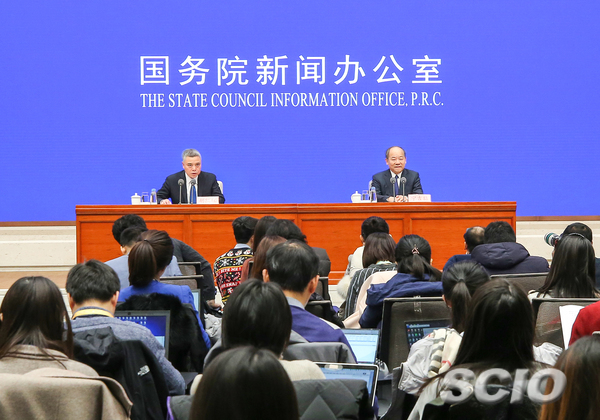
The State Council Information Office of China holds a press conference on China's economic performance in 2019, in Beijing on Jan. 17, 2020. [Photo by Liu Jian/China SCIO] Hu Kaihong:
Ladies and gentlemen, good morning. Welcome to this press conference. Today, we are delighted to invite Mr. Ning Jizhe, head of the National Bureau of Statistics (NBS), to introduce China's economic performance in 2019, and answer your questions. Now, I'll give the floor to Mr. Ning.
Ning Jizhe:
In 2019, China achieved overall economic stability and reached its main expected targets for economic development. Amid mounting risks and challenges both at home and abroad, different regions and government departments , under the leadership of the CPC Central Committee with Comrade Xi Jinping at its core, fully implemented the decisions and plans made by the CPC Central Committee and the State Council. They stuck to the general working guideline of making progress while maintaining stability, followed the new development philosophy, focused on supply-side structural reform, promoted high-quality development and strengthened efforts to maintain stability in employment, the financial sector, foreign trade, foreign and domestic investments, and expectations. Significant breakthroughs have been achieved in three tough battles. The national economy was generally stable, the quality of development has improved and the main expected targets have been achieved, thus laying a solid foundation for building a moderately prosperous society in all respects.
According to preliminary calculations, China's gross domestic product (GDP) was 99.09 trillion yuan in 2019, an increase of 6.1% over the previous year at comparable prices, and meeting our expected targets of 6% to 6.5%. The four quarters saw growth rates of 6.4%, 6.2%, 6.0%, and 6.0% respectively. The added value of industries were 7.05 trillion yuan, 38.62 trillion yuan, and 53.42 trillion yuan for the primary, secondary and tertiary industries, respectively, with growth rates of 3.1%, 5.7%, and 6.9%.
First, grain output reached a new record and the production of beef, mutton, poultry, eggs and milk increased.
Last year's total grain output was 663.84 million tons, up by 0.9% over that of the previous year and an increase of 5.94 million tons. This ensured that output levels were maintained above 650 million tons for five consecutive years. Summer grain output was 141.6 million tons, an increase of 2.0%; early season rice 26.27 million tons, down by 8.1%; and autumn grain output 495.97 million tons, up by 1.1%. The output of wheat was 133.59 million tons, up by 1.6%; corn 260.77 million tons, up by 1.4%; soybean 18.10 million tons, up by 13.3%.
The total output of pork, beef, mutton and poultry was 76.49 million tons, down by 10.2% over last year. In particular, the output of beef was 6.67 million tons, up by 3.6%; mutton, 4.88 million tons, up by 2.6%; poultry, 22.39 million tons, up by 12.3%; eggs, 33.09 million tons, up by 5.8%; milk, 32.01 million tons, up by 4.1%; and pork, 42.55 million tons, down by 21.3%.
Second, industrial production continued to increase, and high-tech manufacturing and strategic emerging industries grew rapidly.
In 2019, the industrial output increased by 5.7% over the previous year. The value-added of the state-holding enterprises went up by 4.8%, that of share-holding enterprises by 6.8%; enterprises funded by foreign investors or investors from Hong Kong, Macao and Taiwan up by 2.0%; private enterprises by 7.7%. In terms of sectors, the value-added of the mining sector increased 5.0%, that of manufacturing sector was up 6.0%, and that of producing and supplying electricity, heat, gas and water grew by 7.0%. The value-added of high-tech manufacturing sector rose by 8.8%, strategic emerging industries by 8.4% over the previous year, or 3.1 and 2.7 percentage points faster, respectively, than that of large industrial companies. In December, the industrial output grew by 6.9% year on year, or 0.7 percentage points faster than the previous month, marking an increase of 0.58% month on month. In December, the sub-indexes of the Purchasing Managers' Index (PMI), the Production Index, the New Orders Index and the Supplier Delivery Time Index reached 53.2%, 51.2% and 51.1% respectively, all staying above the threshold. The Business Activity Expectation Index for Manufacturing was 54.4%, staying within the expansion range.
In the first 11 months of 2019, the total profits of large industrial enterprises reached 5.61 trillion yuan, down by 2.1% year on year, but the decline was 0.8 percentage points lower than that of the first ten months. The profits of large industrial companies grew by 5.4% in November year on year, while that of October was down by 9.9%.
Third, the service sector grew fast with modern services sector gaining momentum.
In 2019, the Index of Service Production increased by 6.9% over that of the previous year. The value-added of information transmission, software and information technology services, leasing and business services, financial services, transportation, storage and post services grew by 18.7%, 8.7%, 7.2% and 7.1% respectively, or 11.8, 1.8, 0.3 and 0.2 percentage points faster than that of the tertiary industry. From January to November, the revenue of large service enterprises increased by 9.4% year on year. In particular, revenues of enterprises engaged in strategic emerging services, science and technology services and high-tech services increased by 12.4%, 12.0% and 12.0% respectively. Their growth rate was respectively 3.0, 2.6 and 2.6 percentage points faster than that of all large service companies. Profits of large service companies increased by 3.5%.
In December, the business activity index for services was 53.0%, continuing to stay above the threshold that separates growth from contraction. Specifically, the business activity indexes for sectors like railway transportation, lodging, telecommunication, broadcast, television and satellite transmission services, internet software and information technology services, financial services and leasing and business services all stayed within the high expansion range of 55.0% and above. From the perspective of market expectations, the business activities expectation index for services was 59.1%, maintaining a sound growth momentum.
_ueditor_page_break_tag_Ning Jizhe:
Fourth, market sales demonstrated stable growth with online retail sales taking up a notably bigger share of the overall sales.
In 2019, the total retail sales of consumer goods reached 41.16 trillion yuan, up by 8.0% over the previous year. The retail sales of consumer goods by enterprises above the designated size was 14.80 trillion yuan, an increase of 3.9%. Analyzed by different areas, retail sales in urban areas reached 35.13 billion yuan, up by 7.9%, and retail sales in rural areas stood at 6.03 billion yuan, up by 9.0%. Grouped by consumption patterns, catering revenue was 4.67 trillion yuan, up by 9.4%; and the retail sales of goods was 36.49 trillion yuan, up by 7.9%. Upgraded consumer goods grew fast. The growth of retail sales of cosmetics, communication appliances, sports and recreational items, as well as household appliances and audio-video equipment by enterprises above the designated size rose by 8.7, 4.6, 4.1 and 1.7 percentage points respectively. In December, the total retail sales of consumer goods increased by 8.0% year-on-year and 0.53% month-on-month.
In 2019, online retail sales reached 10.63 trillion yuan, a year-on-year growth of 16.5%. In particular, the online retail sales of physical goods was 8.52 trillion yuan, up by 19.5%, accounting for 20.7% of the total retail sales of consumer goods, and was 2.3 percentage points higher than that of the previous year.
Fifth, investment in fixed assets witnessed steady growth and investment in high-tech industries grew fast.
In 2019, the investment in fixed assets (excluding rural households) reached 55.15 trillion yuan, up by 5.4% over the previous year. In particular, the investment in infrastructure was up by 3.8%, manufacturing up by 3.1% and real estate development up by 9.9%. The floor space of commercial buildings sold reached 1.72 billion square meters, down by 0.1%. The total sales of commercial buildings was 15.97 trillion yuan, up by 6.5%. The investment in the primary industry went up by 0.6%; the secondary industry up by 3.2%; and the tertiary industry up by 6.5%. Private investment was 31.12 trillion yuan, up by 4.7%. The investment in high-tech industries grew by 17.3%, or 11.9 percentage points faster than total investment, of which the investment in high-tech manufacturing and services increased by 17.7% and 16.5% respectively. The investment in social sectors went up by 13.2%, or 7.8 percentage points faster than the total investment, among which the investment in education and in culture, sports and entertainment went up by 17.7% and 13.9% respectively. In December, the investment in fixed assets grew by 0.44% month-on-month.
Sixth, foreign trade witnessed growth despite downward pressure and the proportion of general trade has continued to grow.
In 2019, the total value of imports and exports was 31.54 trillion yuan, an increase of 3.4% over the previous year. The total value of exports was 17.23 trillion yuan, up by 5.0%; and the total value of imports was 14.32 trillion yuan, up by 1.6%. The trade balance was in surplus of 2.92 trillion yuan. The imports and exports of general trade accounted for 59.0% of the total value of imports and exports, an increase of 1.2 percentage points compared with the previous year. The exports of mechanical and electrical products increased by 4.4%, accounting for 58.4% of the total value of exports. In particular, imports and exports with the European Union and ASEAN went up by 8.0% and 14.1% respectively. Imports and exports with countries along the Belt and Road has maintained a sound momentum, increasing by 10.8%, or 7.4 percentage points faster than the growth of the total imports and exports of goods. The export delivery value of industrial enterprises above the designated size reached 12.42 trillion yuan, up by 1.3% over that of the previous year.
Seventh, the growth in consumer price has met the projected target and producer prices for industrial products declined slightly.
In 2019, consumer price went up by 2.9% over the previous year, meeting the projected target of around 3%. Specifically, consumer prices went up by 2.8% in urban areas and 3.2% in rural areas. Grouped by commodity categories, prices for food, tobacco and alcohol went up by 7.0%; clothing up by 1.6%; housing up by 1.4%; articles for daily use and services up by 0.9%, transportation and communication down by 1.7%; education, culture and recreation up by 2.2%; medical services and health care up by 2.4%; and other articles and services up by 3.4%. In terms of food, tobacco and alcohol prices, prices for grain went up by 0.5%, fresh vegetables up by 4.1% and pork up by 42.5%. Core CPI excluding the prices of food and energy went up by 1.6%, which was 0.3 percentage points lower than that of the previous year. In December, the consumer price went up by 4.5% year-on-year, and maintained the same level as November month-on-month. In 2019, producer prices for industrial products went down by 0.3% over the previous year and for December, down by 0.5% year-on-year, and maintained the same level as November month-on-month. Purchasing prices for industrial producers went down by 0.7% over the previous year, and in December, down by 1.3% year-on-year, and was at the same level as November month-on-month.
Eighth, employment was generally stable and the surveyed unemployment rate in urban areas met the projected target.
In 2019, the number of newly employed people in urban areas totaled 13.52 million, which remained above the 13-million mark for seven years in a row. This notably exceeded the projected target of 11 million and achieved 122.9% of the entire year's target. In December, the surveyed unemployment rate in urban areas was 5.2%. In 2019, the monthly surveyed unemployment rates in urban areas stayed within the range of 5.0% to 5.3%, achieving the projected target of around 5.5% and below. The surveyed unemployment rate of the main labor force aged between 25 to 59 was 4.7%. In December, the urban surveyed unemployment rate in 31 major cities was 5.2%. At the end of 2019, the registered unemployment rate in urban areas was 3.62%, or 0.18 percentage points lower than at the end of previous year, meeting the projected target of 4.5% and below. At the end of 2019, the total number of employed persons was 774.71 million and the number of urban employed persons was 442.47 million. The number of rural migrant workers reached 290.77 million, 2.41 million more and up by 0.8% compared to the previous year. Specifically, local rural workers totaled 116.52 million, up by 0.7%; migrant workers employed away from their homes totaled 174.25 million, up by 0.9%. The average monthly income of migrant workers was 3,962 yuan, up by 6.5% over the previous year.
_ueditor_page_break_tag_Ning Jizhe:
Ninth, residents' income grew at the same pace as the economy and the urban-rural income ratio continued to narrow.
In 2019, the nationwide per capita disposable income of residents was 30,733 yuan, a nominal increase of 8.9% over the previous year. The growth rate was 0.2 percentage points higher than the previous year, and actual incomes saw a real increase of 5.8% after deducting price factors, which meant they generally grew at the same pace as the growth of the economy and per capita GDP. By permanent residence, the per capita disposable income of urban households was 42,359 yuan, marking a nominal growth of 7.9% and a real growth of 5.0% after deducting price factors. The per capita disposable income of rural households was 16,021 yuan, marking a nominal growth of 9.6% and a real growth of 6.2% after deducting price factors. The per capita disposable income of urban households was 2.64 times that of rural households, a decrease of 0.05 from the previous year. The median of the nationwide per capita disposable income was 26,523 yuan, a nominal increase of 9.0% over the previous year. Looking at the per capita disposable income of nationwide households by income quintiles, the income of the low-income group was 7,380 yuan, the lower-middle-income group 15,777 yuan, the middle-income group 25,035 yuan, the upper-middle-income group 39,230 yuan, and the high-income group 76,401 yuan.
In 2019, the nationwide per capita consumer spending was 21,559 yuan, marking a nominal increase of 8.6%. It grew 0.2 percentage points faster than that of the previous year, and had a real increase of 5.5% after deducting price factors. Specifically, the per capita consumer spending of urban residents was 28,063 yuan, which was a nominal growth of 7.5% while the per capita consumer spending of rural households was 13,328 yuan, marking a nominal growth of 9.9%.
Tenth, key reforms and crucial tasks were further advanced and the country's economic transformation and upgrading maintained its momentum.
Notable achievements were made in supply-side structural reform. In 2019, the industrial capacity utilization rate nationwide was 76.6%, 0.1 percentage points higher than the previous year. Specifically, the industrial capacity utilization rates of extraction of petroleum and natural gas and the smelting and pressing of ferrous metals were 91.2% and 80.0% respectively, or 2.9 percentage points and 2.0 percentage points higher than the previous year. The asset-liability ratio of enterprises also declined. At the end of November, the asset-liability ratio of industrial enterprises above the designated size was 56.9%, or 0.3 percentage points lower year-on-year. At the end of 2019, the floor space of commercial buildings for sale reached 498.21 million square meters, down by 4.9% over the end of the previous year. The unit cost of enterprises also continued to decline compared with early 2019. As for strengthening certain weak areas, the investment in these areas grew fast. In 2019, the investment in ecological protection and the treatment of environmental pollution as well as in environmental monitoring and treatment services increased by 37.2% and 33.4% respectively, and grew 31.8 percentage points and 28.0 percentage points faster than the overall investment. The dynamism of microeconomic entities was also strengthened. In 2019, there was a total of 23.77 million newly registered market entities and an average of 20,000 newly registered enterprises per day. The level of activity reached about 70%. By the end of the year, the number of market entities totaled 120 million. Major breakthroughs were also made in the three critical battles against potential risk, poverty, and pollution. In 2019, a total of 11.09 million rural poor were lifted out of poverty. According to preliminary estimates, the share of consumption of clean energy such as natural gas, hydro power, nuclear power and wind power as part of the total energy consumption was 1.0 percentage point higher compared with the previous year. The energy consumption per 10,000 yuan of GDP continued to decrease compared with the previous year by as much as 2.6%. By the end of November, the outstanding local government debt nationwide was 21.33 trillion yuan, within the limit approved by the National People's Congress.
The economic structure has continued to be optimized. In 2019, the value-added of the tertiary industry accounted for 53.9% of the total GDP. This was 0.6 percentage points higher than the previous year, 14.9 percentage points higher than in the secondary industry and contributed to 59.4% of GDP growth. The role of consumption as the major impetus for economic growth was further consolidated. The final consumption expenditure contributed to 57.8% of GDP growth, 26.6 percentage points higher than the gross capital formation. Household consumption was also upgraded and had improved in quality. In 2019, the national Engel coefficient was 28.2%, 0.2 percentage points lower than in 2018. Service consumption expenditure accounted for 45.9% of per capita household consumption expenditure, 1.7 percentage points higher than that of 2018.
Eleventh, China's population grew steadily, and the urbanization rate continued to rise.
By the end of 2019, the mainland population (including the population in the 31 provinces, autonomous regions, municipalities directly under the central government, and PLA personnel, but excluding the population of the Hong Kong Special Administrative Region, Macao Special Administrative Region, Taiwan province and overseas Chinese) stood at 1.4 billion, an increase of 4.67 million from the year before. There were a total of 14.65 million births and 9.98 million deaths reported in 2019, and the birth and death rates reached 10.48 and 7.14 per 1,000, respectively. In terms of gender distribution, there were 715.27 million males and 684.78 million females, putting the gender ratio at 104.45. The working-age population (people aged between 16 to 59) stood at 896.4 million, representing 64% of the total population. About 253.88 million people were registered as being 60 or older, accounting for 18.1% of the population; 176.03 million were 65 or older, which made up 12.6% of the population. There were 848.43 million urban residents, a 17.06 million increase from the previous year. The rural population fell 12.39 million to a total of 551.62 million. The urbanization rate was 60.6%, 1.02 percentage points higher than the previous year. About 280 million people resided in places away from their places of residential registration for over six months, 6.13 million less than the previous year. In particular, the floating population was 236 million, 5.15 million less than in the previous year.
Generally speaking, the national economy in 2019 has sustained stable momentum by pursuing progress while ensuring stability. However, we should also be aware that global economic and trade growth is slowing down and sources of instability and points of risk are increasing. Domestically, the national economy has witnessed a combination of structural, systematic and cyclical problems and is facing mounting downward pressure. As our next stage, we will follow the guidance of Xi Jinping Thought on Socialism with Chinese Characteristics for a New Era, implement the policy decisions and plans of the CPC Central Committee and the State Council, and remain committed to the general principle of pursuing progress while ensuring stability. We will also follow the new development approach and push forward high-quality development, continue to pursue supply-side structural reform as our main task, continue to draw strength from reform and opening up, and be committed to winning the three tough battles (preventing financial risks, reducing poverty and tackling pollution). We will also intensify efforts to maintain stability in employment, the financial sector, foreign trade, foreign and domestic investments, and market expectation. Also, we will take coordinated steps to achieve steady growth, advance reform, make structural adjustments, improve living standards, guard against risk and ensure stability. This will allow us to keep the economy performing within an appropriate range, successfully reach our goal of building a moderately prosperous society in all respects and fulfill the 13th Five-Year Plan.
Hu Kaihong:
Thank you, Mr. Ning. Now let's move on to questions. Please identify your media organization before asking your questions.
_ueditor_page_break_tag_China Central Television:
The domestic and foreign environment for China's development faced severe challenges in 2019. Mr. Ning, what do you think of China's economic performance last year and did China achieve its goals set early in 2019? Thank you.
Ning Jizhe:
In 2019, under the strong leadership of the Central Committee of the CPC with Comrade Xi Jinping at its core, we stayed committed to the underlying principle of pursuing progress while ensuring stability, continued to pursue supply-side structural reform as our main task, strengthened the role of macroeconomic policies in making counter-cyclic adjustments, and maintained stability in employment, the financial sector, foreign trade, foreign investment, domestic investment, and market expectations. The national economy maintained stable growth, with a steady increase in the quality of development, and all the major targets and tasks were fulfilled. The country's overall economic performance demonstrated the following six features.
First, the economy maintained medium-to-high speed growth. As I said before, the GDP in 2019 reached 99.09 trillion yuan, increasing 6.1% year on year, which was within the government's target of 6% to 6.5%. It was significantly higher than the global average, and ranked among the fastest growing among the world's major economies. China registered the fastest growth among trillion-dollar economies. You may have noticed that in 2019, the United States saw an economic growth of 2.3%, Japan and the Eurozone grew slightly more than 1%, and India a bit higher than 5%. Thus, China was still the No. 1 in terms of economic growth. Also, China's per capita GDP reached 70,892 yuan. Measured by the average annual exchange rate, that was $10,276, crossing the $10,000 mark. This is a new breakthrough.
Second, job growth continued to expand. In 2019, the urban unemployment rate each month hovered between 5% to 5.3%, realizing our target of keeping the rate below 5.5%. In December, that number stood at 5.2%. Throughout 2019, the number of new jobs was 13.52 million, exceeding the 13 million mark for seven years in a row, and significantly higher than our target of 11 million. As I said earlier, the number of migrant workers is still growing and it reached 291 million in 2019.
Third, prices were generally stable. The CPI expanded 2.9% in 2019, realizing our target of keeping the rate below 3%. Food prices rose by 9.2%, and non-food prices grew by 1.4%. CPI excluding food and energy rose 1.6%, lower than in 2018.
Fourth, foreign trade and investment increased despite the overall trend of decline. In 2019, the total value of imports and exports of goods increased by 3.4% over the previous year, with exports increasing by 5% and imports increasing by 1.6% respectively, thereby achieving steady and higher-quality growth and meeting the targets set early last year. The trade surplus also increased by 25.4% over 2018. In terms of foreign investment, against the global backdrop of steep declines in cross-border investment, China's utilized foreign investment increased 6% from January to November and the total amount last year is expected to top $130 billion. By the end of 2019, foreign exchange reserves stood at 3.11 trillion yuan, an increase of $35.2 billion from the end of 2018.
Fifth, the income of Chinese residents grew at a similar pace with the national economic growth. In 2019, per capita disposable income reached 30,733 yuan, registering an inflation-adjusted growth of 5.8%. This is similar to the growth rate of GDP and on par with the growth rate of per capita GDP. As GDP rose 6.1% last year and the entire population grew by more than 0.3%, the country's per capita GDP rose 5.8% or so. This achieved our target of keeping residents' income growth on par with economic growth. An especially heartening piece of news is that the per capita disposable income of rural residents registered a real growth of 6.2%, continuing to be higher than that of urban residents. The income gap between urban and rural residents is continually narrowing.
Sixth, our economic growth demonstrated higher quality and efficiency. With the pushing ahead of supply-side structural reforms, the gains made in the five priority tasks – cutting capacity, cutting excess urban real estate inventory, de-leveraging, cutting costs, and strengthening areas of weakness – were consolidated. As I said earlier, the rate of industrial capacity utilization reached 76.6%, higher than in 2018. Measured by the debt-to-asset ratio of industrial enterprises above the designated scale (annual revenue of 20 million yuan or more coming from their main business operations), the micro leverage ratio stood at 56.9% at the end of November, down 0.3 percentage points from the same period in 2018. The ratio between urban and rural residents' per capita disposable income was 2.64, down 0.05 from that in 2018, demonstrating a narrowing gap between urban and rural incomes. Industries, investment and other major indicators in central and western China registered faster growth than in the country's east, showing that the gap in development among different regions is narrowing.
Noticeably, major macroeconomic indicators showed positive changes in the fourth quarter, especially in November and December. From October to December last year, GDP rose 6%, this was equal to that in the third quarter and had exceeded expectations. In the last three months last year, the value-added of industrial enterprises above the designated scale grew 6% year on year, which is a 1 percentage point higher than in the third quarter. In December particularly, the added value rose 6.9%, up 2.2 and 0.7 percentage points from that in October and November, respectively. The total annual retail sales of consumer goods in the fourth quarter grew 7.8% year on year, 0.2 percentage points higher than in the third quarter. In particular, that number in December was 8%, up 0.8 percentage points from October and equal to that in November. The total fixed-asset investment (excluding rural households) grew 5.4% last year, which was 0.2 percentage points higher than that from January to November. Foreign trade in December rose 12.7%, 10.7 percentage points higher than in November. The PMI in December was 50.2%, exceeding the 50-point mark which indicated that there was economic expansion for two months in a row. The non-manufacturing business activity index was 53.5%, continuing to be in the promising range.
Therefore, all the major macroeconomic indicators met expectations and fell within the targets set in early 2019. In particular, these indicators showed positive changes in November and December. Thank you.
_ueditor_page_break_tag_Xinhua News Agency:
As we have observed, China's per capita GDP exceeded $10,000 in 2019 and its gross domestic product was approximately 100 trillion yuan. My question is: How should we interpret these two landmark figures? In other words, do they bring about any change in China's development stage at present? Thank you.
Ning Jizhe:
You have asked a good question. As we have all noticed, China's GDP in 2019 did reach 99.1 trillion yuan, or approximately 100 trillion yuan, which translates to $10,276 per capita based on the average exchange rate. That is to say, our per capita GDP in 2019 did exceed the $10,000 milestone. This not only signified the continuous expansion of the size of our economy, but also marked the stable improvement in the quality of our economy as well as our people's livelihood. The Chinese people's efforts in this regard have not only laid a solid foundation for China's realization of a moderately prosperous society in all respects but also contributed to the development and progress of mankind. Yes, this is of landmark significance, and we can understand it from the following four aspects:
First, this achievement marked the enhancement of China's national strength. China's GDP totaled 99.09 trillion yuan in 2019, which was close to 100 trillion yuan. Converted at the prevailing average annual exchange rate, our GDP in 2019 reached $14.4 trillion, ranking second in the world. Based on our calculation and comparison, this figure is basically equivalent to the sum of the GDPs of Japan, Germany, the UK and France in 2018, which ranked third to sixth respectively in the world that year. China's economy is rapidly developing; it is politically stable, culturally progressive, and socially harmonious; its environment and ecology are fast improving and its national defenses are strong. China's pace of progress cannot be stopped.
Second, this achievement marked the improvement of China's social productivity. Our agricultural foundation has been consolidated. In 2019, the total grain output was 660 million metric tons. This is the highest grain output in Chinese history and has made China the largest grain-producing country in the world. Our industrial system is also continually improving and we have all the industrial classifications in the world. Our infrastructure is more complete. By the end of 2019, the total operating mileage of China's high-speed rail reached 35,000 kilometers, accounting for more than two thirds of the world's total. The length of China's highways reached 140,000 kilometers, ranking first in the world. Our installed power capacity was close to 2 billion KW, also ranking the first in the world. With 860 million internet users, our modern information and communication system is constantly improving.
Third, this achievement marked the improvement of Chinese people's living standards. The improvement in the quality of employment is reflected in the rise of the proportion of residents employed in cities and towns. In 2019, 440 million people were employed in urban areas, accounting for 57.1% of the total employed population, which marked a year-over-year increase of one percentage point. Residents also saw an improvement in their income level and quality. The national per capita disposable income surpassed 30,000 yuan in 2019. This year also witnessed the improvement of people's consumption quality as well as an upgrade of the consumption structure. This can be proved by two data points. The first is that the proportion of service consumption expenditure in per capita consumption expenditure reached 45.9%, marking a year-over-year increase of 1.7 percentage points. The second is that the proportion of income spent on food in total consumption expenditure, which is the Engel Coefficient, was 28.2% in 2019, a year-over-year decrease of 0.2 percentage point. The increase in the consumption of services and decrease in the consumption of food indicate that the overall consumption structure has been upgraded. People's livelihoods have also been improved. Generally speaking, residents now have houses to live in, they use private cars as a convenient means of transportation and an increasing number of people can now afford to travel within and outside China. In 2019, the per capita floor area of residents was close to 40 square meters , and the number of private cars in the country reached 200 million. 2019 also witnessed 5.8 billion Chinese traveling around China and more than 140 million Chinese traveling abroad. This shows that the size of the middle-income group is ever expanding.
Fourth, this achievement marked China's increasing contribution to the development and progress of mankind. According to World Bank data, the combined population of countries with a per capita GDP of more than $10,000 in 2018 was nearly 1.5 billion. As China, with a total population of 1.4 billion, entering the ranks of countries with a per capita GDP of more than $10,000, the world will now have nearly 3 billion people at this income level. This marks a major progress in social and economic development over the course of human history. China, as an emerging developing economy, has made its contribution to the world. That is why we say developing China is in itself contributing to the world at large.
In summary, China's 2019 GDP is expected to account for more than 16% of the world's overall, and the rate of China's contribution to world economic growth is expected to reach approximately 30%. China remains the most powerful engine of world economic growth. China's per capita GDP is now among the ranks of the world's middle-income countries, and its human development index status has further improved.
At the same time, we must see that China's basic national conditions remain clearly unchanged. To be more specific, China is currently in and will remain in the primary stage of socialism for a long time, it still has a large population and under-developed productivity in general; and China still faces the prominent problem of unbalanced and inadequate development. Therefore, our status as the world's largest developing country remains unchanged. Although the gap of per capita GDP between China and higher-income countries is narrowing, we are still among the ranks of middle-income countries. Therefore, we must strive long and hard to build China into a modern socialist country and achieve the great rejuvenation of the Chinese nation. Thank you!
_ueditor_page_break_tag_Bloomberg:
I have two questions. First, can you please tell us the fourth quarter's numbers for the contribution of net exports, consumption and investment? What was the nominal GDP growth, and what was the GDP deflator? My second question is that, you said the full year final consumption contribution was 57.8%, which is below 61.4% in the third quarter and way below the levels in 2018. Is that decline because real disposable income per capita is below real GDP growth? What will you do to increase real incomes in 2020 so that consumption can expand and how will it help to re-balance the economy? Thank you.
Ning Jizhe:
You are concerned with the contribution rate of consumption, investment, and import and export to economic growth in the fourth quarter as well as for the year 2019. Since these three aspects complement one another, a falling statistic will inevitably lead to a rising one. As you may notice, the final consumption expenditure in the first three quarters constituted 60.5% of economic growth, meanwhile the contribution rate of the final consumption expenditure through the year was 57.8%, lower than 60%. The total capital formation contributed to 31.2% of economic growth last year, showing a rising trend. The net exports of goods and services, that is, the exports of goods and services minus imports, was 11% in 2019. Compared with the statistics in the first three quarters, the data in the fourth quarter is different. Nevertheless, consumption is still the biggest driving force for China's economic growth, and its contribution rate stood at around 60% last year.
Regarding your second question, as I mentioned just now, the nominal growth rate of residents' disposable income per capita was relatively high. However, due to the expansion of the CPI last year, the actual growth rate was 5.8% in real terms. I mentioned earlier that the growth rate of GDP per capita also stood at 5.8%, thus these two indicators shared the same growth rate.
You are also concerned about trends in the consumer sector in 2020. Looking at the data in 2019, we found that final consumer expenditure contributed nearly 60% to overall economic growth. Consumption has played a fundamental role in China's economic development and is the primary driving force for China's economic growth. Looking forward to 2020, the steady growth of residents' income will drive the improvement of consumption capacity. With the continuous upgrade of the consumption structure of residents, consumption will continue to expand, and as reform in this area is further advanced, the consumption environment will only continue to improve. Coupled with the improvement in market expectations and the rise in consumer willingness to consume, it is foreseeable that the fundamental role of consumption in China's economic development will further grow. Thank you.
_ueditor_page_break_tag_CNR:
We have noticed that 2020 is the decisive year for building a moderately prosperous society in all respects. May I ask Mr. Ning, judging from the results of 2019, could you tell what progress has been made in this regard? In 2020, what areas will we work harder on? Thank you.
Ning Jizhe:
Building a moderately prosperous society in all respects is our Party's first centenary goal. The past 2019 was a crucial year for the cause. After a year of efforts, new and significant progress has been made, especially with respect to the three major battles to overcome difficulties. Below I will specifically introduce the progress we have made in building a moderately prosperous society in all respects.
First, the expansion of the economic aggregate and the growth of residents' income go hand in hand. In 2019, China's GDP increased by 6.1%, which works out to be an increase of nearly 7.2 trillion yuan. This is more than $1 trillion at the average annual exchange rate. As I said just now, China's economy is growing the fastest among economies with a value of more than $1 trillion, and our increase is equivalent to the economic aggregate of a moderately developed country in a year. Looking at each quarter of the year, the four quarters have increased by 6.4%, 6.2%, 6.0%, and 6.0% year-on-year. Looking back at the past few years, we can see GDP growth has remained between 6-7% for 18 consecutive quarters. The resilience of China's economic development continues to shine. This not only indicates that new progress has been made in expanding the economic aggregate when building up a moderately prosperous society in all respects in 2019, but the economic development in 2019 also provides a strong guarantee for the decisive victory of our mission to build a moderately prosperous society in all respects in 2020. In terms of the people's livelihood, in 2019, the per capita disposable income of China's residents exceeded 30,000 yuan, which also laid the foundation for the eventual completion of building a moderately prosperous society in all respects in 2020.
Second, outstanding results have been achieved in the fight against poverty. In 2019, poverty alleviation efforts reached a new level. Funds, projects, and measures in the areas facing deep poverty have increased. Poverty alleviation by industries, employment, education, and health have progressed steadily, and 340 counties have been removed from the list of poverty-stricken counties across the country. The task of poverty alleviation through relocation as outlined in the 13th Five-Year Plan has been completed. I have just introduced that, according to the latest statistics, 11.09 million of the rural poor across the country have been extricated from poverty. For the seventh consecutive year, the number of people who have escaped poverty has exceeded 10 million. According to current poverty standards, the number of the rural poor has dropped to 5.51 million by the end of 2019.
Third, the ecological environment continues to improve. In 2019, new achievements have been made in ecological protection and pollution prevention. According to preliminary calculations, the proportion of clean energy consumption in the total energy consumption over the whole year was about 24%, an increase of about a 1.0 percentage point over the previous year. The average number of days with excellent air quality in 337 cities at or above the prefecture level stood at 82%. The average concentration of fine particles, which is the PM2.5 in cities at or above the prefecture level which fail to meet the PM2.5 standards, decreased by 2.4% compared with the previous year. The proportion of the water quality categories 1 - 3 increased by 3.9 percentage points compared with the previous year, and the proportion of the five inferior water categories decreased by 3.3 percentage points.
Fourth, fiscal risks are controllable. In 2019, positive results were achieved in preventing and resolving major risks. China's macro-leverage ratio is basically stable, while its micro-leverage ratio has steadily decreased. I just introduced the asset-liability ratio of industrial enterprises above the designated size. In the field of finance, banks and financial institutions have low non-performing loan ratios, high provision coverage ratios, and relatively stable asset quality. At the end of November, the nation's local government debt balance stood at 21.3 trillion yuan, which was within the limits approved by the National People's Congress. The overall financial system is healthy and risks can be prevented and controlled.
Fifth, people's lives have continued to improve. In 2019, the improvement to people's livelihood guarantees has been strengthened. While promoting large-scale tax and fee reductions, governments at all levels have ensured that the people's livelihood expenditures have increased reasonably, social construction has achieved remarkable results, and the people's sense of gain, security, and happiness continues to increase. In terms of learning and teaching, the gross enrollment rate of pre-primary education has further increased from the base of 81.7% in the previous year, and the consolidation rate of the nine-year compulsory education has increased from a base of 94.2% in the previous year. In terms of income from work, the per capita of urban residents salary income now accounts for more than 60% of per capita disposable income, and the sum of per capita wage income and operational income of rural residents accounts for more than 70% of per capita disposable income. In terms of medical treatment, the number of people covered by basic medical insurance is now about 1.35 billion. In terms of elderly care, there are now 967 million people covered by a basic endowment insurance. I also introduced relevant data about living quarters and housing. Shantytown renovation and public rental housing construction have been further promoted. The per capita housing construction area of urban residents is now about 40 square meters. In terms of helping the weak and poor, the urban and rural minimum living guarantee standards have continued to increase.
This year is the decisive year for the building of a moderately prosperous society in all respects, and also the final year for the 13th Five-Year Plan. While we have seen significant progress in building a moderately prosperous society in all respects, we also need to ensure that we must succeed this year and overcome the toughest of difficulties. It is necessary to build on the existing foundation, strengthen our determination to win, highlight the key points, make up for shortcomings, strengthen area of weakness, and ensure that the goal of building a moderately prosperous society in all respects is successfully completed.
First, we must implement a proactive fiscal policy and a sound monetary policy, as well as strong employment, industry-related, and regional policies. We need to ensure that the economy operates within a reasonable range, and we must achieve a reasonable increase in volume and a steady improvement in quality. Second, we must continue to promote supply-side structural reforms, accelerate reforms in key areas such as state-owned enterprises, state-owned assets and finance, and continue to promote coordinated regional development. The third aspect is to resolutely fight the three major difficulties. We shall concentrate our forces to fight the battle to eradicate deep poverty, continually consolidate the results of poverty alleviation, fight the pollution control war, and focus on the battle to reclaim the blue sky, clear water, and clean land. It is also necessary to improve the risk management mechanism and do a good job of preventing and controlling the risks at the source. The fourth aspect is to unswervingly implement the new development concept. We will continue to implement the innovation-driven development strategy, continue to stimulate the endogenous power and innovation vitality of economic development, continue to promote high-quality economic development, and achieve a steady improvement in economic quality. Fifth, we must ensure that the people's livelihoods, especially the basic living needs of people in need and facing difficulties, are effectively guaranteed and improved. We will strengthen the social security guarantees of the needy, maintain employment stability, and boost efforts to make up for the shortcomings in aspects affecting people's livelihood such as in education, medical care, and housing.
Thank you.
_ueditor_page_break_tag_Reuters:
According to the second paragraph on the first page of your report, during the course of last year, GDP growth in China slid from 6.4 percent to 6 percent. What is the government going to do to stop this slide? Also, what's your prediction for what GDP growth will be this year? And finally, a trade deal has just been reached between China and the U.S., however, according to reports, many of the tariffs will remain at least until after the US election which will take place towards the end of this year. How worried are you about the effect of the remaining tariffs on China's economy? Thank you.
Ning Jizhe:
Seasonal fluctuations in GDP are common. GDP data released by other countries in the world can show even more volatility. To measure GDP growth, you can use not only year-on-year and month-on-month, but also annualized rate of quarter-on-quarter change and month-on-month change. The statistics you have observed with growth dropping from 6.4 percent in the first quarter to 6.2 percent in the second and 6.0 percent in the third and fourth quarters are based on a year-on-year method. However, despite the slide, they have remained within an appropriate range, given that China's economy is still facing downward pressure. To lessen the pressure, the Chinese government has made notable progress by securing employment, defusing financial risks, ensuring the stability of foreign trade, overseas capital and investments and safeguarding confidence in its economic forecast. As a result, the 6.1-percent growth achieved last year has ranked top among the economies with a size above $1 trillion. That is amazing indeed. Meanwhile, we have transformed our economic growth from one that focuses on speed to that of quality, seeking quality growth within a reasonable range.
The economic growth in 2020 as you mentioned will maintain sound momentum as its trajectory towards a promising future in the longer term remains unchanged. Despite the downward pressure we have faced, actions will be taken to give a boost to the economy. Complying with the principles of the Central Economic Work Conference, the governments at all levels will make sure that all the policies will be fully put into effect. As we run a market of 120 million people, we'll work concertedly to press ahead with economic growth that focuses on quality and efficiency. Therefore, we can predict that this year's economy can achieve stable growth.
The phase-one economic and trade agreement between China and the United States, as you have asked about, has been reached reciprocally after rounds of negotiations on a fair and equal basis. This did not only result in a more positive prediction of China's economy but also that of the United States and the rest of the world. Positive reactions can also be observed from global capital markets as well as in analyses and forecasts by major international economic organizations. As you know, the International Monetary Fund has forecast that China's economic growth will increase by 0.2 percentage points in 2020.
Regarding the tariffs, the two countries have adopted measures to exempt and rule out some custom duties since last October, creating ways for the economy and bilateral trade to run normally. We'll fully implement the economic and trade deal reached in the first phase, which is conducive to deepening Sino-US economic and trade cooperation, securing the economic and trade development of China and other counties and ultimately benefitting the stable growth of the global trade and economy. Thank you.
_ueditor_page_break_tag_Ta Kung Pao and Wen Wei Po:
We have noted that based on the Central Economic Work Conference, China's economy, which is securing stable and sound momentum, is expecting better development in the long run. And its course has in no way been changed. However, we have noticed, at the same time, that the rate of economic growth in China has been trending down over the past few years. In addition, the internal and external environments remain complicated. Therefore, Mr. Ning, how would you respond to such a situation?
Ning Jizhe:
Thank you for your good question indeed.
As I mentioned, China's economy has a stable and sound momentum and the trend for its continued development in the long run has remained unchanged. That mirrors the actual current situation and also predicts its future course. It is supported by a solid foundation and several strong conditions. I'll explain them to you in the following aspects.
First, this is a result of the Party's strong leadership and the institutional advantage of the socialism with Chinese characteristics, whose great asset is the centralized and unified leadership of the CPC. The socialism with Chinese characteristics combines socialism with a market-oriented economy, which could increase enthusiasm on all fronts, focus on major tasks, continuously unleash productive forces, and effectively confront different kinds of external impact. Looking back, we have already successfully coped with the Asian financial crisis in 1998 and the international financial crisis in 2008. In recent years, we have faced adverse effects caused by the complex and changeable economic environment at home and abroad, maintained sound and sustained economic development, and accumulated a rich experience in macro-economic regulation. Currently, with a low fiscal deficit ratio, abundant foreign exchange reserves, rich and high-quality property holdings, a stable debt level, adequate policy means and regulation tools for macro-economic regulation, as well as the active efforts of micro-economic entities, the Chinese economy is able to maintain stable growth and move toward high-quality development.
Second, it's a result of a solid material foundation. China has the largest grain output in the world, and we increase food crop production based on farmland management and the application of technology to always have control over our own food supply. China's industrial system covering extensive fields is independent, complete, and features a strong capacity for collaboration. Its output of more than 200 kinds of industrial products is the largest in the world. China's service sector continues to grow, serving the needs of agriculture, industry, and people's livelihoods, and has contributed to nearly 60% of the overall economic growth. The infrastructure in China has been improved, water conservancy systems, transportation, communication, energy, municipal administration, and environmental protection have been strengthened, while new types of infrastructure like network platforms have grown rapidly.
Third, there is huge potential in the hyper-scale market and domestic demand. China has a population of 1.4 billion, with the largest middle-income group and market in the world. Given the fluctuations in external demand, China's domestic demand, especially consumption, has been serving as a ballast in its economy. In 2019, domestic demand contributed to 89% of China's economic growth, of which the final consumption expenditure constituted 57.8%. The six major “happiness industries”, namely tourism, culture, sport, elderly care, health and education, have maintained strong momentum with huge potential. The key role of investment has been steadily leveraged, and a large number of effective investments are still needed to shore up points of weakness, address inadequacies, and improve people's living standards.
Fourth, China boasts substantial human resources and professional talentdividend. As we have introduced earlier, the working-age population of China stood at 896 million in 2019, which makes it the world's largest potential workforce. China's population of 775 million employed workers is also the world's largest. The number of migrant workers has reached 291 million, and is still increasing. More than 170 million people are high-quality professionals who have received higher or vocational education. In recent years, more than 8 million students graduate from universities each year, and the number of secondary vocational school graduates has reached over 4 million. As these high-quality professionals enter the labor market, they will inevitably become the intellectual support and provide strong human resources needed to promote high-quality development, as well as to build a modernized economy.
Fifth, the synergy of innovation-driven development has been unleashed. In recent years, we have implemented the new development philosophy, pooling talents and strength to support business startups and innovations by the general public. In 2019, there were about 20,000 newly-registered companies every day. The number of unicorn companies, gazelle companies and the world's top 500 companies is increasing in China every year. The number of patents per 10,000 people reached 13.3. We also saw a constant stream of major scientific and technological advances throughout the year: The Chang'e-4 lunar probe successfully landed on the far side of the moon; the Xuelong 2 icebreaker set sail on its maiden voyage to the Antarctic; the country's first self-developed aircraft carrier was commissioned; and the commercial applications of 5G technology are increasing. China ranked 14th in the Global Innovation Index, up 3 places from the previous year. The new drivers of growth as well as new industries have continued to develop. The value-added of high-tech manufacturing and strategic emerging industries grew by 8.8% and 8.4%. Online retail sales grew by 19.3%, and the digital economy, network economy, platform economy, sharing economy as well as the smart economy are booming in China. As long as we leverage our strengths, consolidate and build on what we have achieved, there will always be hope when facing the complex and changing economic situation. We will certainly be able to turn risks into opportunities and continue to forge ahead. Thank you.
_ueditor_page_break_tag_Yicai TV:
According to the report presented to the 19th CPC National Congress, China's economy has been transitioning from a phase of rapid growth to a new stage of high-quality development. How much progress has been made in high-quality development? In addition, what important work are we going to do to promote high-quality development in 2020? Thank you.
Ni Jizhe:
Thank you for your question. High-quality is the current theme of China's economic development. Currently, China's economy has been transitioning from the phase of rapid growth to a new stage of high-quality development. All the achievements in 2019 as we introduced earlier can be summarized in two sentences: the national economy was generally stable and the quality of development steadily improved. It is fair to say that in 2019 all localities and departments adhered to and implemented the new development philosophy, and were engaged in building a modernized economy and promoting high-quality development. The quality and efficiency of development have been continuously improved.
First, the major economic indicators stayed within an appropriate range. All sectors remained committed to the general principle of pursuing progress while ensuring stability, stepping up efforts in stabilizing employment, finance, foreign trade, foreign investment, investment and expectations. Four major categories of macroeconomic indicators, namely those of GDP growth, job creation, consumer prices and international balance of payment, match each other. These statistics have been introduced earlier, and I'll bring them up again for your reference. China's economy grew 6.1% year on year in 2019. The surveyed urban unemployment rate nationwide stood at 5.2% in December. China's consumer price index (CPI) rose 2.9% year on year in 2019, and China saw a stable and better foreign trade structure with positive growth. Therefore, all major indicators were in line with the projected targets, and remained within an appropriate range. This shows that China's economy has been transitioning to a stage of high-quality development.
Second, the industrial structure in China has been upgraded. The service sector saw rapid growth. In 2019, the added value of the service industry, or the tertiary industry, increased by 6.9% over the previous year. This was 1.2 percentage points faster than that of the secondary industry, and accounted for 53.9% of the country's GDP. According to the economic census, the service industry accounted for 53.3% of the GDP in 2018, thus it increased by 0.6 percentage points. The service industry's contribution to economic growth is even higher, reaching 59.4%, which is 22.6 percentage points higher than that of the secondary industry. Therefore, the growth of the service industry has become an important stabilizer of economic growth. The industrial structure continues to optimize. Among the industries above the designated scale, the growth rates of the added value of equipment manufacturing and high-tech manufacturing are higher than that of industries above the designated scale as a whole. These two industries accounted for 32.5% and 14.4% of the overall industries above the designated scale, which reflected the transformation and upgrading of the industrial structure.
Third, the demand structure is being optimized. Consumption acted as a major driving force for economic development. In 2019, the final consumption expenditure contributes to 57.8% of the economic growth, 26.6 percentage points higher than the contribution rate of gross capital formation. The consumption structure has also been continuously upgraded, which is reflected in the rising levels of service consumption. Investment in high-tech industries and the social sector has also grown rapidly. In 2019, the investment of high-tech industries increased by 17.3% over the previous year, which was 11.9 percentage points faster than the total investment. The investment in the social sector increased by 13.2%, which was 7.8 percentage points faster than the total investment.
Fourth, the gap between urban and rural development is narrowing, and the level of urbanization exceeded 60%. By the end of 2019, permanent urban residents accounted for 60.6% of the total population, exceeding the 60% mark for the first time. This is also a landmark statistic demonstrating the progress of China's industrialization and urbanization. The growth of per capita disposable income in rural areas outpaced that in urban areas by 1.2 percentage points, and the central and western regions saw faster growth than the eastern region. In 2019, the added value of industrial enterprises above the designated scale in the central and western regions increased by 7.7% and 6.2%, faster than that in the eastern region by 2.9 and 1.4 percentage points respectively. Among the 11 provinces and cities along the Yangtze River Economic Belt, the added value of industrial enterprises above the designated scale in 10 provinces saw a faster growth rate than the national average level. It is fair to say that high-quality development has been achieved based on the ecological protection in the Yangtze River Economic Belt.
Fifth, the drive for innovation continues to be strengthened. Emerging industries, new commercial activities and new models have also developed rapidly. In 2019, the value-added of industrial strategic emerging industries rose by 8.4 percent over the previous year, 2.7 percent faster than that of industrial enterprises above the designated size. The output of emerging industrial products also increased rapidly, with urban rail vehicles rising 32.6 percent and solar batteries rising 26.8 percent. From January to November, the business revenues of strategic emerging industries, science and technology and high-tech services increased by over 12 percent. In 2019, online retail products sales increased by 19.5 percent. The total volume of express deliveries amounted to 63 billion pieces, up 24 percent year on year.
Sixth, the economy continues to benefit from the dividend of reform and opening up. The reforms - featuring streamlining governance and delegating power, integrating the delegation of power and strengthening management, and optimizing services — have gone deeper. The business environment has also improved significantly. According to the World Bank report 2019, China ranks 31st and has soared 15 places from last year. The reform of the finance and taxation system has made solid progress and a trend of multi-dimensional opening-up has been steadily growing. It is estimated that the total tax and fee cuts will surpass 2.3 trillion yuan. China hosted the second Belt and Road Forum for International Cooperation, the Conference on the Dialogue of Asian Civilizations, and the second China International Import Expo. It has also set up another batch of pilot free trade zones and expanded the Shanghai Pilot Free Trade Zone. Economic and trade exchanges have been active between China and the countries and regions involved in the Belt and Road Initiative (BRI). In 2019, the total volume of trade in goods between China and other BRI countries increased by 10.8 percent, growing 7.4 percent faster than the overall growth of imports and exports. According to statistics from January to November, Chinese businesses' non-financial direct investment in BRI countries accounted for 12.9 percent of China's total non-financial FDI during the same period.
In 2020, we will surmount difficulties to successfully fulfill the 13th Five-year Plan and to win a decisive victory for the completion of the goal of building a moderately prosperous society in an all-round way. We will lay a solid foundation for the development of the 14th Five-year Plan and for the opening of the second Centennial goal. We must also promote reasonable growth of the economy and the steady increase of the quality of its growth, as well as the high-quality development of the economy. We must adhere to stable macro policies, flexible micro policies and basic social policies, so as to improve the effectiveness of forward-looking and targeted policies. We must accelerate the implementation of key projects, improve the basic industrial capacity and the quality and capacity of consumption. We must also drive end consumption to unleash strong domestic market potential. We will increase investment in research and development, speed up the transformation and application of scientific and technological achievements, give full play to the principal role of the technological innovation of enterprises, and promote industrial upgrading and development. At the same time, we will continue to deepen supply-side structural reform, secure progress in critical battles against potential risk, poverty, and pollution, and work to make up for weaknesses. We will continue to promote reforms to streamline administration, delegate powers, improve regulation, and upgrade services, so as to optimize the business environment, actively explore diversified markets, and expand a high-level of opening up. We will promote the optimization and adjustment of the economic structure, accelerate industrial upgrading, and keep the economy moving towards high-quality development.
_ueditor_page_break_tag_The Financial Times:
I notice that China's birth rate has dropped to 10.48‰ in 2019, its lowest level in history. My question is, what effect will this have on China's economy? China's birth rate has continued to fall since the country implemented a comprehensive "two-child policy" in 2016. What measures will the Chinese government take to address the situation?
Ning Jizhe:
There were 14.65 million births in China in 2019 and the country has a high birth rate of above 10‰. You also mentioned that this figure was 0.58 million less than that of 2018. Having said all this, we should not lose sight of the relatively large number of newborns last year. If you pay attention to the number of births reported these years, you will find that the figure for 2018 was 2 million less than that of 2017, while the figure for 2017 was 0.63 million less than that of 2016. Compared to previous years, 2019 saw a slower decrease in the birth population due to the implementation of the comprehensive "two-child policy" you have just mentioned. The second child (or more) in families accounted for 59.5% of total newborn babies in the past year, a relatively high level which shows the success achieved by China's birth policy.
Of course, we still face changes in our demographic structure, especially the ageing of our population. We have published the proportion of our ageing population, that is, the percentage of people aged 60 or above and the percentage of people aged 65 or above. Here I would like to call to your attention that 2019 saw a relatively smaller increase in the number of people aged 60 or above than in most previous years. Of course, these statistics should be analyzed under their respective historical circumstances.
Demographic statistics are collected to truly and accurately reflect the changes in the size and structure of China's total population, as well as its geographical distribution, transfer and mobility. These figures are essential for analysts to study the trend of population development and providing statistical support for population policy-making.
The State Council has planned to conduct the seventh national population census. Chinese Vice Premier Han Zheng hosted a meeting of the leading group for the seventh national population census in Beijing on Jan. 6, 2020. The census will begin at 12am on Nov. 1, 2020. The census, carried out every 10 years, will survey the total amount, structure and distribution of the population using modern scientific statistical methods, providing a scientific basis for us to formulate the 14th Five-Year Plan and move forward to the next step of reaching our three strategic goals for achieving the socialist modernization in China. Thank you.
Hu Kaihong:
Today's press conference concludes here. Thank you Mr. Ning, and thank you all.
- SCIO briefing on China's import/export performance in 2019
Speakers:
Zou Zhiwu, deputy head of the General Administration of Customs (GACC)
Huang Guohua, deputy head of GACC Department of Statistics
Chairperson:
Shou Xiaoli, Press Bureau of the State Council Information Office
Date:
Jan. 14, 2020
Shou Xiaoli:
Ladies and gentlemen, good morning. Welcome to this press conference. This is a routine conference on China's annual economic data. We are delighted to invite Mr. Zou Zhiwu, deputy head of the General Administration of Customs (GACC), to introduce China's import and export performance in 2019. He will also answer some of your questions. Also present is Mr. Huang Guohua, deputy head of GACC Department of Statistics.
Now, I give the floor to Mr. Zou Zhiwu.
Zou Zhiwu:
Ladies and gentlemen, friends from the media, good morning. It's a great pleasure to meet you here. This is the first press conference of the year for the GACC. I'd like to take this opportunity to thank you for your care, attention and support for our work in 2019. I also want to take this opportunity to wish you a happy Spring Festival. Now, I'll first make a brief introduction of China's import and export performance in 2019, and then answer some of your questions.
In 2019, the total volume of the import and export of goods reached 31.54 trillion yuan, a year-on-year increase of 3.4%. Total export volume was 17.23 trillion yuan, a gain of 5%, while the import volume was 14.31 trillion yuan, up 1.6% from the year before, resulting in a trade surplus of 2.92 trillion a year-on-year gain of 25.4%.
Last year's foreign trade saw steady development with higher quality, showing six specific characteristics.
First, the scale of imports and exports rose quarter by quarter. Broken down into quarterly figures, the total volume was 7.03 trillion yuan, 7.68 trillion yuan, 8.26 trillion yuan and 8.59 trillion yuan respectively. The figure of December alone was 3.01 trillion yuan, a month-on-month increase of 12.7%. Specifically, the total volume of exports last month was 1.67 trillion yuan, up 9% from the month before, while imports rose 17.7% to 1.34 trillion yuan. In December, the volume of foreign trade, imports and exports all set historical highs.
Second, the ranking of China's major trade partners changed, with ASEAN moving into second place, but the E.U. remained China's top trade partner, with the total volume of foreign trade increasing 8% to 4.86 trillion yuan. In regard to ASEAN, the total volume increased by 14.1% to 4.43 trillion yuan. The figure for the United States fell 10.7% to 3.73 trillion yuan. Japan was our fourth largest trade partner with the total volume up 0.4% to 2.17 trillion yuan. The total volume of foreign trade with countries along the Belt and Road was 9.27 trillion yuan collectively, increasing 10.8%, 7.4 percentage points higher than the total growth rate for the year.
Third, for the first time in history, private enterprises surpassed foreign-invested enterprises, and became the largest group involved in foreign trade. In 2019, the total trade of private enterprises reached 13.48 trillion yuan, a year-on-year increase of 11.4%, accounting for 42.7% of China's total, 3.1 percentage points higher than that achieved in 2018. Specifically, the volume of exports was 8.9 trillion yuan, up 13%, while imports were valued at 4.58 trillion yuan, up 8.4%. In comparison, total imports and exports handled by foreign-invested enterprises was 12.57 trillion yuan, accounting for 39.9% of the national total, while the volume of State-owned enterprises was 5.32 trillion yuan, or 16.9% of the total.
Fourth, the trade structure further improved, with general trade accounting for a larger share. In 2019, in the general trade sector, the total trade volume was 18.61 trillion yuan, a year-on-year gain of 5.6%, and accounting for 59% of China's total foreign trade, a figure 1.2 percentage points higher than 2018. Specifically, the volume of exports was 9.95 trillion yuan, up 7.8%, while imports reached 8.66 trillion yuan, up 3.1%. In comparison, in the processing trade, the trade performance was worse, declining 5.1% to 7.95 trillion yuan, accounting for 25.2% of the total.
Fifth, the majority of exported goods were mechanical and electrical products and labor-intensive products, with the former category accounting for nearly 60% of the total. Last year, the total volume of exported mechanical and electrical products was 10.06 trillion yuan, up 4.4%, accounting for 58.4% of the total export volume. Specifically, the volume of exported electrical and electronic products was 4.63 trillion yuan, a gain of 5.4%, while that of mechanical products was 2.87 trillion yuan, up 1.4%. In regard of seven labor-intensive products, including textiles and garments, the total export volume was 3.31 trillion yuan, up 6.1% yearly.
Sixth, the import volume of iron ore, crude oil, natural gas, soybeans and other commodities increased. In 2019, 1.07 billion tons of iron ore was imported, a gain of 0.5%; that of imported crude oil was 506 million tons, up 9.5%; that of imported natural gas reached 96.56 million tons, up 6.9%; and that of imported soybeans was 88.51 million tons, a gain of 0.5%. The import of meat products increased rapidly, such as pork (2.11 million tons, up 75%), while imported beef rose 59.7% to 1.66 million tons.
These are the major characteristics of China's foreign trade in 2019.
_ueditor_page_break_tag_In the past, the GACC carefully implemented the decisions and plans made by the Communist Party of China (CPC) Central Committee and the State Council. We put enormous energy into shortening the time needed to clear customs. We continued to carry out reforms to streamline administration, delegate powers, and improve the regulatory framework and services. We further improved the business environment of various ports. In 2019, the time needed to clear customs for importers and exporters was reduced by 42.3% and 42.4% to 41.4 hours and four hours respectively. The change was remarkable.
Generally speaking, despite growing risks and challenges domestically and abroad, last year, China's foreign trade achieved steady improvement in quantity and quality. Currently, world economic development continues to slow down, while more and more factors have become uncertain. In the future, the GACC will continue to uphold Xi Jinping Thought on Socialism with Chinese Characteristics for a New Era. We will fully implement the decisions of the 19th CPC National Congress, the second, third and fourth plenary sessions of the 19th CPC Central Committee, as well as the Central Economic Work Conference. We remain committed to the general principle of pursuing progress while ensuring stability. We will continue to focus on supply-side structural reform. We will work to ensure stability in employment, financial operations, foreign trade, foreign investment, domestic investment, and expectations. We will also continue to improve the business environment of various ports. We will work to advance higher-level reform and opening-up. We will promote a steady, quality development of foreign trade. We will better serve the economic and social development of the country, and make a contribution to building a moderately prosperous society in all respects.
Thank you.
Shou Xiaoli:
Now, the floor is open to questions. Please identify your media outlet before raising questions.
CCTV:
According to the latest data you have just released, the total value of imports and exports in 2019 increased by 3.4% year-over-year. What's the main reason for the growth of China's foreign trade when the economic situation is not favorable? In addition, facing the complicated and severe economic environment at home and abroad, how do you see the trend of China's foreign trade in 2020? Thank you.
Zou Zhiwu:
Thank you for your questions. In 2019, the external environment for China's foreign trade development is indeed complicated and severe. Economic growth globally has continued to slow down, and risks and challenges at home and abroad have risen significantly. However, even in such a situation, China's foreign trade still maintains steady growth, and the quality of that growth is being improved. Now that the domestic figures have been released, we also need to consider international data. Based on our preliminary analysis, China is still expected to maintain its position as the world's biggest trader of goods in 2019. As we said just now, our imports and exports increased by 3.4%, denominated in RMB. If the total value is denominated in U.S. dollars, it falls slightly. However, our exports still showed a positive growth of 0.5%. According to the latest WTO data for the first 10 months of the year, China's export performance is the best among the top 10 traders in the world.
In my opinion, there are three main reasons behind this good performance:
The first is the stability of the Chinese economy. The basic development trend remains unchanged. As is shown in the data of the previous 11 months, value-added industrial output increased by 5.6% year-over-year, total retail sales of consumer goods increased by 8% year-over-year, and fixed asset investment increased by 5.2% year-over-year.
GDP continues to rise rapidly, with a higher growth rate than other major economies. The strong leadership of the Communist Party of China, the significant advantages of the socialist system with Chinese characteristics, solid material and technological foundations established since the reform and opening up, large-scale market and the potential of domestic demand all laid a solid foundation for foreign trade growth. That, I believe, is the main reason.
Second, speaking overall, China's economy is relatively resilient and this is also reflected in the field of foreign trade. We are the world's largest manufacturing country with a complete industrial system. More than 220 kinds of industrial products rank first in the world, and the domestic industry has provided strong support for the development of foreign trade. We have a large number of foreign trade enterprises. Last year, the number of enterprises with actual import and export activities reached 499,000. In particular, private enterprises with more flexible production and management show a stronger sign of vitality in foreign trade development. We also said that one of the characteristics of foreign trade in 2019 is that for the first time, private enterprises have surpassed foreign-funded enterprises to become the largest foreign trade entity, with the proportion of exports exceeding 50%. Our trading partners are all over the world. In 2019, while the trade with our main partners such as the European Union and ASEAN grows, the imports and exports to emerging economic markets -- countries along the "Belt and Road", Africa and Latin America -- increased by 10.8%, 6.8% and 8% respectively.
_ueditor_page_break_tag_Zou Zhiwu:
Third, policies created to ensure stability in foreign trade have produced continuous effect. Since 2018, China has introduced a host of policies to ensure stability in foreign trade and foreign investment, and taken strong measures to cut taxes and fees, effectively reducing the corporate burden. Specifically, we raised the export rebate rates for some products in two batches, lowered import tariffs for consumer goods and accorded zero tariff treatment to some imported medicines. These policies and measures have produced obvious effects. For example, the export value of the products enjoy higher rebate rates grew up by 7.7%, and the imports of consumer goods and medical supplies increased by 19% and 25.8% respectively.
Meanwhile, China has deepened reforms to streamline administration, delegate powers and improve regulation and services, in order to energize market entities, create a more business-friendly environment at the ports, and facilitate cross-border trade. According to a report released by the World Bank, China's ranking on "trading across borders" index under the "doing business" heading climbed nine places to 56 in 2019, after jumping 32 positions in 2018.
Since there is no clear customs clearance efficiency between European Union (EU) countries, the customs clearance time among the 28 members is considered as "zero". So, if all the E.U. countries are counted as a single economy, China will achieve a further improvement in its ranking.
As to the foreign trade situation in 2020, I think global economic growth continues to slow, and the world economy is still in a period of deep adjustment following the 2008 financial crisis. Amid growing uncertainties, risks and challenges across the world, China continues to face a complex external environment for developing foreign trade. However, the country is continuing its efforts to deepen supply-side structural reform, and implement policies to ensure stability in employment, financial operations, foreign trade, foreign investment, domestic investment and expectations. This means continuous improvement in the business environment, ensuring the vitality of market players and the structure of foreign trade. The trend of accelerated change of growth drivers will continue for a long time. China's foreign trade is expected to maintain stable growth in 2020, with the quality of development further enhanced. Thank you.
Guangming Daily:
We noted that there was a notable rise in China's imports and exports in December, recording double-digit growth year-on-year. What are the specific drivers behind the growth? Thank you.
Zou Zhiwu:
Thank you for the question. I would like to invite Mr. Huang to answer it.
Huang Guohua:
Thank you for the question. China's foreign trade did indeed register a double-digit growth in December, with the monthly value of both imports and exports reaching a new high. The following are the main reasons.
First, the purchasing managers' index (PMI) for China's manufacturing sector rose for two consecutive months – November and December, - fueling imports of some raw materials and energy products. For example, the imports of iron sand, copper grit and refined oil increased by 17.2%, 31.9% and 10% respectively, boosting overall growth.
Second, as commodity prices rose in the international market, the average import price of some major commodities also went up. For example, the average import price of iron sand increased by 18% in December, and its import volume grew by 17.2%, thus contributing 1.5 percentage points of total import growth.
Third, China-US trade negotiations sent out encouraging signals, bolstering the confidence of companies. In December, the exports of toys, plastic products and furniture increased by 26.1%, 22.7% and 14.2% respectively. China's Central Administration of Customs conducts an online questionnaire survey of 3,000 foreign trade companies each month. Statistics of November and December showed that the number of companies optimistic about the export situation in the next two to three months increased, and the rise in December was the highest since the second half of 2018.
In addition, China's imports and exports decreased by 1.4% in Dec., 2018. Based on the weak performance, the foreign trade actually achieved a resumption of year-on-year growth in Dec., 2019.
Thank you.
_ueditor_page_break_tag_Bloomberg:
I have two questions. First one, you mentioned that the changing U.S. dollar, or the foreign trade volume in U.S. dollars was less than in the yuan. Can you tell us the U.S. dollar value for 2019 trade in exports and imports?
My second question is, with the trade deal signed with the U.S., since China will agree to increase imports from the U.S., can this be done without diverting trade from other countries? Will China have to buy less from other nations to buy more from the U.S., or can China's total trade increase enough to cover the increased imports from the U.S.? Thank you.
Zou Zhiwu
Thanks for your questions. I would like to invite Mr. Huang to answer the first one, and I will answer the second.
Huang Guohua:
Thanks. Based on international rules, Chinese customs calculate the foreign trade value in the yuan. At the same time, we also calculate in U.S. dollars to compare with other countries.
As for your question, we calculate the value of exports and imports both in the yuan and U.S. dollars at the exchange rate released by the State Administration of Foreign Exchange every month, instead of the average exchange rate at the end of the year.
Zou Zhiwu:
As Mr. Huang has said, this is consistent with international practice. All countries use their currencies to measure trade statistics. Based on last year's data, there was a decline in China-U.S. trade.
However, since last November and December, imports from the U.S. resumed growth. In particular, imports in December totaled 78.83 billion yuan, an increase of 9.1%, of which agricultural products were valued at 14.1 billion yuan, a two-fold increase; 23,000 vehicles were imported, a 1.5-fold increase. On Dec. 6th, 2019, the Customs Tariff Commission of the State Council lifted the punitive tariffs on soybeans, pork and other goods purchased from the U.S. Therefore, in December, imports of American soybeans, pork, etc. all increased significantly.
The Sino-U.S. trade friction has indeed brought some pressure on China's foreign trade and foreign trade companies focusing on the American market. Although our exports to the U.S. declined, companies have explored market diversification. Exports to non-U.S. markets have increased, and overall exports continue to grow. We believe that the signing of the phase-one trade agreement will have a positive significance not only for China and the U.S., but also for the whole world, both in terms of trade and future economic development. Will it affect exports from other countries and markets to China after the phase-one trade deal? The answer is no. China has a huge market and multiple trade partners. I believe that with the joint efforts of both sides, China-U.S. economic and trade relations will achieve new progress amid mutually beneficial cooperation, which will promote the trade and economic development of countries around the world. Thank you.
CRI:
Would you like to brief us on the latest trade data between China and other countries along the Belt and Road routes. In addition, what's the highlight of your work? And how will "smart customs" serve the construction of the Belt and Road Initiative (BRI)? Thank you.
Zou Zhiwu:
Thanks for your questions. Firstly, I'll answer your question on China's trade with the BRI countries.
Since the BRI was proposed, the trade scale between China and countries along the Belt and Road routes has expanded continuously. In the 2014-2019 period, the total trade volume exceeded 44 trillion yuan ($6.40 trillion), with an average annual growth of 6.1%. China has become the biggest trading partner of 25 countries along the Belt and Road routes. Last year, trade with BRI countries was 9.27 trillion yuan ($1.35 trillion), an increase of 10.8%, or 7.4 percentage points faster than the country's aggregate foreign trade growth rate. It accounted for nearly 30% of the country's total import and export value, two percentage points higher than 2018. We can see that trade with countries along the Belt and Road routes has maintained robust growth.
We have implemented and promoted cooperation among customs and related supervision departments of countries along the routes in various fields, including inspection and quarantine, so as to facilitate trade and enhance border security. Last year, 198 documents were signed on inspection and quarantine cooperation, among which 89 were related to the BRI countries. As of last year, we had signed Authorized Economic Operator (AEO) agreements with 42 countries and regions, including 18 along the Belt and Road routes, ranking first worldwide. We have expanded the "single-window system" for international trade, connected with the platforms of 25 ministerial-level departments for sharing data, and provided almost 600 enterprise service items in 16 categories such as declaration of cargo, and payment of taxes and fees. We have opened seven "green channels" for fast passage of agricultural and sideline products with Kazakhstan, Vietnam, Mongolia and other countries, promoted China-Europe freight train services along the Belt and Road routes, and carried out coordinated vector surveillance with bordering countries along the routes, aiming to build a "healthy" Silk Road.
Just now, you mentioned "smart customs", which was initiated by Ni Yuefeng, head of the General Administration of Customs, at the second Belt and Road Forum for International Cooperation in April, 2019. With a core of intelligence construction, "smart customs" is a new concept for customs cooperation among different countries, and also a pragmatic measure taken by Chinese customs to serve the BRI's high-quality development. After the white paper on "smart customs" was released, we will further promote international cooperation on innovation and application of new technologies, jointly build information exchanging and sharing platforms with more countries, accelerate the construction and connection of the "single window system", and gain early harvest from pilot cooperation projects of "smart customs" with countries along the routes, in order to realize intelligent supervision, governance and cooperation, facilitate trade connectivity, and inject new impetus to the BRI construction. Thank you.
_ueditor_page_break_tag_Phoenix Television:
According to recent statistics, private enterprises have become the biggest actor in China's foreign trade. What are the specific characteristics of private enterprises in terms of imports and exports in 2019? What are the new measures adopted by the General Administration of Customs of the PRC (GACC) to support the trading activities of private enterprises? Thank you.
Zou Zhiwu:
Thank you for your question. As you've mentioned, private enterprises have become the biggest actor in China's foreign trade in 2019. As far as we are concerned, their characteristics lie in the following three aspects:
First, they display growing vitality. The number of private enterprises engaged in foreign trade transactions reached 406,000 in 2019, up 8.7% year-over-year. The total number of private enterprises experiencing significant increase reflected the continuous improvement of the domestic business environment, and also showed China's internal driving force and the vitality of its foreign trade. The aggregate imports and exports generated by China's private enterprises went up 11.4% year-over-year in 2019, contributing to a 4.5% increase on our overall foreign trade.
Second, private enterprises in central and western China achieved rapid growth. Due to the Belt and Road Initiative, as well as their comparative cost advantage, the imports and exports of private enterprises in central and western regions achieved the strongest growth. In 2019, the foreign trade generated by private enterprises in the central and western areas surged 28.3% and 22.4% respectively, 19.5 and 13.6 percentage points higher than that of the eastern region. The top four provinces with the highest growth rate in this regard were Tibet, Hunan, Guangxi and Anhui.
Third, private enterprises also show a growing ability to tap emerging markets. In 2019, their exports to all the major markets registered a growth trend. While maintaining the advantages to the traditional markets, private enterprises' exports to ASEAN countries, Latin America and Africa rose 25.6%, 11.4%, and 15.6% respectively, outpacing the national average growth in this regard.
Customs implement the decisions and arrangements made by the central government and strive to create a more favorable development environment for private enterprises. For example, we have introduced a lot of favorable measures, because micro and small enterprises account for a relatively high proportion of private enterprises engaged in foreign trade, but there are certain pressures facing them, such as capital turnover, taxation, and financing. To improve the situation, we have introduced a reform of tariff guarantee insurance and introduced commercial insurance mechanisms to the tax system. Private enterprises are major players and benefit most from such reform. This action clarified that, as long as the enterprises have a credit rating of BBB and above, they can claim customs guarantee insurance to guarantee their customs clearance and taxation. This reduces the financing cost of the enterprise. Moreover, it can greatly improve the efficiency of customs clearance because it provides important guarantees. For another example, the Customs implemented the central government decision of reducing taxes and fees. At present, administrative fees have been completely cancelled. A column on the portal website is set up to show publicly the fees charged according to regulations. "No notice, no fees." The Customs will make sure that the tax burden of private enterprises is effectively reduced.
In the next step, we will continue to follow the instructions of the Central Economic Work Conference and implement the work arrangements made by the CPC Central Committee and the State Council to support the development of private enterprises. We also plan to introduce more specific, targeted and favorable measures to resolve the concerns of private foreign trade companies. We will do our best to improve supervision, provide better services, and further optimize the business environment of private enterprises. Thank you.
_ueditor_page_break_tag_Prasar Bharati:
I have two questions. First, can you provide us with the data of the bilateral trade of India and China. Second, what steps is China taking to reduce the trade deficit with India?
Zou Zhiwu:
Thank you for your question. Mr. Huang please answer this one.
Huang Guohua:
According to our statistics, the total trade value between China and India in 2019 was 639.52 billion yuan, an increase of 1.6% year-on-year. China's exports to India were 515.63 billion yuan, an increase of 2.1%, and imports were 123.89 billion yuan, a decrease of 0.2%. The trade surplus in China's favor was 391.74 billion yuan. The two countries are important emerging economies. Strengthening exchanges and cooperation are of great significance to both countries, and will promote global progress and prosperity.
In October last year, President Xi Jinping was invited to India to attend the second informal meeting with Indian Prime Minister Narendra Modi, which enhanced the in-depth communications between the two countries, and promoted mutually beneficial cooperation in various fields. At present, China's export products have a relatively strong competitive advantage in the Indian market. At the same time, we also welcome more Indian high-quality products to enter the large Chinese market. We believe that deepening our economic and trade cooperation is conducive to promoting a healthier, smoother and more balanced development of China-India trade. Thank you.
China News Service:
We have noticed that China recently issued the "Guiding Opinions of the CPC Central Committee and the State Council on Promoting High-quality Trade Development." What new progress was made in this regard in 2019? Thank you.
Zou Zhiwu:
Thank you for your question. Last year, the trend of high-quality development and steady improvement in China's foreign trade was obvious. I think it is mainly reflected in the following aspects:
The first is the continuous optimization of the trade mode and structure. In 2019, the import and export of general trade, which with a longer industrial chain and higher added value, can better reflects the independent development capabilities of enterprises, increased by 5.6%, accounting for 59% of our foreign trade, and this proportion increased by 1.2 percentage points when compared with the statistics of 2018.
Second, new trade dynamics increased significantly. Last year, new forms of foreign trade, such cross-border e-commerce, continued to flourish. Imports and exports through the Customs' cross-border e-commerce management platform reached 186.21 billion yuan, an increase of 38.3%. Imports and exports through market procurement methods reached 562.95 billion yuan, an increase of 19.7%. Together, they contribute an increase of nearly 14% to overall foreign trade growth.
Third, the trade market has become more diversified. While Chinese companies continue to cultivate their traditional export markets, they also continue to develop new ones with remarkable results. Just now, we talked about the Belt and Road Initiative. In 2019, China's exports to the countries along the Belt and Road, as well as Latin American countries, saw an increased proportion of the total. This is a very obvious result of opening new markets.
Fourth, there has been a significant increase in the international competitiveness. In 2019, the price index of China's exported commodities rose by 2.8%, the price index of imported commodities rose by 1.4%, and the terms of trade index stood at 101.4, indicating that, with the same amount of goods being exported, we can exchange them for a greater number of commodities. From this perspective, our competitiveness has been further improved. According to the latest WTO data, from January to September 2019, the global market share of China's mechanical and electrical products, and labor-intensive products increased by 0.2 and 0.9 percentage points, respectively. At the same time, exports of some high value-added products maintained good growth. For example, last year, China's integrated circuit exports increased by 25.3%, semiconductor device exports by 26.3%, solar cell exports 47.5%, and metal processing machine tools nearly 15%. The effect of export brand building is also quite significant. Last year, the export of Chinese-brand products was 2.9 trillion yuan, an increase of 12%, accounting for nearly 17% of total export value. This number has also increased by 1.1 percentage points from 2018.
Fifth, imports of consumer products for people's livelihoods have grown rapidly. Last year, we successfully hosted the second China International Import Expo, benefiting from the lowering of the import value-added tax rate and the cancellation of some pharmaceutical import tariffs. We actively expanded the import of consumer goods, enriched the supply of domestic goods, and better met the people's growing needs for a better life. In 2019, China's imports of consumer goods increased by 19%, including imports of fruits, cosmetics and aquatic products that increased significantly, reaching 39.8%, 38.8% and 37.6% respectively. The import of electric manned vehicles increased 1.2 times, and the import of human vaccines increased by nearly 90%, which show that our huge consumer market has played a very important role in driving the growth of consumer goods imports. Thank you.
_ueditor_page_break_tag_Market News International:
It was reported this morning that the United States has dropped its designation of China as a currency manipulator. My question is, what effect it will have on China's export in 2020? Could you please elaborate on China's export prospects this year? Thank you.
Zou Zhiwu:
In regard to this move, I can simply tell you that it is the correct choice and is of positive significance.
As for exports, with the anticipated signing of the phase one economic and trade agreement between China and the United States, I believe the good news will have a positive effect on the bilateral and even global trade. Thank you.
Press Trust of India (PTI):
You have just said the India-China trade grew at about 1.6 percent last year. There was a logical expectation that China-India bilateral trade in 2019 would exceed $100 billion for the first time. What was the reason that the final figure turned out to be lower than the expectation? Could you please brief us some data of specific goods exported to China by India, such as the Indian medicines exported to China?
Zou Zhiwu:
Thank you for your question. In regard to China-India bilateral trade, Mr. Huang has already given you a general introduction. As for the detailed data, especially of some specific products, we may talk about it after the press conference. Thank you.
Shou Xiaoli:
The last two questions.
Economic Daily:
As Mr. Zou mentioned just now that there are still severe internal and external challenges in regard to China's foreign trade. My question is, from what aspects will customs agencies focus on next to stabilize the growth and promote the development of foreign trade? Thanks.
Zou Zhiwu:
Thanks for your question. In recent years customs agencies all around China have resolutely implemented the decisions and arrangements of the CPC Central Committee in regard to modernizing the national governance system and its capabilities, taken a series of reform measures, improved the business environment at ports and promoted the quality of foreign trade while ensuring continued stability. Now, please allow me to introduce to you the key emphases in our work:
First, efforts have been made to continuously deepen the reforms to streamline administration, delegate powers, improve regulation, and upgrade services. We have canceled 92 certificates out of a total 116 in regard to customs clearance, simplified administrative review and approval procedures, and realized full coverage in all pilot projects in regard to the separation of business licenses and certificates required for starting a business. At the same time, we have further simplified regulatory documents related to the import and export trade, reducing them from 86 types to the present 44 to be examined at the ports. Except for an individual document or two being highly confidential, all can be verified online. This frees enterprises from such cumbersome procedures formerly handled with paper documents. Besides this, we have cut down the checking catalogue, implemented the practice of "clearance first and casual inspection later" concerning bulk imports of resources, thus greatly reducing the time goods are detained at port. We have also deepened the spot check mechanism, meaning the object to be checked is chosen at random, the checker is appointed at random and all information that can be open to the public shall be so handled with no exception. By now, 29 administrative spot check items have already been opened to public scrutiny.
Second, as the inspection and quarantine function and personnel are now a part of the customs arrangements, we have organized our work as required by the CPC Central Committee, in particular in accordance with the idea that there should be "chemical reactions" in reform put forward by General Secretary Xi Jinping. We have combined the items required to be certified or written into the original customs inspection arrangements and items in the original customs clearance into one, reducing customs-related matters from more than 200 in these two aspects down to the present 105. As the same time, by following the advanced examples of some countries, we have implemented five innovative practices. For instance, in the reform of "declaration in two steps" now, when a cargo arrives at port, a brief declaration can be made based on logistics information as the first step, and, after declaring nine items, the clearance procedure can be then handled, so that the complete declaration can be made within 14 days even when the enterprise has already taken the delivery of the cargo. This practice greatly reduces the time needed for a customs declaration as well as the cost of goods detained at port.
Third, we are dedicated to China's regional development. By studying customs regulatory plans, we have given full support to the construction of Hainan free trade port. We have formulated and promulgated customs supervision, control and statistical methods and measures in Yangshan Special Comprehensive Bonded Area to support the construction of the surrounding areas related to Shanghai Pilot Free Trade Zone. We have formulated 26 customs measures and an integrated working mechanism exclusively for customs to support integrated development in the Yangtze River Delta Region. We have earnestly implemented the development plan for the Guangdong-Hong Kong-Macao Greater Bay Area, established a cooperative mechanism between customs agencies of Chinese mainland and Hong Kong and Macau and between other regulatory authorities thereof, and promulgated special measures in this regard.
Fourth, efforts have been made to promote the high-quality development of comprehensive bonded zones. We implemented the policies released by the State Council on boosting the high-level opening-up and high-quality development of the comprehensive bonded zones, coordinated with relevant departments in formulating more than 20 supporting measures, and promote the measures to be carried out as soon as possible. Last year, the total import and export value within the comprehensive bonded zones throughout China reaches 2.6 trillion yuan, a year-on-year increase of 13% and the growth of import and export figures in the comprehensive bonded zones are, in general, higher than the national average by 9.7%. In the frontline of comprehensive bonded zones, there are more than 2,500 enterprises with export and import records or performance ratings, 25.3% higher than that in the entire country.
Fifth, efforts have been made to innovate the regulatory system and boost the development of new business formats. We have positively adapted ourselves to the development of new business formats, such as comprehensive foreign trade service platforms. Just now we mentioned market purchasing, which matches well with the development of cross-border e-commerce. We have recently developed and implemented a measure concerning the return of goods in cross-border e-commerce, securing a smooth channel. This measure has now been through pilot work in more than 10 customs agencies and will soon be spread to the whole country.
The sixth is to support the development of small and medium-sized enterprises. As I have introduced work in this regard when I talked about private enterprises just now, I will say no more.
In order to stabilize employment, finance, foreign trade, foreign investment, investment and expectations, a target set by the CPC Central Committee, we will roll out some new measures in 2020. First, we will further refine and implement the reform measures that have been introduced; second, we will put forward targeted reform plans to address the practical needs of enterprises. Generally speaking, we will follow the guidance regarding streamlining administration, delegating power, strengthening regulation and improving services, deepen the inspection and quarantine service's integration with the Customs, and ensure the Customs administration becomes more optimized, synergetic, and efficient. Thank you.
_ueditor_page_break_tag_Xinhua News Agency:
My question is related to President Xi Jinping's upcoming visit to Myanmar. Can you brief us the trade between China and Myanmar in 2019 and any special arrangements this year? And you just mentioned that the private economy has become the largest part of foreign trade, and private enterprises in the central and western regions are particularly dynamic. However, this is not backed by the availability of statistics on foreign trade in the eastern, central, western, and northeastern regions in 2019. Can you give us a brief introduction on it? Thank you.
Zou Zhiwu:
Mr. Huang will give you details on the trade between China and Myanmar. As a whole, this is progressing smoothly in various aspects. As for the performance of private enterprises in eastern and western China, I will provide you specific statistics soon after this press conference concludes.
Huang Guohua:
I'd like to talk about the bilateral trade between China and Myanmar. In 2019, the trade volume hit 128.91 billion yuan, up 28.5 percent year-on-year. Exports reached 84.9 billion yuan, up 22.1 percent and imports totaled 44.01 billion yuan, up 42.8 percent. China and Myanmar are good neighbors supporting each other. The two countries share a high-degree of mutual political trust, seek to further deepen economic cooperation and closely collaborate on global and regional issues. Over the past 70 years, the relationship between China and Myanmar has continuously developed based on mutual respect, mutual trust and mutual assistance, setting a model of a relationship between big and small countries featuring peaceful coexistence and win-win cooperation. President Xi's visit will further promote connectivity between the two countries. I believe the two sides will advance high-quality Belt and Road cooperation, boost the building of the China-Myanmar Economic Corridor with three-end support, facilitate major connectivity projects, and bring benefits to the two countries and their people. Thank you.
Shou Xiaoli:
Thanks go to the two speakers and the media representatives, and that's the end of today's press conference.
Translated and edited by Chen Xia, Wang Yiming, Zhang Liying, Cui Can, Lin Liyao, Zhu Bochen, Zhang Rui, Li Xiao, Chen Yinjun, Fan Junmei, Zhang Junmian, Li Huiru, Wang Yanfang, Zhou Jing, He Shan, Wang Qian, Wang Wei, Geoffrey Murray. In case of any dispute over a discrepancy, the Chinese version is deemed to prevail.
- SCIO briefing on performance of banking and insurance sectors
Speakers:
Huang Hong, vice chairman of the China Banking and Insurance Regulatory Commission (CBIRC)
Zhu Shumin, CBIRC vice chairman
Xiao Yuanqi, CBIRC chief risk officer, director of general office, and spokesperson
Mr. Ma Xueping, CBIRC chief accountant
Chairperson:
Xi Yanchun, spokesperson of the State Council Information Office
Date:
Jan. 13, 2020
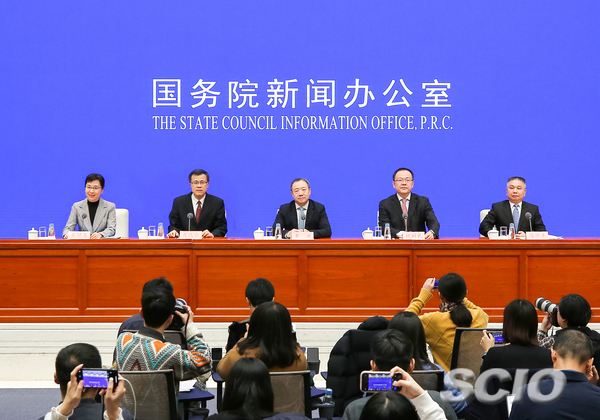
The State Council Information Office of China holds a press conference in Beijing on Jan. 13, 2020. [Photo by Wu Xiaoshan/China SCIO]
Xi Yanchun:Ladies and gentlemen, good afternoon. Welcome to this press conference. Today, present with us are: Mr. Huang Hong, vice chairman of the China Banking and Insurance Regulatory Commission (CBIRC); Mr. Zhu Shumin, CBIRC vice chairman; Mr. Xiao Yuanqi, CBIRC chief risk officer, director of general office and spokesperson; and Mr. Ma Xueping, CBIRC chief accountant. They will introduce how China's banking and insurance sectors have performed, how they have served the real economy and controlled risks.
Now, I'll give the floor to Mr. Huang Hong.
Huang Hong:
Friends from the media, good afternoon. It's a great pleasure to meet you here. I'd like to thank you for your long-term attention and support toward the work we do in the area of financial regulation. Last Friday, the CBIRC convened a meeting to discuss our work in this field. At the meeting, we reviewed last year's work, analyzed the current economic and financial situation, and made plans for our work this year.
In 2019, the CBIRC continued to uphold Xi Jinping Thought on Socialism with Chinese Characteristics for a New Era, carefully implemented the decisions and plans made by the Communist Party of China (CPC) Central Committee and the State Council, and further improved the leadership of the CPC and the building of the Party in the banking and insurance sectors. We continued to enhance the financial sector's service to the real economy, made resolute efforts to guard against and defuse financial risks, further carried out reform and opening-up, and promoted the quality development of the banking and insurance sectors. So far, both sectors are developing well and their ability to serve the real economy has been further enhanced. In major areas, progress has also been made in the managing and tackling of risks. Supply-side reform in the financial sector has also been deepened and the management of the financial sector has been improved. Overall, a solid foundation has been laid for the continued quality development of the industry.
In 2020, the CBIRC will rally even closer around the CPC Central Committee with Comrade Xi Jinping at its core. We will strengthen our consciousness of the need to maintain political integrity, think in terms of the big picture, follow the leadership core, and keep ourselves aligned with it. We will also increase our confidence in the path, theory, system, and culture of socialism with Chinese characteristics; resolutely uphold General Secretary Xi Jinping's core position in the CPC Central Committee and the Party as a whole, and resolutely uphold the CPC Central Committee's authority and its centralized and unified leadership. We will give high priority to achieving the goal of building a moderately prosperous society in all respects and remain committed to the general principle of pursuing progress while ensuring stability. We will give our full support to the quality development of the Chinese economy, further implement the reform and opening-up policy, and stay alert to guard against and defuse financial risks.
Now, I'd like to answer some of your questions with the help of the other spokespersons. Thank you.
Xi Yanchun:
Thanks for Mr. Huang's brief introduction. Now, the floor is open to questions. Please identify your media outlet before raising your question.
_ueditor_page_break_tag_CCTV:
This year is the last year for the three tough battles on risk management, poverty reduction and pollution control. What did the CBIRC do last year to guard against and defuse major financial risks? And what are the plans for this year? Thank you.
Huang Hong:
Thank you for your questions. I'll answer them. In 2019, the CBIRC carefully implemented the decisions and plans made by the CPC Central Committee and the State Council. We continued to enhance financial regulation, resolutely rectified unlawful market practices, and carefully tackled major risks. We have achieved a balance between stable growth and risk control, and won the crucial war of guarding against and defusing financial risks. Generally speaking, we have accomplished the following:
First, we have placed effective controls on credit default risks and increased our efforts to identify and address non-performing loans. In 2019, the total value of non-performing loans we handled hit 2 trillion yuan. All loans that remained unpaid 90 days after their due date in commercial banks had been regarded as non-performing loans. We have also steadily reduced enterprise debt risks. We established the creditor committee mechanism, with approximately 19,200 creditor committees set up nationwide. The total amount of market-based swapping of debt has reached 1.4 trillion yuan. Overall, these measures have helped enterprises reduce their leverage and debts and increase their profits.
Second, we continued to dismantle high-risk shadow banking. We further standardized interbank, finance, off-balance sheet and trust businesses; reviewed and cut financial assets with complex structure, tending to divert from the real economy, or involving contagion risks. As a result, risks from shadow banking and cross-industry financial businesses have continued to diminish. Over the past three years, the size of shadow banking dropped by 16 trillion yuan from its historical peak.
Third, we effectively managed risks in the online lending industry. Risks in the online lending industry have declined dramatically. By the end of 2019, China had 248 online lending agencies in operation, a decrease of 76% from the beginning of the year. The number of agencies and borrowers as well as the debit balance all fell for 18 consecutive months.
Fourth, we made consistent efforts to address acute problems in the financial sector. The number of problems in the market have fallen steadily, and any increases have also been effectively contained. A number of major illegal fund-raising cases have been severely investigated and dealt with. We have also intensified our oversight and accountability mechanisms. Last year, we punished 2,849 banks and insurance agencies, held 3,496 responsible officials to account, and handed out a total of 1.45 billion yuan in fines and confiscations.
Fifth, we gradually dealt with troubled financial institutions. The CBIRC, in collaboration with the People's Bank of China, took over control of Baoshang Bank, and steadily pressed ahead with the restructuring and risk mitigation of Hengfeng Bank and the Bank of Jinzhou.
Sixth, we resolutely curbed the financialization and any potential bubbles in the real estate market. We investigated and punished the illegal flow of banking and insurance funds into the real estate sector. Consequently, the growth rate of real estate loans has decreased by 3.3 percentage points year on year.
Huang Hong:
2020 is the final year for us to finish the building of a moderately prosperous society in all respects and complete the tasks set out in the 13th Five-Year Plan. 2020 will also be a year for the decisive victory against financial risks. The CBIRC will continue to guard against risks as planned, make efforts to win the hard battle against potential risks with determination, and adhere to the bottom line of preventing systemic risks. The following are the tasks that are high on our agenda this year.
First, we will properly deal with high-risk institutions, enhance accountability of various parties, do a good job on coordination, cooperation and policy guidance, as well as optimize the recovery and resolution mechanism of banking and insurance agencies.
Second, we will continue to dismantle shadow banking and significantly reduce high-risk businesses to prevent its resurgence.
Third, we will strengthen the supervision over the quality of assets, continuously increase penalties for non-performing assets, and improve the accuracy of asset classification.
Fourth, we will firmly implement policies to contain housing market speculation, strictly observe regulatory rules such as the management of credit risk concentration, and prevent the illegal flow of credit funds into the real estate market, as well as continue to curb its financialization and any potential bubbles that may emerge.
Fifth, based on the premise of national stability, we will severely punish or prosecute activities of financial groups that were illegally established that are in violation of laws and regulations. We will also manage their liquidation well, retrieve illicit money and losses, as well as promote their reform and restructuring.
Sixth, we will push forward the campaign against online lending and do a good job in disposing their existing assets. We will also ensure that closed financial institutions exit the market or transform themselves into other businesses, as well as enhance regulations on online insurance.
Seventh, we will continue to work together with local governments to deepen the reform of state-owned enterprises, accelerate economic restructuring, and defuse hidden debt-related risks.
Eighth, we will guard against and defuse external risks, step up stress tests for banking and insurance agencies, and improve our response plans to stabilize market expectations.
Ninth, we will further strengthen weaknesses in regulation by promoting the use of supervision technologies, speeding up the building of a regulatory big data platform, improving regulatory systems, and enhancing the ability of regulatory officials to impose stronger and more effective regulation. Thank you.
_ueditor_page_break_tag_Economic Daily:
At present, China faces increasing downward pressure on economic growth and some enterprises have even faced difficulties in their operations. Against this backdrop, what concrete measures have been taken by banking and insurance agencies to support the real economy, and how can profitability and gain for enterprises be increased? Thanks.
Zhu Shumin:
Under the current circumstances where economic growth is slowing in our country, the China Banking and Insurance Regulatory Commission has taken the initiative to motivate banks and insurers to continuously strengthen their support in the key areas and weak links in China's economic and social development. It is also urging them to help fulfill the effective financial needs of the real economy and to help ensure stability in employment, financial operations, foreign trade, foreign investment, domestic investment, and expectations. In 2019, the banking industry witnessed an increase of 17 trillion yuan in loans, which marked a year-on-year growth of 1.1 trillion yuan. The insurance industry provided about 6,470 trillion yuan in insurance for the entire nation, and claims and payouts totaling 1.29 trillion yuan. These are the main areas of our work:
First, in the transition period when new economic growth drivers are replacing the old ones, efforts have been made to provide better financial services for high-quality economic growth, to strengthen financial support to the advanced manufacturing industry, strategic emerging industries and low-carbon circular economies, and to promote industrial transformation and upgrading. By the end of last year, loans provided to the manufacturing sector by banks increased by 780 billion yuan compared to the beginning of the year, and the green credit balance of 21 major banks exceeded 10 trillion yuan. In terms of promoting financial services for technology enterprises, over 750 technological branches of banks and specialized technological financial institutions have been set up throughout the country. The outstanding balance of bank loans to technology enterprises exceeded 4.1 trillion yuan, an increase of 24% compared to the beginning of 2019. In addition, strong financial support has been given to the coordinated development between regions and construction of major projects. By the end of 2019, the outstanding balance of bank loans to infrastructure construction reached 29.2 trillion yuan, an increase of 2.8 trillion yuan compared to the beginning of the year. We have also promoted the establishment and launch of various investment plans by insurance agencies. At present, they have supported the Yangtze River Economic Belt and Beijing-Tianjin-Hebei Coordinated Development Project with more than 600 billion yuan and 250 billion yuan in capital respectively.
Second, efforts have been made to effectively alleviate the problems of difficult and expensive financing. We have continuously standardized the fees charged by financial institutions and encouraged banks to provide separate credit lines for inclusive finance. We have also implemented preferential internal pricing for internal capital transfers, increased support for renewals, and increased the proportion of credit loans. As we all know and as has been widely reported last year, by the end of 2019, the outstanding balance of bank loans to small and micro enterprises was 11.6 trillion yuan, marking a year-on-year increase of 25%. The number of enterprises with credit balances was more than 21 million, an increase of 3.8 million compared to the beginning of the year; and the average interest rate of loans granted for first time to small and micro enterprises decreased by 0.64 percentage point compared to the 2018 average.
Third, efforts have been made to continuously strengthen financial services for private enterprises. Adhering to the "two unwaveringly" requirements; which are to unswervingly consolidate and develop the public sector, and unswervingly encourage, support, and guide the development of the non-public sector; banks and insurance agencies are required to be non-discriminatory and equal in their treatment of the different economic sectors. By establishing a mechanism that ensures no one who has fulfilled their duties is held liable, strengthening internal performance assessments and innovating on products and services, we have driven banks to establish a long-term mechanism under which banks dare to, are willing to and able to grant loans to private enterprises. At the same time, by setting up creditor committees and implementing debt-to-equity swaps, we have helped some enterprises overcome their difficulties. At present, there are about 19,000 creditor committees nationwide and 14,000 of them concerning privately-owned enterprises.
Fourth, efforts have been made to support the development of public programs. We have conducted home service financial innovations in ten pilot cities including Beijing, Tianjin and Shanghai to help develop community services such as elderly care, housekeeping and childcare. We have also continued to develop commercial pension insurance and commercial health insurance. From January to September of 2019, the pension annuity insurance and commercial health insurance premiums were 41.5 billion yuan and 567.7 billion yuan respectively. We have also cooperated with the Ministry of Agriculture and Rural Affairs to strengthen support to hog production and deepened the pilot program that uses insurance capital to support small agricultural enterprises. From January to November of 2019, agricultural insurance provided 3.5 trillion yuan worth of risk guarantees for 178 million insured agricultural households and paid 52.5 billion yuan in indemnities to 44 million agricultural households.
As our next step, the China Banking and Insurance Regulatory Commission will, based on the arrangements of the Central Economic Work Conference, focus on developing policies concerning the real economy. These policies will aim to help provide effective financial services, solve the financing problems of private enterprises and small and micro enterprises, and improve the financial services in the manufacturing and social service sectors so as to improve the quality and efficiency of financial services for the real economy. Thank you.
_ueditor_page_break_tag_Market News International:
I have two questions. We recently learned that the CBIRC mentioned at a meeting that it will cooperate with local governments to resolve hidden debt risks. How will this be implemented? Another question is that since the second half of last year, commercial banks have increased loans to help local governments refinance their debts. Is there any relevant information and data to share in this area? Thank you.
Xiao Yuanqi:
Thanks for your question. Your question is one of the topics mentioned in this work meeting. Regarding the hidden debts of local governments, the CBIRC mainly guides banks and insurers to deal with them in accordance with existing regulations and policies. On the one hand, we must "open the door" and encourage these institutions to actively participate in some projects with good performance and cash flow. We encourage the issuance of local government bonds, which can be sold in commercial banks so that local companies and individuals can purchase them at bank counters. For the special bonds issued by local governments, banks and insurance institutions are the main investors. On the other hand, we must prevent relevant risks. Especially for hidden debts that violate regulations, banks and insurers must follow their own risk management process to strictly control risks in accordance with existing regulations and policies. The data you just mentioned will be provided to you after the meeting. Thank you.
_ueditor_page_break_tag_China News Service:
As financial products have now entered the lives of millions of families, all sectors of society are paying more and more attention to the protection of the rights and interests of financial consumers. We would like to know what measures the CBIRC had taken to protect the rights and interests of these consumers for the past year? In particular, what achievements have been made in protecting consumers from the infringement of their rights and interests?
Huang Hong:
This question is for Mr. Ma to answer.
Ma Xueping:
The protection of consumers is indeed one of the priorities of the regulator. In 2019, the CBIRC focused on the main consumer pain points and the challenging issues. It adopted special measures, on-site inspections, interview mechanisms and public disclosure to punish and rectify the behavior of banks and insurers that infringed on consumers' rights and interests.
First, we opened channels for complaints and placed great importance on the demands of the public. In the past year, the regulator directly received 31,300 complaint cases related to the banking and insurance industries, which marked a year-on-year increase of 69%. We have carefully dealt with every complaint and replied to consumers promptly.
Second, we conducted targeted inspections and interviews. Last year, we carried on-site inspections that were closely related to consumer rights, such as fees, the credit and consignment business, financial services, sales compliance, and the authenticity of customer information. Such supervision was carried out during the whole process of bank and insurance operations. At the same time, in accordance with the principles of early warning, early identification, and early disposal, we made inquiries with 63 institutions to discuss the hidden risks we uncovered during our inspections. We also urged financial groups to establish and improve their consumer protection systems and mechanisms, and enhance their consumer protection management levels.
Third, we increased the level of public disclosure. In response to social concerns, and to give full play to the role of public supervision, we released reports on consumer complaints every quarter, and urged institutions to strengthen control over their businesses and take responsibility for handling complaints. We even published five cases of infringement to deter bad actors in the industry. We also carried out risk warnings based on the cases, and improved public awareness on risk prevention and self-protection.
Fourth, we cracked down on infringements on the rights and interests of consumers. Last year we launched a three-month-long campaign to focus on the key areas where consumer rights had been infringed on over the years. By the end of last year, all banks and insurance institutions had completed their self-inspections. We carried out spot checks on 2,096 banking and insurance institutions, including more than 50,000 branches. We urged these institutions to revise 2,520 items, and some relevant personnel were also held accountable.
In general, last year, through the rectification of the chaos that infringed on consumers' rights and interests, special campaigns to tackle the problem of ignoring the interests of the public , on-site inspections and supervision on how consumers' complaints were addressed, the China Banking and Insurance Regulatory Commission urged banks and insurance institutions to check and pay consumers 4.09 billion yuan in refund and compensation. This has helped improve the people's sense of gain.
I will report on this year's work plan. This year, we will continue to strengthen the supervision of consumer protection as a continuation of our work last year. First, we will establish rules and regulations and systems to urge institutions to fulfill their main responsibilities and to improve the consumer rights protection system and mechanism. Second, we will introduce a consumer protection supervision evaluation system, which is an innovative approach to supervision, to carry out the multi-dimensional evaluation of consumer protection work by the institutions. Third, we will promote the development of a multi-resolution mechanism for financial disputes, and provide people with multiple and efficient channels for resolving complaints and disputes. Fourth, we will continue to promote the follow-up rectification of problems found in the rectification of irregularities concerning consumer protection, and urge all institutions to analyze the existing problems, find the root causes of the problems, tackle areas of weaknesses, improve the governance system, and establish a long-term effective mechanism, so as to ensure that illegal behaviors which violate consumer rights and interests are curbed.
Finally, I would like to take this opportunity to talk about the issues related to financial consumer education. As a regulatory authority, we have helped consumers acquire financial knowledge and improve their financial literacy through various financial knowledge education activities. At the same time, we also hope that the financial consumers can actively learn and acquire financial knowledge, learn to examine and evaluate their own ability to bear risks, establish a sense of risk, and cultivate their habits around rational consumption and investment. Thank you.
_ueditor_page_break_tag_Hong Kong Economic Herald:
Mr. Zhu just mentioned increasing support for private, small and micro businesses in renewing loans, which is also the "last mile" in solving the financing difficulties faced by small and micro businesses. What measures have been taken to help private, small and micro businesses get first-time loans? This is also the "first mile" in helping them tackle financing difficulties.
Zhu Shumin:
The first-time loan is a bit more demanding than the renewal loan. In this area, all banks attach great importance to the first-time loan business. Some media outlets may have noticed that, under the guidance of the China Banking and Insurance Regulatory Commission, the China Banking Association has advocated the nation's banks and financial institutions to launch a special financing campaign --"Hundreds of banks go into tens of thousands of enterprises". This was fully implemented nationwide last November. At the early stage, we had 5 provinces and municipalities carry out pilot trials and they achieved very good results. Next, the China Banking and Insurance Regulatory Commission will guide the China Banking Association to advocate the improvement of banking services across the country. Based on the basic accounts opened by small and micro enterprises, a one-to-one docking mechanism will be established to allow banks to change their operations from that of being a "zuo shang" ("sedentary merchant") to "xing shang" ("itinerant trader") and conduct in-depth studies on the financing needs of small and micro enterprises. Voluntary docking on the basis of the full exchange of information between banks and enterprises will help realize a positive interaction between banks and enterprises. Preliminary statistics show that nearly 8 million small and micro enterprises operating normally and paying taxes have been included in the financing campaign. This data is mainly given to us by the tax bureaus. We will continue to look at enterprises' financing situation according to their tax records. If there are tax records but no bank loans, we will provide relevant information to the bank where the company has opened a basic account, and this bank will go to the enterprise to learn about its financing needs and offer services.. In fact, this is what you just mentioned -- the release of the first loan. At present, the majority of banks are taking the initiative to go to the enterprises and provide their services and carry out docking. This work is expected to be completed by the end of April this year. The campaign is carried out across the whole country, and is a very popular project that is welcomed both by the government as well as enterprises.
_ueditor_page_break_tag_Yicai TV:
The new rules on asset management have been implemented for almost two years. How is the current implementation of banks' stock assets? The transition period is set at the end of this year. I want to know how we can ensure that banks can smoothly pass through this transition period before this date. Will the restrictions be relaxed if banks cannot reach what is expected of them in time? Or will you relax other criteria in the aspect of implementation?
Xiao Yuanqi:
All aspects of the transition period of the new rules on asset management are of great concern. On the whole, after the introduction of the new rules on asset management and the subsequent measures issued by the China Banking and Insurance Regulatory Commission on relevant bank wealth management subsidiaries and bank net capital management, all the banks have progressed smoothly and in an orderly manner. The stock asset management business is also being regulated in accordance with the new asset management rules and related regulations and requirements. This year is a very important year for the transition of the new asset management regulations. We require banking institutions to conscientiously implement the new asset management regulations and related financial management rules, seriously defuse the risks of stock assets, and successfully fulfill related tasks during the transition period.
On the other hand, some banking institutions have a relatively large stock inventory of asset management products. Before the introduction of the new asset management rules, the inventory was relatively large. If you want them to fully resolve it during the transition period, certain individual institutions will still have some difficulties. But we require them to formulate rectification plans, including medium and long-term solutions. And the requirement is that, in principle, they must resolve this during the transition period. For some institutions in particular with large stocks and which face difficulties during the transition period, we will also study related arrangements to ensure that asset management products, especially bank wealth management products, can be regulated in a smooth and orderly fashion in the future. Some flexible arrangements will also be given to certain individual institutions as deemed appropriate. Thank you.
_ueditor_page_break_tag_Bauhinia Magazine:
Earlier Mr. Zhu spoke about the difficulties and high costs of financing faced by enterprises.
Could you please give some details about the achievements made by the China Banking and Insurance Regulatory Commission in serving the real economy and alleviating the difficulties faced by enterprises in accessing affordable financing? What substantial results have been achieved and what measures have been taken?
Zhu Shumin:
We have taken many measures, and this year we will start by focusing on improving regulations. We are drawing up the measures on the supervision, administration and appraisal of commercial banks' financial services for small and micro businesses. We will develop an evaluation method and index system which centers on credit services and covers the overall business processes of financial services provided by commercial banks for small and micro businesses. The measures will be released in the near future. The regulation will incorporate many of the effective measures we have adopted in the early stages, including the renewal of loans and first-time loans that people are concerned about, as well as some work requirements for commercial banks. There will be more clarity when the measures are unveiled. I'll stop here. Thank you.
_ueditor_page_break_tag_CNR:
The Spring Festival is coming and the issue of banks attracting deposits has become a hot topic again. Small and medium-sized banks may face difficulties in winning over savers. My question is what measures are the China Banking and Insurance Regulatory Commission taking to deal with this. I noticed that the auto insurance was talked about specifically at the recent 2020 national banking and insurance working conference. Why was the issue of the marketization of auto insurance ratio raised, but not of health insurance and commercial pension insurance? Are there any specific measures to help develop and improve the "third pillar" of China's pension insurance system? Thanks.
Huang Hong:
You asked three questions. I will give the floor to Mr. Xiao for the question about banks' attracting deposits. And I will answer the other two.
Xiao Yuanqi:
The race to attract deposits and win over savers is not as serious as in the past. Because we have regulations and require banks, especially small and medium-sized banks, to enhance their ability to manage assets and liabilities, there has been much letup in such race these years. You mentioned that there would be a "war to attract deposits," which reminds us to study our measures taken during the holiday period. On the one hand, we must ensure that there is enough capital in the market to meet the peoples' demand during the holiday. At the same time, banks, no matter big or small, should have sufficient and reasonable liquidity because of the demands during the holiday. According to the regulatory data, small and medium-sized banks' indices of liquidity are good, and indices such as liquidity coverage ratio are well above the regulatory requirements. However, we will pay more attention during this period. In the matter of attracting deposits, we have requirements and regulations. Banks should not do anything in violation of these provisions and a red line must not be crossed in an effort to win over savers. There are stiff penalties for offenders who fail to maintain the normal order of the deposit market.
Huang Hong:
Let me answer the latter two questions. We are all familiar with motor vehicle insurance or auto insurance for short. Motor vehicle insurance has long been a main type of insurance for property insurance companies. In terms of the actual figures last year, the incomes from auto insurance premiums reached 818.9 billion RMB, accounting for 63% of the total premium of property insurance. In other words, 63% of the premiums of property insurance companies came from auto insurance. Auto insurance plays a crucial role in people's daily travel, and it is a very important issue for millions. In recent years, the CBIRC has strengthened its supervision of auto insurance. Although our supervision is relatively stricter than before, the long-standing deep-seated problems have not been fundamentally resolved. The media often reports that the problems of high prices, high fees, extensive management, disorderly competition, and distortion of data still exist. Hence, accelerating auto insurance reform is an urgent task for the CBIRC. Therefore, in 2020, we are placing the regulatory work concerning auto insurance system on the agenda. Auto insurance system has undergone some reforms over the years, but I think they have not been enough. The reforms that really touch on the fundamental interests and that target deep-seated issues, have in truth not yet begun. In 2013, we carried out a thorough reform of our health and pension insurance systems, that is, the reform of the life insurance rate formation mechanism. The auto insurance system reform should also be market-oriented, that is, it should adhere to the direction of market-oriented reform.
In general, to undertake the next steps of reform, we need to first understand the overall requirements for reform. The basic principles of the reforms should be to keep the auto insurance system market-oriented, supervised, and guided. We should adjust the total volume, optimize its structure, expand the scope of guarantees, improve the efficiency, streamline its administration and coordinate its promotion with other reforms. The second issue is to pay attention to the main content of the reform. We need to coordinate and adopt a combination of reforms in the compulsory insurance for vehicle traffic accident liability and commercial insurance, a combination of terms and exchange rate reforms, a combination of guarantee and service reforms, as well as a combination of market and regulatory reforms. The third is to ensure the pace of reform. At present, we are formulating a specific plan for the comprehensive reform of auto insurance system, and this plan is being widely consulted. The CBIRC will formally implement comprehensive auto insurance system reforms at an appropriate time this year. This is the answer to your second question.
The third question you raised is about the reform and development of the third pillar of the pension system, the individual commercial pension insurance. In the speech I made at the FORTUNE Global Forum on Saturday, I spoke about opinions and suggestions for the next step of reform of the third pillar. To sum up:
First, we must accelerate the top-level design of the third pillar reform to incorporate it into major national reforms, at the same time, taking the development of the third pillar as a key national strategy and incorporate it in the "14th Five-Year Plan" .
Second, we must strengthen policy support. In recent years, some policies have been introduced on the construction of the third pillar. For example, pilot programs for individual tax-deferred pension insurance schemes that the media has concerned about have officially been launched in Fujian, Shanghai and Suzhou.
Third, we must increase our efforts to promote the third pillar, especially individual pensions. We have not done enough in this area in the past.
Fourth, we must establish an individual pension system. On the first working day of 2020, I attended a policy briefing here, during which I gave some opinions on the development of commercial pension insurance. I would like to emphasize again today that the development of the third pillar, the establishment of various types of pensions, is both an opportunity and a major challenge for commercial insurance institutions. The liability cycle of personal pensions is very long, it has to cross multiple economic cycles and undergo a series of tests such as longevity and interest rate risks. Therefore, the capacity building of commercial insurance institutions is the main task currently facing the CBIRC, which includes investment capacity, actuarial pricing and professional team-building ability. These are four aspects of work related to the third pillar of the pension system.
_ueditor_page_break_tag_21st Century Business Herald:
Among the nine key areas that the CBIRC will work on to guard against and defuse financial risks mentioned by Mr. Huang earlier, the first is to properly deal with high-risk financial institutions. How do regulatory bodies view the risks in small and medium-sized banks as well as insurance institutions? What are the measures taken in this regard? Also, Mr. Huang mentioned that strict measures will be undertaken to investigate and deal with financial groups that have been established in violation of prevailing laws and regulations. How do the authorities identify these financial groups and what are the measures that are in place to deal with them?
Huang Hong:
Thank you for your two questions. Let's give the floor to Mr. Xiao.
Xiao Yuanqi:
Thank you. Establishing risk monitoring for the banking and insurance sectors is one of the main responsibilities of the CBIRC. Mr. Huang, Mr. Zhu and Mr. Ma are all experts in this field.
Regarding your first question on how regulatory bodies view risks in high-risk financial institutions, generally speaking, risks in banks and insurance institutions are manageable on the whole. The indicators, either on these institutions' performance, or of the risk regulation, have remained within an appropriate range. According to a series of data points we released recently, the operations, performance, as well as core indicators of risk regulation toward commercial banks and insurance institutions have stayed promising. Nevertheless, there are indeed some small and medium-sized institutions facing comparatively high risks, and some of these risks are emerging due to various reasons. In regard to these problems, the CBIRC has remained vigilant and investigated the institutions concerned, managing them through a list system and defusing the risks accordingly. In many cases, this has been achieved by conventional means. For example, 2 trillion yuan of non-performing assets were disposed of last year, which, in essence, resolved the credit risks of the related institutions. Risks related to non-performing assets, either existing or newly-added ones, have all been defused through proper disposal and management. In addition, these institutions are also required to conduct strict screening management and risk control to newly-added loans. There are also many other existing conventional regulatory measures to defuse the risks.
In addition to conventional methods, some proactive measures need to be taken toward the high-risk small and medium-sized financial institutions. For example, as Mr. Huang mentioned earlier, last year, the CBIRC, together with the People's Bank of China, took over Baoshang Bank Co., Ltd in accordance with the law. It also handled risks, carried out reforms and the reorganization of HengFeng Bank Co., Ltd and Jinzhou Bank Co., Ltd. These are all major moves in this regard. For other institutions, we also managed non-performing assets, introduced new strategic investors, and carried out mergers and reorganizations based on market principles and the rule of law. As for the risks in small and medium-sized institutions, we will also adopt comprehensive methods to resolve them this year, but different measures will be taken according to the specific circumstances of each institution.
The second problem relates to illicit financial groups. Since the start of 2017, we've adopted various measures to crackdown on illicit financial groups so as to further regulate financial markets and prevent risks, and this work is still ongoing. These illicit agencies have held shares in financial institutions through various illegal measures, such as circulating capital, making false capital contributions and becoming nominal shareholders. After joining the financial institutions, these agencies have been found to have conducted illegal actions, such as colluding for the transmission of illicit profits, and engaging in affiliated transactions, which have seriously interfered in the regular business activities of financial institutions. All such behaviors should be regulated and cracked down on. The construction of an institutionalized system will be our priority in the future, for example, we are working on measures to tighten the review of shareholders' eligibility and optimize shareholding management so that those professional financial agencies with outstanding expertise and a long-term credit record both at home and abroad can be introduced as major shareholders. We will also map out some medium- and long-term plans for the governance and development of companies. These are the measures we are going to adopt during the 2020 working conference to address the problem of illicit financial groups. Thank you.
_ueditor_page_break_tag_Et Net News Agency:
Currently, the insurance products in Hong Kong and Macao are not available on the Chinese mainland, and the channels for investors from the Chinese mainland to directly invest in overseas financial products are relatively limited. I would like to ask how the connectivity of financial and insurance products within the Guangdong-Hong Kong-Macau Greater Bay Area can be improved upon? Moreover, the pilot mainland personal account opening service has been introduced in Hong Kong. Will this pilot eventually be fully launched?
Huang Hong:
You've raised two questions. One of them is about insurance, and the other is about the banking issue. I would like to answer the former. The issues regarding the development of the Guangdong-Hong Kong-Macau Greater Bay Area have been explained at the previous press briefing, however, I'm willing to provide some further information about it. The construction of the Greater Bay Area is a national strategy that is designed, arranged and promoted by General Secretary Xi Jinping. It is not only a new measure to break new ground in pursuing the opening up on all fronts in a new era, but also a further step in taking forward the practice of "one country, two systems." The China Banking and Insurance Regulatory Commission will take various measures to support the overall planning of the construction of the Greater Bay Area in the following aspects:
First, we strengthened the leadership in our organizational work and built a multi-party response mechanism. The China Banking and Insurance Regulatory Commission (CBIRC) set up the working group of the Guangdong-Hong Kong-Macao Greater Bay Area. Headed by the CBIRC's leader, the group has formulated meeting and working mechanisms in this area.
Second, we established a joint mechanism to hedge against financial risks in Guangdong, Hong Kong and Macao. In 2018, a joint working conference of Guangdong-Hong Kong-Macao banking supervision was held to set up a supervision and contact mechanism for the area, where working-level meetings are held regularly every year.
Third, we supported cooperation among Guangdong-Hong Kong-Macao insurance institutions to develop cross-border auto and medical insurance products.
Fourth, we supported the Nansha District of Guangzhou to develop featured financial services including shipping finance, technology finance, and aircraft and ship charters.
Fifth, we expanded the financial opening-up to Hong Kong and Macao. We implemented the policy decisions and plans of the CPC Central Committee and the State Council, and also participated in negotiations of several agreements on establishing closer trading ties between the mainland and Hong Kong as well as between the mainland and Macao. We also promoted the implementation of opening-up measures, including facilitating foreign investments, relaxing requirements for foreign investments to establish financial institutions and expanding the business scope of foreign financial institutions.
More recently, we are working on regulations to allow Hong Kong insurance institutions to establish after-sales service institutions in the Guangdong-Hong Kong-Macao Greater Bay Area. On the whole, we have strengthened our policy guidance in multiple aspects to promote the development of the area and to facilitate Hong Kong insurance institutions' operations in the mainland.
Xiao Yuanqi:
Mr. Huang made a comprehensive presentation on the financial cooperation and development in the Guangdong-Hong Kong-Macao Greater Bay Area. To sum up, we strongly support and actively promote all measures which benefit financial cooperation and consumer convenience in the Guangdong-Hong Kong-Macao Greater Bay Area.
Xi Yanchun:
Thanks to the speakers and thanks to the journalists. Today's briefing is hereby concluded.
- SCIO briefing on Xinjiang's stability and development
The State Council Information Office of China (SCIO) invites officials from Xinjiang Uygur Autonomous Region to brief the media about Xinjiang's stability and development at 10 a.m. on Oct. 9, 2019. [Photo by Zhao Yifan/China SCIO] Speakers:
Shohrat Zakir, deputy secretary of the Xinjiang Uygur Autonomous Regional Committee of the Communist Party of China (CPC), chairman of the Xinjiang regional government
Xu Hairong, member of the Standing Committee of the CPC Xinjiang Uygur Autonomous Regional Committee, secretary of the CPC Urumqi Municipal Committee
Erkin Tuniyaz, member of the Standing Committee of the CPC Xinjiang Uygur Autonomous Regional Committee, vice chairman of the Xinjiang regional government
Parhat Rozi, deputy secretary of the CPC Kashgar Prefectural Committee, head of Kashgar prefectural government
Chairperson:
Hu Kaihong, spokesperson of the State Council Information Office
Date:
Dec. 9, 2019
Hu Kaihong:
Ladies and gentlemen, good morning. Welcome to this press conference. Today, we're delighted have with us Mr. Shohrat Zakir, deputy secretary of the Xinjiang Uygur Autonomous Regional Committee of the Communist Party of China (CPC) and chairman of the Xinjiang regional government; Mr. Xu Hairong, member of the Standing Committee of the CPC Xinjiang Uygur Autonomous Regional Committee and secretary of the CPC Urumqi Municipal Committee; Mr. Erkin Tuniyaz, member of the Standing Committee of the CPC Xinjiang Uygur Autonomous Regional Committee and vice chairman of the Xinjiang regional government; and Mr. Parhat Rozi, deputy secretary of the CPC Kashgar Prefectural Committee and head of Kashgar prefectural government. They will introduce various aspects related to the stability and development of Xinjiang Uygur autonomous region, and answer some of your questions.
Now, I'll give the floor to Mr. Shohrat Zakir.
Shohrat Zakir:
Thank you. Ladies and gentlemen, friends from the media, good morning. It's a great pleasure for me to meet you here. You have given prolonged strong support to Xinjiang's development. On behalf of the regional government, I'd like to offer sincere gratitude to you all.
Xinjiang is a bright pearl in western China, a major East-West connecting point under the Belt and Road Initiative (BRI). The Central Committee of CPC attaches great importance to the work in Xinjiang, and has developed a series of favorable policies to support its economic and social development. Annual transfer payments from central finance to Xinjiang reach nearly 400 billion yuan. Meanwhile, 19 provinces and municipalities provide paired aid with an annual investment of more than 15 billion yuan. Under the strong leadership of the CPC Central Committee, the officials and people of all ethnic groups are united and work together to achieve common prosperity and development, and jointly contribute to Xinjiang's social stability, economic growth, ethnic solidarity, religious harmony, livelihood improvement and the peaceful and happy life.
However, the peace and stability in Xinjiang did not come about easily. Over a past period of time, it has faced challenges posed by frequent violent terrorist activities, severely damaging people's right to subsistence and development. We have upheld socialist rule of law, giving equal importance to cracking down violent terrorist crimes in accordance with the law and addressing problems at the source. Through improving people's wellbeing, enhancing legal publicity and education, and lawfully establishing vocational education and training centers, Xinjiang has been intensifying efforts to fight against terrorism and extremism. All these important aspects have laid a solid foundation for realizing Xinjiang's social stability and long-term security. There have been no violent terrorist cases and incidents for three consecutive years in Xinjiang. The spread of extremism has been effectively contained, public security has notably improved, and people of all ethnic groups are able to live and work in peace with a much stronger sense of gain, happiness and security.
We stay committed to the strategic goal of pursuing high-quality economic development, upholding an innovative, coordinated, green, open and shared development philosophy, and seeking progress while maintaining stability. Thus, Xinjiang's economy has seen sustained and healthy growth. Since the 18th National Congress of CPC, Xinjiang's GDP has maintained an annual increase of 8.5%. Urban and rural residents' per capita disposable income is rising by 8.4% and 8.2% respectively per annum. In 2018, Xinjiang received 150 million tourists from home and abroad, up 40.1% year-on-year. In the first 10 months this year, the region has attracted more than 200 million tourists, up 42.6% from last year.
We have always taken the people's aspiration for a better life as the goal of our work, and resolutely delivered outcomes of development to improving the people's life, benefiting various localities and enhancing ethnic solidarity. Over 70% of general public budgetary expenditure is used in ensuring and improving people's livelihood, so as to deliver more achievements of development to all ethnic groups in a fairer manner. We insist that employment must come first, and have also prioritized education. We are committed to improving people's health, and have been working hard to improve the social security system. We adhere to the basic strategy of precise poverty alleviation, pooling all resources at our disposal to win the battle against poverty. Since 2014, a total of 2,385,300 people have been lifted out of poverty, and the poverty incidence rate has dropped to 6.51% this year from 22.48% in 2014.
We unswervingly implement the system of regional ethnic autonomy, observe the Law of People's Republic of China on Regional Ethnic Autonomy, protect people's rights of all ethnic groups participating as equals in administering State affairs as well as independently administering their local affairs within the autonomous administrative divisions where ethnic autonomy is exercised. In Xinjiang, chairpersons of the standing committee of the people's congress of the autonomous region, chairpersons of the autonomous regional government, and chairpersons of the regional committee of the Chinese People's Political Consultative Conference are all citizens from ethnic minorities; the heads of autonomous prefectures and counties are all citizens from the ethnic groups exercising regional autonomy. Most of the prefectures' (prefectural cities) administrative chiefs are all officials of ethnic minorities; in general, either the chief Party or government post at level of counties and equivalent areas is held by an ethnic minority official. Ethnic minorities account for 62.1% of the deputies of the 13th Xinjiang People's Congress, and 46.7% of the members of the 13th CCPCC of Xinjiang Uygur Autonomous Region. We protect and carry forward the fine traditional cultures of all ethnic groups according to law, and safeguard the rights of various ethnic groups to use and develop their own spoken and written languages according to law. Spoken and written languages of ethnic minorities are extensively used in such areas as the judicature, administration, education, press and publishing, radio, film and television, the Internet and in daily life. We are committed to upholding ethnic unity, making efforts to promote ethnic solidarity promotion activities. People of all ethnic groups in Xinjiang are as united as pomegranate seeds holding together tightly.
We fully act on the policy that "Chinese citizens enjoy freedom of religious belief", which is stipulated in the Constitution, ensuring that religious believers and non-believers have full equality in enjoying political, economic and cultural rights. We administer our religious affairs according to law and uphold the principle of independence and self-management of our religious affairs and guide religions to adapt to a Chinese context and to the socialist society. We make great efforts to improve the conditions of religious venues and activities. We intensify the support to and cultivation of religious figures as well as continuously serve the normal needs of religious believers.
Recently, the U.S. House of Representative passed the so-called "Uygur Human Rights Policy Act of 2019". This bill seriously violated international law and basic norms governing international relations, and grossly interferes in China's internal affairs. The measures adopted in Xinjiang in regard to counter-terrorism and de-radicalization are, by principle, no different from those adopted in many other countries around the world, including the U.S. The American side should discard its ideological prejudice, and stop adopting a double standard on counter-terrorism and de-radicalization; otherwise, they are putting themselves in a position opposed to 1.4 billion Chinese people, to the international community, as well as to the justice and conscience of humanity. No force can stop Xinjiang's progress of stable and prosperous development, as well as its people of all ethnic groups from working together and forging ahead.
That's all for my brief introduction. Thank you.
Hu Kaihong:
Thanks to Mr. Shohrat Zakir for his introduction. Now, the floor is open for questions. Please identify your media outlet before raising your questions.
_ueditor_page_break_tag_CCTV:
Mr. Shohrat Zakir just mentioned that Xinjiang has seen no violent terrorist attack for three consecutive years. So, my question is what kind of economic benefits have been brought about by this stable situation?
Shohrat Zakir:
Thanks for your question. I would like to invite Erkin Tuniyaz, vice chairman of the Xinjiang regional government, to answer it.
Erkin Tuniyaz:
Thanks for your question. It is clear that any country in the world seeking development needs a stable international and domestic environment. Stability is the prerequisite and guarantee for development, and development is the foundation and support for stability. Cadres and people of all ethnic groups in Xinjiang are deeply aware that, in the past, due to the frequent violent terrorist activities and spread of religious extremist ideologies , the region was in a state of chaos and could not achieve any development, and was even on the brink of losing the progress previously achieved. Now, the social harmony and stability have created opportunities for economic development, constantly delivering benefits. In 2017, Xinjiang's regional GDP reached 1.09 trillion yuan, the first time it went over one trillion yuan, with a year-on-year increase of 7.6%. Urban and rural residents' per capita disposable income annually saw a rise of 8.1% and 8.5% respectively, to 30,775 yuan and 11,045 yuan. In 2018, its GDP reached 1.22 trillion yuan, a year-on-year increase of 6.1%. Urban and rural residents' per capita disposable income rose by 6.5% and 8.4% respectively, to 32,764 yuan and 11,975 yuan. In the first three quarters of 2019, the GDP increased by 6.1% year-on-year, while urban and rural residents' per capita disposable income rose by 5.6% and 9.5% respectively. In regard to tourism in Xinjiang, recognized as the "barometer" to measure the level of stable development, there was a sharp increase. In 2017, the number of tourist arrivals in Xinjiang exceeded 100 million for the first time to reach 107 million, and tourism revenue stood at 182.2 billion yuan, both up by over 30% year-on-year. In 2018, the region received 150 million tourists and tourism revenue reached 257.97 billion yuan, both up by over 40% year- on-year. In the first 10 months this year, the figure surpassed 200 million, producing revenue of more than 300 billion yuan, both up by over 40% year-on-year. People of all ethnic groups in Xinjiang have learned that "stability is a blessing while unrest is a scourge", and they will spare no effort in maintaining the sustained stability of the region.. No forces from home and abroad have the right and will be able to undermine the confidence and resolve of people in Xinjiang. Thanks.
_ueditor_page_break_tag_Economic Daily:
Mr. Chairman, you just mentioned that over 70% of Xinjiang's general public budgetary expenditure is being used in ensuring and improving the people's livelihood. My question is what innovative measures have Xinjiang taken in terms of improving people's livelihood, such as in affordable education and medical care. Thank you.
Shohrat Zakir:
Thank you. Xinjiang Uygur autonomous region has been espousing the people-centered development philosophy, delivering the outcomes of development to improving people's lives, benefiting various localities and enhancing ethnic solidarity. We continue to allocate 70% of our general public budgetary expenditure to ensure and improve people's livelihood, making continuous efforts in nine people-benefiting projects with focus on employment, education and medical care. Thus, people of all ethnic groups have enjoyed a much stronger sense of gain, happiness and security.
On employment, we have been improving services for college graduates and urban residents, and creating job opportunities for rural surplus labor, especially for those from deeply impoverished families. We also encourage people to start businesses and create jobs, and accelerate the implementation of the employment plan for surplus labor in the four prefectures in southern Xinjiang. We have ensured that at least one person from a family with available labor gets employed.
We also prioritize education. We have increased subsidies to students from impoverished families and ensured that all school-age youngsters have access to nine years of compulsory education. In the four prefectures in southern Xinjiang, 15-year free education is provided all the way from kindergarten to senior middle school. We have endeavored to ensure that education is affordable and quality teaching resources are accessible to every child.
On medical care, an annual free medical examination is available to all urban and rural residents, who are all under the coverage of accident insurance. We are now providing medical treatment for 133,000 people with tuberculosis, of whom 56,900 have been cured. Urban employees are fully insured against serious illnesses.
On social security, we are now implementing full coverage of social insurance and have been constantly improving the basic old-age, medical, unemployment, work-related injury and maternity insurance system. The work-related injury insurance fund is now managed by the autonomous region and we're now speeding up the building of a unified social insurance public service platform to ensure cross-region real time reimbursement and one-stop reimbursement for basic medical insurance and insurance for serious illnesses.
On housing, we have built 212,700 government-subsidized housing units in rural areas and renovated 154,900 units in run-down urban areas this year, all meeting or beating the annual target.
These are some of the specific measures we have taken in ensuring and improving people's livelihood. Thank you.
_ueditor_page_break_tag_China Arab TV:
What's your views to the "Uyghur Human Rights Policy Act of 2019" passed by the House of Representatives recently? Thanks.
Shohrat Zakir:
Thank you for your question. The so called "Uyghur Human Rights Policy Act of 2019" passed by the United States ignores and distorts the true picture in Xinjiang. It has neglected social stability and harmony, economic prosperity and decent living standards and the working environment for all ethnic groups residing there. It distorts, smears and slanders the human rights condition and the Chinese government's policies in Xinjiang, interfering in China's internal affairs in bold, rude and brutal ways severely contravening international law and the basic norms governing international relations. We believe this is an absolute hegemonic act that has aroused an immense reprimand and strong opposition of all ethnic groups in the Xinjiang Uygur autonomous region.
Over the past few years, Xinjiang was subject to the hazards of terrorism, religious extremism and secessionism. It is estimated that violence and terrorist attacks that claimed a great many innocent lives and caused colossal loss of fortune occurred thousands of times between 1990 and 2016. I would like to take this opportunity to show you a short video about it.
From this video, in particular, I believe you can gain a direct impression of the serious consequences of the cruel and violent terrorist crimes in Xinjiang. We, the government of Xinjiang Uygur autonomous region, have been resolute in cracking down on all kinds of such crimes in regard to violence and terrorism while addressing their fundamental causes. We have countered terrorism and eradicated extremism in a lawful manner, to ensure, to the greatest possible extent, the fundamental rights, including the right to life, to subsistence and to development, for local people in all ethnic groups. So far, not a single case of violence or a terrorist attack has occurred in the past three years. Social stability has been maintained and local people have been able to live and work in a safe and enjoyable environment. The United States, which was impassive when the lives of people from all ethnic groups in Xinjiang were threatened by terrorism, is now agitated at the sound development and peaceful living environment in the region. It smears and attacks the autonomous region, especially in regard to this act you mentioned, to challenge the solidarity of different ethnic groups in China and sabotage Xinjiang's prosperity and stability in an obvious attempt to contain China's development.
Therefore, I would like to take this opportunity to reiterate that, in regard to Xinjiang affairs, it is the people of all ethnic groups who live there, who have the final say. Any attempts to undermine the stability in Xinjiang are doomed to fail. The purposeful rumors, insults and falsified accusations will never put a brake on the actual progress being made on human rights in Xinjiang. Neither will they impede the unity of all ethnic groups in Xinjiang where development and prosperity are achieving unstoppable growth despite such interference. Thank you.
_ueditor_page_break_tag_Macao Daily:
What's the legal basis for the vocational education and training center in Xinjiang? What achievements have been made? Thank you.
Shohrat Zakir:
This question will be answered by Xu Hairong, a member of the Standing Committee of the CPC Xinjiang Uygur Autonomous Regional Committee, and secretary of the CPC Urumqi Municipal Committee.
Xu Hairong:
Xinjiang is governed in accordance with the law, and we are actively carrying out this work based on legal thinking and legal methods. The legal basis for establishing vocational education and training centers are the Counter-Terrorism Law of the PRC, the Measures of the Xinjiang Uygur Autonomous Region on Implementing the Counter-terrorism Law of the PRC, and the Regulations of the Xinjiang Uygur Autonomous Region on Deradicalization. According to these provisions, we have adopted some of school regulations to improve management of the vocational education and training centers. We have allocated teaching resources, opened courses such as standard spoken and written Chinese, legal knowledge and vocational skills, as well as deradicalization courses, and established education systems, as we continue to protect the lawful rights of the trainees.
The training program has achieved good results as we spared no efforts in saving those who committed petty crimes or minor offenses while involved in terrorist and extremist activities, eradicating the soil and conditions that breed terrorism and religious extremism, while protecting the citizens' basic rights from the harm of terrorism and extremism.
I'd like to share with you some stories. The first one is about Dilixiati. She is a student who graduated from a vocational education and training center. She used to run an agritainment facility and earned a good income. However, after being influenced by religious groups, she believed her orchard would be defiled if heretics were allowed to eat under her apricot trees. So, she closed the agritainment facility and cut down the trees, living a hard life ever since. Her study in the vocational education and training center helped her realize the harm of religious extremism. Now, she despises the dogma that ruined her life. After her graduation, she reopened her business and rekindled hope in her life. This story tells us that, after study in vocational education and training centers, religious extremism has been cleared out from people's minds.
The second story is about Buzuola Rozi. He is also a student who graduated from a vocational education and training center. With the help of local governments and the skills he learned from the center, he opened a Specialized Cooperative on embroidery. It has created over 30 jobs for local villagers, helping lift the fellow villagers out of poverty. This story tells us students can gain improvement in the centers and become useful talents for society.
The third story is about Zuoranmu Abuduyusufu. After his study in a vocational education and training center, he has not only got rid of all vestiges of religious extremism, but also began to take good care of his yard. He called for his neighbors to improve the village's environment together. Thus, he was awarded a model in protecting the environment. This story tells us that people in the centers pursue a modern and civilized life, and are now playing a leading role in improving the society.
Xinjiang has more stories like these. That's why all people in Xinjiang realized that, without the vocational education and training center, life in Xinjiang would not be as stable as it is today. People of all ethnic groups in Xinjiang show their support for this endeavor. Since the end of last year, more than 1,000 people of over 70 delegations from 91 countries, including foreign officials, diplomatic envoys in China, media reporters and religious figures have visited vocational education and training centers. They all said what they witnessed in Xinjiang was different from the descriptions by the U.S. and some other Western countries. Xinjiang's counter-terrorism and de-radicalization approach fully conforms with the purposes and principles of the United Nations in combating terrorism and safeguarding basic human rights. Thank you.
_ueditor_page_break_tag_NBC:
Last March, Xinjiang autonomous region government chairman Shohrat Zakir said, and I quote, "Generally speaking, we will have fewer and fewer people of these training centers. If one day the society no longer needs, then these training centers will gradually disappear." My question is: Is there any estimate of how many people are still in these training centers, and when they would likely begin to disappear? Thank you.
Shohrat Zakir:
Let me answer this question. Based on the grim situation of violent terrorist activities in Xinjiang, we set up the vocational education and training centers to carry out vocational skills education and training. The number of individuals participating in vocational skills education and training is dynamic, some come in and some go out. Some overseas media outlets claimed there were "a million or even 2 million" trainees in Xinjiang vocational education and training centers. Such claims are purely fabricated and unfounded. At present, all the trainees, who have participated in the education and training centers that integrate "the learning of standard Chinese language, laws and skills as well as de-radicalization," have completed their studies. With the help of the government, they steadily obtain employment, improve their quality of life, and live a happy life.
Practice proves the establishment of the vocational education and training centers is a useful exploration for Xinjiang Uygur autonomous region to carry out the fight against terrorism and the work of de-radicalization in accordance with the law. As the next step, in order to meet the desires of grassroots cadres and the masses to improve their personal qualities, we will continue to provide daily, routine, normalized, and open education and training to village cadres, rural CPC Party members, farmers, herdsmen, and unemployed graduates from junior or senior high schools who are willing and have a demonstrable need, as we follow the principles of respecting individual will, allowing them to make an independent choice, categorizing the training on offer, and offering freedom to come and go. We will focus on educating and training them in speaking and writing standard Chinese language, knowledge about the laws, vocational skills, etc. Depending on the training contents, the training time can be either long or short. Thank you.
_ueditor_page_break_tag_CGTN:
It is reported that Xinjiang is curtailing Muslim citizens' freedom of religious belief through demolishing mosques on a large scale, forbidding Muslims to fast during the holy month of Ramadan, and detaining some religious personnel who failed to win support from the government. Is such report true? Thank you.
Shohrat Zakir:
This question will be answered by Mr. Erkin Tuniyaz.
Erkin Tuniyaz:
Thank you for the question. The report you mentioned is false and groundless. Respecting and protecting freedom of religious belief is a basic policy of our country. The Constitution stipulates that citizens of the People's Republic of China enjoy freedom of religious belief, and that the country protects normal religious activities. The Regulations on Religious Affairs promulgated by the State Council and the Regulations of the Xinjiang Uygur Autonomous Region on Religious Affairs (promulgated by the local government of Xinjiang) reflect these constitutional principles.
In Xinjiang, we fully implement the policies on freedom of religious belief adopted by the Communist Party of China (CPC). All citizens, no matter whether they believe in a religion or not, equally enjoy political, economic, social and cultural rights. No citizen suffers discrimination or unfair treatment for believing in, or not believing in, any religion. Islam has achieved a great inheritance and sound development in Xinjiang. There are now more than 20,000 mosques, over 29,000 Islamic clerical personnel and 103 Islamic associations at all levels in the autonomous region. In addition, we have set up 10 religious colleges, including the Xinjiang Islamic Institute, which has eight branches at Kashgar, Hotan and Ili, and in the Xinjiang Islamic School. These institutes take in a certain number of students each year, providing them with a secondary vocational education or beyond. More than 1,000 students are studying in these colleges, which have the ability to house over 3,000 if necessary. Channels for believers to gain religious knowledge have been expanded. Religious classics, such as the Koran and Selections from Al-Sahih Muhammad Ibn-Ismail al-Bukhari, have been translated and published in the standard Chinese, Uygur, Kazakh, and Kyrgyz languages. We have taken various measures to ensure successful pilgrimages to Mecca for Muslims. We arrange charter flights every year for them. The Xinjiang regional government funds the medical care and interpretation for pilgrims, and offers other services to ensure safe and orderly pilgrimages. So far, more than 50,000 Muslims in Xinjiang have been to Saudi Arabia on such pilgrimages.
As for the so-called large-scale mosque demolition in Xinjiang, this statement is simply groundless. Instead, local government at all levels in Xinjiang have made continuous effort to improve the public services of various mosques, and much work has been implemented accordingly. Mosques in Xinjiang have been equipped with water, electricity, road connectivity, natural gas, communications network, radio and television broadcasting facilities and libraries; ablution facilities and flushing toilets have been installed in some mosques to facilitate Jumu'ah prayers. Other facilities installed or added to mosques include medical services, LED screens, computers, electric fans or air conditioners, fire-fighting equipment, natural gas, drinking water facilities, shoe coverings or automatic dispenser of shoe coverings, and lockers. All of these provide great convenience to worship, and have been much appreciated by religious personnel and believers.
Various facts have proven that the policies on the freedom of religious belief have been fully implemented in Xinjiang. Muslims' freedom of religious belief is protected by law, and their normal religious needs have been effectively satisfied. For some Western politicians and media who share a self-imposed bias and adopt a double standard on religious issues, we urge them to look at China's religious policies and freedom of religious belief in an unbiased manner, and stop using religion as a pretext to interfere in other countries' internal affairs. Thank you.
_ueditor_page_break_tag_Yomiuri Shimbun:
Recently, it was reported that the International Consortium of Investigative Journalists (ICIJ) obtained "classified documents" concerning Xinjiang, claiming to "expose the inner workings of mass detention camps in Xinjiang". Could you clarify whether this document is authentic or not? If the document is fake, what is the basis for your judgment? Thank you.
Shohrat Zakir:
I would like to invite Mr. Xu Hairong to take this question.
Xu Hairong:
I want to emphasize again that there is no such thing as a so-called "detention camp" in Xinjiang. The so-called reports released by the New York Times, the International Consortium of Investigative Journalists and other overseas media and organizations have wantonly discredited the vocational education and training centers and smeared the Chinese government's genuine efforts in counter-terrorism and de-radicalization. China expresses strong indignation and firm opposition to such reportage. China's Xinjiang policy is transparent, righteous and consistent. The Party and government adhere to the people-centered development approach and continuously improve the sense of fulfillment, happiness and security of people of all ethnic groups. Any attack, slander or smear on Xinjiang is futile. The efforts made by officials and people of all ethnic groups in Xinjiang to realize social stability and long-term security and order deserve fair comments by the international community. Thank you.
Xinhua:
Xinjiang, especially southern Xinjiang, is a neighborhood of ethnic minorities, and also a State-level destitute area featuring a tough task in poverty alleviation. At present, how many poverty-stricken counties and population are there in Xinjiang? And what kinds of difficulties and challenges do you face during the poverty alleviation work? Thank you.
Shohrat Zakir:
Mr. Parhat Rozi will answer your question.
Parhat Rozi:
Xinjiang Uygur autonomous region always adheres to the basic strategy of targeted poverty alleviation, and we are making all-out efforts to win the battle. This year, we have earnestly implemented a series of strategies to alleviate poverty, including "two no worries, three guarantees", "seven batches" and "three intensified efforts. The "two no worries" refer to achieving the goal of poverty alleviation so that those who have been living in poverty no longer have to worry about food and clothing. And the "three guarantees" refer to achieving the goal of guaranteeing compulsory education, basic medical treatment and housing security. The "seven batches" refer to supporting the poor households through labor reallocation, industrial development, relocation, eco-compensation, service purchase, social security, and training poor people into border guards. And the "three intensified efforts" refer to getting people out of poverty through promoting education, improving health care service, and building more infrastructures. By doing so, we have made great progress. From 2014 to 2018, a total of 588,700 households involving 2.3147 million people have been lifted out of poverty, so that we have been able to remove 2,131 villages and 13 counties from the poverty list. The poverty incidence rate has dropped to 6.51% from 22.48% in early 2014.
We will maintain our focus on impoverished people with targeted and differentiated measures, and pool all resources at our disposal to win the battle against poverty. In 2020, all rural residents are expected to have been lifted out of poverty; by then, people of all ethnic groups in Xinjiang will become members of a moderately prosperous society in all respects, along with all other parts of China. Thank you.
_ueditor_page_break_tag_Associated Press of Pakistan:
In recent years, the global security situation has become increasingly complex, and pressure for fight against terrorism has increased. Could you please brief us about the current security and stability situation in Xinjiang?
Shohrat Zakir:
Thank you for your question. So far, Xinjiang has seen no violent terrorist attacks for three consecutive years, with infiltration of extremism being effectively contained, social public security notably improved, and people of all ethnic groups living and working in peace. People of all ethnic groups in Xinjiang understand that the peace and stability evident today did not come easy, and we all hope that this kind of harmonious situation will continue. Thank you.
The Global Times:
Will the Xinjiang regional government allow international human rights organizations, diplomatic envoys of Western countries in China, and foreign journalists to go to the region for interviews and news coverage? Thank you.
Shohrat Zakir:
Mr. Xu Hairong please answer this question.
Xu Hairong:
Xinjiang is a good place. People of all ethnic groups there are hospitable. We open our arms to welcome guests from all over the world. Confucius, the ancient Chinese sage, once said "it is such a pleasure to have friends coming from afar." As I said earlier, since the end of 2018, we have invited more than 1,000 people of more than 70 groups from 91 countries to visit Xinjiang. They have generally stated that what they saw and heard in Xinjiang was completely different from the picture being painted by some American and Western politicians and media outlets. We know that the Chinese diplomatic service has issued invitations to senior U.N. human rights officials many times, and currently maintains close communications with the world body. However, the American government and some other governments of the West continue to demand that China to allow U.N. officials to visit Xinjiang; on the other hand, they have pressured and interfered with the U.N. officials who have visited Xinjiang, including very senior people. I think this approach suggests a hidden political agenda.
Xinjiang is an open region. We welcome anyone from all parties and all countries to visit the region on the premise of respecting China's sovereignty, abiding by Chinese laws, and treating each other as equals. Thank you.
_ueditor_page_break_tag_Hu Kaihong:
Now, it's time for the last question.
Hong Kong-based Economic Herald:
What progress has Xinjiang made in accelerating the building of the core area of Silk Road Economic Belt? Thank you.
Shohrat Zakir:
I'm glad to answer your question. Xinjiang Uygur autonomous region is committed to implementing the Belt and Road Initiative, focusing on "one port, two zones, five centers, and a customs-based economic belt." The "port" refers to Urumqi International Land Port Area, to be developed into a landmark project in the core area of Silk Road Economic Belt, playing an important role in gathering commodities, building industrial parks and attracting businesses. Currently, the China-Europe Train Urumqi Center is operating smoothly. The number of west-bound international freight trains departing from Xinjiang has now exceeded 3,000. The "two zones" refers to the Horgos and Kashgar economic development zones, located in the northern and southern parts of Xinjiang respectively. Enjoying preferential policies from the central authorities, the two zones are committed to attracting businesses, and making themselves important pillars and demonstration zones for innovative development in the two areas. The "five centers" refers to the five Urumqi-based centers covering land routes west of Xinjiang. Specifically, they are: a transportation center, a trade and logistics center, a cultural and sci-tech education center, a regional financial center, and a medical service center covering Central Asia. Meanwhile, we have promoted the effective implementation of a batch of major infrastructure as well as economic and social cooperation projects. At present, there are 21 civil aviation airports in Xinjiang, and more are under construction. The railway network now exceeds 6,000 km in length. Expressways among 14 prefectures and cities in Xinjiang form a network. The Lanzhou-Xinjiang high-speed railway has been operating for years. From January to October this year, our total foreign trade imports and exports increased by 28% year-on-year, and it is expected to maintain 20% annual growth or more. We have set up a pilot zone for innovation-driven development of the Silk Road Economic Belt, attracting more than 130 industry-university-research institutions. Last year, the added value of strategic emerging industries in the region increased by 13% year-on-year, and the added value of high-tech manufacturing industry increased by 33%. Xinjiang has carried out cross-border RMB business with 98 countries and regions. Habib Bank Limited of Pakistan has also set up an institution in Xinjiang, and the China-Kazakhstan Horgos International Border Cooperation Center has realized the cross-border transfer of Kazakh tenge cash. In addition, 12 hospitals in Xinjiang have joined the Shanghai Cooperation Organization Hospital Alliance and established remote medical service platforms with neighboring countries. In the past four years, we have admitted more than 20,000 foreign patients. The port economic belt, incorporating 19 national-level open ports, vigorously contributes to the development of an export-oriented economy such as the import and export commodity processing industry, border (cross-border) tourism, commodity exchange of people living along the border, and e-commerce. The "passage economy" is being transforming into an "industrial economy" and a "ports economy," and the geographical and resource advantages of Xinjiang are being translated into economic advantages. This is what we have already done in the implementation of the Belt and Road Initiative, especially those taking advantage of geographical advantages as a core region of Silk Road Economic Belt. In the future, we will continue to increase the construction of core areas on the Silk Road Economic Belt westward. Thank you!
Hu Kaihong:
Today's briefing is hereby concluded. Thanks to the four speakers and thanks to the journalists.
Translated and edited by Chen Xia, Zhu Bochen, Wu Jin, Zhang Liying, Lin Liyao, Cui Can, Guo Yiming, Wang Yiming, Zhang Rui, Wang Qian, Fan Junmei, Yang Xi, He Shan, Li Xiao, Zhou Jing, Geoffrey Murray. In case of any dispute over a discrepancy, the Chinese version is deemed to prevail.
- SCIO briefing on National Constitution Publicity Week
The State Council Information Office held a press conference on Tuesday to introduce issues related to the 2019 National Constitution Publicity Week. [Photo by Jiao Fei/China SCIO]
Speakers:Fu Zhenghua, minister of justice and head of the National Office for Law Popularization
Deng Chuanhuai, director-general of the Department of Policies and Regulations, Ministry of Education
Zong Jinyao, director-general of the Department of Regulations, Ministry of Agriculture and Rural Affairs
Chairperson:
Hu Kaihong, spokesperson of the State Council Information Office
Date:
Dec. 3, 2019

Hu Kaihong, spokesperson of the State Council Information Office. [Photo by Liu Jian/China SCIO]
Hu Kaihong:Ladies and gentlemen, good afternoon. Welcome to this press conference. As Dec. 4 is National Constitution Day, we are delighted to invite Mr. Fu Zhenghua, minister of justice and head of the National Office for Law Popularization, to introduce issues related to the National Constitution Publicity Week, and introduce the work of law popularization and law-based governance. He will also answer some of your questions.
We also have with us today: Mr. Deng Chuanhuai, director-general of the Department of Policies and Regulations, Ministry of Education; and Mr. Zong Jinyao, director-general of the Department of Regulations, Ministry of Agriculture and Rural Affairs.
Now, Mr. Fu will offer you a brief introduction.
Fu Zhenghua, minister of justice and head of the National Office for Law Popularization. [Photo by Liu Jian/China SCIO]
Fu Zhenghua:Ladies and gentlemen, media friends, good afternoon. Dec. 4, is the sixth National Constitution Day. From Dec. 1 to 7, the Publicity Department of the Communist Party of China (CPC) Central Committee, the Ministry of Justice and the National Office for Law Popularization are jointly organizing the National Constitution Publicity Week to popularize knowledge related to the Constitution. On Dec. 1, the Publicity Department of CPC Central Committee and the Ministry of Justice jointly launched the major activities planned for the week in the two host cities of Beijing and Shanghai, marking the start of the publicity week.
Generally speaking, this year's publicity week has three distinct features.
First, it clearly puts the emphasis on the principles of the fourth plenary session of the 19th CPC Central Committee. The theme is clear: "Upholding the principles of the Constitution, modernizing the national governance system and capacity." The focus is on Xi Jinping Thought on Socialism with Chinese Characteristics for a New Era, General Secretary Xi Jinping's new philosophy, new thoughts and new strategies on advancing law-based governance,the principles of the 19th CPC National Congress, and the principles of the fourth plenary session of the 19th CPC Central Committee. Priority is being given to the popularization of knowledge related to the position, role and main content of the Constitution, the achievements of law-based governance in China, and the core values of socialism.
Second, the responsibility system of "whoever enforces the law shall popularize the law" has been thoroughly implemented alongside requiring the media to take up its social responsibility of popularizing the law. This year's publicity week consists of host-city activities and theme-day activities, with activities held in host cities focusing on different themes. From Dec. 1 to 7, different government departments under the central authorities will organize seven theme-day activities in enterprises, villages, government departments, schools, communities, armies and cyberspace. This is the first time we have organized the event in such a way. It's also a special feature of this year's publicity week. On the morning of Dec. 4, the General Office of the National People's Congress (NPC) Standing Committee, the Publicity Department of the CPC Central Committee and the Ministry of Justice will jointly organize a symposium on National Constitution Day. By requiring law-enforcing departments to popularize the law and enhancing media's role in the popularization of law-related knowledge, local governments and government departments under the central authorities have planned various closely-connected events.
Third, we seek to ensure more people participate in the activities in a more devoted way, and make the activities more colorful. Besides major activities in the host cities and theme-day events, there will be other activities to vividly explain the principles of the Constitution to the public, and ensure they keep these principles in their everyday life.
Now, please allow me to briefly introduce some of the activities.
First, the Ministry of Justice and the National Office for Law Popularization, together with China Media Group, selected this year's Rule of Law Figures. The selection was conducted under the theme of "the Spirit of the Constitution, the Strength of the Rule of Law". A program regarding the awards ceremony will be broadcast on China Central Television tomorrow evening.
Second, open days encouraging the public to visit institutes and all departments of the Ministry of Justice have been held. For example, earlier this morning we held one about institutes, and those for other departments will soon be staged.
Third, the Ministry of Justice and the National Office for Law Popularization will hold a publicity event in Changshu, Jiangsu province with the theme of "Rule of Law Makes a Better Life".
Fourth, the Publicity Department of the CPC, the Cyberspace Administration of China, the Ministry of Justice and the National Office for Law Popularization will co-organize the 16th exhibition and awards ceremony for animation and micro video works related to the exercise of rule of law.
Fifth, through the joint initiative of the National Office for Law Popularization and China State Railway Group, Constitution publicity films as well as micro video collection entitled "The Constitution and Me" were broadcast in more than 2,300 stations and on more than 2,500 high-speed trains.
Sixth, the Ministry of Justice and the National Office for Law Popularization organized the selection of 10 innovation cases of law popularization and legal governance, and designated the second batch of national legal publicity and education bases.
Seventh, on National Constitution Day on Dec. 4., telecommunications operators, including China Mobile, China Unicom and China Telecom, will send short messages related to Constitution publicity to more than a billion mobile phone users nationwide.
Not long ago, the Ministry of Justice reported to the Standing Committee of the National People's Congress (NPC) and its related bodies on promoting public legal education and other efforts to raise awareness of the Constitution. The Ministry of Justice is also exploring ways to put in place a checklist of laws that leaders and cadres should learn, as well as formulating lists and categories of both basic laws including the Constitution and other laws considered necessary in their respective sectors. These have been regarded as the fundamental task of promoting law knowledge among leaders and cadres; the basic grounds to evaluate their knowledge of law-based governance; and the primary content of their annual law-related reporting, so as to promote their role in leading study of the Constitution and other laws.
To raise public awareness of the Constitution is a long-term task, and also the major duty of the Ministry of Justice. Following the guidance of Xi Jinping Thought on Socialism with Chinese Characteristics for a New Era, we will thoroughly put into practice the guiding principles from the Party's 19th National Congress and the second, third and fourth plenary sessions of the 19th Party Central Committee, promoting study and knowledge of the Constitution on a regular and institutionalized basis, so that every week can become a "Constitution Publicity Week" and every day a "Constitution Publicity Day".
That's all for my brief introduction. Next, myself and my two colleagues Mr. Deng Chuanhuai and Mr. Zong Jinyao are ready to answer your questions. Thank you.
Hu Kaihong:
Thank you, Mr. Fu. Now, the floor is open to questions. Please identify your media outlet before raising your questions.
_ueditor_page_break_tag_People's Daily:
In 2017, the Opinions on the Implementation of the Responsibility System for Law Popularization of 'Those Who Enforce the Law Should be Responsible for Popularizing the Law' among State Organs was issued by the General Office of the CPC Central Committee and the General Office of the State Council, and the responsibility system was specially emphasized in the seventh five-year plan on enhancing public legal awareness. What efforts have been made by the Ministry of Justice and the National Office for Law Popularization to implement the responsibility system and stimulate various departments' participation in enhancing the public's knowledge of the law? Thank you.
Fu Zhenghua:
Thanks for your question. Serving as the director of the National Office for Law Popularization, I think the question you've raised relates to my job.
I think the advancement of the responsibility system - an innovation in the concept of public legal education, practice and institution in the new era - is an important achievement, as well as a major landmark measure in the seventh five-year plan on enhancing public legal awareness. In recent years, we have made great efforts to implement the responsibility system from the following aspects:
First, strengthening coordination for the implementation of the responsibility system. With the approval from the State Council, the Ministry of Justice has taken the lead in establishing an inter-ministerial joint conference mechanism on implementing the responsibility program of strengthening public legal awareness, a crucial step in promoting the responsibility system.
Second, compiling a list covering all aspects of legal education responsibilities. The National Office for Law Popularization has compiled and released two batches of law popularization responsibility lists for state law enforcement departments, covering 50 departments and sectors and clarifying their duties and tasks in carrying out public legal education.
Third, highlighting the role of interpreting the law with cases. The Ministry of Justice, the National Office for Law Popularization and the Supreme People's Court have jointly issued the opinions on regularizing and institutionalizing the working mechanism inviting state functionaries to observe court trials. Cadres of the central Party and state institutions have been invited to observe court trials, and we've also promoted this working mechanism across the country.
Fourth, strengthening the exchange and promotion of experiences. We have organized nationwide activities to identify innovative practices in law popularization. We have guided all departments in different areas to enhance law popularization in implementation of the system of disclosing information on administrative law enforcement, the system for recording entire law enforcement process and the system for reviewing the legality of major administrative law enforcement decisions. A series of legal publicity activities have been held across the country, such as the legal publicity day, the legal publicity week and the legal publicity month. Moreover, we've also promoted the practice of evaluating the performance reports of the law enforcement departments in legal publicity and education.
Fu Zhenghua:
Next, we will continue to organize, coordinate, offer guidance to, supervise and urge the implementation of the responsibility program in which state law enforcement departments are responsible for strengthening public legal awareness in various regions and across different departments .
First, we will integrate the responsibility program, as a basic component and important task, into the building of a government based on the rule of law in which we have been unsparing in our efforts to promote it. At present, the Commission for Overall Law-Based Governance of the CPC Central Committee is carrying out the building of a government based on the rule of law. We are increasing the weight of the work of law popularization in the metrics involved in assessing the success of legal governance. When it comes to implementing the responsibility program and conducting supervisory tasks, we consider law popularization as a necessity in terms of inspection. We tie the strengthening of law popularization closely with promoting the rule of law in government. We see it as one of the due responsibility elements of legal governance.
Second, we will make more effort to popularize the law when undertaking our legislative work. We will implant the law popularization and law-related education into the legislative works. We will explain legal issues, respond to the concerns of the general public, and promote the spirit of rule of law, by the means of holding press conferences, offering experts' opinions, soliciting public opinions, holding hearing sessions, and organizing media campaigns.
Third, we will increase efforts to popularize the law through disclosing the handling of various cases. We will push for all judicial and law enforcement departments to choose typical cases (for disclosure), and do a better job in offering legal explanations for cases and incidents of great concern to the general public. We will turn the handling of high-profile cases and incidents into a process of nationwide law popularization.
Fourth, we will firmly implement the responsibility program of law popularization, focusing on the responsibility list. We will enhance the appraisal of the implementation of the responsibility program in which state law enforcement departments are responsible for strengthening public legal awareness. Through case files review and examination, selecting and publishing typical cases and innovative programs, and deliberation of performance reports, we aim to further improve the implementation of the program.
_ueditor_page_break_tag_CCTV:
Tomorrow will mark the sixth national Constitution Day. I have learned that the Justice Ministry and the legal knowledge popularization office are organizing a weeklong nationwide Constitution publicity campaign. What the Justice Ministry and the legal knowledge popularization office have done in recent years in publicizing the Constitution? In particular, how do you plan to instill the spirit of the Constitution? Thank you.
Fu Zhenghua:
Actually, my previous speeches have somewhat answered your questions. However, I will provide a further explanation, which is also the objective and the mission of our work.
Publicizing the Constitution has always been the top priority in nationwide law popularization work, and has been highly valued by the Justice Ministry and the legal knowledge popularization office. Since last year, a series of publicity activities have been organized with the aim of educating the public in "respecting the Constitution, learning the detailed provisions of the Constitution, abiding by the Constitution, safeguarding the Constitution, and using the Constitution". In this field, we focus on five areas:
First, we should define our priorities. Focusing on the constitutional amendment approved in 2018, we have made great efforts to publicize the great significance of enshrining Xi Jinping Thought on Socialism with Chinese Characteristics for a New Era into the Constitution and adhering to and strengthening the overall leadership of the Communist Party of China. We have promoted the Constitution in enterprises, in rural areas, in Party and government organs, at campuses, in residential communities, at military camps, and in the cyberspace. We collaborated with relevant departments to organize activities to promote the Constitution at public transportation hubs, hotels, and in every household, and across the border areas. Last year, we launched our Constitution publicity week campaign in Hohhot, Inner Mongolia, emphasizing the importance of border areas in the publicizing of the Constitution. We broadcast videos to promote the Constitution at 2,300 stations and on 2,500 high-speed trains, injecting vitality into the publicity of the Constitution and implementing the publicity works at grassroot levels.
Second, our priority is to the leading officials and young people, the former being the "critical minority" and the latter "the future of our nation". To this aim, we held three lectures on the study and publicity of the Constitution at the Great Hall of the People in Beijing. These lectures have been recorded on CD-ROM disks and promoted throughout the network to support the learning of the Constitution by the central groups of the Party committees (leading Party members' groups) in all departments and regions. Also, we have given full support to the team of lecturers popularizing the Constitution and its laws. The team carried out lectures on the Constitution for cadres, organized them to attend and sit in trials; and motivated them to take the lead in respecting, learning and abiding by laws and solving problems with legal knowledge. We have worked with the Ministry of Education in incorporating the learning of the Constitution into a guideline for legal education in schools . As a part of this program, the activity of "learning the Constitution and respecting the Constitution" is required to be carried out among students throughout the country every year and Constitution morning reading will be added to the curriculum of around 400,000 primary and secondary schools all over China, so as to enhance the constitutional awareness among young people.
The third is to develop the constitutional culture. We have named in two batches twenty-five legal publicity and education bases in China to present the constitutional culture to the public. By now, constitutional elements have been subtly integrated into more than 3500 parks, 12,000 squares and 34,000 cultural corridors all over China. We have organized the selection of national examples on the rule of law and recorded a program named "Principles of the Constitution and Power of the Rule of Law" in cooperation with China Media Group which will be released soon. Through these activities, the authority of the Constitution has been firmly established throughout the society and a constitutional culture has thus been developed.
The fourth is to innovate our ways of spreading awareness about the Constitution. We have conducted a micro video collection activity, which has received a warm reception from the public, far beyond our expectations. These excellent micro videos will soon be sent and broadcast on the Internet. In addition, we will send public service text messages to 1.26 billion mobile phone users across the country to promote knowledge of the law. We will work with the State Council Leading Group Office of Poverty Alleviation and Development to compile a series of books that will help popularize the Constitution and alleviate poverty. In the future, we will launch intelligent law popularization platforms and carry out the Constitution publicity activities through new media and technologies.
Fifth, we have launched Constitution publicity week campaign on the basis of national Constitution Day that falls on December 4. As you all probably know, the campaign started last year and we achieved very good results. We will adopt similar methods to enhance the social effects of constitutional publicity during a weeklong campaign this year.
Next, we will continue to study and realize the principles of the fourth plenary session of the 19th CPC Central Committee, comprehensively institutionalize and regularize Constitution publicity activities and modernize the state governance system. We should encourage constitutional learning, publicity and education under Xi Jinping Thought on Socialism with Chinese Characteristics for a New Era. We must express the need to maintain political integrity, think in big-picture terms, follow the leadership, and keep in alignment and confidence in the path, theory, system, and culture of socialism with Chinese characteristics. We must resolutely uphold General Secretary Xi Jinping's core position on the Party Central Committee and in the Party as a whole, and resolutely uphold the Party Central Committee's authority and its centralized, unified leadership.
The second is to give emphasis to cadres, the key minority, who have always been key to the popularization and learning of laws and solving problems with legal knowledge. Cadres should be leaders in the construction of the rule of law, promoting the central groups of Party organizations (or committees) in various departments and regions to put the Constitution on their theoretical learning plans. A system of law learning list clarifying what the cadres should know, and should be capable of, should be set up, as a means of promoting them to be leaders in respecting, learning and abiding by laws and solving problems with legal knowledge.
The third is to implement the responsibility system of "whoever enforces the law shall popularize the law", to give full play to the role of the inter-ministerial joint meeting, to develop and implement the responsibility list of state organs, and to promote state organs at all levels to carry out Constitution publicity and education. This includes the legislative, judicial, law enforcement and legal services.
Fourth, keep close to the people, and adopt a way of publicizing the Constitution that is both comprehensive and easily understandable. We must popularize the Constitution in an accurate, thorough and vivid manner. We also hope that all our journalist friends will make a contribution to help publicize the Constitution. Thank you.
_ueditor_page_break_tag_China News Service:
We are concerned about the legal education among young Chinese as you just mentioned. Young people, who are supposed to steer the future course of the nation, will play a decisive role in advancing the rule of law based on their knowledge and comprehension on the Constitution. Therefore, I have a question for the Ministry of Education about what actions you are taking to promote awareness of the Constitution among young people in schools and on the campuses. Thank you.
Deng Chuanhuai, director-general of the Department of Policies and Regulations, Ministry of Education. [Photo by Liu Jian/China SCIO]
Deng Chuanhuai:Thank you for your question. Now, I would like to give a brief introduction. As you say, young people, who will decide the future destiny of the nation, have been targeted as an important group to gain full understanding of the Constitution and knowledge of the rule of law. From primary schools to institutes of higher education, Chinese students form a huge population of 270 million. Therefore, it is responsible and highly significant to arm them with knowledge of the essence of the Constitution as well as the principles of the rule of law. General Secretary Xi has often stated that education in regard to the Constitution should start from young children, who should grow up under its influence and ingrained principles. Over the past few years, led by the national legal knowledge popularization office and the Ministry of the Justice, the Ministry of Education has intensified its efforts to promote educational campaigns focusing on the Constitution among young people, bringing relevant knowledge into the classroom, so students in every school in the country can have opportunities to learn it by heart. We are seeking to achieve this through four general principles:
First, we emphasize the classroom as the major platform for teaching students knowledge of the Constitution. We have established a top-level design with the Ministry of Justice to jointly issue the Synopsis of Legal Education among Adolescents. Constitution-centered legal education is expected to be taught in classes on a regular basis. Besides, we have replaced the traditional ethical textbooks used for compulsory education with a new book entitled " Ethics and Laws". There are legal textbooks compiled especially for the first semester of grade six and second semester of the grade eight, accentuating the contents of the Constitution. Moreover, we have added knowledge of the Constitution to the politics curriculum among institutes of higher education, opening a class entitled "Ethical Education and Legal Basis", in particular, to be a common course for college students to learn about the Constitution in designated chapters.
Second, we have created pedagogic approaches to upgrade the effect of education on the Constitution. Every year, we organize a series of campaigns to encourage students across the country to learn and be able to speak on the Constitution through contests in forms of speeches or knowledge as well as video programs to enhance legal education on campuses. Meanwhile, the Ministry of Education has contributed a program involving 3.7 billion collective visits of young individuals to the youth legal knowledge popularization website. Among the 100 million registered users, about 40.5 million have been honored with the title of "Little Defender of the Constitution" after gaining certain scores through the online tests. This award is designed to give those children a sense of pride. Meanwhile, we have opened classes on the webpage with 500 kinds of relevant knowledge through 121 episodes of video lessons designed for students across the country.
Third, we should boost awareness of respecting the Constitution through specific rites. Under the arrangement of the National Office for Law Popularization, we have carried out a morning reading activity on Constitution Day every year since 2014. This activity has now become a famous means of publicizing the Constitution within national education system, and won recognition from the law popularization office. This year of 2019 marks the sixth year the morning reading activity of the Constitution has been thus carried out. Tomorrow morning, a vice minister of education will lead the reading through the medium of the internet, and over 20 million students from elementary and high schools all over the country will read aloud some articles of the Constitution simultaneously. Apart from the morning reading activity, we have also instructed local schools to create a culture of honoring the Constitution by means of the national flag-raising ceremony, legal publicity-themed class-wide meeting and club activities.
Fourth, we should provide a guarantee and lay the foundations for the publicity of the Constitution. We have organized and launched a program of training outstanding teachers for legal education in elementary and high schools, cultivated "seed teachers," entered the special training programs of leading teachers for legal education into the list of demonstrated projects under the National Cultivation Plan. We have also built several platforms, including the Research Center of Education of the Constitution for Juveniles, brought into full play the advantages of human resources and recognized professional disciplines of the education system, and improved theoretical research, providing forceful support for education of the Constitution among the young.
Next, we will follow the guidance of Xi Jinping Thought on Socialism with Chinese Characteristics for a New Era, and advance the legal education and education of the Constitution among our young people through "five combinations." The tasks of this form of legal education should be combined with the efforts in studying and implementing General Secretary Xi Jinping's major expositions on education. The tasks should be combined with the efforts in implementing the outline on conducting patriotic education in the new era, and promoting and practicing core socialist values. Also, we should combine the education of the Constitution among young people with enhancing education concerning China's history, national conditions and fine cultural traditions, making it more targeted and effective, so as to form a solid foundation for the modernization of the country's system and capacity for governance.
_ueditor_page_break_tag_Hong Kong Cable Television:
The judicial system is of great importance to the whole country. Given recent changes in the situation of Hong Kong, will there be communication and deeper cooperation with the government of the Hong Kong Special Administrative Region (SAR) in this respect?
Fu Zhenghua:
Publicity of the Constitution is implemented nationwide, so it certainly includes Hong Kong. China's Constitution is the country's fundamental law reflecting the common will of all Chinese people. Since Hong Kong's return to the motherland, the Hong Kong SAR government and organizations who love the motherland as well as Hong Kong have invested a lot of effort in raising public awareness of the Constitution and the Basic Law.
As you might have noticed in news reports, I attended a symposium marking the 20th anniversary of the implementation of the Macao SAR Basic Law this morning, which was presided over by Li Zhanshu, chairman of the Standing Committee of the National People's Congress (NPC) and Vice Premier Han Zheng. I think both Hong Kong and Macao attach as much importance to publicity of the Constitution as does the mainland, and have made great efforts to this end. For example, Hong Kong held symposiums to mark the national Constitution Day in the past two years. Officials from the HKSAR Basic Law Committee under the NPC Standing Committee attended the events. They delivered authoritative and systematic elaborations regarding the key status of the Constitution, and it and the Basic Law of the HKSAR together form the constitutional basis of the latter. Relevant departments of the central government will continue to support the HKSAR in organizing activities of Constitution publicity.
In addition, the Chinese mainland and the HKSAR have close judicial cooperation. First, we promoted the opening of legal services to enhance understanding among the people. Since 2003, the Chinese mainland has introduced 26 measures to open to the legal services industry in Hong Kong. Second, we have enhanced exchanges and cooperation in mediation and arbitration, and established collaboration platforms. Third, we have organized training programs for young people working in the legal field. These programs have enabled a large number of Hong Kong students and young legal personnel to participate in field study through 19 law offices, arbitration agencies and courts on the Chinese mainland, bolstering legal exchanges among young people. Thank you.
China Daily:
The work related to agriculture, rural areas and rural residents is very important. Agriculture and rural areas are said to be the foundations of China's steady economic and social development; however, they are also the biggest weakness. It has long been difficult to popularize the Constitution and laws among hundreds of millions of farmers. What measures will the Ministry of Agriculture and Rural Affairs take to promote this work in rural areas? Thank you.

Zong Jinyao, director-general of the Department of Regulations, Ministry of Agriculture and Rural Affairs. [Photo by Liu Jian/China SCIO]
Zong Jinyao:Thank you for your great attention and support for the cause of agriculture, rural areas and farmers. The Constitution makes clear provisions on the basic rural management system, rural land system, and the protection of farmers' properties and rights, providing fundamental guidance for the work related to agriculture, rural areas and rural residents. Popularizing the Constitution and laws in rural areas is conducive to the implementation of the overall rural vitalization strategy, modernization of the rural governance system and its capacity, maintenance of harmony and stability in rural areas, as well as long-term stability across the country.
The Ministry of Agriculture and Rural Affairs gives great emphasis to the work on popularizing the Constitution and laws in rural areas, regarding it as an important political task. We have integrated it into the program of strengthening rural governance, promoting the rule of law in the agriculture sector and rural areas, implementing the rural vitalization strategy and modernizing the agriculture sector and rural areas. We have also organized and held popularization activities in regard to the Constitution and laws in the countryside together with the Ministry of Justice and the National Office for Law Popularization. The activities have the following three highlights.
First, a well-defined theme. This year's selected theme is "Thoroughly implementing the Constitution and laws, Modernizing rural governance system and capacity". In regard to the legal needs of rural residents and certain hot issues, we have focused on holding popularization activities for the Constitution and laws in rural areas, enhancing residents' affection and awareness in this regard.
Second, a variety of formats have been used. We have distributed handbooks and compilations of the Constitution and agriculture-related laws across the country, organized quizzes on constitutional knowledge, and held legal consultation activities and folk culture shows. We also seek to popularize the Constitution and agriculture-related laws through new technologies and new media like micro videos and animations.
Third, we have emphasized collaboration at different levels. We held a popularization activity in Shunyi district yesterday together with the Beijing Municipal Government, which achieved good outcomes. We also required government departments in charge of agriculture and rural affairs at different levels to carry out diverse activities to enhance the publicity of the Constitution and agriculture-related laws according to local conditions during the Constitution Publicity Week, so as to implement the responsibility system of law popularization, that is, "whoever enforces the law shall popularize the law."
Through these efforts, we have helped to foster a sound law-based environment featuring acting in accordance with the law, turning to legal services for help when in trouble, solving problems with legal knowledge and resolving conflicts with laws, and provided a strong guarantee for the implementation of the rural vitalization strategy and the modernization of rural governance system and capacity. Thank you.
_ueditor_page_break_tag_Guangming Daily:
The fourth plenary session of the 19th CPC Central Committee that concluded not long ago gave special emphasis to the rule of law. What new requirements has the fourth plenary session put forward for the nationwide popularization of the laws, and how will they be implemented? Thank you.
Fu Zhenghua:
Thanks for your question. We have been earnestly studying and fully implementing the spirit of the fourth plenary session of the 19th Central Committee of the Communist Party of China (CPC). It's a very important meeting as China is at a crucial moment in realizing the two centenary goals. The session reviewed and adopted the CPC Central Committee's decision on some major issues concerning how to uphold and improve the system of socialism with Chinese characteristics and advance the modernization of China's system and capacity for governance. It also clearly pointed out the need to strengthen public legal education, increase awareness of the rule of law, improve the public legal service system, and further strengthen the public foundations of law-based governance. I think the session has put forward new requirements for law popularization in the following four aspects:
First, we should take the advantage of the socialist system with Chinese characteristics in spreading knowledge of the law, especially upholding the centralized and unified leadership of the CPC in our work. We should give full play to the CPC's role in exercising overall leadership and coordinating the efforts of all involved to enhance legal publicity and education.
Second, we should pay more attention to the people's needs. The law popularization work should focus on meeting public demands and deliver targeted legal education programs. We will ensure the people are placed at the center, protect their legitimate rights and interests, and meet their needs. This will be taken as the starting point and ultimate goal of our work. We should ensure we popularize areas of the law that people need to know and care about, in order to solve their problems. By explaining the law in relation to hot and difficult issues of public concern, we can enhance the effect of public education on the law . We will take the ways that people are delighted to see and hear about, in a bid to make the system of laws fully accepted and understood by them.
Third, we should focus on developing a socialist culture of rule of law. We should strengthen the guiding role of Marxism in the ideological field, take it as the primary task to study and publicize General Secretary Xi Jinping's new ideas, thoughts and strategy of comprehensively promoting law-based governance of China, and use them to guide our work in promoting rule of law and raising public awareness of the law.
Fourth, we should focus on law-based governance at grassroots level. We should combine this with systematic, comprehensive and at-source governance, so as to set up a grassroots-level social governance system integrating self-governance mechanisms, rule of law and rule of virtue. At the same time, governance at the grassroots level should be based on rural areas, and we should give full play to the role of the law in leading, regulating and ensuring the construction of governance there.
In addition, we should strengthen international publicity of China's law-based governance. We should clearly explain the advantages of socialism with Chinese characteristics, and tell stories on China's national system and governance system to the world, in a bid to further expound the connotations of the system of socialist rule of law with Chinese characteristics for building a community with a shared future for humanity and support the implementation of the Belt and Road Initiative and the "going global" of Chinese culture. We will strengthen international communication capacity building on publicizing China's national system and governance system by fostering relevant cultural products which feature the system of socialist rule of law with Chinese characteristics and can be well received in the international community.
To sum up, in accordance with the spirit of the fourth plenary session of the 19th Central Committee of the CPC, we still have a long way to go in our work of law popularization. I hope that our media friends will actively participate in the work and make due contributions to it. Thank you.
Hu Kaihong:
Because the time is limited, we will only be able to take two more questions.
_ueditor_page_break_tag_Economic Herald:
What new measures does the Ministry of Justice plan to introduce to support and guarantee the implementation of Belt and Road projects? Thank you.
Fu Zhenghua:
Thank you for your question. This issue is one of top priority for the Ministry of Justice and the National Office for Law Popularization.
We all know that the Belt and Road Initiative requires not only promotion of cooperation in projects and investment, but also in establishing legal safeguards. We staff members with judicial administrative organization at all levels have carefully studied General Secretary Xi Jinping's important speeches and expositions, as well as decisions and arrangements made by the CPC Central Committee related to the Belt and Road. We will fulfill our duties and have actively committed ourselves to the implementation of Belt and Road Initiative. We will strive to provide legal services and safeguards for it.
Over the past year or so, we have carried out the following works:
First, the Ministry of Justice took the lead in convening the founding conference of the China-SCO Legal Service Committee and the first inter-ministerial joint meeting to vigorously promote the exchanges and cooperation of SCO members in the field of legal services and serve the development of regional economic and trade. It also aimed to provide legal safeguards for the Belt and Road Initiative. We also hosted the SCO Countries Forum on Legal Services.
Second, the Global Lawyers Forum (GLF) will be held in Guangzhou from Dec. 9 to 10. The All China Lawyers Association (ACLA) will hold a press conference soon to provide further information. At this GLF, we will also set up a new Belt and Road lawyers association, which was also initiated by the ACLA, and all the preparations for it have been made. The establishment of this association will create a favorable platform for cooperation among lawyers in countries along the Belt and Road. The GLF and the Belt and Road International Lawyers Association will promote China's image of a country under the rule of law. They will help build a new global platform for exchanges among lawyers and a more sophisticated global network for legal cooperation and partnership establishment.
Third, we vigorously encourage Chinese lawyers to expand business abroad to serve the companies as they "go global." From the end of last year, we have determined such a work direction, and comprehensively promoted Chinese lawyers to work in pushing forward the establishment of branches of Chinese law firms in overseas territories, accelerated the training of lawyers specially skilled in handling foreign-related matters, provided reliable legal services for key and major projects of infrastructure construction, strengthened the building of foreign-related public legal service platforms, carried out theoretical research on foreign-related legal services, promoted exchanges and cooperation with relevant countries and regions along the Belt and Road, and worked hard to further enhance legal compliance awareness among Chinese companies that seek to "go global", and provided precise and efficient legal services for construction of Belt and Road Initiative projects.
Fourth, we are actively promoting overseas publicity about the rule of law. We are strengthening foreign publicity of the rule of law, telling China's stories about enhancing the rule of law, and publicizing China's legal system in relevant countries and regions, especially those along the Belt and Road, in particular covering laws and rules about China's investment, trade, finance, environmental protection, etc. This is designed to ensure the countries and regions along the Belt and Road know and fully understand the operation of China's legal system. We are strengthening the rule of law education and legal training for Chinese enterprises as they "go global", so that they have a stronger sense of compliance and legality. We have also systematically compiled the laws, regulations and typical cases in the countries along the Belt and Road, to interpret the law by case studies, and improve awareness and ability of enterprises to use legal methods to solve problems. Thank you.
Yicai TV:
In recent years, the capital market has generally faced a problem of relatively low costs for violating the laws. How should the costs for violating the laws be raised in the future to form a deterrent of the law enforcement? Thank you.
Fu Zhenghua:
This issue is not closely related to today's topic. In my opinion, in the process of building the rule of law, we should not only hold those accountable for their illegal acts, but also ensure they face economic sanctions. This will increase the costs of their illegal acts and enhance the awareness of the whole society to respect, learn, obey and use the laws.
Hu Kaihong:
Today's press conference ends here. Thank you, Mr. Fu, Mr. Deng and Mr. Zong. Thank you everyone.
- SCIO briefing on China's policies and actions for addressing climate change
Speakers:
Zhao Yingmin, vice minister of the Ministry of Ecology and Environment
Li Gao, director-general of the Department of Climate Change, Ministry of Ecology and Environment
Chairperson:
Xi Yanchun, spokesperson of the State Council Information Office
Date:
Nov. 27, 2019
Xi Yanchun:
Good morning, ladies and gentlemen. Welcome to this press conference. This year's United Nations Climate Change Conference will open soon. Today, the report "China's Policies and Actions for Addressing Climate Change (2019)" was officially published. To help you gain a better understanding of this, we invited Mr. Zhao Yingmin, vice minister of ecology and environment, to give us an introduction to the work and answer some of your questions. Also present at the conference is Mr. Li Gao, director-general of the ministry's department of climate change.
Now, I'll give the floor to Mr. Zhao Yingmin.
Zhao Yingmin:
Journalist friends, ladies and gentlemen, good morning. Welcome to the press conference on the report "China's Policies and Actions for Addressing Climate Change (2019)." On behalf of the Ministry of Ecology and Environment, I'd like to express my sincere gratitude to you for your support as well as your long-term interest in China's actions on climate change.
China has always attached great importance to addressing climate change. President Xi Jinping has repeatedly stressed that China's efforts to address climate change is not because others have asked us to do it, but is instead self-motivated. He also noted that addressing climate change is necessary for China's sustainable development, and is our way of assuming responsibility in the building of a community with a shared future for humanity. At the national conference on ecological and environmental protection, he said that we must actively implement the national strategy on addressing climate change, and promote the creation of a win-win, equitable and balanced governance mechanism on climate change. In July this year, Premier Li Keqiang presided over a meeting of the leading group of climate change, energy saving and emissions reduction, and planned major work to address climate change. At the fourth plenary session of the 19th Communist Party of China (CPC) Central Committee, which concluded recently, it was decided that we must improve the legal system and technical guidance for green production and green consumption, promote market-oriented innovation for green technologies, and do even more to promote green, circular and low-carbon development.
Over the past years, addressing climate change has been our major method to promote ecological progress, high-quality economic development, and the building of a beautiful China. A series of actions have been taken. Since 2018, guided by Xi Jinping's thinking on promoting ecological progress, governments at all levels and all departments under the central authorities have implemented plans made at the national conference on ecological and environmental protection, worked together and achieved new progress in the efforts to address climate change.
After reviewing our work on climate change, we formulated the report "China's Policies and Actions for Addressing Climate Change (2019)." It's the 11th annual report we have released since 2009. This year's version covers eight topics: mitigating climate change, adapting to climate change, formulating plans and establishing mechanisms, basic capacities, engaging extensive public participation, playing an active role in global climate governance, enhancing international cooperation and communication, and the basic position and views at the upcoming COP-25 of the United Nations Framework Convention on Climate Change (UNFCCC). The report comprehensively reviews China's policies and actions on climate change, and showcases China's achievements in the past year. It will help you get a clearer picture of the latest progress made as a result of China's actions on climate change.
In the past year, China has continued to address climate change. A series of policies and measures have been taken to curb greenhouse gas emissions, thus achieving a further reduction in carbon emission intensity. We have continued to adapt to address climate change and have improved various mechanisms. The carbon market has been built in an orderly manner and public awareness of the need to address climate change has been enhanced.
Meanwhile, the Chinese government has played an active and constructive role in global climate governance. Under the UNFCCC's principles of equity, common but differentiated responsibilities and respective capabilities, China has worked with various parties to promote progress in global climate governance, facilitated the negotiation on the Paris Agreement Work Programme to achieve positive results, and contributed Chinese wisdom and proposals at the U.N. Climate Change Action Summit. China has intensified communication and cooperation with various sides to address climate change, continued to do its best to help developing countries, deepened South-South cooperation to address climate change, remained committed to multilateralism, and continued to inject new vitality into global climate governance and global ecological progress.
As a next step, we will firmly implement the national strategy on addressing climate change, efficiently curb greenhouse gas emissions, and actively adapt to climate change. We will also promote green and low-carbon development, play an active part in global climate governance, and ensure that our work on climate change will better help guide high-quality development, facilitate pollution treatment, and promote ecological progress.
The COP-25 of the UNFCCC will open soon. China will continue to play a constructive role, safeguard multilateralism, and do our best to promote the success of the conference.
Now, I'd like to answer some questions from the media with my colleague. Thank you.
_ueditor_page_break_tag_Xi Yanchun:
Thank you, Mr. Zhao Yingmin, for your introduction. Now, the floor is open to questions. Please identify your media outlet before raising your questions.
CCTV:
I wanted to ask what China's expectations are for the upcoming 25th Conference of the Parties (COP) to the United Nations Framework Convention on Climate Change. What are the goals that China is trying to accomplish? Thank you.
Zhao Yingmin:
Thanks for your questions. The 25th COP to the United Nations Framework Convention on Climate Change this year is a significant conference connecting the past and the future. Adhering to green and low-carbon development has already become a global trend. Under the current situation where multiple interconnected uncertainties threaten to impact global economic development, we should adhere to multilateralism, and resolutely stand up for the principles and framework addressing global climate change as defined in the United Nations Framework Convention on Climate Change, the Kyoto Protocol and the Paris Agreement. We should also actively fulfill our commitments, strengthen cooperation, and work together to address the challenges posed by climate change.
We believe that this Conference aims to fulfill four main tasks.
The first is to make an effort to complete negotiations on outstanding issues concerning the implementation of the Paris Agreement. This is an important basis for the comprehensive and effective implementation of the Paris Agreement, because only after we fully complete the negotiations on the implementation of the Agreement will we usher in a new stage in our efforts to comprehensively implement it after 2020. Also, it is a matter concerning the authority and effectiveness of a multilateral mechanism.
The second is to make progress in dealing with funding issues. The biggest problem in the current multilateral process to address climate change lies in the insufficient political will of developed countries to provide support to the process. Funds under different categories are often double counted. We hope that developed countries will provide sufficient, continuous and timely support to developing countries in a transparent and predictable manner, use public-funds and honor their commitment to provide developing countries with an annual climate fund of 100 billion dollars up to the year 2020. Based on all this, we hope we can put forward the objectives, roadmaps and schedules to strengthen their financial support to developing countries, and effectively increase the transparency of such financial support.
The third is to review the actions taken before 2020 and the effectiveness of the actions. The international community should clarify the gaps that exist among different developed countries in emission reduction actions and financial support to developing countries before 2020. It should also make clear arrangements to bridge such gaps in a targeted manner, and ensure responsibilities are not shifted to developing countries after 2020.
The fourth is to resolutely send out a strong political signal supporting multilateralism. Climate change is a common challenge confronting all human beings and calls for the cooperation of all countries under a multilateral framework. Therefore, efforts should be made to prevent unilateralism and protectionism from causing harm to the world's economic growth prospects. Poor economic growth could in turn weaken the international community's willingness and confidence to address climate change, and eventually undermine global efforts to deal with this problem.
_ueditor_page_break_tag_Economic Herald:
Can you tell us more about the construction of national carbon emission trading market? Are there any problems to be addressed? What about the next steps? Thank you.
Zhao Yingmin:
Let's invite Mr. Li to answer your questions.
Li Gao:
Thanks, Mr. Zhao, and thank you for your questions. The construction of national carbon emission trading market has attracted widespread attention. We have made some progress in recent years, especially since the newly established Ministry of Ecology and Environment (MEE) began taking on the duties to address climate change after its restructuring. The leading Party group of the MEE places great emphasis on the work to address climate change, and is now taking the initiative to promote it.
The construction of national carbon emission trading market is very complex. It is a major institutional innovation to control and reduce greenhouse gas emissions as well as promote green and low-carbon development through a market mechanism. We drew on both the experience and lessons from international carbon markets in the past years, and also accumulated experience through piloting projects in the country. On this basis, we decided to launch a national carbon emission trading market.
Since the institutional restructuring, we have been pushing forward with the building of national carbon emission trading market at a steady pace according to the requirements specified in our construction plan. Our progress is mainly as follows:
First, in terms of institutional development, we drafted and improved interim regulations on carbon emission trading, laying a legal foundation for carbon trading. In the drafting process, we solicited opinions from the public, companies, local governments and industrial organizations. We are also working on the formulation of supporting regulations, including regulations on the reporting and management of greenhouse gas emissions by key emitters, on the verification of emissions and on the supervision of the trading market. The regulatory documents are very important for market operation.
Second, in terms of technical specification, we organized the reporting and verification of the 2018 carbon emissions and the formulation of monitoring plans. We also improved the technical plans for quota allocation in the power generation industry. In addition, we required provinces and municipalities to make a list of key emitters in the industry, thereby promoting market construction in technical terms.
Third, in terms of infrastructure construction, we invited experts to evaluate the original plan for the national registration system and carbon emission trading system. We will revise this plan according to their opinions, and then, construct the systems, which will be a large step forward in the development of national carbon market.
Fourth, in terms of capacity building, we have also made a series of efforts. After the restructuring, the MEE began taking on duties to address climate change, and local ecology and environment authorities began undertaking work on carbon trading. Considering that the authorities and power generation companies may lack relevant experience, we launched large-scale training sessions to help them in capacity building.
Despite learning from the experience of international carbon markets and pilot projects, we still find the construction complex and challenging. In particular, we are designing and operating the market when China is still seeing an increase in its carbon emissions. In that regard, our challenges are different from what the European Union or California, in the United States, faced as they were developing their carbon markets. Therefore, we need institutional innovations based on China's national conditions and realities to ensure a good start and a stable and effective operation of the carbon market.
Next, we will step up our efforts in the following important areas. We will accelerate the formulation of supporting regulations, including regulations on the reporting and management of greenhouse gas emissions by key emitters, on the verification of emissions and on the supervision of the trading market. In doing so, we aim to establish a complete regulatory system, and lay a legal foundation for market operation. Meanwhile, we will release a plan for the total amount and quota allocation of nationwide carbon emissions, a fundamental but critical document for market construction and operation. As the construction will start from the power generation industry, we will release the technical guide for quota allocation in this industry to lay a solid foundation for developing the quota allocation system. The guide has been basically formulated now. We will also speed up the construction of the registration system and the trading system, identify key emitters in the power generation industry to be included in the carbon market, open accounts in the registration and trading systems, and make other preparations to implement carbon trading in the power generation industry.
Under the leadership of the leading Party group of the MEE and the support of government departments, industries and companies, we have confidence in the steady construction, initiation and operation of the carbon market. We also believe that the market mechanism will play its role in controlling and reducing greenhouse gas emissions and achieve a more cost-efficient reduction in emissions. Thank you.
_ueditor_page_break_tag_Hong Kong Cable Television:
As for some of the targets that China has pledged for 2020, it has already met the carbon emissions goals. How about the share of non-fossil fuels in primary energy consumption, is it still far from the 15 percent goal? We have also noticed that a new chapter on the health of the human body has been added in this year's report. What are the considerations for this new addition? A chapter about green and low-carbon finance introduced in the 2017 report seemed to have been removed from this year's report, or perhaps I missed it. What is the reason for that?
Zhao Yingmin:
I would like to answer your first question, and invite Mr. Li to answer the second and third ones.
The Chinese government has always paid great attention to the exploitation and utilization of clean and renewable energy resources. It has also advanced the revolution in energy production and consumption, especially the implementing of the Renewable Energy Law, and has improved plans and industrial policies for renewable energy. China constantly endeavors to promote sustainability work in the field of hydro power, maintain the sound and orderly development of wind power, and boost the healthy and orderly development of the solar energy industry. It also seeks to exploit and utilize geothermal energy, pursue the sustainable development of biomass energy, and resolve problems in absorbing clean energy.
Currently, the Standing Committee of the National People's Congress (NPC) is carrying out a series of reviews on the enforcement of the Renewable Energy Law. By the end of 2018, China's installed capacity of renewable energy reached 730 million kW, accounting for 38.3 percent of the total power capacity. The installed capacity of hydropower, wind power, photovoltaic power and biomass energy reached 350 million kW, 180 million kW, 170 million kW, and 17.81 million kW, which showed a year-on-year growth of 2.5%, 12.4%, 34% and 20.7%, respectively. All the above numbers show that China's renewable energy market has developed rapidly in recent years.
In 2018, the power generated by renewable energy reached 1.9 trillion kWh, accounting for 26.7% of the country's total power output. Among that, hydropower generated 1.2 trillion kWh, wind power generated 366 billion kWh, photovoltaic power generated 177.5 billion kWh, and biomass energy generated 90.6 billion kWh. With the implementation of the Renewable Energy Law, the role of renewable energy in China as clean energy is increasingly apparent.
In regard to the chapter on people's health, indeed, the policies and actions to address climate change have had a profound impact on humankind. This is because climate change affects not only the natural environment, but also people's health. There is an increasing number of studies on this issue within the scientific community. The Chinese government has also attached great importance to this issue. We are now working to improve the capacity and management of our public service, making them more adaptable to climate change. We are also working to establish standards and mechanisms to enhance the monitoring, investigation and risk management of health data. In the meantime, more climate change-related research will be done to facilitate disease prevention and control, dynamic monitoring of epidemics, and studies on factors affecting them. We are working to establish emergency plans and aid mechanisms for public health incidents caused by climate change. We are working to establish early warning systems to detect heat waves and health risks. We are also working to advance research on people's health and their adaptability to climate change, and put forward health-related programs to enhance people's capacity to deal with extreme weather such as heat waves.
Climate change's impact on people's health indicates that climate change have exerted long-term impacts on a wide range of issues, which are closely related to social development and people's wellbeing. We need to make a greater effort on the research front, and we need to enhance the cooperation with the international society, thus to further enhance our actions on climate change and reduce the various adverse effects brought about by climate change.
As for your third question, let's give the floor to Mr. Li Gao.
_ueditor_page_break_tag_Li Gao:
On page 31 of "China's Policies and Actions for Addressing Climate Change (2019)," there are subheadings for two sections about developing green finance and climate investment and financing. Therefore, you can find the answer from this year's report.
Since last year, we have released a series of documents in regard to green finance. Also, in 2018, the Green Bonds Standard Committee was established by the People's Bank of China and the China Securities Regulatory Commission. It marked significant progress in this green finance. In addition, we have made important progress in climate investment and financing. First of all, during the institutional reform, the importance of the financial system in addressing climate change has been fully taken into consideration. The People's Bank of China was included as a member institute of the leading group on climate change, energy conservation and emission reduction, so as to highlight the role that the financial system and policies play to create a systematic response to climate change and for the realization of the Nationally Determined Contributions. Second, the Ministry of Ecology and Environment has built stronger connections with financial regulator, fiscal authorities and investment regulator to make polices in the respective fields more adaptable to climate change. We are working to release relevant policy documents to build synergy in policies between climate change, finance and investment, and better address this issue.
Another development worth noting is that, led by the Ministry of Ecology and Environment, the Climate Investment and Finance Association was established with the joint efforts of the People's Bank of China, China Banking and Insurance Regulatory Commission, National Development and Reform Commission and the Ministry of Finance. As a platform to promote policy research and synergy, the committee is set to make climate change policies dovetail with those on finance and investment. We hope that this association can connect the industry and finance, promoting communication between them and make finance policies more adaptable to the industry and related projects. Meanwhile, we hope that this committee can serve as a communication platform. Climate investment and finance are very popular around the world. Many international financial organizations and government bodies are interested in the development of climate investment and finance in China. Thus, we hope that the association can play a prominent role in deepening international cooperation in this area. Still, we hope that various sectors of the government can play their part and support the development of this association, so as to actively address climate change. Thank you.
_ueditor_page_break_tag_China News Service:
What progress has China made in tackling climate change since 2018? What are the problems it faces? As the relevant authority to deal with climate change, what are next steps that the Ministry of Ecology and Environment is considering? Thank you.
Zhao Yingmin:
The work to deal with climate change is a very important function that has been undertaken by the Ministry of Ecology and Environment after China's institutional reform. Under the strong leadership of the CPC Central Committee and the State Council, all departments and localities have actively implemented the goals and tasks set out in the 13th Five-Year Plan for controlling greenhouse gas emissions, and the country's response to climate change has since achieved significant results. The annual report released today comprehensively reflects the specific contents of these results. There are six main aspects:
First, efforts to mitigate climate change have been comprehensively advanced. The carbon intensity reduction goal of the 13th Five-Year Plan has been continuously pursued. According to preliminary calculations, the national carbon intensity decreased by 45.8% in 2018 compared to 2005, maintaining a continuous decline. Moreover, this number has already reached the stated commitment of a 40% reduction in carbon intensity from the 2005 level, ahead of the scheduled timetable of 2020, basically reversing the rapid growth of greenhouse gas emissions. And the proportion of non-fossil energy in energy consumption reached 14.3%.
Second, the work to adapt to climate change has been carried out in an orderly way. Adaptation and mitigation work are equally important. A lot of work has been done in the areas of agriculture, water resources, forests, oceans, human health, disaster prevention and reduction to adapt to climate change and positive progress has been made. The pilot work on climate-adaptive cities has continued to deepen. China has also participated in launching the Global Commission on Adaptation to actively promote international cooperation in adapting to climate change.
Third, the system and mechanism for coping with climate change are being continuously improved. We have continuously strengthened the overall planning and coordination of our response to climate change and ecological environmental protection. In addition, we have improved the working mechanism of the leading group of climate change, energy saving and emission reduction. The leading group will generally take on the leadership role while each competent authority will be performing its own functions. Various departments will coordinate with each other and all localities will participate comprehensively. This working mechanism for tackling climate change has already taken initial shape. At present, institutional reforms and functional adjustments for tackling climate change have been completed across the country.
Fourth, the building of the carbon market has continued to advance. The carbon emissions accounting report guidelines for 24 industries as well as the 13 national standards for carbon emissions accounting have been released one after the another. The construction of relevant systems, infrastructure and capacity in the carbon market has been progressing steadily.
Fifth, China actively participates in global climate governance. In the negotiation of the implementation details of the Paris Agreement, we have proposed China's solutions and made important contributions to the success of the negotiations. Adhering to the principles of multilateralism and "common but differentiated responsibilities," China has continuously played an important and constructive role in global climate governance.
Sixth, publicity on climate change has continued to be strengthened. In this regard, I would like to thank all the friends in the media. Various departments and localities now actively carry out "National Low Carbon Day" activities. They also organize a variety of content-rich publicity activities, and inform society in a timely manner of the latest progress made in tackling climate change. Through efforts in recent years, the public's awareness towards tackling climate change is continuously increasing.
However, while seeing such progress and achievements, we are also soberly aware that as the largest developing country in the world, China has made arduous efforts to attain these goals. Let me give a few examples. For example, we have adopted strong measures such as phasing out outdated production capacity, promoting the replacement of clean energy for coal in heating, and shutting down small, poorly-managed, and heavily-polluting enterprises. We have also vigorously promoted the adjustment of China's industry and energy structures. In addition, we have promoted energy conservation, improved energy efficiency, and promoted low-carbon transformation in various places. There has been a lot of hardships and hard work put in during this process. I just told all of you that the carbon intensity in 2018 decreased by about 4% year-on-year, exceeding the annual target by 0.1 percentage point, and marking a cumulative decrease of 45.8% compared with 2005. This figure means China has reduced the carbon dioxide emissions of 5.26 billion tons, and the non-fossil energy accounts for 14.3% of total energy consumption. Therefore, it is not easy to make such achievements. It also demonstrates the Chinese government's effectiveness in promoting the green, circular and low-carbon development .
Meanwhile, the tasks facing us, including advancing economic development, improving people's living standards, eradicating poverty and pursuing better environmental governance, are huge and complicated. Despite the multitude of difficulties and challenges, we are resolved to tackle climate change with full confidence. We will stay committed to addressing climate change as we have promised to the international community. We will boost low-carbon economic transformation and pursue high-quality development.
As our next step, we will continue to deepen the implementation of ecological conservation guided by Xi Jinping's thinking on promoting ecological progress and the principles formulated at the national conference on ecological and environmental protection. We will firmly act on the decisions and deployment made in the meetings of the leading group of climate change, energy saving and emission reduction. We will stay committed to the implementation of national strategies on climate change. While upholding multilateralism, we will continue to play an active and constructive role in international negotiations. We will continue to take measures to fulfill our promises on Nationally Determined Contributions. Climate change should be taken into consideration while we make national economic and social development plans. We should intensify our control over greenhouse gas emissions, enhance our capacities of adapting to climate change, carry out South-South cooperation to address climate change, and promote green and low-carbon lifestyles to pursue continuous progress in this regard. Thank you.
_ueditor_page_break_tag_Reuters:
China has promised the highest possible ambition when advising on its climate change commitments next year. Will China be making tough measures? Will it bring forward its aim to peak CO2 emissions by around 2030? China still has at least 100-gigawatt coal fire capacity under construction. Will China make any plans to restrict the number of new coal-fired plants?
Zhao Yingming:
In 2015, China submitted the Nationally Determined Contributions (NDCs) to the United Nations (UN) with a number of goals to be achieved by 2030. Those goals were confirmed through meticulous deliberations and considered along with China's recent development and actual situation. As I mentioned, these goals won't be achieved without strenuous effort. Those goals have been fixed to demonstrate that China is responsible as a major country in the world, and also reflected the country's current stage of development and actual situation. As the biggest developing country in the world, China has worked hard to address climate change even though there are challenges in many fields, such as economic development, improvement of people's livelihood, poverty alleviation and the prevention and control of pollution. Whatever the case may be, we will put in our greatest effort to fulfill our commitments.
According to the Paris Agreement, under the principles of common but differentiated responsibilities, equity and respective capacities in the light of different national circumstances, China will submit and announce its NDCs to cope with changes in works related to climate change. It will also announce its policies and measures to prepare for the implementation of NDCs. By doing so, we hope that our country can contribute to global efforts to tackle climate change. Thank you.
_ueditor_page_break_tag_China Daily:
All departments are planning their work for the 14th Five-Year Plan (2021-2025) period. What plans does the Ministry of Ecology and Environment have for addressing climate change in this period?
Zhao Yingmin:
The 14th Five-Year Plan period is an essential stage in our pursuit of high-quality economic development, building of a beautiful China and implementing our intended nationally determined contributions (NDCs). The Ministry of Ecology and Environment will continue to implement proactive national strategies on climate change and include combatting climate change in the 14th Five-year Plan for Economic and Social Development as well as in the corresponding plan for environmental protection. In accordance with the requirements for pursuing high-quality economic development and building a beautiful China, we will intensify our efforts to address climate change and lay a solid foundation for achieving the objectives of the NDCs by 2030. According to national instructions, we are actively planning our work to combat climate change over the 14th Five-Year Plan period in the following aspects.
First, we will continue to take measures to mitigate greenhouse gas emissions. We will make active and prudent efforts to support and encourage actions by some regions and key industries to achieve the peaking of carbon dioxide emissions in view of their current levels of economic and social development, to develop specific goals, roadmaps and action plans. We will continue to take the reduction rate of carbon dioxide emissions per unit of GDP as a criterion, perform management on non-carbon dioxide greenhouse gas emissions and enhance greenhouse gas data management. We will also promote the integration of our work on combatting climate change, tackle pollution and protect the environment, as well as accelerate the application of low-carbon technologies and the development of low-carbon industries.
Second, we will speed up our work to establish markets for trading carbon emission rights. We plan to build an open, transparent and active national carbon market featuring sound institutions and strict regulations during the 14th Five-Year Plan period. This will ensure the smooth and effective functioning of carbon markets across the country.
Third, we will further improve the systems and mechanisms and perfect the laws and regulations addressing climate change. We will further strengthen the overall planning and coordination of the National Leading Group on Climate Change, Energy Conservation and Emissions Reduction. And we will continue to improve the working mechanisms, reinforce the coordination and cooperation between various departments and local governments, and build a stronger team of people and enhance their capabilities.
Fourth, we will push for the construction of a global climate governance system that is fairer and more rationally structured with the aim of achieving win-win cooperation. We will proactively participate in global climate governance, uphold multilateralism, and champion the United Nations Framework Convention on Climate Change (UNFCCC), the Kyoto Protocol, and the Paris Agreement. We will stick to the framework and principles for global climate governance that are defined by the detailed rules for the implementation of these international treaties, and adhere to the principle of fairness, "common but differentiated responsibilities" and respective capabilities so as to advance global climate governance. Also, we will step up South-South cooperation for addressing climate change and continue to do our best to provide aid and support for other developing countries.
Fifth, we will give equal importance to the mitigation of and the adaptation to climate change, while stepping up efforts to adapt to climate change. To meet the work requirements of adapting to climate change, we plan to update the national strategy in this regard and implement the strategy with practical measures. They include pushing for actions in the areas of agriculture, water conservation, afforestation, marine environment protection, healthcare, and disaster prevention and mitigation, increasing the capabilities of climate change adaptation, and further enhancing international cooperation in this field. Thank you.
_ueditor_page_break_tag_China Media Group - CRI:
We noticed that the annual report mentions "broad societal participation." So my question is: How would you plan to raise public awareness of climate change and encourage the participation of the general public? And what is your opinion on young people taking part in action to address climate change? Thank you.
Zhao Yingmin:
To address climate change, we need the proactive participation of the entire society, especially for the society to form a green, low-carbon lifestyle. The Chinese government attaches significant importance to raising public awareness for addressing climate change. We proactively promote education on the issues and advocate a green, low-carbon lifestyle, and we encourage participation of the general public. The Low-carbon Day campaign that we organize annually is a nice touch to reach out to the public. Taking on different themes each year, the campaign encourages actions to be taken at various regions, sectors, schools, and communities to practice a low-carbon lifestyle. At the same time, different sectors are organizing publicity campaigns in various forms with distinctive features. The media also give a lot of attention to this subject and provide it with massive coverage. With the collaboration of all parties, the public awareness of climate change has been raised gradually, and more and more people are paying attention to the issues.
Meanwhile, young people are the key to both the present and the future of sustainable development. The aim for us to proactively address climate change is to protect the natural environment for the future generations to enjoy and for them to maintain sustainable development. The present situation of climate change casts a profound impact on us and the next generation, therefore, we hope young people would take notice of relevant issues. We encourage the broad participation of young people in the National Low-carbon Day campaign and other events. We also wish young people would continue to study and acquire more knowledge and skills for addressing climate change, be well prepared, and take practical actions on their own to reduce greenhouse gas emissions, in order to contribute to the global efforts for addressing climate change. Thank you.
Xi Yanchun:
Thank you two for presenting the report, and thank you all for coming. This press conference now concluded.
- SCIO briefing on China's economy Q1-Q3 2019
Speaker:
Mao Shengyong, director general of the Department of Comprehensive Statistics of the National Bureau of Statistics (NBS) and the NBS spokesperson
Chairperson:
Shou Xiaoli, Press Bureau of the State Council Information Office (SCIO)
Date:
Oct. 18, 2019
Shou Xiaoli, Press Bureau of the SCIO:
Ladies and gentlemen, good morning. Welcome to this SCIO press conference where we are releasing China's economic data. We are pleased to welcome Mr. Mao Shengyong, spokesperson of the NBS and director general of the Department of Comprehensive Statistics at the NBS, to introduce details of the economic performance in the first three quarters of 2019 and answer some of your questions.
Now, I'll give the floor to Mr. Mao.
Mao Shengyong:
Thank you. Ladies, gentlemen, and media friends, good morning. I'll first give you a brief introduction of China's economic performance in the first three quarters of 2019, and then answer some of your questions.
The national economy maintained overall stability and made steady progress in restructuring in the first three quarters of 2019.
Faced with mounting risks and challenges both at home and abroad, under the strong leadership of the Communist Party of China (CPC) Central Committee with Comrade Xi Jinping at the core, all regions and departments implemented the decisions and arrangements made by the CPC Central Committee and the State Council, adhered to the general working guideline of making progress while maintaining stability, insisted on following the new development philosophy, continued to deepen supply-side structural reform, strengthened counter-cyclical adjustment, endeavored to maintain stability in such areas as employment, the financial sector, foreign trade, foreign investment, domestic investment and market expectations, and spared no effort to implement various policies in an effective way. As a result, the national economy maintained overall stability, with an optimized economic structure and improving living standards.
According to preliminary estimates, the gross domestic product (GDP) was 69.78 trillion yuan (about US$9.87 trillion) in the first three quarters, an increase of 6.2% at comparable prices year on year. Specifically, the growth rate was 6.4% in the first quarter, 6.2% in the second and 6% in the third. The added value achieved by the primary industry was 4.3 trillion yuan, up 2.9%; the secondary industry 27.79 trillion yuan, up 5.6%; and the tertiary industry 37.69 trillion yuan, up 7%.
1. Agricultural production enjoyed sound growth with autumn grain expecting a good harvest.
The total output of summer grain and early rice totaled 168.01 million metric tons, a year-on-year increase of 606,000 metric tons. The autumn grain has been growing well and another good harvest is expected. Total grain output in 2019 is expected to be above 650 million metric tons and achieve an increase in production. In the first three quarters, the added value of crop farming grew 4.3% year on year. The planting structure was further optimized. The sown area of quality rice and soybean was increased, while that of corn was reduced. In the first three quarters, the output of eggs grew 5.5% year on year and that of milk 2.5%. The total output of pork, beef, mutton and poultry was 55.08 million metric tons, down 8.3% year on year. Specifically, the output of poultry, beef and mutton was 15.39 million metric tons, 4.58 million metric tons, and 3.3 million metric tons respectively, representing gains of 10.2%, 3.2% and 2.3%. Pork output was 31.81 million metric tons, down 17.2%.
2. Industrial production sustained growth with the proportion of high-tech manufacturing increasing.
The total added value of industrial enterprises above designated size grew 5.6% year on year in the first three quarters. An analysis by types of ownership showed that State-holding enterprises achieved growth of 4.7% year on year; that of shareholding enterprises was up 6.9%; and that of enterprises funded by foreign investors and investors from Hong Kong, Macao and Taiwan grew 1.4%. In terms of sectors, mining grew 4.6% year on year, manufacturing increased 5.9% and the production and supply of electricity, thermal power, gas and water increased 7%. The added value of strategic emerging industries grew 8.4% year on year, 2.8 percentage points higher than industrial enterprises above designated size. That of high-tech manufacturing grew 8.7% year on year, 3.1 percentage points higher than industrial enterprises above designated size, accounting for 14.1% of that achieved by industrial enterprises above designated size, which was 0.3 percentage point higher than the first half of 2019. The output of solar cells and new energy automobiles grew 25.1% and 21.4% respectively year on year. In September, the total added value of industrial enterprises above designated size rose 5.8% year on year, 1.4 percentage points higher than that of August, or up 0.72% month on month.
In the first eight months, the profits made by industrial enterprises above designated size stood at 4.02 trillion yuan, down 1.7% year on year, the same figure as that of the first seven months. The profit margin of industrial enterprises above designated size was 5.87%, the same as that achieved in the first seven months.
3. The service sector continued to show fast growth with modern services maintaining good momentum of development.
In the first three quarters, the service sector continued to maintain good growth momentum. The added value of information transmission, software and information technology services, leasing and business services, transport, storage and postal services, and financial intermediary services grew 19.8%, 8%, 7.4% and 7.1% respectively year on year. These figures were 12.8 percentage points, 1 percentage point, 0.4 percentage point and 0.1 percentage point higher than the level achieved by the tertiary sector as a whole. The Index of Services Production increased 7% year on year. Specifically, the Index of Services Production in September grew 6.7%, or 0.3 percentage point higher than that of August. In September, the business activity index for services stood at 53%, 0.5 percentage point higher than August. The business expectation index for services was 59.3%, thus remaining at a high level.
In the first eight months, the business revenue of service enterprises above designated size increased 9.5% year on year, 0.1 percentage point lower than in the first seven months. Specifically, the business revenue of strategic emerging services, high-tech and technology services grew 12.1%, 11.9% and 11.6% respectively year on year, 2.6 percentage points, 2.4 percentage points, and 2.1 percentage points higher than service enterprises above designated size, thus maintaining a pattern of fast growth.
4. Market sales witnessed steady growth with fast sales of upgraded consumer goods.
In the first three quarters, the total retail sales of consumer goods reached 29.67 trillion yuan, a year-on-year gain of 8.2%. Retail sales of consumer goods excluding automobiles grew 9.1%. Retail sales in urban areas reached 25.35 trillion yuan, up 8% year on year; sales in rural areas stood at 4.32 trillion yuan, up 9%. Grouped by consumption patterns, the income of the catering industry was 3.26 trillion yuan, up 9.4%; the retail sales of goods totaled 26.41 trillion yuan, up 8%.
The sale of upgraded consumer goods witnessed fast growth. In the first three quarters, retail sales of smart household appliances and audio-video equipment, as well as wearable smart devices, by enterprises above designated size grew 41.6% and 11.1% respectively year on year. In the first three quarters, national per capita consumption expenditure of households was calculated at 15,464 yuan, a year-on-year growth of 8.3%. Specifically, the per capita consumption expenditure on services grew 10.2%, 1.9 percentage points higher than the overall figure for per capita consumption expenditure. In September, total retail sales of consumer goods reached 3.45 trillion yuan, a year-on-year rise of 7.8%, 0.3 percentage point higher than August.
In the first three quarters, online retail sales reached 7.32 trillion yuan, a year-on-year growth of 16.8%. Specifically, the online retail sales of physical goods reached 5.78 trillion yuan, an increase of 20.5%, accounting for 19.5% of total consumer goods sales.
5. Investment maintained stable growth and investment in high-tech industries grew fast.
In the first three quarters, investment in fixed assets (excluding rural households) was 46.12 trillion yuan, a year-on-year growth of 5.4%. Specifically, private investment reached 26.48 trillion yuan, up 4.7%. Investment in the primary industry dropped 2.1%; the secondary industry up 2%, of which, manufacturing increased 2.5%; the tertiary industry up 7.2%, of which, infrastructure grew 4.5%. Investment in high-tech manufacturing grew 12.6% year on year, 7.2 percentage points higher than that achieved in total investment; investment in high-tech services grew 13.8%, 8.4 percentage points higher than that of total investment.
In the first three quarters, total investment in real estate development was 9.8 trillion yuan, a year-on-year growth of 10.5%. The floor space of commercial buildings sold was 1.19 billion square meters, down 0.1% year on year. The total sales of commercial buildings stood at 11.15 trillion yuan, up 7.1%.
6. Imports and exports scaled up and the trade structure continued to optimize.
The total value of imports and exports of goods in the first three quarters was 22.91 trillion yuan, a year-on-year increase of 2.8%. Specifically, the total value of exports was 12.48 trillion yuan, up 5.2%; total value of imports was 10.43 trillion yuan, down 0.1%. The trade balance was 2.05 trillion yuan in surplus, a year-on-year growth of 44.2%.
The trade structure was further optimized. The imports and exports of general trade grew 4.8%, accounting for 59.5% of the total value, 1.1 percentage points higher than that of the same period last year; the export of mechanical and electrical products grew 4.7%, accounting for 58.1% of the total export value. The imports and exports by private enterprises grew 10.4%, accounting for 42.3% of total value, 2.9 percentage points higher than the same period last year. In September, the total value of imports and exports was 2.78 trillion yuan, down 3.3% year on year. Of this total, the value of exports was 1.53 trillion yuan, down 0.7%; and that of imports was 1.25 trillion yuan, down 6.2%. In the first three quarters, the export delivery value of industrial enterprises above designated size reached 9.09 trillion yuan, up 2.4% year on year.
7. Growth of consumer price increased and the producer prices for industrial products maintained the same level year on year.
In the first three quarters, the consumer price index rose 2.5% year on year. Specifically, there was a gain of 2.4% in urban areas and 2.6% in rural areas. Grouped by commodity categories, prices for food, tobacco and alcohol rose 5.1% year on year; clothing 1.8%; housing 1.7%; articles and services for daily use 1%. Prices for transportation and communication services fell 1.5%; education, culture and recreation rose 2.4%; medical services and health care up 2.5%; other articles and services grew 3%. In terms of food, tobacco and alcohol prices, grain prices went up 0.5%, pork up 21.3%, and fresh vegetables up 5.1%. The core CPI excluding the price of food and energy rose 1.7% year on year, 0.1 percentage point lower than that of the first half of 2019. In September, the consumer price index was 3% higher year on year, 0.2 percentage point higher than August, or up 0.9% month on month.
The producer prices for industrial products in the first three quarters remained at the same level year on year. The producer prices for industrial products in September were down 1.2% year on year, or up 0.1% month on month. In the first three quarters, the purchase prices for industrial products dropped 0.3% year on year. In September, the figure was down 1.7% year on year, but up 0.2% month on month.
8. Employment was generally stable and rural migrant workers increased.
In the first three quarters, newly increased employed people in urban areas totaled 10.97 million, accounting for 99.7% of the year's target. In September, the surveyed unemployment rate in urban areas was 5.2%, the same as the previous month. Specifically, the surveyed unemployment rate of population aged from 25 to 59 was 4.6%, 0.6 percentage point lower than the surveyed unemployment rate in urban areas. The urban surveyed unemployment rate in 31 major cities was 5.2%, the same as the previous month. In September, employees of enterprises worked an average of 46.7 hours per week. At the end of the third quarter, the number of rural migrant workers reached 183.36 million, 2.01 million more than the same period last year, and up 1.1%.
9. Resident income rose basically in step with economic growth and the income growth of rural residents outpaced that of urban residents.
In the first three quarters, the nationwide per capita disposable income was 22,882 yuan, a nominal growth of 8.8% year on year, or a real growth of 6.1% after deducting price factors, basically in step with economic growth. In terms of permanent residence, the per capita disposable income of urban households was 31,939 yuan, a real growth of 5.4%. The per capita disposable income of rural households was 11,622 yuan, up 6.4% in real terms. The per capita disposable income of urban households was 2.75 times that of rural households, 0.03 less than the same period last year. The median level of nationwide per capita disposable income was 19,882 yuan, a nominal increase of 9% year on year.
10. Key reforms achieved solid progress and the economic structure was adjusted and optimized.
Supply-side structural reform continued to deepen. In the third quarter, the industrial capacity utilization rate nationwide reached 76.4%, the same as that of the second quarter. Specifically, the capacity utilization rates of both the manufacture of computers, communications and other electronic equipment and the manufacture of raw chemical materials and chemical products were 1.1 percentage points higher than the second quarter. By the end of September, the floor space of commercial buildings for sale was 493.46 million square meters, 4.38 million square meters less than a month earlier, and down 7.2% compared with the same period last year. The asset-liability ratio of industrial enterprises above designated size at the end of August stood at 56.8%, 0.5 percentage point lower than the same period last year. In the first three quarters, investment in weak areas like ecological protection and treatment of environment pollution and education grew 40% and 18.5% respectively year on year, which was 34.6 percentage points and 13.1 percentage points higher than that of overall investment.
Solid efforts were made to advance the "three critical battles" of preventing and defusing financial risks, conducting targeted poverty eradication and controlling pollution. At the end of August, the balance of local government debt stood at 21.41 trillion yuan, which was within the limit approved by the National People's Congress. Efforts on targeted poverty eradication were enhanced and more effects were delivered, with the per capita disposable income for rural households in impoverished areas maintaining fast growth. The work of pollution prevention and control was continuously advanced. According to preliminary estimates, in the first three quarters, the share of consumption of clean energy such as natural gas, hydropower, nuclear power and wind power in total energy consumption was 1.2 percentage points higher than the same period last year. The energy consumption per unit GDP went down 2.7% year on year.
The economic structure was adjusted and optimized. In the first three quarters, the added value achieved by the tertiary sector accounted for 54% of GDP — 0.6 percentage point higher than last year, and 14.2 percentage points higher than that of the secondary industry — contributing 60.6% to GDP growth, 24.3 percentage points higher than the secondary industry. Of industrial enterprises above designated size, strategic emerging industries and high-tech industries maintained fast growth. The contribution of final consumption expenditure to GDP growth was 60.5%. Service consumption took up 50.6% of households' final consumption expenditure, 0.7 percentage point higher than the same period last year. Steady progress was recorded in implementing major regional development strategies and a new pattern of coordinated and integrated regional development is taking shape.
Generally speaking, the national economy maintained overall stability in the first three quarters. However, we must be aware that given the complicated and severe economic conditions both at home and abroad, slowing global economic growth, and increasing external instability and uncertainties, the economy is under mounting downward pressure. In the next stage, under the guidance of the Xi Jinping Thought on Socialism with Chinese Characteristics for a New Era, we should heighten the sense of urgency and responsibility, focus on running our own affairs well, take development as the top priority, and place stable growth and reasonable range of economic development in a more prominent position. We should seek impetus from reform and opening up as well as innovation, tap the potential by expanding domestic market demands, foster new effective investment and consumer demands to improve living standards, boost the resilience of development, withstand downward pressures, and take coordinated steps to achieve steady growth, advance reform, make structural adjustments, improve living standards, guard against risks and maintain stability, so as to facilitate sustained and sound economic development. Thank you.
_ueditor_page_break_tag_Shou Xiaoli:
Thank you, Mr. Mao. Now the floor is open for questions. Please identify the news outlet you represent before asking questions.
CCTV:
We notice that the economic growth rate further slowed down during the first three quarters of this year. Does that mean the economy is under greater downward pressure? How do you analyze the current economic conditions?
Mao Shengyong:
Thank you for your question. Since the beginning of this year, the world economy and international trade have both seen slower growth and, so, the Chinese economy has been under mounting downward pressure. The CPC Central Committee issued a series of policies for counter-cyclical adjustment in a timely manner to enable the economy to better withstand such pressure. The key economic indicators in the first three quarters show the economy has maintained overall stability. I will analyze the current economic condition from the following perspectives:
First, although there was slower growth in the domestic economy, the growth rate is still leading the world. The GDP grew 6.2% in the first three quarters, only 0.1 percentage points slower than the first half of the year. It is estimated the growth rate should be the fastest among all economies with a size of more than $1 trillion. The growth may be slower compared to our growth in previous years, however, it is still a high rate globally.
Second, key macroeconomic indicators remain in a proper range in spite of downward pressures. In September, the surveyed unemployment rate in urban areas was 5.2%, the same as the previous month.In the first three quarters, employment was generally stable and the number of newly-employed people in urban areas almost met the whole-year target. The growth of consumer price increased in September to 3.0%. However, the core CPI excluding the prices of food and energy went up by 1.5%, which was slightly lower than that of previous months. In the first three quarters, the consumer price registered a modest increase of 2.5% year-on-year.During the same period, nationwide per capita disposable income registered real growth of 6.1% after deducting price factors, almost equal to the economic growth and faster than the growth of per capita GDP. Even the 8.8% nominal growth in per capita disposable income was relatively good. The energy consumption continued to fall during the first three quarters, while the production and utilization proportion of clean energy sources continue to rise.
Third, although there are external uncertainties, there are more certainties domestically which will play their due role in driving the economy.
For example, the service sector is playing a bigger role in driving economic growth. In the first three quarters, its value-added growth was 7% and consumption of services registered a relatively high growth of over 10%, which will drive the overall advance of the service sector and increasingly consolidate its stabilizing role.
Meanwhile, the potential for consumption is being unleashed. The contribution of final consumption expenditure to GDP growth was more than 60% in the first three quarters. The fundamental role of consumption in driving the economy will be strengthened with personal income increasing, the consumption environment continuing to improve, social security being enhanced and the supply capacity being strengthened.
In addition, China's economic structure continues to upgrade. In September, in industrial enterprises above designated size, the added value of high-tech industries grew by 11% year-on-year, 4.9 percentage points higher than the previous month; the added value of strategic emerging industries grew by over 9%. Investments in areas of weakness and high-tech industries maintained rapid growth. From January to September, investments in high-tech industries and in the social domain both maintained growth above 13%.
Lastly, policies continue to have their desired effect. A batch of policies on cutting taxes and fees have been issued this year. The issuance of special bonds by local governments have been increased and the issuance process quickened. All those policies continue to take effect. The investment in infrastructure has rebounded in recent months. The financial sector is increasing its support for the real economy and facilitating a lowering of real interest rates. Some of the policies have delivered desired results and others will continue to take effect in the future.
Generally speaking, in spite of stern external environment, favorable domestic factors will ensure a stable economic performance in the near future. Thank you.
_ueditor_page_break_tag_South China Morning Post:
The latest data shows GDP growth in the third quarter slowed down to 6% from a year earlier. Will it continue to slow down, falling below 6% in the fourth quarter? How would you analyze it? Thank you.
Mao Shengyong:
Thanks for your question. As the GDP growth in the third quarter was lower than that in the second, people will naturally be paying close attention to the figure in the next quarter. It is highly possible that the global economy will continue slowing down in the next stage as I said just now, as some leading indicators and forecasts from international agencies are not that optimistic. Despite this, if we look beneath the surface, there are lots of favorable factors supporting China's economy in the fourth quarter, with some recent indicators showing such encouraging signs and new changes. For example, growth of the manufacturing PMI accelerated in September, as reflected in the new orders index and the production index. Investment in infrastructure has picked up in the last two months. The PPI figures rose both in August and September compared with the previous month, despite declining year-on-year. The production and sales of automobiles, which has a large impact on the total production and sales, showed a narrowing decline in the recent two months. Those are all good signals, and, given the relatively low base in the last fourth quarter, I think the economy will remain stable. Thank you.
_ueditor_page_break_tag_Bloomberg:
I have three questions. First, the data just now released shows that consumer spending contributed 60.5% to the GDP growth. How much did investment and imports and exports contribute? Second, as just mentioned, the growth of per capita disposable income is basically in line with the overall economic growth, but not faster than it. Then, will it be more difficult to shift from investment-driven growth to being driven by consumer spending? The third question is about investment in infrastructure. As mentioned, the local governments' special bonds have almost been used up. Will the investment in infrastructure slow down in the fourth quarter?
Mao Shengyong:
Thank you for the three questions. The first is about the contribution rate of the three major demands to the GDP growth. In the first three quarters of this year, final consumer spending contributed 60.5%, capital formation 19.8% and net exports of goods and services 19.6%. Those should add up to 100%, but the rounding-off leads to some nuance.
On your second question, per capita disposable income grew by 6.1% in real terms in the first three quarters, basically keeping pace with the 6.2% overall economic growth. If you look at per capita figures, disposable income grew faster than GDP growth. In terms of nominal growth, we saw a satisfactory rise of per capita disposable income by 8.8% in the first three quarters. As for whether we are able to shift from investment-driven growth to that driven by consumer spending, we have already made considerable progress in recent years in adjusting the pattern of economic development. Our economy has relied more on domestic demand gradually, in which consumer spending played an increasingly fundamental role. The process is on the go. In addition, there is also a shift of effort from expanding the scale of production factors to increasing total factor productivity with technological progress. Those facts show that China's economy is undergoing an obvious transformation and upgrading.
Your third question is whether there is a basis for the investment in infrastructure to rebound in the fourth quarter. There are several ways of expanding infrastructure investment. On the one hand, we increased the size of local governments' special bond issuance this year, and allocated some funds ahead of schedule. We are preparing to allocate some of the next year's inputs within this year. At the same time, we should encourage private capital to become more engaged. Overall, there is a good trend for us to see a rebounding infrastructure investment. Thank you.
_ueditor_page_break_tag_Economic Daily:
In the first three quarters, investment in manufacturing witnessed a 2.5% increase year-on-year, which shows the slowdown continued in general. Does that mean the real economy is facing some difficulties? Is there any room for future investment growth?
Mao shengyong:
Thanks for your question. It's a common concern. The development of investment in the first three quarters has the following characteristics. First, investment growth was generally stable. From January to September, the growth rate of fixed-asset investment (excluding rural households) reached 5.4%, or 0.1 percentage point slower than the rate from January to August, but unchanged from the same period of last year. As the investment scale is continuously expanding, the growth rate has faced a slowdown in recent years, but still remains generally stable. Second, the investment structure continued to be optimized. From January to September, investment in the tertiary industry grew at a fast rate of 7.2%. Meanwhile, investment in high-tech industries and social sectors grew at a rate of 13% or above, which is beneficial for us to shore up areas of weakness and make development more sustainable. Third, the growth rate of investment in manufacturing, including private investment, has slowed, which shows the real economy is currently facing some difficulties. We will intensify efforts to implement the central government's policies, further improve the business environment, strengthen the protection of intellectual property rights and advance financing support, so as to boost the real economy and development of private and medium- and small-sized enterprises.
For your second question, I believe there is great potential for future investment growth. In economics, consumption equals final demand, which needs supply; supply calls for investment, which is also called "derived demand". Thus, investment is linked to demand on one side, and to supply on the other. We cannot simply see investment as consumption, because it is not only an important variable of consumption, but also an important part of supply. For example, when we increase investment in infrastructure and public services, it concerns not only investment increase, but expansion of consumption and improvement of people's living standards. When a company expands investment in reproduction, it can increase supply capacity and improve the supply level. If enterprises increase investment in equipment renewal and technology transformation, it can improve the quality and level of the supply system, and drive technological progress. From this perspective, to increase effective investment can not only expand demand, but also improve the level and quality of supply, optimize the supply structure, promote technological progress and boost transformation and upgrading. Therefore, whether it is from the demand or supply perspective, there is great potential and large room for expansion of domestic investment.
_ueditor_page_break_tag_Market News International:
I have two questions. First, we have noticed that, in September, the value-added growth rate of the industrial sector was 1.4 percentage points higher than August. Was that a sign of recovery? What was the reason behind the growth? My second question is: what's your view on the pork price and its development trend? Will this factor restrain the country's monetary policy? And there is one more question. Currently, the trade tension between China and the United States seems to be eased a little bit. What's your view on its influence on China's trade and domestic consumption in Q4?
Mao Shengyong:
Your first question is about the growth rate of the industrial sector. In the first nine months, the value-added growth rate of industrial enterprises above designated size was 5.6%, nearly the same with the figure achieved in the first eight months. Specifically, the figure in September was 1.4 percentage points higher than August. There were several reasons for the increase. First, when calculating the increase, the figure of last September was relatively low. Second, since September was the end of the quarter, some enterprises decided to accelerate their production. Third, due to market expectations, some enterprises had a stronger will to expand production. In the future, there will be both downward pressure and conducive factors for growth, leaving the growth rate of the industrial sector basically unchanged.
Your second question is about the pork price, CPI and the impact on monetary policy. In the recent months, the CPI grew at a relatively faster rate. In September, it increased 3.0% year-on-year, and food price increased even faster. About 70% of the increase of CPI came from the food sector. To be specific, the pork price increase was the main driver, as it rose almost 70%. Taking a broader view, the pork price drove up CPI by 1.65 percentage points, accounting 55% of the total growth rate.
How to understand pork price's impact on CPI? The CPI had been rising at a faster speed, but this was mainly because of structural factors. The increase was mainly caused by the price rise of pork and some other food products. If we take a look at the core CPI, the figure only rose 1.5% in September, and 2.5% on average in the first nine months. The rise was mild. Therefore, the growth of CPI in September was caused by the price rise of some food products, pork in particular.
In the next stage, the supply of industrial goods will be adequate, leaving their prices basically stable, and service products will see a mild price rise. As for the food sector, since a bumper harvest is expected, prices will remain basically stable. Regarding pork, since the African swine fever has been brought under control, and the previous policies launched by the central and local governments have shown significant effect, the problems concerning the supply and demand of pork will gradually be solved, and pork price will be return to a normal range.
Regarding consumer price, some people were worried if there would be inflation, because the price rise approached 3%, while some others felt there was actually a deflationary trend, because the core CPI, with the price of food and energy excluded, actually rose at a slower rate from the first half of this year, and the PPI even dropped down year-on-year. In fact, there was neither inflation nor deflation, and the price level was basically stable. Therefore, there is adequate room to launch monetary policies, and the authorities will devise policies in accordance with the real situation.
Now, I'll answer the question about China-U.S. trade friction. Recently, substantial progress was achieved in the negotiations. This is good news. It will leave a positive influence on the two countries, and will send a positive message to the world. The global economy and international trade are developing towards a direction of less protectionism and more openness. The global economy, including that of China, will see better development.
_ueditor_page_break_tag_Reuters:
My question is about employment. Although economic growth fell to 6.0% in the third quarter, there was no obvious increase in the survey-based unemployment rate, which was 5.2% in September, slightly lower than July. Can you explain why?
Mao Shengyong:
In general, employment and economic growth are highly correlated. Why did the economic growth slow down, while the employment situation remained generally stable? This question can be answered from several perspectives.
First, despite a slight slowdown, the economic growth rate remained relatively good from a global perspective. In addition, with the growth in size, the economic increment brought about by every one percentage point increase is also growing. And with the growth of economic increment, the number of job opportunities able to be absorbed is also growing.
Second, there is also a close relationship between the employment situation and the change of industrial structures. As mentioned before, the service industry has maintained relatively rapid growth, and the proportion of added value of the sector in GDP continues to increase. The sector as a whole is like a reservoir of employment. With such an industrial structure, the capacity to absorb employment is constantly increasing. In other words, the employment elasticity of economic growth has increased, which is another important reason.
Third, the government has launched a series of active employment policies. For example, we have advanced business startups and innovation initiatives as well as other more flexible approaches to create new jobs. We have paid particular attention to the employment of key groups, for example, by increasing professional training. Such a series of policies have achieved good results.
Fourth, new industries, sectors and business models are continuously emerging and growing, which also helps provide more job opportunities.
Based on these factors, although our economic growth has slowed down slightly, the overall employment situation remains stable. However, we should also be aware of some structural contradictions. For example, the survey-based urban unemployment rate is relatively stable, but there are still some areas where the unemployment rate is relatively high; the unemployment rate for young people is higher than the overall unemployment rate, and it is relatively difficult for college graduates to find jobs. The current structural contradiction is that, on the one hand, it is difficult for enterprises to recruit workers; on the other hand, it is difficult for some college graduates to find jobs. In general, the employment market is relatively stable, but we should continue to pay close attention to structural contradictions.
Thank you.
_ueditor_page_break_tag_CNR:
Mr. Mao just mentioned that the pork price has been on the rise this year. China has stepped up efforts to guarantee pork supply. You said more time is needed to control the price. Will the price be steady in the next few months? And analysts have said there is an adjustment in the proportion of pork in the CPI when the National Bureau of Statistics was calculating it. Is that true? Thank you.
Mao Shengyong:
Both of your questions are about the CPI. The growth of pork price in September fell on a month-over-month basis, but grew year-on-year. In the next stage, with further implementation of various policies, the supply of pork will increase, and the current tense situation will ease. The pork price should be back to normal in a few months after adjustment.
Your second question is more professional. I would like to take this opportunity to give you some introductions about it. Over the years of development, the price survey system of NBS has grown relatively mature. The collection and compilation of the price index are in line with international standards and recognized by international counterparts. The method we use to calculate the price index is the Chain-type Laspeyres Formula, which is in line with international standards. So how to calculate CPI? We need to know how the price of goods and services are changing. However, we can only select representative ones to observe, which we call the "basket". As these representative ones may change over time, we need to select new goods or services to be included in the "basket" on a regular basis. We also need to identify the portion of the different parts in the "basket".
How often should we change the components of the "basket"? Every five years, we undertake this change, such as in a year ending in 0 or 5. This is also in line with international standards. For example, the current CPI is based in 2015. We need to choose the representative goods and services. And this is conducted in strict accordance with the information provided by households. Once the content and number of the goods and services are identified, we need to check the variation of them in the "basket". And every part has its own proportion. So, how to make sure this is right? For example, to know the CPI, we should know how much the purchase of pork took up in total expenditure. We calculate it with the real data of expenditure, and no one will change the number on purpose, but indeed, it will change from month to month.
Fluctuations in the price changes basically reflect the characteristics and trends of the change. The data we calculated is more like a complex index. It reflects the general performance of business entities and general situation of business activities in the whole society. Meanwhile, different groups or individuals, of course, may feel the differences more acutely. Though the pork price grew sharply, the proportion of total expenditure is only some 2%. Meanwhile, there are industrial products, food and other services, which are accounting for over 90% of the total, and registered rise or decline. We put all of these together to calculate. Therefore, in September, the consumer price went up by 3% year-on-year. Thank you.
_ueditor_page_break_tag_China Business Network:
In the first three quarters, the total investment in real estate development achieved year-on-year growth of 10.5%. Do you think this double-digit growth can be sustained? What's your opinion on real estate's contribution to economic growth? Thank you.
Mao Shengyong:
In regard to your first question about the real estate market, we have reinforced the principle that houses are for living in, not for speculation. Currently, housing prices are stable; and the growth of investment in real estate market from January to September has been kept basically above 10%, which means stability. Meanwhile, real estate sales have slightly decreased. Based on these indicators, we can say we have maintained general stability in the real estate market. This is also the case in regard to land sales.
As for real estate's contribution to economic growth, similarly, housing demand should not be speculative and investment-driven. Real estate will not be used as a short-term stimulus for economic growth. The sector's development is generally stable, healthy, and orderly.
_ueditor_page_break_tag_Financial Times:
Just now it has been mentioned that China will issue special bonds to support infrastructure projects. Based on our understanding, the requirement of special bonds is that the revenue should match the capacity of debt repayment. As many local governments insist there is a lack of profitable infrastructure projects, how will this influence their development?
Mao Shengyong:
This issue can be better addressed by my colleagues of the Ministry of Finance or other government bodies. However, I will answer it based on my own understanding.
Last year, China issued 1.35 trillion yuan of local government special bonds. The figure this year has been raised to 2.15 trillion yuan, and our work in this field has basically concluded. Next, these special bonds need to be implemented on specific projects. During the issuing process, the central government and other government bodies consider local governments' capacity of debt repayment, and a categorized management system has been established regarding the amount of special bonds issued. For example, a local government with a higher debt level will receive only a comparatively small amount of special bonds; meanwhile those with stronger capacity in debt repayment, huge potential and a high level of development, as well as promising investment future, will be issued a much larger amount. We hope special bonds can function as the guide for private capital to improve the development of infrastructure. Thank you.
_ueditor_page_break_tag_ET Net:
Mr. Mao mentioned earlier that the decrease in vehicle purchases is slowing. Although the limitation on vehicle purchases has been lifted and purchase encouraged, overall sales remain sluggish. What's your opinion on this? Which areas of demand will experience further growth in the future? Thank you.
Mao Shengyong:
The overall consumer market is actually not sluggish, as consumption has continued to grow. In the first three quarters, the total retail sales of consumer goods achieved a year-on-year rise of 8.2%. Excluding automobiles, it actually grew by more than 9%. However, total retail sales of consumer goods only cover a fairly small number of service categories; if all kinds of services were included, there would be a double-digit increase based on our calculation. In terms of consumer spending, the per capita rate in regard to services also registered an increase of more than 10%. The proportion of consumption expenditure on services in the first three quarters in 2019 accounts for more than 50% of total spending. Therefore, if the consumption of goods and services were considered as a whole, the growth would reach more than 9%, which is rather optimistic.
Regarding automobiles, since last May, production and sales appear to have slowed. This phenomenon occurred in many other countries, as well. In terms of vehicle ownership, China still has room and potential to grow. As for the policy adjustment you've mentioned, there have been some shifts in some cities, and this can only enhance the huge developing potential. For example, we have accelerated the transfer of vehicles in the second-hand market. We have been gradually lifting the limitational policies at local government level, and boosting the market of new vehicle purchases by promoting that of second-hand ones. In general, vehicle purchases in China still have room to grow, and the overall consumption will maintain a positive trend. Thank you.
Shou Xiaoli:
Thank you, Mr. Mao, and friends from the media. Today's press conference is hereby concluded.
- SCIO briefing on food security in China
Speakers:
Zhang Wufeng, a member of the Party Leadership Group of the National Development and Reform Commission, head of the National Food and Strategic Reserves Administration
Su Wei, deputy secretary general of the National Development and Reform Commission
Huang Wei, deputy head of the National Food and Strategic Reserves Administration
Chairperson:
Hu Kaihong, spokesperson of the State Council Information Office
Date:
Oct. 14, 2019
Hu Kaihong:
Ladies and gentlemen, friends from the media, good afternoon. Welcome to this conference. Today, the State Council Information Office (SCIO) launched the white paper titled "Food Security in China," and is holding this press conference to brief you on its main content and its details.
With us here today are: Mr. Zhang Wufeng, a member of the Party Leadership Group of the National Development and Reform Commission and head of the National Food and Strategic Reserves Administration; Mr. Su Wei, deputy secretary general of the National Development and Reform Commission; and Mr. Huang Wei, deputy head of the National Food and Strategic Reserves Administration. I'm the SCIO spokesperson Hu Kaihong. I'll host the conference today.
First, I'd like to make a brief introduction to the main content of the white paper. "Food Security in China" is the second white paper on the country's food security issue that the Chinese government launched after the "China Food Issue" released in 1996. It gives us a full picture of the historic achievements and transformation that China has made in the food security field after the founding of the People's Republic of China in 1949, especially after the 18th National Congress of the Communist Party of China (CPC) in 2012. It makes a comprehensive introduction to China's philosophies and practices relating to implementing the country's food security strategy and promoting the high-quality development of the grain industry. It demonstrates China's determination to maintain world food security, and build a community with a shared future for mankind. The white paper contains approximately 12,000 words, and comprises the preamble, the main content, and the conclusion.
Since the founding of the People's Republic of China (PRC) in 1949, China has always prioritized food security in state governance. The white paper uses various data and facts to prove that over the past 70 years, despite a weak agricultural foundation and extreme poverty, the Communist Party of China (CPC) has led an unremitting campaign of hard work, making China basically self-sufficient in its food supply. The country now has enough food to feed its nearly 1.4 billion population, and has remarkably improved the people's nutrition and quality of life. China's food security is a success of worldwide significance.
Since the CPC's 18th National Congress in 2012, the CPC Central Committee with Comrade Xi Jinping at its core has treated food security as a top state issue. The central leadership has introduced a food security policy of "ensuring basic self-sufficiency of grain and absolute security of staple foods." The white paper points out that based on its own national conditions and food availability, China has embarked on a road to establishing food security in its own way by implementing the concepts of being innovative, coordinated, green, open, and inclusive development, the requirements of high-quality development, and a national food security strategy for a new era.
Food security is an essential guarantee for world peace and development, an important foundation for a global community of shared future, and an influential factor for the development and future of humanity. The white paper points out that as the world's largest developing country, and a major country that shoulders its responsibilities, China has always been a positive force in safeguarding world food security. China has been an active promoter of free trade. It has worked hard to fulfill its commitments to the World Trade Organization (WTO), and shares China's food market resources to facilitate world food trade. By expanding international cooperation in food and agriculture actively, participating in global food security governance, China has made an important contribution to the healthy development of the world food industry and food security.
In the last part, the white paper stresses that in the future, under the principle of openness, inclusiveness, equality, mutual benefit, and win-win cooperation, China will be embracing a new situation of opening up with regard to food issues. In pursuit of common development, China is enhancing cooperation with all other countries to safeguard global food security as a contribution to building a global community of shared future.
The white paper has been published in Chinese, English, French, Russian, German, Spanish, Arabic and Japanese by the People's Publishing House and Foreign Language Press. It will be distributed across the country by Xinhua Bookstore.
That's all for the general introduction. Next, I will give the floor to Zhang Wufeng, a member of the Party Leadership Group of the National Development and Reform Commission and head of the National Food and Strategic Reserves Administration.
_ueditor_page_break_tag_Zhang Wufeng:
Ladies and gentlemen, dear friends, good afternoon. It's my pleasure to introduce and explain the white paper "Food Security in China" to you. First of all, I'd like to express my sincere thanks to our media friends for your interest and support for China's food security endeavor.
On the occasion of the 70th anniversary of the founding of the People's Republic of China (PRC), it has important practical significance to introduce the status quo of China's food security through the white paper; comprehensively elaborate on China's stance and policy on this issue; and then work to increase the domestic and the international community's understanding in this field. With this in mind, the National Development and Reform Commission, the National Food and Strategic Reserves Administration, and 12 other government bodies have been focusing on the following five aspects in the drafting process.
Zhang Wufeng:
First, the white paper highlights the strategic nature of food security as a top state issue, and reflects the vision of people-centered development. The CPC and the Chinese government have always prioritized food security in state governance. In the early days of the PRC, Comrade Mao Zedong once said that "food in the hand is a relief in the heart". Although great changes have taken place in China in the recent 70 years since its founding in 1949, the utmost importance of food security remains the same. Since the 18th CPC National Congress in 2012, General Secretary Xi Jinping has stressed on multiple occasions that "we must ensure China's food security so that we will always have control over our own food supply;" and "we must shoulder the responsibility to ensure China's food security." Xi's important speeches above have been taken as the guidelines for this white paper.
Second, the white paper listed the remarkable achievements China has made to ensure its food security, and demonstrates China's confidence in securing its own food supply in a self-reliant way under the leadership of the CPC. Back in 1996, the white paper "The Grain Issue in China" responded positively to the question of "who can feed the Chinese." Over the last 20 odd years, China has successfully delivered on its promises to the rest of the world with our tangible achievements. There are a series of convincing statistics regarding this in the white paper. For example, two leading indicators have surpassed 650 million metric tons. The total food output of China has surpassed 650 million tons for four consecutive years from 2015; and in 2018 the storage capacity of qualified grain warehouses reached 670 million tons. China has achieved a leapfrog of historic proportions - from a society that could not guarantee adequate food and clothing for its people to becoming a moderately prosperous one in all respects. This is not only impressive in itself, but also contributes to the world's development. In the meantime, the Chinese government has never once forgot the poor. Almost one fifth of the world's population has been provided with adequate food and clothing, as well as access to compulsory education, basic medical services and housing. This is a remarkable feat in the world's history of poverty alleviation.
Zhang Wufeng:
Third, the white paper systematically elaborates on the development of food security with Chinese characteristics, and provides the Chinese approach to the rest of the world in ensuring food security. Since the 18th CPC National Congress, the CPC Central Committee with Comrade Xi Jinping at its core has established the national strategy of food security, promoting innovation in the theory, institution, and practice of ensuring food security. China has embarked on the road to establishing food security in its own way by steadily increasing grain production capacity; cultivating and increasing farmers' interest in the planting of grain; innovating and improving the food market system. It has also improved macroeconomic regulation; developed the grain industry economy; established a comprehensive food science and technology innovation system; and strengthened management and operations in accordance with the law. This shows a unique form of Chinese wisdom and a Chinese approach in this field.
Fourth, the white paper introduces China's successful results of international cooperation on food security, and shows that China has lived up to its responsibility as a major country to ensure global food security. China is an active promoter of free trade. It has worked hard to fulfill its commitments to the WTO, and has spared no effort to promote food security across the world. For one, China sees a further opening up in more sectors. China has rescinded import quotas, permits and other non-tariff measures for relevant agri-products, and has further eased restrictions on foreign investment in agriculture. Foreign-funded enterprises are becoming more involved both in the depth and width of China's food market. In addition, international cooperation has been strengthened. Under the principle of sincerity, amity, righteous idea of moral and profit, China has been actively participating in the governance of global food security, providing emergency food assistance within in its means within the framework of bilateral and multilateral cooperation mechanisms such as the BRI, the Forum on China-Africa Cooperation, and South-South cooperation.
Fifth, the white paper shares China's prospects and policies for food security in the future, and provides consistent and stable expectations for the development of food security. "In times of peace one must be alert to danger," this is a widely-accepted motto in traditional Chinese culture, and has been repeatedly stressed by General Secretary Xi Jinping. Currently, the food security situation in China is generally positive, but in the medium and long term, food supply and demand will experience a tight balance. Ensuring national food security is an ongoing issue. Under the guidance of Xi Jinping Thought on Socialism with Chinese Characteristics for a New Era, we will implement national strategies of food security and rural revitalization. We will increase food productivity, boost grain reserves, and improve grain circulation, so as to control our own food supply. In the meantime, China will join the global fight against hunger, and promote the sound development of the global food industry.
That's all for the general introduction. Thank you. Next, my colleagues and I will answer your questions.
_ueditor_page_break_tag_Hu Kaihong:
Now it's time for the Q&A session. Please identify the news organization you represent before asking your question.
China Central Television:
China is a country with a huge population. General Secretary Xi Jinping has emphasized multiple times the importance of food security, saying that "the rice bowls of the Chinese people must be held firmly in our own hands." At the same time, we have noticed that China also imports grain from other countries. My question is how do you assess China's food security situation? Can we ensure that food is no longer truly a problem for the Chinese people? Thank you.
Zhang Wufeng:
Thanks for your question. Your question is also of wide concern. Over 20 years ago, there were some doubts from foreign countries on whether China could feed its own population. The Communist Party of China (CPC), the Chinese government and the Chinese people have proved that they can solve the food problem on their own.
Ensuring food security is the prerequisite for a peaceful and stable society. For thousands of years, meeting the food demand has been the Chinese people's constant pursuit. Since the founding of the People's Republic of China, the CPC has been sticking to the principle of "putting the people first", and it views food security as the most important mission. Especially since the 18th CPC National Congress, based on international situation, national conditions and food availability, the CPC Central Committee with Comrade Xi Jinping at its core has formed a food security strategy featuring self-sufficiency based on domestic grain production, guaranteed food production capacity, moderate imports, and technological support. It also put forward a new grain security outlook that seeks to ensure basic self-sufficiency of grain and absolute security of staple food. Through a series of effective policy measures, the country has made many achievements. China has fed almost 20% of the world's population with just 9% of the world's arable land and 6% of fresh water. It has achieved the historic transformation from hunger to subsistence, and from a poor to a moderately well-off nation. It has not only ensured self-sufficiency in its own food supply but has also contributed much to global food security.
We can conclude that China's food security situation is now the best it has had in history. This can be explained from the following three aspects:
First, high grain output and sufficient food reserves. Since 2004, China has achieved bumper grain harvests in 15 consecutive years. This year's grain output is expected to be over 1.3 trillion jin, or 650 billion kilograms, for the fifth year in a row. China ensures absolute security of its staple grains, and supplies over 95% of its own needs for grain. It also has sufficient food reserves, which lays a solid foundation for national food security.
Second, stable market supply and steady grain prices. Over the years, China's grain supply has been sufficient, which has met people's daily consumption needs and guaranteed food security in times of natural disaster and public emergencies. In recent years, despite volatility in the international market, China's grain prices have remained generally stable with slight fluctuations within an acceptable range. This has played an important role in promoting stable and healthy economic development and social stability.
Third, full guarantee and strong adjustment measures. With the stable increase in grain production and bumper harvests, China also constantly improves its grain logistics system, the food market system, the grain storage system as well as the emergency supply system. The system of making provincial governors responsible for food security clearly lays out the duties of both the central government and the local governments and helps form synergies among all parties. By adopting more flexible macro adjustment measures and diverse policy tools, China has also promoted the reform in its grain collection and storage system, adjusted government food reserves, facilitated the grain industry economy, and made rational use of both domestic and international markets and resources. Through a series of targeted and effective measures, China has adjusted and upgraded the planting structure, improved the balance between supply and demand, and increased its capacity to ensure food security.
The above three aspects indicate that China's food security situation is sound and the people's demand for food can be met. Of course, we have some imports, mainly of soybeans, to adjust the surplus and deficit in the different kinds of grains. As China is a country with a large population, its balance of food supply and demand would be tight in the medium and long term. As General Secretary Xi Jinping pointed out repeatedly, "one would have peace in mind if he or she does not worry about the food issue." Meeting people's food demand will always be a priority in state governance. We will stick to a path of developing food security with Chinese characteristics, fully implement the national food security strategy and rural revitalization strategy, and increase grain output through the stricter protection of arable land and improved technological innovations. We will strive to build our strength in the grain production industry, secure self-sufficiency, and constantly increase domestic production. Thank you.
_ueditor_page_break_tag_China News Service:
In recent years, China's grain harvest has been witnessing consecutive bumper years. The government has also scored remarkable achievements in promoting and improving the reform of the grain storage system. In on-the-spot interviews, we have also learned that many farmers are concerned about how to earn more money by growing grain. So, what measures have relevant government departments taken to protect and mobilize the enthusiasm of grain-growing farmers? Thank you.
Zhang Wufeng:
Thank you. The question you have raised will be answered by Mr. Su Wei.
Su Wei:
Thank you for your question. In fact, earning money by increasing grain production is also very important to ensure food supply and maintain food security. To ensure food security, we must first protect the enthusiasm of farmers and enable them to reap profits from grain production. Our purpose of promoting the reform of the grain storage system is to give full play to the role of the market mechanism, tackle structural issues on grain varieties, and protect farmers' interests more effectively. The government has taken a series of measures to protect and mobilize the enthusiasm of farmers, mainly by reducing costs, working vigorously in the area of purchasing, and increasing farmers' income.
First is to reduce costs. By exempting farmers from the agricultural tax, we have reduced the burden of farmers by more than 130 billion yuan every year, which is a fundamental approach in reducing the burden of farmers. The overall scale of financial support for agriculture has continuously expanded at the same time, exceeding 1 trillion yuan in 2018. By implementing efficient water-saving and high-standard farmland construction projects and increasing investment in farmland water infrastructure construction, we have continuously improved production conditions and enhanced our ability to resist natural disasters. By adjusting and refining the price-setting mechanisms for grain and the policies for supporting and protecting agriculture, we have promoted appropriately-scaled agricultural operations of various forms and reduced the costs of farmers in grain production.
Second is to work vigorously in the area of purchasing. The government has adopted a series of policies and measures to handle grain purchases well, guide enterprises to enter the market actively, and prevent any predicament in which "farmers feel difficultly in selling grain." We have established a specialized post-production service system for grain-growing farmers to provide them with such services as grain-cleaning, drying, storage, processing and marketing. In the areas where conditions permit, smartphone app software for grain sales have been developed to help farmers achieve online sales, meeting the needs of grain sales in rural areas.
Su Wei:
Third is to increase farmers' income. The main method in this regard is to develop industries, improve grain quality, and refine the price-setting mechanisms for grain. We are vigorously developing the grain industry economy and promoting the integration of primary, secondary and tertiary industries so that grain-growing farmers can share the value-added benefits of the processing and conversion of grain.
Here are some examples. In Heilongjiang province, farmers processed 72.3 billion jin (about 36.15 billion kg) of raw grain and realized 103.6 billion yuan in sales revenue in 2018. This is a very good example. In Hunan province, farmers developed a cultivation mode in which "shrimps and rice co-exist" and the total output value reached 10 billion yuan. In Henan province, grain and edible oil-processing enterprises established 718 mu (about 47.8 hectares) of high-quality grain bases, benefiting 1.9 million rural households. In Guizhou province, local governments implemented cultivation projects for the orders of grain and edible oils with competitive advantages, bringing about 9.3 billion yuan of profits for farmers and benefiting 1.15 million rural households.
We have also carried out in-depth high-quality grain projects, promoted the connection between grain production, purchase, storage, processing and marketing, and guided farmers to adjust the grain growing structure and expand the cultivation of high-quality varieties of grain. Presently, the price of high-quality wheat and rice is 0.1-0.2 yuan per 0.5 kg higher than that of common varieties. This has helped realize the goal that "quality grain gets a good price, and high yield increases farmers' income." Thank you.
_ueditor_page_break_tag_Nikkei:
Since last year, China's government has introduced a series of policies to increase its self-sufficiency rate of soybean. How have they been working out so far? Thank you.
Zhang Wufeng:
Mr. Su will answer your question.
Su Wei:
Thank you for your question. As we all know, China is the country of origin for soybeans, and has advantages in soybean production. In recent years, as an important measure for the agricultural supply-side structural reform, relevant departments have formulated the Implementation Plan for the Rejuvenation of Soybean Production to promote the recovery and development of soybean production. There are clear goals to achieve the following: An overall soybean planting area of 140 million mu (9.3 million ha) by 2020 and an average yield per mu of 135 kilograms. We aim to also increase both the protein content of edible soybean and fat content of soybean for oil by 1 percentage point and to maintain negative growth in the usage of chemical fertilizers and pesticides. Relevant national departments are actively implementing the objectives and measures in accordance with the plan, which will show results gradually. Thanks.
CNR:
We know that the grain reserve system is an important system to guarantee national food security. For many years, China has been strengthening its management in this area, but some concerns still linger on in society. Can China's grain reserves still guarantee market supply? Do we have enough grain to ensure that? Thanks.
Zhang Wufeng:
Thank you. Mr. Huang will answer your questions.
Huang Wei:
Thanks for your questions. I'd like to share the latest data with you. This year, the State Council carried out the third inspection on our national grain reserves. The first two inspections were in 2001 and 2009. We focused on the quantity and quality of our grain reserves. A total of 17,000 warehouse storage points and 190,000 cargo spaces were inspected. According to this inspection, the grain reserves in China can meet the standards required for national food security.
We all know that the grain reserve system is important to guarantee national food security. For China, a country with a population of 1.4 billion, this is particularly important. That's why the Chinese government has paid much attention to it. Through many years of work, we have taken a series of measures to efficiently manage the reserve system. This May, General Secretary Xi Jinping presided over the eighth meeting of the CPC Central Committee for deepening China's overall reform. Opinions on the reform of the grain reserve system were passed during the meeting, which highlighted the direction and provided follow-up for the further strengthening of the management of our reserves.
As for your questions about whether the reserves can meet the market needs, I can share some facts with you. Since the reform and opening up, China's grain reserves have increased along with its grain output. We continue to guarantee grain reserves at the central level. Since 2015, we have also increased grain reserves at the regional level. For example, the areas where more grain is produced than sold are required to guarantee the market supply for three months; the areas where more grain is sold than produced should guarantee the market supply for six months; and for those areas where the grain produced equals the amount sold, they should guarantee the market supply for four and a half months. As for the current status of China's grain reserve structure, wheat and rice take up for 70% of the total grain. In general, China's grain reserves can completely meet the market needs and deal with any potential emergencies.
_ueditor_page_break_tag_Market News International:
Mr. Zhang just mentioned that China needs to import soybeans. The U.S. has always been a chief source of supply for soybeans and other agricultural products to China. Since last year, China has used soybeans as a bargain chip during the China-U.S. trade talks. So will that impact the supply of feed for livestock? It is expected that China's pork production will greatly increase next year. If the trade friction continues to escalate, do we have the confidence to guarantee the supply of soybeans and other types of feed for livestock? Thanks.
Zhang Wufeng:
Thanks for your questions. Mr. Su will answer that.
Su Wei:
Thanks for your questions and your attention to China's grain supply. As Mr. Zhang mentioned, China is confident that our reserves can guarantee the grain supply. There are several reasons. First, China has strong grain production capacity, and its total grain production is expected to surpass 650 million metric tons this year. Second, China has sufficient grain reserves to meet any potential emergencies. As Mr. Zhang mentioned, China needs to import some agricultural products, mostly for the adjustment of different varieties. In addition, China is also considering plans to rejuvenate soybean farming. In general, we are confident that we can guarantee the grain supply. Thanks.
The Economic Daily:
Different from the Write Paper on Food Security issued in 1996, the latest edition mentioned that "China will advance from a large grain producer to a food industry power". Would you please tell us by what this means, namely that China can accelerate quality production while developing the grain industry economy? Thank you.
Zhang Wufeng:
Thank you for your question. I would like to take this opportunity to answer it. As is generally known, a strong industrial capacity safeguards food security. Nowadays, since food productivity has achieved stable growth, Chinese consumers are shifting their attention from food quantity to quality, and this has resulted in an urgent demand for developing the grain industry economy. During the past few years, authorities at all levels, following the decisions made by the CPC Central Committee and the State Council, have explored many practices and gained precious experiences. In the past two years in peculiar, the grain industry economy in China has been growing rapidly. I'll show you five points as follows to demonstrate some good examples in different areas.
We focus on "one target" –to facilitate the high-quality development of its grain industries and advance to a food industry power by upholding the principle of "grain planting to the forefront and produce to follow" and "agriculture to the forefront and industry to follow." We are accelerating progress in building a modern food industry system, with a nationwide registration system covering 23,000 enterprises. In 2018, the output value of China's agricultural sector hit 3 trillion yuan, with 11 provinces each achieving 100 billion yuan. Shandong took a lead by generating an output value of 400 billion yuan. It was followed by Jiangsu, Anhui, Guangdong, Hubei and Henan, each exceeding 200 billion yuan. Many enterprises across the country with widely-known brand images and high credibility have formed the backbone industry of the agricultural sector and spearheaded quality production.
We support "two major strategies" – namely, national food security and rural vitalization. We'll promote refined food processing industry, encourage the integration of the primary, secondary and tertiary sectors and achieve equilibrium between supply and demand of high-quality food products.
We stick to the synchronized development among "three chains": first, an intact industrial chain of food manufacturing in broader extent; second, an increase of high added value in the food price chains; and third, the chain of grain and edible oil supply with higher efficiency.
Zhang Wufeng:
We have built four platforms. We will make greater efforts in launching programs for quality food. In doing so, we will buttress a number of model counties and county-level cities, build several model zones and help develop a certain amount of small-and-medium enterprises with core competences, strong driving force, outstanding professionalism and targeted market products. The four platforms, therefore, stand for quality food projects, model counties and county-level cities, model zones and competitive enterprises. Since 2017, the Ministry of Finance and the National Food and Strategic Reserves Administration has joined hands to launch a quality food project financed with 20 billion yuan from the central government and more than 45 billion yuan from local governments and various social organizations. The investments are spent on building an after-service system of food production, improving services from the institutes focusing on evaluation of food quality, and implementing the Healthy Grain and Edible Oil Action Plan.
We are adhering to concerted efforts with the hope that our food can excel in five aspects: namely production, purchase, inventory, processing and sales, by improving the quality and efficiency of food productivities. We are pursuing efforts to build up the food industry and establish a country with a competitive agricultural sector. While changing from quantity-to-quality driven production, agriculture in China should undertake structural adjustment and conduct appropriate business operations. We will boost the production of high-quality grain, purchase it at higher prices, and prioritize its storage, processing and sales. We will improve the structure and distribution of grain processing capacity, encourage the recyclable food economy, strengthen cooperation between food production and sales and improve the "last mile" logistic service to deliver the food and oil products to consumers. By and large, the concerted efforts among production, purchase, inventory, processing and sales are critical to lead our agriculture to excel in the abovementioned aspects with good effects.
We all know that the food industry link production and consumption. It is fundamental and extensively used. Therefore, the country will follow the guiding principles of government, indicators of the market, the appropriate use of natural resources, a green recycling approach, solution-oriented management and a bottom line alarm approach to accelerate innovation with structural upgrading and adjustment and improvements in quality and efficiency. We will continue to increase our comprehensive capabilities of food production and enhance market competitiveness and social efficiency to safeguard the industrial basis of national food security in all aspects. Thank you.
_ueditor_page_break_tag_China Daily:
We all know that China is the most populous country in the world and has successfully solved the problem of how to feed 1.4 billion people. At the same time, as the world's second largest economy and a responsible power, what measures has China taken to expand the grain market opening and strengthen foreign cooperation? What impact have these measures had on the food security in the world? Thank you.
Zhang Wufeng:
Thank you for raising this question, Mr. Su Wei please answer this one.
Su Wei:
Thank you for your question. I think you all will have seen that the white paper "Food Security in China" has a part dedicated to opening up and international cooperation. Mr. Hu gave a brief introduction at the beginning of this press conference. He mentioned that China actively practices the concept of free trade, promotes the development of the grain trade in the world, deepens international cooperation in the field of food and agriculture, and makes very important contributions to maintaining world food security. The main things I want to talk about are three points below:
First, China is continuing to open up. The Chinese government is further relaxing the restrictions for foreign investment in the agricultural sector, and eliminating the restrictions on foreign investment regarding the purchase and wholesale of rice, wheat and corn. The breadth and depth of how foreign-funded enterprises enter China's grain market is constantly expanding, which has become an important force for promoting the development of China's grain industry. China shares its food market resources with the world. In 2018, it imported more than 20 million tons of cereal grain and more than 80 million tons of soybeans to boost the prosperity of world food trade.
Second, China is deepening international cooperation. We are actively responding to and participating in initiatives and activities of international organizations, such as the annual World Food Day and food security publicity. We adhere to the principle of extensive consultation, joint contribution and shared benefits. We also carry out agricultural investments in countries and regions in need, and promote technologies and share experience in food production, processing, warehousing, logistics and trade. Since 2013, we have actively promoted and jointly built the Belt and Road Initiative, established economic and trade cooperation with participating countries, and actively carried out cooperation in the world food trade.
Third, we are actively participating in the governance of world food security. We are exploring new modes of international food cooperation; carrying out all-round, high-level foreign cooperation in food; maintaining WTO rules; promoting a new system of safe, stable and responsible international food trading; and better safeguarding world food security. In addition, China has provided food aid, within its capacity, free of charge at the request of certain countries.
China will continue to open up to the outside world, continuously deepen international cooperation in the field of food and agriculture, and share its technologies, experiences and achievements in agriculture and food with other countries. We will also continue to actively participate in world food security governance, maintain WTO rules, and promote world food security. We very much hope that one day we will see hunger and poverty eliminated from the earth. Thank you.
_ueditor_page_break_tag_Phoenix TV:
The quality of food is related to the food safety for consumers. In recent years, all sectors of society have paid close attention to the quality and safety of food. What measures has the government taken to bolster these efforts and secure the public's "safety on the tongue?" Thank you.
Zhang Wufeng:
Your question is very good; Mr. Huang Wei please answer the question.
Huang Wei:
People are very concerned about grain quality. Let me summarize our experiences. I think the key to solving this problem comes in two parts: On one hand, we focus on the production to make sure food is safe from the source; on the other hand, we must focus on the sales section so we can supervise the whole process. Grain has a strong specialty. It can be eaten directly and is the basic raw material for other foods. Therefore, eating unqualified grain will affect the health of the human body. Processing unqualified grain as raw materials will also affect food safety. So, it is very important.
There are many factors affecting the quality of food, including objective factors of production conditions such as soil, water source and even the surrounding climate and environment, as well as the artificial input factors such as seeds, fertilizers and pesticides. After grain is produced, quality problems may also occur during its storage, processing and transportation. Therefore, as this reporter raised the issue of "safety on the tongue", I would say that the issue is a systematic project involving multiple subjects, multiple links, and multiple fields. The key is to focus on the governance at source and make sure the whole process is supervised. We should really do a good job in supervising and managing the whole process from the farming fields to the dining table, in order to ensure that the people eat safely, healthily and eat with confidence.
First, we must control the source. We will continue to supervise the production process; reduce the use of chemical fertilizers and pesticides; use organic fertilizers; strengthen agricultural pollution control and the remediation of contaminated soils; ensure that food can be produced in good soil and water conditions; and make sure grain is of high quality from the very source. Through our hard work, so far, China has now reduced the use of fertilizers and pesticides.
The second is to manage the stock well. It is not easy to grow grain, and it is also difficult to store grain. China is a big grain storage country, and a large quantity of grain is in a state of reserve. Grain is an organism that can breathe, heat, and have life. If it is not properly stored, it will have mold and insect damage, and its quality will decline. In order to ensure quality and safety, and in addition to vigorously improving the conditions of storage facilities, we also promote and use advanced, green technologies and crafts such as intelligent ventilation, circulation fumigation, low temperature storage, and nitrogen storage to ensure good food quality.
The third is full process supervision. On the one hand, monitoring and early warning should be strictly implemented on the production and inventory links. When grain is growing in the fields, we must pay attention to its quality problems; increase the sample amount, coverage and pertinence for monitoring; timely learn the change of the quality of food; and discover problems. According to the statistics of our food system, the number of monitoring samples has been increasing. The total number of monitoring samples reached 520,000 last year. The statistics of the recent five years showed that the number increased by 31.4% compared with the past, so we have put a lot of effort into this aspect and do a good job in monitoring and early warning, and keep well-informed regarding the quality of food.
On the other hand, we must do a good job in food inspection in circulation. For each batch of grain and every business entity, we strictly implement the grain quality inspection system to strictly prevent unqualified grain from flowing into the grain market. Once unqualified grain is found, the state has a set of special regulations for disposal and it cannot be disposed of at will. In the process, if some entities and individuals are found to be not doing a good job, we will resolutely hold them accountable according to the laws and regulations. We will punish anyone if we find any violations. This will not be tolerated.
Finally, I want to emphasize that the quality of food is the most important issue, and we must be responsible for it. To solve the concerns and expectations of the people, base on our experience in the work, I think the most fundamental thing is to implement the "four strictest requirements" put forward by General Secretary Xi Jinping, which are: using the strictest standards, the strictest supervision, the strictest punishment, and the strictest accountability. We will resolutely safeguard every link of grain production and supply, from farmland to dining table, and earnestly guarantee the "safety on the tongue" for the people, because this is what every citizen cares about. Thank you.
_ueditor_page_break_tag_CRI:
Over the past few years, many people have been reluctant to stockpile food. If we have a shortage of food, it will pose huge pressures on the government's ability to deal with an emergency. How can we ensure a steady supply of food if there is an emergency? Thank you.
Zhang Wufeng:
Thank you for your question. We'd like to invite Mr. Huang to answer this question.
Huang Wei:
The question raised by this reporter friend can easily be overlooked when we have sufficient food reserves. According to our work experience, we should not only ensure food security when times are good. More importantly, we should save for a rainy day, otherwise things can be catastrophic when there is an emergency. As such, the Chinese government attaches great importance to food emergency management. After years of hard work, our grain reserves and emergency response systems which are in line with China's national conditions have been established. They can be summarized in the following aspects:
First, we have food in hand. The key to handle an emergency is to have food reserves in hand. When there is an emergency, we can extract the necessary food supplies immediately. As I have mentioned before, sufficient grain reserves are the foundation, the "ballast stone", of our food emergency system. In addition, emergency food reserves for 10-15 days are available in large and medium-sized cities and areas that are prone to price fluctuations. Once there is an emergency, these food reserves can be put into the market and satisfy demand for 10-15 days. Moreover, we also have emergency processing enterprises, emergency supply outlets, emergency distribution centers, emergency storage and transportation enterprises, forming a food emergency supply network. These play an important role in responding to natural disasters such as earthquakes, sleet, snowstorms, and typhoons, as well as public emergencies.
I have some data here to share with the public. At present, there are 5,704 emergency processing enterprises in the country, with a daily processing capacity of 1.38 million tons. We have 48,831 emergency supply outlets with a daily supply capacity of 1.82 million tons, 3,081 emergency distribution centers with a storage capacity of 53.87 million tons and 3,492 storage and transportation enterprises with a daily transportation capacity of up to 1.13 million tons. This set of data will give you a better understanding of what we truly mean by "food in hand" and what can be provided in the event of an emergency.
Second, we can monitor the market in the event of an emergency. By strengthening our food monitoring and early warning systems, we will keep abreast of the dynamic changes in the food market and when an emergency occurs we can coped with in a timely manner. I'd like to show you two numbers. There are 1,817 national food market information reporting centers and 9,523 local food market information monitoring centers, which basically cover key areas and key varieties of food. They can also closely track changes in the food supply, as well as its demand and prices. In this way, we can respond in advance to any shortages or price increases.
Third, we can deal with any potential emergencies in an orderly way. Once supply is starting to tighten up, we can execute on certain plans and deploy certain methods. We have special food emergency plans at the national level with detailed regulations from monitoring and early warning to emergency response. 31 provinces, autonomous regions and municipalities, have formulated provincial-level emergency plans, and 587 cities at the prefectural level or above and 2,440 counties have formulated regional emergency plans. In addition to the emergency plans, emergency drills and training are being carried out throughout the country to ensure that emergency teams and facilities can play an important role during critical times.
Fourth, we have the confidence to shoulder these responsibilities. Government departments must assume their roles. We have implemented the responsibility system of provincial governors for food security and have carried out the assessment of the governors' work. As such, we will ensure that government officials at every level earnestly and diligently assume their duties.
To sum up, our country's grain harvest has seen consecutive bumper years. Our reserves are sufficient and the efficiency of our logistics has also improved significantly. Our monitoring and control system has become more mature and is being perfected. Therefore, we are fully capable and confident of doing a good job in dealing with any potential food emergency. Please rest assured.
Zhang Wufeng:
Today, with Mr. Hu presiding over the conference, Mr. Su and Mr. Huang and I answered questions raised by domestic and foreign journalists on China's food security. I'm glad that you raised many good questions. If there are any more questions, you may find another time to speak with us again. Please pay more attention to China's food issues.
To conclude, on behalf of the National Development and Reform Commission, and the National Food and Strategic Reserves Administration, we would like to extend our sincere gratitude to Mr. Hu and other SCIO officials and media friends at home and abroad present here today. As you can see, the first sentence of the white paper is "the people are the foundation of a country; food is the primary need of the people". Food security is a critical issue concerning 1.4 billion Chinese people. Please rest assured that we will implement the arrangements of the CPC Central Committee and the State Council, and take on the responsibility to ensure food security in accordance with the instructions of General Secretary Xi Jinping. We will firmly hold the Chinese people's rice bowls in our own hands. Thank you!
Hu Kaihong:
Today's briefing is hereby concluded.
- SCIO briefing on building China's strength in transport
Speakers:
Li Xiaopeng, minister of transport
Dai Dongchang, vice minister of transport
Yu Chunxiao, deputy head of the National Railway Administration
Dong Zhiyi, deputy head of the Civil Aviation Administration of China
Dai Yingjun, deputy head of the State Post Bureau
Chairperson:
Hu Kaihong, spokesperson of the State Council Information Office
Date:
Sept. 24, 2019
Hu Kaihong:
Ladies and gentlemen, good afternoon. Welcome to this conference. Approved by the Communist Party of China (CPC) Central Committee and the State Council, the Outline for Building China's Strength in Transport was launched today. This document is very important. To help you gain a deeper understanding of it, today, we are delighted to invite Mr. Li Xiaopeng, minister of transport, Mr. Dai Dongchang, vice minister of transport, Mr. Yu Chunxiao, deputy head of the National Railway Administration, Mr. Dong Zhiyi, deputy head of the Civil Aviation Administration of China, and Mr. Dai Yingjun, deputy head of the State Post Bureau, to introduce the document. They will answer some of your questions.
Now, I'll give the floor to Mr. Li Xiaopeng.
Li Xiaopeng:
Ladies and gentlemen, friends from the media, good afternoon. It brings me great pleasure to meet you here. Thank you for your long-term attention and support toward China's transport undertakings. On Sept. 19, Xinhua News Agency released the Outline for Building China's Strength in Transport approved by the Communist Party of China (CPC) Central Committee and the State Council. Building China's strength in transport is a major decision made by the CPC Central Committee with Comrade Xi Jinping at its core after considering China's realities, the overall situation and the future development. It will be the focus of our work in the new era. The Outline provides us with a high-level and long-term plan to achieve this goal, opening a new chapter in our work in the new era. The document needs to be carefully studied and implemented.
As we all know, after the founding of the People's Republic of China in 1949, the country's transport development has undergone several phases. We have made historic achievements from initially being handicapped by bottleneck problems to making preliminary improvements and to basically matching the country's needs and conditions. At the 19th CPC National Congress, the strategic plan to build China's strength in transport was announced, setting the direction for future works in this regard. Following the decision and instructions of the CPC Central Committee and the State Council, under the leadership of the document's drafting group headed by Vice Premier Liu He, the drafting of the Outline was organized by the Ministry of Transport with the support of relevant departments of the State Council and local governments. It also involved the efforts of over 10 research institutions, including the Chinese Academy of Engineering (CAE), 32 academicians of the Chinese Academy of Sciences and the CAE, as well as a workforce of hundreds of people. After 22 months of hard work, the document was launched by the CPC Central Committee and the State Council.
Taking this opportunity, I'd like to make a brief introduction of the document from three perspectives.
First, the Outline defined the overall objective of building China's strength in transport.
Our overall objective is to make people satisfied, provide solid support to the country's development, and seek a high ranking in the world. "Making people satisfied" is the fundamental purpose. It focuses on the people-centered development philosophy, and aims at making people satisfied with the country's transport conditions."Providing solid support to the country’s development" is the basic mission. It focuses on providing solid support to the implementation of major national strategies, the building of the modern economic system, and the building of a great modern socialist country. "Seeking a high ranking in the world" is the necessary requirement. It focuses on realizing transport modernization in all respects, and seeking high globalrankings in terms of comprehensive transport strength and competitiveness. The three points are closely associated with each other and form an integral whole, serving as the overall objective of building China's strength in transport.
Second, the Outline identified nine major tasks.
The first task is to build a sound, well-connected infrastructure network. Efforts should be made to build a modern, high quality, integrated, multidimensional transport network, a convenient transport network in individual cities and in city clusters, and an extensive infrastructure network in rural areas, so as to establish multi-layered, integrated transport hub systems.
The second task is to ensure that transportation equipment is advanced, applicable, complete and controllable. Efforts should be made to enhance the research and development of new transportation means and special equipment, and to upgrade equipment technologies.
The third task is to make transport services convenient, comfortable, economical and efficient. Efforts should be made to make transport speedy and easy, establish a green, efficient modern logistics system, and accelerate the development of new business forms and models.
The fourth task is to make scientific and technological innovation dynamic and driven by intelligent technologies. Efforts should be made to improve the research and development of major cutting-edge technologies, promote the development of an intelligent transport system, further apply new technologies to transport, and improve the scientific and technological innovation mechanism.
The fifth task is to ensure that the transport system is safe, reliable, and quick in response. Efforts should be made to enhance intrinsic safety, promote quality construction and precisionmanagement, improvethe work safety system, and enhance emergency response.
The sixth task is to promote green, intensive development. Efforts should be made to make efficient and intensive use of resources, improve energy saving, reduce pollution, and protect and improve the ecological system concerning transport.
The seventh task is to open the system to the world and achieve mutual benefits. Efforts should be made to build a well-connected transport network linking all parts of the world, further implement the opening-up policies, deepen the cooperation with other countries, and actively promote the establishment and transformation of theglobal transport governance system.
The eighth task is to cultivate professional personnel who are innovative and dedicated. Efforts should be made to cultivate high-level technological talents, a professional workforce, and competent administrators.
The ninth task is to improve the administration system and administration capabilities. Efforts should be made to carry on with reform, improve the business environment, improve market administration rules, improve the mechanisms for drawing on public opinions in decision-making on public issues, etc.
Third, three measures have been put forward to ensure the sound and steady implementation of The Outline.
The first measure is to strengthen the CPC’s leadership. We will uphold the CPC's leadership in all respects and give full play to the role of the CPC in the overall planning and coordination of all parties. In addition, we will establish a coordinated implementation mechanism for the building of China's strength in its transportation sector.
The second is to strengthen financial support. We will deepen the reform of investment and financing in the transportation sector and improve the financial support and operation management system with the government playing a leading role, the tiered responsibility system, pooled efforts of various financing sources and controllable risks. We will also encourage diversified market financing to broaden financing channels.
The third is to strengthen the management of implementation. We will formulate supporting policies and allocate public resources in a more scientific manner. We will also promote the coordination between policies related to natural resources, environmental protection, fiscal and taxation, finance, investment, industry and trade and policies for building China's strength in transport. We will carry out a number of key projects, and rationally map out the plan to build China's strength in its transportation sector. We will encourage qualified localities and enterprises to conduct pilot projects.
That's all for the introduction. Next, my colleagues and I will answer your questions. Thank you.
Hu Kaihong:
Thank you, Mr. Li. Now the floor is open for questions.
_ueditor_page_break_tag_CCTV:
What is the central idea of The Outline for Building China’s Strength in Transport? And as this year marks the 70th anniversary of the PRC’s founding, what achievements has China made in regard to its transportation sector? Thank you.
Li Xiaopeng:
Since the PRC’s founding in 1949, China’s transportation sector has made remarkable progress and experienced historic change. These achievements could never have been accomplished without the strong leadership of the CPC, the huge support from various sectors of society and the Chinese people, as well as the hard work of generations of veterans devoted to China’s transport endeavor.
Here are some statistics for your reference. First is about the transportationinfrastructure.
In regard to railways, by the end of 2018, China's total length of railway in operation reached 132,000km, a five-fold increase from 1949. High-speed rail has been developed from scratch and topped 29,000km by the end of 2018, ranking first in the world.
As for the road network, the total length of roads in operation nationwide was 4.847 million kilometers, 60 times that of 1949. We also began building of our expressways from scratch, and its total length is now 143,000 kilometers, longer than in any other country around the world.
In terms of water transport, the total length ofnavigablewaterways reached 127,000 kilometers, 1.7 times that of 1949. This includes 66,000 kilometers of high-grade waterways. There are in total 23,919 productive berths at ports, including 2,379 10-thousand-metric-ton level berths, around the country, 148.6 times more than we had in 1949. Seven out of the top 10 ports in the world in terms of cargo are in China, namely, Ningbo-Zhoushan No.1, Shanghai No.2, Tangshan No.3, Guangzhou No.5, Qingdao No.6, Suzhou No.7 and Tianjin No.9.
In regard to the development of civil aviation, there are now 235 certified civil transport airports in China. This includes 37 airports which can handle an annual passenger turnover of more than 10 million trips. By the end of 2018, the total number of scheduled flight routes reached 4,945, which was 412.1 times more than what we had in 1950.
In regard to the postal service, by the end of 2018, the total length of postal routes was 9.85 million kilometers, and the number of postal outlets/stations reached 275,000. This is respectively 14 times and 10.4 times more than what we had in 1949.
In addition to the transport infrastructure, remarkable progress has also been made in our transportation capacity. In 2018, 17.9 billion passenger trips were completed, 131 times that of 1949; 50.6 billion tons of cargo was carried through the main transport modes, 271 times that of 1949.
Still, we are keenly aware that there is room for improvement in the development of China’s transportation endeavor. For example, more infrastructure needs to be completed, especially for those in remote and impoverished areas. This remains an urgent issue, and needs to be addressed to build China’s strength in transportation.
Li Xiaopeng:
The 18th National Congress of the CPC made an important decision to build China’s strength in its transportation sector. I’ve mentioned earlier that this is a crucial move of the CPC Central Committee, and I think it is of tremendous importance in the following four aspects:
First, building China’s strength in its transportation sector provides convenience for our people.Second, building China’s strength in its transportation sector facilitates the country’s development. Third, building China’s strength in its transportation sector meets the requirement in the new era. Fourth, building China’s strength in its transportation sector adheres to the problem-oriented principle, and promotes the high-quality development of China’s transportation sector.
With the guidance of Xi Jinping Thought on Socialism with Chinese Characteristics for a New Era, the central idea of The Outline for Building China’s Strength in Transport is to implement the guiding principles of the 19th CPC National Congress, focusing on transport sector as well as China's overall development in the future. The Outline has the following two highlights:
First, China stays committed to the underlying principle of pursuing progress while ensuring stability. We follow the new development philosophy, fulfill the requirement for high-quality development, take supply-side structural reform as our main task, and adhere to the people-centered development philosophy and endeavor.
Second, Chinais working to transform the model of development in its transport sector in three aspects. This includes transforming from a speed- and scale-centered development into one focusing on quality and efficiency; to transform from a comparatively isolated development model into a comprehensive transportation model; and to transform from a factor-driven model into an innovation-driven one.
_ueditor_page_break_tag_CRI:
Mr. Li, we have learned from you about the ultimate goal of the “Outline”. However, I'm still wondering whether there are some more substantive targets stipulated in it. I would also like to know what roles the railway administration, civil aviation and postal service will play in building up China’s strength in transport and how you will develop your plans in the ensuing phases.
Li Xiaopeng:
The ultimate goal in building China’s strength in transport is to achieve satisfaction for our people, to ensure reliable operations and to maintain our leading competitiveness internationally. Under the general guidelines, we have fleshed out our targets in two phases.
The first phase covers the years from 2020 to 2035. During this period, China will see the rise of a basically advanced transportation network. A comprehensive network of modern transportation is expected to take shape, the satisfaction of our people is expected to increase enormously and the functions of the network are expected to solidify the modernization drive across the country. In addition, we expect the competitiveness and implications of China’s transport to grow dramatically in the international community.
During the second phase, which runs from 2036 to 2050 in middle of this century, we will further develop China’s transport strength in an all-round way. As the “Outline” defines it, we will build a country that is internationally competitive in transport, satisfying our people’s needs and ensuring strong supporting services. The infrastructure’s scale and quality, technical equipment, the S&T innovation capacity and the smart and eco-friendly measures are all supposed to rank high globally. We also expect that our traffic safety, administrative capabilities, road manners and the competitiveness and influence of modern transportation can reach top-notch standards. We will offer our comprehensive services and backups to safeguard the modernization drive of our country and enable our people to enjoy smooth and convenient transportation.
Those are the two major targets which can be further specified as follows.
To be more specific, we have charted three transport networks and two transport circles. The networks comprise, first, well-developed high-speed transportation, exemplified by high-speed railways, expressways and rapid civil aviation; second, improved traffic arteries, like, ordinary railways, national highways, fairways and oil and gas pipelines and, third, basic traffic facilities, such as, ordinary provincial highways, rural highways, branch lines, branch waterways and general aviation.
The circles refer to a speedy transport system covering the transport routes needed by people and rapid global logistics flows. The first circle is called “123 transport rings”, that will ensure one-hour commuting within each city, two-hour travel among city clusters and three-hour trip between the country’s major cities. The second one--“the 123-logistics circle”—is being built in an effort to enable one-hour delivery of commodities around the country, two-hour delivery with neighboring countries and three-hour delivery with major cities around the world. These various targets of the three networks, as well as the two circles in particular, have been constructed initially in some developed regions, even though the effect remains to be improved. However, in most regions, especially in some areas facing a huge disparity with the developed regions, full development remains to be realized. Therefore, while building China’s strength in transport, we should continue to work hard to ensure the three networks and two circles can be developed together in a good way. We’ll try our best to improve our work so as to meet the demands of our people.
That's my answer about our specific targets. In the following sessions, Mr. Yu, Dong and Dai will introduce the issues concerning railways, civil aviation and postal service, respectively.
_ueditor_page_break_tag_Yu Chunxiao:
Please first allow me to thank you for your question. Railways are to the national economy what arteries to our bodies. They form a key element of national infrastructure and are essential projects closely related to people’s livelihood. In addition, they play a major role in the comprehensive transport system. In building up China’s strength in transport, we should first complete the modernization drive of railway construction.
Initial research shows we will complete modern railway construction by the middle of this century, or around 2050. By then, the network will provide a strong transport capacity and powerful assistance supporting the various national strategies. The railways are supposed to run with high efficiency, offering top-notch services and environmentally friendly designs. While envisaging the layout of infrastructure construction, we will promote the integrated development of different traffic links, comprising major railway lines, inter-city, suburban and the urban rail system. In terms of railway transport facilities, major breakthroughs have been achieved in our researches to realize the operation of the heavy-haul trains capable of running with a load of 30,000 tons or bullet trains being able to run steadily at 250 kilometers per hour(kph). Our research and development efforts have been holistically reserved for the technologies applied to the system of high-speed wheel-track passenger train, being able to reach a speed of 400 kph or to the maglev system with a speed around 600 kph. In regard to services, we will develop a speedy interregional passenger transit system, which majorly relies on high-speed rail transportation with a larger capacity and higher efficiency to increase the passenger transport capability. We will also improve the overall transport structure, accelerate collecting and distribution of railway transport among different ports and build special railway lines to facilitate the transport of bulky commodities from logistic centers and large-scale industrial and mining enterprises and ease their freight transport over medium-and long-distance. This is how we will seek to ensure our railways can better meet modern logistics demand with high quality. Thank you.
Dong Zhiyi:
Thanks for your question. With economic globalization, an international aviation hub is not only a type of transportation infrastructure, but also a platform to incorporate the regional economy into the global market and to participate in the international division of labor and competition. At the same time, it is an important way to increase a city’s competitiveness and influence in the world arena and to participate in global resource allocation. In promoting the Belt and Road Initiative that aims to build a community with a shared future for mankind, civil aviation plays an indispensable role due to its unique features such as widespread and long-distance coverage as well as high efficiency.
In our 13th Five-year Plan (2016-2020), the Civil Aviation Administration, which is tasked with serving China’s opening-up strategy, has put forward a national comprehensive airport system with three world-class airport clusters and 10 international aviation hubs forming the core, 29 regional hubs forming a broader network of links, and other non-core airports serving as important supplements. In terms of international aviation hubs, we will work hard to promote the competitiveness in Beijing, Shanghai and Guangzhou airports, and gradually increase aviation functions in Chengdu, Kunming, Shenzhen, Chongqing, Xi’an, Urumqi and Harbin airports.
In recent years, China’s international aviation hubs have seen increasing competitiveness and influence in the global aviation transportation market. According to our statistics, eight of China’s top 10 civil aviation hubs were among the world’s top 50 in 2018. These eight airports include the Beijing Capital International Airport, Shanghai Pudong airport, Guangzhou airport, Chengdu airport, Shenzhen airport, Kunming airport, Xi’an airport and Shanghai’s Hongqiao airport. The Beijing capital international airport became the second airport, after the US Atlanta airport, to have handled over 100 million passengers in a year.
To promote international aviation hubs, we have been actively promoting the building of three world-class airport clusters in the Beijing-Tianjin-Hebei area, the Yangtze River Delta, and the Guangdong-Hong Kong-Macao Greater Bay Area. We have drafted and implemented the plans with local governments of all levels to push for international aviation hubs in Urumqi, Kunming, Harbin, Chengdu and Chongqing. Currently, we are also pushing for draft strategic plans to build dual hubs in Xi’an and in Beijing.
Dai Yingjun:
Allow me to introduce some information about the postal services. Since the 18th CPC National Congress, China’s postal services have made a historic transformation under the leadership of the CPC Central Committee with Comrade Xi Jinping at its core. The industry’s growth rate ranks among the world’s top, and the total volume of express delivery business maintains its position as the world’s number one, with almost 200 million articles being delivered every day, contributing more than 50% of the global growth in the sector.
For building strength in transportation, the postal services will continue to put people first, prioritize innovative development, and push for reform in increasing quality and efficiency. First, we will build a comprehensive, multi-dimensional network system featuring global coverage, high-efficiency as well as safety and convenience. Second, we will push for the development of postal outlets service and inclusive delivery to better serve the needs of the general public. Third, we will increase both the delivery volume and efficiency, expand the areas with “delivery plus” features, and promote an efficient and convenient service system to better serve the people’s needs, improve their livelihood and help further develop production. Fourth, we will accelerate the building of the international logistics supply chain system, and form a diversified, intensive and smooth international delivery network with win-win cooperation as its aim. Fifth, we will build a sustainable industrial system, accelerate technological innovation and digital transformation, and push for green development to protect the environment.
Under the guidance of Xi Jinping Thought on Socialism with Chinese Characteristics for a New Era, all members of the postal services will implement the “Outline for Building China's Strength in Transport,” assume the responsibilities of “meeting social demand, providing quality services and contributing to better living standards,” so as to contribute to the building of a great modern socialist country. Thank you.
Li Xiaopeng:
We will work hard across the industry and write a new chapter for the rapid development in rail, civil aviation, postal services, road, and waterborne transport, so as to build China's strength in transport, better serve the people and play a strong supporting role in the country's development.Thank you.
_ueditor_page_break_tag_China Business Network:
What role will science and technology play in building China's strength in transport? In addition, we are wondering how big data and artificial intelligence will help build China's strength in transport in the future. Thank you.
Li Xiaopeng:
The development of science and technology plays an important role in building China's strength in transport.If you still remember, I mentioned the role of science and technology in the past when I spoke about the achievements in the past or when I elaborated on the follow-up developments. Science and technology play an important role in the achievements we have made in development over the past seven decades, and will play an important part in future development. In today’s world, science and technology have developed very rapidly. The integration of advanced new technologies into the traditional transport industry will inevitably produce new technologies and new equipment, and will also create new forms of businesses and even new industries. Therefore, it will play an important role.
In the next step of building up China's strength in transport, we must transform the impetus and driving force, helping them transition from being simply input-driven to innovation-driven.This is to better underscore the role of science and technology in innovation. To be specific, technological innovation will play an important role in the planning, construction, maintenance and operation of various infrastructure. Science and technology will play a significant role in the research and development, manufacturing, upgrading and transformation of equipment. Science and technology will also play a role in improving transportation services, from the service philosophy to service mode and service level. In addition, science and technology will play an important role in the governance of transport and improve the level of governance.
Of course, science and technology will undoubtedly play an important role in various aspects of transportation, such as energy conservation and environmental protection, as well as creating ways that resources are used intensively but in a way that also seeks to conserve them. In short, science and technology will play an important driving and leading role. Thank you.
_ueditor_page_break_tag_Economic Daily:
Recently, the official Weibo micro-blogging account of the Ministry of Transport, named "The Road by My Doorstep," has been particularly popular, showing that there is a strong level of public interest in the construction of rural roads. The Outline proposes to comprehensively promote the building of "Four Good Rural Roads." May I ask the minister, what shortcomings do we have in the construction of rural roads in China? What are the next steps to promote its high-quality development? Thank you.
Li Xiaopeng:
I will ask Mr. Dai to answer this question.
Dai Dongchang:
This question is very good. The development of rural roads impacts tens of thousands of families, broad rural areas, and the broad masses of farmers. It also impacts everyone in this room. The phrase we just mentioned, "The Road by My Doorstep," is used by the Ministry of Transport in its social media account. The public response to it has been very enthusiastic, everyone now deeply feels the changes in the transportation conditions when they return home -- the roads by the doorstep of their homes in their hometowns are no longer the same roads they had in the past. Now when people go back, they will have a feeling of joy and “jamais vu.” Many feel that they can't even recognize the roads, because the roads in their hometowns have changed. As the changes in transport have brought about a series of changes, I think your question hits a key point.
Let me first make a brief introduction -- rural roads refer to county roads, township roads and village roads in our nation. The administrative levels of our national highways are classified as national, provincial, county and township. Rural roads are an important part of our comprehensive transportation system. They are also an important part of the basic transport network as introduced by the minister just now. They are like our country's capillaries and are very important. Their scale now accounts for more than 80% of the total length of China's roads. The total mileage covered by rural roads was 4.04 million kilometers at the end of last year. As evident, the scale is very large, and this is related to tens of thousands of households and is related to all aspects. The "Four Good Rural Roads" and the development of rural roads are also an important part of building China's strength in transport.
As mentioned earlier, over the years, we have been working hard to promote the building of "Four Good Rural Roads," which was personally summarized and proposed by General Secretary Xi Jinping. He took the lead himself in pushing for it to be practiced as it is an important project to improve people's lives and can win people's hearts and show the government's care. Under the guidance of the spirit of the important instructions by General Secretary Xi Jinping, the Ministry of Transport has actively pushed forward the implementation of the instructions of "Four Good Rural Roads" over the years. We refer to the instructions of "Four Good Rural Roads," which means we need to do a good job in the four aspects of construction, management, maintenance and operation of rural roads. This sounds like a very usual thing, but it is not easy to do it well.
Based on preliminary work, this year the Ministry of Transport and the seven ministries and commissions issued the "Guidelines for Promoting the High-quality Development of the 'Four Good' Rural Roads." This guideline on high-quality development was issued based on previous work. After years of hard work, by the end of this year, all the administrative villages and towns which possess the necessary conditions are able to achieve the goal of having tarmac and cement roads. And by the end of next year, all the administrative villages and towns which possess the necessary conditions will be able to have shuttle bus services. But even after the basic results are achieved, we will not stop there. The guidelines were jointly issued by us and the seven ministries and commissions for promoting the high-quality development of rural roads. Based on preliminary work, we will further promote high-quality development and better implement the requirements of General Secretary Xi Jinping.
At the same time, we have also issued a series of documents such as "Guidelines on Implementing the Spirit of the Important Instructions by General Secretary Xi Jinping of Doing a Good Job in Making Transport Construction Projects More Inclined to Benefit Access to Villages and Rural Households." Originally, we said that this year's and next year's goal are to build in townships and villages with the necessary qualities. We also facing a large number of natural villages. We are now doing it step by step and will do it for a long time. This is what is meant by high-quality development, and we will promote deeper forms of development.
By the end of 2018, China's total length of rural roads had reached 4.04 million kilometers, and the proportion of tarmac and cement roads in townships and administrative villages were 99.64% and 99.47%, respectively. The bus service access rate was 98.6% for townships and for administrative villages it was 97.1%. After years of unrelenting efforts, especially since the 18th National Congress of the Communist Party of China (CPC), the transportation landscape in the broad rural areas of China, especially in the vast poverty-stricken areas, have undergone tremendous change. The travel conditions for the broad masses of farmers have been significantly improved. The sense of benefit, happiness, and security have been enhanced, which is fully reflected by everyone's messages on the account "The Road by My Doorstep" mentioned above.
We would say, as General Secretary Xi Jinping pointed out, the building of the "Four Good Rural Roads" has achieved genuine results, bringing more popularity and wealth to the rural areas, especially to the poverty-stricken areas, and rallying people at the grassroots level for the CPC. While acknowledging these achievements, we are also clearly aware that there are still some problems that cannot be ignored in the building of the "Four Good Rural Roads." These are the shortcomings and problems mentioned by the reporter just now. The task of rural road construction and problem of shuttle bus service access are still very challenging. We have only achieved the goals we have set at this stage. The tasks we face in the next stage are still very difficult and we still have a long way to go. There are also problems such as "worn tarmac roads returning to the state of sandy roads," "once smooth roads deteriorating due to the lack of maintenance," as well as the problem of rural shuttle bus services having access but not being able to remain in operation for long. These phenomena still exist. In particular, the problem of rural road management and maintenance is still outstanding. Over the many years of construction, the building of many rural roads has cost a lot of energy and financial resources. However, if management and maintenance cannot keep up, it will become a big problem. This is a problem we are aware of. This is a shortcoming that we are currently focusing on.
In order to solve this shortcoming, "The Outline for Building China's Strength in Transport" is clearly proposing that we comprehensively promote the building of the "Four Good Rural Roads" and establish a standardized and sustainable management and maintenance mechanism. Recently, you may have noticed that Xinhua News Agency authorized the release of this new guideline yesterday. The General Office of the State Council also issued the "Opinions on Deepening the Reform of Rural Roads Management and Maintenance System" and deployed the reform of the rural roads management and maintenance system. I would say that the main purpose of this document is to focus on solving the shortcomings and problems of management and maintenance in building "Four Good Rural Roads," promote the high-quality development of the "Four Good Rural Roads," support the building of China's strength in transport, and serve the implementation of the rural village revitalization strategy.
Let me briefly introduce the "Opinions" issued by the General Office of the State Council recently. It clearly states that by 2022, we will basically establish a rural road management and maintenance system and mechanism with clear rights and responsibilities, and form a pattern with clear government financial input responsibility and active participation of social forces. With this, the management capacity on rural roads will be significantly improved, and the management system will begin to take shape. By 2035 a comprehensive and highly-efficient rural road management and maintenance system will be fully established, and the basic public services for urban and rural road transportation will be made equal. The road conditions and road environment will be comprehensively improved, the rural road management capacity will be comprehensively enhanced, and the management system will be comprehensively improved. As for how to make up for any shortcomings, the document from the State Council and its General Office has outlined plans for that, and we will try our best to make up for any shortcomings.
As the next step, the Ministry of Transport and the relevant departments will put forward requirements on how to strengthen the implementation of the "Opinions," and urge all local governments to seriously carry out and implement the "Opinions".It will also adopt the principles of quality-oriented, safety-first, natural harmony and green development to deepen rural road management and the reform of the maintenance system. This will promote the formation of a government-led, industry-directed, sector-coordinated work situation that has mass participation. This will demonstrate the requirements and principles applicable to the development of rural roads, boost the high-quality development of the "Four Good Rural Roads," provide better guarantees for the masses of farmers to increase their wealth and live a well-off life, and also to speed up the modernization of agriculture and rural areas. Thank you.
Li Xiaopeng:
I would like to add a little bit, to reveal two small messages. First, due to the needs of reform and development, we are now promoting the revision of the Highway Law.We hope that the legal status of rural roads will be clarified in the revision of the Highway Law. Once it is passed, though this will take a long time and it will undergo a long process for the National People's Congress to discuss it in the future, it will have a significant impact on the development of rural roads. And the second part I’d like to reveal is: in the process of promoting the revision of the Highway Law, we are promoting the formulation of rural road regulations, which is a subordinate regulation of the Highway Law. This clarifies a series of requirements for rural road construction, management, maintenance and operation. I would say that if the law and the regulation are revised and formulated to achieve their effects, it will better promote the implementation of General Secretary Xi Jinping's instructions for rural road construction, so this is very significant. Thank you.
_ueditor_page_break_tag_China Daily:
The Outline put forward that a safe, convenient, efficient, and green modern comprehensive transportation system will be established and the expressway tolls at provincial borders will be removed across the nation. The latter can be deemed as a measure to realize the former concept. What is its current progress? Thank you.
Li Xiaopeng:
Thank you for your question. You have just mentioned a key task of the transportation sector this year.
We all know that expressway construction in China was conducted by the provinces separately, so establishing toll booths at province borders was the only option in the past. In addition, technology and network facilities were also limited then. Since the conditions have changed now, such past systems can be done away with to improve efficiency and lower logistics costs and people’s burden. The State Council unveiled a guideline on deepening the toll way system reform and removing expressway tolls at provincial borders in May this year. This noted that expressway tolls at provincial borders will be removed by the end of this year.
To accomplish this task well, the State Council approved the establishment of a leading group joined by several ministries and led by the Ministry of Transport. All the provinces have put forward a clear agenda and schedule on this task and the removal of expressway toll booths is now being implemented across the whole country.
Li Xiaopeng:
First, the electronic toll collection (ETC) system was popularized rapidly this year. By September 18, the total number of ETC users stood at 130.51 million, meaning 68.39% of the task of issuing the devices have been completed. Until now, the public’s use of these devices in expressway exits and entrances reached 43.51% and 43.13% respectively. We had a target to install such devices on over 80 percent of registered automobiles by year-end with the usage rate reaching 90%.
Second, the project is being implemented across the nation. To remove toll booths at province borders, the first job is to dismantle them and then construct more ETC lanes. These are both construction projects.
Third, many portals need to be installed to guarantee the smooth operation of the ETC system. It should be installed at around every ten-kilometer stretch of road to make the billing more accurate. This is also a construction task.
Fourth, we are promoting the improvement of policies and the amendment of laws and regulations. To accomplish this task, we need to complete the Green Channel policy and the toll free policy on holidays and festivals, rationalize local preferential policies and adjust the weighting modes of trucks. These works are all under progress.
According to the general plan of removing expressway toll booths at provincial borders, we should accelerate all the tasks in October and start joint adjustment and test work in November.
_ueditor_page_break_tag_Bloomberg:
You just mentioned several development plans in the transportation sector. Can you tell us more about the investment volume of realizing these targets? For example, you talked about the construction of building civil aviation hubs, are there any investment plans on this?
Li Xiaopeng:
Thank you for your question. First, I want to stress that building a strong transportation system includes not only infrastructure construction, but improving the equipment, service and management levels. Though infrastructure construction is an important part, the latter elements are also of great importance.
Secondly, infrastructure construction needs a high volume of investment. The outline does not come down to the investment scale as it’s just a general plan and guidance document. After its publication, we will compile a planning outline on the national comprehensive three-dimensional traffic network from 2020 to 2050 based on it. It may include a more detailed description about its future development and some key projects and infrastructure construction projects. But it’s probably also a general plan which cannot answer your question either. However, our five-year development plan can meet your requirements. Right now, the 14th five-year development plan of the transportation sector is being compiled. I cannot give you the specific figure now, but I promise to tell you when it is released.
_ueditor_page_break_tag_China Traffic Radio:
How will The Outline for Building China's Strength in Transport support and serve the implementation of China’s national strategies? Thank you.
Li Xiaopeng:
Now Mr. Dai Dongchang will answer your question.
Dai Dongchang:
The transport infrastructure industry plays a basic, strategic, pioneering and service role in the country’s economic and social development. It has an impact on the national economy and people's livelihood, enhances China's economic dynamism and competitiveness internationally, and impacts everyone’s daily life. We know this too well from our own experience.
First, the outline serves the implementation of a coordinated regional development strategy. The coordinated development between regions cannot be achieved without a well-connected transport infrastructure system. For years, we have consistently supported and served the regional development of eastern, central, western and northeastern China, facilitating east China's trailblazing development, central China's rise, west China's development and northeast China's revitalization. We enabled the transport industry to play an important role in the implementation of several well-known national strategies and regional development strategies. This includes the Yangtze River Economic Belt, the Coordinated Development of the Beijing-Tianjin-Hebei Region, the building of Xiong'an New Area, the strategy of ecological protection and high-quality development of the Yellow River, the Belt and Road Initiative, as well as the balanced development of transport in the Guangdong-Hong Kong-Macao Greater Bay Area, Hainan province and Yangtze River Delta.
Second, the outline serves the three critical challenges. We will comprehensively improve the transport service capacity to help forestall and defuse major risks, intensify precision efforts on poverty alleviation and address pollution.
Third, the outline serves the implementation of the rural revitalization strategy. Equitable public services in transport have also been promoted.
Fourth, the outline serves the implementation of expanding the opening up strategy. During the process of building an inter-connected and global transportation network, the transport industry has become one of the several industries which has yielded early harvests.
Hu Kaihong:
Today's briefing concludes here. Thanks to Mr. Li and the other four speakers, and thank you all.
Translated and edited by Chen Xia, Zhu Bochen, Wu Jin, Guo Yiming, Zhang Rui, Mi Xingang, Li Xiao, Li Huiru, Wang Zhiyong, Fan Junmei, Heshan, Wang Qian, Wang Yanfang, Zhou Jing, Kenneth Teh Chiu Soong. In case of any dispute over a discrepancy, the Chinese version is deemed to prevail.
- SCIO briefing on China's industrial and communications development
Speakers:
Miao Wei, minister of industry and information technology
Huang Libin, director of the Operation Monitoring and Coordination Bureau of the MIIT and the ministry's spokesperson
Wen Ku, head of the Department of Information and Communications Development of the MIIT and the ministry's spokesperson.
Chairperson:
Hu Kaihong, spokesperson of the State Council Information Office
Date:
Sept. 20, 2019
Hu Kaihong:
Ladies and gentlemen, good afternoon. Welcome to this conference. This year marks the 70th anniversary of the founding of the People's Republic of China (PRC). Over the past seven decades, China's industry and communications sectors have seen tremendous changes. Today, we are delighted to invite Mr. Miao Wei, minister of the Ministry of Industry and Information Technology (MIIT), to introduce the changes and answer some of your questions. Also present at the conference are: Mr. Huang Libin, director of the Operation Monitoring and Coordination Bureau of the MIIT and the ministry's spokesperson, as well as Mr. Wen Ku, head of the Department of Information and Communications Development of the MIIT and the ministry's spokesperson.
Now, I'll give the floor to Mr. Miao Wei.
Miao Wei:
Friends from the media, ladies and gentlemen, good afternoon. Welcome to this press conference. Thank you for your attention to and support for China's development of its industry and information technologies. Now, I'd like to briefly introduce the achievements we have made in these areas in the past 70 years.
Industry lays the foundation for a country's development and prosperity. The application of information technologies serves as the engine for greater advancement and progress of the era.
During General Secretary Xi Jinping's recent inspection tour in central China, he stressed that China must develop its real economy. He also stressed that manufacturing is the foundation of a real economy, so manufacturing must be developed, so as to promote the development of the real economy. He emphasized that only in this way, can China achieve the two centenary goals.
As the 70th anniversary of PRC is approaching, his instructions have greatly encouraged those who are working in various industries and information technology field. In the past 70 years, under the leadership of the Communist Party of China (CPC), Chinese people have overcome various difficulties and explored new ways of development, successfully embarking on a new path of industrialization with Chinese characteristics. It took us only decades to complete a process that took developed countries several centuries. This is truly a miracle in human history.
A prominent feature of our success is that China has established an independent modern industrial system with complete categories of industries, and the size of the Chinese industrial sector is the largest in the world. When the PRC was just founded, we were only able to produce simple daily necessities like cups and kettles. Today, China has become the only country in the world that has all industries based on the classification by the United Nations. The value-added of China's industry has grown from 12 billion yuan in 1952 to more than 30 trillion yuan in 2018, registering an increase of 971 times on constant prices, growing 11% annually. According to the World Bank, the value-added of China's manufacturing industry surpassed the United States in 2010, making China the world's largest manufacturer one and a half centuries after it lost the title in the mid-19th century. Take steel production as an example. In 1949, China's total steel output was only 158,000 tons, accounting for 0.1% of the world's total. In 1958, when the country was launching the Great Leap Forward campaign (1958-1961), we struggled hard to produce 10.7 million tons of steel. By 2018, the country's total steel output surpassed 900 million tons, increasing 5,799 times from 1949, and has for years, contributed to half of the world's total steel production.
In the meantime, China has seen a substantial enhancement in its innovation capacities regarding industrial and communication sectors. In particular, after the 18th CPC national congress held in 2012, and with the progress of the innovation-driven development strategy, China has achieved the strategic goal of "gaining a foothold" in major sectors and development directions.
A batch of products, such as the self-developed high-speed Fuxing bullet trains and the third-generation nuclear reactor technology, The Hualong One, are all world-leading technologies. A group of Chinese manufacturing enterprises, including Huawei and the CRRC, have also gained greater recognition in the world. Take the mobile telecommunications industry for example, China has made historical achievements in the past decades. We followed the trend in the 2G era, made a breakthrough into the 3G era, achieved synchronized development with other countries in the 4G era, and lead the world in the 5G era. China now boasts the largest number of 5G-standard-essential patents in the world.
By the end of 2018 and largely driven by the development of information and communications technologies, China's digital economy reached a total worth of 31 trillion yuan, accounting for one third of the country's total GDP.
_ueditor_page_break_tag_Miao Wei:
China has made remarkable achievements in industry and information technology sector over the past 70 years, thanks to the strong leadership of the Communist Party of China (CPC). The CPC Central Committee has always regarded industrialization as a highly valued and strategic priority for national economic development. It has seized the historic opportunities brought about by the information revolution, and implemented the appropriate development strategies and policies for different situations and tasks at different stages. After the 18th CPC National Congress, General Secretary Xi Jinping gave important instructions on revitalizing manufacturing and promoting the application of information technology in the industry. He put forward two strategies with the vision to build China into a manufacturing and cyber powerhouse.
Looking ahead and starting our journey from a new beginning, we should first cherish the great achievements, summarize past learnings and carry on good practices. We should follow the strategies outlined at the 19th CPC National Congress, uphold Xi Jinping Thought on Socialism with Chinese Characteristics for a New Era, and adhere to the new path of industrialization with distinctive Chinese characteristics. We should also push forward in our efforts to create high-quality manufacturing industries and accelerate our work to build China into a powerhouse in both manufacturing and cyber development. We also should continue to make even greater contributions to realizing the two centenary goals and make China a great modern socialist country in all aspects.
Here is what I would like to brief you on for now. I will leave the time to you, and I am willing to take your questions together with my colleagues.Thank you.
Hu Kaihong:
Thank you, Mr. Miao. The floor is open to questions. Please identify the media outlet you represent before asking questions.
China Media Group:
Mr. Miao, the country has seen tremendous changes in its industrial landscape over the past 70 years since its founding, made a huge leap from being a small to a large economy and from a weak to a strong nation, and taken historic steps towards building a manufacturing power. What key words would you use to sum up the industrial development over the past 70 years? Thank you.
Miao Wei:
Thank you. I would use the following key words to summarize the achievements and highlights of China's industrial development over the past seven decades.
First, "No. 1 manufacturing power." China has made historic leaps in its industrial development since its founding 70 years ago, and since the reform and opening up in particular. The country's industrial value added exceeded 1 trillion yuan in 1992, 10 trillion yuan in 2007, 20 trillion yuan in 2012 and 30 trillion yuan in 2018. In 2018, China's industrial value added accounted for over 28% of the world's total, making it an important driver of global industrial growth. Among over 500 major industrial products in the world, China ranks the first in the output of over 220.
Second, "complete industrial system." China highly values the construction of its industrial system, and has distributed limited resources to its industrial sectors since the very beginning of its first Five-Year Plan, laying a solid foundation for its subsequent industrialization. After 70 years of development, China has now formed an independent and complete modern industrial system comprising 41 large industrial categories, 207 medium industrial categories and 666 small industrial categories. China is the only country in the world that has all the industrial categories based on the industrial classification of the United Nations.
Third, "innovation-driven development." As a major contributor of innovations, Chinese companies are continuously increasing their investment in research and development (R&D) and improving their level of technological innovation. They have become a fundamental driving force and source of the country's sustained and rapid progress. In 2017, the investment in the R&D of companies above the designated size increased from 0.56% in 2004 to 1.06% last year, and the number of valid patents of companies above the designated size reached 934,000, an increase of 29.8 times over 2004.
Miao Wei:
Fourth, "deep integration of industrialization and informatization." China accelerated the deep integration of industrialization and informatization and achieved positive results in the development of intelligent manufacturing since the 18th CPC National Congress. Since then manufacturing saw a continuous improvement in integrating more digital, internet and intelligent technologies. By June 2019, the popularization rate of digitalized R&D and design tools among companies reached 69.3%, that is, 69.3% of the companies used digitalized tools in their R&D and design. Up to 49.5% of key working procedures, such as numerical control machines used on production lines, were under numerical control. The deep integration of the internet, big data and artificial intelligence with the real economy laid a solid foundation for us to seize the opportunities of the Fourth Industrial Revolution.
Fifth, "thriving small and medium-sized enterprises (SMEs)". Over the past 70 years, China's SMEs and private companies grew from small to large and from weak to strong, and played a unique and important role in increasing employment, stabilizing growth and promoting innovation. By the end of 2018, the number of SMEs in China exceeded 30 million, and the number of individual businesses totaled over 70 million, contributing over 50% of the country's tax revenue, over 60% of its GDP, over 70% of its technological innovations and over 80% of the national employment. With the implementation of the central and local governments' policies to support SMEs, these companies will enjoy more opportunities, greater room for growth along their paths of development, and radiate a stronger vitality. That's all.
_ueditor_page_break_tag_CNR:
Enormous progress has been made in the information and communications industry since the PRC was founded in 1949. As the minister of industry and information technology, what do you think of theprogressmade? Thank you.
Miao Wei:
Thank you for your question. Today's press conference is held at the Beijing Telegraph Building, which was built around the National Day in 1958. As a landmark building of New China, the building stands as a living monument to the development of the country's information and communications industry. It bore witness to the application of various communication technologies and businesses in people's daily life. From thetelegraphto thetelephone, and from the beeper to the cell phone and now the smart phone,the number of communication devices used in every Chinese household are sufficientto create a small exhibition. I think the progress in China's information and communications industry over the past seven decades lies in two major aspects.
The first aspect is serving the everyday needs of people. We tried to make communications services more accessible, faster and more affordable to meet people's aspirations for a better life.
Thanks to 70 years of continuous efforts, we have established the world's largest information and communications network. China has about one-fifth of the world's population but more than half of the total 4G base stations. It means that the average per-capita access to information infrastructure in China is much higher than the average global level. China has more than 45 million kilometers of fiber-optic cables, 1.7 billion phone users, 440 million internet broadband users, and a total of 854 million internet users. In addition, measures such as the project to provide telecommunications services to all villages and thetrialsto provide universal telecommunications services have also enabled people living in remote rural areas to enjoy the benefits of information and communications technologies.
We have made active efforts to promote the development of broadband facilities, further boost broadband speeds and lower the rates for internet services. Since 2014, the download speeds of both fixed and mobile broadband have increased nearly seven times. We have also vigorously enhanced the coverage of the fiber optic internet. At present, fiber optic internet connectioncovers 91% of Chinese households, of which 79.4% are enjoying services atspeeds of 100Mbps or above. These are all world's leading levels.
We have cancelled charges for domestic roaming and long-distance calls as well as data roaming. The fees for fixed and mobile internet services have been scrapped by more than 90% compared with those five years ago, enabling people tobenefitmore.
The second aspect is fueling economic and social development. First, on the development of new types of infrastructure, including 5G, the industrial internet and artificial intelligence, we have kept pace with advanced countries or have even led the world in some sectors.
Second,new business forms and models are constantly emerging. A world-class information and communications network has given birth to world-leading enterprises such as Huawei, Alibaba and Tencent, as well as new business forms such as e-commerce and the sharing economy. At the same time, the application of autonomous driving, intelligent home appliances, VR/AR, long-distance education and long-distance healthcare is thriving.
Third, the level of openness and cooperation has achieved a new high. As the world's most prosperous information and communications market, we encourage private investment in mobile communication resale, broadband access and internet data centers. We are ready to share development opportunities with foreign companies and are gradually increasing the openness of the telecom sector. We are also implementing the Belt and Road Initiative by improving information connectivity among participating countries. The internet and information communication have helped create an Information Silk Road in addition to the existing land, sea and air routes.
_ueditor_page_break_tag_Radio Television Hong Kong:
Mr.Miao, some Chinese internet users have recently reported difficulties in using theirVPNs to browse overseas websites. Is it possible for the Ministry of Industry and Information Technology to confirm whether it is strengthening the regulation of VPN tools as the National Day approaches? Does this run counter to the country's relevant internet opening-up policy? Are there any plans for further tightening internet controls in the future? Thank you.
Miao Wei:
I would like to invite Mr. Wen Ku to answer this question.
Wen Ku:
Thanks for your question. VPN,alsoknown as virtual private network, is a general network communication technology. In order to maintain a fair and orderly market and promote the healthy development of the industry, the Ministry of Industry and Information Technology has formulated some regulations on cross-border telecommunications business activities. The regulations, mainly in accordance with the Telecommunications Regulations of the People's Republic of China and the Measures on the Administration of International Communication Access, aim to crack down enterprises or individuals whodo not havenecessary international telecommunication business operation certifications approved by telecommunication authorities, but still rent special lines or VPNs to do illegal business. The relevant regulations will not affect the cross-border internet access of domestic and foreign enterprises and individual users, nor will it affect how they wouldconducttheir business under the law. If foreign trade enterprises and multinational companies need special lines for cross-border networking for their businesses, they can rent them from telecommunication business operators who have the necessaryapprovals from telecommunication authorities and the requisitequalifications to conduct international telecommunication business. Enterprises and individuals who carry out production, business and other activities in China should all abide by Chinese laws and regulations. Any legal business operations or legal utilization [of tools] will be protected by the law.
Taking this opportunity, I would like to emphasize that different countries have different ways of management. Anyone who carries out production, business and other activities in China should abide by Chinese laws and regulations. At the same time, we also pay close attention to the needs of the people. Some information posted online, such asinformationon violence, drug trafficking, gun smuggling and pornography, are not allowed in China in accordance with relevant regulations. It is not about the timing, but a principle that we have always adhered to. Thank you.
_ueditor_page_break_tag_The Economic Daily:
Mr. Miao has mentioned the development of small and medium-sized enterprises. As the major authority responsible for them, what measures will the Ministry of Industry and Information Technology adopt to promote their development? Thank you.
Miao Wei:
Since the 18th National Congress of the Communist Party of China (CPC), the CPC Central Committee and the State Council have given higher priority to promoting the development of small and medium-sized enterprises (SMEs), and have issued a series of supportive policies. Actually, SMEs and private enterprises are highly correlated, as 99% of the former, according to the nature of capital, should be classified as the latter, and 99% of the latter are operating in the form of the former. Remarkable outcomes have been achieved in different regions and departments by fully implementing the decisions and arrangements of the CPC Central Committee and the State Council, promoting reform and innovation, and enhancing support. For example, the Standing Committee of the National People's Congress passed last year the newly revised Law on Promotion of Small and Medium-sized Enterprises. The General Office of the CPC Central Committee and the General Office of the State Council have issued a guidance to promote the healthy development of SMEs. In addition, the government has carried out reforms to delegate power, streamline administration and optimize government services so as to facilitate the development of SMEs. The support in financial and tax fields has also become more concrete. At the same time, we have greatly promoted mass entrepreneurship and innovation across the country. In the first half of this year, an average of 19,400 new businesses were registered every day, and most of them were SMEs.
As the major administration department responsible for promoting the development of SMEs under the State Council, we have resolutely implemented the spirit of the important speech delivered by General Secretary Xi Jinping at the symposium on private enterprises held on Nov. 1 last year. We have focused on addressing the difficulties and dilemmas faced in the development of SMEs, and promoted the implementation of various policies in four aspects.
First, we will take actions to clear the default on private enterprises and small and medium-sized enterprises (SMEs). We are going to complete the task that more than half of the defaults on private enterprises and SMEs will be paid off by the end of this year.
Second, we will push forward to ease financing difficulties and reduce financing costs for small and micro businesses. We will strengthen cooperation with financial institutions, promote the innovation of financial products and services, increase the sum of loans to small and micro enterprises, and carry out special actions to strengthen receivables financing for small and micro enterprises.
Third, we will enhance the competitiveness of SMEs. We will carry out an action plan to promote the interconnected development of large, medium-sized and small enterprises, and make efforts to strategically boost protection for SMEs' intellectual property as well as promote greater informationization, so as to enhance SMEs'levels of specialized development.
Fourth, we will improve the services efficiency for SMEs. We will improve the national internet platform for publishing policies and information concerning SMEs, so that more SMEs can be informed on supportive policies from the central government and local governments at all levels in a timely way. At the same time, we will make full use of such online platforms as the SMEs public service platform network and the national SMEs public service demonstration platform, to provide service support for medium and small-sized business startups and their innovation.
_ueditor_page_break_tag_The Wall Street Journal:
Through its reform in the past 20 years, China's telecom industry has become one of the most competitive and energetic industries in China. Can you briefly tell us what China has done to make its three major carriers more efficient and less corrupt? How did publicly listing parts of these three carriers on the Hong Kong Stock Exchange help? Thanks.
Wen Ku:
Thank you for your questions. Your questions just showed great recognition of the development of our communications industry. I would say, China's telecom industry reform is an important part of China's market economy reform. Several reforms have been carried out, such as separation of government and business, breaking up monopoly by introducing competition and taking the lead in getting listed on the stock market. The reform of China's telecom industry has never stopped and it has been successful and effective. Just as Mr. Miao said, through market competition, the communications industry as a whole has reduced its operating costs and improved operational efficiency, making the information and communication infrastructure go from extreme backwardness to become the most developed in the world. The quality of telecom services has improved, while telecom fees have declined. Eventually, consumers benefit from this.
Looking back, in 1994, China Unicom was established. It was the first time we introduced a market competition mechanism into China's basic telecommunications setor.Shortly after, the industry experienced several rounds of reform and restructuring, forming the three competitive entities of today - China Telecom, China Mobile, and China Unicom. The allocation of telecom resources has been improved. In 1997, the Ministry of Posts and Telecommunications incorporated the mobile services of Guangdong and Zhejiang provinces into China Telecom (Hong Kong) Co., Ltd., and made it the first to be listed on the stock market in Hong Kong. This company was later renamed China Mobile. Since then, China Unicom and China Telecom have successively been listed in the overseas stock markets. Through their listings, the three telecom operators have expanded their international vision and innovated on their business philosophy. They have introduced advanced management experience and established the modern corporate system in line with international standards, which greatly stimulated the vitality and competitiveness of the enterprises and elevated them to become ranked among the top 500 in the world. Though the reform of China's telecom industry has made great achievements, the reform will continue to advance. We will constantly seek improvement and progress, and promote the healthy development of the telecommunications market. Thank you.
_ueditor_page_break_tag_Xinhua:
My question is for Mr. Miao. Do you use a 5G smartphone? And what kind of influences will 5G have on the public? Thanks.
Miao Wei:
What I am using now is a 4G phone. Currently, there are 11 types of 5Gsmartphones in the business market. But most of them are phones that support the 5G non-standalone (NSA) network. To fully present the performance of 5Gsmartphones, we still need the 5G SA (standalone) network, instead of the NSA based on the 4G network. Huawei is the only company that produces devices that can supportNSA and SA -- primarily due to their chip and operating system. Most of the networksbuilt in China are 5G NSA networks. It is estimated that the 5G SA network willbe put into wider operation next year.
As for the application of 5G technology, I think it willfollow the Pareto Principle. For most users, 4G smartphones will beenough for them to make phone calls, send messages, andwatch videos online. While for a small number of users, for example, mobile gamers, the 4G network maybe not enough. However,5G technology will be mostly applied in fields of the industrial network.
Take the Internet of Vehicles as an example, we have reached agreements with the Ministry of Transport and Ministry of Public Security that the development of the Internet of Vehicles will not only target cars, but also roads. The two parts shouldbe coordinated. 5G is the only way to achieve this “communication,” and that's the advantage we have at theinstitutional leveland in the market.
As for remote medical care, 5G couldbe used for remote monitoring and diagnosis. One such example is China's successful completion of a remote AI+5G heart surgery.
In the field of media, China used “5G+8K” technology to broadcast the Beijing rounds of the FIBA Basketball World Cup which were held a few days ago. 5G+8K technology wasused to broadcast nine tournament games. There are eight 4K channels, six 8kchannels and two channels for high-speed digital cameras deployed in broadcasting vans outside the venue. Many Chinese companies, such as China Telecom, China Unicom, China Mobile, Huawei, ZTE and China Datang Cooperation Ltd. were involved in the broadcasting. Therewas no signal interruption nor break. The public enjoyed thegames on huge screens outside the stadium, with such flawless broadcasting that it felt like they were inside. In addition, China has broadcasted several music dramas with hi-fi audio.
All these effortsare “trial runs” as China prepares for the Beijing 2022 Winter Olympics. By then, though the public may not have the chance to watch thegames on site, 5G can make it better. In the future, more devices will be able to connect to the 5G network to realize their functions, especially the 5G SA network. Eventually, 5G will realize the goalto change society.
_ueditor_page_break_tag_CCTV 2:
This year, much of China's major technological equipment have drawn widespread attention acrosssociety. Examples of this are the Airliner C919, special marine engineering machinery vessels, and manufacturing equipment. What positive impact will these breakthroughs have on the overall operation of Chinese industry and the economy? What key issues need to be addressed for further development? Thank you.
Miao Wei:
Thank you for your question. The development of major technological equipment is closely related with the national strategic security as well as the lifeblood of the national economy. As strategic products for basic applications, major technological equipment are important indicators to evaluate a country's core competitiveness in the manufacturing sector. They are of great value to a country, and help to support and propel the development of thenational economy.First, the rapid development of major technological equipment will beeffectivein helping China upgrade its industry and technologies, strengthening the foundations of industry as well as theindustrial chaincapacity.Second, major technological equipment can also provide infrastructure for key areas of the national economy such as inenergy,the petrochemical industry and transportation. Thus, the development of major technological equipment is of great strategic significance in building China into anation that does high-quality manufacturing.
Earlier you mentioned the Airline C919. In the process of its R&D and manufacturing, an industrial chain, involving over 20 provinces, such as Shaanxi, Sichuan and Liaoning, was established. The industrial chain included over 200 enterprises and some 200,000 staffand were led by Shanghai. A number of well-established private enterprises, including some multinationals, have participated in the R&D system of Airline C919. Indeed, the development of major technological equipment requires advanced technologies and a huge initial investment; it is also a work that involves high risks and a long manufacturing cycle. Thus, the challenge of having imbalanced and insufficient development in such projects is important to bear in mind. In this regard, firstly, we need to deepenreformsinadministrative systems and mechanisms, where innovative potential hasyet to be leashed, and energy and motivation are far from sufficient. In addition,issues pertaining to incorporating the capital chain, industrial chain and a chain of innovation still need to be addressed. Secondly, our weakness in terms of basic components, advanced techniques and materials for high-end equipment remains a salient problem. This is especially so when it comes to the equipment for precision manufacturing applied on an assembly line, as well as the testing facilities, all of which need further development. Thirdly, the quality of products and manufacturing need also tobe improved. Some products are comparatively less reliable and stable whileothers are poorly branded.
In the future, we will continue to take supply-side structural reform as our main task, making collaborative efforts to promote R&D and to foster project-oriented and industry-specific manufacturing. We will work to strengthen our key weaknesses and improve our capacity for innovation in order to promote the high-quality development of major technological equipment.
First, we need to strengthen overall coordination. We will work to strengthen the role of the National Leading Group for Building China into a Manufacturer of Quality, coordinating the efforts of all involved, to jointly promote the innovative development of major technological equipment across regions, industries and fields.
Second, we need to promote the innovation of our R&D system, which should be supply-driven, enterprise-centered; involve thecooperation of enterprises, universities, research institutions and consumers, and thecoordinationby manufacturersand business at different stages andscalesof development. Sucha system of innovation should fully empower andmotivate our society to solve critical difficulties.
Third, we need to promote the application for the first batches of key equipment, try to build mechanisms to allow for errors in the application of the first batches, so that key equipment can be improved upon during the application process.
Fourth, we need to improve international cooperation by adhering to a market-driven approach in order to better integrate into the global system of demand and supply. Thank you.
_ueditor_page_break_tag_Yicai:
Minister Miao just mentioned that China has become the largest power in terms of manufacturing. China's manufacturing sector has made tremendous progress and now faces certain pressures and challenges. Looking at the preceding indicators, we see that the PMI of manufacturing has been below 50% for the fourth straight month. The year-on-year growth rate of PPI has turned from positive to negative. What do you think of the current situation of industrial manufacturing? What's your advice on how to realize high-quality development of manufacturing?
Huang Libin:
Thanks for your questions and for paying so much attention to the economic indicators. Generally speaking, the industrial economy has been running stably despite the complicated and volatile situation at home and abroad and increasing downward pressure in the economy. In the first eight months, the industrial economic development showed the following trends in the areas of industrial production, corporate performance, industrial restructuring, and the development of medium and small-sized enterprises.
First, industrial production has basically been running stably. In the first eight months, enterprises above the designated size saw value-added industrial output grow 5.6% from last year, which is within this year's target range of 5.5-6% that we proposed at the beginning of the year. The overall growth has been steady but gradually slowing down.
Second, the declines in corporate profits have narrowed to certain extent. In the first seven months, industrial enterprises above the designated size saw profits decrease 1.7% from last year. However, this decline narrowed by 0.7 percentage points in comparison to profits in the first half of the year. Moreover, industrial enterprises above the designated size saw profits increase 2.6% from last year in the month of July.
Third, the efforts to reduce overcapacity have been paying off, especially in the raw materials industry. In the first eight months, this industry experienced a 7% year-on-year increase in value-added industrial output, which is 2.6 percentage points higher than the growth rate of the same period last year. Our commitment to reducing overcapacity in the iron and steel industry in recent years has borne fruit. The capacity utilization rate of the iron and steel industry has exceeded 80%. While maintaining a rapid speed of production, the industry managed to keep the sales-to-production ratio at a high level.
Fourth, the conditions of private and medium and small-sized enterprises have further improved. The business environment has continued to improve. We pressed forward with the work of settling accounts receivable owed to private and medium and small-sized enterprises. Such enterprises have been further vitalized. In the first eight months, such enterprises saw value-added industrial output increasing 7.3% year-on-year, higher than the growth rate of the industrial sector as a whole.
Surely, we must notice that industrial growth has showed a trend of slowing down while still running stably. Some indicators are facing downward pressure. We should take the big picture of the global situation into consideration. At present, global economic growth has been slowing down. The global manufacturing PMI has been below 50% for several consecutive months. The world's industrial growth rate was merely 2% in the first half of this year, while that of developed countries was 0.1%, and developing countries was 3.7%. China's growth rate was still much higher than the global standard. Meanwhile, our industrial production was subject to the influence of geopolitical conflicts, economic and trade frictions between China and the United States, among other uncertainties. In addition, our manufacturing industry has entered a critical period of development with various difficulties to overcome, including industrial restructuring which will somehow affect growth rate. Industrial governance and policy adjustments will also affect the production in certain industries and enterprises. Under the influence of internal and external factors, the industrial economy is facing certain downward pressure.
In short, it is not easy, indeed, to keep our enormous, 30-trillion-yuan industrial economy running stably. The fundamentals of the industrial economy of our country are still sound. We shouldn't be distracted by the short-term changes. Instead, we should focus on the quality and effectiveness of the economic development. We should maintain the strategic concentration on pressing forward with industrial restructuring and upgrading. Following the decision and arrangement of the Central Committee of the CPC and the State Council for economic work, we should implement supply-side reform with in-depth approaches according to the guidance of "consolidating achievements, further vitalizing enterprises, upgrading industrial chain and removing economic barriers", make efforts to stabilize employment, our financial situation, foreign trade, foreign and domestic investment and economic forecast and strive to fulfill our duties.
To keep the industrial economy running stably and maintaining high quality development, we should continue to drive growth through innovation, strengthen the industrial base, step up the development of the industrial chain, fully mobilize the enthusiasm of enterprises, and strive to create a better environment for development. And I believe, through our efforts, the goal we set at the beginning of the year will be achieved. Thank you.
_ueditor_page_break_tag_Hu Kaihong:
The last question, please.
Guangming Daily:
It has been reported that China's automotive industry has seen declining production and sales this year. How will you, on behalf of the Ministry, look at the future landscape of the industry? Thank you.
Miao Wei:
Thank you for your question. Automobile is a pillar industry of the national economy. From the rollout of the country's first domestically-made vehicle of the "Jiefang" series in 1956 to a production capacity of more than 27.8 million in 2018, China's auto sector has continued to stay on top of global rankings by production and sales for 10 consecutive years. In addition, China owns more than half of the global production, sales and inventory of new energy automobiles, which is evidence that China is a major auto country in the world. However, since July 2018, affected by multitudes of factors including macroeconomic conditions, automobile production and sales dropped for the first time in 28 consecutive years. Although the rate of the reduction shrunk over the last two months, the industry still remains under considerable pressure.
Given the industrial rules, China's automotive sector has entered a period of adjustments in terms of both the auto market and the industrial structure. The domestic auto industry is expected to be empowered by a combination of factors, like economic growth, urbanization, upgrade in energy conservation and environmental protection standards and scrapping of old cars. Especially, under the new round of technological revolution and industrial transformation, the sector will be increasingly driven by electrification, intelligence, internet connection and shared mobility. Now the auto industry is undergoing a reshaping in a comprehensive way from the motor system, production to operation and consumption and I believe that it will remain headed on an unchanging trajectory of sound momentum in the long run.
So far, the auto industry in China is at a critical point of transforming from high-speed growth to high-quality growth. We should be confident in its development, seize strategic opportunities, and make endeavors in the four respects of structural adjustment, quality improvement, brand-building and expansion into international markets.
In view of structural adjustment, we should adhere to the national strategy to develop new energy vehicles. We should accelerate the industrial integration of automobile, energy, transport and information and communication and boost the development of intelligent and internet-connected vehicles. At the same time, we need to upgrade conventional fossil-fueled vehicles, pursue coordinated industrial development and ensure a smooth transition from old to new growth drivers.
In view of upgrading quality, production and sales will no longer be the only yardstick for judging the performance of the auto industry. More importance should be placed on quality development. Despite the drop in production and sales, the added values fell at a much smaller rate, which indicated an improvement in added values and quality. Auto manufacturers should keep abreast of market demand, develop new products and improve their performance, quality, reliability and after-sales service continuously. Those are the essential things for manufacturers to raise competitiveness and meet the demands of consumers.
Regarding brand-building, manufacturers should establish a strong sense of brand image. We will guide them to adopt a brand strategy with an aim to build centennial brands. They should keep enhancing the popularity and reputation of their brands to increase their brand value and rise toward the middle and the high end of the auto industry chain.
In view of the "go-out" strategy, the auto industry should embrace cooperation based on openness, connectivity, mutual benefits and win-win outcomes.It will take full advantage of the opportunities created by the Belt and Road Initiative. While continuing to expand opening-up and bring in, we also encourage domestic auto makers to step into foreign markets with better products, and achieve high-quality integration into the global industry system and international auto market. I'll stop here.
Hu Kaihong:
Now, let's conclude the press conference here. Please allow me to extend my thanks to Mr. Miao, to the two spokespersons and to everybody here.
Translated and edited by Chen Xia, Zhang Jiaqi, Zhang Liying, Gong Yingchun, Zhang Rui, Li Huiru, Wu Jin, Zhu Bochen, Cui Can, Liu Sitong, Huang Shan, Yuan Fang, Fan Junmei, Yang Xi, Kenneth Teh Chiu Soong, Degen Hill
- SCIO briefing on the sixth World Internet Conference
Speakers:
Liu Liehong, vice minister of the Cyberspace Administration of China
Zhu Guoxian, member of the Standing Committee of the Communist Party of China (CPC) Zhejiang Provincial Committee, head of the Publicity Department of the CPC Zhejiang Provincial Committee
Sheng Yongjun, secretary of the CPC Tongxiang Municipal Committee in Zhejiang province
Chairperson:
Xi Yanchun, spokesperson of the State Council Information Office
Date:
Sept. 18, 2019
Xi Yanchun:
Ladies and gentlemen, good afternoon. Welcome to this conference. The sixth World Internet Conference (WIC) will be held soon in Wuzhen, Zhejiang province. To help you gain more understanding of the event, we invited Mr. Liu Liehong, vice minister of the Cyberspace Administration of China, Mr. Zhu Guoxian, a member of the Standing Committee of the Communist Party of China (CPC) Zhejiang Provincial Committee and head of the Publicity Department of the CPC Zhejiang Provincial Committee, as well as Mr. Sheng Yongjun, secretary of the CPC Tongxiang Municipal Committee in Zhejiang province, to this conference. They will brief us on the preparations being made for the WIC, and will answer some of your questions.
Now, I'll give the floor to Mr. Liu Liehong.
Liu Liehong:
Thank you, madam. Ladies and gentlemen, friends from the media, good afternoon. Welcome to this press conference. Now, I'd like to make a brief introduction of the sixth WIC on behalf of its organizing committee.
This year marks the 70th anniversary of the founding of the People's Republic of China. The sixth WIC, co-hosted by the Cyberspace Administration of China and the Zhejiang Provincial People's Government, will be held Oct. 20-22 in Wuzhen. The theme this time is "Intelligent Interconnection for Openness and Cooperation: Building a Community with a Shared Future in Cyberspace."
At the conference, we will further implement Xi Jinping Thought on Socialism with Chinese Characteristics for a New Era, uphold the four principles established by General Secretary Xi Jinping for making progress in the transformation of the global internet governance system, and carry out his five proposals on jointly building a community of shared future in cyberspace. The ideas of openness, equality, mutual trust and a win-win situation will also be highlighted. The conference will serve as a platform for all sides to exchange views, build consensus and seek cooperation.
More than 1,500 guests will attend the conference at our invitation. They are all important figures in governments, international organizations, leading enterprises, technical groups and non-governmental organizations. Presently, preparations for the conference are almost complete. Compared with previous years, this session has some special features as will now be outlined.
First, the conference will adopt a new structure. The previous sessions were arranged with a "1+2" structure, i.e. a sub-forum section plus a section to release world leading scientific and technological achievements and an expo section. This year, the conference will be arranged with a "1+3" structure, with the addition of a new section entitled "Straight to Wuzhen" Global Internet Competition.
Based on previous sessions, the release of world leading internet scientific and technological achievements this time will display an even opener attitude and closely follow the advances of cutting-edge internet technologies. Around 15 top achievements will be highlighted.
The Light of Internet Expo will be held in a new venue with a total floor space of some 40,000 square meters. It will stage various activities, including the release of new products and technologies, as well as providing space for business negotiations, to help enterprises seek development and accelerate the progress of their various projects.
The "Straight to Wuzhen" Global Internet Competition will focus on business startups and innovation initiatives in the internet sector. It is committed to making itself a renowned international competition for emerging industries and the digital economy. During the conference, a final will be held, and the winners will be awarded. The section will help boost cooperation and innovation in the global internet sector, and encourage business startups in this field.
Liu Liehong:
Second, the conference has sought to enhance its attractiveness. This year, it will present more diversified contents. Focusing on the four major subjects: "Science and Technology", "Industry and Economy", "Humanity and Society". as well as "Cooperation and Governance", it will feature 20 sub-forums, inviting guests from all walks of life to exchange ideas and insights, thus helping to pool wisdom from around the globe. Meanwhile, in addition to a series of well-recognized forums, such as a ministerial forum and business leaders' dialogue, a number of high-level and quality forums will be held. In regard to topics, a number of targeted and forward-looking discussions will be held to address hot issues like AI, 5G and open source chips, cutting-edge topics like industry digitalization, financial technology and industry internet, as well as issues of concern of all parties, like data governance in cyberspace and international cyber rules.
Third, the conference has become more international. With this international vision, the organization and preparations of the conference involve cooperation with renowned international organizations and think tanks. This has involved joining hands with more than 40 international organizations including the United Nations organizations and institutions, the World Economic Forum and GSMA. As a result, a number of high-level dialogues and forums will be held to promote further consensus. Participants of this year's conference will be of a higher level and drawn from various fields, including representatives of governments, leaders of Chinese and foreign enterprises, renowned experts and scholars, as well as heads of international organizations.
Ladies and gentlemen, the WIC, which has already attracted wide attention and received active responses from the global internet world, has been successfully held five times so far. In around one month, the sixth session will open in Wuzhen. We welcome all of you to a more splendid conference. Thank you.
Xi Yanchun:
Thank you, Mr. Liu. I will now give the floor to Mr. Zhu.
Zhu Guoxian:
Thank you. Good afternoon. It is my pleasure to introduce the preparations for the sixth WIC. On behalf of the CPC Zhejiang provincial committee and the provincial government, I sincerely extend my invitation to you to visit Wuzhen and experience the distinctive culture of the ancient town as well as its progress in the digital age. In a couple of weeks, we will celebrate the 70th anniversary of the founding of the People's Republic of China. The sixth WIC will definitely double our celebratory feeling. We have borne in mind the important instructions given by General Secretary Xi Jinping in regard to the WIC and his solicitude for Zhejiang province, and in accordance with his requirement of "fully tapping into the brand of the WIC", we have done all we can to prepare for a conference with a more open and inclusive manner, striving to meet our commitment of hosting a conference that is "more splendid, efficient and influential".
Many journalists present have witnessed the development of the WIC. With the experience we gained during the past five editions, this year's conference will certainly present a brand-new look with diversified contents.
The conference will showcase the charm of a millennium-old town brimming with modern features. Over the past six years, Wuzhen has taken on a new look as the internet industry has brought about many changes and greater prosperity. We can see landmarks of the conference, including the Wuzhen Internet International Conference and Exhibition Center, the Yunzhou Guest Service Center and the Light of the Internet Expo Center, situated along the Beijing-Hangzhou Grand Canal, which is a world cultural heritage site. The brilliant Wuzhen Theatre Festival and Wucun village with its nostalgic appeal have attracted worldwide attention. A series of smart programs, such as full 5G coverage, the internet hospital, smart senior care and smart transport, have enabled Wuzhen people to feel happier with their life. Wuzhen epitomizes the inclusive development of the global internet economy.
The conference will present fresh progress in using information technology to create a better life. Items high on the agenda include showing cutting-edge technologies in the global internet industry and their power to improve human wellbeing. During the conference, well-known Chinese and foreign enterprises, including Alibaba, Tencent, Huawei, Kaspersky Lab, BMW and Epson, will display their latest technological breakthroughs at the newly-built 20,000-square-meter Light of the Internet Expo Center with a visitor capacity of 10,000. At the same time, we will introduce dozens of smart products, such as 5G long-distance driving, smart vendors, TOLED and space exploration vehicles. We will also improve our services and information management to let people better experience the power of technology.
Zhu Guoxian:
The conference will reflect the profound changes taking place in Zhejiang. The five previous conferences have influenced almost every aspect of provincial economic and social development. The officials of Zhejiang, deeply aware of the importance of the internet, have seized the opportunities presented by past conferences to enhance government efficiency, promote digital transformation, and accelerate the construction of the platforms of "Digital Zhejiang" and "Zhejiang in the Cloud." In this way, the internet has become a new engine powering high-quality growth. In the first half of this year, core industries of the provincial digital economy recorded an added value of 269.6 billion yuan (US$ 38.03 billion), up by nearly 15% year-on-year. We took more practical measures to ensure the success of such brand events as the Zhejiang Special Forum, the Business Talent Show and the Dialogue Between Internet Tycoons. Through these platforms, a great number of internet-related enterprises, projects and talents have been drawn to the province. A more open Zhejiang is sharing innovation opportunities with the rest of the world.
Friends of the media, Zhejiang is where the Red Boat set sail, the boat that honors the conclusion of the first National Congress of the Communist Party of China (CPC) in 1921. Zhejiang is also a pioneer of reform and opening-up, and an important cradle of Xi Jinping Thought on Socialism with Chinese Characteristics for a New Era. As the host province, we will uphold the "Zhejiang Spirit" of "working in a down-to-earth manner, valuing integrity and harmony, pursuing opening-up for prosperity." We will make preparations in accordance with high standards to entertain our guests with a more exciting and globally influential conference. Here I would like to extend our invitation to old and new friends to visit Wuzhen to enhance friendship and enjoy a pleasant stay. I would also like to express our gratitude to our friends in the media for your long-term concern and support for Zhejiang. Thank you.
Xi Yanchun:
Thank you, Mr. Zhu. Now, let's move on to the question-and-answer session. Please identify the media outlet you represent before asking a question.
_ueditor_page_break_tag_CCTV:
As stated, the theme of the sixth WIC is "Intelligent Interconnection for Openness and Cooperation: Building a Community with a Shared Future in Cyberspace." Mr. Liu, could you tell us why this theme was chosen? Thank you.
Liu Liehong:
Thank you for your question, and thanks for the interest of other media friends. I would also like to thank CCTV for your continuous attention to and support for the WIC. The WIC has been successfully held for five sessions since 2014. The "four principles" and "five proposals" put forward by General Secretary Xi Jinping have been widely recognized by the international community. The concept of building a community with a shared future in cyberspace has gained increasing popularity, and has helped contribute Chinese wisdom and solutions to global internet governance.
This year marks the 50th anniversary of the birth of the internet and the 25th anniversary of China's full access to the worldwide web. The world today is undergoing a wider and deeper technological revolution and industrial transformation. Facing unprecedented opportunities and challenges, we need to build a community with a shared future in cyberspace. Following the trend of the times and upholding openness, equality, mutual trust and mutual benefit, the WIC thus chose to adopt the theme of "Intelligent Interconnection for Openness and Cooperation: Building a Community with a Shared Future in Cyberspace." It not only responds to international concern for artificial intelligence, 5G, financial technology, industrial internet and other technological and industrial trends, but also shows the good will for openness and cooperation. This theme will make the conference more comprehensive and in-depth, and help build a strong consensus in the international community, allowing the internet to benefit people all over the world in a better way. Thank you.
CRI:
As mentioned just now, the WIC has been successfully held for five sessions. What influence has it brought to Zhejiang province? Thank you.
Zhu Guoxian:
With five sessions successfully held since 2014, the WIC has gained increasing popularity and influence. Guests from more than 100 countries and regions attend the conference every year. The participants include important government members of other countries, heads of international organizations, as well as leading figures, experts and scholars, and heads of well-known internet companies in China and abroad. The WIC is playing an increasingly important role in promoting economic development, technological progress, better network governance and cultural exchanges.
It is fair to say that the influence of the WIC on Zhejiang is comprehensive, deep and groundbreaking. As I said just now, you have seen the growth of the WIC, and the gratifying changes it has brought. In my view, it covers the following aspects:
First, it shows a new image of Zhejiang. The changes in Wuzhen over the past five years are an important epitome of the high-quality development of the province. The WIC helps the world to know more about building a beautiful Zhejiang. Second, it offers new opportunities. The WIC has brought along new ideas, new thinking patterns and new achievements to help Zhejiang with its internet development and promotion of a digital economy, and added new drivers to the province's economic and social development. Zhejiang is implementing a five-year plan to double the growth of its digital economy and build itself into a national demonstration province in this regard. The core industries of the digital economy are developing rapidly. In 2018, Zhejiang's digital economic aggregate reached 2.33 trillion yuan, up 19.26% year-on-year, ranking fourth nationally in both the total number and the growth rate. Third, it has helped create new areas of cooperation. More and more internet companies are choosing to invest in Wuzhen and Zhejiang after the town became the permanent host of the WIC. During last year's WIC, over 20 contracts worth more than 30 billion yuan were signed across Zhejiang. In recent years, more and more internet companies and projects have settled in Zhejiang. I would like to welcome media friends here and your colleagues to experience the new atmosphere and changes in Zhejiang. Thank you.
China Arab TV:
There is about a month to go before the start of the conference. May I ask Mr. Liu, which important enterprises and important personnel will be taking part in this year's conference? Thank you.
Liu Liehong:
The WIC is a grand event for the global Internet industry and has been receiving attention from everyone. Regarding the invited guests, we have always adhered to an open attitude. We welcome representatives from governments, industries, and research institutes to gather in Wuzhen, where they can exchange ideas, promote consensus, and contribute wisdom and strength to the development of the global Internet.
Since the work began for issuing invitations for this year's conference, it received great attention and positive responses from all over the world. Currently, a number of important guests have confirmed their participation. They are from more than 70 countries and regions, including representatives from world-renowned companies such as Microsoft, Qualcomm, Cisco, Apple, Intel, Amazon, Kaspersky, SAP, Ericsson, Nokia, Samsung Electronics and Siemens, as well as from Chinese companies with international influence such as Alibaba, Tencent and Huawei, plus a number of central state-owned enterprises. At the same time, there will be a number of Internet pioneers and Internet Hall of Fame inductees, Nobel Prize winners, Turing Award winners and other internationally renowned academic representatives as well as a number of high-level representatives of foreign governments and international organizations. Thank you.
Economic Daily:
We all know that, at the annual WIC, the issuance of blue books and the Wuzhen Outlook are important achievements attracting wide attention from all sides. I would like to ask Mr. Liu, what kind of content will there be in this year's blue books and the Wuzhen Outlook, and what innovations can we expect compared with previous years? Thank you.
Liu Liehong:
Thank you for your questions. The China Internet Development Report and The World Internet Development Report, which are what everyone calls the blue books of the conference, as well as the Wuzhen Outlook, are indeed important achievements of the WIC and generate great interest both domestically and abroad.
The China Internet Development Report 2019 will review and summarize the development of the Internet in China in the past 25 years, with a focus on the latest progress, achievements and trends of China's Internet development in 2019, systematically presenting China's vivid experience and innovative practices in the accelerated progress from being a major cyber power to a strong one.
The World Internet Development Report 2019 will review the development of the Internet in the past 50 years since its birth, analyze and evaluate the global network development trends in 2019, and summarize the vivid practices and actual outcomes achieved by major countries pushing forward development of the Internet in 2019, and analyze and interpret them, while trying hard to provide new ideas and intellectual support for continued development.
The Wuzhen Outlook 2019 will elaborate the outstanding contribution of the Internet to the progress and development of human society, analyze the opportunities and challenges brought about by its development, and look forward to the beautiful vision that the international community can jointly promote the prosperity and development of the Internet. Compared with previous years, there are three major aspects of innovation this year:
The first is to review the historical achievements of Internet development. This year, we have added two chapters of "World Internet Development in the Past 50 Years" and "China Internet Development in the Past 25 Years" to the blue books being issued. They briefly review the developments of the worldwide Internet and the China Internet respectively, and set forth the profound impact of both on humanity, and how the Internet brings historical opportunities for the great rejuvenation of the Chinese nation.
The second is to look forward to future development trends. The blue books systematically analyze the opportunities and challenges brought about by Internet development, and the outlook for actively using and further developing the Internet, demonstrating our firm confidence in its bright prospects.
The third is to optimize the indicator system for Internet development assessment. The indicator system adopted in the two reports this year has further improved the basic structure, optimized the algorithm model, expanded the evaluation scope, strengthened data collection, and enhanced the indicator system's authority, scientificity and accuracy. Especially in the China Internet Development Report 2019, we have added top-10 rankings for sub-entry evaluation indexes in six aspects covering infrastructure evaluation, innovation capabilities, digital economy development, Internet applications, cyber-security and cyber-governance, providing reference and examples for various places that are promoting the development of the internet. Thank you.
China Daily:
My question is for Mr. Sheng. Last November, General Secretary Xi announced that coordinated development of the Yangtze River Delta has become a national strategy. So how does Tongxiang, a county-level city in the core area of Yangtze River Delta, play its role in the high-quality development of the area by seizing the opportunities presented by the World Internet Conference (WIC). Thank you.
Sheng Yongjun:
Friends from the media, good afternoon. First of all, thanks for your attention and support to Tongxiang and Wuzhen. Since the first WIC, Tongxiang has stepped up its efforts to upgrade social and economy development, with the digital economy becoming a distinctive feature of the local economy. These are evident in the following aspects:
First, new technology. Every year, thousands of companies choose to launch their new technologies, achievements and products in Wuzhen. The 5G town is now under construction in Wuzhen. About 50 5G-related technologies have been introduced so far.
Second, new industry. Over the past five years, the number of the companies related to the digital economy has witnessed fivefold growth. The output value of IT-based manufacturing and the income earned from the main business of information technology and software services have both registered annual growth of 50%. A batch of projects have settled in Tongxiang, including the Center for Application of Beidou Navigation Satellite System, the Base for the CETC Transformation of Scientific and Technological Achievements and Ping An Entrepreneur Town.
Third, new energy. Tongxiang is now home to 135,000 market entities, and over 100 new companies are established daily . The number of national and provincial high-tech companies has reached 1,000, a doubling in the past two years. The index of integration of information and industrialization ranks among top in Zhejiang province. And Tongxiang is among the top 10 cities in the list of the "Top 100 Best Performing Counties in E-commerce."
Currently, Tongxiang has great opportunities for advancement from the international gathering and national strategies. We will promote the city brand and take the opportunities to build Tongxiang into a digital, beautiful, graceful and peaceful city. Specifically, we will target the following aspects:
First, internet innovation. We will power the development of Tongxiang through the digital economy, platform and technology. WIC, the international platform connecting China and the world, serves as a window for representatives from internet businesses to exchange ideas. And we are willing to transfer these ideas into energy driving innovation in Tongxiang. We will build a World Internet Industrial Park, focusing on 5G, integrated circuits, artificial intelligence, big data and other new generation information industries, and launching more projects. We are working to launch programs such as the Kunpeng Ecosystem, Huawei 5G Innovation Center, Baidu Brain Innovation Center, making Tongxiang a place that is nurturing advanced technology, new products and models.
Second, modern governance. We will improve the city management, and to offer better service for the public and make governance more efficient. We have partnered with Huawei, Ping An and CTEC, working together to build Tongxiang into a smart city that is based on the technologies of big data and internet of things. We will build a "digital government" and carry out further reforms to streamline administration and strive to optimize the business environment. We will also explore the model of grassroots governance, and especially power the modern governance system with digital technology.
Third, high-quality development. Wuzhen is of great international influence. And Tongxiang city also takes the advantage of its industrial development, and its optimal location in the Yangtze River Delta. According to the overall plan, the next step will focus on connecting Shanghai and Hangzhou, to achieve more coordinated development of the Yangtze River Delta. Last year, the per capita GDP in Tongxiang reached $16,000, and this will be doubled by 2025. In addition, we plan to double the per capita disposable income of urban and rural residents, and the added value of high-tech and strategic emerging industries. All these efforts will ensure the high-quality development of Tongxiang.
Friends from the media, Wuzhen has attracted much attention from the world. And for Tongxiang, we hope there is not only development for Wuzhen, but for the wider Tongxiang city. We welcome friends from the media to visit Tongxiang and spread its stories to the world. Thank you.
The Wall Street Journal:
In recent years, departments of the Chinese government, including the Cyberspace Administration of China, have issued a series of regulatory documents to regulate the content being posted online. Regulations to monitor online information in particular, have led many Chinese enterprises to start to develop new software, such as Artificial Intelligence (AI) software, to analyze and control some of the content posted online. I would like to ask will the content in those areas be an advantage for Chinese companies over their American counterparts in the future? Because a lot of American companies, including Facebook, cannot fully block videos with violent content, can they learn something from the Chinese side? Thank you.
Liu Liehong:
Thanks for your question. Companies like Facebook and Twitter are actually more adept at content checking. Some time ago, under the pretext of spreading "fake news", Facebook and Twitter banned a number of Chinese accounts that had posted objective and rational views. However, at the same time, a lot of false information that distorts facts and attacks China is rampant. It fully indicates that companies like Facebook and Twitter are actually very accurate in their content censoring, and if someone wants to learn something, they might be a better choice. Thank you.
Guangming Daily:
We know that, the WIC promotes the building of Zhejiang's digital economy and its digital government. This year, Zhejiang continues to deepen reforms in promoting greater work efficiency to benefit the public, known as "without the need for a second trip." So, what are the latest developments in this area? Thank you.
Zhu Guoxian:
I used to be a journalist for 30 years. I think journalists may prefer stories and examples, so I would like to give you an example first. The City Brain, jointly created by Hangzhou City and the Alibaba Group, brings together data from more than 70 departments and enterprises every day, with an average of more than 80 million bits of new data added daily, including 11 major systems such as police affairs, transportation, urban management, cultural tourism, healthcare and 48 application scenarios. These are bringing about new changes in people's daily lives in all aspects. Take urban transportation as an example. Hangzhou has an elevated highway across the city, which is 22 kilometers long. Since it was added to the City Brain, people's travel time has been cut by an average of 4.6 minutes, or 10% compared to before. The traffic signals at 104 intersections in Xiaoshan District have been automatically controlled, and the passing speed of vehicles has increased by 15%, saving three minutes on average in daily journeys. The Hangzhou city management department has also deployed an easy parking system. Users are only required to swipe the QR code once and it's valid across the entire city for life. Until now, there are 303,000 parking spots covered by the "drive away first and pay later" system, which has greatly increased the convenience of city parking. After optimizing traffic management through the City Brain, traffic congestion in Hangzhou has been eased significantly. The traffic delay index has dropped from 2.08 in 2014 to about 1.64 at present, and the ranking of traffic congestion has dropped from second place in the country in 2014 to the 35th place last year. One more example is the healthcare system. The City Brain has launched a "diagnose first and pay later" service, in which patients can seek medical treatment in a more relaxed way with more simplified medical fee payment procedures. Presently, 245 public medical institutions in Hangzhou have access to the system.
We feel that, the WIC brings about not only industrial dividends and economic benefits to Zhejiang, but also the transformation of concepts and the innovation of methods in government services. The CPC Zhejiang Provincial Committee and the Zhenjiang Provincial People's Government is vigorously promoting digital transformation. On the one hand, we strive to optimize the business environment, and promote the development of big data to provide the greatest public convenience so that people don't have to be kept constantly on the run to get things done. It is can be said that our officials' painstaking efforts have achieved a happier life for our people. The app platform of the General Office of the People's Government of Zhejiang Province has gathered 415 service applications, and currently the whole process of starting a business can be done online. On the other hand, we use big data, AI and other technologies to improve the efficiency of government management. For example, the provincial government has launched the "Internet plus supervision" approach. As many as 98.84% of law enforcement personnel in the province have opened 61,500 accounts, and this has achieved a daily average of more than 22,000 online law enforcement activities. It can be said that the digital transformation of government has continuously improved administrative and work efficiency, through which people can get their business done quickly "without the need for a second trip." Thank you.
China News Service:
Mr. Liu, a face-changing artificial intelligence app called ZAO gained immense popularity in China not long ago. However, some online users accused it of infringing individual privacy and imposing unequal provisions. What does the Cyberspace Administration of China think about these new technologies and applications? How will the administration supervise the development of new technologies and applications? Thank you.
Liu Liehong:
Thank you for your question. While creating opportunities for development, the new technologies and their applications also do pose risks and challenges threatening cyberspace security. As a regulatory body, the Cyberspace Administration of China has been proactively countenancing the development new technologies and applications while taking necessary measures to avoid possible risks. We have formulated and ratified a host of laws, regulations and standards, such as, "regulations on the safety assessment of cyberspace information service" and "norms of personal information security". We are now working at regulations on network ecological governance and soliciting public opinions. By establishing these laws, regulations and standards, we guide and supervise Internet companies to conduct safety assessment and regulate the development of new technologies and applications. We have also acted against some apps that have engaged in unlawful collection of personal information to guarantee the safety of personal information, privacy and legitimate rights of online users. Thank you.
Hong Kong Economic Herald:
Mr. Liu, could you please brief us on the highlights of the World Leading Internet Scientific and Technological Achievements this year? Thank you.
Liu Liehong:
Thank you for your question and your interest in the World Leading Internet Scientific and Technological Achievements. Now, the collection of leading scientific and technological achievements of the 6th WIC has been completed. In accordance with the principles of "fairness, impartiality, objectivity and authority," the Recommendation Committee for World Internet Leading Scientific and Technological Achievements of the 6th WIC, composed of nearly 40 Chinese and foreign experts, was established. Currently, their work is coming to an end.
Compared with previous years, the technologies we have collected this year are more diversified, and there will be some new changes in the form of release.
First, more categories are covered. Starting this June, we collected leading scientific and technological achievements in five categories, namely, product, business model, basic theory, technology, and general category. These cover almost all Internet-related fields, including AI, 5G, big data, cloud computing, digital manufacturing and the industrial internet.
Second, more entities are involved. Many companies submitted their research achievements, including foreign companies such as Microsoft, SAP, LinkedIn, Oracle, and Tesla, domestic companies like China Mobile, China Telecom, China Electronics Technology Group Corporation, Huawei, Alibaba, Tencent, Baidu, as well as famous universities such as Tsinghua University, Zhejiang University and Xi'an Jiaotong University. This collection also attracted many SMEs and innovation teams.
Third, innovation is being emphasized more strongly. This year, many innovative scientific and technological achievements have received close attention from the Recommendation Committee. Therefore, we will add a part of recommendation at the release event, so that more innovative achievements can be displayed. Thank you.
Xi Yanchun:
Again, thanks to the three speakers, and thank you all. Today's briefing is hereby concluded.
- SCIO briefing on the current situation in Hong Kong
Speakers:
Yang Guang, spokesperson of the Hong Kong and Macao Affairs Office of the State Council
Xu Luying, spokesperson of the Hong Kong and Macao Affairs Office of the State Council
Chairperson:
Xi Yanchun, spokesperson of the State Council Information Office
Date:
Sept. 3, 2019
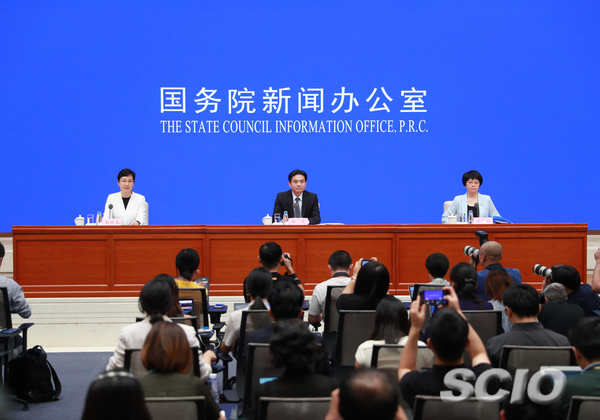
Spokespersons for the Hong Kong and Macao Affairs Office of the State Council Yang Guang (C) and Xu Luying (R) attend a press conference held by the State Council Information Office of China in Beijing, Sept. 3, 2019. [Photo/Xinhua]
Xi Yanchun:Ladies and gentlemen, good afternoon. Welcome to all of you attending this press conference. Recently, the SCIO has held several press conferences to brief you about the situation in Hong Kong. Today, we have invited Mr. Yang Guang and Ms. Xu Luying, the spokespersons of the Hong Kong and Macao Affairs Office of the State Council, once again to update you on the latest situation. They will also answer some of your questions.
Now, I'll give the floor to Mr. Yang Guang.
Yang Guang:
Friends from the media, good afternoon. Today, Ms. Xu Luying and myself come here once again to update you on the latest situation in Hong Kong and share with you our views.
Currently, some positive changes are taking place in Hong Kong. Among them, the most important is that "stopping violence, ending the chaos and restoring order" has become a broad consensus with the strongest appeal for all walks of life in Hong Kong. Through methods like issuing written public statements, advertising and making public speeches, representatives of all social ranks and social circles, as well as non-governmental organizations and institutions have denounced the violent crimes that have been committed, and expressed support for the police's strict law enforcement activities. On Aug. 17, despite heavy rain, nearly 500,000 people took part in a rally with the theme of "oppose violence, save Hong Kong". It was a touching scene. The government of Hong Kong Special Administrative Region (HKSAR) and the police force together have resolutely cracked down on illegal and criminal activities according to law. By Sept. 2, a total of 1,117 people had been arrested, including three members of the Legislative Council of the HKSAR on suspicion of committing a public order crime. Chief Executive Carrie Lam Cheng Yuet-ngor and related departments of the HKSAR have actively communicated with all social sectors to better understand the appeals being made and the anticipation of residents. In a timely manner, they have formulated measures to address the difficulties facing residents and enterprises. One thing to note in particular is that overseas Chinese are of the same mind with Hong Kong people and the people in the rest of China. In many places around the world, overseas Chinese and Chinese students studying abroad have spontaneously organized demonstrations and assemblies, using methods like displaying the national flag and singing the national anthem, to express their deep love for the homeland and strong indignation towards activities advocating "Hong Kong independence" and violent activities. It has been very touching and inspiring.
However, it must also be noted that the situation in Hong Kong remains complex and grave. Violent, law-breaking activities are not completely under control. At some moments, in some places, rioters have gone even further than before. They took insane actions and committed dreadful crimes. Taking the police as their main target, they used sharpened metal pipes, gasoline bombs, steel-wire trap and other lethal weapon to attack police officers, besieged police dormitories, maliciously and illegally spread the personal information of individual police officers and their families online, frantically threatening harm and even killings targeted at police officers, and tried all they could to instigate hatred towards the local police force. On Aug. 30, three rioters ambushed an off-duty police officer, attacking him with a knife, and causing severe injuries. Their brutality was horrific. Rioters also assaulted, insulted, and illegally detained innocent passengers at the airport. They did all they could to obstruct police officers and medical workers from protecting and treating injured passengers. They also threatened to die together with others. They used all kinds of extreme approaches, such as creating bank runs, creating financial turmoil, blocking traffic on major roads, and vandalizing public facilities, to put pressure on the HKSAR government. They shouted slogans advocating "Hong Kong independence" in many places, and even asked foreign governments to interfere. On Aug. 31, after police rejection, they launched illegal demonstrations and assemblies in many places, particularly in busy commercial areas. They threw around 100 gasoline bombs targeting police officers and government buildings. They also tried to attack the headquarters of the resident organ of the Central People's Government in Hong Kong, the HKSAR Legislative Council and the HKSAR government. They also threw tear-gas grenades into the barracks of the People's Liberation Army Hong Kong Garrison. They vandalized facilities in 32 MTR stations, which is one third of the total MTR stations. On Sept. 1, some rioters entered and destroyed the control rooms in Tung Chung and other stations, posing a grave threat to the safe operation of the MTR system. They also blocked roads leading to the airport, meaning the MTR service on the airport express line and several other routes being unable to operate for over six hours, affecting a large number of passengers. What's worse, they tried to infect children and extend their influence into campuses. They encouraged students to boycott classes, using them as a tool to realize their political aims. All these facts show that some rioters' activities have gone far beyond the scope of normal demonstration and rally. In any country or region, under any legal system, their deeds will be taken as violent crimes, and they will be treated as a mob.
Yang Guang:
More and more Hong Kong residents have now clearly realized that the situation in Hong Kong, initially from fallout over revision of the Fugitive Offenders Ordinance, has gone completely awry. A small number of rioters, in committing unlawful and criminal acts, have shown to the world that they have a purpose and a target that have nothing to do with the ordinance dispute. They willingly work as the cat's-paw of external forces and forces that are anti-Chinese and seek to bring chaos to Hong Kong. They have carried out reckless violent and unlawful activities. They seek to create chaos in Hong Kong, paralyze the HKSAR government, and seize control of the region before turning it into an independent or semi-independent political entity exercising complete autonomy that runs counter to central government authority, distorting the longstanding principles of a high-degree of autonomy and "Hong Kong people governing Hong Kong". Their final purpose is to render "one country, two systems" something that exists in name only.
It has now come to the crucial juncture of safeguarding the bottom line of the "one country, two systems" principle and maintaining Hong Kong's prosperity and stability. All those who truly care about and love Hong Kong should remain clear-minded, show their firm stance and clearly understand that there is no middle ground and there should be no hesitation, indecision or wavering on the cardinal issue of ending violence and chaos, on which Hong Kong's future hinges If we truly love Hong Kong, we should firmly vindicate the principle of "one country, two systems". If we truly love Hong Kong, we should act to determinately say "no" to behavior damaging Hong Kong's prosperity and stability and challenging "one country, two systems" principle. Here, we make three propositions:
Yang Guang:
First, we hope the HKSAR government and people from all sectors of society will be able to further build consensus and act to "stop violence and restore order". Untrammeled violence and infringed rule of law is the biggest danger facing Hong Kong. And people's strongest call is to "stop violence and restore order"; the people's strongest call is to fight against violence, safeguard the rule of law, and maintain stability. What Hong Kong needs most now is an end to chaos and violence, thus restoring order to Hong Kong, which is also the foremost, overarching and most pressing task for Hong Kong. It is the duty of all Hong Kong citizens to protect their homeland from destruction. We hope every citizen who loves Hong Kong can consciously reject violence, support Chief Executive Carrie Lam Cheng Yuet-ngor in her efforts to lead the HKSAR government and the police to crack down on violent crimes in accordance with law, and support the HKSAR procuratorate and judicial bodies in performing their duties, thus bringing all radical rioters to justice, fully showing the authority of the law. We should show no mercy to those key members who sparked violence as well as backstage masterminds, organizers, and agitators. All institutions with public power should act quickly and decisively. The struggle to uphold the rule of law is relentless.
Second, I hope people could distinguish the acts of peaceful demonstrations and assemblies to express people's demands from those violent crimes or behavior aiming to challenge the bottom line of the "one country, two systems" principle. Staging an assembly or demonstration is a right that the Basic Law of the Hong Kong Special Administrative Region (HKSAR) has granted to residents. Most citizens participating in the demonstrations and assemblies, including young students, no matter what their reasons or demands are, as long as they act in a peaceful way in accordance with the law and the "one country, two systems" principle, enjoy this legal right. The peaceful demonstrations and assemblies are different in nature from those crimes of unscrupulously challenging the bottom line of the "one country, two systems" principle, attacking resident organs of the central government in Hong Kong, smearing and insulting the national emblem and flag of China, violently attacking the police and innocent citizens, severely damaging public and private property, and endangering public security. We must and will resolutely crack down upon these crimes in accordance with the law. There is no room for tolerance. In the face of crimes, law enforcement means justice, and protecting the law is righteousness. These resident organs of the central government in Hong Kong, including the Liaison Office of the Central People's Government in the Hong Kong Special Administrative Region, the Office of the Commissioner of the PRC Ministry of Foreign Affairs in the HKSAR and the Hong Kong Garrison of the Chinese People's Liberation Army are representing China. Their security and dignity should not be challenged.
Third, I hope you will focus on the fundamental issues of Hong Kong's economic development and public well-being, and come up with ideas and jointly seek solutions. The current chaos have mirrored some deep-seated problems in Hong Kong which have come to a point where we must attach great importance and take effective measure to deal with them. The social problems that the ordinary citizens, young people in particular, have been complaining about, such as housing difficulties, the large gap between the rich and poor and the difficulty of upward mobility, have accumulated over a long period of time due to complex causes. We need to identify the crux of the problems and find effective solutions. Recently, some people showing breadth of vision in Hong Kong, the Chinese mainland and abroad have put forward quite a few insightful views on this issue. We support Chief Executive Carrie Lam and her governance team to continue to exchange views with people from all walks of life and young people on relevant dialogue platforms to jointly explore solutions to these issues. This constructive dialogue is very much needed in Hong Kong. As long as people from all walks of life in Hong Kong think actively, pool their wisdom and build consensus with the attitude of being the masters of Hong Kong, they will definitely find the golden key to deal with the difficulties, and turn the anger being witnessed in Hong Kong into harmony.
The central government will continue to unswervingly implement the "one country, two systems" principle and the Basic Law of the HKSAR, and will continue to spare no efforts to support Hong Kong in developing its economy and improving public well-being, and ensure that the outcome of development will benefit all the people in Hong Kong.
That's all. Thank you.
_ueditor_page_break_tag_Xi Yanchun:
Thank you, Mr. Yang Guang. Now we open the floor for questions. Please identify your news organization before you ask your questions. In addition, with reference to the previous practice, we will provide consecutive interpretation for all the questions. So, let us begin.
Hong Kong Economic Times:
The protests in Hong Kong are still going on, and it is said that the HKSAR government is considering using the Emergency Regulations Ordinance to handle the situation. Does the central government think it is appropriate to apply the emergency law in the current situation? Under what conditions would it be appropriate to invoke the law? If invoked, what impact will it have on Hong Kong society? In addition, given the three-month-long protests, has the central government set a bottom line for dealing with the situation? Thank you.
Yang Guang:
My colleague Ms. Xu will answer your questions.
Xu Luying:
Thank you for your questions. We have noted that there are discussions in Hong Kong about whether the HKSAR government should invoke the Emergency Regulations Ordinance to deal with the current situation. We have seen that Hong Kong is facing the most severe and urgent situation since its return to the motherland. Despite some positive changes, violent activities are still continuing. They have severely undermined the social order, economy and people's livelihood, and challenged the bottom line of the "one country, two systems" principle. Currently, the most pressing and overriding task of Hong Kong is to "stop violence, end the chaos and restore order." We have also noted that many social organizations and citizens have called for stronger measures, including introducing an anti-mask law, to stop the violence and chaos, and restore social order as soon as possible. The central government fully supports the chief executive and the HKSAR government in using any necessary measure in accordance with law to put an end to violence and chaos, guarantee the security and rights of all citizens, and safeguard the dignity of the rule of law in Hong Kong.
As to whether the central government has set a deadline for dealing with the situation in Hong Kong, I think it is a common aspiration of the central government and all Hong Kong people to end the chaos and restore order as soon as possible. The sooner the better. As long as chaos exists, people will continue to pay the price. This concerns the prosperity and stability of Hong Kong as well as the well-being of seven million Hong Kong people. This aspiration is the biggest appeal being voiced by Hong Kong people. Thank you for your questions.
ITAR-TASS News Agency:
The protestors have put forward five major demands and claimed that "all five demands must be fulfilled." Several days ago, 24 members of the Hong Kong Legislative Council signed a letter to call for a restart of Hong Kong's political reform to practice "dual universal suffrage." What is the attitude of the central government towards the five major demands? Is it acceptable for the central government that there must be a full withdrawal of the proposed extradition bill and an independent investigation into police actions? Did Chief Executive Carrie Lam refuse those demands under central government instructions? Thanks.
Yang Guang:
I didn't expect you are so good at Chinese. You have made your questions very clear. What I want to say is that, in any civilized and law-based society all demands must be proposed in accordance with the law. Over the past two months, some radical protestors have, in the name of their "five major demands," intentionally disregarded the rights to a peaceful life of Hong Kong people and the overall stability and prosperity of Hong Kong, unscrupulously committed violence, trampled on Hong Kong's rule of law and social order, and challenged the bottom line of the "one country, two systems" principle. This has damaged the interests of not only Hong Kong but the whole country. They are by no means expressing demands; what they are doing is engaging in "political intimidation" and "political coercion" through and through. As I mentioned just now, their acts have nothing to do with the proposed extradition bill. They have taken aim at the HKSAR government in a bid to seize the administrative power of Hong Kong and render the "one country, two systems" principle defunct. In fact, their ultimate demand is "dual universal suffrage." Here, in order to put an end to misunderstanding and misinterpretation, I would like to elaborate on this matter of "dual universal suffrage."
First of all, I must reaffirm one fact: It is after Hong Kong's return to the motherland that Hong Kong's democratic system was truly established and developed. I must point out another equally important fact: the aim of the selection of the Chief Executive and all the members of the Legislative Council by universal suffrage has been stipulated in the Basic Law. Since the establishment of the HKSAR, the central government has been supporting the HKSAR in steadily and rapidly developing democracy in accordance with the Basic Law and other relevant decisions made by the Standing Committee of the National People's Congress.
As everyone knows, a decision made by the Standing Committee of the National People's Congress on Dec. 29, 2007 stipulated the method for selecting the Chief Executive of the HKSAR by universal suffrage as of 2017, and also selecting all members of the Legislative Council by universal suffrage after the selection of the Chief Executive by universal suffrage is realized. As a result, the decision established a timetable for "dual universal suffrage." Another decision made by the Standing Committee of the National People's Congress on Aug. 31, 2014 provided a framework and core elements for the method of selecting the Chief Executive by universal suffrage. The Aug. 31 decision won the support and recognition of most Hong Kong residents. Unfortunately, due to the opposition of some Legislative Council members, the universal suffrage bill drafted according to the Aug. 31 decision did not win the necessary two-thirds majority vote. Therefore, Hong Kong has lost a precious opportunity to achieve the selection of the Chief Executive by universal suffrage 20 years after its return to the motherland. In other words, the culprits hindering Hong Kong's democracy are actually the opposition themselves.
Why did the opposition veto the bill against the will of the majority? To put it bluntly, the universal suffrage system provided by the Aug. 31 decision is not what they wanted. What do they want, then? As a matter of fact, they preferred a universal suffrage system exceeding the limits of the Basic Law and the relevant decisions of the Standing Committee of the National People's Congress, and could help them select a Chief Executive representing their position and, at the same time, not being accountable to the central government, all of which will pave the way for them to ultimately seize administrative power in Hong Kong. Any mechanism that can help achieve this goal would be what they call "real universal suffrage"; any mechanism that falls short would be their so-called "fake universal suffrage."
Today, I must make it clear that anyone who harbors this illusion is doomed to fail. Whenever Hong Kong's political reform is restarted, Hong Kong's universal suffrage must be in line with the Basic Law and the relevant decisions made by the Standing Committee of the National People's Congress.
I must also make it clear that Hong Kong's universal suffrage must adhere to a basic principle: it must be in line with Hong Kong's political status. What does this mean? Let me give you a brief introduction. The first sentence of the Preamble of the Basic Law reads: "Hong Kong has been part of the territory of China since ancient times." Article 1 of Chapter 1 of the Basic Law provides that "the Hong Kong Special Administrative Region is an inalienable part of the People's Republic of China." Article 12 of Chapter 2 (Relationship between the Central Authorities and the Hong Kong Special Administrative Region) of the Basic Law provides that "the Hong Kong Special Administrative Region shall be a local administrative region of the People's Republic of China, which shall enjoy a high degree of autonomy directly under the Central People's Government." Each of these forms the first sentence of the corresponding chapter, which tells their importance. The three sentences completely and clearly define Hong Kong's political status. Hong Kong's political system, including its universal suffrage system, must abide by and serve the purpose of its political status. As a result, Article 43 of Chapter 4 (Political Structure) of the Basic Law, again in the first sentence, provides that "the Chief Executive of the Hong Kong Special Administrative Region shall be accountable to the Central People's Government and the Hong Kong Special Administrative Region in accordance with the provisions of this Law." That is the most important duties and mission of the Chief Executive. Then, Article 45 of the Basic Law provides that the Chief Executive of the Hong Kong Special Administrative Region shall be selected by universal suffrage upon nomination by a broadly representative nominating committee in accordance with democratic procedures. After this, the Chief Executive shall be appointed by the Central People's Government. Each of the three links - nomination, universal suffrage, and appointment – is indispensable and plays a substantive role. That is the real meaning of universal suffrage in Hong Kong.
Any universal suffrage system that meets the abovementioned requirements is real universal suffrage. Only in this way can we select a Chief Executive who loves the country and loves Hong Kong, and can win the trust of the central government and the recognition of the Hong Kong people. Only by doing this can we ensure that the "one country, two systems" principle will be comprehensively and precisely implemented. As to Hong Kong's universal suffrage, there is no other option. Above all, we must stick to the "one country, two systems" principle, the Basic Law and the relevant decisions made by the Standing Committee of the National People's Congress.
As to the other demands, I have dealt with them in my previous remarks. I would like to stress that the biggest demand and the strongest appeal right now is to "stop violence and restore order." This is the most important and most urgent task, and this is what we should do to actively and earnestly respond to the demands of the people. We will unswervingly support Chief Executive Carrie Lam and the HKSAR government in exercising their respective power and functions in accordance with the law, the Hong Kong police in implementing the law rigorously, and the relevant government departments and judicial organs in fulfilling their duties and punishing violent criminals. We hope every citizen who loves Hong Kong will act to boycott violence and support the action of the HKSAR government and the Hong Kong police. Thank you!
CCTV:
As we noticed, the HKMAO said there are signs of terrorism and acts bordering on terrorism in Hong Kong, and that the movement carries the characteristics of a "color revolution." What does the central government think of the nature of the movement? What measures different from the past will be taken? Thank you.
Yang Guang:
Thank you. For your question, I already elaborated on this at the beginning. Therefore, here I would like to add a few more words.
Have the violent crimes in Hong Kong begun to show signs of terrorism? We should examine the facts to obtain the answer. In the past three months, a small number of rioters committed crimes recklessly, in particular, hurting police officers with various heinous acts, and also smashed up shops, paralyzed the airport, disturbed the running of subways and illegally imprisoned innocent citizens. We noticed that the weapons they have been using in their attacks on the police have become increasingly serious and are already in the lethal category. They also used ignominious means to disclose the personal information of individual police officers and their families on the internet, which is illegal. Incomplete statistics show the personal information of about 1,600 police officers have already been disclosed, and some people have talked online openly about killing police officers and bullying their families. Let's then take a look at what happened on Aug. 31. Even if the petrol bombs they threw in the past might be said to be a few, this time, they threw about 100 petrol bombs in the downtown area. They also vandalized subway facilities, and broke into the control room of the subway in a sabotage operation threatening the safe operation of the subway.
They also put forward the slogan "Lan Chao." I did not know the meaning of these two characters at the beginning, so I asked my friends in Hong Kong. They told me it means "pulling others along to die together." I do not know how you feel after hearing this. However, I smell the breath of terror and madness. Another vicious manipulator openly threatened that just let it be even though the current violent criminal activities seriously damage Hong Kong's status as an international financial center. It is evident that they have already reached a point where they will do whatever it takes to achieve their political ends. There are people from more than one organization who have pointed out that their acts now obviously have the nature of terrorism. As for "color revolution," the facts are even clearer. We can see a small number of rioters repeatedly using slogans with "Hong Kong independence" overtones. One example is the ludicrous slogan of "Restoration of Hong Kong, Revolution of the Times," which I mentioned last time. I also noticed recently that they proposed at a rally that "U.K., U.S., Hong Kong in Alliance, To People Sovereignty Belongs." But what is Hong Kong? I already gave a very detailed introduction that Hong Kong is a special administrative region of the People's Republic of China. What qualifies Hong Kong to ally itself with other countries? As for "To People Sovereignty Belongs," Hong Kong's sovereignty belongs to China and the 1.4 billion Chinese people. Is there any point in discussing this? It can be seen that these people are either ignorant of the laws and the identity of Hong Kong, or they openly want to turn Hong Kong into an independent or semi-independent political entity. Therefore, four words can be seen on their faces, "Fan Zhong (literally means Anti-China)" on the left and "Gang Du (literally means Hong Kong independence)" on the right.
We also noticed that, in the past three months, some Western politicians made frivolous remarks on Hong Kong affairs, sparing no effort to support a few rioters and "Hong Kong independence" activists and glorify their actions. It can be said that they have played a role in aggravating such actions. Therefore, some activists already demonstrate obvious characteristics of "color revolution." Their purposes are to paralyze the HKSAR government, take over the administration of the HKSAR, and make "one country, two systems" exist in name only.
I have one point I wish to make clear. We deeply and clearly know that the majority of the citizens of Hong Kong, including many young students, who were involved in peace marches and rallies, and put forward some other appeals, are entirely different from those who have broken the law, committed violent crimes, and challenged the bottom line of "one country, two systems." However, we must point out that the direction of the current turmoil in Hong Kong is not determined by their will. Under the manipulation of a few rioters and vicious manipulators behind the scenes, the current situation has completely deteriorated. That is why we say that it has come to a crucial moment to uphold the principle of "one country, two systems" and safeguard the prosperity and stability of Hong Kong. All those who love Hong Kong should take concrete actions to draw a clear line between themselves and criminals, and say no to violence and those who undermine the bottom line of the "one country, two systems." Thank you.
Phoenix TV:
My question is about student strikes. A new semester began yesterday. Many students at middle schools and colleges in Hong Kong boycotted classes. What is the attitude of the Hong Kong and Macao Affairs Office about this situation? We have also noted that some middle school students got involved in violent riots. It is said that primary and middle school education in Hong Kong is the main reason behind this phenomenon. What is your opinion? Thank you.
Yang Guang:
Thank you. Let me give the floor to my colleague.
Xu Luying:
Thank you for your question. We have noted that some opponents, "Hong Kong independence" activists and a few radical forces are doing their utmost to instigate students to boycott classes. We all wonder why they behave this way. I think they just want to bring their street protests into campuses, kidnap young students on their chariots, make them as political chips to threaten the HKSAR government and the central government, and instigate student and merchant strikes on a larger scale, so as to spread the chaos and create a more destabilized and dangerous situation. How vicious their intention is!
School is a place to acquire knowledge and cultivate personality. Dr. Sun Yat-sen once said that school is the source of evolution of civilization. At such a holy place, some forces by all means have stretched out their hands towards juveniles who have immature minds and are entirely unsophisticated, so as to realize their ulterior political motives. We have seen cases that have shocked us. Since June this year, a total of 15 juveniles under the age of 16 have been arrested. The youngest is only 12, with iron bars and paint sprayers found on his body. On Aug. 31, the police arrested a 13-year-old juvenile who hid two gasoline bombs on his body. How horrible! We clearly noticed that the participants, black hands behind the riots, especially the schemers and organizers, disregarded the lives, health and futures of the juveniles, making them as cannon fodder and victims of their violent riots, and providing fresh "political fuel" for the forces with ulterior motives. These are savage misdeeds and must be curbed with exercise of all due power.
We are grieved to see so many middle school and college students participating in violent riots this time. Schools are the main front of education and teachers are the first person responsible for school education. The Code of the Education Profession of Hong Kong stipulates that teachers have the responsibility and obligation to cultivate a student's ability in objective and justified analysis and offer students equal opportunities to receive education. But we have also seen that some teachers took advantage of their power and resources to disseminate seeds of violence and hatred, and instigate students to boycott classes, breaking the bottom line of the education profession, and even ignoring teaching ethics and that of a decent human being. This is totally unacceptable and should be punished severely based on laws.
We have also noted that the HKSAR government and Education Bureau have made clear that they are against any kind of student strike, and emphasized that no one is allowed to make schools a place to voice political appeals. Many education societies published joint announcements to appeal to teachers to stick to their positions. Some citizens also called for all people to refute the idea of boycotting classes and save the juveniles from further damage. Since Sept. 2, all schools have been operating as usual, being uninfluenced by the so-called student strikes, and some schools held flag-raising ceremonies. Therefore, what they did was unpopular. The central government firmly supports the HKSAR government, school faculties and citizens in Hong Kong to take effective measures to restrain anyone from instigating, inciting, threatening, or seducing young students to take part in violent political activities for any reason whatsoever, so as to protect the rights of every student to receive a good education and ensure schools can remain clean and peaceful. Thank you.
The Yomiuri Shimbun:
My question is about the Basic Law of Hong Kong. Maria Tam Wai-chu, deputy director of the Basic Law Committee of HKSAR of the Standing Committee of the National People's Congress, published an article in the People's Daily on Aug. 30, referring to the provisions of Article 18 of the Basic Law, pointing out that any one of the provisions indicate that the garrison is not a scarecrow in the military camp, rather, it is an important force to comprehensively and accurately implement the "one country, two systems" policy. Article 18 of the Basic Law stipulates that the Standing Committee of the National People's Congress decides whether Hong Kong will enter a state of emergency, and the central government may issue an order to implement the relevant national laws in Hong Kong. May I ask the spokesman, according to the provisions of Article 18 of the Basic Law, can the garrison and armed police be dispatched in this case? Thank you.
Xu Luying:
Thank you for your question. "To bridle turmoil and curb violence, bring Hong Kong back to order" is the most overwhelming, most important and most urgent task of Hong Kong. The central government unswervingly supports Chief Executive Carrie Lam to lead the HKSAR government in governance according to the rule of law, unswervingly support the Hong Kong police force in its strict law enforcement, and unswervingly support the relevant departments and judicial organs of the HKSAR to bring criminals to due justice as soon as possible and safeguard the law and order in Hong Kong. We believe that with the support of the central government and the joint efforts of the Hong Kong people, the HKSAR government has the will and ability to take all necessary measures "to bridle turmoil and curb violence, and bring Hong Kong back to order" as soon as possible. The central government will absolutely not allow the chaos in Hong Kong to continue indefinitely. If the situation in Hong Kong further deteriorates and becomes a disturbance that cannot be controlled by the HKSAR government and endangers the sovereignty and security of the country, the central government will not just sit by and watch.
According to the Basic Law and the Garrison Law of the HKSAR, the duty of the PLA Hong Kong garrison is to safeguard the country's sovereignty, security, territorial integrity and Hong Kong's security. Article 14 of the Basic Law stipulates that the central government is responsible for the defense of the HKSAR. The HKSAR government may, when necessary, request the central government to let the garrison assist in the maintenance of public order and disaster relief. Article 18 of the Basic Law also stipulates that if there is a disturbance that cannot be controlled by the HKSAR government and endangers national unity or security, the Standing Committee of the National People's Congress may decide on HKSAR entering a state of emergency. The central government may issue an order to implement the relevant national laws in Hong Kong. I think, after reading the provisions of Articles 14 and 18 to you, you should have a very clear answer to your questions. In the case of an emergency, national laws may be implemented in HKSAR according to the needs.
There is now a view in society that the dispatch of troops means the end of "one country, two systems." I want to say that this is completely wrong. No matter whether it is the central government that dispatches a garrison to assist in the maintenance of public order or for disaster relief at the request of the HKSAR government, or it is the Standing Committee of the National People's Congress that decides that HKSAR enters a state of emergency, both are implementing a specific provision of the Basic Law under the framework of "one country, two systems," which is an integral part of HKSAR's constitutional order. Thank you.
Sing Tao Daily:
The decision to build Shenzhen into a pilot demonstration area of socialism with Chinese characteristics is based on what situation and deliberation of the central government? Is that implying a replacement of Hong Kong's unique roles? Thank you.
Yang Guang:
The guideline issued by the Communist Party of China Central Committee and the State Council to support building Shenzhen into a pilot demonstration area of socialism with Chinese characteristics marks a new era of socialism with Chinese characteristics. It is a magnificent strategic move to deepen reform and expand opening up in all-round areas from a higher threshold with higher levels to reach higher goals. This guideline will benefit the construction of the Guangdong-Hong Kong-Macau Greater Bay Area and help enrich the new practice of the principles of "one country, two systems."
We have noted that the guideline has evoked great concerns from Hong Kong and the international community, with someone worrying about the central government's inclination to replace Hong Kong with Shenzhen. This is definitely a misinterpretation. We think the guideline is de facto conducive to Hong Kong. Being put into scrutiny, the guideline features quite a number of items concerning Hong Kong's development in the long run and is conducive to maintain local stability and prosperity. This shows the consistent care and support from the central government to Hong Kong. Now please allow me to give you several examples. The guideline clearly stipulates that we should take the precious opportunity provided by the construction of the Greater Bay Area to enhance the function of core developmental engines. This not only refers to the higher requirements placed on Shenzhen, but also higher expectations placed on Hong Kong. The guideline also clearly stipulates that the country will continue to deepen the reform and opening up with institutional innovation-centered moves implemented in the Qianhai Shenzhen-Hong Kong Modern Service Industry Cooperation Zone where the access of openness to Hong Kong and Macao should be expanded and in the Shenzhen-Hong Kong Science and Technology Innovation Cooperation Zone where construction is expected to accelerate. It will also explore the development in concerted efforts, innovate science and technology management mechanism and facilitate the high-speed and convenient flows of elements including personnel, capital, technologies and information. The section has accentuated the key points for the development of the Greater Bay Area where it navigates the routes heading to the promising future. There are also concrete measures formulated by the guideline to fortify the industrial cooperation of digital innovation among Guangdong, Hong Kong and Macao and create more access to medical technologies developed with Hong Kong or Macao investments. Meanwhile, it also points out that the access to Hong Kong and Macao will open even wider, in so far as allowing Hong Kong and Macao residents who work or live in Shenzhen to enjoy equal treatments in terms of livelihood, which unfetters them from troublesome procedures.
The central government supports Hong Kong and Macao to integrate into the country's strategic development from which they are enabled to give full play to their unique and irreplaceable advantages. This will definitely not be changed. However, it is up to Hong Kong to strive for the opportunities which could slip quickly in irrevocable ways. A Chinese verse written in the Tang Dynasty (618-907), says, "Water tides never stop to wash away the sands, and a new wave always rises when the old one has yet to be splashed." Hong Kong is unable to bear the social turmoil, and development is its only welfare. So far, a small number of rioters have sabotaged the prosperity and stability in Hong Kong simply in order to achieve their political agendas. I think the majority of people in Hong Kong will turn against the rioters' virulent schemes which endanger the fundamental and personal interests of the local residents and the future of the city. Given the approximately 7 million people in Hong Kong, is there anything more important than working for sound development? Thank you.
China Daily:
On Aug. 31, US President Donald Trump tied the Sino-U.S. trade war to the situation in Hong Kong. He once again urged China to handle the Hong Kong protests in a "humane fashion." In addition, a statement issued at the G7 summit that ended on Aug. 26 stated that "the G7 reaffirms the existence and importance of the Sino-British Joint Declaration of 1984 on Hong Kong and calls for violence to be avoided." What's your comment on this? Thank you.
Yang Guang:
Thank you. It must be stated that the UK has no right to "supervise" Hong Kong affairs. According to the general principles of international law and the basic norms of international relations, all countries have sovereign equality and their internal affairs are free from foreign interference. After the handover, Hong Kong became a local administrative region of China. Hong Kong affairs are China's internal affairs and no nation has the right to interfere. We have stated that position many times.
However, over the past three months, we have seen that some politicians in the West, especially in the United States, are constantly making irresponsible remarks about Hong Kong. I will not list them separately here today because there are too many. I examined their remarks seriously. No matter what they said, the ideas and the way they are expressed can be summarized as the following two types. For one thing, they lied through their teeth in a serious manner, talked in a way turning black into white, disregarded the facts, and confused right and wrong. Whenever the police strictly enforced the law, they would say that the police were wrong and used excessive force. Whenever there was violence instigated by radicals in demonstrations, they would express sympathy and understanding. For another, they constantly supported and agitated a few rioters, fearing they may lose their nerve and chicken out. I think, after all, for three months, their various remarks centered on nothing more than these two types. I believe that if there is a riot in their own country, like that happening in Hong Kong, they would never dare to speak like this to their own police. It can be seen that the purpose of these people is definitely not for the bright future of Hong Kong. They just want to fish in troubled waters when they see some confusion in Hong Kong. All they want is to mess up Hong Kong and create trouble for China. That is all. I want to warn these Western gentlemen that Hong Kong is China's Hong Kong and we will never allow any foreign interference in its affairs. Their tricks were used and worked elsewhere, leaving widespread devastation in those areas; however, in Hong Kong, the land of China, this set of tricks won't work. Stop daydreaming!
Speaking of this, a few lines from the poem of Chairman Mao occurred to me: "On this tiny globe, a few flies dash themselves against the wall, humming without cease, sometimes shrilling, sometimes moaning." This is indeed an apt metaphor.
Xi Yanchun:
The conference has been going on for more than an hour. Do reporters from Macao want to ask questions? The reporter in the third row, please.
Macao Asia Satellite Television:
On August 25, Ho Iat Seng was elected fifth-term chief executive-designate of China's Macao Special Administrative Region (SAR). What are the expectations of the central government for the new Macao Chief Executive in his five-year tenure?
Yang Guang:
Thank you for your question. Mr. Ho Iat Seng qualifies for the central government's standard of a SAR Chief Executive in that he/she must be trusted by the central government; must love the country and Macao; must have capability in terms of governance; and must be supported by the people in Macao. Ho's success in being elected with a majority has fully demonstrated that he is widely supported and recognized by all sectors of Macao society. The central government plans to implement Ho's appointment procedure in accordance with the law.
This year marks the 20th anniversary of Macao's return to the motherland. The practice of "one country, two systems" in Macao has come to a new historical starting point. We hope that all sectors of society in Macao support Mr. Ho Iat Song and carry forward the fine tradition of loving the motherland as well as Macao, fully and faithfully implementing the principle of "one country, two systems." We also hope they could firmly safeguard the authority of the Constitution and the Basic Law, working to improve the level of public governance in SAR and promoting appropriately diversified economic development. In this way, Macao is being encouraged to actively participate in the national developing endeavor, and, as a result, the practice of "one country, two system" will have even greater success in Macao. Thank you.
Xi Yanchun:
Let's give today's last question to the foreign reporter sitting in the back row.
Channel NewsAsia:
This weekend, Hong Kong has witnessed demonstrations for the 13th week. The demonstrators and the HKSAR government are still deadlocked. As the violence continue to escalate, and as the remarks of the Chief Executive have been caught on record, how will Beijing help the Hong Kong SAR government restore normality and order as well as lasting peace and security in Hong Kong? In addition, what is Beijing's view on the reports on the Hong Kong incident overseas on the internet and in traditional media, and what the actions will Beijing take to provide a clearer public understanding?
Xu Luying:
Thank you for your questions. You've raised several different questions. The first is what Beijing should do to help the Hong Kong SAR government restore order. Currently, the incident which originated from the proposed legal amendments to the Fugitive Offenders Ordinance has fundamentally changed regarding the nature of the protests. The most pressing and overriding task at the moment for Hong Kong is to stop violence, end chaos and restore order. The central government continues its staunch support for the HKSAR government led by Chief Executive Carrie Lam in governing the Hong Kong SAR according to the law, for the Hong Kong police in strict and just law-enforcement. Speaking of which, I'd like to say a few things about the Hong Kong police. As you've mentioned, the demonstrations, protests and violent clashes have lasted for 13 weeks already. We have seen that it is the Hong Kong police who have really been at the forefront in stopping violence and ending chaos. However, it is clear to everyone that the Hong Kong police have also become the targets of attack by these gangsters in extremely cruel and inhumane ways. So far, more than 200 policemen have been injured, one of whom lost part of his finger. In addition, according to incomplete statistics, in the three months since the beginning of the Hong Kong incident, the personal information of some 1,700 policemen, as well as their family members, has been illegally exposed and spread. Violence has caused severe physical and psychological damage to policemen and their family members. Nevertheless, under such circumstances, huge pressure and an urgent situation, the Hong Kong police have still maintained their professionalism and restraint when facing protestors. They applied a minimum level of armed forces, and strictly followed the rules of law-enforcement. Therefore, we believe that the Hong Kong police are worthy of the honor as the best police force in the world. In this regard, the central government firmly supports all necessary measures taken by the Hong Kong police and the HKSAR government to combat violence and end crimes. The central government continues its staunch support for all sectors who are assisting the Hong Kong police for law-enforcement, and the central government will continue to do its best to protect and care for the Hong Kong police as well as their family members. This is my response to your first question.
We have also seen that, during these 13 weeks of demonstrations, there are also citizens who seek to express their demands in a peaceful and legal way. We must distinguish between them and those engaged in criminal acts that create a violent terrorist attack and undermine the bottom line of the "one country, two systems" principle. The demands they have raised, especially the deep-seated problems reflected in the activities of these past two months, need our great attention. We hope Hong Kong society can focus on developing the economy, improving people's livelihood, rationally expressing their own demands, building consensus and seeking solutions through cooperative brainstorming. The central government will, as always, support Hong Kong in developing its economy, improving people's livelihood and integrating its own development into the overall development of the country.
Since the beginning of this year, the relevant central government departments have introduced a series of policies to Hong Kong and Macao to support the development of the Guangdong-Hong Kong-Macao Greater Bay Area. These policies are aimed at supporting the construction of an international technology and innovation hub, facilitating the flow of factors of production, promoting market integration, and making it easier for Hong Kong and Macao residents to live and work on the Chinese mainland, etc. Staged progress has been made in the implementation of all the policies. Looking forward, the relevant central government departments will continue to adopt more practical measures conducive to the development of Hong Kong and Macao as well as mainland-Hong Kong-Macao cooperation and exchanges. With strong support from the motherland, I believe Hong Kong will surly maintain its prosperity and stability. However, in the final analysis, it depends on the efforts made by Hong Kong itself as to whether it can seize the opportunities presented by the development of the motherland and make good use of the preferential policies and measures introduced by the central government.
At last, I would like to give my response to the question raised by the journalist from Phoenix TV. During nearly three months of protests and violent activities, we have seen several incidents where violent radicals insulted and burnt national flags, threw them into the sea; they also tarnished the national emblem. While strongly condemning the unscrupulous behavior by a very small number of "Hong Kong independence" activists, we should ask ourselves why such incidents have happened time and again in Hong Kong, a special administrative region of China. We should ask ourselves whether we need to reflect on the national education being provided in Hong Kong, especially the cultivation of a sense of nationhood. I think it is high time we pay high attention to the national education, to the cultivation of a public sense of nationhood, and take effective measures to solve problems in society. Therefore, after the violence and chaos end and order is restored, both the HKSAR government and all Hong Kong people need to take enhancement of national education as an important task. It is a responsibility shared by the whole society and also the most responsible conduct towards the next generation of Hong Kong people. Thanks.
Xi Yanchun:
Thanks to the two speakers. Thank you all. This press conference is concluded.
- SCIO briefing on 'Nuclear Safety in China' White Paper
Speakers:
Liu Hua, vice minister of the Ministry of Ecology and Environment, director of the National Nuclear Safety Administration
Guo Chengzhan, vice director of the National Nuclear Safety Administration, head of the Department of Nuclear Facility Safety Supervision of the Ministry of Ecology and Environment
Chairperson:
Xi Yanchun, spokesperson of the State Council Information Office
Date:
Sept. 3, 2019
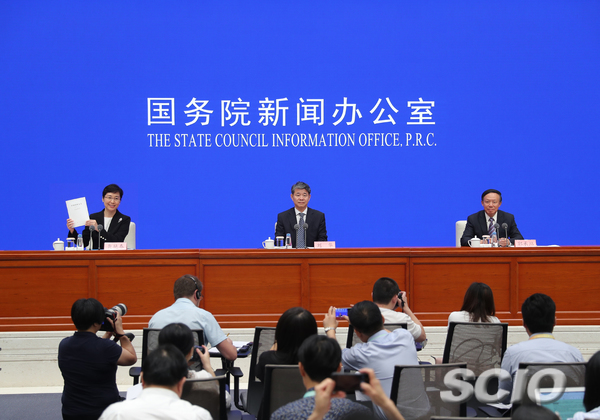
The State Council Information Office of China holds a press conference to present a white paper titled "Nuclear Safety in China" on Sept. 3, 2019. [Photo by Jiao Fei/China SCIO]
Xi Yanchun:Ladies and gentlemen, good morning. Welcome to this conference. Today, the State Council Information Office released a white paper titled "Nuclear Safety in China" and held this conference to introduce and explain the paper's main content.
Present at the conference are: Mr. Liu Hua, vice minister of the Ministry of Ecology and Environment, and director of the National Nuclear Safety Administration; and Mr. Guo Chengzhan, vice director of the National Nuclear Safety Administration, and head of the Department of Nuclear Facility Safety Supervision of the Ministry of Ecology and Environment. I'm Xi Yanchun, the SCIO spokesperson. Now, I'll briefly introduce the white paper's main content.
"Nuclear Safety in China" is the first white paper on this topic released by the Chinese government. It introduces the progress of China's nuclear undertakings, states China's basic principles and policies on nuclear safety, shares China's understanding and practices on nuclear safety supervision, and shows China's determination and actions on promoting global nuclear safety governance. Containing approximately 11,000 words, the white paper includes the preface, the main content and the conclusion.
As stated in the white paper, China has always regarded nuclear safety an important national responsibility, and has always developed its nuclear industry subject to safety considerations. China's nuclear industry has always developed in line with the latest safety standards and maintained a good safety record, pursing an innovation-driven path of nuclear safety with Chinese characteristics.
The white paper emphasizes that since the 18th National Congress of the Communist Party of China (CPC), China's nuclear industry has entered a new period of safe and efficient development. President Xi Jinping has proposed a rational, coordinated and balanced nuclear safety strategy, placing equal emphasis on development and safety, and advocating the building of a community of a shared future for global nuclear safety. He has further pointed out the direction for China's nuclear safety for a new era, and provided the Chinese approach to international cooperation in the development and utilization of nuclear energy.
The white paper also stresses that China is an important advocate, promoter and participant in building a fair, collaborative and mutually beneficial international nuclear safety system. China has done a good job in ensuring its own nuclear safety. China has fulfilled its international obligations, and promoted bilateral and multilateral cooperation on nuclear safety. We have actively promoted the peaceful use of nuclear energy for the benefit of all humanity and contributed China's wisdom and strength to global nuclear safety governance.
The white paper has been published in Chinese, English, French, Russian, German, Spanish, Arabic and Japanese by the People's Publishing House and Foreign Language Press. It will be distributed across the country by Xinhua Bookstore.
That's all for the general introduction. Next, I will give the floor to Mr. Liu Hua, vice minister of ecology and environment.
Liu Hua:
Ladies and Gentlemen, Friends:
Good morning. Thank you for your long-standing concern and support on issues regarding China's nuclear safety. It is my pleasure to meet with media to introduce and explain the White Paper on Nuclear Safety in China.
Since the beginning of China's nuclear industry, China has always treated nuclear safety as an important obligation of the state. China has always developed the nuclear industry subject to safety considerations, implemented regulations in accordance to the strictest standards. Its nuclear industry has always developed in line with the latest safety standards and maintained a good safety record. Since the 18th National Congress of the CPC, the Party Central Committee with Comrade Xi Jinping at its core, has incorporated nuclear safety in China's national security system. In addition, he has put forward a rational, coordinated and balanced nuclear safety strategy, pointing out the direction for China's nuclear safety for a new era. Under the guidance of this strategy, China has gradually built a nuclear safety governance system with legal norms, administrative regulation, industry self-discipline, technical support, personnel support, cultural guidance, public participation, and international cooperation as its pillars.
"Nuclear Safety in China" is the first white paper released by the Chinese government to comprehensively address the issue of nuclear safety. The white paper introduces China's approach to nuclear safety, elaborates on its basic principles and policies, and shares the concepts and practices of regulation. It also clarifies China's determination and the actions it has taken to strengthen international cooperation on this issue and build a community of a shared future for nuclear safety.
_ueditor_page_break_tag_Xi Yanchun:
Thank you, Mr. Liu Hua. Now, the floor is open for questions. Please identify the news organization you represent before asking questions.
CCTV:
As mentioned in the white paper, China implements a national nuclear safety strategy. What does this entail at present, and how is the work going? Thank you.
Liu Hua:
Thank you. China adheres to the nuclear safety strategy that puts safety first and combines the two goals of development and security. Within the overall framework of the five-year plan for national economic and social development, a nuclear safety plan is formulated and implemented for the matching period. The plan currently implemented is the 13th Five-year Plan for Nuclear Safety and Radioactive Pollution Prevention and Control and Vision for 2025, which analyzes the situation and tasks, clarifies guidelines and principles, and defines target indicators, key tasks and projects for nuclear safety. It is a general plan for coordinating all efforts to ensure nuclear safety from 2016 to 2020.
Last year, we carried out a mid-term evaluation of the 13th Five-Year Plan for nuclear safety. This determined that the set targets had basically been achieved , and the key tasks and projects had been completed on schedule. Generally, the plan has been progressing well.
Liu Hua:
First, our nuclear power plants have maintained a high level of nuclear safety in line with world trends. In the wake of the Fukushima nuclear accident in Japan, we worked out a plan for improving safety management, and a special action plan for the particular year in dealing with nuclear power plant safety management. The statistics of the World Association of Nuclear Operators (WANO) in the past five years show that operating units in China have performed above the world median for more than 80% of the indicators, and have reached the world advanced level for more than 70%. Generally speaking, China ranks in the forefront of the world in this respect.
Second, the safety level of research reactors and nuclear fuel cycle facilities has continued to be enhanced.
Third, progress has been made in the decommissioning of nuclear facilities and the management of radioactive waste.
Fourth, the management of nuclear technology utilization devices has been improved. In China, all radioactive sources are included in safety management, and an online monitoring system for high-risk sources has been established. The accident rate involving radioactive sources has continued to fall.
Fifth, efforts to decommission uranium mining and metallurgical facilities has made significant headway.
Sixth, the supervision of nuclear safety equipment has been further strengthened.
Seventh, overall nuclear security has been further upgraded.
Eighth, the nuclear and radiation emergency response system has been improved.
Ninth, R&D in nuclear safety technology has achieved effective results.
Tenth, the nuclear safety regulatory capacity has been further expanded.
China Review News Agency (Hong Kong):
How can we strike a balance between nuclear safety and nuclear energy development? Thank you.
Liu Hua:
Thank you for your question. China has always regarded nuclear safety as a critical part of national security and we have developed nuclear energy and nuclear technology on the premise of ensuring their safety. In the process of nuclear energy development and safety management, we have undertaken the following work:
First, we clarified the division of responsibilities. The Nuclear Safety Law of the People's Republic of China was implemented in January 2018, clearly stipulating this delineation in official responsibilities. Organizations operating nuclear facilities are required to accept overall responsibility for safety. The national nuclear safety regulatory body implements regulation; the nuclear industry and energy authorities are responsible for the management of nuclear safety in accordance with their relevant duties. A mechanism for nuclear safety has been established to coordinate the work of corresponding departments. The Ministry of Ecology and Environment (National Nuclear Safety Administration) is responsible for overall regulation.
Second, exercising nuclear safety governance in accordance with the law. Firstly, the nuclear safety standard established by national regulatory authorities matches the international level because the standard has been set referring to that of the International Atomic Energy Agency and synchronizing with relevant international standards. Secondly, we urge the enterprises to shoulder their full responsibility in ensuring nuclear safety. This can be seen in the process of siting, designing, construction and operation of nuclear power plants. We constantly urge the enterprises to adhere to the principle of putting safety and quality first. Thirdly, strict supervision is exercised. China has implemented a nuclear safety review similar to international practice, and conducts regular rigorous technical reviews.
Third, marked achievements have been made. By June 2019, the Chinese mainland had 47 nuclear power units, 19 operating civil research reactors and critical assemblies, 18 nuclear fuel cycle facilities and two low- and intermediate-level radioactive solid waste disposal sites. We have maintained a good nuclear safety record in regard to every one, ranking among the highest of all countries in ensuring nuclear safety.
In 2000, 2004, 2010 and 2016, the International Atomic Energy Agency (IAEA) conducted four comprehensive reviews of China's nuclear safety regulation system. I would like to brief you the conclusions of IAEA's comprehensive assessment of China's regulatory framework for nuclear and radiation safety in 2016: the effectiveness of regulation is enhanced gradually, and the regulatory framework is increasingly law-based, standardized, internationalized. The overall conclusion was that it is effective and credible.
Reuters:
I'd like to ask what is the current status of the proposed nuclear fuel reprocessing plant in China with France's Areva, with the previous proposed site in Lianyungang abandoned, a work in China due to reassure the public that such a facilities are safe. And also a quick second question. We have some new nuclear reactor approvals early this year. Just wondering what can we expect them of.
Liu Hua:
Thank you for your questions. The first one refers to a project jointly operated by China and France to handle the disposal of spent fuel. The program, which was highlighted and promoted by the two state leaders, is making headway as business negotiations are about to conclude. In addition, we are working together to unify safety criteria and press ahead with cooperation on security supervision. Recently, the project has progressed in line with the planned schedule. In my view, there will be even greater achievements in the treatment of spent fuel with the joint efforts between the two countries.
The disposal of spent fuel, critical to China's closed nuclear fuel cycle, should be handled in reprocessing plants, which will be solely built by us or jointly built by us and France for commercial uses. Related works are in full swing. In this process, we need to communicate with local people and governments concerning various issues, particularly the choice of sites. We need to tell them that the plants, including the site, design, construction and operation, will be safe, and that the plants will not release radioactive waste to their surroundings and endanger local lives. Reprocessing plant is regarded as a nuclear facility in China. There are stringent national safety standards. Thank you.
The second question is about the new projects. Not long ago, the National Energy Administration publicized several new nuclear power projects approved by the State Council earlier this year. All of them are smoothly progressing in the preparatory phase. In the following months, projects like the Zhangzhou nuclear power project in Fujian province and the Taipingling nuclear power project in Huizhou, Guangdong province will start construction after passing the latest security review. Now, they are all in the preparation phase. Thank you.
CNR:
I would like to ask a question regarding public participation. At present, what channels does the public have to access nuclear safety information? In addition, how should the public participate in decision-making involving nuclear safety? Thank you.
Liu Hua:
Thank you. Regarding the participation of the public, we can say that during its development process, nuclear energy has always been plagued by the issue of public participation, which is also known as the problem of not-in-my-backyard (NIMBY). Resolving the NIMBY effect is also a difficult problem in the world and needs to be dealt with in a rational, objective and dialectical way.
On the one hand, public participation reflects the improvement of the public's legal and environmental awareness. On the other hand, it also places higher requirements on our work. Both nuclear enterprises and relevant government departments should strengthen the pre-construction work of nuclear facilities . In the site selection stage and before construction starts, efforts should be made to educate the public more on scientific issues associated with nuclear facilities, release more information to the public and enhance their ability to participate. This should be done to ensure the public's right to know, to participate and to supervise. In addition, the safety status of nuclear facilities in operation should also be disclosed in a timely manner. The Nuclear Safety Law stipulates that the government and enterprises must disclose the safety status of nuclear facilities during the operation process, so we have also made public incidents and accidents in a timely manner through the official government websites. The information can be seen on the official websites of the Ministry of Ecology and Environment and the National Nuclear Safety Administration. At the same time, relevant enterprises should also disclose the operation safety status of their facilities in accordance with the law.
China Daily:
The U.S. imposed nuclear restrictions on China amid U.S.-China trade tensions, and added the China General Nuclear Power Group and several of its affiliates to an entity list. What impact will the U.S. move have on China's nuclear energy development and nuclear safety? And what countermeasures can we take? Thank you.
Liu Hua:
Thank you for your question. We have noted that the U.S. Department of Commerce added China General Nuclear Power Group and its three affiliates to the department's Entity List in mid-August. By doing so, the U.S. has abused the concept of national security and export control measures. It not only hurts Chinese companies, but also affects businesses in the U.S. and beyond. China firmly opposes the act of the U.S. to undermine the interests of China and other countries through unilateral and protectionist policies. We hope the U.S. will stop its wrongdoing and stick to an equal-footed consultation to find a solution. I also want to state the following four points on China-U.S. nuclear energy and nuclear safety cooperation.
First, the China-U.S. nuclear energy cooperation is mutually beneficial. Both China and the U.S. are leading countries in the application of nuclear energy and technologies with a complete nuclear industry system. Of course, the U.S. leads the world in nuclear energy and nuclear safety. China has introduced four AP1000 reactor units from the U.S. through substantial bilateral cooperation in nuclear energy. These units have been successfully built, debugged and put into operation in China. This cooperation has benefited companies from both countries and been carried out on a voluntary basis.
Second, the China-U.S. cooperation on nuclear safety over the past 35 years has been agreeable, friendly and effective, and has produced positive results. The two countries have enhanced their nuclear safety levels through mutually beneficial cooperation. As nuclear safety has no borders, I believe the cooperation between the Chinese and U.S. governments in nuclear safety will not be affected despite the trade frictions.
Third, China has also carried out fruitful nuclear energy cooperation with France and Russia, achieving substantial outcomes in some key projects, including nuclear power plants and spent fuel reprocessing facilities. So we say the U.S. is not the only country China carries out nuclear energy cooperation with.
Fourth, on the one hand, I believe Chinese companies, in the face of the U.S. nuclear restrictions, will further strengthen research and development, and continue to enhance their capacity in independent innovation. On the other hand, it should be pointed out that the global market for cooperation in nuclear energy is huge. China can cooperate with the U.S. as well as with other countries. Therefore, the U.S. restrictions may ultimately hurt its own businesses. Thank you.
Phoenix TV
My first question is: If the US adds Chinese companies to its entity list, what impact will it have on China?
Here is my second question. In the wake of the Fukushima nuclear accident in Japan, we have seen a growing trend towards denuclearization among many countries. Although there were some twists and turns in the past years, most countries have shown continued determination in their denuclearization efforts. As the white paper points out, China has 11 nuclear power units under construction, ranking first in the world. Why does China persist in developing nuclear energy? What is the reason behind China's unstoppable efforts in this regard? One more question. As multiple documents issued by the US and some European countries have indicated, the nuclear waste disposal capabilities of China's nuclear power stations will be stretched to the limit by 2020. Even if China expands its storage facilities, its nuclear waste disposal capabilities will peak in 2035. Can you shed some light on China's current capabilities to dispose of spent nuclear fuels? Thank you.
Xi Yanchun:
Quite a few questions. Some of them may have been answered just now. Mr. Liu will take the floor.
Liu Hua:
Thanks. You have asked three questions. Your first question is about America's nuclear
restrictions on China and their impact on Chinese nuclear companies, which I have already answered.
Let's go to your second question: Why does China persist in developing nuclear energy? China is a major nuclear country and the development of nuclear energy is an established policy of the Chinese government. Although we have seen a tendency by some countries towards denuclearization after the Fukushima accident, the major nuclear countries in the world, especially the five permanent members of the United Nations Security Council,have been sticking to their policies of developing nuclear energy. A research report from the International Atomic Energy Agency also indicates that, for some countries who want to develop nuclear energy, this is still an important option. China's current coal-dominated energy structure means that we must develop clean and highly efficient energy sources to improve the environment and to win the battle for blue skies. China also has to develop clean energy to adjust its energy mix.
Secondly, from the perspective of energy security, a big country like China must have multiple energy sources and establish a diversified energy mix.
Thirdly, from the point of global climate change, we have to curb carbon dioxide emissions. As part of our efforts to protect the environment, we need to include zero carbon energy into our energy mix. Therefore, nuclear energy remains an important option.
Fourthly, the safe disposal of radioactive waste has always been a matter of importance since China started to develop nuclear energy. As a result, China has made strategic arrangements in the disposal of low- and intermediate-level as well as the high-level radioactive waste. Two factories for the disposal of low- and intermediate-level radioactive waste have been built and are operating safely.
In the next phase, China will build about five more factories for the disposal of low- and intermediate-level radioactive waste in the provinces that have been developing nuclear energy. Meanwhile, China has initiated the underground laboratory project for the disposal of high-level radioactive waste, and R&D work has been underway. The project will soon see some tangible progress. Radioactive waste with high-level radiation will be stored in safe locations far away from human civilization.
Xi Yanchun:
Now, we come to the last question.
China Radio International (CRI):
My questions are as follows. Five years ago, at the third Nuclear Security Summit in The Hague, President Xi Jinping suggested that we should follow a rational, coordinated and balanced approach to nuclear safety, and he called for the building of a global nuclear security architecture featuring fairness and win-win cooperation. So, what are our follow-up initiatives and what's the latest progress? Thank you.
Liu Hua:
Thank you. In The Hague, President Xi Jinping put forward the vision for building a community of a shared future on nuclear safety, and proposed China's nuclear safety strategy. It should be said that we have made remarkable progress on our work on nuclear safety in recent years.
On the one hand, we are constantly improving the national nuclear safety system.
First, in terms of top-level planning, as I said just now, nuclear safety is part of China's overall national security framework and is written into the National Security Law. We have enacted the Nuclear Safety Law, made medium- and long-term development plans for nuclear safety, and kept the nuclear safety coordination mechanism, which is composed of various departments running effectively. All this is about top-level planning.
Second, in terms of the legal framework, the new Nuclear Safety Law has been implemented since 2018. In accordance with the latest international standards, we have revised and improved relevant Chinese laws, regulations and standards on nuclear safety, and established a legal framework of a strict and high standard on national nuclear safety.
Third, in terms of the system of responsibility, we have created clear lines of responsibility for enterprises. They in turn have launched various activities to ensure the safe operation of nuclear power and strengthened their management in this regard. Enterprises are also required to improve nuclear safety, think about worst-case scenarios, improve their emergency response and make various emergency plans.
Fourth, in terms of the building of nuclear safety capacity, we have enhanced both enterprises' research and development (R&D) in nuclear safety technology and the government's regulation and R&D in this regard. For some important nuclear safety research and development projects, the state organizes joint scientific and technological research.
Fifth, we are working to foster a culture of nuclear safety.
On the other hand, China actively promotes international cooperation on nuclear safety and the establishment of an international system of cooperation on nuclear safety.
First, China has actively acceded to international legal instruments on nuclear safety and fulfilled its due obligations. Over the past years, China has successively acceded to all the international conventions on nuclear safety of the International Atomic Energy Agency (IAEA) and the United Nations, including the Convention on Nuclear Safety, the Convention on Early Notification of a Nuclear Accident, the Convention on Assistance in the Case of a Nuclear Accident or Radiological Emergency, the Convention on the Physical Protection of Nuclear Material, and the Joint Convention on the Safety of Spent Fuel Management and on the Safety of Radioactive Waste Management. China has fulfilled and acceded to these international conventions and fulfilled its obligations under these conventions.
Second, China gives strong support to the work of the IAEA and upholds the role of the IAEA under the multilateral system. China has provided all-round support to the IAEA, including continuous contributions to the IAEA Nuclear Security Fund. Currently, China is the second largest contributor to the United Nations membership dues and the second largest contributor to the IAEA membership dues. China will continue to contribute to the Nuclear Safety Fund to support nuclear safety capacity-building in Asia and promote the simultaneous improvement of nuclear safety in all other countries.
Third, China actively participates in international exchanges and cooperation. China maintains close contact with the United States, France, Russia, Japan, the Republic of Korea, and Canada as well as the emerging nuclear energy countries along the Belt and Road. China has signed more than 50 cooperation agreements on nuclear safety to increase communication between experts, technological cooperation, and high-level visits. China has also taken part in the Multinational Design Evaluation Program for nuclear power plants, promoted the establishment of a working group on the Hualong-1, and conducted joint international reviews. Through its National Research and Development Center for Nuclear and Radiation Safety Regulation and State Nuclear Security Technology Center, China provides the platforms for developing countries to carry out training and exchange activities related to nuclear safety, raises the safety standard and capacity of all countries, and shares its security experience with other nations. It should be said that through these efforts, we have promoted a comprehensive and continuous upgrading of global nuclear safety standards. That's my answer. Thank you.
Xi Yanchun:
Again, thanks to the two speakers, and thanks to you all. Today's briefing concludes here.
- SCIO briefing on 2019 China Cybersecurity Week
Speakers:
Liu Liehong, vice minister of the Office of the Central Cyberspace Affairs Commission, vice minister of the Cyberspace Administration of China
Chen Zhemin, member of the standing committee of the CPC Tianjin Municipal Committee, head of the committee's Publicity Department
Chairperson:
Xi Yanchun, spokesperson of the State Council Information Office
Date:
Aug. 28, 2019
Xi Yanchun:
Ladies and gentlemen, good afternoon. Welcome to this press conference. The 2019 China Cybersecurity Week will kick off soon. To help you get more knowledge about it, today, we are delighted to invite Mr. Liu Liehong, vice minister of the Office of the Central Cyberspace Affairs Commission and vice minister of the Cyberspace Administration of China, and Mr. Chen Zhemin, member of the standing committee of the Communist Party of China (CPC) Tianjin Municipal Committee and head of the committee's Publicity Department, to give you an introduction to the event, and answer some of your questions.
Now, I'll give the floor to Mr. Liu Liehong.
Liu Liehong:
Ladies, gentlemen, friends from the media, good afternoon. Welcome to this press conference. First of all, please allow me to thank you for your interest in the 2019 China Cybersecurity Week. Now, I'll make a brief introduction of its main events.
In order to implement the principles in the important speech of General Secretary Xi Jinping on further spreading cybersecurity knowledge and skills and on improving people's awareness of cybersecurity and self-protection skills in cyberspace, we are launching the 2019 China Cybersecurity Week with the consent of the leadership of the CPC Central Committee. This event is jointly organized by the Publicity Department of the CPC Central Committee, the Office of the Central Cyberspace Affairs Commission, the Ministry of Education, the Ministry of Industry and Information Technology, the Ministry of Public Security, the People's Bank of China, the National Radio and Television Administration, the All-China Federation of Trade Unions, the Central Committee of the Communist Youth League, the All-China Women's Federation, and several other departments. Various events will be launched from Sept. 16 to 22 in 31 provinces, autonomous regions and municipalities directly under the central government. The opening ceremony and other important events will be held in Tianjin.
This year's cybersecurity week will continue to implement General Secretary Xi Jinping's important thoughts on building China's strength in cyberspace. It will focus on the major achievements China has made in the cybersecurity field in the past 70 years since the founding of the People's Republic of China, especially after the 18th CPC National Congress. It will implement related provisions of the Cybersecurity Law and related laws, regulations and standards on data security management and private information protection. It will adopt various means such as launching exhibitions, forums, contests on knowledge and skills, and non-profit advertisements, as well as using various communication platforms like newspapers, radio and TV broadcasting and websites, to encourage enterprises, media, non-governmental organizations and the public to participate in the event, thus spreading knowledge on cybersecurity to a wider audience.
The theme of this year's cybersecurity week is "maintaining cybersecurity for the people and by the people." The main events include the opening ceremony, a cybersecurity exhibition and a forum on cybersecurity technologies.
The opening ceremony will mark the start of the cybersecurity week. Nearly 1,000 guests from government departments, academic institutions, universities, non-governmental organizations, enterprises and media outlets will be present. During the event, a list of teachers awarded for excellent performance in cybersecurity education will be released, and the second batch of universities allowed to establish top-level cybersecurity schools as model projects will also be announced.
The cybersecurity exhibition will showcase the major achievements, latest products and technological advances in cybersecurity fields. Over 100 cybersecurity enterprises and internet enterprises will participate in the event. The exhibition area will cover approximately 23,000 square meters.
The forum on cybersecurity technologies will provide experts and scholars an opportunity to discuss cutting-edge technologies and the latest technological development trends. There will be a main forum and eight sub-forums on topics like critical information infrastructure protection, cybersecurity standards and industry, and private information protection.
There will also be a closing event, and various themed day events relating to schools, telecommunication, legislation, finance, adolescence and private information protection.
The cybersecurity week has been held successfully for five years and has had a positive social impact. This year, more diverse events will be launched, and more innovative publicity approaches will be adopted. All related local governments and central government departments have been working hard to organize these events.
First, the interaction with the public will be enhanced. An interactive experience zone will be established for the first time in the exhibition venue to attract visitors through new technologies like virtual reality, augmented reality and artificial intelligence.
Second, our approaches toward publicity will be diversified. For instance, the Tianjin municipal government will integrate the cybersecurity week with local culture. A series of publicity events with unique local flavor, like crosstalk shows and a mascot named "Jinxiaowei," will make the education campaign more interesting.
Third, events will be more closely connected to each other. This year, a closing event will be carried out for the first time. During the event, the host city for the opening ceremony and other important events in next year's cybersecurity week will be announced, followed by a hand-over ceremony.
Friends from the media,
The 2019 China Cybersecurity Week will kick off in about two weeks. Currently, all preparations are in full swing. Maintaining cybersecurity is for the people, and this work should also be done by the people. It's the common responsibility of the entire society to keep our cyberspace secure. I sincerely hope the media can give extensive coverage of the week, and people from all walks of life can play an active part in the 2019 China Cybersecurity Week, so as to celebrate the 70th anniversary of the founding of the People's Republic of China by successfully carrying out the event.
Thank you.
_ueditor_page_break_tag_Xi Yanchun:
Thanks to Mr. Liu Liehong's briefing. Next I'll give the floor to Mr. Chen Zhemin.
Chen Zhemin:
Ladies and gentlemen, media friends, good afternoon.
This year marks the 70th anniversary of the founding of the People's Republic of China. On the eve of the National Day celebration, the 2019 China Cybersecurity Week will be held in Tianjin. This demonstrates support and trust toward Tianjin, and we feel greatly honored and encouraged. Here, on behalf of the CPC Tianjin Municipal Committee and the Tianjin Municipal People's Government, I would like to express my heartfelt thanks to the Publicity Department of the CPC Central Committee, the Office of the Central Cyberspace Affairs Commission, and the State Council Information Office as well as to all media friends.
The CPC Tianjin Municipal Committee and the Tianjin Municipal People's Government place great importance to this year's China Cybersecurity Week. Comrade Li Hongzhong, secretary of the CPC Tianjin Municipal Committee, has put forth clear requirements. Sixty-two departments of the municipality are working closely together, and all the preparations for the event are progressing in an orderly manner. Just now, Mr. Liu Liehong briefed you on the overall situation and the arrangement for the major activities. Compared with those of previous years, this year's cybersecurity week has the following highlights and characteristics.
First, it is a grand event that is full of dynamism. We will focus on improving the self-developed ecosystem and building a secure and credible system. We will organize the "Fifth Space" Cybersecurity Innovation Competition oriented toward domestic universities and internet enterprises in the forms of CTF (Capture The Flag) attack and defense confrontation, innovative application design and development, and strive to find and train more excellent professionals in cybersecurity. At present, 175 teams from universities and enterprises have registered for the competition.
Second, it is a grand event where people can experience smart technology. We will integrate intelligent elements into each exhibition area, and launch a number of intelligent applications and interactive experiences, such as artificial intelligence (AI), virtual reality (VR) and augmented reality (AR). We will also hold the "black technology" scenario experience activities in the China-Singapore Tianjin Eco-city, so that audiences will have fresh and new experiences.
Third, it is a grand event for all citizens to participate in. We have organized a series of activities in communities, schools and villages to make the event known to every household. We have placed the mascot of the event "Jin Xiaowei" in 85 community e-stations and set up 10 cybersecurity pop-up stores in densely populated areas such as parks and business plazas. We will make use of the postal service and postal savings outlets throughout the countryside to spread the knowledge of internet finance security among people and help them increase their overall awareness of cybersecurity. We also plan to build an "internet central block park," stage a Tianjin-style comedy on cybersecurity, and launch a group of cybersecurity-related activities in forms that people like to see and hear.
Fourth, it is a grand event to publicize cybersecurity in an all-round and multi-faceted way. We will employ all types of resources, and use all sorts of channels like newspapers, the internet, radio, TV, and mobile phones to spread cybersecurity knowledge among the people. We will launch a setting sail ceremony for the cruise ship Wang An (Cybersecurity) and a light show named "Lighting the Haihe River and Starting the Future", build various platforms for network security education, and hold a contest on network security knowledge. All the approaches are to ensure that the message of cybersecurity finds its way deep into the hearts of the people.
All media friends, a grand cybersecurity event with an integration of "conventions, exhibitions, contests and experiences" is approaching. It will gather top professionals, highlight interactive participation, and lead the development of industries. On behalf of the CPC Tianjin Municipal Committee and the Tianjin Municipal People's Government, I sincerely invite you to participate in the 2019 China Cybersecurity Week. Tianjin is ready. We are looking forward to your arrival in Tianjin. Thank you.
_ueditor_page_break_tag_Xi Yanchun:
Mr. Chen Zhemin, thank you for your introduction. Now, the floor is open for questions. As usual, please identify the news organization you represent before asking your question.
CCTV:
My question is for Mr. Liu. Xi Jinping, general secretary of the Communist Party of China (CPC) Central Committee, has often noted that without cybersecurity, there will be no national security. My question is, what progress has China made on cybersecurity in recent years? What's the current cybersecurity situation in China? And what new measures will we take next? Thank you.
Liu Liehong:
Thank you for your question. Since the 18th CPC National Congress, the Party Central Committee with Comrade Xi Jinping at its core has given high priority to cybersecurity work. A series of new thoughts, theories, judgements and strategies have been put forward, together forming General Secretary Xi Jinping's important thinking on our national cyber development strategy, which provides basic guidance and strong momentum to China's cybersecurity work. Guided by his thoughts, great progress has been made in China's cybersecurity development. A quasi-system framework of laws, regulations and policies has been developed based on the central role of the Cybersecurity Law. The national cybersecurity system has been improved, cybersecurity capacity and level have been upgraded, which play an important role in safeguarding national security and socio-economic development.
As to the risks, with the upgrading of information technology, the influence and driving force of the Internet have increased remarkably vis-a-vis China's socio-economic development. This also brings about increasing risks and challenges. Cyber security threats and risks grow day by day; crimes including the underground black industry and telecom fraud occur frequently; problems such as data-insecurity and privacy infringement have become more evident. Organized and intensified cyber attacks targeting critical information infrastructures have become more explicit. Security challenges, both in cyberspace and in the real world, are now intertwined, with cyber-insecurity impacting the real world and security issues in the real world spreading to cyberspace. Cybersecurity concerns are gradually becoming one of the major strategic issues which affect national security, social stability and people's vital interests.
In order to properly carry out the work on cybersecurity, we must thoroughly implement General Secretary Xi Jinping's important thoughts on building China into a cyber power, which entails commitments in the following five areas:
First, we should improve data security management and private information protection. This means we should expedite the issuance of regulations and standards in this area, including data security regulations and evaluation standards for the overseas security of private information. The illegal or delinquent collection and use of private information by various applications will be targeted using a thorough approach. Illegal acts and criminal activities relating to national big data resources and private information will be cracked down on in accordance with the law.
Second, we should reinforce the protection of critical cyber infrastructure. This means we should speed up the issuance of regulations on the protection of critical cyber infrastructure, hold operators responsible for their main responsibilities, as well as supervisors for their duty to supervise, plan for overall cybersecurity inspection, enhance the situational awareness of cybersecurity, and improve the capabilities of monitoring, early warning and organizing emergency response for situations involving cybersecurity.
Third, we should incubate and facilitate the growth of cybersecurity technology industry. We are improving the planning and overall layout of cybersecurity technology industry, perfecting policies and measures to support the development of cybersecurity technology industry, and building a list of cybersecurity enterprises that can compete internationally.
Fourth, we should plan on cultivating cybersecurity talents for the long term. This means we should increase efforts to develop cybersecurity-related educational disciplines, carefully implement the demonstration projects for building top-class cybersecurity schools, accelerate the construction of national bases for innovation and cybersecurity talents. We need to do this to shape a healthy eco-system for talent incubation, technological innovation and industrial development.
Fifth, we should actively promote the global governance of cyberspace. This means we should, under the guidance of the "four principles" to promote the transformation of the global internet governance system and the "five proposals" to build a community of shared future in cyberspace, both proposed by General Secretary Xi Jinping, deepen practical cooperation with different countries and concerned international organizations, explore cybersecurity issues through dialogues and interactive activities, join hands to tackle the threats and challenges facing cybersecurity, and jointly build the community of shared future in cyberspace.
Thank you.
_ueditor_page_break_tag_Asahi Shimbun:
China upholds its sovereignty in cyberspace and continually strengthens its cybersecurity. However, expats find it very inconvenient to obtain overseas information when living in China. China is getting increasingly closer with the international community while engaging in globalization. My question is: How can China strike a balance between cybersecurity and opening-up in cyberspace? Thank you.
Liu Liehong:
Thanks for your question. China's cyberspace is fully open, and the Chinese government has been promoting healthy and sustainable development in cyberspace. By the end of last year, the number of internet users in China reached 829 million and the internet penetration rate in the country reached 59.6%. With sustainable development, China's internet industry is among the top of the world both in its comprehensive strength and market scale. This has fully proved that China's internet policy is open and the country encourages innovation in the industry. However, the internet is not a lawless zone. While promoting internet development, China must also adopt necessary measures to safeguard the lawful rights of the public and safeguard cybersecurity.
According to international practice, China has introduced laws and regulations, such as the Cybersecurity Law and the Administrative Measures on Internet Information Services, to ensure that the internet is operated and used in accordance with the law. Through law-based management and governance, we will try to create a clean cyberspace and cyber ecology so that the internet can enjoy sound development under the rule of law. Thank you.
_ueditor_page_break_tag_China News Service:
My question is about Tianjin. In recent years, a lot of well-known cybersecurity enterprises, such as 360 Security Technology Inc. and Qi An Xin Group, have all chosen Tianjin as home for their headquarters. What advantages does the city have in promoting the development of cybersecurity industries? Why did those companies choose Tianjin? Thank you.
Chen Zhemin:
Having attracted so many cybersecurity enterprises, Tianjin, in my opinion, must have its own specialties. In other words, the city must possess some exceptional advantages. I think the unique and superior features that Tianjin possesses can be summarized in "one precondition and three environments". "One precondition" refers to the fact that the Tianjin Municipal Committee of the CPC and its government have placed high priority on the development of cybersecurity and informatization. They have done this by resolutely implementing the important thought of Xi Jinping, General Secretary of the CPC Central Committee, to build China's strength in cyberspace, and embracing the notion that "without cyber security, there is no national security; without informatization, there is no modernization." For example, Tianjin has focused on development planning, infrastructure construction and the three-tier (cities, districts and towns) working system. In addition, a big data center has been established and a regulation which aims to promote the application and development of big data has also been passed. The Situation Awareness System has also been used to drive the development of cybersecurity and informatization. Over the past few years, Tianjin has made remarkable achievements and breakthroughs in the development of cybersecurity and informatization, which is the precondition that has attracted those famous cybersecurity companies.
Regarding the three "environments," the first is the industrial environment. There has been a complete industrial chain of cyber-informatization in Tianjin, laying a solid foundation for the development of the cybersecurity industry. I would like to share some statistics with you briefly. In 2018, the revenue of the information technology services industry featuring cybersecurity, big data, the internet and other emerging science and technological fields reached 123.9 billion yuan in Tianjin, making an increase of 29% year on year. The big data industry surpassed 35 billion yuan. The sales of imported goods in cross-border e-commerce were nearly 3 billion yuan, an increase of 155.1% year-on-year. The development of the cybersecurity industry, represented by Phytium Technology Co. Ltd. Tianjin KYLIN Information Technology Co. Ltd. and 360 Security Technology Inc., has become the leader in the national cybersecurity market. The big data and cloud computing industry, represented by Tianhe series supercomputer, Sugon, Tencent and Gbase, has been booming. The application software industry, represented by Keyvia Electic, Cashway Technology Co. Ltd. and Tellyes Scientific, has seen steady growth. Many good companies, such as Perfect World Co. Ltd. Ledo Interactive, Future TV Co. Ltd. and Sohu TV, have gathered in Tianjin, contributing to the steady progress of the digital content industry. The sharing economy based on the internet has seen rapid development, with Caocao Zhuanche and 58 Tongcheng as two major representatives in this field. The e-commerce services industry represented by Vipshop Holdings Ltd, and Meituan is becoming more mature. The internet economy in Tianjin has formed a new landscape featuring industrial clusters, regional connectivity and distinctive characteristics.
Second, the environment for innovation. A good environment for innovation is a driver of sustainable development for enterprises. Tianjin is home to many well-known universities, including Nankai University and Tianjin University. Three universities including Nankai University set up a cybersecurity discipline. The Tianjin University of Technology led the establishment of a network of cybersecurity and big data disciplines. In general, the city's construction of cybersecurity disciplines is first-class in the country. Tianjin is home to 61 National Enterprise Technology Centers and 609 city-level enterprise technology centers. The comprehensive science and technology innovation index of Tianjin reached 80.75%, ranking third in the country. Its science and technology innovation environment index surpassed 90% for the first time, ranking first in the country. A group of world class tech innovations were created in Tianjin. For example, the Exascale Tianhe-3 supercomputer prototype has been unveiled in Tianjin and will be put into operation next year. This will be the world's largest supercomputer. The production of the 12-inch semiconductor and monocrystalline silicon has broken the international monopoly. And the homegrown high-end chip filled in the blanks. Tianjin is now ramping up efforts to promote research and development of blockchain, big data and a new generation of AI technologies, aiming at building itself into the major source of original innovation in the country. Tianjin is also preparing to build the national innovation base for the cybersecurity industry. It has already built an industrial chain that covers CPU, operation system, database and server. Finally, a PK independent innovation ecosystem has been established.
Third, the business environment. You may notice that, in September 2016, Tianjin mulled over policies focusing on industries and entrepreneurs, aiming to build a business environment with global influence and competitiveness. The city came up with eight opinions, focusing on the protection of the property rights of entrepreneurs. The opinions were widely welcomed by entrepreneurs. Tianjin also published 19 items of policy on promoting the private sector. According to the document, all the administrative fees collected by local government who is authorized to set up standards will be exempted, all the government funds for which local government has the right to set up standards will be exempted, and all the government funds shared by the central and local governments will be exempted. On Sept. 1, the "Regulations on Optimizing the Business Environment in Tianjin" will be released and put into action. The city is creating an efficient, convenient and transparent business environment.
_ueditor_page_break_tag_Hong Kong Ta Kung Wen Wei Media Group:
Mr. Liu, I have noticed that the protection of personal information is on the agenda during this year's China Cybersecurity Week. Since personal information leakage occurred now and again, how will the regulatory body act on the problem? Thank you.
Liu Liehong:
As you have mentioned, people have growing concerns over the protection of their personal information, and this issue will be highlighted during the China Cybersecurity Week. We are now working on several major measures to strengthen protection.
First and foremost, top priority is given to the cause of new legislation. We have been building a multi-dimensional legal system with laws and regulations formulated or ratified to strengthen protection. In June 2017, the country implemented the Cybersecurity Law. Now, the Standing Committee of the 13th National People's Congress has placed the Law of Personal Information Protection in their legislative framework. In addition, we have issued the Provisions on the Protection of Children's Personal Information Online and have finished soliciting public opinion on the Measures for Data Security Management and the Measures on Security Assessment of the Cross-Border Transfer of Personal Information.
Second, we have set up standards for the protection of personal information. Under the guidance of the Office of the Central Cyberspace Affairs Commission, the National Information Security Standardization Technical Committee has attached importance to setting up standards for the protection of personal information. It issued the Personal Information Security Specifications and the Security Capacity Requirements for Big Data Services, among others, to strengthen data security management, enhance individual information protection and regulate the collection of personal information. More to the point, the committee has taken a lead in formulating the basic draft standards to regulate the way of collecting personal information by those mobile internet applications.
Third, we have launched special campaigns to crack down on violations. The Office of the Central Cyberspace Affairs Commission, the Ministry of Industry and Information Technology, the Ministry of Public Security and the State Administration for Market Regulation have made concerted efforts to act against apps' illegal collection of personal information. They oversaw the special campaigns targeting over 8,000 complaints posted online and assessing the conduct of more than 400 apps, which are popular or frequently downloaded by users. Among them, over 100 app operators with severe problems received a rectification notice.
Fourth, we have made efforts to publicize the importance of protecting personal information. We will empower people with the basic knowledge of the protection of personal information through various ways and channels. We have exposed illegal conduct and criminal cases, and launched educational programs to raise people's awareness and enable them to distinguish violations. In particular, we will choose a day during the week-long campaign to emphasize the protection of personal information. Thank you.
_ueditor_page_break_tag_China Arab TV:
Recently, the Cyberspace Administration of China released several draft regulations on cybersecurity, notably the Data Security Administrative Measures and the Measures for Security Assessment of Personal Information Outbound Transfer. Some foreign companies are concerned about such moves. They are worried that this will lead to higher market barriers, raising uncertainties and operational costs accordingly, thereby putting themselves at a disadvantage. What's your comment on this issue? Thank you.
Liu Liehong:
Thank you for your question. A short while back, the Cyberspace Administration of China released the draft Cybersecurity Review Measures, draft Data Security Administrative Measures, and draft Measures for Security Assessment of Personal Information Outbound Transfer for public comments. It is necessary to introduce these regulations in order to put the Cybersecurity Law into effect. It is also urgently needed to maintain national cybersecurity and to carry out the necessary work on this issue. In view of the drafting process, these documents have fully respected and adopted the comments and suggestions from all sectors, and the procedures are in line with the WTO rules. The requirements of these documents are not targeted toward any country or region, and treat domestic and foreign products and services equally, with no difference for any country. Thank you.
_ueditor_page_break_tag_China Media Group (China Radio International):
At the 2019 China Internet Media Forum held recently, Tianjin proposed to build a "internet-famous city" for the first time. What is your understanding of the "internet-famous city", and will Tianjin become next "internet-famous city"? Thank you.
Chen Zhemin:
"Internet-famous city" is a buzzword derived with the development of new media, and it is also a fashionable cultural tourism label given by the people, especially the youth, who yearn for a "poetic life". Tianjin is very willing to make itself a "internet-famous city." First of all, with its rich resources in cultural tourism, Tianjin has the foundation and great potential to become an "internet-famous city". It is a national, historical and cultural city and one of China's first outstanding tourist cities. With regard to geographical location, it is situated in the center of the Beijing-Tianjin-Hebei urban agglomeration. The Tianjin Port is the largest comprehensive port in the north and the Tianjin International Cruise Home Port is one of the six major cruise tourism development zones in China. As the saying goes, "if you want to understand modern China, you should understand Tianjin." For more than 600 years since the establishment of the city, especially since 1840, many major historical events related to the country's direction of development either happened in Tianjin, or had a close connection with Tianjin. In particular, the nine concessions made it a unique city with a mixture of ancient and modern elements in both Chinese and western styles. Known as the "city of world architecture", Tianjin has preserved 877 historical buildings. Many historical celebrities once lived in Tianjin, including not only political figures such as Yuan Shikai, Li Yuanhong, Feng Guozhang, Xu Shichang, Cao Kun, Zhang Xun, Duan Qirui, but also prominent cultural celebrities , like Yan Fu, Liang Qichao, Li Shutong, Zhang Boling, Yan Xiu, and Cao Yu. Tianjin is also one of the first areas in China where the local Communist Party branch was established. Li Dazhao, Zhou Enlai, Liu Shaoqi, Zhang Tailei and many other Party leaders once studied and worked in Tianjin. Today, there are still 126 revolutionary sites . In terms of natural ecological resources, Tianjin boasts mountains, seas, rivers, lakes, wetlands and hot springs. Now, the city has two world cultural heritage sites, namely the Great Wall and the Beijing-Hangzhou Grand Canal. It has 28 key cultural heritage sites under the protection of the state, 212 at the provincial level, and 101 national A-level tourist attractions. Last year, the number of tourists in the city reached 230 million, an increase of 8% year-on-year. Its total tourism revenue was 391.4 billion yuan, growing by 10.4% year-on-year.
Second, Tianjin has taken action to build a "internet-famous city". In July this year, Tianjin launched a two-year plan for tourism development, which included 20 initiatives, 20 policies and effective measures . In the following two years, we will strive to "promote tourism across the whole region, improve the quality of tourism, standardize tourism management and maximize tourism benefits". We will build over 50 top-quality tourist routes such as celebrity home tours, cultural exhibition tours and rural leisure tours to enhance quality, increase market share of Tianjin's tourism sector and improve the city's image.
Third, the mission to make the "internet-famous city" a "popular draw" in the long term will depend more on comprehensive factors such as the city's cultural heritage, economic power, and innovation. To achieve that goal, we will continue to work hard. Here, I sincerely invite media friends to visit Tianjin to gain a clearer perspective of the city, introduce the city, and help it become a "internet-famous city". Thank you.
_ueditor_page_break_tag_Reuters:
Recently, Facebook and Twitter removed several hundred accounts from the Chinese mainland. They said these accounts were being used by the Chinese government to disseminate information about the recent Hong Kong protests. Is this true? Has the Office of the Cyberspace Affairs Commission communicated directly with Twitter or Facebook, or will it take any other measures related to this?
Liu Liehong:
Thank you for your question. Chinese media outlets have been reporting a lot about the situation in Hong Kong in an objective and fair manner, so that the facts are obvious. However, very few foreign media outlets treat the righteous voices of internet users and Chinese media with bias, accusing them of spreading "fake news." This practice of turning black into white has put a spotlight on the hypocrisy of some countries' so-called "freedom of speech." If these facts and reasonable voices are considered to be fake news, I think that all those who understand the truth and have a sense of justice will not recognize or agree with it. We have seen that although these accounts have been banned, social networking platforms are flooded with rumors smearing the Hong Kong police and distorting the facts. I think it is self-evident about what the double standard is and who is confusing right and wrong. Thank you.
Xi Yanchun:
The last question.
_ueditor_page_break_tag_China Daily:
My question is for Mr. Liu. We have noticed that this is the sixth time the China Cybersecurity Week is being held. Compared with the previous five years', what is the main feature or highlight of this year's event? Can you tell us more about it? Thank you.
Liu Liehong:
Thank you for your question. Mr. Chen and I have introduced some information about this year's highlights and features a while ago. We believe there are three major aspects:
First, the China Cybersecurity Week this year recognizes major achievements in cybersecurity in 70 years since the PRC was founded, especially in recent years since the 18th CPC National Congress in 2012. This is the main theme this time. In recent years, guided by General Secretary Xi Jinping's important ideas on building China's strength in cyberspace, new progress has been made in cybersecurity work, and the capacity to safeguard cyberspace security has been greatly improved. This industry has also seen rapid growth, and the development of disciplines and training of talent have become much more efficient. All these developments have led to a remarkable improvement in the whole society's cybersecurity awareness and safeguarding skills, as well as in China's international voice and influence in cyber space.
Second, this year's Cybersecurity Week focuses on the protection of individual information. Just now we discussed that individual information protection is the feature and also a highlight of this year's event. The Cybersecurity Expo, the Forum for Cybersecurity Technologies, and some themed events during the week this year, such as Individual Information Protection Day, Telecommunication Day, and Financial Day, have made this topic their key component.
Third, this year's event covers multiple fields through various activities. Through online and offline methods, we have organized and completed publicity events related to cybersecurity in nine aspects including community, countryside, enterprises, government agencies, schools, military camps, families, construction fields, and websites. This has greatly encouraged netizens' participation. We are also holding the "Fifth Space" competition for cybersecurity innovation capacity, the "Payment-Clearing Cup" micro-video contest, the National Teenager Cybersecurity Series, the launch ceremony for "Ship Cybersecurity," etc. All these events have fully mobilized the participation of all sectors, and greatly improved the awareness and skills to safeguard cybersecurity. Thank you.
Xi Yanchun:
Thank you, Mr. Chen and Mr. Liu. Thank you, everyone. That ends today's briefing.
Translated and edited by Chen Xia, Li Jingrong, Li Xiao, Liu Sitong, Guo Yiming, Gong Yingchun, Cui Can, Wu Jin, Zhu Bochen, Wang Yiming, Zhang Rui, Zhang Junmian, Li Huiru, Fan Junmei, He Shan, Wang Wei, Wang Qian, Yang Xi, Degen Hill, Kenneth Teh Chiu Soong
- SCIO briefing: Views of experts and scholars on Hong Kong's current situation
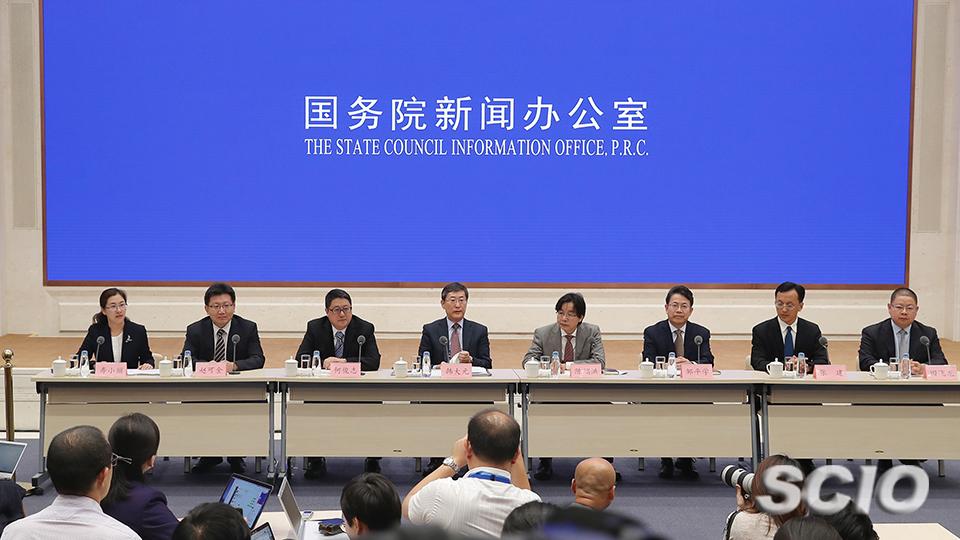
Seven experts share their views on the current situation in Hong Kong at a press conference held by the State Council Information Office in Beijing on Aug. 15, 2019. [Photo/China SCIO]
Speakers:
Mr. Han Dayuan, director of the Institute for One Country Two Systems, professor of the Law School, Renmin University of China, member of the HKSAR Basic Law Committee of the Standing Committee of the National People's Congress (NPC);
Mr. Chen Duanhong, professor of the Law School, Peking University, member of the Macao SAR Basic Law Committee of the NPC Standing Committee;
Mr. He Junzhi, vice dean and research fellow of the Institute for Guangdong, Hong Kong and Macao Development Studies, professor of the School of Government, Sun Yat-sen University;
Mr. Zou Pingxue, director of the Center for Basic Laws of Hong Kong and Macao Special Administrative Regions, professor of the Law School, Shenzhen University;
Mr. Zhao Kejin, vice dean and professor of the School of Social Sciences, vice dean of the Institute of Global Development, Tsinghua University;
Mr. Zhang Jian, director of Hong Kong and Macao Studies, secretary general of the Center for World Parties and Political Studies, the Shanghai Institute of International Studies;
Mr. Tian Feilong, executive director of Center for Legal Studies in regard to the One Country Two Systems, associate professor of the Institute for Advanced Studies in Humanities and Social Sciences and the Law School, Beihang University.
Chairperson:
Shou Xiaoli, Press Bureau of State Council Information Office
Date:
Aug. 15, 2019
Shou Xiaoli:
Ladies and gentlemen, good afternoon. Welcome to this press conference. In the past two weeks, we have held two press conferences and invited the spokespersons of the Hong Kong and Macao Affairs Office of the State Council to introduce its views and position on the current situation in Hong Kong. The two press conferences have attracted great public attention. Many journalists have told us that they wanted to interview more people coming from more walks of life.
To meet your request, today, we have invited seven experts from related areas of study. They will share their personal views on the current situation in Hong Kong from different perspectives. They are: Mr. Han Dayuan, director of the Institute for One Country Two Systems, professor of the Law School, Renmin University of China, member of the HKSAR Basic Law Committee of the Standing Committee of the National People's Congress (NPC); Mr. Chen Duanhong, professor of the Law School, Peking University, member of the Macao SAR Basic Law Committee of the NPC Standing Committee; Mr. He Junzhi, vice dean and research fellow of the Institute for Guangdong, Hong Kong and Macao Development Studies, professor of the School of Government, Sun Yat-sen University; Mr. Zou Pingxue, director of the Center for Basic Laws of Hong Kong and Macao Special Administrative Regions, professor of the Law School, Shenzhen University; Mr. Zhao Kejin, vice dean and professor of the School of Social Sciences, vice dean of the Institute of Global Development, Tsinghua University; Mr. Zhang Jian, director of Hong Kong and Macao Studies, secretary general of the Center for World Parties and Political Studies, the Shanghai Institute of International Studies; and Mr. Tian Feilong, executive director of Center for Legal Studies in regard to the One Country Two Systems, associate professor of the Institute for Advanced Studies in Humanities and Social Sciences and the Law School, Beihang University.
Now, I will give the floor to Mr. Han Dayuan.
Han Dayuan:
Media friends, good afternoon. Today, there are several experts at this press conference. I am familiar with the focus of their academic studies, so I might act as an informal host on some occasions according to your questions. Now, please allow me to say a few initial words.
Since the proposal to amend two ordinances aroused social controversy in Hong Kong, especially after continuous illegal assemblies and violent acts occurred, the public have felt anxious and uneasy about the present severe situation of Hong Kong. In particular, on the night of Aug. 13, a violent act involving the illegal restriction of personal freedom took place. Some of the illegal assembly participants, against the rule of law, hindered the freedom of exit and entrance of a large amount of Chinese and foreign passengers, assaulted a passenger and a journalist, and even tied up the hands of the journalist. This is an open challenge to the rule of law, and is causing grave damage to Hong Kong's status as a society under the rule of law.
We can see that no one can be safe if the rule of law is damaged and the majesty of the rule of law is lost. The rule of law is a common value of human civilizations. It is the basic way of life in modern society. We need the rule of law because it can guarantee the freedom, dignity and security of all citizens and maintain social order. Meanwhile, an important function of the rule of law is to provide society and the public with a stable expectation. Therefore, the essence of the rule of law is that the government should govern according to the law, citizens should abide by the law, the judiciary should be independent, and existing rules and law procedures should be respected.
It is just on the basis of long-term confidence in the good order, security and freedom ensured by the rule of law that Hong Kong has become the prosperous and beautiful Pearl of the Orient. We have noted the statistics that Hong Kong ranked only around the 60th position globally in terms of the rule of law index in 1996 before its return to the motherland. In 2018, the ranking increased significantly to 16th. The rule of law has become the basic consensus and core value of Hong Kong society, and also the value that Hong Kong people are most proud of. However, the latest series of violent incidents have seriously undermined the value of the rule of law, gone beyond the basic bottom line of a society based on the rule of law, and deeply distressed the whole society and the people of the whole country.
In a society based on the rule of law, freedoms of speech, procession and assembly are strictly guaranteed. The Basic Law of the Hong Kong Special Administrative Region (HKSAR) and the local laws of the HKSAR provide adequate guarantees for the people to exercise these freedoms. However, the exercise of any freedom must follow the requirements of rule of law. For example, Article 17 of the Hong Kong Bill of Rights Ordinance explicitly requires that the right of peaceful assembly must not endanger national security and public safety, or disturb public order. In social life, it is normal that different people hold different political views, different opinions and different demands in regard to governance; if that wasn't true, we wouldn't need the rule of law. The rule of law firstly means a principle of governance and we must respect and abide by effective laws and rules, and act strictly in accordance with what is set by the laws. If we are not satisfied with certain laws and policies, including the government's public policies and laws, we can seek to revise and improve them through legal procedures. If we need a new law in some fields, there is a sound legal process to achieve this objective. However, any political demand that ignores rules, breaks rules and goes beyond the rule of law will ultimately hurt the rule of law.
As we all know, since Hong Kong's return to the motherland, the Constitution and the Basic Law of the HKSAR have jointly formed the foundation of Hong Kong's constitutional order. They clarify the legal status of the HKSAR under "one country," and the relationship between the central government and the region. These provisions are the core essence of the principle of "one country, two systems" and the Basic Law, and also are the foundation of the rule of law in Hong Kong. The primary objective of the principle of "one country, two systems" and the Basic Law is to safeguard national sovereignty, national unification and territorial integrity, and maintain Hong Kong's prosperity and stability. Any act that challenges national sovereignty and national unification breaches the bottom line of the principle of "one country, two systems," and cannot be tolerated by Hong Kong's legal order, either.
Dear media friends, in the face of serious violence and social division, the only way to solve the problem right now is that the whole of society should return to the track of rule of law, protect it and reach consensus in accordance with its provisions. I don't see any other way or method to solve problems but to return to the rule of law. I believe this is also the basic consensus of the vast majority of Hong Kong citizens. After more than two months of turmoil, people are hoping to solve various controversies currently facing Hong Kong society in a legal way. The day before yesterday, the Airport Authority Hong Kong obtained an interim injunction granted by Hong Kong's High Court, under which any person who unlawfully obstructs and interferes with airport operations must bear full legal responsibility. The legal consequences of violating the injunction are very serious. In fact. violators may be convicted of criminal contempt of court.
From such cases, we can see that the airport is beginning to recover and we have confidence in the rule of law in Hong Kong. Although it has been facing serious challenges in recent times, Hong Kong has a deep legal tradition, and the power of the rule of law is able to settle all kinds of disputes, bridge differences, regain consensus, helping Hong Kong society to quickly restore order and public security.
As scholars engaged in study of law and politics, we are also concerned about problems facing Hong Kong and are willing to share with journalists our views concerning the recent situation in Hong Kong, particularly on issues related to the rule of law. Nevertheless, we are scholars, not press spokespersons, so some of our views can only been considered from an academic viewpoint. Thank you.
Shou Xiaoli:
Thank you, Professor Han Dayuan. Now, the floor is open for questions. Please identify the news organization you represent before asking questions.
_ueditor_page_break_tag_South China Morning Post:
In response to the anti-amendment movement, the central government has set out two obvious principles. One is to stop violence and chaos, and the other is to unite the people who truly love the country and the HKSAR, and business leaders to condemn violence and establish a line against those who involved in the violence. However, it seems that the two measures have yet to bring about pronounced effect. Today, another group of civil servants said that they will stage a demonstration. My question is, besides the two major principles, are there other measures to be taken to close the social rift and cool down the current situation? The demands expressed in the recent activities have great public support. Is it no longer possible to consider them? Are all of them unacceptable? Thank you.
Zou Pingxue:
Thank you for your question. As you know, since June, the protests and acts of violence related to the amendments in Hong Kong have become increasingly intense, and Hong Kong is facing the most severe situation since its return to the motherland. At the symposium held by the Hong Kong and Macao Affairs Office of the State Council and the Liaison Office of the Central People's Government in HKSAR on Aug. 7, officials of relevant central government departments stressed that currently the most urgent task and overriding priority is to stop the violence and accompanying chaos, and restore order. As Professor Han Dayuan said just now, the rule of law, as one of the core values in Hong Kong and a cornerstone for its prosperity and stability, can safeguard the interests of all Hong Kong people and offer a key competitive edge for future development. I very much agree that heightening awareness of the importance of the rule of law, maintaining its dignity, and restore the rule of law and social order are the best weapons to stop violence and chaos. It is also the broadest common ground reached in the Hong Kong society on how to confront problems, solve conflicts, calm things down and curb violence. As you saw on TV and on the internet recently, violent offenders attacked police officers, besieged the airport, halted traffic, coerced residents to participate in protests and strikes, illegally imprisoned and deliberately hurt others, and wantonly insulted the national flags and the national emblems. Their escalating violent behaviors violate multiple laws in Hong Kong, including the Crime Ordinance, the Offences against the Person Ordinance, the Aviation Security Ordinance, the Public Order Ordinance and the National Flag and National Emblem Ordinance. These acts have severe social impact and serious legal consequences.
Let's review the situation at the Hong Kong International Airport two days ago. Based on international practice, disrupting operation of a key public space, such as an airport, will receive comparatively severe punishment. According to article 15 of Hong Kong's Aviation Security Ordinance, it is an offence of endangering safety at aerodromes for any person to commit, whether by means of any device or otherwise, any act of violence which causes or is likely to cause death or serious personal injury; endangers or is likely to endanger the safe operation; destroys facilities in an aerodrome; and disrupts the services of an aerodrome. Anyone who commits an offence abovementioned is liable on conviction on indictment to imprisonment for life. From a legal perspective, what happened at the Hong Kong International Airport paralyzed its operations by means of illegal rallies, destroying public facilities, and blocking elevators and passages with trolleys. The assaults on mainland passengers as well as Hong Kong police on the evening of Aug. 13 and after midnight constitute a crime.
There are also a number of protestors who think they haven't yet participated in the violence. They believe that it is not against the law for them to just sit there and prevent others from boarding a flight or exiting the airport. The fact is that their behaviors already violate many laws. First of all, they should be considered guilty of the offence of unlawful assembly as stated in Hong Kong's Public Order Ordinance. Actually, it may also constitute the crime of riot under the law of Hong Kong. Based on my research, taking Hong Kong's Public Order Ordinance as an example, if a public assembly or public procession violates regulations, it shall be an unauthorized assembly and disorder in public places according to the article 17A and 17B. In addition, when three or more persons, assembled together, conduct themselves in a disorderly, intimidating manner intended or likely to commit a breach of the peace, they are an unlawful assembly. Therefore, we can see that behaviors such as simply raising hands, using one's body to prevent passengers from leaving the airport or going to other areas as they desire, as well as restricting their freedom of movement, are very likely to be considered as unlawful detention, as stated in Hong Kong's common law.
We notice that on Aug. 14, the Airport Authority Hong Kong obtained an interim injunction to restrain persons from unlawfully and willfully obstructing or interfering with the proper use of Hong Kong International Airport. Any attendance or participation in a demonstration, protest and related public events at the airport is also restrained, except for those in the places designated by the Airport Authority Hong Kong. The police can launch a clearance operation in accordance with the interim injunction. Any breach of the interim injunction or impediment to law enforcement could constitute contempt of court.
During the "Occupy Central" movement in 2014, some groups applied to the court for injunctions. We later found that worked well.
We have seen that, legally speaking, in addition to the measures now adopted, the chief executive and the Executive Council can also issue a series of orders or regulations to restore law and order in accordance with the Public Order Ordinance or the Emergency Regulations Ordinance. When there are some serious acts that endanger social order, for a period of time, public rallies can be banned, the restricted area can be demarcated, a curfew can be imposed and a series of emergency rules or orders can be issued. Therefore, the laws of Hong Kong are very sound and there are many legal resources that can solve current chaos with strict enforcement.
Here I would like to appeal to those who are participating in illegal assembly or procession, especially young students, to think twice. They should understand the serious harm caused by such acts to the legitimate interests, social order and public interests of others, as well as the harmful effects of illegal and criminal activities on their own future. The general public, parents of students and teachers of the universities, as well as major media outlets in Hong Kong, must have a clear-cut stand to resist and oppose illegal acts of violence, as well as resisting and opposing any acts to incite, delude and instigate young people to participate in illegal activities of violence. That's all I want to say. Thank you.
_ueditor_page_break_tag_Lianhe Zaobao:
My question is about the definition of terrorism. The Hong Kong and Macao Affairs Office of the State Council said on Monday that a tendency of resorting to terrorism had emerged in Hong Kong, and after the airport violence the day before yesterday, the office voiced condemnation, saying that was almost a terrorist act. However, this definition of terrorism is inconsistent with the one that Hong Kong authorities mentioned at a press conference yesterday. They said that the incident at the Hong Kong airport was serious, but not a terrorist act. I would like to ask the academics and experts present here, what do you think of the issue? What is the definition of terrorism? Furthermore, what measures should be taken to punish terrorists?
Zhang Jian:
The question from Lianhe Zaobao is about a serious issue related to the current situation in Hong Kong that has raised great concerns. Why? It concerns how the central government defines the situation in Hong Kong as well as its overall position on the issues involved. From my point of view, first, I would like to recommend that media friends read an article focusing on domestic terrorism in the United States published in the latest issue of the Time magazine. The general idea is that the law enforcement departments and government officials in the United States right now have become increasingly prone to consider extremely violent acts occurring in its homeland as terrorism. Moreover, it also proposed a number of measures that the U.S. government, including the law enforcement authorities, have taken to address the challenge of such domestic terrorism. Of course, the extremely violent incidents are the main focus. The article also offered some further solutions.
Why are the extremely violent domestic acts being deemed as terrorism in the U.S.? I believe the media must be very concerned about this issue. We can tell from the news emanating from the United States that the country has been suffering foreign terrorist attacks ever since the "9/11" incidents [in 2001]. Actually, more and more incidents of domestic terrorism have been occurring in the U.S. It indicates it is making domestic national security a priority. As a matter of fact, terrorism in the U.S. stems from extremism and extremely violent acts.
Second, you can search the definitions of terrorism that the United Nations, the European Union, the International Criminal Police Organization and even the Oxford Dictionary offer. All these definitions have one thing in common -- they all define terrorism as the unlawful use of violence and intimidation, or disruptive behavior against national and civilian security, in the pursuit of political aims.
I discussed the definition of terrorism with some local government officials and academics in Germany and the Netherlands while attending academic exchanges held in the two countries at the end of last year. They generally agreed to consider extremely violent acts occurring in their countries as terrorism. I was surprised by their opinion. We all know that Germany and Netherlands are generally very safe countries within not only the E.U. but even in the entire world. Why did they shift their views? It was all because of the growing number of extremely violent acts that have plagued Germany, the Netherlands, Britain, France and other Western European countries in recent years.
Third, as has been mentioned, the extremely violent acts in Hong Kong over the past week, including the airport incident and petrol bomb attacks on police, have led to serious consequences. The journalist also mentioned the views of the Hong Kong and Macao Affairs Office of the State Council on terrorism. If we analyze the wording of its statement carefully, it didn't say the current situation in Hong Kong is terrorism; it just said it had a tendency of being almost terrorist acts. Words such as "almost" and "tendency" describe the seriousness of the situation, which means the violent incidents in Hong Kong are moving toward this tendency, and if lawful measures are not taken to punish and stop these acts, the violent incidents might flare up into real terrorist acts.
How to stop the extremely violent acts that show signs of terrorism? Let's review the practices of some Western countries. As we all know, the "yellow vests" movement that broke out last year in France continues to these days. In April, the French government rushed through a law to curb violent protests. Hiding one's face while participating in a protest is now deemed a criminal act according to the law. If you refuse to remove the covering on your face, it will be deemed a criminal act, and you will face a sentence of at least one year if convicted. In the West, this is a very grave situation.
In recent days, after violent events occurred in Hong Kong, Hong Kong people from all walks of life have voiced their opposition to such acts. We observe that Hong Kong's response to the incidents is consistent with that of international society. Opposition to violence is an international consensus. How to contain the severe violence occurring in Hong Kong? First, Hong Kong society must have zero-tolerance for such violent acts and must criticize the perpetrators. Second, the Hong Kong law enforcement and judicial institutions must work to ensure strict law enforcement and impartial administration of justice in dealing with the individuals and groups inciting or committing severe violent acts. As we all know, Hong Kong reflects similar social values with the Western world. Western values have gained much appreciation from Hong Kong people from all walks of life. One of the most important aspects of Western values is the rule of law, apart from democracy, human rights, and personal freedom. There is a widespread saying in the United States: "Use of violence during rallies means you lose the right of peaceful demonstration granted to you by the Constitution."
All journalists present today look very young. You may have watched a lot of Hong Kong films and TV series. In the police-themed films and TV dramas, the police often said that Hong Kong has become an international financial center and the safest city in Asia because of the rule of law, which is the core value of the city. Professor Han has talked about this point just now. Therefore, let's focus on the original point. The rule of law is the fundamental solution to address the signs of terrorism shown in the extremely violent acts in Hong Kong.
Hence, stopping violence according to the law is the fundamental solution to address the signs of terrorism appearing in the violent acts being witnessed in Hong Kong, and it is a critical measure to ensure the personal safety of Hong Kong residents, and protect the overall interests of Hong Kong. Thank you.
_ueditor_page_break_tag_TVB:
I have a question for you all. Recently, the Chinese People's Liberation Army (PLA) offered a few views on the situation, including that the Standing Committee of the National People's Congress has the right, according to the HKSAR Basic Law, to declare a state of emergency in Hong Kong and introduce national laws in Hong Kong. At this point in time, has the Standing Committee made the decision to do so? If the decision has been made, some Hong Kong residents will be worried that once the PLA conducts operations in Hong Kong, the "one country, two systems" principle will be severely violated, and the situation in Hong Kong may become irremediable. There is another question. One of you just said that we should insist on solving the Hong Kong question by the rule of law, and the public has expressed similar demands. For example, some of them require the chief executive to set up an independent commission of inquiry to get to the bottom of the conflict. However, the chief executive doesn't seem to approve of the idea. Do you think it is the responsibility of the chief executive to do so? Thank you.
Han Dayuan:
Today, experts here have talked a lot about how to return to the rule of law. First, we all know that "one country" is the premise of the "one country, two systems" principle. The unity, dignity and security of the country is the fundamental goal of the principle. Any country would make national security and social unity its top priority. We need to "govern Hong Kong in accordance with the law." That means we should, based on the rule of law, safeguard national unity and sovereignty, always maintain prosperity and stability of Hong Kong, and always safeguard the rights and freedoms conferred on Hong Kong residents by the Basic Law. This is one of basic requirements of the rule of law.
Second, the country has made institutional provisions and legal regulations as precautions to deal with certain situations, according to the international practice and the general principles of the rule of law. As for the question you raised, first, Hong Kong has a complete legal system, including more than 700 laws enacted by the Legislative Council of the HKSAR, the Basic Law, laws previously in force and the national laws listed in Annex III by the National People's Congress through legal procedures. We believe this provides a complete legal system. Second, Article 14 of the Garrison Law makes clear institutional arrangements that when considered necessary, the HKSAR government can send a request to the central government to invite the PLA Garrison to help maintain local public order and engage in disaster relief efforts. The HKSAR government may exert its right to make this request. The Garrison will be deployed to help maintain public order after the central government approves the request. At the same time, the fourth paragraph of Article 18 of the Basic Law stipulates that the Standing Committee of the National People"s Congress has the right to decide that the HKSAR is in a state of emergency, which is clarified in both the Constitution and the Basic Law. The Standing Committee of the National People's Congress has the right to make such a judgment, make the decision and make an announcement. The fourth paragraph of Article 18 of the Basic Law explains that the exertion of this right, in theory, has to meet certain legal standards. When turmoil in Hong Kong endangers national unity or security and is beyond the control of the HKSAR government, the Standing Committee of the National People's Congress may declare a state of emergency. According to the Garrison Law, the PLA Garrison should fulfill its duty following the decision of the central government. This is stipulated by law.
As for the question you just asked, will the implementation of this provision cause the failure of the "one country, two systems" principle? I personally believe that the proper meaning of "governing Hong Kong in accordance with the law" is to safeguard national sovereignty, security and development interests through the rule of law, as well as the prosperity and stability of Hong Kong, and the rights and freedoms of its citizens. There will be strict legal procedures in the event of a legally prescribed situation. Therefore, we emphasize the rule of law, return to the principles enshrined in the rule of law, and solving the problems facing Hong Kong through the rule of law. This is the only way for us.
If you are interested, you can check this yourselves: 35 years ago, Deng Xiaoping said in a conversation with a delegation of Hong Kong and Macao compatriots attending the National Day celebration ceremony that the central government had the right to station a garrison of the PLA in Hong Kong. The Hong Kong Garrison would have another role: to prevent violence and turmoil. Knowing that there are Chinese troops stationed in Hong Kong, people with an intention to instigate violence and turmoil would have to think twice about it. And even if there were turmoil, it could be stopped immediately. When the Basic Law was enacted 35 years ago, many provisions had preventive connotations. We must understand this article in that way. It is one of the legislative intents theoretically speaking.
With regard to an independent commission of inquiry, the rule of law is the core value. Before we respond to any appeal or resolve any social dispute, we must check first whether there are corresponding mechanisms and procedures within the existing system of law. In accordance with the concept of the rule of law, we must give full play to existing legal norms, resources and systems. When one of our systems or a certain norm fails to function properly, we can seek potentially better institutional arrangements. As far as I know, the Independent Police Complaints Council (IPCC) is already operational, and has already received some relevant complaints. You should pay attention to the IPCC. This is a distinctive system in Hong Kong, and we should look at its effects and keep the faith in the operating system, and make sure it functions well. This is my understanding.
_ueditor_page_break_tag_China Daily:
In some people's eyes, the latest protest is in an effort to express rational political appeals by infringing the laws. It has been interpreted as "civil disobedience and achieving justice by violating the laws." What do you think about it?
He Junzhi:
We have noted that some people used the concept of "achieving justice by violating the laws" to describe the movement, and this is not the only concept they have adopted to label their violence as legal conduct.
The concept is in no way supported by real and standardized academic principles. Personally, I wonder why some people believe in the things that proved groundless. I have two points to share with you for reference in this regard:
First, based on my research, similar concepts emerged as early as 2011 when some theorists attempted to propose them, including what was later known as "civil disobedience," and "achieving justice by violating the laws" just as you mentioned. Moreover, the effect of those concepts was tested in the illegal "Occupy Central" movement in 2014. Therefore, there are probably some who have been involved in sketching out these theories and making pre-stage rehearsals. However, here is a question -- why do some people buy the concept that obviously contradicts the nature of morality? Therefore, another reason is that the concept that can be easily associated with some authentic theories of "civil disobedience," is proving alluring to some people, who believe they are engaged in a movement based on proven theories. However, if we take a look at the concept of "civil disobedience" in a serious way, the theory is highly conditional with a slew of prerequisites. The two fundamental conditions, which I don't plan to elaborate on here, are, first, the theory should be only targeted at existing illegitimate laws and policies, and second, it should involve only peaceful and non-violent demonstrations. Now, let's analyze this concept. The concept obviously distorts the meaning by taking violence as "violation of laws," which is actually stimulating the emergence of violence.
Let's take a look at examples from previous years. Theoretically speaking, the concept is not accepted in the international academic world or in Hong Kong's own major academic field. Moreover, I have noted a verdict made by a HKSAR court in terms of "achieving justice by violating the laws," based on the two conditions I mentioned before. First, it should be targeted at illegitimate laws and policies, and, second, it should develop in peaceful and non-violent ways. As [the present unrest] fails to reach both of these standards, it is theoretically invalid. The concept has also been vetoed by Hong Kong's judicial practitioners. Therefore, the attempt to give credibility to the concept is theoretically null and pragmatically vetoed. The violence today is obviously influenced by a concept. Therefore, we need to clarify the underlying theories.
Second, I couldn't agree more with all of other speakers. We should only solve questions by resorting to the rule of law.
_ueditor_page_break_tag_Bloomberg:
My question is about revising the "one country, two systems" principle and the Basic Law. After the incidents in the past two months, do you think that it is necessary to revise them? If yes, how to do it? Who will initiate the process? Thank you.
Chen Duanhong:
In the past two months, I heard lots of doubts about the specific policies of the "one country, two systems" and the institutional arrangement of the Basic Law. There have also been questions as to whether it is necessary to change some policies, to "tamper with" the Basic Law, or to initiate an amendment procedure? I think we need to reflect on that. While raising such questions, do you think the "one country, two systems" is wrong? If you think so, I want to ask: Where does it go wrong? And which specific statement within it is wrong? When some practices don't work or create controversies, there may emerge a social, political or economic crisis, but not necessarily a constitutional one. We must not mix the two issues.
As for the "one country, two systems," there are actually a broad concept and a narrow one. The narrow concept refers to basic policies. The Basic Law stipulates that the previous capitalist system and way of life shall remain unchanged in Hong Kong for 50 years. Any amendment of the law must not contradict that stipulation, thus constituting a restriction on amendments. Any country would adjust their specific policies due to a political, social or economic crisis. Specific polices are very flexible. So, I think it depends on from which perspective you view the issue. In the fundamental or broad sense, the central government has repeatedly emphasized some points, including the unswerving implementation of "one country, two systems." Here I would like to remind you of one thing: is social crisis equivalent to constitutional crisis? That's what I want to remind you.
Article 159 of the Basic Law stipulates that the power to propose bills for amendments to this Law shall be vested in the Standing Committee of the National People's Congress, the State Council and the HKSAR. However, I can't understand what the current situation in Hong Kong has to do with the amendment of the Basic Law. As to whether it is necessary to adjust some policies in the future, I cannot make such a judgement. It should depend on the judgement of relevant departments themselves. Thank you.
_ueditor_page_break_tag_CGTN:
I have a question for you. As we all know, some people say that Hong Kong is of unique significance to China's economy and finance. Now, the demonstrators seem to have the idea of taking advantage of Hong Kong's status as an international financial center to force the central government into submission. What do you think of it? Thank you.
Tian Feilong:
As we know, Hong Kong is an international financial center. In the global financial governance system, there is an expression called "Nylonkong," which refers to New York, London and Hong Kong. When you check the 24-hour global time zone, these three places divide the world exactly into three parts. They are the key nodes of the global financial market order in terms of space and continuity. Large-scale disturbances occurred successively in London and New York around 2011, and we can also study and observe how the U.K. government and the U.S. government as well as the police coped with the riots and violent acts in the financial centers during the two disturbances. The Hong Kong police should also learn from them and adopt a similar standard to deal with and stabilize the status of Hong Kong as a financial center. These can give us a lot of inspiration.
Second, I would like to point out that Hong Kong's status as an international financial center is closely related to the principle of "one country, two systems" and the Basic Law of the HKSAR we established when Hong Kong returned to the motherland. Without them, Hong Kong's status as a financial center will not only be difficult to maintain, but will be even more difficult to consolidate and strengthen. If we haven't forgotten history, we can take a look back. It has been 22 years so far since Hong Kong's return, during which Hong Kong's status as a financial center was actually interfered with and impacted by different forces or in different ways. Some of them were economic in nature, such as major global hot money going short. Others were based on political motives, for example, using the financial center to create political threats. The Asian financial crisis in 1997, the global financial crisis in 2008, the illegal "Occupy Central" movement in 2014, and the anti-amendment movement in 2019 are just four examples of this. Obviously, the crises in 1997 and 2008 were more of the impact that global hot money placed on Hong Kong's status as an international financial center for the purpose of financial arbitrage. The illegal "Occupy Central" movement in 2014 and the anti-amendment movement in 2019 carried obvious political intentions.
Let's review the central government's reaction when Hong Kong's financial system was threatened during these years. Back in 1997, China's economy was fraught with severe difficulties, and we didn't have large foreign exchange reserves. Still, when Hong Kong's financial market faced trouble, the central government offered everything, as much as it could, and spared no effort in propping up the Hong Kong market. As this happened at the very beginning of Hong Kong's return to the motherland, it united the central government, the Hong Kong society and the financial regulatory institutions in both places, and further brought them together as "a community with a shared future for financial security." The 2008 financial crisis also affected Hong Kong. If it hadn't been for the strong and stable economy of the Chinese mainland, I believe that all sectors of Hong Kong and its society would have suffered great losses. With support of the Chinese mainland market and the country, Hong Kong weathered the financial crisis in 2008. As for the incidents happening in 2014 and 2019, they came with very clear political intention. It is ridiculous to undermine the "one country, two system" with Hong Kong's status as an international financial center, since such a position is actually guaranteed by the practice of "one country, two systems." What they are pursuing is actually against their own interests, and this is abnormal and unreasonable.
Whether it is the opposition, the black-clad crowd, or the foreign forces, none of them has thought through Hong Kong's role as a financial center – the financial infrastructure not only for China, but also for economic globalization. Anyone responsible for free trade, economic globalization, and peaceful global development should obligingly and jointly protect Hong Kong's vital role. This is because the infrastructure matters for both China and the rest of the world. If disruption was brought to this financial center, I believe that not only Hong Kong and the rest of China, but also Western countries would be severely affected, especially the U.S. stock market as well as its financial security. Current statistics indicate that due to the continuous violence in Hong Kong, the U.S. stock market and its financial security have already been affected. In this regard, I believe the U.S. decision-makers will make an objective judgement and respond accordingly. In this age of globalization, no country can opt out or is immune to globalizing forces, and we must face this together. In terms of Hong Kong, we should build a consensus that Hong Kong's role as an international financial center cannot exist without the rule of law in Hong Kong. I think all sectors in Hong Kong should listen to reason, reach a consensus on the rule of law to stop violence and chaos and bring back order. Hong Kong's status as an international financial center should be firmly supported by upholding the rule of law. This is my response.
_ueditor_page_break_tag_Financial Times:
Last month, the Hong Kong chief executive admitted that the government's work on the amendments was a total failure. Many Hong Kong people can't understand why the central government is still supporting her. If she were a provincial governor or a city's mayor in the Chinese mainland, she would most surely be fired, right? Can you explain why she was not relieved of her duties by the central government? Thank you.
Zhao Kejin:
I'm a researcher on China-U.S. relations. Actually, I've been studying issues relating to Hong Kong for three years now. Why? Because while studying China-U.S. relations, I discovered that the U.S. has spent a lot of energy and resources in Hong Kong. According to U.S. comments, none of the Hong Kong chief executives have done their jobs well. The Americans have been criticizing Hong Kong and Hong Kong's chief executives since Mr. Tung Chee-hwa. But actually, Hong Kong has made many achievements in terms of socio-economic development since its return to China. Each summer, there are Hong Kong students coming to study in the Chinese mainland. We have communicated a lot with them and I found that the majority of them are supportive towards the governance of HKSAR.
On the surface, Hong Kong seems to have problems within, but in fact these issues have profound international origins. As you can see clearly, the focus is no longer about addressing HKSAR's internal problems, but the illegal and violent conduct that is challenging the bottom line of the "one country, two systems." Such conduct is strictly prohibited in Western developed countries. As a Chinese saying goes, "Xiang Zhuang performed the sword dance as a cover for his attempt on Liu Bang's life," which means that someone speaks and acts with a hidden motive. Therefore, without seeing the bigger picture of China-U.S. relations, one cannot uncover the root cause of the Hong Kong question.
While studying China-U.S. relations, I found that the U.S. policy towards Hong Kong is to take advantage of Hong Kong for its own purposes. From the beginning, the U.S. took Hong Kong as part of its Cold War Politics. Before Hong Kong's return to the motherland, the U.S. did a lot of work with the then British-ruled Hong Kong. According to the Foreign Relations Authorization Act for Fiscal Years 1992 and 1993, which was passed in 1991, the U.S. wanted to promote "self-governing democracy" in Hong Kong. In 1992, the U.S. Congress passed the United States-Hong Kong Policy Act, treating Hong Kong as a British colony. Since the U.K. and the U.S. are allies, the U.S. government formed the policy on Hong Kong based on this privilege. However, after Hong Kong's return to the motherland, the U.S. did not change the policy. After its return, Hong Kong was no longer a British colony but a special administrative region in the People's Republic of China. According to international practice, the U.S. should have adjusted its Hong Kong Policy and terminated the United States-Hong Kong Policy Act of 1992, but it didn't. As we all know, as soon as a law is enacted, there will be corresponding institutions and budgets to support it. Therefore, after the 1992 act and since 1995, the U.S. has continued to support and develop opposition forces in Hong Kong through institutions such as the National Endowment for Democracy, in order to promote so-called "democratic development." I also found that every time there was a large-scale demonstration in Hong Kong, not only did Washington try to stir up trouble, but related U.S. organizations in Hong Kong would also pour tens of millions of dollars to support them. So this is the root cause of Hong Kong's current situation. The problems occurring in the HKSAR will naturally be solved through the relevant laws of the HKSAR government. There are relevant procedures to promote this.
As a scholar, I personally believe that at the historical moment when China-U.S. relations have changed, Hong Kong, as the freest economy in the world, has also become the most vulnerable place. Therefore, the most important thing to do to solve the Hong Kong question is to remove the colonial mentality and Cold War mindset that some countries have long held on the Hong Kong question. Do not let them exploit Hong Kong's status as the world's freest economy and make it a bridgehead to further hamper and contain China's development, and do not let them hijack Hong Kong's public opinion in order to achieve their own national interests.
The mainland and Hong Kong should work together to clean up this colonial mentality and the Cold War mindset. As for the economic and social problems encountered in the course of governance, they can sit down and resolve the problems through the relevant procedures and regulations within the system and within the framework of the rule of law, instead of resorting to street violence -- as such violence does not solve any problems. Therefore, as the mainland and Hong Kong are now more closely linked, we must now regard "de-colonization" as a core problem. Once this problem is solved, I believe that all the problems that have arisen in Hong Kong will be solved. Thank you all.
_ueditor_page_break_tag_AFP:
Mr. Han, Mr. Zhao said that America may be the "manipulator" behind the protests. Do you have the same view? Do you think there is any actual dissatisfaction among the people of Hong Kong?
Han Dayuan:
Professor Zhao is an expert in China-U.S. relations. He analyzed the Hong Kong question within the framework of international relations, especially that of China-U.S. relations. I am a professor of constitutional law. As I've emphasized earlier, my point of view is that there is no perfect government in any society, nor is there a perfect law. Laws are not flawless. Any government, including that of the United States and France, may face the same situation where problems and public dissatisfaction occur in the course of governing and administration. But we have a sound legal system and sophisticated procedures to solve them. We should make it easier for the public to make appeals and safeguard their rights so that problems can be resolved following effective legal procedures. In the face of Hong Kong's current controversial situation where social consensus has not been reached, the only solution is to return to the rule of law, protect the rule of law, and solve the problem with the rule of law. No matter whether it be for the government or the citizens, I think the problems can only be effectively solved within the framework of the rule of law and through legal channels. To solve the problems and reach a consensus at the same time, and ensure a prosperous and stable society with the rule of law is also what I maintain. It is precisely during this period that we need to cherish the hard-won rule of law tradition in Hong Kong and get Hong Kong back on the right track of the rule of law. Thank you.
Shou Xiaoli:
Distinguished experts, friends from the media, today's briefing concludes here. Thanks to you all. Goodbye!
- SCIO briefing on Xinjiang's development

The State Council Information Office of China (SCIO) invites officials from Xinjiang Uygur autonomous region to brief the media on building a beautiful Xinjiang and jointly realizing the Chinese Dream on July 30, 2019. [Photo by Liu Jian/China SCIO] Speakers:
Shohrat Zakir, deputy secretary of the Xinjiang Uygur Autonomous Regional Committee of the Communist Party of China (CPC) and chairman of the Xinjiang regional government;
Alken Tuniaz, a member of the Standing Committee of the CPC Xinjiang Uygur Autonomous Regional Committee and vice chairman of the Xinjiang regional government;
Zhang Chunlin, a member of the Standing Committee of the CPC Xinjiang Uygur Autonomous Regional Committee and executive vice chairman of the Xinjiang regional government.
Chairperson:
Hu Kaihong, spokesperson of the State Council Information Office
Date:
July 30, 2019
Hu Kaihong:
Ladies and gentlemen, good morning. Welcome to attend this press conference. This is one of a series being held on the development of provinces, autonomous regions and municipalities directly under the central government to mark the 70th anniversary of the founding of the People's Republic of China.
Today, we are delighted to welcome officials from Xinjiang Uygur autonomous region to speak on the theme of "Building a beautiful Xinjiang, realizing the Chinese Dream." Present with us are: Mr. Shohrat Zakir, deputy secretary of the Xinjiang Uygur Autonomous Regional Committee of the Communist Party of China (CPC) and chairman of the Xinjiang regional government; Mr. Alken Tuniaz, a member of the Standing Committee of the CPC Xinjiang Uygur Autonomous Regional Committee and vice chairman of the Xinjiang regional government; and Mr. Zhang Chunlin, a member of the Standing Committee of the CPC Xinjiang Uygur Autonomous Regional Committee and executive vice chairman of the Xinjiang regional government. They will make a brief introduction of current developments in Xinjiang, and then answer some of your questions.
Now, I give the floor to Mr. Shohrat Zakir.
Shohrat Zakir:
Good morning, everyone. I am glad to have the opportunity to meet you here. On behalf of the CPC Xinjiang Uygur Autonomous Regional Committee, the regional government, and the people of all ethnic groups in Xinjiang, I would like to express my gratitude to all of you for your long-term attention and support to Xinjiang. I welcome you all to this press conference.
Xinjiang is situated in the northwestern part of China in the hinterland of the Eurasian continent. It covers a total area of 1.66 million square kilometers, and abuts eight countries. Of all the provincial-level administrative regions in China, Xinjiang possesses the largest area, the highest number of bordering countries, and the longest national land border in China.
Xinjiang, an amazing and beautiful land, has been an inalienable part of China's territory since ancient times. Covering a large area abundant with various resources, the region has a long history with a profound culture. Inhabited by many ethnic groups and displaying the coexistence of multiple cultures and religions, it serves as an important corridor for East-West cultural exchanges. Since ancient times, the people of all ethnic groups in Xinjiang have lived in harmony, sharing weal and woe. They have jointly developed, built and safeguarded the territory of the motherland, creating an epic of patriotism.
The peaceful liberation of Xinjiang on Sept. 25, 1949, ushered in a new historic era. On Oct. 1, 1949, all ethnic groups of Xinjiang, together with all other Chinese people, witnessed the founding of the People's Republic of China. On Oct. 1, 1955, the Xinjiang Uygur autonomous region was established, opening a new chapter for Xinjiang development. Under the leadership of the Communist Party of China (CPC), and with the support of the whole nation, Xinjiang has forged ahead and worked toward development, progress and prosperity, together with the motherland, delivering remarkable results over the past seven decades.
Since the 18th CPC National Congress in 2012, the CPC Central Committee with Comrade Xi Jinping at its core has attached great importance to work in relation to Xinjiang and all its ethnic groups. Unceasing efforts have been undertaken in this regard. General Secretary Xi Jinping carried out inspection tours to Xinjiang, presided over meetings to study work in relation to Xinjiang, and delivered important speeches and relevant instructions. In May 2014, the Second Central Meeting on the Work of Xinjiang set forth the overall goal of achieving lasting social and political stability in Xinjiang, enriching the Party's strategies for governing Xinjiang in the new era. In 2015, General Secretary Xi Jinping commemorated the 60th anniversary of the establishment of the Xinjiang Uygur autonomous region, expressing his wish to see the building of a beautiful Xinjiang and realizing the Chinese dream. This is also the common aspiration of the whole nation, including everyone in Xinjiang. During the two sessions in 2017, General Secretary Xi Jinping participated in a discussion with the deputies of Xinjiang, sharing his vision for the work being undertaken in Xinjiang, which provided the principles, and became a great encouragement to the next step in our work. We have fully implemented the Party's guiding principles and strategies for governing Xinjiang in the new era. Focusing on the overall goal of achieving social and political stability, we have united the people of all ethnic groups, overcome difficulties, and delivered solid progress, resulting in great changes on both sides of the Tianshan Mountains.
Xinjiang's economic development has realized a historic leap. Its GDP increased from 791 million yuan in 1952 to 1.2 trillion yuan in 2018. Adjusted for inflation, this represents a 200-fold increase, with an average annual gain of 8.3%. Xinjiang's per-capita GDP rose to 49,000 yuan in 2018, from 166 yuan in 1952, and that's approximately a 37.7-fold increase in real terms, averaging 5.7% annual growth.
After 70 years of development, Xinjiang's overall agricultural production capacity and its possession of modernized equipment have notably improved. It has China's biggest production center of cotton, and it also leads the nation in agricultural water-saving irrigation and mechanized farming. The region's industry started from scratch and has formed a fully-fledged modern industrial system. Some production technologies in regard to new energy, new materials and equipment manufacturing have taken the lead domestically and even in the world. More and more modernized cities have emerged as shining pearls in the Gobi desert. Stretching from north to south and connecting the hinterland with the world, Xinjiang's modern comprehensive transportation system has been basically completed. All prefectures and cities are connected by highways. Road network connectivity among administrative villages has reached 99.74%. The length of in-service railways totals 5,959 kilometers. Alongside the rest of China, Xinjiang has also entered the era of high-speed railways, which now links Urumqi to the rest of the country. We have also entered the era of subway, as the subway in Urumqi has already begun operating. There are 21 civilian airports in Xinjiang, and airlines have become the top choice for people to visit us and travel within the region.
In recent years, we have made good use of Xinjiang's geographical advantages, and seized the major opportunities presented by the Belt and Road Initiative. We are committed to promoting openness both at home and abroad, and turning Xinjiang into a key region on the Silk Road Economic Belt, as well as a major window in China's opening to the West. In 2018, Xinjiang's total imports and exports were $20 billion. This is 1,481 times greater than it was in 1950. We have made good use of our unique tourism resources, implementing the strategy of developing Xinjiang through tourism. The potential created by stability is fully utilized as well. Tourism has seen a significant upsurge in recent years. Xinjiang received more than 150 million domestic and foreign tourists in 2018, a year-on-year growth of 40.1%, and 75.89 million tourists visited in the first half of this year, up 46% year-on-year. We expect to receive more than 200 million visitors this year. And we hope to present the charm, prosperity, and stability of Xinjiang to the world.
Second, the living standard of people of all ethnic groups has achieved a historic improvement.
Per-capita income of urban residents jumped from 319 yuan in 1978 to 32,764 yuan in 2018, an average annual growth of 12.3%; that of rural residents went up from 119 yuan in 1978 to 11,975 yuan in 2018, an average annual growth of 12.2%. Xinjiang Uygur autonomous region has greatly improved the clothing, food, accommodation, and transportation conditions of the people of all ethnic groups, ensuring that the problems of hunger, cold, water and power supply shortages, and inaccessibility to the outside world that previously haunted this land a thing of the past.
Since the 18th CPC National Congress, with a stress on people-centered and livelihood-centered development, Xinjiang has, for many years, spent more than 70% of its public budget expenditures on improving public livelihoods and continuously boosting welfare programs focusing on employment, education, medical services, social security and housing etc. Many pressing livelihood issues bearing on the people's immediate interests have been solved. Xinjiang has provided "zero-employment" families with jobs in a timely manner, implemented the policy of free annual physical examination, achieved three-year free pre-school education in rural areas, carried out rural housing projects and built permanent housing for nomadic herdsmen, established a healthcare insurance system to treat critical illnesses, and provided basic living allowances to eligible rural and urban residents. People of all ethnic groups in Xinjiang have enjoyed a stronger sense of gain, of happiness and of security.
To complete the building of a moderately prosperous society in all respects, we are focusing on poverty-stricken areas in the four prefectures of southern Xinjiang and have made clear gains in eradicating poverty. From 2014 to 2018, during a new round of the poverty alleviation campaign, 2.31 million people shook off the shackles of poverty, and the impoverishment rate in rural Xinjiang dropped from 19.4% to 6.1%. By 2020, like the rest of China, Xinjiang will lift its impoverished population totally out of poverty by current set standards. We will leave no one behind. Together with the whole nation, Xinjiang will make great efforts to finish building a moderately prosperous society in all respects within the set timeframe.
Third, our social undertakings have achieved historic breakthroughs.
In the early years after liberation, the net enrolment ratio of school-age children was under 20%, the illiteracy rate was as high as 90%, and the average life expectancy was merely 30 years. Over the past 70 years, we popularized nine-year compulsory education and provided free three-year pre-school education and 12-year basic education in southern Xinjiang. In 2018, the enrolment ratio of kindergartens was 95.95%, and the enrolment ratio of school-age children in primary schools was 99.91%. The central government has also organized Xinjiang Senior High School Class in some of the most developed cities in other provinces to offer better and free education for students from Xinjiang's farming and pastural zones, a scheme that has benefited 110,000 students so far. Xinjiang has also set up a relatively complete county-township-village three-tier disease prevention and health system. The average life expectancy has now risen to 72.35 years.
We highly value the protection and development of traditional ethnic cultures. The Xinjiang Uygur Muqam and Kirgiz epic "Manas" were inscribed on the Representative List of Intangible Cultural Heritage of Humanity and the List of the Intangible Cultural Heritage Requiring Urgent Protection.
Xinjiang has built a four-tier public cultural service system from the autonomous region down to prefectures, counties and townships. Each county has a cultural center, each township has a cultural station and each village has a cultural hub, enriching people's daily life.
You probably have noticed the exhibition stands set up outside this room. Those Uygur people perform beautiful songs and dances. And there are also local snacks and tourism products from our start-ups in rural areas. Through this, you can enjoy our traditional ethnic culture. All of these display the improved well-being of our people in Xinjiang.
Fourth, we have achieved historical progress in advancing solidarity among all ethnic groups.
We have fully implemented the Party's ethnic and religious policies and the system of regional ethnic autonomy. Xinjiang has cultivated a number of ethnic officials. The right to use ethnic languages and characters of various ethnic groups is fully secured. The law protects and respects the right of every person to freedom of religious belief and participation in religious activities. And the ethnic customs of all shall be respected. All of these aspects have helped to develop and consolidate the new socialist ethnic relationship featuring equality, unity, mutual aid and harmony. In Xinjiang, unremitting efforts have also been made in holding activities promoting ethnic unity and progress. Xinjiang has promulgated the Regulations of Xinjiang Uygur Autonomous Region on the Work of Ethnic Unity and Progress. The exchanges and cooperation between different ethnic groups have been promoted in different areas and manners. People of various ethnic groups are as united as pomegranate seeds.
Xinjiang is enjoying social stability, sustained economic development, a harmonious coexistence of all religions, a better standard of living and solidarity among all ethnic groups. The region is experiencing its most auspicious period of development and prosperity.
The prosperity and progress of Xinjiang cannot be separated from the great support of the central government and the selfless help of all Chinese. From the establishment of the PRC, the total financial subsidies of the central government to Xinjiang have reached 2.35 trillion yuan, including 1.61 trillion yuan alone from 2012 to 2018. In 2018, the financial subsidy of the central government to Xinjiang reached 302.2 billion yuan, accounting for 60.3% of Xinjiang's budgetary expenditures. Since 2010, a total of 19 provinces and various cities in eastern and central China have joined the pairing scheme providing aid to different parts of Xinjiang, with a combined fund of 103.5 billion yuan. And they have also ushered in 1.8 trillion yuan for cooperation projects. Since 1979, the country has sent 15,975 officials to support Xinjiang's development. They work together with all ethnic groups to build a better Xinjiang, thus enjoying the full warmth of the big family of our motherland.
The historic changes that have taken place in Xinjiang over the past 70 years eloquently prove that only through the leadership of the CPC, in the big family of the motherland, the insistence on pursuing socialism with Chinese characteristics, the determined focus on adhering to and improving the system of regional ethnic autonomy, and the joint efforts made to achieve common prosperity and development, has it been possible all ethnic groups in Xinjiang to have a prosperous and progressive present and be able to look forward to a more beautiful future.
The Chinese nation is a family where we are making concerted efforts to achieve our Chinese Dream. At such a historic point in time, we will continue to bear in mind our original aspiration and mission, carry out the Party's Xinjiang governance strategy under the guidance of the Xi Jinping Thought on Socialism with Chinese Characteristics for a New Era, focus on the overall objective of social stabilization and lasting stability and durable peace, insist on rule of law, ethnic unity and long-term construction in the region, strive to build a united, harmonious, prosperous, civilized, and progressive Xinjiang based on socialism with Chinese characteristics and strive to write a good Xinjiang chapter in the Chinese dream of national rejuvenation.
Now, my colleagues and I will answer your questions. Thank you.
Hu Kaihong:
Mr. Zakir, thank you for your introduction. Now, let's open the floor to questions.
_ueditor_page_break_tag_CCTV:
Just now, the regional chairman said that, by comprehensively implementing regional ethnic autonomy and the Party's ethnic and religious policies, Xinjiang has seen historical progress in ethnic unity. So, how has Xinjiang promoted its ethnic unity? What are the concrete measures and results? Thank you.
Shohrat Zakir:
I will give you a brief introduction to Xinjiang's ethnic policies and ethnic unity situation.
Xinjiang has been a multi-ethnic place since ancient times. Of 25 million people living there now, among the many ethnic groups present, 13 have resided in Xinjiang for generations. In the 70 years since the founding of the People's Republic of China, especially over the 40-plus years since China's reform and opening-up, Xinjiang has seen people from most of China's 56 ethnic groups establishing a home here. This shows the multi-ethnic nature of Xinjiang. By implementing regional ethnic autonomy in accordance with the law, and resolutely implementing the Party's ethnic policies, Xinjiang has made historic progress in ethnic unity. How do we promote ethnic unity? What measures are implemented to fulfill the Party's policies and regional ethnic autonomy, which is enshrined in the Constitution and other laws? We pay special attention to the following points.
First, we see ethnic unity as the lifeline for people of all ethnic groups. Ethnic unity is the foremost prerequisite [for Xinjiang development]. General Secretary Xi Jinping has told us that we should protect ethnic unity the same way we protect our own eyes. To ensure ethnic equality, the Party has adopted a series of lines, policies, laws and regulations. Besides, Xinjiang has local laws and regulations to guarantee the legitimate rights and interests of each ethnic group. We have worked to ensure that everyone is equal and all ethnic groups get along with each other on equal terms within this big family of the People's Republic of China.
Second, we uphold regional ethnic autonomy. It is a basic component of China's political system. We involve every ethnic group in its implementation. By 2018, among the officials working in Xinjiang's public institutions and businesses, 428,000, or 50.3%, are from minority ethnic groups. In addition, we value the contribution of female officials. Xinjiang now has 233,000 female officials from minority ethnic groups, representing 51.8% of the feminine component.
Third, we fully respect and protect the rights of all ethnic groups to use their own spoken and written languages and develop their own culture according to the law, while encouraging and promoting the use of China's standard spoken and written language. Xinjiang has newspapers, magazines and other media available in multiple ethnic languages to meet the needs of different groups. Besides, we respect the folk customs of minority ethnic groups, for example their wedding and funeral rites. We do our utmost to see that every ethnic group can maintain its customs and traditions, while accommodating and respecting those of other groups.
We have kept carrying out education on ethnic unity. With the gradual gain in China's national strength in recent years, it has put poverty relief on the agenda as an important task. As required by the building of a moderately prosperous society in all respects, we have sent over one million officials to different parts of Xinjiang to bond with people of minority ethnic groups, especially those living in poor rural areas. In doing so, we hope to promote exchanges, interactions and friendships among different ethnic groups. What really happens in Xinjiang is that different ethnic groups are closely united like the seeds of a pomegranate that stick together. Thanks for your question.
_ueditor_page_break_tag_China Arab TV:
What does the Xinjiang regional government think of the Belt and Road Initiative (BRI)? What cooperation projects are there between Xinjiang and Arab countries under the BRI framework?
Zhang Chunlin:
That's a good question. In order to provide more relevant information, I would like to elaborate on Xinjiang's practices and the progress so far made in building itself as the core region of the Silk Road Economic Belt. The BRI proposed by President Xi Jinping has received worldwide acclaim. In 2014, Xinjiang was designated as the core region of the Silk Road Economic Belt. The regional Party committee and government seized the historical opportunity, took proactive measures and stepped up their efforts to promote the development of the core region. Initial success has been achieved in this regard. The major elements are as follows:
First, we designed development plans to enhance policy coordination. The regional Party committee and government formulated the Guidelines on Construction of Xinjiang as the Core Region of the Silk Road Economic Belt and the Action Plan to Promote Construction of Xinjiang as the Core Region of the Silk Road Economic Belt (2014-2020).
Second, we have persisted in building multiple transportation projects to promote infrastructure connectivity. In terms of road construction, we have opened 111 routes connecting with five surrounding countries. As a result, road transportation from China to Kyrgyzstan and Uzbekistan has been normalized. In terms of railways, Urumqi has been connected to the hinterland's high-speed rail network. The Hami-Ejina and Karamay-Tacheng railways have both begun operation.
At the same time, we are building three new railways – the Korla-Golmud, Altay-Fuyun-Zhundong and Hotan-Ruoqiang lines. These three railways will add 2,013 kilometers to the growing regional network. In the past five years, a total of 925 kilometers of lines have been built, and now a further 2,013 kilometers are under construction. By 2022, the length of railways in Xinjiang will exceed 8,000 kilometers.
In terms of aviation, we have either newly built or expanded nine airports. The total number of civil aviation facilities in Xinjiang has reached 21, and three new airports will start construction this year, with another five to follow next year. By 2022, the total number of airports will reach 30. We have not only opened the air route from Urumqi to the surrounding cities, but also routes from Urumqi to the Iranian capital of Tehran, and from Urumqi to Tbilisi, capital of Georgia. In June this year, the route from Urumqi to the Austrian capital Vienna was also opened. This year, we launched the reconstruction and extension project for Urumqi Airport. This project will add two new runways and expand the terminal building by 700,000 square meters. By then, the annual passenger throughput of Urumqi Airport will increase from the current 20 million to 44 million, making it an international hub airport in western China and Central Asia.
In terms of energy, we have built the Hami-Zhengzhou ±800 kV UHVDC transmission project, and the Zhundong-East China ±1,100 kV UHVDC transformer project.
In terms of communication, 17 cross-border optical cables have been put into service in Xinjiang, connecting China with neighboring countries such as Pakistan, Kazakhstan, Tajikistan and Kyrgyzstan.
Third, we continued to pursue mutual benefits and promote trade. Since 2014, we have established 2,451 railway services to link western neighboring countries with an average annual growth of 100%. In 2008, a total of 1,002 railway services were launched in Xinjiang to connect 26 cities of 19 countries in Central Asia and Europe. We have given equal emphasis to "bringing in" and "going global," so as to strengthen international capacity cooperation. For example, the renovation project of a thermal power plant in Kyrgyzstan, undertaken by the Chinese company TBEA, has improved the power supply there; Xinjiang Zhongtai Chemical Co., Ltd. opened its cotton mill in Tajikistan, providing many jobs for local people; Xinjiang Hualing Trade and Industry (Group) Co. Ltd., a private conglomerate, built a shopping mall and industrial park in Georgia and became the largest foreign enterprise there.
Fourth, we boosted financial cooperation and innovation. In 2016, Pakistan's Habib Bank set up a branch in Urumqi. Now, Xinjiang has the largest number of financial institutions among the five northwestern provinces. We have also launched the cross-border RMB business in 98 countries and regions, providing service to more than 2,700 companies so far.
Fifth, we have expanded people-to-people exchanges on a large scale. In science and technology, the Xinjiang regional government, the Ministry of Science and Technology and the Chinese Academy of Sciences launched a pilot zone for innovation-driven development along the Silk Road Economic Belt. As for education, 12,400 foreign students have studied in Xinjiang, and 10 Confucius Institutes have been established in six neighboring countries. In medical treatment and public health, more than 20,000 foreign patients have received medical help here. A total of 29 hospitals in Xinjiang have launched cross-border telemedicine service platforms with 24 large-scale hospitals from three neighboring countries.
Next, we will follow three general ideas: first, to build the Urumqi International Land Port as a landmark project in the core region of the Silk Road Economic Belt; second, to promote construction of the Kashgar and Horgos economic development zones. We will further release stable dividends, give full play to the advantages of the 19 provinces and cities helping Xinjiang in its development, increase investment, and vigorously develop modern industries such as textiles and apparel, electronic product processing, trade and logistics; third, to advance the development of the tertiary industry. We will promote the development of an export-oriented economy to realize transformation and upgrading, and finally achieve overall economic development.
Taking advantages of a dozen ports in Xinjiang, we have been speeding up the development of border zones in order to improve the level of opening up. At present, we have already established sound cooperation with Central Asian countries and will strengthen friendly cooperation with Western Asian and African countries. Currently, TBEA is working on cooperation plans to better serve the power construction of some African countries such as Angola. Thank you.
_ueditor_page_break_tag_China Radio International (CRI):
As we all know, Xinjiang has been a region inhabited by multiple ethnic groups since ancient times. May I ask how Xinjiang has protected and inherited the fine traditional culture of all ethnic groups? Thank you.
Shohrat Zakir:
This question will be answered by Mr. Alken Tuniaz.
Alken Tuniaz:
Thank you for your question. The culture of all ethnic groups in Xinjiang has always been deeply rooted in time-honored Chinese civilization, and is an inalienable part of Chinese culture. Xinjiang has always attached great importance to the protection and inheritance of the fine cultural traditions of all ethnic groups. Our main work and achievements are as follows.
First, cultural heritage has been effectively protected and inherited. In 2008, we published the Regulations of Xinjiang Uygur Autonomous Region on the Protection of Intangible Cultural Heritage. Then in 2010, we promulgated the Regulations of Xinjiang Uygur Autonomous Region on the Preservation of the Art of Uygur Muqam. The regulations have scientifically and systematically provided an institutional guarantee for the protection and inheritance of the traditional culture and art of all ethnic groups. By 2018, Xinjiang was identified as being home to one world-class cultural heritage site spread over six places, and five State-level historical and cultural cities, namely Kashgar, Turpan, Yining, Kuqa and Tekes. There are 113 cultural relics protection units at State level, 642 at autonomous region level, and more than 450,000 movable cultural relics collected by 182 State-owned units. At the same time, the Xinjiang Uygur Muqam, Kirgiz epic "Manas," and Uygur Meshrep were respectively included in the Representative List of Intangible Cultural Heritage of Humanity and the List of the Intangible Cultural Heritage Requiring Urgent Protection. All ethnic groups in Xinjiang have their representative intangible cultural heritage included in either State or autonomous region-administered lists.
Second, literature and arts are prospering. Since the founding of the People's Republic of China in 1949, Xinjiang's folk and classical literature has been collected, collated, translated, published and studied. Writers, poets, translators, performing artists, and researchers coming from diversified ethnic minority origins have rapidly matured, forming a multi-ethnic literary, performing and researching contingent. Many of their works have won national and autonomous regional prizes.
Third, traditional ethnic minority sports have been revived and protected. By 2018, the autonomous region had identified and revived 629 traditional ethnic minority sports. The Uygur traditional tightrope-walking known as Darwaz enjoys great repute around the world, being recognized in seven categories as Guinness world record achievements. We have successfully held eight National Traditional Ethnic Minority Sports Meets.
Finally, Xinjiang leads the country in a number of core and key technologies, such as information processing in ethnic minority languages. To help ethnic minorities share the achievements in the era of internet and IT applications, the Chinese government has formulated national standards for coded character sets, keyboards and type matrix of ethnic languages, including Mongolian, Tibetan, Uygur, Kazakh and Kirgiz. A variety of ethnic language typesetting systems and intelligent voice translation systems have been developed to support the orderly development of ethnic language websites and new media. All these efforts aim to make ethnic languages increasingly information-oriented and extensively used in the society.
_ueditor_page_break_tag_Phoenix TV:
Reports have alleged some vocational education and training centers in Xinjiang have detained many Uygurs. Could you verify this? How many have been held at those centers so far? Could you give us a number?
Alken Tuniaz:
Thank you for your question. I can confirm to you that the reports about detaining Uygurs at the vocational education and training centers in Xinjiang are totally false allegations made by some countries and media organizations out of their ulterior motives.
Spokespersons for the Ministry of Foreign Affairs and the State Council Information Office have made detailed introductions about those centers. Establishing vocational education and training centers are the implementation of the UN Global Counter-terrorism Strategy. The effort is based on the reality in Xinjiang, while drawing on the experience of other countries. The government prioritizes safeguarding the fundamental interests of all ethnic groups and aims to explore ways to address deep-seated problems in regard to counterterrorism and de-radicalization. We strive to combat terrorism while protecting human rights, maintain stability while improving standards of living, and balance compassion and severity while taking measures for rehabilitation. Moreover, our counterterrorism efforts do not target any specific region, ethnic group or religion. Achievements have been made in this process. The majority of the trainees have found jobs. Some found employment at local companies and some started their own businesses through preferential policies provided by the local government, which have contributed to poverty relief in the region.
Since last year, the centers have received dozens of visiting delegations with a total of nearly 1,000 members, including media, diplomats, experts, scholars, and religious representatives. After witnessing the operations there, they all recognize and support the successful practices they have seen and think that the practices are worth learning. By July 26, representatives from a total of 50 countries had jointly sent a letter to the UN Human Rights Council to voice their support for the practices. The letter provided a detailed introduction about the centers’ achievements. The number of the trainees is constantly fluctuating. Most of them have now completed their trainings and found employment. I also welcome you to visit the centers in Xinjiang. Thank you.
_ueditor_page_break_tag_Reuters:
I have two questions. First, my question goes to Mr. Shohrat Zakir. Could you give us an approximate number about the trainees at those centers? Second, the U.S. Secretary of State Mike Pompeo has described China's policies about these centers as being the "human rights "stain of the century'." What is your comment on this?
Shohrat Zakir:
Your question is similar to the previous one from the Hong Kong journalist. The centers are established and operated in accordance with the law and regulations. In recent years, serious violent terrorist crimes frequently occurred in Xinjiang, especially those committed under the guise of religion. Terrorism, extremism and separatism, the so-called "three evil forces," have created a series of violent terrorist incidents in the region.
Geographically, Xinjiang is located at the center of Asia abutting eight countries, some of which have been suffering with violent terrorist crimes themselves. Under certain foreign separatist influences, some people try to achieve their political goals through organizing violent terrorist crimes. By learning from the effective counterterrorism practices, we want to rehabilitate those who have been influenced by religious extremism or who have been forced to join terrorist groups. For those who have violated the criminal law, we will hold them accountable. For those who have been influenced by evil forces, we will strive to educate and rehabilitate them so that they can understand and obey the laws and regulations.
For those who are jobless and who have not received proper education, we established vocational education and training centers. The centers are by no means "concentration camps." They are established and operated publicly in accordance with the law. The number of trainees there fluctuates. After proper education, people involved may gradually become aware of extremism under the guise of religion and feel sorry for their former misdeeds.
Some people may say, "I am not well qualified to find a job, and there are no available positions". For such people, we offer education and training courses in three fields to achieve a final goal of employment.
First, they must study the laws. As the citizen of a country, one must abide by the law. This is the most important attribute of human society and advanced civilization. If individual behavior is not restrained by the law, you can imagine what our society would turn into. Therefore, these people must learn their basic rights, responsibilities and obligations.
Second, the Uygur people in south Xinjiang know little about the standard language of the country. They are unable to work outside their hometown because of the difficulty in communication. For these people, there are training courses covering the simple standard language. It can help them communicate with others, and make them feel part of the local community and the workplace.
Third, they need to learn what is religion and how to practice it. They need to learn how to protect their lawful rights concerning their religious beliefs, how to conduct normal religious activities under the protection of the law, and what is the true meaning of religion. Of course, in the vocational education and training centers, there are believers of other religions besides Islam. They must be able to learn the true meaning of religion.
Last, the goal of eradicating extremism has to be achieved. What we have to avoid is a situation whereby some people cannot distinguish whether a person is conducting extremist activities under the pretext of practicing religion, because, then, they follow such person blindly everywhere and thus can pose a threat to our society. It will do harm not only to these individuals, but also the life and property of others. It will also harm the social order, the unification of our country, and the peaceful and harmonious life of our people.
The trainees can leave the vocational education and training centers at an appropriate time. After study, the majority of them can find suitable jobs that they really like, and they can earn a satisfactory living. These people have become positive social factors, and achieved remarkable success in helping others to find a job and get rich.
As Mr. Alken just introduced, we have received government officials, diplomats, religious figures, officials of human rights organizations and personnel of all walks of life from dozens of countries. When they arrived at Xinjiang, they were allowed to go to any place they wished, including remote areas like Kashgar and Hotan. They could talk with the trainees in the centers. Most of them felt that the center was an excellent creation, and that it could effectively curb violent terrorist acts and the spread of extremism. Today, the society and all people in Xinjiang are focused on shaking off poverty and getting rich, leading a prosperous and happy life, and keeping an inclusive attitude towards other social and ethnic groups. This is a positive change. We welcome journalists, government officials, personnel of all walks of life and religious figures from other countries to go to Xinjiang and take a look personally. You can visit any vocational education and training center anywhere you like. Many centers now are oriented to short-term training on agricultural skills or vocational skills.
Alken Tuniaz:
Please allow me to add some points on this issue. All trainings in the vocational education and training centers in Xinjiang are carried out in accordance with the Constitution of the People's Republic of China and relative laws. The legal rights of trainees should not be encroached upon. No one is allowed to abuse trainees mentally or physically through any means. The personal freedom of trainees must be protected. Trainees can take a few days off if there is a need. They are also allowed to go home regularly. Their right to use the spoken and written language of their ethnic groups must be protected. The lifestyles of their ethnic groups must be protected and respected. The freedom of religion must also be protected. According to the Regulations on Religious Affairs formulated by the State Council, trainees are not allowed to conduct religious activities during their study; however, when they return home, they can resume their religious activities freely under the law. Like any other school, these centers also have venues for cultural and sports activities for trainees to relax in their spare time.
Not long ago, I went to Kashgar and heard a story from an 85-year-old Uygur man about his son who did all sorts of bad things. In the past, the man wouldn't listen to his parents, abused his wife, forced his sisters to wear full face and body coverings. However, in the vocational education and training center, he learnt the standard language, knew what is allowed by the laws, and acquired some working skills. He then started a business near his home, and even helped other people. After telling me the story, the old man held my hands and extended his gratitude to the Party and the government for saving his son. There are many stories like this in Xinjiang. I hope journalist friends can talk with local people and learn the real changes taking place in Xinjiang. Thank you.
_ueditor_page_break_tag_Hong Kong Economic Herald:
My question relates to local tourism. Xinjiang can always remind us of the splendid scenes unfolded by the lonesome pillars of smoke rising from the vast desert and the sinking sun sits round on the endless stream. It is also associated with ancient cites and over one-thousand-year-old populous euphratica forests. It is a merry land in the eyes of Wang Luobin, the late legendary folk songwriter and singer from western China. With such bountiful tourism resources, how do you plan to develop local tourism? Thank you.
Alken Tuniaz:
Thanks for your question. Xinjiang has rich tourism resources with a great potential for development. By the end of 2018, the region had 12 scenic spots rated 5A (the highest rating for Chinese scenic spots), 79 at 4A, and 132 at 3A. Xinjiang is well known for its unique natural scenery. The major destinations include the Heavenly Lake and Tianshan Mountains Scenic Area, divine Kanas Lake, the emerald vineyards of Turpan, the earthly paradise Narat Prairie, the spectacular Koktokay National Geopark, Zepu Jinhuyang National Forest Park in Kashgar and the Tianshan Grand Canyon. Meanwhile, Xinjiang showcases a kaleidoscope of local traditions and customs, featuring diversified folk cultures, arts, sports, costumes and foods. Besides, people of the ethnic groups in Xinjiang are born dancers and singers, and Xinjiang is dubbed the "Home of Songs and Dances".
With the dividends of stability continuing to be unleashed, Xinjiang's tourism has secured rapid growth momentum. Mr. Shohrat has introduced the local tourism industry's performance in 2018 and in the first half this year. Xinjiang will hopefully receive more than 200 million tourists this year as the numbers have been growing exponentially since the beginning of the year. We are fully confident in achieving the growth target.
Regarding your question about the further development of tourism, General Secretary Xi Jinping has pointed out that tourism is a comprehensive industry, a major driving force in economic growth and a bridge to facilitate exchanges and foster friendship among different civilizations and cultures. If tourism is flourishing, it drives other businesses. Based on past achievements, we will follow the important instructions of General Secretary Xi Jinping on tourism development, fleshing out the strategic plan to ensure the region can flourish as a tourist economy, and working to establish it as one of the world's most popular tourist destinations. We are fully focused on developing tourism as a new economic growth point for Xinjiang.
First, we will attach great importance to the role of plans. We'll improve the tourism development master plan and development plans for key areas. Special plans will be formulated for major projects, itineraries and scenic spots. At the same time, we'll foster all-for-one tourism and implement the "Tourism plus" strategy to integrate the development of tourism, culture, sports, transportation, agriculture and the forestry industry.
Second, we will focus on creating famous tourism brands. We aim to fully promote Xinjiang as a top destination for its natural scenery, folk customs, history, culture, resorts and outdoor activities. We plan to develop self-drive tours, land cultivation tours, rural tourism and border tourism. We'll explore ecological tourism in the Altai mountain range, prairie cultural tourism in Ili, folk cultural tourism along the routes of the Belt and Road initiative and golden tourism itineraries surrounding the Tianshan Mountain range. The 561-kilometer-long Duku Highway, which is flanked by mountains, prairies, rivers and forests with beautiful natural scenery all year round, is going viral online. Nowadays, the traffic load there reaches over 13,000 vehicles per day. We're developing all-for-one tourism with tourism circuits covering the entire region. At the same time, we are making efforts in improving and updating the scenic spots to lay a solid foundation for becoming 5A-tourist destinations. In addition, we are boosting the development of traditional tourism products, as well as folk handicrafts, specialties and agricultural and sideline products, in an effort to establish distinctive and popular tourism brands.
Third, we plan to upgrade our tourism services. We will focus on improving services to meet tourists' needs for catering, accommodation, transportation, sightseeing, shopping and entertainment, and apply new technologies, new media and new methods both online and offline to promote local tourism. At the same time, we aim to break transport bottlenecks by accelerating the construction of railways, highways and civil aviation networks.
Fourth, we are boosting construction of transport infrastructure to build a seamless, integrated and faster transport network, and the efforts are already paying off.
Next, we will focus on upgrading the supporting facilities within the scenic spots, especially in the major cities, major tourism towns and villages, and along main highways. We will strengthen regulation of our tourism market and improve our services to improve tourists' satisfaction. We hope that local tourism can eventually become a pillar industry releasing the greatest dividends to help people become rich. We sincerely welcome you media people to take your friends and families to visit Xinjiang and enjoy the remarkable natural scenery there. Thank you.
_ueditor_page_break_tag_Guangming Daily:
After listening to your introduction just now, as a Xinjiang native who works outside the region, I am particularly proud of the achievements my hometown has made. My question is about religious work. A high proportion of people of the ethnic minority groups in Xinjiang believe in Islam. How are the legitimate rights and interests on freedom of religious belief guaranteed for religious believers from the various ethnic groups in Xinjiang? Thank you.
Shohrat Zakir:
Indeed, as this reporter has pointed out, there are many religious believers in Xinjiang. First, since ancient times, many religions have spread, evolved and undergone changes in Xinjiang. The ethnic groups living in Xinjiang for generations have held belief in various religions, such as primitive religions, as well as Christianity, Buddhism, and Taoism. Multiple religions have long coexisted in Xinjiang. Especially since the 11th century, Islam has been spreading. Islam has become a religion with relatively more followers in Xinjiang. Therefore, we respect and protect the freedom of religious belief of everyone.
When the State produced the Constitution, it also clearly stipulated that every citizen enjoys the freedom to believe in, or not to believe in, any particular religion; or to believe in one religion or another. The freedom of religious belief is protected by law. The basic principles of the CPC on religious work are "protecting the lawful, banning the unlawful, containing the extremist, resisting infiltration and punishing crime." Therefore, legal religious beliefs and legal religious activities have always been protected in our country. Religious believers can engage in appropriate religious activities according to their own beliefs. Regarding the number of venues for religious activities, we have a remarkably large number of venues in comparison not only with other provincial regions in China, but also with some areas in the world where the population is similarly large.
Second, we provide management and services for religious affairs. As I said earlier, there are many venues for religious activities in Xinjiang because there are many religious groups. These venues include mosques, churches, Buddhist monasteries and Taoist temples. There are a total of 24,800 venues. Please think about this. We only have about 25 million people in Xinjiang, and not all of them are religious believers. In addition, we also have 29,300 clerical personnel. Among so many venues for religious activities, there are 24,400 mosques for the practice of Islam. I often hear from surprised foreign guests from countries where Islam is the main religion, who say "our population scale is more or less the same, but how do you manage to have more venues than we do?" We fully respect the religious beliefs of all ethnic groups. There is a university in Xinjiang called the Xinjiang Islamic Institute, where students are having undergraduate education just as in normal universities.
As we enhance the management and services for religious affairs, we require venues for religious activities, such as mosques, monasteries, Taoist temples and churches, to ensure absolute safety. The government often allocates funds to help them repair and maintain the facilities, in addition to ensuring basic necessities by providing "seven accesses, two conveniences, and nine equipment," which probably may not be realized anywhere else in the world.
"Seven accesses" means that, any venue for religious activities should have access to water, electricity, desirable road connectivity, supply of natural gas, a communications network, radio and television network, and its own cultural bookstore with religious books or other types of books, newspapers and magazines. All of these need to be available in a mosque.
"Two conveniences" means that ablution rooms and water closets are built. Muslims attending a mosque need to perform ritual ablutions before prayers -- this is what their religion requires. As they pray five times a day, they have to cleanse themselves five times - so we build a place for them to do the ablutions. In addition, we have built water closets. The flushing toilets are easily available in the city, but they can hardly be found in the vast rural areas. However, we make sure to provide these conveniences at venues for religious activities.
"Nine equipment " means that nine kinds of facilities and amenities should be provided. As venues for religious activities are sites for public activities, some people may suffer a heart attack or sudden illness, so we provide medical kits free of charge, as well as electronic displays, and computers. At the same time, according to the size of monasteries, churches and mosques, we equip them with electric fans or air conditioners, especially for the main mosque of a city used for the Friday communal prayer where more people convene. In the smaller mosques, we will provide electric fans, so that people who pray inside will not feel stiflingly hot. What's more, we require that fire-fighting facilities must be equipped, because these are public venues, where a large number of religious believers gather, and, for their safety, there must be means to fight any outbreak of fire. There is also natural gas for conveniently boiling water, or automatic drinking water equipment. Some churches and mosques provide shoe covers -- when it's raining and people step inside with muddy shoes, these covers can ensure cleanliness. There are also lockers for people to store things. These details are meticulously carried out and show our care.
The religious believers are part of the wider society. Great efforts have been made to create a highly clean, comfortable and good environment for them. By so doing, we have guaranteed the normal needs and demands of religious believers.
Therefore, regarding the question just asked about how freedom of religious belief is guaranteed, we can see that first, China legally guarantees one's freedom to believe in, or not to believe in, any particular religion; or to believe in one religion or another. Second, the government has exerted great efforts to guarantee that all venues for religious activities are safe and as comfortable as possible, so that religious believers will feel that by living in such a society and living in a socialist country like China, they can fully enjoy the rights they deserve.
_ueditor_page_break_tag_Economic Daily:
Xinjiang, especially southern Xinjiang, is a contiguous poor area, which requires much work on poverty alleviation. My question is: How will Xinjiang achieve the goal of getting rid of poverty on schedule, and building a moderately prosperous society in all respects along with the whole country? Thank you.
Shohrat Zakir:
This question is of great public concern. I would like to invite Mr. Zhang to answer you.
Zhang Chunlin:
Thanks for your question about Xinjiang's economic development and poverty alleviation work. Xinjiang, especially the four prefectures in southern Xinjiang — Hotan, Kashgar, Aksu and Kizilsu Kirgiz, is indeed a contiguous poor area, facing great challenges in poverty alleviation. In 2014, a total of 3,131,800 people from 793,100 households were registered as living beneath the poverty line. Xinjiang had 3,668 poor villages and 35 poor counties at that time. Since the 18th CPC National Congress, under the leadership of the CPC Central Committee with Comrade Xi Jinping at its core, with the strong support from government departments and 19 provinces and municipalities providing paired aid for Xinjiang, the region has fully implemented the Xi Jinping Thought on Socialism with Chinese Characteristics for a New Era and General Secretary Xi's major expositions on poverty alleviation. Showing great responsibility and perseverance, we have overcome difficulties and achieved initial progress in poverty alleviation. From 2014 to 2018, we lifted a total of 2,314,700 people from 588, 700 households, 2,131 poor villages and 13 poor counties out of poverty. By the end of 2018, the poverty headcount ratio had dropped from 19.4% in 2013 to 6.1%.
With our efforts in the past five years, there were only 204,400 households and 817,100 people living under the poverty line at the end of 2018. The number of poor villages and poor counties has been cut to 1,537 and 22 respectively. All counties in northern and eastern Xinjiang were lifted out of poverty.
In particular, since the 18th CPC National Congress, Xinjiang has gained a wealth of experience in poverty alleviation work. These can be summarized as follows:
First, all localities have shouldered their due responsibilities under the strong leadership of the CPC. Xinjiang made poverty alleviation a top priority and the paramount livelihood project. Party organizations at autonomous region, prefecture, county, township and village levels in Xinjiang have actively participated in the poverty alleviation work. Party secretaries shoulder the most important task, and work to enhance the CPC leadership. Xinjiang also set up a Leading Group of Poverty Alleviation and Development, and a Leading Group of Poverty Alleviation in Poverty-Stricken Areas, with Chen Quanguo, secretary of the CPC Xinjiang Uygur Autonomous Regional Committee and Shohrat Zakir, chairman of the Xinjiang regional government, as the leading figures. A total of 52 leaders at the provincial level have been active in the work of connecting poor counties, villages and households. In particular, Mr. Chen and Mr. Shohrat Zakir have visited all the poor counties and guided the poverty alleviation work themselves. Meanwhile, a deputy Party secretary and a vice chairman of the regional government have been appointed to be in charge of the poverty alleviation work. For example, as the executive vice chairman of the government, I make economic development and poverty alleviation work as my top priority. In the four prefectures in southern Xinjiang — Hotan, Kashgar, Aksu and Kizilsu Kirgiz, a deputy Party secretary was also required to work on poverty alleviation with a vice head of the local governments at prefecture, county and township levels. In addition, Xinjiang sent a number of major secretaries and working groups (including five to seven members) to 3,668 poor villages to help with the local poverty alleviation work.
Second, we will adhere to objective standards to strengthen policy support and ensure availability of adequate funds. Budgetary input is crucial to winning the battle against poverty, and we are coordinating various resources and promoting our strength to ensure budget sufficiency. In 2016, the budgetary input for Xinjiang's poverty-alleviation work totaled less than 4 billion yuan. However, in recent years, we have been increasing the amount. I will share two of these numbers in this regard with you today. In 2018, all categories of budgetary input for poverty-alleviation work in Xinjiang reached 33.41 billion yuan. In the first half of 2019, a total of 38.152 billion yuan has been channeled into poverty alleviation, among which those for four prefectures in southern Xinjiang reached 35.946 billion yuan, or 94.22% of the total. As the most severe poverty-stricken areas, these four prefectures have become the priority of our poverty-relief funding. At the same time, we have strengthened policy support. This is demonstrated not only by our determination to win the battle against poverty, but also through drawing up the "13th Five-Year Plan for poverty alleviation in Xinjiang" and the "Implementation Plan (2018-2020) of Poverty Alleviation in Poverty-stricken Areas in Four Prefectures in Southern Xinjiang.
Third, we will continue to adhere to targeted poverty alleviation policies. The policy of "seven paths to alleviate poverty" has delivered solid progress in Xinjiang. Based on General Secretary Xi Jinping's concept of "targeted poverty alleviation in six aspects", designed to adapt poverty relief measures to local conditions, we are following a policy of the policy of "seven paths to alleviate poverty," and have made breakthroughs in leveraging local industry and employment to alleviate poverty. Now, I will introduce these "seven paths to alleviate poverty" in detail. First, is to alleviate poverty by relocating surplus employment. We have been implementing a plan to relocate 100,000 surplus laborers to northern Xinjiang, to the Xinjiang Production and Construction Corps., as well as to other parts of China. Up to now, the employment of 96,500 people living in poverty through relocation has helped lift a total of 289,500 people out of poverty.
Second, is the way to alleviate poverty by supporting the development of local industry. We have been focusing on labor-intensive industries, such as textiles, garments, and the assembling of electronic products. We have also been developing jobs in the planting and breeding sectors, folk handicrafts, as well as rural tourism. Poverty-alleviation workshops have been built to help people living in poverty find jobs in places close to home. A total 372,400 people have been lifted out of poverty. In the first half of 2019, Hotan prefecture alone has introduced 27 shoe manufacturing businesses. This industry has created 11,000 employment opportunities in the county, among which 3,460 employees previously lived in poverty. On July 24 and 25, a convention on shoe manufacturing was held in Hotan, gathering more than 30,000 enterprises. Shoes manufactured there are now being exported to Russia and parts of Europe.
The third route is to use land revenue to pay the labor of people living in poverty. As all the people living in poverty is qualified for this policy, a total of 512,100 job opportunities have been created.
Fourth is to create job opportunities in the civil service, such as border guards. This is aimed at people in poverty-stricken counties along the border. So far, some 50,000 people have found jobs in this regard.
Fifth is to promote poverty alleviation through ecological compensation, and this is targeted at grassland rangers. Around 58,000 people have been lifted out of poverty through this approach.
Sixth is to relocate people from inhospitable areas. A total of 35,000 households, involving 160,000 people in total, have been relocated to industrial parks in counties, away from areas with a fragile environment, such as places around deserts and mountainous regions. Such relocation has greatly contributed to poverty alleviation.
Seventh is to ensure that social security policies meet basic needs of the people living in poverty. This is aimed at some 320,000 people with severe disability, as well as the elderly with no kin to support them. In 10 years from now, we will prepare 2 billion yuan out of our fiscal income every year and use it to back up our social security policies.
Fourth, we have intensified efforts to improve access to education, medical care and infrastructure. We made it our goal to ensure Xinjiang people do not have to worry about food and clothing and have guaranteed access to education, medical care and housing. First, children from poor families in Xinjiang now enjoy free, equal and high-quality education from kindergarten to high school. Second, we have set up a universal urban and rural medical insurance system. Local people can receive convenient medical treatment at multi-level hospitals from countryside to big city. Thanks to the help of other provinces and municipalities, even hospitals at 22 extremely poor counties are able to offer heart surgery. Let me tell you a story. One of our colleagues suffered a heart attack while working at a rural town and needed to have a stent installed in his heart immediately. Instead of sending him to big hospitals in Urumqi, a local hospital finished the surgery through telemedicine and remote consultation. Third, we have improved working and living conditions by accelerating construction of rural roads, provision of safe drinking water and comfortable housing.
Fifth, we have coordinated efforts to alleviate poverty. Besides professional, industrial and social poverty alleviation, Xinjiang also has relief aid from other provinces and municipalities. A total of 249 units at autonomous region department level in Xinjiang paired up with 279 poverty-stricken villages; 16 central state-owned enterprises assisted 27 poverty-stricken counties; 33 relatively developed counties in northern and eastern parts of Xinjiang helped 27 counties in the southern part; 1,240 enterprises provided support to 1,276 poor villages; 1.12 million officials paired up with 1.69 million households to help them get rid of poverty. During the first half of this year, 12.268 billion yuan of Xinjiang-aid funds was spent on poverty alleviation through 970 projects.
These five points set out here are our basic experience. At present, our poverty alleviation efforts have yielded decisive results. Among 22 deep poverty-stricken counties in southern Xinjiang, we plan to lift 12 out of poverty in 2019 and another 10 in 2020. In order to implement the important instructions of General Secretary Xi Jinping when he presided over a symposium about solving prominent problems, including meeting the basic needs of food and clothing and guaranteeing compulsory education, basic medical care and housing, which was held in Chongqing on April 16, 2019, Xinjiang Uygur Autonomous Region Committee of the CPC held a plenary meeting in late June, at which nine directions were clarified for the next-phase of work concerning poverty alleviation.
The first direction is to address identified weak links. We decided this was the necessary starting point for our ongoing work. After an investigation, we found a total of 9,355 households in Xinjiang still lacked safe housing. Construction of the necessary facilities has been started. At the same time, we found that 24 villages in five counties lacked any power supply, though they all have their own private electricity supplies. The power supply refers to the electricity generated for an electric appliance such as washing machine and refrigerator. We have allocated funds for counties in the Kashgar region. The project is underway. It is planned to ensure power supply is made available by the end of June 2020, enabling all villages in Xinjiang to have access to this utility. At the same time, we have also accelerated the coal-to-electricity project in southern Xinjiang. Although the coal resources in Xinjiang are very rich, there is an imbalance in distribution between north and south. We have decided to implement the coal-to-electricity project in Kashgar Prefecture, Hotan Prefecture and Kizilsu Kirghiz Autonomous Prefecture in southern Xinjiang this year. The supporting projects related to the power grid are underway, and the coal-to-electricity projects involving more than 330,000 households have been put out to tender, and we will strive to complete them by the end of the year. We will make breakthroughs in improving the power supply in southern Xinjiang, achieving cleaner production, and improving people's lives.
The second direction is to actively focus on targeted measures. The third direction is to focus on efficient project funding. The fourth is to put into place a strong policy guarantee mechanism. The fifth is to improve overall planning, the sixth to improve our abilities in solving problems, the seventh to work out measures to prevent those who have escaped poverty from falling back into that condition again, the eighth to realize the goal of poverty alleviation through knowledge development, while the ninth is to solidify the foundations for all our work.
We have been counting down the days to achieving the final goal of eradicating poverty. Today, there are 520 days to go. In these 520 days, we must work hard to lift people out of poverty, and also make sure they never fall back into being poor again. There are 22 deep poverty-stricken counties. We must help them all get out of poverty. And in the meantime, we must consolidate the achievements already made in helping poverty-stricken counties to improve their conditions. Also, we must do a good job in those counties that have got rid of poverty to ensure they can maintain this state.
We have already taken concrete measures to prevent any return to poverty. The first is to improve related database by establishing electronic archives for every poor household. Through data informatization, it means we can formulate targeted plans to promote poverty alleviation in the future.
The second is to strengthen the mechanism for determining whether people have been lifted out of poverty. For those poor counties that have already got rid of poverty, we never slacken our efforts. We continue to support them and provide them with a series of favorable policies. In the second half of the year, we will prepare to allocate funds to address weak links so as to consolidate the achievements made in poverty alleviation. In order to prevent any slackening in progress, it is more important to mobilize ordinary people, strengthen the training of officials and promote skills training of poor households. As Mr. Shohrat Zakir and Mr. Alken Tuniaz introduced just now, we will strengthen the occupational training of all ethnic groups to stimulate endogenous motivation with the help of the vocational education and training centers.
After years of practice, we are confident in the effectiveness of our poverty relief efforts because we have found the right path. In particular, major breakthroughs have been made in poverty reduction through employment and industrial development. Hotan is the least developed area among the four prefectures in southern Xinjiang. Now, Hotan has launched a large-scale livestock and poultry breeding industry, having introduced over 20 million rabbits from Sichuan province and over 100,000 donkeys through cooperation with Dong’e Ejiao Co Ltd in Shandong province. Xinjiang actively promotes forestry and fruit farming. The red dates and walnuts grown in Xinjiang top the nation in quality. All of these efforts have contributed to poverty reduction. And we are confident in its success.
We believe that, after a prolonged period of hard work lasting 520 days, by the end of 2020, Xinjiang is bound to shake off poverty and build a moderately prosperous society in all respects in tandem with the rest of the country. We welcome you to visit the villages in Xinjiang, either those who have alleviated poverty or those that have not, and check our progress. We also welcome you to visit Xinjiang again in the first half of 2021 when we have won the battle against poverty. I will conclude here. Thank you.
_ueditor_page_break_tag_Hu Kaihong:
Lastly, allow me to give the floor to Mr. Shohrat Zakir.
Shohrat Zakir:
Thank you very much. Thank you for your attention for the past two hours. Some of you have raised very good questions that are of wide interest. We're glad to answer them. I want to take this opportunity to thank you for your longstanding interest and support for Xinjiang. I also want to thank the State Council Information Office for giving us this opportunity to introduce Xinjiang to the rest of the country and the rest of the world. Starting from scratch, Xinjiang has changed greatly in the past 70 years. My colleagues and I have experienced Xinjiang's transformation from poverty to prosperity, and from underdevelopment to modernization. And we're proud to live in this era. Under the leadership of the CPC Central Committee with Comrade Xi Jinping at its core as well as under the guidance of Xi Jinping Thought on Socialism with Chinese Characteristics for a New Era, we believe Xinjiang will become better with each passing day. We welcome you to Xinjiang and hopefully, through your reports, more people will come and visit. Xinjiang is a beautiful place and we deeply love and proud of it. As we celebrate the 70th anniversary of the founding of the People's Republic of China, we hope that Xinjiang will become better and contribute more to the country’s achievements 30 years later when we celebrate the PRC's centennial. Thank you.
Hu Kaihong:
This is the end of today's press conference. Thank you, Mr. Shohrat Zakir, Mr. Alken Tuniaz and Mr. Zhang Chunlin. Thank you for coming.
- SCIO briefing on current situation in Hong Kong
The State Council Information Office of China (SCIO) holds a press conference at 3 p.m. on July 29, 2019. [Photo by Liu Jian/China SCIO] Speakers:
Yang Guang, spokesperson of the Hong Kong and Macao Affairs Office of the State Council
Xu Luying, spokesperson of the Hong Kong and Macao Affairs Office of the State Council
Chairperson:
Xi Yanchun, spokesperson of the State Council Information Office
Date:
July 29, 2019
Xi Yanchun:
Ladies and gentlemen, good afternoon. Welcome to attend this press conference. Recently, the public have paid great attention to the situation in Hong Kong. Today, we are delighted to invite the spokespersons of the Hong Kong and Macao Affairs Office of the State Council --Mr. Yang Guang and Ms. Xu Luying -- to introduce its position and views on the current situation of Hong Kong. They will also answer some of your questions.
Now, I'll give the floor to Mr. Yang.
Yang Guang:
Friends from the media, good afternoon. It was raining heavily when I came to attend the conference. Thank you for coming out in such bad weather. Today's press conference is held by the Hong Kong and Macao Affairs Office of the State Council. This is the first time for Ms. Xu Luying and myself to meet you as spokespersons for the office. Please allow me to extend our warm welcome and great thanks to you for your attendance here.
Recently, a string of protests and violent incidents have occurred in Hong Kong after the government of Hong Kong Special Administrative Region (HKSAR) tried to discuss the amendments to the Fugitive Offenders Ordinance and Mutual Legal Assistance in Criminal Matters Ordinance. The situation has drawn widespread attention both domestically and internationally. The central government is also paying close attention to the developments.
The HKSAR government decided to amend the two ordinances because of a simple criminal case. Last February, a Hong Kong resident, Chan Tong-kai , was suspected of killing his pregnant girlfriend in Taiwan, and fleeing back to Hong Kong. Since the HKSAR government has no jurisdiction over the case, it proposed to amend the two aforementioned ordinances. This would allow the local government to cooperate with the mainland, Macao and Taiwan on extraditing criminal suspects and fugitives in individual cases through a special arrangement. This was because it has not signed agreement with the latter ones on extraditing fugitives and seeking legal assistance in criminal cases. This would be helpful in handling the aforementioned case, and would close an existing legal loophole to jointly combat crime, and uphold law and justice.
Unfortunately, some Hong Kong residents have insufficient knowledge about the mainland's situation and its legal and judicial systems. They began to doubt the HKSAR government's decision on amending the ordinances. What is worse, some ill-intentioned individuals and media outlets took this opportunity to spread exaggerated or false views, thus causing panic among the public, and obstructing the discussion of the amendments in the HKSAR Legislative Council. In this context, since June, several rather large protests over the amendments have occurred. On June 15, in order to listen to public opinion more widely, and to restore normal social order, the HKSAR government postponed work on the amendments and hence all related legislative activities came to a stop. The central government fully supports, respects and understands the HKSAR government's decision.
Yang Guang:
As to peaceful protests against the proposed extradition law amendments, the HKSAR police have granted approval and provided protection in accordance with the law. However, the intentional violent activities by some radical protesters since June 12 have gone far beyond the proper scope of peaceful demonstrations. They surrounded the Legislative Council building, blocked roads and halted traffic. They hurled bricks, metal rods and petrol bombs at the police and even charged the police cordon lines. They blockaded the Hong Kong Police Headquarters twice, and disturbed the operations of Hong Kong's Inland Revenue Department and Immigration Department, further worsening the situation.
Yang Guang:
On July 1, the day on which the 22nd anniversary of Hong Kong's return to the motherland was being celebrated, radical protesters stormed the Legislative Council building, vandalized facilities, smeared the emblem of the HKSAR, and tore up copies of the Basic Law of the HKSAR. In a series of violent activities, they fanned hatred towards the police, assaulted and attacked them with corrosive liquids or toxic powders, and even bit off part of a police officer's finger. Such violent acts are outrageous.
Yang Guang:
On July 21, some radical protesters blocked the building of the Liaison Office of the Central Government in Hong Kong, defaced the national emblem,and painted insulting words on the wall. Their behaviors are extremely serious in nature and have caused very bad influence. In addition, the HKSAR police have raided a homemade-explosives manufacturing lab in a factory building, seizing a large cache of TATP explosives and other materials intended for use in the violent demonstrations. So far, violence has not ceased. The day before yesterday, some radical protesters staged illegal rallies in Yuen Long District and committed a series of violent acts, injuring over 20 people. Yesterday, some radical protesters rallied illegally on Hong Kong Island and charged the police cordon lines there.
Yang Guang:
The marches and demonstrations and violent clashes have lasted more than one month in Hong Kong, impinging on the rule of law, social order, economic and social activities, people's life and international image of Hong Kong. This has saddened all the people who love and care about Hong Kong. I have three points to make.
Yang Guang:
First, it is hoped that people from all walks of life in Hong Kong will clearly oppose and resist violence. What has happened recently, especially the acts of violence committed by a small number of radicals, has undermined Hong Kong's prosperity and stability, challenged the rule of law and social order, threatened the personal and property safety of the residents of Hong Kong, and hit the bottom line of the principle "one country, two systems," and will not be tolerated. Violence will not be tolerated in any civilized society and society of rule-of-law. It is hoped that the general public of Hong Kong will be aware of the seriousness of the current situation and jointly condemn the evil and criminal acts committed by the radicals so as to prevent them from sabotaging Hong Kong.
Yang Guang:
Second, it is hoped that Hong Kong people will resolutely uphold the rule of law. This is the core value that Hong Kong people take pride in, a foundation for a favorable business environment, and an important cornerstone for prosperity and stability. We will not do nothing about the outrageous behaviors by a small group of people. Once the rule of law is undermined, Hong Kong cannot retain its prosperity and stability. The central government firmly supports Chief Executive of Hong Kong Special Administrative Region (HKSAR) Carrie Lam in leading the HKSAR government to rule according to the law, the Hong Kong police in enforcing laws rigorously, the HKSAR government and the judiciary body in meting out punishment to violent criminals according to the law, and patriots and people who love Hong Kong in safeguarding rule of law in Hong Kong. Aware of the huge pressure that the Hong Kong police and their families are suffering, we give our solute to the fearless and excellent Hong Kong police who have been sticking to their posts, fulfilled their duties, and endured humiliation.
Yang Guang:
Third, it is hoped that Hong Kong will get out of the political contentions as soon as possible, and concentrate on developing its economy and improving people's livelihood. Development is crucial for Hong Kong, and it holds the key to resolving various local issues. Although Hong Kong, endowed with favorable conditions and enjoying unique advantages, has laid a pretty good foundation for its development, it can't stand turmoil and riots, which would leave dent on its prosperity and stability. If the chaos continues, the whole society of Hong Kong will bear its brunt. The HKSAR government and the whole society should explore ways and adopt efficient measures to promote local economic growth and improve people's livelihood, especially help young people to cope with difficulties in issues such as housing, education, employment and starting businesses, so as to alleviate their grievances. The central government is willing to join hands with the HKSAR government and people from all walks of life in Hong Kong to create favorable conditions for the development of young people.
Yang Guang:
Since Hong Kong's return to the motherland, the implementation of the principle of "one country, two systems" there has achieved widely recognized success. The principles of "one country, two systems," "Hong Kong people administering Hong Kong" and a high degree of autonomy in the HKSAR have been fully implemented. Hong Kong has maintained its prosperity and stability, and is generally recognized as one of the world's freest economies. Its outstanding business environment and global competitiveness are widely recognized by the international community. The people of Hong Kong enjoy unprecedented democratic rights and a broad range of freedoms rarely seen across the world. Hong Kong also continues to rank high in the World Justice Project Rule of Law Index.
Yang Guang:
Practice fully demonstrates the principle of "one country, two system" provides the best institutional arrangement to ensure Hong Kong's long-term prosperity and stability. The central government will unswervingly stick to and implement the policy of "one country, two systems," ensure its practice, and will not deviate from its expected direction.
Yang Guang:
It's believed that, with the strong support of the central government and all the people of the Chinese mainland, under the leadership of the HKSAR government led by Chief Executive Carrie Lam, our compatriots in Hong Kong will be bound to do a good job in administering, building and developing Hong Kong by bravely coping with all kinds of difficulties and challenges. The policy of "one country, two systems" will be bound to show its continued vitality and tenacity.
Yang Guang:
Next, my colleague and I will answer your questions.
_ueditor_page_break_tag_Xi Yanchun:
Thank you, Mr. Yang, for your opening remarks. Now, the floor is open for questions. As we have many foreign media in attendance today, simultaneous interpreting is available throughout the press conference. However, consecutive interpreting will be provided when a question is raised so that everyone understands it. Please identify the news organization you represent before asking questions.
CCTV:
Presently, some individuals in the Hong Kong society advocate using violence and "achieving justice by violating the law." Could you please give us your views on this stance? Thank you.
Yang Guang:
Thank you for your question. Laws must be obeyed and offenders punished, which I think is the fundamental requirement for any society ruled of law. Moreover, the rule of law is the core value of which Hong Kong citizens have long been proud. What we want to say is that, no claim can be expressed illegally no matter how lofty its claimed goal might seem, let alone back by a resort to violence. Violence is violence, and unlawful practice is unlawful practice, whose nature won't change because of any disguised claim or advocacy. We have noted that, recently, all sectors in the Hong Kong society have repeatedly launched large rallies, calling for protecting Hong Kong, upholding the rule of law, and opposing violence. They represent the real mainstream public opinion in the Hong Kong community. The central government firmly supports the Hong Kong police, relevant departments and judicial institutions in punishing violent and illegal acts according to the law, ascertaining criminal responsibility of violent offenders, restoring normal social order as soon as possible, and ensuring public personal and property safety. Thank you.
_ueditor_page_break_tag_Lianhe Zaobao:
Many Hong Kong people are worrying about the principle of "one country, two systems" existing in name only, or focusing more on "one country" rather than "two systems." How can the central government reassure them? Thank you.
Yang Guang:
Thank you. I think the core of your question is how to understand the principle of "one country, two systems." This is a complete concept and an integrated set of guidelines and policies requiring comprehensive and precise understanding. "One country" is like the roots of a tree. For a tree to grow tall and luxuriant, its roots must run deep and strong. Implementing the principle in Hong Kong and Macao, we should never hit the three bottom lines. The bottom lines are: Any attempt to endanger national sovereignty and security, challenge the power of the central government and the authority of the Basic Law of the HKSAR or use Hong Kong to carry out infiltration and sabotage activities against the mainland is absolutely impermissible. Only based on "one country" can we talk about "two systems." The central government will unswervingly implement the principle and make sure that it is fully applied in Hong Kong without being bent or distorted. Since Hong Kong's return to China, whenever the central government exercises its power in accordance with the law, questioning always emerges as to whether it would undermine the high degree of autonomy in the HKSAR. In my opinion, such comments are due to some people either not being able to understand the principle of "one country, two systems" comprehensively and precisely, or through deliberate misinterpretation.
_ueditor_page_break_tag_South China Morning Post:
Since controversy arose concerning the HKSAR government's amendments to the Fugitive Offenders Ordinance and Mutual Legal Assistance in Criminal Matters Ordinance, Hong Kong has seen a protracted period of massive demonstrations. According to a University of Hong Kong opinion poll, the public approval rating for Carrie Lam has hit a new low. How does the central government judge her performance in the past one or two months, including her handling of the Fugitive Offenders Ordinance amendment bill? Is she still fit to run Hong Kong? Will the HKSAR's high-ranking officials including Carrie Lam be held accountable? Thank you.
Xu Luying:
Thanks for your question. Since taking office in 2017, Chief Executive Carrie Lam has led the HKSAR government to actively govern Hong Kong. She has done a great deal of work developing the economy, improving people's well-being and integrating Hong Kong into the national development course. This is obvious to all. All along, the central government has fully recognized the work of Carrie Lam and the HKSAR government. The amendment bill aims to plug loopholes in the HKSAR's existing legal framework, jointly crack down on crimes and uphold justice. It has the support of the central government. After big differences and demonstrations arose in regard to the amendment bill, the HKSAR government decided to suspend work on it to restore public peace and order as soon as possible. The central government has expressed its support, understanding and respect for this. We notice that the HKSAR government has summed up and reflected on its shortcomings in handling the amendment bill. At the July 1 reception to mark the 22nd anniversary of Hong Kong's return to the motherland, Chief Executive Carrie Lam said that the HKSAR government would change its style of governance to become more open and inclusive to public opinions. We also notice that quite a few Hong Kong citizens have been quietly supporting the chief executive and the HKSAR. The central government will continue to firmly support Chief Executive Carrie Lam and the HKSAR government in governing Hong Kong in accordance with the law and uniting and leading all sectors of Hong Kong to jointly maintain prosperity and stability. Thank you.
_ueditor_page_break_tag_CNBC:
First question is (that) does the situation in Hong Kong affect the financial industry's daily operations or the future development. I'm interested in what's the central government' view on this. Second is (will) Carrie Lam is going to resign as many have reported and third is what is the central government doing to ensure public security and what kind of cooperation is the government doing with the local operations, whether it's individuals or organizations and whether the debate around electoral reform will be reopened as a way to relieve tensions. Thank you.
Xu Luying:
Thank you for your question. A favorable business environment is crucial to Hong Kong. So far, we have seen that Hong Kong maintains a good business environment, even though the recent radical violence has impinged on the social order and international image of Hong Kong. We have noticed that the Hong Kong Retail Management Association recently stated that most of its members have seen a significant sales decline over the past month. The data released by the City University of Hong Kong also revealed the consumer confidence index in Hong Kong had fallen to its lowest level in five years. The tourism industry has also reported the number of tourist groups visiting Southeast Asia has been declining recently. It is expected to drop by more than 70% at most. I believe this is only part of the situation but it is a warning and deserves deep thought by the Hong Kong community.
As for the impact on the financial sector you mentioned, it is not obvious from the data. However, I think that for an export-oriented small-scale economy like Hong Kong, in such a complex and volatile international economic environment, if the business environment and confidence level decline, the external risks faced by the financial sector will naturally increase. Therefore, we also maintain that the top priority is to punish violent criminals according to law, restore social order as soon as possible, and maintain a favorable business environment in Hong Kong. This is of paramount importance.
As for your second question, the reporter with the South China Morning Post has asked about that just now. so, I will not repeat my answer.
Regarding the third question, whether the central government will change the election mode, the electoral method in Hong Kong is stipulated by the Basic Law of the HKSAR and the relevant supporting laws. We must abide by the law, now and in the future, in order to continue developing a democratic system suitable for the actual situation of Hong Kong by stages. The central government's standpoint on this issue will not change. Thank you.
_ueditor_page_break_tag_TVB:
I want to ask two questions. First, I have heard opinions that the team of Chief Executive Carrie Lam Cheng Yuet-ngor has lost the prestige of governance. If her administration is not dismissed and is held accountable, will you be worried that fingers will be pointed to the central government in the final analysis? Will the central government support the establishment of an independent committee to thoroughly investigate responsibility for the entire extradition bill incident? Second, there are claims that some white-clad thugs attacked citizens in the MTR station of Yuen Long on July 21, which was an indiscriminate terror attack. The public has questioned police abilities to fight against mobs and gangs, which may also indicate that some policemen are working with them. Also, a Hong Kong police officers association has written a letter expressing disapproval of the statement made by Chief Secretary for Administration. How to deal with the situation where the citizens are being attacked? Thank you.
Yang Guang:Thank you. Your first question is about a commission of inquiry. In our point of view, the most dangerous part in the current situation in Hong Kong is that violent criminal acts have not been effectively stopped. The most important task of the Hong Kong administration at present is to resolutely punish violent crimes in accordance with the law, restore social stability as soon as possible, and safeguard Hong Kong's rule of law. I believe that, with the efforts of the Chief Executive Carrie Lam and the HKSAR government, under the strict enforcement of the Hong Kong Police Force and the concerted efforts of the Hong Kong people who love the city and the motherland, the community will be able to stop these violent crimes as soon as possible and help the Hong Kong society to return to normal.
Your second question is about the violent incident in Yuen Long. I have nothing to add on this question, because the chief of the Hong Kong Police Force and the head of the Liaison Office of the Central People's Government in the HKSAR have already made clear responses to this question. These rumors are unfounded slanders. We should pay special attention to the tremendous efforts made by the Hong Kong Police Force in maintaining public security and social order for more than a month. They have undergone many painful sacrifices. They personally have been under tremendous pressure, and their families are also under great pressure, suffering from various kinds of internet bullying. Despite this, the Hong Kong police have still shown restraint and their professionalism. We believe that with the efforts of the HKSAR government and the Hong Kong police, the various difficulties and challenges at present will certainly be resolved. Thank you.
_ueditor_page_break_tag_
Macao Daily News:This year, the Macao Special Administrative Region (MSAR) will elect its fifth Chief Executive. Ho Iat Seng obtained a total of 378 nominations, which makes him the only qualified candidate. Will the central government support him to assume office as the next Chief Executive in MSAR? Thank you.
Xu Luying:
The MSAR will elect its fifth Chief Executive in August. In accordance with MSAR Basic Law and other relevant laws, the Chief Executive will be elected through a set of legal procedures and appointed by the central government. The standards formulated by the central government for nomination as the Chief Executive are consistent. They are required to be patriotic in regard to the motherland, trustworthy in the eyes of the central government, capable of administering regional affairs and be recognized by the entire local society. We believe the election of a new Chief Executive who meets these criteria will proceed smoothly. That's all I wish to say about the election of the Chief Executive in MSAR.
Now, I would like to add a few words to my previous answer to the question about the HKSAR, which was raised by a Hong Kong journalist, because both questions are concerned about elections. The HKSAR's election is based on its Basic Law, the resolutions made by the Standing Committee of the National People's Congress (NPC) and relevant local laws. Thank you.
_ueditor_page_break_tag_
Xinhua News Agency:What do you think of the role that some Western countries played in the recent turmoil over the proposed legal amendments to the Fugitive Offenders Ordinance in Hong Kong? Thank you.
Yang Guang:
Thank you for your question. Regarding the series of demonstrations and violent incidents that happened in Hong Kong, some irresponsible Western individuals have made irresponsible remarks and played a disgraceful role. Some remarks display a perverse logic that violent offenders deserve sympathy, understanding and even forgiveness, while police fulfilling their duties to protect public order and security, and safeguard the rule of law in Hong Kong, should face criticism, outright condemnation and be held to account. Such logic is absurd and ludicrous.
As I said just now, the nature of violence and unlawful acts will never change because of any hypocritical claim. This is a bottom line of a society based on the rule of law, and must not be challenged.
Hong Kong is part of China, and its affairs are of domestic concern alone. The Chinese government absolutely does not allow any foreign forces to interfere in Hong Kong's affairs. Chinese State Councilor Wang Yi and spokespersons of the Ministry of Foreign Affairs have reiterated our unwavering stance many times. Some Western politicians time and again have made irresponsible remarks and even backed some certain people. Their ulterior motives are to disrupt Hong Kong, change Hong Kong into a troublesome sore for China and in turn constrain Chinese development. These attempts will get them nowhere. Thank you.
_ueditor_page_break_tag_
CNN:For the situation in Hong Kong to have come this far, there must been serious concern about possible intervention of the PLA. Just last week, a journalist asked the spokesperson of the Ministry of National Defense about such intervention, but the spokesperson referred him to the Law of the People's Republic of China on the Garrisoning of the HKSAR. Could you just tell us directly on what premises and in what ways the PLA Hong Kong Garrison would be deployed and what possible international impact that would have. A follow-up question: what has happened in Hong Kong cannot be merely explained by the collusion between radical elements and external forces, and there are people who wonder if there has been a miscalculation by the central government on the deep-rooted structural social and political problems in Hong Kong. What is your response to this? Will the central government adjust its policies in this regard?
Yang Guang:
Thank you. As for your first question, I refer you to the Basic Law of the HKSAR, so I don't need to add anything. Your second question has been mentioned in my previous remarks and my answers to other questions. The priority now is to punish violent acts and safeguard the rule of law. Thank you.
_ueditor_page_break_tag_Xi Yanchun:
The last question.
Hong Kong Ta Kung Wen Wei Media:
Some people believe there is a widespread mood of complaint in Hong Kong society. Deep-seated issues like land, housing and upward social mobility of the young generation have not been addressed. What will the central government do to help Hong Kong solve these problems? Thanks.
Xu Luying:
Thanks for your question. Deep-seated issues, including land, housing and upward social mobility of the young generation, do exist in Hong Kong. The reasons behind these issues are profound and multi-faceted, and are closely related to complex historical elements, the social roots of the population as well as the international background. These problems will not be solved in one day. Instead, we need to tackle them through comprehensive and multiple measures. The central government has been paying close attention to the deep-seated problems revealed in Hong Kong, and the government of the HKSAR has been working hard in this regard. Just as was emphasized in the statement, development holds the key to solving various problems facing Hong Kong, and its deep-seated problems will have to be resolved in the process of development. The central government will continue to support Hong Kong to develop its economy, improve the public livelihood, integrate the city with the overall development plan of the motherland. The relevant departments in the central government will continue to introduce a series of favorable policies and measures for the residents of Hong Kong to pursue their careers on the mainland. In particular, we will consider expanding opportunities and giving new impetus to Hong Kong in the development of the Guangdong-Hong Kong-Macao Greater Bay Area, which will provide Hong Kong residents, especially the young, with more opportunities. However, development cannot be realized without a harmonious and stable society. Therefore, we hope all sectors in Hong Kong can work together to walk away from the political turmoil as soon as possible, and seize major opportunities to achieve better development. Thanks.
Xi Yanchun:
It is the first time for the two spokespersons to speak here. Do both of you want to add any further comments?
Yang Guang:
Thanks for your attendance. Time is limited today and many media outlets have not had the opportunity to ask a question. However, I believe we will have more opportunities to continue our conversation in the future. You can also submit your questions to our colleagues and we will communicate with you in due time.
Xi Yanchun:
Thanks to everyone. This press conference is concluded.
- SCIO briefing on China's national defense
Speakers:
Senior Colonel Wu Qian, spokesperson of the Ministry of National Defense;
Major General Cai Zhijun, deputy director general of the Operations Bureau of the Joint Staff Department under the Central Military Commission (CMC);
Colonel Pan Qinghua from the Publicity Bureau of the Political Work Department under the CMC;
Senior Colonel Wang Taiguo, deputy director general of the Finance Bureau of the Logistic Support Department under the CMC;
Senior Captain Wang Wei, deputy director general of the Coordination and Supervision Bureau of the Office for Reform and Organizational Structure under the CMC.
Chairperson:
Hu Kaihong, spokesperson of the SCIO
Date:
July 24, 2019
Hu Kaihong:
Ladies and gentlemen, good morning. Welcome to this press conference. Today, the State Council Information Office issued a white paper titled "China's National Defense in the New Era." Here, we will introduce and explain the document's major content.
Present at the conference are: Senior Colonel Wu Qian, spokesperson of the Ministry of National Defense; Major General Cai Zhijun, deputy director general of the Operations Bureau of the Joint Staff Department under the Central Military Commission (CMC); Colonel Pan Qinghua from the Publicity Bureau of the CMC Political Work Department; Senior Colonel Wang Taiguo, deputy director general of the Finance Bureau under the CMC Logistic Support Department; Senior Captain Wang Wei, deputy director general of the Coordination and Supervision Bureau of the CMC Office for Reform and Organizational Structure. I'm Hu Kaihong, spokesperson of the SCIO and host of this press conference.
First, I'd like to make a brief introduction of the white paper.
The white paper entitled "China's National Defense in the New Era" is China's first comprehensive document on national defense since the 18th National Congress of the Communist Party of China in 2012. It focuses on international community's concerns about the development of the Chinese military, and systematically introduces the characteristics, principles, as well as fundamental connotation of the defensive nature of China's national defense strategy. The white paper also clarifies the mission of the armed forces in regard to the "four strategic supports," which are to provide strategic support for consolidating the leadership of the CPC and the socialist system, safeguarding national sovereignty, unity and territorial integrity; protecting China's overseas interests; and promoting world peace and development. It also clearly demonstrates the distinct features of "never seeking hegemony, expansion or spheres of influence" of China's national defense, providing details of the reasonable and appropriate defense expenditure, as well as the global significance of China's armed forces, and its contribution to building a Community with a Shared Future for all Humanity. The white paper comprises around 27,000 Chinese characters, and is divided into four parts, including preface, main body, concluding remarks and appendices.
The white paper points out that, the world today is undergoing profound changes unimagined in the past century. As economic globalization, growth of the information society, and cultural diversity develop in an increasingly multi-polar world, peace, stable development and win-win cooperation form irreversible trends of the times. Nonetheless, there are prominent destabilizing factors and uncertainties in international security. The international strategic landscape is undergoing profound changes, though the Asia-Pacific Security situation remains generally stable, the risks and challenges facing China's national security should not be ignored. With increasingly fierce international military competition, the world is not yet a tranquil place.
The white paper also states that China adheres to a national defense policy that is defensive in nature. The fundamental goal of national defense in the new era is to resolutely safeguard China's sovereignty, security, and development interests. Never seeking hegemony, expansion or spheres of influence is the distinctive feature of China's national defense in the new era. Implementing the military strategic guideline for a new era is the strategic guidelines for China's national defense. Continuing to strengthen the military in the Chinese way is the way forward for China's national defense in the new era. The global significance is in the service of building a community with a shared future for mankind.
In the new era, in meeting the strategic demands of national security and development, China's armed forces are firmly implementing the missions and tasks entrusted by the CPC and the Chinese people as a whole. They endeavor to provide strategic support for consolidating the leadership of the CPC and the socialist system, safeguarding national sovereignty, unity and territorial integrity, protecting China's overseas interests, and promoting world peace and development.
The white paper points out that, in the new era, China is promoting defense policy and military modernization across the board and deepening reform in its national defense program and its armed forces in all respects. China is reforming the leadership and command system; optimizing the size, structure and composition; reforming military policies and institutions, reshuffling PLA and PAP troops, and promoting defense and military development in all respects, by which China has already taken historic steps toward strengthening and revitalizing the armed forces.
The white paper also notes that China's armed forces have responded faithfully to the call for a community with a shared future for mankind, resolutely upholding the purposes and principles of the U.N. Charter and building a new-model security partnership featuring equality, mutual trust and win-win cooperation. China's armed forces have also spared no efforts to promote regional security cooperation, properly cope with disputes over territory and maritime demarcation, and actively provide international public security goods. These show that China's armed forces are striving for a better world of lasting peace and common security.
Guided by Xi Jinping's thinking on strengthening the military, China's national defense in the new era will stride forward along its own path to build a stronger military and endeavor to achieve the great goal of developing a world-class force in an all-round way. China's armed forces have the determination, confidence and capability to meet all threats and challenges. They stand ready to provide strong strategic support for the realization of the Chinese Dream of national rejuvenation, and to make new and greater contributions to the building of a community with a shared future for mankind.
The white paper has been published in Chinese, English, French, Russian, German, Spanish, Arabic and Japanese by the People's Publishing House and Foreign Languages Press. It will be issued across the country by the Xinhua Bookstore.
That's all for the general introduction. Next, I give the floor to Senior Colonel Wu Qian, spokesperson of the Ministry of National Defense.
Wu Qian:
Ladies and gentlemen, good morning. Today, the white paper "China's National Defense in the New Era" makes its debut to the world. It is the 10th white paper on national defense that the Chinese government has issued since 1998 and the first comprehensive one since the 18th National Congress of the Communist Party of China in 2012. The white paper "China's National Defense in the New Era" is issued to expound on China's defensive national defense policy and explain the practice, purposes and significance of China's efforts to build a fortified national defense and a strong military, with a view to helping the international community better understand China's national defense, and to promote multinational cooperation and mutual trust.
The white paper consists of around 27,000 Chinese characters, including preface, main body, concluding remarks and appendices. The main body of the white paper is divided into six sections: the international security situation; China's defensive national policy in the new era; fulfilling the missions and tasks of China's armed forces in the new era; reform in China's national defense and armed forces; reasonable and appropriate defense expenditure; and actively contributing to building a community with a shared future for mankind. A total of ten tables are included in the appendices to introduce the functional organs of the Central Military Commission (CMC), the structure of China's defense expenditure, all major joint exercises and training by the PLA and PAP with foreign counterparts since 2012, and UN Peacekeeping Operations that the PLA have participated in, just to name a few.
The main body of the white paper "China's National Defense in the New Era" consists of the following six aspects:
1. An objective analysis of the international and domestic security situation. The white paper notes that the world today is undergoing profound changes unseen in a century, and there are prominent destabilizing factors and uncertainties in international security. International strategic competition is on the rise, global and regional security issues are on the increase, and the global military competition is intensifying. The world is not yet at a tranquil place. Nevertheless, the pursuit of peace, stability and development has become a universal aspiration of the international community with forces for peace predominating over elements of war. Peace, development and win-win cooperation remain the irreversible trends of the times. The white paper also points out that the national security situation of China remains generally stable, meanwhile China also faces diverse and complex security threats and challenges, especially when considering the acute fight against separatists.
2. As a systematic introduction to China's defensive national defense policy in the new era, the white paper stresses that resolutely safeguarding China's sovereignty, security and development interests is the fundamental goal of China's national defense in the new era. Never seeking hegemony, expansion or spheres of influence is the distinctive feature of China's national defense in the new era. Meanwhile, implementing the military strategic guideline is the main objective for China's national defense in the new era. Continuing to strengthen the military in a Chinese way is the path forward for China's national defense in the new era. China's national defense is of global significance and serves to build a community with a shared future for mankind in a new era.
3. A comprehensive picture of fulfilling the mission and tasks of China's armed forces in the new era. The white paper clarifies the four strategic priorities of the mission of China's armed forces in the new era, which is to provide strategic support for consolidating the leadership of the CPC and its socialist system; to safeguard national sovereignty, unity and territorial integrity; to protect China's overseas interests; and to promote world peace and development. The implementation of China's armed forces is demonstrated through the following seven aspects including safeguarding national territorial sovereignty and maritime rights and interests, maintaining combat readiness, carrying out military training in real combat conditions, safeguarding interests in major security fields, countering terrorism and maintaining stability, protecting China's overseas interests, and participating in disaster rescue and relief.
4. A comprehensive presentation about the historic achievements of reform in national defense and the armed forces. The white paper systematically presents China's armed forces' reform of its leadership and command system, its optimized size, structure and force composition, and the reform of military policies and institutions. It also introduces the reshuffled PLA and PAP troops, as well as the progress made in theoretical and political buildup, military theory, weaponry and equipment, logistics system, showing a brand-new model of China's armed forces after the reform.
5. A multi-dimensional briefing of China's defense expenditure. The white paper introduces the developing trend of China's defense expenditure since reform and opening-up, and thoroughly explains the scale, structure, and usage of China's defense expenditure since 2012, demonstrating its transparency. Besides, the white paper also includes a comparison of defense expenditure in the international context, justifying the reasonable and appropriate nature of China's defense expenditure.
6. An in-depth look into China's armed forces' efforts and their contribution to global peace and building a community with a shared future for mankind. The white paper says that building a community with a shared future for mankind conforms to the trends of the times for peaceful development, and reflects the common aspirations of all peoples throughout the world. China's armed forces' endeavor in this regard is manifested through their contribution in the following five aspects, including resolutely upholding the purposes and principles of the UN Charter; building a new-model of equal security partnership; mutual trust and win-win cooperation; building a regional security cooperation architecture; properly coping with disputes over territory and maritime demarcation; and actively providing international public security goods.
Compared with the previous versions of white papers in this regard, today's white paper features the following innovations:
1. Establishing China's defensive national defense policy in the new era for the first time. The white paper notes that the socialist system of China, the strategic decision to follow the path of peaceful development, peace-led foreign policy and the best of cultural traditions – holding peace and harmony as fundamentals – determine that China will pursue a national defense policy that is defensive in nature. The white paper demonstrates the strategic, stable, and systematic nature of how this is implemented.
2. Putting forward the missions of China's armed forces in the new era for the first time. In the new era, to meet the strategic demands of national security and development, China's armed forces firmly implement the missions and tasks entrusted by the CPC and the people. They endeavor to provide strategic support for consolidating the leadership of the CPC and the socialist system, safeguard national sovereignty, provide unity and territorial integrity, protect China's overseas interests, and promote world peace and development. By introducing the missions and practices of China's armed forces, the white paper justifies the defensive, rightful, and limited implementation of China's armed forces.
3. Pointing out "never seeking hegemony, expansion or spheres of influence" as the distinctive feature of China's national defense in the new era, the development of China's national defense aims to meet its rightful security needs and contribute to the growth of the world's peaceful forces. By policy-based declaration, the white paper shows China's determination of never seeking hegemony, posing threats, nor setting spheres of influence regardless of China's future development.
4. Putting forward for the first time the building of a community with a shared future for mankind to be the global significance of China's national defense in the new era. The white paper explains the internal connections between Chinese dream and the global dream, as well as between China's national defense, its military development and global peace and stability. The white paper reinforces that the development of China's armed forces will not only provide strategic support for the Chinese dream, but also provide powerful positive energy for global peace and stability.
5. Giving an all-round presentation of the historic achievements of deepening reform in national defense and armed forces. The white paper systematically presents the progress of deepening reform in national defense and armed forces in all respects, and in doing so demonstrates the implementation of Xi Jinping's thinking on strengthening the military, and the commitment to building a strong military with Chinese characteristics. By providing a schedule, structure and results of our reforms, the white paper presents a brand-new system and outlook for the Chinese armed forces, showing their effort in building a strong military with Chinese characteristics.
6. We make a comparison of defense expenditure in the international context for the first time. By conducting comparison in the fields of defense expenditure's share in GDP, its ratio of spending to government expenditure, and China's per capita defense expenditure, the white paper justifies the reasonable growth and relatively low spending of China's defense expenditure, compared to other major counties in this regard in 2017. Meanwhile the white paper also notes that there is still a wide gap between China's defense expenditure and the requirements for safeguarding national sovereignty, security and development interests; for fulfilling China's international responsibilities and obligations as a major country; and for China's development.
That's all about the introduction to the white paper. Now the floor is open for questions, and please identify your news agency before questions.
Hu Kaihong:
Now, the floor is open to questions. Please identify the media outlet you represent before asking questions.
_ueditor_page_break_tag_CCTV:
The new white paper is entitled "China's National Defense in the New Era". This differs from the title of previous comprehensive national defense white papers. Why is the document so entitled? Besides that, we take note of the fact that the international situation is undergoing a profound transformation. How does the new white paper describe the international and domestic security situation? Thank you.
Wu Qian:
Please allow me to answer your questions. As stated in the report to the 19th CPC National Congress, socialism with Chinese characteristics has crossed the threshold into a new era, and we have reached a new starting point in strengthening national defense and the armed forces.
In the new era, China's national defense forces fully implement Xi Jinping's thinking on strengthening the military, and his thinking on military strategy. We are committed to achieving the goal of building a strong military capability in the new era, implement the military strategic guideline for a new era, and continue to strengthen the military in the Chinese way. We have made historic achievements and promoted historic changes in the national defense and army building campaigns. Changes have occurred in the people's army's system, its structure, patterns and appearance.
The first comprehensive white paper on national defense in the new era responds to the trend of the times. It provides a precise summary of the world situation, that of the country and the pertaining to the Chinese military. It provides a comprehensive introduction of the new policies on national defense and army building, as well as the new missions, tasks, strategic deployment and practices related to building a strong military force. It will be helpful for the world and the Chinese people to have a more comprehensive and objective understanding of our national defense and army building efforts in the new era.
Regarding your second question, the international strategic landscape is undergoing a profound transformation. The process of disintegration and re-integration of various international powers is gaining momentum. Emerging markets and developing countries have acquired greater strength. With various powers growing or waning, the global power configuration has become more balanced. Seeking peace, stability and development has become a common pursuit of international society. The forces for peace far outweigh factors causing war. At the same time, however, hegemony, power politics and unilateralism are mounting, and regional conflicts and wars are ongoing, threatening the international security system and order.
The white paper contains four strategic conclusions on the current international and domestic security situation: First, the international strategic landscape is undergoing a profound transformation. Second, the security situation of the Asia-Pacific region generally remains stable. Third, the security risks and challenges facing China should not be overlooked. Fourth, international military competition is intensifying.
In the face of such a complex international and domestic situation, China firmly believes that peace, development, cooperation and prosperity for all are irreversible trends of the times. Any attempt to seek hegemony or expansion is doomed to fail. Security and prosperity should be enjoyed by all.
We call for all countries to go beyond outdated concepts such as a clash of civilizations, Cold War and a zero-sum mentality, and uphold such principles as conducting dialogue and consultation, seeking common ground while setting aside differences, and making joint contribution and sharing benefits. We should make joint efforts to tackle global challenges, promote peace and development, build a community with a shared future for mankind, and build an open, inclusive, clean, and beautiful world that enjoys lasting peace, universal security and common prosperity. Thank you.
China Daily:
The new white paper on national defense stresses Xi Jinping's thinking on military strategy. Could you please tell us the background and significance of the formation of this important thinking? What are its theoretical characteristics and historical contributions?
Cai Zhijun:
Thank you for your questions. Military strategic thinking is the banner that guides an army, and it should keep up with the times. Since the 18th CPC National Congress, President Xi, in his dedicated leadership of national defense, the building of our armed forces, and commanding actual military campaigns, has taken a broad view of the profound changes in the world not seen for a long time to deal with various risks and challenges involved in ensuring national security and meet the requirements of comprehensively building Chinese military into a world-class force. He has put forward a series of new ideas, viewpoints, judgments and requirements to enhance military strategic guidance as required by the times. Against this background, Xi Jinping's thinking on military strategy has taken shape. Xi, as the core of Party leadership and as commander-in-chief of the armed forces, is the main architect of this important thinking, and plays a decisive role in this process.
Xi Jinping's thinking on military strategy has always adhered to the strategic concept of active defense. It has profoundly revealed the important relationship between war and peace, military affairs and politics, national security and military security in the new era. It has comprehensively and systematically answered a series of fundamental, overarching and directionally important questions related to military strategic guidance in the new era. The important thinking is an innovative development of the Marxist view of war and methodology in China's national defense and armed forces building in the new era. It is the application and development of Xi Jinping Thought on Socialism with Chinese Characteristics for a New Era. It is an important part of Xi Jinping's thinking on strengthening the military. It is a scientific ideological and theoretical system.
Xi Jinping's thinking on military strategy has distinct scientific qualities. First and most important, in terms of theory, it inherits and develops the essence of the Party's military guidance theory, and is the latest achievement in adapting the Marxist view of war and its methodology to a Chinese context. Second, from an historical viewpoint, it seizes the right moment when socialism with Chinese characteristics has entered a new era, and China's national defense and armed forces building has followed suit. Third, from a strategic viewpoint, it grasps the laws of waging war and directing war, endowing the strategic concept of active defense with new connotations. Fourth, from a practical viewpoint, a great truth emerges from the great practice of strengthening and revitalizing the armed forces, so it has a unique strategic style and insight.
Xi Jinping's thinking on military strategy has established a new realm in the Marxist view of war and security. It enhances the strategic drive of realizing the Chinese Dream of great national rejuvenation. It breaks new grounds for implementing national security strategy. It broadens our vision of modernizing national defense and armed forces. The thinking is a fundamental rule and scientific guidance for using and building our military forces at present and in the future. At the military work conference of the Central Military Commission held in Beijing in January 2019, Xi Jinping's thinking on military strategy was established as the fundamental guiding ideology of China's military strategy in the new era. The decision is based on political, practical and strategic needs. It is also is also the common expectation of the whole army. Thank you.
CNN:
Regarding South Korea's accusation against Russian and Chinese aircraft of "violating" its airspace, the Pentagon spokesman said the U.S. Defense Department was in close coordination with its Korean and Japanese allies about the event, and will continue to monitor activities as they make follow-up contacts with the Russian and Chinese military in diplomatic channels. I would like to know China's response to it.
And I have another related question. Mark Esper was sworn in as the new defense secretary in Washington yesterday. He has long pushed for the U.S. to take a hardline stance against China. Earlier this year, he stated the U.S. was engaged in strategic competition with China, which is both the foundation and the shaping of his views in this regard. Also, he thinks that Russia and China's aggressive development of formations, capabilities and weapons systems in recent years poses a long-term threat to American interests. Many people believe that the U.S. military is more likely to engage in a public standoff with the Chinese military during Esper's tenure. What is your comment on this? Do you have any concerns about the Sino-U.S. military relationship while Esper serves as defense secretary? Thank you.
Wu Qian:
For your first question. On July 23, the Chinese and Russian air forces organized the first joint air patrol in Northeast Asia. China's two H-6K bombers, along with two Russian Tu-95 bombers, patrolled a pre-planned route over the Sea of Japan and the East China Sea. During the patrol, the planes of China and Russia maintained their flights in line with international rules and did not enter territorial air space of any other country.
This joint patrol was carried out with the aim of deepening the two countries' comprehensive strategic partnership of coordination for a new era, of further increasing understanding between the armed forces of the two countries, and of enhancing their capabilities to carry out joint actions, and strengthening global strategic stability. The exercise was performed in line with the planned annual military cooperation program between China and Russia and was not aimed against any third country.
Furthermore, we also noticed that the Russian Ministry of Defense has issued a statement in this regard, and I suggest you read it.
For your second question, Mark Esper has been confirmed as the U.S. Secretary of Defense and we would like to extend our congratulations to him. We hope that the military relations between China and U.S. could achieve healthy and stable development during his tenure. However, here I also would like to emphasize two points: first, China's sovereignty, security and developmental interests are inviolable. Second, the development of China's military power is entirely in line with the development of the forces for world peace. Thank you.
China Military:
We noticed that the White Paper introduced the measures and progress made in reforming the national defense and the armed forces. So, what are the reasons behind the progress and what kind of measures have been taken to push forward the reform? Last November, the Central Military Commission held the working group meeting to comprehensively launch reform for military policies and institutions, which was also mentioned in the White Paper. Would you please talk about the major characteristics and progress of the reform?
Wang Wei:
Thanks for your questions. I'll start answering your first question. President Xi Jinping was personally involved in leading and pushing forward the reform of national defense and armed forces, offering the fundamental guarantee for the reform. Since the 18th National Congress of the Communist Party of China, President Xi has been involved in the decision-making part of the reform, and included the national defense and military reform into the overall plan of comprehensively deepening reform. As the leader of the Leading Group for National Defense and Military Reform of the Central Military Commission, he worked to study major issues with regard to the reform and formulated the plan. He took part in a series of group meetings, presented the military flags to the newly adjusted and established units and delivered a series of major speeches. We overcame many difficulties and made a huge achievement in deepening the reform of national defense and armed forces. All of these are under the strong leadership of the Party, Central Military Commission and President Xi and guided by President Xi's thinking on strengthening the military.
The national defense and military reform is based on the systematic design of three major issues. First, reforming the leadership and command system and removing institutional barriers. Second, supporting reforms in force structure and composition and solving structural problems. Third, deepening reform of military policies and institutions and resolving policy-related problems. We owe our achievements to the leadership of the Party Central Committee, the Central Military Commission and the guidance of President Xi Jinping on the national defense and military reform, and to the concerted efforts of the Party, the military, and all the people in China. The PLA has dismantled the long-established systems of general departments, military area commands and the force composition with a dominating land force, and established a new pattern of the CMC exercising overall leadership, the TCs responsible for military operations and the services focusing on developing capabilities.
Your second question is about the reform of policies and institutions. The reform of military policies and institutions is a major part and solid guarantee for deepening the national defense and military reform. It involves all areas, all aspects, and all parts of the military practice, and is more systemic, comprehensive, and balanced. One of the characteristics of the military policies and institutions reform is to maintain a profound understanding of the implication of policy and system building, and strengthen planning at the top level and adopt a holistic approach in doing so. We should comprehensively advance the military policies and institutions reform, striding forward along the path to build a stronger military and fully transform the people's armed forces into world-class forces. We should launch our reform in the fields of command, construction, management and inspection. We should develop a socialist military institution with Chinese characteristics. We should focus on reform measures from four aspects: strengthening Party building in the military, improving policies and institutions for military force employment, reformulating policies and institutions and reforming the policies and institutions for military management. All of these measures have a clear, comprehensive and balanced guide for their reform, which is catered for national and military conditions and is suited for the new era, new mission and new system.
According to the plan of the policy and institutional reform, by 2020, reform of the main structures of all systems and areas will be completed, and the basic framework of the socialist military policy and institution with Chinese characteristics will be established. By 2022, we will further improve the coordinated policies and establish the system of socialist military policy and institution with Chinese characteristics. Since the CMC held its working group meeting on policy and institutional reform last year, all departments and units in the military have taken their responsibilities to mull over plans in different systems and areas, with steady progress in military policy and institutional reform. We also actively responded to the urgent demands of the military reform and carried out a series of reform measures with respect to Party building in the military, improving the wellbeing of service personnel, the joint operations commands and conducting supervision on military training. We have already put all 27 policies into practice in the first half of the year. Related information has been released by the media, which you can refer to.
All these policies played an important role in deepening reform, uniting the military and responding to the concerns of officers and soldiers, which were highly commended by the military.
CGTN:
We have noted that, in the white paper's view, protecting national interests abroad is one of the important strategic missions for the People's Liberation Army (PLA), meaning the army will be involved more frequently in overseas military actions. Therefore, my question to our spokespersons is whether the actions will disturb PLA's path leading to peaceful development? Thank you.
Wu Qian:
Please allow me to answer your question. My short response is they do not contradict each other at all. While going abroad, the PLA can, on one hand, better implement the missions required in the new era to protect China's overseas interests; and on the other hand, provide more public security goods to meet the general expectations of the international community. Be they peacekeeping missions, navigation escorts on the high seas or humanitarian aid, there are sufficient examples mentioned in the white paper. The socialist system of China, the strategic decision to follow the path of peaceful development, the independent foreign policy of peace, and the best of our cultural traditions – considering peace and harmony as fundamentals – determine that China will pursue a national defense policy defensive in nature. It will never seek hegemony, expansion and establishment of spheres of influence. The promise reflects the distinctive feature of China's national defense in the new era. In other words, what the PLA brings to the world while going abroad are neither threats nor challenges, but stability and opportunities for promoting peace. Thank you.
Phoenix Satellite TV:
As has been mentioned, this is the first comprehensive white paper issued since the 18th National Congress of the Communist Party of China (CPC). After a simple comparison with previous white papers, I find relatively large changes in the evaluation of the security situation, especially in the area of risks from the aspect of national security. It very clearly states that the situation regarding the "fight against separatists is becoming more acute". This was only briefly mentioned in the past and it was never explicitly stated from where the security threats came. This time it is different and the use of the term "more acute" is also different. So, can you please tell us what considerations went into making these changes? Thank you.
Wu Qian:
When the white paper talks about the fight against separatists being "more acute ", it is based on only one thing, and that is the fact. As you can see, the Democratic Progressive Party (DPP) stubbornly sticks to "Taiwan independence" since it came to power, refuses to recognize the 1992 Consensus, and promotes a gradual independence within the island. By seeking the help of foreign powers to intervene, they have gone further down the path of separatism. This is a fact that is obvious to all. The signal we want to convey through the white paper is very clear and straightforward: seeking "Taiwan independence" would go nowhere, and China will not allow the loss of a single inch of its sovereign territory. We want to do our utmost to strive for the prospect of peaceful reunification, and will never allow the secession of any part of its territory by anyone, any organization or any political party by any means at any time.
CRI:
As we know, President Xi Jinping has attached vital importance to raise political awareness in the military, which is also seen as a fundamental task for our armed forces. Could you give us an introduction on raising political awareness in the military after the CPC's 18th National Congress?
Pan Qinghua:
Thanks for your question. Political work is the lifeline of the PLA, as well as its most prominent characteristic and greatest strength. Since the Party's 18th National Congress, in order to achieve the Chinese Dream of national rejuvenation and the goal of developing world-class forces in an all-round way, we have made great efforts to reinforce and improve political work and catalyzed innovative development. China's armed forces unswervingly take Xi Jinping's thinking on strengthening the military as the guidance, firmly uphold Xi Jinping's position as the core of the CPC Central Committee and the whole Party, firmly uphold the authority of the Central Committee and its centralized and unified leadership, and follow the CMC Chairman responsibility system, in an effort to further strengthen the consciousness of the need to maintain political integrity, think in big-picture terms, follow the leadership core and keep in alignment.
It is reflected in the following three aspects: First, focusing on some prominent problems in the past, "The Decision on Issues Concerning the Army's Political Work Under New Circumstances" was adopted. Efforts to this end include promoting the ideals, values and principles of the Party, establishing new political standards for military personnel, and fostering a culture that values political work ethics. Second, a meeting on Party building of the Central Military Commission was held, so as to enhance its political and theoretical buildup, consolidate organizations, improve conduct, and enforce discipline in the new era. Third, to meet the objective of building a strong military for a new era, great efforts are being made to cultivate officers and soldiers of the new era with faith, ability, courage and integrity, and build troops with iron-like faith, conviction, discipline and commitment.
Global Times:
According to foreign media reports, Qian Weiping, the former vice head of the Equipment Development Department under the Central Military Commission (CMC) was arrested for alleged spying allegation. What is your comment on these reports?
Wu Qian:
I can tell you categorically that the spying allegation is false. As far as I know, Qian is now under investigation by the CMC's Discipline Inspection Commission for severe disciplinary violations and work-related crimes.
Wenhui Po:
I noticed that the Fifth Chapter of the White Paper covers China's defense expenditure. At the conclusion on Page 42, it states: "There is still a wide gap between China's defense expenditure and the requirements for safeguarding national sovereignty, security and development interests, for fulfilling China's international responsibilities and obligations as a major country, and for China's development." Can you elaborate on this? Thank you.
Wang Taiguo:
In the new era, to meet the strategic demands of national security and development, the armed forces are required to firmly implement the missions and tasks entrusted by the CPC and the Chinese people. They are endeavoring to provide strategic support for consolidating the leadership of the CPC and the socialist system, safeguarding national sovereignty, unity and territorial integrity, protecting China's overseas interests, and promoting world peace and development.
However, as the only major country yet to be completely reunified, and one of the countries with the most complex peripheral security environment, China faces serious challenges in safeguarding national sovereignty, territorial integrity, and maritime rights and interests.
Nowadays, with increasing global issues and challenges, as well as the development of China and its armed forces, the international community has higher expectations in regard to the international public security goods provided by the Chinese military. Therefore, our armed forces will spend more in fulfilling their international responsibilities and obligations as well as in participating in peacekeeping operations, vessel protection operations and disaster relief.
At the same time, the armed forces are moving towards coping with the demands of the current informationization era, and shouldering arduous tasks in adapting to trends in worldwide RMA (Revolution in Military Affairs) and speeding up RMA with Chinese characteristics.
Therefore, there is still a wide gap between China's defense expenditure and the requirements for safeguarding national sovereignty, security and development interests, fulfilling our international responsibilities and obligations as a major country, and for the overall development of the country. China's defense expenditure will keep step with national economic development and maintain moderate and steady growth.
The China Times:
Page 15 of the white paper mentioned "sailing ships and flying aircraft around Taiwan." We know that we are six months away from the 2020 leadership election in Taiwan next year. During that time, will the PLA increase the frequency of warships and aircraft sailing around the island? Some opinions in Taiwan believe that the greater the movement of the People's Liberation Army, the more it will mean that the mainland will suppress and threaten Taiwan -- which will help the Democratic Progressive Party candidates gain popularity in their elections. What is your comment on that? In addition, the mainland's Ministry of National Defense recently put out news during Tsai Ing-wen's foreign visits, saying that the PLA held a routine military exercise on the southeast coast. The Global Times also quoted sources familiar with the matter and said that five military service branches were involved in the joint exercise, which would form a deterrent force for Taiwan. Please tell us about the exercise.
Wu Qian:
Indeed, as you said, many references about Taiwan in the white paper show that the Taiwan issue is of vital importance to China's core interests. We believe that the mainland and Taiwan share natural kinship, and that blood is thicker than the water. We are willing to strive for the prospect of peaceful reunification with the utmost sincerity and best efforts. However, we must resolutely point out that engaging in "Taiwan independence" is a dead end. If anyone dares to try to separate Taiwan from China, the Chinese army will certainly not hesitate to fight and resolutely defend the sovereign and territorial integrity of the country.
Regarding the second question about the exercise on the southeast coast, the Ministry of National Defense has released information on this issue, and I have nothing to add here.
China News Service:
The white paper mentions that the strategic guidance for China's national defense in the new era is to implement the military strategic guideline for a new era. Could you further introduce the strategic guideline? Thank you.
Cai Zhijun:
Thank you for your question. Since the founding of the People's Republic of China, the PLA has inherited the strategic concept and tradition of active defense and made eight major adjustments to the military strategic guideline, on average once every eight to ten years. Every adjustment was made in accordance with three principles: first, the strategic concept and military policies of the CPC are the fundamental guidance for formulating and adjusting military strategy; second, the profound changes of the international strategic landscape and its impact on national security environment are the objective reference; and third, the profound changes in military regard resulted from scientific and technological progress, especially the evolving form of war, are the motivation.
The military strategic guideline for a new era is an important decision made by President Xi Jinping after tapping into the prevailing trend of development, with an overall vision on national security and innovation on military strategic guidance. The guideline is introduced in the following contexts:
First, the Party's new theories have been constantly enriched and developed. The 19th CPC National Congress established Xi Jinping Thought on Socialism with Chinese Characteristics for a New Era and Xi Jinping's thinking on strengthening the military as the guiding ideology of the Party and the military, requiring us to advance with the times and innovate the strategic guidance.
Second, there are new strategic goals for national development. The 19th CPC National Congress mapped out the new "three-step" development blueprint, which entrusts the military with missions and tasks for the new era, and put forward the ambitious goal of transforming our people's armed forces into world-class forces in all respects, which demands the strategic guidance to meet the requirements of building a strong country with a strong military.
Third, the international strategic landscape has undergone profound and complicated changes. We live in a world of profound changes unseen in a century, where uncertainties unseen in a century inevitably exist. Increasing risks and challenges, both predictable and unpredictable, require the strategic guidance to better respond to national security and development demands.
Fourth, reforms of the armed forces have realized a historic and revolutionary restructuring. Adhering to the general principle of "the CMC exercising overall leadership, the TCs responsible for military operations and the services focusing on developing capabilities," we established five theater commands, new services and units. This has put forward new requirements for the strategic guidance in regard to the building and employment of military forces.
By implementing the military strategic guideline for a new era, China will remain committed to peaceful development and pursue a defensive national defense policy, never seeking hegemony, expansion or spheres of influence, sticking to the strategic concept of active defense and continuing to strengthen the military in the Chinese way. The guideline fully put into effect the guiding principles of the 19th CPC National Congress as well as Xi Jinping's thinking on strengthening the military. As a guideline for the building and employment of military forces in the new era, it bears four historic missions:
First, it has established the fundamental guidance for military strategy. It established Xi Jinping's thinking on strengthening the military as the military strategic guidance for a new era, and fully implements it as faith and principle.
Second, it is subordinate to and in the service of national development. Focusing on effectively fulfilling the military's tasks and missions in the new era, it, through in-depth study, gives answers to a string of major strategic issues concerning the critical juncture of China's development.
Third, it has enhanced the holistic planning of the military strategy. It takes a political and comprehensive perspective, basing in the present while looking ahead to the development, seizing the strategic key point, so as to innovate the strategic guidance.
Fourth, it has stressed the focus on enhancing military preparedness and combat capabilities. It has prompted all work serving the aim of strengthening military preparedness and enhancing combat capabilities and made significant achievements in this regard. Thank you.
Hu Kaihong:
The last two questions please, due to time considerations.
New York Times:
In the white paper you refer to, seeking partnerships rather than alliances, and you already mentioned the joint patrol yesterday with Russia. Do you anticipate more or deepening operations with Russia or any other countries? And related to that, there were reports this week of China seeking a basing arrangement with its neighbor forces in Cambodia, do you also see and anticipate additional efforts to establish operating bases or arrangements with other countries in other parts of world? Thank you very much.
Wu Qian:
Your questions comprise several specific points, to which I'll respond one by one.
First, it concerns foreign military relations. China actively develops constructive relationships with foreign military forces. A new configuration of foreign military relationships that is all-dimensional, wide-ranging and multi-tiered is taking shape. However, what we are engaged in are dialogues rather than confrontations, and partnerships rather than alliances. Regarding your questions about whether China and Russia will continue to hold joint aerial patrol, this will depend on the negotiations and decisions reached between the two sides on pragmatic cooperative programs. As we all know, the military relationship between China and Russia, following the epochal bilateral ties, is entering a new era. Under the strategic blueprint charted by the two State leaders, the bilateral military relationship is expected to achieve historical peaks one after another. The two countries will support each other's core interests, improve cooperative institutions on multi-tiered levels and expand cooperation in high-level exchanges, strategic partnership, military training, equipment technology and counter-terrorism. In doing so, we are positively acting to fulfill our duties to safeguard global peace and strategic stability.
In addition, you asked about the so-called military base arrangement in Cambodia. Our relevant administrations have already clearly stated that this is nothing but rumors. Although the two countries have maintained good cooperation through exchanges in military exercises, personnel training, logistical services and equipment development, our partnership targets no third party.
Hu Kaihong:
The last question.
Now TV (Hong Kong):
There have been so many conflicts and demonstrations in Hong Kong recently. How did the Ministry of National Defense evaluate and judge the situation there? Also, do you feel that some "Hong Kong independence" forces are also on the rise, and, if so, how will the Ministry of National Defense handle this?
Wu Qian:
In recent weeks, we have closely followed development of the situation in Hong Kong, especially the demonstrations and violent incidents on July 21, as well as the incident in which radical demonstrators violently besieged and stormed the Liaison Office of the Central People's Government in the HKSAR. The Hong Kong and Macao Affairs Office of the State Council has already responded to this. The behaviors of some radical demonstrators have blatantly challenged the authority of the central government and touched the bottom line of the principle of "one country, two systems." Such behaviors are absolutely intolerable. "The Pearl of the Orient", Hong Kong, is not to be tarnished. Regarding the specific question you raised, the answer is that Article 14 of Chapter 3 of the HKSAR Garrison Law of the People's Republic of China has specific provisions in this regard.
Hu Kaihong:
This concludes the press conference today. Thank you all.
- SCIO briefing on China's economy in H1

The State Council Information Office of China (SCIO) holds a press conference at 10 a.m. on July 15, 2019. Mao Shengyong, director general of the Department of Comprehensive Statistics at the National Bureau of Statistics (NBS) and NBS spokesperson, brief the media on national economic performance in the first half of 2019. [Photo by Jiao Fei/China SCIO] Speaker:
Mao Shengyong, spokesperson of the National Bureau of Statistics (NBS) and director general of the Department of Comprehensive Statistics.
Chairperson:
Shou Xiaoli, Press Bureau of State Council Information Office
Date:
July 15, 2019
Shou Xiaoli:
Ladies and gentlemen, good morning. Welcome to this press conference. Today, we are releasing China's economic data. We are pleased to welcome Mr. Mao Shengyong, the spokesperson of the National Bureau of Statistics (NBS) and director general of the Department of Comprehensive Statistics, to introduce China's economic performance in the first half of 2019 and answer some of your questions.
Now, I'll give the floor to Mr. Mao.
Mao Shengyong:
Thank you. Ladies, gentlemen, friends from the media, good morning everyone. I'll first give you a brief introduction of China's economic performance in the first half of 2019, and then answer some of your questions.
In the first half this year, China's economy remained stable while making further progress. In view of the complex domestic and international environment, under the firm leadership of the Communist Party of China (CPC) Central Committee with Comrade Xi Jinping at its core, all regions and departments implemented the decisions and arrangements made by the CPC Central Committee and the State Council, and followed the general principle of pursuing progress while ensuring stability. We adopted the new development philosophy, promoted high-quality development, focused on supply-side structural reform, and further improved our efforts in reform and opening up. We also intensified efforts to ensure stable employment, a stable financial sector, stable foreign trade, stable foreign investment, stable domestic investment, and stable market expectations. Due to these efforts, the Chinese economy has been operating within a proper range, and remained stable while making further progress.
According to preliminary statistics, in the first half this year, GDP reached 45.09 trillion yuan, up 6.3% year-on-year in comparable prices. On a quarterly basis, the year-on-year increase was 6.4% and 6.2% respectively. In regard to the different industrial sectors, the added value of the primary, secondary and tertiary industries was 2.32 trillion yuan, 18.00 trillion yuan and 24.77 trillion yuan respectively, up 3.0%, 5.8% and 7.0% year-on-year.
Mao Shengyong:
First, the agricultural sector posted a sound performance following a bumper harvest of summer grain.
In the first half of this year, the added value of the crop farming sector posted a year-over-year increase of 3.9%, and the growth rate was 0.5 percentage point lower than that of the first quarter. The overall output of summer grain amounted to 141.74 million tons, 2.93 million tons more than last year, showing a yearly growth of 2.1%, which met the highest record (registered in 2017) of summer grain production. The structure of crop farming continues to be improved, as the planting area for cotton and soybean increased. On a year-on-year basis, in the first half, the output of eggs increased 3.6%; the output of milk increased by 1.7%; the output of pork, beef, mutton and poultry decreased 2.1% to 39.11 million tons. Specifically, the output of beef, mutton and poultry were up by 2.4%, 1.5%, and 5.6% respectively, while the output of pork was down by 5.5%.
Second, industrial production was generally stable, and the proportion of high-tech manufacturing rose.
In the first half of this year, the growth of the total value added of industrial enterprises above the designated size was 6.0%, and the growth rate was 0.5 percentage point lower than that of the first quarter. Meanwhile, the growth of the total value added of industrial enterprises above the designated size in June was 6.3%, and the growth rate was 1.3 percentage points higher than that of May, up 0.68% on a month-on-month basis. An analysis by types of ownership showed that the value added of state holding enterprises was up by 5.0%; that of share-holding enterprises up by 7.3%; and enterprises funded by foreign investors or investors from Hong Kong, Macao, and Taiwan up by 1.4%.
In terms of sectors, the value added of the mining industry increased by 3.5%; that of manufacturing increased by 6.4%; and that of the production and supply of electricity, thermal power, gas and water increased by 7.3%. The value added of strategic emerging industries grew by 7.7% year-on-year, or 1.7 percentage points higher than that of the industrial enterprises above the designated size. The added value of the high-tech manufacturing increased by 9.0%, or 3.0 percentage points higher than that of industrial enterprises above the designated size, accounting for 13.8% of all industrial enterprises above the designated size, and this proportion is 0.8 percentage point higher than that in the same period last year. The production of new energy vehicles and solar batteries showed a year-on-year growth by 34.6% and 20.1% respectively.
From January to May, the profits made by industrial enterprises above the designated size stood at 2.38 trillion yuan, down 2.3% year-on-year. The decrease was 1.1 percentage points lower than that from the first four months. The profits made by industrial enterprises above the designated size in May grew by 1.1%, while the profits in April decreased by 3.7% on a year-on-year basis. The profit rate of business revenue of industrial enterprises above the designated size was 5.72%, 0.2 percentage point higher than that from the first four months.
Third, the service sector grew rapidly and the modern service industry is booming.
In the first half of this year, the service sector took on a sound momentum of development. Respectively, the year-on-year growth of information transmission, software and information technology service, that of leasing and business service, that of transportation, storage and postal service, and that of financial sector stood at 20.6%, 7.8%, 7.3%, and 7.3%, which is 13.6 percentage points, 0.8 percentage point, 0.3 percentage point and 0.3 percentage point faster than the growth of the tertiary sector.
In the first half of this year, the Index of Services Production increased by 7.3% year-on-year, and the growth rate drop by 0.1 percentage point from the first quarter. In June, the index was up by 7.1%, 0.1 percentage point higher than that in May. The Business Activity Index for services was 53.4% in June, which continued to stand above the 50-point mark separating growth from contraction. The index was 60.3%, showing a high-level performance.
The business revenue of service enterprises above the designated size from January to May increased by 10.1% on a year-on-year basis, and the growth rate was 0.3 percentage point faster than that from the first four months. Of those, the business revenue of strategic emerging services, high-tech services and technology services demonstrated fast growth, which increased by 12.5%, 12.3% and 12.0% respectively, or 2.4 percentage points, 2.2 percentage points and 1.9 percentage points faster than the growth of the service enterprises above the designated size.
Mao Shengyong:
Fourth, the market sales increased steadily, with the growth rate and proportion of online retail continuing to increase.
In the first half of this year, the retail sales of consumer goods totaled 19.52 trillion yuan, up 8.4% year on year, 0.1 percentage point faster than the first quarter. In June, the total retail sales of consumer goods was 3.39 trillion yuan, up 9.8% year on year, 1.2 percentage points faster than the previous month, and up 0.96% month on month. In a breakdown by location of business units, in the first half of this year, the retail sales of consumer goods in urban areas was 16.69 trillion yuan, up 8.3% year on year; that in rural areas was 2.83 trillion yuan, up 9.1% year on year. From the perspective of the types of consumption, revenue from the catering sector reached 2.13 trillion yuan, up 9.4%; retail sales of commodities totaled 17.39 trillion yuan, up 8.3%. Sales of goods representing consumption upgrade grew rapidly, with that of cosmetics companies above designated size growing 13.2% year on year, 4.8 percentage points faster than the total retail sales of consumer goods.
In the first half of this year, China's online retail sales totaled 4.82 trillion yuan, up 17.8% year on year, 2.5 percentage points faster than the first quarter. Of this, online retail sales of physical goods was 3.82 trillion yuan, up 21.6%, accounting for 19.6% of the total retail sales of consumer goods, and 1.4 percentage points higher than that in the first quarter.
Mao Shengyong:
Fifth, investment reported stable growth, with that in high-tech industries growing rapidly.
In the first half of this year, China's fixed asset investment (excluding rural households) totaled 29.91 trillion yuan, up 5.8% year on year, 0.2 percentage point faster than January-May, and 0.5 percentage point lower than that in the first quarter. Of this, the private investment was 18.03 trillion yuan, up 5.7%. In a breakdown by industry, investment in primary industries fell by 0.6%; investment in secondary industries grew by 2.9%, with that in manufacturing up 3.0%; investment in tertiary industries rose by 7.4%, with that in infrastructure up 4.1%.
Investment in the high-tech manufacturing sector grew by 10.4% year on year, 4.6 percentage points faster than the total; that in the high-tech services sector grew by 13.5%, 7.7 percentage points faster than the total. On a month-on-month basis, investment in fixed assets (excluding rural households) increased by 0.44% in June.
In the first half of this year, China's fixed asset investment (excluding rural households) totaled 29.91 trillion yuan, up 5.8% year on year, 0.2 percentage point faster than January-May, and 0.5 percentage point lower than that in the first quarter. Of this, the private investment was 18.03 trillion yuan, up 5.7%. In a breakdown by industry, investment in primary industries fell by 0.6%; investment in secondary industries grew by 2.9%, with that in manufacturing up 3.0%; investment in tertiary industries rose by 7.4%, with that in infrastructure up 4.1%.
Investment in the high-tech manufacturing sector grew by 10.4% year on year, 4.6 percentage points faster than the total; that in the high-tech services sector grew by 13.5%, 7.7 percentage points faster than the total. On a month-on-month basis, investment in fixed assets (excluding rural households) increased by 0.44% in June.
Mao Shengyong:
Sixth, the growth rate of imports and exports increased slightly, and the trade structure continued to improve.
In the first half of this year, the import and export value totaled 14.67 trillion yuan, up 3.9% year on year, 0.2 percentage point faster than the first quarter. Of this, the export value was 7.95 trillion yuan, up 6.1%; the import value totaled 6.72 trillion yuan, up 1.4%. The trade surplus was 1.24 trillion yuan, up 41.6% year on year.
The country further improved the mode and structure of trade. The import and export value of general trade increased by 5.5%, accounting for 59.9% of the total import and export value, 0.9 percentage point higher than the same period last year; the export value of mechanical and electrical products increased by 5.3%, accounting for 58.2% of the total export volume. The import and export value of private companies increased by 11.0%, accounting for 41.7% of the total import and export value, 2.7 percentage points higher than the same period last year.
In June, the import and export value totaled 2.56 trillion yuan, up 3.2% year on year. Of this, the export value totaled 1.45 trillion yuan, up 6.1%; the import value totaled 1.11 trillion yuan, down 0.4%.
In the first half of this year, the delivery value of exports of companies above designated size reached 5.84 trillion yuan, up 4.2% year on year. In June, the figure reached 1.06 trillion yuan, up 1.9%, 1.2 percentage points faster than that registered in May.
In the first half of this year, the delivery value of exports of companies above designated size reached 5.84 trillion yuan, up 4.2% year on year. In June, the figure reached 1.06 trillion yuan, up 1.9%, 1.2 percentage points faster than that registered in May.
In the first half of this year, China's consumer prices rose 2.2% year on year, 0.4 percentage point higher than that in the first quarter. Of this, consumer prices in both urban and rural areas rose by 2.2%. By category, the prices of food, tobacco and alcohol rose 3.9% year on year, the prices of clothing rose 1.8%, housing prices increased 2.0%, the prices of daily necessities and services rose 1.1%, the prices of transportation and communications fell 1.0%, the prices of education, culture and entertainment rose 2.5%, the prices of medical care increased 2.6%, and those of other goods and services rose 2.2%. Among food, tobacco and alcohol prices, grain prices rose 0.5%, pork prices increased 7.7% and the prices of fresh vegetables rose 9.2%. The core CPI excluding food and energy prices rose 1.8% year on year, 0.1 percentage point lower than the first quarter. In June, the consumer prices rose 2.7% year on year, unchanged from the previous month, down 0.1% month on month.
In the first half of this year, producer prices rose 0.3% year on year, 0.1 percentage point higher than that in the first quarter. In June, producer prices remained flat year on year and down 0.3% month on month. In the first half of this year, the purchasing prices of producers rose 0.1% year on year, the same as that in the first quarter. In June, the purchasing prices of producers fell by 0.3% year on year and 0.1% month on month.
Mao Shengyong:
The employment situation generally remained stable, and the total number of rural workers working outside their hometowns continued to increase.
In the first half of the year, 7.37 million new urban jobs were created across the country, meeting 67% of the annual employment target. The surveyed urban unemployment rate was 5.1% in June, up 0.1 percentage points from May. The urban unemployment rate among the people aged between 25-59 was 4.6%, 0.5 percentage points lower than the overall national urban figure. The jobless rate in 31 major cities and towns was 5.0%, the same as May. In June, the average weekly working hours of employees in enterprises nationwide was calculated at 45.7 hours. By the end of the second quarter, the number of rural laborers forming the migrant workforce operating outside their hometowns reached 182.48 million. This was an increase of 2.26 million or 1.3 percent year-over-year. The gain in the second quarter was 0.1 percentage points higher than the first quarter.
Mao Shengyong:
The growth rate of residents' income exceeded that of national economy, and the income gap between urban and rural residents further narrowed.
In the first half of the year, national per capita disposable income was 15,294 yuan, a nominal gain of 8.8% year-over-year, with a 0.1 percentage points increase in the pace between the first and second quarters. With actual growth of 6.5 % after adjusting for inflation, the figure was 0.2 percentage points higher than the national economic growth rate. Classified according to residents' permanent residence locations, urban residents' per capita disposable income was 21,342 yuan (actual growth 5.7%). Rural residents' per capita disposable income was 7,778 yuan (actual growth 6.6%). The per capita disposable income ratio between urban and rural residents stood at 2.74, down 0.03 year-over-year. The median per capita disposable income of national residents was 13,281 yuan, a nominal gain of 9.0% year-over-year.
Mao Shengyong:
Supply-side structural reform further deepened, and the economic structure has seen continuous progress in optimization.
We have consolidated the results achieved in the priority tasks of cutting overcapacity, reducing excess inventory, deleveraging, lowering costs and strengthening identified areas of weakness. In the second quarter, the national industrial capacity utilization rate was 76.4%, or 0.5 percentage points higher than the first quarter, and one percentage point higher than the average achieved since 2013. Among the figures, the industrial capacity utilization rates of the non-metallic mineral products industry, the ferrous metal smelting and rolling industry, and the non-ferrous metal smelting and rolling industry increased by 3.4, 1.7 and 1.7 percentage points respectively from the first quarter. By the end of June, the total floor space of commercial buildings for sale stood at 501.62 million square meters, which was 7.66 million square meters less than the figure at the end of May, and 8.9% lower year-over-year. By the end of May, the asset-liability ratio of industrial enterprises above designated size was 56.8%, down 0.6 percentage points year-over-year. In the first half of the year, investments in deprived areas of ecological preservation and environmental treatment as well as education grew respectively by 48.0% and 18.9% year-over-year (respectively 42.2, and 13.1 percentage points faster than the average growth of investments in all fields).
We continue the critical battles against major risks, poverty, and pollution. By the end of May, total local government debt stood at 19.8953 trillion yuan, which was within the limits approved by the National People's Congress. Targeted poverty alleviation made strong progress. The per capita disposable income of rural residents in poverty-stricken areas maintained comparatively rapid growth. Marked achievements were recorded in pollution prevention. Preliminary assessments indicate that, in the first half of the year, the share of clean energy consumption involving natural gas, hydropower, nuclear power and wind power in total energy consumption increased by 1.6 percentage points over the same period of last year, and energy consumption per unit of GDP dropped 2.7 percent year-over-year.
We have continuously optimized the economic structure. In the first half of the year. The tertiary industry's added value accounted for 54.9% of GDP, up 0.5 percentage points year-over-year, and 15.0 percentage points higher than the figure for secondary industry. The tertiary industry's contribution rate to GDP growth was 60.3%, or 23.2 percentage points higher than that of the secondary industry. Among industries above designated size, the strategic emerging industry and the high-tech industry maintained rapid growth. The contribution rate of final consumption expenditure to economic growth was 60.1%. Among the final consumption spending of all residents, service consumption accounted for 49.4%, up 0.6 percentage points year-over-year. We have steadily promoted a series of major regional development strategies, including the coordinated development of the Beijing-Tianjin-Hebei Region and the integrated development of the Yangtze Economic Belt, the Guangdong-Hong Kong-Macao Greater Bay Area, and the Yangtze River Delta. A new pattern of overall development across the country is taking shape.
Mao Shengyong:
In general, the national economy operated within a reasonable range in the first half of the year, having achieved generally stable growth while making further progress. However, we must also note that the current domestic and international economic situation remains complicated and severe. Global economic growth has slowed down, external instability and uncertainties have increased, and the problem of domestic development imbalance is still outstanding, while the economy faces new downward pressures.
In the next stage, we need to take Xi Jinping Thought on Socialism with Chinese Characteristics for a New Era as the guide, seriously implement the decision-making arrangements and deployments of the Central Committee of the Communist Party of China and the State Council, adhere to the general approach of steady progress, and maintain supply-side structural reform as the principal direction, while promoting high-quality development, deepening reform and opening up, optimizing the business environment, promoting independent innovation in key areas, so as to fully mobilize the enthusiasm of all parties. We also need to pay close attention to the implementation of the policies to stabilize employment, finance, investment, foreign trade, foreign investment, and expectations so as to ensure a steady and healthy economic development. Thank you.
_ueditor_page_break_tag_
Shou Xiaoli:Thank you, Mr. Mao. Now, we will open the floor for media questions. Please tell us the name of your news organization before asking questions.
CCTV:
Since the beginning of this year, the economy has been under pressure and the downward pressure has increased. Based on the statistics you have just released, how would you evaluate China's economic development in the first half of the year? Thank you.
Mao Shengyong:
Thank you for your question. In the first half of this year, faced with a complicated situation at home and abroad, the economic growth maintained general stability and registered good progress. The main macroeconomic indicators are operating in a reasonable range and the economic structure is being optimized. The general characteristics are as follows:
First, the three main industrial sectors continued to develop. Agricultural production is relatively good, and there has been a bumper harvest of summer grain. The total output of summer grain this year increased by 2.1%, matching the record production achieved in 2017. Industrial growth was basically stable. In the first half of the year, the added value of industrial enterprises above designated size increased by 6%. In June, the gain was 6.3%, 1.3 percentage points faster than in May. The service industry continued to maintain rapid growth. In the first half of the year, the added value of the service industry increased by 7%. The service industry production index in June was 0.1 percentage points higher than that of May.
Second, the "Troika" is running smoothly. Consumption growth has generally accelerated. In terms of total retail sales of consumer goods, the six-month increase was 8.4%, showing a slightly faster rate compared to the first quarter. In particular, the total retail sales of consumer goods in June increased by 9.8%, 1.2 percentage points faster than the previous month. Investment growth is stabilizing. In the first half of the year, fixed assets investment increased by 5.8%, 0.2 percentage points higher than that in January-May. The import and export situation was better than expected. The total import and export volume of goods increased by 3.9% in the first half of the year, slightly faster than in the first quarter. June saw a further improvement over the May performance.
Mao Shengyong:
Third, the three major economic indicators are fared well. Employment was generally stable with 7.37 million new jobs created in urban areas in the first half of the year, meeting 67% of the 2019 target. The survey-based urban unemployment rate was held at around 5% in June; Market prices were also generally stable as the CPI grew by 2.2% year-on-year in the first half of the year, and the core CPI (excluding food and energy) rose 1.8%. That means consumer prices have only seen moderate growth; the PPI saw slight growth of around 0.3% year-on-year in the first half of the year.
At the same time, incomes have grown in tandem with economic development. Per capita disposable income rose 6.5%, which was 0.2 percentage points higher than the overall economic growth rate. One thing worth noting is that the disposable income of rural residents had grown faster than that of urban residents, and this is helping further bridge the urban-rural income gap.
Fourth, the industrial structure, the demand structure and the foreign trade structure all continued to be optimized. In regard to the industrial structure, agriculture consolidated its primary sector status, while the product mix continues to be further optimized. In the first half of the year, there was an increase in the planting area for soybeans and other cash crops.
Transformation of the secondary sector also continued to gather pace. For example, the value added component of high-tech manufacturing rose 9%, or three percentage points faster than that of industrial enterprises above designated size, and its proportion of the total value added of industrial enterprises above the designated size rose 0.8 percentage points year-on-year.
The tertiary sector continues to increase its contribution to economic growth. Proportionally, the value added of tertiary sector contributed an additional 0.5 percentage points to total GDP compared to last year. Thus, we continue to see a strong momentum in the development of a modern service industry.
In terms of the demand structure, consumption is consolidating its primary role in promoting economic growth. In the first half-year, an increase of consumption contributed 60.1% of GDP growth; the investment structure is also being optimized with expenditure on social development, high-tech industries and the manufacturing transformation being maintained at over 10% of the total investment mix.
The foreign trade structure has also improved. The proportion of general trade continues to rise year-on-year.
So, these are how major macroeconomic indicators performed in the first half of this year. Thank you.
_ueditor_page_break_tag_Reuters:
In the first half of the year, China pursued intensified fiscal policies, like the tax cut of two trillion yuan and the issuance of special bonds worth 2.15 trillion yuan. However, some people don't think these policies have yielded obvious results in terms of data. How will you comment on that? And against the backdrop of the trade tension, is there any new policy in the second half of year to guarantee this year's growth target? Moreover, could you tell us the contribution of gross capital formation and the net exports of goods and services to GDP growth? Thank you.
Mao Shengyong:
In the first half of this year, the contribution made to GDP growth by consumption, gross capital formation and the net exports of goods and services were respectively 60.1%, 19.2% and 20.7%.
In regard to the counter-cyclical adjustments, there is both a proactive fiscal policy and a prudent monetary policy. Since the end of last year, in order to cope with the external uncertainties and downward pressure on the Chinese economy, a series of policies have been released and vigorously implemented. For example, we have pursued a proactive fiscal policy with greater intensity and enhanced its performance, adopted a prudent monetary policy that retained an appropriate degree of flexibility and pursued a proactive employment policy with full force. With regard to fiscal policies, we have increased expenditures including raising intensity and pace of special bonds issuance as well as increasing their amounts. Moreover, more efforts have been made to cut taxes and fees. These policies have been starting to pay off since April and May. Our survey shows that enterprises have benefited from cutting taxes and fees. The statistics also show that the growth of investment in infrastructure accelerated during the Jan-June period, and the growth of investment in the manufacturing sector also rebounded in the last two months. All these indicate that the relevant policies have produced results and we expect them to continue to pay off in the second half of the year.
However, it is worth noting that investments in some sectors, including manufacturing and infrastructure, are still at a low level. We will, with more policies being implemented, continue to deepen reforms, improve the business environment and further invigorate market entities. We expect a better economic performance in the second half of the year. Thank you.
_ueditor_page_break_tag_Economic Daily:
Since the growth rate of the Chinese economy fell in the first half of this year, will it continue to drop in the third quarter?Is there any pressure to achieve the anticipated economic growth ranging between 6% to 6.5% this year? Are there any difficulties in reaching the targeted range? Thank you.
Mao Shengyong:
Thank you for your questions. The national economy achieved a growth rate of 6.3% during the first half of this year, which is a relatively good performance. I interpret the key part of your question as how to view the growth rate, and from my perspective, these are the key elements.
First, the rate of 6.3% represents a moderate and stable level. How can we substantiate that belief? During the first quarter of this year, the economy rose by 6.4%, which was only 0.1 percentage point higher than what was finally achieved during the first six months. Furthermore, if we take into consideration the various indices, including employment, prices, incomes and endeavors to ensure a quality ecological environment, the economy is running within an appropriate range.
Second, a rate of 6.3% isn’t slow by any means. During the first quarter, the economic growth rate of 6.4% was certainly the best achieved right across the globe. Even though not all countries have yet released their economic growth figures for the first half of this year, it is probable that there was a general trend of global economic slowdown. Therefore, a growth rate of 6.3% achieved over the six months still ranks high.
Third, this rate of 6.3% indicates quality growth. While considering the economic performance we have achieved, we also need to be concerned about a number of important factors, such as relatively stable employment, increases in consumer prices that were moderate and, indeed, close to zero compared to fast-growing household incomes, and the decline of 2.7% in energy consumption per 10,000 yuan of GDP. Hence, such a growth rate means sustainable development with high quality.
Fourth, that growth rate of 6.3% wasn’t easily achieved. We all know that, since last year and continuing into the first half of this year, global economic growth and trade expansion have been slowing. In addition, the domestic economy, affected by underlying structural problems extending over quite a period of time, has been running under certain downward pressures. In such a context, the national economy has been growing steadily due to innovation-driven reforms, new macro-economic approaches, an improved business-friendly environment, reductions in taxes and administrative fees and the revived vitality of many market entities, rather than under some overwhelmingly strong stimulus plans.
Fifth, the growth rate of 6.3% is immensely sustainable. Achieving that during the first half of this year provides a solid foundation for an annual growth rate expected to range between 6.0% to 6.5%. Looking at the second half of this year, the external environment will probably remain complicated, and there are still downward domestic pressures to be handled. Despite that, the economic performance will still sustain stable momentum and the economic policies, with an increasingly competitive domestic market, still have a great number of options available. All in all, the various factors combined can ensure that the major goal for this year’s economic development can be achieved. Thank you.
_ueditor_page_break_tag_
Bloomberg:My first question is on industrial production. If you look at the export data for June, there was a shrink of 1.3%, but industrial production is up 6.3% in the same period. There has been a substantial divergence between exports and industrial production over the course of the whole year. And especially if you look at the PMI numbers. New export orders are down about 46%, and the overall PMI numbers are also below 50%. How do you explain the divergence between exports, the PMI and industrial production data which seemed very stable? The second question is how much of the contribution of net exports is due to the fall in imports? Imports have fallen and exports have also fallen. But imports have fallen a lot more, which will lead to a bigger increase from net exports in the contribution to GDP. So, how much is the effect of the contribution of net exports to GDP is due to the decline in imports? Thank you.
Mao Shengyong:
Thank you for your two important questions. The first question is about the relationship between industrial growth, industrial exports and the PMI. In June, the value-added output of industrial enterprises above the designated size increased by 6.3% year-on-year, higher than that of May. The volume of industrial exports was stable in June, with the export delivery value of industrial enterprises above the designated size growing faster than in May. This data is based on the relevant indicators released by the NBS.
From this perspective, industrial growth and exports are generally matched. In June, the manufacturing industry’s PMI remained the same as the previous month, a little lower than the 50% threshold. However, in terms of the scale of enterprises, the index of large enterprises remained basically the same, while that of small and medium-sized enterprises registered a slight rise. Generally speaking, there is no big contradiction between the three indicators. In addition, when analyzing the relationship between indicators, we’d better consider the data of more than a month so that we can have a better grasp of the overall trend.
The second question is about the contribution of net exports, namely net exports of goods and services, to economic growth. The contribution rate was 20.7% in the first half of this year, higher than during the same period last year and the first quarter of this year. This is due to two factors. First, the value of total exports minus the value of total imports of goods and services, namely net exports, or trade surplus in goods, showed considerable expansion compared to the same period last year. At the same time, the trade deficit in services became smaller. Thus, the overall trade surplus in goods and services expanded.
To get an accurate and comprehensive picture of how the three drivers, namely consumption, exports and investment, contribute to economic growth, we have to take account of factors beyond the contribution rate. The first is economic structure, such as the sheer proportion of the three drivers in GDP. The recent years have witnessed a continuous rise in the share of domestic demand, and a fall in that of net exports of goods and services. China’s economic growth relies increasingly on domestic demand, especially consumption.
The second is speed, such as the growth of consumption, investment or gross fixed capital formation and net exports of goods and services. Overall, consumption and investment combined, or domestic demand, outpaced net exports during these years. The third is contribution rate, which reflects how much contribution the three drivers respectively make to economic growth.
In short, in order to reach an accurate conclusion about how the three drivers contribute to economic growth, we need to take into consideration not only their contribution rate, but also their own growth and share in the economy. By doing so, we concluded that China’s economic growth indeed relies increasingly on domestic demand, especially consumption. The central government has instructed that more focus be given to boosting the domestic market. Thank you.
_ueditor_page_break_tag_China News Service:
According to a recent NBS report, China's per-capita GDP has surpassed $9,700. This had led some people to believe that China has escaped the middle-income trap. What's your view on this issue? Thank you.
Mao Shengyong:
Thank you for the question. First of all, the NBS is working on a series of reports that shows the achievements of China's economic and social development over the past 70 years. Three of the reports were recently released, and have won positive responses. There are still nearly 20 reports to be released. Please continue to follow us in this regard.
Second, the sum you mentioned in our first report was $9,732 to be accurate, and it was last year's per-capita gross national income (GNI). This index is different from GDP. GDP refers to the total added value produced by the permanent entities in a country or region in a period. It reflects economic growth from the perspective of production. In contrast, GNI was previously known as gross national product (GNP). The name was changed in 1993. It reflects the distribution of income among residents, government and enterprises. In 1993, the United Nations and some other international organizations adopted this name when revising statistics, because they found the name GNP not accurate for the concept. From then on, GNP has been gradually replaced by GNI.
Third, GNI and GDP are also related to each other. For instance, GNI is calculated on the basis of GDP. It is the sum of GDP plus the net income earned by foreign entities. Previous statistics show that there was no big difference between China's GDP and GNI, as the former was just a little higher than the latter. Please note that GNI is also different from resident disposable income, as the former consists of the net incomes of government, enterprises, residents and foreign entities. It is obviously much higher than the latter.
Fourth, you asked a question that many people are also eager to know the answer to. According to the standards of the UN, China is in the upper-middle income group. It must be admitted that after the rapid development over the past 40 years, China's economic situation and international status have improved remarkably, with the Chinese economy ranking second in the world. However, the per-capita income of the country has remained low. Figuring out when China will become a high-income country depends on many factors. Whether a country is a high-income country is decided by the status of other countries. When we will become a high-income country should be decided by our economic growth rate, price level, the development of other countries, as well as the exchange rates of the yuan, U.S. dollar and other currencies. Besides, international organizations may also change the methods of classification. Therefore, instead of discussing whether and when China can be ranked as a high-income country, we'd better focus on promoting economic development, improving people's livelihood and income, upgrading our economy and making it more efficient, so as to strive for high-quality development. Thank you.
_ueditor_page_break_tag_21st Century Business Herald:
There may have been some answers already, but I would still like to ask. We have seen that the growth of industrial investment, the service sector and consumption all picked up in June, but the overall economic growth rate in the second quarter went down. What is behind the rebound of the growth rates in June? Will it last? In addition, the urban unemployment rate rose slightly in June. What do you think of the current employment situation? Thank you.
Mao Shengyong:
Thank you. You just asked two questions. The first one is whether the rebound of the growth rates in some indicators in June will last and what will happen in the second half of this year. The second question is about my views on the current employment situation.
As for your first question, we saw some indicators in June indeed picked up compared with those in May, including the industrial growth, as well as the growth of the retail sales of consumer goods and the production index of the service sector. For example, the total retail sales of consumer goods increased 9.8% in June, up 1.2 percentage points from May. The two main reasons are as follows. First, car sales performed better than expected. With the national standards for pollutant discharge of motor vehicles switched from Stage V to VI, promotional efforts were stepped up in June to increase automobile sales, which is a key reason for the better performance. The sales of automobiles by companies above designated size increased over 17%, driving the total retail sales of consumer goods to increase about 1.6 percentage points. Second, online retail sales in June performed relatively good. With promotional activities on June 18, we saw the online sales of cosmetics and household appliances grow at a relatively fast speed. These two factors combined to accelerate the growth of total retail sales in June. The growth of total retail sales of consumer goods had an obvious driving effect on the growth of the production index of the whole service sector, so these two indicators are correlated. As for industrial growth, we can look at the facts that the output and the value added of most industries and products increased in different degrees in June compared with those in May, and that there was also growth in export delivery in June. Thus, the growth figures were well-founded and also related with each other on the whole.
As for the second half of this year, there will be both positive and negative factors. On one hand, there will still be downward pressure for these indicators; on the other, there will be many favorable factors to support their stable performance. For example, the government will constantly stimulate more vitality in the market, and gradually implement a series of counter-cyclical adjustments, including a policy of stabilizing employment, trade, investment, finance, foreign investment and market expectations. These policies will have a more obvious effect on the indicators in the second half of this year, and all the above will be conducive to the stable performance of these indicators in the second half of the year.
The second question is about the unemployment rate. The surveyed unemployment rate in cities and towns increased 0.1 percentage point in June compared with that in May. Overall, the employment situation was still relatively stable, with the surveyed unemployment rate staying around 5%; however, we should notice that there are still some structural problems behind the overall stability that need to be addressed. In particular, with nearly 8.3 million university students graduating this year, there is still an increasing pressure on employment. As the graduation season comes in July and August, there is still some structural pressure on employment. Some traditional industries, including those undergoing structural transformation and overcapacity reduction, may also bring structural pressure on employment. The central government has paid close attention to employment, as it is the foundation of people's livelihood. This year, we have raised the priority of the employment policy to the same level as the proactive fiscal policy and the prudent monetary policy. Moreover, priority has been given to employment as the country takes major actions to keep stability. The government has also introduced many practical measures. On one hand, the employment situation remains stable on the whole; on the other, there are some structural problems and pressures that need our attention. With a series of policies and measures to stabilize and promote employment, we are able to maintain an overall stable employment situation. Thank you.
_ueditor_page_break_tag_CNR:
In June, the PPI leveled off compared to the figure for the same period last year and actually fell 0.3% month-on-month. Some industry insiders are concerned about a potential deflation or inflation in the Chinese economy. Do you see the PPI continuing to fall in the second half of the year? Could you please give us your analysis? Thank you.
Mao Shengyong:
Thanks for your question. First, generally speaking, the PPI maintained moderate growth in the first half of this year, or around 0.3% year-on-year. In the next stage, it will be influenced by both the supply-demand situation as well as developments in the international environment, such as fluctuations in commodity prices. In general, I think there are likely to be some slight fluctuations ahead, but we will have to see how it goes.
Second, you talked about inflationary and deflationary risks, which are related to both economic performance and price changes. When we look at the price changes, we must analyze both the PPI and the CPI. If you put the two indicators together for the first half of this year, the CPI rose 2.2% and the PPI 0.3% year-on-year. Thus, you can see that prices were generally experiencing some modest growth while also stabilizing. Despite a slight fall, China’s economic growth, at 6.3% from January-June, still ranked among the top performers when compared to other major economies. Therefore, it is groundless to say that China may face either a deflationary or an inflationary risk. Thank you.
_ueditor_page_break_tag_Market News International:
You just said the economic operation in the second half of the year has strong support. There is still a lot of room for policies. Can you give us a more detailed outlook on policy orientation around the real estate industry and infrastructure industry? For example, what change will there be for the state's attitude toward real estate investment, and what direction will the local governments turn to in terms of infrastructure investment? Thank you.
Mao Shengyong:
Thank you for your question. When it comes to investment, we say that it has three major components: first, manufacturing investment, second, infrastructure investment, and third, real estate investment. Real estate investment has maintained relatively rapid growth since last year, with a growth rate of about 10%. It has slightly declined from January to June, at 10.9%. Infrastructure investment growth has accelerated slightly from January to June, faster than that from January to May. Manufacturing investment growth has accelerated slightly in the past two months. All the above are the basic performances of the three major investments in recent months.
Speaking of real estate, from the statistics I just released, including the situation about housing prices released by the National Bureau of Statistics today at 9:30 am, we put together indicators of real estate aspects including housing prices, real estate investment, real estate sales, construction area, land transactions, etc., and examined them comprehensively and found that the current real estate market is still running smoothly. This is the first point. Second, for the next stage, on one hand, urbanization is still advancing, and there are still rigid and improvement demands from buyers. On the other hand, the concept of "houses are for living in, not for speculation" is more and more deeply rooted in the hearts of the people. Then we emphasize "particular policies for particular cities" and stress the main responsibility of the city government. With the two factors combined, stable land prices, stable housing prices and stable expectations can be achieved for the real estate market in the next stage. Under such circumstances, real estate investment will change radically.
From the perspective of infrastructure investment, I personally understand that our policy effects will continue to be exerted, including the strengthened issuance of special bonds. The introduction of some new measures has indeed accelerated the process of approvals for major projects that can complement shortcomings and provide strong stamina. In the next phase, these projects will gradually come to fruition, so infrastructure investment should rebound at a low level as expected. Thank you.
_ueditor_page_break_tag_Hong Kong Commercial Broadcasting:
As we can see, the second quarter produced the lowest growth in 27 years. After the trade negotiation between Beijing and Washington resumes, do you think economic growth will continue to fall to a new low or can it recover in the second half of the year? Thanks.
Mao Shengyong:
As I said, China's economic growth reached 6.3 percent in the first half of the year, which does indeed represent a comparative slowdown in contrast with the past. However, if the increasingly harsh and complicated internal and external environments are considered as the backdrop, the speed remains high, particularly compared to other major economies in the world.
So, judging from this angle, we should adopt a broader vision to comprehend the current growth speed. Using a new development concept, we have to look beyond growth speed in dealing with the economy. On the one hand, the economy is operating in a stable manner within a rational range. On the other hand, more energy is being expended on restructuring the economy and upgrading various industries. We cannot compromise our policies just for the sake of maintaining a certain growth speed. So, it is fair to say the current growth involves solidity, quality and sustainability, and is in line with the requirements of the new development concept. Therefore, its gold content is comparatively high. This is the first point.
Secondly, world economic growth, including international trade, has slowed down to some extent. Against this backdrop, in the first half of the year, although China's economic growth slightly decelerated, it still operated in a stable form within a rational range. And this is not so easy to come by.
The indicators of employment, commodity prices, incomes and protection of the ecology and environment all performed well. This indicates that, in order to respond to the changes in the external environment, we need to pay more attention to maintaining strategic concentration, and focusing on managing our own business well. For instance, we should focus more on reform and innovation, and constantly upgrading the wide range of our industries. We should further expand opening-up at a high level. We should take the initiative to lower import tariffs. Last year, the overall tariff level was lowered to 7.5%, and there will be a further cut this year. We need to further optimize the business environment, reduce the negative list, and promote stable development of foreign investment and foreign trade. Thanks.
_ueditor_page_break_tag_Now TV (Hong Kong):
The GDP growth rate of the second quarter dropped 0.2 percentage point from the first quarter. How much was this due to the trade war? Will the figure continue to decline in the second half this year for the same reason? Thank you.
Mao Shengyong:
Thank you for the question. The economic growth rate of the first half this year was 6.3%. On a quarterly basis, it dropped slightly by 0.2 percentage point. I have mentioned that the world economy overall has slowed down in terms of development, and our external environment has become more complex. At the same time, we have continued to focus on structural adjustment and upgrading. In this context, when analyzing the overall economic performance, we should see if our economic performance has remained within a reasonable range. Currently, despite a slight slowdown in the growth rate, the major economic indices have all remained in a reasonable range and can meet our expectations.
In the next period, despite possible changes in the external environment, we will focus on our own affairs, striving to keep the economic performance within a reasonable range and striving for high-quality development. Thank you.
Shou Xiaoli:
Thank you, Mr. Mao. Thank you everyone. That ends today’s press conference. See you all next time.
- SCIO briefing on Guangdong province's development
Speakers:
Ma Xingrui, vice secretary of the CPC Guangdong Provincial Committee, governor of Guangdong province;
Fu Hua, member of the Standing Committee of the CPC Guangdong Provincial Committee, head of the Publicity Department of Guangdong province;
Zhang Hu, vice governor of Guangdong province;
Chairperson:
Hu Kaihong, spokesperson of the State Council Information Office of China
Date:
June 3, 2019
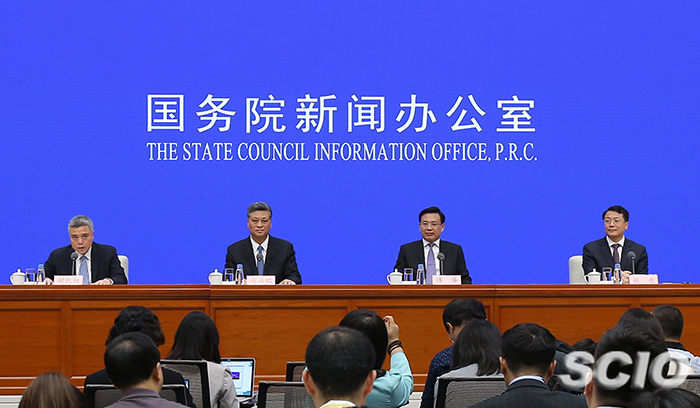
The State Council Information Office of China invites officials from south China's Guangdong province to speak on the province's reform and opening-up and innovation-driven development on June 3, 2019. [Photo by Liu Jian/China SCIO]
Hu Kaihong:Ladies and gentlemen, good morning. Welcome to this press conference. This is one of a series of press conferences for provinces, autonomous regions and municipalities directly under the central government that mark the 70th anniversary of the founding of the People's Republic of China.
Present at this press conference are: Mr. Ma Xingrui, vice secretary of the Communist Party of China (CPC) Guangdong Provincial Committee and governor of Guangdong province; Mr. Fu Hua, a member of the Standing Committee of the CPC Guangdong Provincial Committee and head of the Publicity Department of Guangdong province; and Mr. Zhang Hu, vice governor of Guangdong province. They will speak about Guangdong's reform, opening up and innovation-driven development, and answer some of your questions.
Now I'll give the floor to Mr. Ma.
Ma Xingrui:
Friends from the media, ladies, gentlemen, friends, it's a great pleasure to take this opportunity to brief you on Guangdong's development. First of all, on behalf of the provincial Party committee and provincial government, I want to express sincere gratitude to all of you for your long, enthusiastic attention to Guangdong.
Since the founding of the People's Republic of China 70 years ago, the country has witnessed radical changes, and achieved remarkable success in its development. Guangdong is a typical example of this change. Following are some highlights of Guangdong's development.
First, economic development has maintained rapid growth. The provincial GDP increased from 2.03 billion yuan in 1949 to 9.7 trillion yuan in 2018, ranking among the top few across China for nearly 30 years. This year, the figure is estimated to exceed 10 trillion yuan.
Second, provincial financial power has grown stronger. The revenue in the general public budget (in comparable prices) increased from 320 million yuan in 1950 to 1.2 trillion yuan in 2018, making the province the first in China to have a revenue in the general public budget exceeding 1 trillion yuan.
Third, the province has continued to enhance opening up to the outside world. In 2018, total imports and exports of the province reached 7.16 trillion yuan, accounting for one-fourth of the national total, and ranking first in the nation for 33 years in a row. A total of US$447 billion in foreign investments were utilized, accounting for more than one-fifth of the national total.
Fourth, a world-class manufacturing center has been established. There are approximately 47,500 industrial enterprises that have annual revenue of 20 million yuan or more from their main business operations. From traditional to advanced manufacturing, such as electronic information, green petrochemicals, automobiles, intelligent home appliances and robots, Guangdong has established a relatively complete and well-supported modern industrial system. The output of the electronic information industry accounted for 34% of the national total.
Fifth, both rural and urban development have been significantly enhanced. A comprehensive transportation network has taken shape. Guangzhou, Shenzhen and other major cities in the Pearl River Delta have formed a modern city cluster with an urbanization rate that has reached 70.7%. All counties are connected by expressway, and all cities will soon be connected by bullet train.
Sixth, people's livelihoods have improved continuously. The average life expectancy has been extended to 77.2 years. The revenues of urban and rural residents have increased continually and absolute poverty has been eliminated. More than 2.4 million people previously recognized by the provincial government as living in relative poverty have risen out of poverty.
You may wonder, how Guangdong is able to achieve such success despite having no special natural resources, with no foundation for development initially. Please allow me to share some of my views on this issue. Our achievements should be attributed to our system, political path, and the introduction of reform and opening up policies.
Since the founding of New China in 1949, the establishment of socialism has created the fundamental political conditions and the institutional foundation for achieving all development and progress in China today. Under the strong leadership of the CPC Central Committee, Guangdong has carried out socialist transformation smoothly, promoted socialist advancement vigorously, and established a relatively sound system for economic and social development, laying a solid foundation for the province's progress to come.
The introduction of reform and opening up policies in 1978 marked a new awakening and great revolution of the CPC, which propelled the Party into a great innovation from theory to practice, and boosted a tremendous advancement in promoting Socialism with Chinese characteristics. Comrade Deng Xiaoping, the chief architect of reform and opening up, chose Guangdong as the pioneer in the campaign after careful consideration. He required us to forge ahead despite all difficulties. The forerunners in the province, with Xi Zhongxun, former secretary of the CPC Guangdong Provincial Committee, as their representative, were dauntless in exploration and innovation. Thanks to their efforts, Guangdong started the glorious journey of leapfrog development.
Under the strong leadership of the CPC Central Committee, the provincial Party committee and provincial government of all sessions have united and led all officials and the general public in Guangdong to establish special economic zones, carry out reform and opening up policies, and promote the development of the market economy. We implemented the central authorities' strategic plan of reform and opening up innovatively, and made great achievements in this area. We have served as a window showing China's progress to the world, as a pilot ground for reform and opening up policies, and as a pacesetter of development in China.
Since the 18th Communist Party of China (CPC) National Congress in 2012, the CPC Central Committee with Comrade Xi Jinping at its core has demonstrated tremendous political courage and a powerful sense of mission. It has united and led all Party members and all the Chinese people of all ethnic groups in applying a new vision of development, implementing the five-sphere integrated plan and the four-pronged comprehensive strategy. With this, it has prompted historic shifts and achievements in the cause of the Party and the country, and steered socialism with Chinese characteristics into a new era.
Attaching great importance to the development of Guangdong province, General Secretary Xi Jinping visited Guangdong in his first inspection trip outside Beijing after the 18th CPC National Congress. He has joined deputies from Guangdong in panel discussions during two sessions of the National People's Congress, paid two visits to Guangdong, attended the signing ceremony of the framework agreement on the development of the Guangdong-Hong Kong-Macao Greater Bay Area and the opening ceremony of the Hong Kong-Zhuhai-Macao Bridge. He has delivered important speeches and gave important instructions on the development of Guangdong, designating it as a leading province in four areas (building institutions for high-quality economic development, developing a modern economy, pursuing opening up on all fronts and creating a social governance model based on collaboration, participation, and common interests), and a window for China to showcase its achievements in reform and opening-up as well as for the international community to observe the progress of the endeavor.
With General Secretary Xi Jinping's requirements in mind, we embarked on a new journey of the reform and opening-up drive, striving to break new ground in the new era.
First, we made sweeping efforts to strengthen Party leadership and Party building, taking a clear political stand and fostering a healthy political atmosphere of integrity. We worked to ensure that all the officials in Guangdong keep in mind the need to maintain political integrity, think in big-picture terms, follow the leadership core, keep aligned, strengthen our confidence in the path, theory, system, and culture of socialism with Chinese characteristics, resolutely uphold General Secretary Xi Jinping's core position in the Party Central Committee and in the Party as a whole, and resolutely uphold the Party Central Committee's authority and its centralized, unified leadership.
Second, we took comprehensive steps to deepen reform and opening-up, improve the socialist market economy, enable the government to play a better role and create a more favorable business environment.
Third, the building of the Guangdong-Hong Kong-Macao Greater Bay Area got off to a good start. The development plan is being fully implemented. The Hong Kong-Zhuhai-Macao Bridge and the Guangzhou-Shenzhen-Hong Kong high-speed railway has come into operation. The bay area is attracting an inflow of talent, capital, technology and enterprises.
Fourth, innovation has become an essential force in driving Guangdong's economic growth. In 2018, Guangdong's R&D spending exceeded 250 billion yuan; its PCT (the Patent Cooperation Treaty) applications accounted for about half of the country's total; and the provincial regional innovation capability has maintained its top place nationwide. Guangdong is home to a large number of world-class enterprises, including Huawei, Tencent, Guangzhou Automobile Group, Gree and Midea.
Fifth, Guangdong's economy has been transitioning to a stage of high-quality development and the province has 45,000 national high-tech enterprises. The value-added of advanced manufacturing accounted for 56.4% of the total of industries above the designated size, and the contribution of the tertiary sector to GDP increased to 58.9%.
Sixth, Guangdong has seen a continuous improvement in its ecological environment, with the PM2.5 concentration falling to 31 mcg/m3. The Pearl River Delta has become China's first national forest city group demonstration zone.
Seventh, we have enhanced our ability to meet people's basic needs. Last year, per capita disposable personal income grew to 35,800 yuan. A provincial management system for aged-care insurance funds has been established. There has been steady progress in the efforts to address the key issues affecting living standards, such as offering easier access to medical and government services.
Eighth, we have improved our capacity to forestall and defuse major risks. With the courage and ability to fight, we have ensured social order and stability.
_ueditor_page_break_tag_Ma Xingrui:
The world we live in today has been undergoing tremendous changes which are unseen in the past century, and the global economic order is facing unprecedented challenges. Guangdong will fully implement all major policies and plans made by the Central Committee of the Communist Party of China (CPC) with Comrade Xi Jinping at its core, uniting as one, and continuously focusing on managing China's own affairs well to prepare for any difficulties and challenges. With the strong leadership of Comrade Xi Jinping and the Central Committee of the CPC; the solid foundation established since the PRC was founded 70 years ago and the reform and opening up that was initiated 40 years ago, especially since the 18th CPC National Congress; as well as the capability and experience of market entities and with the united effort of the whole nation, we are fully confident in dealing with the various challenges and risks.
Last October, General Secretary Xi Jinping made major policy speeches during his visit to Guangdong province, giving important instructions in four aspects including pursuing deeper reform and greater opening up, promoting high-quality development, encouraging a balanced and coordinated form of development, and strengthening the leading role of the CPC and Party building. Guangdong province has fully implemented and made further progress in the "1+1+9" Plan, in which the two "ones" refer to the political guarantee of strengthening the leading role of CPC and Party building, and the driving force from pursuing deeper reform and greater opening up. The "nine" in the Plan refers to nine key missions, which are the following -- promoting the construction of the Guangdong-Hongkong-Macao Greater Bay Area; implementing the strategy of innovation-driven development; promoting high-quality development; building a modern economic system; laying a good foundation for the "three critical battles" against potential risks, poverty and pollution; implementing a rural revitalization strategy; improving the regional development plan of "One Core, One Belt, and One Region (i.e.to improve the economic structure of the Pearl River Delta as the core of the area; to foster new sources of growth in east and west Guangdong province which form a costal economic belt with cities along the Pearl River Delta; and to turn the mountainous region in north Guangdong province into an ecological zone.)"; developing a culturally prosperous province; and establishing a social governance model based on collaboration, participation and common interests. General Secretary Xi Jinping has instructed us to continue to be consistent in our efforts and stressed the significance of the tangible outcomes from these projects. General Secretary Xi Jinping has also noted that Guangdong province is an important window, not only for China to showcase to the world the achievements of our reform and opening up, but also for the international society to observe the process of our endeavor. The crucial status has placed Guangdong province under the spotlight, especially in the following aspects:
First, we take the building of the Guangdong-Hong Kong-Macao Greater Bay Area as the guiding principle for Guangdong's reform and opening up in the new era, and will dedicate all of our province's strength to work on it.
We join hands with Hong Kong and Macao to build a world-class city cluster and an international-level bay area, promote the joint pursuit of the Belt and Road Initiative, and bolster the leading role of Guangdong to create a new pattern of high-level comprehensive opening up to the outside world. We place top priority on our work to promote the consistency of rules and regulations among the three places. Under the principle of "one country, two systems," we enact flexible measures in line with local conditions, align our business environment with a high-standard of international economic and trade rules, and promote the smooth flow of people, goods, funds and information between the Greater Bay Area. It can be said that Guangdong in the Greater Bay Area is worth looking forward to.
Second, we focus on promoting innovation-driven development.
We resolutely and calmly respond to challenges and tests of any kind, and we have strengthened our capacity for self-reliance and independent innovation. While aiming to increase core competitiveness, core technologies for key fields and basic research, we will invest more in scientific and technological innovation, and concentrate our efforts to improve the regional technological innovation system with enterprises playing a leading role. At the same time, we will speed up the adjustment of industrial structures and promote the transition of Guangdong from a manufacturing-orientated to an innovative province with high-quality development. It can be said that a Guangdong province with high quality development is worth looking forward to.
Third, we pursue a more balanced form of development across the regions as well as the rural and urban areas.
We will vigorously implement the strategy for rural revitalization, make good strides in the battle against poverty, and pursue coordinated development of Pearl River Delta region, coastal economic belt and mountainous area of North Guangdong.. We will show even greater resolve, make greater efforts, and take more practical measures to support the revitalization of the old revolutionary base areas and the development of areas with concentrations of ethnic minorities. According to the provincial financial plan, in 10 years and over different phases, we will invest 160 billion yuan to strengthen the weak links in rural infrastructure and basic public services, and speed up the improvement of rural life. It can be said that a Guangdong province with coordinated development is worth looking forward to.
Fourth, we pursue the balanced development and mutual reinforcement of material and cultural and ethical progress.
We have launched activities to enhance cultural and ethical progress in the new era, and promote the building of the system of public cultural services. For example, we will promote the innovative development of the traditional Lingnan culture (a prominent culture in South China), based on the approach of respecting others' cultural characteristics while pursuing their own so as to progress together as the Chinese nation. It can be said that a Guangdong province with cultural prosperity is worth looking forward to as well.
Fifth, we will unswervingly advance the construction of an ecological civilization. We will implement China's new concept for development in an all-encompassing way and put into practice General Secretary Xi Jinping's instruction that "lucid waters and lush mountains are invaluable assets." We will adopt a holistic approach to conservation programs aimed at protecting our mountains, rivers, forests, farmlands, lakes, and grasslands, and apply the most stringent rule of law in this process. We will put in place key measures of protecting the environment, conserving energy, reducing emissions, promoting green development, pursuing a low-carbon and circular economy, and advancing ecological civilization. Our goal is to make Guangdong province a homeland with beautiful mountains, waters and nostalgic memories. An ecologically beautiful Guangdong is worth looking forward to.
Sixth, we will create a social governance model based on collaboration, participation, and common interests. We will implement the general plan of the rule of law and further make Guangdong a place that is safe and based on the rule of law. We will strengthen social governance and make our business environment more internationalized, convenient and based on the rule of law. We aim to make Guangdong one of China's safest and most stable, fair, and just areas. We will continue to increase the people's sense of gain, happiness and security. A safer and more harmonious Guangdong is worth looking forward to.
On our new journey in the new era, Guangdong will hold high the great banner of socialism with Chinese characteristics, rally even closer around the Central Committee with Xi Jinping at its core, follow the guidance of Xi Jinping Thought on Socialism with Chinese Characteristics for a New Era and fully implement the spirit of General Secretary Xi Jinping's speeches and instructions on Guangdong. We will remain true to our original aspirations and keep our mission firmly in mind. We will continue our hard work, forge ahead, and write a new chapter in the new era of Guangdong's reform and opening up. We will strive to meet the requirement for Guangdong to become a national leader in four areas – establish institutions favorable for high-quality economic development, build a modern economic system, break new ground in pursuing the opening up on all fronts, and create a social governance model based on collaboration, participation, and common interests. Guangdong will also serve as two important windows – a window to showcase China's achievements in its reform and opening-up to the world and a window for the international community to observe China's reform and opening-up. By doing this, we will make our contributions to helping realize the Chinese Dream of national rejuvenation.
Thank you again, friends from the press. Thank you for attending today's press conference. Now my colleagues and I will begin to take your questions.
_ueditor_page_break_tag_Hu Kaihong:
Thank you, Mr. Ma. Now we open the floor to questions. Please identify your media organization before raising your question.
CCTV:
Society has placed a great deal of attention and expectation toward the construction of the Guangdong-Hong Kong-Macao Greater Bay Area. So how Guangdong will take the opportunity of building the Greater Bay Area to advance its reform and opening-up? Thanks.
Ma Xingrui:
Thanks for the question. Indeed, people are very concerned about this effort. The Greater Bay Area has been planned, deployed and promoted by General Secretary Xi Jinping himself as a significant strategy of national importance. Xi personally witnessed the signing of the Greater Bay Area framework agreement and clearly pointed out that Guangdong should mobilize resources from the whole province to promote the construction of the Greater Bay Area, and it is an important historic opportunity for Guangdong to renew its efforts in reform and opening-up. It is expected that Guangdong, Hong Kong and Macao can make concerted efforts to turn the Greater Bay Area into a world-class city cluster and a first class bay area, which can rival the New York Bay Area, the San Francisco Bay Area, and the Tokyo Bay Area, so as to further improve Guangdong's competitiveness and help realize high-quality development.
The Party Central Committee and the State Council unveiled the Outline Development Plan of the Guangdong-Hong Kong-Macao Greater Bay Area on Feb. 18, which clarifies the Greater Bay Area's five identities — a vigorous world-class urban agglomeration, an international science and technology innovation center with global influence, an important support for the construction of the Belt and Road, a demonstration zone for in-depth cooperation between the mainland and Hong Kong and Macao, and a world-class city cluster that promotes a high quality of life, where people can live, work and travel happily.
Under the leadership of the Party Central Committee and the State Council, Guangdong has formed a close cooperation model with Hong Kong and Macao. We deeply feel that the reform and opening-up since 1978 has brought great changes to Guangdong, and the construction of the Greater Bay Area presents Guangdong with another important opportunity to carry on its reform and opening-up. Our work will be carried forward in the following five aspects.
First, the business environment will be improved through interlinked rules. We will adhere to the principle of "one country" and make good use of the benefits of "two systems" to interlink the rules in the market economy system, and pave the way for the linkage of various factors. The objective is to ensure that personnel, logistics, capital and information can flow efficiently and orderly. There is still huge potential in this aspect.
Second, the construction of the Greater Bay Area into an international science and technology innovation center will be expedited. This is a key task that people are deeply concerned about. The Tokyo Bay Area, the New York Bay Area and the San Francisco Bay Area are stronger than the Greater Bay Area in terms of original innovation. This is also our shortcoming. But we have the foundation that has been laid over the past 40 years' of reform and opening-up and over the past 70 years of the New China's development. Hong Kong and Macao have several world-class universities, and if combined with the innovation ability of Guangdong's real economy, they can effectively boost the construction of the international science and technology innovation center. In particular, all relevant departments of the central government attach great importance to the job, such as the building of major scientific and technological infrastructure, large scientific installations, national key laboratories, and national laboratories, etc. In addition, there are also certain favorable tax policies customized for science and technology staff. For example, we are working to make it possible that talents from Hong Kong and Macao can be taxed according to Hong Kong and Macao tax policies in Guangdong. In a word, scientific and technological innovation is a major task for us.
Third, the Greater Bay Area should be built into an important support structure for the construction of the Belt and Road. It is known that the three places have their respective advantages. Hong Kong is an international center of finance, trade and shipping. Macao is a world tourism and leisure center, and has a link with Portuguese-speaking countries. Guangdong is a manufacturing powerhouse and a major province in international trade. So, in the construction of the Belt and Road, the Greater Bay Area can play a very important role.
Fourth, infrastructure facility interconnectivity will be promoted. As we know, the Guangzhou-Shenzhen-Hong Kong high-speed train service opened last year, which implements the system of "one place and two inspections." It takes only 47 minutes to travel from Hong Kong to Guangzhou by train, while before its opening, we took more than four hours by car. There are also some key infrastructure facilities under construction, such as the Liantang/Heung Yuen Wai Boundary Control Point, and a new port connecting Macao and Zhuhai, both of which will be completed before the end of this year. In particular, we are advancing the coordinated development of high-speed railway, harbors and airport clusters in the region. There are three major airports — Hong Kong Airport, Guangzhou Baiyun International Airport and Shenzhen Baoan Airport, which handle more than 70 million, nearly 70 million and over 45 million passenger trips a year respectively.
Fifth, an environment with a high quality of life where people can live, work and travel happily will be created. Guangdong will provide sound environment for the youth from Hong Kong and Macao to pursue innovation and start new businesses. Meanwhile, we will also make great efforts to improve the ecological and living environment, since there is still room for improvement in these aspects.
As for information on the Greater Bay Area, you must already be familiar with it as the media has reported widely on it. Due to the tight schedule, I would like to stop here. Thanks.
_ueditor_page_break_tag_China Daily:
We learned that the GDP of Guangdong province is expected to surpass 10 trillion yuan in 2019. So my question is what achievements has Guangdong made in promoting high-quality economic development and building a modern economic system, especially in the layout of emerging industries? Thanks.
Ma Xingrui:
Thanks for your question. The GDP of Guangdong province has ranked first in the country for 30 years in a row. As you mentioned, this year it will hit 10 trillion yuan. But for Guangdong, there still remains problems in achieving high-quality development.
First, it must be reflected in the economic system. Since the 18th National Congress of the CPC, General Secretary Xi Jinping has visited Guangdong twice and attended the plenary sessions of the Guangdong NPC delegation twice. He made a series of important instructions, clearly requiring Guangdong to play a leading role in building the system and mechanism to promote high-quality development and a modern economic system. Currently, we should ensure that the market plays its decisive role in resource allocation, and we should give better play to the role of the government, which were also clearly pointed out at the third plenary session of the 18th Central Committee of the CPC. In accordance with the requirements of the Party Central Committee, we are deepening the supply-side structural reform. In this respect, the government is to provide an institutional environment of rule of law and with preferential policies for companies, especially for the real economy. In recent years, we published a series of policies in support of the real economy, private economy, foreign trade, and employment as well. For example, Guangdong took the lead in overall planning of pension for employees working for local enterprises, bringing benefits to companies and people.
Second, we must focus on developing market players. Guangdong is now home to 11.46 million individual business and companies, with nearly 5 million companies among them, ranking it first in China. Currently, a total of 12 companies in Guangdong have entered the Fortune Global 500 list and the revenue from the main business operations of 29 companies has exceeded 100 billion yuan. So I think all of these are very important. Meanwhile, to develop the market economy, we must focus on developing industrial clusters. Now we already have two industrial clusters which have a total output value of more than one trillion yuan and are engaged in electronic information and green petrochemical. We also have seven emerging industrial clusters with an output value of over 100 billion yuan respectively. There are many examples like these.
First, we took the lead in pushing the development of the 4K UHD (ultrahigh definition) video industry. In the past, we had 1K and 2K, and now we have 4K, bringing many benefits to technology, industries and the lives of people. Now the output of 4K TV accounts for about half of the country.
Second, we are sparing no effort to develop the robotics industry. Now around 20% of industrial robots are made in Guangdong. In 2018, the total output of industrial robots reached 32,000 sets, accounting for 22% of the total. In the first quarter of 2019, the output of Topstar Technology Co., Ltd, one of the tech companies that produces industrial robots in Guangdong, generated a year-on-year growth of 36%, maintaining a good momentum.
Third, we support the new energy automobile industry. I used to work in Shenzhen where we worked to ensure that all buses were powered by electricity within three years. This was also realized in Guangzhou and Zhuhai, which promotes the development of new energy automobiles. The emission of a bus that fueled by diesel is equivalent to that of 40 cars. So the development of new energy automobiles will help to improve the air quality. You can take a look in Shenzhen and Guangzhou, there are now many changes.
Fourth, we promote the development of the industrial internet. Guangdong is a province that based on information. We encourage companies to improve themselves with the help of information technology, especially that of the industrial internet. A total of 3,000 companies now have access to the cloud platform, and that number will reach 10,000 in the future.
Fifth, we are making efforts to develop the mobile communication industry. The output of smartphones now accounts for 43.9 % of the total output in the country. Most of the mobile phone brands, like Huawei, OPPO, VIVO and Apple, have established their production lines in Guangdong. In addition, we are stepping up the building of the 5G network. This year, we will set up base stations for the commercial use of 5G in Shenzhen.
Generally speaking, high-quality development is the key to building a modern economic system. We also need to give full play to the market and government. In addition, we need to target strategic emerging industries and future industries like artificial intelligence.
_ueditor_page_break_tag_Phoenix Satellite TV:
I have two questions. First, what measures will Guangdong take to jointly promote cultural development in the Guangdong-Hong Kong-Macao Greater Bay Area, which is stressed in the area's development plan? Second, as you just said, Guangdong is fully confident in its ability to develop its economy and cope with its challenges. How much impact does the economic and trade friction between China and the United States have on Guangdong, since there are many high-technology enterprises in the province? What measures have you taken to ease the impact? Thank you.
Ma Xingrui:
Now Mr. Fu Hua will answer your questions. He is a member of the Standing Committee of the CPC Guangdong Provincial Committee and head of the Publicity Department of Guangdong province. He is in charge of related works.
Fu Hua:
Jointly promoting cultural development in the Guangdong-Hong Kong-Macao Greater Bay Area is a significant part of the area's development. As you know, Guangdong, Hong Kong and Macao share the same culture, making it easy to promote cultural development in the area. Besides, over the past 40 years of reform and opening-up, the three regions have enjoyed increasingly close and active cultural exchanges. These have laid the foundation for jointly promoting cultural development and spreading cultural values in the bay area.
According to the requirements of the Development plan for the Guangdong-Hong Kong-Macao Greater Bay Area, certain arrangements and considerations have been made by Guangdong province in jointly building a cultural Bay Area. Not long ago, we published a Three-year Plan of Guangdong province to establish a circle of culture in the Greater Bay Area. We will be carrying out certain preliminary policies from 2019 to 2022 based on the following three aspects. First, as the shared wealth and the cultural basis of Guangdong, Hong Kong and Macao, Lingnan culture should be treated as a bridge to carry forward China's fine traditions and to promote its innovative transformation and development. Second, the rich cultural resources in the Bay Area will be fully utilized, and the rich cultural products of the new era should be put forward. Third, Guangdong, Hong Kong and Macao should focus on cultural communication by presenting the story of China and its Bay Area in a more compelling way.
In terms of specific works concerned, our vision is as follows:
First is to promote the development of a culturally prosperous province. The cultural capacity of Guangdong needs to be further developed in order to collaboratively build a cultural Bay Area. With the initiative of the Party committee and the government of Guangdong province, a Three-year Plan to develop the cultural prosperity of Guangdong has been created, which consists of 10 key programs and 50 projects, including the inheritance and innovation of Lingnan culture, the promotion of the high-quality development of the cultural industry in Guangdong, and the endeavor to elevate the culture and arts of Guangdong to a new level in the new era. Among all the fine arts of Guangdong, it is necessary for the excellences to stand out to present the essentials of the new era.
Second is to deepen cultural exchange and cooperation, which is of great significance. So far, our concerns have been mainly focused on five aspects as follows. First, we will co-host the cultural festival of the Greater Bay Area, organizing public galas and events to promote Lingnan culture, notably the Cantonese opera, dragon boat, martial arts and Guangdong lion dance. Second, we will work with Hong Kong and Macao to protect our cultural heritage and to raise people's awareness in this regard. Third, we will promote the in-depth integration of our cultural industry into tourism, by innovating on the industrial chain and developing a world-class resort in the Bay Area. Fourth, we will collaboratively work to improve the cultural and creative industries. As over 300 industrial parks in these fields are in Guangdong province, the cultural and creative industries have room to thrive in the Bay Area. Finally, we will build the Alliance for Art and Culture of the Greater Bay Area in order to promote the collaboration of Guangdong, Hong Kong and Macao in producing films, TV series, literature, music and artworks to present the development of the Bay Area. More cultural icons with characteristics of the Bay Area should be created.
Third is to provide more support for, and to create a better environment in the area of public opinion on the development of the Greater Bay Area. We are aware that on May 19, the first Media Summit of the Guangdong-Hong Kong-Macao Greater Bay Area was organized in Guangdong province. The summit was a success, and over 110 media outlets from Guangdong, Beijing and Taiwan covered the summit, which was attended by a total of more than 600 media professionals and guests. During this one-day event and three days of interviews, we achieved a lot. This can be seen not only in the over 3,000 original news reports on the development of the Bay Area, but also in the consensus among many media outlets on how to present the first-class Bay Area. In this regard, we will work hard to make further progress in the gathering of media resources. Because the Greater Bay Area is a new area of growth, it will surely be under the spotlight. We hope that media around the world will pay more attention to the construction of the Greater Bay Area, thereby attracting more resources for its development in order to jointly contribute to an environment with first-class media and public opinion. Thank you.
Ma Xingrui:
Just now, Mr. Fu answered your first question. In order to create a strong cultured province, I think another point is also important - that is that advanced culture needs to be promoted by advanced technology. In my opinion, the cultural industry or cultural undertakings not only provide us with nourishment for our mind, but also stimulate technological development. Next, we are planning to popularize 4K, 8K and 5G, which will surely bring huge benefits to cultural communication. Therefore, the cultural industry has great demands and significant driving forces for technology.
I would like to answer the second question briefly. Recently, the trade friction between China and the U.S. has become an extremely important international issue. Yesterday, the State Council Information Office (SCIO) of China published a white paper clearly indicating China's stance on trade consultations. It said that the trade friction is provoked unilaterally by the U.S. and is not in line with related international rules. The continuous escalation of trade friction is not only detrimental to economic and social development, enterprises and people on both sides, but is also harmful to the world's economy. Guangdong is a big province in regard to international business and economics, because we account for about one fifth of the total trade value between China and the U.S. Currently, enterprises and the market economy in Guangdong still have relatively high economic vitality. Tested by the 2008 international financial crisis, they have become more resilient and are better equipped to resist risks and support economic development. Guangdong has paid much attention to intellectual property (IP) protection, we have IP courts and established a standardized IP trading system. In addition, we have a bunch of enterprises that demonstrate a strong ability to innovate, such as Huawei which is a world leader in cutting edge 5G technology. Trade friction between China and the U.S. does have some effect on Guangdong, but it's generally within control. Thank you.
_ueditor_page_break_tag_CGTN:
Guangdong regards digital government as an important driver for reform. It has proposed a series of innovative measures, including launching a government service app Yueshengshi in Guangdong. Could you tell us more about Guangdong's progress in its building of a digital government? Thanks.
Ma Xingrui:
Thank you for the question. Let me invite Guangdong Vice-Governor Zhang Hu to answer the question.
Zhang Hu:
Thank you for your concern on Guangdong's digital reform and construction. President Xi Jinping pays great attention to applying information technology in state governance. He has emphasized many times the role of information technology in the state governance, and that promoting the modernization of the state governance system and governance capability by the use of information technology, so as to better serve the country's economic and social development and improve people's livelihoods.
Guangdong's building of a "digital government" is an important deployment of General Secretary Xi's important instructions and spirit in this regard. It is significant for the province to foster an "internet plus government services", modernize the government's governance system and governance capability as well as playing up and creating new strengths in the business environment. After more than two years' work, the reform and construction of our "digital government" has achieved remarkable results. In April, the General Office of the State Council's e-governance office entrusted third party agencies to assess the online government service capabilities of provincial-level governments. Guangdong was ranked first in the assessment. I would like to introduce it through the following three aspects:
First, why this reform? Guangdong has always placed great significance to the informatization of governance and has launched government service applications with Guangdong characteristics. But in the light of the new situation and new requirements, we still have four prominent issues to resolve. Firstly, the construction and management mechanism lags behind. There is no department directly affiliated to the provincial government to lead and plan the deeper integration of informatization within the provincial-level government. There is also insufficient coordination and collaboration among the relevant governments at the city- and county-level. There is no vertical planning and collaboration so synergy is lacking between the superior and subordinate departments, and among different departments in one place that are related to the undertaking. Second, sporadic and repetitive construction is common. Before the reform, every department directly affiliated to the provincial government had its own information center, and there were as many as 1,068 such information systems, which were separated from each other. This led to the existence of many isolated information islands. Third, the services for enterprises and people are not in place. Because the data resources of different units are separate, and there was no unified management and effective sharing, the people and business owners often complained that they had to go to different departments and repeatedly provide certification materials to deal even with a simple matter related to the government. Fourth, the staff are not professional enough. The professional structure of talents on the informatization in government departments is comparatively basic. Statistics show the proportion of talents in the middle- and high-level professional ranks is not high, which does not match with Guangdong's status as a major province of the information industry.
Secondly, how do we advance this reform? In response to the aforementioned prominent issues, the CPC Guangdong provincial committee and the Guangdong provincial government initiated the "digital government" reform. At the end of 2017, it was labeled as the first of the 18 key tasks for Guangdong's deepening of reforms. Guangdong Party chief Li Xi presided over the work conference to examine and settle on the final reform plan, and made detailed deployments. Guangdong Governor Ma Xingrui held the post as the leader of the team to deepen reform, and has conducted inspections many times to create the master plan and the construction plan to advance the reform. Our efforts are mainly in these four aspects:
First, we have deepened institutional reforms. Governance service data administrative bureaus were established at the governments of the province, city and county level, which form a coordinated informatization administrative body connecting the superior and subordinate government bodies. The functions such as local office of government set-up committee's responsibilities in promoting the administrative approval system reform, the development and reform commission's duties in initiating and approving projects related to informatization, and the supervision of public resource trading platforms are now assigned to the government data service bureaus, so that a vertical and intensive management system that features the integration of technology and operations is formed.
Second, we have established a model featuring the "collaboration of government and enterprises, and division of administration and operations". We have integrated the resources of Tencent, China Mobile, China Unicom and China Telecom and founded the Digital Guangdong, which is in charge of the building, operation and maintenance of the "digital government". We have brought together a group of talents in big data, networks, operations and development and resolved the shortage of talent and the rigidity of the government system in starting a business.
Third, we have strengthened the platform's role as a powerful support and efficient service provider. Building a unified government cloud and big data platform, promoting inter-department and cross-level data sharing, and reinforcing the foundation for a digital government. Based on this foundation, we have advanced the platform's applications in three aspects — Yueshengshi app, Guangdong governance service website (gdzwfw.gov.cn), and coordinated office platform, in a bid to realize "the 'clouding' of data and the delivering of services".
Fourth, we place greater emphasis on the role of think tanks. A "digital government" reform and construction expert board was set up. We invited Wang Qinmin, who is the former vice chairman of the National Committee of the Chinese People's Political Consultative Conference, and director of the State Council's e-governance expert committee, to head the board, which consists of more than 100 experts and provides strong technological support in the construction of "digital government" for Guangdong.
Third, how about the effect of the reform? The Yueshengshi app has made it possible for users to deal with 630 government-linked issues relating to their everyday lives through their smartphone. For 86% of these issues, people now do not need to go to government departments in person, saving them considerable time and costs. For example, the photos people needed to take at the border exit-entry is now free of charge, which saves people's time, and nearly 100 million yuan ($14.49 million) a year. In the first year of the app's launch, more than 12 million people have logged on it. In terms of services for enterprises, the Guangdong governance service website has covered all service items related to governments at the village, township, county, city and provincial levels. This has greatly enhanced the working efficiency and reduced the amounts of materials enterprises have to submit by nearly 56%, according to our statistics, and reduced the amount of the time for registering a new business to five days at most. In addition, in terms of government coordination, the integrated collaborative office platform has been promoted for use in 21 cities in the province, as well as 42 departments directly affiliated to the provincial government, among which more than 90% has initiated cloud-based work platforms. Our survey indicates the time for handling department documents has dropped by about 40%, and the efficiency of administrative approval and services have markedly improved.
Currently, Guangdong has entered a key phase in its "digital government" reform and construction. Although we have made some progress, there are still many more tasks to be done. We will act strictly according to the CPC Central Committee and the State Council's deployment and requirements, learn the good experience and working methods from other provinces, and unswervingly deepen reform and seek innovation — like hitting the nail on the head — to take Guangdong's "digital government" reform and construction to another level. That's all I have to say about the topic. Thanks.
Ma Xingrui:
As for the "digital government", I would like to say more. First, it is important for us to implement the deployment of the "Digital China", as it represents the direction for guiding and pushing forward the development of the digital economy. Second, we need to build a public cloud platform and public data platform, breaking the former state in government work in which there was a lack of coordination among different departments. Third, we founded Digital Guangdong, a network construction company employing 1,200 people, which is a joint venture involving Tencent, China Mobile, China Telecom and China Unicom and operating according to market laws. Meanwhile, we founded a governance service data administrative bureau, which is indeed a tough institutional breakthrough. That's all.
_ueditor_page_break_tag_South China Morning Post:
I have two questions about the China-U.S. trade friction. First, what specific measures will Guangdong take to cushion the impact of the U.S. moves? You said the provincial government had introduced some important measures to meet the economic challenges that emerged in 2008. What measures has the government taken or plans to take to hedge against the impact of the current trade friction? Second, Guangdong plays a key role in promoting innovation, and you said the province plays a leading role in the innovation-driven development of the Guangdong-Hong Kong-Macao Greater Bay Area. So, what impact will the trade friction exert on Guangdong’s role as an innovation driver for the Greater Bay Area?
Ma Xingrui:
As to your first question, I think we need to let the market play the decisive role in resource allocation, along with the government playing its supervisory role better.
First, we will pursue greater opening-up in accordance with the requirements of the CPC Central Committee. On several occasions, General Secretary Xi Jinping has stressed that China will broaden its opening-up. The occasions include the Boao Forum for Asia, the first China International Import Expo and the second Belt and Road Forum on International Cooperation. Guangdong, as an important window for China's opening-up and construction of the Greater Bay Area, must take more resolute measures to ensure broader opening-up.
Second, we will further relax controls on market access, act to promote the foreign investment law passed at the second session of the 13th National People's Congress this year and implement an across-the-board management system based on pre-establishment national treatment and requirements of the negative list. We have also introduced a series of other measures to ensure stability of our foreign trade and better utilization of foreign investment.
Third, we will continue to expand the overseas market. Last year, Guangdong, Hong Kong and Macao jointly hosted a promotional event in Paris, which was attended by some 600 to 700 companies. This year's promotion in Tokyo was larger, drawing more than 1,200 participants. Lam Cheng Yuet-ngor, chief executive of the Hong Kong Special Administrative Region (SAR), Chui Sai On, chief executive of the Macao SAR and myself attended the event. We have been organizing such events since we became fully aware that, in the age of economic globalization, no country can achieve development if its door is closed to the outside world. Judging by the current situation, foreign trade in Guangdong is steady.
Regarding your second question: First, speaking from both long-term and current perspectives, Chinese technological development must be achieved by self-reliant innovation. Of course, self-reliance doesn't mean cutting ourselves off from the rest of the world. The U.S. has no legitimate grounds for placing Huawei on its Entity List. For many years, Guangdong has been strengthening the role of enterprises in innovation, and we have made solid progress that is demonstrated by at least four figures of "90%" coming from enterprises, namely the percentage of R&D investment, the percentage of R&D personnel, the percentage of R&D institutes and the percentage of patent applications and approvals. Guangdong was ranked first in the comprehensive capacity of regional innovation among Chinese provinces in both 2017 and 2018.
Second, weak points affecting Guangdong's innovation capacity lie in basic research and application-oriented basic research. We have increased our efforts to develop platforms for technological innovation and promoted the establishment of several key scientific facilities, national and key laboratories. We have founded a provincial foundation for basic research and application-oriented basic research. We have also promoted technological breakthroughs in nine key areas (rail transit equipment, high-end vessels and ocean engineering equipment, smart robots, smart vehicles, sophisticated modern agricultural machinery, high-end medical appliances, new materials, smart manufacturing, and major technical equipment). Unremitting efforts are required for further progress.
Third, we have been focusing on providing a relaxed development environment for talent. So far, we have attracted a number of academicians and experts, innovation groups and entrepreneurial teams to Guangdong, and we also encourage enterprises to promote global allocation of technological resources.
Fourth, we attach great importance to intellectual property protection. Priority should be given to promoting the transfer and trade of technological outputs. The annual trade volume of technical contracts in Guangdong province has now reached more than 100 billion yuan.
Firth, we have made continuous efforts to improve Guangdong's ecosystem for innovation. This requires persistent efforts that cannot be achieved overnight. So, we encourage experts and academics to concentrate on their research rather than seeking fame and wealth. We are working to create an enabling environment in which failure is tolerated and exploration is constantly encouraged particularly in basic research. At the same time, we will always take resolute disciplinary action against academic misconduct. Thank you.
_ueditor_page_break_tag_Economic Daily:
The uneven development between urban and rural areas and between various regions in Guangzhou has always been a challenge for the province. Last year, General Secretary Xi Jinping made requirements for Guangdong during his visit to the province. To address the challenge, what measures have been taken and how do they work? Thank you.
Ma Xingrui:
Thank you for your question. The most daunting challenges facing Guangdong are the uneven development between regions and the urban-rural dual structure. Since the 18th National Congress of the CPC, General Secretary Xi Jinping has set very clear requirements for Guangdong's integrated development for multiple times. Especially during his visit from Oct. 22 to 25 last year, Xi asked us to take efforts to resolve the urban-rural dual structure, narrow the gap between the Pearl River Delta and the region of south Guangdong, west Guangdong and north Guangdong, and push for balanced and coordinated development. Those three areas occupy 70% of the land in the province, but account for only 20% of the provincial GDP, while the remaining 80% goes to the Pearl River Delta. Uneven development has been a longstanding issue. Guangdong still has a huge gap between urban and rural areas, as the ratio of rural income to urban income stands at 1:2.58. As a result, we will work hard to resolve the two issues.
Regional coordinated development means further focusing on relative strategies. The provincial government designed the new development pattern of "One Core, One Belt and One Region," —the Pearl River Delta as "One Core," the coastal economic belt as "One Belt," and the ecological development zone in north Guangdong as "One Region." Regional coordinated development also means we will increase support for east Guangdong, west Guangdong and north Guangdong. For example, we will advance the construction of the high-speed transit connecting the Pearl River Delta with the three parts of Guangdong, as well as a high-speed railway. We will also facilitate the construction of airports in Zhanjiang, Jieyang and Shaoguan. We are funneling more S&T resources to those three areas of Guangdong, and supporting their development of basic public services, including medical care, employment and education. On July 1, 2017, Guangdong was the first province to implement a coordinated basic pension system for employees. We will build 30 top-notch hospitals in the province, and now there are already 22 such hospitals, among which five are in the three core areas. The provincial government has invested 50 billion yuan in building a community-level medical service system. We will develop various education especially professional education. Moreover, we are optimizing the industrial structure. For instance, Zhanjiang and Jieyang are introducing a number of investment projects each worth tens of billions of yuan.
As for urban-rural development, we will roll out policies and mechanisms to address the unevenness. We will stick to the principle that "urban areas support rural development, and industry promotes agriculture." The province will invest 160 billion yuan over the next 10 years to reshape the rural areas. We will do a good job to offset cultivated land used for other purposes, ink the amount of urban and rural land designated for construction to that of land returned to cultivation, and put returns from the land trade in the fund used to develop rural areas. We will push forward demolition and reclamation projects in rural areas. We are making efforts to advance industrial revival. We have built 150 modern provincial agriculture industrial parks, each granted 50 million yuan in subsidies to develop special agriculture and help raise the income of farmers. We will work hard to improve living conditions in urban and rural areas. We are confident that there will be significant progress within three years, huge achievements within five years, and fundamental changes within 10 years. Thank you.
_ueditor_page_break_tag_Hu Kaihong:
Due to the time limit, the last question will be for journalists.
Hong Kong Economic Herald:
Hong Kong youth entrepreneurship on the mainland has progressed to the version 2.0 under the background of the Greater Bay Area. What will Guangdong do to take forward the development of youth entrepreneurship and employment bases for Hong Kong and Macao? Thank you.
Ma Xingrui:
Thank you for your question. I have never heard of the version you mention. However, I can give you a brief introduction of the relevant work. First, during the development of the Guangdong-Hong Kong-Macao Greater Bay Area, the CPC Guangdong Provincial Committee and Guangdong provincial government have always sought to meet the requirements of the central leadership in ways suiting the needs of Hong Kong and Macao, proactively promote the development of youth entrepreneurship and employment bases and provide services for the youth of Hong Kong and Macao. The Greater Bay Area consists of the Hong Kong Special Administrative Region (HKSAR), the Macao Special Administrative Region (Macao SAR) as well as the municipalities of Guangzhou, Shenzhen, Zhuhai, Foshan, Huizhou, Dongguan, Zhongshan, Jiangmen and Zhaoqing in Guangdong Province (known as the "nine Pearl River Delta municipalities"), covering a total area of 56,000 square kilometers and with a combined population of approximately 70 million. Their combined gross domestic product (GDP) has been around $1.6 trillion. In recent years, we have established the Shenzhen-Hong Kong Science and Technology Innovation Special Cooperation Zone in Qianhai of Shenzhen, attracting a large number of young people from Hong Kong to take up innovation as well as entrepreneurship in Guangdong with great success. Now, all the Pearl River Delta municipalities have provided great opportunities to promote youth innovation and entrepreneurship for Hong Kong and Macao. Recently, I attended the Hong Kong-Guangdong Cooperation Joint Conference with Madam Carrie Lam Cheng Yuet-ngor, the fifth-term Chief Executive of the HKSAR, and the Guangdong-Macao Cooperation Joint Conference with Mr. Chui Sai On, the fourth Chief Executive of the Macao SAR. All the relevant work is now well underway and our cooperation has made good progress.
Second, we have been working hard to make it convenient for youth from Hong Kong and Macao to find a job, study and go to hospital here. For example, we have so far helped 100,000 citizens from Hong Kong and Macao to apply for mainland residence permits. In the areas of medical and endowment insurance, local governments from the three [pillars of the Greater Bay Area] vow to strengthen communication and improve relative supporting policies.
Third, we are always striving to provide convenience for youth from Hong Kong and Macao to incubate their scientific and technological achievements. For example, Da-Jiang Innovations (DJI) has grown in strength in Guangdong. At the beginning, the founder of DJI, Wang Tao, and his tutor got the idea in Hong Kong, but they chose Guangdong to incubate their achievement thanks to its highly-qualified manufacturing industry and mature industrial chain. Another example is UBTECH. Its innovative team had spent years trying to find a suitable place to produce robots, and finally chose Guangdong as its headquarters because of the mature industrial chain it offered. I want to say Guangdong's mature industrial chain helps a lot in transforming the innovation achievements of youth from Hong Kong and Macao. Thank you.
Hu Kaihong:
That's the end of the Q&A section. Now I'll give the floor to Mr. Ma for some closing remarks.
Ma Xingrui:
On behalf of the CPC Guangdong Provincial Committee and Guangdong provincial government, I would like to express my sincere gratitude to the SCIO and all media friends for your concern and support of Guangdong in its development. Welcome all of you to visit Guangdong. Thank you.
Hu Kaihong:
This concludes today's press conference. Thank you, Mr. Ma. Thank you, Mr. Fu and Mr. Zhang. Thank you all.
- SCIO briefing on China's position on economic and trade consultations with US
Speaker:
Wang Shouwen, vice minister of commerce and deputy China international trade representative
Chairperson:
Guo Weimin, vice minister of the State Council Information Office
Date:
June 2, 2019
Chinese Vice Minister of Commerce and Deputy China International Trade Representative Wang Shouwen (R) and Vice Minister of the State Council Information Office Guo Weimin (L) attend a press conference in Beijing, capital of China, June 2, 2019. The State Council Information Office on Sunday issued a white paper to provide a comprehensive picture of the China-US economic and trade consultations, and present China's policy position on these consultations. [Photo/Xinhua]
Guo Weimin:Ladies, gentlemen, media friends, good morning. Welcome to this press conference.
Today, the State Council Information Office (SCIO) released a white paper entitled "China's Position on the China-U.S. Economic and Trade Consultations." At this press conference, we will brief you about its major content, along necessary explanations.
Present at this press conference is Mr. Wang Shouwen, vice minister of commerce and deputy China international trade representative. I'm your host, Guo Weimin, vice minister of the State Council Information Office.
First of all, let me brief you about the major content of the white paper. The document is entitled "China's Position on the China-U.S. Economic and Trade Consultations." It summarizes and introduces the history of China-U.S. trade friction, and the general situation of the bilateral trade talks. It also explains China's principles and position on the various issues involved. The document contains approximately 8,300 words, and contains three parts - foreword, main content and conclusion.
The white paper notes that trade cooperation remains the ballast and the propeller for China-U.S. relations. This issue is critical to the fundamental interests of the two nations and their people, as well as world prosperity and peace. Since March 2018, in response to the economic and trade friction unilaterally initiated by the United States, China has had to take forceful measures to defend its national interests and its people. At the same time, China has always adhered to the basic principle of resolving disputes through dialogue and consultations, and there have been several rounds of trade negotiations with the United States. China has tried its best to maintain a stable trade relationship with the United States. We certainly don't want to see a trade war occur. However, if it really comes, we won't be afraid, and will fight it if necessary. Our attitude on this has never changed.
The white paper clearly shows how China-U.S. trade friction provoked by the United States has harmed the interests of both countries and, indeed, the world as a whole. The imposition of trade tariffs has done no good to the United States as well as others. It has impeded bilateral trade investment and cooperation. It has also affected market confidence and economic stability worldwide. A trade war won't "make America great again." Instead, it has raised the production costs of American enterprises, increased domestic prices in America, harmed U.S. economic growth and people's livelihood, and obstructed the flow of American exports to China. The trade bullying carried out by the U.S. have had a negative influence on the entire world. They have damaged the multilateral trading system, enormously disturbed the global industrial chain and supply chain, and damaged market confidence. They pose a severe challenge to the recovery of the global economy, and pose a grave threat to advancement of economic globalization.
The white paper noted that in the trade negotiations with China, the United States has gone back on its words, and not acted in good faith. Since the United States provoked the trade friction, bilateral trade and investment have been badly affected. This led to both sides agreeing to sit down and discuss a solution. Since the trade negotiations started in February 2018, significant progress has been made, and consensus has been reached on the majority of issues. However, there were also various twists and turns, all of them caused by the U.S. government, as it has repeatedly abandoned the bilateral consensus, gone back on its words, and broken its promises. The setbacks in our trade negotiations should all be blamed on the U.S. government.
The white paper pointed out that China has always adhered to the principles of equality, mutual benefit and good faith throughout the consultations. It has always believed that the U.S. threat of trade war and the imposition of tariffs won't help solve trade problems. China and the United States should seek solutions through consultations in the spirit of mutual respect, equality, mutual benefit, goodwill and good faith.
The white paper also emphasizes that, in China-U.S. trade consultations, the sovereignty and dignity of each country must be respected. Any agreement must be on an equal basis and be beneficial to both sides. When it concerns major issues of principle, China will never take a step back.
Finally, the white paper stresses that a mutually beneficial, win-win agreement between China and the United Stated conforms to the interests of both countries, and also meet world expectations. We hope that the United States and China can work together and meet each other halfway when managing trade disputes and enhancing trade cooperation, so as to jointly promote the Sino-U.S. relationship on the basis of coordination, cooperation and stability, and to increase the benefits available to the people of the two countries and the world.
The white paper "China's Position on the China-U.S. Economic and Trade Consultations" is available in eight languages, namely: Chinese, English, French, Russian, German, Spanish, Arabic and Japanese. It is published by the People's Publishing House and the Foreign Languages Press, and is distributed by the Xinhua Bookstore across the country.
That's all for my part. Now, let's welcome Mr. Wang Shouwen, vice minister of the Ministry of Commerce, deputy China international trade representative, to provide a detailed briefing.
_ueditor_page_break_tag_Wang Shouwen:
Thank you, Mr. Guo. Friends from the press, ladies and gentlemen, good morning. Today, the State Council Information Office issued a white paper titled "China's Position on the China-U.S. Economic and Trade Consultations." Thank you very much for joining us this weekend. Mr. Guo has just provided a brief introduction to the main contents of the white paper, and I would like to add a few more points here.
The international community has paid close attention to the China-U.S. economic and trade consultations, and there are some rumors and speculations. In order to clarify the facts and show China's position on this issue, the Chinese government has compiled a white paper, "China's Position on the China-U.S. Economic and Trade Consultations." The white paper provides a comprehensive picture of the China-U.S. economic and trade consultations and presents China's policy position on these consultations from the perspectives of the impacts of China-U.S. economic and trade frictions, the backtracking of the U.S. on commitments in China-U.S. trade consultations, and China's principle and position on the consultations.
China believes that China and the U.S., the two largest economies in the world, benefit from cooperation and harm each other in disputes. The bilateral economic and trade relations bear on the fundamental interests of the two peoples and the prosperity and stability of the global economy. Since the establishment of diplomatic ties 40 years ago, China and the U.S. have seized the historic opportunities brought by the integration of the global economy and the liberalization of trade and investment, giving full play to the huge complementary advantages of the two economies, and promoting the leapfrog and diversified development of bilateral economic and trade cooperation from scratch. The value of bilateral trade in goods was only $2.5 billion when the two countries established diplomatic ties. Last year, bilateral trade in goods reached $633.5 billion, an increase of 252 times. The volume of bilateral trade in services reached $125 billion, and the two-way direct investment approached $160 billion. It can be said that China and the U.S. witnessed an economic and trade cooperation that has never been broader or deeper as today, and the two economies have become more closely linked, which not only brings tangible benefits to the two countries and the two peoples, but also contributes to the prosperity and stability of global economy.
Certainly, it is inevitable that there are some differences and frictions in the economic and trade cooperation because the two countries are in different stages of economic development and have adopted different economic systems. This is normal in our view and requires both sides to solve problems, resolve disputes, expand consensus, and narrow differences through dialogues and consultations while adopting a rational and cooperative attitude, so as to push bilateral economic and trade relations along the track of cooperation.
Since it took office, the current U.S. administration has frequently provoked economic and trade frictions with trade deficits and intellectual property rights as excuses, and imposed unilateral tariffs on China, regardless of the interests of China, the U.S. and even the world, or the nature of the mutually beneficial cooperation between China and the U.S. in economic and trade fields. China has to take effective measures to safeguard the interests of the country and its people. Meanwhile, China has always insisted on resolving disputes through dialogues and consultations and has conducted several rounds of economic and trade consultations with the U.S. side, working hard to stabilize bilateral economic and trade relations. China adopts a consistent and clear attitude that we are willing to address the economic and trade differences between the two countries through cooperation and push for a mutually beneficial agreement; however, there are principles for cooperation and a bottom line for consultations, and China will not back down on major issues of principle.
As President Xi Jinping pointed out, cooperation is the only correct choice for China and the United States. China will continue to work earnestly no matter how the situation changes. We would like to see both sides to meet halfway, and narrow differences and strengthen cooperation in the spirit of mutual respect, equality and mutual benefit, in a bid to promote the steady and sound development of the China-U.S. economic and trade relations together and improve the well-being of the people of the two countries and the world at large. Thank you.
_ueditor_page_break_tag_Guo Weimin:
Thank you. Now, it's time for questions. Please identify the news organization you represent before asking questions. Simultaneous interpretation service is provided at today's press conference, and if you ask questions in English, we will provide translations on the spot. Let's start.
CCTV:
Question goes to Mr. Wang. Recently senior American officials accused China of "backtracking" that led to the stagnation of the negotiations. What's your comments on that? Sources also said that China deleted some of the draft text of the agreements, which led to the breakdown of the negotiations. Is it true? Thanks.
Wang Shouwen:
Thank you. China has always showed our full sincerity toward the China-U.S. trade talks. It is irresponsible for the U.S. to accuse China of "backtracking" during the consultations. This is mud-slinging. During the consultations, and before reaching an agreement, everything we put on the table is only a discussion; there is no so-called "backtracking" since there is no deal yet. There is a saying on consultations, that "Nothing is agreed until everything is agreed." Last December, China and America's presidents reached an important consensus during their meeting in Argentina that economic and trade frictions will be resolved through consultation, with the ultimate objective of removing all tariffs imposed by the two sides. China is committed to the presidential consensus in the interest of China-U.S. economic and trade relations. China has always kept reasonable, exercised restraint and showed its full sincerity and kindness when responding to the concerns of the United States.
On many issues raised by the U.S. side during the consultations, China has overcome difficulties and come up with practical measures. However, when you give the U.S. an inch, they'll want a yard. The U.S. side insisted on unreasonably lofty requests. They insisted that some requirements that interfere with China's sovereignty should be included in the agreement. They also insisted that all tariffs imposed since the trade frictions started should remain in place. They also put pressure on China by raising the rate of tariffs, leading to the escalation of the bilateral economic and trade friction and the severe setback on the consultation. All of us can tell from the facts which side should be responsible for the current status of the negotiations.
China always stresses that consultations should be based on mutual respect, equality and mutual benefit, and the two sides should meet each other halfway. By saying mutual respect, it means that each party should respect the other's sovereignty and core interests. We hope the U.S. can meet China halfway. With mutual understanding, both sides should compromise, instead of asking only one side to compromise. Equality and mutual benefit means that the two sides are on an equal footing and the results of the consultation should be beneficial to both sides. If one side doesn't respect the other side's sovereignty and core interests and tries to force the other side to compromise, negotiations cannot succeed. It is futile for the U.S. to exercise extreme pressure and other ways to escalate the trade frictions to force China to compromise. Thanks.
_ueditor_page_break_tag_Economic Daily:
The U.S. claimed that trade frictions has hurt China more than it has the U.S. What is your point of view on this? Thank you.
Wang Shouwen:
There will be no winners in a trade war. The measure of imposing tariffs taken by the U.S. on Chinese goods has not only affected China, but also taken a toll on the U.S. and the global economy.
I think the results from U.S. research are most convincing and compelling when it comes to assessing the impact of the trade restrictions on the U.S. For instance, the U.S. claims that because the U.S. suffers a huge trade deficit with China, the trade war could help narrow this deficit. The fact of the matter is that U.S. statistics last year showed that the U.S. goods trade deficit rose by 10.4 percent, the U.S. soybeans exports to China plunged by 50 percent, and the U.S. automobile exports to China decreased by more than 20 percent. It shows that the trade sanctions have hurt the interests of the U.S. workers and farmers. The sanctions have also hurt U.S. consumers as well. A report released by the International Monetary Fund found that the tariff revenue collected has been borne almost entirely by U.S. consumers. How much is that? A research by the Federal Reserve Bank of New York showed that every U.S. household has to pay $831 more as a result of the tariffs. The trade friction will also put pressure on U.S. employment. Trade Partnership, an U.S. based think tank, found in its research that if the U.S. increased tariffs on Chinese imported goods, the U.S. would lose 2.23 million jobs. The trade sanctions will hit the U.S. and the world economy as well. The trade friction has disrupted the global value chain, caused chaos in the trade order and dented confidence of investors across the world. A report by the United Nations Conference on Trade and Development found that the global cross-border investment slipped in 2017 and 2018 by a two-digit rate. The trade friction caused by the U.S. has not only harmed consumers' confidence, but also the world economy. Thank you.
_ueditor_page_break_tag_Reuters:
I want to ask whether Xi Jinping will meet with Donald Trump at the G20 this month. And should they meet, what sorts of topics, what specific trade issues might they be talking about?
Wang Shouwen:
Thank you for your question. However, I have no information for you on this.
Bloomberg:
It seems to me from what you said today that you blame the U.S. for the breakdown of the talks. What gestures or what kind of statements of sincerity does the U.S. have to do to bring China back to the table? Is the next step, from your perspective, that the U.S. having to make the next move? Or is there some kind of trust building that you could go through? My second question is will Liu He be going to the trade ministerial meeting in Tsukuba in Japan next week? And if not, will there be any contact between the U.S. and Chinese negotiation teams either in Tsukuba or the finance ministerial meeting which Yi Gang will be attending? Thank you.
Wang Shouwen:
Thank you for your question. China and the U.S. have held 11 rounds of high-level economic and trade consultations. During the 11th round, the U.S. took the step of raising the tariff from 10% to 25% on a total of Chinese goods valued at $200 billion. It also announced it had launched procedures for additional tariffs on other Chinese goods worth around $300 billion. The U.S. also misused its export control, listing against some Chinese companies. These actions have ratcheted up the trade friction and represent a severe setback to the consultations. The U.S. government should bear the sole responsibility for this.
The two presidents reached an important consensus in Argentina, agreeing to stop imposing additional tariffs and step up consultations towards the removal of those additions already made. However, events have taken a new turn recently, for which the U.S. side should bear sole responsibility.
As to your second question, China will send representatives to the coming G20 Ministerial Meeting on Trade and Digital Economy in Tsukuba. Thank you.
_ueditor_page_break_tag_CNR:
The U.S. has accused Chinese companies of obtaining valuable technologies and intellectual property from America through various ways, and believed that the Chinese government has directed companies to invest in American companies to acquire these cutting-edge technologies and intellectual property. What is your response?
Wang Shouwen:
Thank you for your question. China has done a lot of work in intellectual property rights protection and has increasingly become an important nation that leads on intellectual property. Last year, for example, China filed more than 1.5 million utility patent applications, ranking first in the world for eight consecutive years. Of course, while China is inventing and creating, it also trades intellectual property with other countries. We buy intellectual property rights from other countries and also export them to other countries. In terms of purchases, China paid $1.9 billion in intellectual property royalties in 2001, but paid $35.6 billion last year, that's a nearly 19-fold increase. Of that amount, we paid $8.64 billion to the United States, nearly a quarter of our total intellectual property purchases.
Therefore, this shows that China attaches great importance to the protection of intellectual property, so that more and more inventions of its own can be made and companies from other countries will be willing to sell their intellectual property to China. China has done a lot of work in intellectual property legislation, justice, and law enforcement, so that is a welcome development. The Chinese government is not involved in the acts of Chinese companies buying or exporting intellectual property abroad. What the Chinese government does is to create an environment that respects and protects intellectual property rights. This will promote the creation of intellectual property and better protect it. It's also good for the development of an innovative economy.
You mentioned earlier that some people said that "the Chinese government directs Chinese companies to invest in American companies to acquire advanced technologies." I don't think this is true. When Chinese companies invest abroad, what projects to invest in and what to buy or not to buy are entirely their own decisions, they are responsible for their own profits and losses, and make independent decisions at their own risk. The Chinese government is not involved in the specific commercial activities of companies. It does not direct or require companies to invest in any projects or buy any technologies. Thank you.
_ueditor_page_break_tag_Phoenix TV:
The trade row has been lasting since March last year. The United States, on many occasions, including during Donald Trump's presidential election campaign and after he took office, has stressed that the US has a huge deficit in its trade with China, which is as high as $500 billion, and saying that the US has lost millions of jobs in its manufacturing industry, and the US has suffered losses in its trade with China. How do you respond to, and comment on these voices? Thanks.
Wang Shouwen:
I have heard these voices, claiming the U.S. suffers huge deficits in trading with China. In fact, whether it is trade deficit or surplus is not related to one side's loss or of being taken advantage of by the other. For instance, the US maintains surplus in its trade with Australia, while Australia enjoys a surplus with China, and China with the U.S. In this circulatory process, there are trade surpluses as well as deficits. Then who loses? And who gains an extra advantage by unfair means?
It cannot be simply concluded that there is any relationship between trade surpluses and profiting at the expense of the others, or between trade deficit and suffering unfair losses. You mentioned the huge American deficit in trade with China. In fact, the US seriously overestimates its trade deficit with China. For instance, the U.S. sets its trade deficit in goods with China at $419.2 billion. However, is that figure of $419.2 billion accurate? According to research of a statistics team formed between the commerce ministries of China and the U.S., the American figure is usually 20 percent higher than the actual level. So, it is necessary to somewhat discount the US data. Meanwhile, we need to consider that, in Sino-U.S. trade, there are large amounts of processing trade, in which China imports parts from other countries or economies and assembles them before exporting the finished products to the United States. So, China's trade surplus with the U.S. should not be all identified as being China's gain.
Besides, we should take the bilateral trade in services into account. China does indeed have a surplus in goods trade with the U.S. However, according to American estimates, it maintains a huge surplus in services. If all these factors are considered, our conclusion is that, combining the trade in goods and services, the American deficit is only $150 billion, nothing like the alleged $410 billion-plus. Even the $150 billion trade deficit cannot be interpreted as China using unfair means to gain at American expense. This is because in China's trade surplus with the United States, 54 percent stems from the activities of foreign ventures, and 53 percent from processing industry trade. In the latter, China only profits from the processing costs. What does America gain? The products are designed by the U.S., and many key parts are provided by the U.S., which is also in charge of marketing. So, the U.S. side also obtains huge profits from China's trade surplus. When Chinese commodities are exported to the United States, because of their cost advantage, they help lower the burden on American consumers, and helps create a lot of jobs in the wholesale, retail and logistics sectors on the American side. So, it cannot be simply said that imports from China harm American interests.
You mentioned that imports from China have destroyed American manufacturing jobs. In fact, some U.S. research institutes assert that the country started losing manufacturing jobs before China entered the World Trade Organization in 2001. The main reason for this is the advancement of science and technology and the improvement in labor productivity. It is baseless and totally unreasonable to blame China. The American economic structure has changed. Although there are fewer jobs in manufacturing, jobs in the service sector have seen a steady rise, and this has brought the unemployment rate in the U.S. today down to a level not seen for decades. So, whether in service trade or goods trade, no matter who has surplus or deficit on one or the other, Sino-U.S. trade is mutually beneficial and is good for the world as well. Thanks.
_ueditor_page_break_tag_CNN:
It has been noticed that China's comments or stance have become increasingly tougher. While talking about the trade war, officials and media outlets have all mentioned the rare earths issue. And, China announced its "unreliable entity list" on Friday. Some Americans say China remains vague on the list, which gives the Chinese government an opaque means to attack U.S. giants in science and technology, as well as other enterprises. The Chinese media also mentioned FedEx. After Huawei's senior executive was detained in Canada and China detained two Canadian citizens in China, some people feel that the Chinese government will take similar measures targeting at U.S. companies in China as well as American citizens. Some Americans worry about their commercial and investment interests, as well as their personal safety in China. How do you respond to these? Could you clarify and explain China's strategies and tactics in the future trade war? Thank you.
Wang Shouwen:
Thanks for your questions. China's stance on trade frictions is crystal clear - China is not willing to fight, but does not fear fighting. As to what you have said, we think, some of it is being over-interpreted. For instance, as for the FedEx incident, China welcomes foreign enterprises that abide by laws in their operation in China. However, if they violate Chinese laws, we should conduct investigation according to the law. China has just passed its Foreign Investment Law, and stresses that all Chinese and foreign investors in China will be treated equally without discrimination, and foreign investors' lawful rights and interests can be well protected. In this regard, people should feel well assured. However, all companies must abide by Chinese laws, respect Chinese laws, and do business under the framework of Chinese laws.
As for the unreliable entity list, my colleagues have explained about this the day before yesterday. It mainly targets those enterprises, organizations and individuals that violate market principles, the spirit of contracts, block or cut supplies to Chinese firms for non-commercial reasons, and that in some way violate the legal rights and interests of Chinese enterprises, and harm China's national security and public interests. These entities will be added to the list. The purpose is to protect stable, equitable and sustainable trade order between enterprises. So, there is no need to exaggerate this point. Thanks.
_ueditor_page_break_tag_CGTN:
First, why does China choose to issue the White Paper of China's Position on the China-US Economic and Trade Consultations at this time? What is the significance of it? We know that China increased tariffs on some imported American products from June 1. What kind of message is China trying to send by doing so? Thanks.
Guo Weimin:
I will answer the first question as to why choose this moment to issue the White Paper. Recently, the China-U.S. economic and trade consultations have received great attention from China and the United States, as well as the international community. It is necessary to offer a comprehensive report on the situations of the consultations and to expound on the stance of the Chinese government on the issue. I think the timing is appropriate and the issuance of the White Paper is of vital importance. This is my answer to the question.
Wang Shouwen:
Thank you for your question. China did increase tariffs on some of the imported American products from June 1. This is a necessary and reasonable response to the escalation of the trade protection actions taken by the U.S. side. We need such measures to protect the rights of the nation, the rights of the people and the rights of Chinese companies. Thank you.
_ueditor_page_break_tag_China Daily:
Recently, an intermediary organization said in a report that some U.S. companies in China are facing challenges such as slower customs clearance, more inspections and delayed approvals for licenses. What's your comment on this report? Moreover, the Ministry of Commerce said on Friday that China will establish a list of unreliable entities. How is this system progressing? Thank you.
Wang Shouwen:
Thanks for your question. I've also noticed the report that you mentioned, saying that some enterprises are experiencing slower customs clearance and longer waits for approvals for licenses in China. I'm not sure whether these problems are true or not, and we need to figure out the details of this situation. But we have already been investigating seriously for more information. I want to stress that China has adopted many measures to simplify its customs clearance process. The number of customs clearance document required for imports and exports has been reduced from more than 80 to more than 40, and this number will further decrease in the future. We are also working on speeding up the handling of these documents so as to reduce the overall time on customs clearance. At the same time, we also aim to cut the expenses paid by enterprises in clearing customs. These facilitation measures that China has adopted are very effective, which was reflected in the World Bank's Doing Business Report last year.
China has been constantly deepening its reforms to delegate power, streamlining its administration and optimizing government services through a series of measures in regards to the aspects of examination and approval you raised. Recently, the relevant authorities have issued a notice to further reduce production permits for industrial goods and types of compulsory certifications for products. This is to enable the market to play a bigger role and allow the government to pay more attention to the supervision and administration work which is something that the government must do. For the specific problems confronted by the companies, they can report them to the local commercial authorities. In general, the business environment in China is good, but for the specific issues encountered by certain companies, I suggest they report to the local commercial authorities, or even use the complaint reporting system. According to China's new Foreign Investment Law passed in March, China will establish and improve the complaints mechanism for foreign companies. With the establishment of the complaints mechanism, I suggest that those enterprises report their specific issues through this channel.
As for the progress of the list of unreliable entities you've asked about, the relevant measures will be released soon. Thank you.
_ueditor_page_break_tag_Lianhe Zaobao:
Is it possible that Huawei will be included in the economic and trade consultations? Will China put some restrictions on the exports of rare earth metals to counter the U.S.? The third question is also about the list of unreliable entities. What will be the consequences for an enterprise if it is on the list? Thank you.
Wang Shouwen:
Regarding the list of unreliable entities, I've answered earlier, the specific measures will be published soon.
Regarding the rare earth metals, China, being the country with the largest reserves of rare earth metals in the world, is willing to meet justified demands of other countries. However, if some countries use China's rare earth metals to produce products to contain China's development, it is unacceptable.
Regarding the U.S.-China economic and trade consultations, as I mentioned earlier, it should be based on the principles of mutual respect, equality, mutual benefit and both sides should meet each other halfway. Consultations would be pointless if they are not based on these principles. Without this, we would not be able to reach an enforceable and sustainable agreement in consultations. Thank you.
_ueditor_page_break_tag_Guo Weimin:
The last question.
Xinhua News Agency:
At present, everyone is very concerned about the development of the China-U.S. economic and trade negotiations. The U.S. side also stated earlier that the leaders of China and the United States will meet in June at the G20 summit, which the public generally believe to be a key for both sides to restart negotiations. May I ask Mr. Wang, is there any contact at the working level between the two sides? Is there a plan for negotiations? If so, what kind of trade agreement will China accept? Thank you.
Wang Shouwen:
Thank you. As I just mentioned, the reason for the serious setback in the China-U.S. economic and trade consultations is because the United States has raised the additional tariffs on $200 billion of Chinese exports to the U.S. from 10 percent to 25 percent, and then launched procedures to slap additional tariffs on remaining Chinese goods, which are worth around $300 billion. The United States also abuses its national security exceptions and added some Chinese companies onto its list of export control entities, which is the reason for the escalation of economic and trade frictions between the two sides. China has always been sincere in the negotiations. We want to reach an agreement that is mutually beneficial and equal. Allow me to repeat, that if consultations are needed, the two sides involved must respect each other, and work together to meet each other halfway; the consultations must be equal and mutually beneficial. Thank you.
Guo Weimin:
This concludes today's press conference. Thank you.
Translated and edited by Li Huiru, Chen Xia, Zhang Jiaqi, Cui Can, He Shan, Zhang Liying, Zhang Rui, Li Yang, Liu Sitong, Gong Yingchun, Wang Qian, Guo Xiaohong, He Shan, Zhou Jing, Wang Yanfang, Jennifer Fossenbell, Geoffrey Murray, Laura Zheng, Degen Hill, Kenneth Teh Chiu Soong