China.org.cn | July 27, 2026


Jiupai News:
Despite a sluggish global economic recovery and persistent geopolitical risks, China's foreign trade still achieved double-digit growth in May. Overseas markets are closely watching the resilience of China's foreign trade. What are the new characteristics of the current foreign trade structure? What are the reasons behind this strong performance? Thank you.
Fu Linghui:
I'd like to invite Ms. Wang to answer your questions.
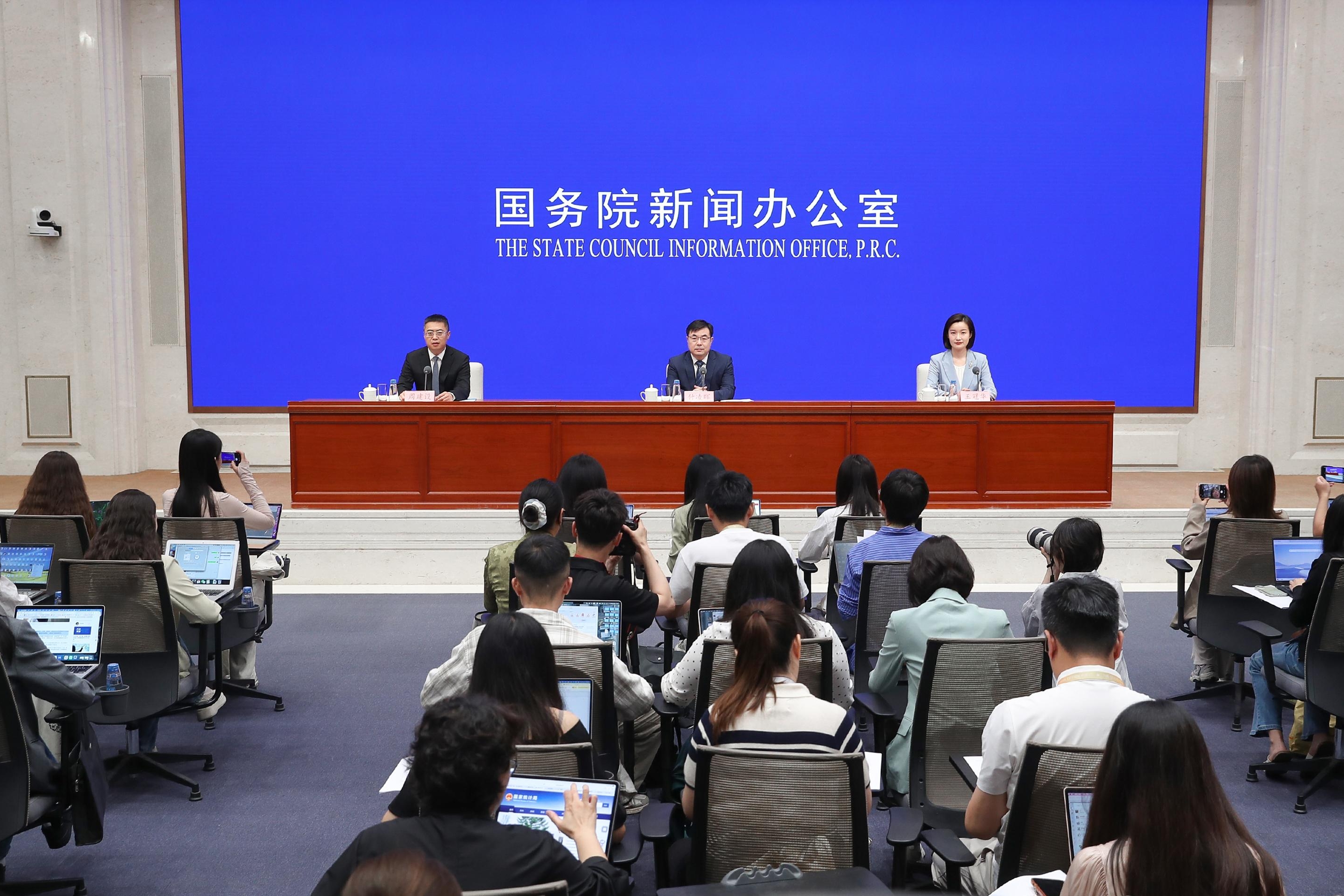
Wang Guanhua:
Thank you for your questions. Against the backdrop of sluggish global economic growth and a complex and volatile geopolitical situation, China's foreign trade has maintained momentum of increase in quantity and improvement in quality. This has provided strong support for economic growth while reflecting the distinct characteristics of diversified foreign trade markets, an optimized structure, new drivers of growth and strong resilience.
First, in terms of scale, both imports and exports achieved rapid growth. According to customs data, the total value of imports and exports of goods in May reached 4.45 trillion yuan, exceeding 4 trillion yuan for the third consecutive month and up 16.9% year on year. Thanks to simultaneous efforts to stabilize exports and expand imports, exports rose 13.8% and imports rose 21.5% in May, with imports growing faster than exports. The growth rate of imports such as integrated circuits, iron ore and concentrates all accelerated. China's large market has provided new development opportunities for countries around the world. Starting May 1, China fully implemented a zero-tariffs policy for all African countries with which it has diplomatic relations, reducing the cost for African products to enter the Chinese market. In May, imports from Africa increased 15% year on year, marking growth for the ninth consecutive month.
Second, in terms of markets, diversification has continued to strengthen and expand. The resilience of foreign trade depends on stable and diversified markets. Guided by the strategy of high-standard opening up, China has actively deepened pragmatic cooperation with its global economic and trade partners. From January to May, China's imports and exports to ASEAN, the EU and Africa all achieved double-digit growth, while imports and exports to Belt and Road partner countries rose 13.6%, accounting for more than half of total imports and exports. In April, China's imports and exports to the United States reversed their year-on-year decline and began growing. The growth momentum continued in May.
Third, in terms of products, high-tech and high value-added products have become the main drivers of export growth. From January to May this year, exports of electromechanical products rose 18.4% year on year, accounting for more than 60% of total exports. Exports of AI-related products such as integrated circuits and computer components performed exceptionally well. Meanwhile, China's export advantages in green and low-carbon products have become more prominent, with exports of lithium batteries and wind turbine generators up about 40%. The optimized export structure is underpinned by strong manufacturing capabilities, reflecting a leap in China's advanced manufacturing level.
Fourth, in terms of enterprises, all types of market entities have achieved growth. Private enterprises benefit from flexible business models, diversified resource allocation on markets and strong innovation capabilities, and have been China's largest foreign trade operators for several consecutive years. From January to May, imports and exports by private enterprises rose 15.5%, accounting for 57.1% of China's total foreign trade over the same period. Imports and exports by foreign-invested enterprises increased 15.7% and those by state-owned enterprises rose 14%, both achieving relatively rapid growth.
China's stable foreign trade growth can be attributed to a number of positive factors. First, China's solid industrial foundation and full-fledged industrial chains have led to a constant increase in the supply of high-quality and innovative products, accurately meeting production and consumption needs across different fields and levels around the world, and aligning with the global trend toward intelligent and green transformation. Second, China's unwavering commitment to expanding high-standard opening up, carrying out economic and trade cooperation with countries around the world on the basis of mutual benefit and win-win results, and advancing high-quality Belt and Road cooperation, has helped expand its "circle of friends" in foreign trade. Third, this also reflects the resilience of foreign trade entities seeking innovation and transformation, as well as the continued effectiveness of a series of policies to stabilize foreign trade.
Looking ahead, many uncertain and unpredictable external factors remain, and stable growth in foreign trade still faces certain pressures. However, the favorable conditions supporting foreign trade development remain unchanged, and the resilience, vitality and competitiveness of foreign trade are still important foundations and advantages for China as it expands international cooperation. In facing a changing international landscape, the key is to firm up confident and meet external uncertainty with the certainty of our own high-quality development. Thank you.