China.org.cn | July 27, 2026


South China Morning Post:
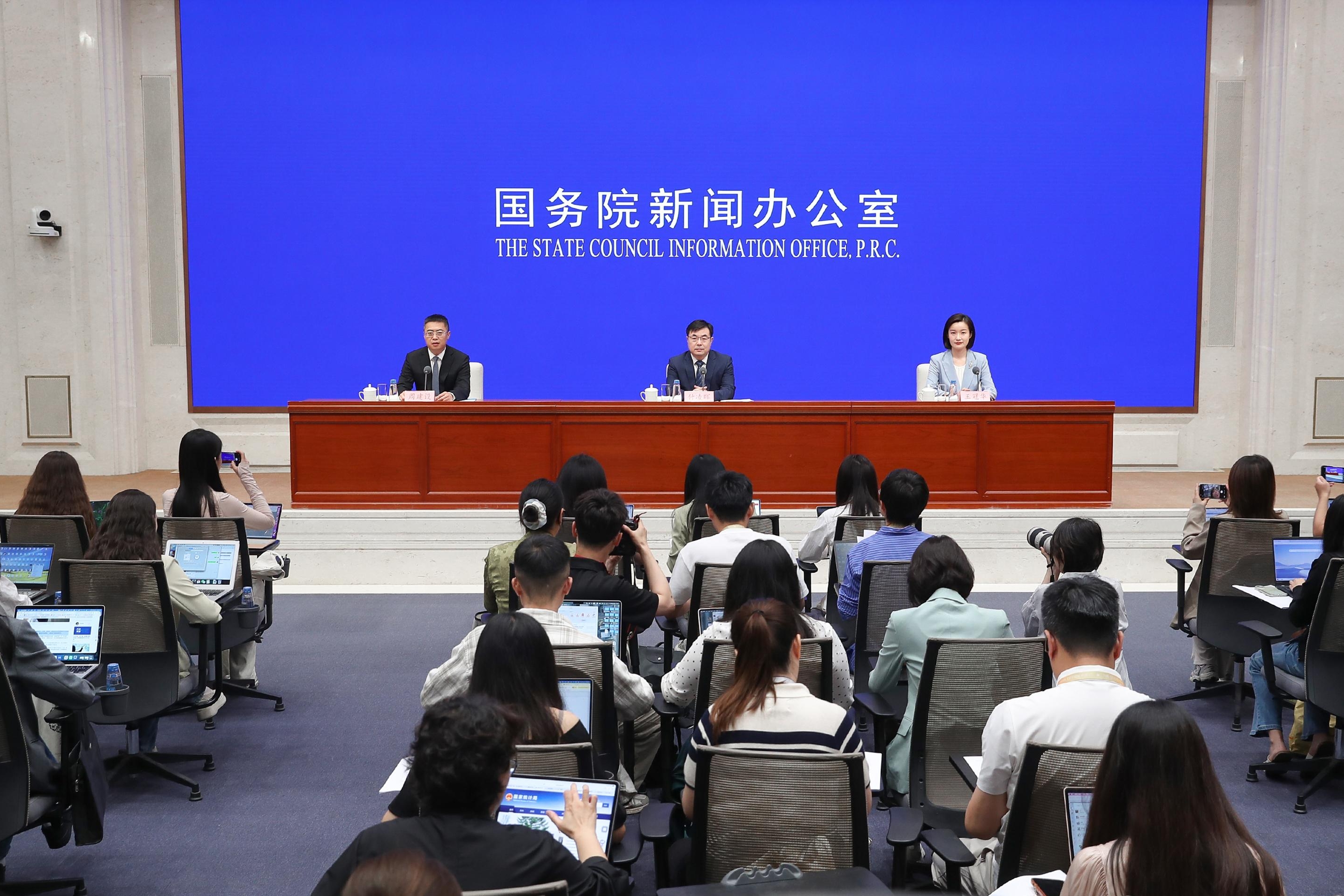
In May, the total retail sales of consumer goods fell 0.6% year on year, marking the first decline since the end of 2022. How does the NBS interpret this? Thank you.
Fu Linghui:
Thank you for your question. I understand that your main concern is regarding consumption. When it comes to consumption, the total retail sales of consumer goods is a very important indicator. However, at this stage, we need to pay attention to both the consumption of goods and consumption of services. Perhaps you have all noticed that this is the first time we have released the indicator of total retail sales of consumer goods and services, which grew 2.8% from January to May. We need to take a comprehensive view of consumption, including not only goods consumption but also services consumption. Since the beginning of this year, various sectors have been implementing special initiatives to boost consumption, innovating consumption scenarios, stimulating consumption potential, and promoting the upgrading of consumption. The overall sales volume of goods and services in China has continued to expand, with many highlights in terms of structure. The total retail sales of consumer goods and services mentioned earlier has maintained steady growth. In May, retail sales of goods did register a certain decline, mainly due to the high base in the same period last year, under the influence of the implementation of the large-scale trade-in policy and the 618 shopping festival. Of course, the decline in retail sales this May was also partly due to the high temperatures and heavy rainfall, which dampened residents' offline consumption in some areas. However, considering the overall situation of goods and services sales, the steady operation of the consumer market and the trend toward quality improvement and upgrading remain unchanged. The main aspects are as follows:
First, service consumption has maintained sound growth momentum. As China enters into a new stage of development, consumption scenarios have been increasingly diversified. Demand for service consumption has been unleashed at an accelerated pace and has become an important driver of consumption growth. Retail sales of services have become an important indicator for tracking consumption development. From January to May, the retail sales of services went up 5.4% year on year, continuing to outpace the growth rate of the retail sales of goods. This change is determined by the laws of economic development and is also an important manifestation of consumption upgrading. It is widely acknowledged that developed countries in the past have followed a trajectory of shifting the focus from consumption of goods to consumption of services. In terms of the characteristics of service consumption, the rapid growth in tourism consumption has driven a corresponding rise in spending on transportation and travel. From January to May, retail sales of tourism consulting and leasing services and transportation services both maintained rapid growth. Meanwhile, spending on cultural and sports events has continued to rise, with many places organizing mass sports events and actively developing the arts and cultural performance market, which have played an increasingly apparent role in driving consumption. From January to May, retail sales of cultural, sports and leisure services increased more than 10% year on year. The driving effect of holiday consumption is quite evident. During this year's May Day holiday, local authorities rolled out a series of measures to benefit the people, and the supply of services that are popular with the public has continued to increase, leading to a surge in consumption. During the May Day holiday, cross-regional passenger trips increased 3.5% nationwide, and the revenue from commercial performances held nationwide increased more than 10%.
Second, the potential of new types of consumption has been unleashed. Targeting new consumption trends and demands, local governments have actively tapped into the potential of new types of consumption, with online consumption, digital consumption and green consumption becoming new drivers of growth in consumption. In terms of consumption channels, online consumption has remained active. From January to May, online retail sales of goods and services increased 5.9% year on year, with online retail sales of goods increasing 5%, continuing to outpace the growth rate of overall retail sales of goods. In terms of consumption content, digital consumption and green consumption have maintained sound growth momentum. Retail sales of digital services and digital products both grew rapidly. In the first five months, retail sales of communication and information services increased more than 10%, while retail sales of wearable smart devices registered significant growth. Sales of green products grew rapidly. From January to May, the retail sales of energy-efficient home appliances by enterprises above designated size increased more than 30%. Meanwhile, we have seen that the retail market penetration rate of the new energy vehicle market has exceeded 60% for two consecutive months. In terms of retail formats, new business forms and models have been constantly expanding. From January to May, the retail sales growth of membership warehouse clubs and unmanned stores of units above designated size both exceeded 20%.
Third, the quality of goods consumption has been improved and upgraded. With changes in the concepts of consumption, residents are paying more attention to the quality of consumer goods than to availability, and the demand for quality consumption has been constantly expanding. From January to May, the retail sales of cosmetics and communication equipment by enterprises above designated size increased 4.9% and 13.8% year on year, respectively, both maintaining relatively rapid growth. The upgrading of goods consumption is also reflected in the fact that residents pay more attention to quality and experience when choosing basic necessities, which has also driven the rapid growth of retail sales of related commodities. From January to May, the retail sales of food, clothing and daily necessities by enterprises above designated size increased 8.4%, 7.2% and 4.6%, respectively, all significantly faster than the growth rate of total retail sales.
Furthermore, with the steady progress of rural revitalization in China, the consumption potential of rural markets has continued to be released. From January to May, the retail sales of consumer goods in rural areas increased 2.6% year on year, 1.4 percentage points higher than that in urban areas. With ongoing improvements in rural internet infrastructure and the express logistics system, the rural consumer market is poised for a bright future.
Overall, the consumer market has maintained steady operation since the beginning of this year, with continuous optimization of its structure and accelerated cultivation of new growth drivers. Of course, we must also recognize that there is still room to further enhance people's ability and willingness to spend, and that market supply in some areas cannot fully meet the needs of consumption upgrading. In response, we should implement special initiatives to boost consumption, take multiple measures to promote residents' employment and income growth, continuously innovate consumption scenarios, and optimize the consumption environment to better unleash consumption potential and improve people's well-being. Thank you.