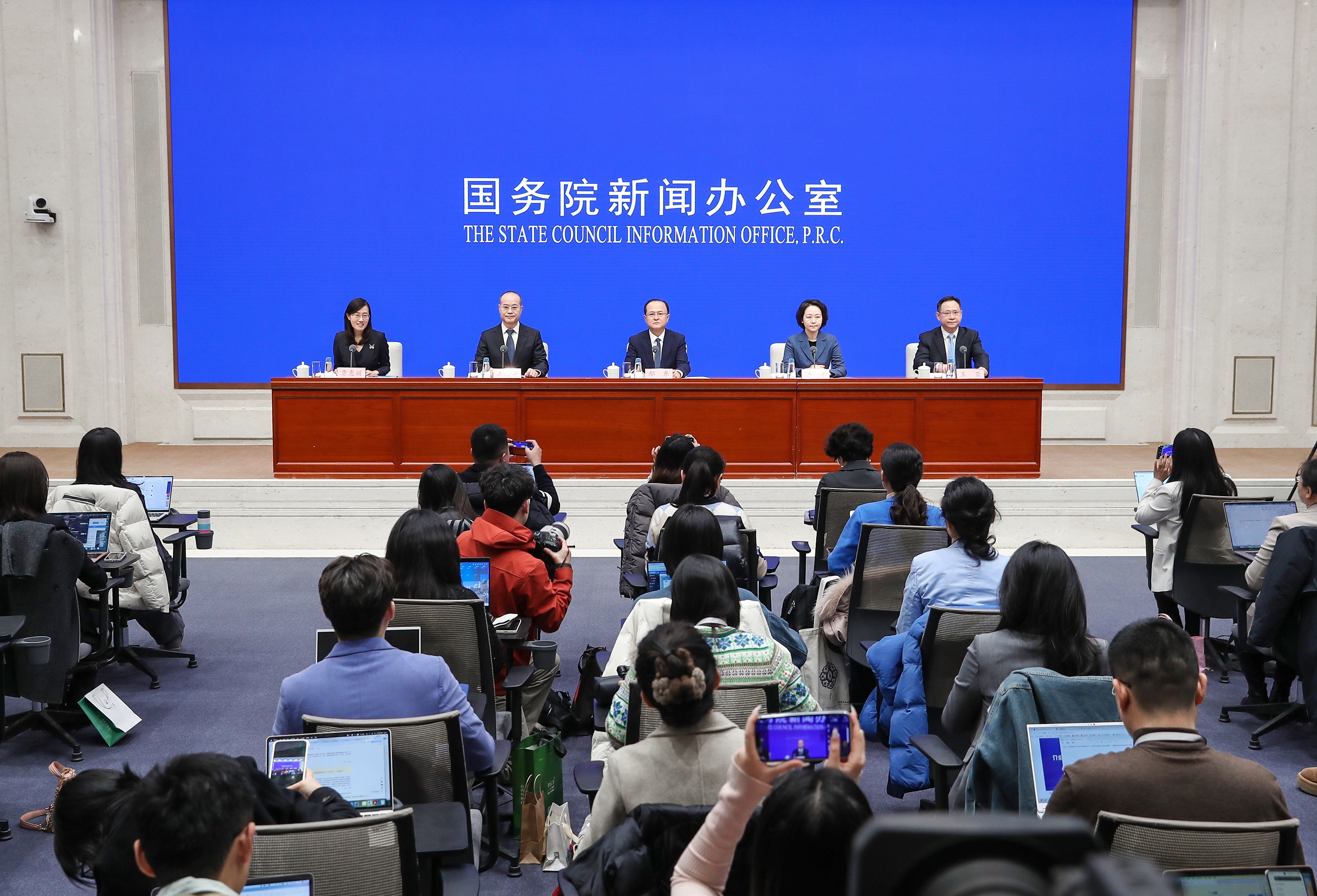
China.org.cn | March 17, 2026


National Business Daily:
Could the Ministry of Commerce provide details on progress made in 2025 in expanding China's globally oriented network of high-standard free trade zones? What efforts will be made to promote the negotiation and signing of more regional and bilateral trade and investment agreements in 2026?
Wang Ya:
I will take your questions. Thank you. In 2025, the Ministry of Commerce actively promoted the development of a globally oriented network of high-standard global free trade zones, achieving substantial results.
First, the level of openness was higher. We signed the China-ASEAN Free Trade Area 3.0 Upgrade Protocol, incorporating emerging rules on the digital economy, the green economy, supply chains and standards cooperation, thereby deepening institutional connectivity in regional cooperation. Second, the scope expanded. We made positive progress in FTA negotiations with six Pacific Island countries and the Republic of the Congo. Third, greater dividends were delivered. We promoted the entry into force of trade and investment agreements with the Maldives and Tajikistan, ensured high-quality implementation of signed agreements, including the Regional Comprehensive Economic Partnership, and helped enterprises truly benefit from preferential policies. We proactively aligned with the standards of the Comprehensive and Progressive Agreement for Trans-Pacific Partnership and the Digital Economy Partnership Agreement, deepened domestic reforms, and delivered the benefits of institutional opening-up. In addition, we upgraded investment agreements with Kazakhstan and Russia.
In 2026, we will emphasize "quantity," "quality" and "effectiveness" in equal measure, accelerate regional and bilateral trade and investment agreements, and transform China's development into new opportunities for the world.
In terms of "quantity," we will continue advancing free trade cooperation with the Gulf Cooperation Council, Switzerland, South Korea, New Zealand, Pacific Island countries, and Central Asian and African countries. Meanwhile, we will continue focusing on Belt and Road partner countries, accelerate investment agreement negotiations, and build high-standard investment agreement corridors. In terms of "quality," we will proactively expand opening-up, with services as a priority for broadening market access and opening more sectors. We will enhance investment liberalization, facilitation and protection, while promoting the incorporation of high-standard rules on the digital economy, green economy and other areas. In terms of "effectiveness," we will continue ensuring proper implementation of agreements. We will continuously leverage international high-standard economic and trade rules to guide deeper domestic reforms in areas such as intellectual property protection, industrial subsidies, environmental standards, labor protection, and government procurement. We aim to achieve alignment and compatibility in rules, regulations, management and standards. Thank you.