China.org.cn | December 22, 2025


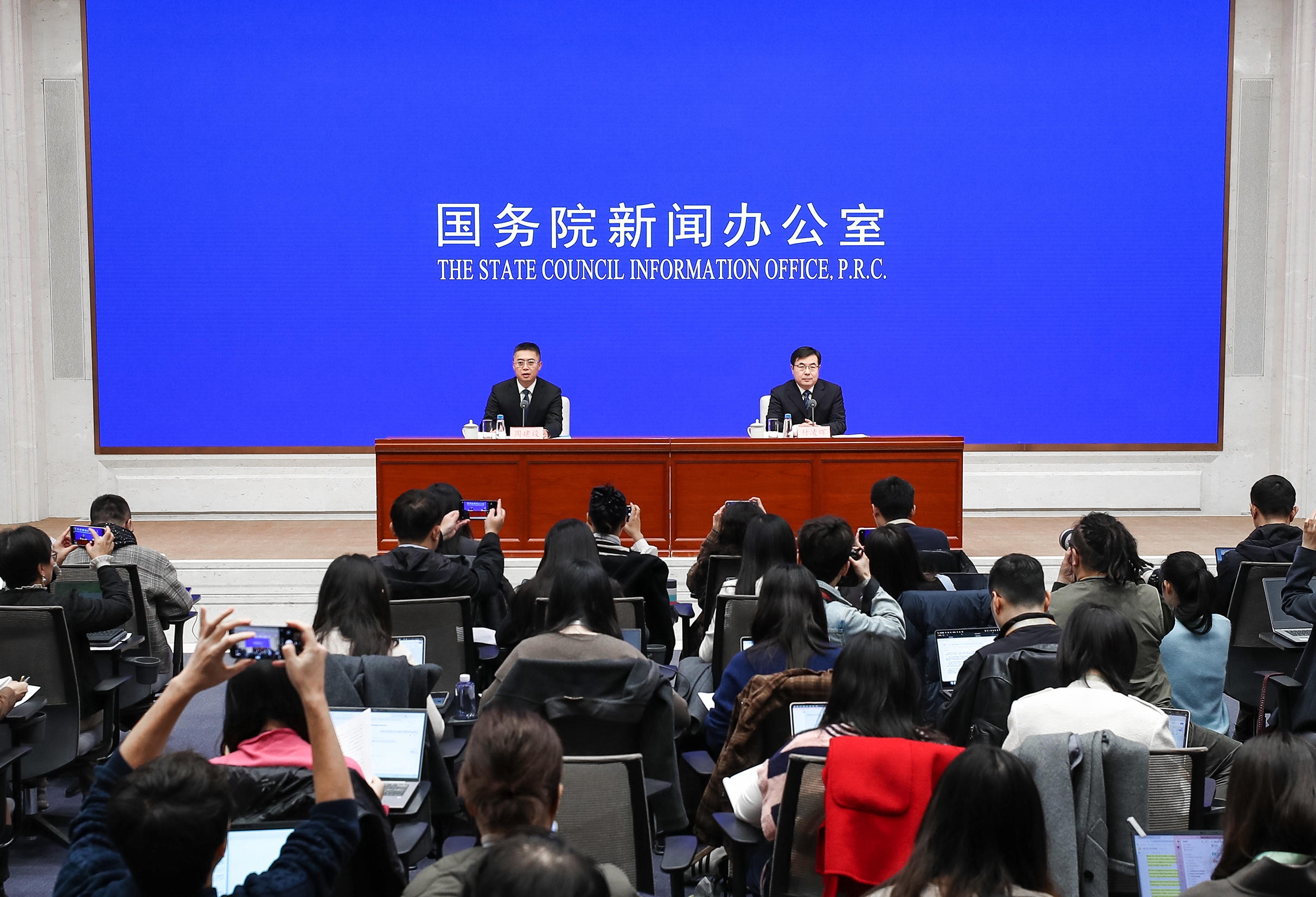

Market News International:
China's consumer price index (CPI) rose 0.2% year on year in October, slightly higher than expectations. How does the NBS interpret the recent trends in CPI data? And does this suggest that deflationary pressure on the economy is beginning to ease going forward? Thank you.
Fu Linghui:
Thank you for your questions. Price is an issue of wide concern. There were positive signs in consumer prices in October, mainly reflected in both month-on-month and year-on-year growth.
The CPI rose 0.2% in October from a year earlier, which was 0.1 percentage point higher than the previous month. This CPI increase was mainly driven by strong consumer demand and the increase of industrial consumer goods prices during the National Day and Mid-Autumn Festival holidays. First, strong holiday travel demand pushed up transportation and accommodation prices In October, service prices rose by 0.2% month on month, contributing 0.07 percentage point to the month-on-month increase in CPI. Among them, hotel accommodation, air tickets and tourism prices rose by 8.6%, 4.5% and 2.5% month on month, respectively. Second, growing demand for holiday dining led to a rise in food prices. In October, food prices rose by 0.3% month on month. Among them, prices of fresh vegetables, mutton, fresh fruit, shrimp and crabs, and beef increased between 0.5% and 4.3% month on month. Third, the prices of industrial consumer goods rose month on month. In October, the prices of industrial consumer goods excluding energy rose by 0.3% month on month, contributing 0.07 percentage point to the month-on-month CPI increase.
From a year-on-year perspective, the CPI in October went up by 0.2% year on year, while in the previous month it was down by 0.3%. The core CPI, excluding food and energy, rose by 1.2% year on year, 0.2 percentage point higher than the previous month, marking the sixth consecutive month of acceleration in the pace of growth. The year-on-year change in CPI shifted from a decline to an increase, primarily driven by improvements in the domestic market supply and demand relationship, as well as the recovery in service prices and industrial consumer goods prices. First, the rise in service prices has widened. The combined National Day and Mid-Autumn Festival holidays, along with increased spending on tourism, culture and sports, have driven up service prices. In October, service prices went up by 0.8% year on year, which was 0.2 percentage point higher than the previous month. Among these, the prices of air tickets and hotels rose significantly. Due to the upgrading trends of household consumption, and rising demand for high-quality social services, service prices have also climbed. In October, the prices of medical services and domestic services both maintained a slight upward trend. Second, the prices of industrial consumer goods increased steadily. China has effectively implemented special measures to boost consumption, and has regulated disorderly competition among enterprises in accordance with laws and regulations, which have driven up the prices of industrial consumer goods. In October, the prices of industrial consumer goods excluding energy rose by 2% year on year, marking six consecutive months of increases. Among them, the prices of household appliances, durable entertainment consumer goods and daily household sundries increased by between 2.4% and 5%, and the decline in the prices of fuel-powered cars narrowed to 2.3%. Third, the downward pressure on food and energy prices has decreased. China's sufficient grain supply and declining international energy prices have led to lower domestic food and energy prices this year, which has had a significant impact on the CPI. In October, the decline in food and energy prices both narrowed, reducing the downward pressure on the CPI. In October, food and energy prices fell by 2.9% and 2.4% year on year, respectively. These declines were 1.5 percentage points and 0.3 percentage point narrower than in the previous month, respectively. In addition, the rise in international gold prices was transmitted domestically, also contributing to the CPI rebound.
Overall, supported by measures to promote a reasonable price rebound, the CPI showed positive changes in October. However, market demand remains insufficient, keeping overall prices low. In the next stage, we will continue expanding domestic demand, further the construction of a unified national market, optimize the market competition environment, advance capacity management in key industries, improve supply-demand relations and promote a reasonable price recovery. Thank you.

