China.org.cn | December 22, 2025


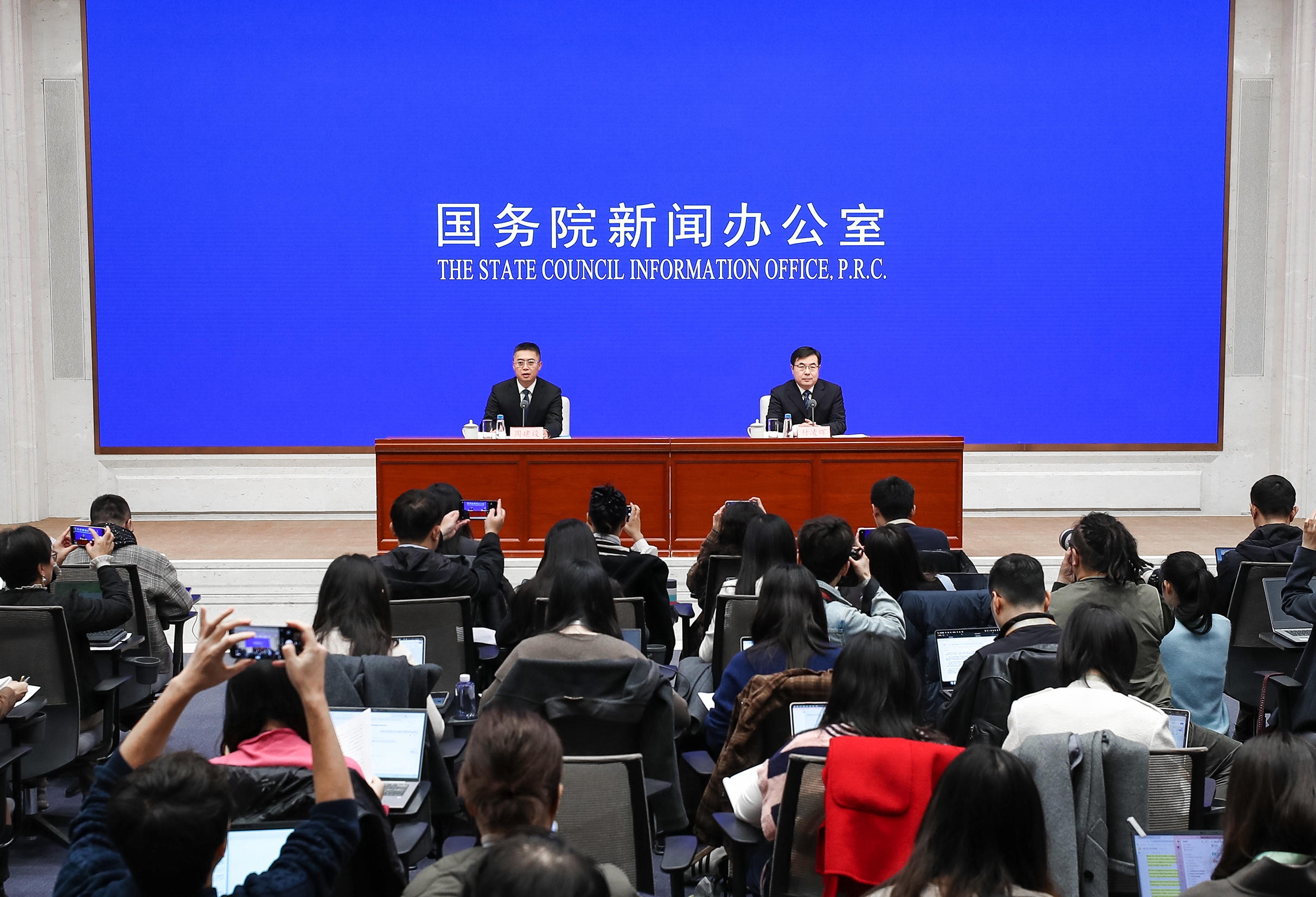

South China Morning Post:
I have two questions. In the first three quarters, fixed asset investment fell 0.5% year on year, and from January to October, it fell 1.7%. How does the NBS interpret and assess the future trend of investment looking ahead? Second, in October, China's exports fell 1.1% year on year while imports increased 1%, falling short of market expectations. What, according to your analysis, were the main reasons behind this? Additionally, what are your observations and assessments regarding China's import and export trends over the coming months? Thank you.
Fu Linghui:
Thank you for your questions. You've asked about two key issues: investment and the state of imports, exports, and foreign trade. Looking at the first 10 months, fixed-asset investment fell 1.7% year on year. However, when we exclude price factors, we see that fixed-asset investment maintained modest growth, and the physical volume of investment work continued to increase. I would also like to share a few views on the current changes in investment.
First, the slowdown in investment growth reflects the combined effect of multiple factors. From the perspective of investment entities, the external environment is complex and severe, domestic market competition is intense, and investment returns have declined. As a result, market operators have become increasingly cautious in their investment decisions. This is reflected in the weak enterprise profitability and a slowdown in private investment, both of which affect investment growth. From a structural perspective, real estate investment accounts for a relatively high proportion of total investment, and the adjustment in the real estate industry has significantly dampened investment growth. From January to October, real estate development investment fell 14.7% year on year. Excluding real estate development investment, project investment grew 1.7%, and the decline in real estate development investment dragged down total investment by 3 percentage points. In addition, insufficient investment growth momentum in some industries has also objectively impeded overall investment growth.
Second, although investment growth is slowing, the investment structure is being optimized. This is reflected in sustained growth in manufacturing investment. The transformation and upgrading of traditional manufacturing industries are advancing steadily, and emerging manufacturing industries are growing, supporting growth in manufacturing investment. From January to October, manufacturing investment grew 2.7% year on year, outpacing total investment and accounting for 25.6% of the total, up 1.1 percentage points from the same period last year. Investment in some high-end industries has increased, and the integrated development of technological and industrial innovation has driven rapid growth in high-tech industry investment. From January to October, investment in aerospace vehicle and equipment manufacturing increased 19.7% year on year, and investment in information services increased 32.7%. Investment in the green transformation has shown strong growth momentum. The green transformation of the energy sector has continued to advance, with clean energy investment maintaining rapid growth. From January to October, combined investment in solar, wind, nuclear and hydropower generation increased 10.4% year on year, maintaining strong growth momentum.
Third, China still possesses enormous potential and scope for investment. It is essential to take an objective and comprehensive view of changes in investment growth rates, rather than focusing solely on the present. A longer-term development outlook is necessary. As the world's largest developing country, China still has substantial room for investment expansion to reach the level of moderately developed countries in the future. From the perspective of industrial development, strengthening the foundation of the real economy, promoting the integrated development of technological and industrial innovation, accelerating the cultivation and growth of new quality productive forces, and promoting the transformation and upgrading of traditional industries all require continuous increases in investment. From the perspective of regional development, addressing the problems of unbalanced and inadequate development, promoting coordinated urban and rural development, advancing urban renewal and all-around rural revitalization also all require continuous increases in investment. From the perspective of ensuring people's well-being, investment in education, health care, housing and basic public services needs to be strengthened to address gaps and improve people's livelihoods.
Moving forward, we will remain focused on high-quality development, continue to optimize the investment structure and environment, and further stimulate the vitality of private investment. We will promote healthy investment development and better leverage the key role of investment in expanding domestic demand, optimizing supply and improving people's well-being.
Regarding the foreign trade situation you mentioned, I will elaborate on a few key points.
Overall, despite rising global trade protectionism and significant uncertainty in the trade environment, China's trade in goods has continued to expand, demonstrating strong resilience and vitality. In the first 10 months of this year, China's total imports and exports of goods increased 3.6% year on year, with goods exports growing 6.2%. This growth stems from China's unwavering commitment to expanding openness, actively promoting diversified foreign trade development, optimizing and upgrading industries, and enhancing market competitiveness. It is also the result of efforts to promote the integration of domestic and foreign trade and create a favorable environment for foreign trade enterprises. Looking at the situation in October, goods imports and exports showed the following characteristics:
First, overall goods imports and exports remained stable. In October, China's total imports and exports of goods increased 0.1% year on year. The growth rate slowed compared to the previous month, mainly due to the high base from the same period last year. In September last year, typhoon-related disruptions delayed some trade shipments until October, creating a relatively high base for that month. Looking at the combined data for September and October, imports and exports remained generally stable. In October specifically, despite a high comparison base from last year, goods imports still increased 1.4%, maintaining a growth trend for five consecutive months. This continued growth has helped boost global trade demand.
Second, foreign trade diversification has made steady progress. Despite the impact of high tariffs leading to a decline in trade with the United States, China has remained committed to expanding high-level openness. We have taken the initiative to open wider and advance unilateral opening-up in a well-ordered manner, promoting economic and trade exchanges with countries globally on the basis of mutual benefit and win-win cooperation. The accelerated growth of imports and exports with partners such as ASEAN and the EU has provided strong support for the continuous expansion of foreign trade. From January to October, China's total import and export volume with ASEAN and the EU increased 9.1% and 4.9%, respectively, outpacing the overall growth rate. Meanwhile, total goods trade with Belt and Road partner countries grew 5.9%, maintaining rapid growth.
Third, the vitality of foreign trade enterprises has continued to be unleashed. Since the beginning of this year, despite increasing external instability and uncertainty, all parties have actively supported the development of foreign trade enterprises. These enterprises have taken the initiative to consolidate and explore markets, providing strong support for foreign trade growth. In the first 10 months, imports and exports by private enterprises in China increased 7.2% year on year, well above the overall average. Imports and exports by foreign-invested enterprises grew 2.9%, sustaining their growth momentum.
Fourth, export momentum has shifted toward higher quality and greater innovation. As China's industries upgrade and develop, the technological content of products has improved. This has continuously strengthened the competitiveness of exports and optimized the export structure. Electromechanical products and high-tech products have increasingly become important growth drivers for exports. In the first 10 months, exports of electromechanical products increased 8.7% year on year, accounting for 60.7% of China's total export value. Among them, export values for integrated circuits and automobiles climbed 24.7% and 14.3%, respectively. High-tech product exports trended upward, rising 7.3% in the first 10 months and outpacing the overall export growth rate.
Overall, despite sluggish global economic growth, rising external challenges and risks, and difficulties faced by some foreign trade enterprises, China's commitment to high-level opening-up remains unchanged. Favorable conditions supporting foreign trade growth remain substantial, and the resilience of China's foreign trade will continue to be evident. Looking ahead, China will remain committed to expanding high-level opening-up and promoting trade with countries around the world on the basis of mutual benefit and win-win cooperation. We will stabilize the fundamentals of foreign trade, assist enterprises facing significant challenges, advance the integrated development of domestic and foreign trade, and ensure the sector's steady development. Thank you.

