China.org.cn | October 22, 2025


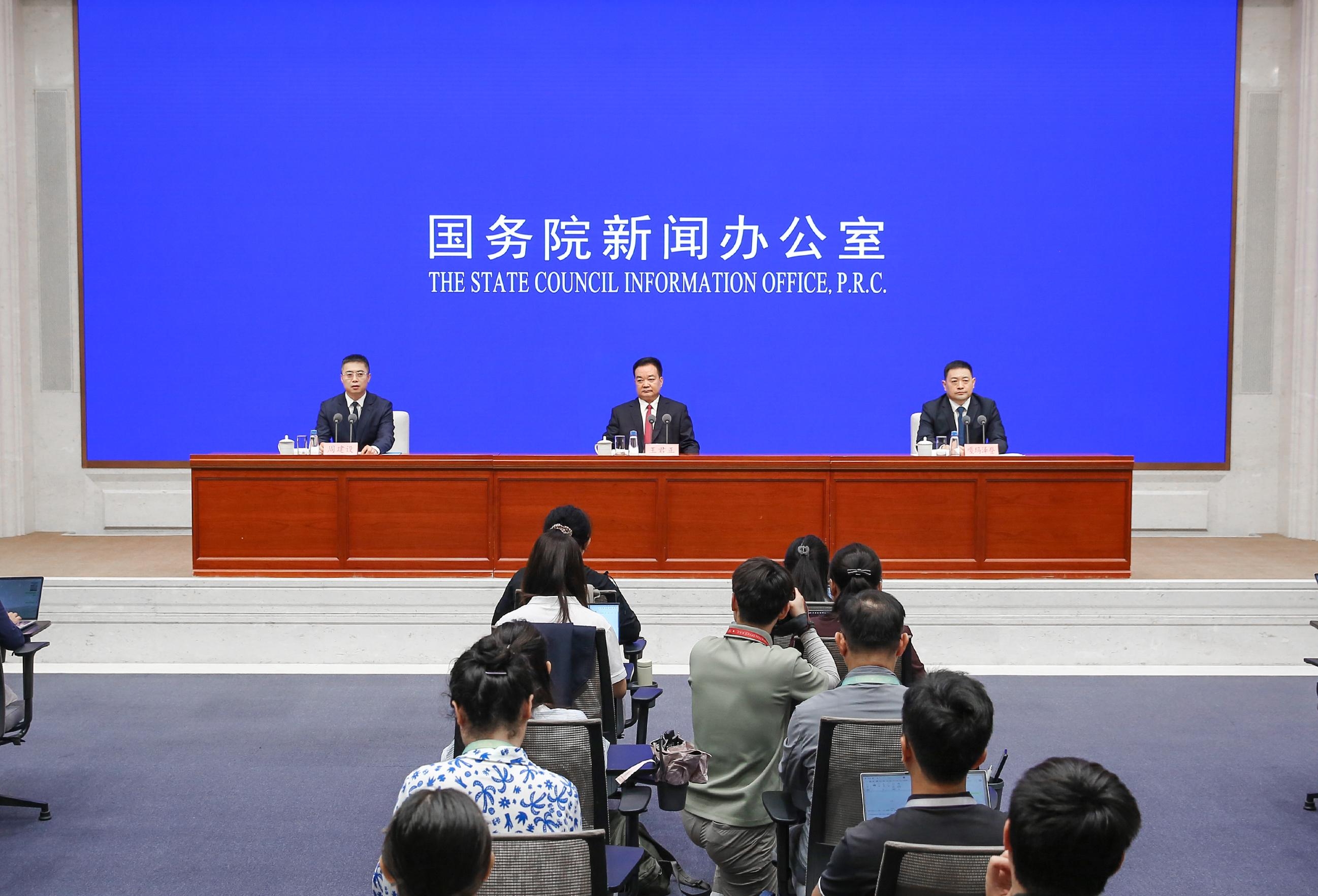

Legal Daily:
The system of regional ethnic autonomy has been established as a fundamental policy for addressing ethnic issues in China. Over the 60 years since the founding of Xizang Autonomous Region, what specific practices of the regional ethnic autonomy system have been implemented in Xizang? And could you illustrate how with a few examples? Thank you.
Wang Junzheng:
Thank you for your questions. I would like to invite Mr. Gama Cedain to answer these questions.
Gama Cedain:
Thank you for your questions. In September 1965, Xizang Autonomous Region was established, and the system of regional ethnic autonomy was implemented, granting all ethnic groups equal rights to participate in the management of state affairs and to govern their own regional and ethnic matters autonomously, achieving a profound transformation from "casting off oppression" to "being masters of their own affairs." Over the past 60 years, the system of regional ethnic autonomy has led to significant development in Xizang's political, economic and cultural sectors, establishing the region as an exemplary case of successful governance in China's ethnic border areas. Let me provide an overview from several perspectives.
First, ethnic minorities' right to participate in governance are guaranteed by law. According to the Law of the People's Republic of China on Regional Ethnic Autonomy, the offices of chairperson or vice chairpersons of the Standing Committee of the People's Congress of Xizang Autonomous Region are occupied by Tibetans, as is the office of the governor of Xizang Autonomous Region. Since the founding of Xizang Autonomous Region, all the chairpersons of the standing committee of the regional people's congress and all the chairpersons of the regional people's government have been ethnic Tibetans. At present, the 12th People's Congress of Xizang Autonomous Region has a total of 428 deputies, with 280 deputies from Tibetan and other ethnic minorities, accounting for 65.42%.
Second, the power of flexible implementation is exercised in accordance with the law. According to the Law of the People's Republic of China on Regional Ethnic Autonomy, if resolutions, decisions, orders or instructions from higher-level state organ are incompatible with the actual conditions of an ethnic autonomous area, the autonomous organ may seek approval from the said higher-level state organ to exercise flexible implementation or suspend implementation. By the end of 2024, the People's Congress of Xizang Autonomous Region and its standing committee had formulated and implemented 171 local regulations and regulatory resolutions and decisions, of which 136 remain in effect and 35 have been repealed.
Third, the equal use of spoken and written languages is guaranteed by law. Both the Constitution of the People's Republic of China and the Law on Regional Ethnic Autonomy explicitly stipulate that all ethnic groups have the freedom to use and develop their own spoken and written languages. Resolutions and regulations adopted by the People's Congress of Xizang Autonomous Region, along with circulated documents and public notices issued by governments and departments at all levels in Xizang, are published in both the national common language and the Tibetan language.
Fourth, the equal rights of all ethnic groups are safeguarded by law. The Law of the People's Republic of China on Regional Ethnic Autonomy stipulates that the autonomous organs of an ethnic autonomous area shall guarantee equal rights for various ethnic groups in the area and help other ethnic minorities living in compact communities in the area establish appropriate autonomous areas or ethnic townships. Xizang Autonomous Region has established nine ethnic townships across the cities of Shannan, Nyingchi and Chamdo, including five for the Monba ethnic group, three for the Lhoba ethnic group, and one for the Naxi ethnic group. These efforts effectively safeguard the political rights of people of all ethnic groups in Xizang to equally participate in the management of local affairs. Thank you.
Zhou Jianshe:
Today's press conference is hereby concluded. Thank you to our two speakers and friends from the media. Goodbye.
Translated and edited by Cui Can, Zhu Bochen, Liu Jianing, Zhang Tingting, Yang Xi, You Jiaxin, Wang Qian, Yuan Fang, Zhang Junmian, Gong Yingchun, Wang Wei, Huang Shan, Li Huiru, David Ball and Jay Birbeck. In case of any discrepancy between the English and Chinese texts, the Chinese version is deemed to prevail.

