China.org.cn | October 22, 2025


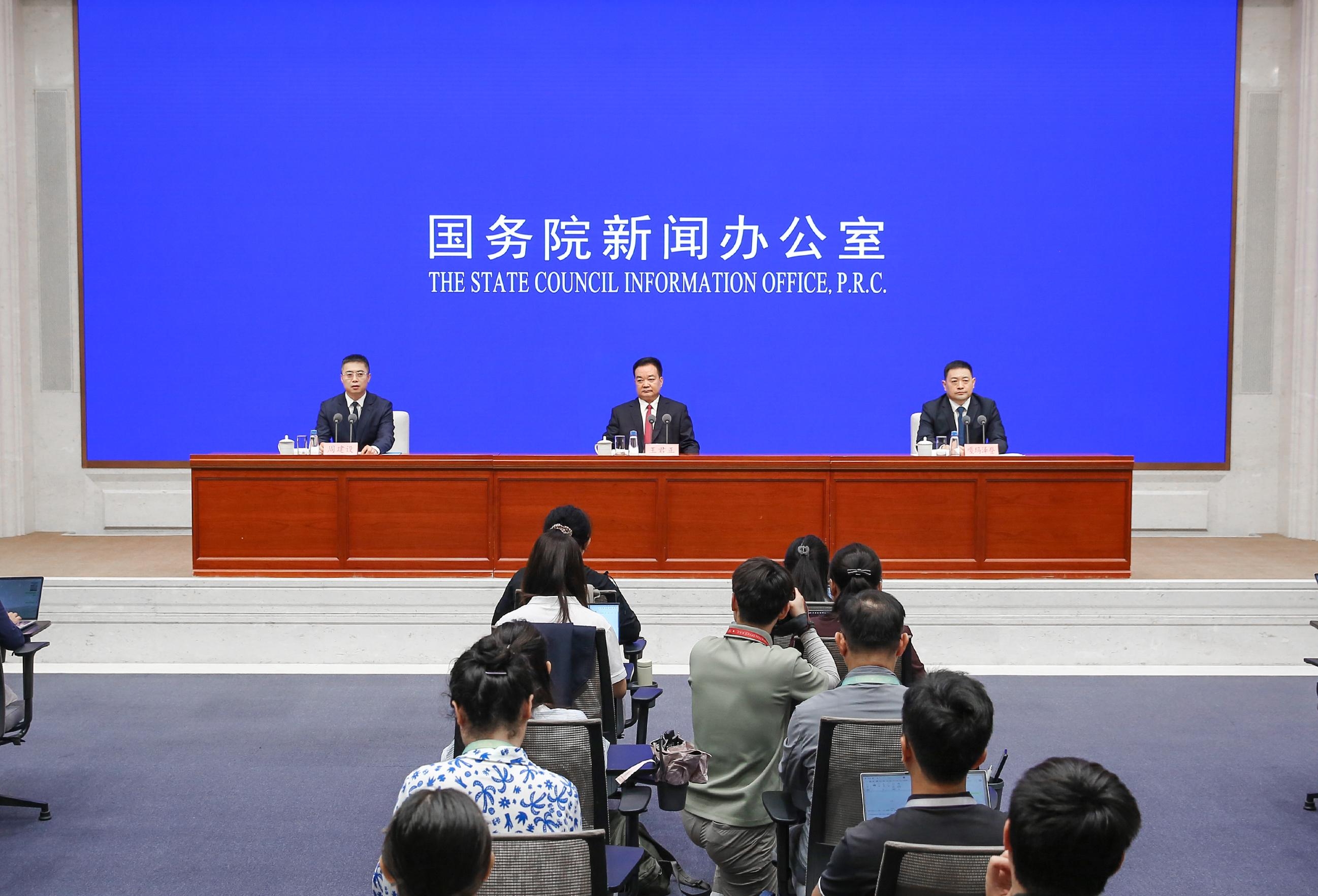

Speakers:
Mr. Wang Junzheng, secretary of the Communist Party of China (CPC) Xizang Autonomous Regional Committee
Mr. Gama Cedain, deputy secretary of the CPC Xizang Autonomous Regional Committee and chairman of the People's Government of Xizang Autonomous Region
Chairperson:
Mr. Zhou Jianshe, deputy director general of the Press Bureau of the State Council Information Office (SCIO) and spokesperson of the SCIO
Date:
Aug. 5, 2025
Zhou Jianshe:
Ladies and gentlemen, good morning. Welcome to this press conference held by the State Council Information Office (SCIO). This year marks the 60th anniversary of the founding of Xizang Autonomous Region. Today we have invited Mr. Wang Junzheng, secretary of the Communist Party of China (CPC) Xizang Autonomous Regional Committee, and Mr. Gama Cedain, deputy secretary of the CPC Xizang Autonomous Regional Committee and chairman of the People's Government of Xizang Autonomous Region, to brief you on the achievements in economic and social development on the 60th anniversary of the founding of Xizang Autonomous Region and take your questions.
Now, I'll give the floor to Mr. Wang.
Wang Junzheng:
Ladies and gentlemen, good morning. The year 2025 marks the 60th anniversary of the founding of Xizang Autonomous Region. Today, we are holding this press conference on the 60th anniversary of the founding of Xizang Autonomous Region. First, on behalf of the CPC Xizang Autonomous Regional Committee and the regional government of Xizang, I would like to extend a warm welcome to the media and express my heartfelt thanks to people from all walks of life for their long-standing care and support for Xizang.
In 1951, Xizang was peacefully liberated. The official establishment of Xizang Autonomous Region in 1965 opened a new chapter in its history. The six decades since have been extraordinary. Under the leadership of the CPC, Xizang has established a socialist system and people's democratic governance, implemented the policy of reform and opening up, and built a moderately prosperous society in all respects. Along with the rest of the country, Xizang has embarked on a new journey to build a modern socialist nation. The region has undergone a historic transformation — from darkness to light, backwardness to progress, poverty to prosperity, autocracy to democracy, and isolation to openness. Its social productive forces have been unleashed and significantly developed, creating a miracle of progress that has spanned a thousand years in just a few decades. In particular, since the 18th CPC National Congress, the CPC Central Committee with Comrade Xi Jinping at its core has placed great importance on Xizang's development. General Secretary Xi Jinping has visited Xizang for inspection and guidance, and presided over the sixth and seventh national meetings on Xizang. CPC Policies on the Governance of Xizang in the New Era were formulated, outlining four key priorities: ensuring stability, promoting development, protecting the ecological environment, and strengthening border areas. A series of preferential policies and major projects have been launched, helping Xizang to address long-standing challenges and accomplish goals that had remained out of reach for years. These efforts have led to comprehensive progress and historic achievements in the region's economic and social development.
Today, Xizang enjoys sustained social stability and continuous improvement. We have always placed the highest priority on maintaining social stability. Through constant vigilance, sound mechanisms and a law-based, regular approach, this work has been integrated into everyday governance and extended down to the grassroots. As a result, the sense of security and public satisfaction among all ethnic groups has remained above 99%. Efforts to promote ethnic unity and progress have been tangible, visible and effective. Exchanges and integration among ethnic groups have grown deeper and broader. All seven prefecture-level regions in Xizang have been recognized as national demonstration areas for ethnic unity and progress, further reinforcing the sense of Chinese identity. In line with the direction of adapting religion to China's realities, freedom of religious belief is fully guaranteed. Public education in national identity, civic awareness, and the rule of law has been expanded significantly, contributing to religious harmony and stable, harmonious monasteries. Programs aimed at strengthening and enriching border areas have been steadily advanced. Infrastructure in border villages and local living conditions have markedly improved. Various industries have flourished, ensuring strong border defense, regional security and improved well-being for border residents.
Xizang's economy continues to grow rapidly. In 2024, the region's GDP reached 276.5 billion yuan, 155 times that of 1965 at constant prices, with an average annual growth rate of 8.9%. Local government revenue rose to 27.7 billion yuan, 1,258 times that of 1965, with an average annual growth rate of 12.9%. In its 60-year history, it took 50 years for Xizang's GDP to reach its first 100 billion yuan, but only six years to reach the second. Since 2021, continuous efforts have expanded the scale of the economy, improved the quality and efficiency of development, and supported the rapid rise of modern industries such as clean energy, cultural tourism and highland light manufacturing. A modern industrial system has begun to take shape, and the region's capacity for self-driven and self-sustaining development has steadily grown. Key economic indicators have ranked among the highest nationwide for several consecutive years. Xizang's economic and social progress has been significant both in absolute terms and in comparison with other regions. This year, regional GDP is expected to exceed 300 billion yuan, reaching a new milestone.
Infrastructure development has advanced significantly. A multidimensional transport network now spans the snowy plateau. Once isolated, the Roof of the World is now open and connected. From the opening of the Qinghai-Xizang and Sichuan-Xizang highways to the completion of the Qinghai-Xizang Railway and the operation of the Fuxing high-speed trains, Xizang has moved beyond its former reliance on manual and animal transport. A comprehensive network of highways, railways and air routes is now in place. By the end of 2024, the total length of highways reached 124,900 kilometers and railway operations extended 1,359 kilometers. The region operated 183 domestic and international air routes. The Qinghai-Xizang, Sichuan-Xizang, central Xizang, and Ngari electric transmission lines have been built and put into operation, bringing grid access to all counties, districts and cities. Safe drinking water is now accessible in rural areas, and all administrative villages have achieved full fiber-optic and 4G network coverage. These advances have helped overcome long-standing bottlenecks in development and injected strong momentum into Xizang's high-quality growth.
People's living standards have improved significantly. Under the firm leadership of the CPC Central Committee with Comrade Xi Jinping at its core, Xizang has secured a sweeping victory in the battle against poverty, eradicating absolute poverty that had persisted for centuries. Education has been given top priority. Xizang was the first region in China to implement 15 years of free education from kindergarten through high school. Traditional culture has been effectively preserved, passed down and revitalized, and public cultural services have steadily improved. Urban and rural public health care systems have continued to improve. Free health checkups now cover all farmers and herders, and the average life expectancy has risen to 72.5 years. Urbanization is accelerating. Distinctive modern towns are springing up across the plateau. The social security system is steadily improving, strengthening basic support for public welfare. In 2024, per capita disposable income of urban residents reached 55,444 yuan, 121 times that of 1965, with an average annual increase of 8.5%. Rural residents, including farmers and herders, saw their per capita disposable income reach 21,578 yuan, 199 times that of 1965, growing at an average annual rate of 9.4%. People of all ethnic groups have access to housing, employment, education, medical care and old-age support. They share in the fruits of reform and development, and their sense of fulfillment is stronger, their happiness more sustainable, and their sense of security more firmly guaranteed.
The ecological security barrier has become increasingly robust. Prioritizing ecological conservation, Xizang has strictly enforced the Law on Ecological Protection of the Qinghai-Xizang Plateau and earnestly implemented the national plan for ecological barrier protection and development. Over half of the region's territory has been incorporated into the ecological conservation redlines (ECRs). Xizang has also adopted a holistic and systematic approach to conserving and improving its mountain, water, forest, farmland, grassland and desert ecosystems, and further advanced large-scale greening programs. Notably, in recent years, Xizang has implemented afforestation projects around Lhasa, resulting in over 66,667 hectares of newly planted forests. As a result, the region's forest coverage rate has increased to 12.31%. More than 440,000 jobs related to ecological protection have been established, with over 1.5 billion yuan in subsidies issued annually. These efforts have enabled local residents to earn a living and increase their incomes from ecological conservation. In addition, air quality in Xizang reached "good" or "excellent" on over 99.7% of days, and the water quality of all its major rivers and lakes meets or exceeds Grade III in the country's five-tier water quality system. Xizang has one of the best ecological environments in the world.
Whole-process people's democracy has been comprehensively developed. The system of regional ethnic autonomy has been continuously improved and democratic institutions have been further strengthened. The lawful rights of people from all ethnic groups to participate in the administration and deliberation of state affairs are fully guaranteed. There are a total of 42,153 deputies to the people's congresses at the township, county, prefecture and regional levels, with 89.2% from Tibetan and other ethnic minority groups. Among the 24 deputies from Xizang who attended the 14th National People's Congress (NPC), 16 are from Tibetan and other ethnic minority groups, accounting for 66.7%. Ethnic minorities with small populations, such as the Monpa and Lhoba, also have their own deputies. Of the 29 members of the Chinese People's Political Consultative Conference (CPPCC) National Committee residing in Xizang, 86.2% are from ethnic minority groups. Moreover, the system of primary-level self-governance also keeps improving. Village affairs public bulletin boards have been installed in administrative villages in Xizang, in a bid to proactively ensure people's rights to be informed, to participate in the deliberation of village affairs and in the decision-making process, and to scrutinize the exercise of power.
Party building has been fully strengthened. Over the past six decades, Party organizations at all levels in Xizang have grown both in size and strength. The scientific and institutional standards of Party building have continuously improved, along with the Party's governance capacity. By 2024, the number of CPC members in Xizang has surged from 14,800 at the time of the autonomous region's establishment to 470,400. Upholding the strategy of focusing on primary-level Party development, Xizang has dispatched more than 297,000 cadres in 14 groups to serve in villages since 2011. These officials have consistently addressed people's concerns, solved their difficulties and built a bridge between the Party and the public. We have resolutely implemented the Party's organizational line for the new era, firmly upholding the principle of appointing and evaluating officials through their abilities and practical performance. Efforts have been continuously made to strengthen Party discipline and highlight policy implementation. Cadres are identified, trained and appointed from the primary level, with the goal of building a team of loyal, upright and responsible cadres. As a result, a positive work environment marked by unity and drive has taken shape across Xizang, further consolidating the CPC's governing foundation in the region.
Six decades have passed in the blink of an eye, yet they have brought about tremendous transformation. Xizang today enjoys a stable society, economic growth, ethnic unity, religious amity, sound ecological environment, strengthened border defense, and a population living and working in peace and contentment. The region is thriving with vitality and promise. Practice has fully proved that only by resolutely following the path of socialism with Chinese characteristics, adhering to and improving the system of regional ethnic autonomy, and implementing the Party's policies on governing Xizang in the new era, under the leadership of the CPC, can Xizang enjoy the prosperity it has today, and embrace an even more promising future.
Standing at a new historical starting point, the CPC Xizang Autonomous Regional Committee, the regional government and people of all ethnic groups in the region will rally more closely around the CPC Central Committee with Comrade Xi Jinping at its core, comprehensively implementing General Secretary Xi Jinping's important instructions on the work related to Xizang and the Party's policies on the governance of Xizang in the new era. We will forge ahead in full confidence and resolutely implement all tasks, in a bid to make new strides in promoting long-term stability and security and high-quality development in Xizang in the new era, and strive to build a new modern socialist Xizang that is united, prosperous, culturally advanced, harmonious and beautiful.
Last but not least, my colleagues and I sincerely invite you all, and especially friends from the media, to visit Xizang, see it with your own eyes, tell Xizang's stories and share its voices. We hope you can present the happy lives of people of all ethnic groups and the tremendous transformation of the region under the leadership of the CPC in an objective, accurate and comprehensive manner. Through your efforts, we hope the world will learn more about Xizang, and that Xizang will connect with the world more swiftly. Thank you.
Zhou Jianshe:
Thank you, Mr. Wang, for your introduction. The floor is now open for questions. Please identify the media outlet you represent before asking questions.

