China.org.cn | October 22, 2025



The Poster News APP:
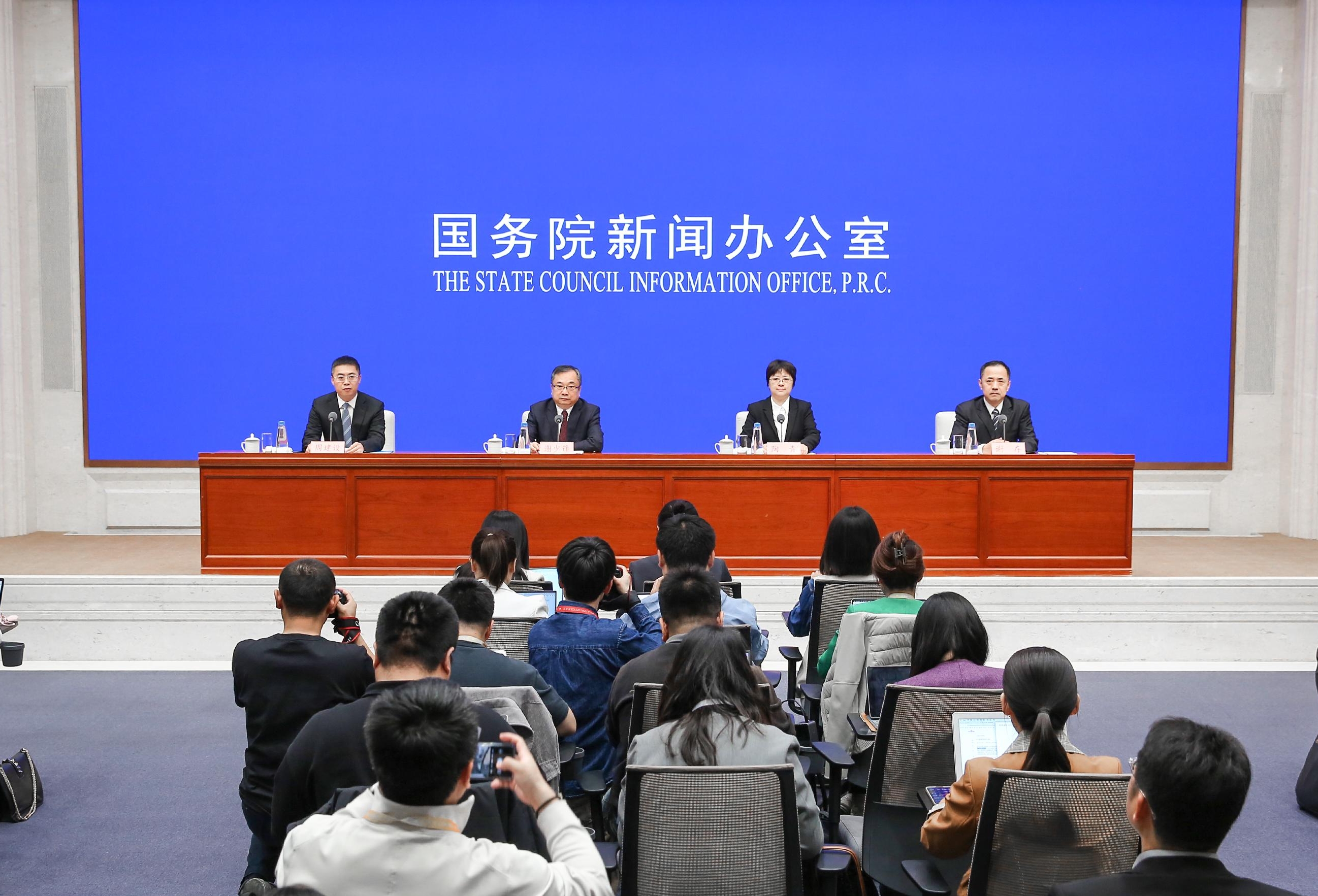
The industrial internet has been included in the government work report for eight consecutive years. What is the current state of development of the industrial internet in China? What measures involving the industrial internet will be taken this year to empower the digital transformation of industries? Thank you.
Xie Shaofeng:
Thank you for your questions. I would like to invite Mr. Xie to answer your questions.
Xie Cun:
Thank you for your questions. The industrial internet is the product of the deep integration of new-generation information and communication technology with manufacturing. It is the key foundation for the deep integration of the real economy and the digital economy. The government work report has made strategic deployments on the development of the industrial internet for eight consecutive years. In recent years, we have worked with various departments, localities and industry sectors to thoroughly implement the industrial internet innovation and development project, and build an integrated system with five key functions of network, identification, platform, data and security. We have promoted the growth of the industrial internet from scratch, building its size, and the systematic development is now at the forefront globally.
Currently, the industrial internet has been applied in all 41 major industrial categories in China. Last year, the core industry scale exceeded 1.5 trillion yuan, driving economic growth by nearly 3.5 trillion yuan, providing important support for promoting new industrialization and building a modern industrial system. First, it has opened up the "information arteries." High-quality public industrial networks now cover more than 97% of China's prefecture-level regions, providing fast, ubiquitous, cloud-network-integrated, and intelligent digital channels for industrial chains, supply chains and innovation chains. Second, it has activated the "data meridians." An independently controllable identification and resolution architecture has been established. The national top-level nodes are running stably, with 383 secondary nodes now deployed. The number of registered identifiers has exceeded 650 billion, serving more than 500,000 enterprises. The National Industrial Internet Big Data Center has aggregated 1.4 billion pieces of industrial data and preliminarily built an industrial model corpus. Third, it has provided an "industrial brain." There are more than 340 industrial internet platforms with a certain amount of influence. Key platforms connect over 100 million units of industrial equipment. Nationwide, enterprises have cumulatively accessed the cloud and platforms about 4 million times. These have offered more visualized and refined tools for economic operations and government governance.
Next, we will focus on unleashing the effectiveness of large-scale applications, accelerate the deep integration of the industrial internet and AI. We will provide stronger support for promoting industrial digital transformation and accelerate the construction of a modern industrial system.
First, we will strengthen policy guidance. We will accelerate the release of guidance on promoting the high-quality development of the industrial internet, and roll out an upgraded version of "5G + Industrial Internet." We will implement the three-year action plan for identifier connectivity and the action plan for high-quality platform development, improve basic institutions and market-based mechanisms for industrial data circulation, and deepen classified and tiered security management.
Second, we will consolidate infrastructure. We will systematically promote breakthroughs in key technologies of the industrial internet and upgrades in infrastructure construction, and accelerate technological innovation and industrial application of industrial 5G chips, modules and smart devices. We will carry out orderly construction of dedicated industrial 5G private networks, build a new type of industrial network system, launch version 2.0 of the identifier resolution system, and advance the integration of the industrial internet with AI.
Third, we will expand large-scale applications. We will implement the project to integrate the blockchain and industrial internet, release integration application guidelines for key industries such as the shipbuilding, petrochemical, automotive and textile industries, and select typical application cases and high-quality solutions by category. We will promote at a high level and with high standards the construction of pilot cities for "5G + Industrial Internet" integration and 5G factories, and carry out campaigns in hundreds of cities in a bid to accelerate the expansion of the industrial internet into their industrial parks, bases and clusters. Thank you.

