China.org.cn | October 22, 2025


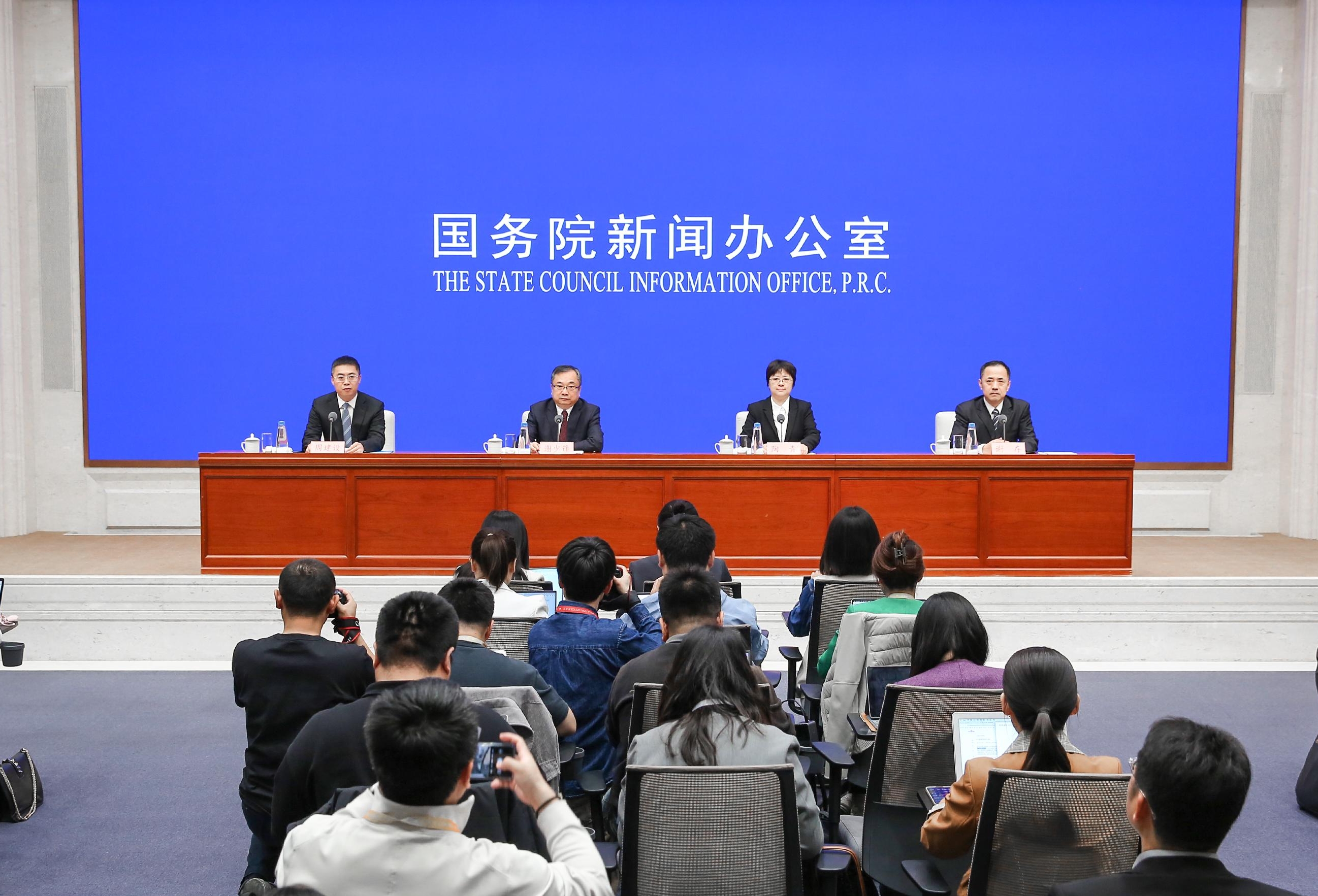

China Electronics News:
In recent years, the CPC Central Committee has attached great importance to developing new quality productive forces. As important components of new quality productive forces, how do you view the development of the electronic information manufacturing industry and the software and information technology services industry in the first quarter of this year? What were the highlights? Thank you.
Xie Shaofeng:
Thank you for your questions. I would like to invite my colleague, Mr. Xie Cun, to answer your questions.
Xie Cun:
Thank you for your questions. In the first quarter of 2025, the value-added output of computer, communication, and other electronic equipment manufacturing enterprises above designated size increased 11.5% year on year, 5 percentage points higher than the overall industrial value-added growth rate for the same period. In the first two months, the software and information technology services industry achieved revenue of 1.8965 trillion yuan, up 9.9% year on year and maintaining steady growth. Total profit for the software industry reached 232.8 billion yuan, a year-on-year increase of 10.7%.
In terms of electronic product consumption, the policy benefits from expanding new purchase subsidies have continued to be realized, effectively stimulating consumer demand. Driven by subsidy policies and AI devices, Chinese consumers' enthusiasm for electronic products has risen, accelerating production and sales of electronic equipment. In the first quarter, computer production reached 85.322 million units, up 9.6% year on year. Television shipments totaled 8.84 million units, up 4.7% year on year, marking positive growth for two consecutive quarters. From January to February, 5G mobile phone shipments reached 41.619 million units, up 7.6% year on year, with domestic brand phones particularly popular among consumers, accounting for 85% of shipments. The surge in finished product sales also drove modest growth in upstream electronic component production. In the first quarter, integrated circuit and optoelectronic device output increased 6% and 3.5% year on year, respectively.
In terms of industrial project construction, coordinated policies have driven progress, and investment enthusiasm has risen remarkably. Chinese regions have taken advantage of policies supporting implementation of major national strategies and security capacity building in key areas, as well as large-scale equipment renewal and consumer goods trade-in programs, to push forward with project development. Multiple integrated circuit and new display projects in Shanghai, Guangdong, and other regions have been making steady progress. In the first quarter, fixed-asset investment in computer, communication, and other electronic equipment manufacturing enterprises above designated size grew 10.5% year on year, 6.3 percentage points higher than the national fixed-asset investment growth rate.
In terms of software ecosystem development, open source potential has continued to emerge, showing initial success in empowering a wide range of industries. More than 10 provinces and municipalities across the country have introduced innovative open source support measures, fully utilizing existing policy tools, and actively supporting open source project incubation and commercialization through technological upgrades and innovative product promotion. The OpenHarmony ecosystem has continued to expand, with over 70 community partners and specialized versions including MineHarmony OS, Power HarmonyOS, Yi Hong AOS, and Police HarmonyOS successively launched. With more than 1 billion equipped devices, it has accelerated the development of digital foundation for the Internet of Everything in various fields such as energy, finance, health care, education and industry. Cumulative installations of the openEuler system have exceeded 10 million. Chinese open source models represented by DeepSeek have gained international recognition by adopting a more open approach that fully open-sources advanced models, parameter weights, inference logic, and tool chains. This transforms developers from technical "consumers" into "co-creators," significantly advancing technological equality and opening new opportunities for AI commercialization.
Going forward, we will maintain technology-driven and application-led approaches while continuing to strengthen high-quality electronic information software and hardware supply. We will accelerate the development and release of new action plans for steady growth in the electronic information manufacturing industry and persistently advance software and hardware technology breakthroughs. We will also strengthen promotion of exemplary consumer electronics applications and successful pilot demonstrations, encourage more apps to join the HarmonyOS app store to meet people's diverse needs, and continuously improve user experience. We encourage all parties to embrace open source more fully by contributing to and utilizing these technologies to accelerate the creation of a mutually beneficial software ecosystem that is built and shared by all. Thank you.

