SCIO briefing on Report on the Work of the Government
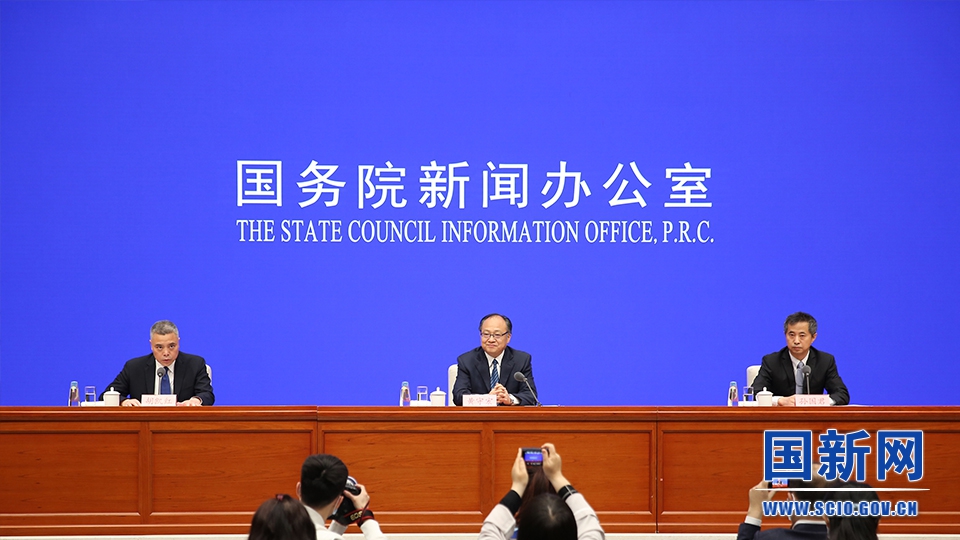
The State Council Information Office holds a briefing on the annual Report on the Work of the Government on May 22 in Beijing. [Photo by Jiao Fei/China SCIO]
Speakers:
Huang Shouhong, head of the drafting team of the Report on the Work of the Government and director of the State Council Research Office
Sun Guojun, member of the drafting team of the Report on the Work of the Government and member of the Leading Party Members Group of the State Council Research Office
Chairperson:
Hu Kaihong, spokesperson of the State Council Information Office
Date:
May 22, 2020
Hu Kaihong:
Ladies and gentlemen, good morning. Welcome to this briefing held by the State Council Information Office. The third session of the 13th National People's Congress (NPC) opened this morning and Premier Li Keqiang delivered the annual Report on the Work of the Government. The public is paying great attention to this report. In order to help people better understand its content, we are very pleased to invite Huang Shouhong, head of the drafting team of the Report on the Work of the Government and director of the State Council Research Office, and Sun Guojun, member of the drafting team of the Report on the Work of the Government and member of the Leading Party Members Group of the State Council Research Office. They will elaborate on the report and take your questions. First, we will give the floor to Mr. Huang for an introduction.
Huang Shouhong:
Good morning, friends from the media!
This year's "two sessions", the annual sessions of the National People's Congress (NPC) and the Chinese People's Political Consultative Conference (CPPCC), are very unusual and draw attention from not only Chinese citizens but also the international community. The Report on the Work of the Government delivered by Premier Li Keqiang follows the guidance of Xi Jinping Thought on Socialism with Chinese Characteristics for a New Era; adheres to the guiding principles of the 19th National Congress of the Communist Party of China (CPC), the second, third, and fourth plenary sessions of the 19th CPC Central Committee and the Central Economic Work Conference of last year; and abides by a series of major decisions and deployments made by the CPC Central Committee with Comrade Xi Jinping at its core on coordinating the advancement of epidemic prevention and control with economic and social development. The report reviews the government work in 2019 and the situation of epidemic control and prevention as well as the resumption of work and production so far this year. It also lays out this year’s main targets and tasks and macro policies and measures for economic and social development, and the overall plan for the next stage of work. Some of you were on the scene while some watched the delivery of the report via video link. Either way, you all could feel the atmosphere and heard the applause the delivery produced. This shows that the report has been well received by the NPC deputies and CPPCC members. Before coming to the briefing, I read some comments about it on the Internet. I feel that the report responds to public concerns and reflects their expectations. It serves to bind people together, warm people’s heart, boost their confidence, and unite them.
We all know that this COVID-19 outbreak is a public health emergency of international concern, which has changed a lot of things. In terms of the drafting of the report, we have also encountered an unprecedented new situation. Since the end of last year, we have drafted the report following due procedures, in accordance with the decisions and deployments made by the CPC Central Committee with Comrade Xi Jinping at its core and the spirit of the Central Economic Work Conference. After deliberation and approval by the CPC Central Committee and the State Council, the draft was sent to all regions, departments, and units to solicit opinions. We then revised the report based on the opinions received. However, influenced by the COVID-19 outbreak, major changes have occurred both at home and abroad, and the "two sessions" were postponed. According to the CPC Central Committee's decisions and deployments, recently we made major adjustments and amendments to the report. General Secretary Xi Jinping chaired two meetings of the Standing Committee of the Political Bureau of the CPC Central Committee and also presided over a meeting of the Political Bureau of the CPC Central Committee to deliberate the draft report and issued clear requirements and important instructions for the drafting and revision work, which provided a fundamental basis for the drafting work . Premier Li Keqiang took charge of the drafting and revision of the report and other leading officials of the State Council offered specific guidance. Premier Li Keqiang presided over two State Council executive meetings and one plenary meeting of the State Council to deliberate the draft.
In the process of drafting and revising the report, Premier Li Keqiang chaired several special symposiums, reaching out to the grassroots and directly listening to the opinions and suggestions of ordinary citizens. Other leaders of the State Council have also listened to people's opinions and suggestions in various ways and forms. All organs of the CPC Central Committee and the State Council have put forward opinions and suggestions, as have so done all sectors of society including a vast of number of netizens. Many opinions and suggestions have been put forward, especially since the outbreak of the COVID-19 epidemic, concerning the trend of China’s economy, the setting of the targets for economic and social development, and the policy-making at the macro level. From the perspective of the drafting group, we certainly paid great attention to the responses from all sectors of society, especially those from netizens. For example, the online portal of the Chinese government (Gov.cn) has worked with 25 internet media platforms and government websites of all regions and departments, launching the "Share your ideas with China's Premier" internet suggestion-box event for the sixth time. The focus of the suggestions collected slightly changed after the pandemic. The recent focus has lain in five aspects, including employment, medical care, housing, income and consumption, and market entities. Gov.cn selected nearly 1,400 suggestions of a highly representative nature that were submitted to us. We have also collected netizens' opinions via the suggestion column on major portal websites such as Xinhuanet.com and People.com.cn.
In addition, as the leading organ to draft the report, the Research Office of the State Council followed the practice of recent years and held symposiums with the Ministry of Science and Technology and the State Administration of Foreign Experts Affairs to listen to the advice of various foreign experts. With a global view and from the perspective of international comparison, 13 renowned experts from nine countries have put forward some extraordinary opinions and suggestions for the work of Chinese government as well as for report drafting. It took us an extensive amount of time to draft the report this year, and this hasn't happened often since the reform and opening-up over 40 years ago. Correspondingly, we've spent much time to listen to opinions from various aspects, and have received a lot of suggestions from different sectors. Based on these, we constantly revise the report as the situation is changing. The global pandemic situation is changing. The achievement of domestic epidemic prevention and control is constantly expanding. The economic situation both within and outside of China also keeps changing. In order to make better judge of the economic and social development, and to better respond to the concerns of all sectors of society, we've engaged in constantly revisions. We have been revising it almost on a daily basis recently. In the coming days, we will continue our revision efforts based on the opinions of the deputies to the NPC and members of the CPPCC National Committee. That's all for the brief introduction of the drafting and revising of the Report on the Work of the Government.
The report briefly reviewed the work and achievement in 2019 and the first few months of 2020. Last year, the growth of the world economy was the slowest in the decade since the global financial crisis. International economic and trade fractions intensified. China's GDP reached 99.1 trillion yuan, nearly 100 trillion yuan, representing a 6.1% increase over the previous year. Around 13 million new jobs were added. These admirable achievements have not come easily. Originally, the economic situation in the fourth quarter is turning toward a promising side. If without the impact of the COVID-19 pandemic, China's economic prospects in the first half of 2020 were expected to be fairly good. The epidemic certainly changed the situation. After the outbreak, the CPC Central Committee with Comrade Xi Jinping at its core has attached great importance to the situation. General Secretary Xi Jinping has been personally commanding and deploying the deeply moving battle against the epidemic by mobilizing all resources, and blocking the spread of the virus. With the arduous efforts of people across the country and the great price we've paid, the fight to defend Wuhan city and Hubei province, the main battlefields of epidemic, has achieved decisive results. Epidemic prevention and control in China have seen a strategic achievement, and the coordinated development of economy and society has also seen a positive progress. "It is only by overcoming enormous difficulties that China has been able to contain COVID-19 in such a short time…" as stated in the report when considering these achievements. Everyone here has experienced this process, and should deeply understand this sentence. All of these fully demonstrate that the CPC Central Committee with Comrade Xi Jinping at its core has extraordinary capabilities to manage complicated situations, firm determination to solve difficulties and face challenges, and farsighted vision to analyze and judge the situations and to implement work. In the meantime, this also fully shows the resilience, potentials and risk-resistance of China's economy, reflecting China's unique political and institutional advantages.
Based on the analysis of both domestic and international situation, the Report on the Work of the Government presents an overall plan for the next stage of work. My understanding is, in order to comprehend the policies and arrangements for the next stage, we should follow the guidance of Xi Jinping Thought on Socialism with Chinese Characteristics for a New Era, and focus on the targets and tasks for completing the building of a moderately prosperous society in all aspects. We should pay close attention to the following five points:
First, we should make sure that implementing regular COVID-19 control measures is the major premise of all our work. The epidemic is a true wild card in the next stage of our development. We have made major strategic achievements in our response to COVID-19. However, the risk of imported cases always lurks as the pandemic continues to spread across the world. Clusters of infections were reported occasionally in China and it has become more complex in regard of the possible resurgence of epidemic. China has switched the epidemic prevention and control measures from "emergency" to "regular," which will possibly be in place for quite a long time. General Secretary Xi Jinping has repeatedly stressed that we should stay alert against the epidemic, because once it rebounds, and gets out of control, the whole economy and society will again be disrupted. We must stay alert, but we also cannot afford further delaying our economic and social development and putting aside people's livelihood and employment. What shall we do? The CPC Central Committee proposed to improve our regular epidemic prevention and control mechanism to ensure timely detection of infections, rapid response, targeted control, and effective treatment, and ensure no possibility of an epidemic rebound. Under such premise, we should enhance our efforts to promote the comprehensive resumption of work, production, market and business, and smooth the circulation of industry, market, economy and society. All the conclusions, policies and measures regarding economic and social development presented in the work report should be implemented and advanced under the premise of regular epidemic control.
Second, we should prioritize efforts to maintain security in six areas. Facing complex and severe external environment and great downward pressure on domestic economy, the CPC Central Committee and the State Council in 2018 proposed to ensure stability on six fronts - employment, the financial sector, foreign trade, foreign investment, domestic investment, and expectations. To cope with unprecedented difficulties and challenges this year, the CPC Central Committee and the State Council are insisting on maintaining security in six areas -job security, basic living needs, operations of market entities, food and energy security, stable industrial and supply chains, and the normal functioning of primary-level governments, with the core objective being stabilizing economic fundamentals, ensuring the bottom line in regard to people's livelihood and achieving poverty reduction goals. They are positive and progressive targets and tasks set under new circumstances. Some people seem to think those measures are passive, defensive, and negative. Actually, this is not the case. It is a progressive and forward-looking approach when we can run a little bit faster in ordinary situation. However, severely impacted by external factors, it is also a positive signal if we are able to stand fast and not retreat or fall back even slightly, but at least get ready to stride forwards as soon as possible. Facing an unprecedented impact, stabilizing the economic fundamentals means to protect social productivity as well as ensure the foundations for further development. We have nothing else to worry about when this foundation has been properly secured. The basis of economic and social development will be guaranteed if the bottom line of people's livelihood is ensured. This is done out of concern for overall stability and economic growth. You are aware that we have realized a virtuous cycle featuring improved people's livelihood and boosted consumption and economy. Therefore, when we endeavor to ensure people's basic living needs, we are securing the bottom line as well as stabilizing consumption and promoting economic development. Achieving poverty reduction goals marks completing the building of a moderately prosperous society in all aspects. Poverty-stricken areas are the greatest challenge facing us. It is our most important task to eliminate poverty, a mission we must fulfill. That's why this year's policies are concentrating on ensuring stabilities on six fronts and maintaining security in six areas particularly, highlights job security, ensuring basic living needs and operations of market entities.
The third is about our understanding of poverty alleviation as an obligatory task. When defining a moderately prosperous society, the key is to observe the condition of farmers. Poverty alleviation is a symbolic benchmark of our efforts to build a moderately prosperous society in all respects, to which the CPC Central Committee attaches great importance. Since the 18th National Congress of the CPC, General Secretary Xi Jinping has personally commanded and supervised the battle to eliminate poverty. We have made decisive achievements thanks to our unremitting efforts. According to the report, the poverty headcount ratio had fallen to 0.6% at the end of last year. The number of impoverished people in China dropped to 5.51 million from the figure of 98.99 million at the end of 2012. On March 6, General Secretary Xi Jinping attended a symposium on securing a decisive victory in poverty alleviation and delivered an important speech, issuing a mobilization order to clinch a complete victory in the fight against poverty. More than 10 million people have been lifted out of poverty each year in recent years, and only over five million people now need to achieve their own transformation. However, the COVID-19 pandemic has had a negative impact on the poverty alleviation efforts. For example, the workforce is facing difficulties in going back to work, and sales of agricultural products in some impoverished regions also encounter challenges. Therefore, people face a rising risk of falling into or returning to a state of poverty. In order to ensure final victory, according to the deployment of the CPC Central Committee, major targeted and forceful measures have been put forward in the report. China will attain its poverty alleviation target this year, which means achieving the poverty reduction goal set in the United Nations 2030 Agenda for Sustainable Development 10 years ahead of schedule. This is China's great contribution to the cause of global poverty reduction.
The fourth aspect relates to understanding of how to expand domestic demand as a strategic focus. China is a country with 1.4 billion people and a per capita GDP of more than $10,000. Its consumer spending has been optimizing and upgrading, and its consumer market is the world's largest, with the greatest potential. Moreover, China has gained momentum in its development in terms of new type industrialization, informatization, urbanization and agricultural modernization, and the demand for effective investment is enormous. The two points will unleash the huge potential of domestic demand. This is the biggest advantage for a major economy. As long as we unleash such potential, a constant and powerful driving force for economic growth will be created. Therefore, the report proposed implementing the strategy of expanding domestic demand, in view of the need to cope with the impact of the pandemic, the need to maintain long-term, sustained and sound economic development, and the importance of meeting people's increasing need for a better life. How to implement the strategy? The report has laid out a roadmap, which focuses on deepening supply-side structural reform, improving people's wellbeing, and boosting consumption and investment in a more coordinated, mutually-reinforcing way. Major measures have also been put forward. Economic development in different regions in China is unbalanced, representing a huge potential for economic growth and many growth drivers to expand domestic demand.
You must have paid close attention to the construction of "new infrastructure, new urbanization initiatives and major projects" put forward in the report. It refers to development of new infrastructure projects, new urbanization initiatives and traditionally defined key projects, such as railways, highways, airports and water conservancy projects. There is a broad consensus that we should expand effective investment, but here are various ideas on what should be the priority areas. The report, aiming to promote the high-quality development of the economy and meet people's needs, proposed taking the construction of "new infrastructure, new urbanization initiatives and major projects" as investment priorities. The CPC Central Committee and the State Council made this decision after much study and consideration. Moreover, it was also determined after listening to the views of all sectors of society. Such priorities will not only boost consumption and benefit the people, but also facilitate structural adjustments and enhance the sustainability of growth. It will serve multiple purposes. The construction of new infrastructure serves as a driver to promote high-quality development and meet people's demand for consumption upgrading. Counties are priorities in development of new urbanization. In order to meet the growing demand of rural residents to work and settle in county seats, it is necessary to support them to improve services and carrying capacity. It is also necessary to begin the renovation of old urban residential communities. In regard to the construction of railways, highways, airports, as well as water conservancy projects and energy projects, many are closely related to people's quality of life. Therefore, the construction of "new infrastructure, new urbanization initiatives and major projects" is a major measure which not only prioritizes people's wellbeing, but helps support expansion of domestic demand.
Fifth, grasp the greater logic of reform and opening up. Previously, some people worried that in order to cope with the impact of the epidemic, we might take the old path of initiating rash and ineffective projects while adopting extensive growth, or take measures to maintain short-term growth but which would harm long-term development. Because some measures are conducive to stabilizing growth in the short term, but if they are handled badly, they will leave residual effects. To cope with unprecedented challenges and achieve our development goals and tasks, there are many specific policies and measures we can take, but what should be the basis? According to the decisions of the CPC Central Committee, the report clearly states that we need to "pursue reform and opening up as a means to stabilize employment, ensure people's wellbeing, stimulate consumption, energize the market, and achieve stable growth. We need to blaze a new path that enables us to respond effectively to shocks and sustain a positive growth cycle." Relying on the approach of reform and opening up, we can stimulate creativity in all aspects of society, stabilize employment and protect people's livelihood, then there will naturally be consumption. And with consumption, the market will be stimulated, effective investment will be driven, and growth will be stabilized. The reform and opening up policy has been an amazing weapon for China to make tremendous achievements over the past 40 years. No matter what difficulties and challenges it has encountered during this time, this effective weapon has been tried and has succeeded again and again, with no exception. The new measures proposed in the report to promote socioeconomic development include ensuring stability on the six fronts and security in the six areas. (The six fronts refer to employment, the financial sector, foreign trade, foreign investment, domestic investment, and expectations. The six areas refer to job security, basic living needs, operations of market entities, food and energy security, industrial and supply chains, and the normal functioning of primary-level governments.) It can be said that they follow the "scriptures" of reform and opening up, use the "approaches" of reform and opening up, and "walk the path" of reform and opening up. This allows the market to play a decisive role in the allocation of resources and the government to better play its role.
Next, my colleague Mr. Sun Guojun and I are willing to answer any questions you may have on the drafting of the report.
Hu Kaihong:
Thank you, Mr. Huang, for your introduction and interpretation. Let's start the questions.
CNR:
I noticed that this year's Report on the Work of the Government did not propose specific GDP targets. Why is that? In addition, how should the current economic situation in China be seen? Thank you.
Huang Shouhong:
This is one of the most prominent issues that society is concerned about. Please allow my colleague Mr. Sun Guojun to answer the question.
Sun Guojun:
Your question is uppermost in everyone's minds. Before I came here, I watched CCTV's "livestream room" program and its "ministers' passage" broadcast. The first question raised by a reporter was regarding this year's report not putting forward a quantitative economic growth target, as the annual Report on the Work of the Government usually proposes an expected target for GDP growth rate that year. Of course, there have been occasions in the past when one was not mentioned.
Why didn't we mention economic growth this year? In fact, the biggest factor is uncertainty. This uncertainty comes mainly in two aspects: one reason is the uncertainty in the pandemic’s development trend. There are now nearly five million confirmed cases worldwide, and large increases of almost 100,000 new cases every day. No one can predict the next development trend of the pandemic. The other reason is the uncertainty in the world economy. The pandemic is currently the biggest factor affecting global economic activities. If we cannot accurately estimate the progress of the global pandemic, we cannot accordingly estimate how the pandemic control measures will be adjusted for each country. In the first quarter, the major global economies have experienced relatively large negative growth. Much analysis concludes that the world economy has experienced a severe recession, and even suggest that it may be no less severe than the Great Depression in the 1930s. The economies of all countries are in great uncertainty.
Not setting a specific target for economic growth this year does not mean we are ignoring economic growth or letting economic growth decline. There is a very important sentence in the report, which reads "ensuring stable economic performance is of crucial significance."
At present, there are two aspects that need to be underpinned by economic growth. First, this year, we must give priority to stabilizing employment and ensuring living standards, win the battle against poverty, all of which need to be underpinned by economic growth. Based on the empirical data of previous years, one percentage point of growth corresponds to about two million new jobs. From the perspective of poverty alleviation, there are nearly 30 million members of the labor force who are impoverished and working away from their hometown. Labor income is an important source of income for many rural residents and an important path to poverty alleviation. If there are difficulties attaining employment, people will also have difficulties receiving income, leading to a whole range of problems related to consumption; thus, growth is critical. Second, economic downturns often lead to the emergence of certain risks. For example, in finance and other fields, new potential problems and risks may emerge during economic downturns. Take financial resources at a basic level as another example: If there is no growth in the economy, there will then be difficulties in financial resources, leading to a series of chain reactions. Therefore, ensuring stable economic performance is of crucial significance.
We have paid a great price for our efforts to prevent and control the COVID-19 pandemic. In the first quarter, the economy posted a negative growth of 6.8%. But considering the health and safety of our people, this is a price that we must pay. It is a price that is worth paying. With the outbreak of the pandemic effectively under control in China and efforts to resume work and production accelerating, the whole Chinese economy is gradually beginning to recover. In April, the industrial growth was at 3.9%, and the growth in electricity consumption, electricity generation and rail freight volume turned from negative to positive, which is a positive sign. Although some indicators, such as total retail sales of consumer goods and investment, were still declining, the rate of decline is slowing down. All this shows that the policies we implemented previously, such as cutting taxes and fees, supporting finance and providing assistance to enterprises to stabilize employment, have paid off.
The report sets out a number of policies to be implemented in the next phase of the year. For example, the fiscal policy focuses on spending money to stabilize employment and ensure people's wellbeing; the financial policy focuses on protecting market entities; the employment and social security policies focus on unfailingly meeting the basic living needs of our people. I believe that with the implementation of these policies, the economy will gradually stabilize and recover. The base of the economy will not have any problems this year, and the people's wellbeing won't have any problems either. Thank you.
Nihon Keizai Shimbun:
You just mentioned that 1% growth will create two million new jobs. In this year's report on the Work of the Government, the target was to create more than nine million new jobs, thus the actual growth target should be around 4.5%. Is this a reasonable understanding? My second question touches on the one trillion yuan of government bonds that are going to be issued. The forecast of the financial market is at about three trillion yuan. How is the actual issuance amount estimated? What are your considerations behind this? Thank you.
Sun Guojun:
You asked two questions. First, I mentioned that one percentage point of GDP growth corresponds to about two million new jobs. This is based on empirical data. In different economic growth ranges, the corresponding number of new employment is different. For example, when GDP grows at around 6%, one percentage point of growth corresponds to about two million new jobs; but when the range is widened, there is no absolute linear relation. When economic growth is relatively low, the policies focus on stabilizing employment. At the moment, the corresponding relationship between one percentage point of growth and new employment differs from what it would be during relatively high economic growth.
This year's employment is under great pressure. The credit policy and policies including unemployment insurance refunds are all related to stabilizing enterprise employment rates and reducing the number of layoffs, so as to ensure the bottom line of employment. This year, we have made proper adjustments to the employment target, so creating over nine million new urban jobs is realistic. More than nine million new jobs and a surveyed urban unemployment rate of around 6% is consistent with the current economic situation.
The second issue is the issuance of 1 trillion yuan of special anti-pandemic bonds, with some expectations in the market being a bit higher. Fiscal policies in a broader sense cover four major budgets, including general budgets and budgets for government funds, all of which will be taken into consideration. The point of issuing the government bonds for COVID-19 control is to "fight the epidemic". The issuance of special bonds for combating the epidemic is a special means taken during a special time. Part of the money will be used directly to cover local spending for combating the epidemic, including expenditures to bolster weak spots. Another part of it will be directly transferred by the central government to local governments.
In the case of COVID-19 government bonds, I believe the scale is appropriate. Because this year, a total of 3.75 trillion yuan of special local government bonds will be issued, an increase of 1.6 trillion yuan over last year. The use of these bonds should be coordinated. There will also be investment in the central government budget. We cannot simply look at one item to determine the strength of fiscal policy. Instead, we should take the fiscal policies presented in this year's Report on the Work of the Government into thorough consideration. This includes the coordination of monetary policies and the implementation of fiscal policies. For example, the prefecture-level and county-level governments are directly responsible for making efforts to stabilize employment and ensure people's wellbeing. However they currently face direct pressure, so a special transfer payment mechanism will be set up to ensure that the funds will not be withheld by provincial-level governments but go straight to prefecture and county-level authorities. This is a mechanism we have not been seen before.
Huang Shouhong:
I'd like to add something. Mr. Sun Guojun said that the use of the COVID-19 bonds and fiscal deficit this year would be a reform and innovation that will go straight to the grassroots and directly benefit enterprises and people. As for the relation between employment and growth rate, Mr. Sun just said that under normal conditions, economic growth and employment had a corresponding relationship, but in an unusual time, this corresponding relationship will change. For example, in the first quarter, China's GDP lowered by 6.8%, but we added 2.3 million new jobs. The relationship between the economic growth rate and employment is very complicated and the two factors cannot maintain a corresponding relationship all the time. Employment lags behind and the fluctuations of the two factors do not correspond either. We should see that economic laws are different when under special conditions than during normal conditions. That's what I have to add.
CCTV:
Recently there have been talks across the world regarding the end of globalization, decoupling from China and evacuating from China. I'd like to get your opinion on these remarks. Another question is what China will do to stabilize the overall performance of foreign investment and foreign trade. Thank you.
Sun Guojun:
Whenever problems or frictions emerge in the global economy, economic arguments such as decoupling from China come to the fore. We should look at the big picture when discussing globalization. Globalization is a general trend. It is hard to imagine what the world would be like without the globalization of investment, trade and movement of people. In the long term, globalization is certain to bring benefits to each nation and all people. That is why the Chinese government unswervingly supports globalization. Small problems are inevitable in the process, but these will not halt the general trend.
There have been reports about outflows of foreign capital. Some foreign investments have even been moving out. As the economy develops, China's overall development has been improving and a country's comparative advantages differ in different stages of development. There are outflows of foreign capital, but there are also inflows of foreign capital. In the first quarter, our country attracted foreign investment contracted, but in April, we saw sound growth in foreign investment. We also saw that, many surveys, including the ones by some foreign chambers of commerce, showed that more than 70% of multinational enterprises are still bullish about the Chinese market and decide to make investments in the country. Enterprises see China's market as a long-term strategic investment. I think it requires strategic foresight to see this. We should base decisions on strategy and not be subject to the influence of petty remarks.
I think China has two advantages in this respect. After several decades of reform and opening up, it is fair to say that China has developed the only most complete industrial support system in the world. China is the only country that boasts all the 41 sections, 191 divisions and over 500 groups in the international standard of industrial classifications. It is the biggest trading partner of over 120 countries and its economic growth accounts for 30% of the world's total every year. So, it has a very big market in terms of the supply side. On the demand side, the domestic market is also growing. Either from the supply or demand side, anyone can be optimistic.
This year's Report on the Work of the Government attaches much importance to opening up. First, it makes clear that the Chinese government remains committed to further opening up despite the changing global economy and complex external environment.
Second, it also seeks to expand both exports and imports. On one hand, we need to promote market diversification. For example, our exports to Belt and Road countries now account for 30% of our total. On the other hand, we need to involve more market entities in import and export business. Supporting policies in finance and insurance will benefit more small and medium-sized companies in the foreign trade sector. More support will be channeled to new foreign trade businesses like cross-border e-commerce and new trials of trade in services.
Third, the Report on the Work of the Government also supports investment. This year, the negative list for foreign investment will be significantly shortened, and a negative list will also be announced for cross-border trade in services. Greater autonomy in reform and opening up will also be granted to pilot free trade zones. Both the manufacturing and service sectors will embrace further opening up.
Fourth, China is already seeing an improved business environment, and the Report on the Work of the Government again highlights the need to create a market-oriented, law-based, and internationalized business environment. Also, the Report on the Work of the Government stipulates the need to build a fair business environment in line with the international community. This is important as fair competition meets the demands of both foreign and domestic businesses. We will conduct impartial regulation to ensure fair competition.
Thank you.
Huang Shouhong:
The objective law and historical trend are independent of people's wishes. People's opinions may differ, but facts speak louder than words. Business leaders choose where and how to make investments depending on their own considerations. In the past two years, China has introduced a large proportion of foreign investment at a fast pace in the international community. It means that foreign business leaders are optimistic of the Chinese market.
As Mr. Sun Guojun said, China will further open its market despite great difficulties this year. We did not slow down or cut back opening up, but instead decided to adopt major policy measures to open our door wider to foreign businesses and foreign investment. For example, we will shorten the negative list for foreign investment, further open up service and manufacturing industries, and establish new pilot free trade zones. The idea of reform and opening up is run through the whole work report.
CNBC:
You said you have collected considerable local feedback in preparation for this report. What is the local attitude toward employment and collaborations between SMEs and foreign businesses? What is their plan to boost employment? Thank you.
Huang Shouhong:
One of pressing problems arising in China's current economic development is employment and people's wellbeing. Impacted by the pandemic, some industries, especially in the service sector, and certain enterprises, especially micro-, small and medium-sized businesses, are facing great difficulties. Some companies have laid off employees or reduced pay rates. Why does the report speak of maintaining security in six areas and placing employment at the top of the list under such circumstances? Because employment provides our people a steady livelihood, and it is the most fundamental factor underpinning economic development. What do we rely on to maintain security in employment? The answer is to protect enterprises and market entities, especially micro-, small and medium-sized businesses. These are major channels for people to get jobs, and more than 80% of employment depends on them.
In response to the current difficulties facing enterprises, especially those micro-, small and medium businesses, the report set out a series of measures aimed at maintaining employment security. We have cut taxes and fees for enterprises on a large scale, especially for the vulnerable ones I have mentioned. We cut taxes and fees by 2.36 trillion yuan last year, and we expect that these measures will see additional savings of more than 2.5 trillion yuan for enterprises throughout this year. In addition, there are some policies to reduce enterprise operating costs. For example, the policy of reducing electricity prices will be extended to the end of the year, and the rates for internet access services will be cut by 15% on average. A hot issue in the reports of the recent two years has been the continuous decrease of the rates. Everyone has benefited and happily enjoyed the increased convenience.
The report also specified a series of measures in the financial sector to alleviate the current difficulties of small and micro-enterprises and employment difficulties. In macro policies in particular, it specified development of new monetary policy instruments that can directly bring benefits to enterprises. Stabilizing employment is the most important task for China this year, which will ensure the wellbeing of the people. It is the most important task and where the greatest achievement lies. The reason why we have not set a specific target for economic growth is largely that we aim to focus everyone's enthusiasm, attention and energy on ensuring employment, ensuring the wellbeing of the people, and protecting market entities. All our policies must directly work on the six areas, especially job security, basic living needs, and operations of market entities. We have many measures to maintain employment security.
However, we all know that the unemployment rate will definitely rise this year. Unemployment is a global problem, and the unemployment rates in countries around the world are much higher than usual. For China, although we are making our best efforts and adopting all possible measures, the unemployment rate may still increase slightly, and there will be more people out of work. What should we do in this situation? We have measures not only in expanding employment, but also in extending the coverage of unemployment insurance.
According to the report, the coverage of unemployment insurance will be extended to ensure that all those underwriting the insurance are provided for, and there are some new measures being introduced this year. For example, it was stipulated in the past that people who were in the unemployment insurance scheme for less than a year were not qualified to claim benefits, but they will be covered this year. Another example is that rural migrant workers will be covered in the locality where they are living, and that subsistence allowances will be made promptly available to eligible urban unemployed people and migrant workers who have returned home.
Some people are concerned about our ability to achieve this. Please rest assured. We now have a surplus of over 460 billion yuan in the unemployment insurance fund, and over two trillion yuan of strategic reserves in the social security fund. We will also promote provincial-level coordination of unemployment insurance this year. Through such a series of measures, we have the ability and the means to address the unemployment trend. In the past two years, we have been transferring a portion of state capital to top up social security funds and increasing the centrally-regulated share of basic aged-care pension funds. This year it will be increased to 4%. The people's quality of life will be ensured and improved. In the special and difficult period of this year, governments should take the lead in tightening their belt. As the economic situation improves, employment, especially the operations of small and micro enterprises, will certainly improve accordingly. Thank you.
Southern Metropolis Daily:
According to the Report on the Work of the Government today, the strategy of expanding domestic demand will be steadfastly pursued, but now, consumer spending and investment are declining. How can domestic demand be effectively expanded? How will the relationship between expanding domestic demand, and ensuring and improving the people's quality of life be handled? Thank you.
Huang Shouhong:
Some aspects of this issue has already been mentioned just now. Let's invite Mr. Sun to give a brief introduction.
Sun Guojun:
Let me first add something on the employment. Searching through an electronic version of the report before coming here, I found that the most frequently used word was "employment". This might be the first time in history that the word appeared 39 times.
Regarding the question just now, expanding domestic demand is what China has been doing to develop its economy for a long time. The strategy of expanding domestic demand has also been put forward before. The whole second section of the report in 2000, for example, was about this topic. That was during the ninth Five-Year Plan period. The strategy was put forward again in 2011 during the 12th Five-year Plan period. In fact, we have been insisting on expanding domestic demand, because it is a unique advantage of a populous country, and can provide stable support for economic growth.
Consumption now contributes to more than 60 percent of economic growth. This year, we put forward the strategy to vigorously boost domestic demand. In terms of understanding this strategy, this is not a case of expanding domestic demand merely because there is insufficient demand. Mr. Huang also discussed this issue when he made his introductory remarks earlier. From what I understand, there are a few points as follows:
First, expanding domestic demand must be combined with supply-side structural reform. The supply-side structural reform can both meet the needs of the upgrade in demand and create demand. After China's per capita GDP exceeded $10,000, many residents' demand for mid-to-high-end products increased. The production and supply also need to keep pace. The expansion of domestic demand required the entire industry’s supply system to upgrade at the same time, pushing the economy to realize a high-level of dynamic balance.
Second, we need to increase domestic demand to improve people's living standards. It would be meaningless to expand domestic demand just for the sake of expanding domestic demand. We developed to improve people's living standards, and the ultimate goal of expanding domestic demand is also centered around improving people's living standards. In essence, this is a demonstration of a people-centered approach. We should work to expand domestic demand and improve people's living standards.
Third, in terms of combing consumption and investment, we should make investments to expand domestic demand. For example, new investments could be made on new infrastructure, new urbanization initiatives and major projects.
Fourth, boosting domestic demand and expanding external demand should advance in a parallel fashion. Some people mistakenly think that there is no need for external demand if there is domestic demand, but this is actually not the case. The total amount of China's imports and exports accounts for 30 percent of GDP. We must promote the domestic market along with the external market. We expand domestic demand to promote our openness to the outside market. The ultimate goal of expanding domestic demand is not only bringing good opportunities to domestic enterprises, as it will also present opportunities to companies across the world. Expanding domestic demand in China holds great significance. Thanks.
China News Service:
I'd like to hear about the stories behind this year's Report on the Work of the Government. In particular, is there anything different in the drafting process compared with before? Thanks.
Huang Shouhong:
Year after year, the flowers are always alike, but people are not the same. Such is the case with this year's report. The drafting of the Report on the Work of the Government is a hard process, especially for this year.
I just provided a brief introduction to this matter earlier. Due to the great changes that happened this year, the drafting of this year's report took quite a long time, which has been rare since the reform and opening-up began. Acting in line with the decisions and plans of the CPC Central Committee, the draft we see today is quite different in terms of form and content when compared to the report we drafted before the Spring Festival. Some of these parts in the report have been completely changed. In terms of content, you may notice that the word count of this year's report is about 10,400 Chinese characters. It is roughly half the length of the reports issued at the annual sessions in previous years when the word count was around 19,500 Chinese characters. Reports in previous years set the work agenda for the whole year, but this year's work agenda is just for the immediate seven months. As the situation has changed, revisions to the Report on the Work of the Government have increased and many parts of the report have been redrafted.
Take a look at the content of this year's Report on the Work of the Government. In the past, our reports offered an introduction to the major work carried out in the previous year in addition to the progress we made in that year. However, this part was not included in this year's report. Another example is that in previous years, reports included regular work arrangements and projects that need to be continually pushed forward. But this year we lack the length and capacity to provide such content, so we didn't deliberate on these parts. You may notice that this year the part on reviewing work mainly talks about landmark achievements from the previous year, pandemic prevention and control and resumption of work and production during this year. This information is provided in a brief introduction. About the part on reviewing the work: The word count of this part was usually about 4,000 Chinese characters in past reports, which were about 19,500 Chinese characters long in total. But this year, the word count is much lower than it was in previous years. Consider the section on the work agenda. In recent years, we usually used three parts to introduce it; namely, there was a part on reviewing work from the previous year, a part presenting general thoughts and an introduction of major work from the year at hand. This year, considering the present state of affairs, we used a list to introduce the work agenda in an attempt to keep the report concise and highlight the next steps of our work. There are many changes in the report, including changes to the content, form, length and so on.
Some explanation needs to be provided here. We still have many work projects that are in progress, such as work that has been pushed forward in the medical and healthcare sector in recent years. This includes the construction of regional medical centers, reform of public hospitals and regulation of health insurance. Given the limited length of the report, we didn't include such matters in this year's report. This year's report focused on new approaches and new measures for coping with the changing situations. The parts we didn't mention in the report still matter and still require continuous effort from us. It should be made clear that just because certain projects were not included in the report does not mean they will not be carried out. Given this year's situation, the report must focus on the major projects and issues that require urgent concern. This reflects the expectations from all sides of society. Similar requirements were put forward in the process of soliciting public opinions.
For a document such as the Report on the Work of the Government, the shorter the version is, the more difficult it is to draft, because we need to convey massive amounts of information and respond to requirements raised by all parties. According to the procedure, after the Report on the Work of the Government is approved at the annual session of the National People's Congress (NPC), all the targets and tasks set by it will be subdivided into more specific ones. Meanwhile, more policies and measures that weren't made into the original version will also be included. Currently, the State Council has been making plans. I trust that you will witness a series of specific policies issued by the CPC Central Committee and the State Council, which stay on the course charted by the Report on the Work of the Government.
It should be noted that all policies proposed in the Report on the Work of the Government are based on the analysis and judgment on the current situation regarding the spread of the pandemic globally, domestic epidemic prevention and control, and the momentum of economic development. If unexpected changes occur, relative policies "may be adjusted as called for," as mentioned in the Report on the Work of the Government. When we adopt a policy, we should both look ahead into the future and back into the past, taking into account both its effectiveness to address the current significant challenges and its sustainability. Just as a military campaign has to be carefully planned out, we also have a host of plans and measures at our disposal in response to possible crises. We have not fired all our bullets in one battle. There are ample room for future policy options.
Hu Kaihong:
We will invite a reporter from the foreign press to take the final question.
Reuters:
If there is no national economic growth target set for this year, how will local governments set their targets for local economic growth or fiscal expenditure? Thank you.
Huang Shouhong:
It seems that everyone is concerned about China's economic growth rate. Mr. Sun Guojun has just explained the situation. Normally, the economic growth rate serves as a comprehensive and fundamental indicator based on which arrangements will be made in many aspects. Therefore, it plays a vital role in guiding our efforts moving forward. However, due to the uncertainties this year, all parties have paid great attention to the economic situation before the session. Some suggested a specific target for economic growth should be set, with heated debates about the specific figure. There was also argument suggesting that no specific target should be set due to the current situation. As the question put it, without a specific national target for economic growth, local governments may lack references and basis in their work. Thus, those who advocate setting a growth target also make sense. As we all know, China's economy has been transitioning from a phase of rapid growth to a stage of high-quality development. In this regard, we should treat the economic growth rate in an objective manner and shift away from the GDP-focused growth model. On the other hand, economic growth is important. Facing the current economic decline, we must fulfill our duties and prevent the economy from falling out of control. After all, our efforts to ensure employment and living standards must be underpinned by economic growth.
What should local governments and departments do without a specific GDP growth target as a quantitative indicator? The answer is to continue the work which needs to be done and focus on strengthening efforts to ensure stability on six fronts and maintain security in six areas. Not setting a specific target for economic growth will help ease the burden of local governments for solely pursuing high speed growth. In line with the plans of the CPC Central Committee and the State Council, local governments should concentrate on ensuring job security, basic living needs, and operations of market entities.
The growth rates and GDP figures are final results, rather than the direction of our development. We will not lose direction just because of a lack of growth target. Our direction is clear: In accordance with the decisions and plans of the CPC Central Committee with Comrade Xi Jinping at its core, we will apply the new development philosophy, pursue supply-side structural reform, and promote high-quality development. At present, our focus is to maintain security in the six areas. After the "Two Sessions," through serious discussions and deep speculation, we will share a higher degree of consensus, further clarify the direction of future work, and take actions in all aspects more consciously. Therefore, we will not lose direction without setting a GDP growth target. Thank you.
Hu Kaihong:
Today's press briefing is hereby concluded. Thank you to Mr. Huang and Mr. Sun. Thank you all.

