SCIO briefing on China's economic performance in 2019
Speaker:
Ning Jizhe, head of the National Bureau of Statistics
Chairperson:
Hu Kaihong, spokesperson for the State Council Information Office of China
Date:
Jan. 17, 2020
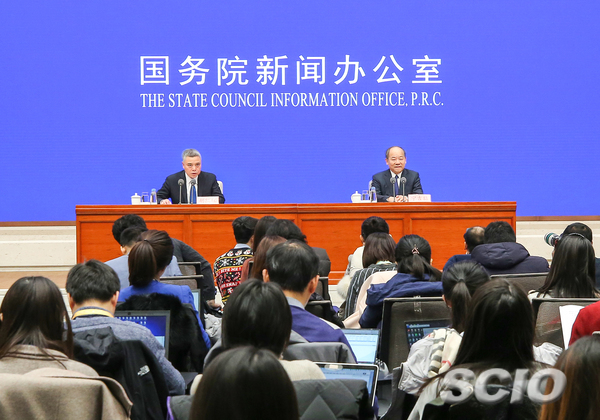
Hu Kaihong:
Ladies and gentlemen, good morning. Welcome to this press conference. Today, we are delighted to invite Mr. Ning Jizhe, head of the National Bureau of Statistics (NBS), to introduce China's economic performance in 2019, and answer your questions. Now, I'll give the floor to Mr. Ning.
Ning Jizhe:
In 2019, China achieved overall economic stability and reached its main expected targets for economic development. Amid mounting risks and challenges both at home and abroad, different regions and government departments , under the leadership of the CPC Central Committee with Comrade Xi Jinping at its core, fully implemented the decisions and plans made by the CPC Central Committee and the State Council. They stuck to the general working guideline of making progress while maintaining stability, followed the new development philosophy, focused on supply-side structural reform, promoted high-quality development and strengthened efforts to maintain stability in employment, the financial sector, foreign trade, foreign and domestic investments, and expectations. Significant breakthroughs have been achieved in three tough battles. The national economy was generally stable, the quality of development has improved and the main expected targets have been achieved, thus laying a solid foundation for building a moderately prosperous society in all respects.
According to preliminary calculations, China's gross domestic product (GDP) was 99.09 trillion yuan in 2019, an increase of 6.1% over the previous year at comparable prices, and meeting our expected targets of 6% to 6.5%. The four quarters saw growth rates of 6.4%, 6.2%, 6.0%, and 6.0% respectively. The added value of industries were 7.05 trillion yuan, 38.62 trillion yuan, and 53.42 trillion yuan for the primary, secondary and tertiary industries, respectively, with growth rates of 3.1%, 5.7%, and 6.9%.
First, grain output reached a new record and the production of beef, mutton, poultry, eggs and milk increased.
Last year's total grain output was 663.84 million tons, up by 0.9% over that of the previous year and an increase of 5.94 million tons. This ensured that output levels were maintained above 650 million tons for five consecutive years. Summer grain output was 141.6 million tons, an increase of 2.0%; early season rice 26.27 million tons, down by 8.1%; and autumn grain output 495.97 million tons, up by 1.1%. The output of wheat was 133.59 million tons, up by 1.6%; corn 260.77 million tons, up by 1.4%; soybean 18.10 million tons, up by 13.3%.
The total output of pork, beef, mutton and poultry was 76.49 million tons, down by 10.2% over last year. In particular, the output of beef was 6.67 million tons, up by 3.6%; mutton, 4.88 million tons, up by 2.6%; poultry, 22.39 million tons, up by 12.3%; eggs, 33.09 million tons, up by 5.8%; milk, 32.01 million tons, up by 4.1%; and pork, 42.55 million tons, down by 21.3%.
Second, industrial production continued to increase, and high-tech manufacturing and strategic emerging industries grew rapidly.
In 2019, the industrial output increased by 5.7% over the previous year. The value-added of the state-holding enterprises went up by 4.8%, that of share-holding enterprises by 6.8%; enterprises funded by foreign investors or investors from Hong Kong, Macao and Taiwan up by 2.0%; private enterprises by 7.7%. In terms of sectors, the value-added of the mining sector increased 5.0%, that of manufacturing sector was up 6.0%, and that of producing and supplying electricity, heat, gas and water grew by 7.0%. The value-added of high-tech manufacturing sector rose by 8.8%, strategic emerging industries by 8.4% over the previous year, or 3.1 and 2.7 percentage points faster, respectively, than that of large industrial companies. In December, the industrial output grew by 6.9% year on year, or 0.7 percentage points faster than the previous month, marking an increase of 0.58% month on month. In December, the sub-indexes of the Purchasing Managers' Index (PMI), the Production Index, the New Orders Index and the Supplier Delivery Time Index reached 53.2%, 51.2% and 51.1% respectively, all staying above the threshold. The Business Activity Expectation Index for Manufacturing was 54.4%, staying within the expansion range.
In the first 11 months of 2019, the total profits of large industrial enterprises reached 5.61 trillion yuan, down by 2.1% year on year, but the decline was 0.8 percentage points lower than that of the first ten months. The profits of large industrial companies grew by 5.4% in November year on year, while that of October was down by 9.9%.
Third, the service sector grew fast with modern services sector gaining momentum.
In 2019, the Index of Service Production increased by 6.9% over that of the previous year. The value-added of information transmission, software and information technology services, leasing and business services, financial services, transportation, storage and post services grew by 18.7%, 8.7%, 7.2% and 7.1% respectively, or 11.8, 1.8, 0.3 and 0.2 percentage points faster than that of the tertiary industry. From January to November, the revenue of large service enterprises increased by 9.4% year on year. In particular, revenues of enterprises engaged in strategic emerging services, science and technology services and high-tech services increased by 12.4%, 12.0% and 12.0% respectively. Their growth rate was respectively 3.0, 2.6 and 2.6 percentage points faster than that of all large service companies. Profits of large service companies increased by 3.5%.
In December, the business activity index for services was 53.0%, continuing to stay above the threshold that separates growth from contraction. Specifically, the business activity indexes for sectors like railway transportation, lodging, telecommunication, broadcast, television and satellite transmission services, internet software and information technology services, financial services and leasing and business services all stayed within the high expansion range of 55.0% and above. From the perspective of market expectations, the business activities expectation index for services was 59.1%, maintaining a sound growth momentum.
Ning Jizhe:
Fourth, market sales demonstrated stable growth with online retail sales taking up a notably bigger share of the overall sales.
In 2019, the total retail sales of consumer goods reached 41.16 trillion yuan, up by 8.0% over the previous year. The retail sales of consumer goods by enterprises above the designated size was 14.80 trillion yuan, an increase of 3.9%. Analyzed by different areas, retail sales in urban areas reached 35.13 billion yuan, up by 7.9%, and retail sales in rural areas stood at 6.03 billion yuan, up by 9.0%. Grouped by consumption patterns, catering revenue was 4.67 trillion yuan, up by 9.4%; and the retail sales of goods was 36.49 trillion yuan, up by 7.9%. Upgraded consumer goods grew fast. The growth of retail sales of cosmetics, communication appliances, sports and recreational items, as well as household appliances and audio-video equipment by enterprises above the designated size rose by 8.7, 4.6, 4.1 and 1.7 percentage points respectively. In December, the total retail sales of consumer goods increased by 8.0% year-on-year and 0.53% month-on-month.
In 2019, online retail sales reached 10.63 trillion yuan, a year-on-year growth of 16.5%. In particular, the online retail sales of physical goods was 8.52 trillion yuan, up by 19.5%, accounting for 20.7% of the total retail sales of consumer goods, and was 2.3 percentage points higher than that of the previous year.
Fifth, investment in fixed assets witnessed steady growth and investment in high-tech industries grew fast.
In 2019, the investment in fixed assets (excluding rural households) reached 55.15 trillion yuan, up by 5.4% over the previous year. In particular, the investment in infrastructure was up by 3.8%, manufacturing up by 3.1% and real estate development up by 9.9%. The floor space of commercial buildings sold reached 1.72 billion square meters, down by 0.1%. The total sales of commercial buildings was 15.97 trillion yuan, up by 6.5%. The investment in the primary industry went up by 0.6%; the secondary industry up by 3.2%; and the tertiary industry up by 6.5%. Private investment was 31.12 trillion yuan, up by 4.7%. The investment in high-tech industries grew by 17.3%, or 11.9 percentage points faster than total investment, of which the investment in high-tech manufacturing and services increased by 17.7% and 16.5% respectively. The investment in social sectors went up by 13.2%, or 7.8 percentage points faster than the total investment, among which the investment in education and in culture, sports and entertainment went up by 17.7% and 13.9% respectively. In December, the investment in fixed assets grew by 0.44% month-on-month.
Sixth, foreign trade witnessed growth despite downward pressure and the proportion of general trade has continued to grow.
In 2019, the total value of imports and exports was 31.54 trillion yuan, an increase of 3.4% over the previous year. The total value of exports was 17.23 trillion yuan, up by 5.0%; and the total value of imports was 14.32 trillion yuan, up by 1.6%. The trade balance was in surplus of 2.92 trillion yuan. The imports and exports of general trade accounted for 59.0% of the total value of imports and exports, an increase of 1.2 percentage points compared with the previous year. The exports of mechanical and electrical products increased by 4.4%, accounting for 58.4% of the total value of exports. In particular, imports and exports with the European Union and ASEAN went up by 8.0% and 14.1% respectively. Imports and exports with countries along the Belt and Road has maintained a sound momentum, increasing by 10.8%, or 7.4 percentage points faster than the growth of the total imports and exports of goods. The export delivery value of industrial enterprises above the designated size reached 12.42 trillion yuan, up by 1.3% over that of the previous year.
Seventh, the growth in consumer price has met the projected target and producer prices for industrial products declined slightly.
In 2019, consumer price went up by 2.9% over the previous year, meeting the projected target of around 3%. Specifically, consumer prices went up by 2.8% in urban areas and 3.2% in rural areas. Grouped by commodity categories, prices for food, tobacco and alcohol went up by 7.0%; clothing up by 1.6%; housing up by 1.4%; articles for daily use and services up by 0.9%, transportation and communication down by 1.7%; education, culture and recreation up by 2.2%; medical services and health care up by 2.4%; and other articles and services up by 3.4%. In terms of food, tobacco and alcohol prices, prices for grain went up by 0.5%, fresh vegetables up by 4.1% and pork up by 42.5%. Core CPI excluding the prices of food and energy went up by 1.6%, which was 0.3 percentage points lower than that of the previous year. In December, the consumer price went up by 4.5% year-on-year, and maintained the same level as November month-on-month. In 2019, producer prices for industrial products went down by 0.3% over the previous year and for December, down by 0.5% year-on-year, and maintained the same level as November month-on-month. Purchasing prices for industrial producers went down by 0.7% over the previous year, and in December, down by 1.3% year-on-year, and was at the same level as November month-on-month.
Eighth, employment was generally stable and the surveyed unemployment rate in urban areas met the projected target.
In 2019, the number of newly employed people in urban areas totaled 13.52 million, which remained above the 13-million mark for seven years in a row. This notably exceeded the projected target of 11 million and achieved 122.9% of the entire year's target. In December, the surveyed unemployment rate in urban areas was 5.2%. In 2019, the monthly surveyed unemployment rates in urban areas stayed within the range of 5.0% to 5.3%, achieving the projected target of around 5.5% and below. The surveyed unemployment rate of the main labor force aged between 25 to 59 was 4.7%. In December, the urban surveyed unemployment rate in 31 major cities was 5.2%. At the end of 2019, the registered unemployment rate in urban areas was 3.62%, or 0.18 percentage points lower than at the end of previous year, meeting the projected target of 4.5% and below. At the end of 2019, the total number of employed persons was 774.71 million and the number of urban employed persons was 442.47 million. The number of rural migrant workers reached 290.77 million, 2.41 million more and up by 0.8% compared to the previous year. Specifically, local rural workers totaled 116.52 million, up by 0.7%; migrant workers employed away from their homes totaled 174.25 million, up by 0.9%. The average monthly income of migrant workers was 3,962 yuan, up by 6.5% over the previous year.
Ning Jizhe:
Ninth, residents' income grew at the same pace as the economy and the urban-rural income ratio continued to narrow.
In 2019, the nationwide per capita disposable income of residents was 30,733 yuan, a nominal increase of 8.9% over the previous year. The growth rate was 0.2 percentage points higher than the previous year, and actual incomes saw a real increase of 5.8% after deducting price factors, which meant they generally grew at the same pace as the growth of the economy and per capita GDP. By permanent residence, the per capita disposable income of urban households was 42,359 yuan, marking a nominal growth of 7.9% and a real growth of 5.0% after deducting price factors. The per capita disposable income of rural households was 16,021 yuan, marking a nominal growth of 9.6% and a real growth of 6.2% after deducting price factors. The per capita disposable income of urban households was 2.64 times that of rural households, a decrease of 0.05 from the previous year. The median of the nationwide per capita disposable income was 26,523 yuan, a nominal increase of 9.0% over the previous year. Looking at the per capita disposable income of nationwide households by income quintiles, the income of the low-income group was 7,380 yuan, the lower-middle-income group 15,777 yuan, the middle-income group 25,035 yuan, the upper-middle-income group 39,230 yuan, and the high-income group 76,401 yuan.
In 2019, the nationwide per capita consumer spending was 21,559 yuan, marking a nominal increase of 8.6%. It grew 0.2 percentage points faster than that of the previous year, and had a real increase of 5.5% after deducting price factors. Specifically, the per capita consumer spending of urban residents was 28,063 yuan, which was a nominal growth of 7.5% while the per capita consumer spending of rural households was 13,328 yuan, marking a nominal growth of 9.9%.
Tenth, key reforms and crucial tasks were further advanced and the country's economic transformation and upgrading maintained its momentum.
Notable achievements were made in supply-side structural reform. In 2019, the industrial capacity utilization rate nationwide was 76.6%, 0.1 percentage points higher than the previous year. Specifically, the industrial capacity utilization rates of extraction of petroleum and natural gas and the smelting and pressing of ferrous metals were 91.2% and 80.0% respectively, or 2.9 percentage points and 2.0 percentage points higher than the previous year. The asset-liability ratio of enterprises also declined. At the end of November, the asset-liability ratio of industrial enterprises above the designated size was 56.9%, or 0.3 percentage points lower year-on-year. At the end of 2019, the floor space of commercial buildings for sale reached 498.21 million square meters, down by 4.9% over the end of the previous year. The unit cost of enterprises also continued to decline compared with early 2019. As for strengthening certain weak areas, the investment in these areas grew fast. In 2019, the investment in ecological protection and the treatment of environmental pollution as well as in environmental monitoring and treatment services increased by 37.2% and 33.4% respectively, and grew 31.8 percentage points and 28.0 percentage points faster than the overall investment. The dynamism of microeconomic entities was also strengthened. In 2019, there was a total of 23.77 million newly registered market entities and an average of 20,000 newly registered enterprises per day. The level of activity reached about 70%. By the end of the year, the number of market entities totaled 120 million. Major breakthroughs were also made in the three critical battles against potential risk, poverty, and pollution. In 2019, a total of 11.09 million rural poor were lifted out of poverty. According to preliminary estimates, the share of consumption of clean energy such as natural gas, hydro power, nuclear power and wind power as part of the total energy consumption was 1.0 percentage point higher compared with the previous year. The energy consumption per 10,000 yuan of GDP continued to decrease compared with the previous year by as much as 2.6%. By the end of November, the outstanding local government debt nationwide was 21.33 trillion yuan, within the limit approved by the National People's Congress.
The economic structure has continued to be optimized. In 2019, the value-added of the tertiary industry accounted for 53.9% of the total GDP. This was 0.6 percentage points higher than the previous year, 14.9 percentage points higher than in the secondary industry and contributed to 59.4% of GDP growth. The role of consumption as the major impetus for economic growth was further consolidated. The final consumption expenditure contributed to 57.8% of GDP growth, 26.6 percentage points higher than the gross capital formation. Household consumption was also upgraded and had improved in quality. In 2019, the national Engel coefficient was 28.2%, 0.2 percentage points lower than in 2018. Service consumption expenditure accounted for 45.9% of per capita household consumption expenditure, 1.7 percentage points higher than that of 2018.
Eleventh, China's population grew steadily, and the urbanization rate continued to rise.
By the end of 2019, the mainland population (including the population in the 31 provinces, autonomous regions, municipalities directly under the central government, and PLA personnel, but excluding the population of the Hong Kong Special Administrative Region, Macao Special Administrative Region, Taiwan province and overseas Chinese) stood at 1.4 billion, an increase of 4.67 million from the year before. There were a total of 14.65 million births and 9.98 million deaths reported in 2019, and the birth and death rates reached 10.48 and 7.14 per 1,000, respectively. In terms of gender distribution, there were 715.27 million males and 684.78 million females, putting the gender ratio at 104.45. The working-age population (people aged between 16 to 59) stood at 896.4 million, representing 64% of the total population. About 253.88 million people were registered as being 60 or older, accounting for 18.1% of the population; 176.03 million were 65 or older, which made up 12.6% of the population. There were 848.43 million urban residents, a 17.06 million increase from the previous year. The rural population fell 12.39 million to a total of 551.62 million. The urbanization rate was 60.6%, 1.02 percentage points higher than the previous year. About 280 million people resided in places away from their places of residential registration for over six months, 6.13 million less than the previous year. In particular, the floating population was 236 million, 5.15 million less than in the previous year.
Generally speaking, the national economy in 2019 has sustained stable momentum by pursuing progress while ensuring stability. However, we should also be aware that global economic and trade growth is slowing down and sources of instability and points of risk are increasing. Domestically, the national economy has witnessed a combination of structural, systematic and cyclical problems and is facing mounting downward pressure. As our next stage, we will follow the guidance of Xi Jinping Thought on Socialism with Chinese Characteristics for a New Era, implement the policy decisions and plans of the CPC Central Committee and the State Council, and remain committed to the general principle of pursuing progress while ensuring stability. We will also follow the new development approach and push forward high-quality development, continue to pursue supply-side structural reform as our main task, continue to draw strength from reform and opening up, and be committed to winning the three tough battles (preventing financial risks, reducing poverty and tackling pollution). We will also intensify efforts to maintain stability in employment, the financial sector, foreign trade, foreign and domestic investments, and market expectation. Also, we will take coordinated steps to achieve steady growth, advance reform, make structural adjustments, improve living standards, guard against risk and ensure stability. This will allow us to keep the economy performing within an appropriate range, successfully reach our goal of building a moderately prosperous society in all respects and fulfill the 13th Five-Year Plan.
Hu Kaihong:
Thank you, Mr. Ning. Now let's move on to questions. Please identify your media organization before asking your questions.
China Central Television:
The domestic and foreign environment for China's development faced severe challenges in 2019. Mr. Ning, what do you think of China's economic performance last year and did China achieve its goals set early in 2019? Thank you.
Ning Jizhe:
In 2019, under the strong leadership of the Central Committee of the CPC with Comrade Xi Jinping at its core, we stayed committed to the underlying principle of pursuing progress while ensuring stability, continued to pursue supply-side structural reform as our main task, strengthened the role of macroeconomic policies in making counter-cyclic adjustments, and maintained stability in employment, the financial sector, foreign trade, foreign investment, domestic investment, and market expectations. The national economy maintained stable growth, with a steady increase in the quality of development, and all the major targets and tasks were fulfilled. The country's overall economic performance demonstrated the following six features.
First, the economy maintained medium-to-high speed growth. As I said before, the GDP in 2019 reached 99.09 trillion yuan, increasing 6.1% year on year, which was within the government's target of 6% to 6.5%. It was significantly higher than the global average, and ranked among the fastest growing among the world's major economies. China registered the fastest growth among trillion-dollar economies. You may have noticed that in 2019, the United States saw an economic growth of 2.3%, Japan and the Eurozone grew slightly more than 1%, and India a bit higher than 5%. Thus, China was still the No. 1 in terms of economic growth. Also, China's per capita GDP reached 70,892 yuan. Measured by the average annual exchange rate, that was $10,276, crossing the $10,000 mark. This is a new breakthrough.
Second, job growth continued to expand. In 2019, the urban unemployment rate each month hovered between 5% to 5.3%, realizing our target of keeping the rate below 5.5%. In December, that number stood at 5.2%. Throughout 2019, the number of new jobs was 13.52 million, exceeding the 13 million mark for seven years in a row, and significantly higher than our target of 11 million. As I said earlier, the number of migrant workers is still growing and it reached 291 million in 2019.
Third, prices were generally stable. The CPI expanded 2.9% in 2019, realizing our target of keeping the rate below 3%. Food prices rose by 9.2%, and non-food prices grew by 1.4%. CPI excluding food and energy rose 1.6%, lower than in 2018.
Fourth, foreign trade and investment increased despite the overall trend of decline. In 2019, the total value of imports and exports of goods increased by 3.4% over the previous year, with exports increasing by 5% and imports increasing by 1.6% respectively, thereby achieving steady and higher-quality growth and meeting the targets set early last year. The trade surplus also increased by 25.4% over 2018. In terms of foreign investment, against the global backdrop of steep declines in cross-border investment, China's utilized foreign investment increased 6% from January to November and the total amount last year is expected to top $130 billion. By the end of 2019, foreign exchange reserves stood at 3.11 trillion yuan, an increase of $35.2 billion from the end of 2018.
Fifth, the income of Chinese residents grew at a similar pace with the national economic growth. In 2019, per capita disposable income reached 30,733 yuan, registering an inflation-adjusted growth of 5.8%. This is similar to the growth rate of GDP and on par with the growth rate of per capita GDP. As GDP rose 6.1% last year and the entire population grew by more than 0.3%, the country's per capita GDP rose 5.8% or so. This achieved our target of keeping residents' income growth on par with economic growth. An especially heartening piece of news is that the per capita disposable income of rural residents registered a real growth of 6.2%, continuing to be higher than that of urban residents. The income gap between urban and rural residents is continually narrowing.
Sixth, our economic growth demonstrated higher quality and efficiency. With the pushing ahead of supply-side structural reforms, the gains made in the five priority tasks – cutting capacity, cutting excess urban real estate inventory, de-leveraging, cutting costs, and strengthening areas of weakness – were consolidated. As I said earlier, the rate of industrial capacity utilization reached 76.6%, higher than in 2018. Measured by the debt-to-asset ratio of industrial enterprises above the designated scale (annual revenue of 20 million yuan or more coming from their main business operations), the micro leverage ratio stood at 56.9% at the end of November, down 0.3 percentage points from the same period in 2018. The ratio between urban and rural residents' per capita disposable income was 2.64, down 0.05 from that in 2018, demonstrating a narrowing gap between urban and rural incomes. Industries, investment and other major indicators in central and western China registered faster growth than in the country's east, showing that the gap in development among different regions is narrowing.
Noticeably, major macroeconomic indicators showed positive changes in the fourth quarter, especially in November and December. From October to December last year, GDP rose 6%, this was equal to that in the third quarter and had exceeded expectations. In the last three months last year, the value-added of industrial enterprises above the designated scale grew 6% year on year, which is a 1 percentage point higher than in the third quarter. In December particularly, the added value rose 6.9%, up 2.2 and 0.7 percentage points from that in October and November, respectively. The total annual retail sales of consumer goods in the fourth quarter grew 7.8% year on year, 0.2 percentage points higher than in the third quarter. In particular, that number in December was 8%, up 0.8 percentage points from October and equal to that in November. The total fixed-asset investment (excluding rural households) grew 5.4% last year, which was 0.2 percentage points higher than that from January to November. Foreign trade in December rose 12.7%, 10.7 percentage points higher than in November. The PMI in December was 50.2%, exceeding the 50-point mark which indicated that there was economic expansion for two months in a row. The non-manufacturing business activity index was 53.5%, continuing to be in the promising range.
Therefore, all the major macroeconomic indicators met expectations and fell within the targets set in early 2019. In particular, these indicators showed positive changes in November and December. Thank you.
Xinhua News Agency:
As we have observed, China's per capita GDP exceeded $10,000 in 2019 and its gross domestic product was approximately 100 trillion yuan. My question is: How should we interpret these two landmark figures? In other words, do they bring about any change in China's development stage at present? Thank you.
Ning Jizhe:
You have asked a good question. As we have all noticed, China's GDP in 2019 did reach 99.1 trillion yuan, or approximately 100 trillion yuan, which translates to $10,276 per capita based on the average exchange rate. That is to say, our per capita GDP in 2019 did exceed the $10,000 milestone. This not only signified the continuous expansion of the size of our economy, but also marked the stable improvement in the quality of our economy as well as our people's livelihood. The Chinese people's efforts in this regard have not only laid a solid foundation for China's realization of a moderately prosperous society in all respects but also contributed to the development and progress of mankind. Yes, this is of landmark significance, and we can understand it from the following four aspects:
First, this achievement marked the enhancement of China's national strength. China's GDP totaled 99.09 trillion yuan in 2019, which was close to 100 trillion yuan. Converted at the prevailing average annual exchange rate, our GDP in 2019 reached $14.4 trillion, ranking second in the world. Based on our calculation and comparison, this figure is basically equivalent to the sum of the GDPs of Japan, Germany, the UK and France in 2018, which ranked third to sixth respectively in the world that year. China's economy is rapidly developing; it is politically stable, culturally progressive, and socially harmonious; its environment and ecology are fast improving and its national defenses are strong. China's pace of progress cannot be stopped.
Second, this achievement marked the improvement of China's social productivity. Our agricultural foundation has been consolidated. In 2019, the total grain output was 660 million metric tons. This is the highest grain output in Chinese history and has made China the largest grain-producing country in the world. Our industrial system is also continually improving and we have all the industrial classifications in the world. Our infrastructure is more complete. By the end of 2019, the total operating mileage of China's high-speed rail reached 35,000 kilometers, accounting for more than two thirds of the world's total. The length of China's highways reached 140,000 kilometers, ranking first in the world. Our installed power capacity was close to 2 billion KW, also ranking the first in the world. With 860 million internet users, our modern information and communication system is constantly improving.
Third, this achievement marked the improvement of Chinese people's living standards. The improvement in the quality of employment is reflected in the rise of the proportion of residents employed in cities and towns. In 2019, 440 million people were employed in urban areas, accounting for 57.1% of the total employed population, which marked a year-over-year increase of one percentage point. Residents also saw an improvement in their income level and quality. The national per capita disposable income surpassed 30,000 yuan in 2019. This year also witnessed the improvement of people's consumption quality as well as an upgrade of the consumption structure. This can be proved by two data points. The first is that the proportion of service consumption expenditure in per capita consumption expenditure reached 45.9%, marking a year-over-year increase of 1.7 percentage points. The second is that the proportion of income spent on food in total consumption expenditure, which is the Engel Coefficient, was 28.2% in 2019, a year-over-year decrease of 0.2 percentage point. The increase in the consumption of services and decrease in the consumption of food indicate that the overall consumption structure has been upgraded. People's livelihoods have also been improved. Generally speaking, residents now have houses to live in, they use private cars as a convenient means of transportation and an increasing number of people can now afford to travel within and outside China. In 2019, the per capita floor area of residents was close to 40 square meters , and the number of private cars in the country reached 200 million. 2019 also witnessed 5.8 billion Chinese traveling around China and more than 140 million Chinese traveling abroad. This shows that the size of the middle-income group is ever expanding.
Fourth, this achievement marked China's increasing contribution to the development and progress of mankind. According to World Bank data, the combined population of countries with a per capita GDP of more than $10,000 in 2018 was nearly 1.5 billion. As China, with a total population of 1.4 billion, entering the ranks of countries with a per capita GDP of more than $10,000, the world will now have nearly 3 billion people at this income level. This marks a major progress in social and economic development over the course of human history. China, as an emerging developing economy, has made its contribution to the world. That is why we say developing China is in itself contributing to the world at large.
In summary, China's 2019 GDP is expected to account for more than 16% of the world's overall, and the rate of China's contribution to world economic growth is expected to reach approximately 30%. China remains the most powerful engine of world economic growth. China's per capita GDP is now among the ranks of the world's middle-income countries, and its human development index status has further improved.
At the same time, we must see that China's basic national conditions remain clearly unchanged. To be more specific, China is currently in and will remain in the primary stage of socialism for a long time, it still has a large population and under-developed productivity in general; and China still faces the prominent problem of unbalanced and inadequate development. Therefore, our status as the world's largest developing country remains unchanged. Although the gap of per capita GDP between China and higher-income countries is narrowing, we are still among the ranks of middle-income countries. Therefore, we must strive long and hard to build China into a modern socialist country and achieve the great rejuvenation of the Chinese nation. Thank you!
Bloomberg:
I have two questions. First, can you please tell us the fourth quarter's numbers for the contribution of net exports, consumption and investment? What was the nominal GDP growth, and what was the GDP deflator? My second question is that, you said the full year final consumption contribution was 57.8%, which is below 61.4% in the third quarter and way below the levels in 2018. Is that decline because real disposable income per capita is below real GDP growth? What will you do to increase real incomes in 2020 so that consumption can expand and how will it help to re-balance the economy? Thank you.
Ning Jizhe:
You are concerned with the contribution rate of consumption, investment, and import and export to economic growth in the fourth quarter as well as for the year 2019. Since these three aspects complement one another, a falling statistic will inevitably lead to a rising one. As you may notice, the final consumption expenditure in the first three quarters constituted 60.5% of economic growth, meanwhile the contribution rate of the final consumption expenditure through the year was 57.8%, lower than 60%. The total capital formation contributed to 31.2% of economic growth last year, showing a rising trend. The net exports of goods and services, that is, the exports of goods and services minus imports, was 11% in 2019. Compared with the statistics in the first three quarters, the data in the fourth quarter is different. Nevertheless, consumption is still the biggest driving force for China's economic growth, and its contribution rate stood at around 60% last year.
Regarding your second question, as I mentioned just now, the nominal growth rate of residents' disposable income per capita was relatively high. However, due to the expansion of the CPI last year, the actual growth rate was 5.8% in real terms. I mentioned earlier that the growth rate of GDP per capita also stood at 5.8%, thus these two indicators shared the same growth rate.
You are also concerned about trends in the consumer sector in 2020. Looking at the data in 2019, we found that final consumer expenditure contributed nearly 60% to overall economic growth. Consumption has played a fundamental role in China's economic development and is the primary driving force for China's economic growth. Looking forward to 2020, the steady growth of residents' income will drive the improvement of consumption capacity. With the continuous upgrade of the consumption structure of residents, consumption will continue to expand, and as reform in this area is further advanced, the consumption environment will only continue to improve. Coupled with the improvement in market expectations and the rise in consumer willingness to consume, it is foreseeable that the fundamental role of consumption in China's economic development will further grow. Thank you.
CNR:
We have noticed that 2020 is the decisive year for building a moderately prosperous society in all respects. May I ask Mr. Ning, judging from the results of 2019, could you tell what progress has been made in this regard? In 2020, what areas will we work harder on? Thank you.
Ning Jizhe:
Building a moderately prosperous society in all respects is our Party's first centenary goal. The past 2019 was a crucial year for the cause. After a year of efforts, new and significant progress has been made, especially with respect to the three major battles to overcome difficulties. Below I will specifically introduce the progress we have made in building a moderately prosperous society in all respects.
First, the expansion of the economic aggregate and the growth of residents' income go hand in hand. In 2019, China's GDP increased by 6.1%, which works out to be an increase of nearly 7.2 trillion yuan. This is more than $1 trillion at the average annual exchange rate. As I said just now, China's economy is growing the fastest among economies with a value of more than $1 trillion, and our increase is equivalent to the economic aggregate of a moderately developed country in a year. Looking at each quarter of the year, the four quarters have increased by 6.4%, 6.2%, 6.0%, and 6.0% year-on-year. Looking back at the past few years, we can see GDP growth has remained between 6-7% for 18 consecutive quarters. The resilience of China's economic development continues to shine. This not only indicates that new progress has been made in expanding the economic aggregate when building up a moderately prosperous society in all respects in 2019, but the economic development in 2019 also provides a strong guarantee for the decisive victory of our mission to build a moderately prosperous society in all respects in 2020. In terms of the people's livelihood, in 2019, the per capita disposable income of China's residents exceeded 30,000 yuan, which also laid the foundation for the eventual completion of building a moderately prosperous society in all respects in 2020.
Second, outstanding results have been achieved in the fight against poverty. In 2019, poverty alleviation efforts reached a new level. Funds, projects, and measures in the areas facing deep poverty have increased. Poverty alleviation by industries, employment, education, and health have progressed steadily, and 340 counties have been removed from the list of poverty-stricken counties across the country. The task of poverty alleviation through relocation as outlined in the 13th Five-Year Plan has been completed. I have just introduced that, according to the latest statistics, 11.09 million of the rural poor across the country have been extricated from poverty. For the seventh consecutive year, the number of people who have escaped poverty has exceeded 10 million. According to current poverty standards, the number of the rural poor has dropped to 5.51 million by the end of 2019.
Third, the ecological environment continues to improve. In 2019, new achievements have been made in ecological protection and pollution prevention. According to preliminary calculations, the proportion of clean energy consumption in the total energy consumption over the whole year was about 24%, an increase of about a 1.0 percentage point over the previous year. The average number of days with excellent air quality in 337 cities at or above the prefecture level stood at 82%. The average concentration of fine particles, which is the PM2.5 in cities at or above the prefecture level which fail to meet the PM2.5 standards, decreased by 2.4% compared with the previous year. The proportion of the water quality categories 1 - 3 increased by 3.9 percentage points compared with the previous year, and the proportion of the five inferior water categories decreased by 3.3 percentage points.
Fourth, fiscal risks are controllable. In 2019, positive results were achieved in preventing and resolving major risks. China's macro-leverage ratio is basically stable, while its micro-leverage ratio has steadily decreased. I just introduced the asset-liability ratio of industrial enterprises above the designated size. In the field of finance, banks and financial institutions have low non-performing loan ratios, high provision coverage ratios, and relatively stable asset quality. At the end of November, the nation's local government debt balance stood at 21.3 trillion yuan, which was within the limits approved by the National People's Congress. The overall financial system is healthy and risks can be prevented and controlled.
Fifth, people's lives have continued to improve. In 2019, the improvement to people's livelihood guarantees has been strengthened. While promoting large-scale tax and fee reductions, governments at all levels have ensured that the people's livelihood expenditures have increased reasonably, social construction has achieved remarkable results, and the people's sense of gain, security, and happiness continues to increase. In terms of learning and teaching, the gross enrollment rate of pre-primary education has further increased from the base of 81.7% in the previous year, and the consolidation rate of the nine-year compulsory education has increased from a base of 94.2% in the previous year. In terms of income from work, the per capita of urban residents salary income now accounts for more than 60% of per capita disposable income, and the sum of per capita wage income and operational income of rural residents accounts for more than 70% of per capita disposable income. In terms of medical treatment, the number of people covered by basic medical insurance is now about 1.35 billion. In terms of elderly care, there are now 967 million people covered by a basic endowment insurance. I also introduced relevant data about living quarters and housing. Shantytown renovation and public rental housing construction have been further promoted. The per capita housing construction area of urban residents is now about 40 square meters. In terms of helping the weak and poor, the urban and rural minimum living guarantee standards have continued to increase.
This year is the decisive year for the building of a moderately prosperous society in all respects, and also the final year for the 13th Five-Year Plan. While we have seen significant progress in building a moderately prosperous society in all respects, we also need to ensure that we must succeed this year and overcome the toughest of difficulties. It is necessary to build on the existing foundation, strengthen our determination to win, highlight the key points, make up for shortcomings, strengthen area of weakness, and ensure that the goal of building a moderately prosperous society in all respects is successfully completed.
First, we must implement a proactive fiscal policy and a sound monetary policy, as well as strong employment, industry-related, and regional policies. We need to ensure that the economy operates within a reasonable range, and we must achieve a reasonable increase in volume and a steady improvement in quality. Second, we must continue to promote supply-side structural reforms, accelerate reforms in key areas such as state-owned enterprises, state-owned assets and finance, and continue to promote coordinated regional development. The third aspect is to resolutely fight the three major difficulties. We shall concentrate our forces to fight the battle to eradicate deep poverty, continually consolidate the results of poverty alleviation, fight the pollution control war, and focus on the battle to reclaim the blue sky, clear water, and clean land. It is also necessary to improve the risk management mechanism and do a good job of preventing and controlling the risks at the source. The fourth aspect is to unswervingly implement the new development concept. We will continue to implement the innovation-driven development strategy, continue to stimulate the endogenous power and innovation vitality of economic development, continue to promote high-quality economic development, and achieve a steady improvement in economic quality. Fifth, we must ensure that the people's livelihoods, especially the basic living needs of people in need and facing difficulties, are effectively guaranteed and improved. We will strengthen the social security guarantees of the needy, maintain employment stability, and boost efforts to make up for the shortcomings in aspects affecting people's livelihood such as in education, medical care, and housing.
Thank you.
Reuters:
According to the second paragraph on the first page of your report, during the course of last year, GDP growth in China slid from 6.4 percent to 6 percent. What is the government going to do to stop this slide? Also, what's your prediction for what GDP growth will be this year? And finally, a trade deal has just been reached between China and the U.S., however, according to reports, many of the tariffs will remain at least until after the US election which will take place towards the end of this year. How worried are you about the effect of the remaining tariffs on China's economy? Thank you.
Ning Jizhe:
Seasonal fluctuations in GDP are common. GDP data released by other countries in the world can show even more volatility. To measure GDP growth, you can use not only year-on-year and month-on-month, but also annualized rate of quarter-on-quarter change and month-on-month change. The statistics you have observed with growth dropping from 6.4 percent in the first quarter to 6.2 percent in the second and 6.0 percent in the third and fourth quarters are based on a year-on-year method. However, despite the slide, they have remained within an appropriate range, given that China's economy is still facing downward pressure. To lessen the pressure, the Chinese government has made notable progress by securing employment, defusing financial risks, ensuring the stability of foreign trade, overseas capital and investments and safeguarding confidence in its economic forecast. As a result, the 6.1-percent growth achieved last year has ranked top among the economies with a size above $1 trillion. That is amazing indeed. Meanwhile, we have transformed our economic growth from one that focuses on speed to that of quality, seeking quality growth within a reasonable range.
The economic growth in 2020 as you mentioned will maintain sound momentum as its trajectory towards a promising future in the longer term remains unchanged. Despite the downward pressure we have faced, actions will be taken to give a boost to the economy. Complying with the principles of the Central Economic Work Conference, the governments at all levels will make sure that all the policies will be fully put into effect. As we run a market of 120 million people, we'll work concertedly to press ahead with economic growth that focuses on quality and efficiency. Therefore, we can predict that this year's economy can achieve stable growth.
The phase-one economic and trade agreement between China and the United States, as you have asked about, has been reached reciprocally after rounds of negotiations on a fair and equal basis. This did not only result in a more positive prediction of China's economy but also that of the United States and the rest of the world. Positive reactions can also be observed from global capital markets as well as in analyses and forecasts by major international economic organizations. As you know, the International Monetary Fund has forecast that China's economic growth will increase by 0.2 percentage points in 2020.
Regarding the tariffs, the two countries have adopted measures to exempt and rule out some custom duties since last October, creating ways for the economy and bilateral trade to run normally. We'll fully implement the economic and trade deal reached in the first phase, which is conducive to deepening Sino-US economic and trade cooperation, securing the economic and trade development of China and other counties and ultimately benefitting the stable growth of the global trade and economy. Thank you.
Ta Kung Pao and Wen Wei Po:
We have noted that based on the Central Economic Work Conference, China's economy, which is securing stable and sound momentum, is expecting better development in the long run. And its course has in no way been changed. However, we have noticed, at the same time, that the rate of economic growth in China has been trending down over the past few years. In addition, the internal and external environments remain complicated. Therefore, Mr. Ning, how would you respond to such a situation?
Ning Jizhe:
Thank you for your good question indeed.
As I mentioned, China's economy has a stable and sound momentum and the trend for its continued development in the long run has remained unchanged. That mirrors the actual current situation and also predicts its future course. It is supported by a solid foundation and several strong conditions. I'll explain them to you in the following aspects.
First, this is a result of the Party's strong leadership and the institutional advantage of the socialism with Chinese characteristics, whose great asset is the centralized and unified leadership of the CPC. The socialism with Chinese characteristics combines socialism with a market-oriented economy, which could increase enthusiasm on all fronts, focus on major tasks, continuously unleash productive forces, and effectively confront different kinds of external impact. Looking back, we have already successfully coped with the Asian financial crisis in 1998 and the international financial crisis in 2008. In recent years, we have faced adverse effects caused by the complex and changeable economic environment at home and abroad, maintained sound and sustained economic development, and accumulated a rich experience in macro-economic regulation. Currently, with a low fiscal deficit ratio, abundant foreign exchange reserves, rich and high-quality property holdings, a stable debt level, adequate policy means and regulation tools for macro-economic regulation, as well as the active efforts of micro-economic entities, the Chinese economy is able to maintain stable growth and move toward high-quality development.
Second, it's a result of a solid material foundation. China has the largest grain output in the world, and we increase food crop production based on farmland management and the application of technology to always have control over our own food supply. China's industrial system covering extensive fields is independent, complete, and features a strong capacity for collaboration. Its output of more than 200 kinds of industrial products is the largest in the world. China's service sector continues to grow, serving the needs of agriculture, industry, and people's livelihoods, and has contributed to nearly 60% of the overall economic growth. The infrastructure in China has been improved, water conservancy systems, transportation, communication, energy, municipal administration, and environmental protection have been strengthened, while new types of infrastructure like network platforms have grown rapidly.
Third, there is huge potential in the hyper-scale market and domestic demand. China has a population of 1.4 billion, with the largest middle-income group and market in the world. Given the fluctuations in external demand, China's domestic demand, especially consumption, has been serving as a ballast in its economy. In 2019, domestic demand contributed to 89% of China's economic growth, of which the final consumption expenditure constituted 57.8%. The six major “happiness industries”, namely tourism, culture, sport, elderly care, health and education, have maintained strong momentum with huge potential. The key role of investment has been steadily leveraged, and a large number of effective investments are still needed to shore up points of weakness, address inadequacies, and improve people's living standards.
Fourth, China boasts substantial human resources and professional talentdividend. As we have introduced earlier, the working-age population of China stood at 896 million in 2019, which makes it the world's largest potential workforce. China's population of 775 million employed workers is also the world's largest. The number of migrant workers has reached 291 million, and is still increasing. More than 170 million people are high-quality professionals who have received higher or vocational education. In recent years, more than 8 million students graduate from universities each year, and the number of secondary vocational school graduates has reached over 4 million. As these high-quality professionals enter the labor market, they will inevitably become the intellectual support and provide strong human resources needed to promote high-quality development, as well as to build a modernized economy.
Fifth, the synergy of innovation-driven development has been unleashed. In recent years, we have implemented the new development philosophy, pooling talents and strength to support business startups and innovations by the general public. In 2019, there were about 20,000 newly-registered companies every day. The number of unicorn companies, gazelle companies and the world's top 500 companies is increasing in China every year. The number of patents per 10,000 people reached 13.3. We also saw a constant stream of major scientific and technological advances throughout the year: The Chang'e-4 lunar probe successfully landed on the far side of the moon; the Xuelong 2 icebreaker set sail on its maiden voyage to the Antarctic; the country's first self-developed aircraft carrier was commissioned; and the commercial applications of 5G technology are increasing. China ranked 14th in the Global Innovation Index, up 3 places from the previous year. The new drivers of growth as well as new industries have continued to develop. The value-added of high-tech manufacturing and strategic emerging industries grew by 8.8% and 8.4%. Online retail sales grew by 19.3%, and the digital economy, network economy, platform economy, sharing economy as well as the smart economy are booming in China. As long as we leverage our strengths, consolidate and build on what we have achieved, there will always be hope when facing the complex and changing economic situation. We will certainly be able to turn risks into opportunities and continue to forge ahead. Thank you.
Yicai TV:
According to the report presented to the 19th CPC National Congress, China's economy has been transitioning from a phase of rapid growth to a new stage of high-quality development. How much progress has been made in high-quality development? In addition, what important work are we going to do to promote high-quality development in 2020? Thank you.
Ni Jizhe:
Thank you for your question. High-quality is the current theme of China's economic development. Currently, China's economy has been transitioning from the phase of rapid growth to a new stage of high-quality development. All the achievements in 2019 as we introduced earlier can be summarized in two sentences: the national economy was generally stable and the quality of development steadily improved. It is fair to say that in 2019 all localities and departments adhered to and implemented the new development philosophy, and were engaged in building a modernized economy and promoting high-quality development. The quality and efficiency of development have been continuously improved.
First, the major economic indicators stayed within an appropriate range. All sectors remained committed to the general principle of pursuing progress while ensuring stability, stepping up efforts in stabilizing employment, finance, foreign trade, foreign investment, investment and expectations. Four major categories of macroeconomic indicators, namely those of GDP growth, job creation, consumer prices and international balance of payment, match each other. These statistics have been introduced earlier, and I'll bring them up again for your reference. China's economy grew 6.1% year on year in 2019. The surveyed urban unemployment rate nationwide stood at 5.2% in December. China's consumer price index (CPI) rose 2.9% year on year in 2019, and China saw a stable and better foreign trade structure with positive growth. Therefore, all major indicators were in line with the projected targets, and remained within an appropriate range. This shows that China's economy has been transitioning to a stage of high-quality development.
Second, the industrial structure in China has been upgraded. The service sector saw rapid growth. In 2019, the added value of the service industry, or the tertiary industry, increased by 6.9% over the previous year. This was 1.2 percentage points faster than that of the secondary industry, and accounted for 53.9% of the country's GDP. According to the economic census, the service industry accounted for 53.3% of the GDP in 2018, thus it increased by 0.6 percentage points. The service industry's contribution to economic growth is even higher, reaching 59.4%, which is 22.6 percentage points higher than that of the secondary industry. Therefore, the growth of the service industry has become an important stabilizer of economic growth. The industrial structure continues to optimize. Among the industries above the designated scale, the growth rates of the added value of equipment manufacturing and high-tech manufacturing are higher than that of industries above the designated scale as a whole. These two industries accounted for 32.5% and 14.4% of the overall industries above the designated scale, which reflected the transformation and upgrading of the industrial structure.
Third, the demand structure is being optimized. Consumption acted as a major driving force for economic development. In 2019, the final consumption expenditure contributes to 57.8% of the economic growth, 26.6 percentage points higher than the contribution rate of gross capital formation. The consumption structure has also been continuously upgraded, which is reflected in the rising levels of service consumption. Investment in high-tech industries and the social sector has also grown rapidly. In 2019, the investment of high-tech industries increased by 17.3% over the previous year, which was 11.9 percentage points faster than the total investment. The investment in the social sector increased by 13.2%, which was 7.8 percentage points faster than the total investment.
Fourth, the gap between urban and rural development is narrowing, and the level of urbanization exceeded 60%. By the end of 2019, permanent urban residents accounted for 60.6% of the total population, exceeding the 60% mark for the first time. This is also a landmark statistic demonstrating the progress of China's industrialization and urbanization. The growth of per capita disposable income in rural areas outpaced that in urban areas by 1.2 percentage points, and the central and western regions saw faster growth than the eastern region. In 2019, the added value of industrial enterprises above the designated scale in the central and western regions increased by 7.7% and 6.2%, faster than that in the eastern region by 2.9 and 1.4 percentage points respectively. Among the 11 provinces and cities along the Yangtze River Economic Belt, the added value of industrial enterprises above the designated scale in 10 provinces saw a faster growth rate than the national average level. It is fair to say that high-quality development has been achieved based on the ecological protection in the Yangtze River Economic Belt.
Fifth, the drive for innovation continues to be strengthened. Emerging industries, new commercial activities and new models have also developed rapidly. In 2019, the value-added of industrial strategic emerging industries rose by 8.4 percent over the previous year, 2.7 percent faster than that of industrial enterprises above the designated size. The output of emerging industrial products also increased rapidly, with urban rail vehicles rising 32.6 percent and solar batteries rising 26.8 percent. From January to November, the business revenues of strategic emerging industries, science and technology and high-tech services increased by over 12 percent. In 2019, online retail products sales increased by 19.5 percent. The total volume of express deliveries amounted to 63 billion pieces, up 24 percent year on year.
Sixth, the economy continues to benefit from the dividend of reform and opening up. The reforms - featuring streamlining governance and delegating power, integrating the delegation of power and strengthening management, and optimizing services — have gone deeper. The business environment has also improved significantly. According to the World Bank report 2019, China ranks 31st and has soared 15 places from last year. The reform of the finance and taxation system has made solid progress and a trend of multi-dimensional opening-up has been steadily growing. It is estimated that the total tax and fee cuts will surpass 2.3 trillion yuan. China hosted the second Belt and Road Forum for International Cooperation, the Conference on the Dialogue of Asian Civilizations, and the second China International Import Expo. It has also set up another batch of pilot free trade zones and expanded the Shanghai Pilot Free Trade Zone. Economic and trade exchanges have been active between China and the countries and regions involved in the Belt and Road Initiative (BRI). In 2019, the total volume of trade in goods between China and other BRI countries increased by 10.8 percent, growing 7.4 percent faster than the overall growth of imports and exports. According to statistics from January to November, Chinese businesses' non-financial direct investment in BRI countries accounted for 12.9 percent of China's total non-financial FDI during the same period.
In 2020, we will surmount difficulties to successfully fulfill the 13th Five-year Plan and to win a decisive victory for the completion of the goal of building a moderately prosperous society in an all-round way. We will lay a solid foundation for the development of the 14th Five-year Plan and for the opening of the second Centennial goal. We must also promote reasonable growth of the economy and the steady increase of the quality of its growth, as well as the high-quality development of the economy. We must adhere to stable macro policies, flexible micro policies and basic social policies, so as to improve the effectiveness of forward-looking and targeted policies. We must accelerate the implementation of key projects, improve the basic industrial capacity and the quality and capacity of consumption. We must also drive end consumption to unleash strong domestic market potential. We will increase investment in research and development, speed up the transformation and application of scientific and technological achievements, give full play to the principal role of the technological innovation of enterprises, and promote industrial upgrading and development. At the same time, we will continue to deepen supply-side structural reform, secure progress in critical battles against potential risk, poverty, and pollution, and work to make up for weaknesses. We will continue to promote reforms to streamline administration, delegate powers, improve regulation, and upgrade services, so as to optimize the business environment, actively explore diversified markets, and expand a high-level of opening up. We will promote the optimization and adjustment of the economic structure, accelerate industrial upgrading, and keep the economy moving towards high-quality development.
The Financial Times:
I notice that China's birth rate has dropped to 10.48‰ in 2019, its lowest level in history. My question is, what effect will this have on China's economy? China's birth rate has continued to fall since the country implemented a comprehensive "two-child policy" in 2016. What measures will the Chinese government take to address the situation?
Ning Jizhe:
There were 14.65 million births in China in 2019 and the country has a high birth rate of above 10‰. You also mentioned that this figure was 0.58 million less than that of 2018. Having said all this, we should not lose sight of the relatively large number of newborns last year. If you pay attention to the number of births reported these years, you will find that the figure for 2018 was 2 million less than that of 2017, while the figure for 2017 was 0.63 million less than that of 2016. Compared to previous years, 2019 saw a slower decrease in the birth population due to the implementation of the comprehensive "two-child policy" you have just mentioned. The second child (or more) in families accounted for 59.5% of total newborn babies in the past year, a relatively high level which shows the success achieved by China's birth policy.
Of course, we still face changes in our demographic structure, especially the ageing of our population. We have published the proportion of our ageing population, that is, the percentage of people aged 60 or above and the percentage of people aged 65 or above. Here I would like to call to your attention that 2019 saw a relatively smaller increase in the number of people aged 60 or above than in most previous years. Of course, these statistics should be analyzed under their respective historical circumstances.
Demographic statistics are collected to truly and accurately reflect the changes in the size and structure of China's total population, as well as its geographical distribution, transfer and mobility. These figures are essential for analysts to study the trend of population development and providing statistical support for population policy-making.
The State Council has planned to conduct the seventh national population census. Chinese Vice Premier Han Zheng hosted a meeting of the leading group for the seventh national population census in Beijing on Jan. 6, 2020. The census will begin at 12am on Nov. 1, 2020. The census, carried out every 10 years, will survey the total amount, structure and distribution of the population using modern scientific statistical methods, providing a scientific basis for us to formulate the 14th Five-Year Plan and move forward to the next step of reaching our three strategic goals for achieving the socialist modernization in China. Thank you.
Hu Kaihong:
Today's press conference concludes here. Thank you Mr. Ning, and thank you all.

