SCIO briefing on performance of banking and insurance sectors
Speakers:
Huang Hong, vice chairman of the China Banking and Insurance Regulatory Commission (CBIRC)
Zhu Shumin, CBIRC vice chairman
Xiao Yuanqi, CBIRC chief risk officer, director of general office, and spokesperson
Mr. Ma Xueping, CBIRC chief accountant
Chairperson:
Xi Yanchun, spokesperson of the State Council Information Office
Date:
Jan. 13, 2020
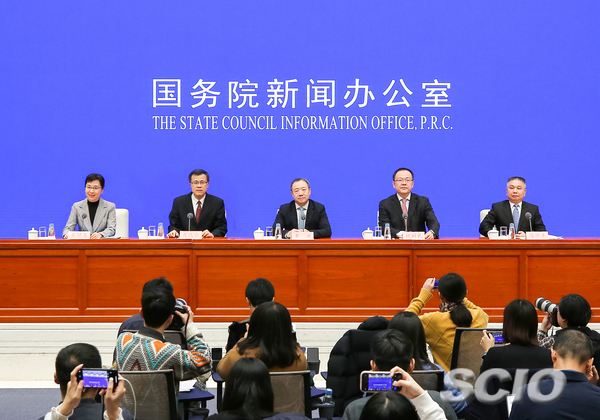
Xi Yanchun:
Ladies and gentlemen, good afternoon. Welcome to this press conference. Today, present with us are: Mr. Huang Hong, vice chairman of the China Banking and Insurance Regulatory Commission (CBIRC); Mr. Zhu Shumin, CBIRC vice chairman; Mr. Xiao Yuanqi, CBIRC chief risk officer, director of general office and spokesperson; and Mr. Ma Xueping, CBIRC chief accountant. They will introduce how China's banking and insurance sectors have performed, how they have served the real economy and controlled risks.
Now, I'll give the floor to Mr. Huang Hong.
Huang Hong:
Friends from the media, good afternoon. It's a great pleasure to meet you here. I'd like to thank you for your long-term attention and support toward the work we do in the area of financial regulation. Last Friday, the CBIRC convened a meeting to discuss our work in this field. At the meeting, we reviewed last year's work, analyzed the current economic and financial situation, and made plans for our work this year.
In 2019, the CBIRC continued to uphold Xi Jinping Thought on Socialism with Chinese Characteristics for a New Era, carefully implemented the decisions and plans made by the Communist Party of China (CPC) Central Committee and the State Council, and further improved the leadership of the CPC and the building of the Party in the banking and insurance sectors. We continued to enhance the financial sector's service to the real economy, made resolute efforts to guard against and defuse financial risks, further carried out reform and opening-up, and promoted the quality development of the banking and insurance sectors. So far, both sectors are developing well and their ability to serve the real economy has been further enhanced. In major areas, progress has also been made in the managing and tackling of risks. Supply-side reform in the financial sector has also been deepened and the management of the financial sector has been improved. Overall, a solid foundation has been laid for the continued quality development of the industry.
In 2020, the CBIRC will rally even closer around the CPC Central Committee with Comrade Xi Jinping at its core. We will strengthen our consciousness of the need to maintain political integrity, think in terms of the big picture, follow the leadership core, and keep ourselves aligned with it. We will also increase our confidence in the path, theory, system, and culture of socialism with Chinese characteristics; resolutely uphold General Secretary Xi Jinping's core position in the CPC Central Committee and the Party as a whole, and resolutely uphold the CPC Central Committee's authority and its centralized and unified leadership. We will give high priority to achieving the goal of building a moderately prosperous society in all respects and remain committed to the general principle of pursuing progress while ensuring stability. We will give our full support to the quality development of the Chinese economy, further implement the reform and opening-up policy, and stay alert to guard against and defuse financial risks.
Now, I'd like to answer some of your questions with the help of the other spokespersons. Thank you.
Xi Yanchun:
Thanks for Mr. Huang's brief introduction. Now, the floor is open to questions. Please identify your media outlet before raising your question.
CCTV:
This year is the last year for the three tough battles on risk management, poverty reduction and pollution control. What did the CBIRC do last year to guard against and defuse major financial risks? And what are the plans for this year? Thank you.
Huang Hong:
Thank you for your questions. I'll answer them. In 2019, the CBIRC carefully implemented the decisions and plans made by the CPC Central Committee and the State Council. We continued to enhance financial regulation, resolutely rectified unlawful market practices, and carefully tackled major risks. We have achieved a balance between stable growth and risk control, and won the crucial war of guarding against and defusing financial risks. Generally speaking, we have accomplished the following:
First, we have placed effective controls on credit default risks and increased our efforts to identify and address non-performing loans. In 2019, the total value of non-performing loans we handled hit 2 trillion yuan. All loans that remained unpaid 90 days after their due date in commercial banks had been regarded as non-performing loans. We have also steadily reduced enterprise debt risks. We established the creditor committee mechanism, with approximately 19,200 creditor committees set up nationwide. The total amount of market-based swapping of debt has reached 1.4 trillion yuan. Overall, these measures have helped enterprises reduce their leverage and debts and increase their profits.
Second, we continued to dismantle high-risk shadow banking. We further standardized interbank, finance, off-balance sheet and trust businesses; reviewed and cut financial assets with complex structure, tending to divert from the real economy, or involving contagion risks. As a result, risks from shadow banking and cross-industry financial businesses have continued to diminish. Over the past three years, the size of shadow banking dropped by 16 trillion yuan from its historical peak.
Third, we effectively managed risks in the online lending industry. Risks in the online lending industry have declined dramatically. By the end of 2019, China had 248 online lending agencies in operation, a decrease of 76% from the beginning of the year. The number of agencies and borrowers as well as the debit balance all fell for 18 consecutive months.
Fourth, we made consistent efforts to address acute problems in the financial sector. The number of problems in the market have fallen steadily, and any increases have also been effectively contained. A number of major illegal fund-raising cases have been severely investigated and dealt with. We have also intensified our oversight and accountability mechanisms. Last year, we punished 2,849 banks and insurance agencies, held 3,496 responsible officials to account, and handed out a total of 1.45 billion yuan in fines and confiscations.
Fifth, we gradually dealt with troubled financial institutions. The CBIRC, in collaboration with the People's Bank of China, took over control of Baoshang Bank, and steadily pressed ahead with the restructuring and risk mitigation of Hengfeng Bank and the Bank of Jinzhou.
Sixth, we resolutely curbed the financialization and any potential bubbles in the real estate market. We investigated and punished the illegal flow of banking and insurance funds into the real estate sector. Consequently, the growth rate of real estate loans has decreased by 3.3 percentage points year on year.
Huang Hong:
2020 is the final year for us to finish the building of a moderately prosperous society in all respects and complete the tasks set out in the 13th Five-Year Plan. 2020 will also be a year for the decisive victory against financial risks. The CBIRC will continue to guard against risks as planned, make efforts to win the hard battle against potential risks with determination, and adhere to the bottom line of preventing systemic risks. The following are the tasks that are high on our agenda this year.
First, we will properly deal with high-risk institutions, enhance accountability of various parties, do a good job on coordination, cooperation and policy guidance, as well as optimize the recovery and resolution mechanism of banking and insurance agencies.
Second, we will continue to dismantle shadow banking and significantly reduce high-risk businesses to prevent its resurgence.
Third, we will strengthen the supervision over the quality of assets, continuously increase penalties for non-performing assets, and improve the accuracy of asset classification.
Fourth, we will firmly implement policies to contain housing market speculation, strictly observe regulatory rules such as the management of credit risk concentration, and prevent the illegal flow of credit funds into the real estate market, as well as continue to curb its financialization and any potential bubbles that may emerge.
Fifth, based on the premise of national stability, we will severely punish or prosecute activities of financial groups that were illegally established that are in violation of laws and regulations. We will also manage their liquidation well, retrieve illicit money and losses, as well as promote their reform and restructuring.
Sixth, we will push forward the campaign against online lending and do a good job in disposing their existing assets. We will also ensure that closed financial institutions exit the market or transform themselves into other businesses, as well as enhance regulations on online insurance.
Seventh, we will continue to work together with local governments to deepen the reform of state-owned enterprises, accelerate economic restructuring, and defuse hidden debt-related risks.
Eighth, we will guard against and defuse external risks, step up stress tests for banking and insurance agencies, and improve our response plans to stabilize market expectations.
Ninth, we will further strengthen weaknesses in regulation by promoting the use of supervision technologies, speeding up the building of a regulatory big data platform, improving regulatory systems, and enhancing the ability of regulatory officials to impose stronger and more effective regulation. Thank you.
Economic Daily:
At present, China faces increasing downward pressure on economic growth and some enterprises have even faced difficulties in their operations. Against this backdrop, what concrete measures have been taken by banking and insurance agencies to support the real economy, and how can profitability and gain for enterprises be increased? Thanks.
Zhu Shumin:
Under the current circumstances where economic growth is slowing in our country, the China Banking and Insurance Regulatory Commission has taken the initiative to motivate banks and insurers to continuously strengthen their support in the key areas and weak links in China's economic and social development. It is also urging them to help fulfill the effective financial needs of the real economy and to help ensure stability in employment, financial operations, foreign trade, foreign investment, domestic investment, and expectations. In 2019, the banking industry witnessed an increase of 17 trillion yuan in loans, which marked a year-on-year growth of 1.1 trillion yuan. The insurance industry provided about 6,470 trillion yuan in insurance for the entire nation, and claims and payouts totaling 1.29 trillion yuan. These are the main areas of our work:
First, in the transition period when new economic growth drivers are replacing the old ones, efforts have been made to provide better financial services for high-quality economic growth, to strengthen financial support to the advanced manufacturing industry, strategic emerging industries and low-carbon circular economies, and to promote industrial transformation and upgrading. By the end of last year, loans provided to the manufacturing sector by banks increased by 780 billion yuan compared to the beginning of the year, and the green credit balance of 21 major banks exceeded 10 trillion yuan. In terms of promoting financial services for technology enterprises, over 750 technological branches of banks and specialized technological financial institutions have been set up throughout the country. The outstanding balance of bank loans to technology enterprises exceeded 4.1 trillion yuan, an increase of 24% compared to the beginning of 2019. In addition, strong financial support has been given to the coordinated development between regions and construction of major projects. By the end of 2019, the outstanding balance of bank loans to infrastructure construction reached 29.2 trillion yuan, an increase of 2.8 trillion yuan compared to the beginning of the year. We have also promoted the establishment and launch of various investment plans by insurance agencies. At present, they have supported the Yangtze River Economic Belt and Beijing-Tianjin-Hebei Coordinated Development Project with more than 600 billion yuan and 250 billion yuan in capital respectively.
Second, efforts have been made to effectively alleviate the problems of difficult and expensive financing. We have continuously standardized the fees charged by financial institutions and encouraged banks to provide separate credit lines for inclusive finance. We have also implemented preferential internal pricing for internal capital transfers, increased support for renewals, and increased the proportion of credit loans. As we all know and as has been widely reported last year, by the end of 2019, the outstanding balance of bank loans to small and micro enterprises was 11.6 trillion yuan, marking a year-on-year increase of 25%. The number of enterprises with credit balances was more than 21 million, an increase of 3.8 million compared to the beginning of the year; and the average interest rate of loans granted for first time to small and micro enterprises decreased by 0.64 percentage point compared to the 2018 average.
Third, efforts have been made to continuously strengthen financial services for private enterprises. Adhering to the "two unwaveringly" requirements; which are to unswervingly consolidate and develop the public sector, and unswervingly encourage, support, and guide the development of the non-public sector; banks and insurance agencies are required to be non-discriminatory and equal in their treatment of the different economic sectors. By establishing a mechanism that ensures no one who has fulfilled their duties is held liable, strengthening internal performance assessments and innovating on products and services, we have driven banks to establish a long-term mechanism under which banks dare to, are willing to and able to grant loans to private enterprises. At the same time, by setting up creditor committees and implementing debt-to-equity swaps, we have helped some enterprises overcome their difficulties. At present, there are about 19,000 creditor committees nationwide and 14,000 of them concerning privately-owned enterprises.
Fourth, efforts have been made to support the development of public programs. We have conducted home service financial innovations in ten pilot cities including Beijing, Tianjin and Shanghai to help develop community services such as elderly care, housekeeping and childcare. We have also continued to develop commercial pension insurance and commercial health insurance. From January to September of 2019, the pension annuity insurance and commercial health insurance premiums were 41.5 billion yuan and 567.7 billion yuan respectively. We have also cooperated with the Ministry of Agriculture and Rural Affairs to strengthen support to hog production and deepened the pilot program that uses insurance capital to support small agricultural enterprises. From January to November of 2019, agricultural insurance provided 3.5 trillion yuan worth of risk guarantees for 178 million insured agricultural households and paid 52.5 billion yuan in indemnities to 44 million agricultural households.
As our next step, the China Banking and Insurance Regulatory Commission will, based on the arrangements of the Central Economic Work Conference, focus on developing policies concerning the real economy. These policies will aim to help provide effective financial services, solve the financing problems of private enterprises and small and micro enterprises, and improve the financial services in the manufacturing and social service sectors so as to improve the quality and efficiency of financial services for the real economy. Thank you.
Market News International:
I have two questions. We recently learned that the CBIRC mentioned at a meeting that it will cooperate with local governments to resolve hidden debt risks. How will this be implemented? Another question is that since the second half of last year, commercial banks have increased loans to help local governments refinance their debts. Is there any relevant information and data to share in this area? Thank you.
Xiao Yuanqi:
Thanks for your question. Your question is one of the topics mentioned in this work meeting. Regarding the hidden debts of local governments, the CBIRC mainly guides banks and insurers to deal with them in accordance with existing regulations and policies. On the one hand, we must "open the door" and encourage these institutions to actively participate in some projects with good performance and cash flow. We encourage the issuance of local government bonds, which can be sold in commercial banks so that local companies and individuals can purchase them at bank counters. For the special bonds issued by local governments, banks and insurance institutions are the main investors. On the other hand, we must prevent relevant risks. Especially for hidden debts that violate regulations, banks and insurers must follow their own risk management process to strictly control risks in accordance with existing regulations and policies. The data you just mentioned will be provided to you after the meeting. Thank you.
China News Service:
As financial products have now entered the lives of millions of families, all sectors of society are paying more and more attention to the protection of the rights and interests of financial consumers. We would like to know what measures the CBIRC had taken to protect the rights and interests of these consumers for the past year? In particular, what achievements have been made in protecting consumers from the infringement of their rights and interests?
Huang Hong:
This question is for Mr. Ma to answer.
Ma Xueping:
The protection of consumers is indeed one of the priorities of the regulator. In 2019, the CBIRC focused on the main consumer pain points and the challenging issues. It adopted special measures, on-site inspections, interview mechanisms and public disclosure to punish and rectify the behavior of banks and insurers that infringed on consumers' rights and interests.
First, we opened channels for complaints and placed great importance on the demands of the public. In the past year, the regulator directly received 31,300 complaint cases related to the banking and insurance industries, which marked a year-on-year increase of 69%. We have carefully dealt with every complaint and replied to consumers promptly.
Second, we conducted targeted inspections and interviews. Last year, we carried on-site inspections that were closely related to consumer rights, such as fees, the credit and consignment business, financial services, sales compliance, and the authenticity of customer information. Such supervision was carried out during the whole process of bank and insurance operations. At the same time, in accordance with the principles of early warning, early identification, and early disposal, we made inquiries with 63 institutions to discuss the hidden risks we uncovered during our inspections. We also urged financial groups to establish and improve their consumer protection systems and mechanisms, and enhance their consumer protection management levels.
Third, we increased the level of public disclosure. In response to social concerns, and to give full play to the role of public supervision, we released reports on consumer complaints every quarter, and urged institutions to strengthen control over their businesses and take responsibility for handling complaints. We even published five cases of infringement to deter bad actors in the industry. We also carried out risk warnings based on the cases, and improved public awareness on risk prevention and self-protection.
Fourth, we cracked down on infringements on the rights and interests of consumers. Last year we launched a three-month-long campaign to focus on the key areas where consumer rights had been infringed on over the years. By the end of last year, all banks and insurance institutions had completed their self-inspections. We carried out spot checks on 2,096 banking and insurance institutions, including more than 50,000 branches. We urged these institutions to revise 2,520 items, and some relevant personnel were also held accountable.
In general, last year, through the rectification of the chaos that infringed on consumers' rights and interests, special campaigns to tackle the problem of ignoring the interests of the public , on-site inspections and supervision on how consumers' complaints were addressed, the China Banking and Insurance Regulatory Commission urged banks and insurance institutions to check and pay consumers 4.09 billion yuan in refund and compensation. This has helped improve the people's sense of gain.
I will report on this year's work plan. This year, we will continue to strengthen the supervision of consumer protection as a continuation of our work last year. First, we will establish rules and regulations and systems to urge institutions to fulfill their main responsibilities and to improve the consumer rights protection system and mechanism. Second, we will introduce a consumer protection supervision evaluation system, which is an innovative approach to supervision, to carry out the multi-dimensional evaluation of consumer protection work by the institutions. Third, we will promote the development of a multi-resolution mechanism for financial disputes, and provide people with multiple and efficient channels for resolving complaints and disputes. Fourth, we will continue to promote the follow-up rectification of problems found in the rectification of irregularities concerning consumer protection, and urge all institutions to analyze the existing problems, find the root causes of the problems, tackle areas of weaknesses, improve the governance system, and establish a long-term effective mechanism, so as to ensure that illegal behaviors which violate consumer rights and interests are curbed.
Finally, I would like to take this opportunity to talk about the issues related to financial consumer education. As a regulatory authority, we have helped consumers acquire financial knowledge and improve their financial literacy through various financial knowledge education activities. At the same time, we also hope that the financial consumers can actively learn and acquire financial knowledge, learn to examine and evaluate their own ability to bear risks, establish a sense of risk, and cultivate their habits around rational consumption and investment. Thank you.
Hong Kong Economic Herald:
Mr. Zhu just mentioned increasing support for private, small and micro businesses in renewing loans, which is also the "last mile" in solving the financing difficulties faced by small and micro businesses. What measures have been taken to help private, small and micro businesses get first-time loans? This is also the "first mile" in helping them tackle financing difficulties.
Zhu Shumin:
The first-time loan is a bit more demanding than the renewal loan. In this area, all banks attach great importance to the first-time loan business. Some media outlets may have noticed that, under the guidance of the China Banking and Insurance Regulatory Commission, the China Banking Association has advocated the nation's banks and financial institutions to launch a special financing campaign --"Hundreds of banks go into tens of thousands of enterprises". This was fully implemented nationwide last November. At the early stage, we had 5 provinces and municipalities carry out pilot trials and they achieved very good results. Next, the China Banking and Insurance Regulatory Commission will guide the China Banking Association to advocate the improvement of banking services across the country. Based on the basic accounts opened by small and micro enterprises, a one-to-one docking mechanism will be established to allow banks to change their operations from that of being a "zuo shang" ("sedentary merchant") to "xing shang" ("itinerant trader") and conduct in-depth studies on the financing needs of small and micro enterprises. Voluntary docking on the basis of the full exchange of information between banks and enterprises will help realize a positive interaction between banks and enterprises. Preliminary statistics show that nearly 8 million small and micro enterprises operating normally and paying taxes have been included in the financing campaign. This data is mainly given to us by the tax bureaus. We will continue to look at enterprises' financing situation according to their tax records. If there are tax records but no bank loans, we will provide relevant information to the bank where the company has opened a basic account, and this bank will go to the enterprise to learn about its financing needs and offer services.. In fact, this is what you just mentioned -- the release of the first loan. At present, the majority of banks are taking the initiative to go to the enterprises and provide their services and carry out docking. This work is expected to be completed by the end of April this year. The campaign is carried out across the whole country, and is a very popular project that is welcomed both by the government as well as enterprises.
Yicai TV:
The new rules on asset management have been implemented for almost two years. How is the current implementation of banks' stock assets? The transition period is set at the end of this year. I want to know how we can ensure that banks can smoothly pass through this transition period before this date. Will the restrictions be relaxed if banks cannot reach what is expected of them in time? Or will you relax other criteria in the aspect of implementation?
Xiao Yuanqi:
All aspects of the transition period of the new rules on asset management are of great concern. On the whole, after the introduction of the new rules on asset management and the subsequent measures issued by the China Banking and Insurance Regulatory Commission on relevant bank wealth management subsidiaries and bank net capital management, all the banks have progressed smoothly and in an orderly manner. The stock asset management business is also being regulated in accordance with the new asset management rules and related regulations and requirements. This year is a very important year for the transition of the new asset management regulations. We require banking institutions to conscientiously implement the new asset management regulations and related financial management rules, seriously defuse the risks of stock assets, and successfully fulfill related tasks during the transition period.
On the other hand, some banking institutions have a relatively large stock inventory of asset management products. Before the introduction of the new asset management rules, the inventory was relatively large. If you want them to fully resolve it during the transition period, certain individual institutions will still have some difficulties. But we require them to formulate rectification plans, including medium and long-term solutions. And the requirement is that, in principle, they must resolve this during the transition period. For some institutions in particular with large stocks and which face difficulties during the transition period, we will also study related arrangements to ensure that asset management products, especially bank wealth management products, can be regulated in a smooth and orderly fashion in the future. Some flexible arrangements will also be given to certain individual institutions as deemed appropriate. Thank you.
Bauhinia Magazine:
Earlier Mr. Zhu spoke about the difficulties and high costs of financing faced by enterprises.
Could you please give some details about the achievements made by the China Banking and Insurance Regulatory Commission in serving the real economy and alleviating the difficulties faced by enterprises in accessing affordable financing? What substantial results have been achieved and what measures have been taken?
Zhu Shumin:
We have taken many measures, and this year we will start by focusing on improving regulations. We are drawing up the measures on the supervision, administration and appraisal of commercial banks' financial services for small and micro businesses. We will develop an evaluation method and index system which centers on credit services and covers the overall business processes of financial services provided by commercial banks for small and micro businesses. The measures will be released in the near future. The regulation will incorporate many of the effective measures we have adopted in the early stages, including the renewal of loans and first-time loans that people are concerned about, as well as some work requirements for commercial banks. There will be more clarity when the measures are unveiled. I'll stop here. Thank you.
CNR:
The Spring Festival is coming and the issue of banks attracting deposits has become a hot topic again. Small and medium-sized banks may face difficulties in winning over savers. My question is what measures are the China Banking and Insurance Regulatory Commission taking to deal with this. I noticed that the auto insurance was talked about specifically at the recent 2020 national banking and insurance working conference. Why was the issue of the marketization of auto insurance ratio raised, but not of health insurance and commercial pension insurance? Are there any specific measures to help develop and improve the "third pillar" of China's pension insurance system? Thanks.
Huang Hong:
You asked three questions. I will give the floor to Mr. Xiao for the question about banks' attracting deposits. And I will answer the other two.
Xiao Yuanqi:
The race to attract deposits and win over savers is not as serious as in the past. Because we have regulations and require banks, especially small and medium-sized banks, to enhance their ability to manage assets and liabilities, there has been much letup in such race these years. You mentioned that there would be a "war to attract deposits," which reminds us to study our measures taken during the holiday period. On the one hand, we must ensure that there is enough capital in the market to meet the peoples' demand during the holiday. At the same time, banks, no matter big or small, should have sufficient and reasonable liquidity because of the demands during the holiday. According to the regulatory data, small and medium-sized banks' indices of liquidity are good, and indices such as liquidity coverage ratio are well above the regulatory requirements. However, we will pay more attention during this period. In the matter of attracting deposits, we have requirements and regulations. Banks should not do anything in violation of these provisions and a red line must not be crossed in an effort to win over savers. There are stiff penalties for offenders who fail to maintain the normal order of the deposit market.
Huang Hong:
Let me answer the latter two questions. We are all familiar with motor vehicle insurance or auto insurance for short. Motor vehicle insurance has long been a main type of insurance for property insurance companies. In terms of the actual figures last year, the incomes from auto insurance premiums reached 818.9 billion RMB, accounting for 63% of the total premium of property insurance. In other words, 63% of the premiums of property insurance companies came from auto insurance. Auto insurance plays a crucial role in people's daily travel, and it is a very important issue for millions. In recent years, the CBIRC has strengthened its supervision of auto insurance. Although our supervision is relatively stricter than before, the long-standing deep-seated problems have not been fundamentally resolved. The media often reports that the problems of high prices, high fees, extensive management, disorderly competition, and distortion of data still exist. Hence, accelerating auto insurance reform is an urgent task for the CBIRC. Therefore, in 2020, we are placing the regulatory work concerning auto insurance system on the agenda. Auto insurance system has undergone some reforms over the years, but I think they have not been enough. The reforms that really touch on the fundamental interests and that target deep-seated issues, have in truth not yet begun. In 2013, we carried out a thorough reform of our health and pension insurance systems, that is, the reform of the life insurance rate formation mechanism. The auto insurance system reform should also be market-oriented, that is, it should adhere to the direction of market-oriented reform.
In general, to undertake the next steps of reform, we need to first understand the overall requirements for reform. The basic principles of the reforms should be to keep the auto insurance system market-oriented, supervised, and guided. We should adjust the total volume, optimize its structure, expand the scope of guarantees, improve the efficiency, streamline its administration and coordinate its promotion with other reforms. The second issue is to pay attention to the main content of the reform. We need to coordinate and adopt a combination of reforms in the compulsory insurance for vehicle traffic accident liability and commercial insurance, a combination of terms and exchange rate reforms, a combination of guarantee and service reforms, as well as a combination of market and regulatory reforms. The third is to ensure the pace of reform. At present, we are formulating a specific plan for the comprehensive reform of auto insurance system, and this plan is being widely consulted. The CBIRC will formally implement comprehensive auto insurance system reforms at an appropriate time this year. This is the answer to your second question.
The third question you raised is about the reform and development of the third pillar of the pension system, the individual commercial pension insurance. In the speech I made at the FORTUNE Global Forum on Saturday, I spoke about opinions and suggestions for the next step of reform of the third pillar. To sum up:
First, we must accelerate the top-level design of the third pillar reform to incorporate it into major national reforms, at the same time, taking the development of the third pillar as a key national strategy and incorporate it in the "14th Five-Year Plan" .
Second, we must strengthen policy support. In recent years, some policies have been introduced on the construction of the third pillar. For example, pilot programs for individual tax-deferred pension insurance schemes that the media has concerned about have officially been launched in Fujian, Shanghai and Suzhou.
Third, we must increase our efforts to promote the third pillar, especially individual pensions. We have not done enough in this area in the past.
Fourth, we must establish an individual pension system. On the first working day of 2020, I attended a policy briefing here, during which I gave some opinions on the development of commercial pension insurance. I would like to emphasize again today that the development of the third pillar, the establishment of various types of pensions, is both an opportunity and a major challenge for commercial insurance institutions. The liability cycle of personal pensions is very long, it has to cross multiple economic cycles and undergo a series of tests such as longevity and interest rate risks. Therefore, the capacity building of commercial insurance institutions is the main task currently facing the CBIRC, which includes investment capacity, actuarial pricing and professional team-building ability. These are four aspects of work related to the third pillar of the pension system.
21st Century Business Herald:
Among the nine key areas that the CBIRC will work on to guard against and defuse financial risks mentioned by Mr. Huang earlier, the first is to properly deal with high-risk financial institutions. How do regulatory bodies view the risks in small and medium-sized banks as well as insurance institutions? What are the measures taken in this regard? Also, Mr. Huang mentioned that strict measures will be undertaken to investigate and deal with financial groups that have been established in violation of prevailing laws and regulations. How do the authorities identify these financial groups and what are the measures that are in place to deal with them?
Huang Hong:
Thank you for your two questions. Let's give the floor to Mr. Xiao.
Xiao Yuanqi:
Thank you. Establishing risk monitoring for the banking and insurance sectors is one of the main responsibilities of the CBIRC. Mr. Huang, Mr. Zhu and Mr. Ma are all experts in this field.
Regarding your first question on how regulatory bodies view risks in high-risk financial institutions, generally speaking, risks in banks and insurance institutions are manageable on the whole. The indicators, either on these institutions' performance, or of the risk regulation, have remained within an appropriate range. According to a series of data points we released recently, the operations, performance, as well as core indicators of risk regulation toward commercial banks and insurance institutions have stayed promising. Nevertheless, there are indeed some small and medium-sized institutions facing comparatively high risks, and some of these risks are emerging due to various reasons. In regard to these problems, the CBIRC has remained vigilant and investigated the institutions concerned, managing them through a list system and defusing the risks accordingly. In many cases, this has been achieved by conventional means. For example, 2 trillion yuan of non-performing assets were disposed of last year, which, in essence, resolved the credit risks of the related institutions. Risks related to non-performing assets, either existing or newly-added ones, have all been defused through proper disposal and management. In addition, these institutions are also required to conduct strict screening management and risk control to newly-added loans. There are also many other existing conventional regulatory measures to defuse the risks.
In addition to conventional methods, some proactive measures need to be taken toward the high-risk small and medium-sized financial institutions. For example, as Mr. Huang mentioned earlier, last year, the CBIRC, together with the People's Bank of China, took over Baoshang Bank Co., Ltd in accordance with the law. It also handled risks, carried out reforms and the reorganization of HengFeng Bank Co., Ltd and Jinzhou Bank Co., Ltd. These are all major moves in this regard. For other institutions, we also managed non-performing assets, introduced new strategic investors, and carried out mergers and reorganizations based on market principles and the rule of law. As for the risks in small and medium-sized institutions, we will also adopt comprehensive methods to resolve them this year, but different measures will be taken according to the specific circumstances of each institution.
The second problem relates to illicit financial groups. Since the start of 2017, we've adopted various measures to crackdown on illicit financial groups so as to further regulate financial markets and prevent risks, and this work is still ongoing. These illicit agencies have held shares in financial institutions through various illegal measures, such as circulating capital, making false capital contributions and becoming nominal shareholders. After joining the financial institutions, these agencies have been found to have conducted illegal actions, such as colluding for the transmission of illicit profits, and engaging in affiliated transactions, which have seriously interfered in the regular business activities of financial institutions. All such behaviors should be regulated and cracked down on. The construction of an institutionalized system will be our priority in the future, for example, we are working on measures to tighten the review of shareholders' eligibility and optimize shareholding management so that those professional financial agencies with outstanding expertise and a long-term credit record both at home and abroad can be introduced as major shareholders. We will also map out some medium- and long-term plans for the governance and development of companies. These are the measures we are going to adopt during the 2020 working conference to address the problem of illicit financial groups. Thank you.
Et Net News Agency:
Currently, the insurance products in Hong Kong and Macao are not available on the Chinese mainland, and the channels for investors from the Chinese mainland to directly invest in overseas financial products are relatively limited. I would like to ask how the connectivity of financial and insurance products within the Guangdong-Hong Kong-Macau Greater Bay Area can be improved upon? Moreover, the pilot mainland personal account opening service has been introduced in Hong Kong. Will this pilot eventually be fully launched?
Huang Hong:
You've raised two questions. One of them is about insurance, and the other is about the banking issue. I would like to answer the former. The issues regarding the development of the Guangdong-Hong Kong-Macau Greater Bay Area have been explained at the previous press briefing, however, I'm willing to provide some further information about it. The construction of the Greater Bay Area is a national strategy that is designed, arranged and promoted by General Secretary Xi Jinping. It is not only a new measure to break new ground in pursuing the opening up on all fronts in a new era, but also a further step in taking forward the practice of "one country, two systems." The China Banking and Insurance Regulatory Commission will take various measures to support the overall planning of the construction of the Greater Bay Area in the following aspects:
First, we strengthened the leadership in our organizational work and built a multi-party response mechanism. The China Banking and Insurance Regulatory Commission (CBIRC) set up the working group of the Guangdong-Hong Kong-Macao Greater Bay Area. Headed by the CBIRC's leader, the group has formulated meeting and working mechanisms in this area.
Second, we established a joint mechanism to hedge against financial risks in Guangdong, Hong Kong and Macao. In 2018, a joint working conference of Guangdong-Hong Kong-Macao banking supervision was held to set up a supervision and contact mechanism for the area, where working-level meetings are held regularly every year.
Third, we supported cooperation among Guangdong-Hong Kong-Macao insurance institutions to develop cross-border auto and medical insurance products.
Fourth, we supported the Nansha District of Guangzhou to develop featured financial services including shipping finance, technology finance, and aircraft and ship charters.
Fifth, we expanded the financial opening-up to Hong Kong and Macao. We implemented the policy decisions and plans of the CPC Central Committee and the State Council, and also participated in negotiations of several agreements on establishing closer trading ties between the mainland and Hong Kong as well as between the mainland and Macao. We also promoted the implementation of opening-up measures, including facilitating foreign investments, relaxing requirements for foreign investments to establish financial institutions and expanding the business scope of foreign financial institutions.
More recently, we are working on regulations to allow Hong Kong insurance institutions to establish after-sales service institutions in the Guangdong-Hong Kong-Macao Greater Bay Area. On the whole, we have strengthened our policy guidance in multiple aspects to promote the development of the area and to facilitate Hong Kong insurance institutions' operations in the mainland.
Xiao Yuanqi:
Mr. Huang made a comprehensive presentation on the financial cooperation and development in the Guangdong-Hong Kong-Macao Greater Bay Area. To sum up, we strongly support and actively promote all measures which benefit financial cooperation and consumer convenience in the Guangdong-Hong Kong-Macao Greater Bay Area.
Xi Yanchun:
Thanks to the speakers and thanks to the journalists. Today's briefing is hereby concluded.

