-
White Paper June 25, 2021
Content
-
June 25, 2021
Preamble
A country's political party system is a major component of its political framework and makes a critical contribution to democracy. The system best suited to a country is determined by its history, traditions, and realities. There are many types of political party system around the world, and there is not a single system that is good for all countries.
-
83618bdf-381d-4d8a-a57d-10bdd9e96d9a.jpeg)
June 25, 2021
I. China's Political Parties
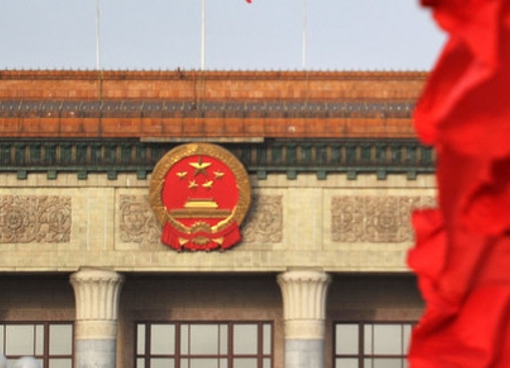
Political parties are an important force in state politics. Globally, there are numerous political parties of many types, differing in background, class basis, values, and political stance. They also play different roles in state affairs.
-
June 25, 2021
II. A Unique Political Creation
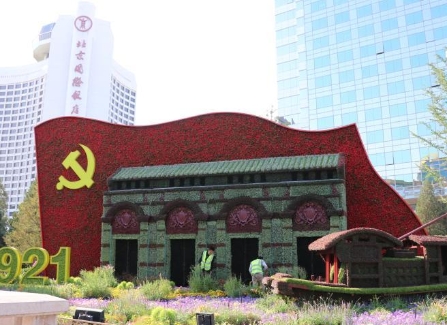
China's political party system is a result of adapting Marxist political party theory to the Chinese context. It is a unique political structure created by the CPC, the Chinese people, the non-CPC political parties, and non-affiliates. It sprouted from Chinese soil and evolved over time based on China's historical heritage, cultural traditions, and economic and social development.
-
June 25, 2021
III. Close Cooperation Between Political Parties
Over the years, the CPC has worked together with the non-CPC political parties, advancing side by side, withstanding all kinds of tests, and forming a new type of relationship featuring cooperation, unity and harmony.
-
d6e258bb-6f8d-4599-b96f-779f8bdae668.jpg)
June 25, 2021
IV. China's Political Party System Has Distinctive Characteristics and Strengths
Under the system of socialism with Chinese characteristics, the essence of people's democracy is that problems should be solved through consultation, and anything that concerns the public should be discussed by the public, through which the people are able to build the broadest possible consensus that reflects the aspirations and expectations of the entire society.
-
6a18bc8f-241d-4615-bca7-eeb2519651d9.jpg)
June 25, 2021
V. The CPC Consults with Other Political Parties and Non-Affiliates
Consultation is an important form of democracy in which the CPC and other political parties, on the basis of common political goals, carry out direct consultation on major policies and affairs of the state before decision-making and during policy implementation. It is an important part of the system of socialist consultative democracy. Non-affiliates also participate in the consultation.
-
e680aa92-9ab5-4744-9c08-56accc21e08c.jpg)
June 25, 2021
VI. The CPC Supports Other Political Parties and Non-Affiliates in Conducting Democratic Oversight
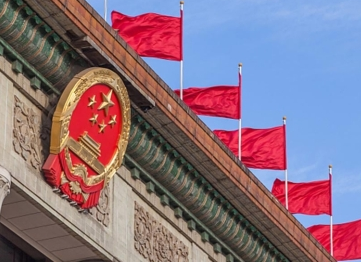
Democratic oversight of the CPC exercised by the non-CPC political parties and non-affiliates is an important way to leverage the strengths of China's political party system and is an essential requirement in modernizing China's system and capacity for governance. It plays a unique and irreplaceable role in the oversight system under socialism with Chinese characteristics.
-
June 25, 2021
VII. The CPC Cooperates with Other Political Parties and Non-Affiliates in Governing the Country
In the exercise of state power, the CPC and the other eight political parties, together with non-affiliates, work together in unity. This is an important institutional element of China's political party system. The CPC upholds equality, democratic consultation, and sincere cooperation to support other participants in jointly building state power at all levels of people's congresses, governments and judicial organs.
-
bd5c1cab-bb35-42cd-b42d-c1b30d697428.jpeg)
June 25, 2021
VIII. Non-CPC Political Parties and Non-Affiliates Provide Advice on Economic and Social Development
The non-CPC political parties and non-affiliates employ their strengths in gathering talent, pooling wisdom, and reaching out to the general public. They actively deliberate on and participate in the administration of state affairs. They are valued advisers on key national programs, and significant contributors to the development of all social undertakings.
-
7d8fd88f-e726-4020-a7ae-59773b117dbb.jpeg)
June 25, 2021
IX. The CPPCC Is an Important Political and Organizational Platform in China's Political Party System
The CPPCC is an organization of the Chinese people's patriotic united front, serving as a key mechanism for multiparty cooperation and political consultation under the leadership of the CPC. The CPPCC plays a major role in promoting socialist democracy in China. It is an important channel and specialized body for socialist consultative democracy, a key component of the state governance system, and a distinctively Chinese political institution.
-
June 25, 2021
Conclusion
China's political party system is the result of a historical process. It is a structure of enormous strength, creativity and vitality. It embodies the essence of Chinese traditions; it reflects the intrinsic requirements of socialism; it conforms to China's realities and its needs in state governance. As a basic component of China's political system, it contributes to China's development, national rejuvenation, and social progress, and is of great benefit to the people's wellbeing.