-
White Paper July 22, 2019
Contents
The State Council Information Office of the People's Republic of China published a white paper titled "Historical Matters Concerning Xinjiang" on Sunday.
-
July 22, 2019
Preamble
The Xinjiang Uygur Autonomous Region is situated in northwest China and in the hinterland of the Eurasian Continent. It borders eight countries: Mongolia, Russia, Kazakhstan, Kyrgyzstan, Tajikistan, Afghanistan, Pakistan, and India. It was a place where the famed Silk Road connected ancient China with the rest of the world and where diverse cultures gathered.
-
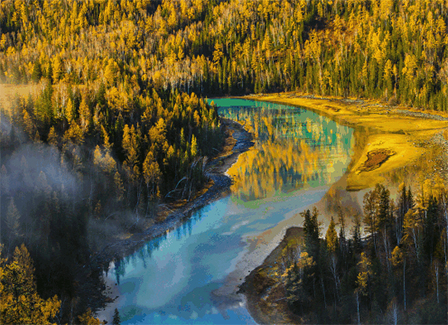
July 22, 2019
I. Xinjiang Has Long Been an Inseparable Part of Chinese Territory
Through the long formative process of turning China into a unified multiethnic country, many ethnic groups worked together to develop its vast territories and build the diverse Chinese nation. The unification of multiethnic China was a result of common efforts made by the whole Chinese nation, including the ethnic groups in Xinjiang.
-
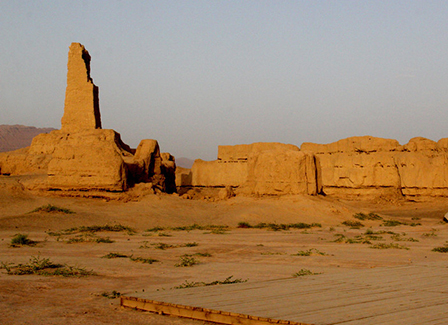
July 22, 2019
II. Xinjiang Has Never Been "East Turkistan"
Never in Chinese history has Xinjiang been referred to as "East Turkistan", and there has never been any state known as "East Turkistan".
-
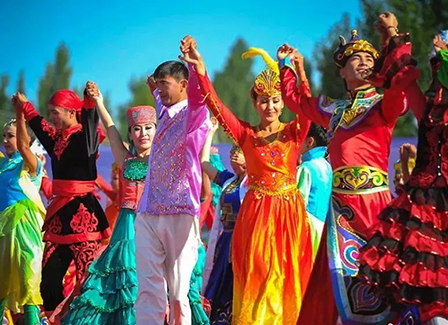
July 22, 2019
III. The Ethnic Groups in Xinjiang Are Part of the Chinese Nation
The ethnic groups of China, including those in Xinjiang, live together alongside each other. They are economically interdependent and embrace each other's culture, and are a unified whole that has become impossible to separate. They are members of the same big family.
-
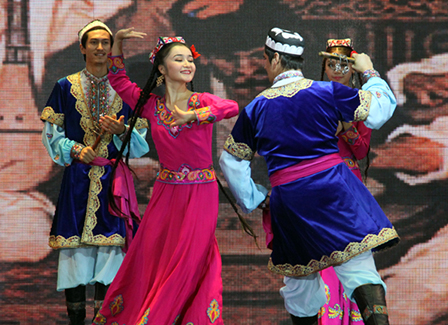
July 22, 2019
IV. The Uygur Ethnic Group Formed Through a Long Process of Migration and Integration
The main ancestors of the Uygurs were the Ouigour people who lived on the Mongolian Plateau during the Sui and Tang dynasties. Many different names were used in historical records to refer to this group of people.
-
July 22, 2019
V. Xinjiang Ethnic Cultures Are Part of Chinese Culture
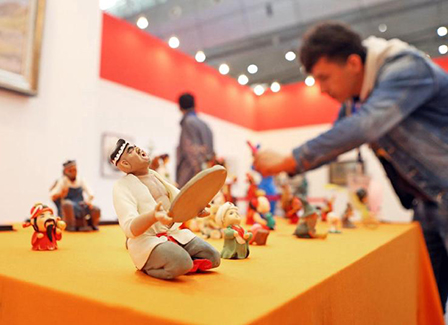
The ethnic cultures in Xinjiang always have their roots in the fertile soil of Chinese civilization and make up an inseparable part of Chinese culture. Well before Islamic culture spread into Xinjiang, all ethnic cultures in the region, including the Uygur culture, had prospered in the fertile soil of China's civilization.
-
July 22, 2019
VI. Multiple Religions Have Long Coexisted in Xinjiang
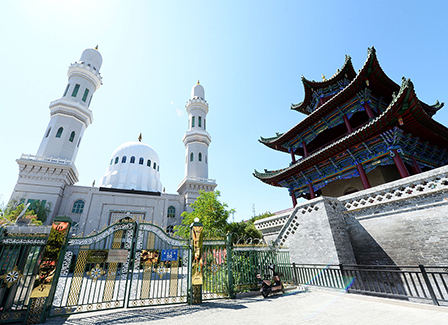
The history of Xinjiang shows that multiple religions have long coexisted there, with one or two predominant. The region's religious structure is characterized by blending and coexistence.
-
July 22, 2019
VII. Islam Is Neither an Indigenous nor the Sole Belief System of the Uygurs
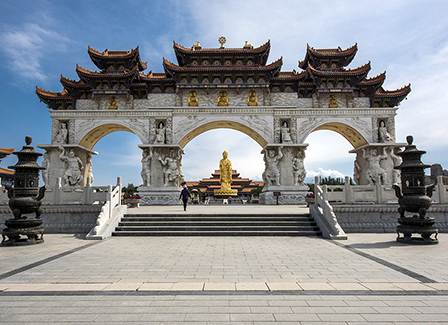
Primitive religion and Shamanism were practiced by the ancestors of the Uygurs before Zoroastrianism, Buddhism, Manichaeism, Nestorianism and Islam were introduced into the region. Today in Xinjiang, a significant number of people do not follow any religion, and many Uygurs follow religions other than Islam.
-
July 22, 2019
Conclusion
It is a matter of principle to correctly treat historical issues. The historical and dialectical materialist stance, viewpoint and methodology help us gain a clear understanding of our country and its history, ethnic groups, culture, and religious affairs. They help us to properly understand and treat historical issues concerning Xinjiang. This is essential to maintaining the Chinese people's sense of cohesion and identity, the country's unity and long-term stability, and the security, stability and development of a wider region.
-
July 22, 2019
Appendix
