SCIO briefing on China's economic performance in July 2026
China.org.cn | October 28, 2026
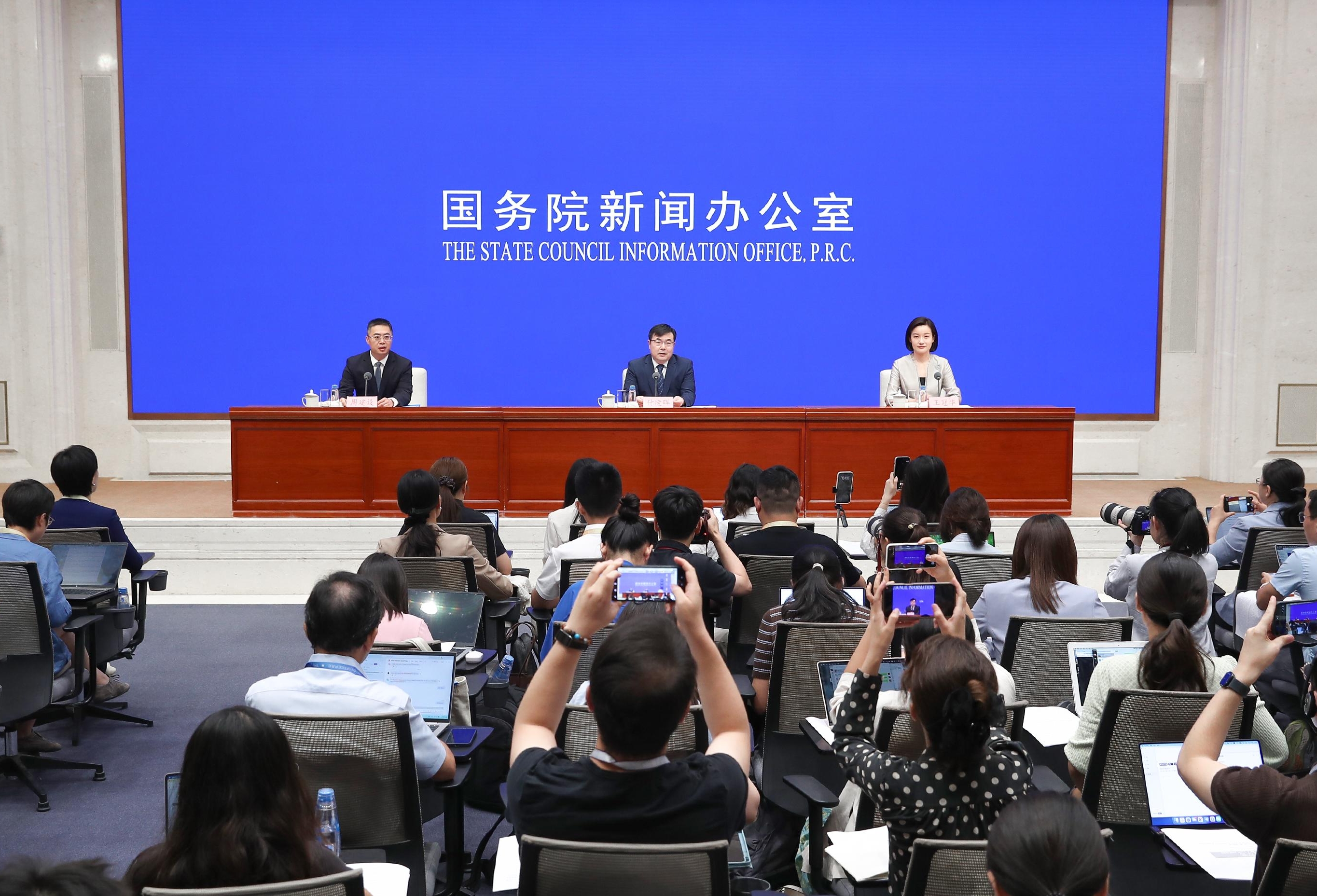

Market News International:
Core CPI rose 0.9% year on year in July, pointing to subdued underlying price pressures. How does the current inflationary environment affect policymakers' objective of promoting a reasonable recovery in the price level? And what combination of monetary, fiscal, and consumption support measures could be considered if underlying inflation fails to strengthen? Thank you.
Fu Linghui:
I would like to invite Ms. Wang to answer your questions.
Wang Guanhua:
Thank you for your questions. Consumer prices, closely linked to macroeconomic stability and peoples livelihoods, are closely watched by the public. In July, CPI registered a moderate upward trend, rising 0.5% year on year, or down by 0.1% month on month. The increase is 0.5 percentage point lower than in the previous month, mainly due to the impact of international factors. In July, driven by the downward fluctuation of international crude oil prices, domestic gasoline prices dropped by 10.7% month on month. The decline widened by 5.8 percentage points compared with the previous month, dragging the CPI down by roughly 0.35 percentage point on a monthly basis. Domestic gasoline prices rose 1% year on year in July. The growth rate is 16 percentage points lower than that of the previous month, contributing to a decline of approximately 0.45 percentage point in the year-on-year CPI growth rate.
Food and energy prices are highly susceptible to short-term factors. To get a full picture of price dynamics, we need to look beyond the headline CPI and also track the changes in core CPI, which excludes food and energy prices. In July, core CPI rose 0.3% month on month, or 0.9% year on year, with both increases remaining relatively stable. Notably, prices of some industrial consumer goods and services increased significantly, reflecting the supportive effect of the upgrading and expansion of household consumption. In July, prices of industrial consumer goods excluding energy rose by 1.5% year on year, with prices of gold jewelry and personal care products up 24.6% and 1.7%, respectively. Artificial intelligence is driving iterative upgrades in consumer electronics, leading to robust demand and higher prices for related products. Computers, tablets and mobile phones have seen both year-on-year and month-on-month price increases. In addition, the residents' increasing demands for diversified, personalized, and high-quality services led to a 0.7% year-on-year increase in service prices in July. Among them, prices of medical services, domestic services, and dining out increased by 4.3%, 1.3%, and 1.0% year on year, respectively. As demand for cultural tourism increased during the summer vacation, prices of travel agency services, hotel accommodation, air tickets, and vehicle rentals all rose from the previous month.
The evaluation of price movements requires more than a single month of data. One must examine the cumulative shifts over consecutive periods in order to draw a more objective conclusion. In the first seven months, China's CPI rose 0.9% year on year, while core CPI rose 1.1%, both representing a notable rebound, when compared with the full-year figure of last year and the same period last year. Overall, there have been minor disruptions in certain domestic sectors, caused largely by international factors, yet the trend of moderate consumer price increases remains unchanged. Whether prices can rebound reasonably depends primarily on domestic demand and the supply-demand relationship.
A recent meeting of the Political Bureau of the CPC Central Committee emphasized the need to optimize the implementation of coordinated fiscal and financial policies to promote domestic demand, expand the supply of high-quality products tailored to diverse consumer groups, and unlock potential in service consumption. Governments and departments at all levels are actively translating these guidelines into action. Going forward, a series of policies aimed at expanding domestic demand and stimulating consumption will be rolled out in phases. Service consumption is expected to release further momentum, and the rapid iteration of new products will generate new consumption demand. All of these will continue to underpin a moderate recovery in the CPI. Against this backdrop, China's prices are expected to maintain a moderate upward trajectory in the second half of the year. Thank you.