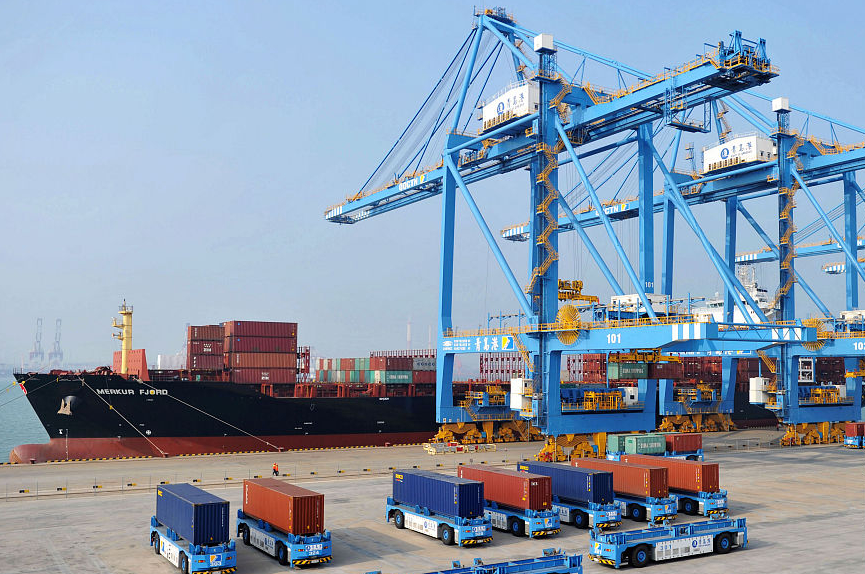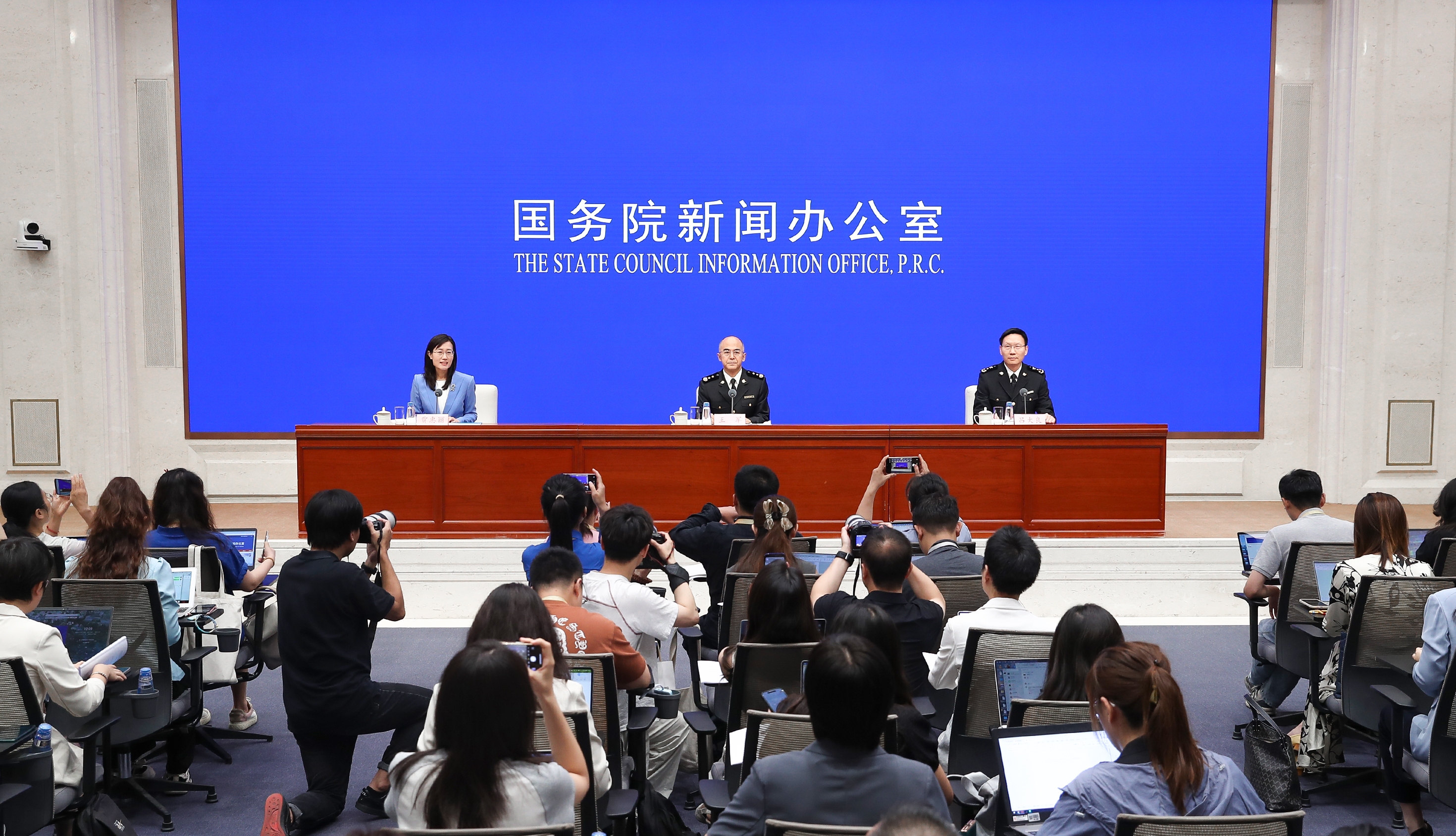

SCIO briefing on China's import and export in H1 2026
Beijing | 10 a.m. July 14, 2026
Speakers

Wang Jun, vice minister of the General Administration of Customs of China (GACC)
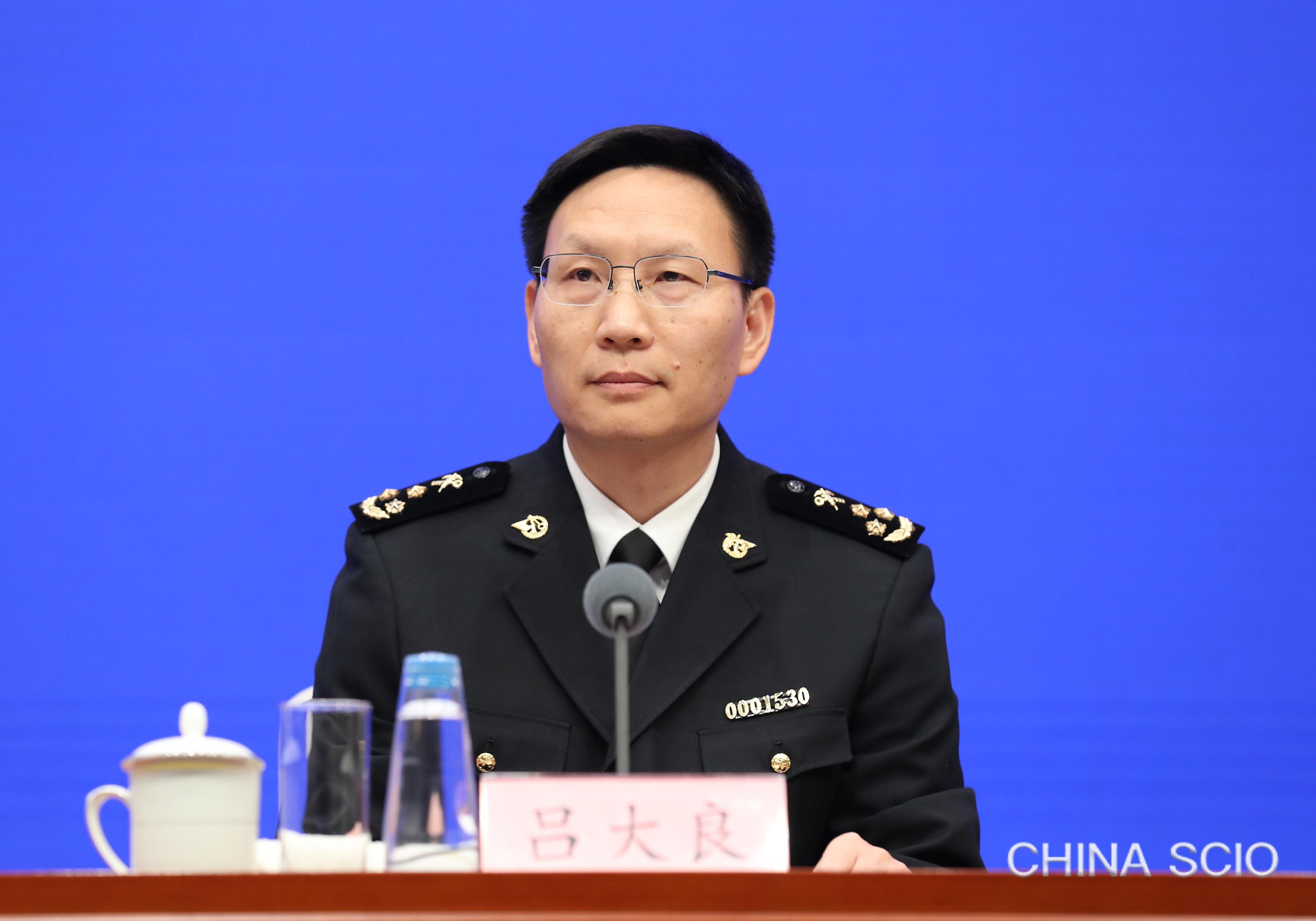
Lyu Daliang, spokesperson of the GACC and director general of the Department of Statistics and Analysis of the GACC
Chairperson
Speakers:
Mr. Wang Jun, vice minister of the General Administration of Customs of China (GACC)
Mr. Lyu Daliang, spokesperson of the GACC and director general of the Department of Statistics and Analysis of the GACC
Chairperson:
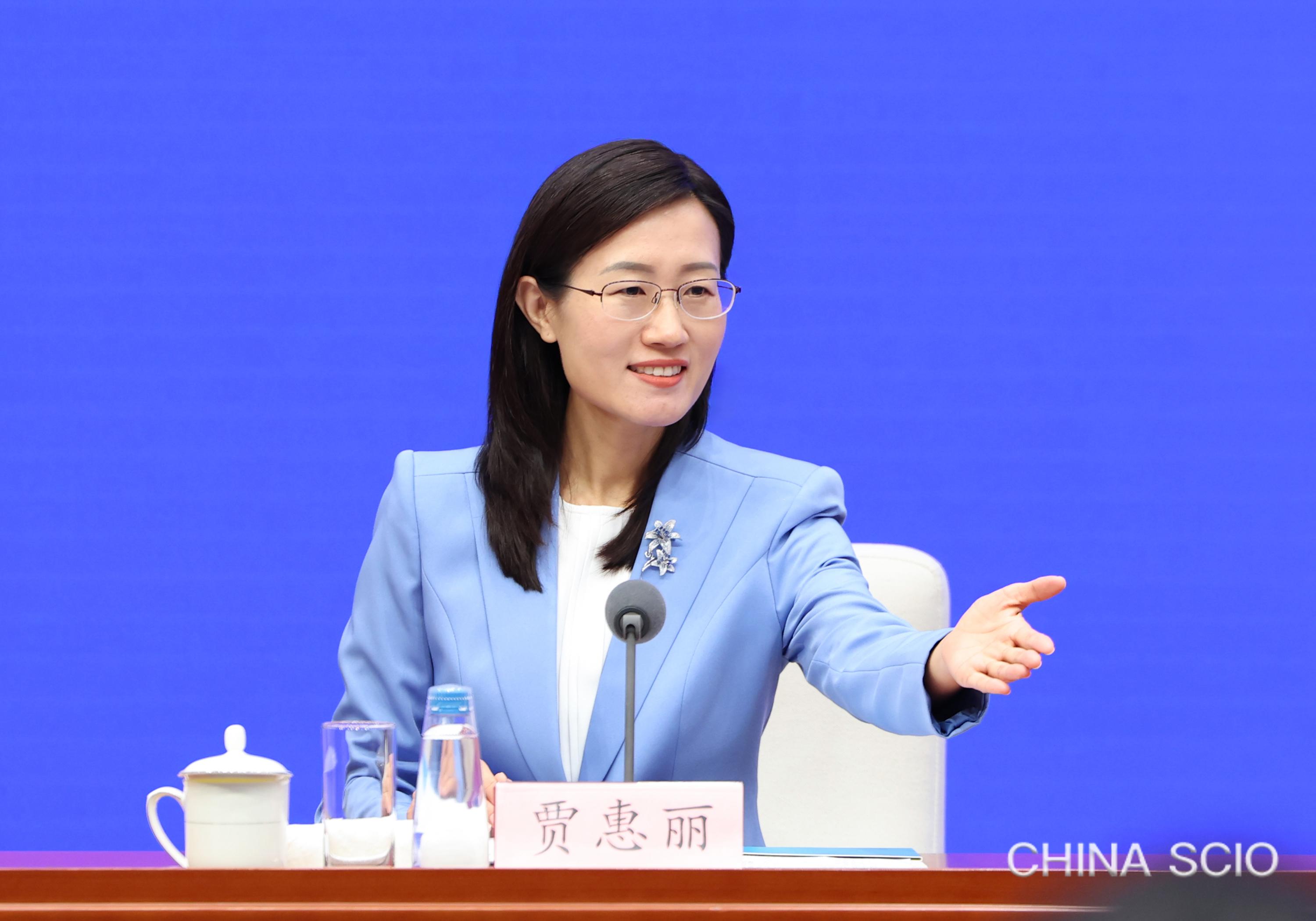
Ms. Jia Huili, deputy director general of the Press Bureau of the State Council Information Office (SCIO) and spokesperson of the SCIO
Date:
July 14, 2026
Jia Huili:
Ladies and gentlemen, good morning. Welcome to this press conference held by the State Council Information Office (SCIO). This is a regular briefing on China's economic data. Today, we have invited Mr. Wang Jun, vice minister of the General Administration of Customs of China (GACC), to brief you on China's imports and exports in the first half of 2026 and to take your questions. Also attending today's press conference is Mr. Lyu Daliang, spokesperson of the GACC and director general of the Department of Statistics and Analysis of the GACC. Now, I'll give the floor to Mr. Wang for his introduction.
Wang Jun:
Thank you, Ms. Jia. Good morning, friends from the media. I'm delighted to meet you all. I will start by briefing you on China's imports and exports of goods in the first half of this year, and then my colleague and I will answer your questions.
Since the beginning of this year, under the strong leadership of the Central Committee of the Communist Party of China (CPC) with Comrade Xi Jinping at its core, China has adhered to the general principle of pursuing progress while ensuring stability, and moved faster to foster a new pattern of development. The national economy has shown both resilience and vigor, while foreign trade has maintained strong growth momentum and stable performance. According to statistics from the GACC, China's foreign trade of goods in the first half of 2026 jumped 16.9% year on year to 25.47 trillion yuan. Of this total, exports amounted to 14.73 trillion yuan, up 13.4%, while imports reached 10.74 trillion yuan, up 22.1%. To sum up, there were six main features:
First, the growth of imports and exports accelerated. In the second quarter, China's imports and exports reached 13.61 trillion yuan, a year-on-year increase of 18.4%, the highest quarterly year-on-year growth rate since the third quarter of 2021. In June, imports and exports totaled 4.78 trillion yuan, a year-on-year increase of 24.2%, marking the 17th consecutive month of growth.
Second, the market became increasingly diversified. In the first half of the year, China's trade with Belt and Road partner countries reached 12.97 trillion yuan, an increase of 14.8%, accounting for 50.9% of the total foreign trade value. Trade with neighboring countries reached 9.44 trillion yuan, an increase of 20.6%. Trade with Latin America, Africa and the European Union grew by 16.2%, 19.6% and 10.2%, respectively.
Third, all market entities showed good growth momentum. In the first half of the year, the imports and exports of China's private enterprises reached 14.53 trillion yuan, an increase of 17%, accounting for 57% of the country's total foreign trade value; the imports and exports of foreign-invested enterprises increased 17.1% to 7.39 trillion yuan; and those of state-owned enterprises increased 16.8% to 3.5 trillion yuan.
Fourth, China registered growth in imports and exports in all regions of the country. In the first half of the year, the imports and exports of China's eastern regions exceeded 20 trillion yuan, an increase of 16.5%, accounting for 78.8% of the country's total foreign trade. The western, central and northeastern regions registered growth of 20.3%, 20% and 8.6%, respectively.
Fifth, the export product mix was further upgraded. In the first half of the year, China's exports of mechanical and electrical products reached 9.36 trillion yuan, up 20.1%, accounting for 63.5% of total exports, 3.5 percentage points higher than the same period last year. Exports of high-tech products amounted to 3.26 trillion yuan, up by 39%. Exports of self-owned brands increased 25.4%, with their share in total exports rising 2.4 percentage points.
Sixth, import growth outpaced export growth. In the first half of the year, China's import growth rate was 8.7 percentage points higher than its export growth rate, promoting more balanced development of imports and exports. Among them, imports of bulk commodities such as energy and metal ores reached 1.429 billion metric tons, up 3.4%; imports of mechanical and electrical products reached 4.41 trillion yuan, up 28%; and imports of agricultural products reached 768.48 billion yuan, up 8.6%.
Overall, China's foreign trade maintained positive momentum in the first half of this year, making solid progress in stabilizing its scale and optimizing its structure. However, due to persistent global inflationary pressure, increasing trade barriers and frequent geopolitical conflicts, global industrial and supply chains remain under pressure. Efforts to stabilize foreign trade in the second half of the year will face considerable risks and challenges.
Customs authorities nationwide will thoroughly implement the decisions and arrangements of the CPC Central Committee and the State Council, fulfill, to a higher standard, their duties and missions of safeguarding China's borders and promoting development, continue to strengthen supervision and improving services and further advance the implementation of cross-border trade facilitation measures. Through greater efforts and more concrete measures, customs authorities will work to facilitate unimpeded domestic and international economic flows, and contribute their strength to ensuring a good start for the "15th Five-Year Plan". Thank you.
Jia Huili:
Thank you for the introduction, Mr. Wang. The floor is now open for questions. Please identify the media outlet you represent before asking questions.
_ueditor_page_break_tag_ThePaper.cn:
Based on the imports and exports data for the first half of the year that has just been released, what are the major highlights and positive developments in China's foreign trade? What is your outlook for China's foreign trade situation in the second half of the year?
Wang Jun:
Thank you. As I mentioned earlier, China's foreign trade recorded double-digit growth in the first half of the year, maintaining a positive trend. Recently, at the Summer Davos Forum, Premier Li Qiang used the four words "stability, innovation, vitality, and integration" to outline the current landscape of China's economy. This multifaceted landscape is also reflected in China's foreign trade.
First, the scale of China's foreign trade has remained stable. In the first half of the year, China's imports and exports exceeded 25 trillion yuan for the first time on record, an increase of 3.68 trillion yuan year on year. On a monthly basis, it has exceeded 4 trillion yuan for four consecutive months. According to the latest international data, China remains the world's largest trader in goods.
Second, new growth drivers are emerging. With the rapid development of artificial intelligence, the imports and exports of related Chinese products are showing strong momentum. In the first half of the year, China's imports and exports of computing hardware such as electronic components and computer parts reached 5.13 trillion yuan, an increase of 56.6%. AI glasses, AI translators, mechanical exoskeletons and other smart products are rapidly evolving, and various innovative products are constantly emerging.
Third, market entities show strong vitality. Chinese enterprises are proactively identifying changes, adapting to new circumstances, and pursuing transformation. They continue to expand opportunities for cooperation around the world and seek new partners, further broadening their global "network of friends." Compared with the same period last year, 267,000 foreign trade enterprises expanded their business to new countries and regions in the first half of the year. The total import and export value of these enterprises increased by 22.6%, accounting for nearly 70% of the total foreign trade volume.
Fourth, domestic and international market are becoming more integrated. China has been committed to proactively expanding its opening-up to the world and has implemented zero-tariff policies for 63 countries, continuously promoting common development with its economic and trade partners. In the first half of the year, China's imports and exports with its 31 free trade agreement partners increased by 28.1%, with their share in the country's total foreign trade rising to 46.5%. The comprehensive bonded zones fully leveraged their unique strength of connecting domestic and international markets and resources, as well as their advantages arising from integrated policy measures, achieving imports and exports of 4.34 trillion yuan in the first half of the year, an increase of 28.2%.
Overall, China's foreign trade achieved remarkable results in the first half of the year. However, it should also be noted that the current external environment remains complex and volatile. The World Bank believes that the global economy is facing multiple pressures, including rising energy prices, increased inflationary pressures, and expectations of tighter monetary policy, which are weakening the growth outlook. Data from the International Monetary Fund predicts that global economic growth will slow from 3.5% last year to 3% this year, and the growth rate of trade in goods and services will also slow from 5% last year to 3.5% this year. China's foreign trade will face certain pressures in the second half of the year, but the country has strong innovation momentum, vibrant business entities, and a high level of openness, so the fundamentals of foreign trade remain solid. We are confident and capable of maintaining the good momentum of foreign trade development. Thank you.
_ueditor_page_break_tag_National Business Daily:
Recently, intensive bilateral exchanges have taken place between China and Central and Eastern European countries, with leaders from multiple countries visiting China and numerous exchange events held. Could you please provide an overview of China's trade with Central and Eastern European countries in the first half of the year? Thank you.
Wang Jun:
Thank you. I would like to invite my colleague, Mr. Lyu, to answer your questions.
Lyu Daliang:
Thank you for your question. In 2012, China and Central and Eastern European countries established a cross-regional cooperation mechanism, which has effectively promoted deeper and more substantive cooperation in various fields. On June 29, the SCIO held the fourth dialogue between spokespersons of China and Central and Eastern European countries. Participants exchanged views on topics including press releases and modernization, and reached the Beijing Consensus. In the field of economy and trade, the trade volume between China and Central and Eastern European countries has maintained growth for 10 consecutive years. In the first half of the year, the total trade value reached 580.12 billion yuan, an increase of 11%, which is equivalent to 3.7 times that of the same period in 2012. Specifically, there are several notable features as follows.
First, the integration of trade and investment has yielded significant results. In recent years, Chinese companies have successively established automobile production and R&D bases in countries like Serbia and Poland, while investing in and building multiple battery factories in countries like Hungary. In the first half of the year, China's imports and exports of automobiles and auto parts with Central and Eastern European countries totaled 59.53 billion yuan, and imports and exports of lithium batteries totaled 30.01 billion yuan. In the field of artificial intelligence, Chinese companies are collaborating with Serbia to build humanoid robot production bases, jointly embracing the intelligent era.
Second, infrastructure has provided strong impetus. Under the Belt and Road Initiative, China has cooperated with Central and Eastern European countries on infrastructure projects such as ports, railways, and highways, helping to enhance regional connectivity. Recently, multiple infrastructure projects undertaken by Chinese companies in Montenegro, Bosnia and Herzegovina, and other countries have commenced construction, boosting the export of related products. In the first half of the year, China's exports associated with overseas contracted projects to Central and Eastern European countries have more than doubled, among which exports of construction machinery and rail transit equipment increased by 22.3% and 57.3%, respectively.
Third, trade in agricultural and food products has shown strong momentum. Both sides have steadily strengthened exchanges and cooperation in animal and plant quarantine and food safety. Currently, more than 130 types of agricultural and food products from Central and Eastern European (CEE) countries have gained market access to China. In the first half of the year, agricultural trade between China and CEE countries totaled 7.58 billion yuan, up 16.2%. Imports increased by 34.8%, with cocoa products and aquatic products up 57.6% and 36.8% respectively; Exports increased by 11.8%, with walnuts and pet food up 28.3% and 13.7% respectively.
Under the framework of China-CEE Countries Cooperation, the China Customs established the China-CEE Customs Information Center in April 2021. Over the past five years, both sides have maintained close cooperation on customs policy exchanges, trade monitoring and early warning, and consultation services, thereby jointly safeguarding trade security and streamlining customs clearance. Moving forward, we will continue to strengthen cooperation with counterparts in CEE countries, driving the steady and sustained growth of bilateral economic and trade ties. Thank you.
_ueditor_page_break_tag_CMG:
China's exports maintained rapid growth in the first half of this year. What are the main driving forces behind this growth? Thank you.
Wang Jun:
Thank you for your question.
China's exports have grown by more than 10% this year, marking the 11th consecutive quarter of growth. The fundamental driver of this growth lies in the precise matching between "Made in China" products and diverse global demands. This can be viewed from four aspects.
First, a UN report shows that the growth in global goods trade this year has been concentrated largely in AI-related fields. Growing global demand for computing power, data centers, and terminal equipment has boosted China's exports of related products. In the first half of the year, China's exports of electronic components, computer parts and related products all saw double-digit growth, collectively contributing 6.9 percentage points to overall export growth. Exports of smart bionic robots with deep AI integration exceeded 10,000 units, reaching over 90 countries and regions around the world.
Second, as the global push towards a green and low-carbon transition has deepened, growing demand for new energy facilities and consumption aligns closely with China's green products. In the first half of the year, China's exports of green energy-related products such as lithium batteries and wind turbines increased by 37.6% and 35.6%, respectively. Exports of green mobility products—including electric vehicles, railway electric locomotives, electric motorcycles and bicycles—rose by 68.7%, 45.1% and 31.5%, respectively.
Third, in the first half of the year, China's exports of special equipment reached 540.24 billion yuan, up 24.4%, while exports of ships and marine engineering equipment totaled 214.99 billion yuan, an increase of 19.9%. From smart excavators and heavy-duty gas turbines to offshore platforms, Chinese equipment is playing a critical role in major projects around the world. "Made in China" provides optimal solutions for different countries and regions and different application scenarios.
Fourth, tensions in the Middle East during the first half of this year squeezed global chemical supplies. With its complete industrial system and full-chain supporting capabilities, China was able to respond swiftly to sudden surges in external demand. In the first half of the year, China's exports of basic organic chemicals and plastics in primary forms increased by 25.1% and 35%, respectively, meeting the production needs of enterprises and ensuring the stability of related production and supply chains.
China's stable supply chain is serving as a key hub for global connection and win-win cooperation. Moving forward, we will continue to leverage China's strengths to meet global needs, bringing greater certainty and fresh momentum to global economic and trade cooperation. Thank you.
_ueditor_page_break_tag_Economic Daily:
Private enterprises have maintained their position as China's largest foreign trade contributors for years running. Just now, the spokesperson also mentioned that exports by private businesses have continued to grow steadily. Could you please elaborate on the performance of China's private enterprises in imports and exports since the beginning of this year? Thank you.
Wang Jun:
Thank you. I'd like to invite Mr. Lyu Daliang to answer your question.
Lyu Daliang:
Thank you for your question. In the first half of the year, imports and exports by private enterprises reached 14.53 trillion yuan, an increase of 17%, with exports up 12.7% and imports up 26.2%, maintaining solid growth momentum.
Many of you following the World Cup may have noticed a strong presence of Chinese products at the venues, many of which come from our private enterprises. If enterprises are like athletes on the field, I would like to use a few keywords to describe the performance of China's private enterprises.
First, their position as the key player is solid. In the first half of the year, private enterprises maintained their position as China's largest foreign trade contributors, with the number of active trading firms surpassing 660,000 and their overall scale steadily expanding. Private enterprises accounted for 57% of the country's total trade value, contributing nearly 60% of the China's foreign trade growth.
Second, technological capabilities have been constantly improving. The core competitiveness of China's private enterprises lies in independent innovation. In response to global trends towards green and digital development, the share of high-tech and innovative products in private-sector exports has continued to rise. In the first half of the year, high-tech exports by private enterprises increased by 35.9%, with high-end equipment, new materials, and electronic information products rising by 29.8%, 44.5%, and 43.1%, respectively. Exports of the "new trio", namely, electric vehicles, lithium-ion batteries, and photovoltaic products increased by 45.8%, with private enterprises emerging as an important supplier for global green transition.
Third, they have delivered strong performances. Private enterprises have continued to strengthen their foothold in traditional markets, expand into new markets and tap into potential markets, building a broad and resilient global trade network. In the first half of the year, private enterprises achieved growth in imports and exports with more than 180 countries and regions. Among them, trade with emerging markets such as ASEAN, Latin America and Africa increased by 17%, 12.1% and 25.2%, respectively, and trade with traditional markets such as the EU also registered good performance.
Fourth, they have responded in an agile manner. The market, much like a sports arena, is subject to rapid changes and fleeting opportunities. Private enterprises take the initiative to recognize and adapt to changes, leveraging their keen perception and flexible production capacity to translate market trends into tangible orders. Taking Yiwu as an example, private enterprises have given full play to their pioneering spirit, seized the opportunities presented by market procurement policies and quickly responded to the diverse and ever-changing global demands, turning small commodities into vast markets and a major industry. In the first half of the year, Yiwu's exports via market procurement reached 347.25 billion yuan, increasing by 16.4%.
In athletic competition, what ultimately matters is strength; in international markets, what matters most is sustained competitiveness. Chinese private enterprises have demonstrated excellent qualities and robust capabilities. We believe that in the arena of international trade, Chinese private enterprises will continue to shine with "Chinese brilliance." Thank you.
_ueditor_page_break_tag_21st Century Business Herald:
China's import growth has been very impressive since the beginning of this year. What are the reasons for its strong performance in the first half of this year? Thank you.
Wang Jun:
Thank you. In the first half of the year, China's imports reached 10.74 trillion yuan, exceeding 10 trillion yuan for the first time in the same period. Imports grew by 22.1% year on year, 8.7 percentage points higher than that of exports, and making greater contributions to foreign trade than exports, thereby promoting a more balanced development of trade. Specifically, there are several major drivers for the rapid growth in imports.
First, China has a supersize market, which is the fundamental support. As the world's largest manufacturer and second-largest consumer market, China has a vast market with enormous potential. China has been the world's second-largest import market for 17 consecutive years, with an average annual growth rate of 5.1%, bringing its share of global imports up from 7.9% to about 10%.
Second, the economy has been improving, which is the internal driving force. China's overall economy has remained stable, with industrial production growing steadily and market demand improving, which has provided strong support for the expansion of imports of raw materials, components and consumer goods. In the first half of the year, China's imports of metal ores and electronic components grew by 22.6% and 45.6%, respectively, while imports of edible oils and aquatic products increased by 19.2% and 24.1%, respectively.
Third, China has taken the initiative to expand imports, which is a necessary condition. China has expanded voluntary and unilateral opening up in an orderly manner. It has granted zero-tariff treatment to 63 countries and has successfully hosted international exhibitions such as the China International Import Expo (CIIE), the China International Consumer Products Expo (CICPE) and the China International Supply Chain Expo (CISCE), creating a high-profile gateway for quality products from around the world to enter the Chinese market. In the first half of the year, China has seen imports increase from more than 150 countries and regions. We have actively expanded market access for imported agricultural and food products. This year, imports have been approved for products including dried chili peppers and cashews from African countries that have diplomatic ties with China, as well as pecans from Uruguay, apples from Belgium, and dried longans from Cambodia.
Looking ahead, China's vast market will unleash more consumption dividends and cooperation opportunities, providing greater opportunities for the global economy. Customs will keep improving regulatory services to facilitate the expansion of imports. Thank you.
_ueditor_page_break_tag_Bloomberg:
We see that China's trade surplus is creating concerns among trading partners, most vocally in the EU. How do you see China's trade surplus evolving for the remainder of the year? We're also interested in looking at "upward balancing," which China has promoted as a way to ease trade tensions with the EU. Does this mean importing more from the EU countries? And how would you define this term? Thank you.
Wang Jun:
Thank you. I'd like to invite Mr. Lyu to answer your questions.
Lyu Daliang:
Thank you for your questions. Regarding China's trade balance, I would like to emphasize that China's foreign trade is characterized by large-scale imports and exports. We are not only the world's largest exporter, but also the second-largest importer. Data from the first half of this year shows that China's import growth rate outpaced export growth, resulting in a 4.7% narrowing of the trade surplus. During the 15th Five-Year Plan period, we will continue to actively expand imports and promote balanced development of imports and exports.
Regarding the "upward balancing" you mentioned, China and the EU have established a regular communication mechanism in the economic and trade field, which is the China-EU Trade and Investment Consultation Mechanism. Recently, this mechanism held its first meeting, during which the "upward balancing" you mentioned was also discussed. For further specifics, I would suggest you consult relevant authorities. Thank you.
Nanfang Daily, Nanfang Plus:
The World Cup is currently underway, and we have seen many Chinese elements both on and off the field. Based on customs statistics, what is the current performance of China's sports goods exports? Thank you.
Wang Jun:
I'd like to invite Mr. Lyu to answer this question.
Lyu Daliang:
Thank you for your question, and it brings us back to the World Cup again. The tournament is now in full swing. It has not only provided football fans around the world with exciting matches, but also fueled global demand for a wide range of sporting goods. In recent years, China has consistently been the world's largest exporter of sporting goods, accounting for more than 40% of global exports. In the first half of the year, China's exports of sporting goods and equipment reached 67.53 billion yuan, including 3.08 billion yuan worth of sports balls.
China's sporting goods exports are characterized by both a vast scale and a wide variety. In competitive sports, Chinese-made sporting goods have become a familiar presence at the world's premier sporting events, ranging from professional table tennis tables used at the Summer Olympics, to lightweight ski poles used at the Winter Olympics, and to the official match balls with built-in smart chips used at the 2026 FIFA World Cup. In mass sports, China offers a wide range of products to meet the needs of various sports and fitness activities. Examples include treadmills for indoor fitness and stand-up paddleboards for outdoor water sports. In the first half of 2026, exports of fitness and rehabilitation equipment, including treadmills, reached 2.67 billion yuan, while exports of water sports equipment, including stand-up paddleboards, totaled 4.77 billion yuan. In addition, exports of skateboards, which are particularly popular among young consumers, increased by 20.4% year on year.
China's sporting goods have maintained a stable presence in traditional markets such as Europe and the United States, while also performing well in emerging markets, including Latin America and Africa. In the first half of this year, China's exports of sporting goods to Latin America and Africa increased by 18.9% and 8.1% year on year, respectively. Going forward, China's sporting goods will continue to meet the diverse global demands for sports and health with its rich variety and superior quality. Thank you.
_ueditor_page_break_tag_Red Star News:
My question is about foreign trade in China's western regions. Could you brief us on the regions' import and export performance since the beginning of this year? What are the main factors supporting its growth? Thank you.
Wang Jun:
Thank you for your question. In the first half of this year, the western regions' total imports and exports reached 2.55 trillion yuan, up 20.3% year on year, 3.4 percentage points higher than the national growth rate. Exports and imports increased by 18.5% and 23.5%, respectively. The rapid growth of foreign trade in the western regions was mainly driven by the following factors:
First, China further deepened integrated development with neighboring countries. The western regions enjoy distinct geographical advantages in economic and trade cooperation with neighboring countries. In the first half of this year, its imports and exports with neighboring countries totaled 1.26 trillion yuan, up 22.1% year on year, accounting for 49.3% of the region's total foreign trade. Since the beginning of this year, the Yulin Airport Port in Shaanxi province and the Longfu Highway Port in Yunnan province have been approved for opening to the outside world. The western regions' multidimensional opening up framework has become more complete, with cross-border logistics expanding from individual transport routes into an integrated network with broader and deeper coverage. In the first half of this year, imports and exports transported by road, rail and air all posted double-digit growth.
Second, the business environment continued to improve. The western regions have worked to foster a better ecosystem for foreign trade development. A range of policy measures has continued to generate benefits, the business environment has steadily improved, and market vitality has continued to increase. In the first half of this year, the number of enterprises in the western regions engaged in import and export activities increased by 19%. The import and export volumes of state-owned, private and foreign-invested enterprises all expanded, increasing by 9.1%, 13% and 39.3%, respectively, with foreign-invested enterprises registering the fastest growth.
Third, industrial development gathered strong momentum. Emerging industrial clusters, including artificial intelligence and green and low-carbon industries, have accelerated their shift toward the western regions, injecting new momentum into high-quality foreign trade development. In the first half of this year, imports and exports of flat-panel display modules and storage components in the western regions both maintained rapid growth, with their shares of the national total for these products rising by 2.2 percentage points and 3.7 percentage points, respectively. Exports of the "new trio" products — namely electric vehicles, lithium-ion batteries and photovoltaic products — increased by 13.3%, 39.9% and 36.5%, respectively.
Fourth, collaboration between the eastern and western regions has further boosted foreign trade development. The distribution channels, markets access and technological strengths of the eastern regions have complemented the resources, products and cost advantages of the western regions, creating greater synergies for foreign trade growth. The gradual westward relocation of industries has continued to inject vitality into foreign trade development. Of the second group of national industrial parks for processing trade, seven are located in the western regions, accounting for more than half of the total. In the first half of this year, imports and exports under processing trade in the western regions reached 793.14 billion yuan, up 36.8% year on year, 11.9 percentage points higher than the overall national growth rate for processing trade. Thank you.
_ueditor_page_break_tag_Jinan Times APP:
China and ASEAN countries are close neighbors connected by mountains and rivers, and their economies are highly complementary. Based on the latest foreign trade data you have just released, what are the highlights of China's economic and trade cooperation with ASEAN? Thank you.
Wang Jun:
Mr. Lyu will answer your questions.
Lyu Daliang:
Thank you for your question. China and ASEAN have been each other's largest trading partners for several consecutive years. In the first half of the year, China's trade with ASEAN rose 18.2% to 4.34 trillion yuan. In the second quarter, bilateral trade increased 20.2% year on year to 2.37 trillion yuan, marking growth for the 10th consecutive quarter. The continued expansion of bilateral trade reflects the fruitful achievements of China-ASEAN regional economic integration.
China and ASEAN have continued to deepen the integration of their industrial and value chains, driving steady growth in trade in intermediate goods. In the first half of the year, China's trade in intermediate goods with ASEAN rose 24.5% to 2.86 trillion yuan, accounting for two-thirds of total bilateral trade. This included electricity, an unusual category of traded goods. Customs statistics generally track cross-border flows of physical goods, but electricity is an exception. Customs data show that in the first half of the year, China exported 2.39 billion kilowatt-hours of electricity to ASEAN countries, up 42.9%, helping meet production and daily needs across the region.
China and ASEAN have continued to improve infrastructure connectivity and expand their cross-border logistics network, providing strong support for bilateral trade. As construction of the New International Land-Sea Trade Corridor has accelerated, transport arrangements combining the China-Laos Railway with China-Europe freight trains, along with the "parallel port" logistics model, have begun delivering results, significantly improving the efficiency of cross-border logistics. In the first half of the year, China's trade with ASEAN via the New International Land-Sea Trade Corridor rose 18.2%, while trade carried by rail and road increased 24.7% and 17.5%, respectively.
To deepen China-ASEAN economic and trade cooperation and improve regional trade security and facilitation, China Customs has established a multi-level mechanism for regular consultation with the customs and inspection and quarantine authorities of ASEAN countries. Last month, the 24th ASEAN-China Customs Consultation was held in Cambodia. The two sides agreed to fully implement the China-ASEAN Smart Customs Partnership Program, with a focus on establishing full electronic connectivity for certificates of origin, expanding mutual recognition of Authorized Economic Operator (AEO) programs, and strengthening connectivity between international trade single-window systems. By bringing digital and smart technologies to cross-border clearance, these measures streamline the processing and submission of documents, improving the sense of gain and satisfaction of businesses engaged in cross-border trade between China and ASEAN countries. Thank you.
_ueditor_page_break_tag_South China Morning Post:
In recent months, growth in China's exports to the United States has accelerated. How does the General Administration of Customs interpret this trend? What is the outlook for China-US trade in the second half of the year? Thank you.
Wang Jun:
Thank you. Mr. Lyu will answer these questions.
Lyu Daliang:
Thank you for your questions. China Customs data show that trade in goods between China and the United States totaled 2 trillion yuan in the first half of the year, accounting for 7.9% of China's total foreign trade. It fell 18.7% year on year in the first quarter but rose 13.7% in the second quarter.
In May, the meeting between the Chinese and U.S. presidents set a new direction for bilateral relations, providing greater certainty and fresh momentum for economic and trade ties. Guided by the important consensus reached by the two presidents, China Customs remain focused on safeguarding the country's borders and supporting development, and work with other government departments to promote the steady development of China-U.S. economic and trade relations. Thank you.
Yicai:
In May, China introduced zero tariffs on all imports from the 53 African countries with which it has diplomatic relations. The policy has now been in effect for more than two months. What positive changes are evident in the customs data? Thank you.
Wang Jun:
Thank you for your questions. Since May 1 this year, China has granted zero-tariff treatment to all products from the 53 African countries with which it has diplomatic relations. The measure marks a further step in China's high-standard opening up, serves as a hallmark of China-Africa cooperation in the new era, and creates new opportunities for the two sides to advance modernization together.
Customs data show that China imported goods worth 193.8 billion yuan from Africa in May and June, the first two months after the zero-tariff measure took effect, up 23.5% year on year. More high-quality African products are entering the Chinese market. Imports of aquatic products and textile raw materials from Africa both posted double-digit growth. Imports of specialty fruits also increased, with avocados, apples, oranges and grapefruits up 130%, 89.6%, 27.9% and 11.9%, respectively.
China is not only sharing the opportunities offered by its vast market with Africa, but also seeks to be a major driving force behind the continent's development and revitalization. From mining projects in Guinea and sports venues in Cape Verde to photovoltaic power stations in Kenya and South Africa, these successful examples of China-Africa cooperation demonstrate the solid progress the two sides have made in advancing modernization and build a community with a shared future.
In the first half of the year, China's exports of mechanical and electrical products to Africa rose 28.8% to 534.11 billion yuan. Exports of photovoltaic products, power transmission and transformation equipment, general machinery, and auto parts all maintained solid growth.
New measures bring new opportunities. China will continue to pursue high-standard opening up, improve its cooperation initiatives with Africa and further facilitate China-Africa trade, so that the benefits of bilateral cooperation can reach more businesses and people on both sides and inject strong momentum into solidarity and cooperation across the Global South. Thank you.
_ueditor_page_break_tag_Hong Kong Bauhinia Magazine:
Since the beginning of this year, as China has continued to advance high-standard opening up and optimize the business environment, the performance of foreign-funded enterprises in the country's foreign trade has drawn market attention. Could you give us an overview of how foreign-funded enterprises performed in terms of imports and exports in the first half of this year? And what is your assessment? Thank you.
Wang Jun:
Thank you. I'll invite Mr. Lyu to take these questions.
Lyu Daliang:
Thank you for your questions. In the first half of this year, trade by foreign-funded enterprises in China totaled 7.39 trillion yuan, up 17.1% year on year and marking nine consecutive quarters of growth. As China steadily advances high-quality development and high-standard opening up, with the economy growing stably and the business environment improving, foreign-funded enterprises have shown growing willingness to invest, remain and prosper in China.
First, China's door is opening ever wider, and its opening-up is reaching a higher standard. Stable policy expectations have made foreign-funded enterprises increasingly willing to come and invest in China. Nearly 4,000 foreign-funded enterprises increased their investment in China in the first five months of this year, according to the Ministry of Commerce. In the first half of the year, foreign-funded enterprises posted double-digit growth in both imports and exports, and the number of such enterprises engaged in imports and exports rose by nearly 1,000 from a year earlier.
Second, China boasts a complete industrial system with strong supporting capabilities in its manufacturing sector. Foreign-funded enterprises, with their deep roots in the Chinese market, are operating here to serve the global market and have consistently delivered profits for their investors. This is why they choose to stay. In the first half of the year, foreign-funded enterprises accounted for a considerable share of China's exports, including nearly 30% of exports to the European Union and nearly 40% of those to South Korea. Their share of exports to emerging markets like Mexico and Vietnam exceeded 30%.
Third, China has been driving industrial innovation through scientific and technological innovation. A growing number of multinational corporations have located their R&D and high-end manufacturing operations in China, boosting their global competitiveness. Foreign-funded enterprises have also seen firsthand that they can thrive in China. In the first half of the year, their bonded R&D imports and exports increased 15%, accounting for nearly 80% of China's total. In sectors such as electronic information and new materials, foreign-funded enterprises posted import and export growth of 57.4% and 21.4%, respectively.
It is fair to say that China's opening up presents abundant opportunities. We welcome foreign-funded enterprises to integrate deeply into China's innovation and industrial chains and to share in the fruits of China's high-quality development. Thank you.
_ueditor_page_break_tag_Xinhua News Agency:
As we know, major economic provinces play a pivotal role in underpinning the overall stability of the national economy. How did they perform in terms of imports and exports in the first half of this year? Thank you.
Wang Jun:
Thank you. In recent years, the central government has made clear that major economic provinces must shoulder greater responsibility. The latest trade figures confirm that these provinces have indeed shouldered responsibilities commensurate with their size. In the first half of the year, the top 10 provincial-level regions by economic size recorded combined foreign trade of 19.07 trillion yuan, up 15.7% and accounting for 74.9% of the national total.
On exports, these provinces have leveraged their local strengths to foster and scale up new drivers of foreign trade growth. In the first half of the year, exports of high-tech products from these regions reached 2.46 trillion yuan, up 33.6% and accounting for 75.4% of the national total for such products. Among them, the export growth rate for rail transit equipment ran 12.5 percentage points above the national rate, and exports of new materials, biopharmaceuticals and medical devices also outperformed the national level. Notably, these provinces accounted for over 90% of China's exports of intelligent bionic robots, playing an effective leading role.
In terms of imports, major economic provinces bring in large volumes of key production materials and critical components, providing a strong complement to domestic industrial and supply chains. In the first half of the year, imports of electronic components and basic organic chemicals in these regions each accounted for over 80% of the national total. These provinces also played a key role in driving domestic consumption, accounting for 66.4% of the growth in China's consumer goods imports in the first half.
These figures were compiled by the location of the importing and exporting enterprises. We also employ two other statistical measures to give a fuller picture of a region's trade. One is based on the destination of imported goods or the origin of exported goods, and the other on where goods enter or exit the country. In the first half of the year, measured by the destination of imported goods and the origin of exported goods, combined foreign trade by major economic provinces reached 20 trillion yuan, up 16.3% and accounting for 78.4% of the national total. Measured by where goods enter or exit the country, their combined trade stood at 21.03 trillion yuan, up 17.2% and accounting for 82.6% of the national total. These three statistical measures focus on business entities, production and consumption, and cross-border logistics, respectively. Whichever measure is used, the figures consistently demonstrate that major economic provinces are playing a pivotal role in keeping foreign trade stable in scale and improving its structure. Thank you.
Jia Huili:
OK, thank you. Due to time constraints, we will take the last two questions.
_ueditor_page_break_tag_Beijing Youth Daily:
The recent high temperatures in Europe have drawn attention to China's home appliance exports. Could you brief us on the performance of China's home appliance exports in the first half of this year? Thank you.
Wang Jun:
Thank you. I would like to invite Mr. Lyu to answer your question.
Lyu Daliang:
Thank you for your question. In recent years, the "new trio" products — electric vehicles, lithium-ion batteries and photovoltaic products — have garnered significant attention. In fact, the "old trio" products — cellphones, computers and home appliances — also continue to play a crucial role in stabilizing foreign trade. Regarding home appliances, China's exports of home appliances reached 360.96 billion yuan in the first half of the year. As heatwaves hits many parts of the world, exports of cooling appliances, including air conditioners, electric fans and refrigerators, totaled 107.91 billion yuan. These products serve numerous households and bring refreshing comfort to global consumers.
Smart development is continuously empowering the iterative renewal of China's home appliance industry. For example, we now have refrigerators that recognize what's inside and provide dietary suggestions, vacuum cleaners that automatically adjust their suction based on how dirty the floor is, and televisions that act as "central control platforms" to command smart devices throughout the house. In the first half of the year, China's television exports exceeded 50 billion yuan, and exports of refrigerators and vacuum cleaners both exceeded 30 billion yuan.
Not only are exported Chinese-made home appliances improving in terms of product quality, but the brands are also improving too. Domestic brands now account for a quarter of all exported home appliances. In the first half of the year, exports of domestic brand home appliances increased by 21.2%, with exports of domestic brand televisions, refrigerators and washing machines all maintaining double-digit growth.
China's transformation from "made in China" to "intelligently made in China" is allowing global customers to enjoy greater convenience and comfort from Chinese household appliances, and better meets people's demand for high?quality living. Thank you.
Jia Huili:
The last question, please.
_ueditor_page_break_tag_Zhejiang Daily Tide News:
Chinese-made robots are representative products of the current trend of smart manufacturing going global. What is the export situation regarding related products in the first half of the year? What changes have occurred in the export categories? Thank you.
Wang Jun:
Thank you for your questions. In recent years, China's robot industry has achieved leapfrog development, with its export scale continuing to expand and its robots being widely used in production and daily life around the world. In terms of categories, the main ones are: industrial robots, surgical robots, cleaning robots and intelligent bionic robots. Among them, intelligent bionic robots and cleaning robots have received newly added special tax codes this year. They have their own international trade "ID cards," which allows for more accurate statistics and reflects the development trend of the industry.
The export of robots in the first half of the year can be viewed from three dimensions:
First, China's industrial robots are rapidly iterating and growing increasingly competitive, which is helping accelerate the shift toward smart manufacturing worldwide. In 2025, China's exports of industrial robots exceeded imports for the first time, with the country becoming a net exporter of industrial robots. In the first half of this year, exports reached 6.29 billion yuan, an increase of 18.6%, and were sold to 141 countries and regions worldwide.
Second, China's surgical robots are gaining greater recognition in international markets, and intelligent medical equipment produced in China is benefiting more and more patients. In the first half of the year, exports of surgical robots reached 480 million yuan, a 3.3-fold increase, and the number of export markets increased from 23 in the same period last year to 49.
Third, China's cleaning robots have found their way into millions of households across the country, while intelligent bionic robots such as humanoid robots, robotic dogs and bionic fish and birds are quickly gaining ground in international markets. Exports of the two categories totaled 18.09 billion yuan in the first half of the year.
Going forward, customs will closely monitor the development needs of the robotics sector, continuously optimize regulatory services, boost trade facilitation, steadily increase the share of smart products in China's foreign trade, injecting Chinese momentum into the global economy driven by intelligent technologies. Thank you.
Jia Huili:
That concludes today's press conference. Thank you to our two speakers and friends from the media for joining us. Goodbye.
Translated and edited by Li Xiao, Li Congrong, Xu Kailin, Liu Caiyi, Cui Can, Ma Yujia, Xiang Bin, Jay Birbeck, David Ball, Tudor Bentley Finneran, Gong Yingchun, Mi Xingang, Zhu Bochen, Liu Qiang, Li Huiru, Zhangrui, and Liu Sitong. In case of any discrepancy between the English and Chinese texts, the Chinese version is deemed to prevail.

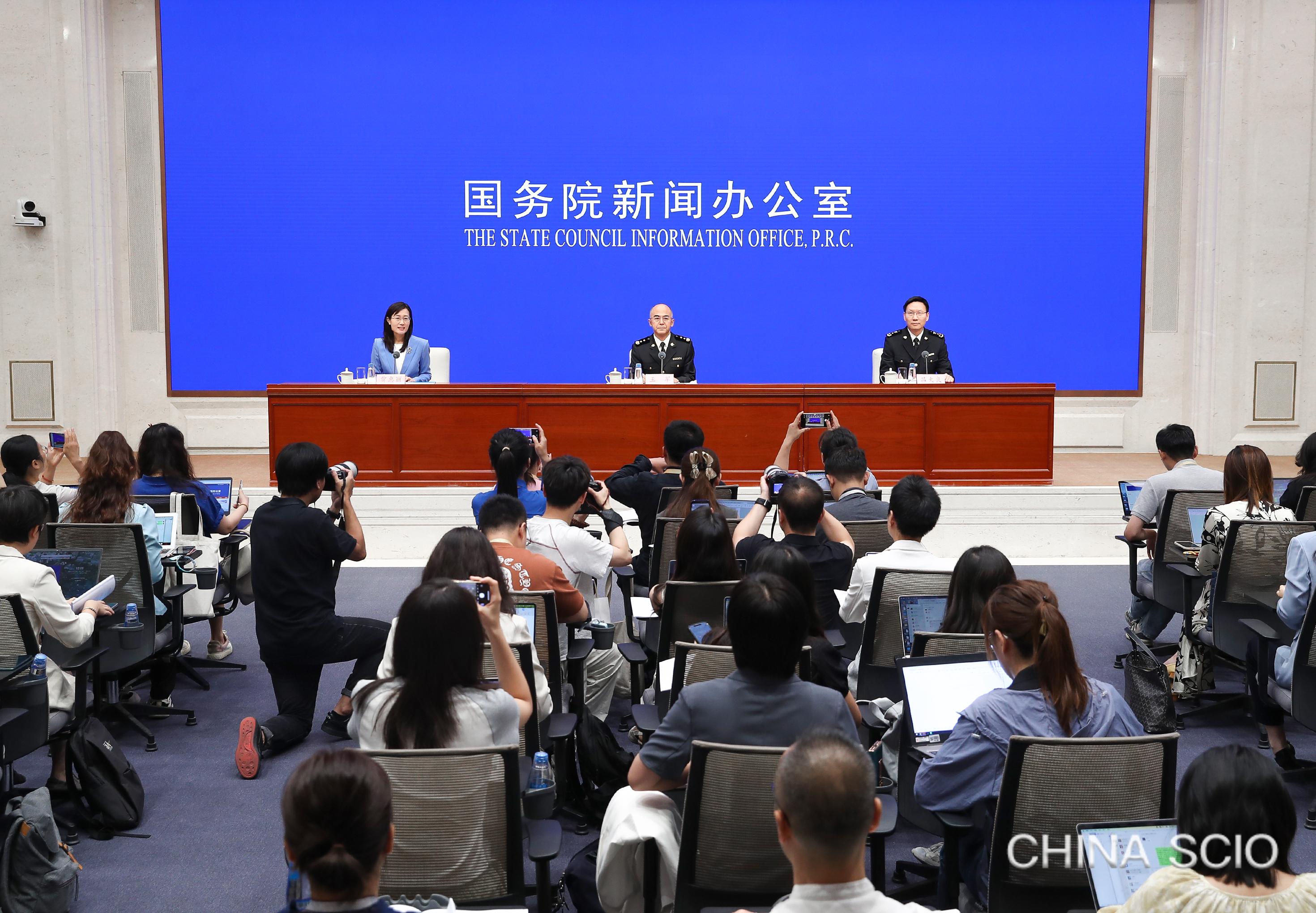
/4 Group photo
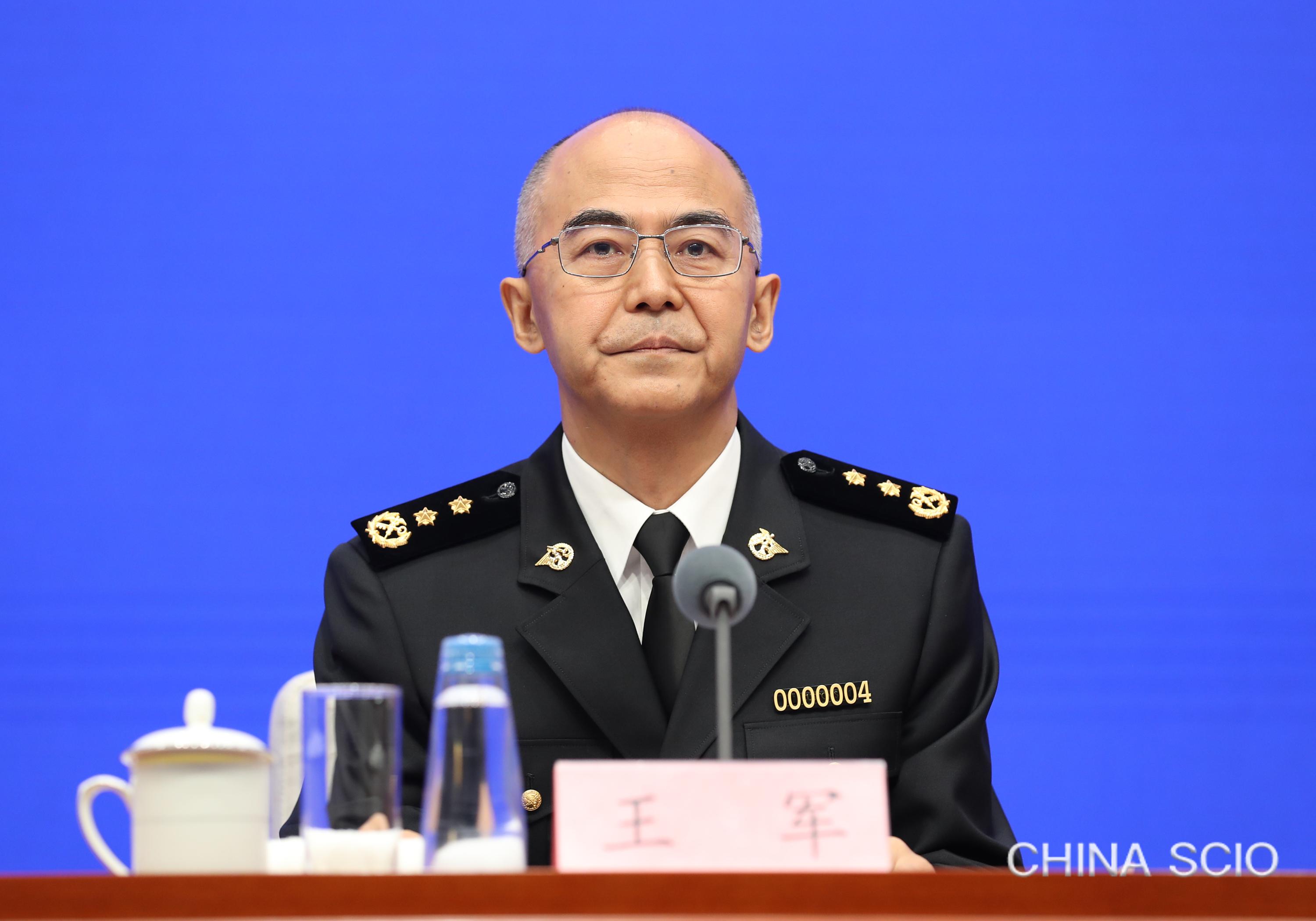
/4 Wang Jun
/4 Lyu Daliang
/4 Jia Huili
SCIO briefing on advancing high-quality development of water transport
June 30, 2026SCIO briefing on expanding auto consumption across the entire value chain
June 23, 2026