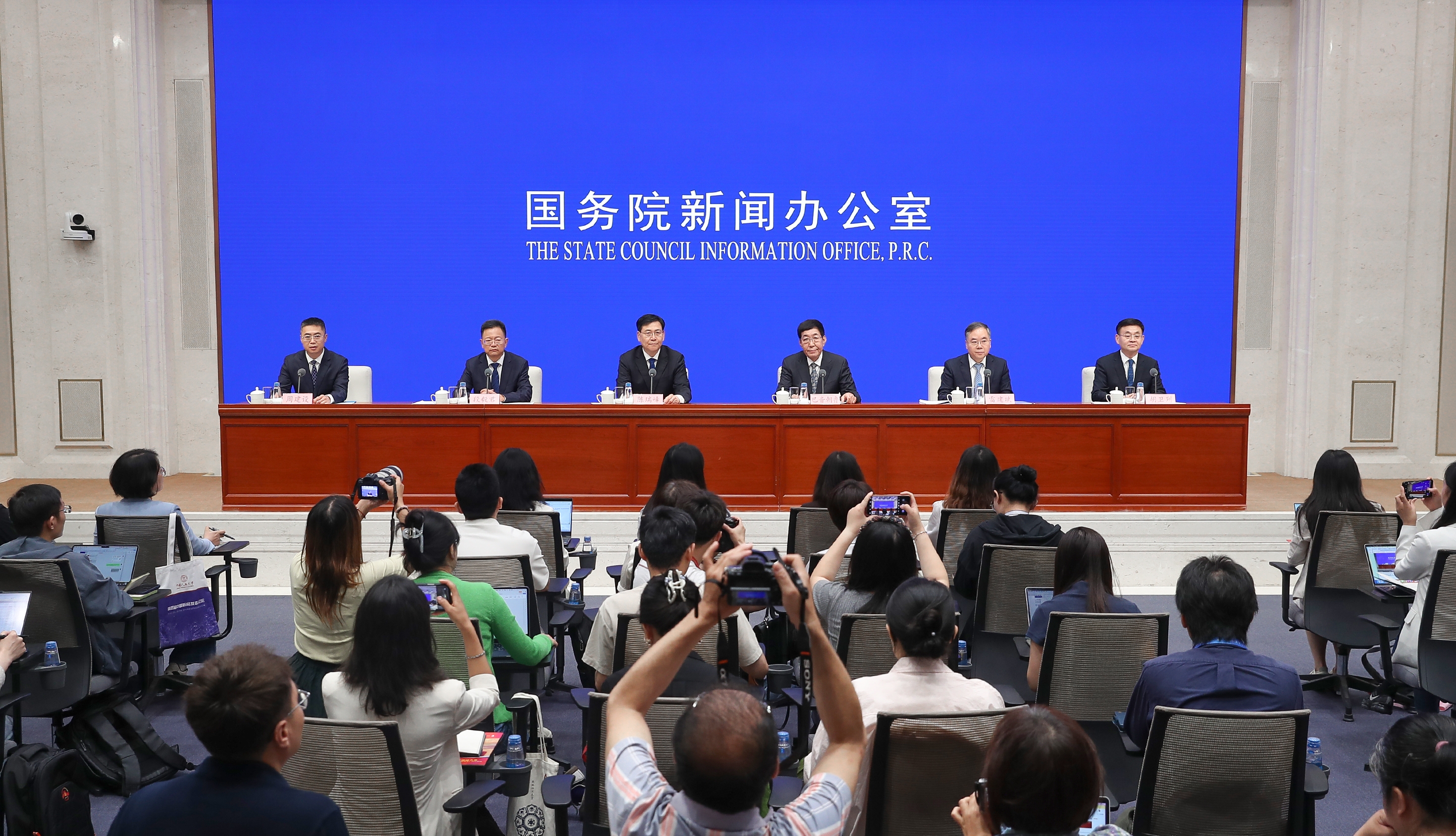

SCIO briefing about the Law of the People's Republic of China on Promoting Ethnic Solidarity and Progress, China's work on ethnic affairs
Beijing | 10 a.m. June 24, 2026
Speakers

Chen Ruifeng, deputy director of the United Front Work Department of the Communist Party of China (CPC) Central Committee and minister of the National Ethnic Affairs Commission
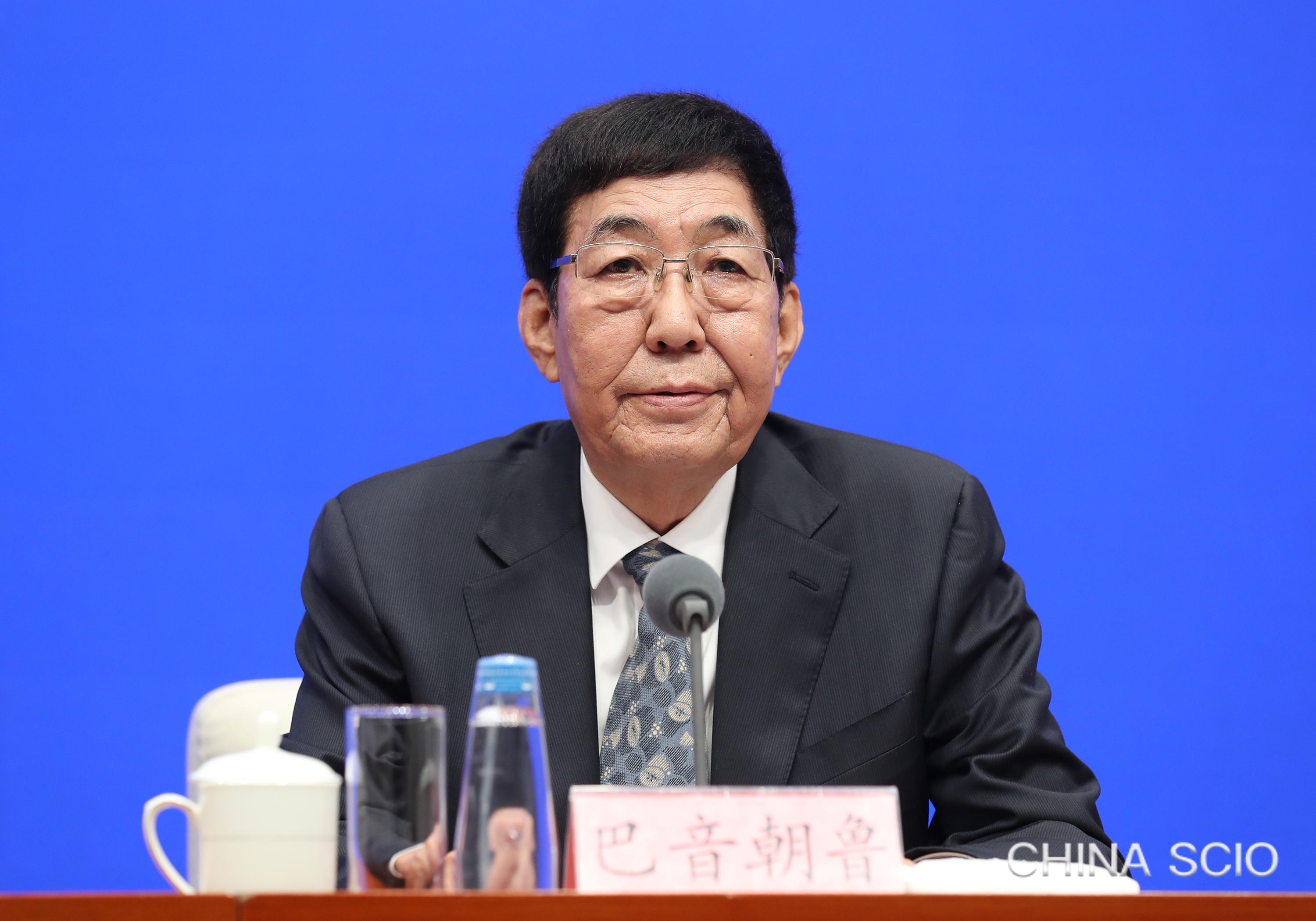
Bayin Chaolu, a member of the Standing Committee of the National People's Congress and chairperson of the Ethnic Affairs Committee of the National People's Congress
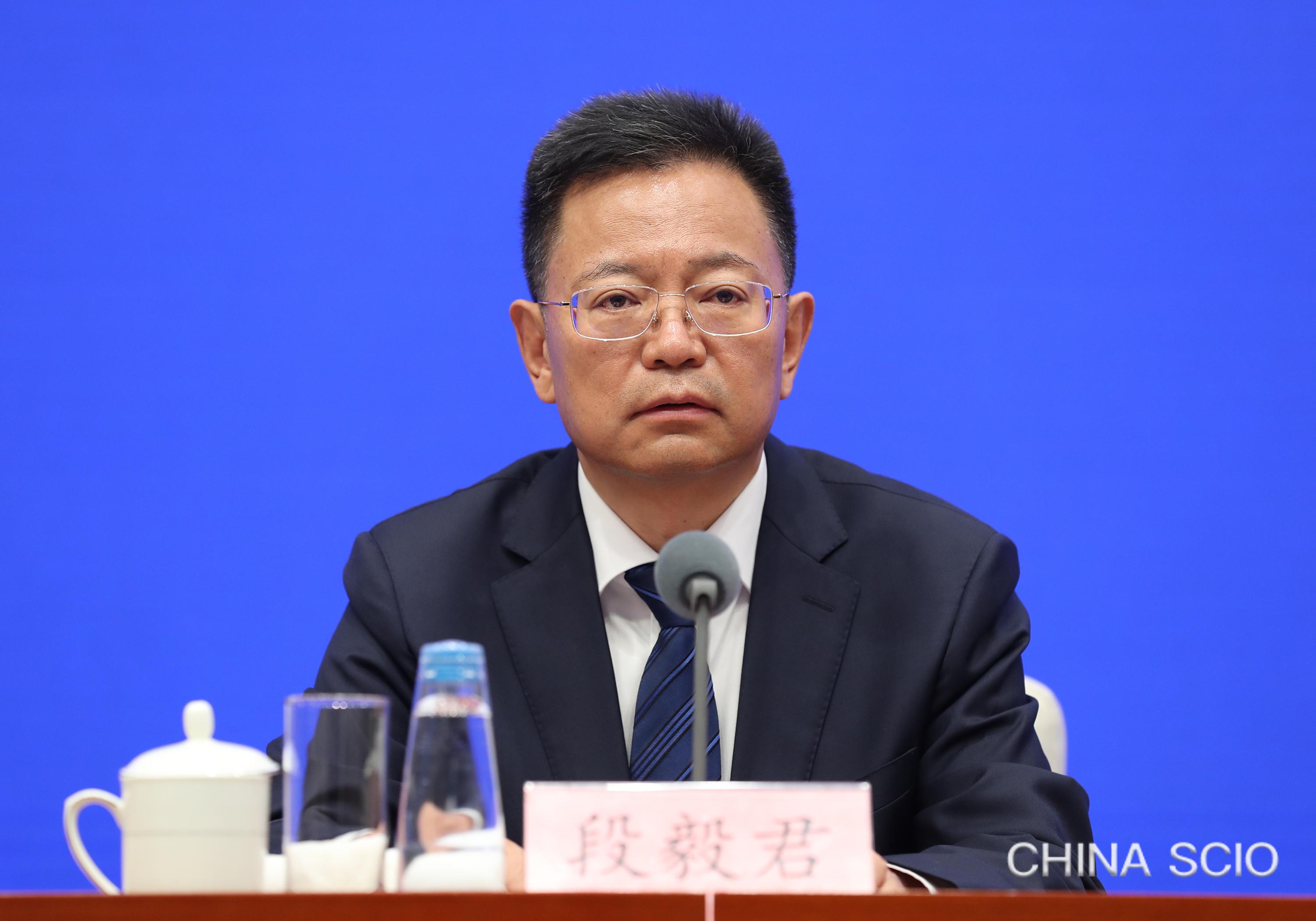
Duan Yijun, deputy director of the United Front Work Department of the CPC Central Committee
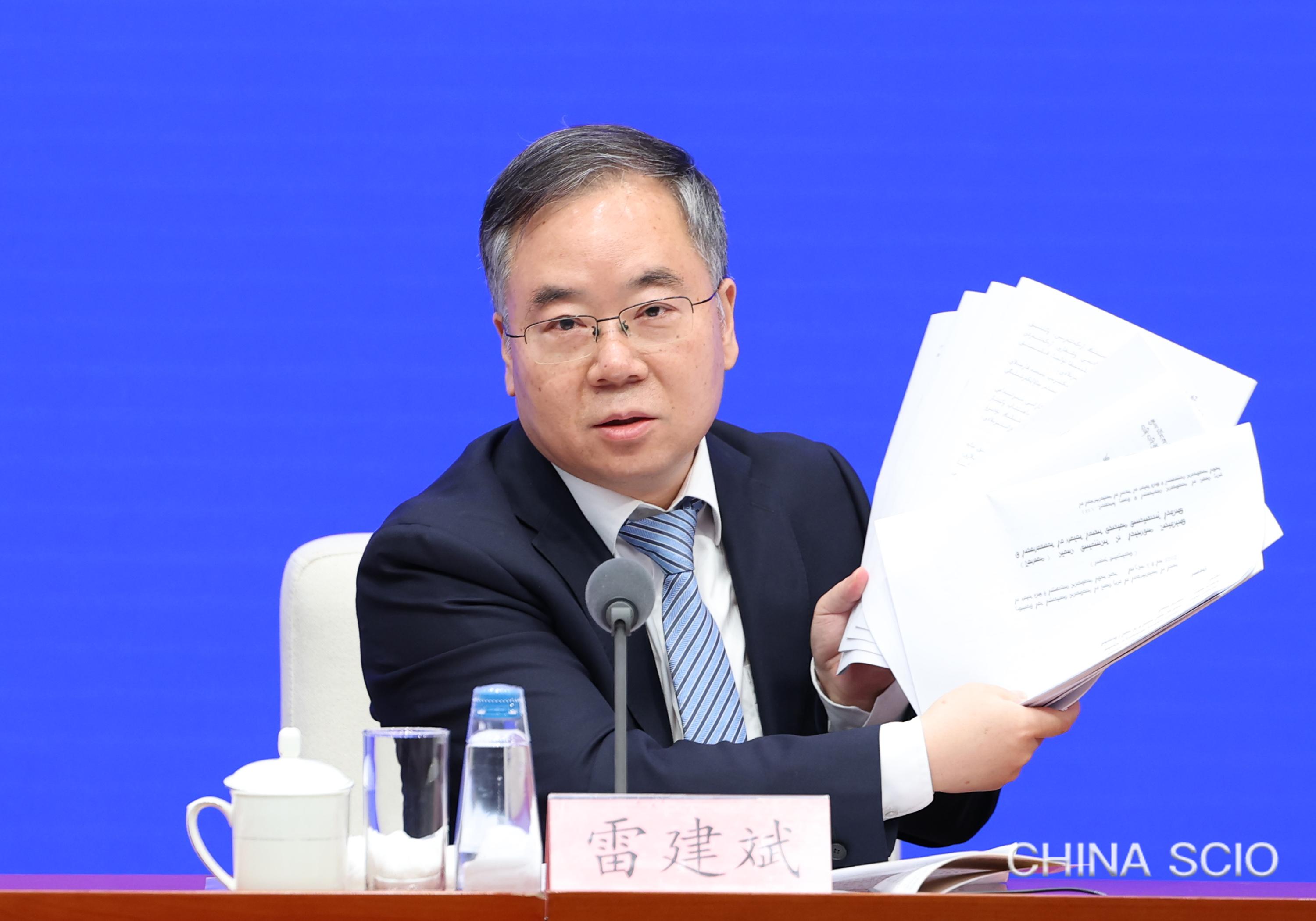
Lei Jianbin, vice chairperson of the Legislative Affairs Commission of the Standing Committee of the National People's Congress
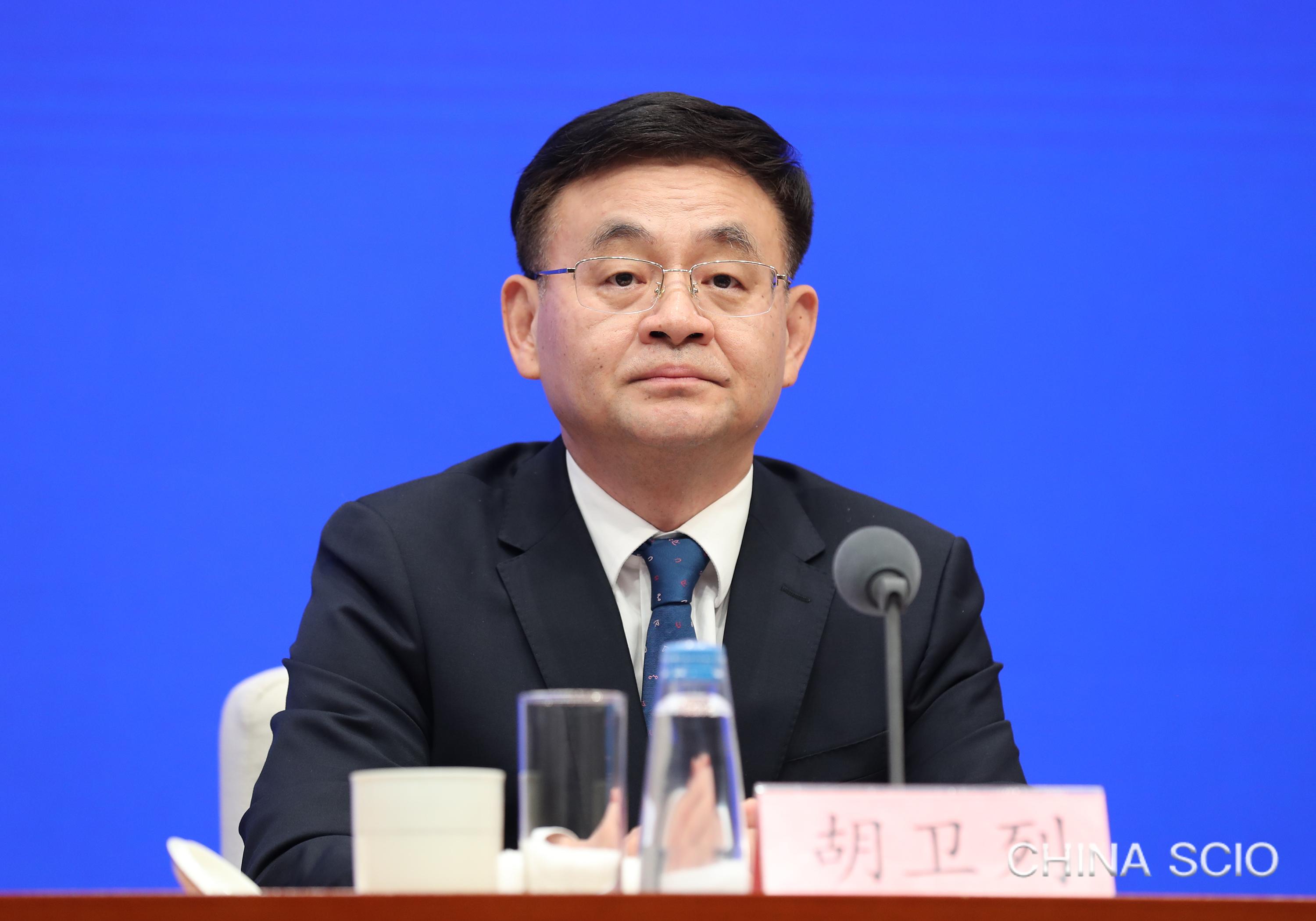
Hu Weilie, vice minister of justice
Chairperson
Speakers:
Mr. Chen Ruifeng, deputy director of the United Front Work Department of the Communist Party of China (CPC) Central Committee and minister of the National Ethnic Affairs Commission (NEAC)
Mr. Bayin Chaolu, a member of the Standing Committee of the National People's Congress (NPC) and chairperson of the Ethnic Affairs Committee of the NPC
Mr. Duan Yijun, deputy director of the United Front Work Department of the CPC Central Committee
Mr. Lei Jianbin, vice chairperson of the Legislative Affairs Commission of the Standing Committee of the NPC
Mr. Hu Weilie, vice minister of justice
Chairperson:
Mr. Zhou Jianshe, deputy director general of the Press Bureau of the State Council Information Office (SCIO) and spokesperson of the SCIO
Date:
June 24, 2026
Zhou Jianshe:
Ladies and gentlemen, good morning. Welcome to this press conference held by the State Council Information Office (SCIO). The Law of the People's Republic of China on Promoting Ethnic Unity and Progress (hereafter referred to as "Ethnic Unity and Progress Promotion Law") will officially come into effect on July 1. To help everyone better understand it, today we have invited Mr. Chen Ruifeng, deputy director of the United Front Work Department of the Communist Party of China (CPC) Central Committee and minister of the National Ethnic Affairs Commission (NEAC); Mr. Bayin Chaolu, a member of the Standing Committee of the National People's Congress (NPC) and chairperson of the Ethnic Affairs Committee of the NPC; Mr. Duan Yijun, deputy director of the United Front Work Department of the CPC Central Committee; Mr. Lei Jianbin, vice chairperson of the Legislative Affairs Commission of the Standing Committee of the NPC; and Mr. Hu Weilie, vice minister of justice, to introduce the law and China's work on ethnic affairs, and to answer your questions. Now, I'll give the floor to Mr. Chen for his introduction.
Chen Ruifeng:
Ladies and gentlemen, friends from the media, good morning. I am very pleased to attend today's press conference.
The Chinese nation is a big family composed of diverse ethnic groups. Ethnic unity is an essential pillar of the people of all ethnic groups in our country. Since the 18th CPC National Congress, the CPC Central Committee with Comrade Xi Jinping at its core has attached great importance to work on ethnic affairs, and has clearly set forth that forging a strong sense of community for the Chinese nation is the focus of the Party's work on ethnic affairs in the new era and the focus of all work in ethnic minority areas, thus forming General Secretary Xi Jinping's key theory on strengthening and improving work on ethnic affairs. Under the scientific guidance of this key theory, our country's cause of ethnic unity and progress has made new historic achievements, and ethnic minorities, areas with large ethnic minority populations, ethnic relations and the Chinese nation have all undergone monumental, historic changes.
The third plenary session of the 20th CPC Central Committee, with a view to improving the institutional mechanisms for forging a strong sense of community for the Chinese nation, proposed the major political and legislative task of formulating a law to promote ethnic unity and progress. General Secretary Xi Jinping chaired a meeting of the Political Bureau of the CPC Central Committee to study the draft law on promoting ethnic unity and progress. The fourth session of the 14th NPC voted to adopt the law, and President Xi Jinping signed Presidential Decree No. 71 to promulgate it. The Ethnic Unity and Progress Promotion Law implements the decisions and plans of the CPC Central Committee, is based on the historical position of the Party's ethnic work in the new era, and fully implements the provisions, principles and spirit of the Constitution. It lays a solid legal foundation for forging a strong sense of community for the Chinese nation and advancing the building of this community. It is of great significance for comprehensively advancing the cause of ethnic unity and progress and for motivating people of all ethnic groups across the country to unite and strive to build a great country and advance national rejuvenation on all fronts through Chinese modernization.
This is an important law that proclaims the Party and the country's major policies and guidelines on ethnic affairs. The Ethnic Unity and Progress Promotion Law translates General Secretary Xi Jinping's key theory on strengthening and improving work on ethnic affairs, especially the major concept of forging a strong sense of community for the Chinese nation, into the will of the state. It elevates the successful experiences in promoting the building of a community for the Chinese nation and the cause of ethnic unity and progress since the 18th CPC National Congress to legal provisions. It declares and clarifies the political stance, specific tasks and directions of the Party and the country on work in ethnic affairs in the new era, and guarantees the Party's comprehensive leadership over ethnic work from institutional and legal perspectives. It continuously consolidates the common ideological and political foundation and legal basis for the unity and progress of all ethnic groups, and works to realize the Chinese Dream of the great rejuvenation of the Chinese nation.
This is a law that promotes the protection of the fundamental and overall interests of the Chinese nation. The Ethnic Unity and Progress Promotion Law, centered on ethnic unity, takes the Chinese nation as a whole and the common interests of all ethnic groups as its guiding perspective. It emphasizes forging a strong sense of community for the Chinese nation and advancing the building of this community, thereby promoting harmonious ethnic relations across the country. With a clear intention, the legislation explicitly points out that all ethnic groups have come together to form a community with a shared future, characterized by blood ties, common beliefs, shared culture, interdependent economy and close emotional ties. It profoundly elucidates that the formation and development of a community for the Chinese nation is the will of the people, an irresistible trend and a historical inevitability. It guides people of all ethnic groups across the country to firmly establish the concept of a community in which all share weal and woe, honor and disgrace, life and death, and a common destiny, and to strengthen their high degree of identification with the great motherland, the Chinese nation, Chinese culture, the CPC, and socialism with Chinese characteristics.
This is a basic law for implementing the relevant provisions of the Constitution, handling ethnic affairs and carrying out ethnic work. The Ethnic Unity and Progress Promotion Law is the only newly formulated law with a separate preamble since the 18th CPC National Congress, fully reflecting its fundamental legal status as a comprehensive and guiding law. The law clearly stipulates the rights, obligations and responsibilities of individuals, state organs and public officials, people's congresses at all levels, mass organizations, enterprises, public institutions and social organizations, religious groups, grassroots self-governing organizations and the military, and is a major landmark achievement in the modernization of China's ethnic affairs governance system and capacity in the new era.
The enactment of the Ethnic Unity and Progress Promotion Law is a landmark event in the history of the Party's work related to the united front and ethnic affairs, and a major legal measure to forge a strong sense of community for the Chinese nation and advance the building of this community. We must earnestly study and implement General Secretary Xi Jinping's key theory on strengthening and improving work on ethnic affairs, deeply understand the decisive significance of the "Two Affirmations" (the affirmation of Comrade Xi Jinping's core position on the Party Central Committee and in the Party as a whole and the affirmation of the guiding role of Xi Jinping Thought on Socialism with Chinese Characteristics for a New Era), resolutely act on the "Two Upholds" (upholding General Secretary Xi Jinping's core position on the Party Central Committee and in the Party as a whole, and upholding the Central Committee's authority and its centralized, unified leadership), and accurately grasp the unique legal positioning and rule-of-law function of the law. We must fully implement its provisions, give full play to the role of the rule of law in consolidating foundations, ensuring stable expectations, and delivering long-term benefits, and use the law to safeguard ethnic unity and protect the legitimate rights and interests of all ethnic groups, hence enhancing the cohesion of the Chinese nation and promoting the realization of the great rejuvenation of the Chinese nation.
That concludes my introduction. Thank you.
_ueditor_page_break_tag_Zhou Jianshe:
Thank you, Mr. Chen, for your introduction. I would now like to welcome Mr. Bayin Chaolu to present his introduction.
Bayin Chaolu:
Ladies and gentlemen, friends from the media, good morning. It is my pleasure to introduce the basic legislative process of the Ethnic Unity and Progress Promotion Law. Formulating this law is a major political and legislative task deployed by the CPC Central Committee with Comrade Xi Jinping at its core. In August 2023, the CPC Central Committee approved the legislative plan of the 14th NPC Standing Committee, which included the Ethnic Unity and Progress Promotion Law as a legislative project of the current NPC. In July 2024, the third plenary session of the 20th CPC Central Committee clearly proposed formulating a law to promote ethnic unity and progress. In August 2025, General Secretary Xi Jinping chaired a meeting of the Political Bureau of the CPC Central Committee to study the draft law. This was the first draft law studied by the Political Bureau of the CPC Central Committee in more than 30 years. The centralized and unified leadership of the CPC Central Committee has been upheld through the entire process of legislation, from project initiation and drafting to deliberation. Since the legislative process was launched in November 2023, the law has completed all legislative procedures in just over two years before being adopted by an overwhelming majority at the NPC session. Fundamentally, this was made possible by the strong leadership of the CPC Central Committee and General Secretary Xi Jinping, as well as the scientific guidance of Xi Jinping Thought on Socialism with Chinese Characteristics for a New Era, and particularly General Secretary Xi Jinping's key theory on strengthening and improving work on ethnic affairs.
The NPC Standing Committee thoroughly implemented the important instructions of General Secretary Xi Jinping and the decisions and plans of the CPC Central Committee, fully leveraged the leading role of the people's congresses in legislative work, and adhered to scientific, democratic and law-based legislation. During this process, Zhao Leji, chairman of the NPC Standing Committee, twice presided over meetings of the leading Party members group of the NPC Standing Committee to study major issues related to the legislation. Under the leadership of the leading Party members group of the NPC Standing Committee, a legislative leading group was established, headed by Vice Chairman Li Hongzhong, with Vice Chairmen Peng Qinghua, Losang Jamcan and Shohrat Zakir serving as deputy heads. Such a high-level group has been rare in legislative work in recent years, underscoring the significance of this law. At the same time, a dedicated task force was set up under the legislative leading group, along with a working mechanism involving officials from relevant departments to draft the law. Extensive research and field studies were carried out. The four vice chairmen led legislative research teams to 15 provinces, autonomous regions and municipalities, while relevant departments carried out surveys across the country, directly listening to the legislative needs of officials and people of all ethnic groups and gaining an in-depth understanding of their suggestions and recommendations. The NPC Ethnic Affairs Committee, the NEAC and other relevant departments systematically reviewed and studied more than 1,400 policy documents, laws and regulations related to ethnic work. Nineteen special research projects were commissioned to experts in relevant fields. Particular efforts were made to collect and analyze legislation and implementation practices concerning ethnic affairs in 46 countries. Opinions from all sectors were extensively solicited throughout every stage of the legislative process. On two occasions, comments on the draft law were sought from more than 380 central government departments, local authorities and other institutions across provinces, autonomous regions and municipalities. Opinions from NPC deputies were also solicited on multiple occasions. The full text of the draft law was published twice to solicit public comments, drawing suggestions from nearly 50,000 participants. These efforts helped build the broadest possible consensus on the legislation, making the law more consistent with the spirit of the Constitution and winning public support. They ensured that the law is effective, workable and enforceable, fully demonstrating the notable strengths of the system of people's congresses and serving as a vivid example of putting into practice the key concept of whole-process people's democracy.
The Ethnic Unity and Progress Promotion Law is a fundamental law in the new era for implementing relevant provisions of the Constitution, handling ethnic affairs and carrying out ethnic work. Structurally, it contains a preamble, making it the first law in more than 30 years to include such a feature. This arrangement further highlights the law's political significance, principled nature, declaratory function and guiding role. It is distinguished by a clear political orientation and a well-defined main theme, while embodying political vision, historical depth, theoretical richness and broad practical relevance. In terms of content, the law defines the overall requirements and important principles for promoting ethnic solidarity and progress, as well as the responsibilities of relevant entities. It sets forth specific provisions on fostering a culture home shared by the Chinese nation, promoting exchanges, interactions and integration among ethnic groups, and advancing common prosperity and development for all ethnic groups. It also specifies safeguard and oversight measures as well as legal liabilities. The law further improves the institutional mechanisms urgently needed for governance in the field of ethnic work, essential for promoting ethnic solidarity and progress, and necessary for effectively preventing and defusing risks and hidden dangers in the ethnic affairs field. It establishes clear and stable standards of conduct and provides a predictable framework for the long term. This law marks the first time that General Secretary Xi Jinping's key theory on strengthening and improving work on ethnic affairs has been incorporated into national legislation. It is also the first law to explain, from a legal perspective, core concepts such as forging a strong sense of community for the Chinese nation and advancing the building of this community, as well as the first to define, in legal form, the framework for the Party's ethnic work in the new era. It marks a successful practice of translating the Party's major theoretical and practical achievements in ethnic work into the will of the state through national legislation. The implementation of this law will provide solid legal safeguards for the sustained advancement of the cause of ethnic solidarity and progress and help unite the tremendous strength of all ethnic groups nationwide in advancing national rejuvenation and building China into a great country through Chinese modernization.
The above is a brief introduction to the formulation of this law. Thank you.
_ueditor_page_break_tag_Zhou Jianshe:
Thank you, Mr. Bayin Chaolu, for your introduction. The floor is now open for questions. Please identify your news outlet before asking your questions.
CCTV:
Since the 18th CPC National Congress, socialism with Chinese characteristics has entered a new era, and historic achievements have been made across various undertakings. My question is: What major theoretical and practical innovations have been achieved in the Party's ethnic work in the new era? In addition, how are these achievements reflected in the Ethnic Unity and Progress Promotion Law? Thank you.
Duan Yijun:
Thank you for your questions. I will answer them. The most important theoretical innovation achieved in the Party's ethnic work in the new era is the formation of General Secretary Xi Jinping's key theory on strengthening and improving work on ethnic affairs, which is embodied in "Twelve Musts." The "Twelve Musts" systematically set forth the guiding principles, historical orientation, central theme, institutional guarantees, major tasks and approaches for the Party's ethnic work in the new era, and provide profound answers to the fundamental questions of what banner to uphold and what path to follow in carrying out ethnic work. What I would particularly like to highlight to our journalist friends today is that this key theory represents the latest achievement of applying the "Two Integrations" (integrating the basic tenets of Marxism with China's specific realities and the best of traditional Chinese culture) in the field of ethnic work. It embodies the essence of Marxist ethnic theories while being deeply rooted in China's tradition of national unity. It places forging a strong sense of community for the Chinese nation at the center of ethnic work. Furthermore, it upholds the Party's leadership over ethnic work, adheres to the Party's basic theories and policies on ethnic work — namely ethnic equality, ethnic solidarity, regional ethnic autonomy and common prosperity for all ethnic groups — and resolutely safeguards the fundamental and overall interests of the Chinese nation. This key theory represents a major development of the correct path with Chinese characteristics for addressing ethnic issues. It carries forward the Party's ethnic theories and policies while reflecting the new historical stage of China's pursuit of national rejuvenation. It adapts to and advances the historical trend toward forging the Chinese nation into an integrated community from its diversity, draws on both the experiences and lessons of addressing ethnic issues around the world, upholds a correct view of the history of the Chinese nation, and firmly safeguards national sovereignty, security and development interests. This key theory serves as the fundamental guideline for the Party's ethnic work in the new era. It is both the epistemology through which we understand ethnic issues and the methodology for carrying out ethnic work. It systematically sets out key tasks such as fostering a cultural home shared by the Chinese nation, promoting extensive exchanges, interactions and integration among ethnic groups, advancing common prosperity and development for all ethnic groups, and governing ethnic affairs in accordance with the law. In conclusion, the formation of this key theory marks a new height in the Party's understanding of the laws governing ethnic work, a new stage in adapting Marxist ethnic theories to the Chinese context and the needs of the times, and a new phase in advancing Chinese modernization through the great unity of the Chinese nation.
Guided by this key theory, China's work on ethnic affairs has undergone historic changes and made historic achievements. People of all ethnic groups have jointly written a Chinese miracle in the history of human poverty reduction, fulfilled the millennia-old aspiration of eradicating poverty and striving for prosperity, and embarked on a new journey of Chinese modernization. From 2012 to 2025, the combined GDP of the five autonomous regions grew from 3.25 trillion yuan to 8.66 trillion yuan. The level of interactions, exchanges and integration among China's ethnic groups is unprecedented. The country's migrant population of ethnic minorities has reached more than 33 million, and more than one-third of ethnic minorities live in cities and scattered areas. The distribution pattern has continued to deepen, with different ethnic groups living widely dispersed across the country, clustered in smaller communities, and deeply integrated with one another. A stronger sense of community for the Chinese nation has taken root among the people. The term "Chinese nation" is now enshrined in the Constitution, and "forging a stronger sense of community for the Chinese nation" has been written into the Party Constitution. The sense of the Chinese nation as one family, united in building the Chinese Dream, has never been stronger.
The Ethnic Unity and Progress Promotion Law takes General Secretary Xi Jinping's key theory on strengthening and improving work on ethnic affairs as its fundamental guideline. It translates the core essence of this key theory — the "Twelve Musts" — into the will of the state. That essence is embodied centrally in the law's preamble and general provisions and runs through every chapter, underscoring the core framework of ethnic unity and progress in the new era. The law's legislative intent is to forge a stronger sense of community for the Chinese nation and advance its development. It translates major reform achievements, valuable experience and institutional measures of ethnic work in the new era into national legal provisions, building a comprehensive and multi-level institutional mechanism. Taking the rule of law as its basic path for advancing ethnic unity and progress, the law formally sets out the Party and the state's policies, principles and stance on ethnic work. It marks a milestone in advancing the rule of law and modernization of ethnic affairs governance in China, and lays a solid legal foundation for taking the correct and distinctively Chinese approach to handling ethnic affairs.
Thank you.
_ueditor_page_break_tag_CNR:
We know that advancing law-based governance in all respects requires building a sound and complete legal system. What progress has been made so far in building the legal system related to ethnic work? I believe there are two points everyone is watching closely. First, how is the Ethnic Unity and Progress Promotion Law positioned in relation to this? Second, what is its relationship with the Law on Regional Ethnic Autonomy, which we are all familiar with? Thank you.
Lei Jianbin:
Thank you for your questions. I'll answer them. The reporter's question just now touched on an important point. That is, the prerequisite and foundation of advancing law-based governance in all respects is a sound and complete legal system. As we know, through years of sustained effort, China has established a socialist legal system with Chinese characteristics with the Constitution at its core. Within this system, the laws and regulations related to ethnic work and ethnic affairs form a vital component of that broader framework. Like the broader socialist legal system with Chinese characteristics, the system of laws and regulations on ethnic affairs is centered on the Constitution, which serves as the fundamental legal basis for drafting laws and regulations. The Constitution's provisions trace the historical development of this system. Since the founding of the People's Republic of China, ethnic relations and ethnic affairs have always been a very important part of the Constitution. In 1949, when the People's Republic of China was founded, the Common Program of the Chinese People's Political Consultative Conference, which served as a provisional constitution at the time, set out ethnic policy in a dedicated section with clear provisions. In September 1954, the first session of the first NPC adopted the Constitution of the People's Republic of China, which included provisions regarding ethnic equality, ethnic unity, regional ethnic autonomy and common prosperity for all ethnic groups, laying the basic framework for China's ethnic theory and policies. In December 1982, the fifth session of the fifth NPC adopted the current Constitution, which contains more than 20 articles on ethnic affairs, further establishing guidelines to foster socialist ethnic relations and guarantee equal rights for all ethnic groups. Another very important law is the Law on Regional Ethnic Autonomy, enacted at the second session of the sixth NPC in May 1984. The Law on Regional Ethnic Autonomy, in accordance with the Constitution, makes basic provisions on the system of regional ethnic autonomy and lays an important legal foundation for governing ethnic affairs in accordance with the law. In particular, the 2018 constitutional amendment, adopted at the first session of the 13th NPC, enshrined the term "Chinese nation" in the Constitution for the first time and explicitly set forth the requirement to uphold?and promote relations of equality, unity, mutual assistance and harmony among all ethnic groups. This laid the fundamental legal basis for handling ethnic affairs and carrying out ethnic work in the new era. This is from a constitutional perspective.
Fully implementing the Constitution requires a scientific and comprehensive legal system that translates its provisions into practice through specific laws. Since the beginning of the new era, in accordance with the decisions and plans of the CPC Central Committee, the NPC and its Standing Committee have carried out legislative work related to ethnic affairs in an active and prudent manner, and have continuously achieved new progress and new accomplishments. In addition to the Ethnic Unity and Progress Promotion Law, which specifically addresses ethnic issues, many other laws also contain provisions related to ethnicity. For example, more than 10 laws — including the Land Border Law, the Organic Law of the Local People's Congresses and Local People's Governments, the Deputies Law, the Legislation Law, the Patriotic Education Law, and the Law on the Publicity and Education on the Rule of Law — have made clear provisions for forging a strong sense of community for the Chinese nation, continuously enriching and strengthening the work on ethnic affairs. In addition to national legislation, many localities have formulated local regulations to promote ethnic unity and progress in accordance with the Constitution and the Legislation Law. These regulations, together with the Constitution and laws, form a complete legal system concerning ethnic affairs. These are some of the achievements and progress made in ethnic legislation.
You asked how the Ethnic Unity and Progress Promotion Law is positioned. It's the first specialized law in the field of ethnic affairs in the new era. To sum it up in one sentence, it is the basic law for implementing the relevant provisions of the Constitution, handling ethnic affairs and carrying out ethnic work in the new era. Why does it hold such an important position? Specifically, it can be understood from two aspects. First, in terms of substance, ethnic relations and ethnic affairs have always been major constitutional issues. Enacting this law was an important legislative measure to implement the relevant provisions of the Constitution on ethnic issues and keep pace with the times. The Ethnic Unity and Progress Promotion Law, based on the Constitution's provisions on ethnic issues, systematically builds a legal framework for ethnic unity and progress. It provides a comprehensive, long-term foundation for handling ethnic affairs and carrying out ethnic work under the rule of law, as well as for promoting ethnic unity and progress on all fronts. People often talk about how much substance an object or achievement really has. By that measure, the Ethnic Unity and Progress Promotion Law is a basic law that carries significant constitutional weight, given its close grounding in the Constitution. That covers the substantive side.
Procedurally, the Constitution and the Legislation Law empower the NPC to formulate and amend basic laws covering criminal, civil and state institutional matters, among others. The Ethnic Unity and Progress Promotion Law was formulated by the NPC. Mr. Bayin Chaolu just walked through the entire legislative process. It was the Ethnic Affairs Committee of the NPC that submitted this legal proposal to the NPC Standing Committee. The Standing Committee reviewed it twice, made amendments based on various opinions, and then decided to submit it to the NPC for approval. The NPC passed the law with an overwhelming majority. So from a legislative-procedure standpoint, it's also a very important basic law of our country.
You just mentioned the relationship between the Ethnic Unity and Progress Promotion Law and the Law on Regional Ethnic Autonomy. Both are important specialized laws in the field of ethnic affairs, and both are important basic laws. As I just mentioned, the Law on Regional Ethnic Autonomy was enacted in 1984. It made relatively comprehensive provisions on the system of regional ethnic autonomy and laid an important legal foundation for governing ethnic affairs in accordance with the law. The Ethnic Unity and Progress Promotion Law is a basic law for implementing the Constitution's provisions on handling ethnic affairs, and carrying out ethnic work in the new era. Both laws are important basic laws formulated in different historical periods to address different historical tasks, and each covers a different scope with its own focus. The Ethnic Unity and Progress Promotion Law regulates ethnic relations nationwide. Article 8 of the law specifically stipulates that the state shall uphold and improve the system of regional ethnic autonomy. The Law on Regional Ethnic Autonomy governs ethnic autonomy, ethnic autonomous areas, the right of autonomy, and the relationship between ethnic autonomous areas and the central government. It also includes provisions on the central government's support for the common prosperity and development in ethnic minority areas. Therefore, the two laws complement each other. They are unified in the great cause of national rejuvenation and building China into a great country, running in parallel while forming an organic whole.
Thank you.
_ueditor_page_break_tag_China Ethnic News:
The Ethnic Unity and Progress Promotion Law is about to be implemented, and its provisions on "building a shared cultural home," "promoting interactions, exchanges and integration" and "promoting common prosperity and development" are closely related to the work and life of people of all ethnic groups. During recent interviews in ethnic minority areas, we learned that people hope to see new achievements in these areas once the law takes effect. What specific measures will the NEAC take? Thank you.
Chen Ruifeng:
Let me answer this question. First, thank you very much for asking. The three aspects you just mentioned are specifically addressed in dedicated chapters of the Ethnic Unity and Progress Promotion Law. Currently, the NEAC is working with relevant departments to study and formulate a plan for promoting ethnic unity and progress during China's 15th Five-Year Plan period. A notable feature of this plan is the comprehensive implementation of the Ethnic Unity and Progress Promotion Law, ensuring that all legal provisions are put into practice.
Strengthening the great unity of the Chinese nation depends, fundamentally and in the long run, on deepening cultural identity and building a cultural home shared by all ethnic groups. Chapter 2 of the Ethnic Unity and Progress Promotion Law makes 11 specific provisions for building a cultural home shared by all ethnic groups. The NEAC will earnestly implement these legal provisions, adhere to the guidance of the core socialist values, vigorously promote the great national spirit of the Chinese nation, continuously deepen education on patriotism, collectivism and socialism, and guide people of all ethnic groups to develop a firm and sound understanding of country, history, ethnicity, culture and religion. We will strengthen historical and cultural education for young people and further promote the learning and use of standard spoken and written Chinese. We will also establish and highlight shared Chinese cultural symbols and the collective images of the Chinese nation, so that the sense of community for the Chinese nation can take roots among the people from a young age.
The Chinese nation was forged through exchanges, interactions and integration among its ethnic groups. Promoting exchanges, interactions and integration among different ethnic groups means uniting people of all ethnic groups to the greatest extent possible and fostering close bonds among them, so that they stick together like pomegranate seeds. The Ethnic Unity and Progress Promotion Law makes specific provisions on the social conditions and requirements for promoting exchanges, interactions and integration among all ethnic groups. Focusing on promoting all ethnic groups to strive in unity for common prosperity and development, the NEAC will further advance initiatives to promote ethnic unity and progress in the new era, strengthen the integration of culture and tourism to promote exchanges, interactions and integration among all ethnic groups, and advance the comprehensive integration of all ethnic groups in spatial, cultural, economic, social and psychological dimensions. The NEAC will make solid progress in building an integrated community environment, further carry out "new citizen" empowerment initiatives in ethnic minority areas, and actively create the social conditions for people of all ethnic groups to live, learn, build, share, work and enjoy life together. This will allow people of all ethnic groups to make close friends, become friendly neighbors, and enter into fulfilling marriages.
In pursuing Chinese modernization and achieving common prosperity, no ethnic group should be left behind. Since the 18th CPC National Congress, under the strong leadership of the CPC Central Committee with Comrade Xi Jinping at its core, ethnic minority areas in China have joined the rest of the country in winning the battle against poverty, completing the building of a moderately prosperous society in all respects, and embarking on a new journey toward building China into a modern socialist country in all respects. The Ethnic Unity and Progress Promotion Law clearly defines the state's guiding policies and key tasks for supporting high-quality development in ethnic minority areas and promoting common prosperity among all ethnic groups. Focusing on achieving common prosperity for all ethnic groups, the NEAC will improve differentiated regional support policies, advance the action plan for developing border areas and improving people's lives in the new era, and vigorously develop industries with distinctive local strength and "small but effective" livelihood projects. It will develop new quality productive forces suited to local conditions and imbue all reform and development in ethnic minority areas with the significance of forging a strong sense of community for the Chinese nation, safeguarding national unity and opposing separatism, and improving people's livelihoods to strengthen social cohesion, in a bid to keep fulfilling the aspirations of people of all ethnic groups for a better life.
Let me share an update with you. After five years of sustained efforts, we have completed the compilation of "A history of interactions, exchanges and integration among the Chinese nation," which will be published and distributed soon. This monograph is a major cultural project designated under the national 14th Five-Year Plan. It is the first comprehensive history monograph to offer a panoramic view of the historical development of interactions, exchanges and integration among the Chinese nation. This book, spanning 11 volumes and over 4.2 million characters, is a major work tracing the Chinese nation's evolution from diversity toward unity. It will provide an important foundation for developing China's systems of historical materials, discourse and theory concerning the Chinese national community.
Thank you.
_ueditor_page_break_tag_Legal Daily:
The law on publicity and education on the rule of law came into effect last year. As the government department responsible for nationwide publicity and education on the rule of law, what specific arrangements has the Ministry of Justice (MOJ) made for legal publicity and education concerning the Ethnic Unity and Progress Promotion Law? Thank you.
Hu Weilie:
I'll take this question. First, thank you for your question. The Ethnic Unity and Progress Promotion Law serves as the basic law for implementing the relevant provisions of the Constitution, handling ethnic affairs, and carrying out ethnic work in the new era. Promoting the study and public awareness of the Ethnic Unity and Progress Promotion Law is an important task in increasing public legal literacy. As you just mentioned, Article 20 of the law on publicity and education on the rule of law clearly stipulates that ethnic affairs departments should take strengthening the sense of community for the Chinese nation as the guiding principle in carrying out publicity and education on the rule of law, promoting ethnic unity and progress, enhancing the cohesion of the Chinese nation, and advancing the building of the Chinese national community. Going forward, the MOJ will thoroughly implement Xi Jinping Thought on the Rule of Law and General Secretary Xi Jinping's key theory on strengthening and improving work on ethnic affairs. It will focus on three areas of work in carrying out legal publicity and education related to the Ethnic Unity and Progress Promotion Law.
First, we will fully implement the responsibility system for public legal education. In conjunction with the study and implementation of the law on publicity and education on the rule of law and the upcoming formulation and implementation of the ninth five-year plan on increasing public legal literacy, the MOJ will promote relevant departments across various regions to earnestly implement the principle that law enforcement authorities are responsible for public legal education. We will also integrate the study and public education of the Ethnic Unity and Progress Promotion Law into the entire process of legislation, law enforcement and judicial work related to ethnic affairs. The MOJ will promote the establishment of a regular communication and cooperation mechanism between judicial and administrative departments at all levels and departments of united front work and ethnic affairs. In the process of carrying out administrative reconsideration, administrative law enforcement supervision and legal services related to ethnic affairs, we will strengthen legal publicity and education and foster a keen sense of national identity, citizenship, and law-based governance among people of all ethnic groups. The MOJ will encourage media platforms to fulfill their responsibility for providing public-interest legal education and widely publish, broadcast and disseminate relevant authoritative interpretations and explanatory articles. We will also guide people of all ethnic groups to foster a firm and correct understanding of the country, history, ethnicity, culture and religion.
Second, we will step up themed public awareness campaigns. In conjunction with the compilation of the national directory of rule-of-law culture venues, a task mandated by the law on publicity and education on the rule of law, we will promote the integration of rule-of-law culture and ethnic culture in ethnic minority areas organically and create rule-of-law culture brands with distinctive ethnic characteristics. We will draw on themed activities such as Constitution Publicity Week, Ethnic Unity and Progress Publicity Week, National Security Education Day and Civil Code Publicity Month, mobilizing trained community legal volunteers, legal knowledge publicity volunteers and university student legal education teams to bring the Party's ethnic policies and related laws and regulations to communities, villages, schools, social organizations and religious venues. This will guide the whole society to correctly grasp several key relationships: between commonality and difference; between the sense of community for the Chinese nation and the sense of identity among various ethnic groups; between Chinese culture and the cultures of various ethnic groups; and between material and cultural development. The goal is to enhance shared commonality while respecting and embracing difference.
Third, we will strive to improve the quality and effectiveness of legal education. We will focus on key groups and promote the inclusion of laws such as the Ethnic Unity and Progress Promotion Law into the list of Party regulations and national laws that leading officials at all levels are required to know and master. This will continuously improve leading officials' awareness and ability to carry out ethnic work using thinking and approaches based on the rule of law. We will implement the outline document of rule of law education for teenagers, making the rule-of-law education on ethnic unity and progress an important part of legal education in primary and secondary schools. We will also incorporate such education into study tours, exchange programs and rule-of-law practice activities for teenagers. We will adhere to the principle of combining public legal education with law-based governance, and integrate the study and publicity of the Ethnic Unity and Progress Promotion Law into the development of national model villages (communities) for democracy and the rule of law, and national model cities (counties, districts) for law-abiding practices and legal education. By doing so, we will promote continuous improvement of the rule of law in social governance in ethnic minority areas and promote interactions, exchanges and integration among all ethnic groups.
That's all from me for this question. Thank you.
_ueditor_page_break_tag_China Arab TV:
Some Western media outlets have reported allegations of "forced labor" and "forced migration" targeting ethnic minorities in Xinjiang. However, the Ethnic Unity and Progress Promotion Law explicitly guarantees citizens' legitimate right to seek employment and entrepreneurship across regions in its chapter on "Promoting Exchanges, Interactions and Integration." How should we view these claims linking measures that promote the common development of all ethnic groups to "forced labor?" How does Chinese law protect the legitimate rights and interests of workers of all ethnic groups seeking employment across regions? Thank you.
Chen Ruifeng:
Thank you. I will answer these questions. As you just mentioned, the Ethnic Unity and Progress Promotion Law clearly stipulates that the legitimate rights and interests of citizens who seek employment and entrepreneurship across regions shall be protected. The provision included in Article 25 of the law is designed to protect the equal development rights of people from all ethnic groups, broaden their income-generating channels, and promote exchanges, interactions, and integrations among different ethnic groups. The process of cross-regional employment and entrepreneurship upholds the core principles of completely voluntary participation, mutual agreement, law-based compliance, and freedom to come and go. Employment transfer is implemented on the premise of respecting the will of people of all ethnic groups in Xinjiang. Its purpose is to help increase employment opportunities and improve incomes of people of all ethnic groups. It is entirely and purely a practical and beneficial undertaking for the people of Xinjiang. People from Xinjiang who choose to work outside their hometowns do so voluntarily, motivated by their own desire to improve their families' livelihoods and upgrade professional skills. There is absolutely no so-called "forced migration" or "forced labor." Such claims are extremely absurd and ridiculous.
China's Constitution, Labor Contract Law, and other laws and regulations fundamentally prohibit all forms of forced labor, labor discrimination and restrictions on personal freedom. The Ethnic Unity and Progress Promotion Law further clarifies measures for protecting the rights and interests of cross-regional employees and providing legal aid from the perspective of ethnic affairs, thus safeguarding the legitimate rights and interests of workers of all ethnic groups. China will always protect the labor rights and development rights of people of all ethnic groups in accordance with the law, enabling them to share the fruits of development and create a better future together through labor on an equal basis out of their own free will.
Xinjiang has pursued an employment-first strategy and made every effort to promote high-quality and full employment. Over the past five years, the region has taken multiple measures to expand employment, creating a total of 2.392 million new urban jobs. Agricultural workers have made 16.1 million trips for employment outside their home areas. The per capita disposable incomes of urban and rural residents have increased by an average of 5.3% and 8.1%annually, respectively. Better employment has created better lives. By improving its fair employment policy system and labor rights protection mechanisms, Xinjiang has safeguarded the legitimate rights and interests of workers, helped people with the ability to work secure employment, and ensured voluntary employment and decent work for people of all ethnic groups to the greatest extent possible.
Thank you.
_ueditor_page_break_tag_Dazhong Daily:
In recent years, significant progress has been made in promoting standard spoken and written Chinese language throughout the country, especially in ethnic minority areas. What are the main considerations behind the provisions for promoting standard Chinese in the Ethnic Unity and Progress Promotion Law? At the same time, how will the rights of all ethnic groups to use and develop their own languages be guaranteed? Thank you.
Lei Jianbin:
I will take your questions. Thank you. Language is a very complex social phenomenon, which can be viewed from different perspectives. For example, some say language is the shell of thought, while others say it is the carrier of culture; there are all sorts of different opinions. Today I will focus on the perspective of communication. A shared language is an important precondition for people to communicate. Without a shared language, people are unable to communicate effectively or understand each other. Therefore, promoting a national common language is a fundamental task of national development faced by all countries around the world. Why do I say so? Here are some figures: There are more than 2,500 ethnic groups and over 7,000 languages in more than 200 countries and regions around the world. As you can see, promoting a common language in such multi-ethnic countries is a very important and fundamental task. Another statistic shows that more than 100 sovereign countries have provisions in their constitutions regarding a common, official or national language. This gives such languages a clear legal status. For example, the French Constitution stipulates that the language of the French Republic is French. Likewise, many countries have relevant provisions in their constitutions, such as Russia, Switzerland, India and Turkey. The United States stipulates in a presidential executive order that English is the official language of the United States. These are the practices of some other countries. In China, the Constitution stipulates that the country promotes Putonghua, the standard spoken and written Chinese language, as the national common language. Therefore, the promotion of the standard Chinese language becomes a constitutional responsibility. In accordance with the relevant provisions of the Constitution, the Standing Committee of the country's top legislature, the National People's Congress, formulated the Law on the Standard Spoken and Written Chinese Language, a special law concerning the national common language. This law was last revised in December 2025. This is the overall situation.
From a practical perspective, on the current journey toward building a great country and advancing national rejuvenation, the promotion of the national common language plays a fundamental role in improving the scientific and cultural literacy of people of all ethnic groups, helping them to march in tandem toward modernization, and strengthening the sense of community for the Chinese nation. To further highlight the importance of promoting the national common language, Article 15 of the Ethnic Unity and Progress Promotion Law clearly stipulates that the standard spoken and written Chinese language shall be promoted across the country, and used and taught at schools and other educational institutions. No organization or individual shall hinder citizens from learning and using standard Chinese language. It also clarifies requirements for official use, and specifies requirements for the use of standard spoken and written Chinese in public places. These regulations are all in line with the constitutional requirements for promoting the national common language, and also dovetail with the newly revised Law on the Standard Spoken and Written Chinese Language. This is central to building a cultural home shared by all and strengthening the sense of community for the Chinese nation. It also helps leverage the important role of the national common language in advancing the building of this community, and enables all ethnic groups to participate in the push toward national rejuvenation and share its fruits. This is the overall situation.
In addition, you mentioned the issue of protecting the rights of ethnic minorities to learn and use their own spoken and written languages. I think it is important to note that we should not pit the nationwide promotion of the standard spoken and written Chinese language against the learning and use of ethnic minority languages. That all ethnic groups shall have the freedom to use their own spoken and written languages is explicitly guaranteed in the Constitution. Article 4 stipulates that all ethnic groups have the freedom to use and develop their own spoken and written languages. Furthermore, as mentioned earlier, Article 9 of the Law on the Standard Spoken and Written Chinese Language stipulates that all ethnic groups have the freedom to use and develop their own spoken and written languages, and the use of ethnic minority languages shall be in accordance with the relevant provisions of the Constitution, the Law on Regional Ethnic Autonomy and other laws. Article 15 of the Ethnic Unity and Progress Promotion Law also clearly stipulates that the state respects and protects the learning and use of ethnic minority languages, promotes the standardization, normalization and informatization of minority languages, and supports the protection, collation, research and utilization of ancient books of ethnic minorities. Article 29 of the Ethnic Unity and Progress Promotion Law also stipulates that the state encourages all ethnic groups to learn each other's languages. These provisions demonstrate our commitment to the learning and protection of ethnic minority languages. As you all know, the NPC has nearly 3,000 deputies, 442 of whom are from ethnic minorities, accounting for 14.85%. In accordance with the Constitution and the Law on Deputies to the National People's Congress and to the Local People's Congresses at Various Levels, as Mr. Chen just mentioned, "no ethnic group should be left behind." Every ethnic minority, no matter how small its population, must have at least one NPC deputy. Every time the NPC convenes, there are numerous deputies from ethnic minorities. Some require ethnic minority languages for work. The NPC guarantees their right to use such languages when performing their duties as deputies. For example, many conference documents are available in multiple ethnic minority language versions. For today's briefing, I have brought along documents regarding the NPC's deliberations on the Ethnic Unity and Progress Promotion Law for your reference. During the NPC's deliberations on the draft Ethnic Unity and Progress Promotion Law, the draft was translated into seven ethnic minority languages: Mongolian, Tibetan, Uygur, Kazakh, Korean, Yi and Zhuang. As you can see, these are versions of the draft Ethnic Unity and Progress Promotion Law translated into various ethnic minority languages for the NPC's deliberations. The NPC fully guarantees that deputies from all ethnic minorities can perform their duties in their own ethnic languages. The promotion and popularization of the standard spoken and written Chinese language, as well as the guarantee of ethnic minorities' rights to use their own ethnic languages, are provisions laid down in the Constitution and laws, with legal safeguards in place. The two should never be set against each other.
Thank you.
_ueditor_page_break_tag_China News Service:
My question is for Mr. Bayin Chaolu. Recently, some overseas organizations have issued statements claiming that the Ethnic Unity and Progress Promotion Law is intended to "assimilate ethnic minorities" and called for human rights sanctions against China. What is your view on these statements? Thank you.
Bayin Chaolu:
Thank you for your question. The enactment of the Ethnic Unity and Progress Promotion Law is the shared aspiration of all ethnic groups in China. Since the beginning of the new era, NPC deputies have submitted a total of 700 proposals and suggestions on enacting the Ethnic Unity and Progress Promotion Law, reflecting their strong desire for its enactment. After the law was adopted, it received high recognition and firm support from people of all ethnic groups across the country. Many friendly individuals, media outlets and organizations from various countries have given positive comments on this law. They believe that this law is consistent with China's national conditions, aligns with modern governance philosophy and trends in national governance, and provides a referential path for multi-ethnic countries to address ethnic issues. However, some Western institutions and external elements continue to smear China's human rights situation on ethnic issues and spread fallacies, which are saturated with ignorance and prejudice against China. The so-called statements issued by these organizations ignore the tremendous achievements made in China's ethnic regions and in our work on ethnic affairs. These organizations make arbitrary remarks and groundless accusations against China's ethnic policies and rule of law development. Such acts constitute gross interference in China's internal affairs, and we express strong dissatisfaction with and firm opposition to them.
The Chinese nation is a great nation with a civilization spanning over 5,000 years, and an unbreakable community with a shared future. Throughout its more than 100-year history of struggle, our Party has always attached great importance to resolving ethnic issues and to the work on ethnic affairs, treating the strengthening of ethnic unity as a strategic, fundamental and long-term task, and has successfully blazed the correct path with Chinese characteristics for resolving ethnic issues. Under the leadership of the CPC, people of all ethnic groups have achieved national independence and people's liberation, creating a new situation of equality, unity, mutual assistance and harmony among all ethnic groups. Ethnic minority regions have witnessed unprecedented progress in economic and social development, and people’s living standards have reached a historic high. The legitimate rights and interests of ethnic minorities in China have been more fully safeguarded. Here I would like to give two examples. First, in terms of the economy, as mentioned earlier, we have made achievements in ethnic minority regions and in the work on ethnic affairs. All 420 national-level poverty-stricken counties in ethnic autonomous areas, as well as the 31.21 million impoverished people in five autonomous regions and in Guizhou, Yunnan and Qinghai provinces, were lifted out of absolute poverty as scheduled. Ethnic minorities and ethnic minority regions joined the rest of the country in building a moderately prosperous society in all respects. In the fight against poverty and the realization of a moderately prosperous society, not a single ethnic group was left behind, and not a single person was left behind. As China advances Chinese modernization today, the same principle applies: no ethnic group and no individual will be left behind. Which country or political party could achieve such a feat? As you all know, basic public services and infrastructure in ethnic minority regions, including education, healthcare, transportation, water and electricity, have been significantly improved. Information networks are available even in the most remote and border areas. These achievements are evident to all. The Chinese government, including local leaders, has introduced these achievements on multiple occasions, including during the "two sessions." All of you should visit these areas and see for yourselves. Seeing is believing, and judgments should be based on facts. What is the point of such biased, fabricated hype driven by prejudice? I believe these tangible development outcomes lay the foundation for achieving equal development among all ethnic groups. How could one fail to see such achievements? Second, in the cultural field, the state has invested substantial funds to protect numerous cultural heritage sites, including the Potala Palace, Jokhang Temple and Norbulingka. It has also translated, collated and published endangered ancient texts such as the Kutadgu Bilig (Wisdom of Fortune and Joy) and A Comprehensive Turki Dictionary in Chinese and Uygur, and conducted emergency conservation and restoration on over 3,000 precious cultural relics. Of China's 45 items inscribed on UNESCO’s Representative List of the Intangible Cultural Heritage of Humanity, more than one-third are related to ethnic minority cultures. Both history and reality fully prove that to take the correct Chinese approach to handling ethnic issues is entirely sound.
The Ethnic Unity and Progress Promotion Law adapts to the major development trend of the Chinese nation from the past to the future, from tradition to modernity, and from diversity to unity. With the aim of promoting ethnic unity and progress, it fully implements the provisions, principles and spirit of the Constitution. It firmly adheres to the main task of forging a strong sense of community for the Chinese nation, incorporates measures and mechanisms that meet the new requirements of the new era into the law, and clarifies the overall layout and key tasks of the cause of ethnic unity and progress. In doing so, it builds a complete, well-defined, coordinated and efficient institutional system with clear rights and responsibilities, ensuring the equality, unity and progress of all ethnic groups. It can be said that this law is a legal summary of the successful practical experience gained from taking the correct and distinctive Chinese approach to handling ethnic affairs.
China's efforts to promote ethnic unity and progress in accordance with the law not only benefit its own people, but also provide Chinese wisdom and solutions for countries around the world to address ethnic issues. We will always unswervingly follow the correct and distinctive Chinese approach to handling ethnic affairs, and encourage people of all ethnic groups across the country to unite and strive in order to build a great country and advance national rejuvenation on all fronts through Chinese modernization.
That is all from me.
_ueditor_page_break_tag_Phoenix TV:
Some foreign media outlets have recently reported that the provisions of the Ethnic Unity and Progress Promotion Law regarding extraterritorial application constitute "extraterritoriality" or "long-arm jurisdiction." What is your response to this? Thank you.
Hu Weilie:
Thank you for your question. I'll take this one. Recently, we have noticed that some Western media outlets have focused on Article 63 of the Ethnic Unity and Progress Promotion Law, which states that organizations and individuals outside the territory of the People's Republic of China who engage in acts that undermine ethnic unity and progress or create ethnic separatism against the People's Republic of China shall be held legally responsible. They have made a distorted interpretation of it and even smeared it as "extraterritoriality" or "long-arm jurisdiction." Such views are not objective and are contrary to the spirit of legal principles. This article is based on China's national conditions, conforms to legal principles and is in line with international practice. It is a just, legitimate, necessary and feasible legal provision.
First, this is normal legislative practice carried out by a sovereign state in accordance with the law, and conforms to the basic principles of international law. Maintaining national unity, territorial integrity and social stability is a matter of sovereignty for all countries and a fundamental principle established by international law. All countries have the right to prevent separatist and subversive activities and maintain social unity and normal order through domestic legislation. This is common practice in the international community. Article 63 is an exercise of the inherent legislative power of a sovereign state in accordance with the law, and is consistent with international legal norms in the fields of national security, anti-separatism and social governance. It targets illegal acts that undermine ethnic unity and progress and create ethnic separatism. Its fundamental purpose is to safeguard ethnic harmony, social stability and national security, and it is in line with the spirit of international law and the governance practices of various countries.
Second, this is an important system for consolidating the legal guarantees for the work on ethnic affairs and safeguarding the fundamental interests of all ethnic groups. Ethnic unity is a crucial cornerstone for national prosperity and development, and it is also the shared aspiration and fundamental well-being of all ethnic groups. Currently, various risk factors at home and abroad are intertwined. Illegal activities that deliberately sow discord in relations among ethnic groups, undermine ethnic unity and endanger national security will erode the foundation of ethnic unity and harm public interest and the people's legitimate rights and interests. Article 10 of the Ethnic Unity and Progress Promotion Law clearly states that the cause of ethnic unity and progress shall not be interfered with by external forces. We also firmly oppose all acts of slandering, smearing, containing, suppressing, infiltrating and undermining the People's Republic of China under the pretext of ethnic, religious or human rights issues. Article 63 elevates long-standing and effective governance experience into a legal system, providing a legal basis for combating illegal activities and building a solid security line for exchanges, interactions, integration and common prosperity among all ethnic groups.
Third, this is a legislative provision that aligns with the principle of jurisdiction stipulated in relevant Chinese laws. It uses the rule of law to resist various illegal acts related to ethnicity from abroad. It targets illegal acts, and accountability will be strengthened in accordance with laws and regulations, and in a prudent and standardized manner. It effectively safeguards China's sovereignty, security and development interests, as well as the legitimate rights and interests of all ethnic groups, and will not affect normal cultural exchanges, academic discussions, economic and trade cooperation and other activities between China and foreign countries.
That is all from me on this question. Thank you.
_ueditor_page_break_tag_Zhou Jianshe:
Due to time constraints, we will take one last question.
Tibet.cn:
Some foreign media outlets have reported on boarding schools in Xizang, labeling them as "forced assimilation," "forced boarding" and "human rights violations." What is your response to these remarks that link educational assistance measures with "forced assimilation?" What are China's reasons for establishing boarding schools in Xizang and what results have been achieved? How does the Ethnic Unity and Progress Promotion Law guarantee the rights to education for people of all ethnic groups? Thank you.
Duan Yijun:
Thank you for your questions. The foreign media reports you mentioned are completely contrary to objective facts.
First of all, the boarding system precisely reflects China's commitment to ethnic equality and educational fairness. China's Compulsory Education Law stipulates that "county-level people's governments shall set up boarding schools as needed." This article explicitly stresses that the purpose of setting up boarding schools is to "ensure that school-age children and adolescents living in scattered locations can enroll in compulsory education." This policy was introduced by the Chinese government based on its national conditions to ensure that all ethnic groups in China, rather than any specific ethnic group, enjoy equal rights to education.
Secondly, China's boarding school system means that schools provide students with accommodation and dining services. These are neither closed-campus schools nor run under military-style management. Whether a student chooses to live on campus is entirely up to the students and their parents based on their personal family and educational needs. In fact, the number of boarding students is dynamic, depending on individual needs. Students can switch from boarding to day school, and some switch from day school to boarding. It is entirely a matter of choice for students and their parents. Boarding students can return home on weekends, holidays, and for winter or summer vacations. Parents can also visit their children at schools at any time or pick them up whenever necessary.
Third, from the perspective of policy implementation, there is a very strong desire among Xizang's farmers and herders to send their children to boarding schools. As we all know, the Xizang Autonomous Region covers a vast area with a highly scattered population. Sending children to school incurs high cost for farmers and herders, and places a heavy burden on parents to pick up and drop off their children. In order to ensure that children of all ethnic groups in the plateau have equal access to high-quality education and to respond to the wishes of the people, the government has implemented a boarding school system in some farming and pastoral areas to better provide students with safe and convenient conditions and meet the needs of parents and students.
Here I would like to add two facts. First, in old Xizang, there was not a single modern school in the true sense. The enrollment rate of school-age children was less than 2%, and more than 95% of the population was illiterate. The children of the vast majority of serfs were deprived of their right to education. In particular, children in pastoral areas could only move around following the cattle and sheep, and the right to equal education was out of reach for ordinary people. Only now, under the leadership of the CPC, has the sunshine of educational equity illuminated every tent and household across the plateau. According to data released by the autonomous region in 2024, the enrollment rate of school-age children in the region reached 99.98%, and the completion rate of compulsory education reached 96.94%. The second fact I want to add is that in world history, it was precisely some countries that engaged in political manipulation on human rights issues which forcibly sent indigenous children to colonial-era residential schools to suppress their culture and identity. Our boarding system is fundamentally different from theirs. It is worth mentioning that, in order to better guarantee equal rights to education for all ethnic groups, the Ethnic Unity and Progress Promotion Law has made comprehensive legal provisions on spoken and written language education, textbook compilation and use, joint learning, living and growing among students of all ethnic groups, cross-regional exchanges among young people, and the allocation of public service resources. This fully demonstrates China's experience in unity, progress and common prosperity and development, providing a valuable reference for the governance of ethnic affairs worldwide.
Thank you.
Zhou Jianshe:
Today's press conference is hereby concluded. Thank you to our speakers and friends from the media. Goodbye.
Translated and edited by Wang Xingguang, Liu Caiyi, Xu Kailin, Yang Xi, Li Congrong, Li Xiao, Yang Chuanli, Wang Yanfang, Wang Wei, Wang Yiming, Huang Shan, Zhu Bochen, Ma Yujia, Zhou Jing, Gong Yingchun, Li Huiru, Yuan Fang, Jay Birbeck, and David Ball. In case of any discrepancy between the English and Chinese texts, the Chinese version is deemed to prevail.

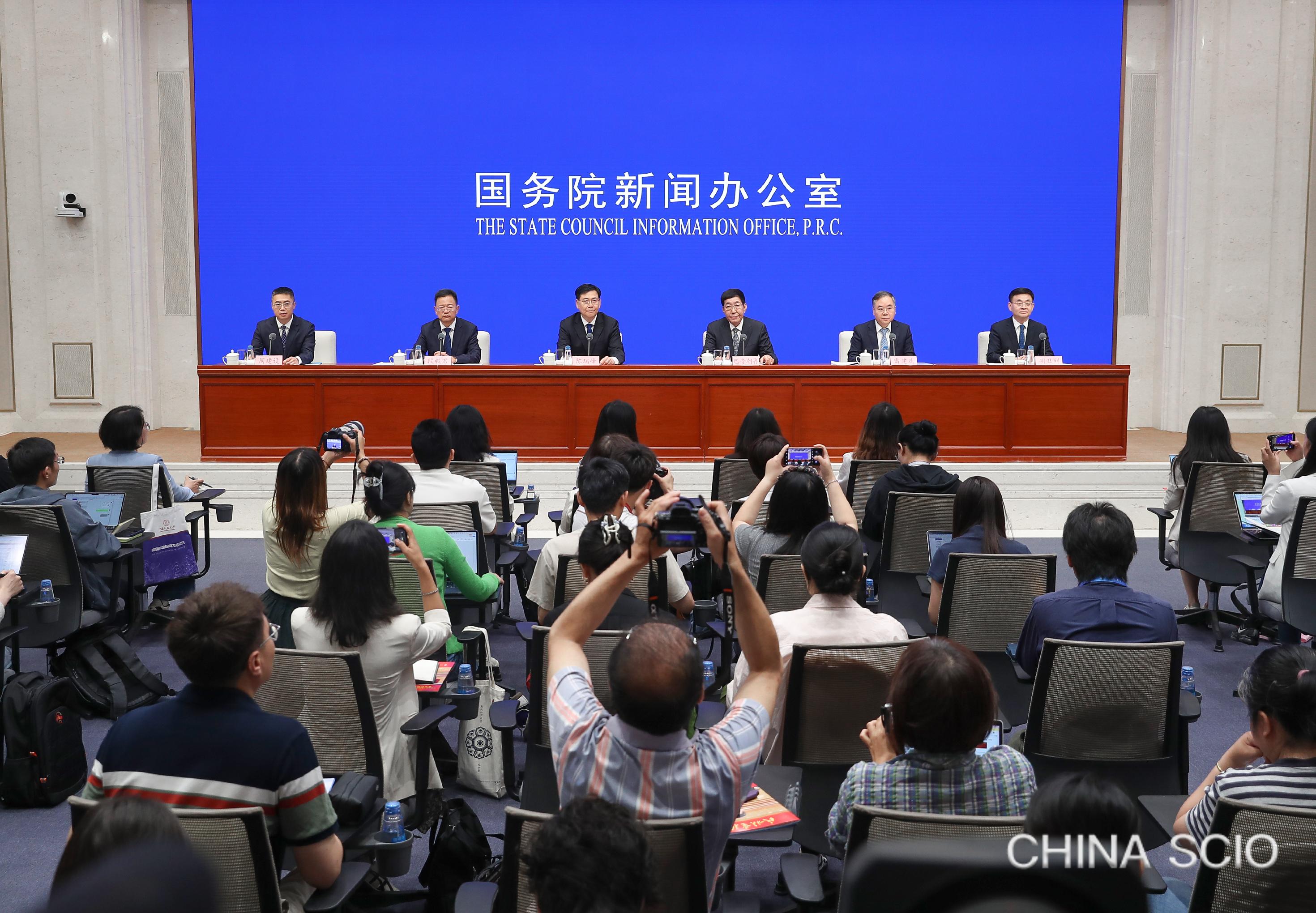
/7 Group photo
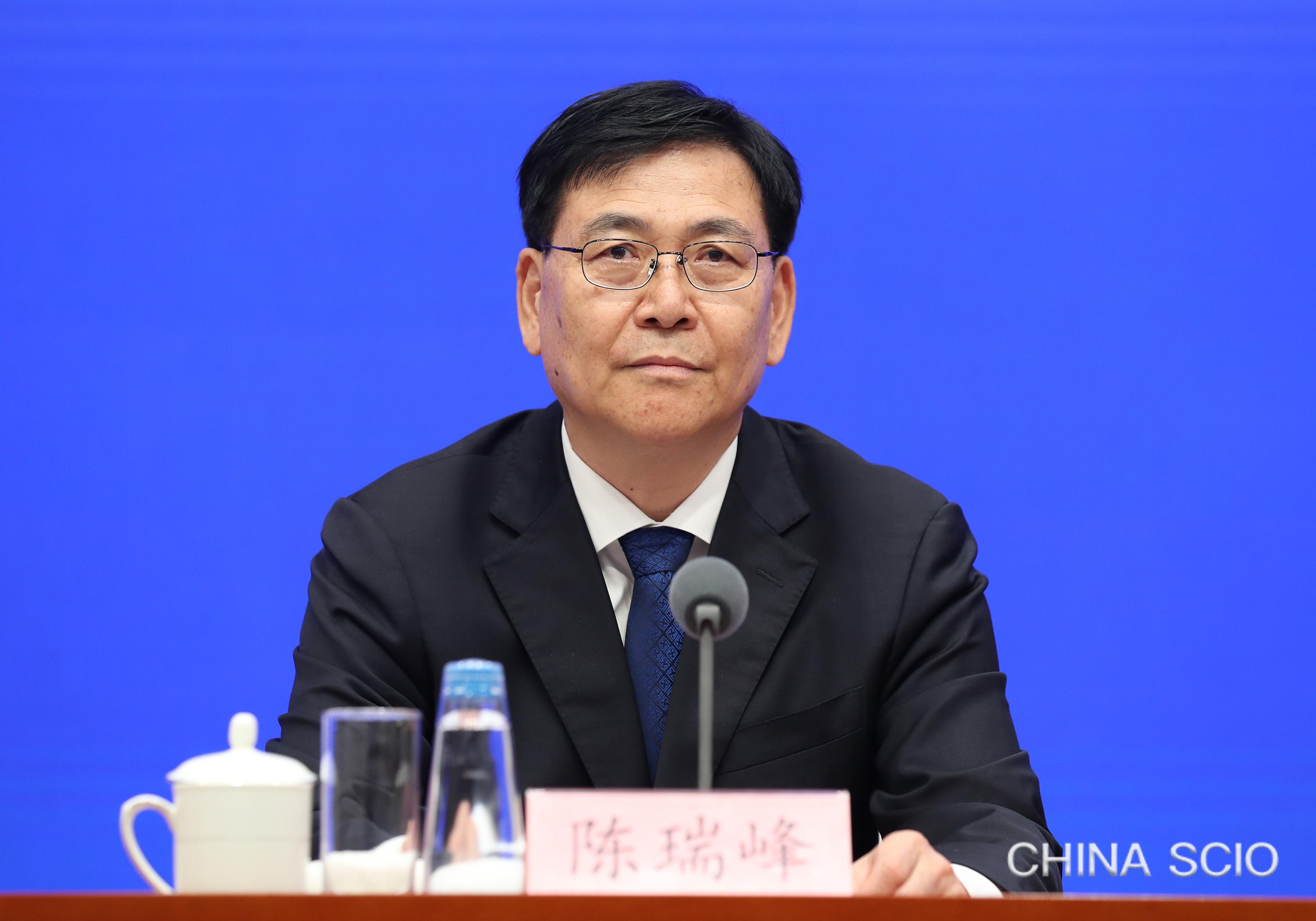
/7 Chen Ruifeng
/7 Bayin Chaolu
/7 Duan Yijun
/7 Lei Jianbin
/7 Hu Weilie
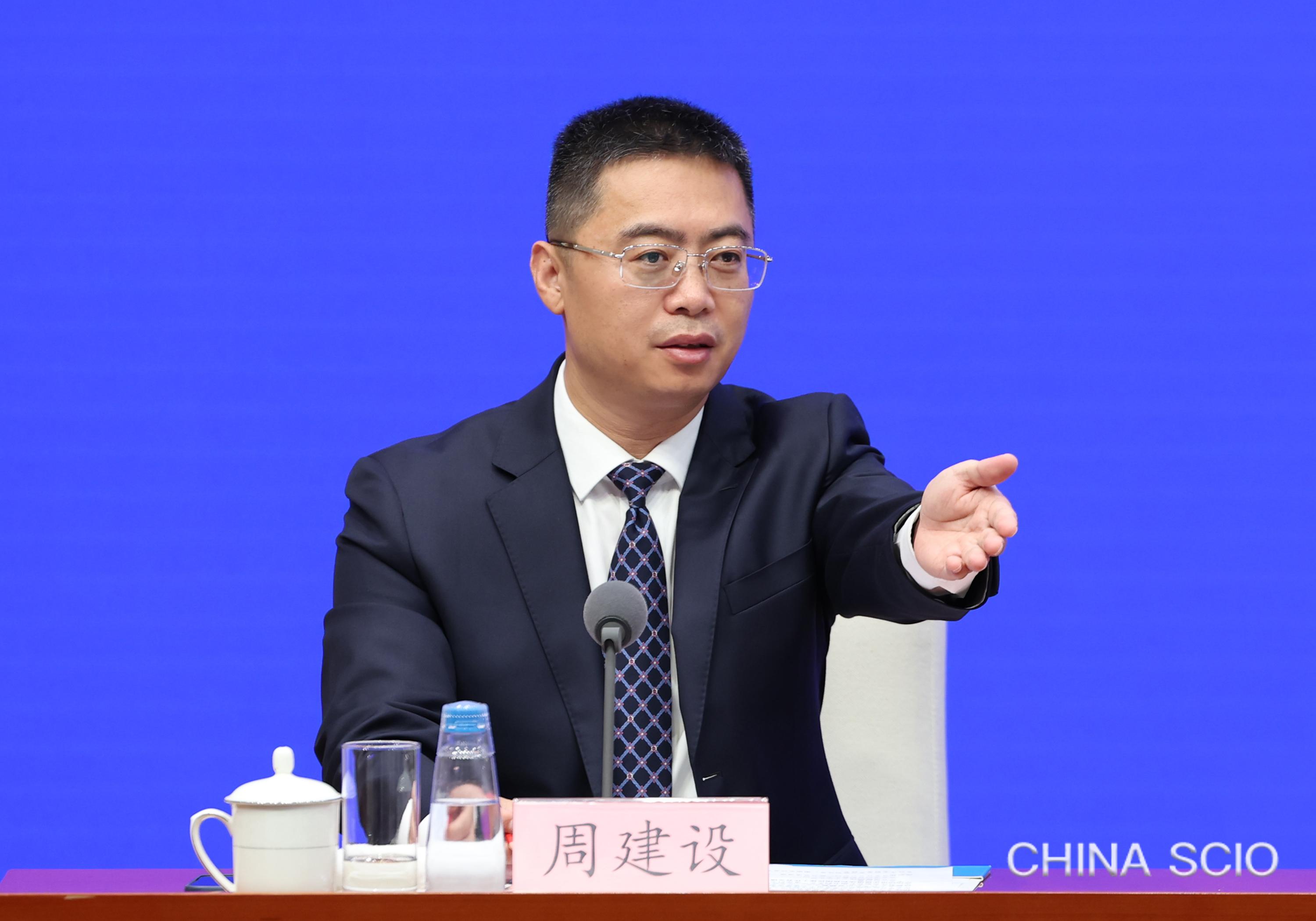
/7 Zhou Jianshe
SCIO briefing on expanding auto consumption across the entire value chain
June 23, 2026SCIO briefing about policies and measures on stable and optimized utilization of foreign investment
June 22, 2026SCIO briefing on China's economic performance in May 2026
June 16, 2026