
SCIO briefing on China's economic performance in May 2026
Beijing | 10 a.m. June 16, 2026
Speakers

Fu Linghui, spokesperson and chief economist of the National Bureau of Statistics (NBS) and director general of the Department of Comprehensive Statistics of the NBS
Wang Guanhua, spokesperson of the NBS and deputy director general of the Department of Comprehensive Statistics of the NBS
Chairperson
Speakers:
Mr. Fu Linghui, spokesperson and chief economist of the National Bureau of Statistics (NBS) and director general of the Department of Comprehensive Statistics of the NBS
Ms. Wang Guanhua, spokesperson of the NBS and deputy director general of the Department of Comprehensive Statistics of the NBS
Chairperson:
Mr. Zhou Jianshe, deputy director general of the Press Bureau of the State Council Information Office (SCIO) and spokesperson of the SCIO
Date:
June 16, 2026
Zhou Jianshe:
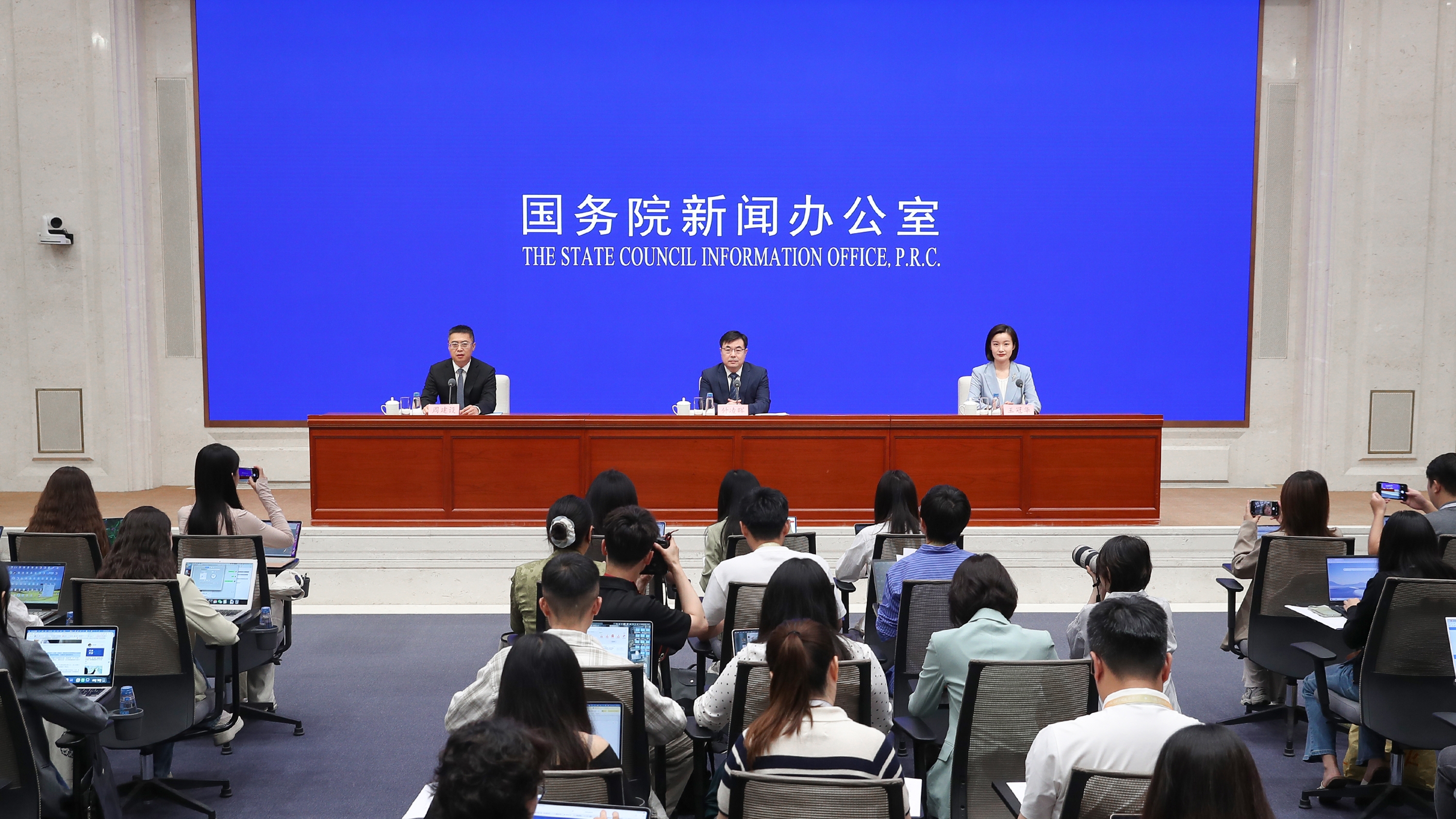
Good morning, ladies and gentlemen. Welcome to this press conference of the State Council Information Office (SCIO). This is a regular briefing on China's economic data. Today, we are joined by Mr. Fu Linghui, spokesperson and chief economist of the National Bureau of Statistics (NBS) and director general of the Department of Comprehensive Statistics of the NBS, and Ms. Wang Guanhua, spokesperson of the NBS and deputy director general of the Department of Comprehensive Statistics of the NBS, to brief you on China's economic performance in May 2026 and then take your questions.
Now, I'll give the floor to Mr. Fu for his introduction.
Fu Linghui:
Thank you. Friends from the media, good morning. As usual, I will start by briefing you on the main economic indicators for this May, and then my colleague and I will take your questions.
China's economy remained stable in May while making steady progress toward innovation-driven, high-quality development.
In May, under the strong leadership of the Central Committee of the Communist Party of China (CPC) with Comrade Xi Jinping at its core, all regions and departments earnestly implemented the decisions and plans of the CPC Central Committee and the State Council, adhered to the general principle of seeking progress while maintaining stability, fully and faithfully implemented the new development philosophy on all fronts, accelerated efforts to foster a new development pattern, earnestly implemented more proactive and effective macro policies, and effectively responded to external shocks and challenges. Production and supply steadily increased, employment and prices remained generally stable, foreign trade continued to demonstrate resilience, new growth drivers gained strength, and the national economy maintained stable growth, with further progress toward innovation-driven, high-quality development.
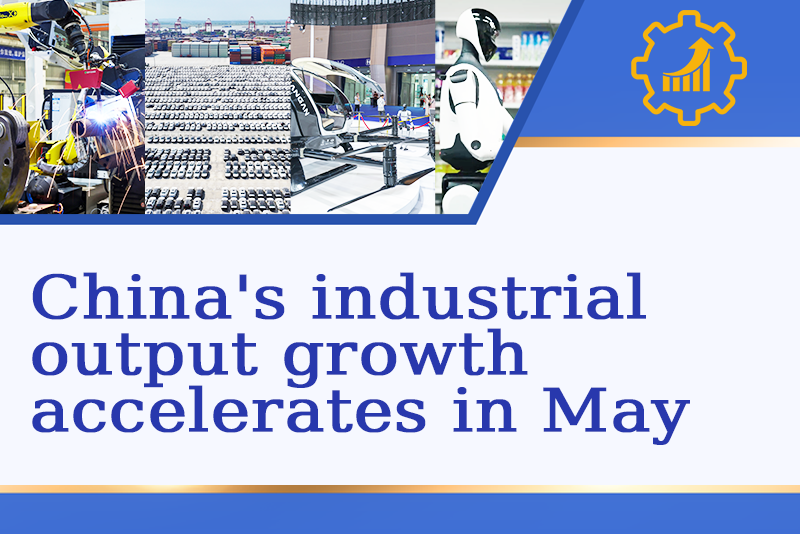
First, industrial production accelerated, with equipment manufacturing and high-tech manufacturing expanding rapidly.
In May, the total value added of industrial enterprises above designated size grew 4.5% year on year, 0.4 percentage point faster than the previous month, and rose 0.4% month on month. In terms of sectors, the value added of mining went up 2.3% year on year, that of manufacturing was up 4.4%, and that of the production and supply of electricity, thermal power, gas and water was up 7.6%. The value added of equipment manufacturing increased 9.5% year on year, and that of high-tech manufacturing rose 15.1%, up 1.2 percentage points and 2.3 percentage points, respectively, from the previous month. In terms of ownership, the value added of state holding enterprises went up 3.7% year on year; that of share-holding enterprises was up 5.2%; that of enterprises funded by foreign investors or investors from Hong Kong, Macao and Taiwan was up 1.9%; and that of private enterprises was up 2.7%. In terms of products, the production of 3D printing devices, lithium-ion batteries and industrial robots grew 54.4%, 40% and 27.9% year on year, respectively. In the first five months, the total value added of industrial enterprises above designated size grew 5.4% year on year. In May, the Manufacturing Purchasing Managers' Index stood at 50%, and the Production and Operation Expectation Index was 53.9%. In the first four months, the total profits made by industrial enterprises above designated size were 2,435.8 billion yuan ($359.29 billion), up 18.2% year on year.
Second, the service sector grew steadily and modern services developed well.
In May, the Index of Services Production increased 4.4% year on year, 0.1 percentage point faster than that of the previous month. Specifically, the production index of information transmission, software and information technology services, of leasing and business services, of finance, and of transportation, storage and postal services grew 11.3%, 10.9%, 7% and 4.8%, respectively. In the first five months, the Index of Services Production grew 4.8% year on year. In the first four months, the business revenue of service enterprises above designated size grew 6.4% year on year. In May, the Business Activity Index for Services was 50.3%, and the Business Activity Expectation Index for Services was 55.4%. Specifically, the Business Activity Index for railway transportation, for telecommunication, broadcast, television and satellite transmission services, and for insurance all stayed within the high expansion range of 55% and above.
Fu Linghui:
Third, market sales continued to expand, while service retail sales recorded robust growth.
In the January-May period, total retail sales of consumer goods and services rose 2.8% year on year, with service retail sales increasing 5.4% and retail sales of goods growing 1.2%. In the first five months, the total retail sales of consumer goods reached 20,603.1 billion yuan, up 1.4% year on year; the online retail sales of goods and services reached 8,317.7 billion yuan, up 5.9% year on year. Specifically, online retail sales of goods reached 5,271.8 billion yuan, an increase of 5%; online service retail sales reached 3,045.9 billion yuan, an increase of 7.6%. In May, the total retail sales of consumer goods reached 4,109 billion yuan, down 0.6% year on year, or down 0.38% month on month. Analyzed by different areas, the retail sales of consumer goods in urban areas reached 3,574.1 billion yuan, down 0.9% year on year; and that in rural areas reached 534.9 billion yuan, up 1.5%. Grouped by consumption patterns, the retail sales of goods were 3,648.5 billion yuan, down 0.7%; and the income of catering was 460.5 billion yuan, up 0.6%. Sales of essential goods and certain upgraded goods continued to grow. The retail sales of beverages, of clothes, shoes, hats and textiles, and of cosmetics by enterprises above designated size increased 6.1%, 3.8% and 2.5% year on year, respectively.
Fourth, infrastructure investment maintained growth while investment in intellectual property products accelerated.
In the first five months, nationwide fixed-asset investment excluding rural households reached 17.8512 trillion yuan, down 4.1% year on year. Fixed-asset investment excluding real estate development fell 1.2%. Specifically, investment in intellectual property products increased 9.3% year on year, 0.4 percentage point faster than in the first four months. By sector, investment in infrastructure grew 0.6% year on year, investment in manufacturing fell 0.4% and investment in real estate development declined 16.2%. The floor space of newly built commercial buildings sold totaled 313.2 million square meters, down 10.8% year on year. Sales of newly built commercial buildings totaled 2.9366 trillion yuan, down 13.5%. By industry, investment in the primary sector rose 5.9% year on year, investment in the secondary sector rose 0.1%, and investment in the tertiary sector fell 6.8%. Private investment fell 7.1% year on year, or 3.5% excluding real estate development. Investment in high-tech industries grew 4.5% year on year. Within that category, investment in computer and office device manufacturing rose 18.3%, aerospace vehicle and equipment manufacturing climbed 16.7% and information services grew 13.8%. In May, fixed-asset investment excluding rural households fell 1.91% month on month.
Fu Linghui:
Fifth, imports and exports of goods grew rapidly, and the trade structure continued to improve.
In May, the total value of imports and exports of goods was 4.4516 trillion yuan, up 16.9% year on year, 2.7 percentage points faster than the previous month. Exports totaled 2.5878 trillion yuan, up 13.8%, while imports totaled 1.8638 trillion yuan, up 21.5%. In the first five months, the total value of imports and exports of goods was 20.6827 trillion yuan, up 15.3% year on year. Specifically, exports totaled 11.9137 trillion yuan, up 11.8%, while imports totaled 8.7691 trillion yuan, up 20.5%. In the first five months, imports and exports of general trade rose 8.3% year on year. Imports and exports with Belt and Road partner countries grew 13.6%. Imports and exports by private enterprises rose 15.5%. Exports of mechanical and electrical products grew 18.4%.
Sixth, employment remained generally stable and the surveyed urban unemployment rate declined.
In the first five months, the surveyed urban unemployment rate averaged 5.2%. In May, the surveyed urban unemployment rate was 5.1%, 0.1 percentage point lower than the previous month. The surveyed unemployment rate for registered local residents was 5.2%, while that for migrant workers was 4.9%. And the rate for rural migrant workers stood at 4.9%. The surveyed urban unemployment rate in China's 31 major cities was 5.1%, 0.1 percentage point lower than the previous month. Employees of enterprises worked an average of 48.2 hours per week.
Fu Linghui:
Seventh, consumer prices rose mildly while producer prices for industrial products saw faster year-on-year growth.
In May, China's consumer price index (CPI) rose 1.2% year on year, unchanged from the previous month, and fell 0.1% month on month. By category, prices for food, tobacco, alcohol and catering services fell 0.9% year on year. Clothing rose 1.4%; housing declined 0.2%; articles and services for daily use rose 1.8%; transportation and communication climbed 5.4%; education, culture and recreation grew 1.3%; medical services and healthcare increased 2.1%; and other articles and services jumped 9.9%. Within food, tobacco, alcohol and dining out, pork dropped 16.1%, fresh fruits declined 2.2%, grain slipped 0.3%, and fresh vegetables rose 1.6%. Core CPI, which excludes food and energy prices, rose 1.1% year on year. In the first five months, the CPI rose 1% year on year.
In May, China's producer price index (PPI) rose 3.9% year on year, 1.1 percentage points faster than the previous month, and increased 0.5% month on month. Purchasing prices for industrial producers rose 5.8% year on year and 1.3% month on month. In the first five months, producer prices for industrial products climbed 1% year on year, while purchasing prices for industrial producers rose 1.6%.
Overall, the national economy remained generally stable in May, with development resilience further evident. However, the external environment remains increasingly complex and volatile, domestic supply continues to outpace demand, some businesses face considerable operating pressure, and the foundation for steady economic growth still needs strengthening. Looking ahead, we must follow the guidance of Xi Jinping Thought on Socialism with Chinese Characteristics for a New Era, continue to pursue progress while ensuring stability, improve both the quality and performance of growth, and enhance counter- and cross-cyclical adjustments. We must further boost domestic demand, improve supply and optimize the allocation of new resources while making the best use of existing ones. We must also develop new quality productive forces suited to local conditions, advance the development of a unified national market, and provide greater support to keep employment, enterprise operations, markets and expectations stable. These efforts will promote higher-quality economic growth while achieving an appropriate increase in economic output.
Thank you.
_ueditor_page_break_tag_Zhou Jianshe:
Thank you, Mr. Fu, for your introduction. The floor is now open for questions. Please identify the news outlet you represent before asking your questions.
CCTV:
The key economic indicators for May have been released. How would you evaluate the overall performance of the national economy in May? In addition, what are the main highlights of the current economic performance? Thank you.
Fu Linghui:
Thank you for your questions. In May, high temperatures and heavy rainfall in parts of China weighed on market demand and supply, compounded by a complex and volatile international environment and the continued spillover effects of geopolitical conflict in the Middle East. However, various localities and government departments effectively implemented more proactive macroeconomic policies, and actively responded to external challenges and overcame domestic difficulties. As a result, production and supply grew steadily, new growth drivers accelerated, employment and livelihoods were effectively guaranteed, and the national economy maintained a generally stable and positive development trend. Specifically, the economy shows five main features.
First, production has maintained steady growth. In agriculture, this year's summer grain production is strong, and a bumper harvest is expected. In industry, innovation has played a stronger leading role and production has risen steadily. The value added of industrial enterprises above designated size grew 4.5% year on year in May, 0.4 percentage point higher than the previous month. Equipment manufacturing has effectively supported industrial production, becoming an important driver of its acceleration. In May, the value added of equipment manufacturing grew 9.5% year on year, contributing nearly 80% of overall value-added growth among enterprises above designated size. In services, modern services have shown good growth momentum and producer services have developed well, driving faster growth across the sector. The service production index rose 4.4% year on year in May, 0.1 percentage point faster than the previous month. Among them, the production index for leasing and business services increased 10.9% year on year, maintaining rapid growth. Meanwhile, rapid growth in industrial production also boosted demand for freight transportation. In May, the production index for transportation, warehousing and postal services rose 4.8%, 0.5 percentage point faster than the previous month.
Second, new growth drivers are emerging. Sci-tech and industrial innovation are converging, digital-intelligent integration and green transformation continue to deepen, and emerging industries are growing rapidly, providing strong support for high-quality economic development. High-end manufacturing is developing well. In May, the value added of high-tech manufacturing industries above designated size rose 15.1% year on year, 2.3 percentage points faster than the previous month. Emerging service industries are thriving. In May, the production index of information transmission, software and information technology services increased 11.3% year on year. From January to April, operating income at enterprises above designated size in high-tech services and strategic emerging services both maintained rapid growth. Digital consumption grew rapidly, with online retail showing strong momentum. Online retail sales of goods and services increased 5.9% year on year from January to May.
Third, foreign trade has shown strong resilience. Against a backdrop of challenging global economic and trade growth, China's imports and exports maintained relatively rapid growth, reflecting both the strengths of a major manufacturing country and the resilience and vitality of its economy. In May, the total value of China's trade in goods rose 16.9% year on year, 2.7 percentage points faster than the previous month. Both exports and imports maintained double-digit growth. China's rapid growth in trade in goods has made a positive contribution to global economic and trade development and to the stability of global industrial and supply chains.
Fourth, people's livelihoods have been well protected. Employment is the most basic component of people's well-being. Since the beginning of this year, all localities and government departments have intensified efforts to stabilize employment, helping keep the overall employment situation stable. In May, the national surveyed urban unemployment rate was 5.1%, down 0.1 percentage point from the previous month. The surveyed urban unemployment rate for the main working-age population aged 30-59 and for migrant workers with agricultural household registration both fell from the previous month. Price changes are closely connected to people's daily lives. Despite fluctuations in the international energy market, China strengthened the supply of essential goods, keeping consumer prices generally stable. China's consumer prices rose 1.2% year on year in May, unchanged from April. The market supply of major agricultural products is sufficient, and food prices have remained generally stable, falling 1.7% year on year in May. Facing an early summer, higher temperatures and rapid growth in electricity demand in some areas, regions across China strengthened power supply guarantees. In May, power generation by industrial enterprises above designated size increased 4.2%, 1.6 percentage points faster than in April. Power supply for both households and enterprises remained well secured.
Of course, many unstable and uncertain external factors remain, and the domestic imbalance between strong supply and weak demand is still prominent. Some enterprises face difficulties in production and operations, and the foundation for steady economic improvement still needs strengthening. Moving ahead, we must fully implement the decisions and plans of the CPC Central Committee and the State Council, further strengthen macroeconomic policy adjustment, and continuously expand domestic demand and optimize supply. We must also focus on keeping employment, enterprise operations, markets and expectations stable and strengthen innovation-driven development. Ultimately, we must deepen reform and opening up to promote high-quality economic development. Thank you.
_ueditor_page_break_tag_National Business Daily:
Fixed-asset investment data is closely watched. How do you view the fluctuations in the investment growth rate in May? What are the new characteristics in the investment structure? Thank you.
Fu Linghui:
Thank you for your questions. Changes in investment have attracted widespread attention. Changes in investment growth need to be viewed comprehensively, objectively and dialectically. Observing these changes requires looking not only at the total amount and scale but also at investment structure, quality and returns. The decline in fixed-asset investment widened from January to May. This partly reflected high temperatures and heavy rainfall in some areas, and partly reflected the transition from old to new growth drivers and the shift of investment from expansion in quantity to improvement in quality. Despite the slowdown in investment growth, continued policy support, stronger innovation and greater livelihood safeguards have driven ongoing optimization of the investment structure. Investment has played an irreplaceable role in strengthening the foundation for growth, driving transformation and improving people's livelihoods. This is primarily reflected in the following aspects:
First, infrastructure investment maintained steady growth. Infrastructure is a key guarantee for facilitating the flow of production factors, promoting economic development and improving people's livelihoods. Since the start of this year, a number of major infrastructure projects have continued to advance, and construction of infrastructure such as the six networks of water, electricity, computing power, telecommunications, urban underground pipelines and logistics has accelerated. In the first five months of this year, infrastructure investment maintained a slight growth of 0.6%. The construction of a comprehensive, multidimensional transportation system has accelerated, and the transportation and logistics network has continued to improve. Investment in transportation, warehousing and postal services rose 7.1% in the January-May period. Among them, investment in water transport and air transport increased 23.3% and 21.7%, respectively. All sectors are seizing opportunities presented by the new round of technological transformation. Development of new infrastructure projects, such as computing power networks and next-generation telecommunication facilities, has progressed steadily. In the first five months of this year, investment in the information transmission industry rose 30.4%.
Second, investment in emerging industries grew rapidly. Innovation has played a leading role, and rising demand for boosting, upgrading and transforming emerging industries has driven increased investment in related fields. This has both expanded room for investment growth and injected strong momentum into cultivating new industries and fostering new growth drivers. Innovation-driven development has yielded significant results. In the first five months of this year, investment in intellectual property products rose 9.3% year on year, 0.4 percentage point faster than in the January-April period, contributing 1.1 percentage points to overall investment growth. Investment in high-tech industries maintained strong growth momentum. Investment in high-tech industries rose 4.5% year on year from January to May. Artificial intelligence and new energy developed rapidly, and investment in related industries grew quickly in the first five months. From January to May, investment in integrated circuit manufacturing and lithium-ion battery manufacturing increased 11% and 24.9%, respectively, while investment in information services rose 13.8%. Large-scale equipment renewal policies effectively drove enterprise transformation and upgrading. In the first five months of the year, investment in equipment and instrument purchases rose 9.3%.
Third, investment in areas related to public well-being continued to increase. China adheres to the principle of safeguarding and improving people's well-being in the course of development, placing greater emphasis on integrating investment in physical assets with investment in people. Investment in agriculture and rural areas, public facilities, and ecological and environmental protection has continued to increase. Investment related to rural revitalization grew rapidly. From January to May, investment in agriculture and fisheries in China rose 10.7% and 27.5%, respectively. Investment in urban renewal and improvement of the living environment maintained steady growth. From January to May, investment in ecological protection and environmental governance rose 3.5%. This year, the central government allocated 97 billion yuan in special funds to support urban renewal. These funds are expected to improve living conditions and benefit more residents.
Looking ahead, China still has ample room for investment. New urbanization, rural revitalization, the development of new quality productive forces, and the improvement of public services all require investment support, to lay a solid foundation for high-quality development. In this regard, we should leverage the guiding and driving role of government investment, stimulate the vitality of private investment, and adhere to the principle of closely integrating investment in physical assets with investment in people. We must pay more attention to optimizing the investment structure and improving its efficiency, and better leverage the important role of effective investment in driving high-quality development. Thank you.
_ueditor_page_break_tag_Market News International:
In May, producer price inflation accelerated to 3.9% year on year from 2.8% in April, while the CPI remained broadly stable at 1.2%. How does the NBS assess the transmission of upstream price pressures to downstream consumer prices? Are there signs that some manufacturers are facing margin pressure because they are unable to fully pass higher costs onto consumers?
Fu Linghui:
I would like to invite Ms. Wang to answer these questions.
Wang Guanhua:
Thank you for your questions. Your first question, on the transmission from the producer price index (PPI) to CPI, touches on an issue that has attracted widespread attention. Although the increase in the PPI has widened, the CPI has remained generally stable and prices of daily essentials have remained steady. There are several main reasons for this.
First, due to the different connotations of CPI and PPI indicators, the transmission from PPI to CPI exhibits obvious structural characteristics. PPI reflects prices in the industrial production sector, while CPI reflects prices in the household consumption sector and covers all major categories of consumer spending, including both goods and services. Therefore, the transmission from PPI to CPI is mainly concentrated in the industrial consumer goods sector, while food and service prices, which account for a large proportion of CPI, are less affected by fluctuations in industrial product prices.
Second, from the perspective of price transmission patterns, upstream industrial product prices are directly affected by international commodity prices. However, as upstream prices are transmitted along the industrial chain to the midstream processing stage, the downstream finished product manufacturing stage, and finally to the consumer-end market, this process is subject to factors such as market competition and technological progress. As a result, price transmission often weakens along the industrial chain.
Third, China's economy is generally stable, with resilient industrial and supply chains, abundant supply of goods and services, and effective policies to ensure supply and stabilize prices. In particular, the country's timely implementation of the temporary price control mechanism for refined oil products has effectively offset the impact of fluctuations in international energy prices and provided strong support for the stable operation of domestic prices.
Your second question concerns increasing pressure on businesses' operations due to rising costs, which indeed deserves attention. Affected by multiple factors such as differences in the division of labor in the industrial chain, market demand and industry competition, the profitability of different industries has shown certain divergence, and some midstream and downstream enterprises are facing periodic cost pressures. Faced with cost changes, many enterprises have taken proactive measures to tap potential and increase efficiency to offset pressure through technological upgrades, refined management and market expansion. Relevant departments and regions have continued to implement and refine policies to help enterprises, supporting large-scale equipment upgrading and renovation and taking measures to reduce energy and logistics costs. These efforts are expected to gradually yield positive effects. From a national perspective, although some enterprises still face pressure in their production and operation, with the rapid growth of industrial production and the rebound in industrial product prices, the business revenue and profits of industrial enterprises have maintained rapid growth, and the resilience of the industrial economy continues to be evident. In the first four months, the operating revenue of industrial enterprises above designated size grew 5.2% year on year, 0.2 percentage point higher than that of the first three months. Profits of industrial enterprises increased 18.2%, up 2.7 percentage points. Thank you.
_ueditor_page_break_tag_South China Morning Post:
In May, the total retail sales of consumer goods fell 0.6% year on year, marking the first decline since the end of 2022. How does the NBS interpret this? Thank you.
Fu Linghui:
Thank you for your question. I understand that your main concern is regarding consumption. When it comes to consumption, the total retail sales of consumer goods is a very important indicator. However, at this stage, we need to pay attention to both the consumption of goods and consumption of services. Perhaps you have all noticed that this is the first time we have released the indicator of total retail sales of consumer goods and services, which grew 2.8% from January to May. We need to take a comprehensive view of consumption, including not only goods consumption but also services consumption. Since the beginning of this year, various sectors have been implementing special initiatives to boost consumption, innovating consumption scenarios, stimulating consumption potential, and promoting the upgrading of consumption. The overall sales volume of goods and services in China has continued to expand, with many highlights in terms of structure. The total retail sales of consumer goods and services mentioned earlier has maintained steady growth. In May, retail sales of goods did register a certain decline, mainly due to the high base in the same period last year, under the influence of the implementation of the large-scale trade-in policy and the 618 shopping festival. Of course, the decline in retail sales this May was also partly due to the high temperatures and heavy rainfall, which dampened residents' offline consumption in some areas. However, considering the overall situation of goods and services sales, the steady operation of the consumer market and the trend toward quality improvement and upgrading remain unchanged. The main aspects are as follows:
First, service consumption has maintained sound growth momentum. As China enters into a new stage of development, consumption scenarios have been increasingly diversified. Demand for service consumption has been unleashed at an accelerated pace and has become an important driver of consumption growth. Retail sales of services have become an important indicator for tracking consumption development. From January to May, the retail sales of services went up 5.4% year on year, continuing to outpace the growth rate of the retail sales of goods. This change is determined by the laws of economic development and is also an important manifestation of consumption upgrading. It is widely acknowledged that developed countries in the past have followed a trajectory of shifting the focus from consumption of goods to consumption of services. In terms of the characteristics of service consumption, the rapid growth in tourism consumption has driven a corresponding rise in spending on transportation and travel. From January to May, retail sales of tourism consulting and leasing services and transportation services both maintained rapid growth. Meanwhile, spending on cultural and sports events has continued to rise, with many places organizing mass sports events and actively developing the arts and cultural performance market, which have played an increasingly apparent role in driving consumption. From January to May, retail sales of cultural, sports and leisure services increased more than 10% year on year. The driving effect of holiday consumption is quite evident. During this year's May Day holiday, local authorities rolled out a series of measures to benefit the people, and the supply of services that are popular with the public has continued to increase, leading to a surge in consumption. During the May Day holiday, cross-regional passenger trips increased 3.5% nationwide, and the revenue from commercial performances held nationwide increased more than 10%.
Second, the potential of new types of consumption has been unleashed. Targeting new consumption trends and demands, local governments have actively tapped into the potential of new types of consumption, with online consumption, digital consumption and green consumption becoming new drivers of growth in consumption. In terms of consumption channels, online consumption has remained active. From January to May, online retail sales of goods and services increased 5.9% year on year, with online retail sales of goods increasing 5%, continuing to outpace the growth rate of overall retail sales of goods. In terms of consumption content, digital consumption and green consumption have maintained sound growth momentum. Retail sales of digital services and digital products both grew rapidly. In the first five months, retail sales of communication and information services increased more than 10%, while retail sales of wearable smart devices registered significant growth. Sales of green products grew rapidly. From January to May, the retail sales of energy-efficient home appliances by enterprises above designated size increased more than 30%. Meanwhile, we have seen that the retail market penetration rate of the new energy vehicle market has exceeded 60% for two consecutive months. In terms of retail formats, new business forms and models have been constantly expanding. From January to May, the retail sales growth of membership warehouse clubs and unmanned stores of units above designated size both exceeded 20%.
Third, the quality of goods consumption has been improved and upgraded. With changes in the concepts of consumption, residents are paying more attention to the quality of consumer goods than to availability, and the demand for quality consumption has been constantly expanding. From January to May, the retail sales of cosmetics and communication equipment by enterprises above designated size increased 4.9% and 13.8% year on year, respectively, both maintaining relatively rapid growth. The upgrading of goods consumption is also reflected in the fact that residents pay more attention to quality and experience when choosing basic necessities, which has also driven the rapid growth of retail sales of related commodities. From January to May, the retail sales of food, clothing and daily necessities by enterprises above designated size increased 8.4%, 7.2% and 4.6%, respectively, all significantly faster than the growth rate of total retail sales.
Furthermore, with the steady progress of rural revitalization in China, the consumption potential of rural markets has continued to be released. From January to May, the retail sales of consumer goods in rural areas increased 2.6% year on year, 1.4 percentage points higher than that in urban areas. With ongoing improvements in rural internet infrastructure and the express logistics system, the rural consumer market is poised for a bright future.
Overall, the consumer market has maintained steady operation since the beginning of this year, with continuous optimization of its structure and accelerated cultivation of new growth drivers. Of course, we must also recognize that there is still room to further enhance people's ability and willingness to spend, and that market supply in some areas cannot fully meet the needs of consumption upgrading. In response, we should implement special initiatives to boost consumption, take multiple measures to promote residents' employment and income growth, continuously innovate consumption scenarios, and optimize the consumption environment to better unleash consumption potential and improve people's well-being. Thank you.
_ueditor_page_break_tag_Jimu News:
Based on data from the previous few months, emerging industries have maintained rapid growth. What is the latest data in terms of industrial upgrading, new growth drivers and the emergence of new products in May? And what role have new quality productive forces played in the economic performance? Thank you.
Fu Linghui:
I would like to invite Ms. Wang to answer your questions.
Wang Guanhua:
Thank you for your questions. The accelerated transformation from old growth drivers to new ones is a prominent feature of the current economic operation. This year, China has made new progress in quality improvement in industries, digital empowerment and green transition. The cultivation and development of new quality productive forces have not only provided important support for economic growth, but also effectively improved the quality, resilience and sustainability of development.
First, a large number of innovation outcomes have emerged. China relies on investment in innovation to empower high-quality development. In 2025, the intensity of research and experimental development expenditure, which is the ratio of total R&D expenditure to GDP, exceeded the average level of OECD countries for the first time. With strong support from innovation resources, innovative achievements have been emerging in large numbers in fields such as aerospace, artificial intelligence, quantum computing and biomedicine. Recently, the quantum computing prototype Jiuzhang 4.0 broke the world record for optical quantum computing, and the domestically developed 600-kilogram thrust turbofan engine successfully completed its maiden flight test. The application of innovative achievements provides technological support for industrial leapfrogging. At the same time, various regions are paying more attention to removing obstacles to the application of sci-tech advances and improving the efficiency, so that innovation outcomes can truly move from the laboratory to the production line. From January to May, China granted 372,000 invention patents, up 12.1% year on year, with a number of high-value patents being rapidly implemented in intelligent and green industrial scenarios.
Second, industrial upgrading has accelerated. As the industrial structure transitions toward high-end, intelligent, green and integrated development, the overall industrial competitiveness is improving. From January to May, high-tech manufacturing contributed nearly 40% of industrial growth, and equipment manufacturing contributed nearly 60% of industrial growth, demonstrating a prominent leading role. From major engineering achievements such as airplanes, high-speed trains and ships, to everyday products like cellphones, computers and cars, all rely on the development of the equipment manufacturing industry. It can be said that equipment manufacturing not only supports the core strength of manufacturing development, but also integrates into the daily lives of ordinary people, truly changing all aspects of our production and life. Meanwhile, with the deep integration of the digital economy and the real economy, new scenarios such as the "5G Plus," "AI Plus" and "Industrial Internet Plus" are emerging rapidly. In addition, more Chinese companies are increasingly visible in new arenas such as large AI models, quantum technology and embodied intelligence. The upgrading of the industrial structure also drives the coordinated development of producer services such as information technology, modern finance, modern logistics and business services. In May, the production index for information transmission, software and information technology services, leasing and business services, and the financial industry increased 11.3%, 10.9% and 7% year on year, respectively. These seemingly intangible services are precisely the key soft power for enhancing the hard power of the manufacturing industry.
Third, emerging demands have been released. In terms of investment, emerging fields such as high-end equipment, smart manufacturing and green energy have seen continued investment. From January to May, investment in electronic circuit manufacturing, lithium-ion battery manufacturing and aircraft manufacturing increased 50.9%, 24.9% and 19.7% year on year, respectively. In terms of consumption, residents' concepts of consumption have been upgrading. They are no longer content with access to goods, but increasingly prioritize high-quality, excellent experiences. New energy vehicles, high-efficiency home appliances and smart products are increasingly favored by consumers. From January to May, the retail sales of smart wearable devices, including smart glasses, more than doubled year on year. In terms of foreign trade, a wide variety of high-quality Chinese products have proven to be widely popular, and high-end, intelligent, green and low-carbon products have become new calling cards for China's foreign trade. From January to May, exports of electromechanical products with high technological content and high added value accounted for more than 60%, making them the main driver of export growth.
Fourth, development quality has continued to improve. With the orderly shift from old growth drivers to new ones, the quality and efficiency of China's economic development have also been improved and enhanced. For example, energy consumption per unit of added value for industrial enterprises above designated size continued to decline in May, which means that the energy consumed per unit of industrial output continued to decrease. This is attributed to ongoing efforts to advance the green and clean transformation of traditional industries, as well as China's sustained development of a clean and efficient energy supply system over the years. For another example, despite a decline in automobile production from January to May, the added value of automobile manufacturing enterprises above designated size still maintained growth, reflecting the continuous optimization of product mix in the automobile industry and the increasing proportion of high value-added models.
Overall, new growth drivers and strengths in China's economy have been continuously fostered, and the shift from old to new growth drivers has yielded phased results. At the same time, this transformation is a long-term, systematic undertaking that cannot be accomplished overnight, and the process will be accompanied by certain pressures and growing pains. This also reminds us to maintain resolve, build on the momentum and persevere. We must continuously deepen reforms, strengthen innovation, vigorously cultivate new growth drivers, and transform and upgrade traditional growth drivers. These efforts will promote higher-quality and more sustainable economic development throughout the process of transformation and upgrading. Thank you.
_ueditor_page_break_tag_Reuters:
Given the May data, what is your outlook for the economic trajectory in the second quarter? What are the main sources of growth? Thank you.
Fu Linghui:
Thank you for your questions. People are closely watching economic growth in the second quarter. Economic growth remained robust in the first quarter, with GDP rising 5%. Since the second quarter, complex changes in the international environment and pressure from domestic structural adjustment have slowed growth in some economic indicators, and some enterprises have faced operational difficulties. However, China's overall development trend remains one of stability and steady progress, with growth continuing to shift toward new drivers and an optimized structure. Looking ahead, despite some difficulties and challenges, the fundamentals supporting long-term growth remain unchanged. The development of new quality productive forces, the continued dividends of reform and opening up, and effective macroeconomic policies will continue to support stable economic operation and its shift toward new growth drivers and an improved structure. Let me give you some details.
First, the economy has a solid foundation and strong resilience. China has a complete industrial system and strong supporting capabilities, backed by the distinct advantages of a super-large market and continuously upgraded infrastructure. These give the country considerable strength to cope with external shocks and resolve internal challenges. Despite significant fluctuations in the global energy market this year, China's economy has withstood the pressure and maintained steady growth, demonstrating strong resilience. From January to May, the value added of industrial enterprises above designated size rose 5.4% and the services production index rose 4.8%, both maintaining relatively rapid growth. The national surveyed urban unemployment rate averaged 5.2% and the CPI rose 1% year on year, both remaining generally stable. Foreign trade grew rapidly, with China's total imports and exports of goods rising 15.3% year on year. The RMB exchange rate remained stable with a slight appreciation, and foreign exchange reserves stayed above $3.4 trillion at the end of May. All this demonstrates that China's economy continues to show resilience and vitality, laying a solid foundation for stable economic performance.
Second, the development of new growth drivers has strong support. Technological innovation is now yielding results after years of buildup, with industrial innovation playing an increasingly evident leading role. New quality productive forces are being cultivated and strengthened, increasingly serving as a robust pillar for high-quality development. By sector, the digital industry and intelligent manufacturing have gained solid growth momentum. In the first five months, value added in the digital product manufacturing industry rose 12% year on year, significantly faster than the overall growth of industries above designated size. The AI industry chain has experienced strong growth, with significant increases in the production of memory chips and industrial robots. In terms of demand, investment in emerging fields has continued to increase, and consumption in cultural, tourism and leisure services has continued to expand, injecting strong momentum into economic development. From January to May, investment in high-tech industries rose 4.5% year on year, and retail sales of tourism services and cultural, sports, and leisure services maintained double-digit growth. Whether in technological development, enterprise production, transportation and logistics, or people's travel and daily consumption, innovation is now ubiquitous and continues to underpin economic development.
Third, reform and opening up has continued to deepen. The construction of a unified national market has achieved positive results, improving the balance of market supply and demand, lifting prices and boosting corporate profitability. In the first four months, profits of industrial enterprises above designated size rose 18.2% year on year. China's institutional opening up has advanced and made solid progress. With the official launch of the China (Inner Mongolia) Free Trade Zone, the frontiers of opening up continue to expand. The visa-free policy has effectively stimulated the potential of inbound tourism, with the number of foreigners entering China under the visa-free policy during the May Day holiday rising 14.7% year on year. Moving ahead, China will continue to vigorously promote the construction of a unified national market, make greater efforts to remove obstacles and bottlenecks, expand opening up, and promote the flow of factors of production in both domestic and international markets. All of these factors will contribute to the sustained and healthy development of the economy.
Fourth, macroeconomic policies have provided strong safeguards. Since the beginning of this year, more proactive and effective macroeconomic policies have continued to take effect. Policies to implement major national strategies and strengthen security capacity in key areas, and policies to promote large-scale equipment upgrades and consumer goods trade-ins, have both improved in quality and effectiveness. The service sector has expanded in scale and improved in quality, while development policies in key areas such as industrial and supply chain security have been introduced successively. Together, these measures have effectively safeguarded stable economic operation. In the face of the spillover effects of international geopolitical conflicts, China has made solid efforts to ensure supply and stabilize prices, safeguarding people's livelihoods and ensuring secure development. Recently, a number of national-level special plans have been rolled out in an orderly manner. With careful implementation of relevant policies, their combined effect will continue to emerge. In particular, given China's ample policy space, abundant reserves, and flexible regulatory tools, the country has the conditions and capacity to promote stable and healthy economic development.
Overall, China's economy is underpinned by a solid foundation, numerous advantages, strong resilience, and great potential, providing favorable conditions for steady and sound economic development. Going forward, we must make full use of macroeconomic policies, strengthen counter-cyclical and cross-cyclical adjustments, continuously expand domestic demand, accelerate the development of new growth drivers, and take solid steps to advance high-quality development and better safeguard and improve people's livelihoods. Thank you.
_ueditor_page_break_tag_Jiupai News:
Despite a sluggish global economic recovery and persistent geopolitical risks, China's foreign trade still achieved double-digit growth in May. Overseas markets are closely watching the resilience of China's foreign trade. What are the new characteristics of the current foreign trade structure? What are the reasons behind this strong performance? Thank you.
Fu Linghui:
I'd like to invite Ms. Wang to answer your questions.
Wang Guanhua:
Thank you for your questions. Against the backdrop of sluggish global economic growth and a complex and volatile geopolitical situation, China's foreign trade has maintained momentum of increase in quantity and improvement in quality. This has provided strong support for economic growth while reflecting the distinct characteristics of diversified foreign trade markets, an optimized structure, new drivers of growth and strong resilience.
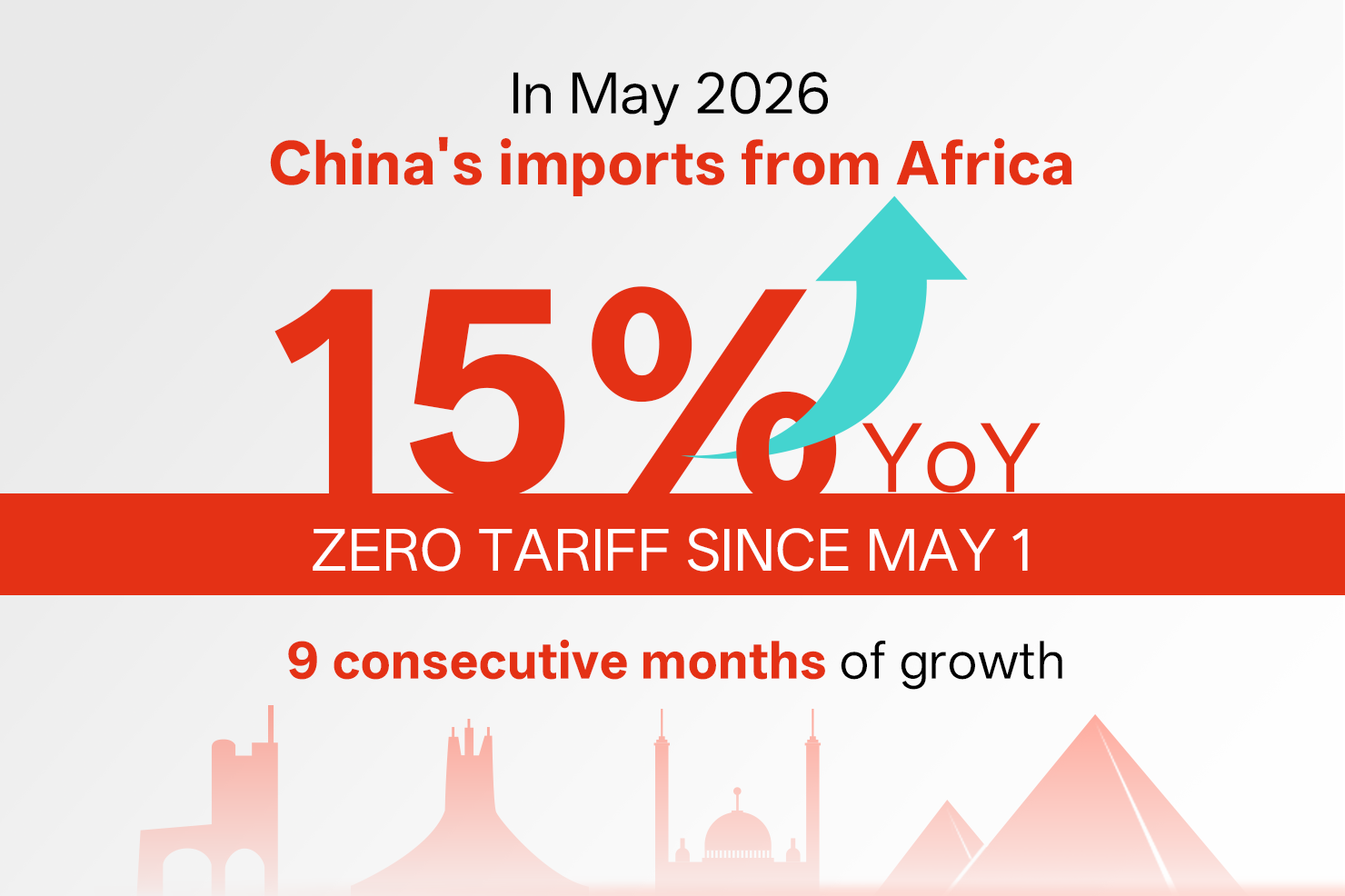
First, in terms of scale, both imports and exports achieved rapid growth. According to customs data, the total value of imports and exports of goods in May reached 4.45 trillion yuan, exceeding 4 trillion yuan for the third consecutive month and up 16.9% year on year. Thanks to simultaneous efforts to stabilize exports and expand imports, exports rose 13.8% and imports rose 21.5% in May, with imports growing faster than exports. The growth rate of imports such as integrated circuits, iron ore and concentrates all accelerated. China's large market has provided new development opportunities for countries around the world. Starting May 1, China fully implemented a zero-tariffs policy for all African countries with which it has diplomatic relations, reducing the cost for African products to enter the Chinese market. In May, imports from Africa increased 15% year on year, marking growth for the ninth consecutive month.
Second, in terms of markets, diversification has continued to strengthen and expand. The resilience of foreign trade depends on stable and diversified markets. Guided by the strategy of high-standard opening up, China has actively deepened pragmatic cooperation with its global economic and trade partners. From January to May, China's imports and exports to ASEAN, the EU and Africa all achieved double-digit growth, while imports and exports to Belt and Road partner countries rose 13.6%, accounting for more than half of total imports and exports. In April, China's imports and exports to the United States reversed their year-on-year decline and began growing. The growth momentum continued in May.
Third, in terms of products, high-tech and high value-added products have become the main drivers of export growth. From January to May this year, exports of electromechanical products rose 18.4% year on year, accounting for more than 60% of total exports. Exports of AI-related products such as integrated circuits and computer components performed exceptionally well. Meanwhile, China's export advantages in green and low-carbon products have become more prominent, with exports of lithium batteries and wind turbine generators up about 40%. The optimized export structure is underpinned by strong manufacturing capabilities, reflecting a leap in China's advanced manufacturing level.
Fourth, in terms of enterprises, all types of market entities have achieved growth. Private enterprises benefit from flexible business models, diversified resource allocation on markets and strong innovation capabilities, and have been China's largest foreign trade operators for several consecutive years. From January to May, imports and exports by private enterprises rose 15.5%, accounting for 57.1% of China's total foreign trade over the same period. Imports and exports by foreign-invested enterprises increased 15.7% and those by state-owned enterprises rose 14%, both achieving relatively rapid growth.
China's stable foreign trade growth can be attributed to a number of positive factors. First, China's solid industrial foundation and full-fledged industrial chains have led to a constant increase in the supply of high-quality and innovative products, accurately meeting production and consumption needs across different fields and levels around the world, and aligning with the global trend toward intelligent and green transformation. Second, China's unwavering commitment to expanding high-standard opening up, carrying out economic and trade cooperation with countries around the world on the basis of mutual benefit and win-win results, and advancing high-quality Belt and Road cooperation, has helped expand its "circle of friends" in foreign trade. Third, this also reflects the resilience of foreign trade entities seeking innovation and transformation, as well as the continued effectiveness of a series of policies to stabilize foreign trade.
Looking ahead, many uncertain and unpredictable external factors remain, and stable growth in foreign trade still faces certain pressures. However, the favorable conditions supporting foreign trade development remain unchanged, and the resilience, vitality and competitiveness of foreign trade are still important foundations and advantages for China as it expands international cooperation. In facing a changing international landscape, the key is to firm up confident and meet external uncertainty with the certainty of our own high-quality development. Thank you.
_ueditor_page_break_tag_Shangyou News:
In May, the PPI's year-on-year growth accelerated while its month-on-month growth slowed. What were the main reasons for this change? Will this upward trend continue going forward? Thank you.
Fu Linghui:
I would like to invite Ms. Wang to answer your questions.
Wang Guanhua:
Thank you for your questions. Driven by both international and domestic factors, industrial product prices have continued their gradual recovery since the second half of last year. From January to May, the PPI rose 1% year on year. In May, the index rose 3.9%, 1.1 percentage points higher than the previous month. Month on month, it rose 0.5%, down from the 1.7% increase in the previous month, marking the eighth consecutive month of increase. Specifically, several features stand out:
First, the driving effect of industrial structure optimization and upgrading continues to grow. In May, sustained demand for equipment renewal in the manufacturing sector, combined with rising prices of some raw materials, pushed prices for ferrous metal smelting and rolling up 1.2% month on month and 1% year on year. The accelerating pace of electrification and applications of AI have significantly boosted demand for computing power, driving up prices in industries such as non-ferrous metals, electronics and electrical machinery. In May, prices for non-ferrous metal smelting and rolling, computer, communication and other electronic equipment manufacturing, and electrical machinery and equipment manufacturing all maintained an upward trend both month on month and year on year.
Second, increased seasonal demand drove price rebounds in some industries. In May, the price in the coal mining and washing industry rose 3.2% month on month, mainly driven by rising stockpiling demand ahead of the peak summer season and increased non-power coal demand from industry and other sectors. In addition, as temperatures rose gradually in May, demand for air conditioners and other cooling equipment increased, pushing up manufacturing prices for household air conditioners by 0.9% and household refrigeration appliances by 0.3% month on month.
Third, the pass-through effects of rising international commodity prices remained. In May, international crude oil prices fluctuated downward, causing domestic petroleum and chemical industry prices to fall. Month-on-month prices for oil extraction and refined petroleum product manufacturing both reversed from gains in the previous month to losses, while the month-on-month price growth in chemicals and chemical fibers slowed significantly. That was also an important reason for the slower growth in the month-on-month PPI. It should also be noted that although international crude oil prices saw some correction, they remained elevated, and the pass-through impact on the domestic petrochemical industry chain persisted. Comparing May this year with the same period last year, factory-gate prices in industries such as oil and gas extraction, petroleum processing and chemicals remained notably higher. We will continue to closely monitor the pass-through impact of international energy price fluctuations on domestic prices.
Looking ahead, the international environment remains complex and volatile, with considerable geopolitical uncertainty. However, China has a strong capacity to ensure energy supply, increasingly diversified import channels, and continued progress in the transition toward clean energy, providing a solid foundation and favorable conditions for coping with external market fluctuations. Thank you.
_ueditor_page_break_tag_Yicai:
Looking at leading indicators, the manufacturing PMI declined in May, but prosperity indexes for high-tech manufacturing and equipment manufacturing remained relatively high. How would you evaluate manufacturing production in May, and what is your outlook for the period ahead? Thank you.
Fu Linghui:
Thank you for your question. Manufacturing is the foundation of China's real economy and a key reflection of its industrial competitiveness. China's manufacturing industry has achieved good results over many years of development. So far this year, China's manufacturing industry has maintained generally sound momentum. In May, manufacturing growth remained steady with an upward tilt, continuing to shift toward new growth drivers and an improved structure, and making significant contributions to industrial upgrading and economic growth. Specifically, manufacturing showed several key features.
First, production growth accelerated, with equipment manufacturing making a prominent contribution. In May, the value added of manufacturing enterprises above designated size rose 4.4% year on year, 0.4 percentage point faster than the previous month. Among them, equipment manufacturing made a very prominent contribution to overall manufacturing growth. The value added of equipment manufacturing enterprises above designated size increased 9.5% year on year, 1.2 percentage points faster than the previous month, accounting for nearly 80% of the growth across all enterprises above designated size.
Second, the industrial structure continued to improve, with high-end manufacturing playing a stronger leading role. As the manufacturing sector continued to move toward the medium- and high-end of the industrial chain, the value added of high-tech manufacturing enterprises above designated size climbed 15.1% year on year in May, 2.3 percentage points faster than the previous month. Meanwhile, investment in high-end manufacturing maintained growth, providing sustained impetus for the upgrading and development of the manufacturing sector. From January to May, investment in high-tech manufacturing rose 3.4% year on year.
Third, new growth drivers gained strength, with new types of manufacturing delivering outstanding performance. Driven by digital development, digital product manufacturing has shown strong growth momentum. In May, the value added of digital product manufacturing enterprises above designated size increased 13.9% year on year, 1.9 percentage points faster than the previous month. The rapid development of AI applications has significantly boosted manufacturing. In May, the value added output of the manufacturing of integrated circuits and specialized electronic materials increased 87% and 29%, respectively. The green and low-carbon transition continued to deepen, driving a surge in the output of green products in May: lithium-ion batteries production rose by 40%, bio-based chemical fibers by 18.1%, and carbon fibers and composite materials by 13.4%.
Fourth, revenue and efficiency improved, and business expectations remained generally stable. Industrial production maintained steady growth, product prices rebounded, and both operating revenue and profits of manufacturing enterprises grew relatively fast. From January to April, operating revenue of manufacturing enterprises above designated size increased 5.8% year on year, and profits rose 20.4%. Among them, profits of equipment manufacturing enterprises increased 15.4%, and profits of high-tech manufacturing enterprises rose 44.8%. Improved operating performance helped keep overall business expectations stable. In May, the production index within the manufacturing PMI stood at 51.2%, and the production and business activity expectations index was 53.9%, both remaining in expansion territory.
Overall, the manufacturing sector showed a positive development trend in May, with improved structure and quality, demonstrating strong resilience and vitality in a complex environment. However, the current external environment remains complex and challenging. The impact of international geopolitical conflicts on global energy supply and supply chains is still unfolding, and some domestic enterprises are facing temporary difficulties such as rising costs and insufficient demand. Going forward, we must thoroughly implement the decisions and plans of the CPC Central Committee and the State Council, provide targeted assistance to enterprises in overcoming difficulties, promote industrial upgrading, and consolidate the foundation for the positive development of manufacturing. Thank you.
_ueditor_page_break_tag_Zhou Jianshe:
Due to time constraints, we will take one last question.
Jinan Times APP:
The CPI rose 1.2% year on year in May, but declined compared with the previous month. Could you elaborate on the changes in consumer prices in May and the outlook for future price trends? Thank you:
Fu Linghui:
I would like to invite Ms. Wang to answer your question.
Wang Guanhua:
Thank you for your question. The performance of consumer prices in May can be understood from the following four aspects.
First, consumer prices registered a moderate and stable increase. Since the fourth quarter of last year, consumer prices have maintained a trend of moderate recovery. In May, the CPI increased 1.2% year on year, which was the same as the previous month, registering growth of over 1% for the fourth consecutive month. The core CPI, which excludes food and energy prices, rose 1.1%, down slightly by 0.1 percentage point from the previous month. Overall, both the CPI and core CPI remained stable, with moderate price increases. On a month-on-month basis, the CPI fell 0.1 % in May after rising 0.3 % in April, mainly due to changes in energy and service prices. Affected by international oil price fluctuations, domestic gasoline prices shifted from a month-on-month increase of 12.6% in April to a decline of 0.3% in May. Following the May Day holiday, seasonal travel demand eased, and prices for transportation rentals and air tickets declined after previous increases, contributing to a shift in service prices from a 0.5% month-on-month increase in April to a 0.1% decline in May.
Second, expanding consumer demand continued to support price growth. With the launch of summer clothing collections in May, demand for replacements and new purchases of clothing increased, driving clothing prices up 0.6% month on month and 1.4% year on year. Strong demand related to artificial intelligence also boosted prices of consumer electronics. Prices of cellphones and tablet computers both increased on a month-on-month and year-on-year basis in May. Meanwhile, the continued release of demand for consumption upgrading pushed up prices in transportation and communications as well as education, culture and recreation by 5.4% and 1.3% year on year, respectively.
Third, prices of essential goods, especially food products, remained generally stable with a slight decline. China made continued efforts to ensure the supply of key daily necessities. Food prices maintained a pattern of minor fluctuations and were generally stable with a slight decline. In May, food prices fell 1.7% year on year. Among food items, prices of fresh fruits and edible oils decreased 2.2% and 1.2%, respectively, while prices of eggs, mutton, beef and fresh vegetables increased.
Fourth, the fundamentals supporting overall price stability remained unchanged. Looking ahead, the complex international environment remains, and trends in global commodity prices are subject to uncertainties. However, China has ample supplies of key daily necessities, smooth coordination across production, transportation and sales, a continuously improving policy framework for ensuring supply and stabilizing prices, and stronger capabilities in price monitoring, early warning and emergency regulation. These favorable conditions provide a solid support for maintaining stable prices, and consumer prices are expected to continue their moderate upward trend. Thank you.
Zhou Jianshe:
That concludes today's press conference. Thank you to our two speakers and friends from the media for joining us. Goodbye.
Translated and edited by Mi Xingang, Yang Chuanli, Yan Bin, You Jiaxin, Xu Kailin, Yan Xiaoqing, Liu Jianing, Liu Caiyi, Wang Wei, Li Xiao, Gong Yingchun, Liu Sitong, Zhou Jing, Zhang Rui, Wang Yanfang, Li Huiru, Liu Sitong, Jay Birbeck, and David Ball. In case of any discrepancy between the English and Chinese texts, the Chinese version is deemed to prevail.

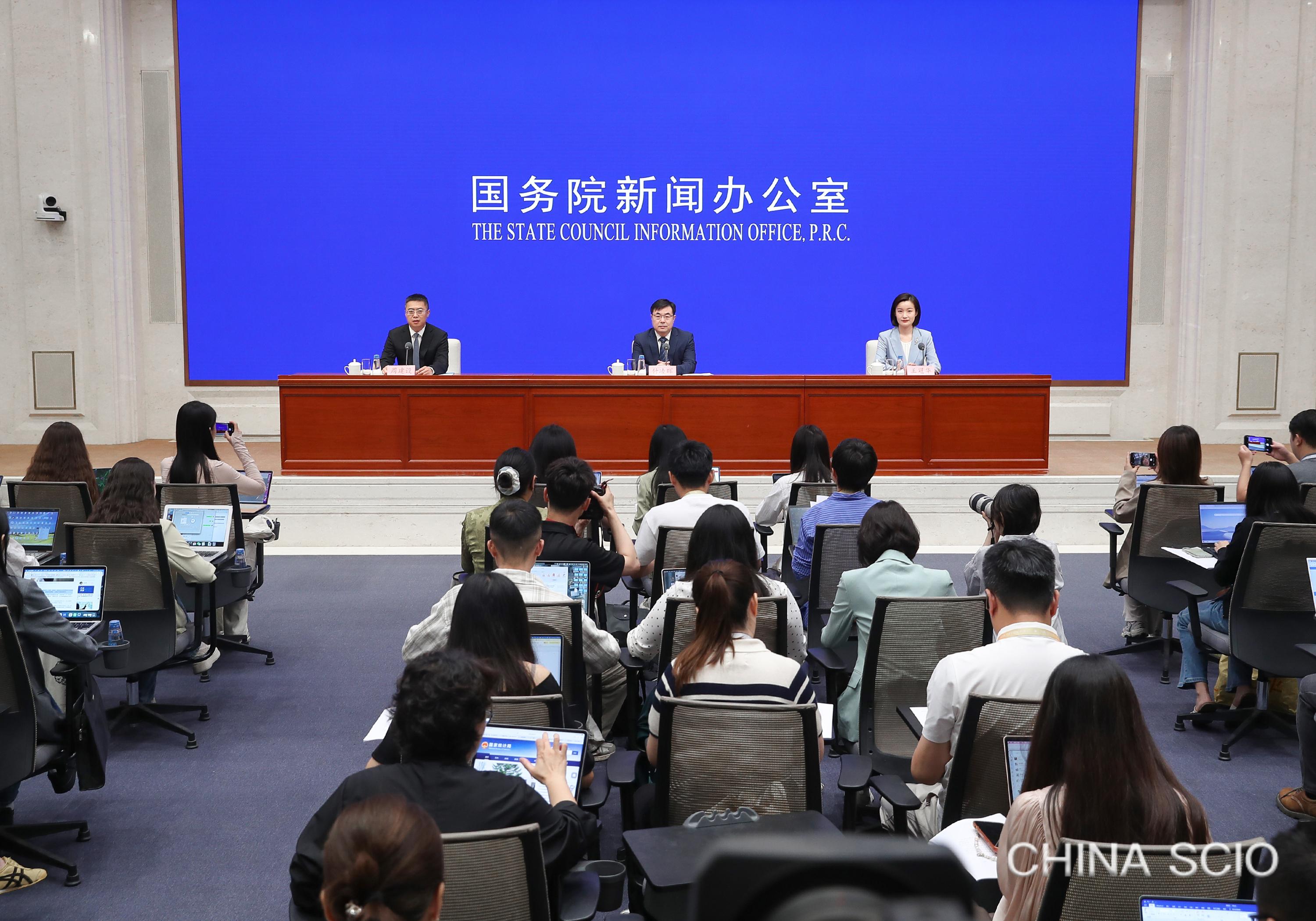
/4 Group photo
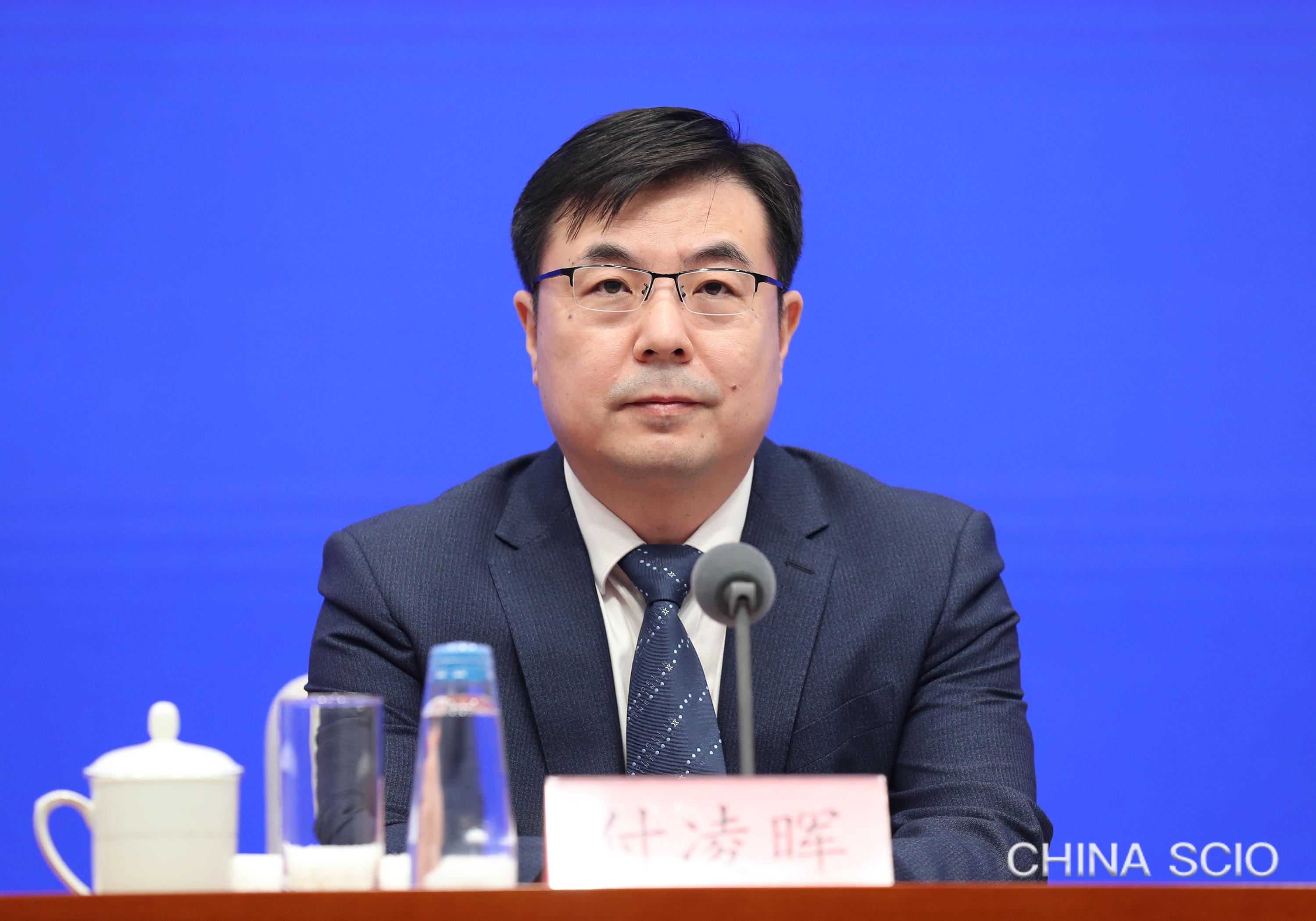
/4 Fu Linghui
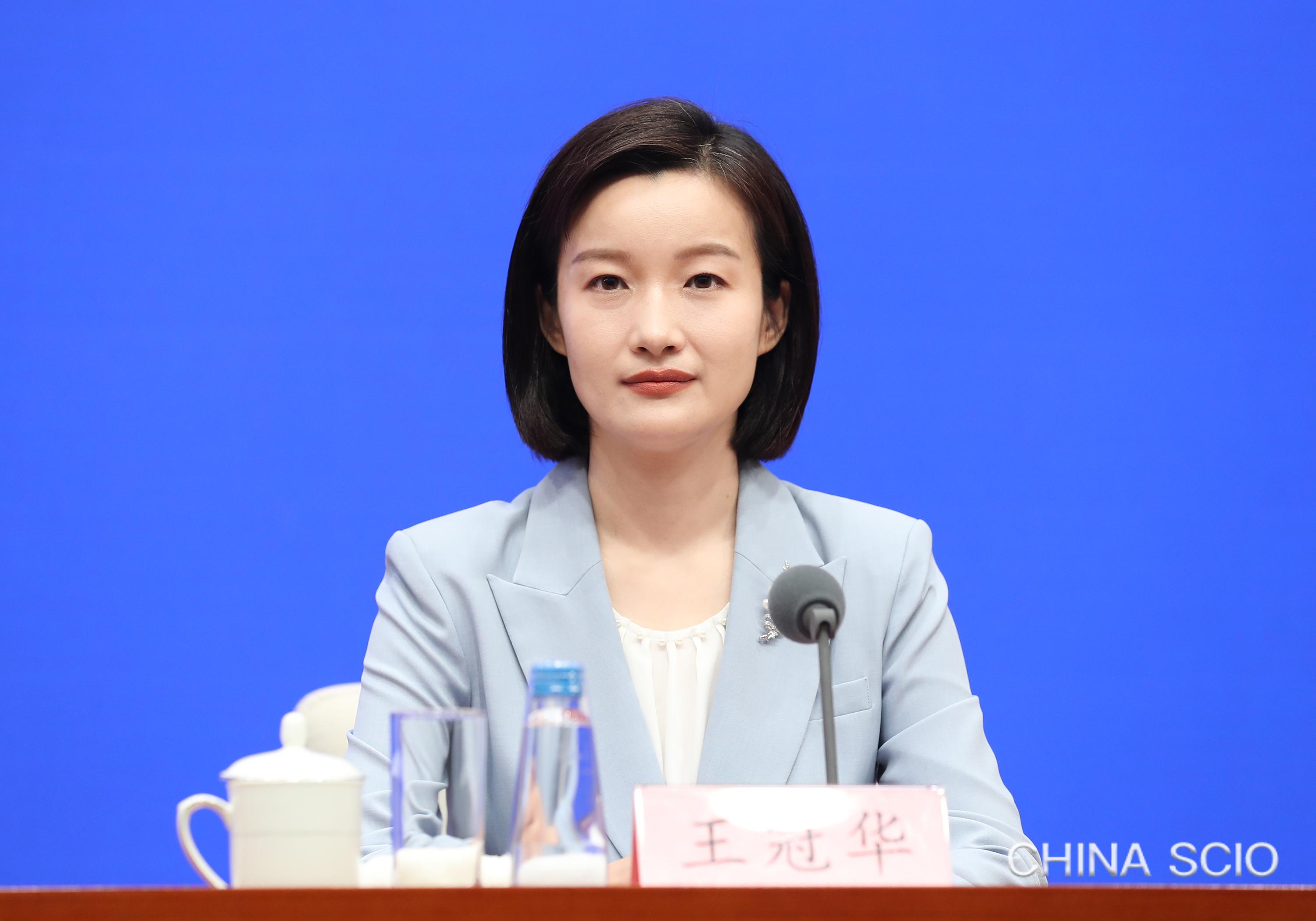
/4 Wang Guanhua
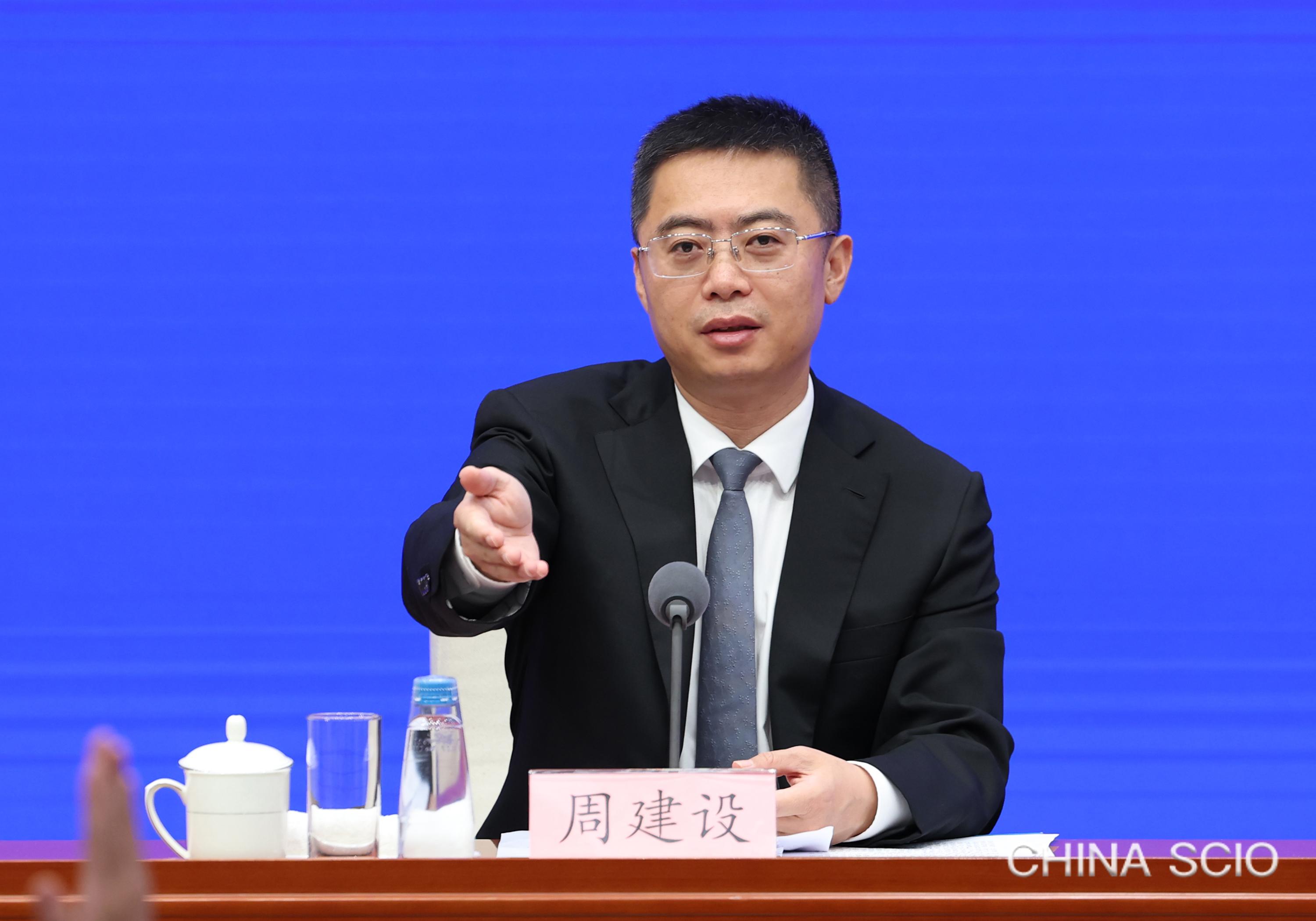
/4 Zhou Jianshe
SCIO briefing on SCIO briefing on preparations for WorldSkills Shanghai 2026
June 12, 2026SCIO briefing on collaboration between China's eastern and western regions
June 11, 2026SCIO briefing on advancing comprehensive law-based governance of China
May 27, 2026