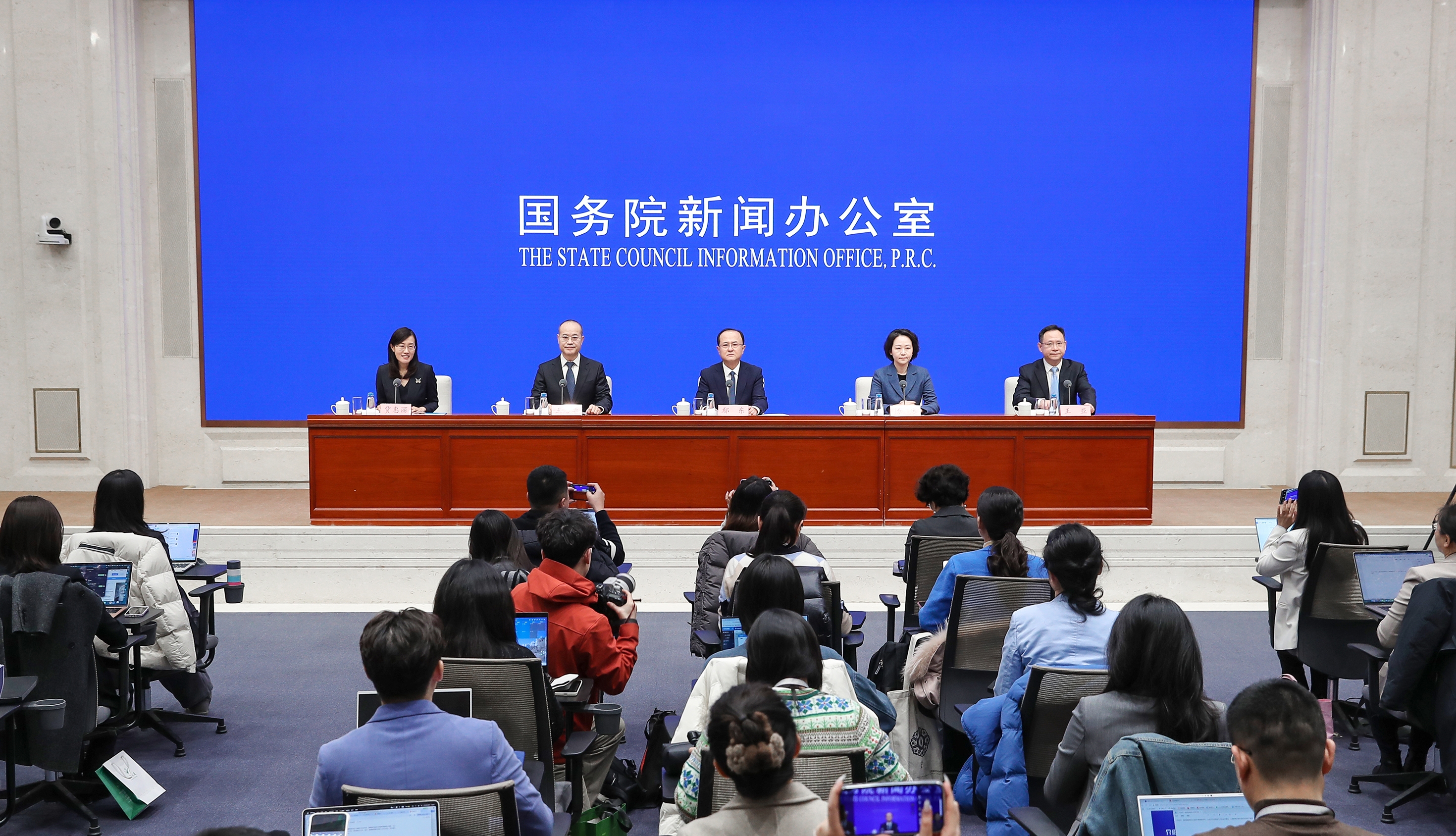

SCIO briefing on China's commerce work and performance in 2025
Beijing | 3 p.m. Jan. 26, 2026
Speakers

Yan Dong, vice minister of commerce
Yang Mu, director general of the Department of Market Operation and Consumption Promotion of the Ministry of Commerce
Wang Zhihua, director general of the Department of Foreign Trade of the Ministry of Commerce
Wang Ya, deputy director general of the Department of Foreign Investment Administration of the Ministry of Commerce
Chairperson
Speakers:
Mr. Yan Dong, vice minister of commerce
Ms. Yang Mu, director general of the Department of Market Operation and Consumption Promotion of the Ministry of Commerce
Mr. Wang Zhihua, director general of the Department of Foreign Trade of the Ministry of Commerce
Mr. Wang Ya, head of the Department of Foreign Investment Administration of the Ministry of Commerce
Chairperson:
Ms. Jia Huili, deputy director general of the Press Bureau of the State Council Information Office (SCIO) and spokesperson of the SCIO
Date:
Jan. 26, 2026
Jia Huili:
Ladies and gentlemen, good afternoon. Welcome to this press conference held by the State Council Information Office (SCIO). Today, we have invited Mr. Yan Dong, vice minister of commerce, to brief you on China's commerce work and performance in 2025 and to take your questions. Also present today are Ms. Yang Mu, director general of the Department of Market Operation and Consumption Promotion of the Ministry of Commerce; Mr. Wang Zhihua, director general of the Department of Foreign Trade of the Ministry of Commerce; and Mr. Wang Ya, head of the Department of Foreign Investment Administration of the Ministry of Commerce. Now, I'll give the floor to Mr. Yan for his introduction.
Yan Dong:
Good afternoon, everyone. First of all, thank you for your interest in and support for the commerce work. I am very pleased to have the opportunity to meet with all of you today along with my colleagues to discuss the development of the commerce work.
The year 2025 that just passed was an extraordinary one. Under the strong leadership of the Central Committee of the Communist Party of China (CPC) with Comrade Xi Jinping at its core, we have resolutely implemented the decisions and arrangements of the CPC Central Committee and the State Council. Guided by the three important positions of the commerce work, we overcame difficulties and worked hard, achieving overall stability and steady progress in commerce development. This has made positive contributions to the continuous recovery and improvement of the economy. The outcomes of this year's work are mainly reflected in the following aspects:
First, efforts to boost consumption have shown more notable results. We closely integrated improving people's livelihoods with promoting consumption. Driven by both policies and events, we created the "Shopping in China" brand and continuously unleashed consumption vitality. The total retail sales of consumer goods for the year exceeded 50 trillion yuan for the first time, reaching 50.1 trillion yuan, an increase of 3.7%, with consumption contributing 52% to economic growth, up by 5 percentage points. In terms of commodity consumption, we have expanded and improved the scope of the consumer goods trade-in programs, with sales of automobiles, home appliances, cellphones and other related products reaching 2.61 trillion yuan, benefiting 366 million people. Regarding service consumption, we have carried out campaigns to improve the quality and benefit of service consumption, with annual service retail sales increasing by 5.5%, and retail sales in areas like culture and sports, leisure, tourism consulting and rentals, and transportation maintaining double-digit growth. In terms of innovative consumption scenarios, we have piloted the development of international-level consumption environments, optimized the tax refund policy for overseas visitors, and seen sales of tax-refundable goods nearly double.
Second, foreign trade has maintained its resilience. We effectively responded to external shocks and challenges, coordinated the development of the "three main pillars" of goods, services and digital trade, vigorously expanded diversified markets, and promoted the innovative development of trade. The scale reached a record high, with annual goods imports and exports totaling 45.47 trillion yuan, up 3.8%; while services imports and exports in the first 11 months reached 7.2 trillion yuan, an increase of 7.1%. Enterprises became more active, with over 780,000 business entities having import and export records, among which private enterprises accounted for 57.3% of the total foreign trade value. Greater emphasis was placed on balanced development of imports and exports. We successfully held major exhibitions such as the China International Import Expo (CIIE), organized a series of events under the theme "Big Market for All: Export to China" series of activities, and promoted high-quality products from overseas to "come in" and "sell well."
Third, bilateral investment space has continued to expand. In terms of attracting foreign investment, we intensified efforts to attract and utilize foreign capital, expanded autonomous opening in the service sector in an orderly manner, and continued to enhance the "Invest in China" brand. Over 70,000 foreign-funded enterprises were established throughout the year, up 19.1%. Utilized foreign capital amounted to 747.69 billion yuan, with high-tech industries accounting for 32.3% of the investment. Regarding outbound investment, we promoted international cooperation in industrial and supply chains, facilitated integration of trade and investment, and deepened Belt and Road economic and trade cooperation. We improved the comprehensive service system for overseas operations, achieving 1 trillion yuan in outbound non-financial direct investment for the year, up 1.6%, and signed new contracts for foreign contracted projects worth 2.1 trillion yuan, up 8.5%.
Fourth, multilateral and bilateral cooperation have achieved notable results. On the bilateral front, under the strategic guidance of head-of-state diplomacy, China-U.S. economic and trade consultations have achieved positive results, giving the world economy a sense of reassurance. We also signed the China-ASEAN Free Trade Area (FTA) 3.0 Upgrade Protocol, put into effect a free trade agreement with the Maldives, and advanced unilateral opening-up measures such as 100% zero tariffs for African countries with diplomatic ties to China, injecting more certainty and positive energy into global development. To date, China has signed 24 FTAs with 31 countries and regions, with FTA partners accounting for 45% of China's total goods trade. On the multilateral front, China announced that it will not seek new special and differential treatment in current and future negotiations with the World Trade Organization (WTO). We promoted practical economic and trade development outcomes within United Nations agencies, APEC, the Shanghai Cooperation Organization (SCO), BRICS countries, the G20, and other frameworks. The International Economic and Trade Cooperation Initiative on Green Mining and Minerals released by China has attracted participation from more than 20 countries and international organizations, actively fostering win-win cooperation.
Next, the Ministry of Commerce will thoroughly implement the major arrangements of the Central Economic Work Conference. Focusing on strengthening domestic circulation, facilitating domestic and international dual circulation, and expanding the international circulation, we will strive to promote high-quality development in commerce, making new contributions to a good start and a solid first step for the 15th Five-Year Plan.
That is all for my introduction. Next, my colleagues and I will be happy to take your questions. Thank you.
Jia Huili:
Thank you, Mr. Yan. The floor is now open for questions. Please identify the news outlet you represent before asking your question.
_ueditor_page_break_tag_Hong Kong Bauhinia Magazine:
The Central Economic Work Conference proposed promoting high-quality Belt and Road Initiative (BRI) cooperation, with economic and trade cooperation being a key component of the initiative. What is the next step in implementing the relevant arrangements? Thank you.
Yan Dong:
Thank you for your question. Over the past year, the Ministry of Commerce has thoroughly implemented General Secretary Xi Jinping's important remarks on pursuing Belt and Road cooperation, working with relevant countries to promote deeper and more practical economic and trade cooperation under the BRI, making positive contributions to building an open world economy and promoting the building of a community with a shared future for humanity. This is mainly reflected from three new aspects:
First, trade cooperation has shown new highlights. In 2025, China's goods trade with Belt and Road partner countries reached 23.6 trillion yuan, an increase of 6.3% year on year, 2.5 percentage points faster than overall trade growth, with its share rising to 51.9%. From a structural perspective, our exports of products such as electronic components and mechanical equipment, as well as imports of products such as computers and components, have shown good growth momentum, helping BRI partner countries improve their industrial development level. In terms of business formats, the Silk Road E-commerce Promotion events have attracted participation from over 100 countries and achieved more than 240 cooperation results, helping more high-quality products from BRI partner countries enter the Chinese market.
Second, bilateral investment has shown new vitality. In 2025, China's non-financial direct investment in BRI partner countries reached 283.36 billion yuan, an increase of 18%; and BRI partner countries' direct investment in China was 116.81 billion yuan, an increase of 1.9%. Cooperation areas have continued to expand, with 18 new agreements signed with partner countries in fields such as production and supply chain cooperation, digital economy and green minerals, while cooperation in the "Two Countries, Twin Parks" projects between China and Malaysia, and China and Indonesia have been actively advanced.
Third, project construction has shown new results. In 2025, China achieved a turnover of 1.1 trillion yuan in contracted projects in BRI partner countries, an increase of 9.6%. China-Europe freight trains operated more than 20,000 trips throughout the year, and important progress was made on projects such as the China-Kyrgyzstan-Uzbekistan Railway and the Budapest-Belgrade Railway. More than 700 aid projects, including landmark projects and "small but beautiful" livelihood projects, have been organized and implemented.
Next, we will continue to thoroughly implement the important instructions of General Secretary Xi Jinping, and in accordance with the arrangements of the Central Economic Work Conference, focus on deepening Belt and Road economic and trade cooperation in the following four areas:
First, improving the quality and efficiency of trade facilitation. We will promote negotiations and the signing of free trade agreements with more willing BRI partner countries, and establish trade facilitation working groups. We will continue to develop the "Export China" brand, make full use of major exhibition platforms such as the China International Import Expo (CIIE), and expand imports from BRI partner countries. We will promote the development of trade channels such as the China-Europe freight train service and the New International Land-Sea Trade Corridor.
Second, optimizing the space for bilateral investment. We will organize "Invest in China" brand events to attract more BRI partner countries to invest in China. We will guide the reasonable and orderly cross-border layout of industrial and supply chains, make good use of various platforms such as border (cross-border) economic cooperation zones, overseas economic and trade cooperation zones, and :Two Countries, Twin Parks," and actively negotiate and sign cooperation documents on industrial and supply chains.
Third, expanding cooperation in emerging fields. We will promote the negotiation and signing of more cooperation agreements in emerging fields, and deepen cooperation in areas such as green minerals, clean energy, digital economy and artificial intelligence. We will expand our circle of friends in high-quality "Silk Road E-commerce," and establish a high-standard pilot zone for "Silk Road E-commerce" cooperation.
Fourth, creating high-quality cooperation projects. We will coordinate the advancement of landmark projects and "small but beautiful" livelihood projects, implement high-quality foreign contracted projects and foreign aid projects, continue to enhance the image of "small but beautiful" branded products such as Juncao grass, help BRI partner countries improve infrastructure, production and living conditions, and better achieve common development. Thank you.
_ueditor_page_break_tag_China Business Journal:
Consumption is an important engine of economic growth. We have observed that in 2025, China's consumer market saw improvements in both scale and quality. Could you please introduce the specific highlights and characteristics of the consumer market in 2025? Thank you.
Yang Mu:
I will answer this question. First of all, thank you for your interest in the consumption work. In 2025, the national commerce system vigorously promoted consumption-boosting initiatives, thoroughly implemented consumer goods trade-in programs, promoted high-quality development of service consumption, and organized a series of "Shopping in China" activities, continuously unleashing consumption potential. Overall, consumption maintained a steady development trend. As Mr. Yan just mentioned, the total retail sales of consumer goods reached 50.1 trillion yuan, breaking the 50 trillion yuan mark for the first time. Consumption contributed 52% to GDP growth, continuing to serve as the primary engine of economic development. The main characteristics are as follows:
First, consumption of bulk durable goods grew rapidly. In 2025, driven by the consumer goods trade-in policy, retail sales by enterprises above designated size of related goods such as home appliances, communication equipment and furniture grew by 11%, 20.9%, and 14.6%, respectively, while retail volume of passenger vehicles increased by 3.8%.
Second, new types of consumption boomed. New types of consumption, such as digital consumption, green consumption and health-related consumption, continue to heat up, with new business formats, new models and new scenarios constantly emerging. Online retail sales of physical goods increased by 5.2%, and the market penetration rate of new energy passenger vehicles reached 53.9%.
Third, rural consumption was robust. County-level commercial systems were continuously improved, accelerating the release of consumption potential. Retail sales of consumer goods in rural areas reached 6.8 trillion yuan, an increase of 4.1%, outpacing the growth rate in urban areas by 0.5 percentage point.
Fourth, inbound consumption has risen. With the expansion of the visa-free transit policy and the optimization of the departure tax refund policy, "Travel in China" and "Shopping in China" remained highly popular. Sales of departure tax-refunded goods nearly doubled. Since the implementation of the 240-hour visa-free transit policy one year ago, the number of visa-free entries by foreign nationals has increased by nearly 30%.
That's all from me for this question. Thank you.
_ueditor_page_break_tag_ThePaper.cn:
We would like to know, what are China's considerations for attracting and utilizing foreign investment and for further implementing the strategy to upgrade the pilot free trade zones in 2026? Thank you.
Wang Ya:
I will take this question. Thank you. The year 2026 marks the beginning of the 15th Five-Year Plan. We will thoroughly implement the guiding principles of the 20th CPC National Congress and its subsequent plenary sessions of the 20th CPC Central Committee, put into action the arrangements made by the Central Economic Work Conference, unswervingly expand high-standard opening up, and strive to foster new strengths for attracting foreign investment. We will deepen the reform of the institutions and mechanisms for promoting foreign investment, further enhance the "Invest in China" brand, and comprehensively implement the strategy for upgrading the pilot free trade zones, which all contributes to a good start to the 15th Five-Year Plan. We will focus on the work in four aspects.
First, we will expand market access and areas of openness with a focus on the service industry. We will expand the opening up of fields such as telecommunications, healthcare, and education in an orderly manner. We will promote the early implementation of pilot projects, support the foreign-funded service enterprises to extend the value chain, and achieve specialized, integrated, and digital-intelligent development. This will enhance the capacity and quality improvement of the service industry. In the already opened fields, we will ensure foreign investment enjoys both market access and unimpeded operation.
Second, we will optimize policies that support foreign investment. We will effectively implement policy measures such as tax credits for overseas investors who directly reinvest profits earned in China, and the Catalogue of Encouraged Industries for Foreign Investment. Foreign-funded enterprises will be equally supported to participate in activities aimed at boosting consumption, government procurement, and bidding and tendering process. This will help foreign-funded enterprises to engage in long-term development in China.
Third, we will improve the service guarantee system for foreign investment. We will fully implement national treatment for foreign-funded enterprises, focus on their concerns, and consistently enhance our services. We will organize roundtable meetings for foreign-funded enterprises and continue to advance the initiative to ensure services for foreign-funded enterprises, transforming the "demand lists" of enterprises into our "service lists", so as to help them address challenges and difficulties.
Fourth, we will create a diverse array of pacesetters for opening up. This involves steadily optimizing and adjusting the regional layout and scope of the pilot free trade zones to provide broader space and more platforms for pioneering trials, and deepening alignment with international high-standard economic and trade rules to conduct trials in institutional opening up in broader areas, at deeper levels and with greater intensity. Support will be given to pilot free trade zones to promote integrated innovation across entire industrial chains in key areas of emerging industries based on local conditions. Furthermore, we will accelerate the comprehensive pilot demonstration for expanding opening up in the service industry, effectively implement the work plans for high-quality development of national-level economic and technological development zones, and continuously release the benefits of institutional innovation. Thank you.
_ueditor_page_break_tag_Yicai:
In 2026, with the deepening impact of changes in the external environment and increasing trade barriers, how do you view the foreign trade situation this year, and what measures will be taken to promote high-quality development of foreign trade? Thank you.
Wang Zhihua:
I will answer these questions. Thank you. Just now, Mr. Yan has already briefed you on the relevant situation of foreign trade in 2025. Regarding the foreign trade situation in 2026, indeed, as you mentioned, China is currently faced with profound and complex changes in the external environment. It can be said that strategic opportunities coexist with risks and challenges, and uncertain and unpredictable factors are increasing. At the same time, we must also understand that China's economy has stable foundations, numerous strengths, strong resilience, and great potential, as well as the fact that foreign trade development continues to be supported by many favorable conditions.
In 2026, the Ministry of Commerce will conscientiously implement the decisions and plans of the CPC Central Committee and the State Council, focus on the goals of improving quality and effectiveness, make every effort to stabilize the fundamentals of foreign trade, promote the opening up of the service market in an orderly manner, and contribute to a good start to the 15th Five-Year Plan period. Specifically, measures in the following aspects will be taken.
First, we will strengthen the guiding role of policies. We will develop a comprehensive policy mix to provide high-quality service for foreign trade enterprises, helping them reduce costs and enhance efficiency. Efforts will be made to strengthen policy promotion and interpretation to stabilize expectations and boost confidence. Through coordinated actions between central and local authorities, we will study and introduce new policies in a timely manner, and provide new supportive measures.
Second, we will expand diversified markets. Greater support will be given for enterprises to participate in overseas exhibitions. A series of trade promotion activities will be hosted. We will ensure the successful hosting of the 139th and 140th Canton Fairs., We will encourage enterprises to make good use of country-specific trade guides and foreign trade promotion information to help them better connect with markets.
Third, we will accelerate innovation-driven development. We will guide comprehensive pilot zones for cross-border e-commerce to vigorously develop industrial belts empowered by cross-border e-commerce, and support overseas warehouse enterprises in accelerating intelligent upgrading. Efforts will be focused on expanding green trade and enhancing the international competitiveness of green and low-carbon products. We will promote the application of artificial intelligence in foreign trade development and improve the digitalization level across the entire trading chain.
Fourth, we will promote balanced development. We will build the "Export to China" brand, select annual featured countries for targeted engagement, and organize import promotion activities. By fully leveraging platforms such as the China International Import Expo, we will provide more high-quality exhibition booth resources and organize national import trade promotion and innovation demonstration zones, as well as further enabling import-export chambers of commerce to carry out regional and industry matchmaking. This will facilitate the entry of more high-quality products and services from other countries into Chinese market, and better meet the people's needs for a better life.
Fifth, we will vigorously develop trade in services. This will involve improving the management system of negative list for cross-border trade in services, promoting the opening up of the services market in an orderly manner, and building national demonstration zones for the innovative development of trade in services. Efforts will focus on expanding the export of competitive producer services, promoting the clustered development of service trade in areas such as intellectual property and human resources. Professional service institutions in design, consulting, finance, accounting, and law will be encouraged to enhance their international service capabilities, while services where we have long held an edge such as Chinese language education, traditional Chinese medicine, and Chinese cuisine will be further promoted in global market. We will also introduce policy measures to expand inbound consumption.
Sixth, we will foster innovative development of digital trade. This includes launching national demonstration zones for digital trade, formulating standards related to digital trade to align domestic standards with international norms, and advancing the digital transformation of service outsourcing to foster and expand digital trade business entities. We will host the Global Digital Trade Expo to build an international platform for exhibitors and merchants worldwide to explore cooperation and promote development.
That is all from me. Thank you.
_ueditor_page_break_tag_Market News International:
At the Davos World Economic Forum, the U.S. trade representative was reported to have floated the idea for another round of trade negotiations between China and the U.S. ahead of the likely heads of state meeting in April. He said there was chance for some kind of further agreement on trade items that are non-sensitive. What is the Chinese view on the chances for a new round of negotiations and a further agreement in line with the U.S. trade representative's comment? Thank you.
Wang Zhihua:
Thank you. I will answer this question. In 2025, under the strategic guidance of the heads of state of China and the United States, both sides, upholding the spirit of equality, respect and mutual benefit, carried out five rounds of economic and trade consultations, achieved a series of positive results, and fully proved that China and the U.S. can find solutions through equal dialogue and consultation.
After the meeting between the two heads of state in Busan, both sides maintained continuous communication at all levels through the China-U.S. economic and trade consultation mechanism to jointly promote the implementation of the important consensus reached at the heads of state meeting and the outcomes of the Kuala Lumpur economic and trade consultations. China is willing to work with the U.S. in the spirit of mutual respect, peaceful coexistence, and win-win cooperation to jointly safeguard and implement the important consensus of the two heads of state, make good use of the China-U.S. economic and trade consultation mechanism, manage differences, advance cooperation, and maintain the stable, healthy and sustainable development of China-U.S. economic and trade relations. Thank you.
_ueditor_page_break_tag_China News Service:
What contributions has China made in 2025 in maintaining the multilateral trading system and promoting WTO reform? What steps will China take next to play a more active role in the WTO? Thank you.
Yan Dong:
Thank you for your questions. In 2025, global trade advanced with difficulty amid turbulence. As a major trading nation and a responsible developing country, China has actively taken pragmatic measures to stabilize the international economic and trade order.
First, we continued to uphold the multilateral trading regime. As mentioned just now, China announced that it will not seek special and differential treatment in current and future WTO negotiations. The international community has given high recognition to this, and WTO Director-General Ngozi Okonjo-Iweala said that this move reflects China's solemn commitment to building a more balanced and equitable global trading system.
Second, we deeply participated in WTO reform. China submitted a proposal to the WTO, advocating the safeguarding of basic principles such as non-discrimination, and put forward the working approach of "stability as the cornerstone, development as the priority, and reform as the pathway," which received positive responses from many members. China actively participated in various reform consultations and supported the improvement of WTO functions.
Third, we took the initiative to align with high-standard international economic and trade rules. The Ministry of Commerce, together with relevant departments, issued the "Work Plan on Supporting Beijing's Pioneering in Implementing WTO's Agreement on Electronic Commerce." China became the first member to implement the WTO's Agreement on Electronic Commerce. This demonstrates China's determination to expand high-standard opening up, and also serves as a useful reference for other members to implement the agreement.
Fourth, we continuously improved the level of contract performance and commitment fulfillment. The General Office of the State Council issued the "Opinions on Further Strengthening Compliance Work for Trade Policies." Against the backdrop of certain countries abusing unilateral tariffs, China proactively strengthened its trade policy compliance and built a world-class business environment, fully reflecting China's consistent position of firmly safeguarding the multilateral trade system and abiding by WTO rules.
This year marks the 25th anniversary of China's entry into the WTO. China has grown from being a passive recipient and active adapter of rules to an active participant and important contributor, and will take part in WTO work with a more active and open attitude.
First, we will promote the success of the 14th WTO Ministerial Conference. China actively advocates for the conference to send out a strong voice in support of the multilateral trading system, and has achieved development-oriented outcomes in issues such as incorporating the investment facilitation agreement into the WTO legal framework and exempting tariffs on electronic transmissions.
Second, we will promote WTO reform in the right direction. China supports improving the decision-making mechanism and calls for more members to join the multi-party interim appeal arbitration arrangement. China also supports the formulation of new, up-to-date rules on topics such as industrial policy, trade and environment, and trade and artificial intelligence, to better respond to industry demands and the needs of the times.
Third, we will place development at the center of the WTO agenda. China will deepen cooperation with Global South countries, provide more global public goods, continue to support the Trade Promotion Roundtable Initiative, contribute within the framework of South-South cooperation to the best of its ability, enhance the capacity of developing members to participate in international economic and trade negotiations, and help them better benefit from the multilateral trade system.
That's all from me for this question. Thank you.
_ueditor_page_break_tag_Reuters:
China relied heavily on exports to hit last year's growth target as domestic demand faltered. So, how much room is there for further expanding overseas sales in 2026? And can you tell us what new measures are in the pipeline to spur consumer spending this year?
Wang Zhihua:
Thank you for your questions. I think the questions you raised involves two issues, one is about foreign trade, and the other is about consumption. I will answer the foreign trade question, and I suggest my colleague answers the consumption question.
Regarding foreign trade, China's foreign trade in 2025 can be described as pressing ahead under pressure and steadily improving, driving the prosperity of trade partners through its own development, and further highlighting the concept of "cooperation and mutual benefit." We have mainly focused our efforts on three aspects:
First, thanks to a complete and efficient production-supply chain system and continuous innovation, Chinese products have made overall improvements in design, technology, quality, efficiency and service. High quality, reasonably priced and diversified Chinese products have provided more choices for consumers in different countries, meeting consumer needs in different fields and at different levels.
Second, China has fully participated in the global industrial division of labor and cooperation, supplying stable and reliable intermediate and capital goods that have made important contributions to industrial development and industrialization in countries worldwide, particularly in developing countries.
Third, China has actively shared opportunities from its green and low-carbon transition, balancing domestic development with global needs while continuously supplying green products worldwide. For example, in 2025, exports of lithium batteries and wind turbines increased 26.2% and 48.7%, respectively, significantly advancing global green and low-carbon development.
In 2026, China will unswervingly advance high-standard opening-up and promote innovative, balanced trade development. China is willing not only to be the world's factory but also the world's market. Its vast market will provide broader opportunities for products and services from all countries. China's high-quality development will continuously inject new momentum into the global economy.
That's all from me on this question. I'll turn the second question over to my colleague.
Yang Mu:
I'll take the second question. As mentioned earlier, China's total retail sales of consumer goods exceeded 50 trillion yuan for the first time in 2025, maintaining steady growth. This fully demonstrates the vitality and resilience of China's massive consumer market. The year 2026 marks the beginning of the 15th Five-Year Plan. The Ministry of Commerce will earnestly implement the decisions and plans of the CPC Central Committee and the State Council, adhere to the strategy of expanding domestic demand, and closely integrate livelihood improvement with consumption promotion. We will thoroughly implement special actions to boost consumption and build the "Shopping in China" brand, providing strong support for building a robust domestic market and advancing high-quality development. We will focus on three areas: introducing policies, organizing activities and optimizing consumption scenarios.
First, we will roll out policies that increase direct benefits for the public. We will optimize and implement the consumer goods trade-in program, promoting the consumption of bulk durables such as automobiles, home appliances, and digital and smart products. We will pilot reforms in automobile circulation and consumption to further unleash the potential of auto sales. We will also roll out the invoice lottery pilot program. As you may have noticed, the list of pilot cities was made public last weekend. We will advance the introduction of practical and effective policy measures to boost the debut economy and other areas.
Second, we will organize activities to create a vibrant consumption atmosphere. Focusing on three main themes — goods consumption, service consumption, and consumption scenarios — we will organize over 20 themed "Shopping in China" events this year. We will also organize customized events in 15 pilot cities for international consumption environments and support local activities across various regions. We aim to create a vibrant consumption atmosphere through a coordinated series of events with unified themes and distinctive features.
Third, we will optimize scenarios to improve the consumption environment. We will accelerate the development of international consumption center cities and advance pilot programs for building international consumption environments and innovative consumption formats, models and scenarios. We aim to create high-impact, highly visible consumption scenarios that enable domestic and foreign consumers to enjoy a better life. Thank you.
_ueditor_page_break_tag_National Business Daily:
Could the Ministry of Commerce provide details on progress made in 2025 in expanding China's globally oriented network of high-standard free trade zones? What efforts will be made to promote the negotiation and signing of more regional and bilateral trade and investment agreements in 2026?
Wang Ya:
I will take your questions. Thank you. In 2025, the Ministry of Commerce actively promoted the development of a globally oriented network of high-standard global free trade zones, achieving substantial results.
First, the level of openness was higher. We signed the China-ASEAN Free Trade Area 3.0 Upgrade Protocol, incorporating emerging rules on the digital economy, the green economy, supply chains and standards cooperation, thereby deepening institutional connectivity in regional cooperation. Second, the scope expanded. We made positive progress in FTA negotiations with six Pacific Island countries and the Republic of the Congo. Third, greater dividends were delivered. We promoted the entry into force of trade and investment agreements with the Maldives and Tajikistan, ensured high-quality implementation of signed agreements, including the Regional Comprehensive Economic Partnership, and helped enterprises truly benefit from preferential policies. We proactively aligned with the standards of the Comprehensive and Progressive Agreement for Trans-Pacific Partnership and the Digital Economy Partnership Agreement, deepened domestic reforms, and delivered the benefits of institutional opening-up. In addition, we upgraded investment agreements with Kazakhstan and Russia.
In 2026, we will emphasize "quantity," "quality" and "effectiveness" in equal measure, accelerate regional and bilateral trade and investment agreements, and transform China's development into new opportunities for the world.
In terms of "quantity," we will continue advancing free trade cooperation with the Gulf Cooperation Council, Switzerland, South Korea, New Zealand, Pacific Island countries, and Central Asian and African countries. Meanwhile, we will continue focusing on Belt and Road partner countries, accelerate investment agreement negotiations, and build high-standard investment agreement corridors. In terms of "quality," we will proactively expand opening-up, with services as a priority for broadening market access and opening more sectors. We will enhance investment liberalization, facilitation and protection, while promoting the incorporation of high-standard rules on the digital economy, green economy and other areas. In terms of "effectiveness," we will continue ensuring proper implementation of agreements. We will continuously leverage international high-standard economic and trade rules to guide deeper domestic reforms in areas such as intellectual property protection, industrial subsidies, environmental standards, labor protection, and government procurement. We aim to achieve alignment and compatibility in rules, regulations, management and standards. Thank you.
_ueditor_page_break_tag_Dazhong Daily:
We noticed that the Ministry of Commerce recently issued, together with relevant departments, the Guiding Opinions on Further Improving the Overseas Comprehensive Service System. How will you promote the implementation of these opinions to provide better services for outbound investment and trade? Thank you.
Wang Ya:
Thank you for the question. I will answer it. In October 2025, with State Council approval, the Ministry of Commerce and four other departments issued the Guiding Opinions on Further Improving the Overseas Comprehensive Service System. The guiding opinions thoroughly implement the decisions and plans of the CPC Central Committee and the State Council, focusing on building an overseas comprehensive service system that matches the scale and development trajectory of China's outbound investment and trade. This is China's first policy document in the field of overseas comprehensive services. Moving forward, the Ministry of Commerce will work with relevant departments around a framework comprising a national platform, local hubs, overseas stations and professional institutions. We will rapidly develop a multi-dimensional, full-chain overseas comprehensive service ecosystem. This system will feature central-local coordination, regional collaboration, resource concentration and domestic-international connectivity.
First, we will build a national-level platform for comprehensive overseas services. We will coordinate service resources across foreign affairs, law, taxation, finance, trade, logistics, customs and trade promotion. These will address common enterprise needs when expanding overseas, including policy consultation, business processing, country-specific information, market updates, resource matching and risk management. The results will be a "one-window, one-stop" service platform for going global. This platform will be launched on the Ministry of Commerce website soon. We welcome further inquiries from the press.
Second, we will encourage eligible localities to establish comprehensive overseas expansion service hubs and strengthen their online and offline service capabilities. Some regions are already actively exploring these approaches and have achieved positive results. For example, Zhejiang has actively developed an overseas comprehensive service platform to accelerate the implementation of a "single-platform, single-window acceptance and integrated services" model for outbound investment, effectively improving service efficiency. Shanghai has integrated existing platform resources to launch a citywide unified comprehensive service platform for enterprises going global. Shenzhen has developed the Shenzhen International Business e-Station, focusing on three key areas — products, investment and services — to help enterprises go global in an orderly, effective and secure manner.
Third, we will establish comprehensive service stations overseas to expand and enhance our service capabilities. We will promote the establishment of overseas comprehensive service stations in key countries and regions by eligible Chinese business chambers and associations abroad, overseas economic and trade cooperation zones, and Chinese-funded legal service institutions. These stations will help enterprises address local service needs and provide ongoing support for building international marketing networks and expanding overseas markets.
Fourth, we will accelerate the development of a group of internationally-oriented professional service institutions, upgrading from general services to targeted enablement. Focusing on the pain points and challenges reported by enterprises expanding overseas, we will encourage professional service institutions in law, finance, insurance, accounting and logistics to expand overseas alongside enterprises, innovate products and service models, and continuously enhance their international service capabilities. Thank you.
_ueditor_page_break_tag_CCTV:
In recent years, service consumption has attracted increasing attention. How did service consumption develop in China in 2025? What are the next steps to further unleash the potential of service consumption and promote its development? Thank you.
Yan Dong:
Thank you very much to the reporter for those questions. Just now, my colleague also introduced the relevant situation regarding boosting consumption and goods consumption. Now, let me provide some specific information on service consumption, which has been a focus of concern.
As everyone knows, service consumption has characteristics such as high consumption frequency, strong multiplier effects and sustainable growth. It also plays an important role in expanding domestic demand and improving people's well-being. The Ministry of Commerce has earnestly implemented the decisions and plans of the CPC Central Committee and the State Council. As the leading department for promoting service consumption, we have worked with relevant departments to actively introduce supportive policies, innovate consumption scenarios, and build platforms and mechanisms to promote the prosperity and development of the service consumption market. This is reflected in three areas:
First, service consumption has maintained fast growth. In 2025, retail sales of services increased 5.5% year on year. At the same time, per capita service consumption expenditure grew 4.5% year on year and accounted for 46.1% of total per capita consumption expenditure.
Second, key sectors have developed rapidly. Retail sales of cultural, sports and leisure services, communication and information services, tourism consultation and rental services, and transportation services have all maintained double-digit growth. Per capita spending on education, culture and entertainment increased 9.4% year on year. A total of 2,485 tourist trains operated throughout the year, up 33.6% year on year. Catering revenue reached 5.8 trillion yuan, rising 3.2% year on year.
Third, the service consumption market has become more active. Regional sports events such as the Jiangsu Football City League and the Zhejiang Provincial City Basketball League have gained nationwide popularity, while "Ne Zha 2" set historic box office records in Chinese cinema. Sports-driven travel and film-inspired culinary tourism have emerged as new trends. Meanwhile, new business formats, including low-altitude flights, cruises and yacht travel, and tourism performances, have continued to flourish, creating new opportunities for service consumption growth.
Moving forward, we will leverage the coordination mechanism for promoting service consumption development to drive continued expansion of service consumption and foster high-quality growth. We will focus on work in the following three areas:
First, we will continue to optimize the supply of services. We will continue to implement initiatives to improve the quality of service delivery for the public's benefit, and work with relevant departments to enhance service supply in culture and entertainment, tourism and leisure, catering and accommodation, sports events, and health care. We will adhere to the principle of opening up to the outside world and reducing restrictions in the domestic market. On the one hand, we will expand high-standard opening-up in the service sector, deepen opening-up pilots in cloud computing, biotechnology, and wholly foreign-owned hospitals, guide foreign investment toward service consumption areas, and enhance the supply of high-quality, diversified services. On the other hand, we will remove unreasonable restrictive measures in service consumption that do not conform to market principles and hinder consumption upgrading, reduce invisible barriers, and encourage fair competition and orderly development among all types of business entities.
Second, we will cultivate new growth drivers of service consumption. We will capitalize on consumption upgrading trends and intensify efforts to cultivate new growth drivers in service consumption, including transportation services, domestic services, online audiovisual services, tourism services, automotive aftermarket services, and inbound consumption. We will refine supporting policies, advance pilot programs, cultivate quality brands and stimulate development vitality in related sectors to better meet people's evolving needs for service consumption.
Third, we will innovate diverse consumption scenarios. We will intensify efforts to advance pilot projects for new consumption forms, models, and scenarios, leveraging the leading role of pilot cities. We will promote the integrated development of commerce, tourism, culture, sports and health care, and develop a group of highly visible and broadly influential new consumption scenarios. In combination with organizing key activities to promote consumption, such as the "Service Consumption Season" and "Chinese Food Festival," we will guide localities to develop integrated consumption scenarios like "Tourism plus," "Cuisine plus," "Sports plus" and "IP plus," delivering more diverse, exciting and convenient experiences for consumers. Thank you.
Jia Huili:
Today's press conference has now concluded. Thanks to our speakers and to our friends from the media. Goodbye.
Translated and edited by Liao Jiaxin, Xiang Bin, Xu Kailin, Zhang Yuxin, Wang Yiming, Li Huiru, Gong Yingchun, Zhou Jing, Wang Wei, David Ball, Jay Birbeck, and Tudor Finneran. In case of any discrepancy between the English and Chinese texts, the Chinese version is deemed to prevail.

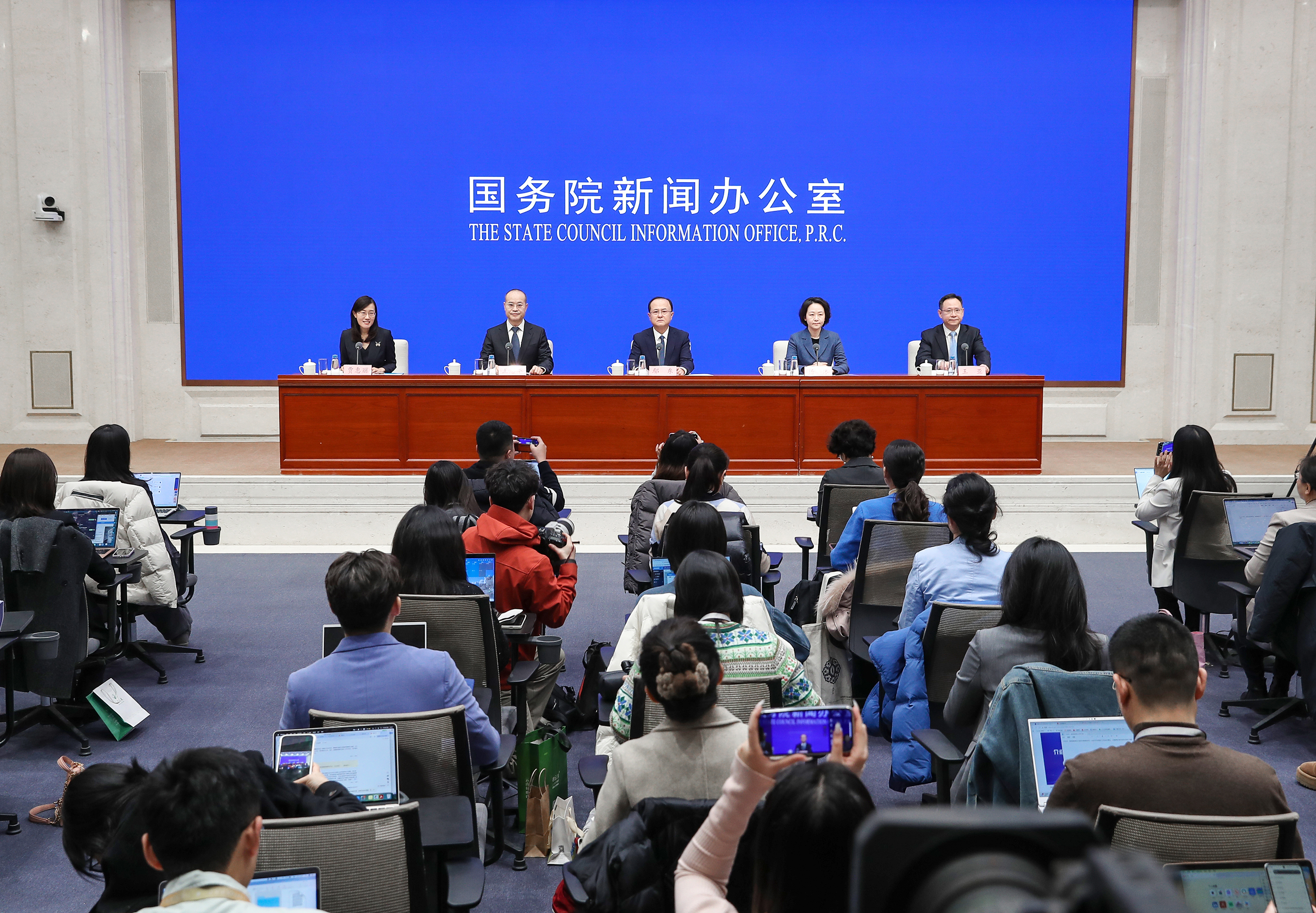
/6 Group photo
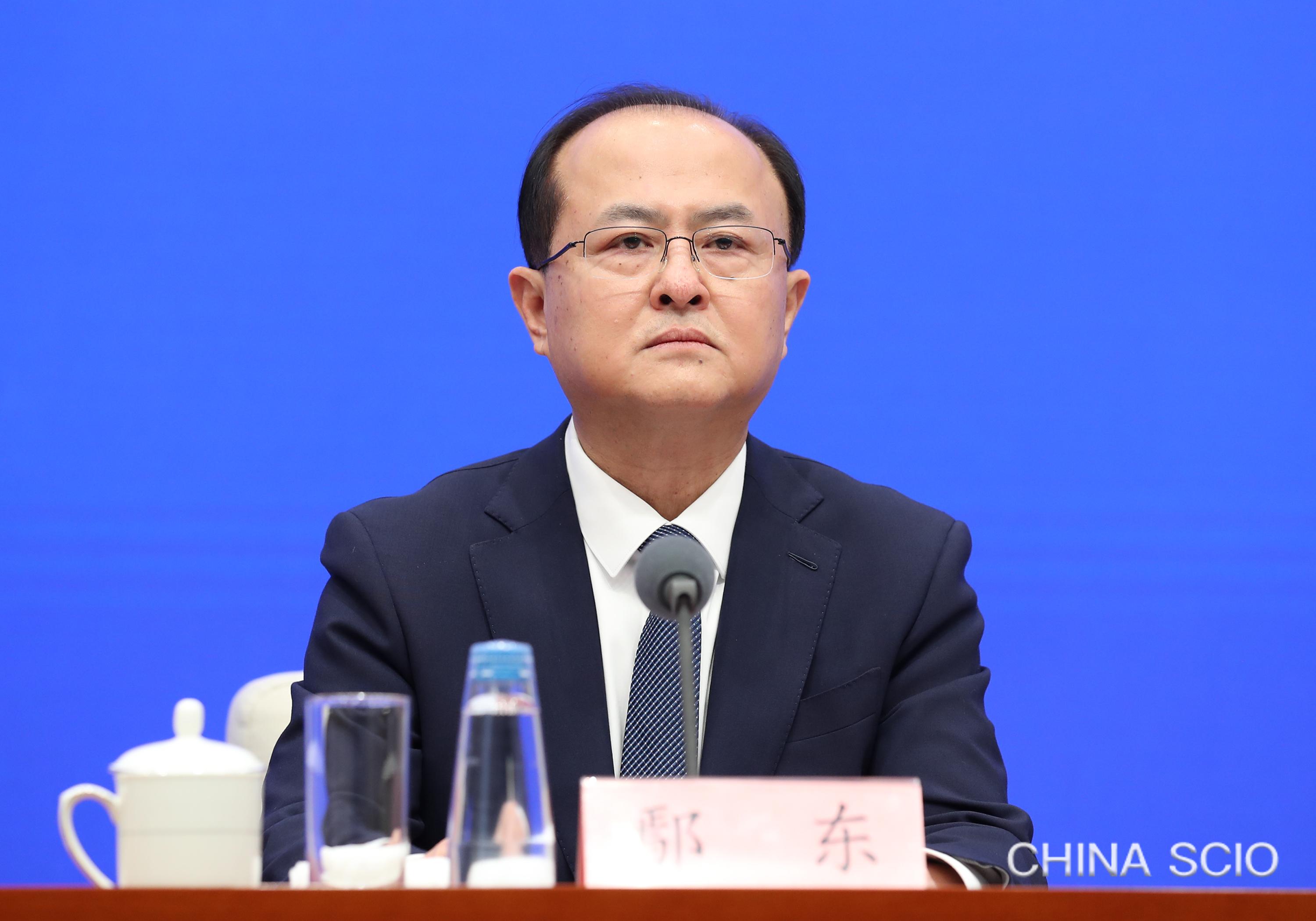
/6 Yan Dong
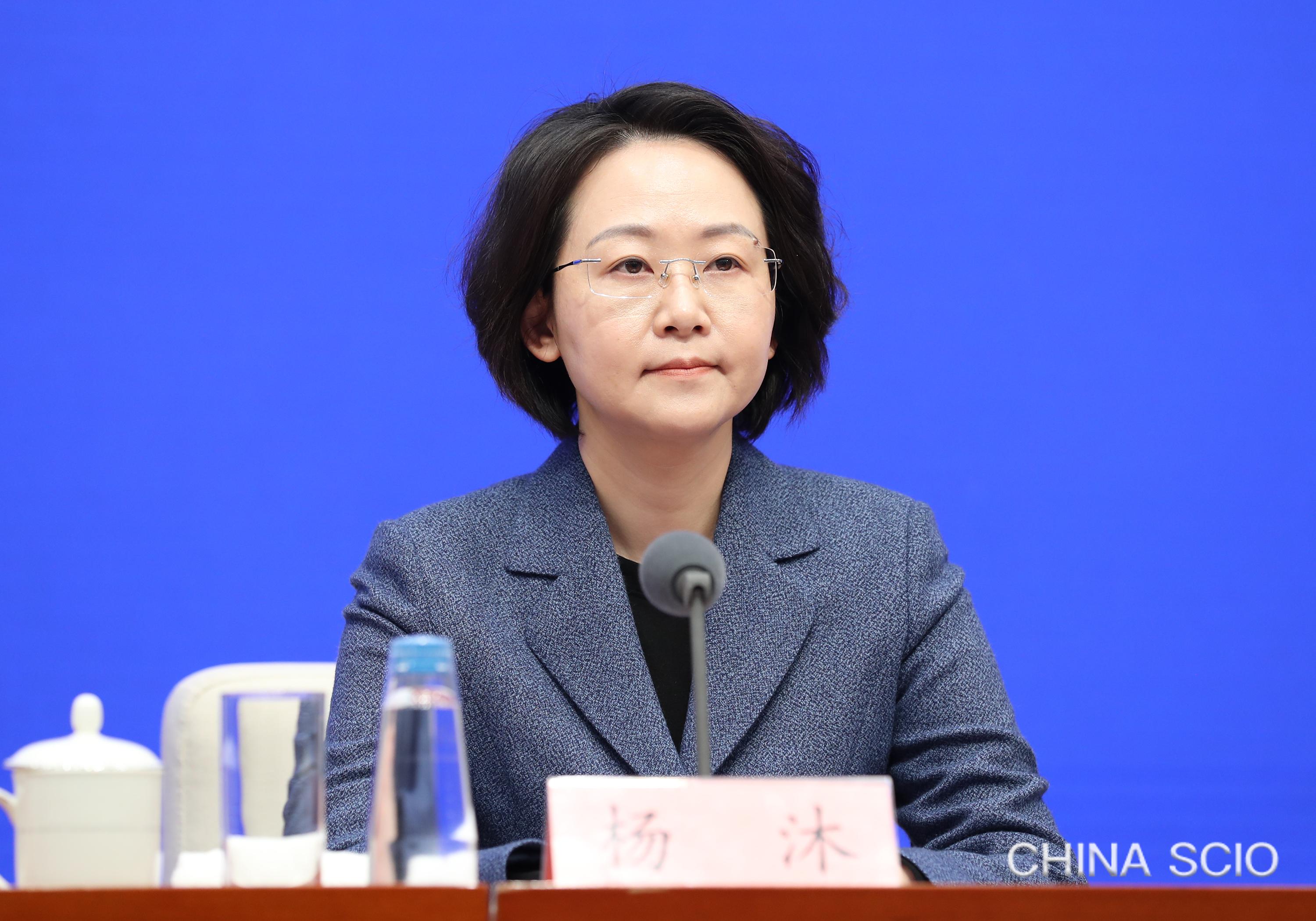
/6 Yang Mu
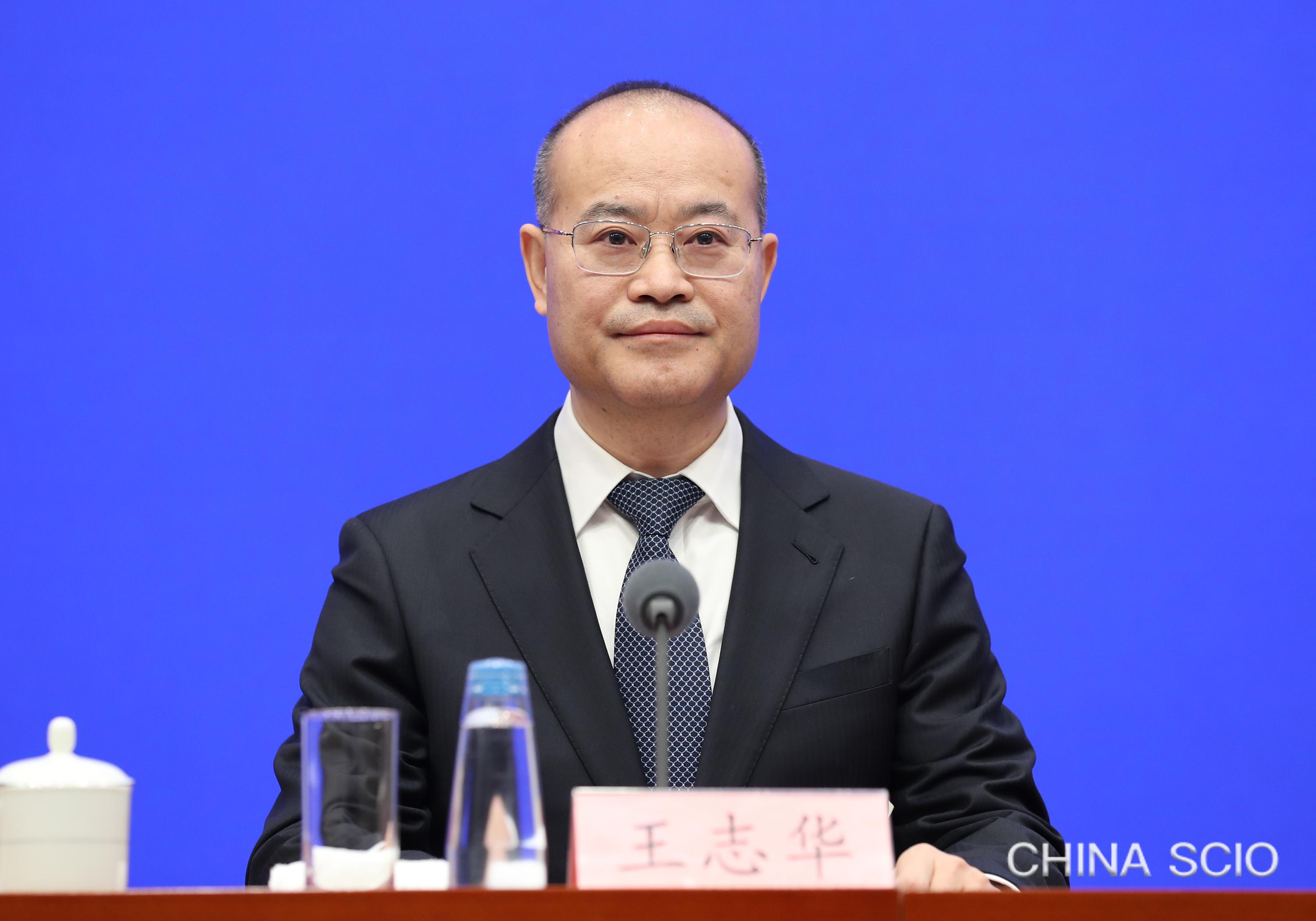
/6 Wang Zhihua
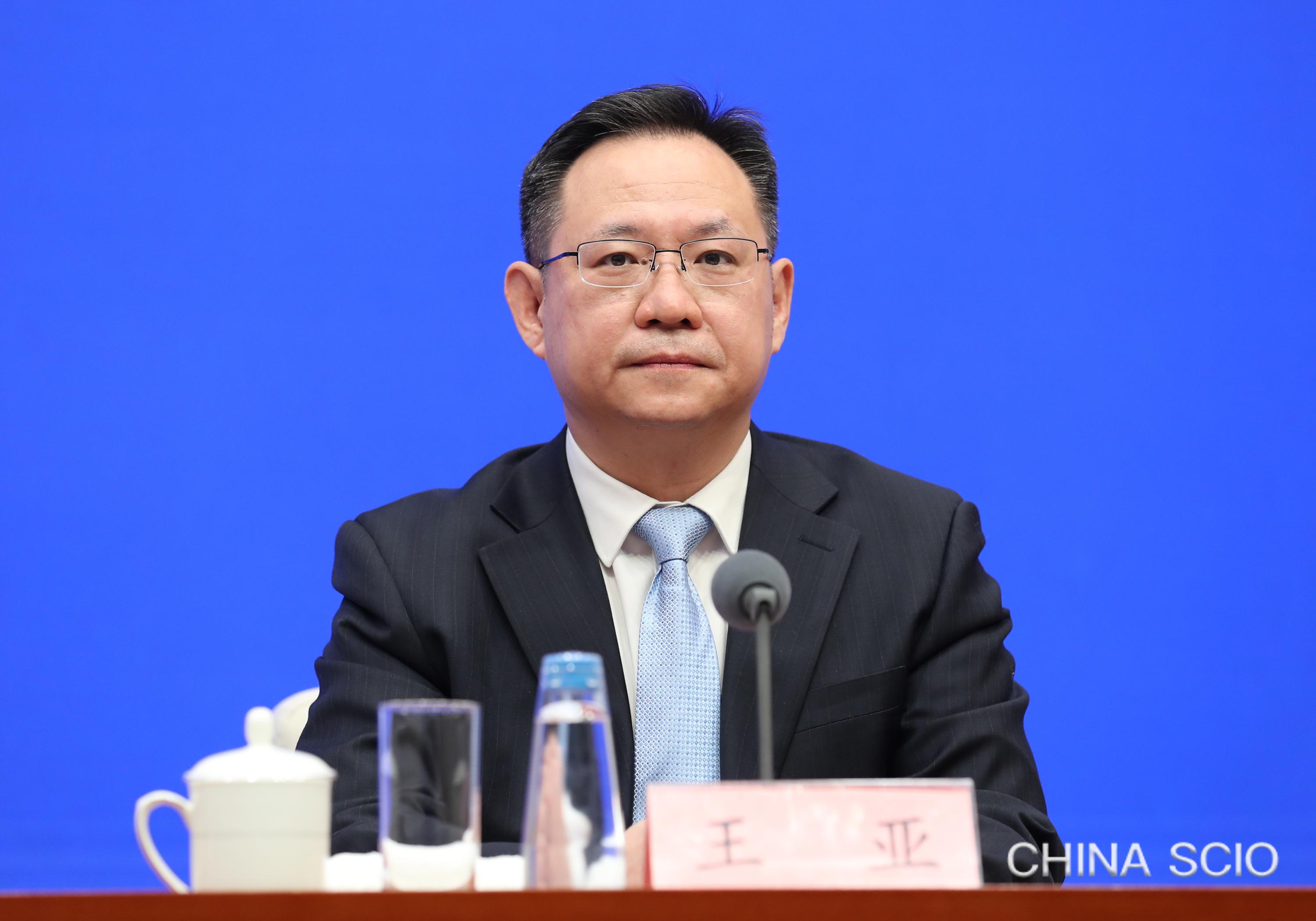
/6 Wang Ya
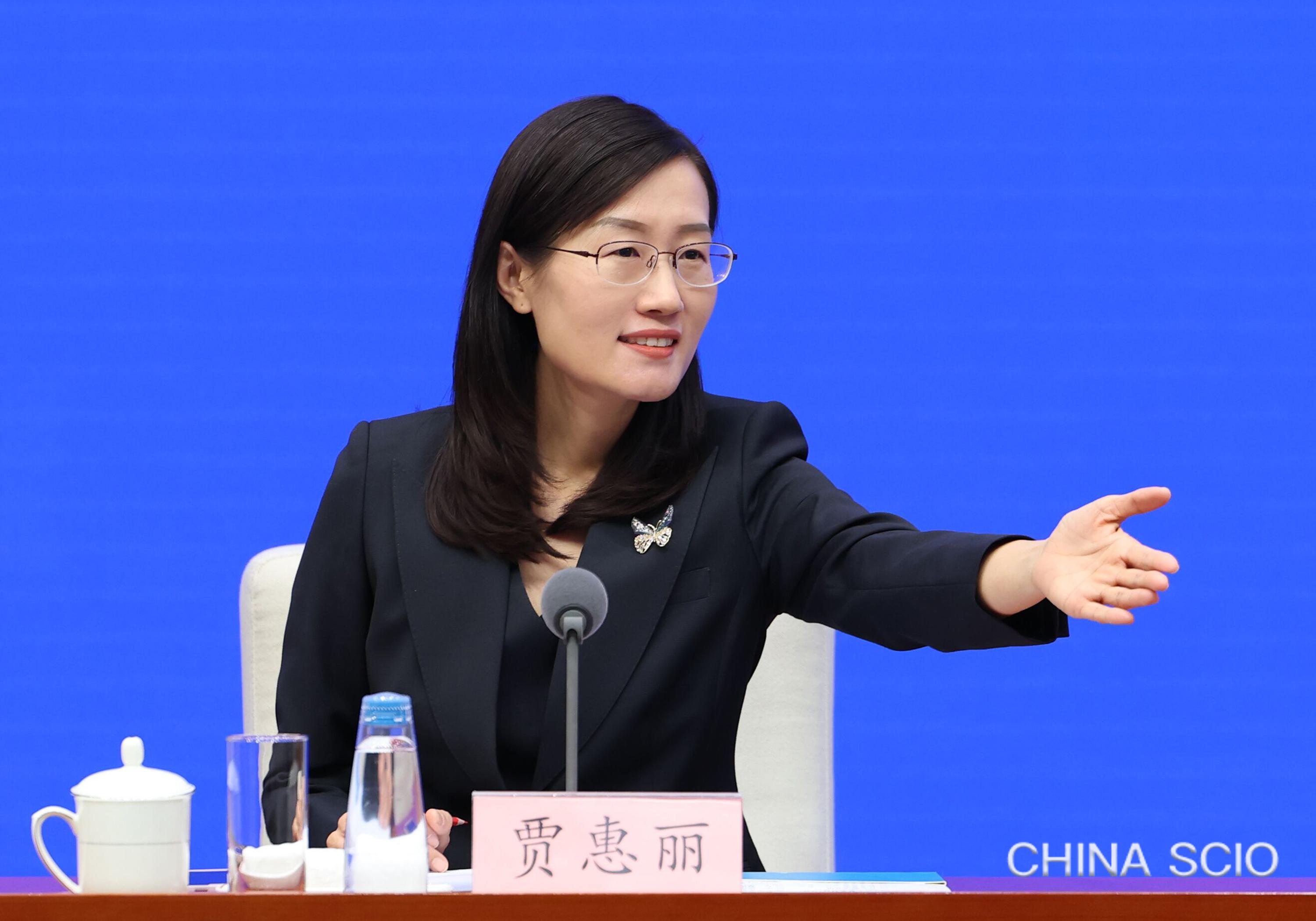
/6 Jia Huili
SCIO briefing on intellectual property development in 2025
January 23, 2026SCIO briefing on development of industry and information technology in 2025
January 21, 2026