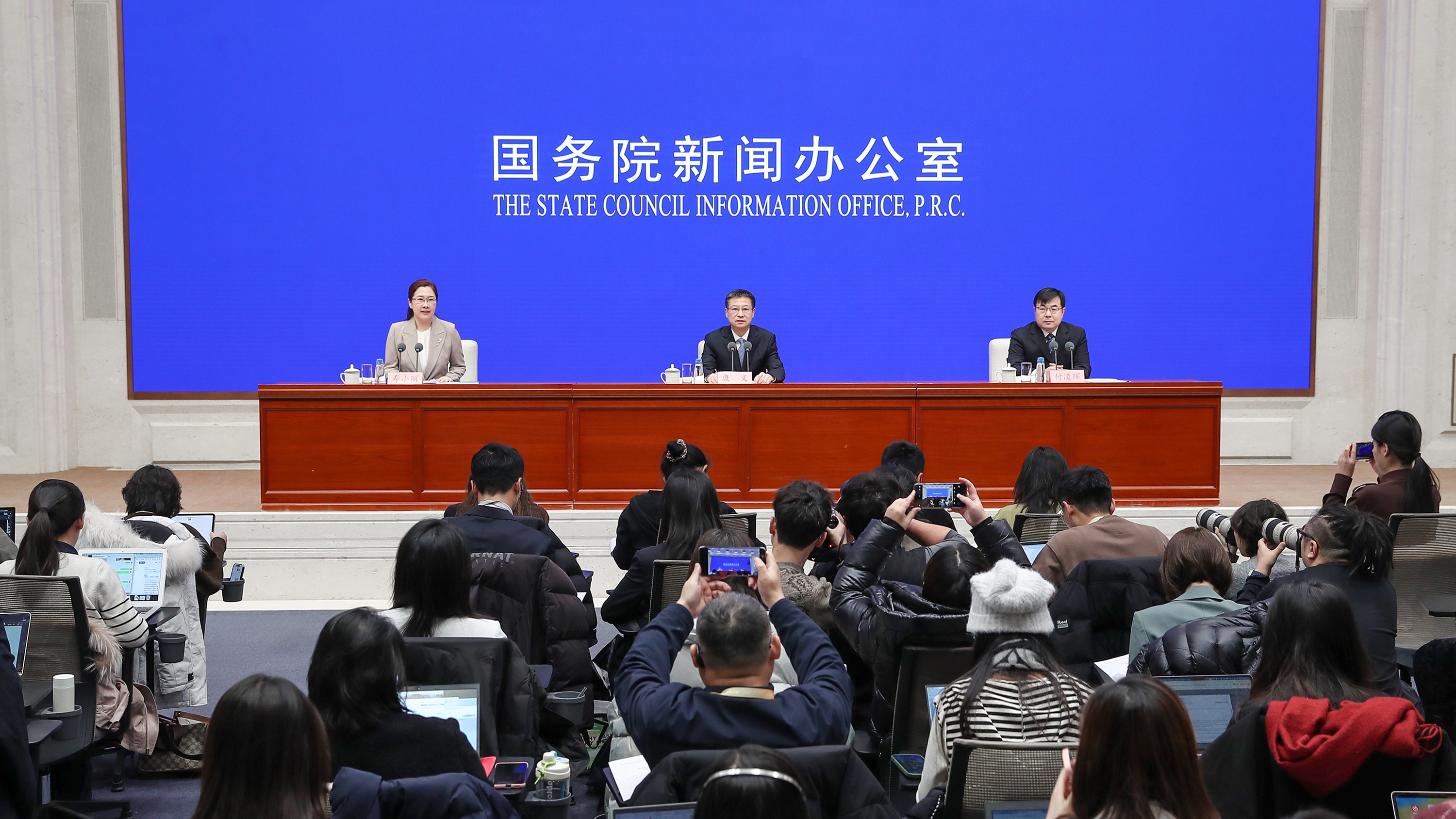

SCIO briefing on China's economic performance in 2025
Beijing | 10 a.m. Jan. 19, 2026
Speakers

Kang Yi, commissioner of the National Bureau of Statistics (NBS)
Fu Linghui, spokesperson and chief economist of the NBS and director general of the Department of Comprehensive Statistics of the NBS
Chairperson
Speakers:
Mr. Kang Yi, commissioner of the National Bureau of Statistics (NBS)
Mr. Fu Linghui, spokesperson and chief economist of the NBS and director general of the Department of Comprehensive Statistics of the NBS
Chairperson:
Ms. Shou Xiaoli, director general of the Press Bureau of the State Council Information Office (SCIO) and spokesperson of the SCIO
Date:
Jan. 19, 2026
Shou Xiaoli:
Ladies and gentlemen, good morning. Welcome to this press conference held by the State Council Information Office (SCIO). This is a regular briefing on economic data. Today, we have invited Mr. Kang Yi, commissioner of the National Bureau of Statistics (NBS), and Mr. Fu Linghui, spokesperson of the NBS and director general of the Department of Comprehensive Statistics of the NBS, to brief you on China's economic performance in 2025 and answer your questions.
Now, I'll give the floor to Mr. Kang for his introduction.
Kang Yi:
Good morning, everyone. I am very pleased to be part of this SCIO briefing, and I would like to thank all friends from the media for your ongoing support of our work. Today marks the annual release of economic data, and there is significant interest in China's economic and social development over the past year. First, I will present the relevant data on China's economic performance in 2025, and then take your questions.
China's economy moved toward new growth drivers and higher-quality development in 2025, successfully achieving the expected goals.
In 2025, facing complex changes in the economic environment at home and abroad, all regions and departments, under the strong leadership of the Central Committee of the Communist Party of China (CPC) with Comrade Xi Jinping at its core, thoroughly implemented the decisions and plans of the CPC Central Committee and the State Council. We resolutely embraced the new development philosophy, promoted high-quality development, coordinated the domestic and international situations, and balanced development and security. Proactive and effective macro policies were enacted, and the construction of a unified national market was deepened. China's economy continued to embrace innovation and excellence despite challenges, achieving new outcomes in high-quality development. The main goals and tasks of economic and social development were achieved, and the 14th Five-Year Plan was successfully concluded.
According to preliminary estimates, the gross domestic product (GDP) was 140.1879 trillion yuan in 2025, an increase of 5.0% over the previous year at constant prices. By industries, the value added of the primary industry was 9.3347 trillion yuan, up by 3.9% over last year, that of the secondary industry was 49.9653 trillion yuan, up by 4.5%, and that of the tertiary industry was 80.8879 trillion yuan, up by 5.4%. By quarters, GDP increased by 5.4% year on year in the first quarter, 5.2% in the second quarter, 4.8% in the third quarter and 4.5% in the fourth quarter. GDP in the fourth quarter increased by 1.2% quarter on quarter.
First, grain output increased and production of animal husbandry grew steadily.
The total output of grain in 2025 was 714.88 million metric tons, an increase of 8.38 million metric tons over the previous year, or up by 1.2%. Of this total, the output of summer grain was 149.75 million metric tons, down by 0.1%, and that of early rice was 28.51 million metric tons, up by 1.2%. The output of autumn grain reached 536.62 million metric tons, up by 1.5%. By crop type, the output of wheat was 140.07 million metric tons, remaining basically unchanged; that of corn was 301.24 million metric tons, up by 2.1%; that of rice was 209.04 million metric tons, up by 0.7%; and that of soybeans was 20.91 million metric tons, up by 1.3%. The total output of pork, beef, mutton and poultry reached 100.72 million metric tons, up by 4.2% over the previous year, and marking the first time it has exceeded 100 million metric tons. Of this total, the output of pork was 59.38 million metric tons, up by 4.1%; beef, 8.01 million metric tons, up by 2.8%; mutton, 4.96 million metric tons, down by 4.2%; and poultry, 28.37 million metric tons, up by 6.7%. Milk production reached 40.91 million metric tons, up by 0.3% and that of eggs reached 34.98 million metric tons, down by 2.5%. A total of 719.73 million pigs were slaughtered throughout the year, up by 2.4%, and 429.67 million pigs were registered in stock at the end of the year, up by 0.5%.
Second, industrial production grew fast, with equipment manufacturing and high-tech manufacturing showing good growth momentum.
In 2025, the total value added of industrial enterprises above designated size increased by 5.9% year on year. In terms of sectors, the value added of mining was up by 5.6%, that of manufacturing was up by 6.4%, and that of production and supply of electricity, thermal power, gas and water was up by 2.3%. The value added of equipment manufacturing went up by 9.2%, and that of high-tech manufacturing up by 9.4%, which were 3.3 percentage points and 3.5 percentage points faster than that of industrial enterprises above designated size, respectively. In terms of ownership, the value added of state holding enterprises grew by 4.6%, that of share-holding enterprises was up by 6.3%, that of enterprises funded by foreign investors and investors from Hong Kong, Macao and Taiwan increased by 3.9%, and that of private enterprises was up by 5.3%. In terms of products, the outputs of 3D printing devices, industrial robots and new energy vehicles (NEVs) grew by 52.5%, 28.0% and 25.1% year on year, respectively. In December, the total value added of industrial enterprises above designated size grew by 5.2% year on year, or up by 0.49% month on month. In December, the Manufacturing Purchasing Managers’ Index stood at 50.1%, 0.9 percentage point higher than that of November; and the Production and Operation Expectation Index was 55.5%, up by 2.4 percentage points. In the first 11 months, the total profits made by industrial enterprises above designated size were 6.6269 trillion yuan, up by 0.1% year on year.
Third, the service sector grew steadily, and the modern service industry developed well.
The value added of the service sector went up by 5.4% over the previous year. Specifically, the value added of information transmission, software and information technology services grew by 11.1%, leasing and business services increased by 10.3%, transportation, warehousing and postal services grew by 5.2%, wholesale and retail trade increased by 5.0%, and accommodation and catering services grew by 4.9%. In December, the Index of Services Production grew by 5.0% year on year. Specifically, the Index of Services Production of information transmission, software and information technology services went up by 14.8%, leasing and business services went up by 11.3%, and financial intermediation went up by 6.5%. In the first 11 months, the business revenue of service enterprises above designated size grew by 7.8% year on year. In December, the Business Activity Index for Services was 49.7%, up by 0.2 percentage point compared with November; and the Business Activity Expectation Index for Services stood at 56.4%, up by 0.5 percentage point. Specifically, the Business Activity Index for sectors like telecommunication, broadcast, television and satellite transmission services, monetary and financial services, and capital market services stayed within the high expansion range of 60.0% and above.
Fourth, market sales expanded, and growth of service retail accelerated.
In 2025, the total retail sales of consumer goods reached 50.1202 trillion yuan, up by 3.7% over the previous year. Analyzed by different areas, retail sales in urban areas reached 43.2972 trillion yuan, up by 3.6%; and that in rural areas stood at 6.8230 trillion yuan, up by 4.1%. Grouped by consumption patterns, the retail sales of goods were 44.3220 trillion yuan, up by 3.8%; and the income of catering was 5.7982 trillion yuan, up by 3.2%. Sales of basic necessities and some upgraded goods showed good growth. Over the entire year, the retail sales of communication equipment, cultural and office supplies, sports and entertainment products, household appliances and audio-visual equipment, and grain, oil and food products by enterprises above the designated size increased by 20.9%, 17.3%, 15.7%, 11.0% and 9.3%, respectively. China's online retail sales reached 15.9722 trillion yuan, up by 8.6% over the previous year. Specifically, the online retail sales of physical goods were 13.0923 trillion yuan, up by 5.2%, accounting for 26.1% of the total. In December, the total retail sales of consumer goods rose 0.9% year on year, but fell 0.12% month on month. The retail sales of services in 2025 grew by 5.5% over the previous year. Specifically, the retail sales of cultural, sports and leisure services, communication information services, tourism consultation and rental services, and transportation services grew relatively quickly.
Fifth, investment in fixed assets declined year on year, while investment in the manufacturing sector maintained growth.
In 2025, investment in fixed assets (excluding rural households) reached 48.5186 trillion yuan, down by 3.8% over the previous year; and with real estate development investment deducted, the investment in fixed assets was down by 0.5%. Specifically, the investment in infrastructure declined by 2.2%; that in manufacturing grew by 0.6%; and that in real estate development fell by 17.2%. The floor space of newly-built commercial buildings sold was 881.01 million square meters, down by 8.7%; and the total sales of newly-built commercial buildings was 8.3937 trillion yuan, down by 12.6%. By industry, investment in the primary industry went up by 2.3%; that in the secondary industry went up by 2.5%; and that in the tertiary industry went down by 7.4%. The private investment went down by 6.4%. Deducting the investment in real estate development, the private investment decreased by 1.9%. In the high-tech industry, investment in the information service industry and the aviation, spacecraft and equipment manufacturing industry increased by 28.4% and 16.9%, respectively. In December, fixed-asset investment (excluding rural households) decreased by 1.13% month on month.
Sixth, imports and exports of goods grew steadily, and the trade structure continued to optimize.
In 2025, the total value of imports and exports of goods was 45.4687 trillion yuan, an increase of 3.8% over the previous year. The value of exports was 26.9892 trillion yuan, up by 6.1%, and the value of imports was 18.4795 trillion yuan, up by 0.5%. The imports and exports by private enterprises grew by 7.1%, accounting for 57.3% of the total value of imports and exports, 1.8 percentage points higher than that of the previous year. The imports and exports with Belt and Road partner countries grew by 6.3%, accounting for 51.9% of total imports and exports. Exports of high-tech products increased by 13.2%. In December, the total value of imports and exports of goods was 4.263 trillion yuan, up by 4.9% year on year. Specifically, the total value of exports was 2.5359 trillion yuan, up by 5.2%; and the total value of imports was 1.7271 trillion yuan, up by 4.4%.
Seventh, consumer prices were generally stable, and the core consumer price index (CPI) registered a moderate rebound.
In 2025, the Consumer Price Index (CPI) remained unchanged from the previous year. Grouped by commodity categories, prices for food, tobacco and alcohol went down by 0.7%; clothing up by 1.5%; housing up by 0.1%; articles and services for daily use up by 0.9%; transportation and communication down by 2.6%; education, culture and recreation up by 0.8%; medical services and health care up by 0.8%; and other articles and services up by 9.3%. In terms of prices for food, tobacco and alcohol, prices of pork went down by 6.1%, fresh vegetables down by 3.9%, grain down by 1.0%, and fresh fruits up by 1.2%. The core CPI, excluding the prices of food and energy, grew 0.7% year on year, 0.2 percentage point higher than that of last year. In December, the consumer price index was 0.8% higher year on year, with the growth rate widening by 0.1 percentage point from the previous month, or up 0.2% month on month. In 2025, the producer prices for industrial products went down by 2.6% over the previous year; in December, it went down by 1.9% year on year, or up by 0.2% month on month. In 2025, the purchasing prices for industrial producers went down by 3.0% over that of the previous year; in December, it went down by 2.1% year on year, or up by 0.4% month on month.
Eighth, employment was generally stable and the urban surveyed unemployment rate was steady.
In 2025, the urban surveyed unemployment rate averaged 5.2%. In December, the urban surveyed unemployment rate was 5.1%. The surveyed unemployment rate of population with local household registration was 5.3% and that of population with non-local household registration was 4.7%, of which, the rate of the population with non-local agricultural household registration was 4.4%. The urban surveyed unemployment rate in 31 major cities was 5.1%. Employees of enterprises worked 48.6 hours per week on average. In 2025, the number of rural migrant workers totaled 301.15 million, 1.42 million more than that of the previous year, or up by 0.5%. Specifically, local migrant workers totaled 121.09 million, up by 0.1%; and outbound migrant workers totaled 180.06 million, up by 0.8%.
Ninth, residents' income continued to increase and the incomes of rural residents grew faster than that of urban residents.
In 2025, the nationwide per capita disposable income of residents was 43,377 yuan, a nominal increase of 5.0% over that of the previous year, or a real growth of 5.0% after adjusting for price factors. In terms of permanent residence, the per capita disposable income of urban residents was 56,502 yuan, a nominal growth of 4.3% over the previous year or a real growth of 4.2% after adjusting for price factors. The per capita disposable income of rural households was 24,456 yuan, a nominal growth of 5.8% over the previous year or a real growth of 6.0% after adjusting for price factors. The median of the nationwide per capita disposable income nationwide was 36,231 yuan, a nominal increase of 4.4% over the previous year. Grouped by income quintile, the per capita disposable income of the low-income group reached 10,150 yuan, the lower-middle-income group 22,702 yuan, the middle-income group 35,536 yuan, the upper-middle-income group 55,586 yuan, and the high-income group 103,778 yuan. In 2025, the nationwide per capita consumption expenditure was 29,476 yuan, a nominal growth of 4.4% over the previous year or a real growth of 4.4% after adjusting for price factors. The per capita consumption expenditure on food, tobacco and alcohol accounted for 29.3% of the per capita consumption expenditure (Engel's coefficient), 0.5 percentage point lower than that of the previous year. The per capita consumption expenditure on services went up by 4.5%, accounting for 46.1% of the per capita consumption expenditure, the same with that of the previous year.
Tenth, total population declined and the urbanization rate continued to rise.
By the end of 2025, the national population was 1.40489 billion (including the population of 31 provinces, autonomous regions and municipalities directly under the central government and servicemen, but excluding residents of Hong Kong, Macao and Taiwan and foreigners living in the 31 provinces, autonomous regions and municipalities directly under the central government), a decrease of 3.39 million over the end of 2024. In 2025, the number of births was 7.92 million with a birth rate of 5.63 per thousand; the number of deaths was 11.31 million with a mortality rate of 8.04 per thousand; the natural population growth rate was minus 2.41 per thousand. In terms of gender, the male population was 716.85 million, and the female population was 688.04 million; and the sex ratio of the total population was 104.19 males to every 100 females. In terms of age structure, the population aged 16 to 59 was 851.36 million, accounting for 60.6% of the total population; and the population aged 60 and over was 323.38 million, accounting for 23.0% of the total population. Specifically, the population aged 65 and over was 223.65 million, accounting for 15.9% of the total population. In terms of urban-rural structure, the number of permanent residents in urban areas was 953.80 million, an increase of 10.30 million over the end of the previous year; and the number of permanent residents in rural areas was 451.09 million, a decrease of 13.69 million. The share of urban population in the total population (urbanization rate) was 67.89%, 0.89 percentage point higher than that at the end of the previous year. In terms of education level, the average years of schooling for the population aged 16-59 reached 11.3 years, an increase of 0.1 years from the previous year.
Overall, in 2025, the national economy withstood multiple pressures and maintained a steady growth with positive momentum, achieving new results in high-quality development. However, we must be aware that the impact of changes in the external environment has intensified, structural imbalances marked by strong supply and weak demand remain pronounced at home, and both long-standing issues and new challenges in economic development persist. In the next stage, we must take Xi Jinping Thought on Socialism with Chinese Characteristics for a New Eraas the guideline, fully implement the guiding principles of the 20th CPC National Congress, and plenary sessions of the 20th CPC Central Committee, and adhere to the arrangements made by the Central Economic Work Conference. We should adhere to the principle of seeking progress while maintaining stability and improving quality and efficiency, implement more proactive and effective macro policies, continuously expand domestic demand and improve the supply, optimize allocation of new resources and revitalize existing assets, develop new productive forces in accordance with local conditions, and further promote the construction of a unified national market. This will promote the effective improvement of both the quality and reasonable growth of the economy and ensure a good start to the 15th Five-Year Plan.
That concludes my introduction.
Shou Xiaoli:
Thank you, Mr. Kang, for your introduction. Now, the floor is open for questions. Please identify the media outlet you represent before asking your question.
_ueditor_page_break_tag_Yicai:
2025 marked the final year of the 14th Five-Year Plan period. How would you evaluate China's economic performance last year? Thank you.
Kang Yi:
Thank you for your question. The year 2025 marked the final year of the 14th Five-Year Plan period and was a year of special importance in China's modernization drive. It was a truly remarkable year of development, with inspiring achievements. The economy forged ahead despite challenges, moving toward innovation and quality while successfully meeting all major targets. The 14th Five-Year Plan came to a successful conclusion, and a solid start was made to the new journey toward the second centenary goal. Regarding the economic performance of the past year, I would like to briefly summarize it in four words: stability, progress, innovation and resilience.
First, the overall pattern of stability was reinforced. Stability was a defining feature of China's economy in 2025. In the face of sharply shifting external conditions and complex domestic challenges, China implemented more proactive and effective macroeconomic policies. These measures not only mitigated the adverse effects of external changes but also secured the foundations of development amid turbulence. In 2025, China's GDP exceeded 140 trillion yuan for the first time, growing 5.0% year on year. The average urban surveyed unemployment rate stood at 5.2%, indicating overall stable employment. The goods trade reached a new high, and foreign exchange reserves surpassed $3.3 trillion. For an economy of China's massive scale, achieving such stable development amid intertwined risks and challenges was no easy feat.
Second, the momentum of development progress strengthened. Despite an increasingly complex environment and rising pressure to stabilize growth this year, China remained steadfast on the path of high-quality development. We accelerated the transition from old to new growth drivers and deepened reform and opening-up, maintaining an economic momentum that improved in quality. The economic structure was optimized: value added from high-tech manufacturing above the designated size accounted for 17.1% of all large-scale industrial enterprises, and final consumption expenditure contributed more than 50% to economic growth. Reform and opening-up continued to deepen, the construction of a unified national market advanced, the private sector promotion law was officially implemented, and efforts to curb involution-style competition yielded results. The launch of island-wide special customs operations in the Hainan Free Trade Port marked a major step in high-standard opening-up. In 2025, China's total goods import and export volume increased 3.8% year on year. People's livelihoods were effectively safeguarded, with residents' per capita disposable income increasing 5.0% in real terms, keeping pace with economic growth. Positive progress was made in public welfare undertakings such as elderly care, child care and medical care.
Third, innovation became more prominent as a driver of growth. The year was distinctly characterized by a drive toward innovation. In 2025, China's R&D intensity reached 2.8%, an increase of 0.11 percentage point from the previous year, exceeding the average level of OECD countries for the first time. According to the World Intellectual Property Organization, China's Global Innovation Index ranking broke into the top 10 for the first time. From new explorations in basic research to breakthroughs in key technologies, and from the deep integration of technological and industrial innovation to the widespread application of innovations benefiting the people, China delivered frequent successes in cutting-edge fields such as AI, quantum technology, and brain-computer interfaces. A number of major scientific research achievements emerged, and new quality productive forces continued to grow. In 2025, the value added of digital product manufacturing above the designated size increased 9.3% year on year, with rapid growth in output of servers and industrial robots. Green electricity, green energy and the green economy flourished, with new energy vehicles exceeding 50% of domestic new car sales.
Fourth, the resilience of the economy became more evident. Amid a severely disrupted global trade order and domestic growing pains from shifting growth drivers, China's economy still achieved both quantitative and qualitative gains, fully demonstrating its capacity to navigate challenges and withstand pressure in an unstable and uncertain environment. Globally, China's economic growth rate ranked among the highest of major economies, making it the most stable and reliable engine for global economic growth, with its contribution expected to reach around 30%. A more diversified pattern for stabilizing foreign trade rapidly took shape. China became a major trading partner of more than 150 countries and regions, with high-tech and high-value-added products becoming the main drivers of export growth, demonstrating the strong resilience of foreign trade. The export value of high-tech products increased 13.2% in 2025 compared with the previous year.
The above four aspects reflect China's solid economic foundation, numerous advantages, strong resilience and great potential. They are the result of the hard work and relentless efforts of the Chinese people, greatly enhancing our confidence for future development. Of course, we must also be clearly aware that there are still many long-standing issues and new challenges in economic development. The impact of external changes is deepening, the domestic imbalance between strong supply and weak demand remains prominent, and many risk factors persist in key areas. We must face problems and challenges head-on, diligently focus on our own work, strive to stabilize employment, enterprises, markets and expectations, and strengthen the internal driving force of development. This will enable us to achieve effective quality improvement and reasonable quantitative growth, steering the Chinese economy steadily forward through waves and on a long-term trajectory.
Thank you.
_ueditor_page_break_tag_CCTV:
Since the beginning of the 14th Five-Year Plan, China's total economic output has made great strides, successively surpassing the 110 trillion, 120 trillion, 130 trillion and 140 trillion yuan thresholds. How do you view this development trend? Thank you.
Kang Yi:
Thank you for your question. During the 14th Five-Year Plan period, China's economy faced multiple unexpected shocks and effectively responded to a series of major risks and challenges. It overcame numerous obstacles and grew stronger, with total economic output reaching new heights. In 2025, it reached 140 trillion yuan, a remarkable achievement. This fully demonstrates China's steady economic progress, resilience under pressure, and vitality in pursuing innovation and excellence. What does this signify? Several key points can be highlighted:
First, it signifies that China's economy has a more solid foundation and greater resilience to risk. During the 14th Five-Year Plan period, China's total economic output successively surpassed the 110 trillion yuan, 120 trillion yuan, 130 trillion yuan and 140 trillion yuan thresholds. Such a large economic scale corresponds to substantial productivity. China's grain output has remained above 1.4 trillion jin (700 million tonnes) for two consecutive years. The value added of the manufacturing industry has ranked first in the world for 16 consecutive years. The share of the service sector's value added in GDP has increased to 57.7%. Furthermore, China's network infrastructure is the largest and most extensive in the world. All these constitute a solid foundation and strong support for resisting risks and achieving steady, long-term development.
Second, it signifies greater substance and steadier momentum in China's high-quality development. The successive expansion of China's economic aggregate is underpinned by the strong support of high-quality development. An economy of 140 trillion yuan is the fruitful result of putting the new development philosophy into practice. Over the past five years, new quality productive forces steadily grew, China's innovation index ranking entered the top 10 worldwide for the first time, and the value added of high-tech manufacturing above the designated size grew at an average annual rate of 9.2%. Digital technologies such as AI and 5G flourished, empowering countless industries. The transition to cleaner, low-carbon energy accelerated, and the market competitiveness of new energy products continued to increase. People's livelihoods were effectively guaranteed, with residents' income growth keeping pace with economic growth. These achievements have not only demonstrated the correctness and effectiveness of China's high-quality development path but also accumulated strong momentum for future development.
Third, it also signifies that China has provided stable support for the world economy while creating broader opportunities for cooperation. Throughout the 14th Five-Year Plan period, China's average annual contribution to global economic growth reached about 30%. Its complete industrial system served as a ballast for the global supply chain, providing valuable stability amid a turbulent, changing world economy. More importantly, China continues to represent a major source of opportunity for global development. In 2025, China's goods imports reached a new high of 18.5 trillion yuan, providing a vast market space for all countries. The negative list for foreign investment access continues to shrink, the "circle of friends" for visa-free travel continues to expand, and entry policies are being further optimized, greatly facilitating personnel exchanges and economic and trade cooperation. China has taken concrete actions to expand cooperation opportunities for countries worldwide.
Thank you.
_ueditor_page_break_tag_Bloomberg:
We're wondering how big of a challenge will it be to ensure economic growth gets off to a good start in the first quarter of this year, given a high base of comparison from 2025? And what is China doing to counter the challenge, especially in consumption and investments? And we're also wondering if you could provide the breakdown of GDP growth contribution from final contribution, and net export and growth capital formation in the fourth quarter and for the full year. Thank you.
Kang Yi:
Thank you for your questions. You've asked two questions. Let me start with the first one.
In 2025, China's economy forged ahead despite headwinds, shifting toward high-quality and innovation-driven development. All major expected targets were achieved, demonstrating strong resilience and vitality and laying a solid foundation for this year's economic development. Recent indicators show positive changes in production, prices and expectations, with the economy maintaining steady, positive momentum. In December 2025, the year-on-year growth rates of the value-added of industrial enterprises above designated size and the Index of Services Production both accelerated compared to the previous month. The CPI rose 0.8%, the highest increase since March 2023, and core CPI rose more than 1% for four consecutive months. The year-on-year decline in PPI narrowed, while month-on-month increases continued for three consecutive months. Both the manufacturing PMI and the non-manufacturing business activity index returned to expansion territory. In terms of policy support, the State Council executive meeting deployed a package of coordinated fiscal and financial policies to promote domestic demand, and relevant departments are accelerating implementation to expand it further. The policies aimed at promoting large-scale equipment upgrades and trade-ins of consumer goods have been further refined, with the first tranche of funding allocated ahead of schedule, creating favorable conditions for a solid economic start this year.
When looking at China's economy, we need to take a comprehensive, dialectical, and long-term view. We should look not only at the current situation but also at long-term trends; not only at quarterly changes but also at annual trends; not only at the aggregate scale but also at the quality of development. Looking at 2026 as a whole, the supporting conditions and fundamental trends underpinning China's long-term economic growth remain unchanged, as does the momentum toward high-quality economic development. The foundations and conditions are in place to maintain stable, positive economic performance.
Regarding the second question, in 2025, the contribution rates of final consumption expenditure, gross capital formation, and net exports of goods and services to economic growth were 52%, 15.3% and 32.7%, respectively. In the fourth quarter, the respective rates were 52.9%, 16% and 31.1%.
Thank you.
_ueditor_page_break_tag_Zhinews of Shenzhen Satellite TV:
In 2025, many regions across China actively pursued innovative practices and fostered new quality productive forces. What new highlights and changes have new quality productive forces brought to economic development? Thank you.
Kang Yi:
Thank you for your question. In 2025, China made considerable progress in innovation-driven development, industrial upgrading, digital empowerment and green transformation. New quality productive forces evolved from conceptual consensus into tangible development results, enhancing both the quality and sustainability of economic growth, and underscoring China’s firm resolve and concrete actions to proactively adapt and pursue new breakthroughs amid a complex external environment. Regarding new quality productive forces, I would summarize them with four key strengths.
First, our technological strength continued to improve. In 2025, China's total R&D expenditure reached 3.9262 trillion yuan, ranking second in the world for many years. China became the first country to reach more than 5 million valid domestic invention patents and has ranked first globally in PCT international patent applications for six consecutive years. High-value patent reserves in key core technology fields have been continuously strengthened. Major national projects delivered frequent breakthroughs, with numerous original and disruptive innovative results emerging. The Jiutian unmanned aerial vehicle completed its maiden flight, Tianwen-2 embarked on its asteroid exploration mission, the first electromagnetic catapult-type aircraft carrier was officially commissioned, and the CR450 high-speed train set a new "China Speed." These achievements demonstrate that China is taking solid, powerful steps toward high-level scientific and technological self-reliance.
Second, industries built momentum toward new strengths. Investment and production expansion continue in emerging fields such as high-end equipment, green energy and intelligent manufacturing, and the integration of technological and industrial innovation is bearing fruit. In 2025, equipment manufacturing and high-tech manufacturing enterprises above designated size accounted for 36.8% and 17.1% of total industrial value added, respectively. The low-altitude economy is taking flight, and embodied intelligence is enabling smart and efficient operations. The output of civilian drones and industrial robots increased 37.3% and 28%, respectively, compared to 2024. Intelligent manufacturing projects advanced steadily, the number of intelligent factories continued to rise, and the integrated application of the industrial internet achieved full coverage across all 41 major industrial sectors.
Third, digital penetration significantly increased. The digital industry, digital consumption and digital infrastructure have expanded across all domains, integrating into production and operations across countless industries and into the daily lives of millions of households. In 2025, the value added of digital product manufacturing enterprises above designated size increased 9.3% year on year, and the value added of information transmission, software and information technology services grew 11.1%. AI has become a trusted partner and helper for more people in their work and daily lives, genuinely adding convenience to everyday life. New consumption models and scenarios expanded rapidly, driving online retail sales growth of 8.6%. Construction of new infrastructure, such as 5G, gigabit optical networks, and the Internet of Things, progressed in an orderly manner.
Fourth, green leadership was fully demonstrated. China accelerated the construction of a clean, low-carbon, safe and efficient new energy system. In 2025, clean energy power generation — including hydropower, nuclear, wind and solar — by industrial enterprises above designated size increased 8.8% year on year. The share of non-fossil energy in total energy consumption rose about 2 percentage points year on year, and the output of green energy equipment, green materials and other products achieved rapid growth. The competitiveness of the new energy industry continued to improve, with annual production and sales of new energy vehicles both exceeding 16 million units, and green production and lifestyles becoming more widespread. The green transformation of traditional industries also achieved notable results. In 2025, enterprises above designated size in major energy-intensive industries, including building materials, steel, and non-ferrous metals, significantly reduced energy consumption per unit of value added compared to the previous year.
Thank you.
_ueditor_page_break_tag_CNBC:
What were the highlights of service consumption in the past year? How did the share of service consumption change relative to goods retail in overall consumption in the fourth quarter? Thank you.
Kang Yi:
Thank you for your questions. Service consumption was indeed a significant highlight of economic performance in 2025. Given the widespread interest in consumption trends, I'd like to take this opportunity to briefly introduce some relevant statistics.
In terms of consumption type, there are two main categories: goods consumption and services consumption. The corresponding key statistical indicators are total retail sales of consumer goods, which primarily reflect goods consumption, and total retail sales of services, which track services consumption. Both indicators are collected from the enterprise sales side, that is, the supply side. In addition, there are statistical indicators that reflect consumption from the demand side, such as per capita consumption expenditure. This metric is derived from household surveys on income and expenditure. I'll briefly introduce some statistical indicators related to consumption. When it comes to consumption, we need to consider it from multiple perspectives. Generally speaking, total retail sales of consumer goods are used more frequently, but service consumption is now an indicator that also deserves greater attention. This question is very important.
In terms of consumption, China continued to expand domestic demand in 2025. With the implementation of special actions to boost consumption taking effect, the consumer market steadily expanded, its structure continued to optimize, and new consumption hotspots continued to emerge.
First, the role of consumption as a cornerstone became increasingly prominent. Total retail sales of consumer goods for the whole year exceeded 50 trillion yuan, an increase of 3.7% over the previous year, 0.2 percentage point faster than in 2024, ranking among the top in global retail markets. As the reporter just mentioned, service retail sales grew by 5.5% year on year. In recent months, the growth rate has accelerated month by month. The contribution of final consumption expenditure to economic growth was 52%, more than half, and 5 percentage points higher than the previous year. Consumption was the main driving force and stabilizing anchor of economic growth.
Second, the vitality of service consumption was unleashed. As living standards improve, residents' consumption is shifting from being primarily focused on goods to emphasizing both goods and services, with the potential of service consumption being continuously unleashed. In terms of enterprise sales, service retail sales in 2025 grew 5.5% over the previous year, 1.7 percentage points faster than retail sales of consumer goods. The share of services in total retail sales rose. As the reporter mentioned, the fourth-quarter share also rose. Service retail's share of total retail increased across the board, reflecting this trend. In terms of household consumption, per capita spending on services accounted for 46.1% of per capita consumption expenditure in 2025. Consumption scenarios continued to be innovated, and consumption environments were optimized. Sectors such as culture, tourism, entertainment and sports events achieved breakthroughs across the country. In 2025, retail sales of tourism consulting and rental services, transportation services, and cultural and sports leisure services all maintained double-digit growth, and total domestic box office revenue increased by more than 20% over the previous year.
Third, new types of consumption flourished. E-commerce, livestreaming marketing, and online entertainment drove rapid growth in online consumption. In 2025, online retail sales increased 8.6% year on year, with online retail sales of physical goods up 5.2%, accounting for 26.1% of total retail sales of consumer goods. New retail models, such as unmanned stores and warehouse membership stores, maintained double-digit retail sales growth. Green consumption also grew steadily, and production and sales of new energy vehicles ranked first in the world for 11 consecutive years. Digital technologies such as AI have become deeply integrated into consumption scenarios, effectively driving the improvement and expansion of information consumption. In 2025, retail sales of communication information services grew more than 10% year on year. Meanwhile, the silver economy, the ice and snow economy, and the debut economy continued to heat up, increasingly becoming new drivers of consumption growth.
Fourth, commodity consumption continued to grow. In 2025, retail sales of goods increased 3.8% year on year, 0.6 percentage point faster than the previous year. Sales of basic necessities such as grain, oil and food grew relatively rapidly, while sales of discretionary goods such as sports and entertainment products and communication equipment showed strong momentum. The scope and scale of consumer goods trade-in programs were expanded, using tangible financial incentives to bring high-quality durable consumer goods into people's daily lives. In 2025, retail sales of cultural and office supplies by enterprises above designated size climbed 17.3% over the previous year, furniture grew 14.6%, and household appliances and audiovisual equipment rose 11%, all achieving double-digit growth.
Looking ahead to 2026, despite pressures and challenges, many positive factors still support continued consumption growth, and the consumer market is expected to grow steadily. Several conditions support this: First, consumption upgrading holds huge potential. China has a population of over 1.4 billion and a large middle-income group, making it a super-large market with global influence. Currently, residents are increasingly prioritizing quality, with growing demand for personalized, diversified and premium products, which holds enormous potential. Second, policies to boost consumption continue to take effect. This year, we will thoroughly implement the special campaign to boost consumption and formulate and implement plans to increase urban and rural residents' incomes. The trade-in policy will continue in 2026 and is being continuously optimized. The first batch of 62.5 billion yuan in ultra-long-term special treasury bonds has been allocated in advance, and the removal of unreasonable restrictions in the consumption sector is being gradually advanced. These policies will support consumption growth. Third, the consumption environment is improving. The construction of a unified national market is helping to continuously optimize the consumption environment. Meanwhile, the application of new technologies and innovations will increase the supply of high-quality consumption. Immersive and experiential consumption scenarios are also being cultivated. Consumer rights protections are being continuously strengthened. All of these factors will help unleash greater consumption potential.
Thank you.
_ueditor_page_break_tag_Beijing Youth Daily:
The current global economic situation is characterized by insufficient growth momentum intertwined with structural transformation. Under these circumstances, how should we view the trajectory of China's economy in 2026? Thank you.
Kang Yi:
Thank you for your question. The year 2026 marks the beginning of the 15th Five-Year Plan, and China's development has reached a new starting point. Despite the deepening impact of external changes and challenges to domestic stability and development, China's economy has a solid foundation, many advantages, strong resilience, and great potential. The long-term supportive conditions and fundamental trend of positive development remain unchanged. Overall, the opportunities outweigh the challenges, and favorable factors outnumber unfavorable ones. China's economy has both the conditions and support to achieve stable, positive growth in 2026.
In terms of development foundations, China achieved solid results in high-quality development during the 14th Five-Year Plan period. China's economic, scientific and technological strength, and overall national strength all reached new heights. Economic output grew by more than 36 trillion yuan over the past five years, and R&D investment intensity rose 0.44 percentage point. With stronger foundations and broader development space, China enters the 15th Five-Year Plan period with clear advantages and confidence. The long-term stable development of China's economy results from multiple factors working in synergy. These include institutional advantages, market strengths, a complete industrial system, and human resource advantages. This is both an overarching logic and a major underlying trend.
In terms of development momentum, steady economic progress in 2025 has created favorable conditions for further development. In 2025, China's economy forged ahead despite pressures, achieving 5.0% growth amid deepening adverse external influences, demonstrating its resilience and vitality. Since September, core CPI has risen more than 1% year on year for four consecutive months. In December, the manufacturing PMI returned to expansion territory. The flow of people, goods and information maintained relatively rapid growth. Moreover, positive factors driving steady, positive economic development are accumulating.
In terms of development momentum, the cultivation of new quality productive forces and the positive effects of reform continue to emerge. We are in a critical period of transitioning from old to new growth drivers. While the growth rate of some traditional industries and sectors is indeed slowing, emerging drivers are accumulating momentum, helping to offset downward pressure and boost upward momentum. For example, domestic large AI models are developing rapidly, AI technology is being widely applied, and the digital economy is driving rapid advancement in new quality productive forces. In 2025, the value added of digital product manufacturing enterprises above designated size increased 9.3% year on year. An average of 45,000 new energy vehicles rolled off production lines every day, and more than 500 million express parcels were delivered. Humanoid robots went from appearing on the Spring Festival Gala stage to showcasing at the World Humanoid Robot Games, and then to entering factories in an organized fashion. All of these developments are accumulating momentum. Meanwhile, China is advancing the construction of a unified national market, driving down logistics costs across society, and enacting the private sector promotion law. Many well-developed, concrete reform measures are being rolled out, which will further stimulate economic dynamism and vitality.
In terms of development support, more proactive and effective macroeconomic policies will safeguard stable economic operations. The fact that China's economy maintained steady growth in a complex environment in 2025 was largely due to the important role these policies played. The "two major" initiatives (major national strategies and the enhancement of security capacity in key areas) and "two new" initiatives (large-scale equipment renewals and trade-in of consumer goods) were expanded and strengthened. The Policies and Measures on Stabilizing Employment, Ensuring Stable Growth and Promoting High-quality Development were introduced, and comprehensive efforts were made to curb involution-style competition. These actions effectively expanded demand, optimized supply and stabilized the economy. In 2025, total retail sales of consumer goods grew 0.2 percentage point faster than the previous year, and industrial value added grew 0.3 percentage point faster. In 2025, the Central Economic Work Conference clearly stated that China should adhere to the principle of seeking progress while maintaining stability and improving quality and efficiency, give full play to the combined effect of existing and new policies, and strengthen counter-cyclical and cross-cyclical adjustments. The year 2026 marks the start of the 15th Five-Year Plan. All sectors will focus on key objectives and vigorously advance major projects, helping generate powerful momentum for development.
Recently, major international organizations have raised their forecasts for China's economic growth, indicating that the international community is optimistic about China's economic prospects. The Chinese economy is a vast ocean, not a small pond, capable of withstanding wind and waves, even violent storms. Looking back over the years, challenges facing the Chinese economy have never been absent, but opportunities have always accompanied them. We must strengthen our confidence and resolve, build consensus and improve our internal capabilities, enhance innovation-driven development, and deepen reform and opening-up. We must continuously strengthen the domestic economic cycle, promote effective qualitative improvement and reasonable quantitative growth, and strive to get the 15th Five-Year Plan off to a good start.
Thank you.
_ueditor_page_break_tag_Elephant News:
We would like to ask about industrial production. How did industrial enterprises above designated size perform in 2025? What were the main characteristics? In addition, how do you assess the outlook for China's industrial production in 2026? Thank you.
Kang Yi:
I'd like to invite Mr. Fu Linghui to answer these questions.
Fu Linghui:
I'll answer your questions about industrial production. Industry is an important component of the real economy and a ballast for stable economic operations. In 2025, industrial production was characterized by rapid growth, structural optimization and new momentum, playing an important supporting role in stabilizing economic operations. The main characteristics are as follows:
First, industrial strength expanded. In 2025, China's industrial value added reached 41.7 trillion yuan, an increase of 5.8% over the previous year, with the growth rate accelerating by 0.3 percentage point. Its contribution to economic growth reached 35%, an increase of 1.8 percentage points over the previous year. As the mainstay of the industrial economy, manufacturing output continued to expand. In 2025, manufacturing value added reached 34.7 trillion yuan, an increase of 6.1% over the previous year, with its share of GDP remaining stable at around 25%. China's manufacturing sector is expected to have remained the world's largest for 16 consecutive years, with the advantages of a complete industrial system becoming more apparent.
Second, China's industrial structure was upgraded. The trend of high-end, intelligent and green development in the manufacturing industry became more pronounced. The value added of equipment manufacturing and high-tech manufacturing enterprises above designated size increased 9.2% and 9.4% respectively year on year, accounting for 36.8% and 17.1% of the total industrial value added of enterprises above designated size. Production of new products such as high-speed trains, industrial robots, and servers maintained rapid growth, and the green content of industry also increased. Production of new energy vehicles exceeded 16 million units, with production and sales volume remaining the world's largest for 11 consecutive years. Growth of green products such as wind turbine generators and bio-based chemical fibers also maintained a high level.
Third, industrial transformation and upgrading progressed. Relying on technological breakthroughs, digital empowerment and green transformation, traditional industries also cultivated new growth drivers. The value added of petroleum processing enterprises above designated size increased 6.7% year on year, with the biofuel processing sector up 16.8%. The chemical fiber industry increased 8.2%, with bio-based materials manufacturing up 27.9%. Industrial transformation continued to deepen, driving a gradual recovery in corporate profits. From January to November, in the building materials and chemical industries, profits of graphite and carbon product manufacturing enterprises above designated size increased 73.9% year on year, and biochemical pesticide and microbial pesticide manufacturing increased 48.3%.
Fourth, manufacturing enterprises' profitability improved. In the first 11 months, profits of manufacturing enterprises above designated size increased 5% year on year, compared with a decline of 4.6% in the same period last year. Profits of equipment manufacturing and high-tech manufacturing rose 7.7% and 10% year on year, respectively, providing strong support for improved profitability among industrial enterprises.
Overall, in 2025, industrial production maintained stable growth, the industrial structure was optimized, and the advantages of a complete industrial system became more prominent. At the same time, the impact of changes in the external environment gradually deepened, domestic transformation and upgrading faced growing pains, and some enterprises still encountered considerable difficulties in production and operations. Moving ahead, we must promote the deep integration of technological innovation and industrial innovation, continuously optimize the industrial structure, accelerate the cultivation of new quality productive forces, and promote the sound development of the industrial economy.
Thank you.
_ueditor_page_break_tag_South China Morning Post:
The NBS recently announced that the CPI remained flat throughout last year, but rebounded to 0.8% year on year in December, a nearly three-year high. Does this mean downward price pressure has eased? What is your outlook for prices in 2026? Thank you.
Kang Yi:
Thank you for your questions. Price issues are of great concern to everyone. In recent years, China's price level has been generally low and has remained at a low level. In 2025, the CPI was unchanged from the previous year, with slight fluctuations in the monthly year-on-year readings. When it comes to price issues, we must take a comprehensive and dialectical view, considering not only the overall picture but also the structure and policy developments.
First, the CPI exhibited distinct structural factors, with declines in food and energy prices having a significant impact on the headline figure. In terms of food prices, favorable climate conditions in China last year, coupled with ample hog production capacity, ensured a sufficient supply of meat, eggs, vegetables and other food items. As a result, food prices fell by 1.5% year on year, contributing approximately 0.27 percentage point to the CPI decline. In terms of energy prices, domestic energy prices declined due to downward fluctuations in international oil prices, which was also an important factor in the lower CPI. In 2025, energy prices fell by 3.3%, pulling down the CPI by approximately 0.25 percentage point. At the same time, it should be noted that the current low-level CPI is related to both complex changes in the domestic and international macroeconomic situation and to China's current stage of development. While the slowing momentum of certain traditional industries and external environmental shifts have pressured domestic prices, these factors are transitional.
Second, policies aimed at expanding domestic demand and related measures took effect, with the core CPI showing a moderate rebound. Driven by the consumer goods trade-in program, capacity management in some industries took effect, and supply-demand dynamics in some areas improved, leading to a recovery in prices of related products. In 2025, the core CPI, excluding food and energy prices, rose by 0.7% compared to the previous year, 0.2 percentage point higher than that in the first half of the year. December saw a 1.2% increase, marking the fourth consecutive month of growth above 1%. Specifically, in 2025, industrial consumer goods prices excluding energy rose 1.1%, with household appliances and communication equipment up 1.8% and 0.6%, respectively. Price declines for fuel-powered cars and new energy cars also narrowed significantly. Service prices maintained a moderate upward trend, rising 0.5% for the year.
Third, favorable factors driving a moderate rebound in the CPI are accumulating. Looking at the fundamentals, with the implementation of special initiatives to boost consumption, particularly incremental measures such as the coordinated fiscal and financial policy package to promote domestic demand, consumer demand is expected to gradually expand, laying a foundation for stable prices. In December, the CPI rose 0.8% year on year, the highest since March 2023. Food consumption increased during the New Year's Day holiday, while service consumption, such as dining out, visiting relatives and friends, and tourism, was relatively active. The nine-day Spring Festival holiday is also approaching, which will help drive a seasonal rebound in the CPI. Preliminary data for January shows prices for goods and services, such as fresh fruit, flight tickets and tourism, have generally remained stable with some increases. From a policy perspective, the effects of industry self-regulation and capacity management will continue to show. This year, capacity controls in key industries will be further strengthened, and product standards and quality will be improved, supporting price recovery.
Overall, promoting a reasonable rebound in prices benefits both businesses and residents by increasing incomes and stabilizing market expectations. We will continue to leverage the combined effects of macroeconomic policies, expand consumer spending, regulate market competition, and actively address supply-demand imbalances to promote a reasonable price recovery.
Thank you.
_ueditor_page_break_tag_Shou Xiaoli:
Let's continue with the questions. We have many journalists waiting, but due to time constraints, we'll take the last two questions.
Zhonghongwang.com:
The 14th Five-Year Plan period was a crucial stage for China's transition toward high-quality development. What new progress and achievements have been made in economic and social development during this period? In addition, what is the outlook for the 15th Five-Year Plan period? Thank you.
Kang Yi:
Thank you for your questions. The 14th Five-Year Plan period has indeed been a truly remarkable and extraordinary part of China's development journey. We faced challenges head-on and forged ahead with determination, effectively responding to a series of major risks and challenges. We achieved new and significant accomplishments in economic and social development. Specifically, this was reflected in the following areas:
First, economic development achieved a new leap forward. During the 14th Five-Year Plan period, China's economy grew at an average annual rate of 5.4%, outperforming the world average. It continued to lead among the world's major economies and served as a major driver of global economic growth. As previously mentioned, total economic output crossed four thresholds, exceeding 140 trillion yuan. Converted at the average annual exchange rate, China's per capita GDP increased from $10,632 in 2020 to $13,953 in 2025, exceeding $13,000 for three consecutive years.
Second, innovative development achieved new breakthroughs. During the 14th Five-Year Plan period, R&D investment grew at an average annual rate of 10%, and the proportion of basic research expenditure reached 7.08% in 2025, a record high. China has topped the global rankings for three consecutive years in the number of top 100 sci-tech innovation clusters. The NBS also publishes an innovation index. In 2024, China's innovation index increased 25.5% compared to 2020, with the innovation environment and innovation output indices both rising 33.8%. Value added of the new industries, new formats, and new business models accounted for 18% of GDP, and value added of patent-intensive industries accounted for 13.38% of GDP. New-generation information technologies such as AI flourished, and the integration of digital technologies and the real economy continued to deepen. The proportion of computer, communication and other electronic input during production increased by about 1 percentage point, significantly higher than during the 13th Five-Year Plan period. In 2024, the value added of China's digital economy rose to 33.1% of GDP, with the core industries of the digital economy accounting for 10.5%.
Third, new strides were made in reform and opening up. During the 14th Five-Year Plan period, the construction of a unified national market was advanced, the business environment was continuously optimized, and the negative list for market access was reduced to 106 items. The third plenary session of the 20th CPC Central Committee rolled out more than 300 reform measures, and the fourth plenary session of the 20th CPC Central Committee also made arrangements for further deepening comprehensive reforms, pushing reform forward in both breadth and depth. China continued to expand high-standard opening up, with deeper and more substantive advances in Belt and Road cooperation and the accelerated construction of free trade zones. All restrictions on foreign investment access in the manufacturing sector were fully lifted, and the new Catalogue of Encouraged Industries for Foreign Investment was released, continuously enhancing the substance of institutional opening up. From 2021 to 2025, China's total goods import and export volume grew at an average annual rate of over 7%, with the share of imports and exports with Belt and Road countries rising to 51.9%.
Fourth, new progress was achieved in the green transition. During the 14th Five-Year Plan period, China built the world's largest and fastest-growing renewable energy system, with the share of non-fossil energy consumption increasing from 16% in 2020 to over 20% in 2025. Energy consumption per unit of GDP continued to decline, making China one of the countries with the fastest decline in energy intensity globally. The world's largest and most complete new energy industrial chain was established, with the output of green products such as solar cells and wind turbines growing at an average annual rate of 39.6% and 31.3%, respectively. Forest coverage exceeded 25%, making China the global leader in afforestation by both area and growth rate.
Fifth, new improvements were made in people's livelihoods. During the 14th Five-Year Plan period, the number of newly added urban jobs held steady at over 12 million per year, and the overall employment situation remained stable. Nationwide per capita disposable income grew at an average annual real rate of 5.4%, in line with economic growth. The achievements in poverty alleviation were consolidated and expanded, and the per capita disposable income of rural residents in counties lifted out of poverty continued to grow rapidly. The world’s largest education, health care and social security systems continued to strengthen, and education availability at all levels reached or exceeded the average of middle- and high-income countries. In 2025, the working-age population (aged 16-59) had an average of 11.3 years of education. Social programs in culture, tourism and sports have flourished, further enriching people's spiritual and cultural lives. In 2024, the value added of cultural and related industries accounted for 4.61% of GDP, while tourism and related industries accounted for 4.35%.
Sixth, new progress was made in safeguarding security. During the 14th Five-Year Plan period, the country's comprehensive grain production capacity steadily improved. China's total grain output increased from 1.37 trillion jin in 2021 to 1.43 trillion jin in 2025, ensuring that the country's food security remained firmly in its own hands. China established a diversified energy supply system, with total primary energy production growing at an average of 5% annually. The resilience and security of industrial and supply chains steadily improved. Manufacturing value added grew at an average annual rate of 5.5%. The domestic production rate of equipment manufacturing continued to rise, and domestically produced electrical machinery and transportation equipment each accounted for more than 95% of the total supply.
"What seems ordinary is often the most extraordinary, and what appears easy is actually incredibly difficult." During the 14th Five-Year Plan period, China achieved significant development achievements. These achievements came amid a complex international situation, the growing pains of economic restructuring, industrial upgrading and transformation of growth drivers, as well as various risks and challenges. They were hard-won. These achievements are fundamentally attributable to the leadership of the CPC Central Committee with Comrade Xi Jinping at its core, and to the sound guidance of Xi Jinping Thought on Socialism with Chinese Characteristics for a New Era. During the 15th Five-Year Plan period, China's development environment will face profound and complex changes, but the fundamental trend of the country's long-term economic growth will remain unchanged. The advantages of its system, market, industrial system and human resources have become more prominent, innovation-driven momentum has strengthened, and reform and opening-up have advanced further. These will support China in achieving new results in high-quality development. As long as we maintain strategic resolve, actively recognize, adapt to and embrace changes, and focus on doing our own work well, we will surely continue to create a new chapter for Chinese modernization.
Thank you.
_ueditor_page_break_tag_Shou Xiaoli:
The last question, please.
National Business Daily:
In 2025, China implemented a series of more proactive and effective macroeconomic policies, including support for major national strategies, security capacity building in key areas, and consumer goods trade-in programs. How effective were these macroeconomic policies? What role did they play in promoting steady and healthy economic development? Thank you.
Kang Yi:
Thank you for your questions. In 2025, all regions and departments accelerated the implementation of more proactive and effective macroeconomic policies, effectively implemented existing policies, and vigorously introduced new ones. They made every effort to stabilize employment, enterprise operations, markets and expectations. These efforts effectively ensured stable and positive economic performance and provided solid support for achieving the year's main economic and social development goals and tasks. The achievements were reflected in the following areas:
First, stable economic operations were promoted. In 2025, China strengthened and improved macroeconomic regulation, introduced measures to stabilize employment, stabilize the economy and promote high-quality development, and made coordinated use of ultra-long-term special treasury bonds, local government special bonds and central budget investment. It intensified efforts to expand large-scale equipment upgrades and consumer goods trade-in programs, increased support for major national strategies and security capacity building in key areas, and leveraged the role of new policy-based financial instruments, effectively offsetting the downward pressure on the economy and ensuring the smooth achievement of the annual targets. Retail sales of six categories of goods related to trade-in programs increased 4.1% year on year, 2 percentage points faster than the previous year, contributing 0.6 percentage point to total retail sales growth. Investment in equipment and tools rose 11.8%, contributing 1.8 percentage points to investment growth.
Second, structural optimization and upgrading were promoted. While promoting stable economic growth, macroeconomic policies placed greater emphasis on fostering high-quality development. In 2025, nine government departments rolled out a package of measures to augment service consumption to further boost service consumption and unleash its potential. In 2025, service retail sales increased 5.5% year on year. Since September, cumulative service retail sales growth has rebounded for four consecutive months. Trade-in programs for consumer goods have driven more high-quality durable consumer goods into people's lives, with high-efficiency home appliances and smart home products proving popular among consumers. In the digital product replacement market, mid-to-high-end models accounted for a large share. By the end of 2025, the number of private cars owned per 100 households in the country reached 52.9, an increase of 1.7 from the previous year. Large-scale equipment upgrade policies accelerated the pace of industrial upgrading and drove rapid output growth in related industries. In 2025, the value added of equipment manufacturing enterprises above designated size increased 9.2% year on year, 1.5 percentage points faster than the previous year, and its share of the total rose to 36.8%.
Third, new development momentum was cultivated. Technological innovation and industrial innovation became deeply integrated, with intensified efforts in the "AI Plus" initiative. The pace of industrial innovation and the application of its achievements has accelerated, and emerging and future industries have been cultivated and strengthened, injecting vital momentum into stable economic growth. In 2025, the value added of intelligent unmanned aerial vehicle manufacturing and intelligent vehicle-mounted equipment manufacturing enterprises above designated size increased 57% and 26.2%, respectively. Meanwhile, the value added of integrated circuit manufacturing and optoelectronic device manufacturing enterprises increased 26.7% and 18.8%, respectively. More and more Chinese companies made their presence felt in emerging fields such as large AI models, quantum technology and embodied intelligence.
Fourth, economic circulation improved. The continued advancement of a unified national market and the optimization of market competition provided favorable conditions for a reasonable recovery in prices and improved corporate profits. In December, core CPI rose 1.2% year on year, the year-on-year decline in the producer price index narrowed, and the manufacturing PMI rose to 50.1%. In the first 11 months, profits of manufacturing enterprises above designated size increased 5.0%, compared with a decline of 4.6% in the same period last year.
Thank you.
Shou Xiaoli:
Thank you to all the speakers and journalists. That concludes today's press conference. Goodbye, everyone.
Translated and edited by Chen Xinyan, Liu Jianing, Liao Jiaxin, Yang Chuanli, Wang Mengru, Yan Xiaoqing, Xu Kailin, Yang Xi, Fan Junmei, Wang Yiming, Li Huiru, David Ball, Jay Birbeck, and Tudor Finneran. In case of any discrepancy between the English and Chinese texts, the Chinese version is deemed to prevail.

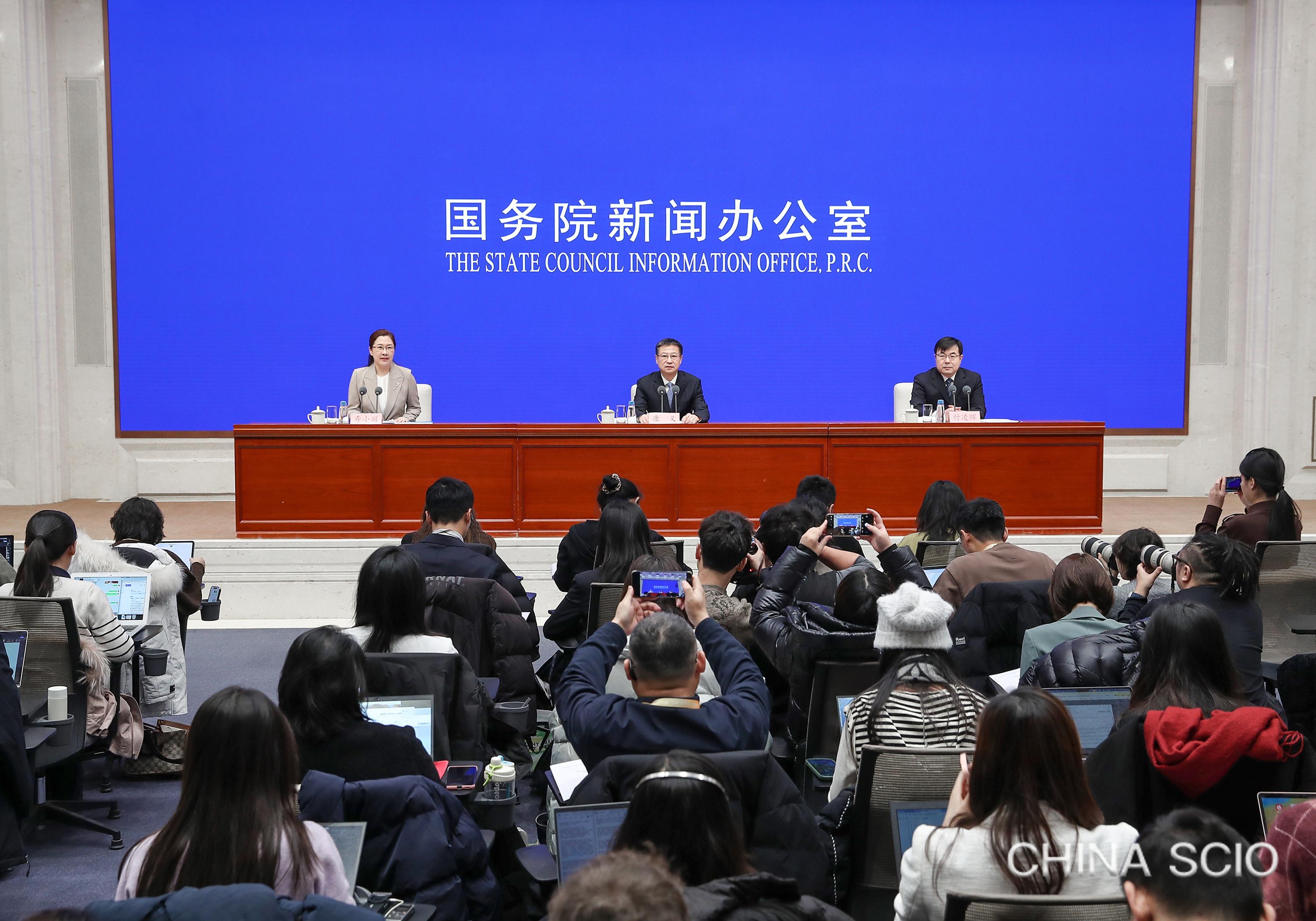
/4 Group photo
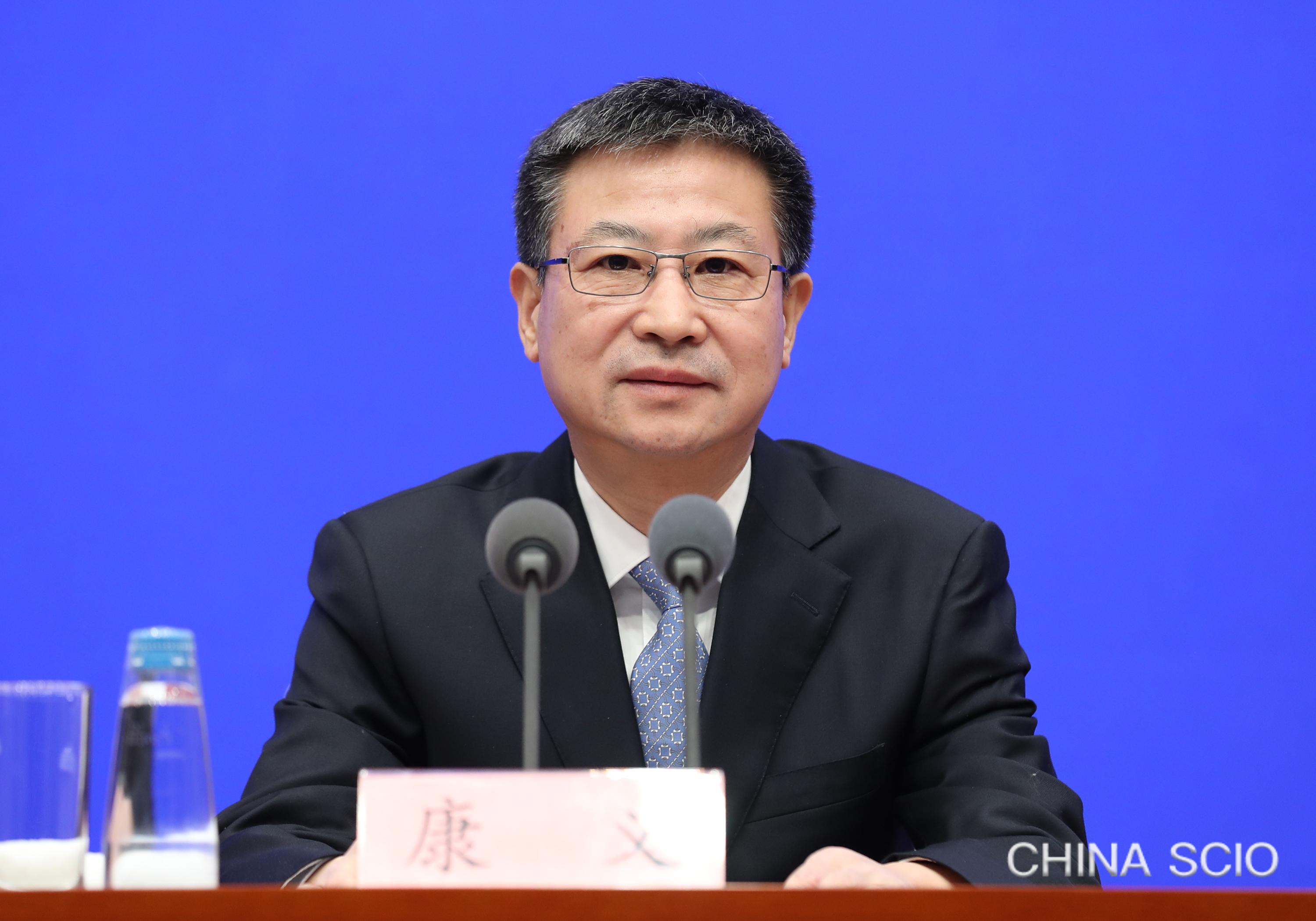
/4 Kang Yi
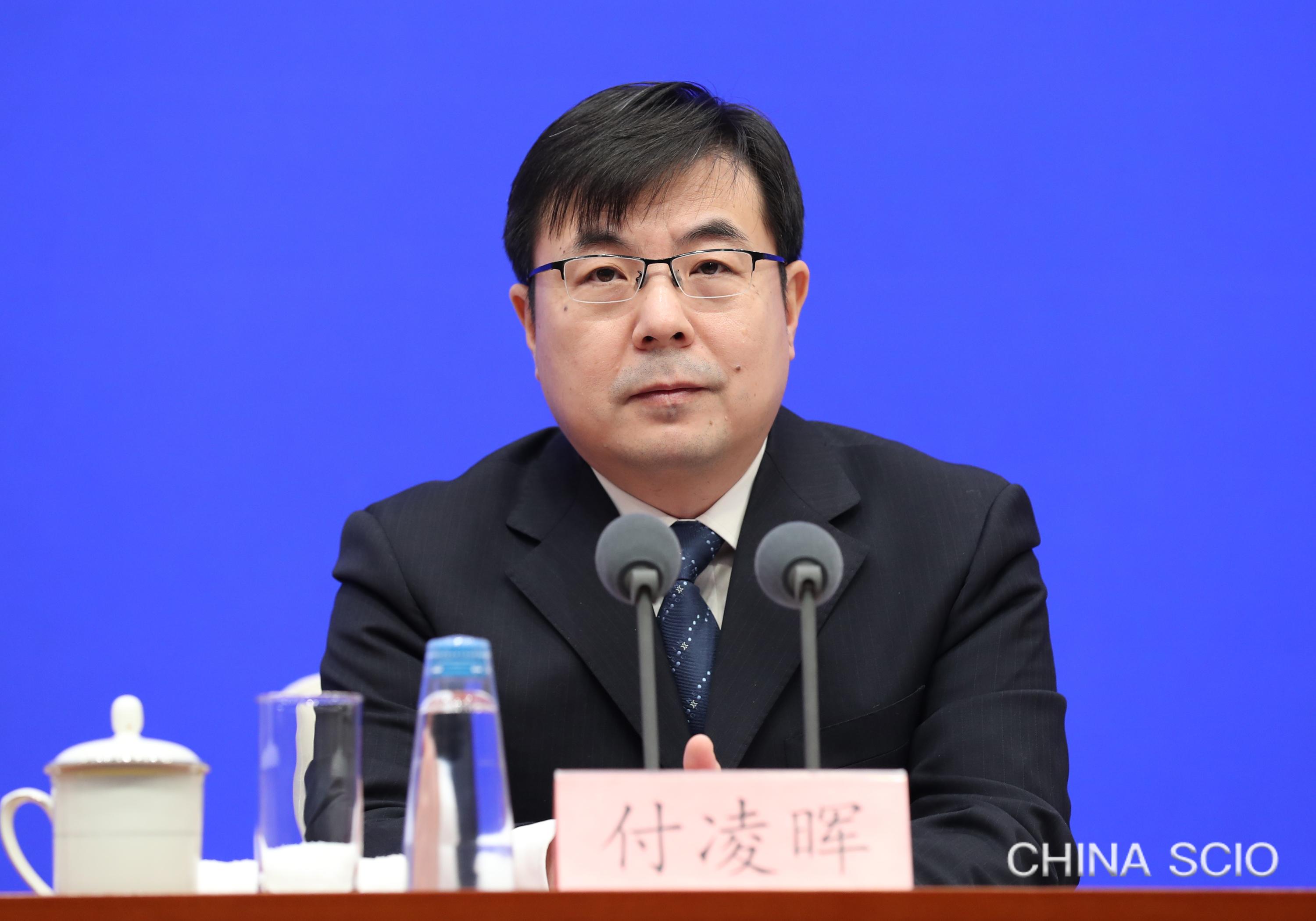
/4 Fu Linghui
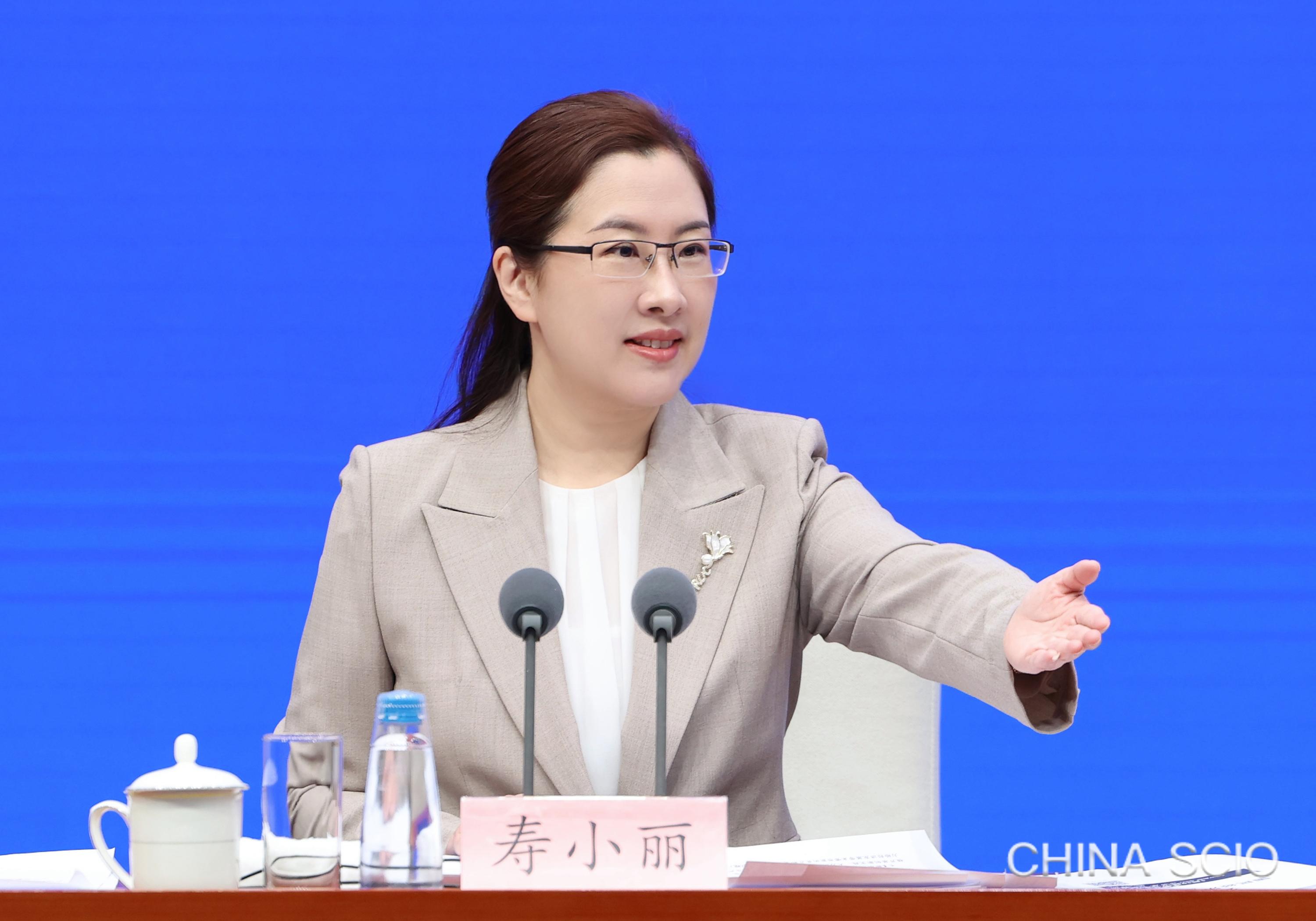
/4 Shou Xiaoli
SCIO briefing on China's import and export in 2025
SCIO briefing on preparations for the 6th Asian Beach Games Sanya 2026
January 12, 2026SCIO briefing on progress in accelerating the construction of the national water network
January 9, 2026