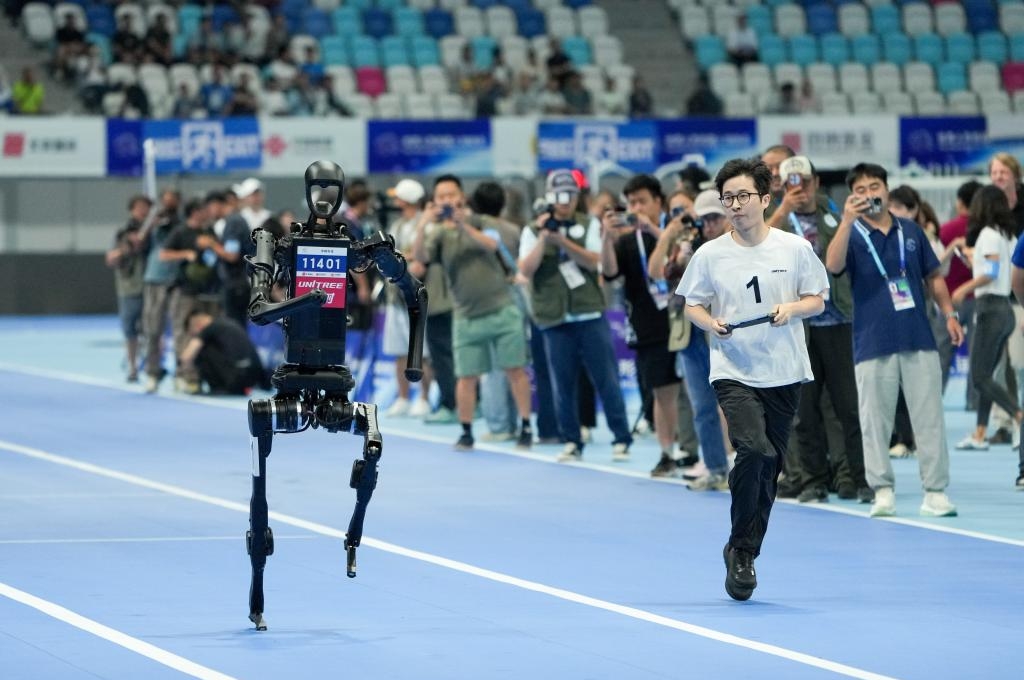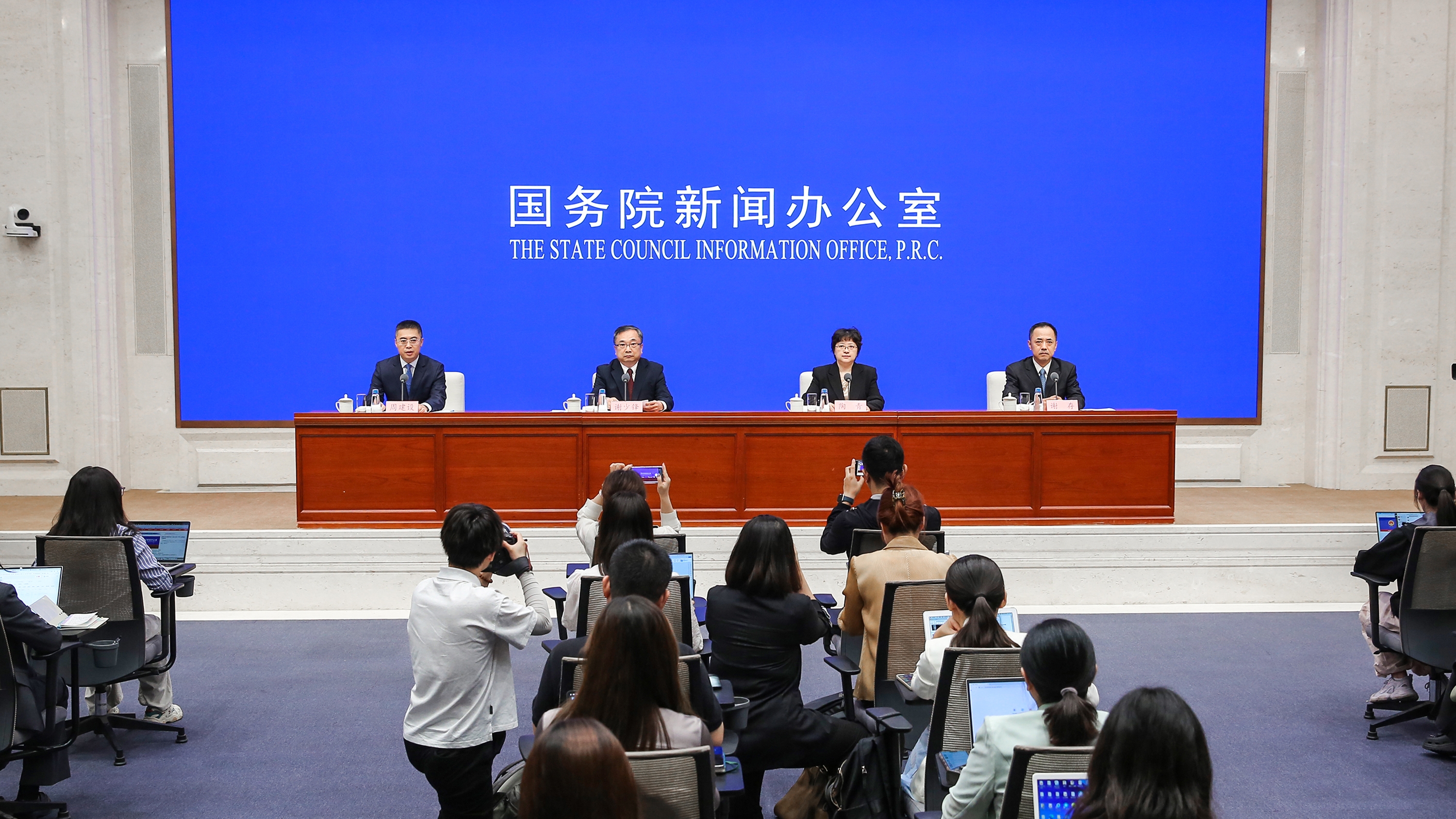

SCIO briefing on development of industry and information technology in the first half of 2025
Beijing | 3 p.m. July 18, 2025
Speakers

Xie Shaofeng, chief engineer of the Ministry of Industry and Information Technology (MIIT)
Tao Qing, spokesperson of the MIIT and director general of the Bureau of Operation Monitoring and Coordination of the MIIT
Xie Cun, director general of the Information and Communications Development Department of the MIIT
Chairperson
Speakers:
Mr. Xie Shaofeng, chief engineer of the Ministry of Industry and Information Technology (MIIT)
Ms. Tao Qing, spokesperson of the MIIT and director general of the Bureau of Operation Monitoring and Coordination of the MIIT
Mr. Xie Cun, director general of the Information and Communications Development Department of the MIIT
Chairperson:
Mr. Zhou Jianshe, deputy director general of the Press Bureau of the State Council Information Office (SCIO) and spokesperson of the SCIO
Date:
July 18, 2025
Zhou Jianshe:
Ladies and gentlemen, good afternoon. Welcome to this press conference held by the State Council Information Office (SCIO). Today's conference is a routine release of economic data. We have invited Mr. Xie Shaofeng, chief engineer of the Ministry of Industry and Information Technology (MIIT), to brief you on China's development of industry and information technology in the first half of 2025 and take your questions. Also joining us today are Ms. Tao Qing, spokesperson of the MIIT and director general of the Bureau of Operation Monitoring and Coordination of the MIIT; and Mr. Xie Cun, director general of the Information and Communications Development Department of the MIIT.
Now, I'll give the floor to Mr. Xie for his introduction.
Xie Shaofeng:
Ladies and gentlemen, good afternoon. First, I would like to thank you for your continued interest in and support for the development of the industry and information technology sector. In the first half of this year, faced with a more severe and complex external environment, under the strong leadership of the Central Committee of the Communist Party of China (CPC) with Comrade Xi Jinping at its core, the industrial and information technology system earnestly implemented the decisions and arrangements of the CPC Central Committee and the State Council. Upholding the general principle of pursuing progress while maintaining stability, we have focused on implementing the requirements of stabilizing employment, supporting enterprises, ensuring smooth market operations and strengthening expectations. We have focused on central-local governmental coordination, enhanced inter-departmental collaboration and government-enterprise cooperation. The development of industry and information technology has maintained a sound momentum. New-type industrialization is accelerating, innovation vitality among enterprises continues to be released, and high-quality development has achieved solid results. The sector is moving toward stability, innovation and excellence, laying a solid foundation for achieving the annual targets. Specifically, there are three features.
First, the industrial and information technology sectors have maintained stable operations. Key economic indicators have grown steadily in terms of both scale and growth. In the first half of the year, the added value of industries above designated size increased by 6.4% year on year, showing strong resilience based on a good start in the first quarter. The added value of the manufacturing industry accounted for 25.7% of GDP, remaining largely stable. We accelerated the construction of major engineering projects under the 14th Five-Year Plan, launched large-scale equipment renewal and technological transformation in the manufacturing industry, and saw a 7.5% year on year increase in manufacturing investment. We have strengthened the implementation of enterprise-support policies, cultivated high-quality enterprises and provided assistance to enterprises in difficulty. Market entities have further expanded. In the first five months, the number of industrial enterprises above designated size reached 520,000, an increase of more than 8,000 compared to the end of last year. Profits of manufacturing enterprises above designated size increased by 5.4% year on year. Digital technologies such as 5G and large AI models have developed rapidly. The digital industry's business revenue increased 9.3% year on year, which was 3.4 percentage points higher than the same period last year.
Second, the integration of scientific and industrial innovation has accelerated. We have firmly prioritized high-quality development and new-type industrialization, and promoted the integrated development of all aspects in industrial and information work. We have enhanced innovation and development through integration, continuously fostering new momentum and advantages for development. Innovative applications are being implemented more rapidly. The independently developed AG600 large amphibious firefighting aircraft received its type certificate and production certificate from the Civil Aviation Administration of China. Humanoid robot training centers and datasets are now in operation, with over 5.5 million open-source training data entries being released to accelerate multi-sector applications. Production of industrial and service robots increased by 35.6% and 25.5% year on year, respectively. The scale of the transformation of sci-tech achievements continues to grow. In the first half of the year, nearly 410,000 technology contracts were registered nationwide, with transaction value exceeding 3 trillion yuan, a 14.2% year on year increase. The construction of industrial innovation platforms continues to advance. By the end of June, a total of 33 national-level manufacturing innovation centers had been established, and 241 pilot platforms had been included in the key cultivation bases. China's domestically developed and open-source large AI models are increasingly being applied in industries such as electronics, raw materials and consumer goods, giving rise to new models and business formats. Over 100 types of AI-powered devices — such as AI smartphones, AI computers and AI glasses — have been launched, becoming new drivers of economic growth.
Third, industrial transformation and upgrading has accelerated. We are actively optimizing industrial structures and promoting high-end industry development. In the first half of the year, the added value of equipment manufacturing enterprises above designated size contributed 3.4 percentage points to the overall growth of industrial value-added, accounting for 35.5%, which was a 0.9 percentage point increase year on year. The added value of high-tech manufacturing industries above designated size increased by 9.5% year on year, contributing 23.3% to the overall growth of industries above designated size. Digital transformation is gaining momentum. We designated 26 new pilot cities for new-generation technical transformation in the manufacturing industry and supported 35 more cities in launching digital transformation initiatives for SMEs. Digitalization initiatives have been accelerated in industries such as electronic information, power equipment, light industry, petrochemicals, steel, nonferrous metals and building materials. Industrial green and low-carbon development continues to yield tangible results. Green development is cultivating new growth drivers, with green factories at the national level now accounting for over 20% of total manufacturing output. Energy consumption per unit of industrial added value continues to decline. Positive progress has also been made in industry governance. Seventeen automobile manufacturers have committed to limiting payment terms to no more than 60 days. Profitability has improved in the steel and cement industries. The photovoltaic industry is also witnessing steady improvements in overall technological standards.
Currently, external conditions have become more complex and uncertain, structural contradictions within certain industries have become more pronounced, and some enterprises continue to face operational and production difficulties. However, we must also recognize that various supportive policies are continuing to take effect and reform measures are being rolled out at an accelerated pace. As a result, the certainty in China's high-quality economic development is steadily strengthening, and the fundamentals supporting a stable industrial economy remain unchanged. Moving forward, we will resolutely implement the decisions and directives of the CPC Central Committee, adhere to a people-centered approach, and focus on doing our own work well. We will ensure the stable operation of the industrial economy and earnestly promote the integrated development of scientific and technological innovation with industrial innovation. We will also advance the construction of a unified national market and facilitate the optimization and upgrading of the industrial structure. We will enhance the resilience and security of industrial and supply chains. Using market-oriented thinking and rule-of-law principles, we will strengthen industry governance and accelerate the orderly withdrawal of outdated production capacity. Furthermore, we will continuously improve the quality and efficiency of the industrial economy to make greater contributions to promoting economic recovery and growth and achieving high-quality completion of annual targets and tasks.
That concludes my introduction. Next, my colleagues and I will be happy to take your questions. Thank you.
Zhou Jianshe:
Thanks, Mr. Xie, for your introduction. The floor is now open for questions. Please identify the media outlet you represent before asking your question.
_ueditor_page_break_tag_Jimu News:
How did the information and communications industry perform in the first half of the year? What progress was achieved? What are the key priorities for accelerating the industry's development moving forward?
Xie Shaofeng:
Thank you. My colleague Mr. Xie Cun will answer your questions.
Xie Cun:
Thank you for your questions. Since the beginning of this year, the MIIT has adhered to the general working principle of seeking progress while maintaining stability and has steadily promoted the high-quality development of the information and communications industry. In the first half of the year, telecommunications service revenues in China totaled 905.5 billion yuan, up 9.3% year on year, reflecting stable performance across the sector. The main characteristics are as follows.
Network capabilities have been enhanced. By the end of June, China's total number of 5G base stations had reached 4.55 million, with 1.118 billion 5G mobile subscribers, representing a user penetration rate exceeding 79%. The number of ports with gigabit network service capabilities totaled 30.22 million, while gigabit broadband users reached 226 million. The first batch of 10-gigabit optical networks has been installed in 168 communities, factories and industrial parks across the country. As of the end of March, China had 10.43 million standard computing power racks in use, with intelligent computing power reaching 748 EFLOPS, providing an intelligent foundation for massive data computing.
Integrated applications have become more advanced. Since the beginning of this year, emerging services such as 5G New Calling, livestreaming short videos and cloud gaming have flourished, while large language model apps have developed in tandem with AI-powered smart terminals. Digital consumption demand continues to grow, with mobile user internet traffic achieving double-digit growth for six consecutive months. 5G integrated applications have been incorporated into 86 of the 97 major categories of the national economy. More than 18,500 5G+industrial internet projects have been built.
Inclusive services have become more convenient. This year marks the 10th anniversary of China's universal telecommunications service program. Through a decade of implementation, we have connected all Chinese villages to broadband internet and achieved 5G coverage in all rural townships nationwide. Currently, over 90% of administrative villages have 5G access. Focusing on public concerns and expectations, we launched a series of initiatives to provide practical services in the information and communications sector. For example, we completed accessibility and age-friendly improvements to over 3,000 websites and apps for older users. We also organized more than 400,000 digital classes for older adults, helping them enjoy a more comfortable digital life. Online processing now accounts for over 91% of telecom services. Nationwide, 45,000 business outlets provide cross-jurisdictional services, covering all districts and counties to make services more convenient.
Opening up has become more pragmatic. We have steadily and systematically implemented pilot programs to expand market access for value-added telecom services. We have issued guidelines for the first batch of pilot areas, strengthened communication and coordination with foreign-funded enterprises, and so far, 40 foreign-funded enterprises have received relevant approvals. The cumulative number of foreign-invested telecom enterprises in China has exceeded 2,600, up 27% compared to the same period last year. This fully demonstrates the growing attraction of China's telecom market to foreign investment.
Looking forward, our department will continuously promote development, application and research to further drive the high-quality development of the information and communications industry. We will focus on network construction and upgrading, enhance the depth and breadth of 5G and gigabit optical network coverage, and accelerate the pilot deployment of 5G-A and 10-gigabit optical networks. We will deepen a special campaign to upgrade network signals and accelerate the construction of a national integrated computing power network system. Moreover, we will focus on application implementation and promotion. We will thoroughly implement the upgraded action plan for large-scale 5G applications, 5G+ industrial internet projects, and a three-year action plan for the industrial internet identifier resolution system. We will also promote the collaborative integration of the industrial internet and AI. We will drive technological innovation and breakthroughs, enrich the 5G-A product portfolio, deploy high-quality networks, accelerate research and development into 6G technology, and unveil a forward-looking plan to cultivate an industry ecosystem for 6G applications. We will also strengthen research and implementation of opening-up policies, systematically expand foreign access to value-added telecom services, and support increased foreign participation in pilot programs through policy promotion, service optimization, and streamlined management. Thank you.
_ueditor_page_break_tag_National Business Daily:
At present, the MIIT is accelerating the construction of multi-tiered cultivation systems for pilot-scale testing platforms in the manufacturing industry. Could you please introduce the efforts made in this aspect? Going forward, what measures will the MIIT take to promote the deep integration of sci-tech innovation and industrial innovation through pilot-scale testing platforms? Thank you.
Xie Shaofeng:
Thank you for your questions and interest in the pilot-scale testing platforms. Pilot-scale testing is a transitional test that transforms samples in the trial production stage into a real production process. It is the "midpoint" on the way to ensuring a smooth transition from technological innovation to market application. The industrial pilot-scale testing capabilities determine industrial technological innovation to a certain extent, as well as the integration of technological innovation and industrial innovation. We have conscientiously implemented the decisions and deployments of the CPC Central Committee and the State Council, focused on policies, standards, platforms, industries and factors, and accelerated the promotion of the innovative development of pilot-scale testing in the manufacturing industry. In terms of policies, we have issued implementation guidelines on the innovative development of pilot-scale testing in the manufacturing industry, and released guidelines for the construction of pilot-scale testing platforms in the manufacturing industry as well as key points on the construction of pilot-scale testing platforms in the manufacturing industry. In terms of standards, we have established a pilot-scale testing standards committee for the manufacturing sector and compiled guidelines for the construction of the standard system. In terms of carrying out work, we have encouraged more than 20 provinces and cities to issue more than 40 special policies, and initially established a work system with cooperation between ministries and provinces and the extensive participation of industry backbone forces.
The pilot-scale testing platform in the manufacturing industry is an important carrier for exporting pilot-scale testing service capabilities and an important focus for promoting pilot-scale testing work in the manufacturing industry. We are accelerating the cultivation of pilot-scale testing platforms in accordance with the concepts of scientific layout, multi-tiered cultivation, standard guidance and network services. Currently, we are mainly focused on six key areas that are urgently needed for national strategies and industrial development, including raw materials, equipment manufacturing, consumer goods, information technology, emerging and future industries, and generic technologies, in order to accelerate the construction of a pilot-scale testing service network in the manufacturing industry and promote the connectivity of pilot-scale testing resources. We have included more than 2,400 pilot-scale testing platforms in the reserves and selected 241 as the first batch of key cultivation targets. We will strive to cultivate more than five national-level pilot-scale testing platforms in the manufacturing sector by the end of this year.
Going forward, we will focus on three aspects to improve pilot-scale testing capabilities so as to empower the deep integration of technological innovation and industrial innovation. First, we will focus on industry layout. We will strengthen the regional characteristics and supporting role of pilot-scale testing platforms through targeting innovative achievement sources and industrial development clusters. Second, we will focus on service efficiency. We will guide pilot-scale testing platforms to enhance service capabilities, release high-level pilot-scale testing platform directories and public service resource lists, and accelerate the open sharing of pilot-scale testing resources. Third, we will focus on the transformation of achievements. We will support the construction and development of pilot-scale testing platforms through multiple channels, accelerate the engineering breakthroughs and industrial application of scientific and technological achievements, and speed up the formation of new quality productive forces. Thank you.
_ueditor_page_break_tag_Daxiang News:
Could you introduce the overall situation regarding the development of China's equipment manufacturing industry in the first half of this year? In which fields have there been new highlights and breakthroughs? Going forward, what measures will be taken to further support the high-quality development of the equipment manufacturing industry? Thank you.
Xie Shaofeng:
I would like to invite Ms. Tao to answer your questions.
Tao Qing:
Thank you for your questions. In the first half of this year, China's equipment manufacturing industry maintained good growth momentum, accounting for 35.5% of the value added of industrial enterprises above designated size. It has fully played the role of a stabilizer in industrial development, showing a development trend of improving both quantity and quality, and striving both in excellence and innovation.
Looking at the overall situation of the industry, both production and profits are growing well. The value added of equipment manufacturing increased by 10.2% yearon year, driving industrial enterprises above designated size to increase by 3.4 percentage points. From January to May, profits from the equipment manufacturing industry increased by 7.2% year on year, driving the profit growth of all industrial enterprises above designated size by 2.4 percentage points. Both production and sales of key products are booming. The output of most key monitored products increased year on year, among which railway passenger and freight transport vehicles, special packaging equipment, and charging piles all achieved relatively rapid growth. The cumulative decline in the producer price index (PPI) for five industries narrowed or remained flat from January to May, and the export price index of the equipment manufacturing industry has risen for two consecutive months. Investment in key industries has been on an upward trajectory. Fixed asset investment in manufacturing sectors, such as the railways, shipping, aerospace and other transportation equipment, automobiles and general equipment, achieved double-digit growth. Driven by intensified efforts to promote large-scale equipment renewals and consumer goods trade-ins, investment in the purchase of equipment and tools increased by 17.3% yea on year, with a growth rate 14.5 percentage points higher than the national fixed asset investment, contributing 86% to total investment growth.
There has been a steady flow of major technological breakthrough products, showcasing the vitality of high-quality development across various fields.
First, let's take a look at the achievements in the aerospace field. Aviation equipment has reached new heights of development. The AG600 large amphibious firefighting aircraft has obtained its type certificate and production license from the Civil Aviation Administration of China (CAAC); and the AS700D, the first independently developed electric manned airship, completed its maiden scientific research flight. There are 809 companies registered in the civil unmanned aerial vehicle (UAV) product information system, with over 3.74 million products, playing an important role in emergency rescue, agriculture and forestry protection, and logistics distribution.
Next, let's look at what's happening on the ground. China's automotive industry continues to maintain rapid growth. In the first half of the year, automobile production reached 15.621 million units, up 12.5% year on year, while sales reached 15.653 million units, up 11.4% year on year. Among them, production of new energy vehicles (NEVs) reached 6.968 million units, up 41.4% year on year, while sales hit 6.937 million units, rising 40.3% year on year. NEVs accounted for 44.3% of total new car sales, with cumulative exports totaling 1.06 million units, up 75.2% year on year.
Finally, looking at developments in the maritime sector, the shipbuilding industry is setting new benchmarks for growth. In the first half of the year, the Adora Magic City, China's first domestically built large cruise ship, welcomed over 470,000 tourists. Construction of the second large cruise ship, the Adora Flora City, is progressing smoothly, with the vessel successfully floated and overall construction now 78% complete. Additionally, China delivered its first domestically built 16,000-TEU (twenty-foot equivalent unit) methanol dual-fuel container ship. By deadweight tonnage, China accounted for 51.7% of global ship completions, 68.3% of new orders, and 64.9% of orders on hand.
Looking ahead, we will concentrate on two major actions to drive high-quality development in the equipment manufacturing sector. First, we will launch a new round of growth stabilization measures. We will soon roll out action plans for stabilizing growth across the machinery, automotive and power equipment industries. These plans will boost quality supply capacity, optimize the industrial development environment, and drive effective quality upgrades while appropriately expanding economic output. Second, we will implement initiatives for smart and green transformation. We will release a digital transformation plan for the auto industry. We will also implement digitalization strategies for the machinery and power equipment sectors. Additionally, we will introduce green development guidelines for the aviation and shipbuilding industries. Meanwhile, we will accelerate the development of smart equipment, promote intelligent factories at all levels, and build smart service ecosystems to advance the digital and green development of the equipment manufacturing industry. Thank you.
_ueditor_page_break_tag_Xinhua Finance:
In the first half of the year, several digital transformation initiatives were launched across key consumer goods industries, including light industry, pharmaceuticals, food and textiles. Could you share how these industries have developed during this period? What notable achievements have these industries made in their digital transformation? Thank you.
Xie Cun:
Thank you for your questions. We appreciate your interest in the transformation and upgrading of traditional industries like consumer goods manufacturing. The consumer goods industry is one of China's traditional competitive advantages and serves as a vital sector for people's livelihoods. In the first half of this year, consumer goods enterprises above the designated size accounted for 27.1% of total industrial value added and 25.1% of total export delivery value, playing an important role in meeting consumer demand, driving economic growth and expanding exports.
To accelerate digital transformation in this sector, we have identified and published 213 case studies demonstrating increased product variety, improved quality, and enhanced brand building in the smart home and smart health care fields. We have also supported 463 technology renovation projects in the consumer goods sector through ultra-long-term special-purpose treasury bonds. These efforts have yielded significant results in digitalizing the industry. In terms of high-end development, by mid-year, the adoption rate of digital R&D tools among light industry enterprises above the designated size reached 86.2%. At the same time, digital business management systems achieved an 82.3% adoption rate. Improvements in technology integration and flexible manufacturing have laid a solid foundation for the large-scale production of high-value-added products. For instance, domestically produced smart toilets have undergone significant upgrades in function and quality and now account for over 60% of global sales. These high-quality, competitively priced products have enabled the domestic sanitary ware industry to successfully reverse course from relying on overseas purchases to driving export sales. In terms of intelligent transformation, with the application of new technologies such as AI and big data in the pharmaceutical industry, we have seen the emergence of numerous intelligent pharmaceutical production lines and smart drug manufacturing facilities. Some AI-powered pharmaceutical companies have significantly shortened drug development cycles by shifting from trial-and-error methods to precision-driven R&D. In terms of green development, by mid-year, the numerical control rate of key processes in textile companies above the designated size had reached 65.6%, and the penetration rate of digital R&D and design tools came in at 84.3%. With improvements in green upgrades and digital carbon management, average carbon intensity in the textile and apparel industry has dropped by more than 14% over the past two years, reflecting growing efforts to reduce energy use and emissions.
Recently, the MIIT, together with relevant departments, released digital transformation roadmaps for the textile, light industry, food and pharmaceutical sectors. These plans identified 82 typical scenarios such as digital R&D and design, flexible manufacturing and intelligent supply chain management, and promoted targeted intelligent upgrades. Next, we will strengthen overall planning and focus on practical applications. We will identify and promote a group of replicable, scalable digital transformation solutions to address key challenges in enterprise transformation. With the goal of optimizing the ecosystem, we will cultivate a group of high-level service providers and support enterprises in shifting from purely product-based operations to integrated solutions that combine goods with value-added services, advancing the digital development of industry clusters. Additionally, by taking the lead in setting industry standards, we will accelerate the development of high-quality standards for new technologies, products and consumption models, and establish a comprehensive digital transformation standards system, enabling more Chinese standards to lead global industrial development. Thank you.
_ueditor_page_break_tag_CMG:
Data shows that industrial value added among enterprises above the designated size grew 6.4%year on year in the first half of 2025, maintaining steady performance. How do you view the current state of the industrial economy? What further measures will be taken to support industrial growth? Thank you.
Xie Shaofeng:
Thank you for your questions. Since the beginning of this year, we've fully implemented policies aimed at stabilizing employment and the economy, as well as initiatives focused on major national strategies and enhancing security capacity in key areas. We've also increased support for a new round of large-scale equipment upgrades and consumer goods trade-in programs. Working closely with local governments, we have intensified efforts in policy support, project implementation, supply-demand matching and business services. By leveraging the solid foundation, strong resilience and vibrant innovation of China's industrial economy, we have maintained steady progress. In the first quarter, the value added of industries above the designated size increased 6.5% year on year, while in the second quarter it increased 6.3% year on year, building on already high levels from last year.
First, key industries are providing strong support, with electrical machinery, automobiles, electronics, general equipment, chemicals and non-ferrous metals recording rapid growth, further increasing their contribution to the expansion of industrial enterprises above designated size. The equipment manufacturing and high-tech manufacturing industries have achieved both an increase in quantity and quality, with the value added accounting for 35.5% and 16.4% of industrial enterprises above designated size, respectively. Profits in electronics, electrical machinery, and general equipment have risen by more than 10%. Second, major industrial provinces are playing a leading role, with all 31 provinces maintaining growth in industrial value added of enterprises above designated size and achieving year-on-year increases. Among them, Fujian, Anhui, Henan, and Hunan achieved growth of more than 8%. Eight major industrial provinces posted profit growth rates higher than the national average, with Henan, Hunan, Hubei, and Jiangsu achieving double-digit growth.
At the same time, the industrial economy still confronts significant challenges in maintaining stable performance and achieving high-quality development. External uncertainties require strengthened responses, and structural problems in the industry need to be properly resolved. Moving forward, we will continue efforts to consolidate foundations, improve quality, cultivate momentum and optimize the environment, focusing on the following key tasks.
First, we will consolidate the basic foundation of the industrial economy. We will implement a new round of work plans to stabilize growth in 10 key industries, including steel, non-ferrous metals, petrochemicals and building materials. We will encourage key industries to focus on structural adjustment, supply optimization and the elimination of outdated production capacity. Specific work plans will be released successively in the near future. We will support key industrial provinces in playing a leading role through implementing supportive policies, cultivating new growth drivers, promoting industrial transformation, improving operational quality and efficiency, and responding to external risks. Through intensified efforts, we will consolidate the foundation for stable industrial economic operation.
Second, we will focus on improving development quality. We will steadily advance the integrated development of technological and industrial innovation, coordinate the advancement of industrial foundation reengineering and major technical equipment breakthroughs, continuously implement the manufacturing excellence quality project, and drive all industries toward high-end development. We will accelerate the implementation of the Artificial Intelligence Plus initiative, promote the deployment of large language models in key manufacturing sectors, and enhance intelligence levels. We will promote the construction of a green and low-carbon standards system, accelerate the comprehensive utilization of renewable resources, including power batteries, and strengthen the foundation for green development.
Third, we will continue to cultivate growth drivers. We will organize and implement major national science and technology projects and key national R&D programs, conduct targeted initiatives, cultivate new industries and create new momentum. We will also accelerate the development of the biomanufacturing and low-altitude industries. We will advance the innovative development of future industries, including humanoid robots, the metaverse and brain-computer interfaces, and strategically position China in new domains and emerging sectors.
Fourth, we will continuously optimize the development environment. We will carry out targeted campaigns to intensify efforts to resolve the problem of payment arrears to SMEs, reduce burdens on businesses, and effectively enhance their sense of gain. We will strengthen the role of standards to support and guide technological progress as well as industrial optimization and upgrading. We will enhance capacity monitoring and early warning systems, promote industry self-discipline, and optimize the development ecosystem. We will continue to improve regular communication and exchange mechanisms with enterprises and the closed-loop problem-solving mechanism, thereby strengthening their development confidence. Thank you.
_ueditor_page_break_tag_CNR:
We have noticed that since the beginning of this year, the MIIT, in conjunction with multiple departments, has issued a series of documents on the high-quality development of industries, including copper, aluminum and gold. Could you please introduce the overall development situation of China's non-ferrous metal industry in the first half of this year? And what positive impacts will the introduction of these measures have on industry development? Thank you.
Tao Qing:
Thank you for your questions. Non-ferrous metals have prominent strategic value and widespread applications. They are both basic materials supporting the development of industries, including construction, machinery and home appliances, and key materials for enhancing the competitiveness of emerging industries such as new energy and next-generation information technology. The development prospects are very promising. In the first half of this year, the value added of the non-ferrous metal industry increased 7.6% year on year, 1.2 percentage points higher than the average growth rate of industrial value added. The output of 10 commonly used non-ferrous metals reached 40.319 million tons, an increase of 2.9% year on year. From January to May, operating income for the non-ferrous metal industry increased 15.9% year on year, while profit rose 16.9%.
To promote the high-quality development of the non-ferrous metal industry, our ministry, in conjunction with the National Development and Reform Commission and other departments, issued implementation plans for the high-quality development of the copper, aluminum and gold industries, continuously advancing the high-end, intelligent and green development of the sector. First, breakthroughs in high-end materials continue to be made. Breakthroughs have been achieved in high-end materials, including ultra-thin titanium materials and some high-purity target materials, which have been successfully industrialized for practical application. This has significantly enhanced the security of key industrial chains, including new energy and integrated circuits. Second, green and low-carbon performance has significantly improved. The proportion of internationally advanced aluminum electrolysis cells with production capacity above 500 kiloamperes has exceeded 40%. The comprehensive AC power consumption of electrolytic aluminum is 700 kilowatt-hours lower than the global average. More than 95% of copper, lead, and zinc smelting production capacity adopts green and low-carbon production processes. Third, digital transformation is accelerating. The numerical control rate of key processes increased 20% while the digitization rate of production equipment in the non-ferrous metal industry rose 10% compared to the end of 2020. Nine excellent intelligent manufacturing demonstration factories have been developed.
Next, we will continue implementing the plan for high-quality development in the copper, aluminum and gold industries. We will also issue and implement a new round of work plans for stabilizing growth in the nonferrous metal industry. We will focus our efforts on stabilizing growth and promoting transformation. In terms of stabilizing growth, we will focus on making coordinated efforts from both the supply and demand sides. This includes strengthening supply security through efficient resource utilization and improving supply quality through deep-processed materials. Additionally, we will expand demand by promoting the upgrading of bulk consumption and cultivating emerging consumer markets, thereby promoting effective improvement in quality and reasonable growth in quantity in the industry. In terms of promoting transformation, we will encourage innovation in new materials and green low-carbon process technologies in the nonferrous metal industry and build a number of green mines, green factories and green industrial parks. We will also cultivate typical use-case scenarios, benchmark factories and exemplary enterprises for digital transformation. Additionally, we will deploy and build large AI models for the nonferrous metal industry and promote the deep integration of AI with the industry. Thank you.
_ueditor_page_break_tag_Yicai:
The development of small- and medium-sized enterprises (SMEs) has drawn widespread social attention. We have noticed that the MIIT has conducted National SMEs Service Month activities for five consecutive years. Could you introduce the latest developments? What measures will be taken next to promote the healthy development of SMEs? Thank you.
Xie Shaofeng:
Thank you for your questions. SMEs are an important force in promoting innovation, boosting employment and improving people's well-being. In the first half of this year, we, together with the Ministry of Finance, supported the high-quality development of 1,241 "little giant" enterprises focusing on specialized and sophisticated technologies. We conducted development evaluations for all specialized and sophisticated SMEs and provincial-level SME authorities to continuously improve the tiered cultivation system for high-quality enterprises. By far, we have fostered more than 140,000 specialized and sophisticated SMEs, with 14,600 classified as "little giant" enterprises. At the same time, we have worked together with the State-owned Assets Supervision and Administration Commission of the State Council, the National Intellectual Property Administration, and the All-China Federation of Industry and Commerce to carry out the "100 Events for 10,000 Enterprises" program for four consecutive years. This program facilitates business matchmaking and collaboration between large enterprises and SMEs, promoting the integration of more SMEs into the innovation, industrial and supply chains of large enterprises.
The high-quality development of our SMEs relies on the support of high-quality services. As you mentioned, we have organized National SMEs Service Month activities for five consecutive years. This year, we, together with 16 departments, carried out the "Benefiting Enterprises Together" service action for SMEs. To mark the United Nations' Micro, Small and Medium-sized Enterprises Day which falls on June 27, we organized National SMEs Service Month activities in June, focusing on the pressing difficulties and problems that most concern SMEs, ensuring that more high-quality services reach enterprises directly. This year's National SMEs Service Month had four characteristics. First, there were many participants. Relevant departments, competent authorities for SMEs at all levels, and more than 1,800 public service institutions for SMEs participated in the event, forming a strong synergy. Second, we employed various service methods. We fully leveraged the role of the national SMEs service network (www.chinasme.cn), combining online and offline channels to expand both the depth and breadth of services. So far, the platform has aggregated 260 million pieces of tendering and bidding information, and the Market Opportunity section has been visited more than 23 million times. Third, the service contents were rich. A list of 42 service contents has been developed across eight key areas, including talent attraction and cultivation, as well as financing promotion, driving local authorities and service institutions to deliver extensive targeted public-benefit services. Fourth, there were excellent service outcomes. In the first half of the year, we served more than 3.6 million SMEs, trained nearly 400,000 professionals, facilitated financing intentions exceeding 51 billion yuan, generated transaction orders worth nearly 8.2 billion yuan, and secured technology transformation contracts valued at over 8.6 billion yuan.
Next, we will continue to strengthen public-benefit services in the areas that SMEs are most concerned about: policies, talent, funds, markets, innovation and compliance. We will continuously promote the high-quality development of SMEs. In terms of policy, we will study and revise the classification criteria for SMEs. We will work with the State Taxation Administration to launch a special campaign aimed at helping SMEs to access favorable tax and fee policies more conveniently. In terms of talent, we will organize training programs for leading talents in SME management and operation, and jointly with the All-China Federation of Trade Unions, carry out the Model Workers and Master Craftsmen Assistance Campaign, organizing technical service teams of model workers and master craftspeople to help SMEs solve technical problems. In terms of funding, we will promote the establishment of the second phase of the China SME Development Fund to attract more private capital for early-stage investments, small-scale investments, long-term investments and hard technology investments. We will implement the regulations on the timely payment of debts to SMEs to protect their legitimate rights and interests. In terms of innovation, we will further carry out the "100 Events for 10,000 Enterprises" program, facilitating business matchmaking and collaboration between large enterprises and SMEs. We will also continue the work of releasing lists by large enterprises so that SMEs can select and undertake key projects, promoting the entry of innovative products from SMEs into the supply chains of large enterprises. Together with the National Intellectual Property Administration, we will implement an initiative to encourage the industrial application of patents for SME growth to strengthen guidance on technological innovation for SMEs. By pooling service resources and enhancing service capabilities, we will help SMEs overcome challenges and achieve high-quality development. Thank you.
_ueditor_page_break_tag_Cover News:
Traditional industries are the focus of manufacturing transformation and upgrading. The State Council executive meeting recently reviewed and approved an action plan for advancing the green and low-carbon development of manufacturing (2025-2027). What work has the MIIT done to promote the green transformation of traditional industries? What steps will be taken to ensure effective implementation? Thank you.
Tao Qing:
Thank you for your questions. Green development forms the foundation for high-quality development in the manufacturing industry, while traditional industries are the focal point of its transformation and upgrading. Not long ago, the State Council executive meeting approved an action plan for advancing the green and low-carbon development of manufacturing (2025-2027), emphasizing that we will advance the in-depth green transformation of traditional industries. We will combine this with the implementation of policies such as large-scale equipment renewal to actively deploy advanced equipment and processes. This approach will accelerate the green transformation and upgrading of key industries.
To implement the requirements of the action plan, we will prioritize the deep green transformation of traditional industries, focusing on four key sectors: steel, non-ferrous metals, petrochemicals and building materials. We will concentrate efforts in four areas — raw materials, energy use, processes and products — to unlock the full potential for green and low-carbon development in traditional industries and promote green growth with enhanced efficiency.
In terms of expanding the use of green raw materials, the focus is on increasing the proportion of recycled resources such as scrap steel, scrap copper, and scrap aluminum in raw materials. We aim to increase their proportions to 22%, 30% and 25%, respectively, by 2027. Using recycled resources as raw materials has significant advantages in energy conservation and carbon reduction compared to primary mineral resources. For example, recycling aluminum requires only 5% to 8% of the energy and generates only about 5% of the greenhouse gas emissions of the greenhouse gas emissions of primary aluminum production.
In terms of expanding the use of green energy, accelerating hydrogen energy adoption in traditional industries is an important direction. Earlier, we jointly issued the Implementation Plan for Accelerating the Application of Clean and Low-Carbon Hydrogen in the Industrial Sector with the National Development and Reform Commission and the National Energy Administration. The plan focuses on the application of clean and low-carbon hydrogen in sectors such as metallurgy, ammonia synthesis, methanol synthesis, and petrochemical refining, accelerating the achievement of large-scale breakthroughs.
To expand the use of green manufacturing processes, our focus is on accelerating R&D into innovative processes for traditional industries. The goal is to remove the bottlenecks hindering green and low-carbon development. Examples include green hydrogen metallurgy and near-zero-carbon electric furnace steelmaking, carbon-free anode technology for aluminum electrolysis, intelligent continuous micro-reactor and green synthesis technologies in the petrochemical industry, and hydrogen or electric calcination processes for large kilns in the building materials sector.
To expand the supply of green products, our efforts will focus on delivering new materials and products with significant green and low-carbon benefits to all sectors of the economy and society. For example, the building materials industry is promoting energy-efficient glass and new types of insulation and wall materials. Meanwhile, the petrochemical industry is promoting the use of water-based coatings, inks and adhesives. Thank you.
_ueditor_page_break_tag_China Electronics News:
Recently, China's electronic information manufacturing and software and information technology services have shown strong development momentum, playing a prominent role in leading and supporting industrial economic operations. Could you tell us about the development of these industries in the first half of the year? What were the highlights and achievements? Thank you.
Xie Cun:
Thank you for your questions. The electronic information manufacturing and software and information technology services industries are key components of China's information technology sector. The synergy between software and hardware innovation is playing an increasingly prominent role in supporting economic and social digital transformation and improving people's quality of life. In the first half of the year, China's electronic information manufacturing sector showed strong resilience, characterized by steady growth, stable exports and rising profits. In the first half of the year, the value added of the computer, communications and other electronic equipment manufacturing enterprises above designated size rose 11.1% year on year, 4.7 percentage points higher than overall industrial growth in the same period. From January to May, total profits reached 216.2 billion yuan, up 11.9% year on year. The software and information technology services sector has also made solid progress, showing consistent growth, improved efficiency and enhanced capabilities. From January to May, software business revenue reached 5.58 trillion yuan, up 11.2% year on year. Total profits reached 672.1 billion yuan, rising 12.8% year on year. Revenue from cloud computing and big data services totaled 585.5 billion yuan, up 11.2% year on year.
In terms of hardware ecosystem development, breakthrough products have emerged at a rapid pace. During the first half of the year, many domestic enterprises released key world-first products in high-growth areas like security chips, high-end processors, smart terminal devices, and all-in-one AI machines. New technologies are unleashing consumption potential. Domestic manufacturers have developed over 100 AI terminal models, including AI phones, AI computers and AI glasses, continuously stimulating diverse and differentiated consumption demand. For example, during this year's "618" shopping festival, the transaction volume for AI glasses on JD.com increased sevenfold year on year. The standards system is advancing steadily, with accelerated development of open-source instruction set standards. In the first half of the year, relevant industry organizations launched 14 new standards and are currently developing 20 additional standards. Development has begun on a series of national standards for the intelligence classification of AI terminals, providing key support for the healthy and orderly development of the ecosystem.
In terms of software innovation and development, the open-source ecosystem continues to improve. DeepSeek's innovative approach, featuring software-driven solutions to overcome hardware limitations, open-source advocacy, and an ecosystem-first strategy, has energized industry-wide open-source innovation. Many tech companies have released open-source software breakthroughs, including the Cangjie programming language, the Star Ring in-vehicle operating system, and the ERNIE large language model, all of which are developing rapidly. The development of open-source communities in fields such as AI, humanoid robots, and autonomous driving has accelerated significantly. The open-source HarmonyOS ecosystem has expanded rapidly, with more than 1,200 product types now equipped with the open-source system, totaling over 1.19 billion units as of late June. The ecosystem includes more than 7.2 million developers, over 25,000 applications and meta-services, and more than 450 participating partners. Intelligent cloud computing services continued to improve, with pilot programs for intelligent cloud computing services launched in six provinces nationwide and strong developments in computing power and cloud computing industries. Eight pilot entities have been selected to play a leading demonstration role, providing AI computing resources for large model enterprises while lowering the entry barrier for small and medium-sized enterprises and innovation teams.
Moving forward, we will focus on driving the digital transformation of the electronic information manufacturing industry and promoting the high-quality development of new energy storage. We will collect exemplary audiovisual system projects in 2025 and promote model cases in smart health, elderly care products and services, and intelligent sports. We will also create new opportunities while maintaining advantages in consumer electronics products. We will promote further quality and efficiency improvements in the software and information technology services industry, organize AI and software integration initiatives, and accelerate the development of intelligent software. We will focus on creating high-quality open-source projects, advance contribution-based evaluation of open-source talent, and build a more attractive, inclusive and creative open-source ecosystem. Thank you.
Zhou Jianshe:
The last question, please.
_ueditor_page_break_tag_China Securities Journal:
Mr. Xie Shaofeng just outlined the situation regarding the national SME development fund. We know that the MIIT has done considerable work in recent years on industry-finance cooperation to promote high-quality manufacturing development. What new progress and achievements have been made so far? What measures will be taken next to strengthen financial support for new industrialization? Thank you.
Xie Shaofeng:
Thank you for your questions. In the first half of the year, we earnestly implemented the spirit of the Central Economic Work Conference and the relevant decisions and arrangements of the government work report. Working with relevant departments, local governments and financial institutions, we focused on achieving new industrialization as a key task. We have actively promoted industry-finance cooperation, supported improvements to the multitiered financial service system, and contributed to building both a strong manufacturing sector and a robust financial industry.
First, the scale of financing has further expanded. Leveraging the national industry-finance cooperation platform, more than 3,100 financial and investment institutions have focused on the urgent needs of manufacturing enterprises, launching over 800 financial products. The cumulative financing scale has exceeded 1.2 trillion yuan, with beneficiary companies each receiving an average of nearly 34 million yuan in financing support. In the first half of the year, the A-share market raised 148.8 billion yuan for enterprises in the industrial and information technology fields through initial public offerings, additional issuances and convertible bonds, a year-on-year increase of 51.6%.
Second, the policy system has been further improved. We have strengthened policy coordination with the People's Bank of China and other departments to guide more financial resources toward supporting technological innovation, advanced manufacturing, green development, and micro, small and medium-sized enterprises. We actively worked with relevant departments to develop financial policies for new industrialization. In the first half of the year, we increased the re-lending quota for technological innovation and transformation by 300 billion yuan. We studied and established new policy-based financial instruments and launched a pilot program for merger and acquisition loans aimed at tech companies, with significantly more flexible loan ratios and terms.
Third, financing products have been further diversified. Working with 23 strategic partner financial institutions, we have developed financial products and services for various key tasks of new industrialization. To support key industrial chains, we partnered with select banks to launch specialized loan products, with corporate credit loans accounting for over 42% and maximum loan terms reaching 10 years. We introduced products, including pilot testing insurance-plus-R&D loan packages and tech innovation loans, to support industrial technological innovation. For traditional industry transformation and upgrading, we launched products including green factory loans and digital transformation loans, cumulatively supporting enterprise financing of over 150 billion yuan.
Fourth, support targets have been further prioritized. We have strengthened financial services for key industrial chains by building an integrated system covering equity, loans, bonds and insurance. We have established coordination mechanisms with financial departments and launched "one city, one policy" roadshows for national industry-finance cooperation pilot cities and nationwide campaign "one month, one chain" to promote financing for specific industrial chains. Some companies have gone public or are applying for listing, with the national industry-finance cooperation platform having cumulatively supported 356.2 billion yuan in financing for key industrial chain enterprises. We have focused on strengthening financial support for the deep integration of technological innovation and industrial innovation. We supported financial institutions in developing innovation credit loan products, which facilitated 77.3 billion yuan in corporate financing. We implemented the "Integration of Science, Technology, Industry and Finance" special project, conducted roadshows in Chengdu, and promoted the inclusion of 142 "hard tech" enterprises into the IPO cultivation pipeline, with some companies now preparing for their IPOs.
Looking ahead, we will thoroughly implement the decisions and arrangements of the CPC Central Committee and the State Council regarding financial services for the real economy. We will work with relevant departments to improve financial policies supporting new industrialization and deepen industry-finance integration. First, we will focus on key industrial chains to promote innovation in products and services. This will include building a better multitiered financial system that serves entire industrial chains. Second, we need to focus on the deep integration of technological innovation and industrial innovation, thoroughly implement the "Integration of Science, Technology, Industry and Finance" special project, and strengthen the functions of the national industry-finance cooperation platform. Third, we will focus on the 66 national industry-finance cooperation pilot cities to promote pilot policies and standards. We will build these pilot cities into testing grounds, advancing the financial sector's five major tasks and supporting high-quality manufacturing development. Thank you.
Zhou Jianshe:
That concludes today's press conference. Thank you to our three speakers and to all the journalists for joining us. Goodbye, everyone.
Translated and edited by Liu Jianing, Lin Liyao, Dong Qingpei, Cui Can, Li Congrong, Xu Kailin, Yan Xiaoqing, Wang Qian, Fan Junmei, Ma Yujia, Zhang Rui, Li Huiru, David Ball, and Jay Birbeck. In case of any discrepancy between the English and Chinese texts, the Chinese version is deemed to prevail.

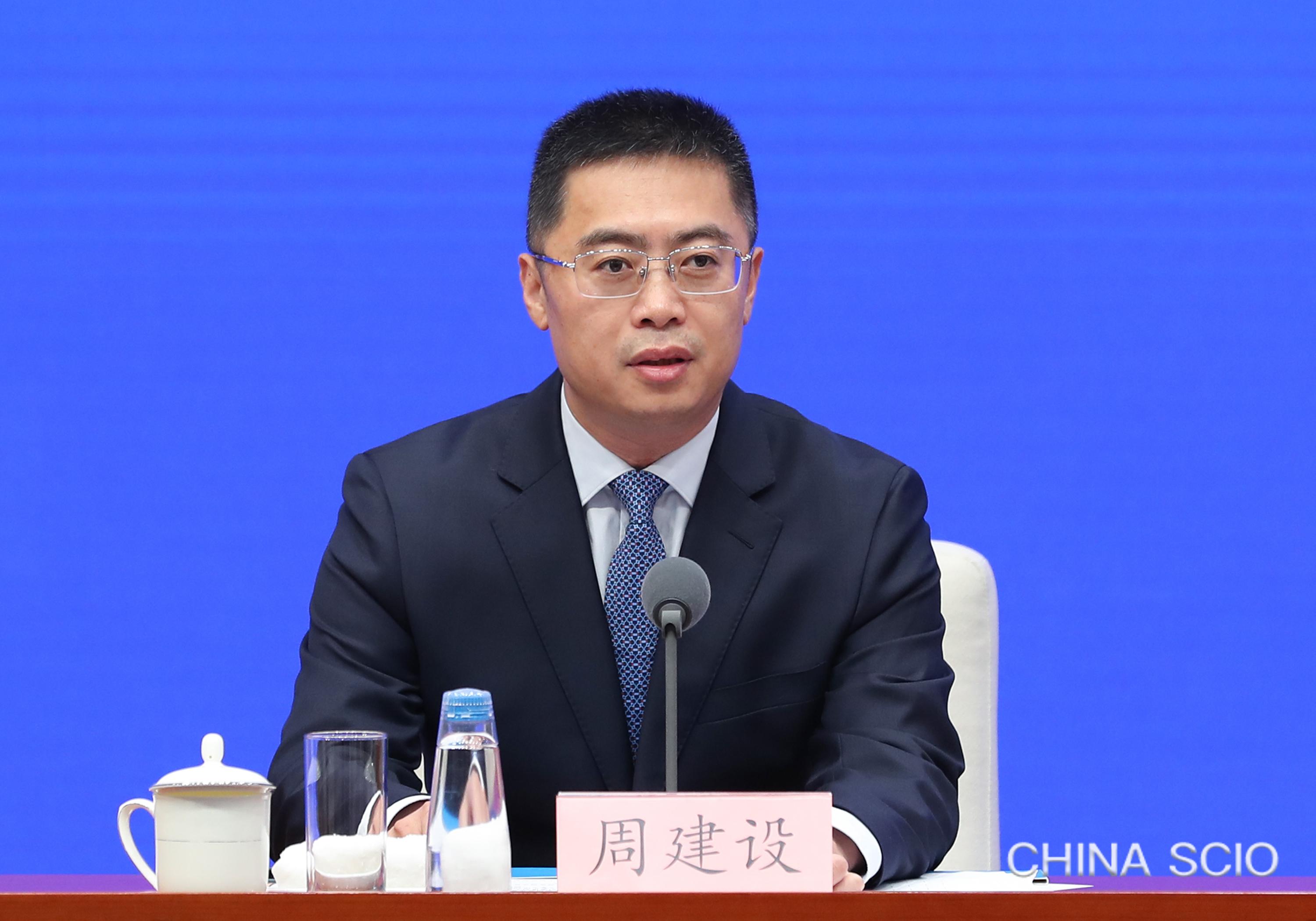
/5 Zhou Jianshe
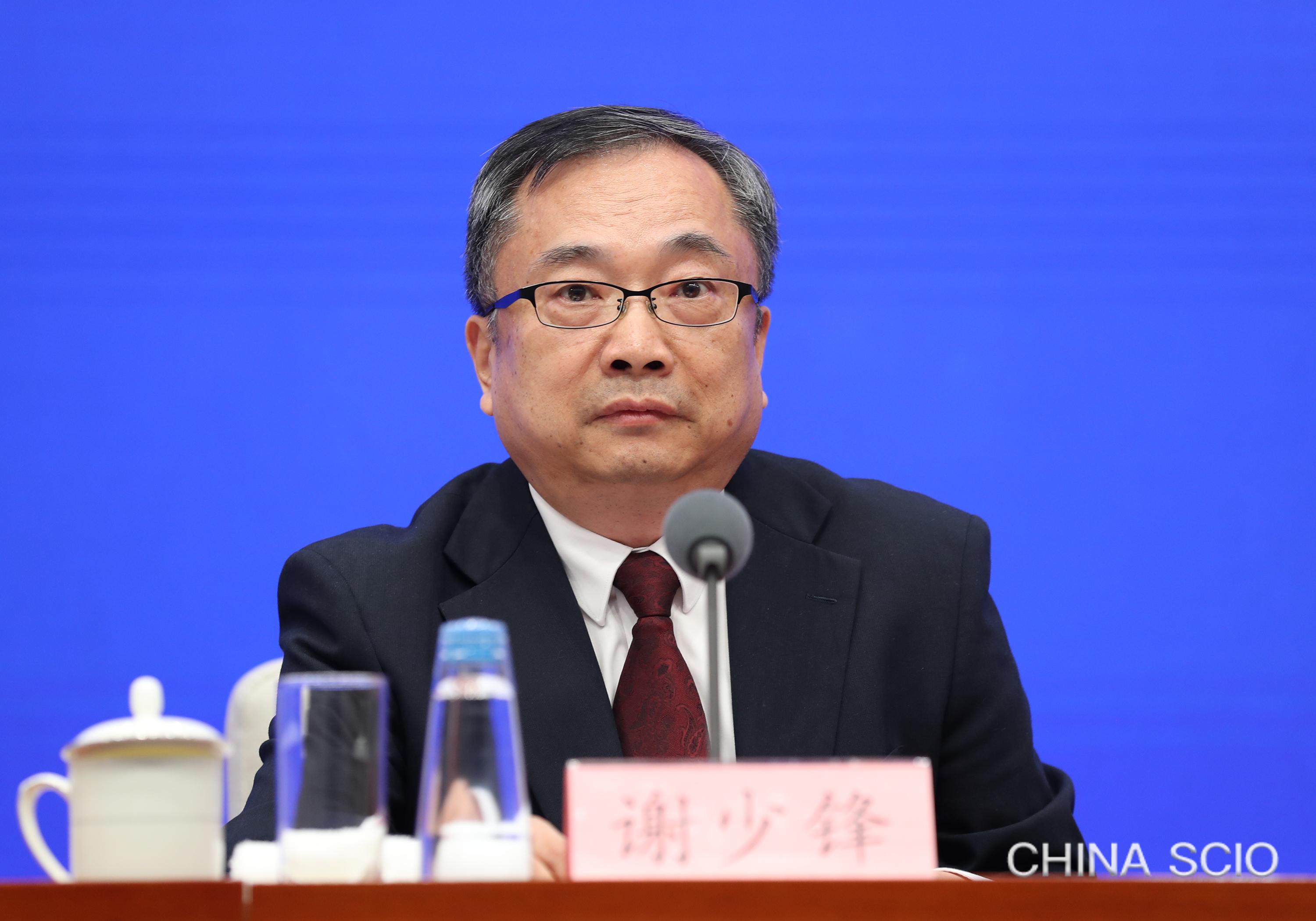
/5 Xie Shaofeng
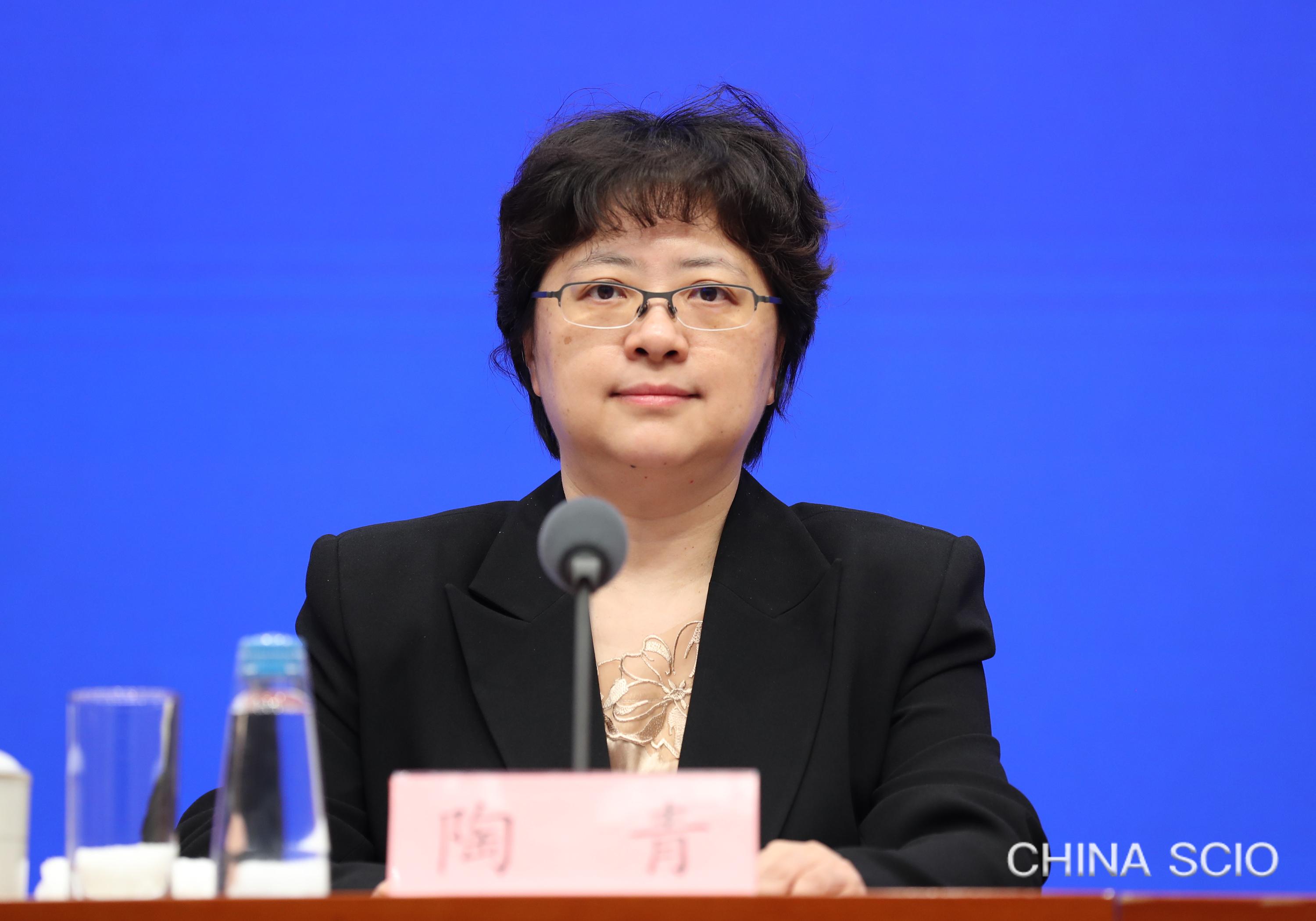
/5 Tao Qing
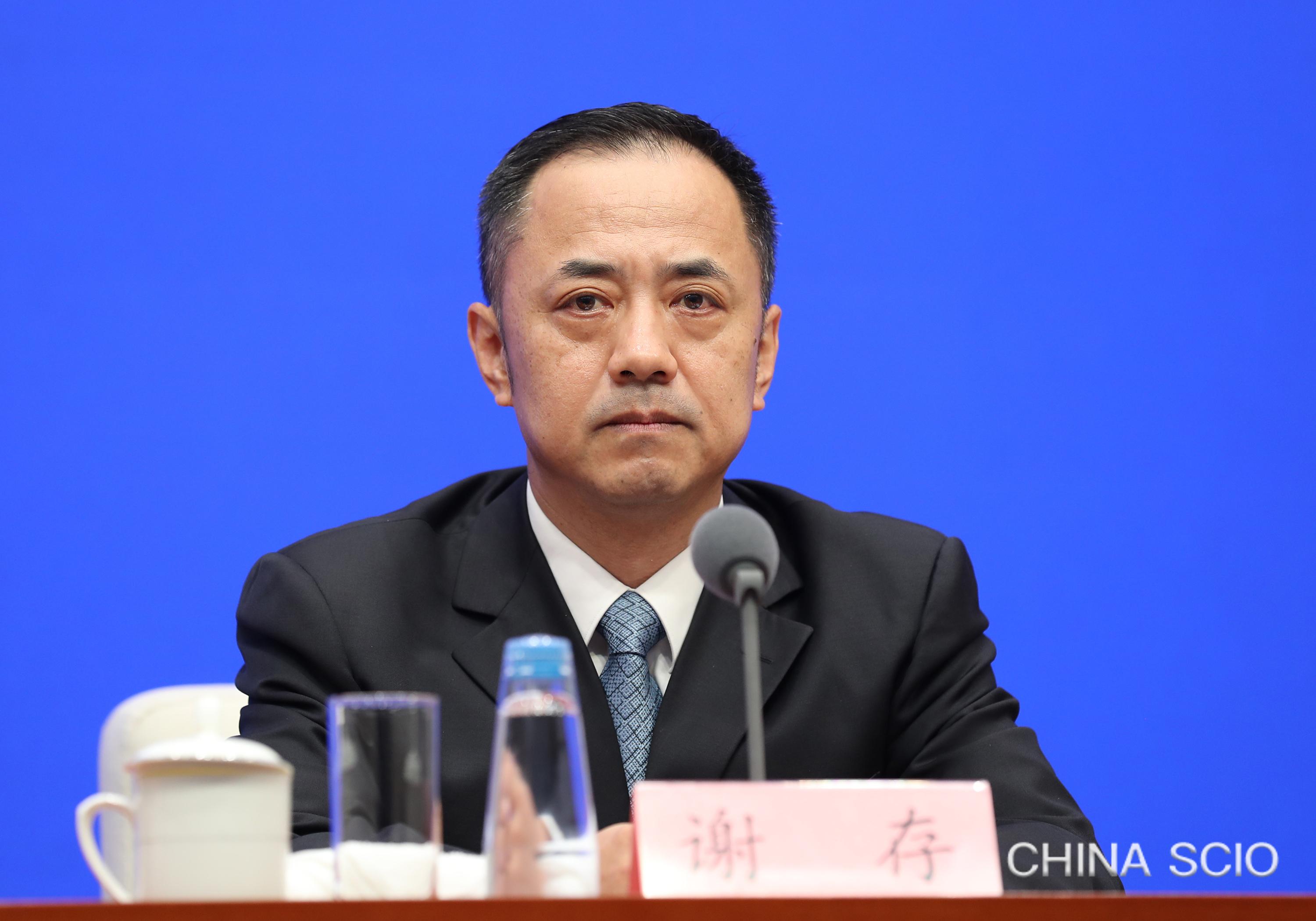
/5 Xie Cun
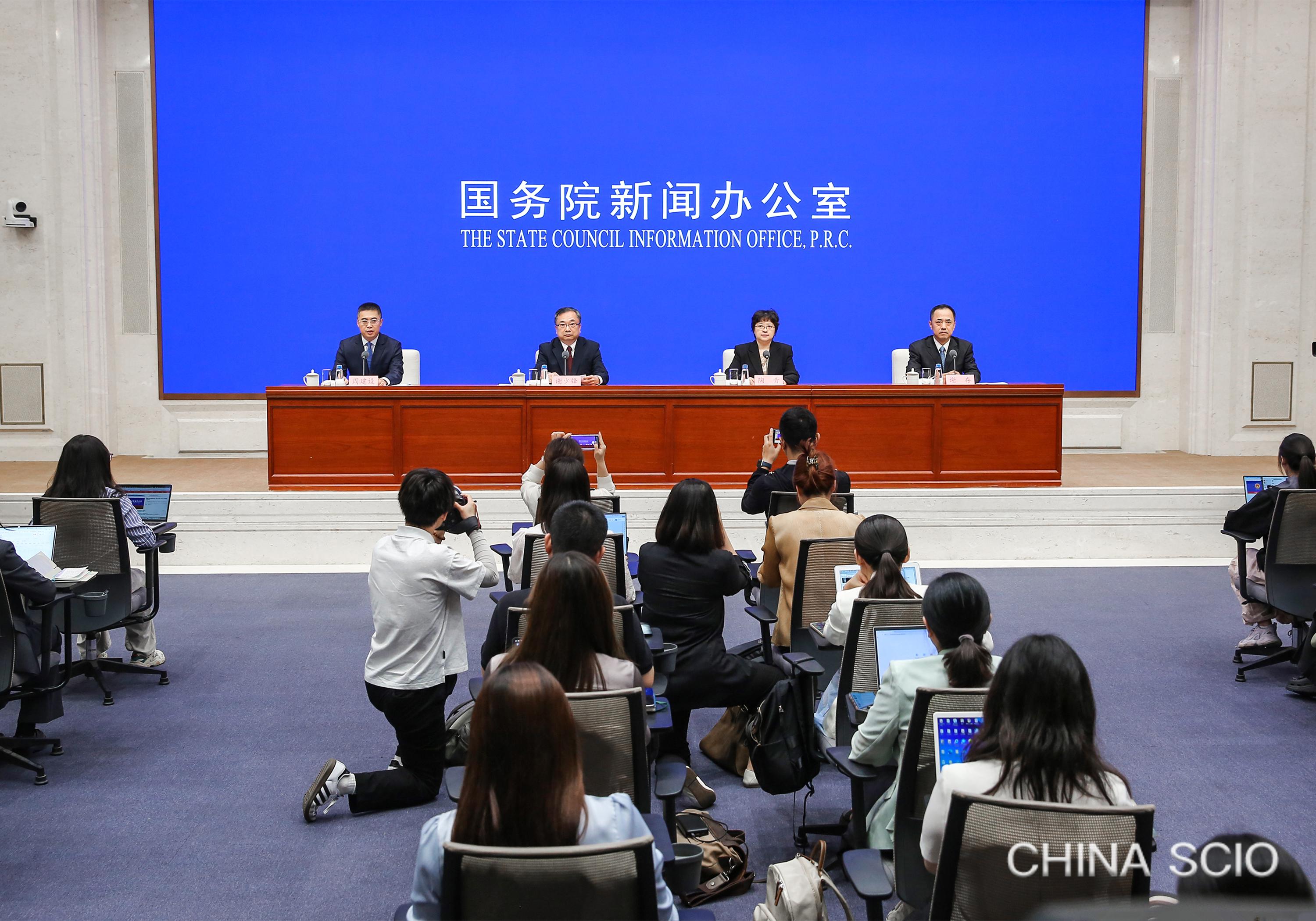
/5 Group photo
SCIO briefing on performance of agriculture and rural economy in H1 2025
July 17, 2025