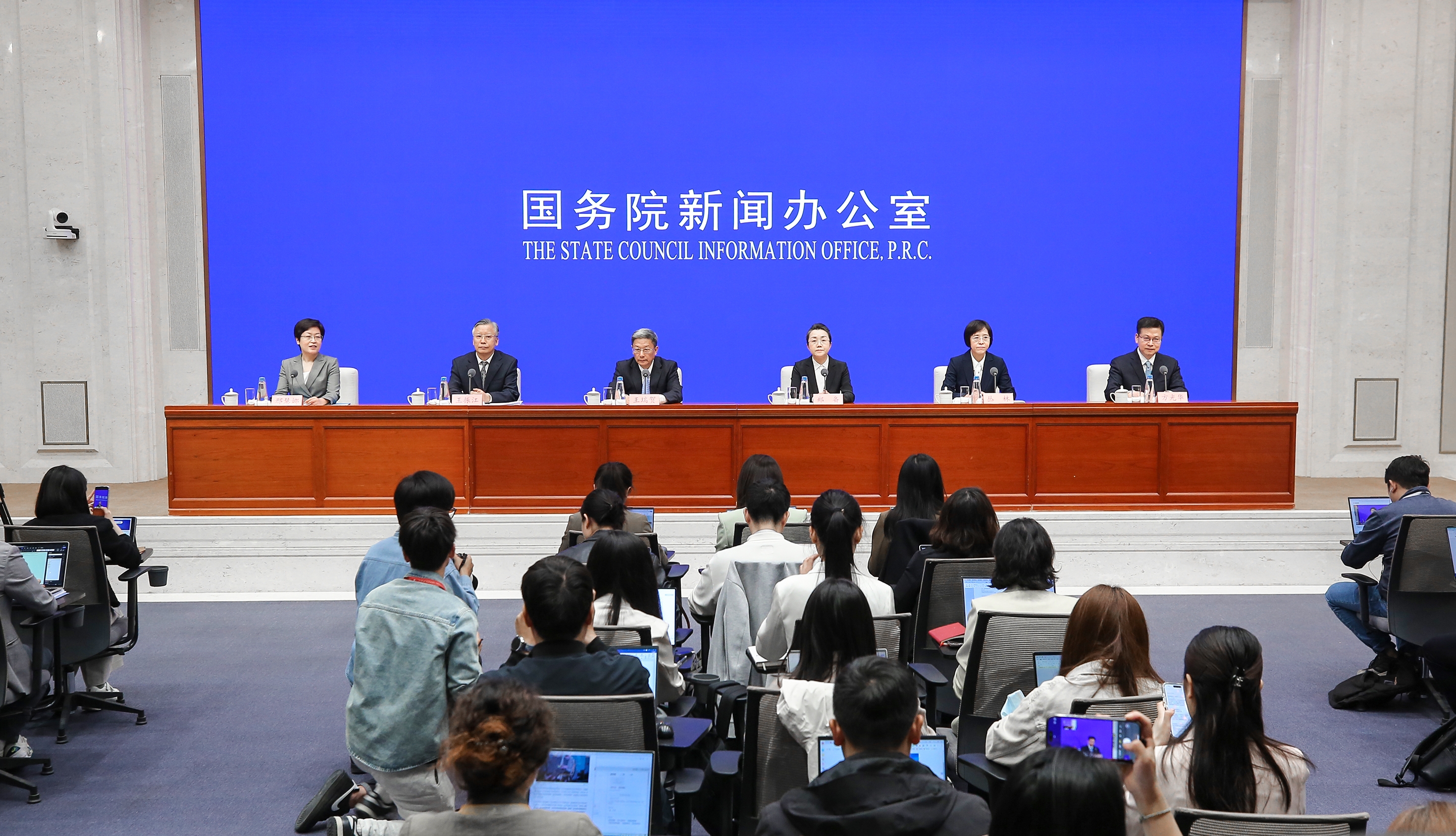

SCIO briefing on the Private Sector Promotion Law of
the People's Republic of China
Beijing | 10 a.m. May 8, 2025
Speakers

Wang Ruihe, deputy director of the Legislative Affairs Commission of the Standing Committee of the National People's Congress
Zheng Bei, vice chairwoman of the National Development and Reform Commission
Wang Zhenjiang, vice minister of justice
Cong Lin, vice minister of the National Financial Regulatory Administration
Fang Guanghua, vice chairman of the All-China Federation of Industry and Commerce
Chairperson
Speakers:
Mr. Wang Ruihe, deputy director of the Legislative Affairs Commission of the Standing Committee of the National People's Congress
Ms. Zheng Bei, vice chairwoman of the National Development and Reform Commission
Mr. Wang Zhenjiang, vice minister of justice
Ms. Cong Lin, vice minister of the National Financial Regulatory Administration
Mr. Fang Guanghua, vice chairman of the All-China Federation of Industry and Commerce
Chairperson:
Ms. Xing Huina, deputy director general of the Press Bureau of the State Council Information Office (SCIO) and spokesperson of the SCIO
Date:
May 8, 2025
Xing Huina:
Ladies and gentlemen, good morning. Welcome to this press conference held by the State Council Information Office (SCIO). The 15th session of the Standing Committee of the 14th National People's Congress (NPC) voted to pass the Private Sector Promotion Law of the People's Republic of China on April 30, which will come into effect on May 20, 2025. To help everyone better understand the law, today we have invited Mr. Wang Ruihe, deputy director of the Legislative Affairs Commission of the NPC Standing Committee; Ms. Zheng Bei, vice chairwoman of the National Development and Reform Commission (NDRC); Mr. Wang Zhenjiang, vice minister of justice; Ms. Cong Lin, vice minister of the National Financial Regulatory Administration (NFRA); and Mr. Fang Guanghua, vice chairman of the All-China Federation of Industry and Commerce (ACFIC), to brief you on the Private Sector Promotion Law and answer your questions.
Now, I'll give the floor to Mr. Wang for his introduction.
Wang Zhenjiang:
Good morning, everyone. I am very pleased to attend this morning's press conference together with colleagues from the Legislative Affairs Commission of the NPC Standing Committee, the NDRC, the NFRA and the ACFIC. Thank you all for your concern and support for the legislative work associated with the Private Sector Promotion Law. Next, I will introduce the research, drafting and formulation of the law.
The Central Committee of the Communist Party of China (CPC) and the State Council attach great importance to the development of the private economy. Since the reform and opening up in 1978, China's private economy has developed rapidly under the guidance of the Party's lines, principles and policies. Especially since the 18th CPC National Congress, the Party Central Committee with Comrade Xi Jinping at its core has taken a series of major measures to promote the development of the private economy. The private economy has continued to play an increasingly important role in China's national economy and social development. At the same time, due to a combination of multiple internal and external factors, such as changes in the external environment and inadequate policy implementation, the private economy faces some difficulties and challenges in areas including fair participation in market competition, equal access to production factors, obtaining investment, financing and services, and the protection of legitimate rights and interests. There is an urgent need to codify the guiding principles and effective practices of the CPC Central Committee and the State Council on the private economy, in order to consolidate the achievements of reforms. It is also necessary to promptly improve relevant institutional measures to address prominent issues in practice, respond to public concerns, boost confidence and unleash the internal dynamism of private enterprises. These efforts will foster a legal environment and social atmosphere conducive to the development of all forms of ownership, including the private economy, enable us to stay focused on managing our own affairs well, and further consolidate the momentum of economic recovery and long-term growth. We will counter the uncertainties of a rapidly changing external environment with a firm commitment to high-quality development. Formulating the Private Sector Promotion Law is a major decision and deployment made by the Party Central Committee with Comrade Xi Jinping at its core. The need to formulate this law was clearly stated at the third plenary session of the 20th CPC Central Committee. The 2024 Central Economic Work Conference explicitly called for the introduction of this law.
In accordance with the work plan, the Ministry of Justice and the NDRC requested the Legislative Affairs Commission of the NPC Standing Committee to take the lead in forming a drafting task force composed of 17 relevant departments from central and state organs. The task force thoroughly studied and comprehended the guiding principles of General Secretary Xi Jinping's important instructions and the key points of his speech delivered at the symposium on private enterprises on Feb. 17 this year. The task force, in line with the guidelines and policies of the CPC Central Committee and the State Council, widely solicited public opinions, conducted in-depth research and analysis, and drafted the law. After the third plenary session of the 20th CPC Central Committee, the task force revised the draft in alignment with the session's guiding principles, solicited public opinions again, and further refined it based on public feedback. After being discussed and approved at a State Council executive meeting, the draft was submitted to the NPC Standing Committee for deliberation in December 2024. The NPC Standing Committee reviewed the draft three times — in December 2024, February 2025 and April 2025 — and released it again for public comment during the period. On April 30, 2025, the 15th session of the 14th NPC Standing Committee voted to pass the Private Sector Promotion Law of the People's Republic of China, which will officially come into effect on May 20.
The law consists of nine chapters and 78 articles, establishing and improving relevant systems and mechanisms around fair competition, investment and financing promotion, scientific and technological innovation, regulatory guidance, service support and the protection of rights and interests. It translates the CPC Central Committee's commitment to equal treatment and protection of the private economy into concrete legal provisions, in a bid to continuously improve a stable, fair, transparent and predictable environment for its development. As the first foundational law dedicated to the development of the private economy, the law marks a major step in implementing the decisions of the third plenary session of the 20th CPC Central Committee and the important remarks made by General Secretary Xi Jinping at the symposium on private enterprises. It is a vivid embodiment of Xi Jinping Thought on the Rule of Law and Xi Jinping Thought on Economy, a landmark event in building China's socialist market economy, and a milestone in the development of its private sector. The law marks several breakthroughs. It is the first to enshrine into legal doctrine the principle of "unswervingly consolidating and developing the public sector and unswervingly encouraging, supporting and guiding the development of the non-public sector." It is the first to clearly define the legal status of the private economy, and the first to explicitly state that "promoting the private sector's sustained, healthy and high-quality development is a long-term major national policy." This fully demonstrates the firm commitment of the CPC Central Committee in supporting the growth of the private sector and sends a clear message that developing the private economy remains a consistent and enduring policy of both the Party and the state. This will further unleash the internal drive and creative vitality of the private economy, boost confidence among private business operators, and inspire their entrepreneurial spirit and determination, fostering a strong sense of commitment to the nation and strengthening their resolve to be builders of socialism with Chinese characteristics and contributors to Chinese modernization.
Laws alone cannot implement themselves. We hope all regions and government departments will take the adoption of the Private Sector Promotion Law as an opportunity to rigorously implement its provisions, ensuring thorough and accurate publicity and interpretation of the law and full compliance with its requirements, and promote the promulgation and implementation of supporting regulations as soon as possible. Efforts should be made to coordinate and refine the supportive and guarantee measures, and improve the institutional system for the development of the private sector. We need to further improve the law-based business environment, and effectively protect the legitimate rights and interests of private economic organizations and their operators in accordance with the law. We will step up efforts to foster a positive social atmosphere that supports the development of private businesses, and promote their sustained, healthy and high-quality development.
That is all for my introduction. Now, my colleagues and I are ready to answer your questions. Thank you.
Xing Huina:
The floor is now open for questions. Please raise your hand and state the news outlet you represent before asking your questions.
_ueditor_page_break_tag_The Poster News APP:
As China's first fundamental law specifically dedicated to promoting the private sector, what are the important legal implications of formulating and implementing the Private Sector Promotion Law? Thank you.
Wang Ruihe:
As everyone knows, over the past 40 years of reform and opening up, China's private sector has grown from humble beginnings to remarkable strength, achieving substantial development. At the same time, theories and policies on the private sector continue to be rolled out while evolving with the times and undergoing continuous improvement. General Secretary Xi Jinping said that the basic principles of the Party and the state on the development of the private sector have been incorporated into the system of socialism with Chinese characteristics and will be consistently adhered to and implemented, which cannot and will not be changed. The adoption of the Private Sector Promotion Law has put the Party and the state's fundamental principles, policies and some effective practices for fostering private sector growth into law. By doing so, the law for supporting and protecting the development of the private sector has been incorporated into the socialist legal system with Chinese characteristics. In terms of legal significance, this marks an important innovation. Moreover, it is consistent with many provisions of the Constitution, providing legal assurance for the proper enforcement of the Constitution.
Specifically, the current Constitution has established the fundamental economic system with public ownership as the mainstay and multiple forms of ownership developing together. It also stipulates that the state protects the legitimate rights and interests of private businesses and the non-public sector of the economy. The country encourages, supports and guides the development of the non-public sector, and supervises and regulates the non-public sector according to the law. Article 1 of the Private Sector Promotion Law clearly stipulates that: "The law is formulated in accordance with the Constitution." It stipulates that the state upholds and improves the basic socialist economic systems, including the system under which public ownership is the mainstay and diverse forms of ownership develop together, the system under which distribution according to work is the mainstay while multiple forms of distribution exist alongside it, and the socialist market economic system. The country always unswervingly consolidates and develops the public sector, and unswervingly encourages, supports and guides the development of the non-public sector. This has been written into the Private Sector Promotion Law. At the same time, the law clarifies the role of the private sector: Private sector is an important part of the socialist market economy, a vital contingent for promoting Chinese modernization, a significant foundation for high-quality development, and a principal force for promoting the development of China into a great modern socialist country in all respects and the rejuvenation of the Chinese nation. Legally defining this status reflects the judicious judgment of the CPC Central Committee and represents a broad societal consensus. Promoting the sustainable, healthy and high-quality development of the private sector is a crucial principle and policy that the state has long upheld. The formulation of the law fully demonstrates that our Party and the state will not and cannot change the fundamental policies regarding the development of the private sector. This legislation will undoubtedly improve the legal framework for the high-quality development of the private sector, and make supporting systems more robust and effective. Thank you.
_ueditor_page_break_tag_CCTV:
The Private Sector Promotion Law has drawn significant public attention given its broad scope. Regarding this comprehensive piece of legislation, how did the drafting body ensure the following aspects during drafting process: fully aligning with the central authorities' principles and policies; proactively addressing public concerns; and establishing its status as a foundational law? Thank you.
Wang Zhenjiang:
Thank you for your question. I'll take this one. This is an extremely important question, and has been a key focus for our task force since day one. The Private Sector Promotion Law, serving as China's first fundamental law specifically designated for promoting the development of the private sector, carries significant political weight, policy importance and professional rigor. In drafting this law, the task force focused on the following key priorities:
First, we must implement the principles and policies made by the CPC Central Committee and the State Council on the private sector in a complete, accurate and comprehensive manner. Since the reform and opening up, and especially since the 18th CPC National Congress, the CPC Central Committee and the State Council have put forward a series of principles and policies promoting the development of the private sector. Practice has proven that these policies have provided important guarantees and fundamental guidelines for ensuring the sustained, healthy and high-quality development of China's private sector. It is therefore necessary to codify them into legal systems to better allow the rule of law to play its role in consolidating foundations, ensuring stable expectations and delivering long-term benefits. Therefore, the legislation must codify the central authorities' major principles, policies and propositions regarding the private sector, notably unswervingly consolidating and developing the public sector, and unswervingly encouraging, supporting and guiding the development of the non-public sector, as well as the private sector's status and significance. Transforming these policies into binding legal requirements is pivotal to better safeguarding the private sector's fundamental and political direction for development. During the drafting process, the third plenary session of the 20th CPC Central Committee was held, which made new arrangements for leveraging the role of private enterprises in technological innovation. In line with the guiding principles of the plenary session, we made such provisions in the law as supporting private economic organizations in participating in national sci-tech research projects, supporting qualified private entities to lead and undertake major national technological research tasks, and granting private enterprises access to major national scientific research infrastructure. The goal is to allow the private sector to play a greater role in advancing the cause of socialism with Chinese characteristics.
Second, we have adhered to open-door legislation, pooling wisdom and building consensus. Promoting the private sector involves a wide range of areas. Which issues should be addressed now through legislation, which measures should be written into law and which should be clarified in subsequent supporting regulations — all these need to be decided after we listen to the views and gathered the ideas of all parties concerned. Therefore, in the drafting process, we always adhered to open-door legislation to pool wisdom. We set up a special working group composed of 17 relevant departments and institutions under the central authorities to jointly study and draft the law. An important consideration behind this was to collect opinions widely so that good suggestions from all sides could be timely and fully reflected and embodied in the draft law. As soon as the working group was established, we held a symposium to listen to the opinions and suggestions of private enterprises. Next, we entrusted authoritative legal research institutions, such as the China Law Society and the Institute of Law of the Chinese Academy of Social Sciences, to organize multiple expert conferences to conduct in-depth discussions on issues involving legislation. At the same time, department heads of the working group led teams to conduct field investigations, visiting and listening to the opinions of deputies to people's congresses, members of the Chinese People's Political Consultative Conference (CPPCC), and representatives of private enterprises. During the drafting and reviewing by the State Council and deliberation by the NPC Standing Committee, we solicited public opinions twice on the draft law, and carefully analyzed and took on board the opinions and suggestions from all sides. After repeated research and discussions, we ultimately focused on fair competition, investment and financing promotion, scientific and technological innovation, standardized operation, service guarantees, and the protection of rights and interests. These are widely seen as the most prominent issues facing the private sector in its current development stage. The framework and main contents of the law are also based on these issues. It can be said that the process of formulating the Private Sector Promotion Law itself is a process of pooling wisdom and building consensus, as well as a vivid practice of making laws in a well-conceived, democratic, and law-based manner, and implementing whole-process people's democracy.
Third, based on the positioning of fundamental law, we have taken coordinated action to define the foundational institutional frameworks while leaving appropriate space for evolution in the future. Many provisions in the Private Sector Promotion Law are highly targeted, such as regulations on "pay-when-paid" clauses and administrative law enforcement. The provisions are concise and informative, and will have extraordinary significance if fully implemented. Of course, as a fundamental law, it is not necessarily better to be more detailed. As objective practice evolves quickly, overly detailed provisions can sometimes constrain the development of practice. Therefore, in the legislative process, we always adhered to overall planning for both the present and the long term. For major issues that need to be resolved through legislation at present, we focused on clarifying the main mechanisms and measures, foundational institutional frameworks, and main legal requirements, while leaving space for future practical developments. As stipulated in the law, relevant departments of the State Council should coordinate the research and formulation of policies and measures to promote private investment, while governments at all levels and their relevant departments should establish mechanisms for government-enterprise communication. This not only clarifies the establishment of the mechanisms but also leaves room for the next step to introduce supporting measures and refine implementation measures based on actual conditions. In addition, there is another category of major issues, which has been reflected by various parties as being prominent in practice and requiring significant efforts to resolve, which includes illegal cross-regional enforcement and administrative and criminal interference in economic disputes. For this type of issues, the law explicitly makes prohibitive provisions, stating the principles and bottom lines of the law, and enhancing the binding force. The implementation of these provisions will play an important role in resolving disputes and protecting the lawful rights and interests of the private sector in accordance with the law.
That is all from me on this question. Thank you.
_ueditor_page_break_tag_Phoenix TV:
The Private Sector Promotion Law will officially come into effect on May 20. What impact is expected from the implementation of the law on the development of the private sector? What practical impact will it have on private enterprises or private economic organizations? Thank you.
Zheng Bei:
Thank you. I will answer your questions. In his important speech at the symposium on private enterprises on Feb. 17 this year, General Secretary Xi Jinping pointed out the direction for the development of the private economy on the new journey of the new era, significantly inspiring enthusiasm and boosting confidence. The introduction of the Private Sector Promotion Law is a major step in implementing the guiding principles of General Secretary Xi Jinping's speech. I believe that this law is of great significance and has far-reaching impact on the high-quality development of the private sector.
First, the law will further stabilize expectations. The Private Sector Promotion Law stipulates that we should work unswervingly both to consolidate and develop the public sector and to encourage, support and guide development of the non-public sector, and that the promotion of the sustainable, healthy and high-quality development of the private economy is a significant and long-term policy of China. The law emphasizes the basic principles of equal treatment, fair competition, equal protection and common development, fully demonstrating the Party and the state's unequivocal commitment to and firm resolve in promoting the development of the private economy. It reinforces development certainty through legal stability, offering reassurance to private enterprises as they pursue growth with greater confidence.
Second, it will further strengthen confidence. The Private Sector Promotion Law actively responds to the concerns of private enterprises and establishes targeted institutional arrangements. Regarding fair participation in market competition, the law stipulates that China will implement a unified nationwide negative list system for market access and will enforce fair competition review mechanisms. The law also ensures that businesses can enter any sector that is not explicitly prohibited. In terms of equal access to production factors, the law stipulates that the state guarantees private economic organizations equal access to capital, technology, human resources, data, land and other production factors as well as public service resources in accordance with the law. This ensures a level playing field for all stakeholders. On equal legal protection, the law stipulates that the personal rights, property rights, and operational autonomy of private economic organizations and their operators are protected by law. It emphasizes that these rights must not be violated.
Third, it will further promote high-quality development. Since reform and opening up began, and particularly since the 18th CPC National Congress, the private sector has grown to a considerable scale. Its overall strength, innovation capability and market competitiveness have improved significantly, making it an important force in building national strength and advancing national rejuvenation. The Private Sector Promotion Law addresses current needs while planning for the future, providing strong legal protection for the high-quality development of the sector. On the one hand, it focuses on encouragement and support. For example, it includes dedicated chapters such as "Investment and Financing Promotion" and "Technological Innovation," which support private enterprises in participating in major national strategies and projects, and in investing and starting businesses in strategic emerging industries and future industries. The law also encourages them to actively contribute to promoting technological innovation, cultivating new quality productive forces, and building a modern industrial system. On the other hand, it focuses on guidance and regulation. It guides private enterprises to improve their governance structure and management systems, commit to lawful and compliant operations, strengthen risk prevention, fulfill social responsibilities, and promote the sound development of the private sector and the well-rounded growth of those engaged in it.
We believe that the promulgation of this law will inspire private enterprises and entrepreneurs to be bold and daring, making new and greater contributions to advancing Chinese modernization. Thank you.
_ueditor_page_break_tag_National Business Daily:
The Private Sector Promotion Law has a special article in the general provisions that stipulates the role and responsibilities of the ACFIC. How will the ACFIC serve as an effective bridge between government and business following the law's enactment to support sustainable, healthy and high-quality private sector development? Thank you.
Fang Guanghua:
Thank you for your question. Promoting the sound development of the private sector and the well-rounded growth of those engaged in it is the ACFIC's main responsibility. Article 7 of the General Provisions of the Private Sector Promotion Law clarifies ACFIC's responsibilities, providing both a legal basis and legal safeguards for it to better fulfill its role as a bridge, and to serve the healthy, sustainable and high-quality development of private enterprises.
Publicity and interpretation of the law should be well organized. Its promulgation has generated widespread enthusiasm among private sector entrepreneurs, who widely view this as a historic milestone in the development of the private economy, fully demonstrating the Party and state's attention to and care for the private sector. The ACFIC has 320,000 executive committee members and more than 5 million members, with services covering a broad range of private enterprises. We will step up efforts to promote the rule of law, using the publicity and interpretation of the Private Sector Promotion Law as an opportunity to help private entrepreneurs gain a deeper understanding of its legislative intent. This will actively communicate the Party and the state's policies for promoting private sector development and growth, and help build broad-based support and consensus.
We also need to provide good services for enterprises. The Private Sector Promotion Law proposes a series of long-term measures to promote private sector development, which will provide strong support for the high-quality development of the private sector. We will work with relevant departments to accelerate the rollout of supporting policies and ensure the effective implementation of legal provisions. We will also build a cordial and clean relationship between government and business by establishing and improving communication mechanisms and enhancing service quality. We will continuously empower the production and operations of private enterprises, guiding them in developing new quality productive forces and improving quality, efficiency and market competitiveness. This will continuously expand new opportunities for the high-quality development of private enterprises. We also need to actively participate in political consultation and democratic supervision. We will optimize the business environment evaluation system for private enterprises and collect and report new situations and problems encountered by private enterprises during the law's implementation. We will encourage judicial and law enforcement departments to optimize supporting measures and standardize enforcement methods. This will protect the legitimate rights and interests of private enterprises and entrepreneurs in accordance with the law.
We must also guide law-abiding business operations. The Private Sector Promotion Law promotes the modern governance of private enterprises. We will work with relevant departments to continue implementing the plan to enhance the legal awareness of private entrepreneurs and deepen the development of law-abiding and clean private enterprises. We will support qualified private enterprises in establishing and improving a modern corporate system with distinctive Chinese characteristics, thereby raising their standards in management and operations. We will also guide more private enterprises to actively participate in employment promotion campaigns such as the 10,000 Enterprises Revitalizing 10,000 Villages program and the "Hundred Cities, Thousand Schools, and Ten Thousand Enterprises" initiative while pursuing their own high-quality development. This will encourage them to actively fulfill their social responsibilities.
We also need to build effective chambers of commerce. The Private Sector Promotion Law specifically clarifies the coordinating and self-regulating role of industry associations and chambers of commerce in promoting private economic development. There are more than 56,000 chambers of commerce affiliated with and connected to the ACFIC at all levels. We will actively fulfill our management, guidance and service responsibilities. We will work with legislative bodies to accelerate the formulation of the Industry Association and Chamber of Commerce Law. We will also promote the construction of a modern chamber of commerce system with Chinese characteristics, strengthen Party building within chambers of commerce, and improve chamber service functions. We will guide chambers of commerce to better fulfill their roles in providing information consultation, publicity and training, market expansion, rights protection and dispute resolution. Thank you.
_ueditor_page_break_tag_Nanfang Plus:
Private enterprises are a vital driving force in key sectors and areas such as technological innovation, foreign trade exports, consumption promotion and domestic demand expansion. The Private Sector Promotion Law clearly supports private economic organizations' participation in technological innovation and major national strategies. How do financial institutions support these areas, and what policies and measures does the NFRA offer? Thank you.
Cong Lin:
Thank you for your question. I'll take this one. For private enterprises in key sectors and critical areas, we focus on sector-specific policies, providing targeted and professional financial services based on industry characteristics.
In high-tech and emerging industries where private enterprises have excelled in recent years, we will work hard to enhance technology-based financial service models. First, we will promote the combination of investment and financing. We are conducting equity investment pilots for financial asset investment companies to support investment in technology innovation enterprises. Currently, 74 private equity investment funds have been established. Additionally, technology enterprise merger and acquisition loans have been launched in 18 pilot cities to support smooth capital circulation for high-tech enterprises. Second, we will innovate the credit enhancement system. We are promoting the construction of a comprehensive pilot zone for the intellectual property financial ecosystem, optimizing policies related to the registration, evaluation, disposal and compensation of intellectual property to support intellectual property pledge financing. In collaboration with finance departments, we have launched a loan guarantee initiative to support technology innovation, providing dedicated guarantees for loans to small- and medium-sized enterprises that are technology-based, high-tech, and use special and sophisticated technologies. By the end of the first quarter of this year, the loan balance of high-tech enterprises nationwide reached 17.7 trillion yuan ($2.4 trillion), a year-on-year increase of 20%. Additionally, we support the commercialization of scientific and technological advances. We have launched two insurance compensation pilot programs — one for the first sets of major technological equipment and another for the initial application of key new materials. These programs have provided more than 1 trillion yuan in risk coverage.
In the fields of foreign trade and consumption, which are primarily made up of small, medium-sized and micro private enterprises, we have designated the foreign trade sector as a priority for the financing coordination mechanism. We have compiled a comprehensive list of foreign trade enterprises and are giving them priority for financing visits and matchmaking. In addition, we have supported exports with short-term export credit insurance. In the first quarter of this year, the insured amount exceeded $240 billion, with significant increase in industries that play important supporting roles in foreign trade, including electronic information, modern chemicals and complete vehicle engineering machinery. We have developed an innovative cross-border e-commerce insurance model to support new forms of foreign trade. This involves guiding insurance companies to develop specialized guarantee products that provide credit guarantees for domestic procurement by cross-border e-commerce businesses. We have increased credit availability across multiple consumer service sectors, including wholesale and retail, accommodation and catering, cultural tourism, education and training programs, and health and elderly care. These measures aim to support the healthy development of private enterprises throughout the consumer services industry.
To encourage private investment, we have partnered with the NDRC to establish a special financing matchmaking mechanism. This has led to the creation of a list of key private investment projects, which we then shared it with banks, guiding them to independently provide appropriate financing services. Some regions have also implemented effective practices and innovative approaches, such as developing dedicated online matching platforms. These platforms allow banks to access project information and use big data to precisely identify projects that align with their credit policies. This has flipped the traditional dynamic from "projects seeking funds" to "funds seeking projects," significantly streamlining the matchmaking process. Thank you.
_ueditor_page_break_tag_Beijing Youth Daily:
We've noticed that the newly issued Private Sector Promotion Law clearly stipulates that judicial and administrative departments should establish communication mechanisms for addressing business-related administrative law enforcement appeals. They should also organize administrative enforcement inspections, strengthen supervision of enforcement activities, and promptly correct improper administrative enforcement actions. What additional measures will judicial and administrative departments take to strengthen enforcement supervision and effectively protect the legitimate rights and interests of private entrepreneurs in accordance with the law? Thank you.
Wang Zhenjiang:
Thanks for your question. I'll take this one. I believe this is a concern for many businesses. Since the 18th CPC National Congress, the CPC Central Committee and the State Council have made a series of decisions and arrangements to strengthen and improve administrative law enforcement, calling for comprehensive promotion of strict, standardized, fair and civilized law enforcement. During the formulation of the Private Sector Promotion Law, we resolutely implemented these decisions and arrangements. Addressing widespread issues such as arbitrary fines, fines, inspections, seizures, illegal cross-regional law enforcement and profit-driven law enforcement, the Private Sector Promotion Law includes clear provisions. It establishes comprehensive mechanisms for handling complaints and reports of illegal administrative enforcement actions, creates communication channels for business-related administrative enforcement appeals, and strengthens supervision of administrative enforcement activities. Looking ahead, the Ministry of Justice will follow the decisions and arrangements of the CPC Central Committee and the State Council, implement the relevant requirements outlined in the private sector promotion law and further standardize administrative law enforcement behavior. Our efforts will focus on several key areas:
First, we will implement the law's requirements by accelerating the development of supporting systems and mechanisms. We will push for the establishment and improvement of mechanisms for handling complaints and reports of illegal administrative enforcement actions, promptly accepting and lawfully addressing business-related administrative enforcement complaints. Judicial administrative organs will set up contact points with businesses to supervise administrative law enforcement, ensuring timely feedback and suggestions from various business entities regarding enterprise-related administrative enforcement activities. We will implement an administrative enforcement supervision system, inviting NPC deputies, CPPCC members, public supervisors, experts, scholars, lawyers and journalists to participate in supervision. We will resolutely curb profit-driven law enforcement and effectively protect the legitimate rights and interests of private economic organizations and their operators in accordance with the law.
Second, we will take the lead in conducting special actions to regulate business-related administrative law enforcement. Last year's Central Economic Work Conference called for launching a special action to regulate business-related law enforcement. On April 25 this year, the meeting of the Political Bureau of the CPC Central Committee again emphasized the need to solidly carry out this special action. As the State Council's administrative law enforcement oversight body, the Ministry of Justice is responsible for coordinating and organizing nationwide special actions to regulate business-related administrative law enforcement. Local judicial and administrative organs at all levels, as supervisory bodies for their respective governments, are responsible for organizing and implementing special actions in their regions. The Ministry of Justice will resolutely implement the decisions and arrangements of the CPC Central Committee and the State Council, taking the enactment of the Private Sector Promotion Law as an opportunity to urge all regions and departments to intensify investigation and punishment of administrative law enforcement violations, strengthen problem rectification and ensure correct and thorough resolution of issues. At the same time, we will select key regions, sectors and issues for spot checks and conduct periodic assessments of remediation results. For problems that businesses and the public strongly report, we will elevate handling when necessary and supervise cases where correction efforts are inadequate. We will promptly promote and share effective experiences and practices, while departments that fail to properly address problems may face administrative admonition, official notices and public exposure, depending on the circumstances.
Third, we will accelerate the research and formulation of administrative law enforcement supervision regulations and establish a long-term mechanism for supervising business-related administrative law enforcement. The Ministry of Justice will use the implementation of the Private Sector Promotion Law as an entry point to establish and improve long-term mechanisms for supervising business-related administrative law enforcement. We will expedite research and drafting of administrative law enforcement supervision regulations. In response to common issues in administrative law enforcement, we will further improve the supervision system, procedures and accountability mechanisms. This will provide solid legal guarantees and institutional support for strengthening administrative enforcement oversight, regulating enforcement actions, and protecting all business entities' legitimate rights and interests, including private economic organizations. That is all from me. Thank you.
_ueditor_page_break_tag_Tide News under Zhejiang Daily:
We understand that private businesses are very concerned about market access issues. Does the Private Sector Promotion Law respond to their concerns? What specific measures will the NDRC take? Thank you.
Zheng Bei:
Thank you. That's an excellent question. During our research and communications with private enterprises, we also learned that they are very concerned about this issue. The Private Sector Promotion Law is guided throughout by principles of equal treatment, fair competition, equal protection and mutual development. These principles are fully reflected not only in the general provisions but also in the chapters covering fair competition, investment and financing promotion, technological innovation and legal liabilities. To implement the law's requirements, the NDRC will work with relevant departments to strengthen measures in three key areas: breaking down barriers, expanding the scope of development and optimizing services.
The first priority is eliminating barriers to market access. Recently, we worked with other departments to issue a shorter negative list for market access. We've launched rectification actions to remove market access barriers, which will continue regularly after six months of centralized rectification. We've also actively promoted the fair participation of private enterprises in bidding processes. From January to April this year, private enterprises increased their winning rate by 5 percentage points year on year. For projects under 100 million yuan, private enterprises won more than 80% of the contracts. Moving forward, if private enterprises encounter access barriers, they can report issues through the dedicated section on our commission's website for the unified national market initiative. We will work with relevant departments to promptly verify and address these concerns.
The second priority is expanding the scope of development. We are supporting private enterprises in implementing major national strategies and building security capacity in key areas. This includes participation in large-scale equipment upgrades and consumer goods trade-in programs. We're creating better long-term mechanisms for private enterprises to join major national projects. Several major projects in nuclear power and railways have already been launched. In some nuclear power projects, private capital now holds up to 20% of shares. In industrial equipment renewal and recycling, over 80% of funds support private enterprises. This year, we'll launch high-quality projects worth approximately 3 trillion yuan in key areas such as transportation, energy, water conservancy, new infrastructure and urban infrastructure. We will vigorously support private enterprises as they invest in emerging and future industries. We'll help them lead national initiatives to make breakthroughs in key technologies, ensure they have equal access to major national scientific research infrastructure and industrial technology platforms, and encourage their participation in developing innovative applications for new technologies and products. We hope private enterprises and entrepreneurs will seize these opportunities and have the courage to succeed.
The third priority is to optimize service guarantees. We will continue to strengthen project services, release information on major project encouraging private sector investment, and provide standardized, efficient and convenient services for project introductions, preliminary work and approval processes. This will help private enterprises better understand "where to invest and how to invest." We will continue to strengthen resource guarantees and improve mechanisms for ensuring private investment has access to land, environmental assessments and funding. We'll help private firms attract top talent through better incentives and services. We'll also support their participation in the emerging data market and standards development. Additionally, we'll enhance intellectual property protections, improve the social credit system, and develop a better credit repair system, helping private enterprises unleash their innovative potential. Thank you.
_ueditor_page_break_tag_China News Service:
The Private Sector Promotion Law has a total of nine chapters and 78 articles with wide-ranging provisions. From the state legislature's perspective, what are this law's outstanding features? Thank you.
Wang Ruihe:
The Private Sector Promotion Law is a specialized standalone law on the development of the private sector. From the perspective of actively building a socialist market economy legal system with Chinese characteristics, it represents an important legislative achievement. As the reporter mentioned, the content is extensive, and relevant departments have conducted publicity campaigns both before and after the law's introduction. The Private Sector Promotion Law, for the first time, stipulates that we will work unwaveringly to both consolidate and develop the public sector and to encourage, support and guide the development of the non-public sector. It promotes the sound development of the private sector and persons in the sector. The law also establishes the status of the private sector for the first time and stipulates that promoting the sustainable, sound and high-quality development of the private sector is a crucial principle and policy that the state has long upheld.
As a law designed to promote and protect, the Private Sector Promotion Law is highly policy-oriented and principled in nature. In terms of content, it can be summarized by four key features:
First, it emphasizes ideological guidance. The Private Sector Promotion Law is guided by Xi Jinping Thought on Socialism with Chinese Characteristics for a New Era and fully implements Xi Jinping Thought on the Economy and Xi Jinping Thought on the Rule of Law. It stipulates that efforts to promote the development of the private sector must uphold the leadership of the CPC, follow a people-centered approach, and adhere to the socialist system with Chinese characteristics. These measures are intended to ensure the correct political direction for the development of the private economy.
Second, it upholds equal treatment. The Private Sector Promotion Law emphasizes equal treatment, fair competition, equal protection and common development to support the growth of the private sector. It ensures that private businesses, along with all other types of economic organizations and market entities, enjoy equal legal status under the law. Our rough count found that the terms "equality," "fairness" and "equal treatment" appear 26 times throughout the law's text, reflecting how the principle of equality is woven into every aspect of efforts to promote the development of the private sector.
Third, it strengthens legal protections. The Private Sector Promotion Law calls for strict, standardized, just and civilized law enforcement. It strengthens protections for the legal rights and interests of private businesses and their operators. The law also encourages, supports and guides the development of the private economy in accordance with the law. The law reinforces legal protections by laying a solid foundation, stabilizing expectations and ensuring long-term benefits.
Fourth, it emphasizes a problem-oriented approach. The Private Sector Promotion Law addresses major issues and shortcomings in the development of the private economy by fully incorporating the results of reforms and practical experience. It refines and improves relevant systems and measures in a targeted way, aims to maximize the decisive role of the market in resource allocation, and seeks to better utilize the role of government. Thank you.
Xing Huina:
Please feel free to raise your hand if you have any questions. We have time for two more questions from reporters.
_ueditor_page_break_tag_Xinhua Finance:
Article 4 of the Private Sector Promotion Law stipulates that the NDRC is responsible for coordinating and overseeing efforts to promote the development of the private economy. I have a question for the NDRC. What steps will be taken next to ensure the effective implementation of the Private Sector Promotion Law? Thank you.
Zheng Bei:
Thank you for your question. The effectiveness of a law depends on its implementation, and private businesses have high hopes for the successful implementation of this law. The NDRC will take an active role in coordinating and planning, working with various departments and local governments to ensure the effective implementation of the law. Efforts will focus on three key areas.
First, we will focus on supporting infrastructure development. During the legislative process, following the guidance of the CPC Central Committee and the State Council, we worked with relevant departments to plan ahead and simultaneously carry out the formulation, revision, repeal and interpretation of related regulations. Several supporting systems and mechanisms have already been introduced, including the market access negative list, regulations to ensure payment for small- and medium-sized enterprises, rules for fair competition review and their implementation measures, guidance on improving the social credit system and a long-term supervision mechanism for enterprise-related fees. Several other measures are being fast-tracked, covering areas such as investment and financing, technological innovation, service support and the protection of rights and interests. At the same time, many local governments, based on their specific circumstances, are actively improving the relevant supporting measures.
Second, we will prioritize effective implementation. We will work closely with relevant departments to fully implement the law and strengthen its binding enforcement. Our efforts will focus on five key areas. First, we will remove obstacles and address issues related to market access and resource acquisition. Second, we will tackle arrears and resolve payment issues for private enterprises. Third, we will provide legal protection for legitimate rights and interests, addressing business development concerns. Fourth, we will implement relief policies to help businesses feel a greater sense of benefit. Finally, we will strengthen communication between the government and enterprises to better respond to reasonable business demands. At the same time, during the law's implementation, we will focus on gathering feedback and suggestions from all parties. We will continuously improve related systems and mechanisms, striving to create a favorable legal environment that supports the healthy development of the private economy.
Third, we will focus on education and public awareness. We will work closely with relevant departments and local governments to thoroughly study the law's contents, gain a deeper understanding of its principles, and apply rule-of-law thinking and methods more consciously to advance the development of the private sector. We will strengthen publicity campaigns for the law to help private enterprises understand and make effective use of it, protect their legitimate rights and interests, and expand their development opportunities. Our goal is to help businesses enhance their core competitiveness and make significant contributions to Chinese modernization. We will promote understanding and compliance with the law across all sectors of society, building consensus and pooling efforts to advance the high-quality development of the private sector.
Turning the law into a powerful driving force for private sector development will require our collective effort and sustained commitment. We hope that all sectors of society will continue to support and pay close attention to the development of the private sector. We welcome any opinions or suggestions regarding the implementation of the law and encourage everyone to share their feedback with us promptly. Thank you.
Xing Huina:
We'll have one last question.
_ueditor_page_break_tag_Red Star News:
My question is for the NFRA. Financing for private enterprises is a topic of strong public interest. The CPC Central Committee and the State Council have made dedicated arrangements to enhance financial support for the development of the private economy. The Private Sector Promotion Law outlines multiple provisions on this issue in its chapter on "investment and financing promotion." What measures has the NFRA taken to implement these policies? Thank you.
Cong Lin:
Thank you for your question. The NFRA resolutely implements the decisions and plans of the CPC Central Committee and the State Council, guiding and urging financial institutions to continuously strengthen their support for private enterprises and improve the quality of their services. As you just mentioned, Chapter 3 of the Private Sector Promotion Law specifically addresses the promotion of investment and financing. These provisions are not only a high-level summary of long-standing financial policies and practices, but also provide clear direction and tasks for our next steps. In line with the provisions of the law, I would like to introduce several key areas of work that we are focusing on:
First, we are continuously optimizing credit supply policies. For the majority of private enterprises, which are small and micro enterprises, we have developed a series of differentiated regulatory policies. For example, in terms of capital regulation, we have offered a discount on risk-weighted capital requirements for loans to small and micro enterprises, ranging from 15% to 25%. In terms of tolerance for non-performing loans, we have relaxed the acceptable non-performing loan ratio for inclusive small and micro enterprise loans to up to 3 percentage points higher than the overall non-performing loan ratio, in order to boost banks' willingness to lend. To address the issue of frontline staff being hesitant to issue loans, we have introduced an accountability exemption mechanism for inclusive credit lending, which protects responsible personnel who act in good faith during the loan approval process. At the same time, we urge banks to set specific targets every year for serving private enterprises, ensuring strong credit allocation. Here, I would like to share some figures with the press. Loans to private enterprises have been steadily increasing, with an average annual growth rate over the past five years that is 1.1 percentage points higher than the overall average loan growth rate. As of the end of the first quarter of 2025, the outstanding loan balance for private enterprises stood at 76.07 trillion yuan, representing a year-on-year increase of 7.41%. The outstanding balance of inclusive loans to small and micro enterprises was 35.3 trillion yuan, up 12.5% year on year. We have also introduced a policy of loan renewal without principal repayment to help reduce the financing turnover costs for enterprises. As of the end of the first quarter, the outstanding balance of renewed loans reached 7.4 trillion yuan, marking a year-on-year increase of 35.7%.
Second, we are guiding the development of an innovative insurance product and service system. We are developing specialized insurance products and optimizing services to meet the needs of private enterprises in areas such as disaster risk mitigation and loss recovery, human resources and employment, and research and development. For example, in the high-tech sector, we are launching pilot programs for mechanisms to disperse major technological breakthroughs, cybersecurity insurance, and drone insurance. For private enterprises that rely heavily on new urban residents and flexible employment groups, we focus on their specific occupational risks and strengthen protection through inclusive insurance products. In the new energy vehicle (NEV) industry, where private enterprises make up the majority, we have guided the insurance sector to introduce exclusive insurance terms and rates, and established a new insurance platform, ensuring full coverage for those who wish to be insured and guaranteed coverage for all applicants.
Third, we are collaborating to establish an information integration and sharing mechanism. Offline, we have established a coordination mechanism with the NDRC to support financing for small and micro enterprises. This mechanism promotes the direct, fast and convenient flow of credit funds to grassroots enterprises at appropriate interest rates. Through this mechanism, we have issued new loans totaling 12.6 trillion yuan to small and micro enterprises, with an average interest rate of 3.66%. Online, we are promoting the establishment of credit information sharing and comprehensive financial service platforms in multiple regions, aiming to "make data travel more while businesses and banks travel less," thereby supporting banks in issuing credit loans through data and information. As of the end of the first quarter, the outstanding balance of credit loans to private enterprises reached 18.1 trillion yuan, a year-on-year increase of 15.4%.
Fourth, we are strengthening the risk-sharing function of financing guarantees. In collaboration with the finance department, we have promoted the establishment of a nationwide government financing guarantee system, with serving small and micro enterprises as the main policy effectiveness indicator. The guarantee fee rate for this type of business is capped at 1%, significantly lower than the level of commercial guarantee. As of the end of the first quarter, government financing guarantee institutions had provided direct financing guarantees totaling 1.88 trillion yuan for small and micro enterprises, marking a year-on-year increase of 11.5%.
Next, we will consistently uphold the "two unwavering commitments" and focus on the implementation of the Private Sector Promotion Law. We will continue making efforts in areas such as regulatory guidance, policy incentives, mechanism promotion and institutional guarantees, and implement targeted measures for private enterprises of different industries, sizes and development stages. We will work together with relevant parties to pool efforts and jointly promote the financial industry in providing more efficient, convenient and sustainable financial services for the private economy. Thank you.
Xing Huina:
Today's press conference is hereby concluded. Thank you to our speakers and the media for your participation. Goodbye.
Translated and edited by Liu Jianing, Gong Yingchun, Li Xiao, Yan Bin, Xu Kailin, Zhang Rui, Wang Xingguang, Wang Wei, Fan Junmei, Liu Qiang, Li Huiru, Wang Qian, David Ball, and Jay Birbeck. In case of any discrepancy between the English and Chinese texts, the Chinese version is deemed to prevail.

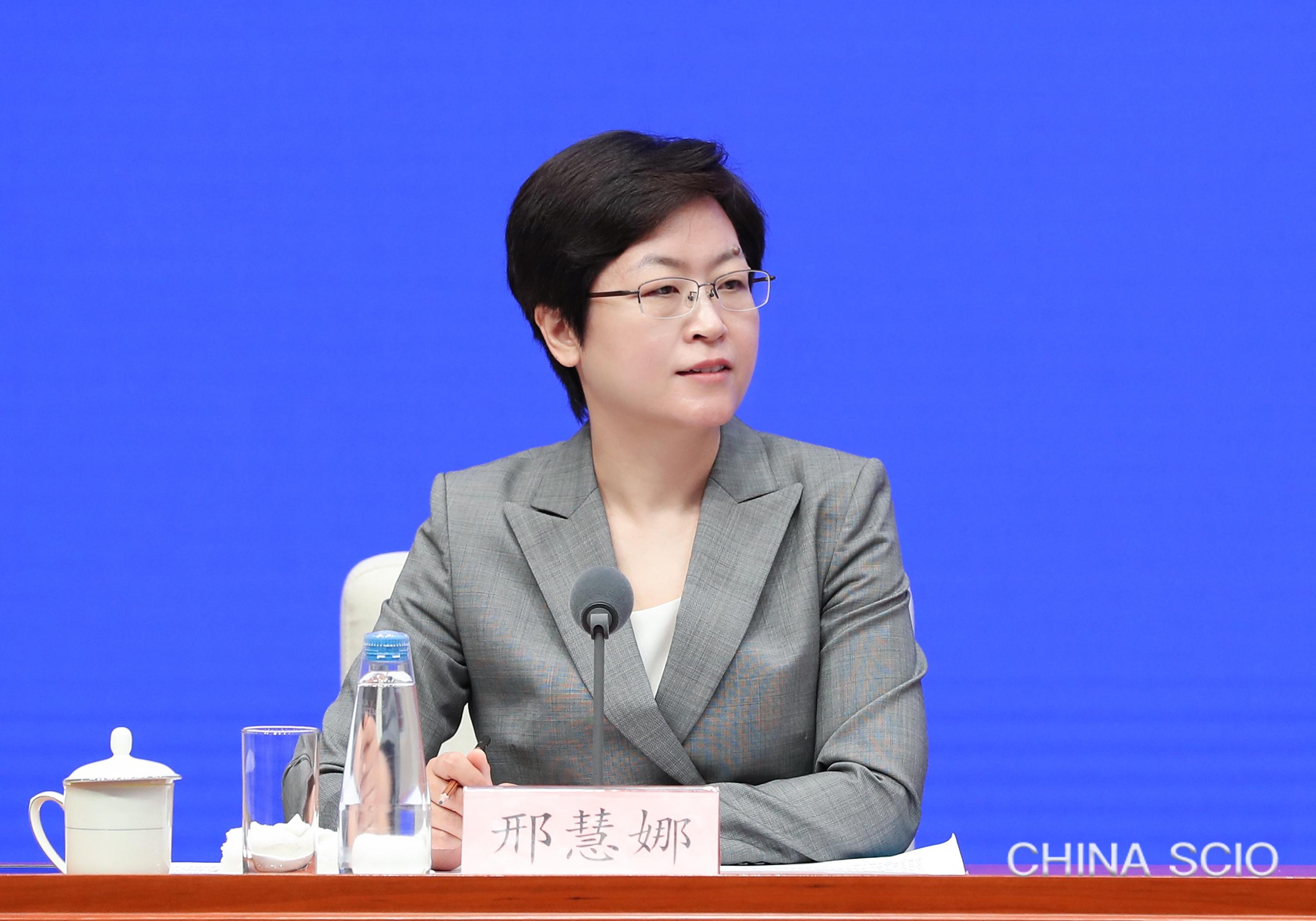
/7 Xing Huina
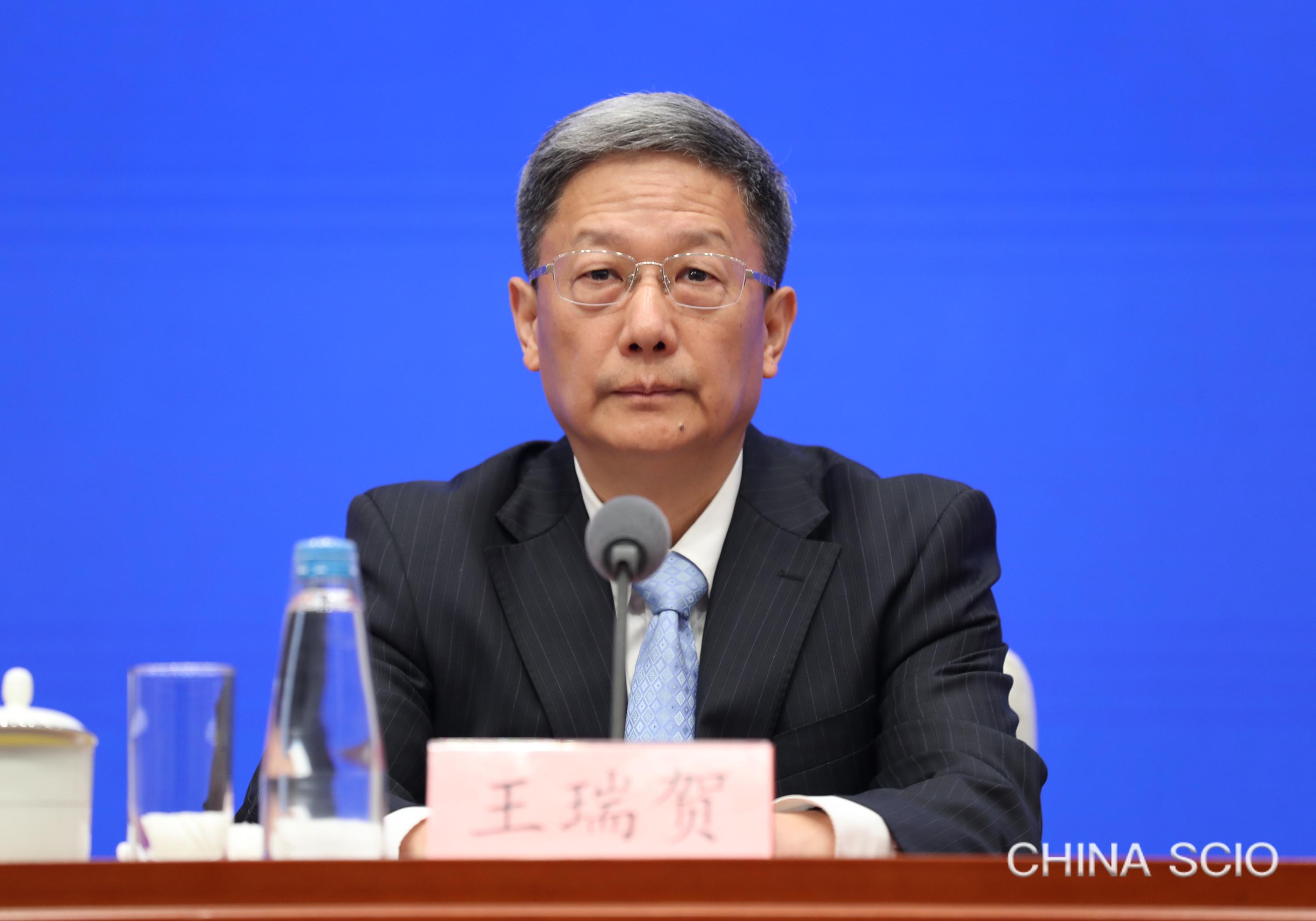
/7 Wang Ruihe
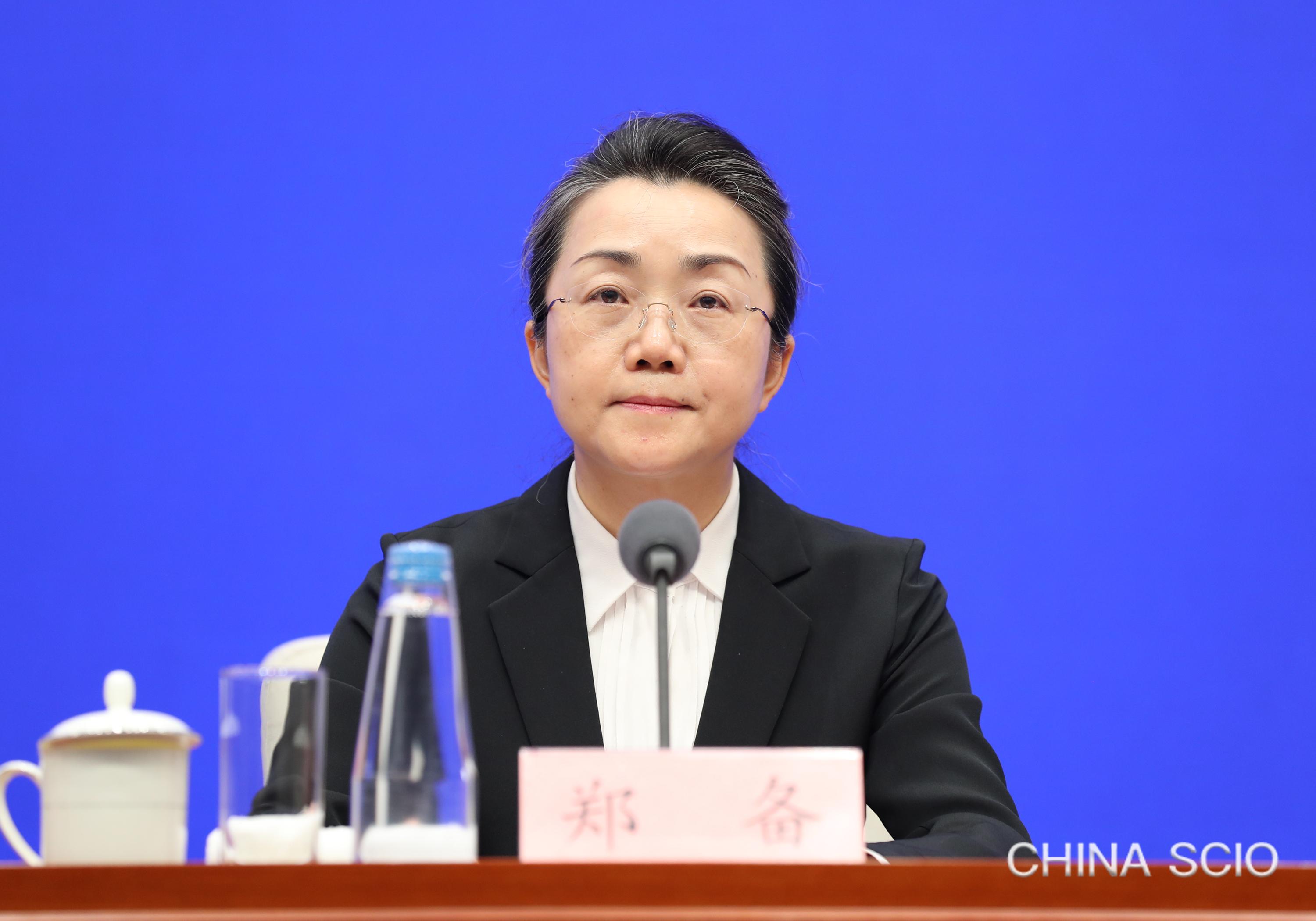
/7 Zheng Bei
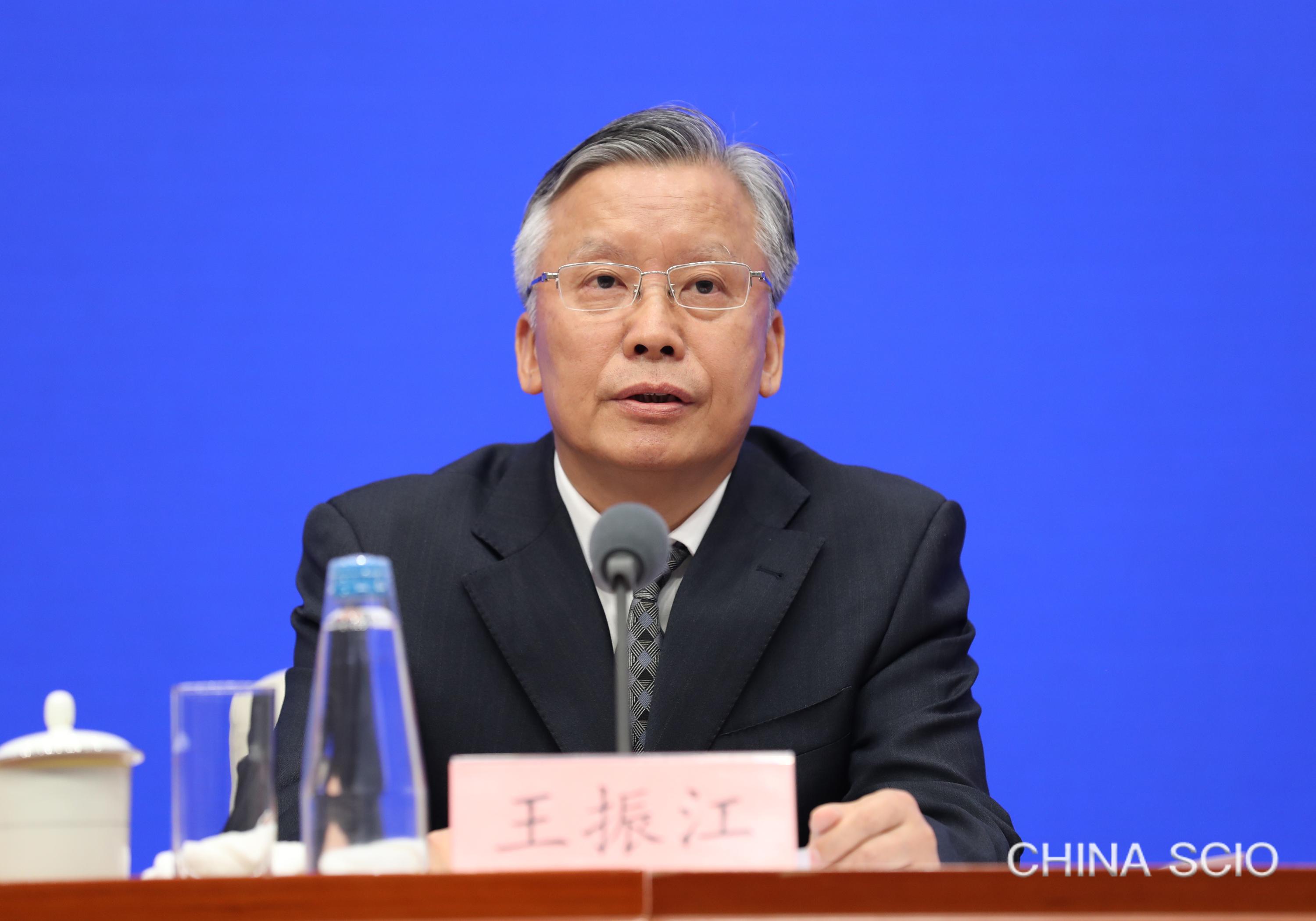
/7 Wang Zhenjiang
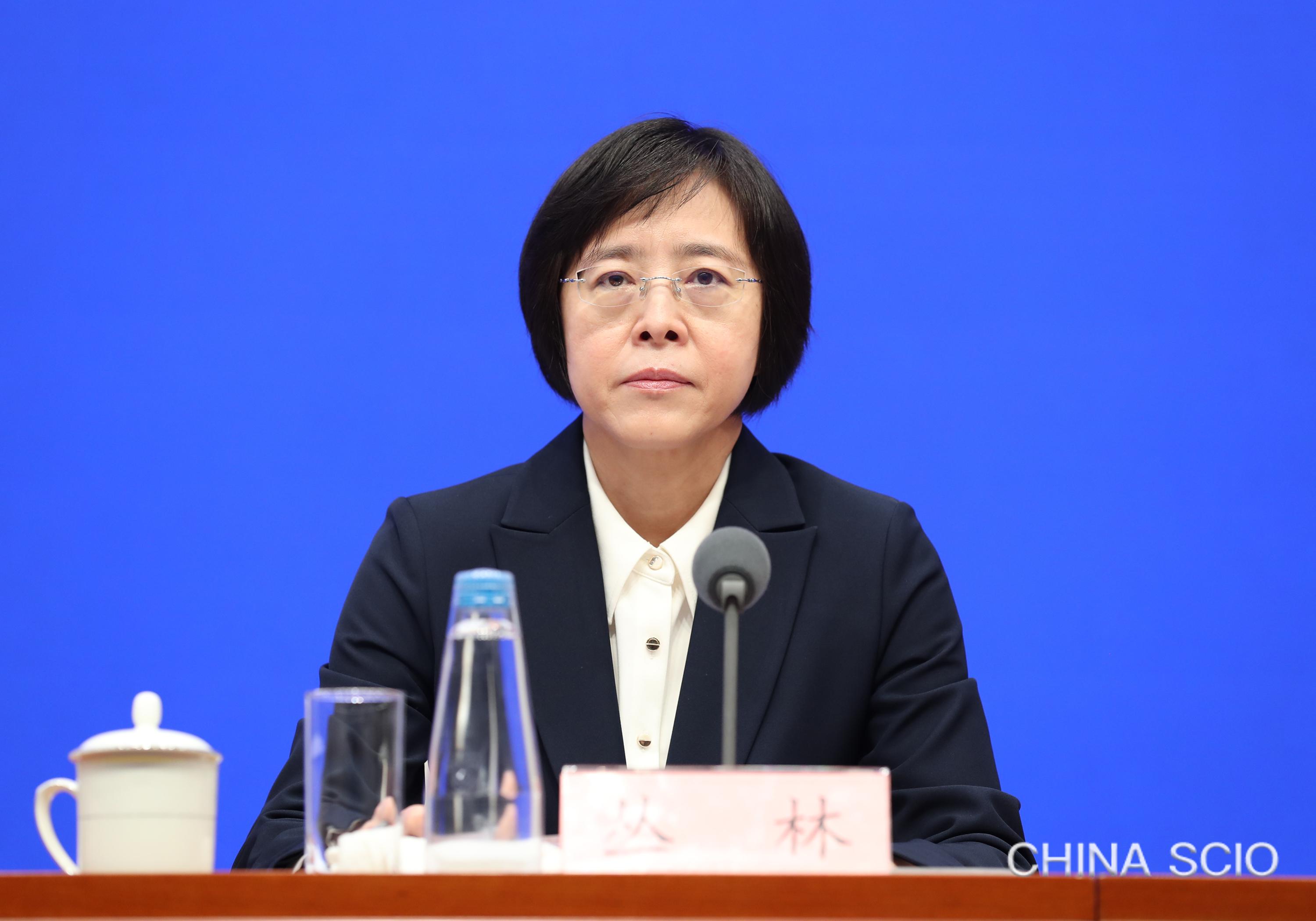
/7 Cong Lin
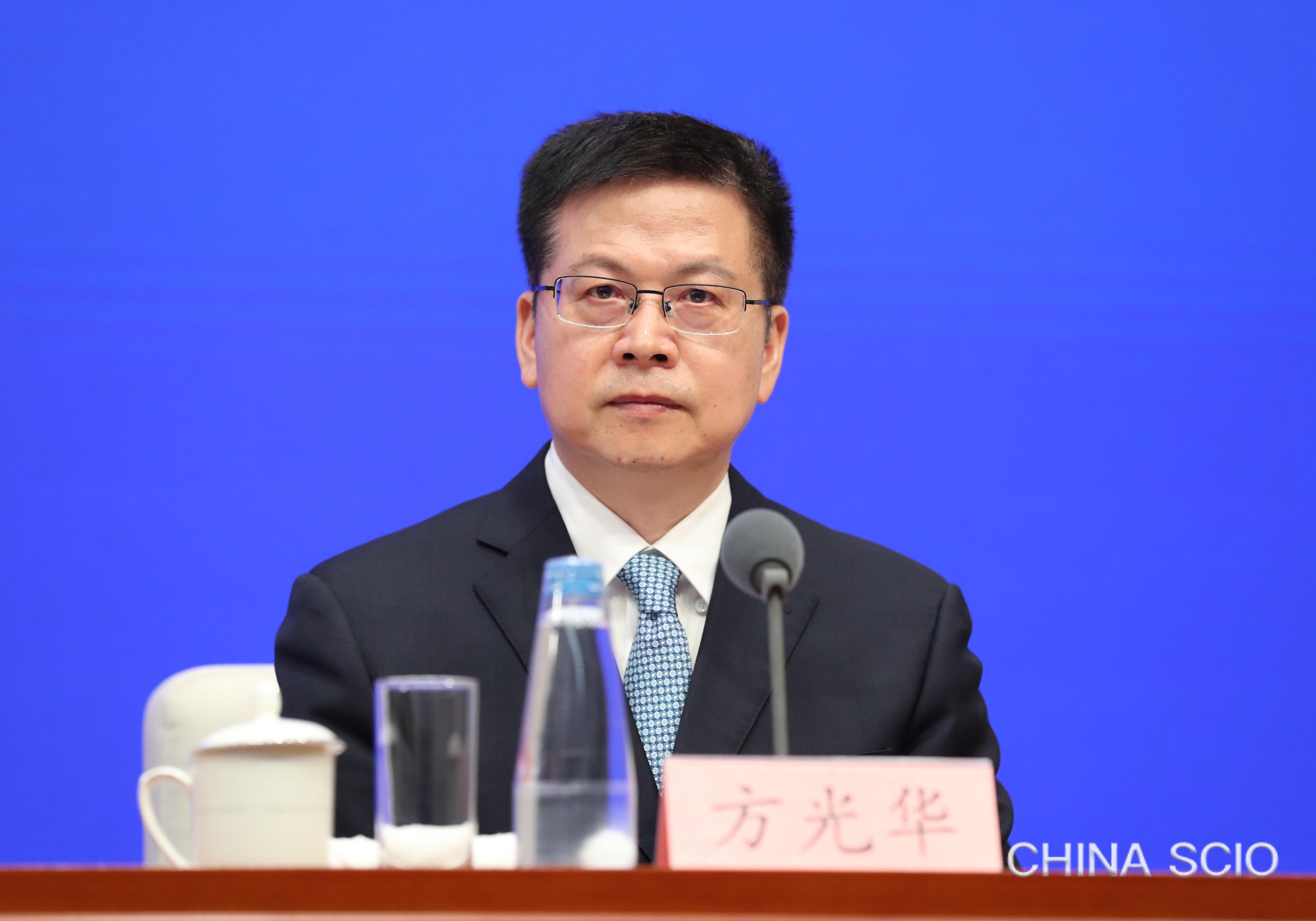
/7 Fang Guanghua
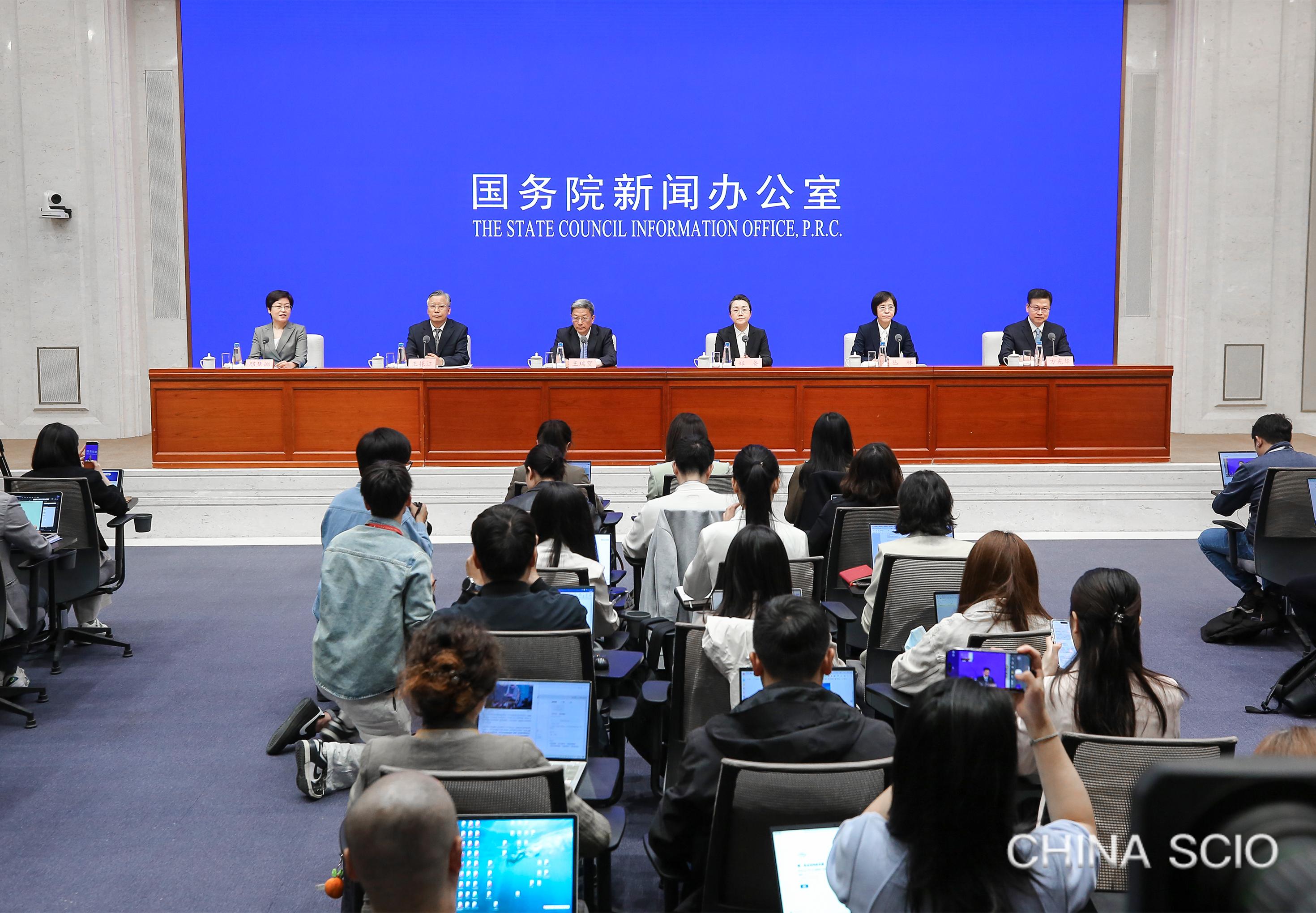
/ Group photo
SCIO briefing on financial policy package to stabilize the market and expectations
May 7, 2025SCIO briefing on preparations for The World Games 2025 Chengdu
April 29, 2025SCIO briefing on optimizing departure tax refund policy to boost inbound consumption
April 27, 2025