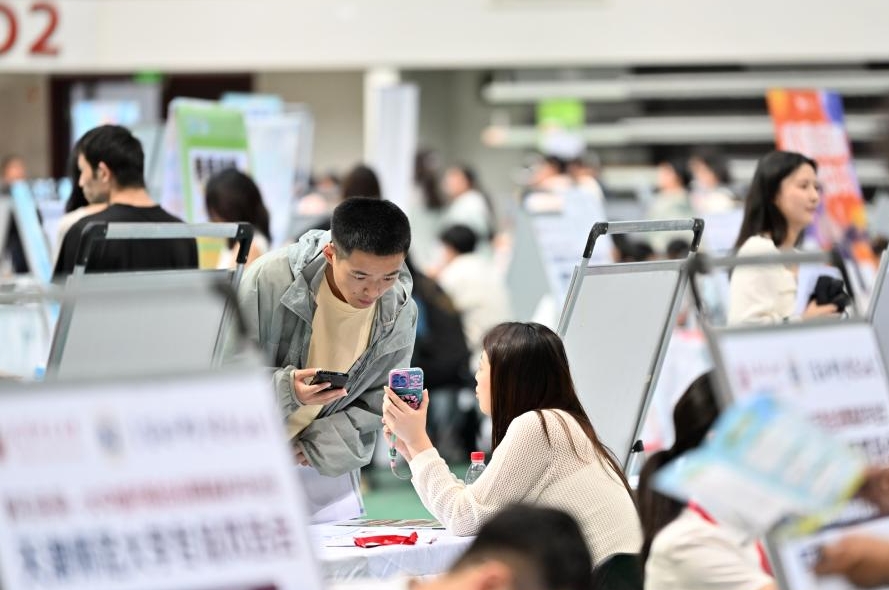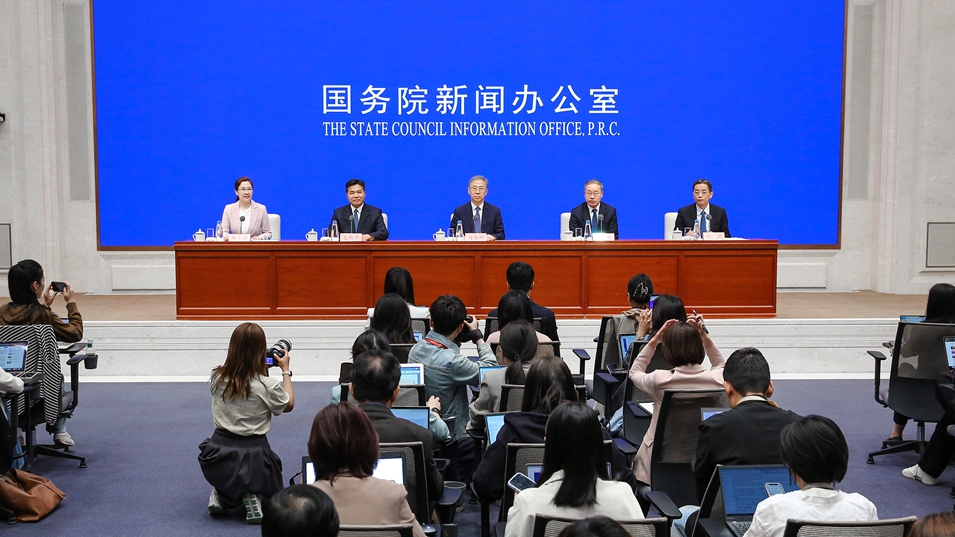

SCIO briefing about policies and measures on stabilizing employment, ensuring stable growth and promoting high-quality development
Beijing | 10 a.m. April 28, 2025
Speakers

Zhao Chenxin, vice chairman of the National Development and Reform Commission
Yu Jiadong, vice minister of human resources and social security
Sheng Qiuping, vice minister of commerce
Zou Lan, deputy governor of the People's Bank of China
Chairperson
Speakers:
Mr. Zhao Chenxin, vice chairman of the National Development and Reform Commission (NDRC)
Mr. Zou Lan, deputy governor of the People's Bank of China (PBC)
Mr. Sheng Qiuping, vice minister of commerce
Mr. Yu Jiadong, vice minister of human resources and social security
Chairperson:
Ms. Shou Xiaoli, director general of the Press Bureau of the State Council Information Office (SCIO) and spokesperson of the SCIO
Date:
April 28, 2025
Shou Xiaoli:
Ladies and gentlemen, good morning. Welcome to this press conference held by the State Council Information Office (SCIO). Today we are very pleased to invite Mr. Zhao Chenxin, vice chairman of the National Development and Reform Commission (NDRC); Mr. Yu Jiadong, vice minister of human resources and social security; Mr. Sheng Qiuping, vice minister of commerce; and Mr. Zou Lan, deputy governor of the People's Bank of China (PBC), to brief you on the policies and measures for stabilizing employment, ensuring stable growth and promoting high-quality development, and to answer your questions.
Now, I'll give the floor to Mr. Zhao for his introduction.
Zhao Chenxin:
Good morning. I am very pleased to attend today's press conference. I will start by introducing the overall situation to you all.
On April 25, the Political Bureau of the Central Committee of the Communist Party of China (CPC) held a meeting to analyze the current economic situation and deliberate on follow-up economic work. The meeting emphasized the necessity of adhering to the general principle of seeking progress while maintaining stability, fully and faithfully implementing the new development philosophy, and accelerating the establishment of a new development paradigm. It called for balancing domestic economic priorities with international economic and trade engagements, resolutely focusing on managing our own affairs well, and steadfastly expanding high-standard opening up. It called for efforts to be concentrated on stabilizing employment, supporting businesses, securing markets and managing expectations, and using the certainty of high-quality development to counter the uncertainties arising from rapid changes in the external environment. As such, the meeting provided clear direction and guidance for the next phase of economic work. This fully reflects the high importance that the CPC Central Committee with Comrade Xi Jinping at its core attaches to economic work, and fully demonstrates its confidence and determination to maintain stable economic operation.
The meeting particularly emphasized the need to continuously improve the policy toolkit for stabilizing employment and ensuring economic growth. Previously, on April 18, the State Council Executive Meeting had already deliberated on several measures aimed at stabilizing employment, ensuring economic growth and promoting high-quality development. Here, I would like to highlight the key initiatives being implemented in accordance with the decisions and plans of the CPC Central Committee and the State Council, focusing on measures to stabilize employment, ensure stable growth and promote high-quality development. These measures represent a continuation and extension of the policy package that has been rolled out since last September, as outlined by the Central Economic Work Conference and the tasks deployed at the "two sessions." They serve as crucial steps to respond to changes in the external environment and concrete actions to implement the decisions and deployments of the CPC Central Committee and the State Council. The Central Economic Work Conference has explicitly called for improving the toolkit of policies, making dynamic adjustments based on the extent of external impacts, strengthening unconventional and counter-cyclical adjustments, and enhancing the foresight, targeting and effectiveness of macro-regulation. Since the CPC Central Committee deployed and launched a package of incremental policies last year, in accordance with the requirements and in coordination with relevant departments of the State Council, the NDRC has been closely monitoring changes in the domestic and international economic conditions while dynamically updating and improving the policy toolkit. The newly introduced measures represent another major decision by the CPC Central Committee and the State Council, reflecting their scientific assessment of the current conditions and resolute, well-timed response to the evolving circumstances.
These measures specifically encompass five key aspects. I will now outline the specific measures, summarizing the concrete initiatives. My colleagues from the relevant departments will provide further details during the Q&A session, and the corresponding policies will be introduced one by one in due course. In terms of employment support, key measures include encouraging enterprises to actively stabilize employment, scaling up vocational skills training, expanding work-for-relief programs, and strengthening public employment services. In terms of stabilizing foreign trade, key measures include providing tailored support by industry and enterprise, helping export enterprises mitigate risks, increasing the overseas expansion of service products, and encouraging reinvestment by foreign-invested enterprises in China. In terms of promoting consumption, key measures include focusing on expanding service consumption, strengthening care for seniors with disabilities, boosting automobile consumption, and establishing a skills-oriented salary distribution system. In terms of actively expanding effective investment, key measures include improving consumption infrastructure, vigorously revitalizing private investment, and establishing new policy-based financial tools. In terms of fostering a favorable environment for stable development, key measures include continuously stabilizing and activating the capital market, consolidating the stable trajectory of the real estate market, and enhancing financial support for the real economy. These policies are all designed to be highly targeted and actionable, with a focus on delivering tangible benefits to businesses and the public. They will be rolled out on a case-by-case basis as each measure is finalized.
Next, the NDRC will actively work with all relevant parties to ensure the implementation of these measures. At the same time, in accordance with the requirements of the CPC Central Committee and the State Council, we will institutionalize open-ended policy research and preparation, ensure adequate contingency plans are in place, continuously improve the policy toolkit for stabilizing employment and ensuring stable growth, and promptly introduce additional reserve policies in response to changing conditions. We are confident that the implementation of these measures will provide strong support for the economy, fostering steady and sound economic development while maintaining overall social stability.
That concludes my introduction. Now, my colleagues and I will address questions you might have.
Shou Xiaoli:
Thank you, Mr. Zhao, for the introduction. The floor is now open for questions. Please identify the news outlet you represent before asking your questions.
_ueditor_page_break_tag_Market News International:
I have two questions. Firstly, recently, there has been turbulence in the U.S. treasury and U.S. dollar exchange rate markets. Could the PBC comment on how this might impact the Chinese market? Is there concern that a decline in U.S. treasuries could affect the return on China's U.S. dollar assets? And how does the PBC view the performance of the yuan exchange rate this year? And the second question is, China's Q1 GDP grew by 5.4%. Given current economic trends and the outlook for trade tension with the U.S., are authorities confident that the already announced policy plan is sufficient to reach the around 5% GDP growth target for this year? Or will more additional measures be needed? Thank you.
Zou Lan:
Thanks for your questions. I will address the first one. Recently, the U.S. announced significant tariff increases on multiple economies. This action seriously infringes on the legitimate rights and interests of various countries, disrupts the rules-based multilateral governance system, impacts the global economic order, and undermines the long-term stable growth of the global economy. At the same time, this has triggered severe fluctuations in global financial markets and heightened investors' risk aversion towards dollar assets. It has significantly lowered the dollar index, increased US treasury yields, intensified volatility in the US stock market, and led to a reallocation of global asset portfolios across regions. China's economy had a strong start this year, continuing its trend of recovery and improvement. The financial system remains stable, the financial market has shown strong resilience and smooth operation, whilst the RMB exchange rate against the U.S. dollar is around 7.3 yuan.
We have noticed that there have recently been some fluctuations in the U.S. treasury market. I want to emphasize that China's foreign exchange reserves have prioritized safety, liquidity, and value preservation and appreciation. Investments in the international financial market have been carried out based on market-oriented and professional principles, leading to an effective diversification of the investment portfolio. The impact of changes in a single market or asset on China's foreign exchange reserves is generally limited.
China's solid economic foundation, broadly balanced international payments, and resilient foreign exchange market will continue to provide strong support for maintaining the basic stability of the RMB exchange rate. First, the economic foundation is solid. On April 25, the meeting of the Political Bureau of CPC Central Committee made important arrangements for recent economic work. China's economy will continue to recover and improve, addressing the uncertainty of drastic changes in the external environment, with the certainty of high-quality development. Second, a basic equilibrium in the international balance of payments was maintained. Foreign trade enterprises are actively exploring diversified markets to quickly respond to the varied needs of the global market. We have opened up the financial markets in an orderly manner, continuously improved the facilitation level for cross-border investment and financing, and attracted stable inflows of medium- and long-term capital from abroad. Third, the foreign exchange market is resilient. Market players have become more mature with more rational trading behaviors. The proportion of enterprises using foreign exchange derivatives for hedging and the share of RMB cross-border receipts and payments are steadily increasing, allowing for better management of external shocks. Fourth, the volume of China's foreign exchange reserves remained basically stable. In recent months, the balance of foreign exchange reserves has remained stable at over $3.2 trillion.
In the next stage, the People's Bank of China will continue to implement a moderately accommodative monetary policy and increase support for the real economy. Meanwhile, we will adhere to a managed floating exchange rate system based on market supply and demand, with reference to a basket of currencies for adjustments. We will emphasize the decisive role of the market in exchange rate formation, enhance the resilience of the foreign exchange market, stabilize market expectations, and strengthen market oversight. We are committed to rectifying procyclical market behaviors and addressing activities that disrupt market order. Furthermore, we will take resolute measures to prevent the risk of exchange rate overshooting and maintain the fundamental stability of the RMB exchange rate at a reasonable and equilibrium level. Thank you.
Zhao Chenxin:
Thank you for the questions. Following Vice Governor Zou's answer, I will focus on the second question. You just mentioned the economic situation in the first quarter. China's economic performance is very impressive in Q1, demonstrating both substantive depth and distinctive characteristics.
First, these achievements fully demonstrate the strong resilience and vitality of China's economic development. Since late last year, particularly since the beginning of this year, a certain country has moved against the tide of history, recklessly wielding tariffs as weapons, seriously violating the legitimate rights and interests of China and other countries, severely undermining the multilateral trading system, and gravely disrupting the global economic order. Amid such a chaotic and complex external environment where anxiety and uncertainty prevail among various countries and the global economy has been deeply affected, China's economy grew 5.4% year on year in the first quarter, picking up by 0.4 percentage point from last year's full-year growth rate and demonstrating positive momentum. Moreover, this achievement came against the high comparison base of 5.3% growth in the first quarter of last year, fully demonstrating the strong resilience and vitality of China's economy. We have all just personally experienced this process and have a deep understanding about it. For example, we have seen exports defying downward pressure to achieve a growth of 6.9%, groundbreaking innovations in large models attracting global attention, and rapid growth in domestic tourist trips and consumer spending during the Spring Festival and Qingming Festival holidays. Chinese-made smart panoramic cameras, as well as "China-chic" products and related derivatives, are popular at home and abroad. Recent news reports have shown that in some foreign stores, there have even been 100-meter-long queues at 3 a.m. to purchase these goods. When we speak of China's economy having strong resilience and vitality, and of continuously rising social confidence, these are conclusions firmly grounded in facts. The examples I just mentioned are vivid proof of this.
Second, these achievements fully demonstrate that high-quality development is advancing steadily and solidly. China's economy has not only achieved impressive growth, but has also continuously made new progress and breakthroughs in innovative, coordinated, green, open and shared development. In terms of innovative development, the output of servers, new energy vehicles, and 3D printing equipment increased by 66.3%, 45.4% and 44.9% year on year, respectively. The accelerated application of large AI models in fields such as electronics and automobiles has driven a surge in demand for computing power products and intelligent products. In terms of coordinated development, the implementation of major regional strategies and regional coordinated development strategies has been intensified, continuously boosting the vitality of regional development. In terms of green development, the average concentration of fine particulate matter (PM2.5) in cities at the prefecture level and above nationwide fell 4.8% year on year, while the proportion of surface water monitoring sections with Class I-III water quality rose to 91%. In terms of open development, China has established comprehensive mutual visa exemption agreements with 27 countries and expanded its unilateral visa-free policy to include 38 countries. Inbound tourism totaled 34.683 million visitor arrivals, up 18.5% year on year. In terms of shared development, rural residents' per capita disposable income increased 6.5% year on year in real terms, 0.9 percentage point above the national average. This series of figures provides concrete evidence of the high-quality development of China's economy.
Third, these achievements fully demonstrate our efforts to strengthen certainty to cope with the uncertainties of the rapidly changing external environment. In terms of domestic demand, the contribution rate of domestic demand to economic growth in the first quarter of this year rose 6.3 percentage points compared to the fourth quarter of last year, more effectively fulfilling its role as the primary driver and stabilizing anchor of economic growth. In terms of external demand, more than 170 countries and regions recorded positive growth in imports from China, strongly supporting the diversification of China's export markets. In terms of people's livelihoods, 3.08 million new urban jobs were created, an increase of 50,000 additional jobs compared to the same period last year, while basic public services continued to improve. In terms of security assurance, the grain sowing area expanded steadily, while energy security was further strengthened. All these achievements have laid a solid foundation for the sustained, steady, and sound development of China's economy, fully demonstrating the inherent resilience of our economic development.
The achievements in the first quarter have laid a solid foundation for economic development throughout the year. Looking ahead, while the foundation for sustained economic recovery and improvement still needs further consolidation and external shocks are having a greater impact, we must also recognize that we have the strong leadership of the CPC Central Committee with Comrade Xi Jinping at its core and the institutional advantages of socialism with Chinese characteristics. We have favorable conditions, including deepening reform and opening up, broad market demand, and a solid industrial foundation. We also have stable support from macroeconomic policies, smooth supply-demand circulation, and expanding economic and trade opportunities. Additionally, we have abundant policy reserves and ample policy space. We will accelerate the implementation of measures to stabilize employment and the economy, and promote the rapid introduction and implementation of various policies. We will pay greater attention to improving the efficiency and effectiveness of policy implementation to ensure that policies reach people and enterprises directly. At the same time, we will intensify efforts to promote the implementation of established policies to ensure their effectiveness, including special actions to boost consumption, making good use of the 5 trillion yuan in national-level investment funds this year, and accelerating the establishment of the national venture capital guidance fund, among others. Most of these policies will be implemented in the second quarter, and policy orientation consistency will be continuously strengthened. No matter how the international situation changes, we will stay focused on our development goals, maintain strategic resolve, and concentrate on running our own affairs well. We are fully confident in achieving this year's economic and social development objectives and tasks.
In addition, I would like to add some points to supplement Mr. Zou's remarks. You just mentioned the current China-U.S. trade situation, and I would like to briefly share my views on this. The impact and shock of the so-called "reciprocal tariffs" imposed by the U.S. have global ramifications, with all parties observing, analyzing and responding to the situation. They engage in fabricating groundless accusations, acts of bullying and hegemony, and backtracking on their commitments. This has made the world increasingly see a fundamental truth: the so-called "reciprocal tariffs" seriously violate historical trends and economic principles, severely undermine international trade rules and order, and gravely damage the legitimate rights and interests of countries around the world. This is a typical example of unilateral bullying that harms others as well as themselves. Such conduct lacks popular support and will inevitably end in failure. China is the world's largest developing country and a dignified and responsible major country. Confronted with the unreasonable and abusive use of tariffs, China has resolutely stepped forward to counter hegemony and power politics by implementing a series of rational, proportionate and justified countermeasures. This is not only to safeguard China's own legitimate rights and interests, but also to uphold international fairness and justice, maintain the global free trade system, and defend the normal international economic order. China will stand with the vast majority of countries in the world and stand on the right side of history and the side of human progress. We firmly believe that going against the world and the truth will only lead to self-isolation, while aligning with global trends and justice is the only way to win the future.
_ueditor_page_break_tag_CCTV:
The current international environment is complex and severe. The high tariffs imposed by the U.S. have inevitably put pressure on China's economy, further highlighting the role of consumption in driving economic growth. May I ask what work and achievements the Ministry of Commerce has made in boosting consumption? What practical measures will be taken next to further unleash consumption potential and boost economic growth? Thank you.
Sheng Qiuping:
Thank you for your attention to our efforts to expand consumption. In the current complex and challenging international environment, vigorously boosting consumption and comprehensively expanding domestic demand is of special importance.
Since the beginning of this year, the Ministry of Commerce has resolutely implemented the decisions and arrangements of the CPC Central Committee and the State Council, vigorously carrying out special actions to boost consumption. We have intensified efforts to expand the scope of the trade-in program for consumer goods, promoted quality improvements and upgrading of commodity consumption, and promoted the high-quality development of service consumption. We have also organized various consumption promotion activities, such as national premium launch seasons, and successfully held the fifth China International Consumer Products Expo (CICPE), promoting the continuous expansion of consumption. In the first quarter, total retail sales of consumer goods grew 4.6% year on year, with the growth rate 1.1 percentage points higher than that of the previous year. In particular, growth in March was 5.9%, the fastest monthly rate since last year. The contribution rate of consumption reached 51.7%, an increase of 7.2 percentage points compared with last year.
Looking ahead, we will resolutely implement the deployments of the meeting the Political Bureau of the CPC Central Committee held on April 25. We will focus firmly on managing our own affairs well, introduce detailed measures aligned with policies aimed at stabilizing employment and the economy, and further enhance the role of consumption in driving economic growth. We will better cope with external risks and challenges through a strong domestic market. I would like to highlight the following four measures for you.
First, we will expand and improve the implementation of the trade-in program for consumer goods. Last year, the trade-in program for consumer goods achieved positive results. This year, we are building on that momentum and expanding the scope, with support funds doubling to 300 billion yuan. The number of supported categories for home appliances has expanded from eight to 12, and subsidies for purchasing new digital products such as mobile phones have been introduced. We are guiding local governments to promptly introduce and implement measures, ensuring that these policies are implemented quickly and that the public benefits as soon as possible. As of midnight on April 27, the nationwide program resulted in 2.814 million vehicle trade-ins, 49.416 million old home appliance trade-ins across 12 categories, 37.855 million purchases of new digital products such as mobile phones, 40.906 million kitchen and bathroom product upgrades, and over 4.2 million old electric bicycles trade-ins. The program drove total sales of over 720 billion yuan. Since the policy's implementation, many foreign trade and foreign-funded enterprises have received policy support. Numerous new consumer products that are intelligent, green, healthy, and fashionable have entered thousands of households. More than 120 million people have benefited from substantial subsidies and discounts. Moving forward, we will continue to enhance the effectiveness of the consumer goods trade-in program, allowing consumers to enjoy the policy benefits more quickly and effectively.
Second, we will push forward reforms in the automobile circulation and consumption sector. Building on efforts to promote trade-ins and meet consumer demand for new vehicle purchases, one of our key tasks this year is to organize pilot reforms in automobile circulation and consumption, supporting qualified areas to innovate and take the lead in various aspects such as new cars, used cars, scrapped vehicles and the automotive aftermarket. We have encouraged relevant regions to optimize car purchase and traffic restriction policies to better meet residents' car-buying needs. We have focused on efficiently completing tasks, built a national information platform for the entire automobile life cycle, broken down data silos, and facilitated used car transactions. Furthermore, we have supported the local development of automotive aftermarket sectors including vehicle modification, RV camping and classic cars, promoted automobile sports and culture, extended the automobile consumption chain and worked to cultivate new growth areas in vehicle consumption.
Third, we will implement initiatives to improve service consumption quality and benefit consumers. Recently, we have worked with relevant departments to introduce the 2025 work plan for improving service consumption quality and benefiting the public, the action plan for increasing the number of "silver-haired" tourism trains, the special action plan to promote health consumption, and several measures to expand and upgrade home services consumption. In the first quarter, 187 tourist trains were operated, up 30% year on year, with elderly tourists accounting for nearly 80%. We implemented initiatives to expand and upgrade the "15-minute convenient living circle" pilot, with priority on filling service gaps for older adults and children to create a "circle of happiness" for residents. Looking ahead, we will actively respond to public expectations, address shortcomings and weaknesses in service consumption, and work with relevant departments to formulate comprehensive policy measures to support service consumption. We will carry out activities to expand consumption, such as the service consumption season, to create service consumption hotspots. Adhering to the principle of "opening up externally and relaxing restrictions internally," we will enhance policy support and continuously expand the supply of diversified services such as health, elderly care, child care and home services to better meet people's growing needs for a better life.
Fourth, we will hold a series of activities for the "Shopping in China" campaign. On April 13, at the fifth CICPE, we jointly launched the "Shopping in China" campaign with relevant departments. We directed local governments to focus on the first-launch economy and hold first-launch, first-show and first-exhibition events, as well as a variety of colorful and diverse special activities in four major areas: boutique shopping, gourmet cuisine, exciting tourism and exquisite performances. "Shopping in China" caters not only to Chinese consumers but also to people worldwide. Yesterday afternoon, we held a press conference announcing policies to further optimize departure tax refunds and boost inbound consumption. For example, enterprises with a tax credit rating of M or above can apply to become tax refund stores. The minimum purchase threshold for refunds has been lowered from 500 yuan to 200 yuan, and the cash refund limit has been raised from 10,000 yuan to 20,000 yuan, making it more convenient for foreign tourists to obtain tax refunds. I sincerely welcome friends from abroad to visit China to shop for quality products, enjoy our delicious food, and experience our beautiful scenery.
I believe that with the continued implementation of consumption-boosting policies, consumption will continue to show a stable development trend, and the vitality and potential of China's supersized market will be further unleashed. Thank you.
_ueditor_page_break_tag_Xinhua News Agency:
The Political Bureau of the CPC Central Committee meeting proposed continuously improving the policy toolbox for stabilizing employment and the economy. How would you describe the employment situation this year? What measures will be taken in the future? Thank you.
Yu Jiadong:
Thank you for your questions. The CPC Central Committee and the State Council attach great importance to the employment work. General Secretary Xi Jinping emphasized that efforts must be made to ensure employment, which is the most basic component of people's wellbeing. All regions and departments have resolutely implemented the instructions and taken various measures to stabilize and expand employment. In the first quarter of this year, overall employment remained generally stable, with 3.08 million new urban jobs created nationwide, an increase of 50,000 year on year, exceeding the expected pace. This was also mentioned by Mr. Zhao just now. The average surveyed urban unemployment rate in the first quarter was 5.3%, lower than the expected control target. Employment among key groups such as college graduates, migrant workers and people having difficulty securing employment was stable.
At the same time, the foundation for the sustained recovery and improvement of the economy needs to be further consolidated. With increasing impacts of external shocks, the United States has imposed multiple rounds of high tariffs, leading to production and operation difficulties for some foreign trade enterprises. This has affected the employment of some workers, causing continued upward pressure on employment. On April 25, the meeting of the Political Bureau of the CPC Central Committee analyzed and studied the current economic situation and economic work, releasing a clear signal of stabilizing employment and the economy and promoting high-quality development. We will resolutely implement the decisions and arrangements of the CPC Central Committee and the State Council, face difficulties head-on, move forward under pressure, and make every effort to ensure employment remains stable overall. We will focus on five key areas:
First, we will continue to tap into potential and expand employment opportunities. We will carry out the implementation plan for tapping into potential and expanding employment opportunities, and introduce incentive policies to boost job creation in key areas such as the development of new quality productive forces, creation of new areas of consumer demand, implementation of key engineering projects, and provision of basic public services. Last month, the leading group on employment work under the State Council issued a document on intensifying efforts in tapping into and expanding job opportunities in key areas, key industries, urban and rural communities, and among micro, small and medium-sized enterprises. It also aims to support key groups in seeking employment and starting businesses. On the other hand, we will actively expand new employment growth areas. Recently, some large enterprises have released large-scale recruitment plans. According to data from market institutions, in the first quarter, the demand for recruitment in industries such as consumer services, transportation and logistics, and resident services increased year on year, and the demand for positions involving AI, such as robotics algorithm engineer, increased by more than 30% year on year. All these reflect the significant potential and strong resilience of China's labor market.
Second, we will roll out a batch of policies to stabilize employment. We will fully implement existing policies, speed up the delivery of unemployment insurance premium refunds, guaranteed loans and employment subsidies, and extend the policy of reducing premiums for unemployment insurance and workers' compensation. Previously, we increased the quota for special loans aimed at stabilizing and expanding employment, with a maximum credit line of 50 million yuan for micro and small enterprises and a maximum credit line of 10 million yuan for individuals. Recently, together with the MOF, we allocated 66.7 billion yuan of central government employment subsidy funds to ensure policy implementation. At the same time, we will speed up the introduction of incremental policies, including enhancing support for enterprises to create more jobs, increasing employment subsidies for individuals and raising the proportion of refunds for unemployment insurance premiums for enterprises significantly affected by tariffs.
Third, we will prioritize employment for key groups. We will make the employment of college graduates and other young people a top priority, speed up the implementation of the 17 measures for promoting their employment in 2025 just issued by the MOHRSS, MOE and MOF, launch an employment service campaign, and stabilize employment levels. We will expand channels for jobseekers both close to their homes and in other places, increase support for work-relief programs, promote the employment and income increases of migrant workers, and maintain the scale of employment of the 30 million people lifted out of poverty. We will strengthen employment assistance for people having difficulty securing employment, implement the policy of "two preferential treatments and three subsidies," which consists of preferential loans and tax benefits, and training, job and social security subsidies, to ensure the bottom line of employment for disadvantaged groups.
Fourth, we will intensify efforts in vocational skills training. We will fully implement the "Skills Illuminate the Future" campaign and promote a project-based training model that integrates four key elements: job demand, skills training, skills evaluation and employment services. Differentiated subsidy support will be implemented to better align training with employment and increasing incomes. We will support enterprises significantly affected by tariffs to organize various forms of training, such as on-the-job training and job transfer training to help retain their workforce.
Fifth, we will strengthen public employment services. We will mobilize public employment service agencies and human resource service enterprises to organize special recruitment sessions and targeted job placements for cities and industrial parks affected by tariffs to help workers' transition to new employment. We will strengthen the protection of rights and interests of those in flexible employment and new forms of employment, and carry out special actions to clean up and rectify the order of the human resource market, thereby better protecting workers' employment rights.
In addition, I would like to add a few words. Along with relevant departments, we have conducted a comprehensive analysis and full prediction of this year's employment situation and are fully prepared to address various uncertainties. Our employment policy toolkit is sufficiently stocked. We have made policy reserves in encouraging enterprises to create more jobs, supporting enterprises to stabilize and expand employment, and helping workers to improve skills as well as seek employment and start businesses. These policies will be rolled out in a timely manner according to changes in the situation. Through our joint efforts, we believe that we have the confidence and strength to continue maintaining the overall stability of employment. Thank you.
_ueditor_page_break_tag_21st Century Business Herald:
The meeting of the Political Bureau of the CPC Central Committee has emphasized increasing support for the real economy. Looking at the data of the credit structure, what progress has been made in financial support for major strategies, key areas and weak links? What are the plans moving forward? Thank you.
Zou Lan:
Thank you for your questions. Let me address these. Since the beginning of this year, the PBC has earnestly implemented the decisions and deployments of the Central Economic Work Conference and the Government Work Report, increased macro-control efforts, strengthened counter-cyclical adjustments, comprehensively used various monetary policy tools, strengthened the coordination of various policies, urged banks to continuously optimize the credit structure, and promoted the continuous recovery and improvement of the economy.
In terms of total volume, the PBC has injected targeted liquidity, ensuring reasonable growth in money and credit. At the end of March, the broad money M2 balance was 326 trillion yuan, a year-on-year increase of 7%; the stock of social financing was 423 trillion yuan, a year-on-year increase of 8.4%; and the balance of RMB loans was 265 trillion yuan, a year-on-year increase of 7.4%.
Regarding the growth rate of loans, I'd like to point out that since the end of last year, the government has implemented a large-scale debt swap program, under which local governments issue special refinancing bonds to repay existing implicit debts, mainly in the form of loans. This has had some impact on the analysis of statistical data. If this factor is excluded, the year-on-year growth rate of the balance of RMB loans should exceed 8% on a comparable basis.
In terms of structure, financial support was strengthened for key areas, and support was significantly increased for key areas and weak links of the national economy, such as technological innovation, green and low-carbon development, and inclusive finance. At the end of March, the loan balance of innovative SMEs that use special and sophisticated technologies to produce novel and unique products was 6.3 trillion yuan, a year-on-year increase of 15.1%; the balance of green loans exceeded 40 trillion yuan, an increase of 9.6% from the beginning of the year; the balance of inclusive small and micro loans was about 35 trillion yuan, a year-on-year increase of 12.2%; and the number of inclusive finance credit recipients for small and micro businesses was about 62 million, an increase of 930,000 in the first quarter of this year, which was 550,000 more than the increase in the same period of last year. The balance of RMB household consumption loans was close to 60 trillion yuan, increasing by about 250 billion yuan in the first quarter, which was over 200 billion yuan more than the increase recorded in the same period of last year. The balance of personal housing loans was about 38 trillion yuan, increasing around 220 billion yuan in the first quarter, which was over 200 billion yuan more compared with the increase in the first quarter of last year.
In terms of loan periods, medium- and long-term loans continued to maintain a relatively high growth rate, providing funding guarantees for stable investment. At the end of March, the outstanding medium- and long-term loans of all sectors by major financial institutions grew by 8.5%. Among them, outstanding medium- and long-term loans in the manufacturing industry grew by 9.3%; outstanding medium- and long-term loans in the industrial sector grew by 11.2%; outstanding medium- and long-term loans in the infrastructure industry grew by 8%; and outstanding medium- and long-term loans in the service industry excluding real estate grew by 7.5%, all of which were higher than the average growth rate of various loans.
From the perspective of interest rates, the PBC has promoted a reduction of financing costs for the real economy, and the interest burden on business entities and residents continued to decrease. In March this year, the weighted average interest rate of newly issued corporate loans was about 3.3%, a decrease of 0.45 percentage point year on year; and the interest rate of newly issued inclusive small and micro enterprise loans was about 3.6%, a decrease of 0.55 percentage point year on year.
Next, in accordance with the spirit of the meeting of the Political Bureau of the CPC Central Committee, the PBC will step up the implementation of more proactive and effective macro policies, make full use of the appropriately accommodative monetary policy, and make timely cuts to required reserve ratios and interest rates based on domestic and international economic conditions and financial market operations to maintain ample liquidity. We will fully leverage the role of monetary policy tools in adjusting both the monetary aggregate and structure, introduce new structural monetary policy tools, and provide targeted and stronger financial support in key areas of stabilizing employment and growth.
First, we will take targeted and stronger steps to stabilize employment. We will more vigorously promote the implementation of the entrepreneurial guarantee loan policy, and increase support in terms of entrepreneurship and employment for key groups such as returning migrant workers, new urban residents, college graduates and women.
Second, we will take targeted and stronger steps to stabilize foreign trade. We will guide financial institutions to not call in or cut off loans for SMEs which have a high dependence on foreign trade, are facing temporary difficulties and are producing competitive products to ensure reasonable financing needs.
Third, we will take targeted and stronger steps to promote consumption. We will focus on the supply side of service consumption, concentrating on key areas such as culture, tourism, sports, catering, accommodation, education and training, increase financial support, form a policy synergy, and jointly promote substantial improvements and enhancements of service consumption supply to meet people's increasingly diverse service consumption needs.
Fourth, we will take targeted and stronger steps to expand investment. We will support financial institutions in innovating financial tools, increase the issuance of medium- and long-term loans, and provide financing support for key areas such as implementing major national strategies and enhancing security capacity in key areas as well as promoting the large-scale equipment upgrades and consumer goods trade-in programs.
In addition, we are also studying how to enrich the policy toolbox, and will introduce incremental policies in due course to help stabilize employment, enterprises, markets and expectations, thereby effectively consolidating the fundamentals of economic development and social stability. Thank you.
_ueditor_page_break_tag_ThePaper.cn:
In the current international situation, the role of domestic demand is becoming increasingly important. Last year, the Central Economic Work Conference emphasized vigorously boosting consumption and investment returns and comprehensively expanding domestic demand. What progress has been made in this regard? And what policies will be introduced to better leverage the main driving force of domestic demand? Thank you.
Zhao Chenxin:
Thanks for your question. I will answer it. In April 2020, General Secretary Xi Jinping proposed fostering a new pattern of development that is focused on the domestic economy and features positive interplay between domestic and international economic flows. Over the past five years, significant progress has been made in accelerating the construction of the new development pattern, with domestic demand increasingly serving as the main engine of China's economic growth. Through this process, we have also accumulated rich practical experience and counter-cyclical policy tools.
Based on first-quarter performance this year, various macroeconomic policies have continued to take effect, and domestic demand potential is being released at an accelerated pace. Let me give some examples. Trade-in sales of five major consumer categories — automobiles, home appliances, digital products, home improvement and kitchen/ bathroom fixtures, and electric bicycles — exceeded 500 billion yuan, helping drive total retail sales of consumer goods up 4.6% year on year, an improvement of 1.1 percentage points from the whole of last year. Another example: large-scale equipment renewal drove nationwide investment in equipment and tools up 19% year on year, contributing 64.6% to total investment growth and pushing the overall investment growth rate 1 percentage point higher than last year. As another example, the 2025 market access negative list was recently released, reducing restricted items from 151 in 2018 to 106 currently. As the list gets shorter, markets become more vibrant and economic circulation flows more smoothly.
As the world's second-largest economy and a major country with a population of over 1.4 billion, China has enormous potential and space to expand domestic demand, and these demands represent highly tangible needs. Let me provide some examples. In the consumer sector, China has 353 million cars and over 3 billion major household appliances, including refrigerators, washing machines and air conditioners. Following natural replacement cycles, this generates trillions of yuan in demand every year. Beyond durable goods, there is enormous new demand for consumer services such as entertainment, tourism and sports. The release of "Ne Zha 2" earlier this year and the thriving holiday tourism market demonstrate the vast potential of service consumption. In terms of investment, China's nationwide equipment assets have a net book value of approximately 40 trillion yuan. As high-quality development advances, annual investment demand for equipment renewal and upgrading will exceed 5 trillion yuan. According to industry estimates, the scale of China's AI industry surpassed 700 billion yuan in 2024, maintaining growth rates above 20% for multiple consecutive years. Future investment opportunities will continue to expand. China is also deepening the implementation of its new urbanization strategy. Each 1 percentage point increase in the urbanization rate can drive investment demand in the trillions of yuan. Take urban underground pipeline construction and renovation as an example: preliminary estimates show that approximately 600,000 kilometers of gas, drainage, and other pipelines will need upgrading and renovating over the next five years, generating about 4 trillion yuan in investment demand. We clearly have tangible and enormous potential for expanding domestic demand.
The specific approaches and methods for better leveraging domestic demand as the primary economic driver are clear: increase incomes for middle- and low-income groups, significantly boost consumption, expand effective investment, and strengthen domestic circulation. Going forward, the NDRC will earnestly implement the decisions and plans of the CPC Central Committee and the State Council, and take solid steps to advance work in three key areas. In terms of boosting consumption, we recently issued the second batch of trade-in program funding for this year. The first two batches total over 160 billion yuan, with approximately 140 billion yuan more to be disbursed gradually based on regional implementation progress. We will also establish and implement a child care subsidy system, create specialized re-lending facilities, and increase support for key service consumption sectors and elderly care industry development. At the same time, we will deepen the implementation of special initiatives to boost consumption and promptly introduce sector-specific measures. Guidance will be provided to cities with vehicle purchase restrictions to issue additional purchase quotas for priority groups such as families with long lottery wait times and car-free households. In terms of expanding investment, we will include industrial software upgrades and other updates within the scope of equipment renewal and trade-in policy support, accelerate investment in consumer infrastructure and social sectors, formulate and implement the "doubling" initiative for charging facilities, and support parking space construction in cities with permanent urban populations exceeding 3 million, particularly in super-large and mega cities. We will strive to release the complete 2025 project list for the implementation of major national strategies and security capacity building in key areas, along with central budget investment allocations, by the end of June. At the same time, new policy-based financial instruments will be established to address capital funding shortages in project construction. In terms of smooth circulation, we will accelerate the construction of a unified national market, conduct a six-month campaign to identify and remove market access barriers, accelerate the promulgation of the Private Sector Promotion Law, and help foreign trade enterprises expand domestic sales. Meanwhile, we will accelerate deep integration between technological and industrial innovation, establish a national venture capital guidance fund, and promote the deep integration of AI with 60 key industry sectors and 700 core application scenarios.
That's all I have to share. Thank you.
_ueditor_page_break_tag_Beijing Youth Daily:
Just now, the MOHRSS provided an overview of the current employment situation. I'd like to ask about the large-scale vocational training programs you mentioned earlier. Can you provide more details on the specific measures? How is this work progressing? Thank you.
Yu Jiadong:
Thank you for your interest in vocational training programs. To implement the decisions and plans of the CPC Central Committee and the State Council and respond to the current employment situation, the MOHRSS is working with relevant departments to launch large-scale vocational training programs under the "Skills Illuminate the Future" campaign.
First, we will take an employment-focused approach to make vocational training more targeted. From this year to 2027, we will focus on sectors with substantial employment capacity and strong hiring demand, including elderly care and childcare services, advanced manufacturing, modern services, and emerging occupations. At the same time, we will target key groups, such as rural migrant workers and college graduates seeking employment, to make training programs more targeted and effective. Meanwhile, we will integrate training into industrial chains, leverage enterprises' leading role in training, and create a skills ecosystem that connects industry, education and assessment to promote the integrated development of enterprise employee training, student employment placement, and workforce skill advancement.
Second, we will strengthen policy incentives to boost training enthusiasm among enterprises and workers. We will coordinate employment subsidy funds, unemployment insurance funds, and other funding sources to implement a high-skilled talent development program. This will include establishing high-skilled talent training centers, skills practice facilities, and master craftspeople workshops at qualified enterprises to leverage their leading role in skills training. We will support vocational training for key groups, encourage enterprises to foster high-skilled talent, implement targeted subsidy policies, and boost workers' intrinsic motivation to participate in training.
Third, we will implement the "new eight-level vocational skill rating" system to create smoother pathways for workers to improve their skills and achieve greater success. We will encourage workers to undergo vocational skill level evaluations upon completing their training. Those who earn the relevant professional qualification certificates, or obtain vocational skill level certificates while meeting the eligibility criteria, will receive skill improvement subsidies in accordance with regulations to boost their competitiveness in the job market. Enterprises are encouraged to conduct vocational skills evaluations independently. By promoting the evaluation and appointment of chief technicians and special-grade technicians, companies will be guided to support employees in enhancing their vocational skill levels. Leading enterprises within the vocational skills ecosystem can function directly as vocational skill evaluation institutions. They will conduct skill assessments for employees throughout the production chain, issue vocational skill level certificates, and provide corresponding benefits in compliance with relevant regulations.
Fourth, we will improve the distribution system to promote skill-based income growth for workers. We will establish a skill-based salary distribution system and develop a minimum wage classification reference guide for skilled professionals. This will encourage enterprises to use vocational skill levels as a key factor in determining wages, promoting wage structures that prioritize critical roles, frontline production staff, and urgently needed skilled talent. We will guide enterprises to establish performance-based pay systems. This will align with vocational skill levels (positions). It will enable those who work more, as well as those with higher skills, and those who are willing to innovate to earn more.
Recently, the Ministry of Human Resources and Social Security, together with the NDRC, the Ministry of Civil Affairs, the Ministry of Commerce, and the Medical Insurance Bureau, issued special training programs for workers in elderly care services, domestic services, and long-term care. Going forward, more programs will be developed jointly with other departments, tailored to specific industries and sectors. Local human resources and social security departments are releasing catalogs of training institutions and training projects in accordance with the requirements of the Ministry of Human Resources and Social Security, all to provide guidance for workers so they can participate in training.
Next, we will step up efforts to actively build a system for promoting lifelong vocational skills training.This will enable high-quality and sufficient employment. We will do so through the implementation of a package of measures, all working towards boosting employment, strengthening incentives, supporting growth, and raising incomes through skills. This will encourage and clearly guide workers to participate in training and improve their skills. In turn, they will be able to secure better jobs and build a brighter future with their expertise. Thank you.
_ueditor_page_break_tag_Phoenix TV:
We have noticed that after the United States imposed high additional tariffs on China, many foreign trade enterprises have encountered great difficulties in exporting to the United States. May I ask what specific measures the Ministry of Commerce will take next to help these enterprises? Thank you.
Sheng Qiuping:
Thank you for your question. Since the beginning of this year, the development of China's foreign trade has been facing increasingly significant challenges, especially with the United States wantonly imposing unilateral tariffs and undermining Sino-US economic and trade cooperation. However, our vast number of foreign trade enterprises remain confident about their development prospects, and various policies to stabilize foreign trade have continued to be effective. As Mr. Zhao mentioned earlier, our foreign trade exports grew by 6.9% in the first quarter. According to the monitoring and prediction of big data business platforms, the overall exports have continued to grow steadily since April. To help foreign trade enterprises actively respond to external risks and challenges, we will remain goal-oriented and problem-oriented, focus on the needs of a wide range of enterprises, solve difficulties and problems in a timely manner, and ensure the effective implementation of the already issued policies to stabilize foreign trade with persistent efforts. We will continue to enrich the policy toolkit for stabilizing foreign trade and introduce new incremental policies and measures when appropriate. The key points include:
First, we will step up reforms to integrate domestic and foreign trade. On April 22, the Ministry of Commerce, together with relevant departments such as the NDRC, introduced a "package" of policies to help foreign trade enterprises expand domestic sales and accelerate the integration of domestic and foreign trade. Through the combination of "implementing policies and hosting activities," we will increase support for enterprises heavily affected by tariffs in four areas: market channels, domestic consumption, fiscal and financial support, and service guarantees. First, we will increase real financial support and promote the "three increases and three reductions" policy. The "three increases" means the government will increase fiscal funding, financial institutions will increase credit support, and insurance institutions will increase domestic trade insurance support. The "three reductions" policy refers to promoting the reduction or exemption of housing rent, booth fees, and internet traffic charges for struggling enterprises, as well as lowering the domestic sales costs for foreign trade companies. We are carrying out the "China Tour of Foreign Trade Quality Products" nationwide, with the main framework of "1+10+N," which means: holding one launch ceremony, focusing on the top 10 provinces in foreign trade and consumption, and organizing a series of key events. On April 13, we held the launch ceremony in Hainan, and local events of the "China Tour of Foreign Trade Quality Products" have been carried out one after another. We will actively encourage foreign trade enterprises in automobiles, home appliances, 3C, home decoration, and other industries to be included in the companies supporting the "trade-in" policy. In key industries such as light industry, textiles, clothing, and food, we aim to deepen coordination between production and sales, promote brands matching, and connect products with distribution channels. We will mobilize local governments, industry associations, e-commerce platforms, and major supermarkets and retailers to actively participate in the "China Tour of Foreign Trade Quality Products" campaign, working together to cope with external risks and challenges.
Second, we will help explore diversified international markets. The second phase of the 137th Canton Fair concluded yesterday, with 224,000 overseas buyers from 219 countries and regions around the world attending, setting a record high for the same period in its history. We will continue to maintain the importance of leading exhibitions such as the Canton Fair as a platform, and increase support for domestic exhibition fee reduction and exemption policies, strengthen foreign trade funds assistance for international exhibitions, and create a favorable environment for enterprises to expand into new markets. We will also provide more public information services for foreign trade enterprises, including compilations of foreign trade promotion updates and country-specific trade guides, etc., and offer information on the business environment and supply-demand situations of relevant countries for foreign trade enterprises, continuously improving the overseas trade service system.
Third, we will strengthen trade financial support and guarantees. We will work with relevant departments to further expand the scale and coverage of export credit insurance, giving foreign trade enterprises more confidence to take orders. We will guide financial institutions to increase financing support for foreign trade enterprises and make good use of the financial coordination mechanism for small and micro enterprises. This will further promote low-cost funds to directly reach small and micro foreign trade enterprises, optimize exchange rate hedging services for foreign trade enterprises, and enrich the toolkit.
Fourth, the innovative development of cross-border e-commerce has been accelerated. Last year, China's cross-border e-commerce imports and exports reached 2.63 trillion yuan, a year-on-year increase of 10.8%, becoming a new growth driver for stabilizing foreign trade. In response to changes in the external situation, we have accelerated the innovative development of new business forms of foreign trade such as cross-border e-commerce. Last week, the State Council agreed to establish integrated pilot zones for cross-border e-commerce in 15 cities and regions, including the entire Hainan island and Qinhuangdao, expanding the number of such zones in China to 178. We will facilitate the rapid and effective implementation of the newly established integrated pilot zones, while intensifying special campaigns to empower industrial clusters, foster brand cultivation, and enhance international cooperation in cross-border e-commerce, thereby upgrading the development of these pilot zones.
When meeting with representatives of the international business community, President Xi Jinping pointed out that China will unwaveringly advance reform and opening up, and will only open its door even wider. Recently, the "Work Plan for Accelerating the Comprehensive Pilot Program for Expanding Opening-up in the Service Industry" was issued. We are accelerating opening up in key industries such as telecommunications, medical care and finance, and actively promoting the expansion of opening up in the service industry. Next, we will continue to advance high-standard opening up, actively expand imports, build China's supersize market into a large market shared by the world, injecting new momentum into global economic development. We will proactively align with high-standard international economic and trade rules, and promote high-standard opening up in the fields of service trade and investment.
Facing the complex and ever-changing international situation, China will respond to uncertainties in the external environment with the certainty of expanding high-standard opening up, and continuously enhance the level of economic and trade cooperation with its trade partners. Thank you.
_ueditor_page_break_tag_Yicai:
This year, General Secretary Xi Jinping presided over a symposium on private enterprises, pointing out the direction for and strengthening confidence in the development of private enterprises. Recently, the China-U.S. trade war has re-escalated, bringing new problems and challenges to the development of private enterprises. What policy arrangements has the PBC made in terms of financial support for the development of private enterprises? Thank you.
Zou Lan:
Thank you for your question. I will answer this one. In recent years, the PBC, in accordance with the arrangements of the CPC Central Committee and the State Council, has worked unswervingly both to consolidate and develop the public sector and to encourage, support and guide the development of the non-public sector, actively improved the policy framework, promoted the construction of financial service capabilities, improved the incentive and restraint mechanisms, and strengthened supervision and implementation, providing strong financial support for the high-quality development of the private sector.
First, the guiding role of policies has been strengthened. We have successively organized symposiums and promotional meetings on financial support for the development of private enterprises, and introduced 25 measures to boost financial support for the private sector. These measures have guided financial institutions to adhere to the principle of "equal treatment," eliminate ownership discrimination, and enhance the sense of gain and satisfaction of private enterprises in financial services. To effectively respond to the impact of tariff changes on foreign trade enterprises, financial institutions have been encouraged to increase financial support for private foreign trade enterprises in accordance with market-oriented and law-based principles.
Second, incentives and constraints have been strengthened. We have comprehensively utilized a range of monetary and credit policy tools such as re-lending for supporting agriculture and small businesses across all stages of bank credit services, established and improved mechanisms for policy guidance and funding support, conducted quarterly policy effect evaluations, and urged financial institutions to increase support for private enterprises.
Third, collaboration between departments has been strengthened. Focus has been given to coordination between financial, fiscal and industrial policies. While increasing financial supply, we have guided private enterprises to operate in a lawful, compliant and good-faith manner and improve financing support mechanisms. This approach has ensured that various policies worked in the same direction and formed synergy, so that more financial resources would be guided to flow to small and micro enterprises and private enterprises. As of the end of March 2025, the outstanding loans of privately owned enterprises amounted to approximately 45 trillion yuan, with an increase of 2.4 trillion yuan in the first three months. The number of privately owned enterprises that were granted credit lines exceeded 8 million, up 7% year on year. The weighted average interest rate of new loans issued to privately owned enterprises in March was approximately 3.41%, down 58 basis points from the same period last year.
To address new difficulties and challenges, going forward, the PBC will mainly focus on the following aspects to continue improving financial services for private enterprises:
First, we will continue to increase the input of financial resource elements. We will implement a moderately easy monetary policy and maintain adequate liquidity to create a sound monetary and financial environment for the development of private enterprises. We will continue to work on implementing the 25 measures to provide the private sector with financial support, and gradually increase the proportion of loans to private enterprises. We will make good use of structural monetary policy tools such as re-lending for sci-tech innovation and technological transformation, focus on areas such as science and technology, green and low-carbon development, and consumption promotion to increase financial support for private enterprises. We will urge financial institutions not to rashly withdraw, cut off or defer loans and to actively meet the reasonable funding needs of private foreign trade enterprises.
Second, we will take targeted measures to broaden the diversified financing channels for private enterprises. We will leverage the instruments supporting private enterprises in debt financing to expand the scale of debt financing by private enterprises. We will launch debt financing tools to promote equipment upgrades and consumer goods trade-ins, supporting private enterprises and other entities in bond financing. We will make good use of re-lending facilities for share repurchases and increases to meet the funding needs of private listed companies for market value management. We will improve policies to facilitate cross-border investment and financing to enhance the efficiency of private enterprises in utilizing foreign capital.
Third, we should make greater efforts to promote the improvement of supporting mechanisms for private enterprise financing. We should fully promote the application of the national SMEs capital flow credit information sharing platform, establish a credit enhancement system for private SMEs, and solve the financing constraints such as insufficient credit and information asymmetry for private SMEs. We should continue to strengthen the coordination of financial, fiscal, and industrial policies to jointly create a better development environment for private enterprises. Thank you.
Shou Xiaoli:
Due to time constraints, this will be the last question.
_ueditor_page_break_tag_China Daily:
China needs to import a large amount of grain, energy, and other bulk commodities every year. How much impact will the so-called "reciprocal tariffs" imposed by the United States on China have on China's grain and energy supply security? Thank you.
Zhao Chenxin:
Thanks for your question. I will answer it. You have raised a very important question. A few days ago, a friend asked me a question that was almost exactly the same. I take this opportunity to lay out some basic facts for everyone to further understand the situation and put their minds at ease.
Regarding grain. We have consistently followed national food security strategies, focusing on self-sufficiency through domestic grain production, ensuring stable production capacity, maintaining moderate food imports, and leveraging technological support. This is achieved under the strictest arable land protection system. We are committed to innovatively applying agricultural technologies to boost farmland productivity, steadily enhancing overall grain production capacity, improving the grain distribution system, strengthening government reserve management, and diversifying import sources. For the 21st consecutive year, we have achieved a bumper harvest. In 2024, grain production reached a record high of 700 million metric tons, with per capita grain availability at 500 kilograms, significantly exceeding the internationally recognized food security threshold of 400 kilograms. This ensures China's grain self-sufficiency and guarantees the absolute safety of staple food supplies. The Chinese people's food security remains firmly in their own hands.
In 2024, the proportion of grain imports from the United States, such as sorghum, corn, and soybeans, in China's domestic grain consumption is very low, and they are mostly feed grains. These varieties are highly substitutable, and the international market supply is sufficient; at the same time, domestic grain reserve resources are more than sufficient. Even without purchasing feed grains and oil seeds from the United States, it will not have any impact on China's grain supply.
Regarding energy. China follows the new energy security strategy of "four reforms and one cooperation," steadily enhancing the construction of its energy production, supply, storage, and marketing system. This approach enhances the flexibility and resilience of energy supply while continuously strengthening the country's capacity. China has basically formed an energy supply guarantee system driven by multiple sources, including coal, oil, gas, nuclear, and renewable energy, with an energy self-sufficiency rate maintained at over 80%. Annual crude oil production is stable at over 200 million tons, annual natural gas production has increased by more than 10 billion cubic meters for eight consecutive years, coal reserves and production capacity are abundant, renewable energy power generation capacity is close to 60% of the total installed capacity. The energy reserve system is becoming more complete and significantly stronger. Currently, domestic energy supply is sufficient, and market prices are generally stable.
The United States accounts for a low proportion of our energy imports. In 2024, the total amount of crude oil, natural gas, and coal imported from the U.S. is very small, accounting for a very low proportion of total energy consumption. China's energy imports come from diverse sources. Currently, the international energy market is well-supplied. The reduction or even cessation of energy imports from the U.S. has no impact on our domestic energy supply.
Next, we will work with relevant departments to continue to implement the national strategies for food security, practice the new energy security strategy with higher standards, pragmatically carry out international cooperation, and effectively ensure the stable supply of domestic food and energy with smooth operations in the market.
That's all I have to share. Thank you.
Shou Xiaoli:
Thank you to our speakers, and thank you to all the reporters for your participation. Today's briefing is hereby concluded. Goodbye, everyone.
Translated and edited by Liao Jiaxin, Chen Xinyan, Xu Kailin, Yan Xiaoqing, Xiang Bin, Li Congrong, Wang Mengru, Wang Qian, Zhang Rui, Zhang Junmian, Ma Yujia, Gong YIngchun, Yuan Fang, Huang Shan, Wang Yiming, Li Huiru, David Ball, Tudor Finneran, and Jay Birbeck. In case of any discrepancy between the English and Chinese texts, the Chinese version is deemed to prevail.

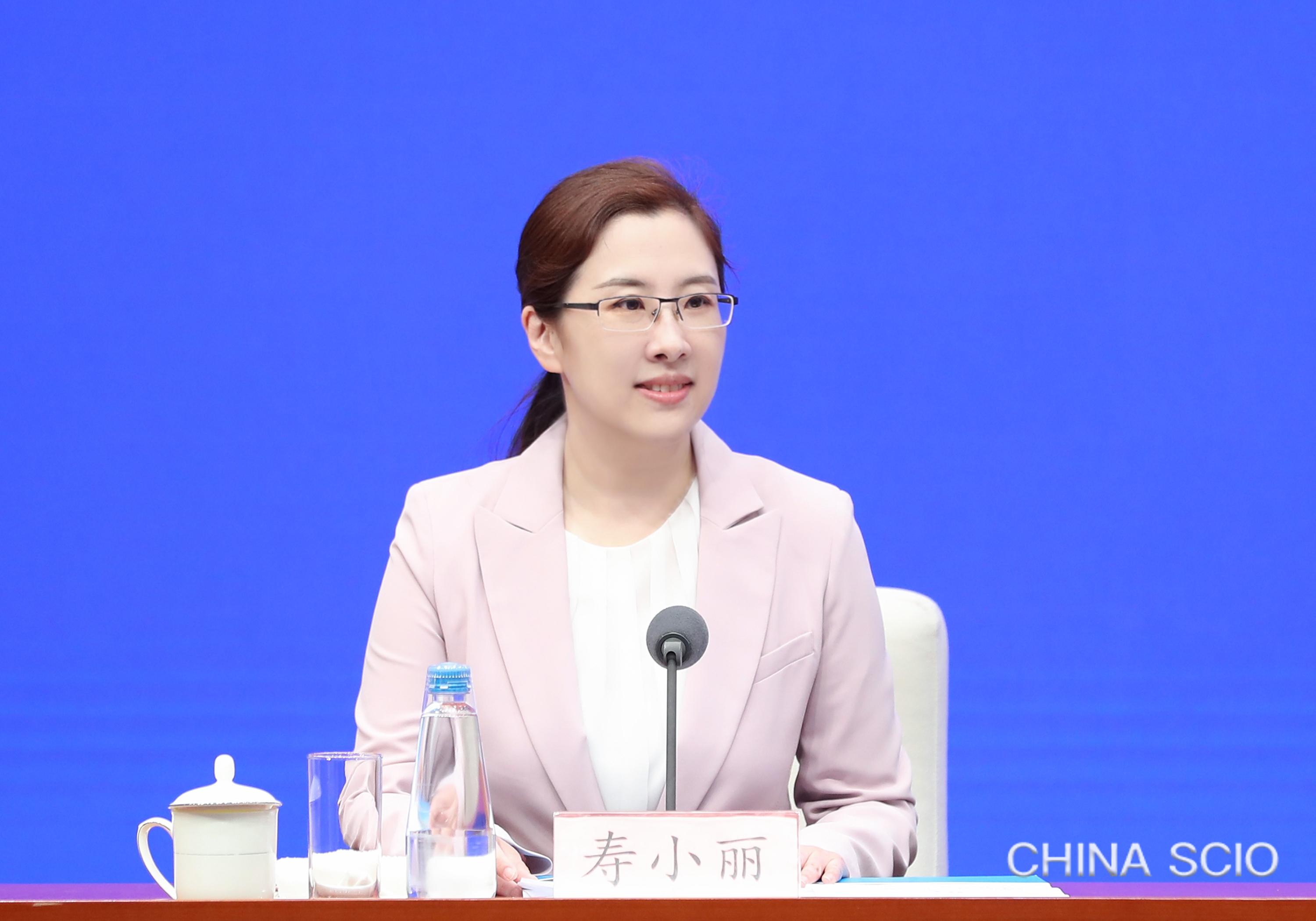
/6 Shou Xiaoli
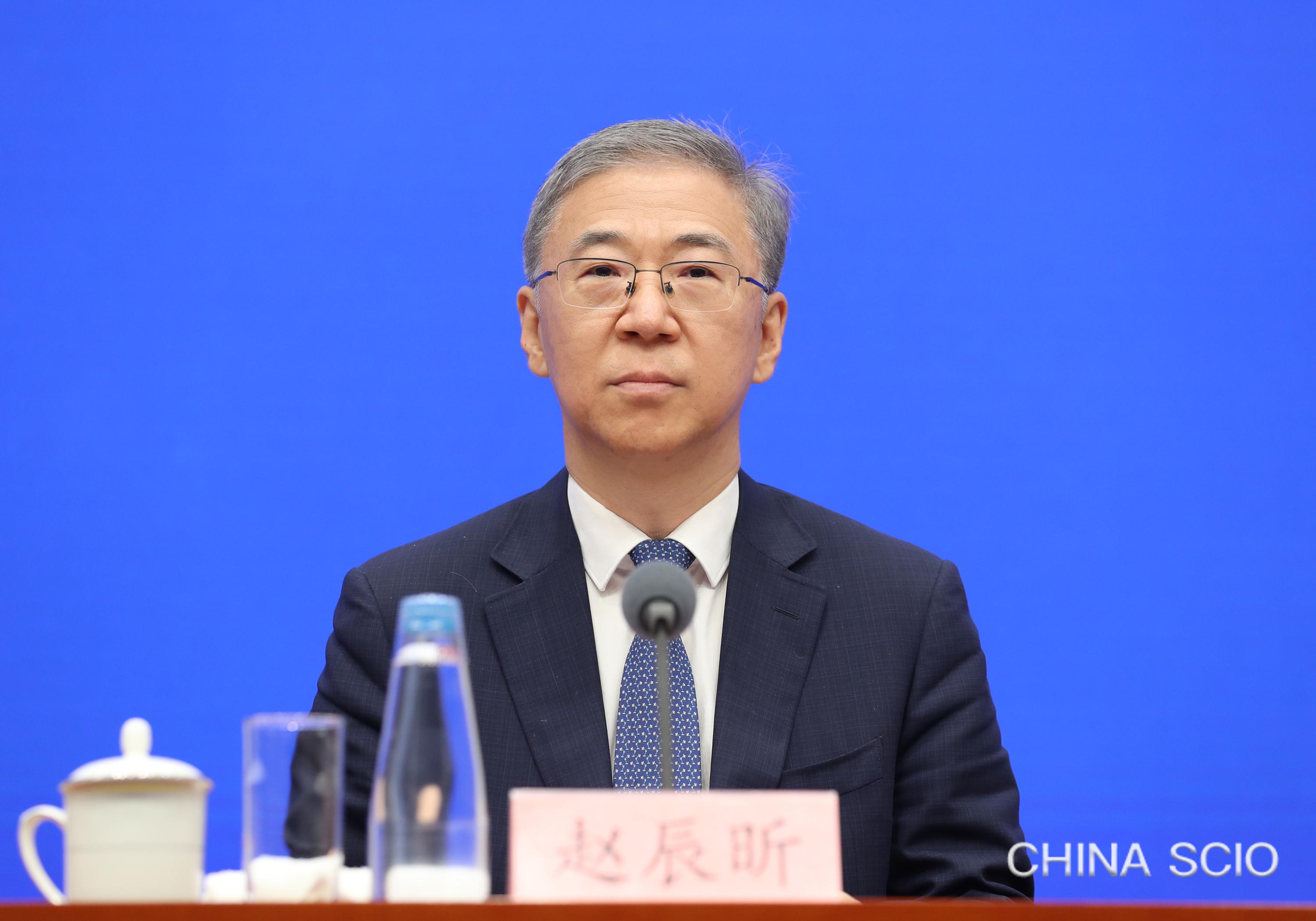
/6 Zhao Chenxin
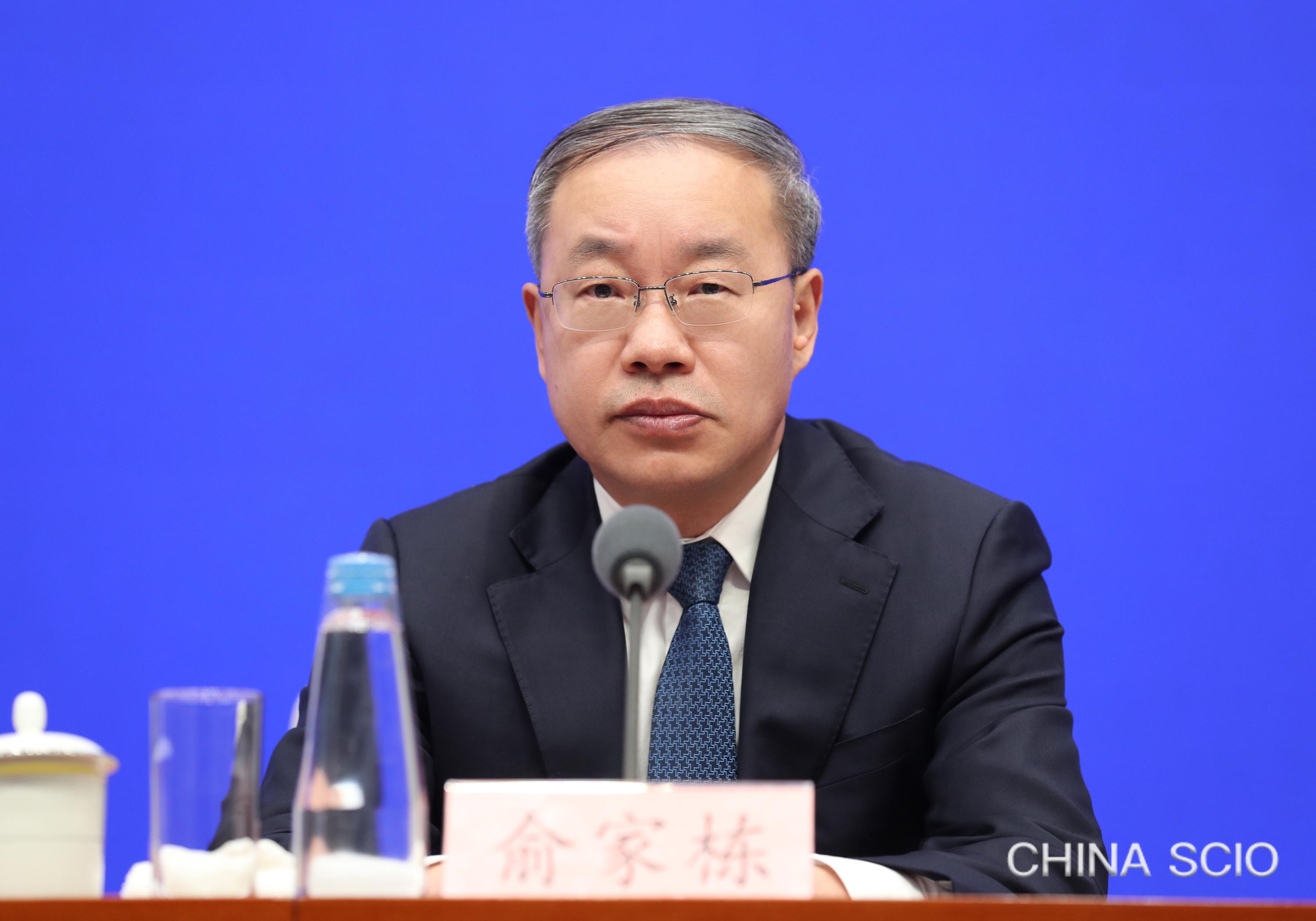
/6 Yu Jiadong
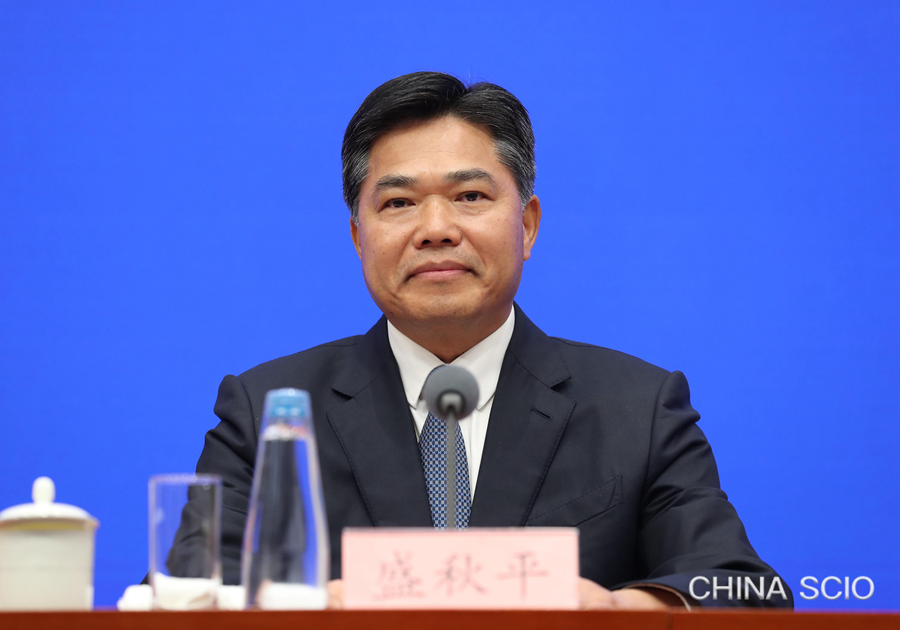
/6 Sheng Qiuping
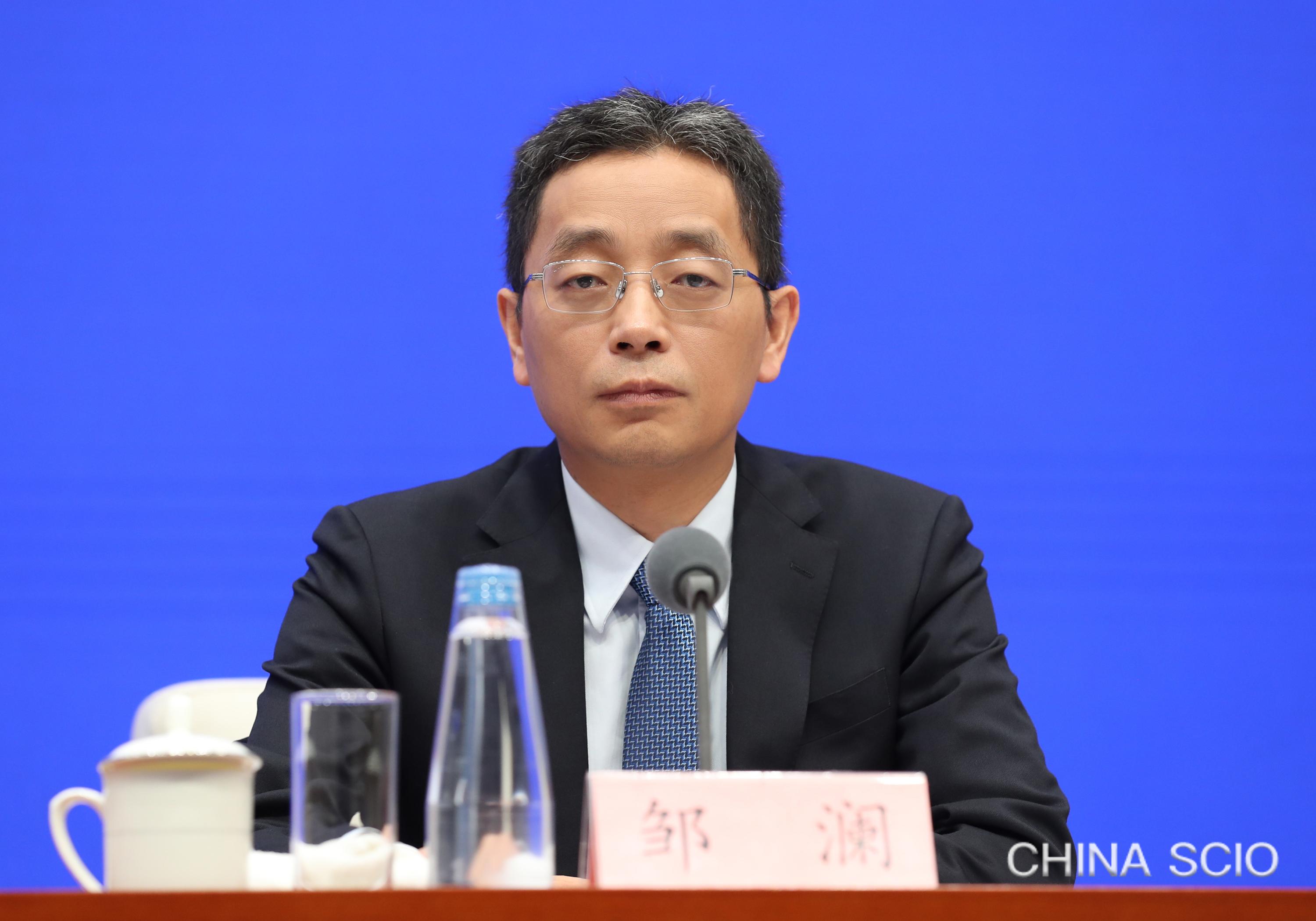
/6 Zou Lan
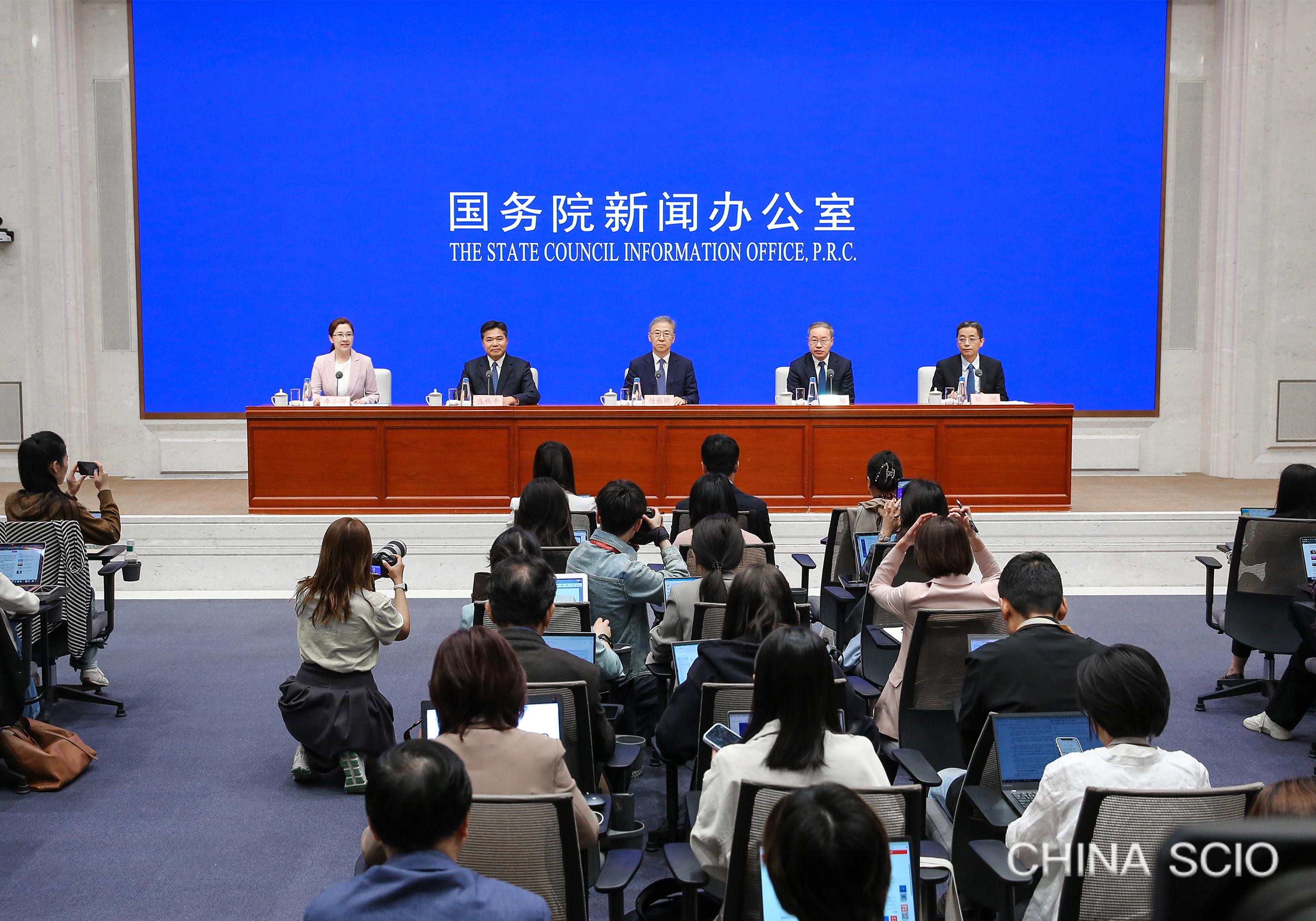
/6 Group photo
SCIO briefing on optimizing departure tax refund policy to boost inbound consumption
April 27, 2025SCIO briefing about Annual Report on China's Combating of IPR Infringement and Counterfeiting (2024)
April 25, 2025SCIO briefing on China's intellectual property rights development in 2024
April 24, 2025