China.org.cn | October 23, 2025


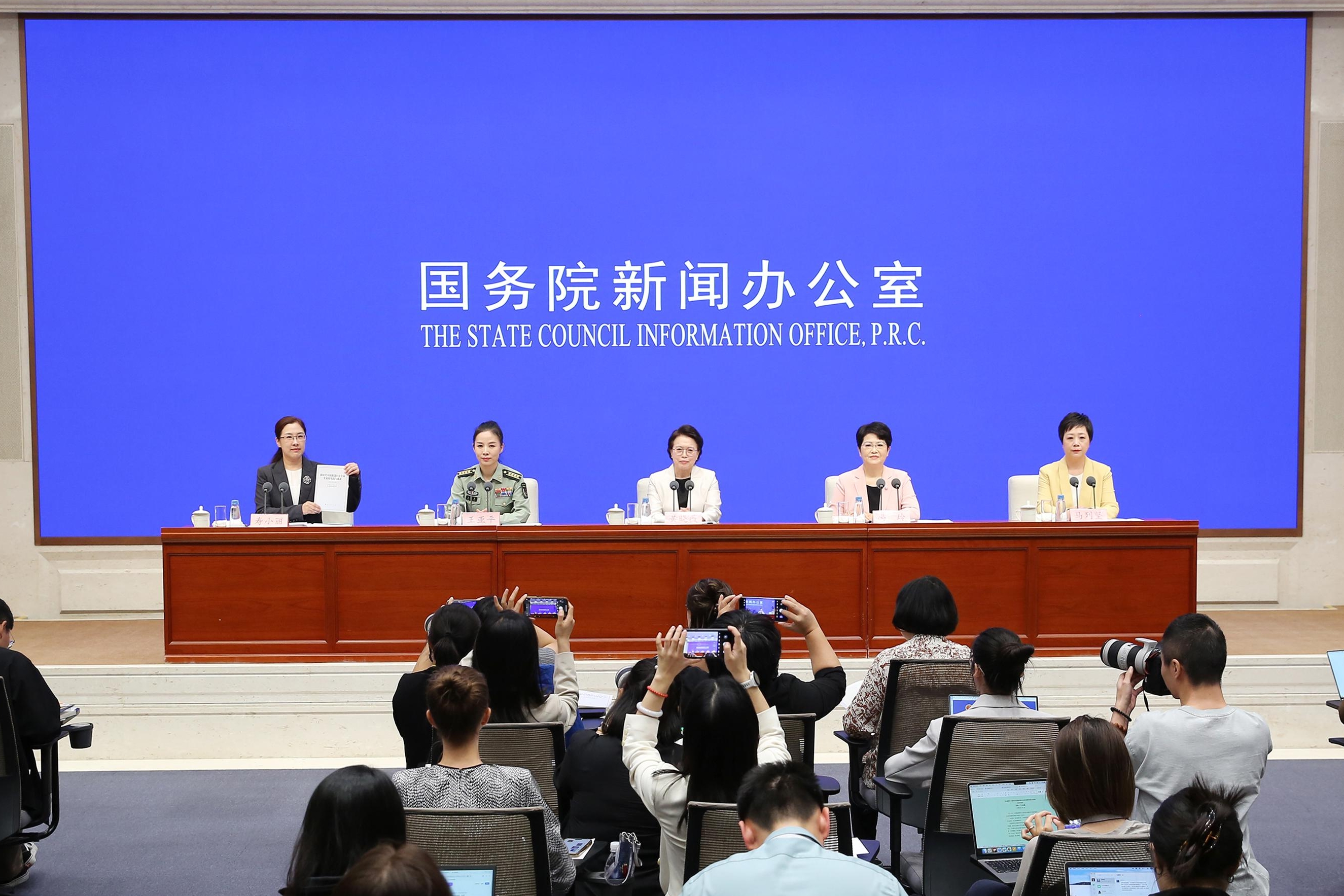

Jinan Times APP:
Maternal and child health is the cornerstone of national health. We can see that the level of maternal and child health in our country improve steadily. In terms of core maternal and child health indicators, China ranks among the top in global upper-middle-income countries. What specific measures has China taken to protect women's health? Thank you.
Huang Xiaowei:
I'd like to invite Ms.Ma Liejian to answer the question.
Ma Liejian:
Thank you for your question. Maternal and child health is a prerequisite for sustainable development. China prioritizes people's health in its development strategy, making an all-out effort to build a healthy China, whilst providing women with full life-circle health services.
First, we have continuously improved the maternal and child healthcare service system. China has integrated its maternal and child healthcare service network into its national medical and healthcare framework that covers its 1.4 billion people. A service system for maternal and child healthcare has been built with maternal and child healthcare institutions at its core, community-level medical and healthcare institutions as its foundation, and large and medium-sized hospitals and research institutes as its pillars. At present, China has 3,081 maternal and child healthcare institutions, 3,491 treatment centers for high-risk and critically ill pregnant and postpartum women, and 3,221 treatment centers for critically ill neonates. More than 2,600 traditional Chinese medicine hospitals at Grade II and above have gynecological departments. The "internet plus maternal and child healthcare" service model has been developed, significantly enhancing the level of service equalization.
At the same time, we have concentrated on breakthroughs in solving key issue. For example, in order to reduce the mortality rate of pregnant women and newborns, we have implemented the five mechanisms for maternal and neonatal safety. Based on the severity of pregnancy risk, pregnant and postpartum women are classified into five categories, each assigned a specific color label. Their medical treatment is then managed according to this classification. The system closely monitors key high-risk groups and strengthens the emergency treatment of critical and severe cases, thereby effectively ensuring the safety of mothers and newborns. For example, as cervical cancer and breast cancer have become malignant tumors that seriously threaten women's health, China has adopted comprehensive prevention and control strategies. China strives to achieve "early prevention" through health education and HPV vaccination. Recently, relevant departments have announced that this year China will launch HPV vaccination services for eligible girls and include the HPV vaccine in the national immunization program. At the same time, China makes efforts to achieve "early detection" through the implementation of "two cancers" screening. Since 2009, 342 million free screenings for cervical cancer and 245 million free screenings for breast cancer were carried out nationwide. By increasing efforts in early diagnosis and treatment and improving service capacity to achieve "early recovery", China allocated 3.01 billion yuan for treatment and support for women with these forms of cancer.
We have also implemented "the Healthy China Mother's Action", and vigorously carried out health knowledge publicity and education, improving maternal and child health levels by multiple measures. In terms of core maternal and child health indicators, China ranks among the top in global upper-middle-income countries. It has met the relevant targets of the United Nations 2030 Agenda for Sustainable Development ahead of schedule. Thank you.

