SCIO briefing on China's imports, exports in Q1 2026
China.org.cn | May 18, 2026
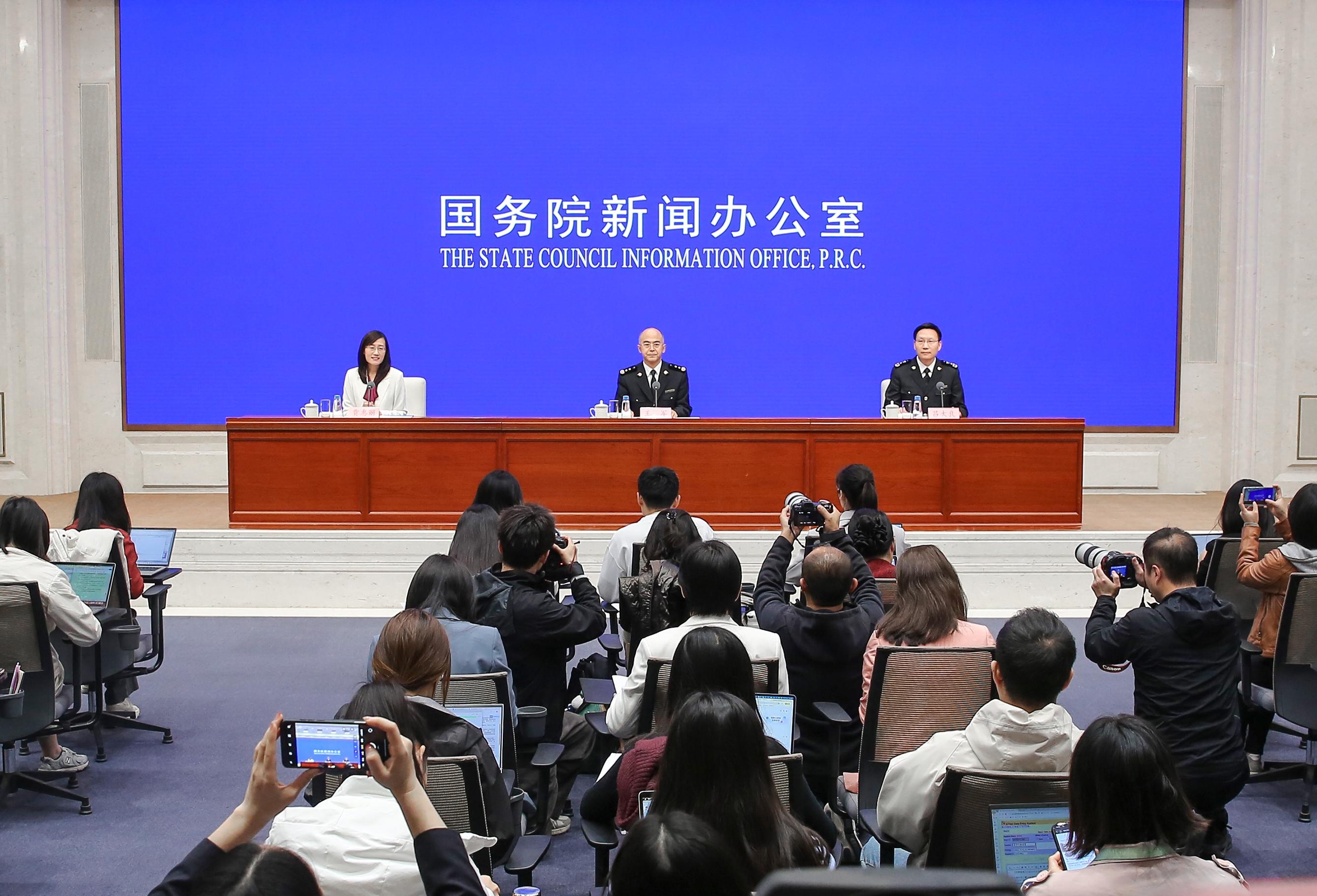

Jia Huili:
Thank you, Mr. Wang, for your introduction. The floor is now open for questions. Please identify the media outlet you represent before raising your questions.
China Media Group:
The start sets the tone for the whole picture, and the initial steps chart the course for the trajectory. In the first quarter, China's foreign trade maintained strong growth and achieved a good start. What are the main supporting factors behind this performance? Can this growth momentum be sustained into the second quarter? Thank you.
Wang Jun:
Thank you for your questions. In the first quarter, China's imports and exports grew rapidly. The key factor is that the country's foreign trade rests on a stable foundation, with strong vitality and momentum.
That stability is reflected in the steady foreign trade growth and diversified and stable foreign trade markets. By the first quarter of this year, China's total trade value had remained above 10 trillion yuan for 12 consecutive quarters, with growth back in double digits since the fourth quarter of 2022. In the first quarter, China's trade with developed economies such as the EU maintained overall growth, while trade with ASEAN, Latin America and Africa all grew at double-digit rates. A diversified market structure has put China's foreign trade on a solid footing.
That vitality is evident in the dynamism of businesses nationwide and regions leveraging their strengths. In the first quarter, 618,000 enterprises in China recorded import and export activity, of which more than 540,000 were private firms, further solidifying their role as the main force in foreign trade. Foreign-funded enterprises remain well established in China and continue to serve global markets. In the first quarter, their exports and imports grew 10.8% and 23%, respectively. State-owned enterprises continued to stabilize industrial and supply chains, with imports rising 7.5% and accounting for 20.9% of the national total. During the same period, trade grew 14.3% in China's eastern regions, 20.2% in central-western regions and 4% in the northeast, as each region capitalized on its geographic and industrial strengths. Major foreign trade powerhouses carried the bulk of the load, with Guangdong, Jiangsu, Zhejiang, Shanghai and Shandong together contributing more than 60% of total trade growth. The reach and dynamism of China's foreign trade continue to grow.
That momentum is reflected in the export structure undergoing innovation-driven upgrading, while import growth strengthening significantly. In the first quarter, exports of storage components and central processing components grew a combined 39.1%. Exports of power-related products, including power generation equipment, transmission and transformation equipment, and energy storage devices, also posted double-digit growth. Domestic demand is steadily expanding, driving import growth while the import mix continues to improve. In the first quarter, imports of high-tech products rose 25.1%, while imports of bulk commodities and consumer goods also grew at a healthy pace. Efforts to stabilize exports while expanding imports have sustained foreign trade momentum.
Rapid trade growth in the first quarter has laid a solid foundation for stable foreign trade growth throughout the year. At the same time, it should be noted that the external environment remains marked by uncertainty and instability, and the impact of international geopolitical conflicts on global industrial and supply chains continues to evolve. The World Trade Organization recently predicted that global goods trade growth will slow by 2.7 percentage points to 1.9% in 2026. The Organization for Economic Cooperation and Development said in a report that the evolving conflict in the Middle East is testing the resilience of the global economy.
Despite the complex and severe external environment, our confidence remains firm. The conditions for and underlying trend of China's long-term economic growth remain unchanged, and the advantages and potential of its foreign trade continue to show. In March, China's manufacturing Purchasing Managers' Index (PMI) returned to expansionary territory, with indicators including new export orders and imports rebounding sharply. A customs trade confidence survey also showed a significant increase in the number of enterprises reporting a rise in new export and import orders. We have the confidence and ability to keep the volume of foreign trade stable and optimize its structure.
Thank you.