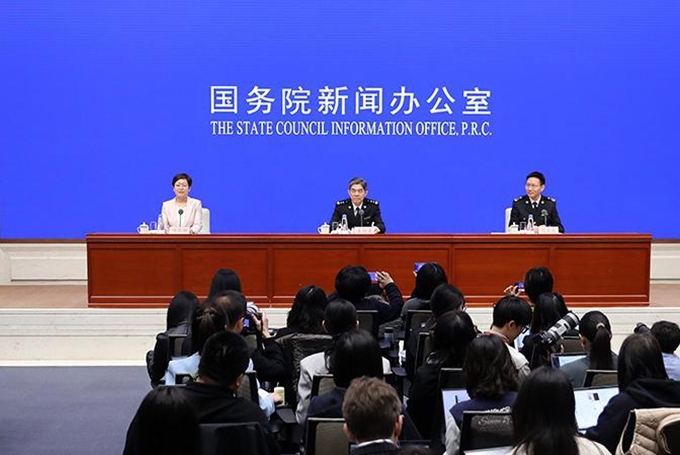
SCIO briefing on China's imports, exports in Q1 2025
China.org.cn | May 8, 2025

Xinhua Finance:
The data just presented shows a decline in imports this quarter. What were the main reasons for this? How do you view future imports? Thank you.
Lyu Daliang:
Thank you for your questions. The change in imports in the first quarter was the result of multiple factors, with some products increasing and others declining. In particular, due to falling international bulk commodities prices, the average import prices of iron ore and coal dropped by more than 20% in the first quarter, while the average import prices of crude oil and soybeans fell by 5.7% and 16.6%, respectively. These price factors lowered the overall import growth rate by 2.6 percentage points. In addition, the first quarter of this year had two fewer working days than the same period last year, which also reduced the import growth rate by about 2 percentage points.
Looking more closely, rapid growth in domestic industrial production drove an increase in imports of components and equipment. In March, China's manufacturing PMI remained in expansionary territory, signaling continued momentum in the sector's recovery. Notably, industries such as computer, communications and electronic equipment, as well as rail, shipbuilding and aerospace equipment, saw production and demand pick up quickly. As a result, imports of key components and high-tech equipment required by these sectors increased significantly. In the first quarter, imports of automatic data processing equipment and components rose by 95.6%, while imports of shipbuilding and marine engineering equipment increased by 52.5%.
China's consumption market also showed steady growth, contributing to an increase in imports of consumer goods. Booming domestic consumption during the Spring Festival highlighted the vitality of China's consumer sector. In the first quarter, imports of certain consumer products increased, with edible oil rising by 12.1% and fresh and dried fruits up 8.3%.
China is the world's largest manufacturing country and the second-largest consumer market, with a complete industrial system and strong supporting capabilities. With a population of over 1.4 billion and more than 400 million middle-income people, various consumption scenarios are flourishing. Market demand is strong, both from industrial production and from consumer spending. In particular, China remains committed to high-level opening up, steadily expanding its independent and unilateral openness while actively increasing imports and sharing development opportunities with countries around the world. China has maintained its position as the world's second-largest importer for 16 consecutive years, with an average annual growth rate of 5.4%. The country's share of global imports has steadily risen from 7.9% to 10.5%. Both now and in the future, there is significant potential for import growth in China, and the country's vast market continues to present major opportunities for the world. Thank you.