
SCIO briefing on China's economic performance in August 2026
Beijing | 10 a.m. Sept. 15, 2026
Speakers

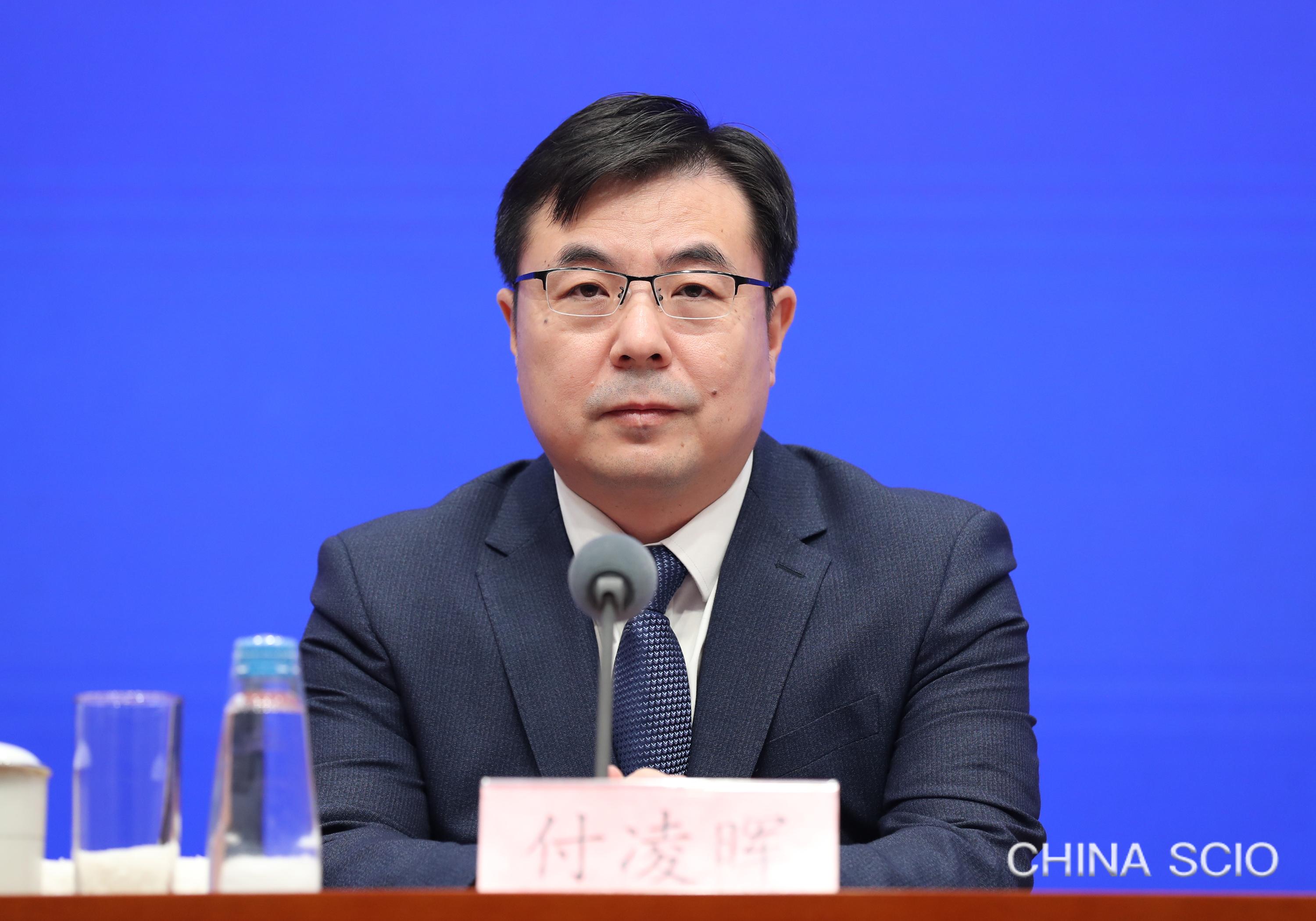
Fu Linghui, spokesperson and chief economist of the National Bureau of Statistics (NBS) and director general of the Department of Comprehensive Statistics of the NBS
Wang Guanhua, spokesperson of the NBS and deputy director general of the Department of Comprehensive Statistics of the NBS
Chairperson
Speakers:
Mr. Fu Linghui, spokesperson and chief economist of the National Bureau of Statistics (NBS) and director general of the Department of Comprehensive Statistics of the NBS
Ms. Wang Guanhua, spokesperson of the NBS and deputy director general of the Department of Comprehensive Statistics of the NBS
Chairperson:
Mr. Zhou Jianshe, deputy director general of the Press Bureau of the State Council Information Office (SCIO) and spokesperson of the SCIO
Date:
Sept. 15, 2026
Zhou Jianshe:
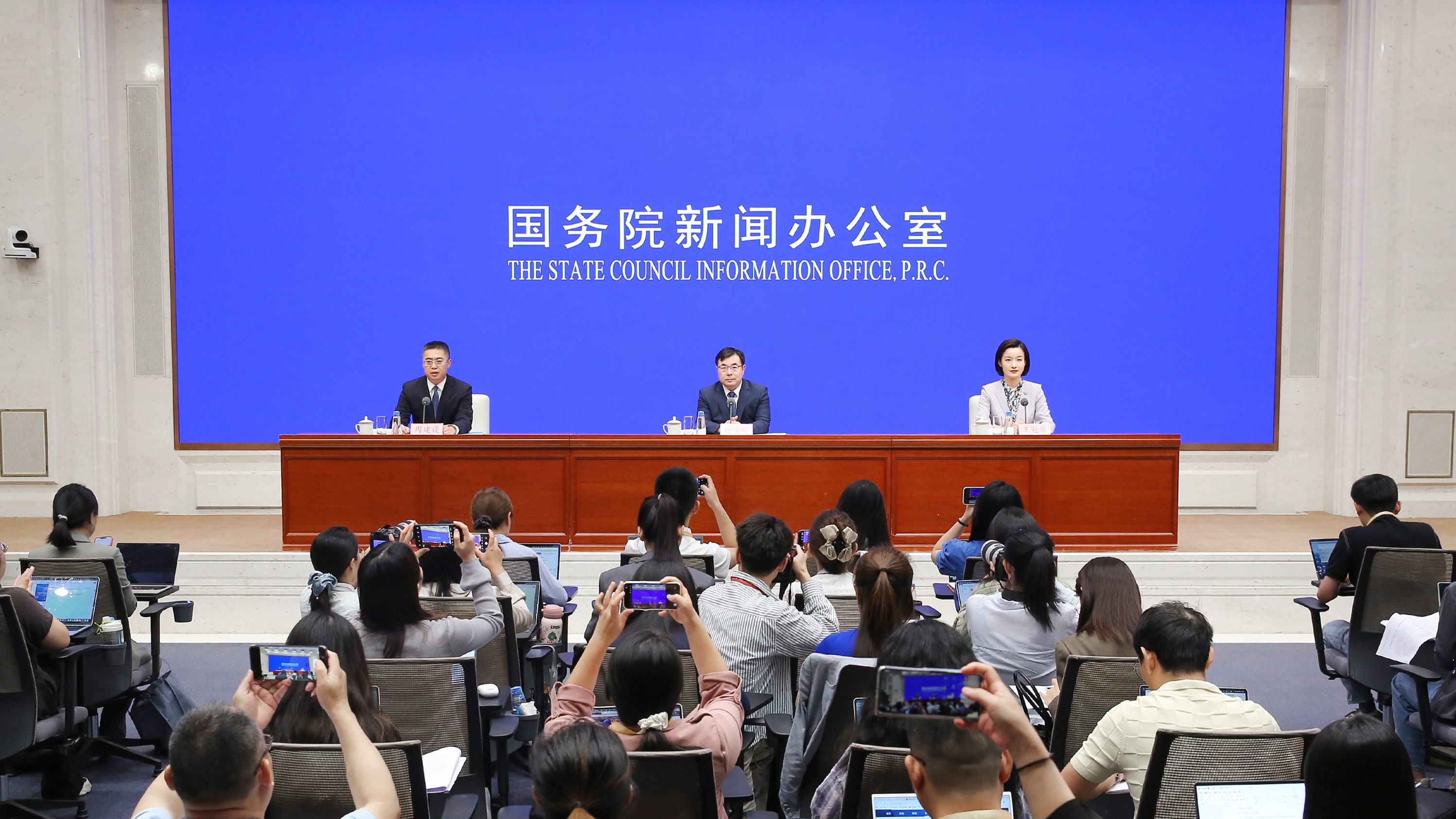
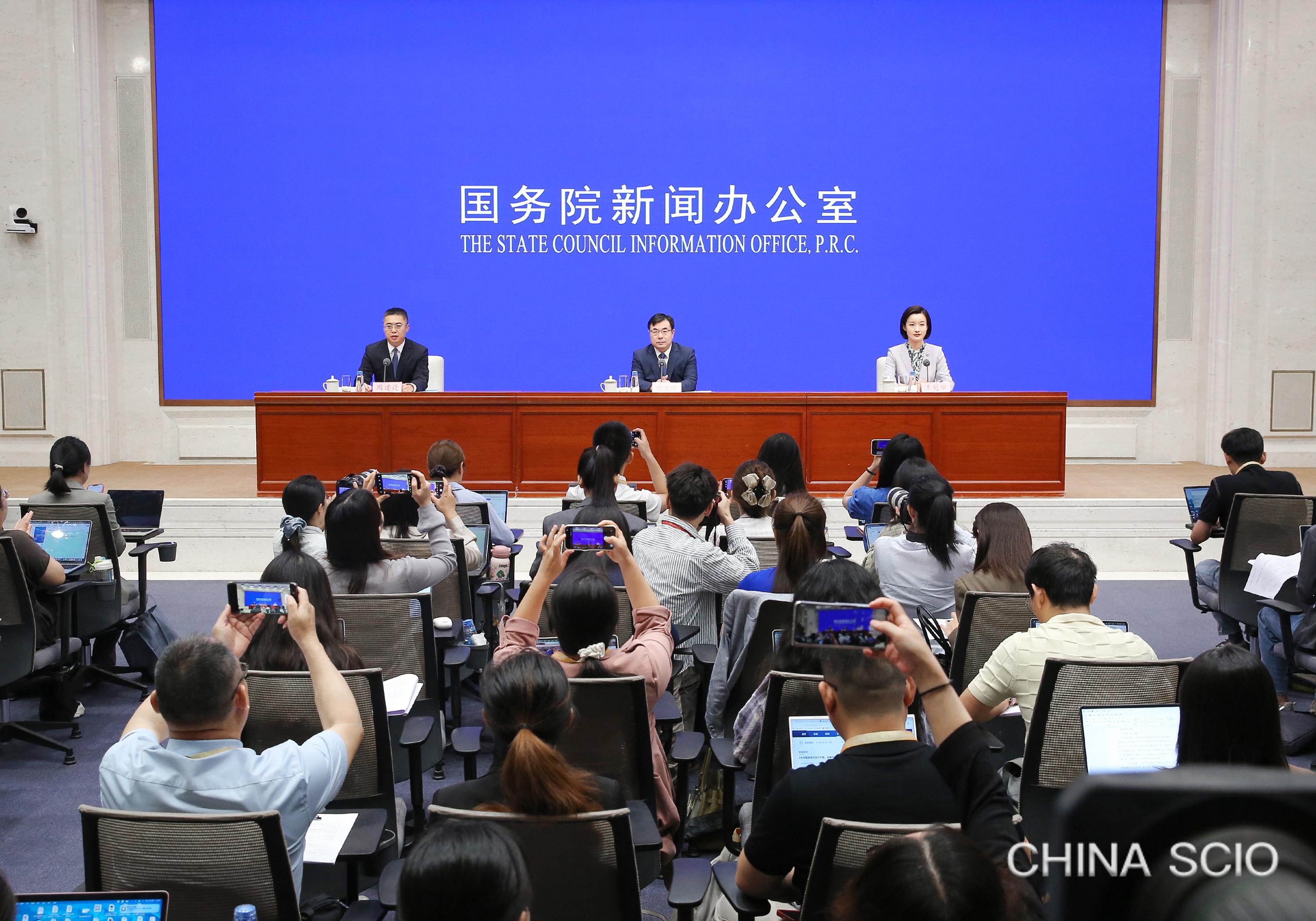
Ladies and gentlemen, good morning. Welcome to this press conference held by the State Council Information Office (SCIO). This is a routine release of economic data. Today, we are joined by Mr. Fu Linghui, spokesperson and chief economist of the National Bureau of Statistics (NBS) and director general of the Department of Comprehensive Statistics of the NBS, and Ms. Wang Guanhua, spokesperson of the NBS and deputy director general of the Department of Comprehensive Statistics of the NBS, to brief you on China's economic performance in August 2026 and then take your questions.
Now, I'll give the floor to Mr. Fu for his introduction.
Fu Linghui:
Ladies and gentlemen, good morning. As usual, I will start by briefing you on the main economic indicators for this August, and then my colleague and I will take your questions.
China's economy remained steady with innovation-led and high-quality development in August.
In August, under the strong leadership of the Communist Party of China (CPC) Central Committee with Comrade Xi Jinping at its core, all regions and departments earnestly implemented the decisions and arrangements made by the CPC Central Committee and the State Council, adhered to the general principle of seeking progress while ensuring stability, strived to make the macro policies more effective, deepened the reform and opening up, accelerated the transformation from traditional growth drivers to new ones, and pursued high-quality development. As a result, production and supply grew steadily, employment and prices remained generally stable, foreign trade registered rapid growth, and new growth drivers played a stronger underpinning role. The national economy maintained steady momentum with innovation-led and high-quality development.
First, industrial production accelerated, with equipment manufacturing and high-tech manufacturing growing rapidly.
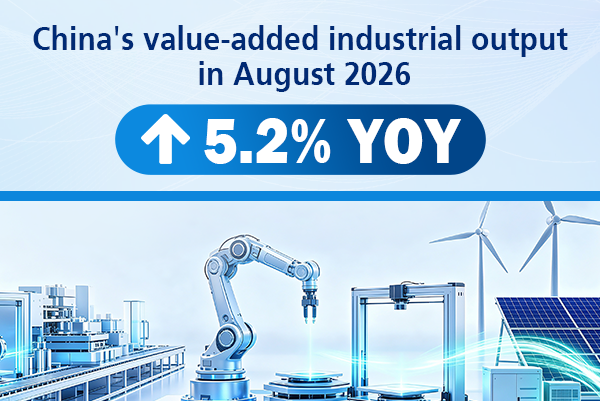
In August, the total value added of industrial enterprises above designated size grew 5.2% year on year, 0.7 percentage point faster than that of the previous month, or upand increased 0.54% month on month. In terms of sectors, the added value of the mining industry fell 1.4% year on year; that of manufacturing rose 6.1%, and that of production and supply of electricity, thermal power, gas and water increased 4.9%. The value added of equipment manufacturing went up 12.1% year on year, and that of high-tech manufacturing increased 16.7%, 6.9 percentage points and 11.5 percentage points faster than that of industrial enterprises above designated size, respectively. In terms of ownership, the value added of state holding-owned enterprises went up 3% year on year; that of share-holding enterprises was up 5.7%; that of enterprises funded by foreign investors or investors from Hong Kong, Macao and Taiwan was up 3.4%; and that of private enterprises was up 3.7%. Regarding products, the production of lithium-ion batteries, industrial robots and 3D printing equipment increased 57.2%, 34.6% and 29.9% year on year, respectively. In the first eight months, the value added of industrial enterprises above designated size grew 5.3% year on year. In August, the Manufacturing Purchasing Managers' Index stood at 49.8%, and the Production and Operation Expectation Index was 53.8%. In the first seven months, the total profits made by industrial enterprises above designated size were 4.5821 trillion yuan, up 17.6% year on year.
Second, the service sector grew steadily, with modern services gaining momentum.
In August, the Index of Services Production grew 4.1% year on year. Specifically, that of information transmission, software and information technology services, of leasing and business services, and of transportation, storage and postal services grew 9.6%, 9% and 4.8%, respectively. In the first eight months, the Index of Services Production grew 4.7% year on year. In August, the Business Activity Index for Services stood at 49.3% and the Business Activity Expectation Index for Services was 55.5%. Specifically, the Business Activity Index for industries like postal services, telecommunication, broadcast, television and satellite transmission services, and internet software and information technology services stayed within the high expansion range of 55% and above. In the first seven months, the business revenue of service enterprises above designated size grew 5.7% year on year.
Third, market sales expanded and service retail saw rapid growth.
In the first eight months, the total retail sales of consumer goods and services rose 2.5% year on year, with retail sales of services increasing 4.9% and that of goods growing 1%. Specifically, retail sales of communication information services, tourism consultation and rental services, and cultural, sports and leisure services all grew rapidly. In the first eight months, the total retail sales of consumer goods reached 32.7569 trillion yuan, up 1.1 % year on year. In the first eight months, the online retail sales of goods and services reached 13.4766 trillion yuan, up 4.6% year on year. Specifically, the online retail sales of goods reached 8.4195 trillion yuan, up 4.3%; and the online retail sales of services reached 5.0571 trillion yuan, up 5.1%. In August, the total retail sales of consumer goods reached 3.9824 trillion yuan, up 0.4% year on year, or down 0.13% month on month. Analyzed by different areas, the retail sales of consumer goods in urban areas reached 3.4457 trillion yuan, up 0.2% year on year; and that in rural areas reached 536.7 billion yuan, up 1.6%. Grouped by consumption patterns, the retail sales of goods were 3.528 trillion yuan, up 0.3% year on year; and the income of catering was 454.4 billion yuan, up 1.1%. Sales of basic living goods and certain upgraded goods grew rapidly. The retail sales of beverages; of grain, oil and food; and of communication equipment by enterprises above designated size increased 4.9%, 4% and 27.3% year on year, respectively.
Fourth, investment in fixed assets declined, while that in intellectual property products grew rapidly.
In the first eight months, total fixed-asset investment (excluding rural households) reached 29.3092 trillion yuan, down 7.2% year on year; and fixed-asset investment (excluding real estate development) dropped by 4.2%. Specifically, investment in intellectual property products rose 9.2% year on year. Investment in high-tech industries increased by 5.2% year on year, with investments in information services, aircraft and spacecraft equipment manufacturing, and electronic and communications equipment manufacturing grew growing by 22.7%, 14.9% and 6.9%, respectively. By industry, investment in the primary industry decreased by 2.4% year on year, that in the secondary industry fell by 2.9%, and that in the tertiary industry fell by 9.9%. By sector, investment in infrastructure declined by 4.0% year on year; manufacturing investment fell by 2.3%, and real estate investment dropped by 19.9%. Private investment fell 10.1% year on year. Excluding real estate development, it declined 6.4%. The floor space of newly built commercial properties was 498.8 million square meters, down 12.1% year on year. Sales revenue from newly built commercial properties reached 4.7470 trillion yuan, down 13.0%. The floor area of existing-home transactions registered online-registered signed transaction area for second-hand housing was 549.23 million square meters, up 10.6% year on year. In August, fixed-asset investment (excluding rural households) fell 0.50% month on month.
Fifth, imports and exports of goods grew rapidly, while the trade structure continued to be optimized.
In August, the total volume of imports and exports reached 4.6455 trillion yuan, up 19.8% year on year, an increase of 0.6 percentage point from the previous month. Specifically, exports were 2.7274 trillion yuan, up 18.6%, while imports were 1.9181 trillion yuan, up 21.7%. From January to August, the total value of imports and exports of goods was 34.7753 trillion yuan, up 17.6% year on year. Specifically, exports were 20.1658 trillion yuan, up by 14.6%; and imports were 14.6095 trillion yuan, up 22.0%. In the first eight months, general trade imports and exports increased by 10.5% year on year. Imports and exports with Belt and Road partner countries grew by 15.9%. Imports and exports by private enterprises increased by 17.6%. Exports of machinery and electronic products grew by 21.9%.
Sixth, overall employment remained stable, while the surveyed urban unemployment rate saw a seasonal uptick.
In the first eight months, the average surveyed urban unemployment rate nationwide was 5.2%, unchanged from the same period last year. In August, the surveyed urban unemployment rate was 5.3%, 0.1 percentage point higher than that of the previous month. The surveyed unemployment rate for the population with local household registration was 5.3%; and that for the population with non-local household registration was 5.2%, of which the rate for those with non-local agricultural household registration was 5.0%. The surveyed urban unemployment rate in 31 major cities was 5.3%, up 0.1 percentage point from the previous month. Employees of enterprises worked 48.2 hours per week on average.
Seventh, the consumer price index (CPI) rose modestly, while producer prices for industrial products recorded a broader year-on-year increase.
In August, national CPI rose by 0.8% year on year, a growth rate 0.3 percentage point wider than in July, and grew by 0.4% month on month. By category, prices for food, tobacco, alcohol and catering services fell 0.7% year on year. Clothing prices rose 1.3%. Housing prices decreased by 0.3%. Household articles and services went up 0.7%. Transportation and communication prices rose 2.5%. Education, culture and recreation prices grew 1.4%. Medical services and healthcare prices went up 2.7%; and prices for other articles and services increased by 7.3%. Among food, tobacco, alcohol, and catering service prices, pork prices dropped by 11.8%, fresh vegetable prices fell by 2.8%, grain prices declined by 0.6% and fresh fruit prices easedwent down by 0.5%. The core CPI, excluding food and energy prices, grew by 1.0% year on year. In the first eight months, the CPI went up by 0.9% year on year.
In August, the producer price index (PPI) rose by 3.8% year on year, a growth rate 0.3 percentage point wider greater than in the previous month, and grew by 0.4% month on month. Purchasing prices for industrial producers increased by 5.8% year on year and 0.3% month on month. In the first eight months, the PPI and purchasing prices for industrial producers climbed 2.0% and 3.2% year on year, respectively.
Overall, the national economy maintained stable operations in August, with continued momentum toward new growth drivers and structural optimization. However, it should also be noted that the adverse impact of the external environment has intensified, the imbalance between strong supply and weak demand at home remains prominent, some enterprises face operational difficulties, and the foundation for sustained economic progress needs further consolidation. Going forward, we must adhere to the guidance of Xi Jinping Thought on Socialism with Chinese Characteristics for a New Era, uphold the general principle of pursuing progress while maintaining stability, and fully and faithfully implement the new development philosophy on all fronts. We must move faster to create a new pattern of development, deepen reform and opening up, step up macro-policy adjustment, intensify efforts to expand domestic demand, and promote industrial upgrading, so as to boost development momentum, stimulate social vitality, and foster sustained economic development driven by new growth drivers, structural optimization, and solid growth. Thank you.
Zhou Jianshe:
Thank you, Mr. Fu, for your introduction. The floor is now open for questions. Please identify the media outlet you represent before asking your questions.
_ueditor_page_break_tag_CCTV:
We have seen that since the beginning of this year, the external environment has been marked by changes and turbulence, but China's economy has proved remarkably resilient in the face of such a complex situation. I would like to ask the spokesperson: How would you assess the performance of the national economy in August, and what highlights and positive changes have emerged? Thank you.
Fu Linghui:
Thank you for your question. People are paying close attention to the economic performance in August. In August, international geopolitical conflicts continued, while global commodity markets, especially energy markets, experienced persistent price fluctuations, posing challenges to the stability of global industrial and supply chains. Domestically, some regions have been hit by frequent natural disasters, increasing the pressure on disaster prevention, mitigation and relief efforts. Amid this complex environment, more proactive and effective macroeconomic policies have continued to take effect. With the further advancement of a unified national market, China's economy has withstood pressure and maintained an overall stable and positive development trajectory.
Based on the major economic indicators for August, the economy was mainly characterized by three areas of stability and two areas of rapid growth. The three areas of stability were seen in production, employment and prices.
First, production remained stable. The international crude oil market continues to fluctuate amid ongoing geopolitical conflicts in the Middle East, and supplies of some key raw materials remain constrained. As a major global energy importer and manufacturing nation, China faces considerable pressure to ensure a stable energy supply and maintain steady enterprise production. China has stepped up efforts to ensure domestic energy supply and promoted diversified imports. In addition, the significant progress made in China's green energy transition in recent years has effectively guaranteed domestic energy supply and helped support stable production. In August, the value-added output of industrial enterprises above designated size rose 5.2% and the services production index grew 4.1%, both remaining generally stable.
Second, the job market remained generally stable. Stable production has laid a solid foundation for stable employment. Steady production at enterprises has helped stabilize labor demand. Meanwhile, the service sector has considerable capacity to absorb workers. Emerging service industries such as information services and software and information technology services have grown rapidly, making an important contribution to employment stability. In August, the surveyed urban unemployment rate stood at 5.3%, up 0.1 percentage point from July, mainly due to the seasonal influx of newly graduated students into the labor market. The rate for the main working-age population, namely the 30-59 age group, was 3.9%, unchanged from both the previous month and the same period last year, remaining generally stable. From an industry perspective, although employment in some sectors declined year on year due to structural adjustments, the overall number of employees in China's manufacturing sector remained stable. Employment in information transmission, software and information technology services increased significantly. Driven by the development of domestic cultural tourism and leisure, the accommodation and catering industry also expanded employment, thereby contributing to overall employment stability.
Third, prices remained stable. Stable production has helped create favorable conditions for price stability. International geopolitical conflicts have exacerbated volatility in global commodity markets, impacting price stability in major countries worldwide. Inflation in major developed economies has also risen significantly this year. In China, in response to these pressures and challenges, we have stepped up efforts to ensure market supply, strengthened the production of essential goods, effectively guaranteed market supply and promoted price stability. In August, the CPI rose 0.8% year on year while the PPI increased 3.8%, both remaining relatively stable compared with international levels.
There were also two areas of rapid growth: emerging industries and imports and exports. First, emerging industries grew rapidly. Driven by the integration of technological and industrial innovation, the deepening of green transformation, and the rapid development of artificial intelligence and energy transformation transition worldwide, China's emerging industries, led by high-tech manufacturing, digital manufacturing and information technology services, are expanding rapidly. This has made significant contributions to accelerating the shift from old to new growth drivers and improving the quality of development. In August, the value added of high-tech manufacturing and digital product manufacturing above designated size increased 16.7% and 15.7% year on year, respectively. New growth drivers accounted for more than 60% of the growth of industrial enterprises above designated size, and their contribution continues to rise. The production index for information transmission, software and information technology services grew 9.6%, contributing more than 20% to the overall growth of the service sector production index.
Second, imports and exports grew rapidly. Leveraging its complete industrial system, improving technological capabilities and product quality, and expanding economic and trade cooperation on the basis of mutual benefit and win-win results, China has taken the initiative to expand imports and promote more balanced foreign trade. As a result, imports and exports of goods have continued to grow rapidly. In August, China's total imports and exports of goods increased 19.8% year on year. On the export side, China's exports of green products such as new energy vehicles and lithium batteries have grown rapidly, effectively supporting the global green transition and development. On the import side, imports from developing regions such as ASEAN, Africa and Latin America increased significantly, providing new opportunities for the industrial development of developing countries.
Overall, despite the turbulent external environment and many factors that bring instability and uncertainty, China's economy has overcome difficulties and maintained stable performance. New growth drivers are gathering momentum, demonstrating strong resilience and vitality, and making the country an important engine and source of stability for global development. Looking ahead, amid a complex international environment and the pressure of domestic transformation and adjustment, we must follow the decisions and arrangements of the CPC Central Committee and the State Council. We will strengthen counter-cyclical adjustments, expand domestic demand and improve supply, deepen reform and opening up, increase momentum and vitality, and continue to promote the innovation-driven and high-quality development of the economy. Thank you.
_ueditor_page_break_tag_South China Morning Post:
Fixed-asset investment fell 7.2% year on year from January to August, while the market had originally expected the launch of major projects to drive investment higher this year. How does the NBS interpret the current figures, and what are its predictions for investment trends going forward? Thank you.
Fu Linghui:
I would like to invite Ms. Wang to answer your questions.
Wang Guanhua:
Thank you for your questions. Investment is something everyone's been watching closely. China's fixed-asset investment fell 7.2% year on year in the first eight months of this year, which was the result of a combination of factors. On the one hand, extreme weather such as high temperatures, typhoons and flooding occurred frequently during the summer, disrupting project construction in some regions. On the other hand, the external environment remained complex and volatile, with increasing uncertainties and unpredictable factors, while China was still in the process of growth drivers transformation, making companies more cautious in their investment decisions. It should be noted that as China's economy moved into a new stage of development, investment efficiency can no longer be judged simply by the speed of growth. Whether investment is effective, whether it is directed toward areas of transformation and upgrading, and whether it can build up momentum for long-term economic development — these are the dimensions that deserve greater attention. In the first eight months, China's fixed-asset investment remained considerable in scale, approaching 30 trillion yuan. A closer look at its structure and quality shows that investment in new growth drivers expanded against the odds, with investment growth even accelerating in many sectors. Investment shifted from a past focus on size and scale to greater emphasis on scientific and technological innovation, industrial upgrading and foundational support. This optimization in where the funds are directed is precisely what we hope for and need in pursuing high-quality development. Let me break it down:
First, investment shifted toward innovation-related areas such as R&D. As the innovation-driven development strategy was further implemented, enterprises steadily increased their R&D spending and placed greater emphasis on building up investment in intellectual property products. Investment in intellectual property products increased 9.2% year on year in the first eight months, 0.1 percentage point faster than in the January-to-July period, accounting for 15.2% of total investment, up 2.3 percentage points year on year. Within this, investment in computer software and databases grew 10.9%, and R&D investment rose 7.8%. Together, these two parts accounted for more than 95% of investment in intellectual property products, making them the core engine driving such investment. The main output of investment in intellectual property products is knowledge-based assets such as technology, software and databases, which can both facilitate the transformation and application of sci-tech achievements and effectively empower industrial transformation and upgrading and improve production efficiency. This is a form of energy-storing investment that benefits both the present and the long term.
Second, investment clustered in advanced manufacturing, the digital economy, and green and low-carbon sectors. In the first eight months, investment in high-tech industries grew 5.2% year on year, 0.2 percentage point faster than in the January-to-July period, marking the third consecutive month of accelerating cumulative growth. This shows that, driven by both policy guidance and market demand, localities moved faster to deploy emerging and future industries, and investment increasingly clustered in new sectors. Breaking it down by industry, rapid growth in core AI technologies and application demand drove companies to increase their investment in related industrial chains. Investment in specialized electronic materials manufacturing and integrated circuit manufacturing increased 8.5% and 12%, respectively. The development of the new energy vehicle industry, coupled with the strong market demand for energy storage, drove investment in lithium-ion battery manufacturing up 20.6%. At the same time, large-scale equipment renewal policies continued to take effect, with enterprises more willing to renew equipment and accelerate upgrading. In the first eight months, investment in equipment purchases increased 9.3% year on year, 0.3 percentage point faster than in the first seven months, accounting for 19.5% of total investment.
Third, investment was channeled toward modernized infrastructure. This year marks the start of the 15th Five-Year Plan (2026-2030), and construction has begun on a series of major projects, including those under the "Six Networks" which are water networks, new-type power grids, computing power networks, next-generation communication networks, urban underground pipeline networks and logistics networks. Steady progress was achieved in the construction of projects including cross-regional transportation arteries, major energy and water conservancy projects, new-type infrastructure and urban renewal, and these efforts played an increasingly vital role in supporting high-quality development. In the first eight months, investment in internet and related services, which is related to the "Six Networks" initiative, increased 42% year on year. Investment in air and water transport grew 16.7% and 14.7%, respectively, while investment in the power supply sector rose 12.7%. Official data shows that as of late June, China had built more than 70 computing transmission channels connecting computing hubs.
Overall, China's investment structure is moving toward innovation-driven and high-quality development, with investment quality and returns steadily improving. At present, central budgetary investment has been largely disbursed, the issuance and use of local government special-purpose bonds are accelerating, and funds from new policy-based financial instruments will be deployed without delay. Construction on the "Six Networks" is moving forward smoothly, and policies are carried out in a more coordinated way. Together, these will help further unlock investment potential and drive high-quality economic and social development through effective investment. Thank you.
_ueditor_page_break_tag_CNBC:
I have two questions. Are there any new signs that the real estate market is stabilizing? Also, what are the main reasons behind the recent rapid growth in imports, and what does this say about domestic demand? Thank you.
Fu Linghui:
Thank you for your questions. You are mainly concerned about two issues: first, the situation in the real estate market, and second, the reasons behind the relatively rapid growth in imports.
Since the beginning of this year, local authorities and government departments have adhered to city-specific policies, adjusted and optimized real estate policies, and continued to control new housing projects and reduce the stock while improving the supply of houses. We have explored various avenues for utilizing commodity housing stock and reducing the stock. We have made solid progress in urban renewal, actively promoted the adjustments and improvements to the housing system, and accelerated the building of a new model for real estate development. The effects are gradually becoming apparent. This is evident in the following aspects:
First, overall real estate transactions have improved. As China's real estate market enters a new stage of development, the market transaction pattern is undergoing a profound adjustment. The market, once dominated by new-home transactions, is gradually shifting to one dominated by existing-home transactions. This is an important change. According to recent data released by the Ministry of Housing and Urban-Rural Development, the floor area of existing-home transactions registered online reached 550 million square meters in the first eight months of the year. For several consecutive months, the figure exceeded that of new homes sold. In terms of growth rate, the floor area of newly built commercial housing sold fell 12.1% year on year from January to August, while the floor area of existing-home transactions registered online increased 10.6% year on year. Despite a decrease in transactions of newly built commercial housing, growth in existing-home transactions has helped stabilize the overall volume of real estate transactions.
Second, the year-on-year decline in house prices has narrowed. For newly built commercial residential properties, among the 70 large and medium-sized cities, the year-on-year decline in prices of newly built residential properties in 38 cities narrowed compared with the previous month. By tier, the year-on-year decline in new-home prices narrowed by 0.2 percentage point in first-tier cities and by 0.1 percentage point in both second- and third-tier cities from the previous month. For existing homes, in August, among the 70 large and medium-sized cities, the year-on-year decline in home prices narrowed in 48 cities compared with the previous month. By tier, the year-on-year decline in existing-home prices narrowed by 1 percentage point in first-tier cities and by 0.2 percentage point in both second- and third-tier cities from the previous month.
Third, inventories of newly built commercial housing have continued to fall. Local authorities have actively adopted measures to reduce commercial housing inventories, including housing purchase subsidies, policies supporting people in "selling old and buying new" housing exchanges, and converting unsold housing into government-subsidized housing. The measures have produced positive results. At the end of August, the floor area of unsold newly built commercial housing nationwide fell 1.1% year on year, marking the sixth consecutive month of decline this year. The pace of decline has also accelerated in recent months. In particular, the floor area of unsold newly built commercial housing that had been on the market for less than three years fell 4.2%, indicating notable progress in reducing short-term inventories.
It should be noted that the supply-demand relationship in China's real estate market has undergone major changes in recent years, and better meeting people's housing needs has become a new trend in the market's development. Housing demand is becoming increasingly diverse, with people placing greater emphasis on the quality and suitability of their homes. Demand is also growing for smart, green and age-friendly housing. However, the existing operating model of the real estate market is increasingly unable to adapt to these changes, making it necessary to accelerate the transition toward a new development model for the sector. Since the beginning of this year, relevant departments have further deepened the reform of the housing provident fund system and improved the systems governing commercial housing sales and related supporting arrangements, as part of efforts to build a new model for real estate development. Looking ahead, as these policies and measures are fully implemented, they are expected to facilitate the transformation and development of China's real estate market and better meet people's aspirations for a better life.
The second question concerns the relatively rapid growth in imports in August, which was mainly due to three factors:
First, it was driven by global industrial and technological innovation. With the accelerated application of new technologies, particularly AI, global demand for production and investment in related fields is expanding. As a major manufacturing country, China plays an important role in global industrial and supply chains. In the process of globalized production, China's growing demand for upstream raw materials and intermediate goods has driven up imports. In the first eight months, China's imports of copper ore and concentrates rose 28.5% year on year, while imports of integrated circuits rose 55.1%.
Second, it was driven by strong domestic demand. Since the beginning of this year, China's economy has remained generally stable, market demand has expanded, and industrial production has maintained rapid growth, providing strong support for the growth of imports of consumer goods, parts and components, and other products. From January to August, China's imports of agricultural products rose 6.6%, while high-tech product imports increased 40.1%.
Third, it was driven by China's efforts to proactively expand imports. China has taken the initiative to open wider and advanced unilateral opening up in a well-ordered way, granted zero-tariff treatment to all African countries with which it has diplomatic relations, and hosted international exhibitions such as the China International Import Expo, the China International Consumer Products Expo and the China International Supply Chain Expo, creating favorable conditions for quality products from around the world to enter the Chinese market. In the first eight months, China's imports from ASEAN rose 20.3%, imports from Africa grew 14.2% and imports from Latin America increased 21%.
Overall, China's imports have maintained relatively rapid growth, which not only helps meet domestic needs for production and daily life but also helps expand the space for international economic and trade cooperation, contributing to mutual benefit and win-win results. Thank you.
_ueditor_page_break_tag_Market News International:
August trade data showed relatively strong growth in both exports and imports, while the official manufacturing PMI remained in contractionary territory at 49.8. How does the NBS explain this divergence? What does it say about the relative strength of external and domestic demand in the economy? And what policy implications does this have? Thank you.
Fu Linghui:
Thank you for your questions. This is a question that many media outlets are paying close attention to, with much of the focus on the relationship between domestic and external demand. The state of China's domestic and external demand needs to be assessed objectively.
Internationally, there is considerable pressure on trade growth. The global landscape this year has been rather complex, especially with the volatility in the global energy markets caused by geopolitical conflicts in the Middle East, which has increased global inflationary pressures. This kind of situation leads to rising inflation that dampens trade, investment and production, weakening the momentum of global economic growth. Major international organizations have lowered their forecasts for global economic growth for the year, and such downward revisions also imply a headwind for global trade growth. In this complex and turbulent environment, production activities in many countries have been disrupted, pressure from supply shortages has intensified, and economic activities have encountered difficulties. Domestically, relying on its complete industrial system and stable and strong production capacity, China has not only ensured the smooth operation of its domestic economy, but also made a positive contribution to addressing global supply shortages, thereby driving relatively rapid growth in China's imports and exports of goods. China's rapid growth in foreign trade is based on its ability to adapt to changing global demand and its own relatively stable and strong supply capacity.
In China's case, the trend of expanding demand remains unchanged. Despite the rapid growth in foreign trade, China's economic growth has mainly been driven by domestic demand. In the first half of this year, domestic demand contributed over 80% to economic growth. Despite external shocks, China's economy has remained generally stable, with the consumer market steadily expanding and service consumption maintaining robust growth, supporting the expansion of domestic demand. In the first eight months, total retail sales of consumer goods and services increased by 2.5% year on year, with retail sales of services increasing by 4.9%. The effect of expanding demand in driving production has continued to emergey, with industrial production maintaining relatively rapid growth and the service sector growing steadily. In the first eight months, the value added of industries above the designated size increased by 5.3% year on year, and the index of service production increased by 4.7% year on year, maintaining relatively rapid growth. Market supply and demand have also remained stable. In the first eight months, the CPI rose by 0.9% year on year, and the producer prices for industrial products rose by 2% year on year. These developments indicate that domestic demand in China is expanding, and the economy has continued to operate steadily.
The manufacturing PMI has been in contraction territory for the past two months. This is mainly due to recent extreme weather events in some regions, which disrupted the stable continuity of production, together with some manufacturing industries entering their off-season, which also affected the manufacturing PMI. In August, both production activities and demand in the manufacturing sector improved. The production index in the manufacturing PMI was 50.4%, up from the previous month; while the new orders index also rebounded to 50.6%, with both indexes in expansion territory.
Based on the above, we can see that the economic situation cannot be assessed based on just one or a few indicators. We must analyze the factors behind the changes in these indicators, and more importantly, conduct a comprehensive and objective assessment before drawing the correct conclusions. Thank you.
_ueditor_page_break_tag_Jinan Times APP:
The year-on-year growth rate of the PPI rebounded in August. What are the underlying factors behind this? And what are your predictions for the PPI trend for the year as a whole? Thank you.
Wang Guanhua:
Thank you for your questions. In August, China's PPI increased 0.4% month on month, reversing a 0.7% decline the previous month, and increased by 3.8% year on year, 0.3 percentage point higher than the previous month. This was mainly the result of the combined effects of international factors transmitted to domestic market, domestic industrial transformation and upgrading, and seasonal factors.
First, it was influenced by the pass-through effect of rising international bulk commodity prices. In August, international crude oil and non-ferrous metal prices rose, and through import channels, were transmitted to domestic industrial chains, driving up prices in industries such as petroleum processing, chemicals and non-ferrous metal smelting. Prices in the non-ferrous metal smelting and rolling processing industry rose by 20.8% year on year, while prices in the petroleum and natural gas extraction industry, petroleum, coal and other fuel processing industry, and the chemical raw materials and chemical products manufacturing industry rose by 10.5%, 11.1% and 9.1%, respectively. These four industries together drove up the year-on-year growth rate of PPI by approximately 2.58 percentage points, with their upward contribution 0.24 percentage point higher than the previous month.
Second, it was influenced by the driving effect of industrial high-end, intelligent and green transformation. China has been accelerating the development of new industries and new growth drivers, with strong market demand in areas such as high-end manufacturing, smart manufacturing and environmental protection, leading to a rebound in product prices. In August, prices in electronic circuit manufacturing related to AI and the digital economy rose 6.6% year on year, while prices in virtual reality equipment manufacturing and the manufacturing of service consumption robots for consumer use rose 6.0% and 2.1%. In industries related to clean energy and the circular economy, prices in biomass fuel processing and comprehensive utilization of waste resources rose by 7.4% and 2.5%, respectively.
Third, it was influenced by seasonal factors. The average temperature nationwide in August this year was higher than the average for the same period in previous years, leading to a seasonal increase in demand for electricity and coal. Coupled with a period of relatively tight coal supply, the prices of coal mining and washing industry rose by 2.8% month on month and 26.6% year on year.
Overall, the rebound in industrial product prices this year is the result of the combined effects of international and domestic factors, which has had a positive effect on improving corporate profitability. Looking ahead, the global geopolitical landscape is complex and volatile, and the trend for international commodity prices remains uncertain. External influences need to be closely monitored. However, China boasts a complete industrial system, resilient industrial and supply chain, strong basic- energy security, diversified energy import channels and sufficient reserves of important materials. These enable the country to cope effectively with the impact of external market fluctuations. Meanwhile, the advancement of domestic industrial restructuring, the cultivation and development of new quality productive forces, and the deepening of comprehensive efforts to address rat race competition will continue to support industrial product prices. Thank you.
_ueditor_page_break_tag_Elephant News:
According to the data just released, total retail sales of consumer goods and services increased by 2.5% year on year. What new changes occurred in China's consumer market in August? And how do you expect the consumer market to perform going forward? Thank you.
Fu Linghui:
Thank you for your questions. Consumption is certainly of great concern to everyone. The development of the consumer market is not only vital to ensuring flows in the domestic economy, but is also a key driver for improving people's living standards. This year, all sectors have actively implemented various policy measures to expand consumption. They have focused on expanding the supply of quality products, promoted the trade-in of old consumer goods, tapped the potential of service consumption and cultivated new growth drivers for consumption. As a result, the consumer market has remained generally stable. The main characteristics for August are as follows:
First, the consumer market has steadily expanded. Affected by fluctuations in the international energy markets and adjustments in the domestic market, sales of some bulk commodities have declined. In addition, frequent extreme weather events in some regions during August affected offline consumption to some extent. However, China's consumer market has shown strong resilience and policies to promote consumption have continued to take effect, with the expansion of the consumer market remaining unchanged. From January to August, total retail sales of consumer goods and services increased by 2.5% year on year, with total retail sales of consumer goods approaching 33 trillion yuan, an increase of more than 360 billion yuan compared with the same period last year. As a super-sized consumer market, China's super-large consumer market has continued to expand, which not only demonstrates the potential for consumption growth in China, but also helps to ensure flows in the domestic economy and stimulate unimpeded domestic and international economic flows.
Second, the transformation and development of the consumer market has continued. While the consumer market is expanding, it is also undergoing transformation, which is mainly reflected in the gradual shifts in consumption structure and consumption patterns. In terms of consumption structure, the proportion of service consumption and quality consumption has increased. With the rising ownership rate of durable consumer goods, residents' demand for service consumption rises, with a greater emphasis on experiential consumption, driving a shift in the structure of the consumer market. From January to August, retail sales of services increased by 4.9% year on year, outpacing the growth of overall market sales, and service consumption grew as a proportion of total consumption. In terms of commodity consumption, the proportion of sales of upgraded goods increased. From January to August, the proportion of retail sales of upgraded goods, including communication equipment, cultural and office supplies, and cosmetics, in the total retail sales of goods by units above designated size rose 1.7 percentage points year on year. In terms of consumption patterns, new models represented by online sales have been developing rapidly, with livestreaming e-commerce and instant retail playing an increasingly significant role in transforming the consumer market. From January to August, online retail sales of goods and services grew by 4.6% year on year, 2.1 percentage points faster than the total retail sales of consumer goods and services. With the innovative development of retail models, in the first eight months, the retail sales of warehouse membership stores and unmanned stores of units above designated size both increased by more than 25%.
Third, new growth drivers in the consumer market have gradually developed. With shifts in consumption mindset and advances in industrial technology, the consumption of smart and green products has emerged as a new highlight of the consumer market. From January to August, retail sales of wearable smart devices by enterprises above designated size maintained rapid growth, and retail sales of home appliances with high energy-efficiency ratings also grew by more than 25%. To meet the growing demand for quality consumption and digital consumption, information services and cultural tourism and leisure services have been upgraded at an accelerated pace, further expanding their market size. From January to August, the retail sales of in two categories ― communication and information services, and tourism consulting and leasing services ― each both grew by over 10%. It should also be noted that with the continuous improvement of the rural commercial logistics system and the effectiveness of entry and exit facilitation policies such as visa-free entry, the vitality of the rural consumer market and inbound tourism market in China has been enhanced. From January to August, retail sales of consumer goods in rural areas increased by 2.3% year on year, 1.3 percentage points higher than that in urban areas. Inbound shopping and cultural tourism experiences by overseas tourists have also shown solid growth momentum.
Looking ahead, China's demand for service consumption and quality consumption is constantly expanding, with diverse consumption scenarios, indicating huge market development space and potential in the future. However, it should also be noted that consumers' capacity and willingness to spend money still need to be further enhanced, and the supply of high-quality goods and services also requires further improvement. Next, we will make coordinated efforts to promote income growth, optimize supply and stabilize expectations, promote the trade-in of old consumer goods, fully tap the potential of service consumption, and optimize and upgrade production and supply, so as to promote the sustained and healthy development of the consumer market. Thank you.
_ueditor_page_break_tag_National Business Daily:
We noted that the CPI reversed in August from a month-on-month decline of 0.1% in the previous month to a 0.4% increase, with the year-on-year increase rebounding to 0.8%. In addition, the core CPI rose by 1% year on year. What are the underlying factors behind this? How do you view the future trends? Thank you.
Fu Linghui:
I would like to invite Ms. Wang to answer your questions.
Wang Guanhua:
Consumer prices in August were characterized by three main features:
First, both the CPI and core CPI showed a moderate upward trend. In August, CPI increased 0.8% year on year, an increase of 0.3 percentage point from the previous month, mainly due to the impact of the widening increases in energy prices. In August, influenced by the geopolitical situation, international crude oil prices fluctuated at high levels, and domestic refined oil prices underwent two adjustments, first decreasing and then increasing, with the increase outweighing the decrease and exerting a notable upward pull on the CPI. Energy prices increased by 4.1% year on year, up from 0.6% last month, adding about 0.24 percentage point more to the upward pull to the CPI than the previous month. Among them, gasoline prices rose by 9.3%, 8.3 percentage points higher than the previous month. The core CPI, excluding food and energy, rose by 1.0%, up by 0.1 percentage point from the previous month, continuing the moderate upward trend since the beginning of the year.
Second, increased demand for certain industrial consumer goods and services led to a price rebound, with consumer electronics and travel services being notable examples. Artificial intelligence is driving rapid growth in demand for computing power and iterative upgrades of consumer electronics. In August, the prices of tablets, computers and cellphones rose by 21.5%, 19.6% and 11.0% year on year, respectively, with the growth rates all widening from the previous month. Summer cultural and tourism consumption demand was robust, with travel service prices rising by 1.3% year on year, an increase of 1.2 percentage points wider than the previous month. Specifically, travel agency fees and transportation vehicle rental prices rose by 2.4% and 2.2%, respectively.
Third, prices of essential consumer goods remained stable with a slight decrease. In response to the adverse effects of extreme weather such as high temperatures, typhoons and heavy rainfall, relevant authorities actively implemented policies and measures to ensure supply and stabilize prices, and strengthened coordination across production, transportation and sales. The supply of grain and vegetable products was generally sufficient, and prices continued to fluctuate slightly. Food prices fell 1.4% year on year in August. Specifically, the decline in pork prices narrowed from the previous month, while the prices of eggs, mutton and beef rose. Prices of fresh vegetables, fruits, cooking oil and grains fell slightly.
Overall, the moderate CPI rebound in August was driven both by rising international energy prices and by the expansion and improvement of domestic consumer spending. Looking at recent price trends, as the weather cools and holidays such as the Mid-Autumn Festival and National Day approach, food demand will pick up, and the demand for service consumption such as holiday travel, dining out and tourism is expected to surge. The iterative upgrading of new technologies and products and the continuous cultivation of new areas of consumption growth new consumption growth points will all help support a moderate increase in CPI. Thank you.
_ueditor_page_break_tag_Economic Daily:
The national economy operated smoothly in the first eight months of this year. Based on the current performance, what is your outlook for the future economic trend? Thank you.
Fu Linghui:
Thank you for your question. China's economic trajectory is of great public interest, because it not only affects the needs of China's economic and social development, but also has a significant impact on the world economy. I have observed that, since the beginning of this year, major international organizations have generally projected that global economic growth in 2026 will be lower than last year. According to major international organizations, these downward revisions for global growth stem mainly from geopolitical conflicts in the Middle East, volatility in the global energy market, and a rebound in global inflation. While revising down global growth projections, some international organizations have raised their growth expectations for China, reflecting confidence in China's economic development. Looking ahead, despite pressures and challenges, the fundamentals of China's long-term economic growth remain unchanged, and the momentum and vitality for development are accumulating and strengthening. The economy is expected to maintain stable operation and progress toward innovation-driven and high-quality development, supported by the following aspects:
First, China's economy faces certain aggregate and structure pressures, but these difficulties can be overcome through concerted efforts. Since the beginning of this year, the complex and volatile international environment has brought downward pressure on global growth, forcing many countries into difficult choices trade-offs between promoting growth, curbing inflation and stabilizing markets. In China, fixed asset investment has declined to some extent due to multiple factors, adding some pressure to aggregate demand. Since March, fluctuations in the international energy market have impacted the production of some domestic industries and enterprises and undermined the stability of industrial and supply chains. However, it should be recognized that most of these problems and difficulties are temporary and transitional, and can be overcome with effort. In the face of these challenges, all regions and departments have stepped up efforts to expand domestic demand and bolster business support, and the effects are gradually taking hold. For example, since the beginning of this year, we have actively promoted large-scale equipment upgrades and trade-ins of consumer goods. In the first eight months, investment in equipment and instruments increased by 9.3% year on year, significantly outpacing overall investment. Retail sales of communication equipment by entities above designated size increased by 16.3%, underscoring the effectiveness of the consumer goods trade-in policy. Furthermore, to ensure the energy needs of enterprises, China has increased its efforts to guarantee energy supply. In the first eight months, crude oil production by industrial enterprises above designated size increased by 0.9% year on year, with the total output reaching a record high for the period.
Second, the pattern of stable economic operation in China remains unchanged, and the trend of upgrading and optimization has been consolidated. Despite the difficulties and challenges, thanks to the concerted efforts of all parties, China's economy has maintained stable operation and is showing positive momentum. In terms of growth, from January to August, the value added of industrial enterprises above designated size and the service sector production index increased by 5.3% and 4.7%, respectively. China's economic growth rate is expected to continue outpacing that of major developed economies. As a super-large scale economy, achieving such growth is no easy feat. In terms of employment and prices, the surveyed urban unemployment rate remained flat year on year from January to August, and the core CPI growth rate remained generally stable. The employment and price situation remained generally stable, providing favorable conditions for the smooth operation of the economy. In terms of the balance of payments, China's foreign trade maintained rapid growth, and foreign exchange reserves remained stable at over $3.4 trillion. In terms of development quality, new growth drivers have gained momentum, industrial upgrading has advanced and high-quality development has been steadily promoted. From January to August, the value added of high-tech manufacturing increased by 14.2% year on year, the production index of information transmission, software and IT services increased by 10.4%, and sectors including AI and new energy products posted robust growth.
Third, China has stepped up counter-cyclical adjustments and continued deepening of reform and opening up, which will enhance the vitality and momentum of economic development. The CPC Central Committee attaches great importance to the difficulties and challenges facing the economy and has made clear plans and arrangements for economic work and the promotion of high-quality development. Recently, relevant departments have earnestly implemented the decisions and arrangements of the CPC Central Committee, worked to make macroeconomic policies more forceful and effective, and accelerated fiscal spending and the use of bond funds. They have advanced projects for implementing major national strategies, enhancing security capacity in key areas, and carrying out large-scale equipment upgrades and consumer goods trade-in programs. Efforts have also been stepped up to build a unified national market, comprehensively address rat-race competition, and expand opportunities for mutually beneficial international economic and trade cooperation. As these measures are gradually implemented, they will help create synergy among policies and bolster the economy's upward momentum. In terms of monthly changes, some positive factors continued to accumulate. In August, compared with the previous month, the growth rates of value-added at industrial enterprises above the designated size and that of imports and exports accelerated by 0.7 and 0.6 percentage point, respectively, and the year-on-year increase in CPI expanded by 0.3 percentage point.
Overall, China's economy is expected to remain stable, with the quality of economic development continuing to improve steadily. At the same time, it should be noted that risks and challenges remain on the road ahead. The external environment is complex and severe, and pressures associated with domestic structural adjustment persist. Sustained efforts are still needed to improve economic performance. In the next stage, it is essential to thoroughly implement the decisions and arrangements of the CPC Central Committee and the State Council, maximize the effectiveness of macro policies, deepen reform and opening up, accelerate the shift from old and to new growth drivers, and strengthen the endogenous momentum of economic development. Thank you.
_ueditor_page_break_tag_21st Century Business Herald:
The data shows that industrial production accelerated somewhat in August. How do you assess industrial production in August? And what is the outlook for the industrial sector going forward? Thank you.
Fu Linghui:
I would like to invite Ms. Wang to take your questions.
Wang Guanhua:
Thank you for your question. In August, amid complex and volatile environment both at home and abroad, the resilience of China's industrial and supply chains became even more evident. The industrial economy grew steadily, with progress seen in both quality and innovation. This is mainly reflected in four aspects:
First, the growth rate of industrial production picked up. In August, the value added of industrial enterprises above the designated size increased by 5.2% year on year, 0.7 percentage point faster than the previous month. Manufacturing acts as the foundation of the real economy and lies at the heart of the industrial sector. Its value added grew by 6.1%, 0.9 percentage point faster than the growth rate of industrial value added as a whole. As the world's largest manufacturing country, China has achieved such a growth rate despite the enormous scale of its manufacturing sector. This is no easy feat and is highly commendable. In terms of the breadth of the recovery, more than 60% of industries and regions saw their growth rates pick up from the previous month, with sectors such as electronics, electrical machinery, electric power, and automobiles providing strong impetus for industrial growth.
Second, the supporting role of new growth drivers has become more prominent. In August, new growth drivers, represented by high-tech manufacturing and digital product manufacturing, contributed more than 60% to the growth of industrial enterprises above the designated size, providing playing a prominent role in supporting and leading growth. As the cornerstone of the industrial economy, the equipment manufacturing industry saw its value added groew by 12.1% year on year, with all eight equipment manufacturing subsectors achieving relatively rapid growth. In particular, the electronics sector expanded by 17.2% and made the largest contribution to industrial growth among all industrial sectors. The high-tech manufacturing sector, characterized by relatively high technological content and value added, continued to lead the way, with the integrated circuit manufacturing and intelligent in-vehicle equipment manufacturing industries maintaining growth of over 20%. The application of new technologies, such as embodied intelligence and human-robot collaboration, has boosted the rapid development of the robotics industry, with output of robot reducers and industrial robots increasing by 11.4% and 34.6%, respectively. The second World Humanoid Robot Games, held in August, attracted widespread attention. During the competition, humanoid robots continued to set new performance records, surpassing human records in several metrics. Outside the arena, many participating robots secured orders thanks to their outstanding performances, marking a transition from competing on the field to working in factories and being put to use in homes. Data show that China's share of global humanoid robot shipments rose to 97%.
Third, exports of industrial products continued to grow rapidly at a double-digit rate. In August, the export delivery value of industrial enterprises above the designated size increased by 11.1% year on year, maintaining double-digit growth for the fifth consecutive month. The equipment manufacturing sector is the dominant force of industrial product exports, accounting for around 75% of the export delivery value. Its products are widely recognized in the international market for their competitiveness, and exports of high-end equipment products have become an important engine of foreign trade growth. From January to August, China's automobile exports grew by 47.1% year on year, while exports of servers, optical modules and electronic components all achieved double-digit growth.
Fourth, the quality and efficiency of development have continued to steadily improve. In terms of energy consumption, China has supported higher-quality industrial growth with lower energy consumption. In August, energy consumption per unit of value added of industrial enterprises above designated size decreased by 7.2% year on year, and the proportion share of total power electricity generation generated by enterprises above designated size from clean energy sources such as hydropower, wind, nuclear and solar power increased by 2.4 percentage points year on year. This decrease and increase demonstrates that China's industrial economy has formed a positive momentum of coordinated progress in carbon reduction, green expansion and growth. From the perspective of industrial chain resilience, specialized and sophisticated "little giant" enterprises, as a major force for innovation in niche areas, have continued to make breakthroughs in key technologies, effectively shored up weak links in industrial chains, and enhanced the resilience of industrial and supply chains. In August, the value added of "little giant" enterprises above designated size increased by 12.8% year on year. In terms of profitability, thanks to expanded production and a rebound in product prices this year, the profits of industrial enterprises above designated size increased by 17.6% from January to July, and the profit margin on revenue also improved year on year.
While acknowledging the positive achievements in the industrial economy, we must also be aware that the global economic recovery is currently sluggish, domestic effective demand is insufficient, and enterprises in some industries still face many practical difficulties in production and operation. Targeted measures are therefore needed to address these challenges. Overall, China has a complete industrial system, strong development resilience and huge market potential. New growth drivers are constantly emerging in high-end manufacturing, green manufacturing, intelligent upgrading and other fields. Various reform measures and supportive policies continue to deliver results, and the fundamentals of the industrial economy maintaining steady growth and improving in quality will not change. Thank you.
Zhou Jianshe:
Last question, please.
_ueditor_page_break_tag_Beijing Youth Daily:
Given the relatively high level of uncertainty arising from global geopolitical conflicts and commodity price fluctuations, what were the new features of China's foreign trade in August? And how should we view China's foreign trade situation in the coming months? Thank you.
Fu Linghui:
Thank you for your questions. Since the beginning of this year, China's imports and exports of goods have grown rapidly. This is particularly remarkable against the backdrop of rising trade protectionism globally and demonstrates the strong resilience and vitality of China's foreign trade. It is also an important outcome of our unwavering commitment to expanding high-standard opening up. In August, China's trade in goods maintained rapid growth, its trade structure continued to improve, and its growth drivers shifted toward new areas, making it an important highlight in economic performance. Trade has exhibited the following characteristics:
First, the growth momentum of imports and exports remains strong. Driven by factors such as the accelerated application of artificial intelligence and green transformation globally, as well as China's prominent advantage of stable industrial and supply chains, total imports and exports of goods increased by 19.8% year on year in August. While exports grew rapidly, imports rose 21.7%, faster than export growth. China's active efforts to expand imports have provided new opportunities for the development of global trade.
Second, market diversification continues to be consolidated. China expanded business ties with countries around the world, and promoted high-quality cooperation with Belt and Road partner countries, effectively broadening the depth and breadth of its international markets, and enhancing the resilience of its foreign trade. China's cooperation with key economic and trade partners and emerging markets continued to deepen. From January to August, China's imports and exports with ASEAN, the EU, Africa and Latin America increased by 20.6%, 8.1%, 18.5% and 14.5% year on year, respectively, while its imports and exports to countries participating in the Belt and Road Initiative increased by 15.9%. The diversification of trade has provided effective support for China in responding to fluctuations in any single market.
Third, the trade structure continues to move toward new more innovative and greener development. As China advances industrial upgrading and strengthens its R&D and technological capabilities, the global competitiveness of its high value-added products and green products has steadily increased, making them a growing driver of export growth. From January to August, exports of high-tech products increased by 37.1% year on year, with integrated circuits up 95.4% and automatic data processing equipment and components up 43.3%; and exports of green and low-carbon products, represented by lithium batteries and electric vehicles, continued to grow rapidly.
Fourth, the vitality of foreign trade enterprises has been unleashed. China's foreign trade enterprises have actively adapted to changes in the global market, stepped up efforts to explore overseas markets, strengthened cooperation with trade partners, and expanded imports of resources, products and other goods, thereby achieving mutual benefits and win-win results and demonstrating strong vitality. From January to August, the imports and exports of China's private enterprises, foreign-invested enterprises and state-owned enterprises increased by 17.6%, 18.1% and 16.9% year on year, respectively, all maintaining relatively rapid growth.
Overall, China's imports and exports of goods have maintained sound growth momentum. Its foreign trade has demonstrated strong resilience and vitality, injecting stability and certainty into global economic and trade development. Of course, we must also recognize that the international environment is fraught with uncertainties and unpredictable factors, the impacts of trade protectionism continue to manifest, and promoting the steady growth of foreign trade still faces many challenges. In the next stage, we must continue to expand high-standard opening up, broaden the space for mutually beneficial international economic and trade cooperation, vigorously develop trade in services, and promote balanced trade development. Thank you.
Zhou Jianshe:
That concludes today's press conference. Thank you to our two speakers and friends from the media for joining us. Goodbye.
Translated and edited by Zhu Bochen, Zhang Tingting, Yan Bin, Gong Yingchun, Cui Can, Xu Kailin, Yang Chuanli, Xin Huihui, Qu Yongzheng, Wang Wei, Liu Qiang, Wang Yanfang, Zhang Rui, Li Xiao, Li Huiru, Zhang Junmian, He Shan, Guo Xiaohong, David Ball, and Jay Birbeck. In case of any discrepancy between the English and Chinese texts, the Chinese version is deemed to prevail.

/4 Group photo
/4 Fu Linghui
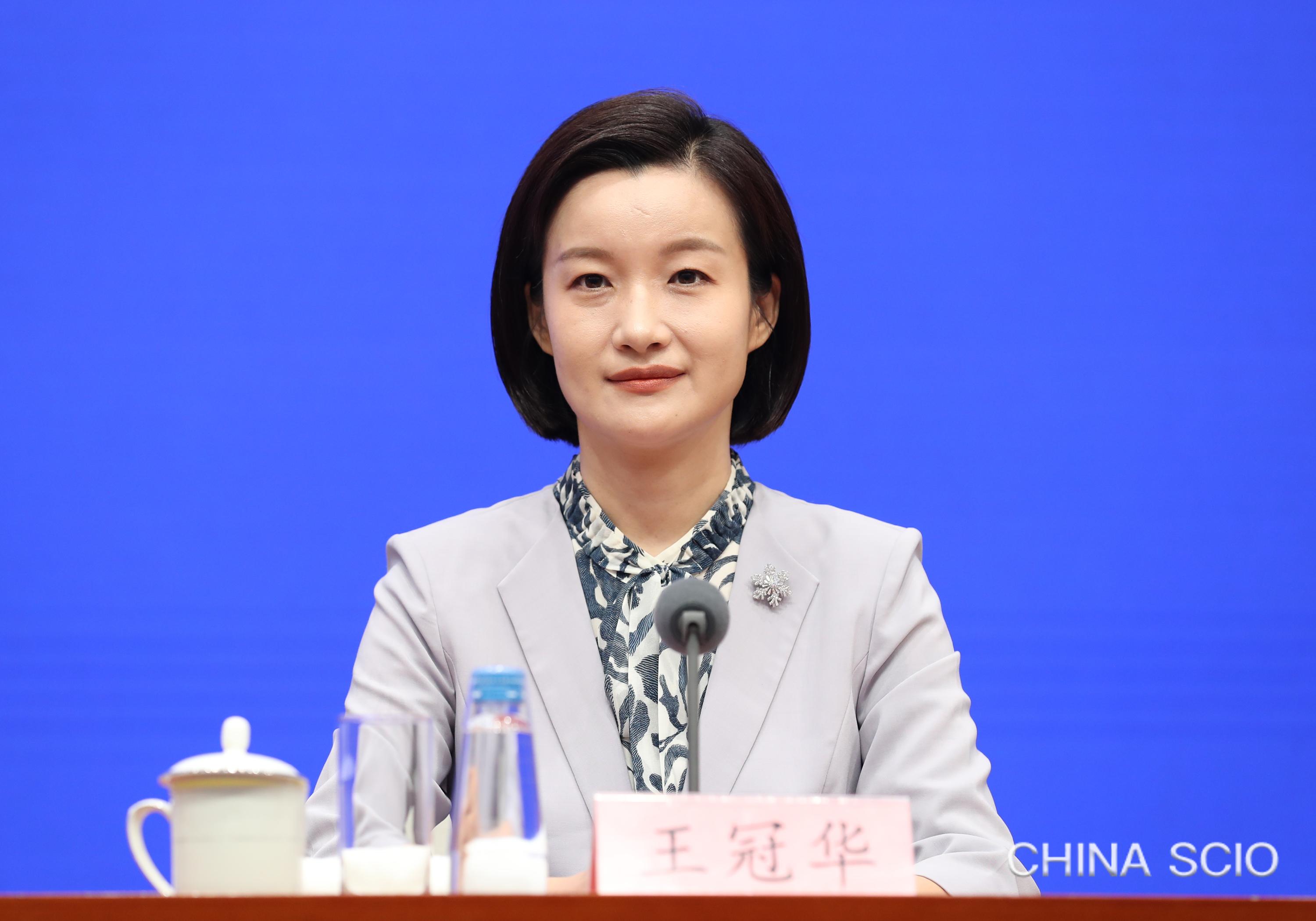
/4 Wang Guanhua
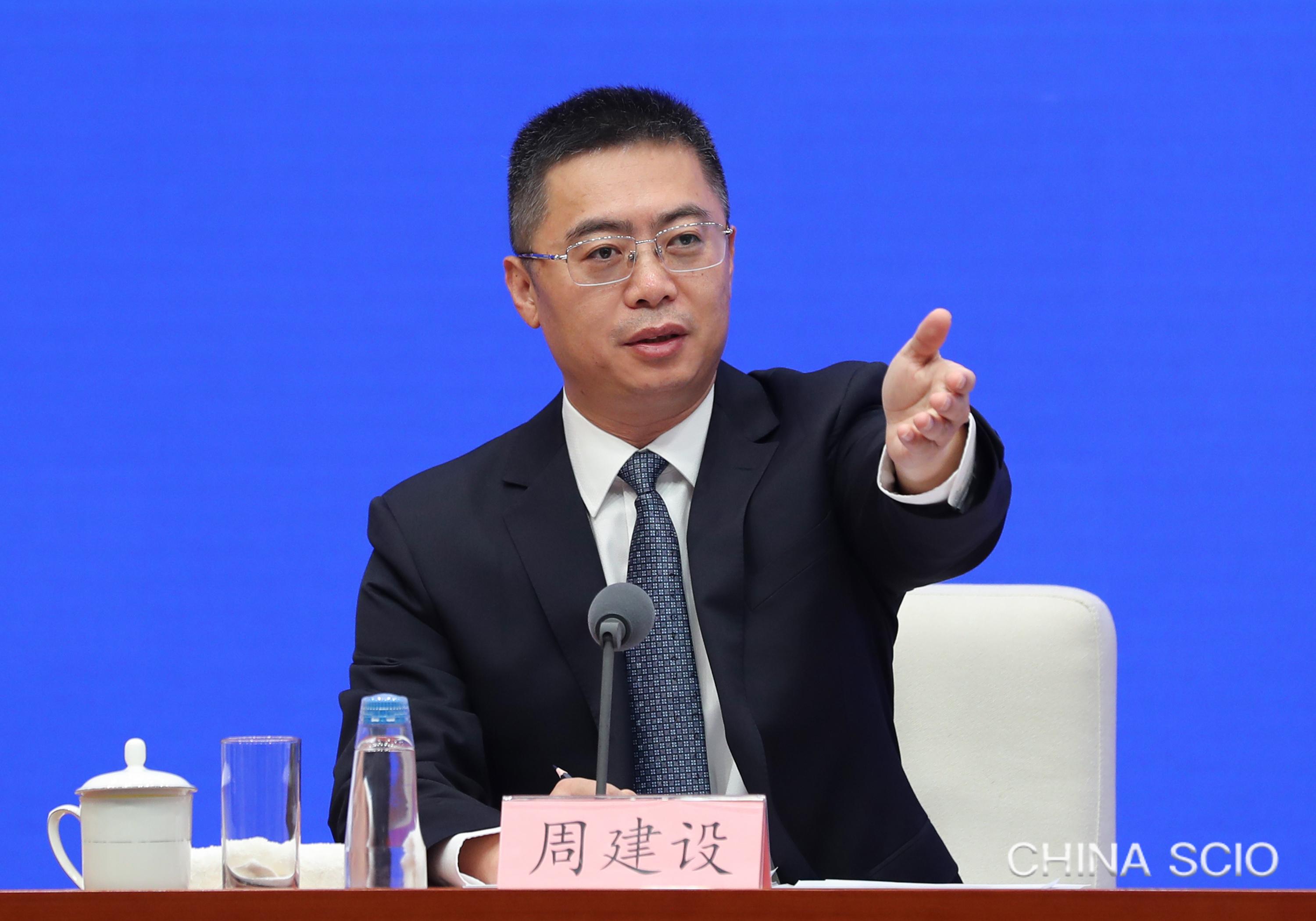
/4 Zhou Jianshe
SCIO briefing on making decisive progress in the Healthy China initiative
September 14, 2026SCIO briefing on developing socialist democracy
September 9, 2026SCIO briefing on the fifth Global Digital Trade Expo
September 7, 2026