
SCIO briefing on China's economic performance in July 2026
Beijing | 3 p.m. Aug. 17, 2026
Speakers

Fu Linghui, spokesperson and chief economist of the National Bureau of Statistics (NBS) and director general of the Department of Comprehensive Statistics of the NBS
Wang Guanhua, spokesperson of the NBS and deputy director general of the Department of Comprehensive Statistics of the NBS
Chairperson
Speakers:
Mr. Fu Linghui, spokesperson and chief economist of the National Bureau of Statistics (NBS) and director general of the Department of Comprehensive Statistics of the NBS
Ms. Wang Guanhua, spokesperson of the NBS and deputy director general of the Department of Comprehensive Statistics of the NBS
Chairperson:
Mr. Zhou Jianshe, deputy director general of the Press Bureau of the State Council Information Office (SCIO) and spokesperson of the SCIO
Date:
Aug. 17, 2026
Zhou Jianshe:
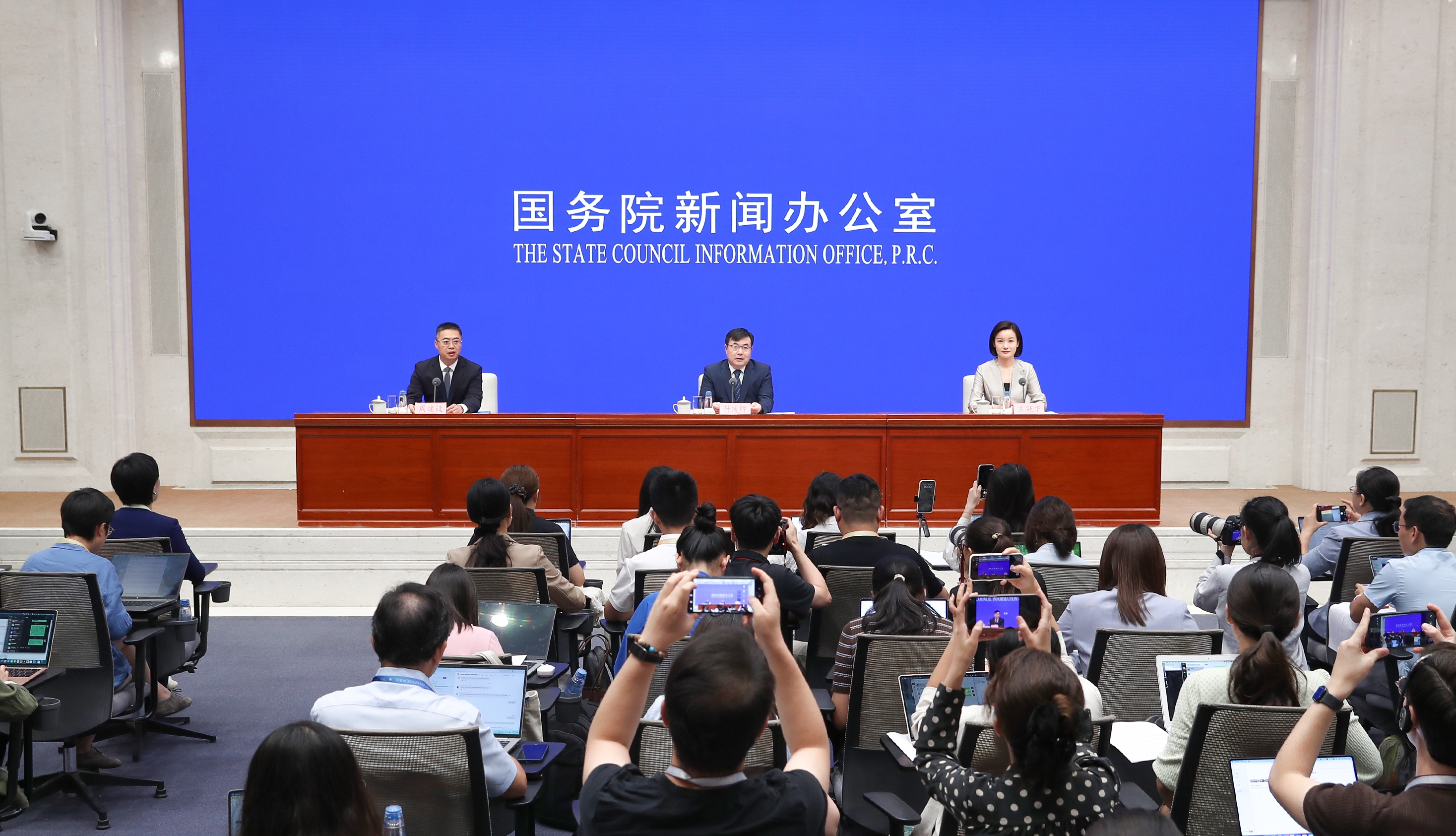
Ladies and gentlemen, good afternoon. Welcome to this press conference held by the State Council Information Office (SCIO). This is a regular briefing on China's economic data. Today, we are joined by Mr. Fu Linghui, spokesperson and chief economist of the National Bureau of Statistics (NBS) and director general of the Department of Comprehensive Statistics of the NBS, and Ms. Wang Guanhua, spokesperson of the NBS and deputy director general of the Department of Comprehensive Statistics of the NBS, to brief you on China's economic performance in July 2026 and then take your questions.
Now, I'll give the floor to Mr. Fu for his introduction.
Fu Linghui:
Friends from the media, good afternoon. As usual, I will start by briefing you on the main economic indicators for this July, and then my colleague and I will take your questions.
In the January-July period, China's economy remained generally stable and continued to develop toward greater innovation and higher quality.
In the first seven months, under the strong leadership of the Communist Party of China (CPC) Central Committee with Comrade Xi Jinping at its core, all regions and departments earnestly implemented the decisions and arrangements of the CPC Central Committee and the State Council, adhered to the general principle of pursuing progress while ensuring stability, effectively responded to various external shocks and domestic difficulties, implemented more proactive and effective macro policies, and took solid steps to promote high-quality development. As a result, production and supply grew steadily, employment and prices remained generally stable, foreign trade continued to demonstrate resilience, new growth drivers witnessed robust development, and the national economy was generally stable with sustained momentum toward new growth drivers and improved economic structure.
First, industrial production grew rapidly, with equipment manufacturing and high-tech manufacturing posting robust growth.
In the first seven months, the total value added of industrial enterprises above designated size grew by 5.3% year on year. In terms of sectors, the value added of mining went up by 2.5% year on year, that of manufacturing grew by 5.6%, and that of the production and supply of electricity, heat power, gas and water increased by 5.4%. The value added of equipment manufacturing rose by 9.7% year on year, and that of high-tech manufacturing surged by 13.8%, 4.4 percentage points and 8.5 percentage points faster than that of industrial enterprises above designated size. In terms of ownership, the value added of state holding enterprises increased by 3.9% year on year; that of share-holding enterprises was up by 5.8%; that of enterprises funded by foreign investors or investors from Hong Kong, Macao and Taiwan was up by 3.1%; and that of private enterprises was up by 4.5%. In terms of products, the production of 3D printing devices, lithium-ion batteries and industrial robots grew by 52.3%, 40.2% and 28.5% year on year, respectively. In July, the value added of industrial enterprises above designated size grew by 4.5% year on year, or up by 0.11% month on month. In July, the Manufacturing Purchasing Managers' Index (PMI) stood at 49.2%, and the Production and Operation Expectation Index was 54.1%. In the first six months, the total profits made by industrial enterprises above designated size were 3.9480 trillion yuan, up by 18.7% year on year.
Second, the service sector grew steadily, and modern services showed strong momentum.
In the first seven months, the Index of Services Production grew by 4.7% year on year. Specifically, that of information transmission, software and information technology services, leasing and business services, finance, and transportation, storage and postal services grew by 10.6%, 9.5%, 6.3% and 5.1%, respectively. In July, the Index of Services Production grew by 4.3% year on year. In July, the Business Activity Index for Services was 49.3% and the Business Activity Expectation Index for Services was 56.0%. Specifically, the Business Activity Index for postal services, telecommunication, broadcast, television and satellite transmission services, and culture, sports and entertainment stayed within the high expansion range of 55.0% and above. In the first six months, the business revenue of service enterprises above designated size grew by 5.9% year on year.
Third, market sales expanded and the growth of service retail accelerated.
In the first seven months, the total retail sales of consumer goods and services rose by 2.6% year on year, among which, the retail sales of services increased by 5.0% and that of goods increased by 1.1%. In terms of retail sales of services, that of communication information services, tourism consultation and rental services, and cultural, sports and leisure services all grew rapidly. In the first seven months, the total retail sales of consumer goods reached 28.7744 trillion yuan, up by 1.2 % year on year. Analyzed by different areas, the retail sales of consumer goods in urban areas reached 24.9285 trillion yuan, up by 1.1% year on year; and that in rural areas stood at 3.8459 trillion yuan, up by 2.4%. Grouped by consumption patterns, the retail sales of goods were 25.4922 trillion yuan, up by 1.1% year on year; the income of catering was 3.2822 trillion yuan, up by 2.6%. Sales of basic living goods and certain upgraded goods grew rapidly. The retail sales of grain, oil and food; communication equipment; and cosmetics by enterprises above designated size increased by 7.2%, 15.1% and 6.3% year on year, respectively. In July, the total retail sales of consumer goods reached 3.9022 trillion yuan, up by 0.6% year on year, or up by 0.06% month on month. In the first seven months, the online retail sales of goods and services reached 11.7214 trillion yuan, up by 4.8% year on year. Specifically, the online retail sales of goods reached 7.3965 trillion yuan, an increase of 4.6%; and the online retail sales of services totaled 4.3249 trillion yuan, up 5.2%.
Fourth, investment in fixed assets declined, while that in intellectual property products saw rapid growth.
In the first seven months, investment in fixed assets (excluding rural households) reached 26.0328 trillion yuan, down 6.7% year on year; and investment in fixed assets dropped 3.7% with investment in real estate development deducted. Specifically, investment in intellectual property products increased by 9.1% year on year. By sector, investment in infrastructure fell by 3.6% year on year; that in manufacturing declined by 1.7%, and that in real estate dropped by 19.2%. The floor space of newly-built commercial buildings sold totaled 450.21 million square meters, falling 11.8% year on year. Meanwhile, total sales of newly-built commercial buildings reached 4.2718 trillion yuan, declining 13.1%. By industry, investment in the primary industry went down by 0.5% year on year, that in the secondary industry fell by 2.1%, and that in the tertiary industry was down by 9.5%. Private investment fell by 9.4% year on year, or down by 5.7% with investment in real estate development deducted. Investment in high-tech industries increased by 5.0% year on year, of which investment in information services, aerospace vehicle and equipment manufacturing, and electronic and communication equipment manufacturing increasing by 19.2%, 12.3% and 7.1%, respectively. In July, investment in fixed assets (excluding rural households) fell by 1.42% month on month.
Fifth, imports and exports of goods grew rapidly, and the trade structure continued to improve.
From January to July, the total value of imports and exports of goods was 30.1264 trillion yuan, up by 17.3% year on year. Specifically, exports accounted for 17.44 trillion yuan, up by 14.0%; and imports were 12.6864 trillion yuan, up by 22.0%. General trade imports and exports increased by 10.2% year on year. Imports and exports with Belt and Road partner countries grew by 15.5%. Imports and exports by private enterprises increased by 17.2%, accounting for 56.9% of the total imports and exports. Exports of mechanical and electrical products increased by 21.2%, accounting for 63.8% of total exports. In July, the total value of goods imports and exports was 4.658 trillion yuan, up by 19.2% year on year. Specifically, exports accounted for 2.7125 trillion yuan, up by 17.8%; and imports were 1.9454 trillion yuan, up by 21.2%.
Sixth, employment remained stable overall, and the surveyed urban unemployment rate experienced a seasonal increase.
From January to July, the national average surveyed urban unemployment rate was 5.2%, remaining flat compared with both the January-June period and the same period of the previous year. In July, the national average surveyed urban unemployment rate was 5.2%, 0.2 percentage point higher than the previous month. The surveyed unemployment rate of population with local household registration was 5.2%. For those with non-local household registration, it was 5.2%, among which, the rate of the population with non-local agricultural household registration was 4.9%. The surveyed urban unemployment rate in 31 major cities was 5.2%, which was 0.2 percentage point higher than the previous month. Employees of enterprises worked an average of 48.2 hours per week.
Seventh, consumer prices increased moderately, with the growth rate narrowing in July.
From January to July, the Consumer Price Index (CPI) rose 0.9% year on year. Grouped by category, prices for food, tobacco, alcohol and dining out fell by 0.2% year on year; clothing prices rose 1.6%; housing prices declined by 0.2%; household appliances and services increased by 1.7%; transportation and communication grew by 1.6%; education, culture and recreation went up by 1.2%; medical services and healthcare increased by 2.1%; and other articles and services were up by 10.8%. Within the category of food, tobacco, alcohol and dining out, pork prices decreased by 13.4%, grain prices decreased by 0.3%, fresh fruit prices rose by 1.1%, and fresh vegetable prices rose by 3.5%. In July, the CPI went up by 0.5% year on year, and down by 0.1% month on month. In the first seven months, the core CPI, excluding the prices of food and energy, grew by 1.1% year on year. In July, the core CPI rose 0.9% year on year.
From January to July, the national Producer Price Index (PPI) for industrial products increased by 1.8% year on year. In July, the PPI went up by 3.5% year on year and fell by 0.7% month on month. From January to July, the purchasing price index for industrial producers increased by 2.8% year on year. Specifically, the prices in July went up by 5.5% year on year and fell by 1.0% month on month.
Overall, the national economy maintained generally stable performance from January to July, continuing its momentum toward innovation-driven, upgraded and high-quality development. However, it should also be noted that the external situation remains complex and volatile, the domestic contradiction of strong supply and weak demand remains pronounced, some enterprises are experiencing operational difficulties, and the foundation for sustained economic improvement needs to be consolidated. For the next stage, we must adhere to the guidance of Xi Jinping Thought on Socialism with Chinese Characteristics for a New Era, uphold the general principle of seeking progress while maintaining stability, and fully and faithfully implement the new development philosophy on all fronts. We will move faster to create a new pattern of development, continue to deepen reform and opening up, accelerate the shift from old growth drivers to new ones, strengthen counter-cyclical adjustment, intensify efforts to expand domestic demand and optimize supply, and ensure and improve the people's well-being, so as to boost development impetus, stimulate social vitality, and promote sustained, innovation-driven, high-quality and sound economic development. Thank you.
Zhou Jianshe:
Thank you, Mr. Fu, for your introduction. The floor is now open for questions. Please identify the media outlet you represent before asking your questions.
_ueditor_page_break_tag_CCTV:
Since the beginning of this year, China's economy has overcome external shocks and internal difficulties, demonstrating shifts toward new growth drivers and an optimized economic structure. Based on the data just released, how do you view the overall economic performance in July? And what are the highlights and changes? Thank you.
Fu Linghui:
Thank you for your questions. In July, ongoing international geopolitical conflicts and mounting uncertainties in the global energy market weighed on global economic recovery. Domestically, extreme weather such as high temperatures and heavy downpours hit parts of China, impacting market supply and demand. Faced with the complex situation, regions and departments across the country effectively implemented more proactive macroeconomic policies, actively responded to internal and external risks and challenges, continued to deepen reform and opening up, and further advanced the development of a unified national market. Overall, China's economy has maintained a generally stable performance and continued its momentum toward innovation-driven and high-quality development, demonstrating strong resilience and vitality. Specifically, the main features include:
First, the economy has maintained steady growth. A key indicator of economic growth is the sustained expansion of output. Judging from July's performance, due to short-term shocks from both international and domestic factors, the growth rates of major production indicators edged down from the previous month. However, on a cumulative basis, major production indicators remained generally stable in the period from January to July. In the first seven months, the value added of industrial enterprises above designated size rose by 5.3% year on year, and the Index of Services Production increased by 4.7% year on year, remaining flat compared with those for the January-June period. The trend of steady production growth remained unchanged.
Second, consumption has continued to expand. Consumption is a key component of domestic demand, and its steady expansion plays a vital role in sustaining economic growth. From January to July, total retail sales of consumer goods and services rose 2.6% year on year, remaining generally stable compared with the first half of the year. Specifically, retail sales of services increased 5%, noticeably outpacing the growth of goods sales. Retail sales of consumer goods—which consist primarily of physical goods—held largely steady with a 1.2% year-on-year growth in the January-July period. Among them, retail sales of upgraded goods maintained rapid growth, with cosmetics and communication equipment posting faster growth than the overall goods category.
Third, development vitality has continued to manifest. This is evident in three aspects: industrial upgrading, digital and intelligent transformation, and foreign trade growth. Innovation has assumed a more prominent leading role, giving a strong boost to industrial upgrading. In July, the value added of high-tech industries among industrial enterprises above designated size increased 16.9% year on year. From January to July, investment in high-tech industries rose 5%, with growth in both metrics accelerating compared with the previous month. The steady advance of digital and intelligent transformation has accelerated the growth of emerging industries. The value added of the digital and intelligent product manufacturing sector registered a robust 17.3% year-on-year growth in July. In terms of specific products, output of smart equipment such as industrial robots and robot reducers grew by more than 20%. As deeper opening-up unlocks greater market vitality, the foreign trade sector is demonstrating sound growth momentum. On the basis of mutual benefit and win-win outcomes, China has continued to expand economic and trade ties with countries worldwide. Backed by complete industrial strengths and steadily improving product quality, the total volume of goods imports and exports grew by 19.2% year on year in July, maintaining fast growth. In terms of trading partners, China's imports and exports with ASEAN and Belt and Road partner countries both maintained double-digit growth from January to July, a clear sign of vibrant economic development.
Fourth, people's livelihoods have been effectively safeguarded. Since the start of this year, in response to fluctuations in domestic and international energy markets and recent extreme weather across parts of the country, all regions and departments have boosted energy supply and the production of daily necessities, prioritized stable employment and prices, and secured positive results in safeguarding normal work and life for residents. In terms of energy supply, crude oil output from industrial enterprises above designated size rose by 0.8% year on year in July, reaching a record high for the same period. Natural gas output and power generation also remained at relatively high levels in July, effectively guaranteeing the energy needs of production and daily life. In terms of prices, the CPI saw a 0.5% year-on-year increase in July, sustaining moderate growth, while the core CPI, excluding food and energy, rose 0.9% and remained generally stable. Food prices, which are closely linked to people's daily lives, dropped by 1.5% year on year, while the prices of grain, meat, poultry, eggs and dairy products remained generally stable, helping ensure people's livelihoods. In terms of employment, the surveyed urban unemployment rate stood at 5.2%, unchanged from the same period last year. The surveyed unemployment rate among the working-age population aged 30 to 59 stood at 3.9%, down from the previous month. Overall, employment remained generally stable.
It must also be recognized that the international situation remains complex and severe, and the domestic imbalance between strong supply and weak demand remains prominent. Preventing and defusing risks and hidden dangers, and consolidating the foundation for steady economic growth still require sustained and unremitting efforts. Moving ahead, we must fully implement the decisions and plans of the CPC Central Committee and the State Council, intensify counter-cyclical adjustments, and step up efforts to expand domestic demand and optimize supply. We must continue to deepen reform and opening-up, bolster development momentum, and unleash social vitality, so as to keep the economy moving toward greater innovation, quality, and dynamism. Thank you.
_ueditor_page_break_tag_Market News International:
Core CPI rose 0.9% year on year in July, pointing to subdued underlying price pressures. How does the current inflationary environment affect policymakers' objective of promoting a reasonable recovery in the price level? And what combination of monetary, fiscal, and consumption support measures could be considered if underlying inflation fails to strengthen? Thank you.
Fu Linghui:
I would like to invite Ms. Wang to answer your questions.
Wang Guanhua:
Thank you for your questions. Consumer prices, closely linked to macroeconomic stability and peoples livelihoods, are closely watched by the public. In July, CPI registered a moderate upward trend, rising 0.5% year on year, or down by 0.1% month on month. The increase is 0.5 percentage point lower than in the previous month, mainly due to the impact of international factors. In July, driven by the downward fluctuation of international crude oil prices, domestic gasoline prices dropped by 10.7% month on month. The decline widened by 5.8 percentage points compared with the previous month, dragging the CPI down by roughly 0.35 percentage point on a monthly basis. Domestic gasoline prices rose 1% year on year in July. The growth rate is 16 percentage points lower than that of the previous month, contributing to a decline of approximately 0.45 percentage point in the year-on-year CPI growth rate.
Food and energy prices are highly susceptible to short-term factors. To get a full picture of price dynamics, we need to look beyond the headline CPI and also track the changes in core CPI, which excludes food and energy prices. In July, core CPI rose 0.3% month on month, or 0.9% year on year, with both increases remaining relatively stable. Notably, prices of some industrial consumer goods and services increased significantly, reflecting the supportive effect of the upgrading and expansion of household consumption. In July, prices of industrial consumer goods excluding energy rose by 1.5% year on year, with prices of gold jewelry and personal care products up 24.6% and 1.7%, respectively. Artificial intelligence is driving iterative upgrades in consumer electronics, leading to robust demand and higher prices for related products. Computers, tablets and mobile phones have seen both year-on-year and month-on-month price increases. In addition, the residents' increasing demands for diversified, personalized, and high-quality services led to a 0.7% year-on-year increase in service prices in July. Among them, prices of medical services, domestic services, and dining out increased by 4.3%, 1.3%, and 1.0% year on year, respectively. As demand for cultural tourism increased during the summer vacation, prices of travel agency services, hotel accommodation, air tickets, and vehicle rentals all rose from the previous month.
The evaluation of price movements requires more than a single month of data. One must examine the cumulative shifts over consecutive periods in order to draw a more objective conclusion. In the first seven months, China's CPI rose 0.9% year on year, while core CPI rose 1.1%, both representing a notable rebound, when compared with the full-year figure of last year and the same period last year. Overall, there have been minor disruptions in certain domestic sectors, caused largely by international factors, yet the trend of moderate consumer price increases remains unchanged. Whether prices can rebound reasonably depends primarily on domestic demand and the supply-demand relationship.
A recent meeting of the Political Bureau of the CPC Central Committee emphasized the need to optimize the implementation of coordinated fiscal and financial policies to promote domestic demand, expand the supply of high-quality products tailored to diverse consumer groups, and unlock potential in service consumption. Governments and departments at all levels are actively translating these guidelines into action. Going forward, a series of policies aimed at expanding domestic demand and stimulating consumption will be rolled out in phases. Service consumption is expected to release further momentum, and the rapid iteration of new products will generate new consumption demand. All of these will continue to underpin a moderate recovery in the CPI. Against this backdrop, China's prices are expected to maintain a moderate upward trajectory in the second half of the year. Thank you.
_ueditor_page_break_tag_Dazhong Daily:
Currently, China's economic structural transformation has entered a critical phase. Some analysts believe that structural upgrading will help create new advantages for economic development. What were the main highlights of economic restructuring in July? What data is worth noting? Thank you.
Fu Linghui:
Thank you for your questions. Economic restructuring is an issue that many people are concerned about. In recent years, China's economic structural optimization and upgrading has been quite evident. This is not only a necessary part for pursuing high-quality development, but also an integral part of our efforts to improve the quality and efficiency of economic development. Data from the first seven months of the year shows that China's economy maintains steady growth, and the structural optimization continues to gain momentum. This is creating new advantages for economic development and underpinning the economy's positive momentum going forward.
First, the demand structure continues to optimize. From the perspective of consumption, as consumer demand shifts from basic quantitative needs to higher quality and standards, the shares of service consumption and quality consumption have been rising. In the first half of the year, per capita spending on services increased its share of total consumer expenditure by 0.2 percentage point year on year. This trend is also reflected in market sales over the first seven months, during which retail sales of services increased by 5% year on year from January to July, significantly outpacing retail sales of goods, indicating that the share of retail sales of services in total market sales is increasing. Within goods consumption, the share of upgraded consumer goods is also expanding. In the first seven months, retail sales of upgraded goods, such as communication equipment, cultural and office supplies and cosmetics, saw their combined share of retail sales of enterprises above designated size increased by 2.6 percentage points year on year. On the investment front, a sustained focus on the real economy has channeled high-quality resources into manufacturing, driving up its share of total investment. From January to July, manufacturing investment accounted for 26.6% of total investment, an increase of 1.4 percentage points year on year. Investment is playing a crucial role in optimizing the supply structure, with an expanding share flowing into innovation and the development of new quality productive forces. From January to July, investments in high-tech industries and intellectual property products saw their share of total investment rise by 1.2 and 2.1 percentage points year on year, respectively. Turning to foreign trade, the structure of exports in goods and services continues to improve, moving steadily up the global value chain. In the first seven months, China's mechanical and electrical products accounted for 63.8% of total goods exports, an increase of more than 3 percentage points year on year. Meanwhile, in the first half of the year, knowledge-intensive service exports accounted for more than half of total service exports, reaching 53.5%. Together, these figures indicate that China's goods exports are transitioning from labor-intensive items to high-tech, high-value-added products, while service exports are shifting from labor-intensive services to knowledge-intensive ones, reflecting a clear climb up the value chain for both goods and services exports.
Second, industrial upgrading continues to progress. On the agricultural front, the share of protected agriculture and large-scale livestock farming in China's total production has continued to expand in recent years. In the industrial sector, the transition toward high-end manufacturing is steadily gaining ground, and the strength of equipment manufacturing is improving. Both high-tech manufacturing and equipment manufacturing account for a growing share of industrial output. In the first seven months, high-tech manufacturing and equipment manufacturing accounted for 17.9% and 37.2% of total value-added output by industrial enterprises above designated size, up by 1.5 and 1.7 percentage points year on year, respectively. In the service sector, modern services are gaining momentum, driven by upgrading consumer demand and industrial transformation and upgrading, as well as next-generation information technologies such as artificial intelligence and big data. In the first half of the year, the value-added output of information transmission, software and IT services, along with leasing and business services, each increased their share of GDP by 0.3 percentage point compared with a year earlier. Data from July shows that such rising share has carried over into the month.
Third, urban-rural and regional development has improved. From an urban-rural perspective, comprehensive rural revitalization has advanced steadily, with a range of measures taken to strengthen agriculture, revitalize rural areas and raise farmers' incomes. The urban-to-rural per capita disposable income ratio continued to narrow, standing at 2.37 in the first half of the year, down 0.05 from a year earlier. As county-level commercial systems develop rapidly, logistics, distribution and information networks are reaching further into rural areas, and consumption in lower-tier markets is gaining momentum. From January to July, rural sales accounted for 13.4% of total retail sales of consumer goods, up 0.2 percentage point year on year. From a regional perspective, the coordinated regional development strategy and major regional strategies have been further implemented. Regions have given full play to their comparative advantages, unleashing stronger development momentum, and major economic provinces have played a leading and stabilizing role in the national economy. The eastern region is accelerating its development into a hub for innovation, while the central and western regions continue to demonstrate their late-mover advantages. Overall, high-quality development is showing sound momentum. Some emerging industries in the eastern region have outperformed the national average. Meanwhile, data from the first seven months shows that industrial growth in many central and western provinces outpaced it as well.
We must also recognize, however, that improving and upgrading the economy cannot be achieved overnight; it requires sustained, long-term effort. Going forward, we will fully, accurately and comprehensively implement the new development philosophy, deepen reform and opening up, promote innovation, develop new quality productive forces in light of local conditions, continue to optimize the economic structure, and promote coordinated economic development. Thank you.
_ueditor_page_break_tag_Reuters:
Could you analyze the country's economic performance in July from both the supply and demand sides? What impact will recent high temperatures, heavy rainfall, typhoons and flooding have on economic performance in the third quarter? Will China be able to meet its annual economic growth target? Thank you.
Fu Linghui:
Thank you for your questions. The first concerns production and demand in July. We gave an overview of July's economic performance in our earlier remarks. Overall, it remained generally stable, with no major changes in supply or demand.
The second question concerns the impact of recent extreme weather on the economy in the third quarter and whether the full-year economic growth target can be achieved. Recent extreme weather events, including high temperatures and heavy rainfall, have caused natural disasters in some areas and will weigh on economic activity. The impact is generally manageable, however, and the broader trend of economic development remains unchanged. For the year as a whole, China has a sound foundation and favorable conditions for achieving its economic growth target. Since the beginning of this year, China's economy has absorbed many external shocks, overcome domestic difficulties and maintained stable performance. Despite numerous risks and challenges ahead, the overall trend of stability in China's economy has not changed. New growth drivers continue to expand, reform and opening up is deepening and macro policies are becoming more forceful and effective. On that basis, the economy is expected to remain generally stable while gaining new momentum and improving in quality, providing strong support for meeting the annual economic growth target. Specifically, several factors underpin this assessment:
First, the economic fundamentals are solid. As an economy of enormous scale, China is underpinned by a complete industrial system and the strengths of its vast domestic market. It has ample room for maneuver as well as strong resilience and vitality, and stability remains a notable feature of its economic performance. Since the beginning of the year, despite fluctuations in the international energy market and mounting external pressures, China's economy has held steady. In July, parts of the country were hit by frequent extreme weather events and natural disasters, including high temperatures and heavy rainfall, disrupting market supply and demand. Nevertheless, the economy remained stable and continued to make progress, demonstrating its solid foundations and strong capacity to withstand shocks. From January to July, the value added of industrial enterprises above designated size grew 5.3% year on year, and the services production index grew 4.7%. Both rates remained relatively rapid. The surveyed urban unemployment rate stood at 5.2% and consumer prices rose 0.9% year on year, both remaining generally stable. Total goods imports and exports increased 17.3% year on year. The RMB exchange rate remained stable and appreciated slightly, and foreign exchange reserves stayed above $3.4 trillion. These solid fundamentals and strong resilience provide a firm foundation for China's steady economic development.
Second, new growth drivers are providing strong support. China is accelerating the transition from traditional to new growth drivers, and as those drivers gather strength and momentum, their contribution to economic growth is becoming increasingly evident. In the first half of the year, new growth drivers, including the digital economy, accounted for more than 40% of economic growth. July's figures show that new growth drivers continued to make a notable contribution to growth. In the industrial sector, new growth drivers accounted for 50% of the growth in value added of industrial enterprises above designated size from January to July. On the production side, digitalization and intelligent transformation are accelerating, providing a strong boost to related industries. In July, the value added of digital product manufacturing increased 17.3% year on year, while the production index for the information transmission, software and information technology services grew 9.3%, both maintaining rapid growth. The AI industry chain is developing soundly, with output of products such as memory chips and industrial robots rising rapidly. On the demand side, investment in emerging fields continued to grow. At the same time, consumer spending on culture, tourism and leisure, as well as on digital products, expanded further, injecting new momentum into economic development. From January to July, investment in high-tech industries increased 5% year on year, while retail sales related to tourism and cultural, sports and leisure services both grew more than 10%. As technological innovation and industrial innovation become deeply integrated and new forms of the intelligent economy continue to emerge, the role of new growth drivers in supporting economic development will continue to strengthen.
Third, macroeconomic policies have become more effective. Since the beginning of this year, fiscal and monetary policies have been better coordinated. Work on implementing major national strategies, enhancing security capacity in key areas, as well as on carrying out large-scale equipment upgrades and consumer goods trade-in programs, has been steadily advanced. Policies to expand capacity and improve quality in the service sector have been introduced and implemented. These measures have provided strong support for the stable performance of the economy. Fiscal and financial policies have also stepped up support for the real economy. By the end of July, the outstanding balance of aggregate social financing had increased 7.4% year on year. The consumer goods trade-in program continued to deliver results. From January to July, retail sales of cultural and office supplies by enterprises above designated size rose 6% year on year, while sales of telecommunications equipment rose 15.1%, both relatively rapid rates. Demand for equipment renewal continued to be released. From January to July, investment in equipment and instruments grew 9% year on year, contributing 1.5 percentage points to overall investment growth. The Political Bureau of the CPC Central Committee, at its meeting at the end of July, made comprehensive arrangements for economic work in the second half of the year, and relevant departments are moving quickly to implement them. As existing policies take fuller effect and practical new incremental policies are rolled out, their combined effects will continue to unfold, contributing to sustained economic improvement.
It is also important to note that efforts to build a unified national market are being further advanced, and high-standard opening up is making steady and substantive progress. More will be done to remove barriers and bottlenecks, so as to unleash the dividends of reform and opening up and boost the vitality and momentum of the economy. Going forward, we need to maximize the effectiveness of policies, accelerate the transformation of growth drivers, steadily pursue high-quality development, and better safeguard and improve people's well-being. Thank you.
_ueditor_page_break_tag_China Financial and Economic News:
The Political Bureau of the CPC Central Committee, at its meeting at the end of July, urged faster transition to new growth drivers. Based on the data for July, what are the latest figures regarding industrial upgrading, new growth drivers and new products? How much are new growth drivers contributing to the economy? Thank you.
Fu Linghui:
Thank you for your questions. I would like to invite Ms. Wang to answer them.
Wang Guanhua:
Thank you for your questions. Since the beginning of this year, despite a complex and changing external environment and headwinds facing the economy, China has remained committed to pursuing high-quality development and has continued to foster new growth drivers and strengths through innovation. The economy has shown momentum shifting toward new growth drivers and an improving structure, a trend that continued in July. Specifically:
First, the economy is becoming increasingly innovation-driven, with emerging industries playing a greater supporting role. Emerging industries are key areas for fostering new quality productive forces. Last year, the value added of the "three new" economy, centered on new industries, new forms of business and new business models, accounted for 18.39% of GDP and has been rising year by year. During the 14th Five-Year Plan period, its share rose by a cumulative 1.9 percentage points, reflecting China's sustained efforts over the years to promote industrial transformation and foster innovation-driven growth. This year, new industries and new growth drivers have continued to contribute more to economic growth, emerging as a key pillar underpinning the stable performance of the Chinese economy amid a complex environment. Preliminary estimates show that during the first seven months, new growth drivers contributed 50.9% of the growth in output of industrial enterprises above designated size, up 3 percentage points from the first half of the year. In July, equipment manufacturing and high-tech manufacturing maintained sound growth momentum, with growth accelerating by 1.3 percentage points for equipment manufacturing and 2.8 percentage points for high-tech manufacturing from the previous month. Equipment manufacturing is where a country's industrial strength is most visible, while high-tech manufacturing is characterized by relatively high levels of R&D investment and value added. Growth in these two areas indicates that China's manufacturing sector is moving toward the medium- and high-end of industrial and value chains. This represents a qualitative improvement that is more noteworthy than quantitative expansion. In the service sector, integrated business formats blending culture, tourism, sports and commerce have continued to diversify, while the deep integration of advanced manufacturing and modern services has provided strong impetus for economic transformation and upgrading. During the first seven months, two modern service industries together contributed more than 40% of the growth in the services production index: information transmission, software and information technology services, and leasing and business services.
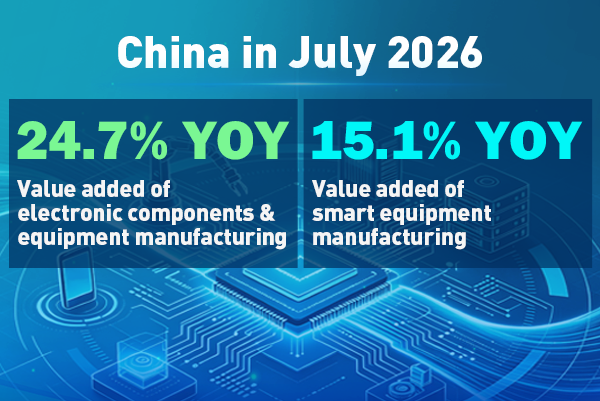
Second, the economy is becoming increasingly intelligent, with AI accelerating the shift from old to new drivers. Since the beginning of this year, AI has accelerated its integration into a wide range of industries and sectors. It has upgraded traditional industries and continuously given rise to new industries and business formats, making R&D iterations faster, production more intelligent and products better. In this way, AI has expedited the transformation of growth drivers. On the production side, digital product manufacturing has performed particularly well. In July, the value added of AI-related electronic component and equipment manufacturing rose 24.7%, while smart equipment manufacturing climbed 15.1%. Output rose 21.1% for optical fiber and 65.7% for 3D printing equipment, while output of smart wristbands doubled. On the consumption side, smart products such as AI-powered smartphones and AI glasses are iterating rapidly. From January to July, retail sales of smart wearable devices by enterprises above designated size more than doubled. A range of immersive and interactive consumption scenarios, including AI-powered tour guides and virtual fitting rooms, are rolling out faster. These innovations have not only made the consumption experience more convenient and engaging but also unlocked new consumption potential. On the investment side, investment from January to July grew 19.2% in information services and 7.1% in electronic and communication equipment manufacturing. Investment in these new growth areas represents both current demand and future high-quality supply, enhancing the sustainability of China's economic growth.
Third, the economy is becoming increasingly green, with new green growth drivers gaining momentum. China is fostering new industries and expanding new markets in its green transformation, continuously turning ecological strengths into development advantages. On the production side, a number of new industries and products that align with green and low-carbon trends have grown rapidly. In July, the value added of the bio-based materials manufacturing industry increased 20.6% year on year. Increased demand for new energy vehicles (NEVs) and new-type energy storage led to a 58.8% increase in lithium-ion battery production. Output rose 79.4% for hydropower generating units and 18.6% for water pollution control equipment, meeting domestic needs for the green transition and ecological and environmental governance. In the first seven months, China supported higher-quality industrial growth with lower energy consumption. Energy consumption per unit of value added of industrial enterprises above designated size decreased 3.5% year on year, showing that China's energy and resource utilization efficiency is improving and that energy-saving retrofits in industry have achieved tangible results. On the demand side, green consumption and green trade are gaining momentum. The retail penetration rate of new energy passenger vehicles has exceeded 60% for four consecutive months, reaching 65.1% in July, meaning that roughly two out of every three passenger vehicles sold were NEVs.
Together, these developments indicate that China's economic performance is undergoing many positive and profound changes, and that its development model is shifting rapidly from a traditional factor-driven one to an innovation-driven one. Of course, we must also recognize that industrial transformation and upgrading, as well as the shift from old to new growth drivers, do not advance in lockstep. The pace of development will inevitably vary, with some areas advancing faster and others slower. While we can see the positive aspects of the rapid growth of new drivers and the shift of the economy toward new and higher-quality development, we must also face the reality that the transition between old and new growth drivers will take time and that some sectors are facing short-term difficulties. We must follow the decisions and arrangements of the CPC Central Committee and the State Council, continue to promote high-quality development, coordinate the upgrading of traditional industries, the expansion of emerging industries and the cultivation of future industries, and facilitate a smooth transition between old and new growth drivers. Thank you.
_ueditor_page_break_tag_Yicai:
Since the beginning of this year, the growth rate of fixed-asset investment has declined, but the structure has continued to improve. How do you assess this trend? Also, what were the new highlights in July in terms of investment in major national strategies, security capacity in key areas and high-tech industries? Which areas should be prioritized for investment going forward? Thank you.
Fu Linghui:
Thank you for your questions. Investment is indeed a topic that draws widespread attention. In the first seven months, fixed-asset investment decreased 6.7% year on year, and the decline continued to widen. This reflected the effect of high temperatures and heavy rain on project construction in some areas, along with a complex and severe external environment and the phased impact of domestic economic transformation and adjustment. When assessing the current investment situation, we should look beyond changes in the investment growth rate to the role of investment in promoting economic and social development, as well as its structure, quality and efficiency. From this perspective, since the beginning of this year, with the strengthening of innovation's leading role and the release of policy benefits, investment has played an increasingly prominent role in promoting transformation, strengthening the foundation for growth and benefiting people's livelihoods. This is evident in the following aspects:
First, investment in new growth areas has expanded in scope and improved in quality. Investment today determines future output and shapes the industrial landscape and economic efficiency of the years ahead. China is currently accelerating the transition from old to new growth drivers. Capital is rapidly flowing into advanced manufacturing, the digital economy, and green and low-carbon sectors, and enterprises are shifting their investment focus to innovation-intensive activities such as R&D and design. Data show that from January to July, investment in intellectual property products increased 9.1%, with its share of total investment up 2.1 percentage points year on year. With the expansion of demand for computing power, this momentum has passed from terminal applications up the chain to hardware manufacturing and basic materials, driving a substantial increase in investment across the entire industry. From January to July, investment rose 57.7% year on year in electronic circuit manufacturing, 9.4% in electronic specialty materials manufacturing and 11.5% in integrated circuit manufacturing, while investment in information services increased 19.2%, 3.7 percentage points faster than in the first half. The market penetration rate of NEVs continues to rise, fueling strong demand for power batteries and driving a 23% increase in investment in lithium-ion battery manufacturing. As the low-altitude economy accelerates commercialization, investment in aircraft and spacecraft manufacturing expanded by 12.3% in the first seven months. These figures show that investment momentum in new growth areas is strengthening.
Second, investment in key areas has continued to expand. The large-scale equipment renewal policy has had a significant stimulating effect, and demand for equipment purchases has continued to release. This will further raise corporate production efficiency. Equipment renewal is clearly having a positive impact on boosting corporate production and improving production efficiency. From January to July, investment in equipment and instruments increased 9%, contributing 1.5 percentage points to overall investment growth. Solid progress in implementing major national strategies and enhancing security capacity in key areas, along with the gradual improvement of the modern infrastructure system, has driven investment growth in related fields. All of this supports long-term economic development. Communication network construction has deepened. From January to July, investment rose 29.9% year on year in optical fiber manufacturing and 41.3% in internet and related services. According to data from relevant departments, 5G base stations accounted for 39.1% of all mobile base stations as of the end of June, up 0.9 percentage point from the first quarter. Steady progress has been made in expanding logistics and transportation, as well as basic energy infrastructure. In the first seven months, investment rose 16.2% in water transport, 15.7% in air transport and 16% in electricity supply infrastructure.
Third, efforts to improve people's livelihoods have been intensified. As people's needs shift from simply having basic necessities to seeking higher-quality living conditions, and from having enough food and clothing to pursuing more livable environments, China continues to increase investment in improving people's livelihoods. In the first seven months, investment rose 5.9% year on year in agriculture and 4.5% in fisheries, consolidating the foundation for food security and for industrial development under rural revitalization. The first seven months also saw ecological restoration projects advancing in an orderly manner, with the construction of small and micro urban green spaces such as "pocket parks" in full swing. Investment in environmental monitoring and treatment services grew 3% in the first seven months, making development greener and people's lives better at the same time.
Overall, China's investment structure has continued to improve, and the quality of investment has steadily risen, which will help strengthen the momentum of economic development. Moving forward, we will coordinate investment in physical assets and investment in people, better leverage the guiding and driving role of government investment, work to invigorate private investment, drive high-quality progress on major strategies and key projects, and step up spending on innovation and people's well-being, thereby creating favorable conditions for high-quality economic development. Thank you.
_ueditor_page_break_tag_National Business Daily:
We noticed that total retail sales of consumer goods and services increased 2.6% year on year from January to July, indicating a steady recovery in the consumer market. How would you assess consumption in July? How did summer vacation consumption, cultural and tourism consumption, and online retail sales of goods and services perform? What are the favorable conditions and the challenges facing the development of the consumer market moving forward? Thank you.
Fu Linghui:
I would like to invite Ms. Wang to answer your questions.
Wang Guanhua:
Thank you for your questions. From January to July, China's retail market expanded steadily, with total retail sales of consumer goods and services rising 2.6% year on year, a relatively stable growth rate compared to the first half of the year. Alongside this expansion, the consumer market also showed several structural features.
First, there is a clear trend of household consumption shifting toward services. In July, frequent extreme weather events such as typhoons, rainstorms and high temperatures affected offline consumption in some areas. Growth in transportation services, for example, slowed. Overall, however, service consumption has shown strong stability in recent years, with its growth rate consistently outpacing that of goods consumption. From January to July, retail sales of services grew by 5%, 3.9 percentage points faster than retail sales of goods, indicating a shift in consumer focus from "buying goods" to "enjoying services" and "valuing experiences." July marked the start of the summer holiday season, and many localities launched special cultural and tourism activities and measures to benefit consumers. Demand for immersive and experiential consumption such as night markets, parent-child study trips and summer getaways continued to grow. From January to July, retail sales of tourism consulting and leasing services and of cultural, sports and recreational services increased 11% and 10.1% year on year, respectively, both maintaining double-digit growth. Digital consumption scenarios continued to expand, and the supply of digital content such as e-reading and online audio-visual programming grew, driving an 11.9% increase in retail sales of communication and information services. Services are consumed frequently, with transportation, communication and daily life services all part of routine daily spending. Service consumption also has a strong spillover effect. Each cultural or tourism trip, for example, generates revenue not only for tourist attractions but also for surrounding catering, accommodation and transportation businesses. Expanding service consumption will therefore continue to be a main engine of overall consumption growth.
Second, goods consumption is improving in quality, with green and intelligent products becoming increasingly popular. From January to July, China's retail sales of goods exceeded 25 trillion yuan, up 1.1% year on year. Basic living goods such as grain, oil, food and beverages saw steady growth, while retail sales of upgraded goods such as cosmetics and communication equipment grew rapidly. Driven by policies such as the consumer goods trade-in program, durable consumer goods are becoming smarter and greener, with new energy vehicles, energy-saving appliances and smart home products gaining increasing favor among consumers. From January to July, retail sales of smart wearable devices, including smart glasses, more than doubled year on year, and retail sales of high-efficiency home appliances by enterprises above the designated size grew more than 30%.
Third, new forms of consumption continue to show vitality. Online platforms, with their wide choice, convenience and efficiency, have become a major channel for daily consumption. From January to July, online retail sales of goods and services increased by 4.8% year on year, with online retail sales of goods accounting for nearly 30% of total retail sales of goods. New retail formats catering to quality consumption and digital convenience have grown rapidly. Retail sales at warehouse membership stores above the designated size and unmanned stores both increased more than 25%, and sales at shopping malls posted double-digit growth.
Fourth, rural and inbound consumption continue to release potential. As rural commerce and logistics systems improve, rural spending power is being further tapped. From January to July, retail sales of consumer goods in rural areas increased by 2.4% year on year, 1.3 percentage points higher than in urban areas. Policies to facilitate cross-border travel have also continued to improve. Version 2.0 of the departure tax refund policy took effect on July 1, further boosting overseas visitors' spending on shopping, sightseeing and quality goods in China. In July, sales of tax-refundable goods to visitors rose sharply in many places, and traffic from "China Travel" is increasingly being converted into sales under "China Shopping."
China has a large population and a continuously growing middle-income group, and the demand for high-quality, personalized and experience-based consumption is rising. Technological innovation keeps giving rise to new products and new business models, leaving considerable room for the consumer market to expand. At the same time, we should also recognize that the supply of some high-quality goods and services has yet to keep pace with changing consumer demand, and household spending capacity and willingness need to be further boosted. A comprehensive approach is therefore needed, with concerted efforts to raise household incomes, improve market supply and strengthen consumer confidence, so as to continuously unleash consumption potential. Thank you.
_ueditor_page_break_tag_Phoenix TV:
We have noticed that the services production index rose 4.3% year on year in July, down from the previous month. What are the specific reasons for this slowdown? In addition, what are the current development trends and characteristics of the service sector, and what is your outlook for its development going forward? Thank you.
Fu Linghui:
Thank you for your questions. The service sector is an important part of economic development and has drawn wide public attention. Since the beginning of this year, various parties have taken active steps to expand capacity and improve quality in the service sector. China's service sector has maintained steady growth overall, featuring an improved development structure and stronger new growth drivers, and playing an important role in meeting the needs of business production and people's daily lives. The index of services production rose 4.3% year on year in July, showing the following main characteristics.
First, production in the service sector has maintained steady growth. In July, extreme weather in some regions and other factors slowed growth in transportation and related sectors, pulling the growth rate of the services production index below that of the previous month. That is the concern you raised. On a cumulative basis, however, the index rose 4.7% year on year during the January-July period, broadly in line with the first-half growth rate. The trend of steady growth in the service sector remains unchanged. In terms of supply and demand in the consumer market, the supply of services has increased steadily, ensuring that market prices remain basically stable. In July, service prices in the CPI rose 0.7% year on year, unchanged from the previous month.
Second, producer services have been optimized and upgraded. Structurally, the integrated advancement of technological and industrial innovation, coupled with rising demand for high-tech services such as R&D and design, has driven the upgrading of producer services. During the first seven months, investment in high-tech services increased 8.4% year on year, with investment in information services up 19.2%. As digital and intelligent development speeds up, the demand for information services continues to expand. In July, the production index for the information transmission, software, and information technology services rose 9.3% year on year, significantly faster than the overall growth rate of the service sector. To enhance product market value, businesses have increased their demand for brand planning, publicity and promotion, which has in turn driven rapid growth in business services. In July, the production index for leasing and business services increased 9% year on year.
Third, the efficiency of consumer services has improved. To meet residents' diverse service needs, various parties have created new service consumption scenarios, promoted the integrated development of service business models and expanded the effective supply of services, hence boosting service retail sales. During the January-July period, retail sales of services increased 5% year on year, outpacing the growth rate of the retail sales of goods. New consumer service models, such as instant retail, have met those diverse service needs and given the sector a clear lift. In July, the production index for wholesale and retail, which is closely related to people's daily lives, increased 2.1% year on year, 0.5 percentage point higher than the previous month.
Fourth, emerging service industries have shown sound momentum. The platform economy has continued to develop, with internet-based service transactions remaining robust. During the January-July period, the transaction volume on tourism and sightseeing service platforms increased 7.2% year on year, while the transaction volume on cultural and sports service platforms rose 8.9%. As the green transition in production and daily life advances, charging facilities for new energy vehicles have continued to improve, and related service transactions have expanded. In the first seven months, the transaction volume on energy conservation and environmental protection service platforms increased 26.6% year on year, while the transaction volume on key charging platforms increased more than 30%. At the same time, new service enterprises with strong market competitiveness are growing rapidly and are increasingly becoming a new driving force supporting the development of the service sector. In the first half of the year, operating revenue of "little giant" service enterprises above designated size that utilize special and sophisticated technologies to produce novel and unique products increased 14.6% year on year, continuing an upward trend. Thank you.
Zhou Jianshe:
Due to time constraints, we will take one last question.
_ueditor_page_break_tag_China Business Journal:
In July, the year-on-year increase in PPI narrowed. What were the main reasons for that? Could you walk us through the highlights in the PPI data? What are the new characteristics of industrial product prices in China? Thank you.
Fu Linghui:
I would like to invite Ms. Wang to answer your questions.
Wang Guanhua:
Thank you for your questions. Since the beginning of this year, under the combined effect of international and domestic factors, China's producer price index for industrial products (PPI) emerged from its downward range in March and has now risen year on year for five consecutive months. We can look at industrial product prices in July from three aspects.
First, the widening month-on-month decline and the slowdown in the year-on-year increase in PPI mainly reflect the pass-through effect of falling international commodity prices. In July, international crude oil and non-ferrous metal prices fluctuated downward. Domestically, month-on-month prices fell 11.8% for petroleum extraction, 8.4% for refined petroleum product manufacturing and 4.2% for organic chemical raw material manufacturing. Prices also fell 2.1% for non-ferrous metal mining and beneficiation and 1.7% for non-ferrous metal smelting and rolling processing. Preliminary calculations show that these five industries combined cut the month-on-month PPI by approximately 0.65 percentage point. On a year-on-year basis, they accounted for about 0.64 percentage point of the slowdown in PPI growth. Imported international factors were therefore the main driver of the month's PPI change. Seasonal factors also affected prices in some industries. The national average temperature in July this year was higher than the average for July in previous years, with more rainfall and frequent typhoons. As a result, construction projects in some areas slowed down, and prices in the ferrous metal smelting and rolling processing industry and the non-metallic mineral products industry both declined compared to the previous month.
Second, industrial transformation and upgrading, together with improvements in the quality and scale of consumption, have provided strong support for industrial product prices. The PPI emerged from its downward trend in March, when the year-on-year change turned positive. At that time, only 13 out of the 41 major industrial categories saw price increases. By July, that number had reached 23, steadily broadening the share of industries with rising prices. In particular, prices in fields related to new quality productive forces, such as AI and high-end equipment, rose significantly. Prices in the electrical machinery and equipment manufacturing industry rose 5.7% year on year, and those in the computer, communication and other electronic equipment manufacturing industry rose 4.4% year on year, with both increases widening compared to the previous month. Growing demand for smart and quality consumption drove smart home consumer device manufacturing prices up 15.5% year on year, virtual reality device manufacturing prices up 2.5%, and beauty and cosmetic product manufacturing prices up 1.2%.
Third, comprehensive measures to curb rat-race competition have continued to yield results. As those measures and capacity management in key industries take effect, supply and demand have come into better balance in some industries. In July, lithium-ion battery manufacturing prices rose 8.9% year on year, while photovoltaic equipment and components manufacturing rose 2.8%.
Going forward, we will further expand domestic demand, optimize supply, and focus on cultivating and strengthening new growth drivers. We will also take comprehensive measures to curb rat-race competition, create a market environment for fair competition and continue efforts to ensure market supply and stable prices, so as to maintain steady industrial product prices. Thank you.
Zhou Jianshe:
That concludes today's press conference. Thank you to our two speakers and friends from the media for joining us. Goodbye.
Translated and edited by Zhu Bochen, Zhang Tingting, Lin Liyao, Gong Yingchun, Liu Jianing, Liu Caiyi, Yang Chuanli, Zhang Yuxin, Xu Kailin, Liu Sitong, Li Huiru, Liu Qiang, Wang Qian, Fan Junmei, Li Xiao, Wang Wei, David Ball, Jay Birbeck, and Tudor Finneran. In case of any discrepancy between the English and Chinese texts, the Chinese version is deemed to prevail.

/4 Group photo
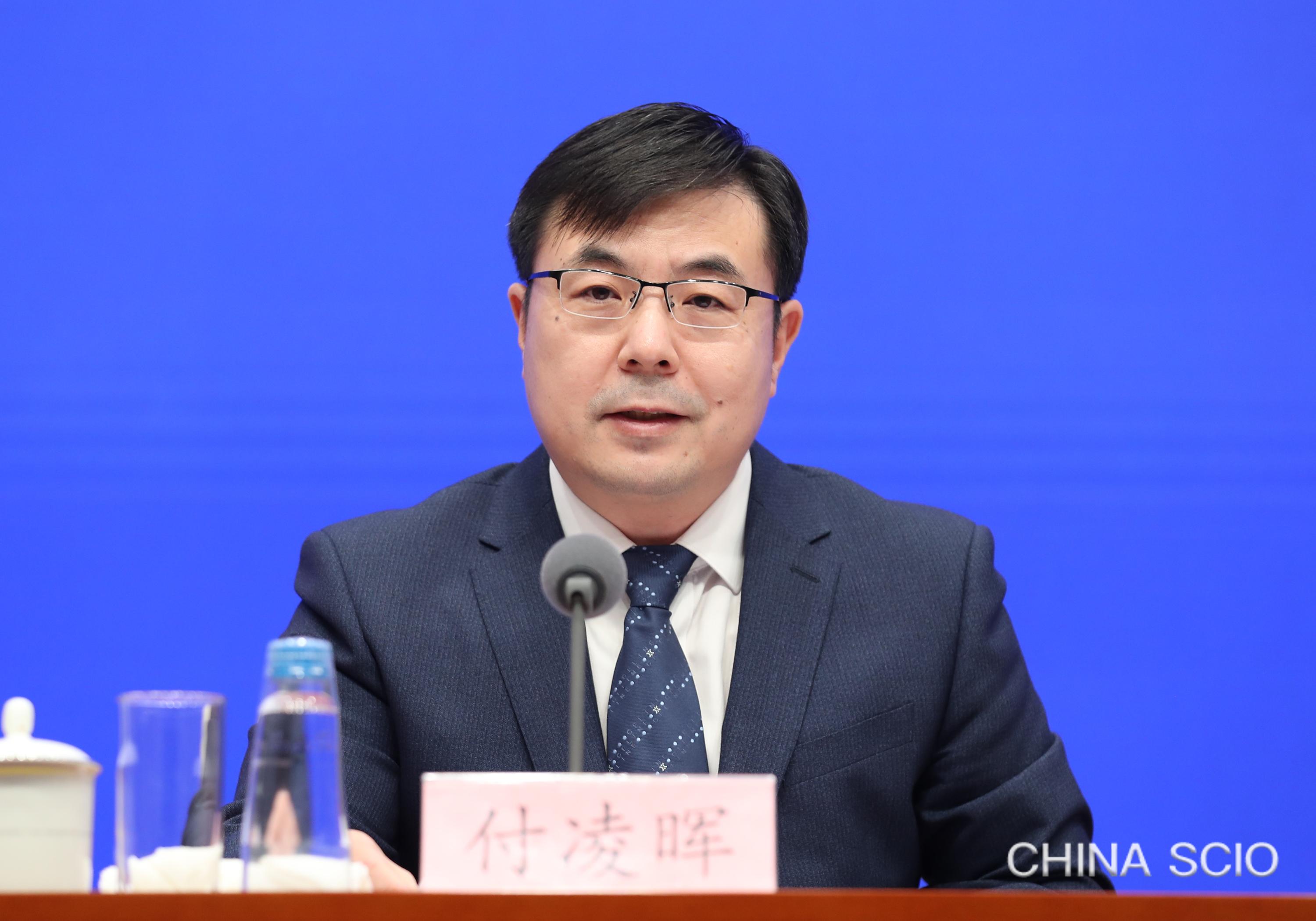
/4 Fu Linghui
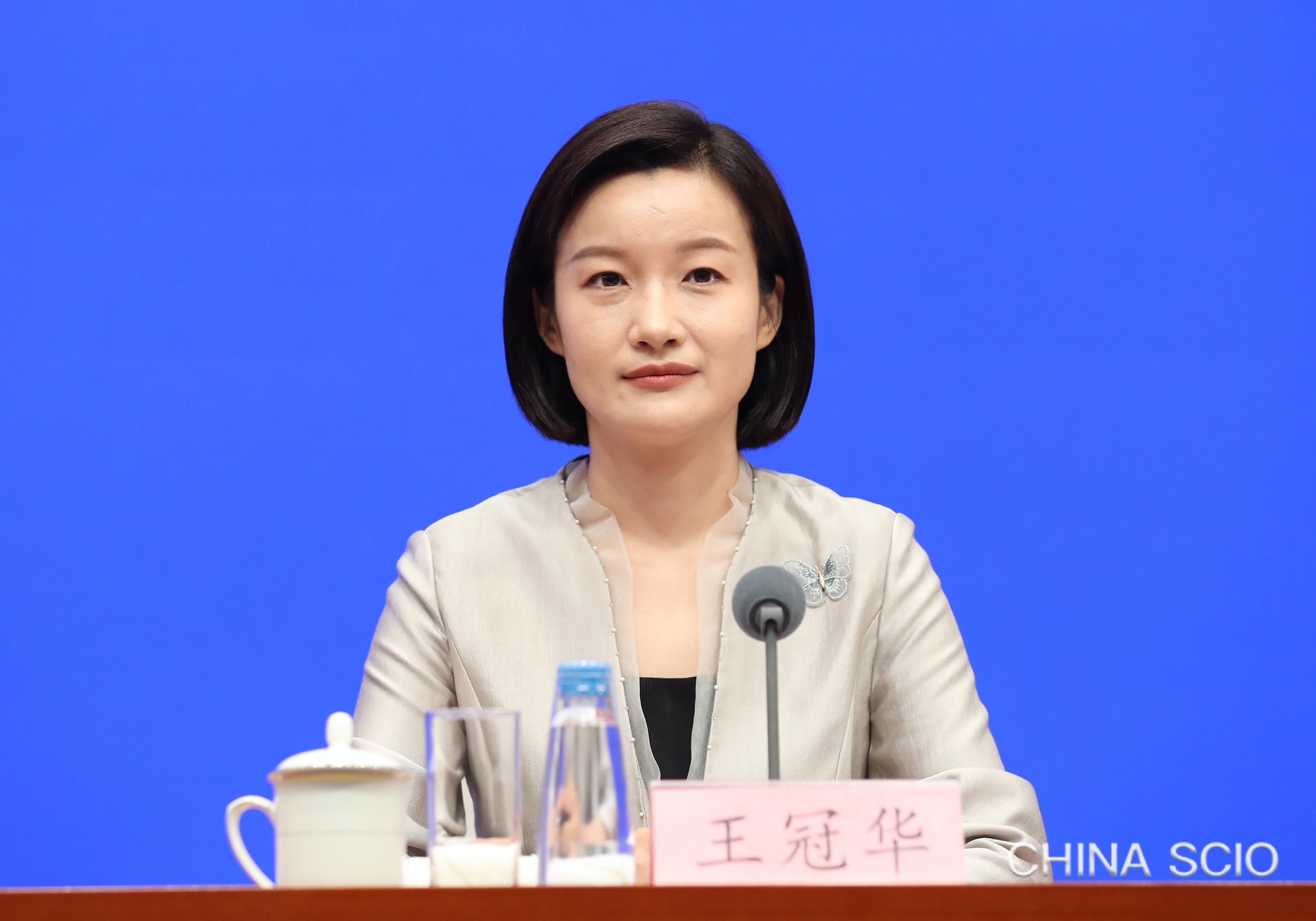
/4 Wang Guanhua
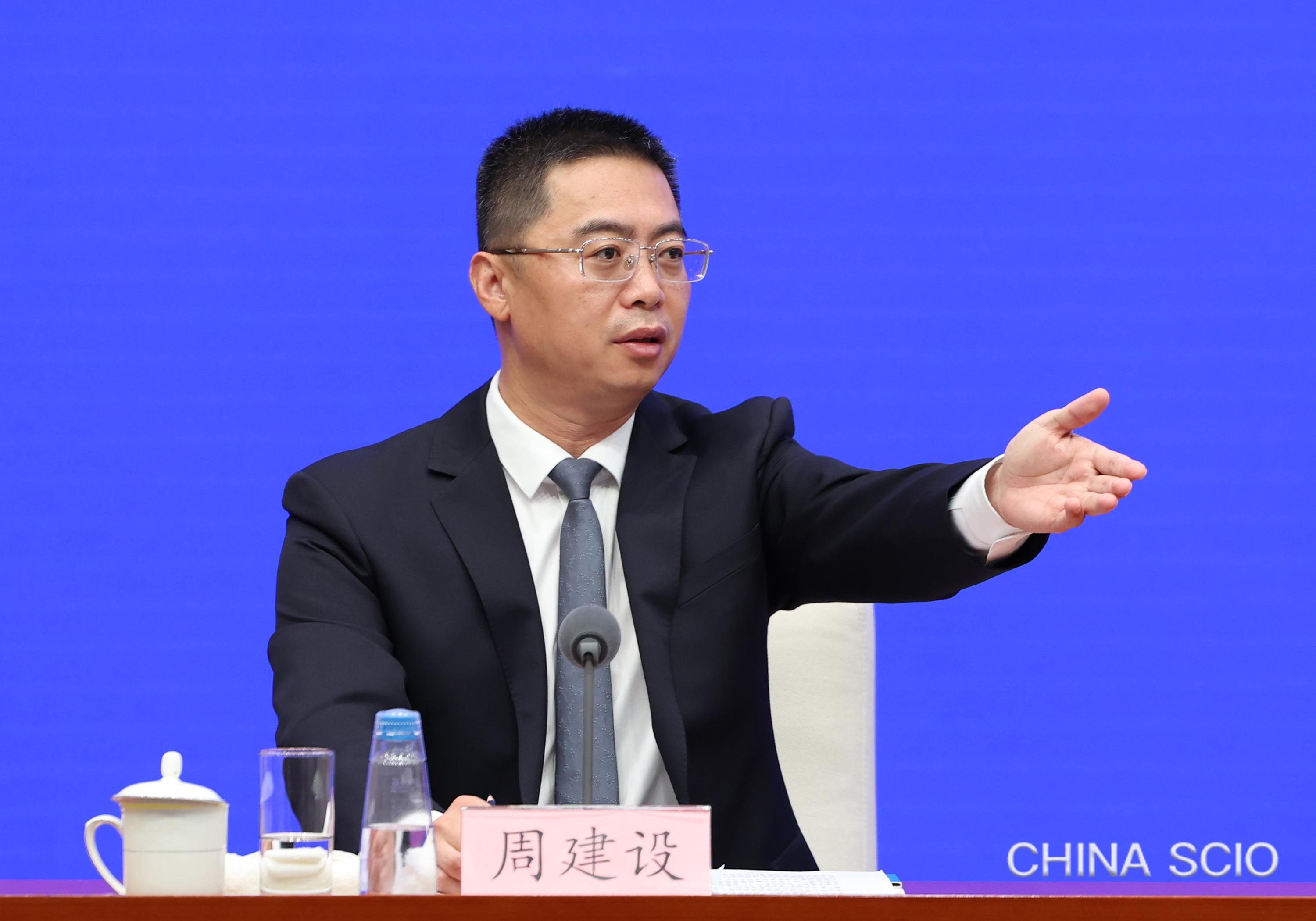
/4 Zhou Jianshe
SCIO briefing on building a Beautiful China on all fronts
August 13, 2026SCIO briefing about China's position on the so-called 'excess capacity' issue
July 28, 2026