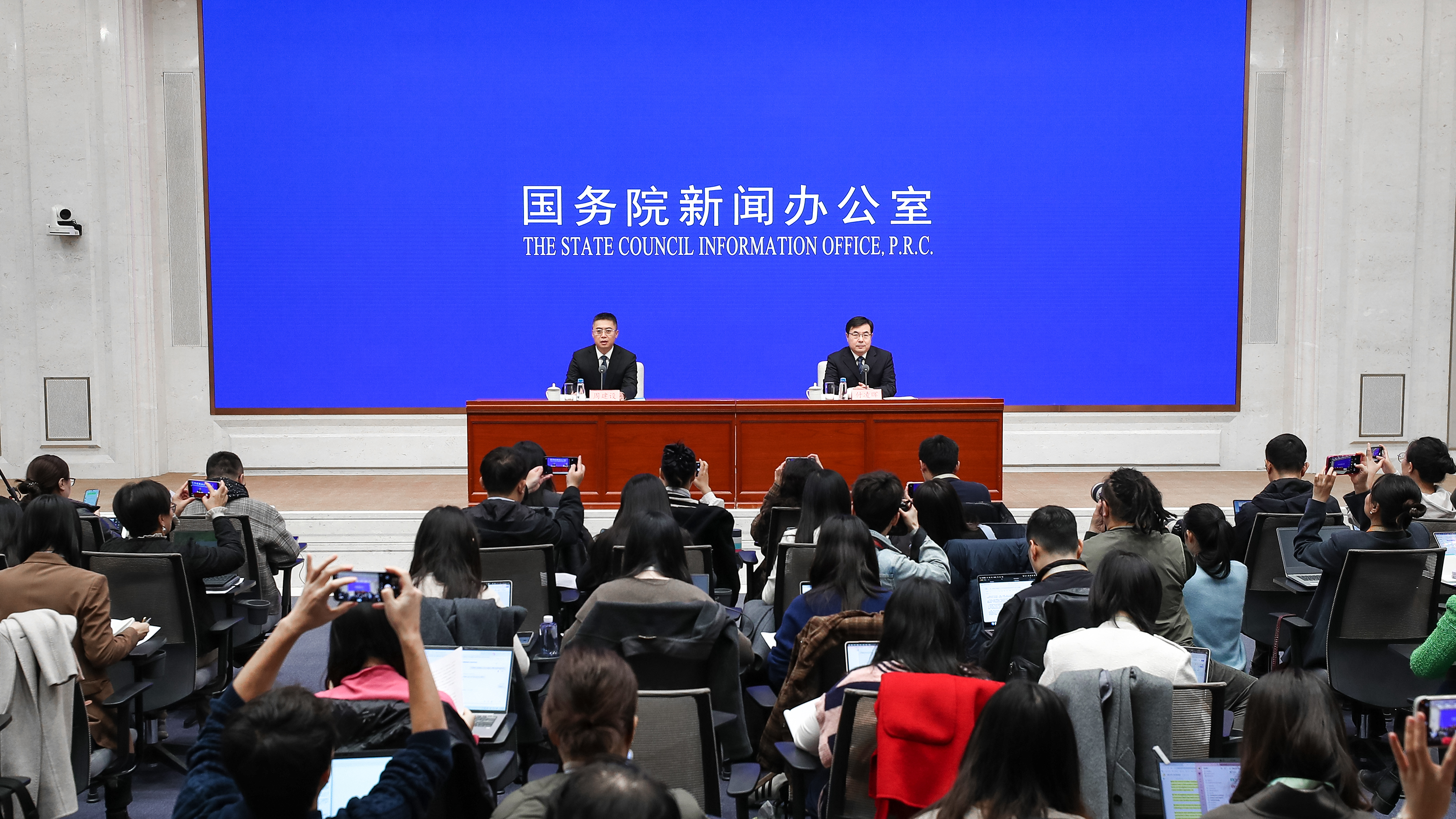

SCIO briefing on China's economic performance in October 2025
Beijing | 10 a.m. Nov. 14, 2025
Speaker

Chairperson
Speaker:
Mr. Fu Linghui, spokesperson and chief economist of the National Bureau of Statistics (NBS) and director general of the Department of Comprehensive Statistics of the NBS
Chairperson:
Mr. Zhou Jianshe, deputy director general of the Press Bureau of the State Council Information Office (SCIO) and spokesperson of the SCIO
Date:
Nov. 14, 2025
Zhou Jianshe:
Ladies and gentlemen, good morning. Welcome to this press conference held by the State Council Information Office (SCIO). This is a regular briefing on China's economic data. Today, we are joined by Mr. Fu Linghui, spokesperson and chief economist of the National Bureau of Statistics (NBS) and director general of its Department of Comprehensive Statistics. Mr. Fu will brief you on China’s economic performance in October 2025 and then take your questions.
Now, I'll give the floor to Mr. Fu for his introduction.
Fu Linghui:
Thank you, Mr. Zhou. As usual, I will start by briefing you on the main economic indicators for October 2025 and then take your questions.
In October, the national economy remained generally stable, with steady improvements.
In October, under the strong leadership of the Central Committee of the Communist Party of China (CPC) with Comrade Xi Jinping at its core, all regions and departments earnestly implemented the decisions and plans made by the CPC Central Committee and the State Council, adhered to the general principle of pursuing progress while ensuring stability, stepped up efforts to stabilize employment, enterprises, markets and expectations, made thorough efforts to develop a unified national market, and actively promoted unimpeded domestic and international economic flows. As a result, production and supply remained generally stable, employment was broadly steady, prices showed improvements, new growth drivers were cultivated and expanded, and the national economy maintained overall stability with steady progress.
First, industrial production continued to grow, with strong momentum in equipment manufacturing and high-tech manufacturing.
In October, the value added of industrial enterprises above designated size grew by 4.9% year on year, or 0.17% month on month. In terms of sectors, the value added of the mining industry increased by 4.5%, that of manufacturing was up by 4.9%, and that of the production and supply of electricity, thermal power, gas and water grew by 5.4% year on year. The value added of equipment manufacturing grew by 8.0%, and that of high-tech manufacturing increased by 7.2%, which were 3.1 percentage points and 2.3 percentage points faster than the total value added of industrial enterprises above designated size, respectively. In terms of ownership, the value added of state-holding enterprises increased by 6.7% year on year; that of share-holding enterprises rose by 5.2%; that of enterprises funded by foreign investors or investors from Hong Kong, Macao and Taiwan increased by 4.0%; and that of private enterprises grew by 2.1%. In terms of products, the production of 3D printing devices, new-energy vehicles, and industrial robots increased by 30.8%, 19.3% and 17.9% year on year, respectively. From January to October, the total value added of industrial enterprises above designated size grew by 6.1% year on year. In October, the Manufacturing Purchasing Managers’ Index was 49.0%, and the Production and Operation Expectation Index was 52.8%. From January to September, industrial enterprises above designated size recorded total profits of 5,373.2 billion yuan, up by 3.2% year on year.
Second, the service sector grew steadily, and the modern service industry developed well.
In October, the Index of Services Production increased by 4.6% year on year. In terms of sectors, that of information transmission, software and information technology services, leasing and business services, and financial intermediation rose by 13.0%, 8.2% and 5.6% year on year, respectively, which were 8.4 percentage points, 3.6 percentage points and 1.0 percentage point faster than that of the Index of Services Production. From January to October, the Index of Services Production increased by 5.7% year on year. From January to September, the business revenue of service enterprises above designated size grew by 7.6% year on year. In October, the Business Activity Index for Services was 50.2%, and the Business Activity Expectation Index for Services was 56.1%. Specifically, the Business Activity Index for railway transportation, air transportation, postal services, accommodation, and culture, sports and recreation stayed within the high expansion range of 60.0% or above.
Third, market sales expanded, and growth of service retails accelerated.
In October, the total retail sales of consumer goods reached 4,629.1 billion yuan, up by 2.9% year on year, or 0.16% month on month. Analyzed by different areas, the retail sales of consumer goods in urban areas were 4,002.1 billion yuan, up by 2.7% year on year, and that in rural areas reached 627.0 billion yuan, up by 4.1%. Grouped by consumption type, the retail sales of goods totaled 4,109.2 billion yuan, up by 2.8%, and the income of catering was 519.9 billion yuan, up by 3.8%. Basic living consumption and some upgraded consumption items grew relatively quickly. Retail sales of grain, oil and food, communication equipment, cultural and office supplies, and sports and recreational goods by enterprises above designated size increased by 9.1%, 23.2%, 13.5% and 10.1% year on year, respectively. From January to October, total retail sales of consumer goods reached 41,216.9 billion yuan, up by 4.3% year on year. Online retail sales reached 12,791.6 billion yuan, up by 9.6% year on year. Specifically, online retail sales of physical goods were 10,398.4 billion yuan, up by 6.3%, accounting for 25.2% of the total retail sales of consumer goods. From January to October, retail sales of services increased by 5.3% year on year, 0.1 percentage point faster than that in the first three quarters. Specifically, retail sales of culture, sports and leisure services, communication information services, tourism consultation and rental services, and transportation services grew relatively quickly.
Fourth, fixed-asset investment declined year on year, while investment in the manufacturing sector continued to grow.
From January to October, fixed-asset investment (excluding rural households) reached 40,891.4 billion yuan, down 1.7% year on year. Excluding real estate development investment, fixed-asset investment increased by 1.7%. Specifically, investment in infrastructure decreased by 0.1% year on year, manufacturing investment increased by 2.7%, and real estate development investment declined by 14.7%. The floor space of newly-built commercial buildings sold was 719.82 million square meters, down by 6.8% year on year, and the total sales of newly-built commercial buildings were 6,901.7 billion yuan, down by 9.6%. By industry, investment in the primary industry grew by 2.9% year on year, that in the secondary industry increased by 4.8%, and that in the tertiary industry declined by 5.3%. Private investment fell by 4.5% year on year, but increased by 0.2% with the investment in real estate development deducted. Among high-tech industries, investment in information services, aerospace vehicle and equipment manufacturing, and computer and office device manufacturing increased by 32.7%, 19.7% and 4.1% year on year, respectively. In October, fixed-asset investment (excluding rural households) decreased by 1.62% month on month.
Fifth, imports and exports of goods continued to grow and the trade structure continued to be optimized.
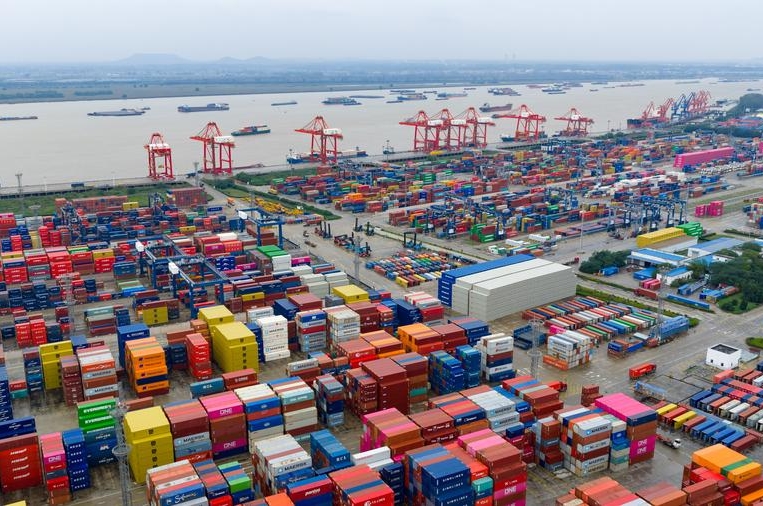
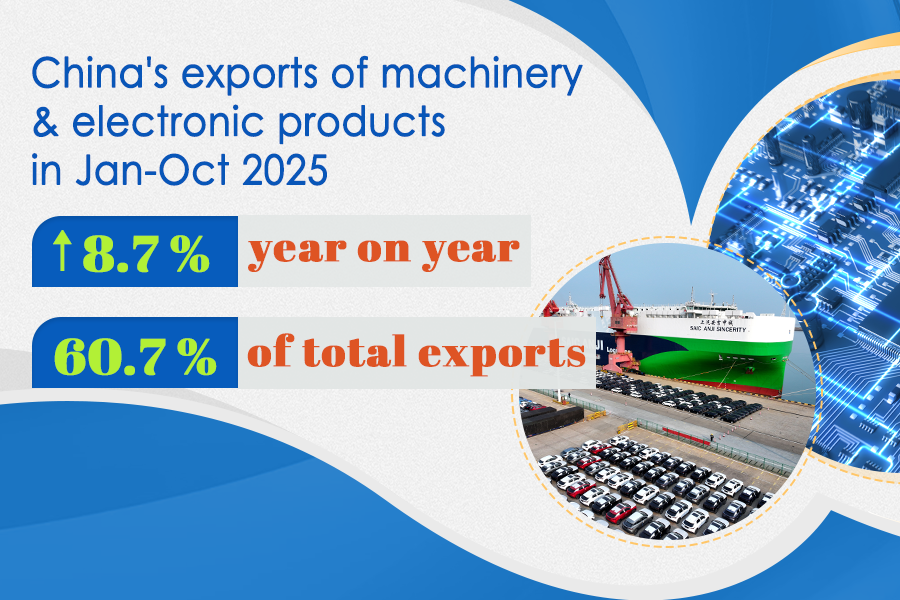
In October, the total value of imports and exports of goods was 3,702.8 billion yuan, up by 0.1% year on year. Specifically, exports fell 0.8% to 2,171.6 billion yuan and imports rose by 1.4% to 1,531.1 billion yuan. From January to October, the total value of imports and exports of goods was 37,309 billion yuan, a year-on-year increase of 3.6%. Specifically, exports increased 6.2% to 22,114.6 billion yuan and imports reached 15,194.4 billion yuan, remaining unchanged year on year. From January to October, the imports and exports in general trade went up by 2.3%, accounting for 63.4% of the total value of imports and exports. Imports and exports with Belt and Road Initiative partner countries grew 5.9%. Imports and exports by private enterprises increased 7.2%, accounting for 57% of the total value of imports and exports, 1.9 percentage points higher than that of the same period last year. Exports of mechanical and electrical products went up 8.7%, accounting for 60.7% of total exports.
Sixth, employment remained generally stable and the surveyed urban unemployment rate declined.
From January to October, the average surveyed urban unemployment rate nationwide was 5.2%. In October, the national surveyed urban unemployment rate was 5.1%, which was 0.1 percentage point lower than that of the previous month. The surveyed unemployment rate of population with local household registration was 5.3%, while that of population with non-local household registration was 4.7%, among which, the rate of the population with non-local agricultural household registration was 4.5%. The surveyed urban unemployment rate in 31 major cities was 5.1%, which was 0.1 percentage point lower than that of September. The average weekly working hours for enterprise employees nationwide was 48.4 hours.
Seventh, consumer prices turned from a decline to an increase and the decline of producer prices for industrial products narrowed.
In October, the consumer price index (CPI) went up 0.2% month on month, compared to a decline of 0.3% in the previous month; it rose by 0.2% year on year. By category, prices for food, tobacco and alcohol decreased 1.6% year on year, clothing increased 1.7%, housing rose 0.1%, household goods and services grew 1.9%, and transportation and communication declined 1.5%. Prices for education, culture and recreation went up 0.9%, health care rose 1.4%, and other goods and services increased 12.8%. In terms of prices for food, tobacco and alcohol, the price of pork dropped 16.0%, fresh vegetables fell 7.3%, fresh fruit decreased 2.0%, and grain declined 0.7%. The core CPI, excluding the prices of food and energy, grew 1.2% year on year, 0.2 percentage point higher than that of September. From January to October, the national CPI went down by 0.1% year on year.
In October, the national producer price for industrial products fell 2.1% year on year, with the decline narrowing by 0.2 percentage point from the previous month, and rose 0.1% month on month. The national purchasing price for industrial producers dropped 2.7% year on year, with the decline narrowing by 0.4 percentage point, and rose by 0.1% month on month. In the first 10 months, the national producer price and purchasing price for industrial products decreased 2.7% and 3.2% year on year, respectively.
Overall, the national economy operated steadily in October, while transformation and upgrading were advanced solidly, and new growth drivers continued to grow. It should also be noted that due to instabilities and uncertainties in the external environment and significant pressure in domestic structural adjustment, the Chinese economy faces many challenges in terms of stable operation. In the next phase, we must adhere to the guidance of Xi Jinping Thought on Socialism with Chinese Characteristics for a New Era, thoroughly implement the guiding principles from the fourth plenary session of the 20th CPC Central Committee, and persist in the general principle of pursuing progress while ensuring stability to comprehensively expand domestic demand. We will focus on stabilizing employment, enterprise operations, markets and expectations, actively promote the continuous implementation and effectiveness of macro policies, comprehensively deepen reform and opening up, and further propel innovation-driven development, so as to both improve the quality of growth and appropriately increase output.
Thank you.
_ueditor_page_break_tag_Zhou Jianshe:
Thank you, Mr. Fu. The floor is now open for questions. Please identify the media outlet you represent before raising your questions.
National Business Daily:
Based on the data just released, how would you evaluate the economic performance in October? What were the highlights and positive changes? Thank you.
Fu Linghui:
Thank you for your questions. In October, under the strong leadership of the CPC Central Committee, all regions and departments earnestly implemented the decisions and arrangements of the CPC Central Committee and the State Council. We focused on stabilizing employment, enterprise operations, markets and expectations, and boosted domestic and international economic flows while strengthening the domestic economy. By doing so, the national economy has maintained a development trend of steady progress, with production and demand growing steadily, employment and prices remaining generally stable, and transformation and upgrading proceeding. The main highlights are as follows.
First, production supply continued to grow. Agricultural production was in good shape. The area of autumn grain production remained stable with a slight increase, and the per-unit yield continued to rise. A bumper grain harvest for the whole year is in sight, with autumn and winter sowing proceeding smoothly. Industrial production was generally stable. In October, the added value of industries above designated size increased 4.9% year on year, maintaining an overall stable growth. The added value of equipment manufacturing rose 8%, significantly faster than the growth of industries above designated size, providing solid support for its growth. The service industries grew steadily. In October, the service production index increased 4.6% year on year. The growth rate fell slightly from the previous month mainly due to the elevated base in the same period last year. Based on the two-year average and cumulative growth rates, service sector continued to grow steadily. The overlap of the National Day and Mid-Autumn Festival holidays in October accelerated the growth of the service industry. The production index of the accommodation and catering sectors rose 3.9% year on year, 2.6 percentage points higher than the growth rate of September.
Second, market sales continued to expand. The special campaign to boost consumption gradually showed results, and the holiday economy became a significant driving force, leading a sustained growth in retail sales of goods and services. In October, the total retail sales of consumer goods went up 2.9% year on year, with rapid growth in sales of goods related to the trade-in program. In terms of commodities by enterprises above designated size, the retail sales of communication equipment and cultural and office supplies rose 23.2% and 13.5%, respectively. Fueled by increased resident holiday travel, service consumption such as tourism and cultural activities expanded. From January to October, retail sales by the service industry grew 5.3% year on year, which was faster than the growth rate of goods retail sales.
Third, the employment situation is generally stable. The surveyed urban unemployment rate has continued to fall, with the national surveyed urban unemployment rate standing at 5.1%, down 0.1 percentage point from the previous month, marking the second consecutive monthly decline. Of this, the urban surveyed unemployment rate for migrant workers with rural household registration was 4.5%, down 0.2 percentage point from the previous month, significantly lower than the national average. Despite deepening adverse external impacts and many challenges in economic operations, China's employment situation has remained generally stable, with continued improvement in employment for key groups, playing an important role in protecting livelihoods and promoting development.
Fourth, prices have shown positive momentum. The CPI shifted from a decline to an increase, rising 0.2% year on year in October, compared with a 0.3% decline last month. Of this, the core CPI, excluding food and energy, rose 1.2% year on year, with the increase expanding 0.2 percentage point from the previous month, marking six consecutive months of expanding growth. The decline in the PPI has continued to narrow. In October, the PPI fell 2.1% year on year, a decrease of 0.2 percentage point from the previous month, representing the third consecutive month of narrowing. Efforts to regulate market competition order are beginning to show results. In October, prices in industries such as lithium-ion battery manufacturing, photovoltaic equipment and component manufacturing rose 0.2% and 0.6% month on month, respectively.
Fifth, the momentum of transformation and upgrading continues. High-tech manufacturing has maintained solid growth. In October, the value added of high-tech manufacturing enterprises above designated size increased 7.2% year on year, continuing to outpace the growth of industrial enterprises above designated size. In terms of exports, the export value of high-tech products increased 7.3% over the first 10 months. The modern service industry has also developed well. In October, the Index of Services Production of information transmission, software and information technology services, as well as rental and business services, increased 13% and 8.2% year on year, respectively, continuing to maintain rapid growth. The integration of the digital and real economies has steadily advanced. In October, the value added of digital product manufacturing enterprises above designated size increased 6.7% year on year. From January to October, online retail sales of physical goods rose 6.3%. The green transformation has begun to take effect. In October, the output of green products such as new energy vehicles and lithium-ion power batteries for automobiles increased 19.3% and 30.4%, respectively.
However, it should also be noted that the international environment remains complex and severe, with many unstable and uncertain factors. Domestically, cyclical and structural issues are intertwined, and the economy still faces many challenges. Moving forward, we will thoroughly study and implement the guiding principles of the fourth plenary session of the 20th CPC Central Committee, and continue to accurately implement the decisions and plans of the CPC Central Committee. We will focus on stabilizing employment, enterprises, markets and expectations, consolidate economic fundamentals, intensify efforts to cultivate new quality productive forces, and promote sustained and healthy economic development. Thank you.
_ueditor_page_break_tag_South China Morning Post:
I have two questions. In the first three quarters, fixed asset investment fell 0.5% year on year, and from January to October, it fell 1.7%. How does the NBS interpret and assess the future trend of investment looking ahead? Second, in October, China's exports fell 1.1% year on year while imports increased 1%, falling short of market expectations. What, according to your analysis, were the main reasons behind this? Additionally, what are your observations and assessments regarding China's import and export trends over the coming months? Thank you.
Fu Linghui:
Thank you for your questions. You've asked about two key issues: investment and the state of imports, exports, and foreign trade. Looking at the first 10 months, fixed-asset investment fell 1.7% year on year. However, when we exclude price factors, we see that fixed-asset investment maintained modest growth, and the physical volume of investment work continued to increase. I would also like to share a few views on the current changes in investment.
First, the slowdown in investment growth reflects the combined effect of multiple factors. From the perspective of investment entities, the external environment is complex and severe, domestic market competition is intense, and investment returns have declined. As a result, market operators have become increasingly cautious in their investment decisions. This is reflected in the weak enterprise profitability and a slowdown in private investment, both of which affect investment growth. From a structural perspective, real estate investment accounts for a relatively high proportion of total investment, and the adjustment in the real estate industry has significantly dampened investment growth. From January to October, real estate development investment fell 14.7% year on year. Excluding real estate development investment, project investment grew 1.7%, and the decline in real estate development investment dragged down total investment by 3 percentage points. In addition, insufficient investment growth momentum in some industries has also objectively impeded overall investment growth.
Second, although investment growth is slowing, the investment structure is being optimized. This is reflected in sustained growth in manufacturing investment. The transformation and upgrading of traditional manufacturing industries are advancing steadily, and emerging manufacturing industries are growing, supporting growth in manufacturing investment. From January to October, manufacturing investment grew 2.7% year on year, outpacing total investment and accounting for 25.6% of the total, up 1.1 percentage points from the same period last year. Investment in some high-end industries has increased, and the integrated development of technological and industrial innovation has driven rapid growth in high-tech industry investment. From January to October, investment in aerospace vehicle and equipment manufacturing increased 19.7% year on year, and investment in information services increased 32.7%. Investment in the green transformation has shown strong growth momentum. The green transformation of the energy sector has continued to advance, with clean energy investment maintaining rapid growth. From January to October, combined investment in solar, wind, nuclear and hydropower generation increased 10.4% year on year, maintaining strong growth momentum.
Third, China still possesses enormous potential and scope for investment. It is essential to take an objective and comprehensive view of changes in investment growth rates, rather than focusing solely on the present. A longer-term development outlook is necessary. As the world's largest developing country, China still has substantial room for investment expansion to reach the level of moderately developed countries in the future. From the perspective of industrial development, strengthening the foundation of the real economy, promoting the integrated development of technological and industrial innovation, accelerating the cultivation and growth of new quality productive forces, and promoting the transformation and upgrading of traditional industries all require continuous increases in investment. From the perspective of regional development, addressing the problems of unbalanced and inadequate development, promoting coordinated urban and rural development, advancing urban renewal and all-around rural revitalization also all require continuous increases in investment. From the perspective of ensuring people's well-being, investment in education, health care, housing and basic public services needs to be strengthened to address gaps and improve people's livelihoods.
Moving forward, we will remain focused on high-quality development, continue to optimize the investment structure and environment, and further stimulate the vitality of private investment. We will promote healthy investment development and better leverage the key role of investment in expanding domestic demand, optimizing supply and improving people's well-being.
Regarding the foreign trade situation you mentioned, I will elaborate on a few key points.
Overall, despite rising global trade protectionism and significant uncertainty in the trade environment, China's trade in goods has continued to expand, demonstrating strong resilience and vitality. In the first 10 months of this year, China's total imports and exports of goods increased 3.6% year on year, with goods exports growing 6.2%. This growth stems from China's unwavering commitment to expanding openness, actively promoting diversified foreign trade development, optimizing and upgrading industries, and enhancing market competitiveness. It is also the result of efforts to promote the integration of domestic and foreign trade and create a favorable environment for foreign trade enterprises. Looking at the situation in October, goods imports and exports showed the following characteristics:
First, overall goods imports and exports remained stable. In October, China's total imports and exports of goods increased 0.1% year on year. The growth rate slowed compared to the previous month, mainly due to the high base from the same period last year. In September last year, typhoon-related disruptions delayed some trade shipments until October, creating a relatively high base for that month. Looking at the combined data for September and October, imports and exports remained generally stable. In October specifically, despite a high comparison base from last year, goods imports still increased 1.4%, maintaining a growth trend for five consecutive months. This continued growth has helped boost global trade demand.
Second, foreign trade diversification has made steady progress. Despite the impact of high tariffs leading to a decline in trade with the United States, China has remained committed to expanding high-level openness. We have taken the initiative to open wider and advance unilateral opening-up in a well-ordered manner, promoting economic and trade exchanges with countries globally on the basis of mutual benefit and win-win cooperation. The accelerated growth of imports and exports with partners such as ASEAN and the EU has provided strong support for the continuous expansion of foreign trade. From January to October, China's total import and export volume with ASEAN and the EU increased 9.1% and 4.9%, respectively, outpacing the overall growth rate. Meanwhile, total goods trade with Belt and Road partner countries grew 5.9%, maintaining rapid growth.
Third, the vitality of foreign trade enterprises has continued to be unleashed. Since the beginning of this year, despite increasing external instability and uncertainty, all parties have actively supported the development of foreign trade enterprises. These enterprises have taken the initiative to consolidate and explore markets, providing strong support for foreign trade growth. In the first 10 months, imports and exports by private enterprises in China increased 7.2% year on year, well above the overall average. Imports and exports by foreign-invested enterprises grew 2.9%, sustaining their growth momentum.
Fourth, export momentum has shifted toward higher quality and greater innovation. As China's industries upgrade and develop, the technological content of products has improved. This has continuously strengthened the competitiveness of exports and optimized the export structure. Electromechanical products and high-tech products have increasingly become important growth drivers for exports. In the first 10 months, exports of electromechanical products increased 8.7% year on year, accounting for 60.7% of China's total export value. Among them, export values for integrated circuits and automobiles climbed 24.7% and 14.3%, respectively. High-tech product exports trended upward, rising 7.3% in the first 10 months and outpacing the overall export growth rate.
Overall, despite sluggish global economic growth, rising external challenges and risks, and difficulties faced by some foreign trade enterprises, China's commitment to high-level opening-up remains unchanged. Favorable conditions supporting foreign trade growth remain substantial, and the resilience of China's foreign trade will continue to be evident. Looking ahead, China will remain committed to expanding high-level opening-up and promoting trade with countries around the world on the basis of mutual benefit and win-win cooperation. We will stabilize the fundamentals of foreign trade, assist enterprises facing significant challenges, advance the integrated development of domestic and foreign trade, and ensure the sector's steady development. Thank you.
_ueditor_page_break_tag_CCTV:
Accelerating the cultivation of new growth drivers and promoting the optimization and upgrading of the economic structure is conducive to promoting economic development. What achievements have been made this year in cultivating new growth drivers and optimizing the economic structure? Thank you.
Fu Linghui:
Thank you for your question. Structural adjustment and the cultivation of new growth drivers are important elements in the process of high-quality development. Since the 18th CPC National Congress, China's economy has shifted from a stage of high-speed growth to a stage of high-quality development, characterized by changes in the pace of growth, structural optimization, and the transformation of growth drivers. In recent years, we have remained steadfast in our commitment to high-quality development, advancing the transformation of growth models and economic restructuring. Amid slowing growth in traditional industries, demand in areas such as the digital economy and platform economy has continued to expand. The rapid development of emerging industries and the clear momentum of industrial upgrading have provided strong support for stable economic performance. Based on this year's performance, China has achieved positive results in economic restructuring and cultivating new growth drivers. This is primarily evident in the following areas:
First, market demand has recovered and improved, while new demand continues to expand. From the perspective of consumption, driven by technological progress and the transformation of consumption concepts, new business forms, models and scenarios have continuously expanded. The consumption of digital, green and intelligent products has grown rapidly, and service consumption has steadily expanded. From January to October, online retail sales of physical goods accounted for 25.2% of total retail sales, up 0.2 percentage point from the January-September period. Retail sales of energy-efficiency home appliances and new energy vehicles continued to grow rapidly. Demand for smart home appliances and systems has continued to expand. Retail sales of cultural, sports and recreational services, as well as tourism consulting and rental services, have maintained double-digit growth. On the investment front, effective investment has expanded by focusing on key areas and weak links. High-tech investment is growing rapidly, with continued expansion in fields such as new energy, new materials and artificial intelligence, signaling a steady improvement in the quality and efficiency of investment. From January to October, investment in the aircraft, aerospace vehicles and equipment manufacturing industries increased 19.7% year on year, while investment in the information service industry grew 32.7%. On the export front, as China's industrial and technological capabilities improve, exports of electromechanical products and high-tech products are expanding, playing a key role in bolstering foreign trade. From January to October, exports of China's electromechanical products accounted for 60.7% of China's total export value.
Second, industrial upgrading shows clear momentum, with advanced manufacturing and modern services making up a growing share of the economy. The manufacturing sector is steadily moving up the value chain, and equipment manufacturing has become a key pillar supporting industrial production. From January to October, the added value of equipment manufacturers above designated size increased by 9.5% year on year, accounting for 36.1% of the total added value of industrial enterprises above designated size, and contributing 58.7% to the growth of added value of industrial enterprises above designated size. As the service sector increasingly integrates with advanced manufacturing, modern services are demonstrating strong development momentum. In the first three quarters of this year, the combined added value of information transmission software and information technology services, leasing and business services accounted for 16.3% of the tertiary industry, 0.8 percentage point higher than the same period last year.
Third, emerging industries continue to grow and expand, playing an increasingly leading and supporting role. The digital economy is developing rapidly, and the green and low-carbon transition is continuously deepening. Artificial intelligence is empowering industrial development, and industries such as digital manufacturing and intelligent manufacturing are growing stronger. All of these are injecting new momentum into economic development. In the first 10 months, the added value of digital industry manufacturers above designated size increased by 9.5% year on year, while the added value of intelligent equipment manufacturing and electronic components and equipment manufacturing rose by 11.1% and 12.3%, respectively. It should also be noted that new energy, new materials, aerospace and the low-altitude economy have huge development potential, while quantum technology, bio-manufacturing and embodied intelligence have broad development prospects. These sectors are expected to become emerging pillar industries in the future, strongly supporting the development and growth of new momentum.
Overall, China's economic restructuring is steadily advancing, although there are growing pains in the transformation from old growth drivers into new ones. However, from the perspective of future development, new quality productive forces are emerging, new growth drivers are continuously growing and the trend of high-quality economic development is positive. In the next stage, we must adhere to high-quality development, further promote the integrated development of technological innovation and industrial innovation, continuously optimize the economic structure, cultivate and expand new quality productive forces, and promote effective qualitative improvements and reasonable quantitative growth. Thank you.
_ueditor_page_break_tag_Market News International:
China's consumer price index (CPI) rose 0.2% year on year in October, slightly higher than expectations. How does the NBS interpret the recent trends in CPI data? And does this suggest that deflationary pressure on the economy is beginning to ease going forward? Thank you.
Fu Linghui:
Thank you for your questions. Price is an issue of wide concern. There were positive signs in consumer prices in October, mainly reflected in both month-on-month and year-on-year growth.
The CPI rose 0.2% in October from a year earlier, which was 0.1 percentage point higher than the previous month. This CPI increase was mainly driven by strong consumer demand and the increase of industrial consumer goods prices during the National Day and Mid-Autumn Festival holidays. First, strong holiday travel demand pushed up transportation and accommodation prices In October, service prices rose by 0.2% month on month, contributing 0.07 percentage point to the month-on-month increase in CPI. Among them, hotel accommodation, air tickets and tourism prices rose by 8.6%, 4.5% and 2.5% month on month, respectively. Second, growing demand for holiday dining led to a rise in food prices. In October, food prices rose by 0.3% month on month. Among them, prices of fresh vegetables, mutton, fresh fruit, shrimp and crabs, and beef increased between 0.5% and 4.3% month on month. Third, the prices of industrial consumer goods rose month on month. In October, the prices of industrial consumer goods excluding energy rose by 0.3% month on month, contributing 0.07 percentage point to the month-on-month CPI increase.
From a year-on-year perspective, the CPI in October went up by 0.2% year on year, while in the previous month it was down by 0.3%. The core CPI, excluding food and energy, rose by 1.2% year on year, 0.2 percentage point higher than the previous month, marking the sixth consecutive month of acceleration in the pace of growth. The year-on-year change in CPI shifted from a decline to an increase, primarily driven by improvements in the domestic market supply and demand relationship, as well as the recovery in service prices and industrial consumer goods prices. First, the rise in service prices has widened. The combined National Day and Mid-Autumn Festival holidays, along with increased spending on tourism, culture and sports, have driven up service prices. In October, service prices went up by 0.8% year on year, which was 0.2 percentage point higher than the previous month. Among these, the prices of air tickets and hotels rose significantly. Due to the upgrading trends of household consumption, and rising demand for high-quality social services, service prices have also climbed. In October, the prices of medical services and domestic services both maintained a slight upward trend. Second, the prices of industrial consumer goods increased steadily. China has effectively implemented special measures to boost consumption, and has regulated disorderly competition among enterprises in accordance with laws and regulations, which have driven up the prices of industrial consumer goods. In October, the prices of industrial consumer goods excluding energy rose by 2% year on year, marking six consecutive months of increases. Among them, the prices of household appliances, durable entertainment consumer goods and daily household sundries increased by between 2.4% and 5%, and the decline in the prices of fuel-powered cars narrowed to 2.3%. Third, the downward pressure on food and energy prices has decreased. China's sufficient grain supply and declining international energy prices have led to lower domestic food and energy prices this year, which has had a significant impact on the CPI. In October, the decline in food and energy prices both narrowed, reducing the downward pressure on the CPI. In October, food and energy prices fell by 2.9% and 2.4% year on year, respectively. These declines were 1.5 percentage points and 0.3 percentage point narrower than in the previous month, respectively. In addition, the rise in international gold prices was transmitted domestically, also contributing to the CPI rebound.
Overall, supported by measures to promote a reasonable price rebound, the CPI showed positive changes in October. However, market demand remains insufficient, keeping overall prices low. In the next stage, we will continue expanding domestic demand, further the construction of a unified national market, optimize the market competition environment, advance capacity management in key industries, improve supply-demand relations and promote a reasonable price recovery. Thank you.
_ueditor_page_break_tag_Jiupai News:
We are now in the homestretch to achieve this year's economic and social development goals. Based on data from the first 10 months, can this year's economic development targets be smoothly reached? Thank you.
Fu Linghui:
Thank you for your question. Since the beginning of this year, amid complex changes in the international environment, growing external headwinds, a domestic market characterized by strong supply and weak demand, and persistently low price levels, various regions and departments, under the strong leadership of the CPC Central Committee, have accelerated the implementation of more proactive and effective macro policies, furthered the construction of a unified national market, advanced reform and opening up, and strengthened innovation-driven development. The national economy has withstood pressure and achieved overall stability while also ensuring progress. Looking forward to the next stage, although the economic performance still faces multiple risks and challenges, the core conditions supporting the long-term positive growth of China's economy remain firmly in place. With macro policies continuing to take effect, market space gradually expanding, and new quality productive forces being cultivated and strengthened, many of the conditions for achieving this year's targets are favorable.
First, the economy has maintained stable overall performance. As reflected in the four major macroeconomic indicators, the economy has maintained a stable trajectory, laying a solid foundation for achieving this year's targets. Economic growth has been relatively rapid. In the first three quarters, GDP grew by 5.2% year on year, ranking among the top of the world's major economies. From January to October, the added value of industrial enterprises above designated size and the service industry production index increased by 6.1% and 5.7% year on year, respectively, maintaining rapid growth. Employment and prices have remained generally stable. In October, the surveyed urban unemployment rate continued to decline, and the consumer price index turned from a year-on-year decrease to an increase, showing positive changes. A basic equilibrium was maintained in the balance of payments. From January to October, the total imports and exports of goods increased by 3.6% year on year, and foreign exchange reserves remained stable at over $3.3 trillion at the end of October.
Second, the potential of demand has continued to be unleashed. Supported by various measures in the dedicated campaign to boost consumer spending, market sales have steadily increased, with total retail sales of consumer goods in the first 10 months growing 4.3% year on year, outpacing the previous year. The tourism, cultural and sports sectors and online spending remained strong, injecting new momentum into spending expansion. China has also unswervingly expanded opening up and diversified its markets, demonstrating sustained foreign trade resilience. In the first 10 months, China's imports and exports with ASEAN, the EU and Belt and Road partner countries increased by 9.1%, 4.9% and 5.9%, respectively, all outpacing total goods trade growth. In the next stage, we will strengthen domestic economic circulation while promoting positive interplay between domestic and international economic flows, which will be conducive to expanding market space and further boosting market demand.
Third, new quality productive forces are being fostered and strengthened. The integration of technological innovation and industrial innovation has accelerated. New quality productive forces represented by AI, the digital economy and green economy are being developed at a faster pace, and new industries and new growth drivers are thriving, providing fresh impetus to high-quality economic development. Intelligent product manufacturing has shown strong growth momentum. In the first 10 months, the added value of intelligent unmanned aerial vehicle manufacturing and intelligent on-board equipment manufacturing increased by 54.7% and 25.5% year on year, respectively. Green material production has maintained rapid growth. In the first 10 months, the output of bio-based chemical fibers, and carbon fibers and composite materials rose by 18.9% and 12.8%, respectively.
Fourth, macro policies have continued to take effect. Since the beginning of this year, more proactive and effective macro policies have been implemented; efforts to implement major national strategies and enhance security capacity in key areas, along with large-scale equipment upgrades and consumer goods trade-in programs, have demonstrated tangible effects; and the construction of a unified national market has been further advanced. These efforts have boosted demand and production while improving economic flows, all of which have played an important role in stabilizing the economy. Recently, relevant departments have launched a 500-billion-yuan new-type policy-based financial instrument and activated unused local government debt quotas to enhance local fiscal capacity and expand effective investment. At the same time, measures have been introduced to further stimulate private investment. As existing and newly introduced policies take combined effect, they will fuel the upward momentum of the economy.
It should also be noted that recent positive changes in market supply and demand, gradual improvements in business performance, and the continued accumulation of favorable factors have all contributed to economic growth. In October, the decline in the PPI narrowed for the third consecutive month, and profits of industrial enterprises above designated size from January to September increased by 3.2% year on year, with the growth rate continuing to rise.
In summary, China's economy is underpinned by a solid foundation, multiple strengths, strong resilience and vast potential, with many factors supporting its positive development. In particular, the successful fourth plenary session of the 20th CPC Central Committee, which drew a blueprint for development in the next five years, has greatly boosted the confidence of people of all ethnic groups across the country and injected strong momentum into high-quality development. China's economy is therefore well-positioned to achieve overall stability while also ensuring progress. Thank you.
_ueditor_page_break_tag_Shandian News:
How was the recovery of the consumer market in October? What were the growth patterns of spending on physical goods and services? How significant was the contribution of holiday spending to the overall data? Thank you.
Fu Linghui:
Thank you for your questions. Consumer spending is related to both economic development and people's well-being. Since the beginning of this year, various regions and departments have intensified efforts to boost consumer spending, expanded consumer goods trade-in programs, vigorously promoted spending in the digital and service sectors, and encouraged spending on culture and sports, all of which have helped unleash the potential of consumer spending. From January to October, total retail sales of consumer goods increased by 4.3% year on year, and service retail sales grew by 5.3%. In October, driven by the National Day and Mid-Autumn Festival holidays and policies to boost consumer spending, market sales remained generally stable, the spending structure continued to be optimized, and new forms of spending continued to expand. In terms of spending on goods, consumer spending upgrades and the consumer goods trade-in programs contributed to steady sales growth and structural optimization and upgrading.
First, retail sales of certain daily necessities grew quickly. As consumers' quality demands rise, they are paying greater attention to factors such as product quality, grade, and brand, which has driven rapid sales growth for certain essential goods. In October, retail sales of grain, oil and food as well as daily necessities increased by 9.1% and 7.4% year on year, respectively, faster than the growth rate of total retail sales of consumer goods.
Second, the retail sales of some upgraded goods grew rapidly. As the residential consumption pattern upgrades, the demand for cultural, sports and entertainment products has expanded, boosting the sales growth of related goods. In October, retail sales of sports and entertainment goods and cosmetics by units above designated size rose by 10.1% and 9.6% year on year, respectively.
Third, the sales of some trade-in products continued to grow. Consumer goods trade-in policy continued to deliver results, significantly driving sales of related goods. In October, the retail sales of communication equipment and cultural and office supplies by units above the designated size increased by 23.2% and 13.5% year on year, respectively, both significantly higher than the growth rate of retail sales of all goods.
In terms of spending on services, as residential consumption quickly transforms, growing spending on services increasingly becomes an important growth point. With the National Day and this year's Mid-Autumn Festival both falling in the month, spending on services continued to grow rapidly in October. From January to October, the growth rate of retail sales of services rose by 0.1 percentage point compared to the first nine months, and was 0.9 percentage point higher than the growth rate of retail sales of goods in the same 10-month period. In terms of the pattern of spending on services, firstly, cultural and tourism services maintained good momentum for growth, with various regions actively developing new business models. Sports events and the performance market were bustling, and spending on cultural tourism and recreation grew rapidly. From January to October, the retail sales of tourism consultation and rental services, transportation services, and cultural, sports and leisure services all maintained a rapid growth rate of over 10%. Secondly, information services grew rapidly. The demand for services such as digital audio-visual services and online entertainment continued to expand, and the sales of related industries showed a favorable growth trend. From January to October, the retail sales of communication and information services maintained double-digit growth. In addition, with more residents dining out during the holidays, the growth of catering revenue accelerated significantly in October.
From the perspective of new forms of consumption, digital consumption and green consumption continued to grow, strongly promoting the growth of consumption. From January to October, the online retail sales increased by 9.6% year on year, and the retail sales of physical goods increased by 6.3%, higher than the growth rate of total retail sales of consumer goods. And the transaction volume of instant retail and live-streaming e-commerce both maintained double-digit growth. From January to October, the retail sales of new energy vehicles continued to maintain rapid growth. In addition, China is in a critical stage of consumption pattern upgrading, with huge opportunities to explore in cultural tourism, medical health, and other areas. The rapid development of the silver economy and the debut economy also injects new momentum into the expansion of consumption.
Overall, the economy remained stable, pro-consumption policies continued to take effect, and market sales remained stable. However, it should also be noted that household consumption capacity and confidence still need to be improved, and the internal driving forces of boosting consumption still need to be strengthened. In the next stage, we need to follow the decisions and deployments of the CPC Central Committee and the State Council, implement various measures of the special action to boost consumption, actively stabilize employment, promote income growth, vigorously increase high-quality supplies of products and services, continuously optimize the consumption environment, effectively unleash consumption potential, and better promote development and improve people's livelihoods. Thank you.
_ueditor_page_break_tag_Jinan Times APP:
Employment is an issue that everyone pays attention to. How was the employment situation in China in October? Thank you.
Fu Linghui:
Thank you for your question. Employment is crucial to people's wellbeing, and the CPC Central Committee attaches great importance to it. Since the beginning of this year, all regions and departments have earnestly implemented policies and measures to ensure high-quality and full employment, and strengthened support for businesses to create and stabilize jobs and help people find new jobs. They are focused on boosting employment among key groups. These efforts have helped maintain overall employment stability. In October, the national urban surveyed unemployment rate continued to decline, and employment for key groups such as rural migrant workers remained stable. The overall stability in employment has not changed, creating favorable conditions for improving people's livelihoods and promoting general stability.
First, the national urban surveyed unemployment rate continued to decline. In terms of monthly changes, due to the influx of graduates into the labor market, the national urban surveyed unemployment rate showed seasonal increases in July and August. As graduates gradually found jobs, the national urban surveyed unemployment rate in September stood at 5.2%, down 0.1 percentage point from the previous month, and continued to decline in October, further dropping to 5.1%.
Second, the unemployment rate among the core working-age population declined. The employment situation for the main labor force aged 30-59 was generally stable. The urban surveyed unemployment rate for the labor force aged 30-59 was 3.8% in October, down 0.1 percentage point from the previous month, and it has remained stable throughout the year.
Third, the unemployment rate of key groups such as rural migrant workers decreased. The urban surveyed unemployment rate for population with non-local agricultural household registration was 4.5% in October, down 0.2 percentage point from the previous month and lower than the national average. With the graduation season ending, youth employment has improved, and the surveyed unemployment rate has continuously declined.
Overcoming increasingly severe external pressures and economic headwinds, China's employment situation remained generally stable. This is the result of the combined effects of factors such as steady economic growth, increased employment in the service industry, and the implementation of employment stabilization policies, which is very difficult to achieve. In the next stage, we will be able to enjoy favorable conditions such as stable economic performance, stronger new quality productive forces, and the effectiveness of employment stabilization policies, however, certain industries and key groups will still face employment pressure and difficulty. We need to focus on promoting stable and healthy economic development, and step up efforts to transform and upgrade traditional industries while cultivating and expanding emerging industries. We should actively increase employment opportunities and ensure the implementation of various employment stabilization policies. We should also strengthen vocational skills training, optimize public employment services, better match the supply and demand in the labor market, and drive high-quality and sufficient employment, ensuring and improving people's livelihoods. Thank you.
_ueditor_page_break_tag_ThePaper.cn:
I am particularly concerned about the industrial production. How do you evaluate the performance of industrial production in October, and what were some positive signals? Thank you.
Fu Linghui:
Thank you for your question. This year, despite a complex and challenging international environment and rising competitive pressure in the domestic market, more proactive and effective macro policies have been vigorously implemented to provide greater support for the real economy. Our industrial production has pressed ahead against headwinds, with overall scale continuing to expand and structural adjustment moving toward higher quality. Based on October data, industrial production was basically stable, and progress toward higher-end, more intelligent, and greener development remained steady.
First, industrial production was generally stable. In October, the value added of industrial enterprises above designated size increased by 4.9% year-on-year, maintaining rapid growth and serving as an important force for stabilizing and promoting the economy. Across various industries value added rose in 29 of the 41 major industry categories, accounting for 70.7%. 50.2% of 623 major products maintained output growth. Cumulatively, from January to October, the value added of industrial enterprises above designated size rose 6.1% year-on-year, remaining generally stable compared with the January-September period.
Second, equipment manufacturing provided strong support. In October, the value added of large equipment manufacturing enterprises rose 8% year-on-year, contributing 2.9 percentage points to that of large industrial enterprises as a whole. The cumulative value added of large equipment manufacturing enterprises accounted for 36.1% of that of all large industrial enterprises, showing a prominent supporting role for industrial production. Within equipment manufacturing, value added in the automobile manufacturing industry and the railway, ship, aerospace, and other transport equipment manufacturing industries increased by 16.8% and 15.2%, respectively. Product output of civil steel ships and power generator sets rose by 21.4% and 16.9%, respectively.
Third, digitalization and intelligent transformation progressed steadily. The real economy has been more deeply integrated with digital technologies, and the high-end digital development of industries continues to improve. In October, the value added of large high-tech manufacturing and digital product manufacturing enterprises increased by 7.2% and 6.7%, respectively. Robots are entering various industries.AI is empowering new lifestyles. In October, the value added of intelligent in-vehicle equipment manufacturing rose 28.4%, and the output of industrial robots and integrated circuits increased by 17.9% and 17.7%, respectively.
Fourth, the green transition maintained good momentum. The production of new-energy products continued to expand. In October, output of lithium-ion batteries for vehicles and of new-energy vehicles rose by 30.4% and 19.3%, respectively. The green transition has driven significant growth, with rapid growth in products related to clean energy and green materials. In October, the output of wind turbine generators and bio-based chemical fibers increased by 23.6% and 16.6% respectively.
Fifth, corporate profits improved. Macro policies have begun to take effect and the development of a unified national market has advanced to further, support a faster recovery in profits for industrial enterprises above designated size. From January to September, the profits of industrial enterprises above designated size increased by 3.2% year-on-year, 2.3 percentage points faster compared with the January to August period. Among them, the profits of equipment manufacturing and high-tech manufacturing enterprises above designated size increased by 9.4% and 8.7%, respectively. This played an important role in the recovery of profits of industrial enterprises above designated size.
Overall, with coordinated macro policy taking effect, industrial production maintained steady growth, with transformation and upgrading being steadily promoted. However, it should also be noted that the external environment is complex and challenging, market demand is still insufficient, and some enterprises are under production and operational pressure. In the next stage, we should foster greater synergy between various policies to further expand domestic demand, optimize industrial structure, cultivate new drivers of growth, promote the concurrent improvement of output and quality of the industrial sector, upgrade and revive growth drivers, whilst continuously consolidating the foundation of the real economy. Thank you.
_ueditor_page_break_tag_Nanfang Daily, Nanfang Plus:
In October, the month-on-month PPI turned from flat last month to an increase of 0.1%, marking the first monthly rise this year, and the year-on-year decline in PPI being further narrowed. What factors contributed to this change, and what is the outlook for the PPI going forward? Thank you.
Fu Linghui:
Thank you for your questions. Recently, producer prices have shown some positive changes. This year, due to multiple factors, producer prices had generally been declining. As policies to boost domestic demand have taken effect, production capacity governance in key industries has progressed, and new growth drivers have gradually strengthened. Producer prices have shown improvement since August, with the year-on-year decline continuously narrowing. In October, the PPI continued to improve. The producer prices fell 2.1% year-on-year, a narrowing of 0.2 percentage points from the previous month, while month-on-month PPI rose 0.1%, the first monthly increase of the year.
The month-on-month PPI increase in October was mainly the result of a combination of factors: regulation of market competition order, increased seasonal energy demand, and the pass-through effect of rising international non-ferrous metal prices. The narrowing of the year-on-year decline in October was primarily driven by several factors.
First, measures to stimulate consumption have shown results. This year, we have intensified trade-in programs for consumer goods, and expanded supply of higher-quality consumer products to meet upgrading demand, which has released potential for cultural, sporting, and premium consumption, and supported price increases. In October, prices for handicrafts and ceremonial goods manufacturing rose 18.4% year-on-year, prices for sports ball manufacturing rose 3.3%, and prices for nutritional food manufacturing rose 2.1%.
Second, new growth drivers are becoming stronger. With an accelerated green transition, the new energy industry has developed rapidly and demand for power batteries and energy storage facilities has expanded, driving up related raw material prices. In October, the prices of non-ferrous metal smelting and rolling processing industry increased by 6.8% year-on-year, and the prices of electronic special materials manufacturing increased by 2.3%. As China's industrial upgrading improves and information and communication industry develops well, the demand for transportation equipment such as ships and airplanes is expanding, driving up prices. In October, the prices of microwave communication equipment rose 1.8% year-on-year. The prices of ship and related device manufacturing increased by 0.9% and aircraft manufacturing by 0.5%.
Third, efforts to scale down over capacity in key industries have taken effect. The development of a unified national market has been advanced, the market competition order in key industries has been regulated, which have also driven price improvements in related industries. In October, the year-on-year price declines of photovoltaic equipment and components manufacturing industry, battery manufacturing industry and automobile manufacturing industry narrowed by 1.4, 1.3, and 0.7 percentage points respectively compared with the previous month.
On the whole, the PPI operation has shown positive changes, which is conducive to improving business operations and promoting economic circulation. In the next stage, we will continue to expand domestic demand, unleash consumption potential, increase effective investment, strengthen innovation-driven development, regulate market competition order, advance capacity governance in key industries, and promote a reasonable rebound in industrial product prices. Thank you.
_ueditor_page_break_tag_Cover News:
Since the beginning of this year, various regions and departments have introduced a series of measures to stem the downturn and restore stability in the real estate market. What results have been achieved in implementing these policies? How does the spokesperson view the trend of the real estate market in the next phase? Thank you.
Fu Linghui:
Thank you for your questions. The real estate sector has consistently gathered public attention. Since the beginning of this year, various regions and departments have accelerated the introduction and implementation of various supportive policies, actively facilitating the release of demand for rigid and improved housing, which has contributed to halting the decline and promoting stabilization of the real estate market. Statistical data indicates that despite some fluctuations, the policy effects continue to emerge.
First, the decline in commercial housing sales has narrowed. From January to October, the sales area and sales volume of newly built commercial housing nationwide decreased by 6.8% and 9.6% year on year, respectively, with the decline narrowing by 9 and 11.3 percentage points compared to the same period last year, showing improvement compared to the whole of last year.
Second, the reduction of commercial housing inventory has continued to advance. As the real estate policy measures aimed at controlling new supplies and optimizing existing stock continue take effect, the reduction of real estate inventory has steadily advanced since the beginning of this year. By the end of October, the area of commercial housing for sale nationwide stood at 756.06 million square meters, a decrease of 3.22 million square meters from the end of September, marking the eighth consecutive month of decline this year.
Third, the funding situation of real estate developers has improved. Driven by positive factors such as the expansion and enhanced effectiveness of the "white list" projects, the decline in funds in place for real estate developers has narrowed. From January to October, the year-on-year decline in funds in place for real estate developers narrowed by 9.5 and 7.3 percentage points compared to the same period last year and the whole of last year, respectively.
It should be noted that the current real estate market is still in the period of transition between old and new models. This transformation and adjustment requires a certain amount of time. During this process, some indicators will fluctuate, and this should be viewed objectively. In the next stage, in accordance with the decisions and arrangements of the CPC Central Committee and the State Council, we will implement the guiding principles of the Central Urban Work Conference, actively build a new development model for real estate, adhere to the principles of adopting short-term and long-term policies and addressing both symptoms and root causes, and continue to promote the high-quality development of the real estate market. Thank you.
_ueditor_page_break_tag_Zhou Jianshe:
Due to limited time, we will take one last question.
Red Star News:
What impact did the continuous rainy weather during the harvest period in some regions have on autumn grain production? What is the expected annual grain output?
Fu Linghui:
Thank you for your questions. Currently, autumn grain production has entered the final stage. Although some regions have been affected by natural disasters such as droughts and floods, the overall situation of autumn grain production in most agricultural areas is good, and a bumper harvest is expected nationwide this year.
First, the sown area has remained stable with a slight increase. This year, China has continued to improve the policy system supporting grain production, implementing a series of policies to strengthen agriculture, benefit farmers, and enrich rural areas, with the focus on protecting and boosting the enthusiasm of both local governments in prioritizing grain production and farmer in growing grains. The sown area for autumn grain has slightly increased on the basis of continuous growth over the years.
Second, the per-unit yield has continued to increase. During this year's autumn grain production period, most agricultural areas in China had well-matched conditions of sunlight, temperature, and rainfall, with overall favorable meteorological conditions. All regions have continued to promote actions to increase the large-scale yields of grain and oil crops per unit, effectively boosting the per-unit yield. Although the Huang-Huai-Hai region encountered continuous rainy weather during the harvest period, the overall impact on the yield remains manageable as the crops have reached their full potential.
Third, the autumn grain output is expected to rise. This year, the planting area for high-yield corn has increased significantly, driving up the autumn grain output. Regionally, most areas have maintained stable output with some growth. Particularly in the three northeastern provinces, as well as Inner Mongolia and Xinjiang, driven by factors such as adjustments in crop planting structure and generally favorable climate conditions, the autumn grain production shows good momentum.
Overall, this year, China's summer grain has achieved stable production and a good harvest; early rice has increased production; and autumn grain production is projected to rise, with another bumper harvest anticipated for the whole year. Thank you.
Zhou Jianshe:
Thank you to Mr. Fu and all the speakers and friends from the media. That concludes today's press conference. Goodbye.
Translated and edited by Liu Caiyi, Lin Liyao, Xu Kailin, You Jiaxin, Dong Qingpei, Zhang Jiaqi, Yan Xiaojing, Liu Jianing, Xu Kailin, Huang Shan, Li Huiru, Ma Yujia, Li Xiao, Zhou Jing, Zhang Rui, Liu Sitong, Wang Yanfang, David Ball, Jay Birbeck, and Tudor Finneran. In case of any discrepancy between the English and Chinese texts, the Chinese version is deemed to prevail.

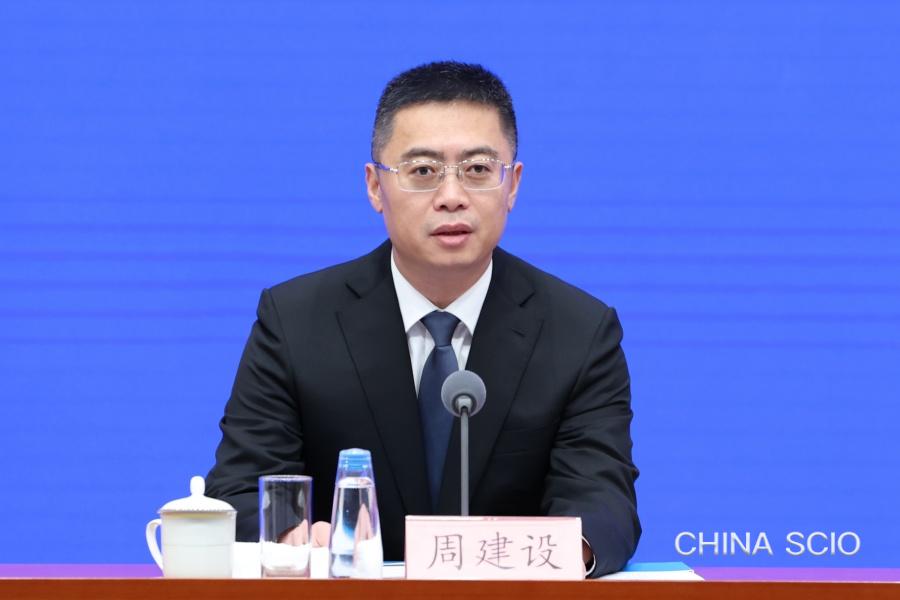
/3 Zhou Jianshe
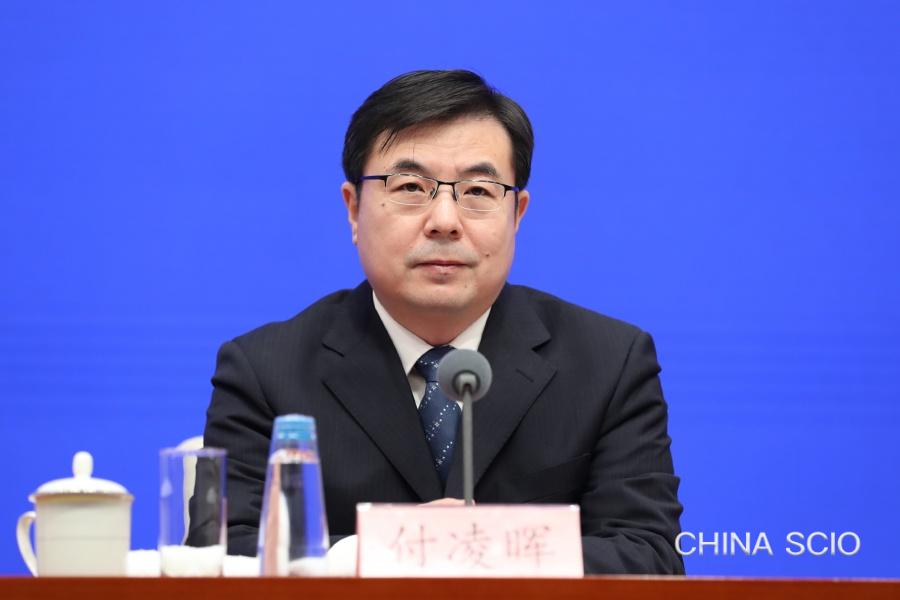
/3 Fu Linghui
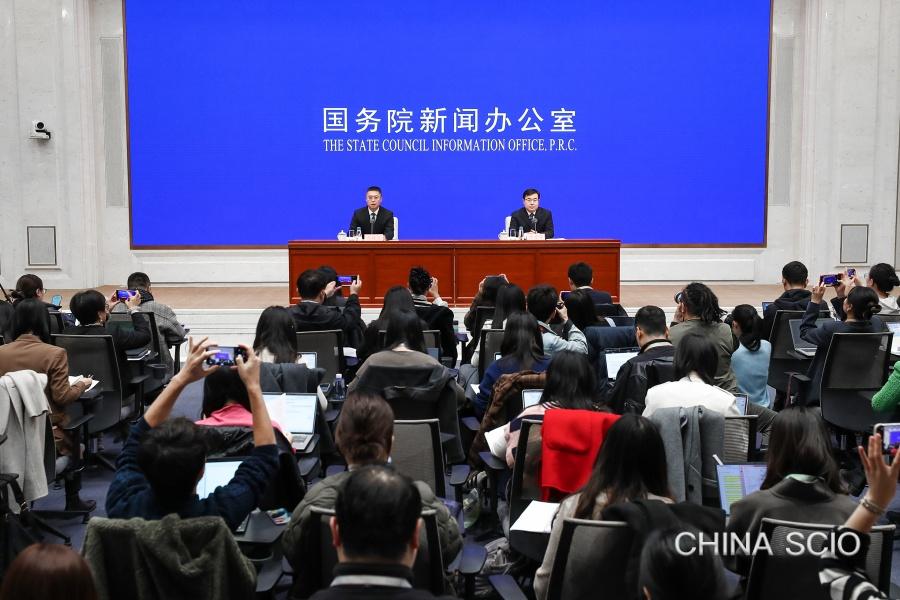
/3 Group photo
SCIO briefing on preparations for the eighth China International Import Expo
October 28, 2025SCIO briefing on grain circulation reform and development during the 14th Five-Year Plan period
October 14, 2025