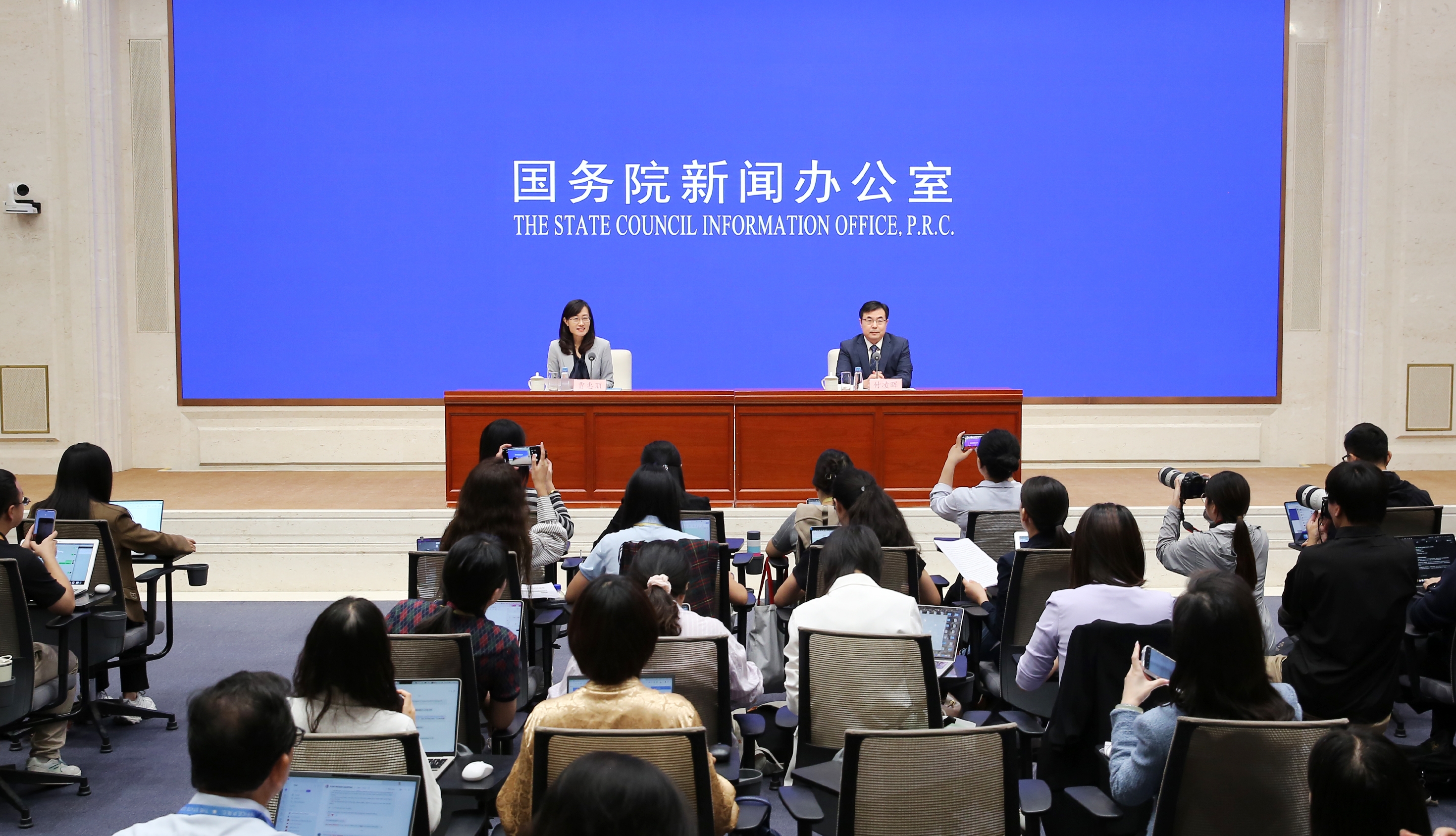

SCIO briefing on China's economic performance in August 2025
Beijing | 10 a.m. Sept. 15, 2025
Speaker

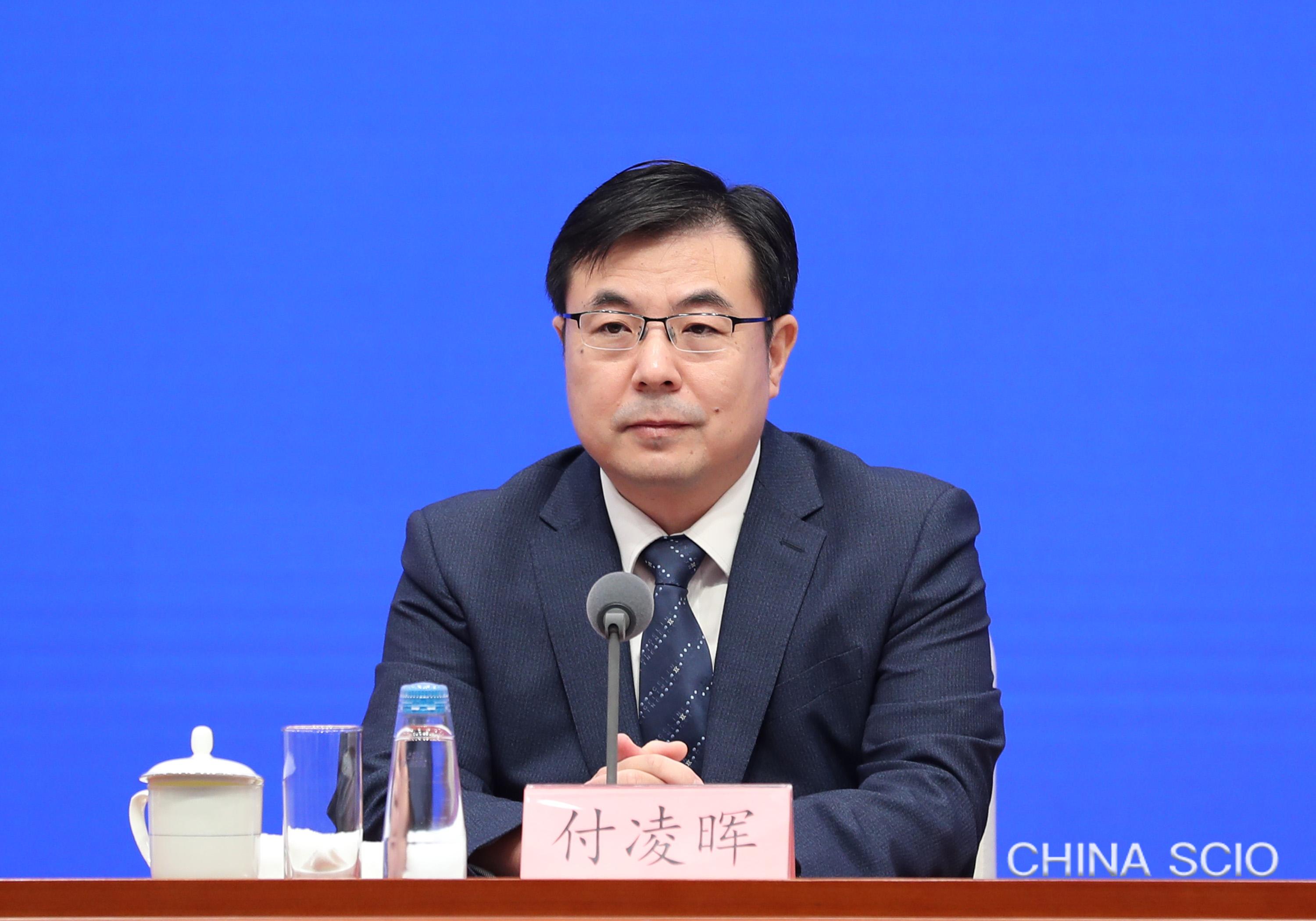
Fu Linghui, spokesperson and chief economist of the National Bureau of Statistics (NBS) and director general of the Department of Comprehensive Statistics of the NBS
Chairperson
Speakers:
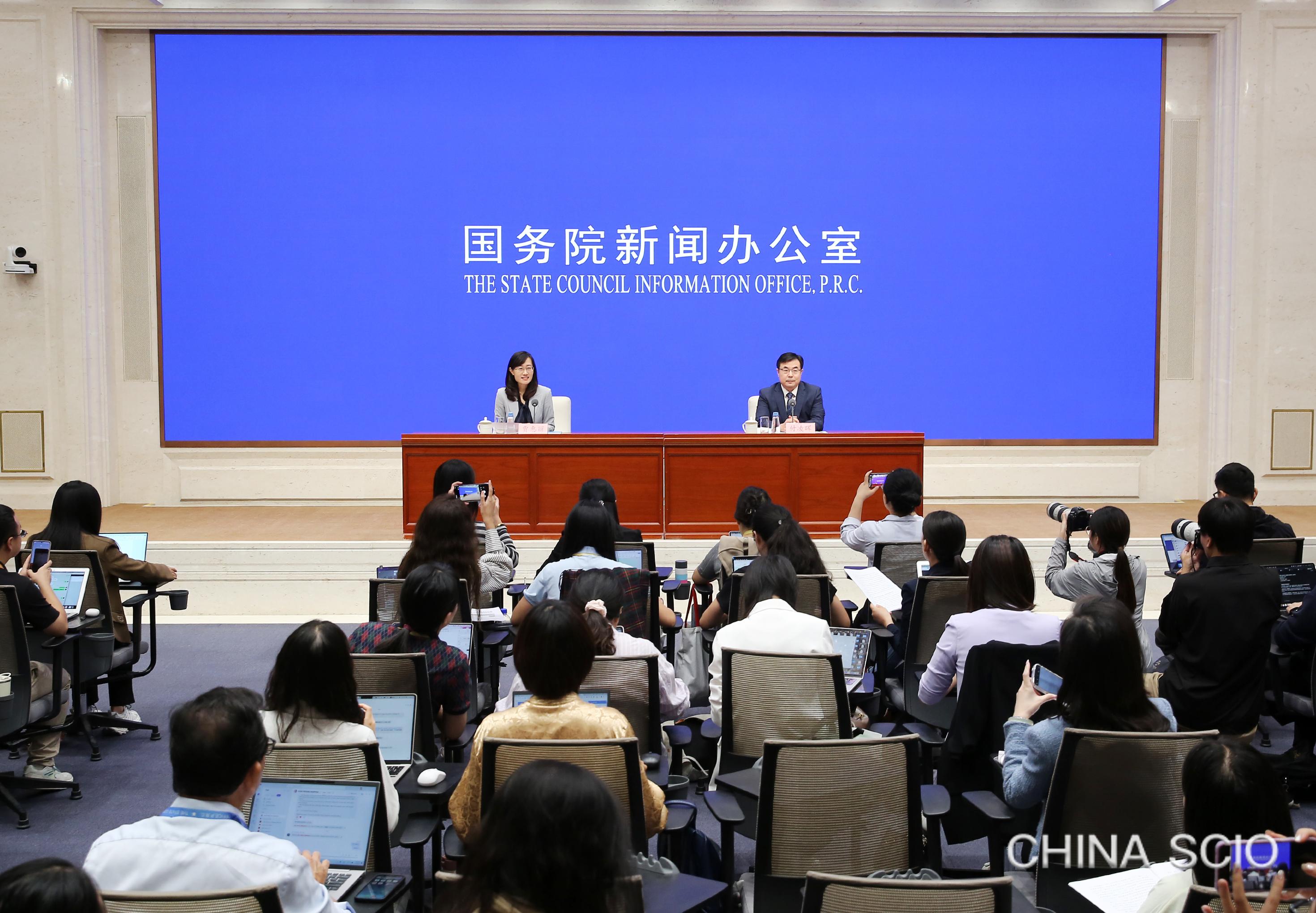
Mr. Fu Linghui, spokesperson and chief economist of the National Bureau of Statistics (NBS) and director general of the Department of Comprehensive Statistics of the NBS
Chairperson:
Ms. Jia Huili, deputy director general of the Press Bureau of the State Council Information Office (SCIO)
Date:
Sept. 15, 2025
Jia Huili:
Ladies and gentlemen, good morning. Welcome to this press conference held by the State Council Information Office (SCIO). This is a regular briefing on China's economic data. Today, we are joined by Mr. Fu Linghui, spokesperson and chief economist of the National Bureau of Statistics (NBS) and director general of the Department of Comprehensive Statistics of the NBS. Mr. Fu will brief you on China's economic performance in August 2025 and then take your questions.
Now, I would like to give the floor to Mr. Fu for his introduction.
Fu Linghui:
Thank you, Ms. Jia. Good morning. As usual, I will start by briefing you on the main economic indicators for this August and then take your questions.
In August, China's economy remained stable while making further progress.
In August, under the strong leadership of the Central Committee of the Communist Party of China (CPC) with Comrade Xi Jinping at its core, all regions and departments earnestly implemented the decisions and deployments of the Party Central Committee and the State Council, adhered to the general principle of seeking progress while maintaining stability, fully and accurately applied the new development philosophy on all fronts, moved faster to create a new pattern of development, actively strengthened macro policy adjustments, made thorough efforts to develop a unified national market, and focused on strengthening the domestic economic cycle. Production and demand were basically stable; employment and prices were generally stable; new growth drivers were cultivated and expanded; and the national economy maintained a generally stable and progressive development trend.
First, industrial production grew quickly, with equipment manufacturing and high-tech manufacturing showing good growth momentum.
In August, the total value added of industrial enterprises above designated size grew by 5.2% year on year, or up by 0.37% month on month. In terms of sectors, the value added of mining went up by 5.1% year on year, manufacturing up by 5.7% and the production and supply of electricity, thermal power, gas and water up by 2.4%. The value added of equipment manufacturing increased by 8.1% year on year, and that of high-tech manufacturing increased by 9.3%, 2.9 percentage points and 4.1 percentage points faster than that of the total value added by industrial enterprises above designated size. In terms of ownership, the value added of state-holding enterprises increased by 4.7% year on year; that of share-holding enterprises increased by 6.0%; that of enterprises funded by foreign investors or investors from Hong Kong, Macao and Taiwan increased by 2.3%; and that of private enterprises increased by 4.6%. In terms of products, the production of 3D printing devices, new energy vehicles and industrial robots grew by 40.4%, 22.7% and 14.4% year on year, respectively. In the first eight months, the total value added of industrial enterprises above designated size went up by 6.2% year on year. In March, the manufacturing purchasing managers' index (PMI) stood at 49.4%, 0.1 percentage points higher than the previous month. The production and operation expectation index was 53.7%, up by 1.1 percentage points. In the first seven months, the total profits made by industrial enterprises above designated size were 4.02 trillion yuan, down by 1.7% year on year.
Second, the service sector grew rapidly and the modern service industry developed well.
In August, the Index of Services Production grew by 5.6% year on year. In terms of sectors, that of information transmission, software and information technology services was up by 12.1%, that of financial industry grew by 9.2% and that of leasing and business services was up by 7.4% year on year, which were 6.5 percentage points, 3.6 percentage points and 1.8 percentage points faster than the Index of Services Production, respectively. In the first eight months, the Index of Services Production increased by 5.9% year on year. In the first seven months, the business revenue of service enterprises above designated size went up by 7.4% year on year. In August, the Business Activity Index for Services was 50.5%, an increase of 0.5 percentage point from the previous month; and the Business Activity Expectations Index for Services was 57.0%, rising by 0.4 percentage point. Specifically, the Business Activity Index for railway transportation, water transportation, air transportation, telecommunication, broadcast, television and satellite transmission services, and capital market services stayed within the high expansion range of 60.0% and above.
Third, market sales registered stable growth and retail services grew quickly.
In August, the total retail sales of consumer goods reached 3.97 trillion yuan, up by 3.4% year on year, or up by 0.17% month on month. Analyzed by different areas, the retail sales of consumer goods in urban areas reached 3.44 trillion yuan, up by 3.2% year on year; and that in rural areas reached 528.1 billion yuan, up by 4.6%. Grouped by types of consumption, the retail sales of goods were 3.52 trillion yuan, up by 3.6%; and the income of catering was 449.6 billion yuan, up by 2.1%. Sales of basic living goods and some upgraded products showed good growth. Retail sales in units above designated size of daily necessities grew by 7.7%, grain, oil and food products grew by 5.8%, and sports and entertainment goods grew by 16.9%. The consumer goods trade-in policy continued to show results, with retail sales by enterprises above designated size rising 18.6% for furniture, 14.3% for household appliances and audiovisual equipment, 14.2% for cultural and office supplies, and 7.3% for communication equipment. In the first eight months, the total retail sales of consumer goods reached 32.39 trillion yuan, up by 4.6% year on year. Online retail sales were 9.98 trillion yuan, up by 9.6% year on year. Specifically, the online retail sales of physical goods were 8.1 trillion yuan, up by 6.4%, accounting for 25.0% of the total retail sales of consumer goods. In the first eight months, the retail sales of services grew by 5.1% year on year. Among them, the retail sales of cultural, sports and leisure services, tourism consulting and rental services, and transportation services grew rapidly.
Fourth, fixed-asset investment continued to expand, with manufacturing investment growing quickly.
In the first eight months, the investment in fixed assets (excluding rural households) reached 32.61 trillion yuan, up by 0.5% year on year; and the investment in fixed assets was up by 4.2% with the investment in real estate development deducted. Specifically, investment in infrastructure grew by 2.0% year on year, that in manufacturing grew by 5.1%, and that in real estate development declined by 12.9%. The floor space of new commercial buildings sold was 573.04 million square meters, down by 4.7% year on year; and the total sales of new commercial buildings were 5.5 trillion yuan, down by 7.3%. By industry, investment in the primary industry went up by 5.5% year on year, that in the secondary industry was up by 7.6%, and that in the tertiary industry was down by 3.4%. Private investment declined by 2.3% year on year, but increased by 3.0% with investment in real estate development deducted. Among high-tech industries, investment grew 34.1% in information services, 28.0% in aerospace vehicle and equipment manufacturing, and 12.6% in computer and office device manufacturing. In August, fixed-asset investment (excluding rural households) fell 0.20% month on month.
Fifth, goods imports and exports continued to grow, and the trade structure kept improving.
In August, the total value of goods imports and exports reached 3,874.4 billion yuan, up by 3.5% year on year. Specifically, the total value of exports rose 4.8% year on year to 2,303.5 billion yuan, while imports climbed 1.7% to 1,570.9 billion yuan. In the first eight months, the total value of imports and exports of goods reached 29,569.6 billion yuan, up 3.5% year on year. The total value of exports was 17,605.6 billion yuan, up by 6.9% during the period; and the total value of imports was 11,964 billion yuan, down by 1.2%. In the first eight months, the imports and exports of general trade went up by 2.2%, accounting for 63.9% of the total value of imports and exports. China's trade with Belt and Road partner countries grew by 5.4%. Imports and exports by private enterprises went up by 7.4%, accounting for 57.1% of the total value of imports and exports, 2.1 percentage points higher than that of the same period last year. Exports of mechanical and electrical products grew by 9.2%, accounting for 60.2% of the total value of exports.
Sixth, employment remained stable overall, and the surveyed urban unemployment rate experienced a seasonal increase.
In the first eight months, the average surveyed urban unemployment rate was 5.2%. In August, the surveyed urban unemployment rate was 5.3%, 0.1 percentage point higher than that of the previous month. It remained unchanged from a year earlier. The surveyed urban unemployment rate of population with local household registration was 5.4% and that of population with non-local household registration was 5.0%, of which the rate of population with non-local agricultural household registration was 4.7%. In 31 major cities, the surveyed urban unemployment rate was 5.3%, up 0.1 percentage point from the previous month but down 0.1 percentage point compared to the same period last year. Employees of enterprises worked an average of 48.5 hours per week.
Seventh, the core CPI continued to rise, and the decline in producer prices for industrial products narrowed.
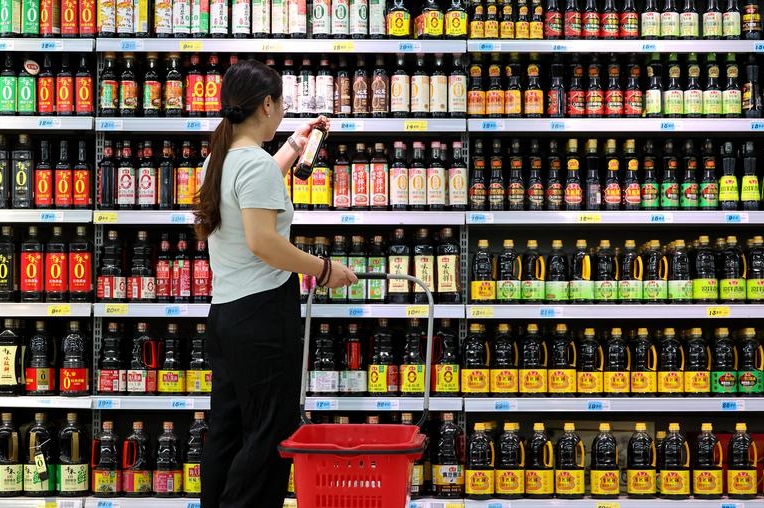
In August, the CPI fell by 0.4% year on year and remained flat month on month. By category, prices for food, tobacco and alcohol decreased by 2.5% year on year, clothing increased by 1.8%, housing rose by 0.1%, household goods and services grew by 1.8%, and transportation and communication declined by 2.4%. Prices for education, culture and recreation increased by 1.0%, health care rose by 0.9%, and other goods and services went up by 8.6%. In terms of prices for food, tobacco and alcohol, the price of pork dropped by 16.1%, fresh vegetable fell by 15.2%, fresh fruit decreased by 3.7%, and grain declined by 0.8%. The core CPI excluding the prices of food and energy went up by 0.9% year on year, with the growth rate expanding by 0.1 percentage point compared to the previous month. From January to August, the national CPI decreased by 0.1% year on year.
In August, the national Producer Price Index (PPI) for industrial products fell by 2.9% year on year, with the decline narrowing by 0.7 percentage point from the previous month, while remaining flat month on month; the national Purchaser Price Index for industrial products dropped by 4.0% year on year, with the decline narrowing by 0.5 percentage point, while remaining flat month on month. In the first eight months, the producer prices and the purchasing prices for industrial products dropped by 2.9% and 3.3% year on year, respectively.
Overall, August saw coordinated efforts in macroeconomic policies, which contributed to generally stable national economic performance, steady progress in transformation and upgrading, and new achievements in high-quality development. It should also be noted that there are many unstable and uncertain factors in the external environment, and China's economic operation still faces many risks and challenges. In the next stage, we must follow the guidance of Xi Jinping Thought on Socialism with Chinese Characteristics for a New Era, adhere to the general principle of pursuing progress while maintaining stability, fully and faithfully apply the new development philosophy on all fronts, move faster to create a new pattern of development, implement macro policies in a well-coordinated and targeted way, and focus on stabilizing employment, businesses, market operations and expectations. We will deepen reform, expand opening up and promote innovation, thus fostering steady and sound economic growth. Thank you.
Jia Huili:
Thank you, Mr. Fu. Now the floor is open for questions. Please identify the media outlet you represent before raising questions.
_ueditor_page_break_tag_Dazhong Daily:
Since the beginning of this year, China's national economy has continued to demonstrate strong resilience. How would you evaluate the economic performance in August, and what are the highlights and positive changes? Thank you.
Fu Linghui:
Thank you for your question. In August, under the strong leadership of the CPC Central Committee, all regions and government departments thoroughly implemented the decisions and deployments of the CPC Central Committee and the State Council, accelerated the implementation of more proactive and effective macro policies, advanced the in-depth construction of a unified national market, actively strengthened domestic circulation, and maintained generally stable national economic performance, with solid progress made in high-quality development. The main highlights are as follows.
First, production has maintained steady growth. In terms of agriculture, early rice output increased slightly, while the sown area for autumn grain remained stable with a slight expansion, and the overall growth was normal. Livestock production has remained stable. In the industrial sector, the value added of industrial enterprises above designated size grew by 5.2% year on year in August, continuing its relatively rapid growth. The manufacturing sector demonstrated a favorable development trend, with its value added increasing by 5.7% in August, outpacing the overall growth rate of industrial enterprises above designated size. In terms of services, the services production index rose by 5.6% year on year in August, showing stronger growth momentum than the industrial sector. Boosted by increased travel during the summer holiday season, the growth rate of the production index for accommodation and catering services accelerated compared to the previous month.
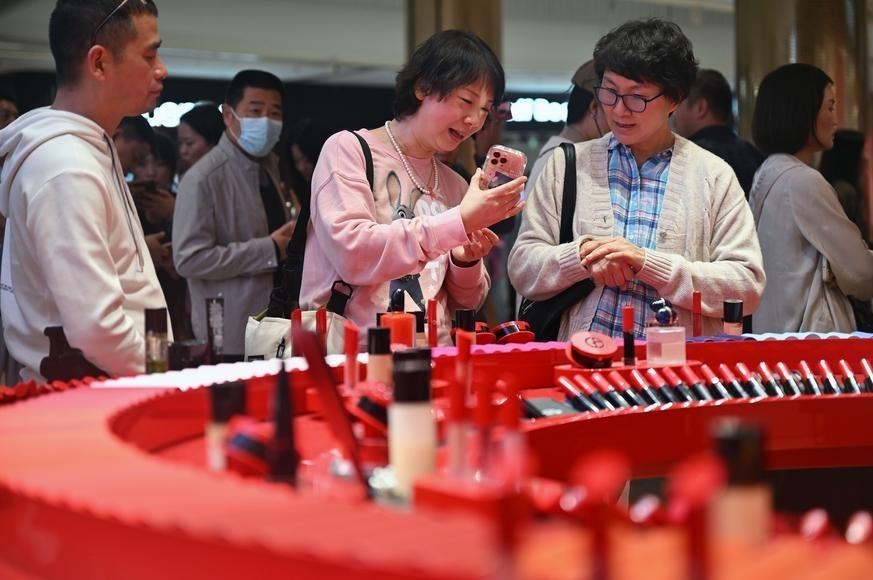
Second, domestic demand has continued to expand. In terms of consumption, the total retail sales of consumer goods increased by 3.4% year on year in August, and the retail sales of goods related to China's consumer goods trade-in programs continued to grow rapidly. The potential for service consumption is also being continuously unleashed, with sectors like tourism and leisure, live performances and sporting events, and information and communication services being relatively vibrant. In the first eight months, service retail sales grew 5.1% compared with the same period last year, outpacing the growth rate of goods retail sales. In terms of investment, fixed-asset investment from January to August increased by 0.5% compared to the same period last year. Notably, investment in manufacturing — which increased by 5.1% — grew significantly faster than the overall investment, providing solid support for the upgrading and development of the manufacturing sector.
Third, foreign trade and foreign exchange reserves have increased. Against a challenging backdrop of weak global economic growth and significant uncertainties in international trade, China's goods trade has continued to underscore its resilience. In August, the total value of goods imports and exports grew by 3.5% year on year, marking the third consecutive month of expansion for both exports and imports. Exports of mechanical and electrical products grew rapidly, with their export value rising by 9.2% year on year from January to August. By the end of August, China's foreign exchange reserves had increased by $29.9 billion compared to the previous month, demonstrating an overall trend of stability with positive growth.
Second, the economic performance has remained generally stable. Judging from the changes in indicators, the main production and demand indicators showed steady growth through the first eight months. From January to August, growth rates for value added of industrial enterprises above the designated size, the service industry production index, total retail sales of consumer goods, and goods imports and exports remained essentially unchanged from the rates seen between January and July, indicating that the stability of economic growth has been maintained. In terms of employment, the national surveyed urban unemployment rate in August was 5.3%. Although it slightly increased compared to the previous month, due to the graduation season, it remained the same as the same period last year. The surveyed unemployment rate of the primary working-age population aged 30-59 remained flat both month to month and year on year, further demonstrating that the stability of employment has not changed. From the perspective of prices, the consumer price index (CPI) in August decreased by 0.4% year on year, mainly dragged down by declining food prices. The core CPI excluding food and energy increased by 0.9% year on year, with the growth rate expanding for four consecutive months, indicating that the stability of prices has not changed.
Fifth, transformation and upgrading has continued, with innovation playing a pronounced driving role. Artificial intelligence is booming; digital empowerment is accelerating; and related industries are growing rapidly. In August, the added value of intelligent onboard equipment manufacturing as well as the manufacturing of electronic components and equipment increased by 17.7% and 13.1% respectively. The added value of integrated circuit manufacturing increased by 23.5%. The process of industrial upgrading has maintained positive momentum, with rapid growth in equipment manufacturing and high-tech manufacturing industries. In August, the value added of the equipment manufacturing industry and high-tech manufacturing industry above the designated size increased by 8.1% and 9.3% year on year, respectively, growing significantly faster than the overall industrial enterprises above the designated size. The modern service industry showed robust growth momentum, with the index of service production (ISP) for information transmission, software and IT services, and for leasing and business services growing by 12.1% and 7.4% year on year. The green transformation has been steadily advanced, with the output of new energy vehicles increasing by 22.7% and lithium-ion power batteries for vehicles increasing by 44.2% in August. The results of trade diversification continue to show, with China's imports and exports from the "Belt and Road" partner countries increasing by 5.4% from January to August, outpacing the overall growth rate of foreign trade.
Overall, the economy performed steadily in August with high-quality development making solid progress. However, it should also be noted the external environment is complex and severe, with many destabilizing factors and uncertainties. In the domestic market, there is strong supply but weak demand, and some enterprises are facing difficulties in their operations. In the next stage, we will fully implement the decisions and arrangements of the CPC Central Committee and the State Council, strengthen the regulation role of macroeconomic policies, effectively unleash the potential of domestic demand and deepen reform and opening-up. This will strengthen domestic circulation, promote the domestic and international dual circulation, fostering stable and sustainable economic development. Thank you.
_ueditor_page_break_tag_CCTV:
We have observed that since the beginning of this year, China has vigorously boosted consumption, improved investment efficiency, expanded domestic demand in all aspects, and advanced the construction of a unified national market. Based on the data from August, what results have been achieved in implementing the recent series of policies? How would you evaluate them? Thank you.
Fu Linghui:
Thank you for your questions. There has been considerable public attention regarding the effectiveness of the policies implemented since the beginning of this year. Since the beginning of this year, facing a complex and severe development environment, all regions and departments have conscientiously implemented the decisions and arrangements of the CPC Central Committee. This has accelerated the implementation of more proactive and effective macro policies, maintained policy continuity and stability, enhanced flexibility and predictability, and promoted the steady progress of the economy. Based on the data from August, the positive impact of various policies on expanding domestic demand, optimizing supply, facilitating circulation, and boosting momentum continue to be observed, as reflected in the following key areas.
First, the effect of expanding domestic demand has continued to be evident. The third tranche of funds for the old-for-new consumer goods trade-in policy have been allocated, continuing to enhance policy effectiveness, stimulate consumer demand, and drive rapid sales growth of related products. In August, among the retail sales of goods by units above the designated size, the retail sales of household appliances and audiovisual equipment, furniture, and cultural and office supplies continued to maintain double-digit growth. The driving effect of large-scale equipment renewals on investment continued to manifest. In the first eight months, investment in equipment and tool purchases rose by 14.4% year on year, contributing 2.1 percentage points to the growth of fixed asset investment.
Second, the production-driven effects have been continuously unleashed. The effectiveness of policies to expand domestic demand has been transmitted to the production end, stimulating relatively rapid growth in the production of related industries. In August, driven by the equipment renewal policy, industries like boiler and prime mover equipment manufacturing and electric motor manufacturing saw their value added increase by 11.9% and 14.8% year on year, respectively. The growth rate for equipment renewal products, including numerical control devices for machine tools and specialized packaging equipment, exceeded 10%. Driven by the consumer goods trade-in policy, August saw the production of automotive lithium-ion batteries, charging piles, and electric bicycles maintain double-digit growth.
Third, the stimulus effect of economic circulation has begun to emerge. With the expansion of market demand and the growth of production, the circulation of production factors has improved. In August, the prosperity index of the logistics industry continued to see growth. Railway freight volume accelerated and the express delivery volume grew rapidly. Disorderly competition among enterprises has been regulated in accordance with laws and regulations. Capacity governance in key industries has been advanced, contributing to improvements in supply-demand dynamics in some industries. This in turn brings positive change to producer prices. In August, the PPI changed from a 0.2% month-to-month decline last month to flat growth. Within this category, prices in coal mining and washing, as well as ferrous metal smelting and rolling processing, increased by 2.8% and 1.9% month on month, respectively.
Fourth, the momentum of economic growth has been enhanced. Policies aimed at promoting innovation have continued to take effect, driving the development of new quality productive forces and enhancing new momentum for development. In August, the value-added growth rate of integrated circuit manufacturing and electronic specialty material manufacturing industries above the designated size both exceeded 20%. The "AI Plus" initiative has been deeply implemented; intelligent terminal products are increasingly favored by consumers; and the digital economy has demonstrated positive development momentum. In August, the output of new products such as industrial robots, robot reducers, and civilian drones maintained rapid growth. At the same time, under the influence of policies related to stabilizing and activating the capital market, stock trading in the Shanghai and Shenzhen markets was relatively active in August, which was also conducive to improving market expectations and enhancing development vitality. Thank you.
_ueditor_page_break_tag_Cover News:
In August, the CPI fell year on year, with food price changes having a significant impact. Meanwhile, the year-on-year increase in core CPI has expanded for the fourth consecutive month. What are the underlying factors behind this? What is your outlook for future trends? Thank you.
Fu Linghui:
Thank you for your question. In August, the CPI was flat month on month and shifted from flat to a year-on-year decrease. This was influenced by factors such as ample market supply and a higher base in the same period last year.
On a month-on-month basis, the CPI was unchanged in August, compared to a 0.4% increase last month. Within this, food prices rose 0.5%, while non-food prices fell 0.1%. Among food items, the prices of fresh vegetables and eggs increased by 8.5% and 1.5%, respectively, collectively pushing the CPI up by 0.17 percentage point. Meanwhile, prices of fresh fruit, aquatic products, and pork declined by 2.8%, 0.9% and 0.5% month on month, respectively, which together pulled the CPI down by 0.09 percentage point. In the non-food category, transportation and communication prices dropped 0.3%, while prices for clothing, household goods and services, and education, culture, and entertainment all decreased by 0.1%.
From a year-on-year perspective, the CPI in August fell by 0.4%, compared to flat growth in the previous month. The shift in consumer prices from flat to a decrease year on year was primarily due to a higher comparison base from the same period last year. In August 2024, food prices rose sharply due to extreme heat and localized heavy rainfall, driving up overall consumer price growth and creating a higher base that contributed to this year's CPI decline. In August this year, food prices fell 4.3% year on year, a drop that widened by 2.7 percentage points from July, pulling down the CPI by 0.51 percentage point. Pork, fresh vegetables and eggs all fell by more than 10% year on year.
While the overall CPI declined in August due to the larger drop in food prices, core CPI, which excludes food and energy, rose 0.9% year on year. This marked an acceleration of 0.1 percentage point from the previous month and the fourth consecutive month of accelerating growth. This suggests positive price trends are continuing to build. The uptick in core CPI was primarily driven by rising prices for industrial consumer goods and services.
First, price increases for industrial consumer goods accelerated. Since the beginning of this year, consumer goods trade-in policies have been strengthened and expanded, while efforts to regulate disorderly competition among enterprises have progressed steadily, improving supply-demand dynamics in industrial consumer goods and driving up prices. The price of industrial consumer goods excluding energy rose by 1.5% year on year in August, up 0.3 percentage point from July. Among these, the prices of household appliances and recreational durable goods rose 4.6% and 2.4% year on year, respectively, jointly contributing about 0.09 percentage point to CPI growth. Meanwhile, the year-on-year decline in gasoline vehicle prices continued to narrow.
Second, service prices saw a steady rise. With targeted measures to boost consumption in full swing, summer travel and cultural tourism demand heated up, while demand for high-quality social services expanded, driving the rebound in service prices. In August, service prices rose 0.6% year on year, 0.1 percentage point faster than in July, contributing about 0.23 percentage point to CPI growth. Since the beginning of the year, service prices have generally maintained a stable upward trend. Specifically, prices for medical and educational services rose by 1.6% and 1.2% year on year, respectively, while vehicle rental and tourism prices increased by 0.8% and 0.7%, respectively, with all categories showing widening growth rates.
However, it is also important to note that market supply-demand imbalances remain prominent, and consumer prices are still operating at low levels. Looking ahead, we must continue to expand domestic demand, effectively implement targeted campaigns to stimulate consumption, sustain growth in effective investment, further advance construction of a unified national market, and strengthen capacity management in key industries to promote a reasonable recovery in prices. Thank you.
_ueditor_page_break_tag_Xinhua Finance:
Based on the employment data released for August, how would you assess the current performance of China's job market? What are the next steps to promote high-quality employment? Thank you.
Fu Linghui:
Thank you for your questions. Employment is fundamental to people's livelihoods, and it relates to every household. The CPC Central Committee and the State Council attach great importance to stabilizing employment. Local governments and departments have fully implemented policies to promote high-quality and sufficient employment, supported enterprises in hiring, improved public employment services, and expanded job opportunities through multiple channels, with a special focus on key groups. Based on the August data, the employment situation remained generally stable, as evidenced by the following aspects:
First, the surveyed urban unemployment rate remained steady. According to unemployment rate patterns, China's national urban surveyed unemployment rate typically rises seasonally each year during the July-August graduation period. As graduates gradually secure employment, the unemployment rate gradually declines. In August, the national surveyed urban unemployment rate was 5.3%, up 0.1 percentage point from July, mainly due to fresh graduates entering the labor market. Compared with last year, however, the rate was unchanged, showing overall stability.
Second, the unemployment rate among the core working-age population remained stable. The urban surveyed unemployment rate for the 30-59 age group was 3.9% in August, unchanged from both the previous month and the same period last year, indicating stable employment among the core working-age population.
Third, the unemployment rate among migrant workers declined. The unemployment rate for rural migrant workers in cities was 4.7% in August, down 0.2 percentage point from July and lower than the national average.
In summary, despite a complex external environment and persistent domestic employment pressures in both scale and structure, proactive efforts by all parties and continuously strengthened employment stabilization policies have maintained general stability in the job market. This has been no easy feat. Looking forward, while we recognize favorable conditions such as stable economic performance, the development of new quality productive forces, and the effectiveness of employment stabilization policies, we must also acknowledge that certain industries and key groups continue to face employment pressure. The structural contradiction where job seekers struggle to find work while employers face hiring difficulties remains pronounced. We must further stabilize both employment and the economy, strengthen vocational skills training, and improve labor supply-demand matching. By promoting high-quality, full employment, we can further improve people's livelihoods, foster steady and healthy economic development, and maintain overall social stability. Thank you.
_ueditor_page_break_tag_CNBC:
I have two questions. Following up on the CPI question, the just-released core CPI data for August was the highest since February 2024. Does this signal a turning point for prices? My second question: Some major cities have recently adjusted housing purchase restrictions. Has there been any overall reaction in the real estate market? What is the outlook for the real estate industry? Thank you.
Fu Linghui:
Thank you for your questions. You asked two questions. One is about the change in core CPI, and the other is about the situation in the real estate market.
Regarding the price turning point you're concerned about, generally speaking, determining turning points in economic indicators is quite difficult. Often, we can only confirm a turning point in economic indicators a considerable time after the actual turning point has occurred. This is mainly because the changes in economic indicators are influenced by multiple factors, and short-term fluctuations can mask underlying trends. Regarding the assessment of CPI trends, it should be said that careful analysis is still required. Since the beginning of this year, China's CPI has generally operated at a low level. However, under a series of policies aimed at expanding domestic demand and promoting reasonable price recovery, positive changes have steadily accumulated. As noted earlier, core CPI increased 0.9% year on year in August, expanding 0.1 percentage point from July and marking the fourth consecutive month of growth.
Recent developments show numerous favorable factors supporting a reasonable CPI recovery. First, consumer demand is expected to expand. As the weather turns cooler, food consumption demand will increase somewhat. With the Mid-Autumn Festival and National Day holidays approaching, holiday consumption is also expected to expand, which will help drive the CPI higher. Second, seasonal factors are providing support. As seasons change and new clothing collections arrive, prices may rise modestly from current levels. After the new semester starts, education service demand expands, which will also drive related price changes. Third, "anti-involution" governance efforts are showing results. Recently, efforts to regulate disorderly competition among enterprises in accordance with laws and regulations have driven positive changes in producer prices in related industries. The transmission of production prices to consumer prices also supports CPI recovery. Of course, it should also be noted that domestic market supply remains generally abundant, international energy market price fluctuations may also occur, and the imported inflationary impact on domestic prices carries uncertainty. All of these factors will influence price movements. Therefore, CPI trends require continued monitoring.
Regarding the real estate market situation you asked about, since the beginning of this year, various regions and departments have implemented city-specific policies to stabilize the real estate market. They have continued to roll out policies to halt the market decline and maintain stability, while promoting demand for both basic and move-up housing purchases. Based on the situation over the first eight months, the real estate market experienced fluctuations due to changes in domestic and international conditions. However, the year-on-year decline in commercial housing sales and residential prices continued to narrow, and the effectiveness of inventory reduction remained evident. The real estate market is still moving towards stopping the decline and stabilizing. Recently, some cities have further adjusted and optimized their housing policies, with effects beginning to show as market transactions have improved. In the first eight months, the real estate market showed several key characteristics:
First, the decline in real estate market sales narrowed. Since the beginning of this year, various regions and departments have actively encouraged basic and move-up home purchases, driving the narrowing of commercial housing sales declines. From January to August, the nationwide sales area of newly built commercial housing fell 4.7% year on year, with the decline narrowing by 13.3 percentage points compared to the same period last year and by 8.2 percentage points compared to the whole of last year. Commercial housing sales revenue declined 7.3%, with the decline narrowing by 16.3 percentage points compared to the same period last year and by 9.8 percentage points compared to the whole of last year. Some first-tier and second-tier cities maintained growth in both sales area and sales revenue for newly built commercial housing.
Second, the year-on-year decline in newly built commercial residential property prices narrowed. In August, among 70 large and medium-sized cities, most cities saw the year-on-year decline in commercial residential property sales prices narrow. The year-on-year declines in new commercial residential sales prices narrowed by 0.2 percentage points in first-tier cities, 0.4 percentage points in second-tier cities, and 0.5 percentage points in third-tier cities compared to the previous month. Second-tier and third-tier cities both saw their year-on-year declines in second-hand residential sales prices narrow by 0.4 percentage points.
Third, real estate companies' funding and inventory showed improvement. Efforts to reduce real estate inventory advanced steadily, with companies' funding and inventory conditions showing some improvement. Looking at funding sources, from January to August, funds available to real estate development companies fell 8% year on year, with the decline narrowing by 12.2 percentage points compared to the same period last year and by 9 percentage points compared to the whole of last year. Looking at commercial housing inventory, unsold commercial housing area at the end of August decreased by 3.17 million square meters compared to the end of July, marking six consecutive months of decline.
However, we must also recognize that real estate sales are still declining. The recovery of the real estate market is a process and efforts are still needed to promote its stabilization. Going forward, we must earnestly implement the decisions and arrangements of the CPC Central Committee and the State Council and carry out the spirit of the Central Urban Work Conference. We will conduct high-quality urban renewal, actively build a new model of real estate development, and increase the supply of high-quality housing. We will better meet people's essential needs for a home to live in and their different demands for better housing and promote the stable and healthy development of the real estate market. Thank you.
_ueditor_page_break_tag_21st Century Business Herald:
August's PPI ended eight consecutive months of downward month-on-month decline, with the year-on-year drop narrowing. What are the main reasons behind the positive changes in the PPI? How do you expect the PPI to trend going forward? Thank you.
Fu Linghui:
Thank you for your questions. Driven by factors such as the effective implementation of macroeconomic policies, the in-depth advancement of the construction of a unified national market, the gradual optimization of corporate competition order, and the rapid growth of new momentum, the PPI in August turned from a decline to flat month on month, and the year-on-year decline narrowed. In August, the PPI fell 2.9% year on year, with the decline narrowing by 0.7 percentage points from the previous month. Month on month, it remained flat, compared to a 0.2% decline in the previous month.
The year-on-year decline in August's PPI narrowed significantly, primarily due to improved market competition practices. Relevant authorities have recently been actively promoting industry self-regulation, advocating against disorderly corporate competition, and advancing capacity management in key sectors, with effects gradually becoming apparent. In August, the ex-factory prices for coal processing, smelting and pressing of ferrous metals, and coal mining and washing saw their month-on-month declines narrow by 3.2 to 10.3 percentage points. Year-on-year price declines for photovoltaic equipment and components manufacturing and new energy vehicle manufacturing narrowed by 2.8 and 0.6 percentage points, respectively. The combined downward pressure from these five industries on the year-on-year PPI was approximately 0.5 percentage point less than the previous month.
Second, demand from emerging industries has strengthened as a driving force. As China's economic structural adjustment advances steadily, with industries moving toward high-end and intelligent development, market demand has expanded steadily, driving up prices in related sectors. Integrated circuit packaging and testing manufacturing prices rose 1.1% year on year in August, while ship and related equipment manufacturing prices gained 0.9%. The rapid development of artificial intelligence applications has driven strong market demand for smart products, boosting prices. Wearable smart device manufacturing prices rose 1.6% year on year in August.
Third, consumption-boosting policies are beginning to show results. Since the beginning of this year, special initiatives to boost consumption have been implemented in depth, with trade-in programs for consumer goods intensified and expanded in scope. These initiatives have unleashed consumption potential and driven demand for upgraded goods, leading to year-on-year ex-factory price growth in some sectors. Manufacturing prices of arts and crafts and ceremonial supplies rose 13% year on year in August. Sports ball manufacturing prices gained 4.7%. Special sports equipment and accessories manufacturing prices climbed 0.4%. Meanwhile, nutritional food manufacturing prices advanced 0.9%, while health food manufacturing prices increased 0.3%.
However, it should also be noted that the current PPI remains in negative territory, which is not conducive to improving industrial enterprise operations. Going forward, we must further expand domestic demand, advance the development of a unified national market, regulate corporate competition practices, and promote a reasonable recovery in industrial goods prices. Thank you.
_ueditor_page_break_tag_The Paper.cn:
How do you assess the performance of August's consumption data, and where do we see the impact of pro-consumption policies in the data? Thank you.
Fu Linghui:
Thank you for your questions. Changes in consumption are indeed a topic of broad concern. Since the beginning of this year, regions and departments at all levels have resolutely implemented the decisions and deployments of the CPC Central Committee and the State Council, deeply implementing the special initiatives to boost consumption. National subsidy funds have provided continuous support, interest subsidy policies have been precisely targeted, and a comprehensive package of policy measures has maintained momentum, promoting consumption growth and driving expansion and a structural optimization of market sales. From January to August, total retail sales of consumer goods increased 4.6% year on year, service retail sales grew 5.1%, and market sales showed a trend of continued expansion. Looking at the overall market sales situation in August, there are several key characteristics:
First, commodity consumption continued to grow. Under the combined influence of consumer goods trade-in programs and household consumption upgrades, commodity consumption continued to expand. In August, commodity retail sales gained 3.6% year on year, demonstrating steady growth momentum. Sales of goods supported by consumer goods trade-in programs showed strong growth momentum. In August, retail sales by enterprises above the designated size also showed year-on-year growth exceeding 10% across household appliances and audiovisual equipment, cultural and office supplies, and furniture. This significantly outpaced total goods retail sales growth, providing strong momentum for overall commodity sales. Meanwhile, rising living standards boosted demand for quality consumption, generating relatively strong sales growth for upgraded goods. In August, the retail sales of sports and recreational articles, gold, silver, and jewelry by enterprises above the designated size went up 16.9% and 16.8% year on year, respectively, further boosting overall commodity sales.
Second, service consumption growth remained stable. Concentrated summer demand for travel, tourism and leisure sports fueled continued strong growth in service consumption. From January to August, service retail sales increased 5.1% year on year, outpacing commodity retail sales growth. Integrated consumption formats like "Tourism+" and "Sports+" gained momentum. Supply of high-quality services continued to increase. Growth in travel, cultural and sports service retail sales registered a robust growth. From January to August, retail sales maintained double-digit growth across tourism consulting and rental services, transportation services, and cultural and sports services. August saw the national film box office rise 48.6% and movie attendance jump 66.9% year on year.
Third, new types of consumption showed positive development. Deep integration between digital technology and emerging consumption scenarios drove favorable development in online and new types of consumption. From January to August, national online retail sales increased by 9.6% year on year, outpacing overall consumer goods retail sales growth. Among them, online retail sales of physical goods increased 6.4%, accelerating 0.1 percentage point from the January-July period. Emerging sectors such as digital consumption, green consumption, and health consumption have become increasingly mature, continuously emerging as new growth drivers for consumption. Retail sales of new energy vehicles maintained rapid growth. In the first eight months, retail sales of new energy passenger vehicles increased by more than 20% year on year.
Overall, under the combined influence of various consumption promotion policies, commodity consumption in August remained basically stable, and service consumption showed strong resilience. New types of consumption continued to grow, market space kept expanding, and the consumption expansion trend remained unchanged. However, it should also be noted that household consumption capacity and confidence still need to be improved, and the internal driving forces of consumption still need to be strengthened. Moving forward, we will further implement special initiatives to boost consumption, actively stabilize employment to promote income growth, improve the consumption environment, increase high-quality supply, better release consumption potential, and promote the stable development of the consumption market. Thank you.
_ueditor_page_break_tag_Reuters:
Based on the July and August data, how do you assess the economic development trends for the third quarter? Also, can we see any specific effects of recent anti-involution policies on prices? Thank you.
Fu Linghui:
Thank you for your questions. Everyone is paying close attention to the economic performance in the third quarter. Judging from the July and August data, a series of macroeconomic policies have continued to take effect. The industrial and services sectors have maintained rapid growth, consumption and import-export volumes continue to expand, employment and prices remain broadly stable, new quality productive forces are being nurtured and strengthened, and the national economy has sustained steady progress with positive momentum.
Looking at production, industry and services have maintained relatively rapid growth. Industrial output above designated size grew 5.7% and 5.2% year on year in July and August, respectively, continuing to maintain relatively rapid growth above 5%. The services production index grew 5.8% and 5.6% in July and August, respectively, with growth rates faster than industrial growth.
Looking at demand, market sales and import-export volumes continue to expand. Total retail sales of consumer goods grew 3.7% and 3.4% year on year in July and August, respectively. From January to August, retail sales of services grew 5.1%, continuing to outpace goods retail growth. Goods exports rose 8% and 4.8% year on year in July and August, respectively, with volumes continuing to expand.
Looking at employment, the unemployment rate has remained generally stable. In July and August, the nationwide surveyed urban unemployment rate experienced a seasonal increase but remained flat compared to the same period last year. The surveyed urban unemployment rate for the 30-59 age group was 3.9% in both months, remaining stable.
Looking at prices, core CPI has continued to rebound. Core CPI rose 0.8% and 0.9% year on year in July and August, respectively, with the increase expanding for four consecutive months.
Looking at development momentum, new quality productive forces have continued to be nurtured and strengthened. Value-added output of high-tech manufacturing industries above designated size grew 9.3% year on year in both July and August, significantly faster than the overall growth of industrial output above designated size. Industrial robot and new energy vehicle production have continued to maintain double-digit growth. Digital and green transformations continue to deepen, with digital product manufacturing and online retail sales of physical goods maintaining strong growth momentum. Meanwhile, high-level opening up has continued to advance, with trade diversification showing clear results and imports and exports with Belt and Road partner countries maintaining relatively rapid growth. Efforts to ensure people's livelihoods have remained strong and effective, with continuous increases in investment directed toward public welfare areas. Looking at the overall picture, with macroeconomic policies continuing to take effect, the economy is expected to maintain steady and progressive development in the third quarter.
Regarding the impact of anti-involution policies on prices that you mentioned. Recently, relevant departments have actively promoted industry self-discipline and advanced capacity management in key sectors, with effects gradually becoming apparent. In August, year-on-year declines in ex-factory prices narrowed for coal, steel, new energy vehicles, photovoltaic products and other industries. This reduced their downward pull on the PPI compared to the previous month, helping steer price movements back toward a reasonable range. Thank you.
_ueditor_page_break_tag_Yicai:
Private investment growth continued to decline from January to August, reflecting persistently insufficient momentum. What is your assessment of this situation? What are the prospects for private investment development moving forward? Thank you.
Fu Linghui:
Thank you for your questions. Private investment is a crucial component of China's fixed-asset investment and a key force in driving investment quality and efficiency improvements. Since the beginning of this year, private investment has slowed somewhat due to changes in the international environment, real estate market adjustments and other factors. However, excluding real estate development investment, private project investment has remained basically stable. As a series of policy measures to support private economic development and stimulate private investment are implemented, the business environment for private enterprises continues to improve. This will help expand development space for private investment and support private investment growth. Based on the situation in the first eight months, private investment performance has exhibited the following main characteristics:
First, project investment maintained steady growth. Real estate development investment accounts for a relatively large share of private investment. Dragged down by the decline in real estate development investment, private fixed-asset investment fell 2.3% year on year from January to August. During this period, private real estate development investment declined 16.7%, pulling down overall private investment growth by 4.5 percentage points. Excluding real estate development investment, private project investment grew 3% year on year from January to August, faster than overall investment growth.
Second, manufacturing investment showed strong growth momentum. The policy effects of large-scale equipment renewal continued to unfold, while economic transformation and upgrading advanced steadily, driving sustained growth in private manufacturing investment and increasing its share of total investment. From January to August, private manufacturing investment increased 4.2% year on year, 1.2 percentage points faster than private project investment overall. It accounted for 40.6% of total private investment, up 1.7 and 2.6 percentage points from the first half of the year and the same period last year, respectively. Among the 31 major manufacturing industry categories, 16 sectors achieved double-digit growth in private investment. Among them, private investment in automobile manufacturing grew 22.6% and private investment in railway, shipbuilding, aerospace, and other transport equipment manufacturing increased 16.2%.
Third, innovation investment intensity increased. Private enterprises are China's main force driving innovation and development. Facing changes in market conditions, private enterprises have continued to increase innovation investment and actively expanded into emerging and future industries. Private investment in related sectors has grown relatively rapidly, which has also strongly promoted industrial development toward new and positive directions. From January to August, private investment in information services within high-tech industries grew 26.7% year on year, while private investment in professional technical services rose 17.6%.
Fourth, the investment development space is gradually expanding. With the gradual implementation of the reform measures adopted at the third plenary session of the 20th CPC Central Committee, long-term mechanisms for private enterprise participation in major national projects are being accelerated and improved. Private capital involvement in key national infrastructure projects — including railways, energy and water conservancy — is being steadily advanced, expanding growth opportunities for private investment. From January to August, private infrastructure investment increased 7.5% year on year, 5.5 percentage points faster than total infrastructure investment. Private investment in the production and supply of electricity, heat, gas and water rose 23.5%. Meanwhile, private investment in consumer service sectors is also increasing. From January to August, private investment in accommodation and catering, and culture, sports and entertainment grew 17% and 7%, respectively.
Despite profound and complex changes in the domestic and international environment, operational difficulties facing some private enterprises and certain pressures on private investment, looking ahead, China's economy has broad development potential. China's economic landscape offers ample space for growth, and strong foundations exist to support the expansion of private investment.
First, high-quality development is being steadily promoted and there is room for growth in private investment. Private enterprises are the backbone of innovative development and an important driving force for high-quality development. As China steadily promotes high-quality development, private enterprises are vigorously promoting the development of green industries such as new energy vehicles, photovoltaics, and lithium batteries. They are actively laying out future industries such as artificial intelligence and embodied robots, which will further expand the development space for private investment. Second, private enterprises are resilient and dynamic, providing a foundation for the growth of private investment. Many private enterprises are bold and competitive, with a keen sense of market demand and technological trends, responding quickly with high flexibility and adaptability. Since the beginning of this year, in the face of external shocks, many private enterprises have risen to the challenge. Adapted flexibility has actively expanded markets, and stabilized production, demonstrating strong development resilience and innovative vitality. Third, strong policy support ensures the growth of private investment. The "Private Economy Promotion Law" has been officially implemented, sending a strong signal to promote the development of the private economy. All regions and departments are actively improving the system and mechanism for government investment to drive social investment. The market access environment for private investment has been continuously optimized, and financial and resource support has been steadily strengthened, all of which are conducive to encouraging private investment and promoting its stable development. Thank you.
Jia Huili:
Due to time constraints, we will take one last question.
_ueditor_page_break_tag_National Business Daily:
Based on the performance of the national economy over the past eight months this year, what are the predictions and prospects of the NBS for the future economic outlook? Thank you.
Fu Linghui:
Thank you for your question. Since the beginning of this year, despite the complex and changing external environment, deepening external adverse impacts, weak domestic effective demand, and long-term structural contradictions becoming prominent, China's economy has withstood the pressure and maintained steady growth. This is largely thanks to sustained macro policy efforts and the accelerated development of a unified national market. The main indicators were generally stable in the first eight months, and high-quality development was steadily promoted. Looking ahead, the supporting conditions and basic trend of China's long-term economic improvement have not changed. The macro policies have taken effect and reform and opening- up have continued to deepen.Domestic and international dual circulation have gradually become smooth, these will support the stable operation and positive development of the economy.
First, consumption potential continues to be unleashed. Under the influence of various measures in the special action to boost consumption, market sales have steadily rebounded. The sales of trade-in products have increased, new types of consumption such as livestreaming and instant retail have grown rapidly. Service consumption has continued to expand, holiday travel has increased, and cultural and tourism consumption has increased. The markets for sports events, cinema and performances have been relatively active. In the next stage, with the in-depth implementation of the special action to boost consumption, the trade-in policy for consumer goods will continue to be optimized. Livelihood policies such as childcare subsidies and free preschool education will be gradually implemented, which will help enhance residents' consumption capacity and willingness. The Mid-Autumn Festival and National Day holidays are coming, which will further boost holiday spending, with consumption being expected to continue expanding and upgrading.
Second, new drivers of growth have been cultivated and strengthened. The driving force of innovation continues to strengthen. Technological innovation and industrial innovation continue to integrate. New quality productive forces are being cultivated and strengthened, with new economic growth drivers continuing to emerge. The development of high-end industries is improving. From January to August, the value added of high-tech manufacturing industries above designated size increased by 9.5% year on year, of which the value added of integrated circuit manufacturing and aerospace-related equipment manufacturing increased by 22.3% and 14.6% respectively. Intelligent and green transformation is steadily advancing. From January to August, the output of industrial robots and civilian drones increased by 29.9% and 53.7% respectively. New energy vehicles production increased by 31.4%. Green consumption and new types of consumption are growing rapidly. New business models such as online retail and instant retail are gaining momentum, driving the rapid growth of online retail sales of physical goods. In the next stage, the development potential of emerging fields will continue to be revealed, which will help expand the space for economic development and accelerate the transformation from traditional to new growth drivers.
Third, market vitality has gradually increased. As the construction of a unified national market deepens, efforts to strengthen the domestic circulation have been intensified, the integration of domestic and foreign trade has been accelerated, and unilateral and autonomous opening up has been carried out in an orderly manner, thereby market vitality is being enhanced. From January to July, the profits of manufacturing enterprises above designated size increased by 4.8% year on year; from January to August, the import and export of private enterprises increased by 7.4%. In the August PMI, the business activity expectation index for manufacturing enterprises and services enterprises was 53.7% and 57% respectively, both higher than the previous month. In the next stage, we will further deepen reform and opening up, regulate the disorderly competition of enterprises in accordance with laws and regulations, promote capacity governance in key industries, continuously optimize the business environment and promote high-quality development of pilot free trade zones. We will also continue to stimulate the vitality of business entities and enhance development momentum.
Fourth, macro policies have continued to show their effects. Since the beginning of this year, all regions and departments have been fully implementing the decisions and plans of the CPC Central Committee and the State Council and taken effective measures to implement macro policies, promoting stable economic growth. The implementation of major national strategies and building up of security capacity in key areas have achieved remarkable results, and the policies for large-scale equipment renewal and trade-in of consumer goods policies have been implemented in depth. From January to August, the retail sales of household appliances and audiovisual equipment, and communication equipment, supported by consumer goods trade-in policies, increased by 28.4% and 21.1% year on year respectively. In the next stage, with the implementation of a more proactive fiscal policy and a moderately loose monetary policy, the effectiveness of these policies will be further unleashed, providing strong support for the stable performance of the economy.
In conclusion, although the external environment is complex and challenging, and domestic economic development faces many obstacles, China's economy has a stable foundation, numerous advantages, strong resilience, and great potential. There are many favorable conditions supporting high-quality development, especially with the accelerated cultivation of new growth drivers and the continuous enhancement of market vitality. Coupled with the sustained efforts of macroeconomic policies, the economy is expected to continue its overall stable and steady development trend. Thank you.
Jia Huili:
Today's briefing is hereby concluded. Thank you, Mr. Fu, and thank you to friends from the media. Goodbye, everyone.
Translated and edited by Mi Xingang, Ma Yujia, Xu Kailin, Cui Can, Li Congrong, Xiang Bin, Zhang Rui, Yan Xiaoqing, Wang Qian, Huang Shan, Li Huiru, Huang Shan, Fan Junmei, David Ball, Jay Birbeck and Tudor Bentley Finneran. In case of any discrepancy between the English and Chinese texts, the Chinese version is deemed to prevail.

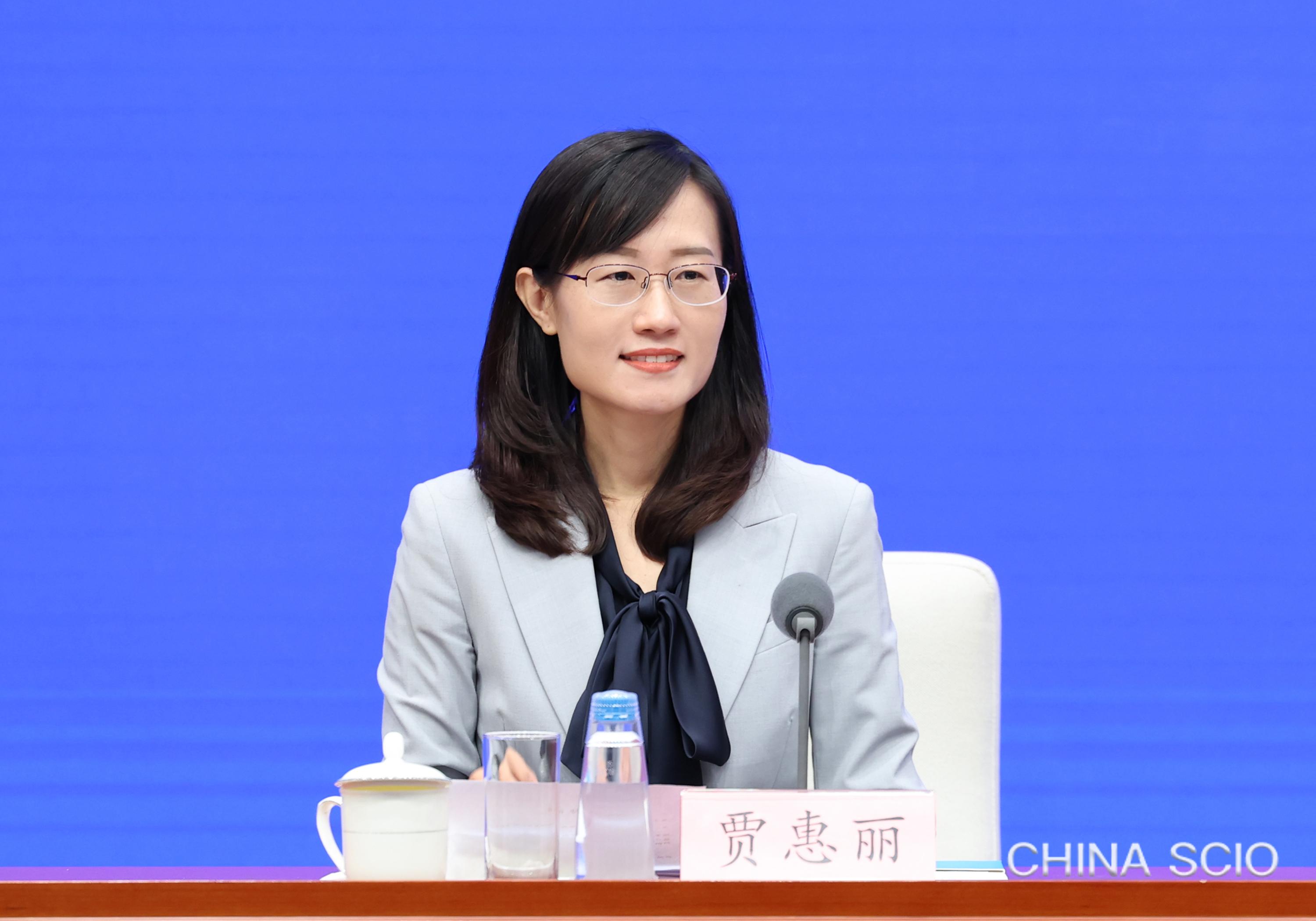
/3 Jia Huili
/3 Fu Linghui
/3 Group photo
SCIO briefing on fiscal reform and development achievements in the 14th Five-Year Plan period
September 12, 2025SCIO briefing on 4th Global Digital Trade Expo
September 11, 2025SCIO briefing on achievements in the healthcare sector during the 14th Five-Year Plan period
September 11, 2025