
SCIO briefing on China's import and export in the first quarter of 2025
Beijing | 10 a.m. April 14, 2025
Speakers

Wang Lingjun, vice minister of the General Administration of Customs of China (GACC)
Lyu Daliang, spokesperson of the GACC and director general of the Department of Statistics and Analysis of the GACC
Chairperson
Speakers:
Mr. Wang Lingjun, vice minister of the General Administration of Customs of China (GACC)
Mr. Lyu Daliang, spokesperson of the GACC and director general of the Department of Statistics and Analysis of the GACC
Chairperson:
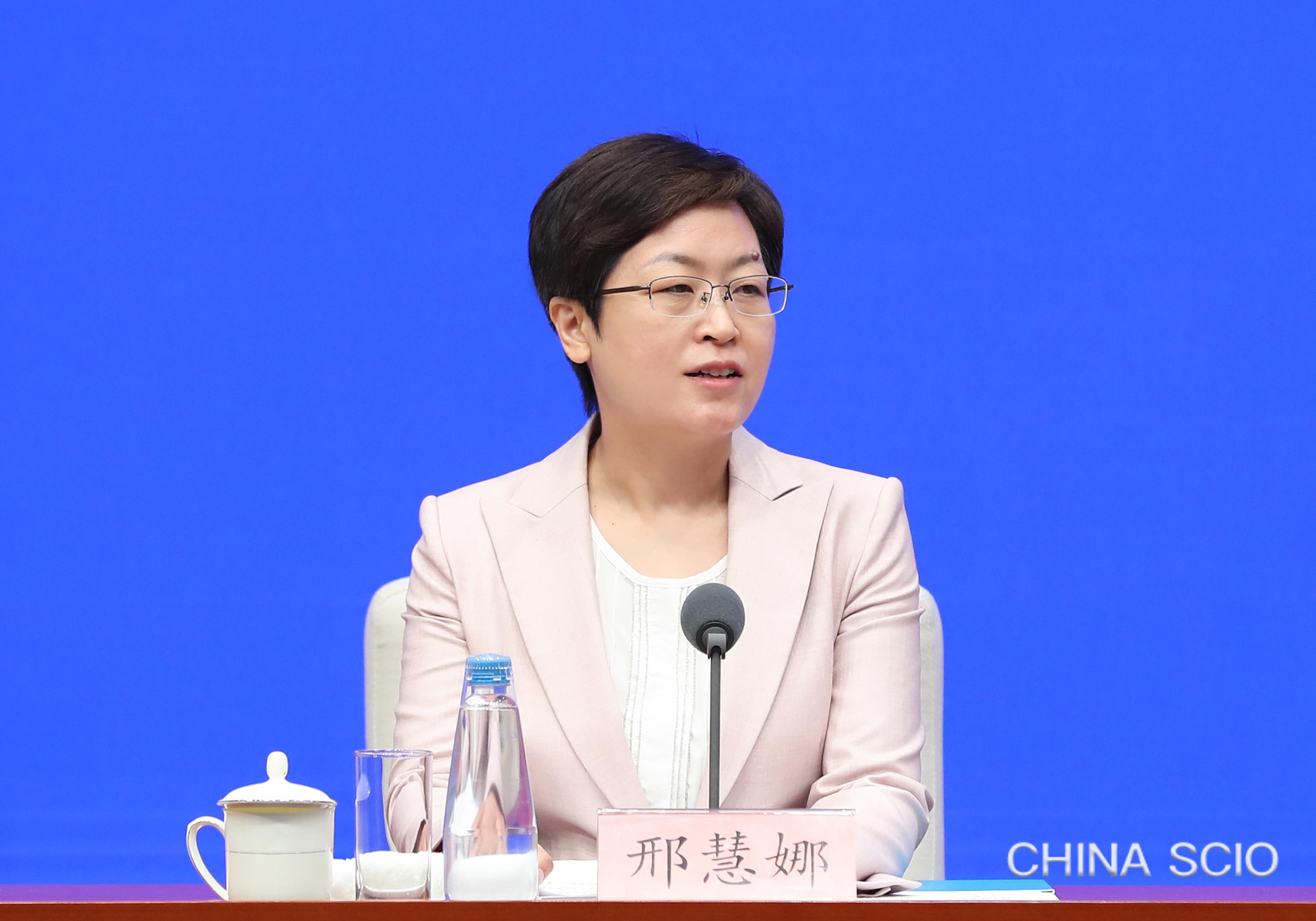
Ms. Xing Huina, deputy director general of the Press Bureau of the State Council Information Office (SCIO) and spokesperson of the SCIO
Date:
April 14, 2025
Xing Huina:
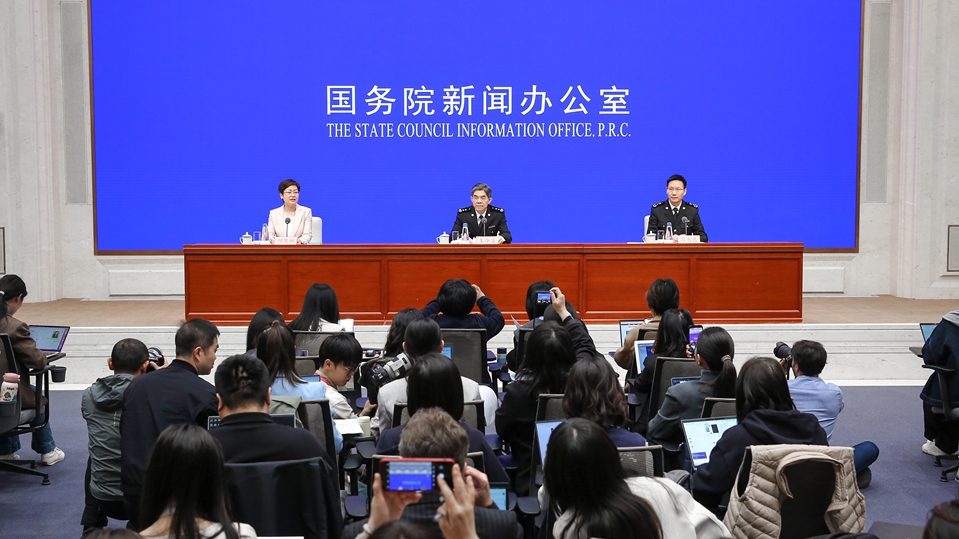
Ladies and gentlemen, good morning. Welcome to this press conference held by the State Council Information Office (SCIO). Today, we will conduct a routine release of economic data. We have invited Mr. Wang Lingjun, vice minister of the General Administration of Customs of China (GACC), to introduce China's import and export performance in the first quarter of this year and answer your questions. Also attending today's press conference is Mr. Lyu Daliang, spokesperson of the GACC and director general of the Department of Statistics and Analysis of the GACC.
Now, I'll give the floor to Mr. Wang for his introduction.
Wang Lingjun:
Good morning. I will start by briefing you on the import and export performance in the first quarter of this year, and then my colleague Mr. Lyu and I will answer your questions.
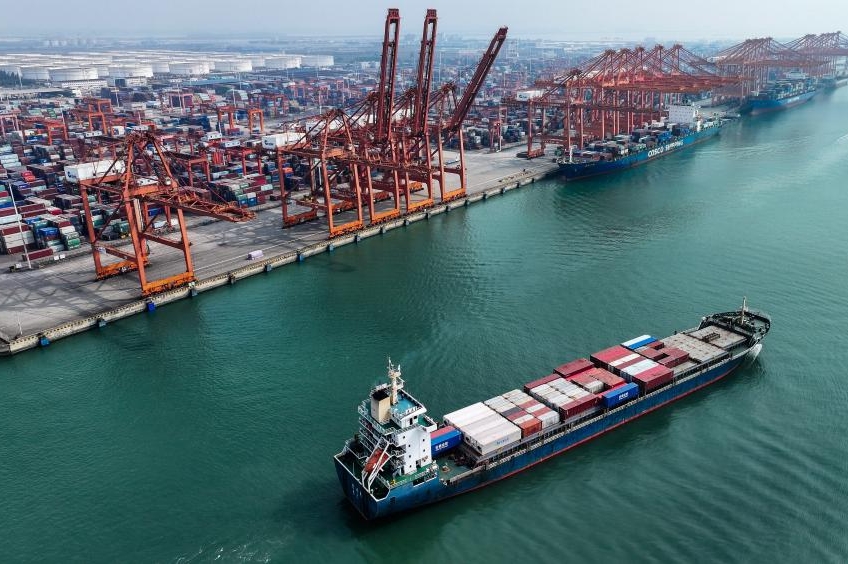
Since the beginning of this year, under the strong leadership of the Party Central Committee with Comrade Xi Jinping at its core, China has adhered to the general principle of pursuing progress while maintaining stability, fully and faithfully applied the new development philosophy, accelerated efforts to foster a new pattern of development, and solidly promoted high-quality development. Both existing policies and incremental policies have continued to exert their effects. The economy has got off to a steady start, and the development trend is positive and dynamic. China's foreign trade has withstood pressure, achieving growth in scale and improvement in quality. Customs statistics show that in the first quarter of this year, China's foreign trade in goods stood at 10.3 trillion yuan, up 1.3% year on year. Exports were 6.13 trillion yuan, up by 6.9%, and imports were 4.17 trillion yuan, down by 6%. Specifically, there were four main features:
First, the growth rate of imports and exports rebounded month by month. In the first quarter, China's imports and exports reached a record high for the same period, exceeding 10 trillion yuan for eight consecutive quarters. Looking at the monthly trends, imports and exports fell by 2.2% in January, remained basically flat in February, and grew by 6% in March.
Second, the proportion of private enterprises in imports and exports increased. In the first quarter, the imports and exports of private enterprises in China reached 5.85 trillion yuan, an increase of 5.8%, accounting for 56.8% of the total import and export value, an increase of 2.4 percentage points compared with the same period last year. During the same period, the imports and exports of foreign-invested enterprises reached 2.99 trillion yuan, an increase of 0.4%, accounting for 29% of the total import and export value.
Third, the growth rate of imports and exports with countries participating in the Belt and Road Initiative (BRI) was higher than the overall level. In the first quarter, China's imports and exports with BRI partner countries reached 5.26 trillion yuan, increasing by 2.2%, which was 0.9 percentage points higher than the overall growth, accounting for 51.1% of the total import and export value. Among these, imports and exports with ASEAN countries reached 1.71 trillion yuan, up 7.1%.
Fourth, the imports and exports of mechanical and electrical products grew rapidly. In the first quarter, China's imports and exports of mechanical and electrical products reached 5.29 trillion yuan, an increase of 7.7%. Among these, exports of goods such as household appliances, notebook computers and electronic components grew relatively quickly; and imports of parts and components of automatic data processing equipment, ships and offshore engineering equipment also grew relatively quickly.
Generally speaking, in the face of increasing external difficulties and challenges, local governments, various departments and a large number of foreign-trade operators actively responded, promoting a stable start for China's imports and exports in the first quarter.
Recently, the United States government has wantonly imposed tariffs, which will inevitably have a negative impact on global trade, including that between China and the U.S. China has resolutely taken necessary countermeasures in a timely manner. This is not only to safeguard its legitimate rights and interests but also to defend international trade rules and international fairness and justice. China will unswervingly promote a high level of opening up and carry out mutually beneficial economic and trade cooperation with other countries.
Customs authorities will resolutely implement the decisions and deployments of the Party Central Committee, firmly uphold their duties, strictly implement all countermeasures against the U.S. in accordance with the law, and safeguard national sovereignty, security and development interests. We will accelerate the construction of smart customs and international cooperation, innovate customs supervision systems, continuously improve supervision efficiency and service levels, facilitate enterprises' customs clearance, and promote the stable development of foreign trade with more optimized supervision, higher security, greater convenience and stricter anti-smuggling efforts. Thank you.
Xing Huina:
Thank you, Mr. Wang, for your introduction. We will now move on to the Q&A session. Please raise your hand if you have a question. Please identify your news outlet before asking your question.
_ueditor_page_break_tag_Yicai:
You just mentioned that imports and exports achieved stable growth in the first quarter. Could you please share some highlights and positive developments in China's foreign trade sector so far this year? Thank you.
Wang Lingjun:
Since the beginning of this year, despite weak global economic momentum, rising trade protectionism and ongoing geopolitical tensions, China's foreign trade has achieved steady growth in import and export volumes, while the quality of development has also continued to improve. These positive changes are reflected in four key aspects:
First, the vitality of business entities has further increased. In the first quarter, the number of Chinese enterprises engaged in import and export reached 529,000, an increase of 33,000 compared to the same period last year. Among them, the number of private enterprises reached a historical high of 455,000, accounting for 86.1% of all enterprises engaged in import and export during the same period.
Second, the scope of international cooperation has further expanded. In the first quarter, China's trade with traditional markets remained resilient, with imports and exports to Germany, Spain and the United Kingdom registering strong growth. The high-quality joint construction of the Belt and Road continues to deepen and deliver concrete results. The growth rate of imports and exports with BRI partner countries was 0.9 percentage points higher than the overall rate, including a 7.1% increase in trade with ASEAN and a 6.9% increase with the five Central Asian countries.
Third, the regional layout for opening up has been further optimized. China's central and western regions have continued to leverage their strengths, undertake industrial transfers in an orderly manner, and further unleash their foreign trade potential. In the first quarter, imports and exports in China's central and western regions reached 1.84 trillion yuan, an increase of 8.7%, which was 7.4 percentage points higher than the national average growth rate. Their share of the country's total foreign trade also rose by 1.2 percentage points year on year, reaching 17.9%.
Fourth, foreign trade now features more innovation and new growth drivers. New quality productive forces have accelerated development, cultivating a number of upstream and downstream enterprises in the equipment industry chain with strong supporting capabilities and excellent product performance, thus promoting China's foreign trade toward more new growth drivers. In the first quarter, imports and exports of equipment manufacturing products increased by 7.6%, accounting for nearly half of China's total foreign trade. New domestic products are constantly being launched, and the export scale of homegrown brands has increased year by year, with their share continuing to rise. In the first quarter, exports grew by 10.2%, and their proportion of the total export value further increased to 22.8%. Thank you.
_ueditor_page_break_tag_Dazhong Daily:
In recent years, ASEAN has maintained its position as China's largest trading partner. Could you provide some details about China's imports and exports with ASEAN in the first quarter of this year? And what are the prospects for future trade between China and ASEAN? Thank you.
Lyu Daliang:
Thank you for your questions. China and ASEAN are close neighbors that have long leveraged their respective resource and industrial structure advantages. Through intensive cooperation and joint efforts, their economic and trade relations have grown increasingly close, with trade complementarity continuing to strengthen. In the first quarter of this year, ASEAN remained China's largest trade partner, with total imports and exports reaching 1.71 trillion yuan, increasing by 7.1% year on year. This accounted for 16.6% of China's overall foreign trade.
China and ASEAN are jointly committed to the integrated development of the regional economy. The close connections between their industrial chains have driven the rapid growth in imports and exports of upstream and downstream products. In the first quarter, manufactured goods accounted for 90.1% of trade between China and ASEAN. Notably, China's exports of flat panel display modules, auto parts and lithium batteries to ASEAN all increased by more than 20%. Meanwhile, China's imports from ASEAN of parts for automatic data processing equipment, printed circuits and textile raw materials continued to grow.
China and the 10 ASEAN countries have a combined population of over 2 billion people, accounting for about one-quarter of the global total. The openness, integration and shared development of both sides have continued to unleash market potential, setting an example of cooperation amid the headwinds facing globalization. Taking agricultural cooperation as an example, ASEAN has been China's largest trading partner for agricultural products for eight consecutive years since 2017. In the first quarter of this year, China's imports of agricultural products from ASEAN reached 52.65 billion yuan, increasing by 13.8%, while exports to ASEAN were 37.92 billion yuan, up by 1.4%. The advantageous agricultural products of both sides have met each other's diverse needs.
We have made steady progress in building infrastructure connectivity with ASEAN, resulting in smoother trade exchanges and turning both sides' resource strengths into tangible economic gains. In the first quarter of this year, China's imports and exports with ASEAN via rail, road, water and air transportation increased by 37%, 23.2%, 5.8% and 16.4%, respectively. Since its launch more than three years ago, the China-Laos Railway has operated more than 50,000 cargo train services. Meanwhile, rail-sea intermodal routes along the New International Land-Sea Trade Corridor enable seamless transfers, allowing cargo to move directly between ship and train without delay.
China and ASEAN are connected by mountains and rivers and share close cultural ties with a long history of friendly exchanges. The Version 3.0 China-ASEAN Free Trade Area upgrade negotiations have substantially concluded. Moving forward, both sides will expand mutually beneficial cooperation in emerging areas such as the digital economy, green economy, and supply chain connectivity; strengthen alignment in standards and rules; and jointly promote trade facilitation and inclusive development. We are confident that, through the joint efforts of China and ASEAN countries, we will achieve new and greater progress in economic and trade cooperation. Thank you.
_ueditor_page_break_tag_CMG:
This year's government work report emphasized the importance of "vigorously encouraging foreign investment." Just now, it was also noted that imports and exports of foreign-invested enterprises continued to grow in the first quarter. Could you please provide more details? Thank you.
Wang Lingjun:
Thank you for your question. Foreign-invested enterprises play a key role in Chinese modernization. They are major contributors to China's reform, opening up, and innovation efforts, and serve as vital links connecting China with the world and integrating it into the global economy. According to statistics, foreign-invested enterprises have accounted for roughly one-third of China's total foreign trade over the past five years.
In the first quarter of this year, more than 67,000 foreign-invested enterprises recorded import and export activity, marking the highest level for this period in the past three years. Their total trade reached 2.99 trillion yuan, maintaining growth for the fourth consecutive quarter. Notably, foreign-invested enterprises accounted for over 40% of China's imports and exports of high-tech products, including electronic information products, biopharmaceuticals and medical instruments.
At present, China has fully lifted foreign investment restrictions in the manufacturing sector, while the green, digital and intelligent transformation of industries is accelerating. Meanwhile, the country continues tofoster a first-rate business environment that is market-oriented, law-based, and internationalized. These efforts will help foreign-invested enterprises fully leverage their strengths in China and gain a competitive edge in the global market. On March 28, President Xi Jinping met with representatives of the international business community and delivered an important speech that greatly boosted confidence among foreign investors. TheChina Development Forum 2025 was recently held in Beijing, attracting 86 official representatives from multinational companies across 21 countries. The number of first-time attendees from multinational companies also reached a record high, reflecting widespread confidence among foreign-invested enterprises in China's growth prospects. Thank you.
_ueditor_page_break_tag_Phoenix TV:
Mr. Wang, you mentioned that China's foreign trade advanced despite many difficulties and challenges in the first quarter, with exports still managing to grow by 6.9%. Could you share what factors are driving the growth in exports? Given the increasing pressures from tariff disputes and other challenges, what are the expectations for exports in the coming period? Thank you.
Wang Lingjun:
Thank you for your questions. Indeed, China's exports showed remarkable resilience under pressure in the first quarter. I'd like to invite Mr. Lyu to provide a detailed analysis of this.
Lyu Daliang:
Thank you for your questions. Allow me to share some details about China's export performance in the first quarter.
In the first quarter, China's export volume exceeded 6 trillion yuan, achieving a robust year-on-year growth of 6.9%, demonstrating strong resilience in the face of external pressures. In our view, this performance can be attributed to several factors, including demand, innovation and competitiveness.
In terms of international market demand, the average PMI in the manufacturing sector in the first quarter was 49.9%, higher than in both the fourth quarter of 2024 and the same period last year. In March, the manufacturing sectors in both Asia and Africa expanded. Customs data shows that China's exports to these two regions increased by 7.8% and 12.5%, respectively, with both growth rates exceeding the overall average. Consumer spending in the EU and the U.K. increased quarter on quarter, and their consumer confidence indexes remained relatively stable, helping to drive demand for our products in these markets. In the first quarter, China's exports to more than 170 countries and regions all registered growth.
In terms of domestic industrial innovation, China's manufacturing sector is showing strong momentum in its transition toward higher-end, smarter and greener production. For example, China's exports of ships and marine engineering equipment have grown for four consecutive years, with a 10.8% increase in the first quarter. Exports of specialized equipment have risen for nine straight years, growing by 16.2% in the first quarter. China's new energy products continue to play an important role in the global green transition. In the first quarter, exports of wind turbines, lithium batteries and electric vehicles increased by 43.2%, 18.8% and 8.2%, respectively.
At the same time, many foreign trade operators have responded quickly to the diverse demands of the global market. By leveraging well-developed supply chains, rapid transformation and flexible operations, some traditional industries are introducing new, popular and bestselling products, breathing fresh life into their competitiveness. Industries such as toys and apparel have adopted a "small-batch, quick-response" model, allowing them to swiftly fulfill orders. This has shortened delivery times from about one month to less than a week and significantly boosted international competitiveness. In the consumer goods sector, trendy Chinese products are continuously emerging and gaining widespread recognition and praise around the world. In the first quarter, China's exports of sporting goods to the EU and cosmetics to Southeast Asia both posted double-digit growth.
At present, China's exports are indeed facing a complex and challenging external environment, but the sky isn't falling. In recent years, China has actively developed diverse markets and deepened cooperation on industrial and supply chains with partners around the world. That approach has not only supported the development of other countries but has also strengthened China's own resilience. Meanwhile, China's vast domestic market continues to serve as a key pillar of support. We will remain steadfast in managing our own affairs and will navigate external uncertainties with stability at home. Thank you.
_ueditor_page_break_tag_Bloomberg News:
My first question is, the WTO early this month announced they are lowering the forecast for global trade volume growth this year to minus 1% from their previous forecast 3% growth. How do you expect this, or do you expect this to also fall through the Chinese export growth? And my second question is how will they change the de minimis regulation that the U.S. has announced that affect China's e-commerce growth?
Wang Lingjun:
Thank you for your questions. As I mentioned earlier, the U.S. government has recently imposed arbitrary tariffs globally, running counter to international trends. This move has been widely opposed by affected countries and criticized by international organizations. The WTO immediately issued a statement saying that the U.S. approach will significantly impact the outlook for global trade and economic growth, leading to a contraction in global goods trade volume. The organization also called on member countries to stand united and engage in constructive dialogue through the WTO platform to seek cooperative solutions. China will work with all parties to uphold genuine multilateralism, jointly safeguard the multilateral trading system with the WTO at its core, and defend international fairness and justice. Thank you.
Elephant News:
We have noticed that imports and exports by private enterprises maintained rapid growth in the first quarter. What were the specific highlights? The symposium on private enterprises held earlier this year emphasized that private enterprises should unswervingly follow the path of high-quality development. What measures have customs authorities taken to support the development of private enterprises? Thank you.
Wang Lingjun:
Thank you for your question. Private enterprises are the largest contributors to China's foreign trade. Their vitality drives the dynamism of the country's foreign trade sector. In the first quarter, imports and exports by private enterprises grew by 5.8%, outpacing the national growth rate by 4.5 percentage points. Their share of total trade rose to 56.8%. Along with this rapid growth in trade volume, the quality of development is also steadily improving.
In the first quarter, private enterprises recorded import and export growth with nearly 180 countries and regions worldwide. In emerging markets, imports and exports with ASEAN, Africa and Latin America increased by 7.4%, 9.6% and 5.2%, respectively. In traditional markets, trade with the EU grew by 7.1% and with Japan by 4.8%.
At the same time, private enterprises have become an important force in China's technological innovation. From low-cost, highly intelligent AI open-source models to robotic dancers at the CMG Spring Festival Gala, private enterprises have demonstrated a vigorous spirit of innovation. You may recall that during the Spring Festival Gala, robots performing the yangko dance alongside humans captured widespread attention, creating a stunning blend of visual artistry and technology.
In the foreign trade field, private enterprises set a new record in the first quarter for the imports and exports of high-tech products, reaching nearly 1 trillion yuan and maintaining their position as the largest import-export entities. Among these, exports of industrial robots grew by 67.4% and exports of high-end machine tools increased by 16.4%. Imports of high-end equipment rose by 25.6%, while imports of surgical robots jumped by 47.5%.
Customs has firmly implemented the "two unwavering commitments": unwaveringly consolidating and developing the public sector, and unwaveringly encouraging, supporting, and guiding the development of the non-public sector. We have deepened reforms as well as improved regulatory systems. It has also actively supported private enterprises in stabilizing expectations, securing orders and expanding their markets. Take AEO certification, commonly known as the "green pass" for global trade, as an example. Customs continues to strengthen efforts to support key industries, enabling more private companies to benefit from faster customs clearance and lower trade costs. In the first quarter alone, the number of private enterprises obtaining AEO certification increased by 116 to reach a total of 2,670. During the same period, exports and imports by AEO-certified private enterprises grew by 8.6% and 8.5%, respectively — 1.6 and 5 percentage points higher than the overall growth rate for private enterprises. Thank you.
_ueditor_page_break_tag_Xinhua Finance:
The data just presented shows a decline in imports this quarter. What were the main reasons for this? How do you view future imports? Thank you.
Lyu Daliang:
Thank you for your questions. The change in imports in the first quarter was the result of multiple factors, with some products increasing and others declining. In particular, due to falling international bulk commodities prices, the average import prices of iron ore and coal dropped by more than 20% in the first quarter, while the average import prices of crude oil and soybeans fell by 5.7% and 16.6%, respectively. These price factors lowered the overall import growth rate by 2.6 percentage points. In addition, the first quarter of this year had two fewer working days than the same period last year, which also reduced the import growth rate by about 2 percentage points.
Looking more closely, rapid growth in domestic industrial production drove an increase in imports of components and equipment. In March, China's manufacturing PMI remained in expansionary territory, signaling continued momentum in the sector's recovery. Notably, industries such as computer, communications and electronic equipment, as well as rail, shipbuilding and aerospace equipment, saw production and demand pick up quickly. As a result, imports of key components and high-tech equipment required by these sectors increased significantly. In the first quarter, imports of automatic data processing equipment and components rose by 95.6%, while imports of shipbuilding and marine engineering equipment increased by 52.5%.
China's consumption market also showed steady growth, contributing to an increase in imports of consumer goods. Booming domestic consumption during the Spring Festival highlighted the vitality of China's consumer sector. In the first quarter, imports of certain consumer products increased, with edible oil rising by 12.1% and fresh and dried fruits up 8.3%.
China is the world's largest manufacturing country and the second-largest consumer market, with a complete industrial system and strong supporting capabilities. With a population of over 1.4 billion and more than 400 million middle-income people, various consumption scenarios are flourishing. Market demand is strong, both from industrial production and from consumer spending. In particular, China remains committed to high-level opening up, steadily expanding its independent and unilateral openness while actively increasing imports and sharing development opportunities with countries around the world. China has maintained its position as the world's second-largest importer for 16 consecutive years, with an average annual growth rate of 5.4%. The country's share of global imports has steadily risen from 7.9% to 10.5%. Both now and in the future, there is significant potential for import growth in China, and the country's vast market continues to present major opportunities for the world. Thank you.
_ueditor_page_break_tag_Economic Herald:
This year marks the 50th anniversary of the establishment of diplomatic relations between China and the European Union. Could you provide an update on China-EU imports and exports in the first quarter? What is your outlook for trade between China and the EU? Thank you.
Wang Lingjun:
Thank you for your questions. China and the EU are each other's most important trading partners, with bilateral trade growing from $2.4 billion at the beginning of diplomatic relations to the current $780 billion. In the first quarter of this year, China's imports and exports with the EU reached 1.3 trillion yuan, up 1.4% and equivalent to over 10 million yuan in trade every minute.
The Chinese and European economies are highly complementary, with closely intertwined interests driving positive development in bilateral trade. Three key sectors highlight this trade relationship, starting with consumer goods. In the first quarter, 72% of bags and suitcases, 51.7% of passenger cars, and 42.2% of cosmetics imported by China came from the EU. Meanwhile, China's exports of electronics and electric appliances, clothing and apparel accessories, and daily chemical products to the EU increased by 7.7%, 3% and 16.1%, respectively. Looking at the high-tech sector, China imported 64 billion yuan of high-end equipment from the EU in the first quarter, up 30.4% and accounting for 32.9% of China's total imports in this category. Meanwhile, China's exports of industrial robots and high-end machine tools to the EU increased by 81.9% and 11.7%, respectively. Finally, in the agricultural sector, China's imports of beer and pork from the EU increased by 25.7% and 17.5%, respectively, in the first quarter. Meanwhile, China's exports of aquatic products and dried and fresh fruits to the EU rose 34.4% and 10.8%, respectively.
China and the EU together account for more than one-third of the global economy. Both advocate for economic globalization and trade liberalization and firmly support the World Trade Organization. The two sides share broad common interests and have enormous potential for cooperation in many areas. Amid increasing global economic instability and uncertainty, China and the EU are engaging in close communication and cooperation to jointly maintain free and open trade and investment while ensuring stable and smooth global industrial and supply chains. This cooperation will bring greater stability and certainty to both economies and the global market. Thank you.
_ueditor_page_break_tag_The Poster News APP:
How did China's imports and exports with Belt and Road partner countries perform in the first quarter? What new measures does the GACC have to promote the BRI? Thank you.
Lyu Daliang:
Thank you for your questions. In the first quarter, China's imports and exports with countries participating in the BRI reached 5.26 trillion yuan, up 2.2% year on year, hitting an all-time high for the same period. After surpassing 50% of China's total foreign trade for the first time last year, this share continued to rise in the first quarter of this year, reaching 51.1%.
A series of landmark projects and "small but beautiful" projects that are practical and benefit people's livelihoods have taken root in Belt and Road partner countries, stimulating trade in related products. China has also deepened industrial cooperation with participating countries. In the first quarter, intermediate goods accounted for 65.1% of imports and exports between China and participating countries. China has continued to expand agricultural cooperation with participating countries. In the first quarter, China's export of pesticide formulations to these nations increased by 15.5%, while agricultural machinery exports rose 37.2%. Imports of poultry meat from these countries grew 32.9%, and imports of dried and fresh fruits increased by 8.5%. China is actively pursuing practical cooperation with Belt and Road countries in sectors affecting daily life. In the first quarter, Chinese exports of pharmaceuticals and drugs to these countries increased 14.6%, while exports of medical services and equipment rose 5.1%. China continues supporting participating countries in improving their transportation and energy infrastructure. In the first quarter, Chinese exports of rail transportation equipment to these nations increased 10.7%, electric motors and generators rose 17.4%, and wind power generators jumped 67.4%.
Currently, the BRI is the most extensive and largest international cooperation platform in the world. Participating countries account for more than 40% of global GDP and over 50% of global exports, with growing influence and representation in global governance. The BRI, as a path toward prosperity, openness and innovation, has effectively unleashed development potential across participating countries, bringing tangible benefits to their economies and improving people's lives.
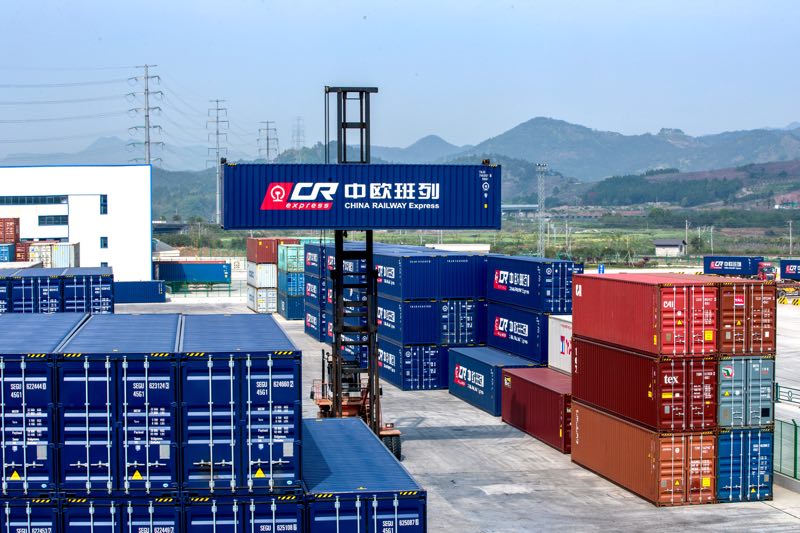
This year, the GACC will continue to be guided by the eight major steps of high-quality Belt and Road cooperation, focusing on participating countries, actively promoting the "Smart Customs" partnership program, and deepening institutional cooperation with partner countries on customs inspection and quarantine. We will continue to strongly support the development of projects such as the China-Europe Railway Express, the New International Land-Sea Trade Corridor, and the Maritime Silk Road, continuously advancing customs clearance facilitation and security, and promoting the deepening and solidification of high-quality BRI cooperation. Thank you.
_ueditor_page_break_tag_Market News International:
Trade tensions between China and the U.S. have escalated recently. What specific impact will this have on China-U.S. trade? Is there a possibility of the two nations decoupling? How will China respond?
Wang Lingjun:
Thank you for your questions. On April 9, the Chinese government released a white paper titled China's Position on Some Issues Concerning China-U.S. Economic and Trade Relations. You may have read this document. This white paper, supported by extensive facts and data, demonstrates that the core of China-U.S. economic and trade relations is mutual benefit. It reflects economic laws at work and possesses strong internal momentum. In the first quarter of this year, despite disruptions and impacts from the U.S. government's reckless and arbitrary tariffs, China-U.S. bilateral trade still grew, reaching a total import and export volume of 1.11 trillion yuan, a 4% increase.
The U.S. has imposed arbitrary tariffs on all trading partners, including China, under various pretexts. As previously noted, this will inevitably have a negative impact on global trade, including China-U.S. trade.
The U.S. side's so-called "reciprocal tariffs" overturn the existing international economic and trade order by prioritizing U.S. interests over the shared interests of the international community. This constitutes typical tariff bullying, represents a serious violation of WTO rules, severely undermines the rules-based multilateral trading system, and significantly destabilizes the global economic order.
There are no winners in a trade war, and protectionism is no path forward. The U.S. government's actions have sparked widespread opposition worldwide. China has taken firm countermeasures and will continue working with all parties to jointly oppose U.S. tariff bullying and hegemonic behavior. It will also work to defend the multilateral trading system and economic globalization. We urge the U.S. side to immediately correct its misguided actions and resolve trade disputes through equal dialogue based on the principle of mutual respect. Thank you.
_ueditor_page_break_tag_Zhonghongwang.com:
I am particularly interested in the export data from China's central and western regions for the first quarter. What are the key factors driving import and export growth in these regions? What role did the first quarter play in sustaining stable growth in the nation's overall import and export performance? Thank you.
Wang Lingjun:
The achievements of the central and western regions in the first quarter are very impressive. Mr. Lyu, could you please comment on this?
Lyu Daliang:
Thank you for your questions. I will now provide a detailed overview of the foreign trade in the central and western regions during the first quarter. In terms of scale, the central and western regions recorded import and export values of 1.84 trillion yuan in the first quarter, marking an impressive 8.7% increase. This growth was primarily driven by four main factors:
First, the foreign trade sector has continued to improve in quality and undergo upgrading. The central and western regions are using technological innovation to drive industrial innovation. They're promoting upgrading, improving quality and enhancing efficiency in traditional industries. In the first quarter, exports of mechanical and electrical products from the central and western regions reached 783.21 billion yuan, up 17.4% year on year. This export growth rate outpaced the national average for similar products by 8.7 percentage points, accounting for 64.7% of the regions' total export value. Among these, exports of automatic data processing equipment and parts, mobile phones, and automobiles grew by 8.4%, 21.4% and 9.3%, respectively.
Second, open ports are facilitating development. Last year, Guanlei Port in Yunnan province and Ezhou Huahu International Airport Port in Hubei province passed opening acceptance inspections, while the Biedieli Port in Xinjiang Uygur autonomous region was approved for operation. The water, land and air transport systems in China's central and western regions have been further enhanced by these developments. I'd like to highlight Ezhou Huahu International Airport, Asia's first professional cargo hub airport and the world's fourth. In the first quarter of this year, customs processed 77,000 metric tons of goods imported and exported through Huahu Airport, marking a fourfold increase. Additionally, Youyiguan Port, or Friendship Pass, at the China-Vietnam border is developing China's first smart cross-border port. Supported by three intelligent platforms, it has reduced cargo inspection waiting time by 20% and quarantine processing time by 3.5 hours. The port is expected to further lower clearance costs and significantly boost efficiency. In the first quarter, Youyiguan Port saw an 18.4% increase in import and export volumes.
Third, progress on major transport corridors is picking up pace. The New International Land-Sea Trade Corridor has achieved seamless land-river-sea connectivity. The China-Europe Trans-Caspian Express has begun operations, while the "Tianfu" cross-border freight truck service to Central Asia is now underway. Together, these developments have established multiple open routes characterized by internal-external synergy and mutual benefits in both directions. In the first quarter, the central and western regions recorded imports and exports worth 187.19 billion yuan via the New International Land-Sea Trade Corridor, representing a 17.3% increase.
Fourth, open cooperation with neighboring countries continues to expand. Border provinces in China's central and western regions have fully capitalized on their geographical advantages by strengthening connectivity and interconnection networks with neighboring countries, while accelerating industrial and supply chain cooperation. In the first quarter, imports and exports between the central and western regions and neighboring countries increased by 7.7%. Among them, imports and exports to Vietnam and Kyrgyzstan increased by 10% and 4.8%, respectively, accounting for 35.6% and 54.8% of China's total trade value with Vietnam and Kyrgyzstan during the same period. Recently, the Central Conference on Work Related to Foreign Affairs with Neighboring Countries was held in Beijing, where it was announced that China will further deepen its open cooperation with its neighbors. Thank you.
_ueditor_page_break_tag_CNBC:
I have two questions. In order to reduce costs, footwear and luggage exporters to the U.S. have said they might shift some of their production capacity from China to other countries. How much do products like shoes account for in China's total exports? What is the difference from that of high-tech products? And what is your outlook on this? My second question is regarding China Customs' recent announcement that it will suspend import permits for Darling Ingredients due to the presence of salmonella. The company said there was no salmonella and that it did not sell many products to China. What is your response to that? Thank you.
Lyu Daliang:
Let me start by answering your first question. Customs statistics are compiled based on the "Harmonized Commodity Description and Coding System," commonly referred to as the HS Code, formulated by the World Customs Organization (WCO). Regarding the products like shoes and high-tech products you mentioned, I am not sure about the specific HS Code range. After the meeting, if you can provide specific commodity codes, we can assist in the inquiry. Of course, you can also conduct self-service inquiries on our website.
Your second question concerns salmonella, an issue that involves food safety. Recently, China Customs detected salmonella in poultry meat and bone meal imported from the U.S., and in accordance with laws and regulations suspended the export permits to China of three enterprises involved. Customs also issued an announcement and informed the relevant U.S. authorities of the non-conforming products. The enterprise you just mentioned is one of these three enterprises. Chinese customs will, as always, strengthen the inspection and quarantine of imported products in strict accordance with laws and regulations to ensure the safety of imports. Thank you.
_ueditor_page_break_tag_China News Service:
This year's "two sessions" emphasized that major economically developed provinces should shoulder greater responsibility in order to successfully accomplish the development targets for the 14th Five-Year Plan. How was the performance of major foreign trade powerhouses in the first quarter of this year? And what are the highlights? Thank you.
Wang Lingjun:
Thank you for your questions. Since the beginning of this year, faced with a severe and complex external environment, major foreign trade provinces and cities have taken on greater responsibilities, leveraged their respective advantages, and played a strong role in supporting and driving economic growth. In the first quarter, the total imports and exports of Guangdong, Jiangsu, Zhejiang, Shanghai, Beijing, Shandong and Fujian reached 7.78 trillion yuan, sustaining the growth momentum, and accounting for three quarters of China's total trade volume. Indeed, they have served as powerhouses assuming major responsibilities. This situation is reflected in three main aspects:
First, they have effectively stabilized the overall foreign trade. Major foreign trade provinces have solid industrial foundations, prominent geographical advantages and vibrant trade entities. In the first quarter, the number of enterprises with substantial import and export achievements reached 422,000, increasing by 6.1%, and accounting for nearly 80% of China's total. At the same time, these provinces have actively expanded international markets, boosting imports and exports with more than 150 countries and regions, with growth rates in 89 countries and regions exceeding the overall level.
Second, they have effectively leveraged their role in inspiring innovation. Major foreign trade provinces have actively cultivated and developed new quality productive forces, accelerating the integration of technological and industrial innovation. In the first quarter, exports of high-tech products by these provinces reached 783.52 billion yuan, up 4.5%, accounting for 71.3% of China's total. Among them, exports of electronic information products, high-end equipment, and biomedicine amounted to 385.71 billion yuan, 236.58 billion yuan, and 30.11 billion yuan respectively, with growth rates of 1.6%, 8.9% and 9.9%, accounting for 66%, 78.4% and 74.8% of China's total.
Third, they have effectively stabilized industrial and supply chains. Major foreign trade provinces imported energy resources, critical components and consumer goods essential to life and production, accounting for a large proportion of China's total imports, and enriching domestic supply. In the first quarter, crude oil and metal ore imported by these provinces accounted for 83.1% and 67.6% of China's total, and imports of electronic components and automatic data processing equipment parts accounted for 78% and 88.1% of China's total. In addition, consumer goods imported by these provinces amounted to 318.42 billion yuan, accounting for more than 80% of China's total. Thank you.
Xing Huina:
We will have one last question.
_ueditor_page_break_tag_National Business Daily:
We have noticed that this year's government work report emphasizes that "we will promote Smart Customs development and cooperation to further simplify customs clearance procedures." Could you introduce the latest progress and the next key plans concerning the development of smart customs? Thank you.
Wang Lingjun:
The government work report has indeed put forward requirements for the development of smart customs for two consecutive years. I would like to invite Mr. Lyu to answer this question.
Lyu Daliang:
Thank you for your question. As Mr. Wang just mentioned, the government work report has made arrangements for the development of smart customs for two consecutive years. Over the past year, taking digital transformation and intelligent upgrade as the main paths, the GACC has on the one hand advanced the reform and innovation of supervision systems and the optimization of procedures and on the other hand has actively introduced cutting-edge technologies such as big data and AI, to promote the comprehensive transformation and upgrading of customs supervision services to ensure safety, facilitation and efficiency at the same time and to fully serve the high-quality development of foreign trade and support high-standard opening up.
At present, we have gradually established a smart customs framework system represented by nine major landmark projects, accelerated the construction, application and replication of various business scenario promotions, and made significant progress in safeguarding national security at the borders, facilitating smooth and convenient customs clearance, and promoting convenience for the people and enterprises.
For example, we have developed and applied intelligent gates for health and quarantine monitoring, integrating multiple functions such as temperature monitoring and infectious disease risk monitoring, providing a new seamless customs clearance experience for inbound and outbound travelers. We have increased the application of intelligent image review technology. By using intelligent models, we have achieved intelligent early warning, automatic targeting and precise interception of risks related to the safe entry and trade control of goods and items. This has reinforced China's border security and become a calling card of Chinese customs in the international customs community. We have implemented the model of remote video inspection for imported copper concentrate transported by rail. This approach ensures quality and safety control while enabling precision cargo sorting, effectively alleviating port congestion, improving customs clearance efficiency, and saving logistics costs for enterprises.
This year, in accordance with the arrangements of the government work report, we will further focus on smart customs development and cooperation.
In terms of development, our goal is to achieve overall integration and basic functionality. We will accelerate the development, implementation and application of various operation scenarios, focusing on integration, promote the transformation and upgrading of customs operations and optimization and the redesigning of procedures. This aims to create a new smart customs clearance experience characterized by "seamless clearance, intelligent supervision, minimal interruption and ubiquitous regulatory services."
In terms of cooperation, we will continue to deepen communication and cooperation with the WTO and WCO. We will continuously promote the development of a global online cooperation platform for smart customs, accelerate the creation of the BRICS Customs Demonstration Center, and facilitate more practical cooperation, contributing ideas and solutions to the modernization of global customs. Thank you.
Xing Huina:
Today's press conference is hereby concluded. Thank you to the speakers and journalists. Goodbye.
Translated and edited by Liao Jiaxin, Mi Xingang, Liu Caiyi, Liu Jianing, Xiang Bin, Yan Xiaoqing, Zhang Rui, Xu Kailin, Wang Qian, Fan Junmei, Huang Shan, Li Huiru, David Ball, and Jay Birbeck. In case of any discrepancy between the English and Chinese texts, the Chinese version is deemed to prevail.

/4 Xing Huina
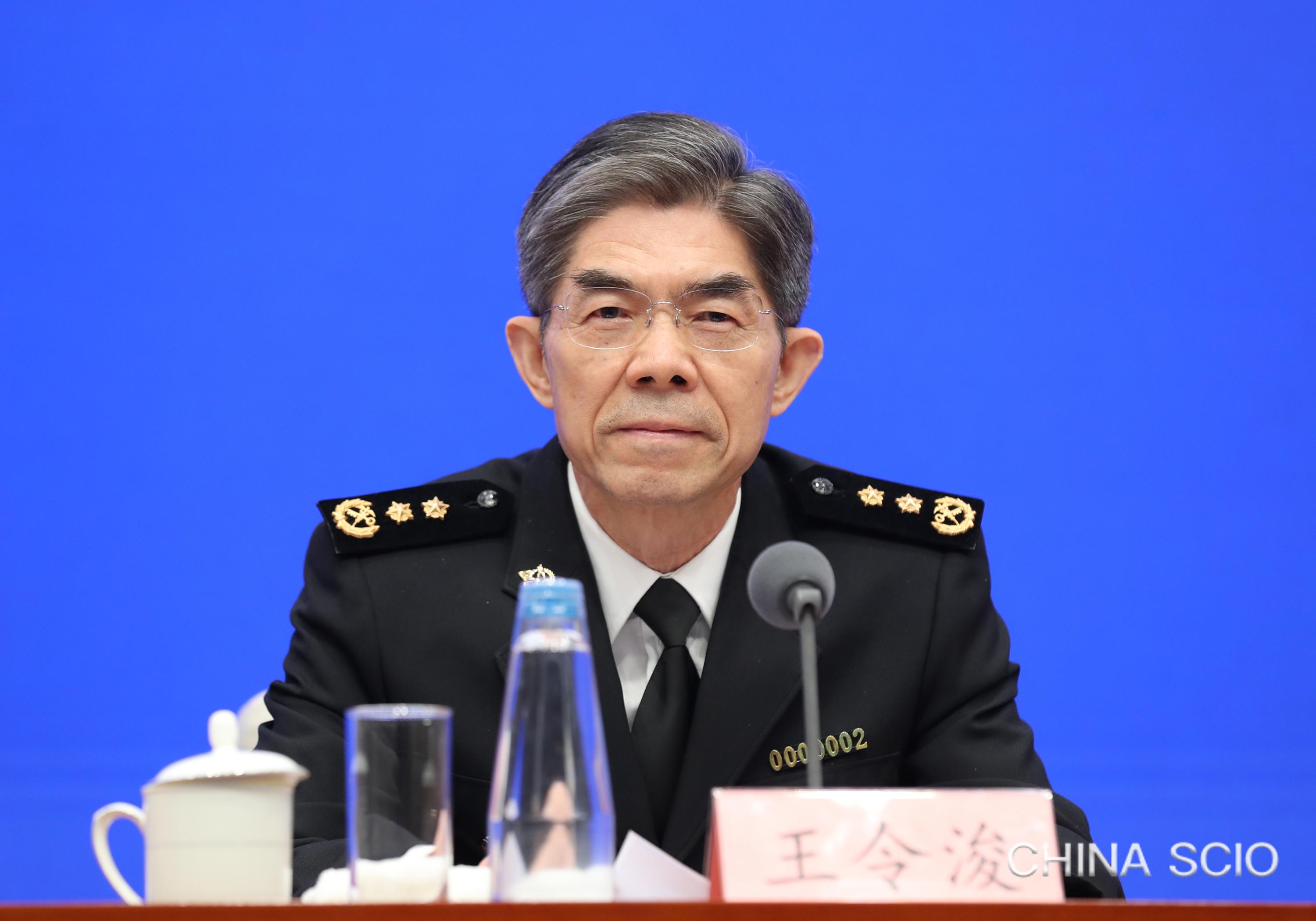
/4 Wang Lingjun
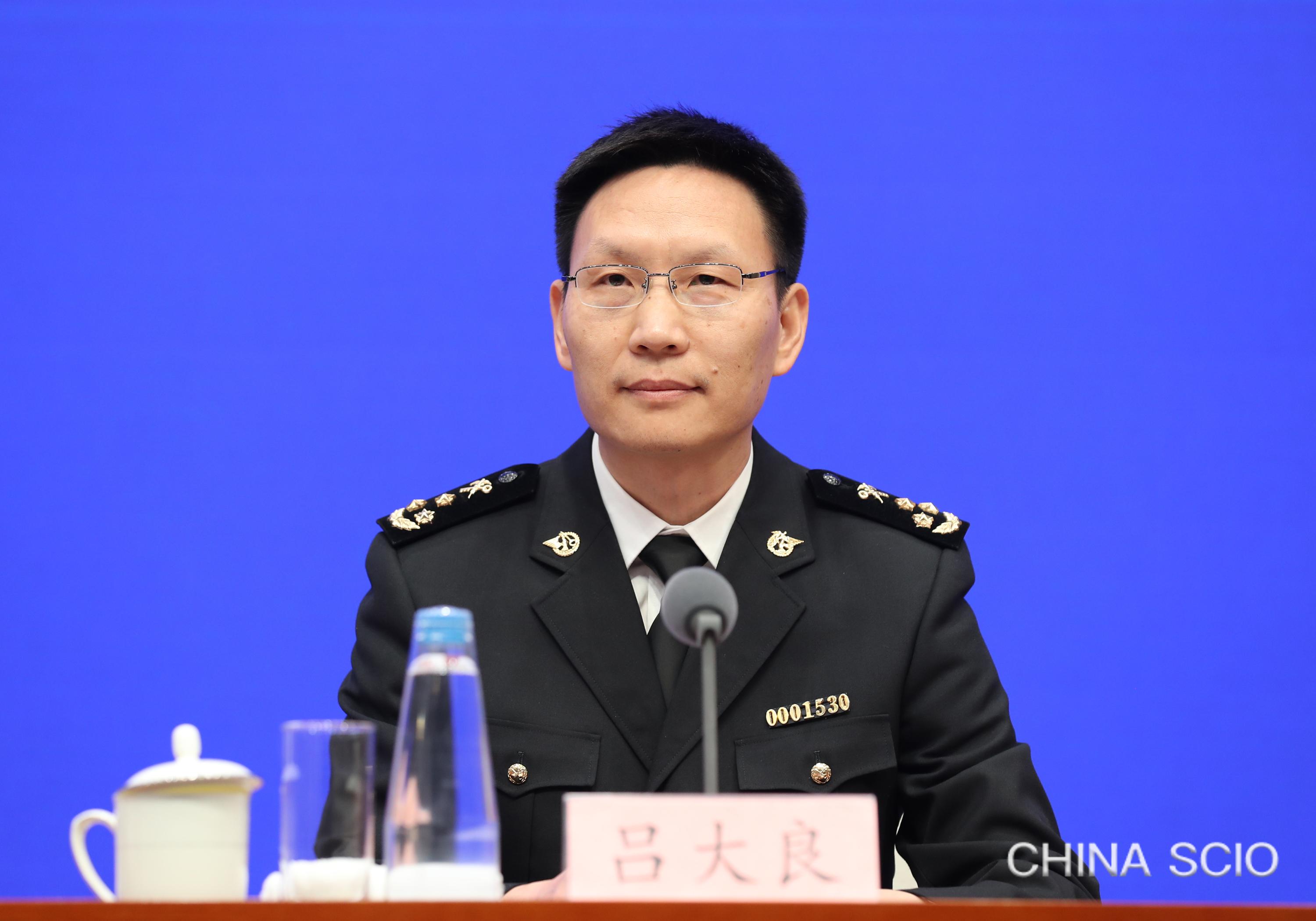
/4 Lyu Daliang
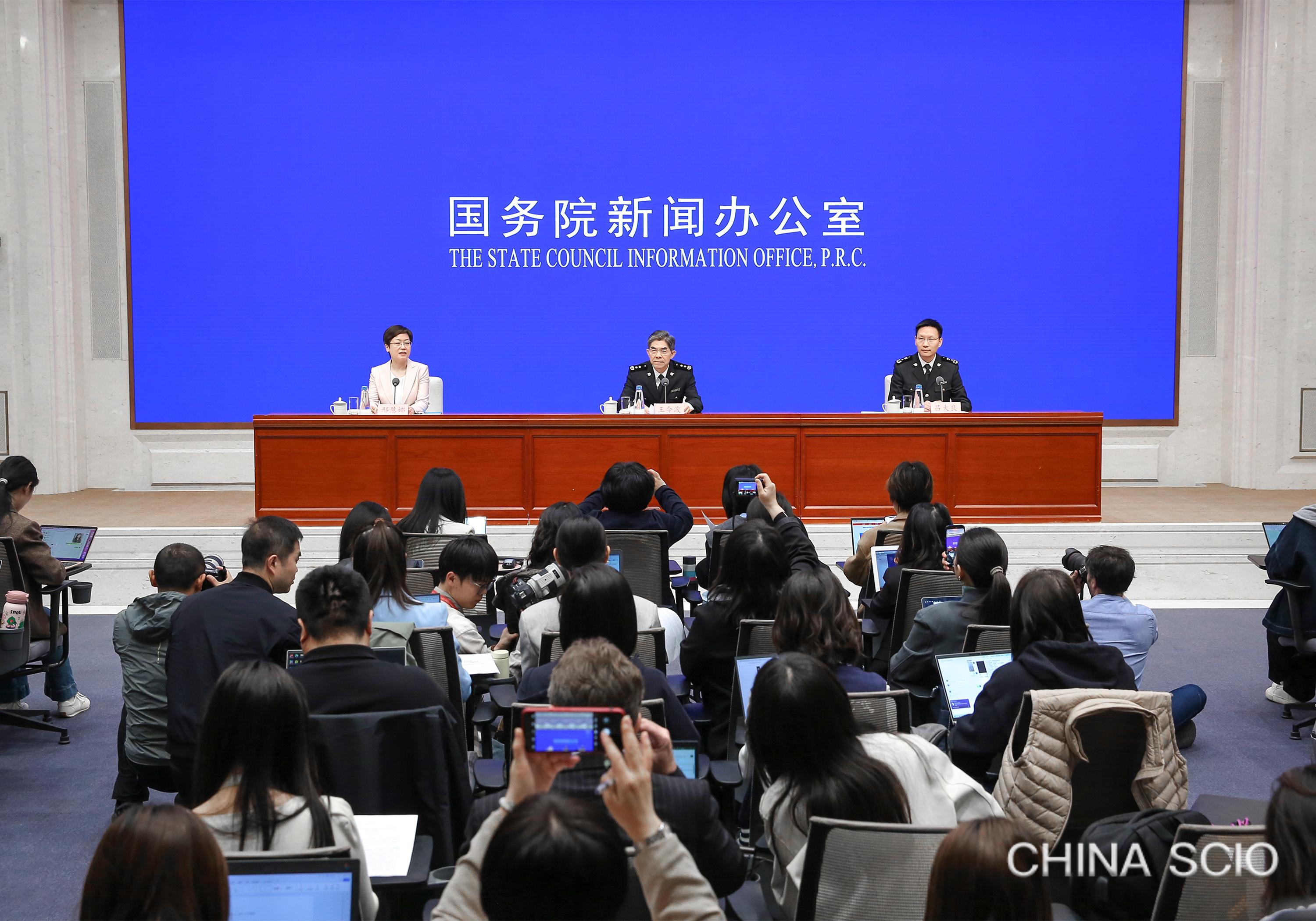
/4 Group photo
SCIO briefing on improving the social credit system
April 2, 2025SCIO briefing on 8th Digital China Summit
March 31, 2025SCIO briefing on white paper 'Human Rights in Xizang in the New Era'
March 28, 2025SCIO briefing on the fifth China International Consumer Products Expo
March 27, 2025