.
Read in Chinese
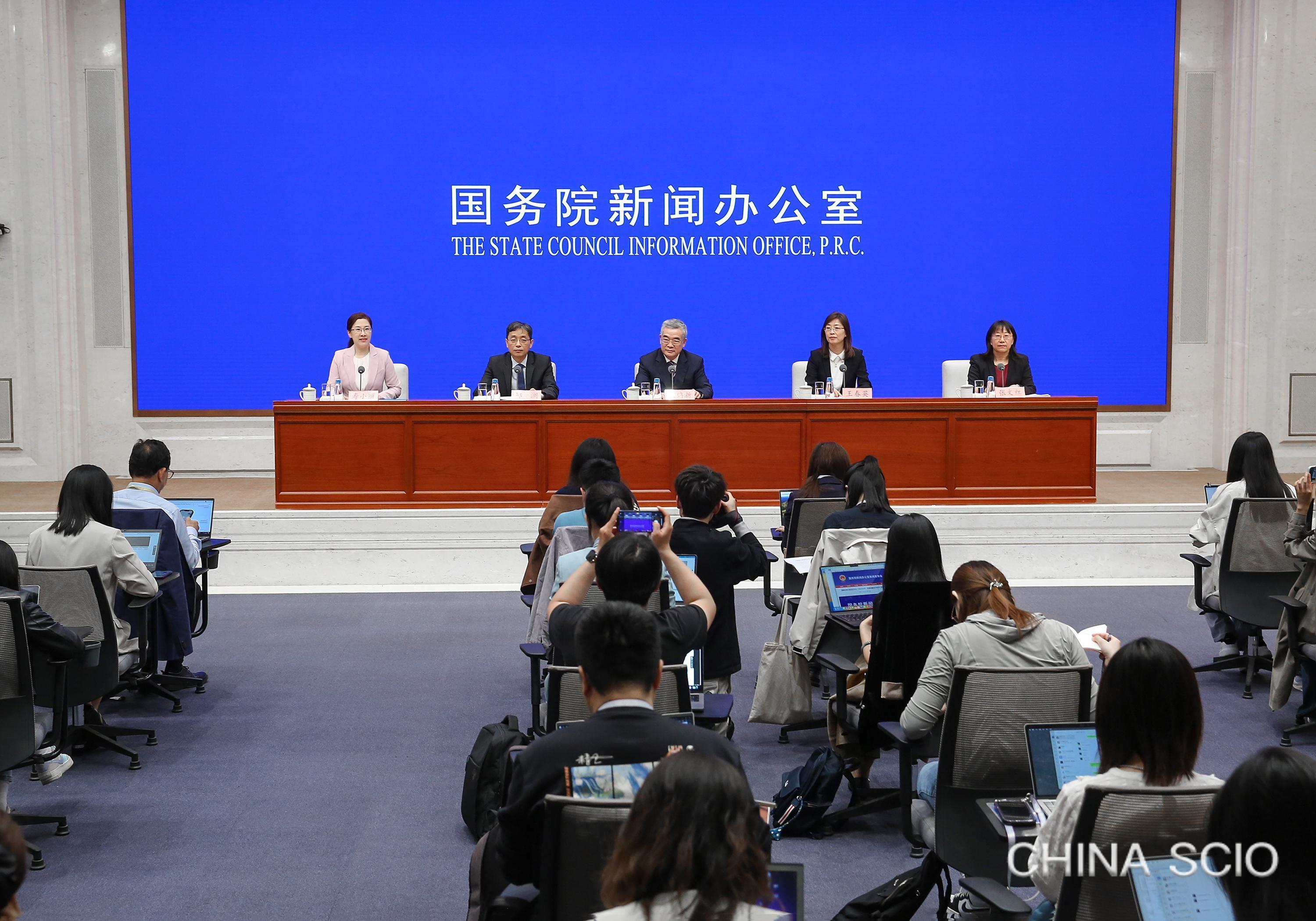
Speakers:
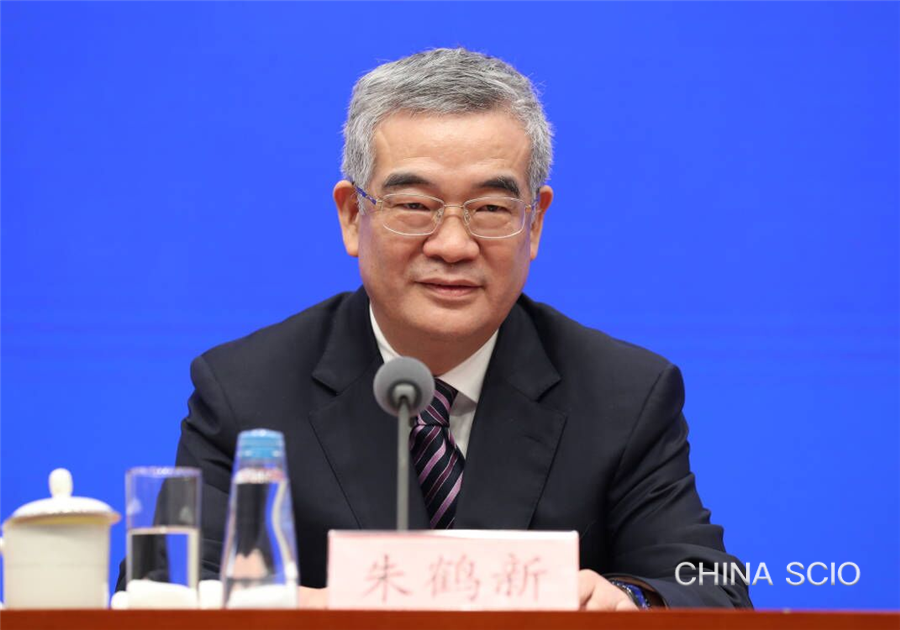
Mr. Zhu Hexin, deputy governor of the People's Bank of China (PBC) and administrator of the State Administration of Foreign Exchange (SAFE)
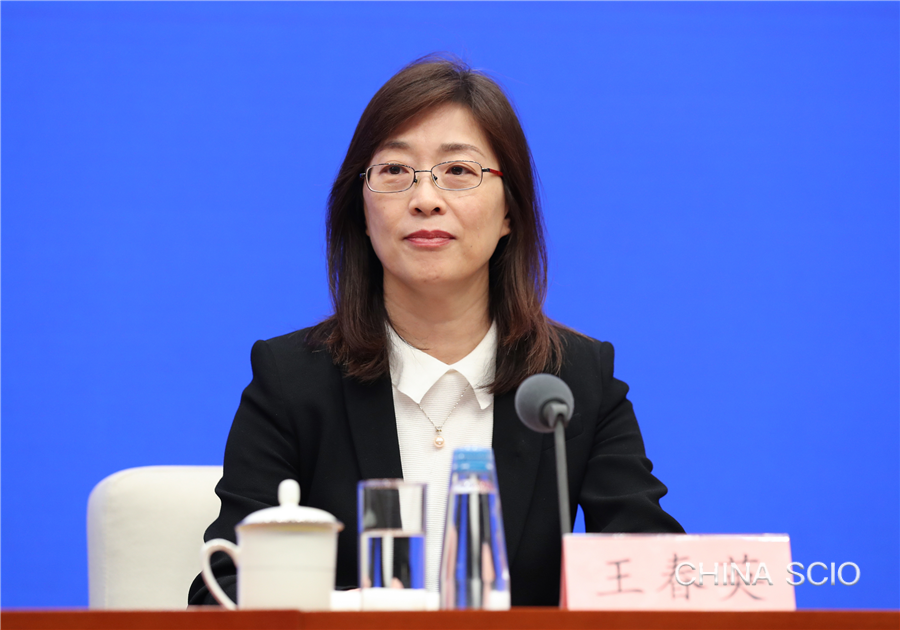
Ms. Wang Chunying, deputy administrator and spokesperson for SAFE
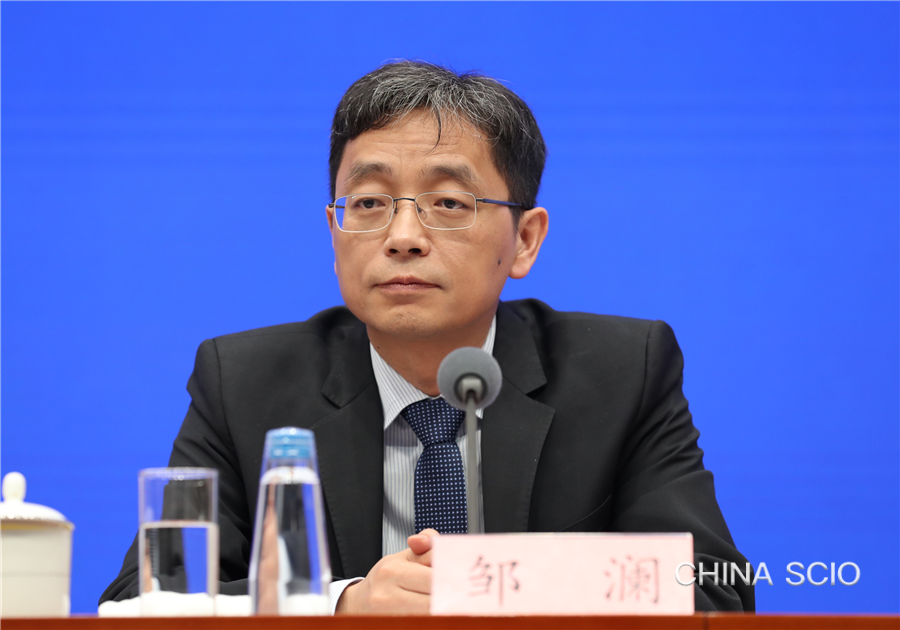
Mr. Zou Lan, director general of the Monetary Policy Department of PBC
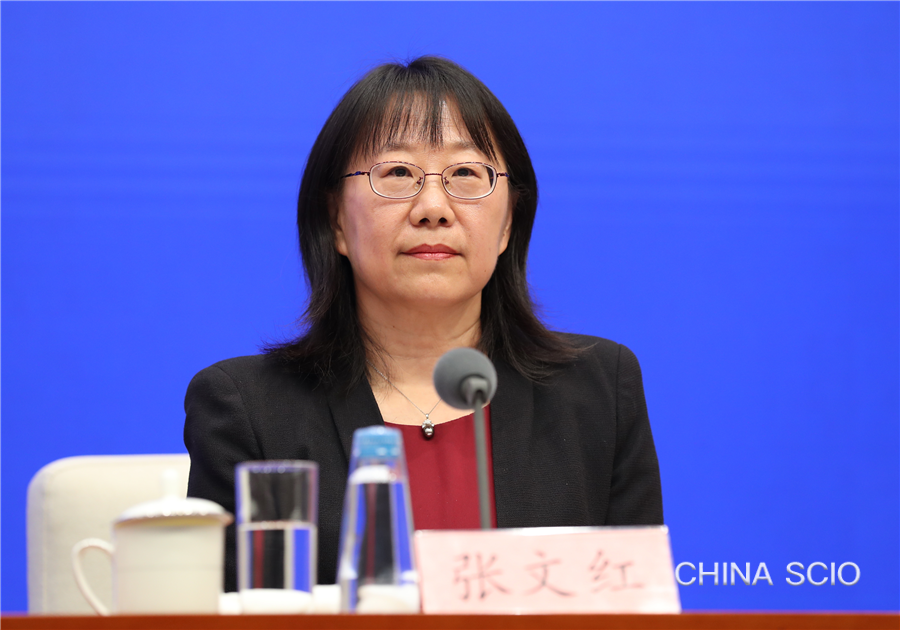
Ms. Zhang Wenhong, a person in charge of the Statistics and Analysis Department of PBC
Chairperson:
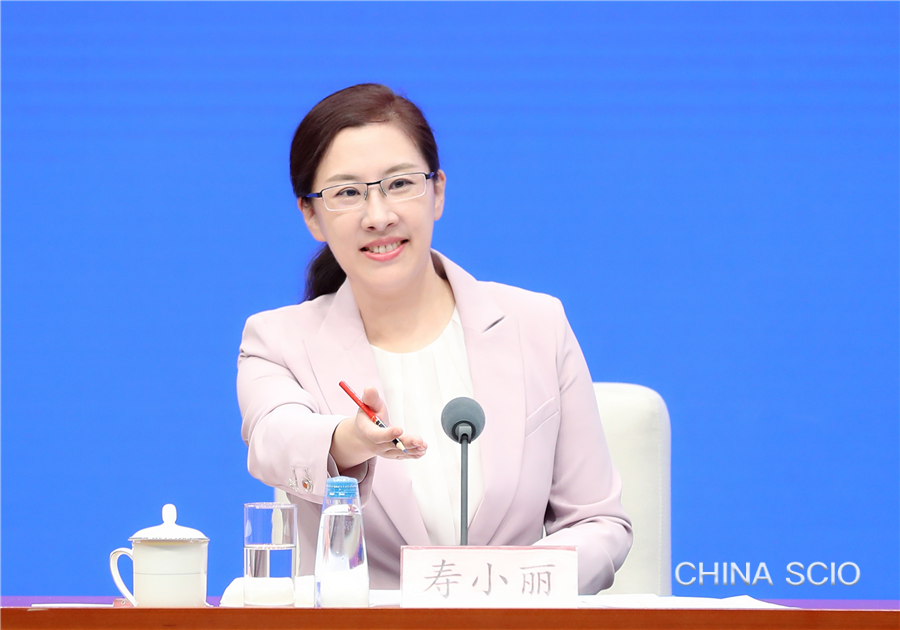
Ms. Shou Xiaoli, deputy director general of the Press Bureau of the State Council Information Office (SCIO) and spokesperson for SCIO
Date:
April 18, 2024
Shou Xiaoli:
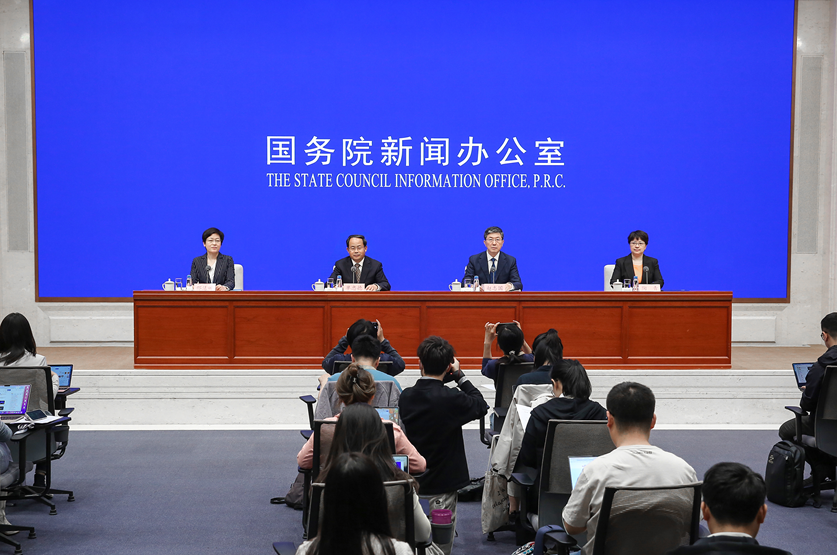
Ladies and gentlemen, good afternoon. Welcome to this press conference held by the State Council Information Office (SCIO). Today, we have invited Mr. Zhu Hexin, deputy governor of the People's Bank of China (PBC) and administrator of the State Administration of Foreign Exchange (SAFE), and Ms. Wang Chunying, deputy administrator and spokesperson for SAFE, to brief us on China's financial performance and foreign exchange receipts and payments data in the first quarter of 2024, and to also take your questions. Also present today are Mr. Zou Lan, director general of the Monetary Policy Department of PBC, and Ms. Zhang Wenhong, a person in charge of the Statistics and Analysis Department of PBC.
Now, I'll give the floor to Mr. Zhu for his introduction.
Zhu Hexin:
Friends from the media, good afternoon. Since the beginning of this year, PBC and SAFE have adhered to the guidance of Xi Jinping Thought on Socialism with Chinese Characteristics for a New Era, and firmly implemented the guiding principles of the Central Economic Work Conference and the Central Financial Work Conference as well as the deployment of the "two sessions" (the annual gatherings of the National People's Congress and the National Committee of the Chinese People's Political Consultative Conference). We have comprehensively applied various policy tools to support the economic recovery. First, we lowered the required reserve ratio by 0.5 percentage points, and released more than 1 trillion yuan of medium- to long-term liquidity, maintaining a reasonably ample liquidity in the banking system. Second, we appropriately cut interest rates, reducing re-lending and re-discount interest rates for the rural sector and small businesses by 0.25 percentage points . We guided the cut of over-five-year loan prime rate (LPR) by 25 basis points , with the decrease exceeding market expectations. Third, 500 billion yuan of Pledged Supplementary Lending (PSL) was issued, supporting three major projects, namely the construction of government-subsidized housing, the building of dual-use public infrastructure that can accommodate emergency needs and the redevelopment of urban villages. Fourth, we launched a 500-billion-yuan re-lending program for scientific and technological innovation and technological transformation, and fully implemented the decisions and deployments made by the CPC Central Committee and the State Council to advance a new round of large-scale equipment upgrading and consumer goods trade-in programs . Fifth, we promoted stable performance of the foreign exchange market. We adopted comprehensive measures to keep the RMB exchange rate basically stable, and enhanced policy support for foreign exchange facilitation in cross-border trade and investment. In addition, we steadily promoted high-level foreign exchange opening up and facilitated the development and reform of foreign exchange business in banks in an orderly manner.
As of now, the policies have yielded notable results, mainly reflected in the following aspects. First, the total finance volume has increased steadily. By the end of March, aggregate financing grew by 8.7%, with an addition of 12.9 trillion yuan in the first quarter. The M2, or broad money, increased by 8.3%, with an addition of 12.5 trillion yuan in the first quarter. The balance of RMB loans grew by 9.6%, with an increase of 9.5 trillion yuan in the first quarter. These figures indicate that the financial sector maintains stable support for the real economy. Second, financing costs experienced a steady decline. In the first quarter, the interest rates on new enterprise loans stood at 3.75%, down by 0.22 percentage points year on year. Particularly, the interest rates on new individual housing loans registered 3.71%, down by 0.46 percentage points year on year. Third, the credit structure continued to improve. By the end of March, loans provided by financial institutions to high-tech manufacturing industries, inclusive loans to micro and small businesses, loans to the rural sector and loans to the private sector grew by 27.3%, 20.3%, 13.5%, and 10.7% year on year, respectively. These rates were all significantly higher than the overall loan growth rate of 9.6%. Fourth, credit maintained a steady pace. In the first quarter of 2023, financial institutions exhibited rapid loan issuance. However, efforts have been made since the second half of last year to guide a balanced distribution of credit, easing the phenomenon of financial institutions rushing to meet deadlines. In the first quarter of this year, the proportion of loan issuance was returning to the historical average level, ensuring ample room for credit growth in the next three quarters. Fifth, the foreign exchange market demonstrated strong resilience. There is considerable focus on the steady increase of RMB against a basket of currencies, with the RMB exchange being stable relative to other global currencies. Additionally, cross-border capital flows were generally balanced, and foreign exchange reserves were generally stable.
Overall, a series of monetary policies introduced earlier are gradually taking effect, leading to a sustained recovery and a good start for the national economy. There is still room for monetary policy adjustment in the future. We will closely monitor the effects of these policies as well as the progress of economic recovery and goal attainment, thereby judiciously utilizing reserve tools as opportunities arise.
Ms. Wang will brief you on specific data regarding foreign exchange receipts and payments in the first quarter of this year.
_ueditor_page_break_tag_
Wang Chunying:
Good afternoon, everyone. Now, I'll brief you on detailed data regarding foreign exchange receipts and payments in the first quarter of 2024. Since the beginning of this year, the external environment has remained complex and fluid, while the Chinese economy maintained recovery momentum. As Mr. Zhu just said, the foreign exchange market demonstrated strong resilience, cross-border capital flows were generally stable and market expectations and transactions remained rational and orderly.
As for specific data, in the first quarter of this year, the cross-border receipts and payments by non-banking sectors stood at $1.6586 trillion and $1.6555 trillion, respectively, resulting in a surplus of $3.1 billion. Foreign exchange settlement and sales by banks registered $542.2 billion and $567.0 billion, respectively, creating a deficit of $24.8 billion . Here are five specific characteristics:
First, cross-border capital posted small amounts of net inflow. In the first quarter, banks registered a surplus in the balance of foreign-related receipts and payments on behalf of clients. Cross-border capital saw net inflow in January and February, however net outflow occurred in March. This result can be attributed to seasonal factors. In particular, after the Spring Festival, foreign trade enterprises resumed production and procured raw materials in large amounts. Driven by increasing demand for payments for imports, cross-border payments rose. Although, cross-border receipts are expected to grow after products are exported.
Second, banks saw a small deficit in foreign exchange settlement and sale business. In the first quarter, the monthly average deficit reached $8.3 billion. The bank foreign exchange settlement on behalf of clients decreased by 3% year on year; and foreign exchange sales were almost the same as for the same period in 2023. Currently, enterprises enjoy greater convenience in accessing RMB funds and there are more diverse channels. For example, through a type of foreign exchange swap, enterprises can convert part of foreign capital into RMB for use and agree to convert it back in the future, to replace and reduce a portion of foreign exchange settlement for the current period.
Third, the foreign exchange settlement ratio and the foreign exchange sales rate both fell but were generally stable. Enterprises showed reasonable willingness in foreign exchange settlement and sales. In the first quarter, the foreign exchange settlement ratio, a measure of customers' willingness to settle foreign exchange, stood at 62.2%, a slight fall of 1.6 percentage points year on year, showing somewhat weakened demand; and the foreign exchange sales rate, a measure of customers' willingness to buy foreign exchange, stood at 66.5%, down 1.8 percentage points, showing that the willingness to buy foreign exchange did not continue to rise. In recent years, domestic entities gradually got used to the two-way fluctuations of RMB exchange rates, with expectations for forex rates being more stable. Enterprises' foreign exchange settlement and sales mainly depend on actual demand. Foreign exchange transactions have become substantially more reasonable.
Fourth, the scale of forex derivative transactions continued to expand. Business entities' awareness of exchange rate risk neutrality continued to improve. In the first quarter, enterprises managed exchange rate risks through forex derivatives, including forwards, swaps and options, to the amount of $395.8 billion, up 23% year on year; and the proportion of enterprises conducting hedging operations was 28.1%, up 3.2 percentage points from the same period in 2023. In January and February, more than 5,000 enterprises received forex rate risk hedging services for the first time.
Fifth, the volume of China's foreign exchange reserves remained basically stable. As of the end of March, China's forex reserves reached $3.2457 trillion, a $7.7 billion increase from the end of 2023. The increase is mainly influenced by changes in forex rates and asset prices along with other factors impacting the valuation.
That is all from me on forex receipts and payments in the first quarter of 2024.
_ueditor_page_break_tag_
Shou Xiaoli:
Thank you both for your introductions. Now the floor is open for questions. Please identify the news outlet you work for before asking your question.
CCTV:
My questions are concerning the vitality of business entities. In order to invigorate business entities, this year's government work report came up with an array of arrangements. What concrete measures have been taken to provide convenient financing services for business entities? And what specific results have been achieved so far? Thank you.
Zhu Hexin:
Thank you for your questions. They are good ones. Financial institutions and financial policies all aim to serve the real economy and the healthy development of business entities. General Secretary Xi Jinping pointed out that the financial sector should insist on its fundamental purpose of supporting the real economy. To examine the effectiveness of financial support for the real economy, we should understand how convenient it is to access financial services and how satisfied business entities are with the services. Operating in China's super large economy, business entities should better leverage the domestic and international markets and resources. Since the beginning of this year, the PBC and SAFE have earnestly implemented the decisions and arrangements of the CPC Central Committee and the State Council, insisted on serving the real economy as the fundamental purpose, and focused on improving convenience of services for business entities, making efforts and achieving remarkable results in the following aspects:
First, streamlining government administration, delegating power and continuing to improve the business environment. We made headway in optimizing approval procedures, reformed 10 items related to enterprise business licenses, amended regulations and normative documents, and implemented the notification and commitment system for certain administrative approval items. We improved services regarding changes to basic accounts and cancellation of bank accounts, and promoted one-stop government services. Also, we further improved government transparency and emphasized the need to fully listen to the ideas of business entities while collecting suggestions for policy making.
Second, focusing on private and micro, small and medium enterprises and clearing the way for channeling funds into the real economy. In terms of loans, we fully exerted the roles of refinancing, rediscounts and instruments that support inclusive loans to micro and small businesses. We guided financial institutions to increase loans to private and micro, small and medium enterprises to reduce their financing costs. Related data was introduced in the opening remarks. In general, the growth of loans to private businesses and micro and small businesses were both noticeably higher than the average growth of all kinds of loans. In terms of debts, we removed obstacles so enterprises can issue bonds for financing smoothly, and more corporate bonds were issued. In the first quarter of this year, more than 3.65 trillion yuan of debenture bonds were issued, up 3.5% year on year. As of the end of March, instruments supporting private enterprises in bond financing had supported 143 private businesses in issuing more than 251.5 billion yuan of bonds. There are large numbers of micro and small businesses and private enterprises, and they use a lot of bills. In this regard, we optimized the bill business and related functions to help enterprises accelerate capital turnover and ease the pressure caused by invested funds. In the first quarter, more than 144,000 micro, small and medium enterprises issued bills, accounting for 93.2% of all enterprises that issued bills; and 169,000 micro, small and medium enterprises went through bills discounted transactions, accounting for 96.5% of all enterprises conducting such transactions.
Zhu Hexin:
Third, integrating efforts in both domestic and foreign currencies, and facilitating cross-border trade and investment. Cross-border RMB transactions continue to become more convenient. We have introduced a range of supportive policies for cross-border RMB transactions, including initiatives to stabilize foreign trade and investment, foster innovative offshore trade practices, facilitate new forms of foreign trade, and digitize capital account transactions. At the same time, we are advancing pilot projects for integrated domestic and foreign currency fund pools in an orderly manner. In the first quarter, nearly 30% of China's cross-border settlements for goods trade were conducted in RMB. For four consecutive months, the RMB has held its position as the fourth global payment currency. Notably, data from the Society for Worldwide Interbank Financial Telecommunication (SWIFT) indicates a further increase in the share of RMB, reaching nearly 4.7%.
Measures aimed at easing foreign exchange transactions have yielded significant results. Specifically, they involve optimizing the processing of foreign exchange receipts and payments in trade. We guide prudent and compliant banks to provide more convenience for high-quality enterprises regarding their forex receipts and payments in trade. In the first quarter, transactions totaling over $300 billion were facilitated through streamlined procedures. Recently, we have introduced six policy measures to enhance the registration and management of foreign trade enterprise directories and simplify trade-related receipts and payments procedures for companies operating within special customs supervision zones. Notably, the registration and management of directories of enterprises involved in trade-related forex receipts and payments, previously requiring the approval from SAFE, are now handled by banks directly, further optimizing foreign exchange procedures for foreign trade enterprises. According to our tally, more than 100,000 business entities are set to be benefited.
We have enhanced the pilot programs for advancing high-quality openness in cross-border trade and investment. Based on the insights gained from previous pilot projects in four regions, we have broadened the scope to include Shanghai, Jiangsu, Guangdong (including Shenzhen), Beijing, Zhejiang (including Ningbo) and the entirety of Hainan province. This expansion is aimed at further streamlining foreign exchange receipts and payments, reducing administrative burdens, cutting paperwork, lowering costs and boosting efficiency for businesses. In the first quarter, transactions totaling nearly $80 billion were processed under the pilot initiative.
We have supported the development of new formats and models in trade. Banks and payment institutions are encouraged to process trade settlements based on electronic transaction information from new business models like cross-border e-commerce. In the first quarter, a total of 230 million related transactions were processed, involving over 1.2 million small and micro businesses.
We have conducted reforms in bank forex business in an orderly manner. This involved redesigning forex business procedures in banks, resulting in a 50%-75% average time reduction in facilitated forex transactions.
Furthermore, we have strengthened promotion of the concept of exchange rate risk neutrality and updated the guidelines for enterprise exchange rate risk management. We have supported enterprises, especially micro, small and medium enterprises, in managing exchange rate risks more effectively. In the first quarter, the proportion of forex derivative transactions in bank-client transactions reached nearly 30%, representing an increase of 3.9 percentage points from the previous year.
Next, the PBC and SAFE will continue raising the quality and standards of financial services. We will intensify policy evaluation and follow-up efforts to ensure that our policies are effective. Our aim is to assess the impact of various policies during implementation, ensuring that they truly empower businesses, enhance their competitiveness, and ultimately guarantee that the policies are translated into action to benefit enterprises and individuals and fully unleash the innate drive and vitality of diverse business entities, supporting high-quality economic development. Thank you.
_ueditor_page_break_tag_
21st Century Business Herald:
How does the PBC view the M2 balance surpassing 300 trillion yuan at the end of March? What are the PBC's plans for addressing the issue of funds sitting idle or simply circulating within the financial sector? Regarding inflated balance sheets, what measures will the PBC take to curb this trend?
Zou Lan:
I will answer your questions. The broad money supply (M2) balance has now surpassed 300 trillion yuan, reflecting sustained financial support for the growth of the real economy in recent years. China has experienced prolonged periods of rapid economic growth, resulting in continuously expanding economic size and quickly accumulating enterprises capital and residents assets. These changes have fueled increased demand for money. Corresponding to the stage of economic development, China has sustained a prolonged period of rapid, double-digit growth of monetary and credit supply, fostering an environment conducive to economic development. During the three years of the pandemic in particular, in order to stabilize the overall economy, the financial sector intensified its efforts in counter-cyclical adjustments. Overall, the current stock of money is indeed substantial.
China is currently accelerating its economic restructuring, transformation, and upgrading. There have been significant changes in the supply-demand relationship in the real estate sector, and efforts have been strengthened to prevent and control local government debt risks. The economy continues to go light, with credit demand showing signs of weakening compared to previous years, and the credit structure undergoing optimization and upgrading. However, relevant parties are still going through a process of understanding and adaptation to these changes. Some banks remain fixated on pursuing a scale-driven operating model and internal assessments, exceeding the genuine financing needs of the real economy. Additionally, some enterprises, capitalizing on their advantageous positions, utilize low-cost loans for investment in wealth management products and fixed-term deposits or relend to other enterprises. Consequently, their primary business operations fail to generate profits, and financial activities become their main source of income, resulting in funds sitting idle or simply circulating within the financial sector, thereby reducing fund utilization efficiency. In response, this year's government work report timely proposed measures to "prevent funds from sitting idle or simply circulating within the financial sector."
Relevant departments will strengthen efforts to monitor the phenomenon of funds simply circulating within the financial sector and improve management assessment mechanisms. In the future, as the economy undergoes transformation and upgrading, effective demand recovers and social expectations improve, the phenomenon of funds sitting idle or simply circulating within the financial sector will also be alleviated. The current rapid growth in the total money supply may slow down, leading to some disturbances in the data, making it inappropriate for simple year-on-year comparisons. However, this does not imply a reduction in the intensity of financial support for the real economy. Instead, efficient enterprises in genuine need of funds will receive more financing, reflecting an enhancement in the quality and effectiveness of financial support. Thank you for your questions.
_ueditor_page_break_tag_
CNBC:
The decline in social financing at the beginning of the year has raised concern among analysts about weak demand. What is the PBC's view of this? Thank you.
Zhang Wenhong:
I will answer this question. Thank you for your question. As Mr. Zhu mentioned earlier, aggregate financing stood at 390.32 trillion yuan by the end of March, representing an 8.7% increase year on year. This growth rate was 0.3 percentage points lower than the end of previous month. Social financing in the first quarter increased by 12.93 trillion yuan, 1.61 trillion yuan lower than the same period in 2023, primarily due to a high base last year. However, looking at data from the same period in previous years, the increase in social financing in the first quarter of this year was still at a relatively high level. From a structural perspective, there are four main features:
First, credit supply remained steady, with financial institutions maintaining a reasonable growth in RMB loans issuance to the real economy. In the first quarter, RMB loans issued by financial institutions to the real economy increased by 9.11 trillion yuan, which was 1.59 trillion yuan less than in 2023, but 773 billion yuan more than in 2022.
Second, financing through issuance of government bonds remained at a reasonable scale. In the first quarter, net financing through issuance of government bonds reached 1.36 trillion yuan. Although the increase narrowed slightly compared with the previous year, it was roughly in line with the average for the same period from 2020 to 2023.
Third, debt financing by enterprises experienced growth. In the first quarter, net debt financing by enterprises was 1.12 trillion yuan, up by 255.1 billion yuan year on year.
Fourth, off-balance-sheet financing, such as trust loans and undiscounted bankers' acceptance bills, also increased year on year. In the first quarter, trust loans and undiscounted bankers' acceptance bills increased by 198.3 billion yuan and 550 billion yuan, respectively, with respective year-on-year growth of 202.4 billion yuan and 81.4 billion yuan.
Overall, the social financing scale growth in the first quarter basically aligned with this year's projected economic growth and CPI increase. Achieving a growth rate of 8.7% on a high base from last year was actually quite robust. Moreover, this year, the PBC has emphasized guiding financial institutions to ensure balanced credit growth. Although there was a slight year-on-year decline in the first quarter in the increase of aggregate financing, it was still at a relatively high historical level, which has bolstered the real economy while enhancing the sustainability of credit growth by avoiding a lack of momentum at excessively high levels. Thank you.
_ueditor_page_break_tag_
Securities Times:
Since the fourth quarter of last year, foreign institutions have started to significantly increase their holdings of Chinese domestic bonds. Can you introduce the specific situation? And what is the outlook for foreign investors in the Chinese bond market? Thank you.
Wang Chunying:
Thank you for your questions. Regarding the increase of recent foreign capital inflows into Chinese domestic bonds, I would like to share the following points:
First, the scale of investment has increased significantly. Last year, the net increase in foreign bond holdings was $23 billion, while in the first quarter of this year, it already reached $41.6 billion. As of the end of March, over 1,129 foreign institutions from over 70 countries and regions had entered the Chinese bond market, with their bond holdings surpassing $570 billion, accounting for approximately 2.6% of the total domestic bond custody, up 0.2 percentage points from late last year. Second, the investment structure remains reasonable. The holding entities, including foreign central banks and financial institutions like banks, increased their holdings of China's domestic bonds in an orderly manner, especially medium- to long-term bonds such as government bonds and policy financial bonds. Our statistics show that between October last year and March this year, foreign investment in bonds with a term of over one year accounted for 56% of the total. Third, the investment yields remain stable.
Looking ahead, the trend of foreign institutions' investment in China's domestic bonds is likely to maintain steady growth. I would like to elaborate on a few aspects.
From an economic perspective, first, the macro environment provides support. The underlying trend of long-term economic growth remains unchanged, with various macro policies providing momentum for continued domestic economic recovery, offering foreign investors a sound macroeconomic environment. Second, the investment value is assured. The RMB exchange rate remains stable, and RMB assets have shown unique returns compared to global assets, helping investors diversify risk. Additionally, China's bond market is the second largest in the world, is growing in terms of breadth and depth, and has strong liquidity, which enhances the investment value of RMB bonds. Third, there is demand for global allocation. The use of RMB in global cross-border transactions has been steadily increasing. Mr. Zhu already shared the latest figures. The increasing international influence of RMB makes RMB assets an important choice for foreign investors' global portfolios.
From a policy perspective, the PBC and SAFE will continue to pursue market-oriented, law-based and internationalized development, steadily expanding the opening-up of China's bond market, and facilitating the participation of foreign investors. We are currently working on the following areas. First, we are opening repurchase operations to more foreign institutions, enriching liquidity management tools for foreign investors. Second, we continue to promote the domestic RMB bonds in offshore markets as widely accepted and qualified collateral. Earlier this year, bonds under the Bond Connect program were allowed as the eligible collateral for the RMB liquidity facility. We are also exploring additional scenarios, such as using bonds under Bond Connect as margin for Swap Connect. Third, we are optimizing the mechanisms for overseas institution's direct market entry, Bond Connect and Swap Connect, while continuing to enhance communication and exchange with foreign institutions, creating a better investment environment. Overall, China has continued to improve the institutional opening-up of the financial market, optimized the investment environment and refined services. Foreign capital investing in China's bond market has stable and sustainable room for improvement. Thank you.
_ueditor_page_break_tag_
Cover News:
The current account has always played an active role in stabilizing China's balance of payments and the foreign exchange market. What is your judgment on the future development trends of China's current account? Thank you.
Wang Chunying:
Thank you for your question. Your question is also our concern. Current account transactions are closely linked to the real economy. The balance of trade in goods and services under the current account is directly involved in national accounts and plays an important role in maintaining the balance of payments.
Based on the situation in the first quarter of this year, the current account surplus remains within a reasonable and balanced range. According to preliminary statistics, the trade surplus in goods and services exceeded US$60 billion in the first quarter, which for the same period in history is at a relatively high level. With this support, the current account had a remaining surplus in this year's first quarter.
Looking ahead, China's current account has the foundation and conditions to sustain a certain scale of reasonable surplus. We would like to analyze it in the following areas:
First, the trade surplus in goods will remain at a relatively high level. We believe there are two supporting factors. On the one hand, there is structural support, and on the other hand, there is support from cyclical factors. First, there are new growth drivers in exports. With the transformation and upgrading of China's industries, the performance of export with high-end manufacturing products, new energy vehicles, etc. has been very impressive this year. Another feature is our trade methods. New trade models such as cross-border e-commerce, market procurement and other new trade formats continue to expand. In addition, the performance of traditional export markets is relatively stable. At the same time, emerging markets along the Belt and Road are rapidly expanding, and our trading partners are more diversified. From the perspective of cyclical factors, the current demand for increasing inventories in developed economies such as the United States has begun to arise, and the global electronic product consumption cycle has bottomed out. These will further boost exports of various Chinese products.
Second, the structure of trade in services has been optimized, and the role of trade in producer services has become more prominent. Travel is an important component in trade- in services. As residents' cross-border activities resume, cross-border travel expenditure is recovering on a regular basis. On the other hand, China has already adopted a visa-free policy for many countries. At the same time, the PBC, the SAFE, among other departments, are promoting more convenient payment services for overseas visitors, a move that is expected to incentivize increased inbound tourism. In the first quarter of this year, China's travel revenue increased by about 30% year-on-year, and it is expected to continue to maintain an upward momentum. More importantly, in recent years, trade in services has developed with high quality, and exports of producer services have increased steadily. Last year, China's trade surplus in telecommunications, computer, information services and commercial services totaled US$57.2 billion, which was a historic high. It has continued to grow in the first quarter of this year. This will also help the balance of trade in services.
In the medium to long term, the trajectory of a country's current account is shaped by its economic structure and the caliber of its manufacturing sector. First, the current account reflects the relationship between savings and investment. At present, China's savings rate is at a relatively high level. It is anticipated that the positive disparity between savings and investment rates will persist, fostering a reasonable surplus in the current account. Second, as China's manufacturing industry is undergoing transformation, upgrading and high-quality development, it will gradually enhance the competitiveness of our products. This shift is expected to reduce reliance on some imported products, underpinning a stable medium- to long-term outlook for the current account, which encompasses trade in goods. We believe that China's current account is well-positioned to maintain a reasonable surplus moving forward. Thank you.
_ueditor_page_break_tag_
Bloomberg:
The yuan has experienced sustained pressure against the U.S. dollar this year. Despite recent data indicating a pick-up in China's economic momentum, the currency continues to grapple with a range of unfavorable external influences. How do you foresee the yuan exchange rate performance in the second quarter and what steps might the central bank take to maintain a stable exchange rate for the yuan? Thank you.
Zhu Hexin:
Thank you for your questions. As Ms. Wang Chunying said during her introduction, the RMB exchange rate has remained generally stable recently. Since the beginning of this year, as we all know, the market's expectations for a shift in the U.S. Federal Reserve's monetary policy have been recurring. The dollar index recently reached its highest point of over 106, which is a high in the past six months. The turmoil in the international financial market has intensified. Everyone has also noticed that major currencies such as the Japanese yen, euro, and British pound as well as some other emerging market currencies have experienced growing fluctuations. Affected by external shocks, the exchange rate of the RMB against the U.S. dollar has fluctuated. In fact, the RMB against a basket of currencies has remained stable, and there is still a certain appreciation on the basis of stability. As of the end of March, the CFETS (China Foreign Exchange Trade System) RMB Index was at 99.78, an increase of 2.4% compared with the end of the previous year.
The PBC and SAFE are committed to maintaining the basic stability of the RMB exchange rate, and their objective and determination will not change. The RMB exchange rate has a solid foundation and conditions to remain basically stable. The stability of the exchange rate is closely related to the economic situation. In the first quarter, the economy showed signs of recovery and improvement, reflecting the quality of our economic development and international competitiveness. In the short term, the economy had a good start in the first quarter, improving in multiple areas and accumulating positive factors. This effectively offsets external disturbances and provides support for the RMB exchange rate. Meanwhile, the maturity of our foreign exchange market continues to improve, and its resilience is increasing, which means that the trend of the RMB exchange rate will fluctuate in both directions and maintain relative balance. Looking at the medium and long term, there are even more supporting factors. China's economy has entered a stage of high-quality development, achieving balance in international payments. The depth and breadth of the foreign exchange market will further expand, and risk-neutral awareness among market participants will significantly increase. Our research shows that the risk aversion awareness of market participants is constantly strengthening, their ability to manage exchange rate risks using forex derivatives is improving, and cross-border use of the RMB is steadily growing. The basic stability of the RMB exchange rate has solid macro and micro foundations. We have the confidence, conditions and capabilities to maintain the stable operation of the foreign exchange market.
The PBC and SAFE will adopt a China-centric approach, considering both internal and external balance. We will adhere to a managed floating exchange rate system based on market supply and demand, with reference to a basket of currencies for adjustment. We will emphasize the decisive role of the market in determining the exchange rate while continuing to implement comprehensive policies and stabilize expectations. We will closely monitor changes in the foreign exchange market, firmly correct pro-cyclical behaviors, prevent the formation of one-sided expectations and self-reinforcement in the market, and guard against the risk of exchange rate overshooting. We will maintain the RMB exchange rate at a reasonable and balanced level. Thank you for your questions.
_ueditor_page_break_tag_
Economic Daily:
The Central Financial Work Conference proposed focusing on accomplishing the "Five Major Tasks" and clarifying the future development direction of the financial sector. Could you please clarify what specific new deployments are you referring to? And what are your considerations in the next stage?
Zhu Hexin:
Thank you for your questions. I will answer them. The "Five Major Tasks" have garnered significant attention and high expectations. They are also important measures to implement the directives of the Central Financial Work Conference, and the PBC and SAFE are making every effort to promote them.
The Central Financial Work Conference emphasizes the importance of excelling in technology finance, green finance, pension finance, inclusive finance and digital finance. We refer to these as the "Five Major Tasks," which provide high-quality financial services for socio-economic development. Since the beginning of this year, the PBC has fully implemented the decisions and arrangements of the CPC Central Committee and the State Council. We have pursued a prudent and moderately flexible monetary policy, effectively and precisely leveraging monetary policy tools to address both overall and structural concerns. We have diligently carried out the "Five Major Tasks" and guided financial institutions to increase support for these tasks, as well as key areas and weak links of the national economy, such as the private sector. I would like now to share a set of data with everyone. The credit structure continues to be optimized, with credit growth maintaining a relatively high level. The availability of financing has significantly improved, and financing costs have remained stable with a downward trend. As of the end of March, the year-on-year growth rates for loans in high-tech manufacturing, loans for technology-oriented small and medium-sized enterprises, loans for inclusive small and micro businesses, loans for agriculture-related activities and loans for the private economy were 27.3%, 20.4%, 20.3%, 13.5% and 10.7%, respectively. By the end of 2023, the growth rate of green loans was even higher at 36.5%, significantly surpassing the overall loan growth rate. As mentioned earlier, the overall loan growth rate was 9.6%. The loan approval rate for technology-oriented small and medium-sized enterprises reached 47.9%, more than double the rate in 2017. The number of credit beneficiaries in the inclusive small and micro business sector has exceeded 60 million. In March, the weighted average interest rate for new inclusive small and micro business loans was 4.36%, reaching a historic low.
With the approval of the central government, the PBC established a credit market department to take the lead in promoting the work of the "Five Major Tasks." Next, we will increase support from various aspects, including policy frameworks, incentives, constraints and the development of financial service capabilities.
First, we will strengthen top-level design and systematic planning to promote the formation of a "1+5" policy framework. The "1" refers to the overall institutional design, while the "5" represents the respective measures of the "Five Major Tasks." We will work together with relevant departments to clarify the work goals, key tasks and implementation pathways. On one hand, we will ensure the effective implementation of policies that have already been introduced. Previously, we, along with relevant departments, issued policies such as the Action Plan to Increase Support for Financing of Technology-oriented Enterprises and the 25 measures to boost financial support for private firms. Recently, the PBC, in collaboration with the National Development and Reform Commission (NDRC) and six other departments, issued the Guiding Opinions on Further Strengthening Financial Support for Green and Low-Carbon Development . On the other hand, while three of the "Five Major Tasks" already have a certain foundation, efforts are being intensified to promote the remaining two tasks, namely, pension finance and digital finance. This will contribute to making the institutional design of the "Five Major Tasks" more robust and the policy framework more solid.
Second, policies alone are not enough. We should guide financial resources to focus on key areas through incentive. We need to give full play to structural monetary policy tools, properly use the newly established 500 billion yuan ($69 billion) relending loans for technological innovation and improvements and support small and medium-sized technology enterprises and key sectors in upgrading to digital, intelligent and high-end technologies. Credit lines for inclusive loans to micro and small businesses will be raised to no more than 20 million yuan per borrower , so as to direct more financial resources to accurately invest in inclusive fields. We need to promote and improve financial, statistical indicators in relevant fields, and study and develop the financial service evaluation in key areas such as technology finance and digital finance.
Third, the implementation should rely on financial institutions. We encourage financial institutions to leverage their strengths in organization, management and technology, to use information methods such as the internet and big data, to enhance the capacities in services associated with technology, sustainability and SMEs, to improve the adaptability and inclusiveness of financial services, to actively promote pilot reforms in regional financial innovation in areas such as technology and green finance and to create a typical service model that can be replicated and promoted.
With top-level design policies in place, incentive and constraint tools are gradually improved, with financial institutions playing a crucial role in providing vitality and resources to the operating entities. Therefore, all departments should work together, link every step and generate synergy, enabling the operating entities to be more dynamic and healthy.
Focusing on the "five priorities" is an important aspect of promoting high-quality development of financial services for the real economy and crucial part of deepening the structural reform of financial supply. The PBC will strengthen cooperation with relevant industrial regulatory departments, fully rally the enthusiasm of financial institutions and continuously enhance the effectiveness of financial support for the "five priorities."
When giving my introduction, some policy tools, especially structural policy tools, are of great concern to everyone. The structural policy tools have played a significant role in supporting major strategies, key areas and vulnerable aspects of national economy. Since Mr. Zou Lan is here today, we invite him to explain more.
Zou Lan:
Mr. Zhu mentioned that the financial sector should take the application of the "five priorities" as a key focus, so as to serve the high-quality development of the real economy and continue to optimize credit structure. This not only reflects the specific implementation of the central government's deployment, but also meets operation and development needs for the financial industry. However, the financial business is usually hard to change. There is still a process of capacity building in optimizing internal assessment objectives and mechanisms as well as improving the quality and efficiency of products and services. In order to encourage financial institutions to optimize their credit structure more quickly, the PBC has been continuously innovating its operations for a period of time. On the basis of the original relending loans, the PBC has set up targeted structural monetary policy tools in the form of preferential interest rates. These tools provide incentives for financial institutions to optimize their products and services and to compensate for certain operational costs that financial institutions may experience in the short term.
From the operational perspective, commercial banks make their own choices and bear the risks of issuing loans to enterprises in accordance with market-oriented principles; then, the PBC issues relending loans based on the commercial banks' applications and actual loan conditions. Structural monetary policy tools do not change the nature of business when commercial banks provide loans and central banks provide relending loans to commercial banks. This does not mean that the central bank directly or indirectly issues loans to enterprises. We are aware that there have been some misunderstandings in discussions regarding this matter. In terms of implementation principles, structural monetary policy adheres to the principles of "focusing on key areas, being reasonable and appropriate, and advancing and retreating in a timely manner." As of the end of March 2024, the total amount of these tools is 7.5 trillion yuan, accounting for approximately 17% of the central bank's total assets. There are a total of 10 existing tools, which have been continuously integrated and optimized; tool-supported areas have achieved basic coverage of the "five priorities."
That's all from me. Thanks.
_ueditor_page_break_tag_
Red Star News:
We have noticed that at the beginning of this year, management approach for bank foreign exchange businesses was implemented. How is the effect so far? What are the follow-up measures to further improve the bank's capabilities for expanding foreign exchange businesses? Thanks.
Wang Chunying:
Thank you for your questions. The SAFE issued the trial management approach for bank foreign exchange businesses at the end of 2023. The management approach adheres to the principle of "the more trustworthy, the more convenient" and "know your customer." The aim is to explore and promote a process of reengineering for commercial banks' foreign exchange business. It involves setting up a comprehensive business framework that includes customer identification and classification before the business process and differentiating in-process reviews and post-monitoring reports, so as to improve the mechanism of "those who have fulfilled their duties are not held accountable ," and to "reduce the burden" on enterprises and "relief pressure" on banks. Since being implemented over three months ago, the management approach has received positive comments from all sectors of society, with the effects and responses being quite good.
On the one hand, the reform of foreign exchange business in banks has created a more favorable policy environment which will offer more convenience to trustworthy clients. Mr. Zhu talked about policy support for foreign exchange facilitation in his briefing as well. By the end of this year's first quarter, four banks had participated in the reform's pilot program. These four banks have reduced the average time they spent in handling foreign exchange businesses for their top-tier Category I clients by 50-75%. For example, a lithium-ion battery company used to handle an average of 50 or 60 foreign exchange transactions every month. After being included in the Category I client policy, the business process was streamlined to less than an hour. The policy has made foreign exchange businesses much easier for companies. As such, companies have been benefiting from the reform. Local governments have also expressed their recognition of the reform and welcome it. Overall, the reform of foreign exchange business in banks represents an important measure to facilitate cross-border trade, investment and financing.
On the other hand, the reform of foreign exchange business in banks has been helpful in improving banks' services for cross-border financial businesses. First, it motives banks to integrate their internal information and to know about their clients in a comprehensive manner, so as to identify their target clients and make proper arrangements. Given the large amount of client information in different banks, the reform of foreign exchange business in banks enables commercial banks to integrate the internal information of their clients and to match high-quality services with low-risk clients. Therefore, this provides banks with greater space for product innovation. Second, risk identification has become more efficient. After the reform, banks are able to fully leverage knowledge about their clients from the beginning, allowing them to better fulfill their responsibilities for customer due diligence. Therefore, this will help banks identify risks early on and issue early warnings. Third, the principle that "those who have fulfilled their duties are not held accountable " has been clarified in legislation for the first time. This will thus enable banks to be competent, motivated and capable of engaging in such business, ensuring that facilitation policies can be effectively put into practice. We have released the first batch of 10 explanatory cases to help banks understand the criteria of principles accurately and to avoid unnecessary review. Overall, the logic behind the reform of foreign bank exchange businesses aligns with the direction of banks' business development and meets the requirements of banks' risk control. As such, the reform has been recognized by banks.
Currently, more banks are preparing for the reform of bank foreign exchange businesses, and reworking the process of foreign exchange businesses. More market entities are expected to benefit from the reform. Going forward, the SAFE will advance the reform in a sound and cautious manner, ensuring that the reform will be implemented only when the necessary conditions are in place. We will intensify endeavors to prevent and control risks in a bid to ensure that the foreign exchange management system and mechanism become more open and safer.
First, we will enhance policy promotion and guidance, providing tailored guidance for banks which would like to conduct reforms in a bid to reduce their trial-and-error cost. Second, we will introduce guidelines for relevant businesses by establishing a supportive regulatory system focusing on key parts, such as customer due diligence and customer classification, so as to offer specific operation standards for banks. Third, we will keep the case library updated to ensure the mechanism that "those who have fulfilled their duties are not held accountable" can be applied in more situations. We will provide the banks with appeal channels and third-party review mechanism in a bid to ensure inspections and law enforcement on foreign exchange businesses are more transparent and open.
The aforementioned is an overview of the situation regarding foreign bank exchange businesses. We'd love to get the state of affairs in front of a wider audience through media exposure. While "good wine needs no bush," we also afraid of not enough publicity. However, we are unafraid because we have all of you. Thank you.
_ueditor_page_break_tag_
Yicai:
What was the total amount of credit extended and its allocation in the first quarter of this year? What are the expected changes in credit allocation and distribution in the coming months? Thank you.
Zhang Wenhong:
Thank you for your questions. The total credit amount and credit allocation are closely watched by all. Mr. Zhu provided an update on data regarding total loan volume in his opening remarks. The total loan volume data across different sectors in the first quarter reveals that the total loan volume has maintained steady and rapid growth. At the end of March, the outstanding balance of yuan-denominated loans held by financial institutions was 247.05 trillion yuan, an increase of 9.6% year on year. In the first quarter, yuan-dominated loans rose by 9.5 trillion yuan, with the new loan additions lower than the same period last year. This is attributed to the high base from the previous year. From a longer-term perspective, the new loan additions in the first quarter of this year outpaced the same period in 2022 by a significant margin of 1.13 trillion yuan. Data shows that financial system's credit support for the real economy has maintained a high level.
In terms of borrowers, loans issued to enterprises and public institutions constitutes the primary source of credit growth. In the first quarter, loans extended to enterprises and public institutions increased by 7.77 trillion yuan, with medium- and long-term loans growing by 6.2 trillion yuan. This trend underscores the financial system's sustained and stable funding support for the real economy. In the same period, household loans grew by 1.33 trillion yuan, which was primarily driven by a 1.29-trillion-yuan increase in business loans.
Speaking of sectoral distribution, new loans were primarily issued to key sectors such as manufacturing, infrastructure and the service industry. The growth rate of loans issued to the real estate sector showed an upward trend. The structure of sectoral distribution of loans is undergoing continuous optimization. The specific details are as follows:
First, medium- and long-term loans issued to the manufacturing sector continued to grow at a relatively high rate. At the end of March, the volume of medium- and long-term loans issued to the manufacturing industry grew by 26.5%, surpassing the overall growth rate of such loans across all industries by 12.2 percentage points. Notably, medium- and long-term loans to high-tech manufacturing companies increased by 27.3%, marking a 0.8 percentage point rise from the previous month.
Second, medium- and long-term loans issued to the infrastructure industry witnessed a steady growth. At the end of March, the volume of medium- and long-term loans issued to the infrastructure industry increased by 13.4%, with its total amount surging by 1.97 trillion yuan in the first quarter.
Third, a comparatively higher increase was recorded in medium- and long-term lending to the service industry, excluding the real estate sector. This type of lending grew by 13.1% at the end of March, and increased by 2.87 trillion yuan cumulatively in the first quarter, accounting for half of the increase in medium- and long-term lending to all industries.
Fourth, the growth rate of medium- and long-term loans to the property industry increased. At the end of March, medium- and long-term loans to the real estate sector rose by 4.9%, 0.6 percentage point higher than that at the end of last year. In the first quarter, this type of loans increased by 672.7 billion yuan, with the amount of newly added loans higher than that of the same period last year.
Going forward, the PBC will follow the arrangements made at the central financial work conference. We will maintain the reasonable and steady growth of credit, continue optimizing the credit structure, focus on improving efficiency, and advance high-quality financial services for key fields and weak links. Thank you.
_ueditor_page_break_tag_
Shou Xiaoli:
The final question.
Phoenix TV:
We noticed that the real interest rate has become a hot topic recently. Some people think the rate is relatively high. What is the opinion of the PBC? Thank you.
Zou Lan:
I'm glad to answer this question. The real interest rate has indeed attracted much attention in the market, which we have also noticed. In earlier years, when talking about the real interest rate, we referred to the interest rate paid by enterprises or residents. However, in addition to the interest rates stated in loan contracts, there were still various fees such as guarantee fees and mortgage registration fees. Therefore, when we mentioned the real interest rate in the past, we meant to lower it by reducing comprehensive financing costs. But this time, people are probably treating it as a theoretical economic concept. Simply put, by deducting the inflation rate from the nominal interest rate, we get the real interest rate which is being discussed this time. Therefore, it is both related to the nominal interest rate and influenced by the inflation trend. In the past several years, the nominal interest rate has continued to decrease, playing a positive role in promoting the overall economic recovery and growth. However, domestic demand is comparatively weak, while at the same time, prices are at a lower level. For example, this January, the year-on-year CPI growth rate dropped for a period to minus 0.8%, which I think is also a major reason why discussion of the real interest rate became heated. The PBC will focus on ensuring stable prices and promoting a mild rebound in prices while implementing monetary policies. It will also put more emphasis on the characteristics and development of inflation indicators. Given that prices are currently at a lower level mainly due to structural and phased reasons, we still need to carry out more in-depth observation and analysis.
From the structural perspective of prices, price indices such as CPI and PPI, as well as the average interest rates on loans, refer to the notion of average figures. However, as the economic structure is transforming and upgrading, old driving forces are being replaced by new ones, and steady progress is being made in pursuing high-quality development, economic and financial indicators in various areas will become even more divided. Against such a backdrop, we need to pay attention to both the average figures and the structural elements. Loan interest rates vary among different sectors and enterprises, and meanwhile, the amount of increases and decreases in their product prices are not the same. Therefore, they have different senses of the real interest rate. For instance, in areas of the service sector such as culture and entertainment, and fields related with new growth drivers, prices have continued an upward trend, and financial institutions are proactively providing financing support. The nominal interest rates in these sectors are comparatively lower. Therefore, after deducting the price increase rate from the financing interest rate, people in these sectors feel that the real interest rate is lower. In contrast, for industries closely related to the real estate sector, such as the ferrous metal industry, their product prices saw comparatively bigger drops. Consequently, financial institutions are more cautious and nominal interest rates are higher, which leads to a relatively higher real interest rate. For areas that currently require tight allocation of financial resources, slightly higher real interest rates can help enterprises control production capacity and reduce inventory to a certain extent. This also demonstrates the requirements made at the central financial work conference on maintaining reasonable and sufficient monetary aggregate and allowing structural adjustments.
From the viewpoint of phased changes in prices, on the one hand, China has sustained its sound economic growth and overall demand is expanding, thereby having the right foundations and conditions for a price recovery. On the other hand, prices for some agricultural products have reached a turning point of adjustment, and tourism and travel have become more frequent, both of which will help promote an increase in prices. Therefore, we are expecting an overall moderate recovery of prices from low levels, and at the same time, real interest rates will also change accordingly. Of course, we still need to pay attention to the range, speed and fluctuations of the recovery.
In general, we still need to comprehensively study and analyze the situation of prices and the real interest rate. A series of measures taken in the previous phase have already taken effect. In the future, we will continue to examine the situation by considering multiple elements, including economic recovery momentum, inflation trends and the advancement in transformation and upgrading. Based on price changes and development, we will maintain the nominal interest rate within a reasonable range and consolidate the momentum for economic recovery and growth. Meanwhile, we also need to fully consider the needs of high-quality development, avoid reducing the motivation of structural adjustments, prevent low interest rates, and avoid involuntary competition intensifying or funds circulating within the financial sector without entering the real economy, which may result in further price decreases or a negative cycle. Thank you.
Shou Xiaoli:
Thank you to all the speakers and journalists for your participation. Today's press conference is hereby concluded. Goodbye.
Translated and edited by Xu Xiaoxuan, Yuan Fang, Liu Sitong, Huang Shan, Qin Qi, Liu Jianing, Wang Yanfang, Yan Bin, Liu Qiang, Liu Caiyi, Zhang Rui, Yan Xiaoqing, Wang Qian, Gong Yingchun, Li Huiru, Zhou Jing, David Ball, Jay Birbeck, and Rochelle Beiersdorfer. In case of any discrepancy between the English and Chinese texts, the Chinese version is deemed to prevail.