Read in Chinese
Speaker:
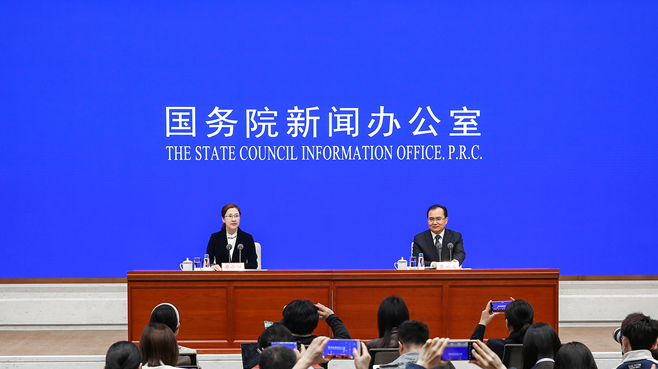
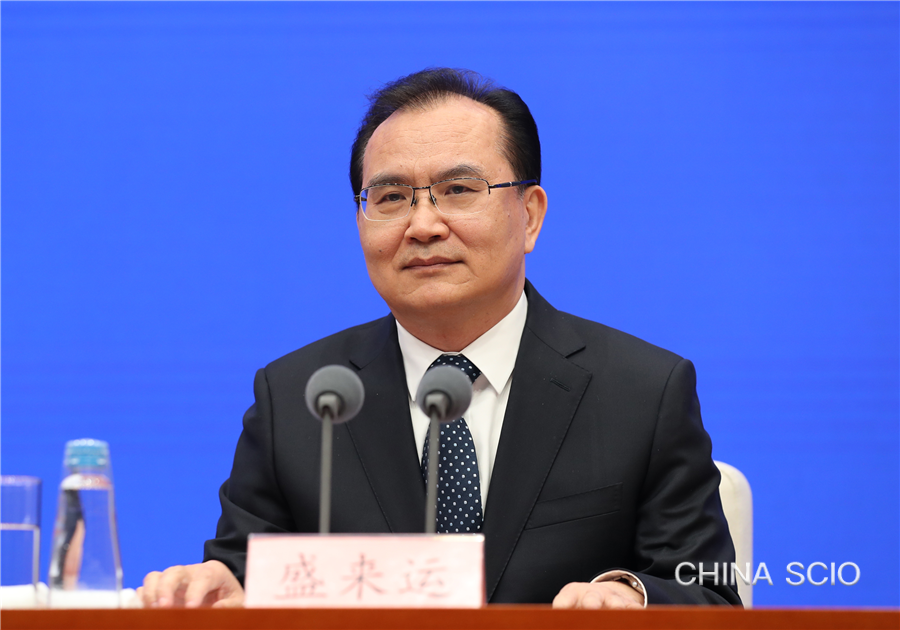
Mr. Sheng Laiyun, deputy commissioner of the National Bureau of Statistics
Chairperson:
Ms. Shou Xiaoli, deputy director general of the Press Bureau of the State Council Information Office (SCIO) and spokesperson of the SCIO
Date:
April 16, 2024
Shou Xiaoli:
Ladies and gentlemen, good morning. Welcome to this press conference held by the State Council Information Office (SCIO). This is a regular briefing on China's economic data. Today, we have invited Mr. Sheng Laiyun, deputy commissioner of the National Bureau of Statistics (NBS), to brief you on China's economic performance in the first quarter of 2024, and to take your questions.
Now, I'll give the floor to Mr. Sheng for his introduction.
Sheng Laiyun:
Friends from the media, ladies and gentlemen, good morning. I'm very glad to be taking part in a press conference held by the SCIO again, and speaking with you. It's great to see many old friends here. As usual, I will start by briefing you on the main indicators and data for the economic performance in the first quarter of this year, and then take your questions.
The national economy got off to a good start in the first quarter.
In the first quarter, under the strong leadership of the Central Committee of the Communist Party of China (CPC) with Comrade Xi Jinping at its core, all regions and departments strictly implemented the decisions and arrangements made by the CPC Central Committee and the State Council; adhered to the general principle of seeking progress while maintaining stability, promoting stability through progress and establishing the new before abolishing the old; intensified efforts on macro regulation; gave priority to ensuring stability in expectations, growth and employment; and continued to push ahead with transforming the growth model, making structural adjustments, improving quality and enhancing performance. As a result, policies continued to take effect, production and demand were stable and even increased, employment and prices were generally stable, market confidence continued to rise, and high-quality development made new progress. The national economy continued its good recovery momentum, getting off to a good start.
According to preliminary estimates, gross domestic product (GDP) in the first quarter reached 29,629.9 billion yuan, up by 5.3% year on year at constant prices, or up by 1.6% over that in the fourth quarter of 2023. By industry, the value added of the primary industry was 1,153.8 billion yuan, up by 3.3% year on year; that of the secondary industry was 10,984.6 billion yuan, up by 6.0%; and that of the tertiary industry was 17,491.5 billion yuan, up by 5.0%.
1. Agricultural production witnessed good momentum and animal husbandry grew steadily.
In the first quarter, the value added of agriculture (crop farming) witnessed a year-on-year increase of 3.8%. The planting area of winter wheat remained stable and generally good growth was observed. The spring farming and sowing were carried out in an orderly manner. According to the year-round planting intention survey, the planting area intended for rice and corn nationwide increased. In the first quarter, the output of pork, beef, mutton and poultry was 24.90 million tons, up by 1.4% year on year. Of this total, the output of pork dropped by 0.4%, while the outputs of beef, mutton and poultry grew by 3.6%, 0.1% and 6.1%, respectively. The output of milk was up by 5.1% and that of eggs up by 1.5%. At the end of the first quarter, the number of pigs registered in stock was 408.50 million, down by 5.2% year on year; and 194.55 million pigs were slaughtered, down by 2.2% in the first quarter.
2. Industrial production registered fast growth and high-tech manufacturing growth accelerated.
The total value added of industrial enterprises above designated size grew by 6.1% year on year in the first quarter. In terms of sectors, the value added of mining increased by 1.6%, that of manufacturing increased by 6.7%, and that of the production and supply of electricity, thermal power, gas and water increased by 6.9%. The value added of high-tech manufacturing increased by 7.5%, 2.6 percentage points faster than the fourth quarter of 2023. Analysis by types of ownership showed that the value added of state holding enterprises was up by 5.2%; that of share-holding enterprises was up by 6.5%; that of enterprises funded by foreign investors or investors from Hong Kong, Macao and Taiwan was up by 4.8%; and that of private enterprises was up by 5.4%. In terms of products, the production of electric vehicle charging facilities, 3D printing devices and electronic components increased by 41.7%, 40.6% and 39.5% year on year, respectively. In March, the value added of industrial enterprises above designated size went up by 4.5% year on year, or down by 0.08% month on month. In March, the manufacturing purchasing managers' index (PMI) stood at 50.8%, 1.7 percentage points higher than the previous month. The production and operation expectation index was 55.6%, up by 1.4 percentage points. In the first two months, the total profits made by industrial enterprises above designated size were 914.1 billion yuan, up by 10.2% year on year.
3. The service sector enjoyed sound growth momentum and modern services grew quickly.
In the first quarter, the value added of services went up by 5.0% year on year. Specifically, the value added of information transmission, software and information technology services, leasing and business services, transportation, storage and postal services, accommodation and catering, and wholesale and retail grew by 13.7%, 10.8%, 7.3%, 7.3% and 6.0%, respectively. In March, the index of services production increased by 5.0% year on year. Specifically, the index of services production of information transmission, software and information technology services, leasing and business services, and accommodation and catering went up by 12.7%, 8.2% and 6.2%, respectively. In the first two months, the business revenue of service enterprises above designated size grew by 12.0% year on year, 3.7 percentage points faster than that of 2023. In March, the business activity index for services stood at 52.4%, 1.4 percentage points higher than that of the previous month. The business activity expectation index was 58.2%. Among which, the business activity index for industries like postal services, telecommunication, broadcast, television and satellite transmission services, monetary and financial services and capital market services were above 60.0%.
4. Market sales registered stable growth and service consumption grew quickly.
In the first quarter, the total retail sales of consumer goods reached 12,032.7 billion yuan, up by 4.7% year on year. Analyzed by different areas, the retail sales of consumer goods in urban areas reached 10,428.0 billion yuan, up by 4.6%, and that in rural areas stood at 1,604.7 billion yuan, up by 5.2%. Grouped by consumption patterns, the retail sales of goods were 10,688.2 billion yuan, up by 4.0%; and the income of catering was 1,344.5 billion yuan, up by 10.8%. Goods for basic living enjoyed good sales, with the retail sales of grain, oil and food and of beverage by enterprises above designated size up by 9.6% and 6.5%, respectively. The sales of some upgraded goods grew quickly. The retail sales of sports and recreational articles and of communication equipment by enterprises above designated size grew by 14.2% and 13.2%, respectively. Online retail sales reached 3,308.2 billion yuan, up by 12.4% year on year. Specifically, the online retail sales of physical goods were 2,805.3 billion yuan, up by 11.6%, accounting for 23.3% of the total retail sales of consumer goods. In March, the total retail sales of consumer goods increased by 3.1% year on year, or up by 0.26% month on month. In the first quarter, the retail sales of services went up by 10.0% year on year.
5. Investment in fixed assets rose steadily and investment in high-tech industries grew quickly.
In the first quarter, the investment in fixed assets (excluding rural households) reached 10,004.2 billion yuan, up by 4.5% year on year, 1.5 percentage points faster than that of the previous year; the investment in fixed assets was up by 9.3% with the investment in real estate development deducted. Specifically, the investment in infrastructure grew by 6.5%; that in manufacturing grew by 9.9%; and that in real estate development declined by 9.5%. The floor space of new commercial buildings sold was 226.68 million square meters, down by 19.4% year on year; the total sales of new commercial buildings were 2,135.5 billion yuan, down by 27.6%. By industry, the investment in the primary industry went up by 1.0%, that in the secondary industry up by 13.4%, and that in the tertiary industry up by 0.8%. The private investment went up by 0.5%. Deducting the investment in real estate development, the private investment grew by 7.7%. The investment in high-tech industries grew by 11.4% year on year, of which the investment in high-tech manufacturing and high-tech services grew by 10.8% and 12.7%, respectively. In terms of high-tech manufacturing, the investment in manufacturing of aerospace vehicles and equipment and in the manufacturing of computers and office devices grew by 42.7% and 11.8%, respectively. In terms of high-tech services, the investment in e-commerce services and information services grew by 24.6% and 16.9%, respectively. In March, the investment in fixed assets (excluding rural households) grew by 0.14% month on month.
6. Imports and exports of goods grew steadily and the trade structure continued to optimize.
In the first quarter, the total value of imports and exports of goods was 10,169.3 billion yuan, an increase of 5.0% year on year. The total value of exports was 5,737.8 billion yuan, up by 4.9%. The total value of imports was 4,431.5 billion yuan, up by 5.0%. The trade balance was 1,306.3 billion yuan in surplus. Imports and exports by private enterprises increased by 10.7%, accounting for 54.3% of the total value of imports and exports. Imports and exports with Belt and Road partner countries grew by 5.5%, accounting for 47.4% of the total value of imports and exports. Exports of mechanical and electrical products grew by 6.8%, accounting for 59.2% of the total value of exports. In March, the total value of imports and exports was 3,558.0 billion yuan, down by 1.3% year on year. The total value of exports was 1,986.9 billion yuan, down by 3.8%; and that of imports was 1,571.0 billion yuan, up by 2.0%.
7. Consumer prices were generally stable and producer prices for industrial products dropped.
In the first quarter, the consumer price index (CPI) maintained the same level year on year. Grouped by commodity categories, prices for food, tobacco and alcohol went down by 1.7%; clothing up by 1.6%; housing up by 0.2%; articles and services for daily use up by 0.8%; transportation and communication down by 1.4%; education, culture and recreation up by 2.3%; medical services and health care up by 1.4%; and other articles and services up by 2.9%. In terms of food, tobacco and alcohol prices, the prices of fresh fruit went down by 7.3%, pork down by 7.0%, fresh vegetables down by 3.9% and grain up by 0.4%. The core CPI excluding the prices of food and energy grew by 0.7% year on year. In March, the CPI went up by 0.1% year on year, or down by 1.0% month on month.
In the first quarter, producer prices for industrial products went down by 2.7% year on year. Specifically, the prices in March dropped by 2.8% year on year, or down by 0.1% month on month. In the first quarter, the purchasing prices for industrial producers went down by 3.4% year on year. Specifically in March, the prices dropped by 3.5% year on year, or down by 0.1% month on month.
8. Employment was generally stable and the surveyed unemployment rate in urban areas declined slightly.
In the first quarter, the urban surveyed unemployment rate averaged 5.2%, down by 0.3 percentage points over that of the same period last year. In March, the surveyed unemployment rate in urban areas was 5.2%, 0.1 percentage points lower than that of the previous month and that of the same month last year. The surveyed unemployment rate of population with local household registration was 5.3% and that of population with non-local household registration was 5.1%, of which, the rate of population with non-local agricultural household registration stood at 5.0%. The urban surveyed unemployment rate in 31 major cities was 5.1%. Employees of enterprises worked an average of 48.6 hours per week. By the end of the first quarter, the number of rural migrant workers totaled 185.88 million, up by 2.2% year on year.
9. Residents' incomes increased steadily and the incomes of rural residents grew faster than that of urban residents.
In the first quarter, the nationwide per capita disposable income of residents was 11,539 yuan, a nominal growth of 6.2% year on year; and the real growth was 6.2% after deducting price factors. In terms of permanent residence, the per capita disposable income of urban households was 15,150 yuan, a nominal growth of 5.3% year on year and a real growth of 5.3%; and the per capita disposable income of rural households was 6,596 yuan, a nominal growth of 7.6% year on year and a real growth of 7.7%. In terms of income sources, the nationwide per capita salary income, net business income, net property income and net income from transfers grew by 6.8%, 6.8%, 3.2% and 4.8% in nominal terms, respectively. The median of the nationwide per capita disposable income of residents was 9,462 yuan with nominal growth of 6.4% year on year.
Generally speaking, the national economy made a good start in the first quarter with positive factors amassing, laying a strong foundation for achieving the annual development targets. However, we should be aware that the external environment is becoming more complex, severe and uncertain, and the foundation for stable and sound economic growth is not yet solid. Next, we must follow the guidance of Xi Jinping Thought on Socialism with Chinese Characteristics for a New Era, fully implement the spirits of the Central Economic Work Conference and the "two sessions" (the annual gatherings of the National People's Congress and the National Committee of the Chinese People's Political Consultative Conference), and adhere to the principles of pursuing progress while ensuring stability, promoting stability through progress and establishing the new before abolishing the old. We should fully and faithfully apply the new development philosophy on all fronts, accelerate the efforts to create a new development pattern, strive to promote high-quality development, actively cultivate and develop new quality productive forces, and strengthen the implementation of macro policies. We must effectively boost economic vitality, prevent and defuse risks, improve public expectations, consolidate and enhance the momentum for economic recovery and growth, and continue to effectively pursue higher-quality economic growth and appropriately increase economic output.
There are the main indicators and data regarding China's economic performance in the first quarter of this year. Now, I'm glad to answer your questions.
Shou Xiaoli:
Thank you, Mr. Sheng, for your introduction. Now, the floor is open for questions. Please state which news organization you represent before asking your questions.
_ueditor_page_break_tag_
Phoenix TV:
We've just reviewed the released data. Overall, major economic indicators show quite positive performance in the first quarter. How would you evaluate the overall economic performance in the first quarter?
Sheng Laiyun:
Thank you for your question. The economic indicators in the first quarter did indeed perform well. In the first quarter, we intensified the implementation of macroeconomic policies with concerted efforts from various regions and sectors. Policies were enacted proactively and implemented rigorously, leading to sustained economic recovery and a favorable start to the year. I'd like to summarize the first quarter's economic performance with four groups of key terms.
The first key term is continuing recovery. In the first quarter of this year, the overall national economy continued last year's upward trend, with crucial indicators of production demand showing positive growth. In terms of production, the primary industry remained relatively stable, with a year-on-year growth of 3.3%, according to data recently released. The secondary industry grew by 6%. The growth rate of value added to industrial enterprises above the designated size increased by 3.1 percentage points year on year and by 0.1 percentage point compared to the fourth quarter of last year, showing stable growth. The service industry grew by 5%, with contact-intensive services, such as accommodation, catering, transportation and tourism, continuing to grow rapidly. As we know, last year witnessed rapid development in the service industry following the new phase of pandemic prevention and control. Despite a high growth rate in the service industry last year, this year has witnessed stable growth, demonstrating steady production with upward trends. In terms of the three major demands, indicators of investment, consumption and import and export demonstrate overall stable growth. Fixed asset investment in the first quarter increased by 4.5% year on year, a 1.5 percentage points higher from the 3% growth rate of last year. Total retail sales of consumer goods increased by 4.7%, with service retail sales growing by 10%. According to data from customs, import and export grew by 5%, reaching a record high in six quarters. Therefore, the three major demands increased with stability.
The second key term is a steady start, which is reflected in four major macroeconomic indicators: GDP growth, employment, inflation and international balance of payments. In the first quarter, GDP grew by 5.3% year on year, slightly higher than the growth rate of 5.2% in the fourth quarter of last year, indicating stable growth. Employment indicators show steady improvement, with the urban surveyed unemployment rate averaging 5.2% in the first quarter, a decrease of 0.3 percentage point compared to the same period last year. With the economy picking up, the overall employment situation has improved. The consumer price index remains consistent compared to the first quarter of last year, while the core CPI, excluding food and energy, increased by 0.7% year on year, similar to quarters from last year. The international balance of payments remains overall balanced. Looking at these four major macroeconomic indicators — GDP growth, employment, inflation and international balance of payments — the overall economic trend in the first quarter remains stable, with a sound start.
The third key term is progress with stability. It refers to the national economy achieving reasonable growth in quantity while also achieving effective improvement in quality, thereby continuing to make new advancements in high-quality development. First, innovation development has achieved new results. In the first quarter, the value added of high-tech manufacturing industries above the designated size increased by 7.5% year on year, 2.6 percentage points higher than the fourth quarter of last year. Coordinated development mainly refers to continued improvement of industrial and demand structures. In the first quarter, domestic demand contributed 85.5% to economic growth. Both the internal structures of industries and demands have seen positive improvements. Green development has continued to make new achievements. In the first quarter, energy consumption per unit of GDP decreased by 0.1% year on year. If the consumption of raw materials and non-fossil energy is deducted, energy consumption would decrease even further. Open development and high-level opening-up have further advanced, and China's total imports and exports with the Belt and Road countries grew by 5.5%. Shared development has continued to make new achievements, with the per capita disposable income of residents nationwide increasing by 6.2%. These indicators suggest that high-quality development continues to make new progress.
The fourth key term is promising start. It's precisely because the economy has continued to recover with a smooth initial process and steady progress that we have achieved a promising start. Looking at various major economic indicators, we find that the stability and coordination of economic performance have strengthened, market vitality has increased and the confidence of market entities has continued to rise. The PMI, which was previously released, stood at 50.8% in March, rebounding to the expansion zone. This reflects the overall positive momentum of sustained recovery in the economy, leading to a promising start overall.
However, we must be sensibly aware that the global situation remains complex and challenging, and domestically we are at a critical stage of structural adjustment and transformation. The confidence of market entities and the momentum of economic recovery both need further enhancement. Going forward, we must resolutely implement the decisions and arrangements made by the CPC Central Committee and the State Council to promote stable economic development. We need to further intensify policy implementation, consolidate the foundations of the economy, continue enhancing overall market confidence and economic momentum and solidify the basis for continued improvements with economic recovery. Thank you!
_ueditor_page_break_tag_
The Beijing News:
We have noticed that the CPI has been positive for two consecutive months, but in March the growth rate significantly narrowed, only rising by 0.1%, which is lower than external expectations. What are the reasons for this? What are the predictions for future trends in CPI? Thank you.
Sheng Laiyun:
Thank you for your questions. We are very concerned with changes in market prices. First, the CPI in March, as you just mentioned, decreased by 1% month on month and increased by 0.1% year on year, with the increase dropping by 0.6 percentage point compared to the previous month. This is mainly due to seasonal price declines after the Spring Festival, with significant drops in food prices and prices of services such as tourism. After the Spring Festival, the weather has warmed up and major agricultural products are in ample supply, leading to a 3.2% decrease in March's food prices. That led to a fluctuation of nearly 0.6 percentage point in CPI month on month. After the Spring Festival, tourism prices, including airfare, significantly decreased, driving down prices for non-food items. According to estimates, the decrease in non-food prices resulted in a 0.37 percentage point month-on-month decrease in March's CPI. The seasonal decline in food and non-food prices after the Spring Festival caused a significant month-on-month decrease in CPI during the month of March.
Second, despite a month-on-month decrease in March, the CPI showed overall stability in terms of quarterly performance. The core CPI, excluding energy and food prices, was 0.7% in the first quarter, which was essentially the same as the fourth quarter of last year. The CPI stayed negative for three consecutive months in the fourth quarter of last year, with the average CPI for the fourth quarter down by 0.3% year on year. However, in the first quarter of this year, the CPI remained unchanged from a year earlier, and increased by 0.3 percentage point compared to the fourth quarter of last year. This was consistent with the momentum of economic recovery.
Third, CPI fluctuations in the first quarter were due to distinct structural and temporal factors. Among the eight major categories in the consumer price index, food prices were down by 3.2%, and transportation and communication decreased by 1.4%, according to the newly released data. Prices for other categories, including clothing, housing, education, culture and recreation, as well as other goods and services, all witnessed increases. Particularly, prices for education, culture and recreation, as well as clothing prices, even increased by more than 1.5 percentage points. Considering both monthly and quarterly figures, the changes in the consumer price index demonstrate distinct structural characteristics.
Lastly, regarding the future trend, we believe that the CPI is expected to recover slowly. As the economy sustains positive momentum, we will see increasing demand, which serves as an important fundamental factor to support the recovery of the CPI. Moreover, agricultural products such as hogs are also seeing a turning point in price adjustment. Consumption during upcoming holidays, such as the Labor Day holiday, will continue to drive consumer price recovery for travel-related items. In addition, there are other factors that can boost demand, hence having impacts on consumer prices. Overall, the CPI is expected to witness gradual recovery from a low level. Thank you.
_ueditor_page_break_tag_
CCTV:
The economic growth in the first quarter represents good momentum for economic recovery. Did this performance exceed expectations? What are the reasons behind this? Thank you.
Sheng Laiyun:
In the first quarter, China's GDP grew by 5.3% year on year. Many people believe this figure is higher than expected, but I'd like to elaborate on this a bit. First, China's 5.3% GDP growth portrays real-world conditions. From the perspective of calculation, the 5.3% GDP growth in the first quarter was mainly driven by improvement in industry and services. The industrial added value grew by 6% in the first quarter, marking a significant increase compared to the level of the same period last year and that during the fourth quarter. Mainly due to the recovery of exports and the adoption of a series of policies, the country saw increasing demand in the first quarter. Hence, the industrial sector achieved a sound performance. According to preliminary calculations, the 6% growth in the industrial sector contributed 37.3% to overall GDP growth, which promoted growth of the latter by nearly two percentage points. The service sector, due to the Spring Festival, made a larger contribution to GDP growth in the first quarter. As such, the service sector continued its rebound from a relatively high level last year. In particular, the contact-based service sector witnessed rapid growth. In the first quarter, retail sales of services grew by 10%, six percentage points higher than that of commodities. You must have noticed reports focused on this. According to data released by the Ministry of Culture and Tourism, the number of travelers and tourism consumption during the Spring Festival holiday exceeded the levels recorded during the same period in 2019, and the number of tourist trips increased by 34.3% year on year. The service sector has maintained a good momentum of development, with its contribution to economic growth being 55.7% in the first quarter. Industry and services contributed more than 90% of GDP growth. Based on calculations, the GDP growth in the first quarter was consistent with industrial recovery and the rebound of the service sector .
Second, the 5.3% GDP growth was achieved on solid ground. The GDP is calculated by the production approach and verified by the expenditure approach. The three major demand indicators released today all witnessed stable rebound. Fixed-asset investment grew by 4.5% in the first quarter compared to the same period last year. This figure didn't deduct commodity prices, and the real growth rate would be 5.9% if commodity prices were deducted. Total retail sales of consumer goods increased by 4.7%, and exports rose by 5%. Based on calculations, the growth rates of the three major indicators were consistent with that of the GDP.
Third, the growth of physical indicators was consistent with the GDP growth. To evaluate China's economy, people tend to use freight volume or electricity generation volume for verification. In the first quarter, the total electricity consumption increased by 9.6%, with industrial electricity consumption rising around 8%. Freight volume grew by 5.3%, commercial passenger traffic increased by 20.5% and port cargo throughput increased by 6.1%. When it comes to exports, port freight volume is a very straightforward indicator. Additionally, the bank loan data that everyone follows also shows that the M2 balance at the end of March increased by 8.3% year on year. Given all this, we can see that the growth of physical indicators was consistent with the 5.3% GDP growth.
Of course, we also noticed that there were imbalances in economic recovery. GDP calculation is a combination of the added value of all industries, which is an indicator that reflects the overall situation. We can see that the recovery of consumption was not as well as production, and the recovery of micro, small and medium-sized enterprises (MSMEs) was not as good as large enterprises. As such, there were disparities in economic recovery, and people may also have different opinions when it comes to these figures. Going forward, we will pay closer attention to imbalances in economic development, especially the development of MSMEs, while reinforcing the basis for economic recovery.
_ueditor_page_break_tag_
21st Century Business Herald:
Mr. Sheng mentioned just now that the industrial recovery situation was relatively good in the first quarter. Could you please provide an overall evaluation of the recovery of industrial production in the first quarter? And what are the reasons for this, as well as the subsequent trends and prospects? Thank you.
Sheng Laiyun:
Thank you for your question. Industry is indeed a highlight in the recovery and development of the first quarter, with China's value-added industrial output increasing by 6%. This is also a relatively good performance in recent years, with an increase of 3.1 percentage points compared to the first quarter of last year, and an acceleration of 0.8 percentage point compared to the fourth quarter of last year, indicating a positive trend in industrial economic recovery. Why was industrial performance better than expected in the first quarter? What are the reasons? Our analysis covers several factors.
First, business confidence is increasing driven by policy. You are all aware that from last year to this year, and especially this year, all regions and departments released a series of policies and measures to support the development of the real economy. Moreover, all regions have been accelerating the implementation of policies. These policies have had positive effects on enhancing the drive for enterprise production, improving the environment for enterprise development, and boosting confidence in enterprise development. China's official manufacturing PMI, which has just been released, came in at 50.8% in March, up 1.7 percentage points from February. Furthermore, the PMI for large, medium and small enterprises are all above the critical threshold of 50%, which has not been easy. This indicates that confidence among enterprises is increasing.
Second, both domestic and external demand have changed for the better. From the perspective of external demand, as the world economy shows signs of recovery, our exports in the first quarter were better than expected. According to the customs statistics that have just been released, exports increased by 4.9%. We have our own data, called the export delivery value of industrial products. It was -2.2% in the fourth quarter of last year and 0.8% in the first quarter of this year, showing a rebound of 3 percentage points. From the perspective of domestic demand, we are more interested in one data point, which is the value added of the consumer goods manufacturing industry. Because from the perspective of household consumption, the focus is mainly on purchasing processed consumer goods. Last year, the value added of consumer goods manufacturing enterprises was around zero and continued to run at a low level. The value added of consumer goods manufacturing enterprises grew by 4.2% in the first quarter of this year, an increase of more than 4 percentage points. Therefore, we can feel the improvement in both domestic and external demand, supporting industrial economic growth.
Third, the industrial recovery is related to the promotion of some recent policies. The central government introduced a policy to promote large-scale equipment upgrades and the trade-in of consumer goods, which also boosted business confidence to some extent, prompting some enterprises to schedule production in advance. Another reason for the significant rebound is related to the continuous cultivation and driving force of new growth momentum. Among the newly released data, the value added of high-tech manufacturing industry above the designated size increased by 7.5% in the first quarter, 1.4 percentage points higher than the growth rate of industrial enterprises above the designated size. We have calculated that the major high-tech manufacturing industry in the first quarter drove the value-added industrial output by 1.1 percentage points, highlighting the role of new growth momentum and new industries.
Of course, the relatively good industrial growth rate also has a certain relationship with the base from last year. During the first quarter of last year, some regions were still affected by the pandemic and the industrial value-added growth was 2.9%. As such, there is indeed a base effect, but the main reasons are the three factors I just mentioned. Looking ahead, as the several factors supporting the improvement in industrial recovery continue to play a role in the foreseeable future, we predict that the positive trend of industrial economic recovery will continue. Of course, further consolidating the foundation of the recovery requires increasing support for the real economy. Thank you.
_ueditor_page_break_tag_
Reuters:
Some March economic indicators such as foreign trade, credit and commodity prices show weak economic growth and insufficient aggregate demand. What are the reasons for this? And will a slowing global economy and a higher statistical base later in the year jeopardize hitting this year's growth target of around 5%?
Sheng Laiyun:
Thank you for your question. It's a good question. You may have noticed that some economic indicators declined in March compared to January and February. This decline was from a statistical perspective. We conducted a thorough analysis, finding that one very important reason for this is that the comparison base from last year was relatively high, meaning that the actual production level for March was not low. In January and February last year, some regions were still affected by the pandemic, and some companies delayed their production, including exports and order fulfillment, until March. In March and April last year, whether in terms of industry or imports and exports, some major indicators had relatively high base numbers, and some industries saw a rebound in production and sales, resulting in a relatively high comparison base. Due to this relatively high base, the year-on-year growth rate this year declined. As I just mentioned, the monthly production level is not low. Let me give you an example. In terms of the added value of industries above designated size, when converted into added value per working day, March's figures show faster growth compared to January and February. However, in terms of year-on-year growth, there was a 2.5 percentage points decline in March compared to January and February. Some physical quantity indicators, such as industrial electricity consumption, exhibit similar characteristics. The average daily industrial electricity consumption in March was higher than that of January and February, and the same is true of freight volume and loan indicators. As such, when observing changes in China's economy, it is important to look not only at year-on-year growth data but also at month-on-month changes and some absolute quantities. This is especially true when observing short-term economic fluctuations.
Second, we should pay attention to the future trend of the economy, including the trend in the second quarter and whether the 5% target can be achieved for the whole year. Currently, there is an accumulation of positive factors supporting the continued recovery of the Chinese economy. First, as mentioned earlier, external demand is picking up. Although the global economy faces complex situations and great uncertainties this year, some leading indicators show that the global economy is recovering. The global manufacturing PMI in March was 50.6%, marking the third consecutive month of recovery. I also noticed the indicators released by the World Trade Organization (WTO) and the China Council for the Promotion of International Trade (CCPIT) on global freight volume. The WTO predicts that global trade in goods growth may reach 2.6% this year, an improvement from last year's negative growth, which is conducive to supporting export demand. Internally, many economic indicators, including the recently released PMI and other related demand indicators, show that China's economy is recovering. This recovery is especially driven by policy support. Earlier this year, to continue stimulating demand, the central government introduced policies to support equipment upgrades and the trade-in of consumer goods. These policies are the driving force behind the ongoing economic recovery. In addition, based on the prospects for the next stage, the holiday economy will continue to show positive effects. As a result, the economy is expected to maintain its recovery momentum in the future.
Last, I would like to emphasize that when we observe the Chinese economy, in addition to changes in economic aggregate, we should also pay more attention to the improvement of quality and efficiency, especially the effectiveness of China's economic structural adjustment and the progress of high-quality development. Since the 18th CPC National Congress, China's economy has entered a new stage of transformation, upgrading, and high-quality development. Traditional industries have been adjusted, new driving forces have been accelerated, and high-quality development has continued to advance. Even though in the past few years, we have faced a complicated and challenging global landscape and undergone growing pains of domestic structural adjustment and transformation, including adjustments to the real estate sector, China has persisted with economic transformation and upgrading, and high-quality development continues to yield new results. To illustrate this, let me provide some data. In terms of innovation and development, R&D expenditure accounted for 1.91% of GDP in 2012 and 2.64% last year. The urbanization rate has also been increasing steadily, rising from about 53% in 2012 to 66.2% last year, an increase of nearly 1 percentage point annually. Moreover, China's share of the international export market has grown from about 10% in 2012 to around 14% currently. In addition, our economic aggregate and residents' income have more than doubled compared to 2012. This demonstrates that our innovative development, coordinated development, green development, open development, and shared development have continued to make steady progress, and the quality of development has been consistently improving.
Next, China is still in the stage of structural adjustment, transformation, and upgrading. Some companies need to undergo transformation and upgrading, which means they have to endure some growing pains during this process. Due to the adjustment of traditional industries and the cultivation of new driving forces, it is natural for some economic growth fluctuations to occur. However, the quality of development continues to improve, and high-quality development continues to make progress. This is what constitutes the basis for China's economic recovery. Therefore, when we say that the economy is improving, it is not just about a rebound in the growth rate but also an improvement in quality. Only by looking at the Chinese economy in this way can we have a more comprehensive view and enhance our confidence in China's economy. I am fully confident about the Chinese economy's continued improvement and high-quality development. Thank you.
_ueditor_page_break_tag_
Red Star News:
How were real estate investment and sales in the first quarter? Have the measures introduced in some places to guarantee the delivery of housing projects and promote real estate financing taken effect? What is the outlook for the industry in the future? Thank you.
Sheng Laiyun:
Thank you for your questions. The real estate market is of great concern to everyone. Based on real estate investment and sales in the first quarter, the housing market is still in the process of adjustment. Regarding real estate issues, there are a few points to consider:
First, the decline in real estate sales indicators expanded in the first quarter of this year, which can be attributed to the high base of comparison last year. As I mentioned earlier, real estate sales saw a "mini-boom" in March due to special circumstances last year. The sales area of newly built commercial housing in March was approximately 138 million square meters, the highest among all months last year. The growth rates of new commercial housing sales and sales area in April were the fastest in the 12 months of last year. The sales area of newly built commercial buildings in March this year was 113 million square meters, which was about 25 million square meters less than in March last year. The year-on-year growth rate is slowing down. However, I also compared the total real estate sales volume in each month after June last year and found that the total real estate sales volume in March this year was higher than the absolute level in each month in the second half of last year. This suggests that while real estate sales in the first quarter of 2024, especially in March, did experience a decline due to the high base of comparison from the same period last year, the absolute amount is not low.
Second, the effects of policy measures supporting the stable development of the real estate sector are continuing to manifest. Let me provide you with a few pieces of data: Regarding the "three major projects," after the Central Financial Work Conference last year, both the central government and local authorities accelerated the progress of the "three major projects," which included the building of government-subsidized housing and dual-use public infrastructure that can accommodate emergency needs, as well as the redevelopment of urban villages, amid efforts to foster a new development model for the real estate sector. Data shows the "three major projects" have boosted real estate investments by 0.6 percentage point, demonstrating their effectiveness. The second set of data pertains to the positive impact of the "white list" mechanism on financing amounts for compliant real estate projects. As we know, this year, in order to address financing difficulties faced by real estate enterprises, relevant departments have introduced policies to support financing projects included in the "white list." According to first-quarter data, the decline in domestic loans for real estate enterprises narrowed by 1.2 percentage points, directly credited to the application of the financing policies associated with the "white list" mechanism. The third set of data concerns real estate sales. This year various localities have intensified their efforts to support the stable development of the real estate sector, including measures such as relaxing purchase restrictions and lowering interest rates for housing provident fund loans. Moreover, over 30 cities have implemented selling-old-for-new schemes. As a result of local governments' collective efforts, the decline in both the sales area and sales volume of newly built commercial housing in the first quarter narrowed by 1.1 percentage points and 1.7 percentage points, respectively, compared to the January-February period. These three sets of data demonstrate the continued apparent impact of policies supporting the stable development of the real estate sector.
Lastly, I would like to emphasize that we should have a rational perspective on this round of real estate adjustments. I also shared some views on this issue during the press conference in the third quarter of last year. On one hand, after more than two decades of rapid expansion, the real estate sector is undergoing a needed adjustment according to the growth cycle of the sector. The current adjustment in the real estate sector is beneficial to the subsequent establishment of new models for its high-quality development. As the traditional production capacity is cleared from the market, developers can build better houses and provide better services, which is also beneficial for consumers. Furthermore, China's ongoing urbanization serves as a fulcrum to support its real estate market. As of 2023, the urbanization rate of the country's permanent residents was 66.2%, but the urbanization rate in terms of registered permanent residents was still less than 50%. There are 180 million rural migrant workers who have not yet gained permanent urban residency, and the proportion of home purchases in cities among these migrant workers is not high. Among our existing housing stock, small- and medium-sized units below 90 square meters still account for the vast majority. With the improvement in people's living standards and further promotion of urbanization, the overall rigid demand and need for improved housing remain sufficient. The Chinese real estate market still has the conditions to support its sustainable and healthy development. We need to rationally view the current round of real estate adjustments. Thank you.
_ueditor_page_break_tag_
Bloomberg:
You just mentioned that China's GDP grew 5.3% year-on-year in the first quarter of 2024, and the figure was thought to be higher than expected. Does this mean that the economy is relatively stable and does not require strong policy support? Or do you think there are still some weaknesses in the current economic situation, such as imbalanced recovery? The second question is related to industrial output in March, which seems to be relatively weak compared to expectations. Does this indicate any slowdown in the manufacturing sector? Thank you.
Sheng Laiyun:
Thank you for your question. I actually indirectly addressed this question earlier. First, regarding fluctuations in industrial output in March, it reflects some changes in the domestic and international environment, indicating the need for further enhancement of industrial development momentum. On the other hand, the decline in industrial output in March is partially influenced by the comparison base, and we maintain an optimistic outlook for the future. Furthermore, concerning the foundation for economic recovery, the 5.3% GDP growth rate indicates the national economy has sustained recovery momentum and got off to a good start. However, as I explained earlier, there are indeed imbalances evident in the process of economic recovery and the performance of various industries. The growth momentum of the consumer goods manufacturing sector is still lower than the average growth rate of industrial companies above designated size, and disparities exist among different regions. Traditional industries recovered at a slower pace due to the drag from real estate adjustments. However, the value added of high-tech manufacturing grew 7.5% year-on-year, 1.4 percentage points higher than the average level of industrial companies above designated size. They became an important driving force behind the relatively good performance of the industrial sector within the first quarter. Therefore, the economic recovery is indeed uneven and exhibits some differentiation. However, I think this is normal. As I mentioned earlier, the Chinese economy is currently in a new stage of transformation and development. From the perspective of transformation, some traditional industries do require adjustments, while emerging industries are performing well. Looking ahead, our policies will continue to increase support for the development of the real economy. In addition to overall support, we will pay more attention to addressing imbalances in economic development, accelerate the cultivation of new industries, particularly emphasizing technological innovation, and coordinate the technological transformation of traditional industries with the development of new industries and the cultivation of future industries. Thank you.
China Profiles:
The fifth national economic census is an important investigation to take stock of the country’s conditions and strengths. Could you share with us the progress of the census? And how to ensure the quality of its statistics? Thank you.
Sheng Laiyun:
Thank you for your questions as well as your interest toward our statistical work and the economic census. The fifth national economic census is a large-scale investigation of the national conditions and strengths as our country enters a new era. Under the firm leadership of the Party committees and government departments at all levels, and with the concerted efforts of census workers and statisticians, the progress of the fifth economic census has been very smooth. We have nearly completed the on-site registration phase with a data submission rate already exceeding 90%. Currently, we are transitioning from on-site registration to reviewing the data. After this review, we will conduct quality checks and then compile the data. The results of the fifth economic census will be released to the public in the third quarter, providing a clearer and more comprehensive understanding of our economic landscape.
Regarding data quality, the NBS places high importance on this aspect, treating it as the lifeline of our work. Striving for high-quality census results is both a goal and a requirement of the fifth economic census. From the outset, we established a comprehensive system for data quality control that is based on Statistics Law and regulations regarding census, and have implemented corresponding quality control measures. Throughout the census process, we have strictly adhered to these protocols, including enhancing training for census workers to ensure accurate data collection. We also have robust monitoring mechanisms in place to ensure data is accurately recorded and reviewed on an ongoing basis. As I just mentioned, we have moved into the data verification stage, where we will further examine the submitted data, including logical consistency checks. If issues arise, we will return to the businesses for verification. Additionally, we will conduct a nationwide sampling survey to assess the quality of reported data, with dedicated survey teams from the NBS performing on-site verifications. We have a comprehensive set of procedures in place to control the quality of census data. I also want to reassure everyone that all personal and business information is strictly confidential, so there should be no room for concerns when providing accurate information. We welcome public oversight and particularly encourage continued support and monitoring from the media. Thank you.
_ueditor_page_break_tag_
China National Radio:
My question is about developing new quality productive forces. The central government highly values fostering and developing new quality productive forces. Could you provide an update on the progress made in the first quarter by emerging sectors, high-tech manufacturing and green energy products?
Sheng Laiyun:
Thank you for your question. As you just said, the central government highly values the fostering and development of new quality productive forces, which have been a key focus in both last year's Central Economic Work Conference and this year's government work report. Party committees and government departments from various localities have put forward a series of policy measures to support enterprise innovation in an effort to foster and develop new quality productive forces.
From the data for the first quarter, we can see positive outcomes from these policies. The new quality productive forces are showing encouraging results across various industries, operational activities and products. Let me share some specific data:
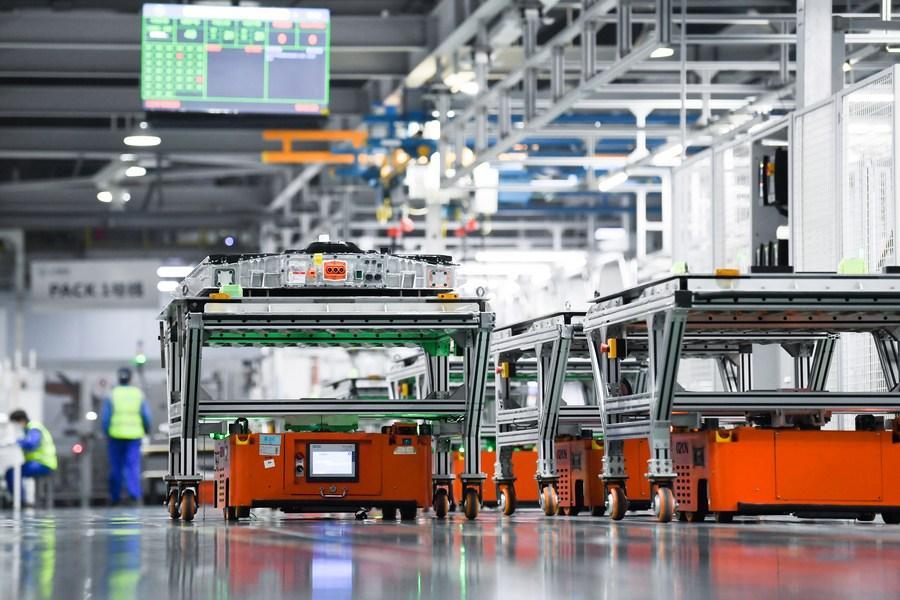
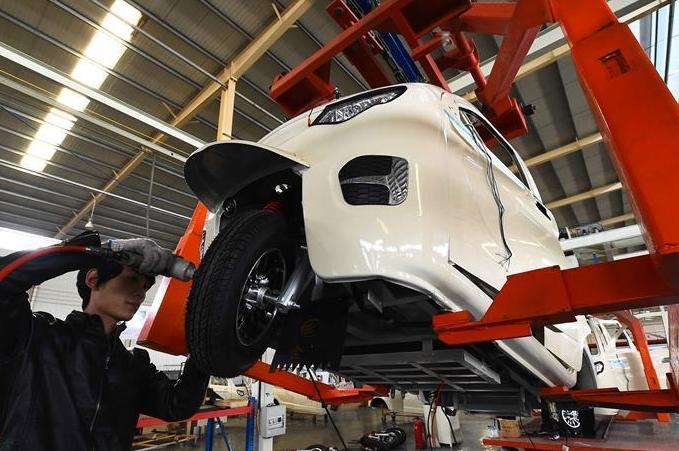
Emerging industries have maintained accelerated development. In Q1, the value added of high-tech manufacturing above designated size grew by 7.5% year on year, or 2.6 percentage points higher than Q4 last year. The high-tech service sector also maintained a rapid growth trajectory, with the value added in information transmission, software and information technology services growing by 13.7%, which is 2.5 percentage points higher than in Q4 of last year. We've also seen fast-paced development in new industries and a rapid increase in new products. Particularly, the production of new energy vehicles grew by 29.2% in Q1 on top of several years of high growth. Solar battery production increased by 20.1%, and products related to photovoltaics such as polycrystalline and single crystalline silicon saw growth rates exceeding 50%. Service robots increased by 26.7%, and industries such as semiconductors and 3D printing maintained double-digit growth. New products continue to emerge and sustain high growth rates.
Furthermore, new business models continue to emerge with strong growth. Driven by the ongoing development and application of big data, the internet and the Internet of Things, we are seeing a transformation in production methods and the continued rise of new business forms. Areas such as live-streaming and instant retail are particularly vibrant. Online retail sales, reflecting new business model trends, grew by 11.6% in Q1, continuing the trend of double-digit growth from previous years.
In addition, new investments and infrastructure projects maintain good development momentum. In the first quarter, investment in high-tech industries increased by 11.4% year on year, which was 1.1 percentage points higher than that of last year, and investment in high-tech service industries grew by 12.7%. Additionally, the construction of a batch of new infrastructure projects is accelerating, including 5G base stations. As of the end of February, 132,000 new 5G base stations have been added, bringing the total number to over 3.5 million. The implementation of new infrastructure projects, such as the Eastern Data and Western Computing project and optical fiber communications, is also being accelerated. The digital economy is an important aspect of new quality productive forces. The central and local governments attach great importance to the development of the digital economy and are accelerating the digital transformation of traditional industries and the development of the digital industry. The estimated value added of core industries of the digital economy is expected to exceed 12 trillion yuan in 2023, accounting for around 10% of GDP.
As we can see from the data in these areas, new quality productive forces are being continuously cultivated and developed under the high attention of local governments as well as various ministries during the transformation and upgrading of enterprises. Next, we must continue to accelerate the cultivation and development of new quality productive forces, as they are the greatest driving force and the best focus for China's economic transformation and high-quality development. Therefore, we must plan comprehensively and take into account local conditions. While upgrading and transforming traditional industries, we should also accelerate the cultivation of emerging and future industries to strengthen and expand new quality productive forces. Thank you.
Shou Xiaoli:
Due to time constraints, we will take two final questions.
_ueditor_page_break_tag_
ThePaper.cn:
In the first quarter, the producer price index (PPI) continued its downward trend that began last year, and the month-on-month improvement was not significant. How does the NBS assesses the current PPI situation? And what are your predictions for the next stage? Thank you.
Sheng Laiyun:
Thank you for your questions. Among the many positive indicators released, the PPI is indeed worthy of close attention, so your question is very pertinent. The PPI, or the producer price index, refers to the prices at which industrial producers sell their products. In the first quarter of this year, the PPI decreased by 2.7% year-on-year, and in the fourth quarter of last year, it decreased by 2.8%. There are a few points I would like to make about this:
First, analyzing this round of adjustments and the trend, the PPI has begun to show a narrowing decline. Why is this? Let's extend the time frame. This round of PPI adjustments started in October 2022, when PPI was -1.3%. At that time, it was the impact of U.S. interest rate hikes and the decline in international energy prices that caused the PPI to turn negative for the first time. Since then, the decline continued to widen, reaching a low point in June last year when the PPI was -5.4%. However, as China's economy has recovered and improved, the decline in the PPI has continuously narrowed. If we plot a graph for these 18 months, it forms a standard V-shape. Therefore, although the PPI is still decreasing, the rate of decline is narrowing, which is consistent with China's economic recovery.
Second, from a structural perspective, the PPI in the first quarter and March still demonstrated strong structural characteristics. Moreover, the decline in the PPI is due to multiple reasons, including demand factors, as well as cost reductions brought about by industrial restructuring, transformation and technological progress. Therefore, this round of PPI decline is caused by multiple factors from a structural perspective. From an industrial perspective, the top three industries that had a significant impact on PPI's decline last year were coal mining, washing and dressing, non-metallic mineral products, and ferrous metal smelting and pressing. First, the price of coal mining decreased by 15.3% in the first quarter, which had an impact on PPI of nearly 11%. Second, the non-metallic mineral products industry, mainly cement, declined by 7.9% in the first quarter, dragging down the PPI by nearly 15%. Third, the ferrous metal smelting and pressing industry, mainly steel, saw a price decline of 5.0%, which also had an impact on PPI of about 11%. As a result, these three leading industries combined had a nearly 40% impact on the decline of PPI. However, these industries are often related to adjustments of relevant industrial chains brought about by the current industry adjustments, so they are not entirely due to demand. Therefore, this round of PPI adjustments is related to our structural adjustment, transformation and upgrading, as well as industrial differentiation, and cannot be attributed solely to insufficient demand.
Third, you asked about the future trend, which is also something we are very interested in. Our initial assessment suggests that the PPI will continue to show a narrowing decline and a steady increase. First, the economy is recovering, and overall demand is also picking up, which is conducive to supporting the recovery of prices. Second, the stimulatory effects of policies will continue to emerge, especially with the implementation of policies related to promoting large-scale equipment upgrading and replacing old consumer goods with new ones, which will positively impact related industries. Third, there are structural adjustments in some industries. Our greater efforts in supply-side structural reform and transformation and upgrading and the elimination of some traditional industries will bring positive changes to the market supply-demand relationship. There is also a statistical factor, known as the carry-over effect. Last year, the carry-over effect on PPI in the first quarter was -2.3 percentage points, while in the second quarter, it was only -0.9 of a percentage point. In other words, compared with the first quarter, the carry-over effect alone narrowed by 1.4 percentage points in the second quarter, which will support a significant narrowing of the decline in PPI. Of course, price changes are directly related to market changes, so there is considerable uncertainty, and we will continue to monitor the changes in PPI. However, the overall trend will continue to show a narrowing decline and a recovery toward a positive trend, which is consistent with the general trend of China's economic development. Thank you.
_ueditor_page_break_tag_
Yicai:
What are the highlights for the consumer data from the first quarter? During the recent Qingming Festival holiday, both the number of trips taken and tourism consumption achieved double-digit growth compared to the same period in 2019. What are the positive and effective supporting factors for subsequent recovery of consumption?
Sheng Laiyun:
Thank you for your questions. The changes in the consumer market are indeed one of the well-performing areas in economic operations for the first quarter, with quite a few highlights. The consumption data introduced just now shows that retail data grew by 4.7%, and the growth rate of service consumption was also relatively fast. Moreover, the stable growth of consumption is an important source of support for economic growth. As I mentioned earlier, with GDP growth, the contribution rate of domestic demand is 85.5%, of which consumption contributes 73.7%. This demonstrates that consumption indeed played an important supporting role in economic growth in the first quarter.
Regarding the good performance and characteristics they have shown, I believe there are a few points you can pay attention to.
First, overall consumption of physical goods has been relatively stable. The total retail sales of consumer goods increased by 4.7% in the first quarter to surpass 12 trillion yuan, marking a relatively high level for the first quarter. The physical goods consumption of residents, including food consumption, daily necessities consumption and some housing-related consumption, has also remained relatively stable. Therefore, the overall physical goods consumption of residents is relatively stable.
Second, service consumption has grown relatively fast. In the first quarter, service retail sales increased by 10%, which is 6 percentage points higher than that of goods retail. From the residents' perspective, per capita service consumption expenditure grew by 12.7%, which is also 4.4 percentage points higher than the 8.3% growth in the overall consumption of residents. Besides, the share of residents' service consumption expenditure has reached 43.3%, an increase of 1.6 percentage points compared to the same period last year. Service consumption is accelerating.
Third, online consumption remains robust. As I also announced earlier, the online retail sales of physical goods has increased by 11.6%. What's more, driven by the adoption of new technologies, online sales models are constantly innovating and setting new sales records.
Fourth, there has been continued improvement in consumption upgrade. After resolving the issue of ensuring adequate food and clothing, and then achieving a moderately prosperous society in all respects, there has been an accelerated increase in consumption for the purpose of development and enjoyment. This aligns with the major trends of consumption and industrial upgrading. This is also why tourism has remained popular this year and why there's a fast growth rate in high-level consumption areas such as education, training and elderly care. From a retail perspective, according to the data just introduced, sales of sports and entertainment goods have increased by 14.2%, and sales of communications equipment by 13.2%. From the perspective of residents, our expenditures on transportation and communications and on education, culture and entertainment have all seen double-digit growth, exceeding 10%. This indicates that the trend towards upgraded consumption is moving in a positive direction.
Fifth, holiday consumption continues to surge. During the Spring Festival and Qingming Festival holidays, both the number of travelers and tourism revenue exceeded the levels from 2019, with year-on-year growth rates in the double digits. Furthermore, from the north to the south and from the east to the west, various localities are continuously creating new internet-famous brands. This has propelled holiday consumption and significantly bolstered the recovery of the service industry and the economy.
Another notable characteristic is that green consumption is gaining popularity. Everyone is pursuing healthier and greener modes of travel. A very prominent feature is that, despite the declining trend in sales of fuel vehicles in recent years, sales of new energy vehicles have continued to be strong. According to data from the China Association of Automobile Manufacturers, new energy vehicle sales increased by more than 30% in the first quarter. Additionally, the penetration rate of new energy vehicles now exceeds 40%, with the latest data showing 41.6%, a 7.6 percentage point increase from the same period last year. All these aspects not only demonstrate sustained vitality in the consumption field but also present new trends in consumption development, therefore worth paying close attention to.
Looking to the future, the favorable conditions supporting consumption continue to increase. For example, policy support, including the policy for replacing old consumer goods with new ones, is expected to make a profound impact. Additionally, localities are creating consumer brands, improving consumption conditions and fostering an environment conducive to residents' consumption. The economy is also continuously warming up and improving, with residents' incomes and employment both on the rise, which is conducive to enhancing the capacity for consumption. Furthermore, consumer confidence is steadily recovering. So overall, taking these favorable conditions into account, our future consumer market is expected to continue to improve. Especially considering China's large population and the scale advantage of consumption, the vast market consumption potential also serves as a ballast stone for the continuous and stable improvement of the Chinese economy. Of course, we must also recognize that consumption ultimately depends on income support. Although income growth is recovering, the lingering impact of the COVID-19 pandemic in recent years means that income levels still need to continue to rise. While consumer confidence has been recovering for several consecutive months, the overall consumer confidence index remains below the critical value. These unfavorable factors remind us that we must continue to strengthen the foundation for economic recovery and improvement and enhance the capacity and confidence of residents' consumption, which is a long-term task. However, I remain optimistic about the continuous improvement and future prospects of consumption. Thank you.
Shou Xiaoli:
Thank you, Mr. Sheng Laiyun, and thank you to all the journalists that are present. That concludes today's press conference.
Translated and edited by Xu Xiaoxuan, Wang Yiming, Liu Jianing, Zhou Jing, Gong Yingchun, Wang Wei, Wang Mengru, Huang Shan, Yan Bin, Wang Qian, Liu Caiyi, Zhang Junmian, Ma Yujia, Guo Yiming, Wang Ziteng, Li Huiru, Zhang Rui, Yuan Fang, David Ball, Jay Birbeck, and Rochelle Beiersdorfer. In case of any discrepancy between the English and Chinese texts, the Chinese version is deemed to prevail.