Read in Chinese
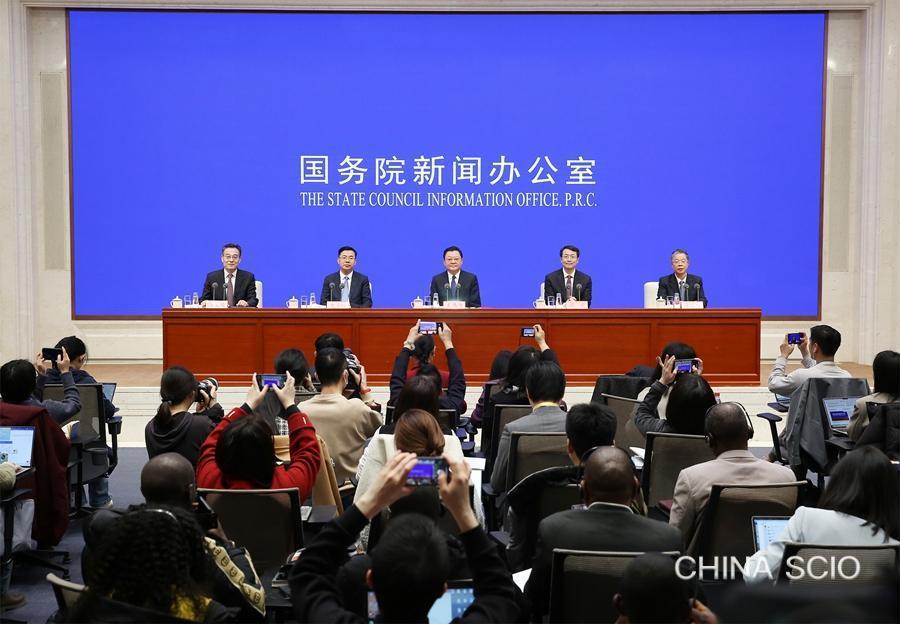
Speakers:
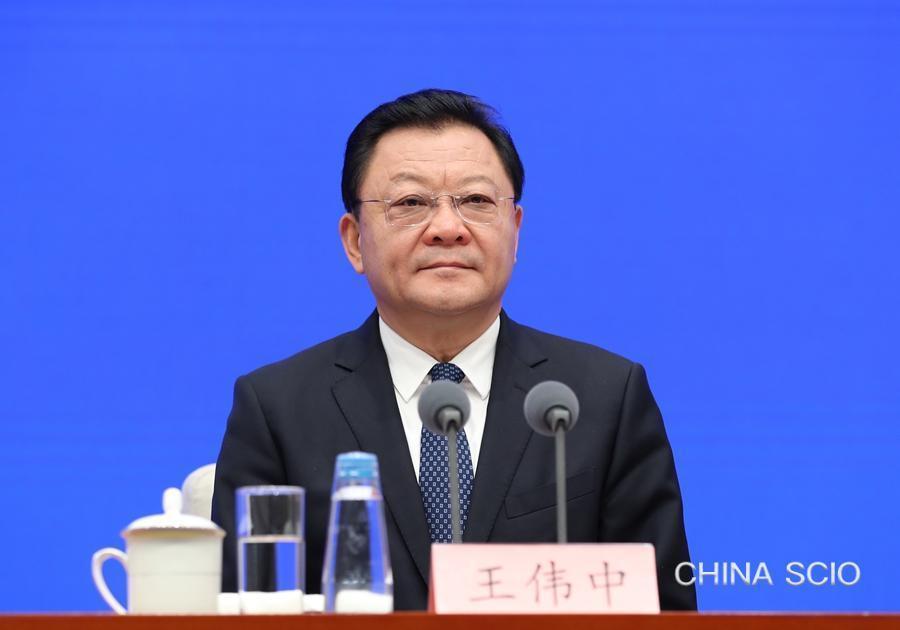
Mr. Wang Weizhong, deputy secretary of the Communist Party of China (CPC) Guangdong Provincial Committee and governor of Guangdong province
Mr. Zhang Hu, member of the Standing Committee of the CPC Guangdong Provincial Committee and executive deputy governor of Guangdong province
Mr. Ai Xuefeng, director general of the Guangdong Provincial Development and Reform Commission and director general of the Guangdong Provincial Office of the Leading Group for the Development of the Guangdong-Hong Kong-Macao Greater Bay Area
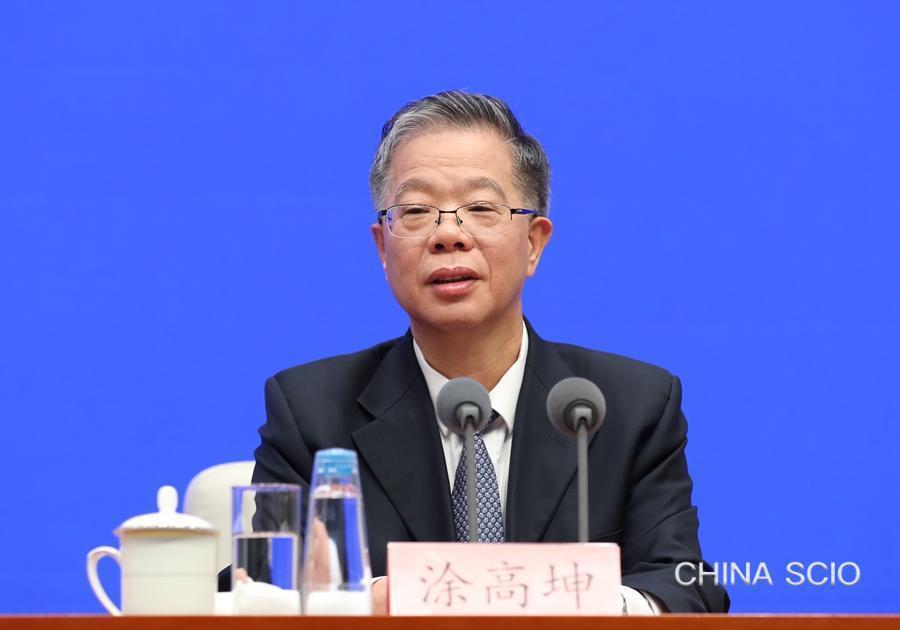
Mr. Tu Gaokun, director general of the Department of Industry and Information Technology of Guangdong Province
Chairperson:
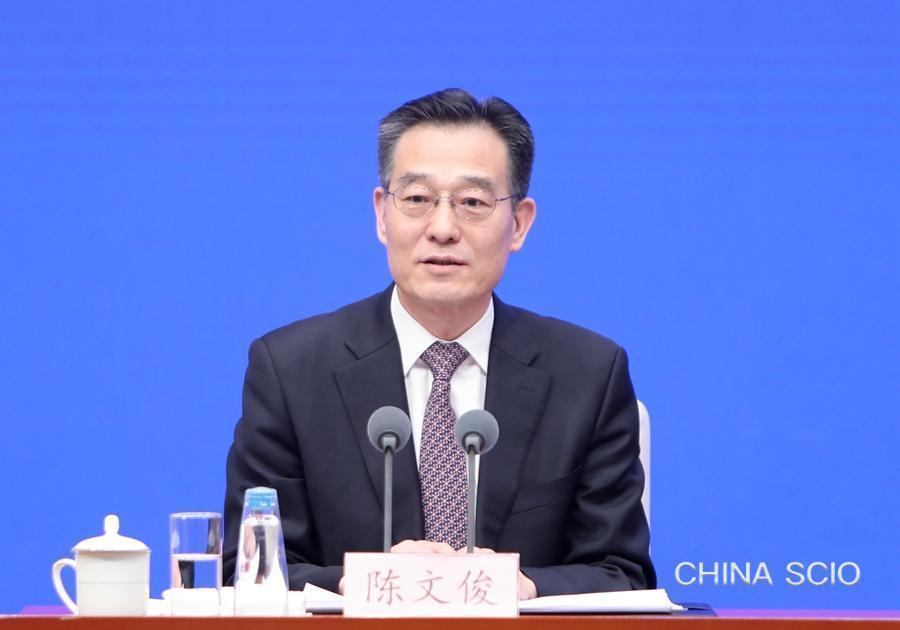
Mr. Chen Wenjun, director general of the Press Bureau of the State Council Information Office (SCIO) and spokesperson of the SCIO
Date:
March 29, 2024
Chen Wenjun:
Ladies and gentlemen, good morning. Welcome to this press conference held by the State Council Information Office (SCIO). This is the fourth press conference in the series "Promoting High-Quality Development." Today, we are pleased to be joined by Mr. Wang Weizhong, deputy secretary of the Communist Party of China (CPC) Guangdong Provincial Committee and governor of Guangdong province, to brief you on the situation and answer your questions. The topic he will brief you on is "Guangdong's dedication to advancing high-quality development and spearheading Chinese modernization." Also present at today's press conference are Mr. Zhang Hu, member of the Standing Committee of the CPC Guangdong Provincial Committee and executive deputy governor of Guangdong province; Mr. Ai Xuefeng, director general of the Guangdong Provincial Development and Reform Commission and director general of the Guangdong Provincial Office of the Leading Group for the Development of the Guangdong-Hong Kong-Macao Greater Bay Area; and Mr. Tu Gaokun, director general of the Department of Industry and Information Technology of Guangdong Province.
Now, I will give the floor to Mr. Wang for his introduction.
Wang Weizhong:
Good morning, everyone. I am very pleased to brief you on Guangdong's promotion of high-quality development. First of all, I would like to express my heartfelt thanks for your long-term interest in and support for the economic and social development of Guangdong.
General Secretary Xi Jinping profoundly pointed out that as Guangdong takes the lead in reform and development, it will feel a deeper necessity and urgency to promote high-quality development. He earnestly hopes that Guangdong will focus its efforts on advancing high-quality development and play a demonstrative and leading role. Last April, during his fifth visit to Guangdong since the 18th CPC National Congress, the general secretary instructed Guangdong to spearhead Chinese modernization by focusing on high-quality development as the primary task and constructing a new development pattern as the strategic mission. This is to make the Guangdong-Hong Kong-Macao Greater Bay Area (GBA) a strategic pivot for the new development pattern, a demonstration area for high-quality development and a leading area for Chinese modernization, which we summarize as "one pivot, two areas."
The CPC Guangdong Provincial Committee has fully implemented the guiding principles of the 20th CPC National Congress and the important speeches and instructions made by General Secretary Xi Jinping during his inspections of Guangdong, making specific deployments for the "1310" scheme, which entails anchoring the one overarching goal of leading the path forward, unleashing the three major driving forces of reform, opening up and innovation, and striving to achieve breakthroughs in 10 aspects. For two consecutive years, we have held the Guangdong High-quality Development Conference on the first working day after the Spring Festival, seizing the major opportunities presented by a new round of technological revolution and industrial transformation. We aim to accelerate the mutual promotion of dual strengths in industry and technology, develop new quality productive forces as Guangdong's strategic move and long-term plan, and strive to create a new Guangdong.
First, we must resolutely shoulder the responsibility of being a major economic province by truly taking on the main burden and strengthening the foundation for high-quality development. Guangdong is a major economic province, a populous province and a leading foreign trade province. Last year, our GDP reached 13.57 trillion yuan, accounting for one-tenth of the national total and ranking first in the country for 35 consecutive years. The total number of business entities in Guangdong exceeded 18 million, including 7.8 million enterprises, which accounts for one-seventh of the national total. We have issued policies and measures in a "fast, accurate and practical" manner to stabilize expectations, growth and employment. We are focused on expanding investment, promoting consumption, stabilizing foreign trade and striving to achieve the economic growth target of 5% for 2024.
Second, we aim to explore the building of the Guangdong-Hong Kong-Macao GBA as a lever to fully deepen reform and opening-up across the province, creating an important source of momentum for high-quality development. Since the release of the Outline Development Plan for Guangdong-Hong Kong-Macao Greater Bay Area five years ago, the central government has granted Guangdong significant opportunities, including the development of the GBA, the Shenzhen pilot demonstration zone, and key platforms such as Hengqin, Qianhai, Nansha and Hetao. Centered around the new positioning of "one pivot, two areas," we are working closely with Hong Kong and Macao to accelerate the construction of a world-class bay area, aiming to create the best-developed bay area. On March 1, the Hengqin Cooperation Zone started closed-loop operation, marking a crucial step toward the integration of Hengqin and Macao. The Shenzhen-Zhongshan Bridge and the Huangmao Cross-sea Channel are set to be completed and open this year, enabling one-hour connectivity between the major cities of the GBA.
_ueditor_page_break_tag_
Third, we are establishing a critical front for new quality productive forces, injecting strong vitality into high-quality development. Guangdong has 71,000 industrial enterprises above designated size and 75,000 high-tech enterprises, both of which rank first in the country. Guangdong also ranks first nationwide in all the categories of number of Patent Cooperation Treaty (PCT) international patent applications, regional development index of intellectual property rights (IPRs), volume of valid registered trademarks, and volume of valid invention patents. The region's innovation capacity has been the highest in the country for seven consecutive years. We adhere to the principle that the real economy is the foundation and manufacturing is the key, consolidating eight 1-trillion-yuan-level industrial clusters including new generation electronic information, green petrochemicals, smart home appliances, advanced materials, modern light industry and textiles, software and information services, modern agriculture and food, and automobiles. We are also accelerating the development of integrated circuits, new energy storage, new energy vehicles, the low-altitude economy and artificial intelligence (AI) into 500-billion-yuan-level and 1-trillion-yuan-level industrial clusters. We are speeding up the construction of a "basic research plus technological breakthrough plus results commercialization plus sci-tech finance plus talent support" full-process innovation chain, with the aim of building a globally influential industrial sci-tech innovation center.
Fourth, we have made utmost efforts to implement the High-quality Development Project for Counties, Towns and Villages (hereinafter, "High-quality Development Project") to address the unbalanced and insufficient development between urban and rural areas. Drawing on the experience of the Green Rural Revival Program in Zhejiang province, we have proposed the High-quality Development Project and set clear goals: initiating the project within a year, achieving preliminary results within three years, making significant changes within five years, and undergoing fundamental transformation within 10 years. We have remained committed to comprehensively expanding county economies, upgrading urban infrastructure, and promoting rural revitalization in an all-round manner. Additionally, we have facilitated the orderly transfer of industries both domestically and internationally, particularly from the Pearl River Delta to the east, west and north of Guangdong province. Our goal is to turn shortcomings into potential.
Fifth, we have made concerted efforts to promote ecological construction in Guangdong province, laying a solid foundation for high-quality development. Last year the province enjoyed good air quality on 94.8% of days, and its forest coverage has reached 53%. While we have made progress in the province's green transformation, we are now focused on making it more beautiful. We have firmly upheld the principle that lucid waters and lush mountains are invaluable assets. To achieve this, we have launched six major actions for ecological construction, focused on optimizing forest composition and structure, and actively and prudently worked toward peaking carbon dioxide emissions and achieving carbon neutrality. These efforts are aimed at creating bluer skies, greener lands and clearer waters in the province.
Sixth, we have remained committed to a people-centered approach and ensured that the benefits of high-quality development are shared by all in the province. We have launched 10 livelihood improvement projects, enhanced public service and social security systems, and worked hard to resolve the pressing difficulties and problems that concern people the most, with the aim of achieving common prosperity. The number of employed people in the province stands at around 70 million, accounting for one-tenth of the national total. Among them, 43.65 million are migrant workers, with an additional 1.17 million added last year. We will make every effort to ensure the employment of key groups and strive to make significant contributions.
Friends from the media, spring has arrived in the Lingnan area and Guangdong is bustling with opportunities. We will make promoting Chinese modernization our utmost political task and uphold high-quality development as a fundamental principle of the new era. Our goal is to welcome the 75th anniversary of the founding of the People's Republic of China with outstanding achievements. We also invite you to visit Guangdong and report on its charming, vibrant, dynamic and innovative features. Guangdong, nestled between mountains and the sea, boasts stunning landscapes, numerous delicacies and a healthy and livable environment.
That's all for my introduction. We are willing to answer your questions. Thank you.
_ueditor_page_break_tag_
Chen Wenjun:
Thank you, Mr. Wang. Now the floor is open for questions. Please identify the news agency you represent before asking your questions.
Beijing Youth Daily:
We noted that this year's government work report set the GDP growth target at around 5%. Mr. Wang just mentioned that major economic provinces should shoulder their responsibility by taking on the main burden. How will Guangdong assume this responsibility and contribute more to national development? Thank you.
Wang Weizhong:
Thank you for your question. As one of the major economic provinces, Guangdong must bear greater responsibilities, leading the way in economic development and making more contributions to the nation. Our target this year is 5%, and we are confident in achieving it. Our confidence stems from decisions made by the leadership of the CPC Central Committee. The Central Committee set the goals of seeking progress while maintaining stability, promoting stability through progress, and establishing the new before abolishing the old. We have pursued economic development and high-quality development as our central task and redoubled our efforts to promote project investments. Last year, the province's industrial investment grew by 22.2%, maintaining double-digit growth for 36 consecutive months. Investment in technological upgrades grew by 22.4%, the highest in the past six years. This year, Guangdong has allocated 1 trillion yuan for key provincial construction projects and over 320 billion yuan for industrial projects. The province is also accelerating the construction of 55 major manufacturing projects with investments exceeding 5 billion yuan each, and planning a large number of high-quality projects for future implementation. In 2023, we encouraged over 9,300 enterprises to undergo technological transformations and more than 5,000 industrial enterprises above designated size to undergo digital transformation. Building on last year's success, we aim to promote technological upgrades for over 10,000 industrial enterprises and digital transformation for 9,200 industrial enterprises above designated size. Our confidence comes from the vibrant market and a surge in popularity. Last year, the number of market entities in Guangdong increased by 1.728 million, reaching 18 million. Among them, the number of self-employed individuals rose by 1.11 million, exceeding 10 million, and the total number of enterprises reached 7.8 million, accounting for one-seventh of the national total. In the first two months of this year, an additional 330,000 market entities were established, including 182,000 self-employed individuals and 148,000 enterprises. With a population exceeding 150 million, Guangdong received 777 million tourists last year, generating tourism revenue of over 950 billion yuan, ranking first in the country. During this year's Spring Festival holiday, Guangdong received 76.07 million visitors, up 68%, with the revenue of the province's tourism market growing by 160% to 69.4 billion yuan. Guangdong is experiencing a surge in popularity. From January to February, Guangdong's economy showed a momentum of rebound and improvement, with its industrial sector, consumption, investment and total imports and exports rising by 10.6%, 6.1%, 4.3% and 24.9%, respectively.
We will seize every favorable opportunity, take advantage of all favorable conditions and work as much as possible to consolidate and build momentum for economic recovery and growth. In terms of serving enterprises, Guangdong helped them save an additional 200 billion yuan last year. In 2024, the province will launch a number of new enterprise-friendly policies in order to reinforce the principal position of enterprises in innovation and to reduce the costs of logistics, bringing more tangible benefits to enterprises. The CPC Central Committee has deployed a new round of large-scale equipment upgrades and trade-ins with consumer goods, which is quite in line with conditions in Guangdong. Guangdong is both a major manufacturing and consumption province. We are stepping up efforts to formulate implementation plans and supportive policies. We will adhere to the market-based approach, promote government guidance, increase fiscal, tax, financial and production support, and promote the advancement and transformation of equipment in seven major fields, with a focus on saving energy and reducing carbon to ultra-low emissions, safely manufacturing products, and promoting digital transformation and intelligent upgrades. We will carry out trade-ins of consumer goods including automobiles, household appliances and home decorations in order to deliver more tangible benefits from policy dividends. We will make a good start in the first quarter, achieve good results in the first half of the year and deliver an excellent performance throughout the year. Thank you.
_ueditor_page_break_tag_
CRNTT:
Five years ago, the Outline Development Plan for Guangdong-Hong Kong-Macao Greater Bay Area was released. What results have been achieved in the past five years? What other measures will be taken to promote the construction of the GBA? Thank you.
Zhang Hu:
Thank you for your questions and your attention to the construction of the Guangdong-Hong Kong-Macao GBA. Over the past five years, Guangdong has always kept in mind General Secretary Xi Jinping's earnest expectations, insisted on taking the Guangdong-Hong Kong-Macao GBA as our key work, and collaborated with Hong Kong and Macao to actively promote its construction, which has achieved remarkable results. The achievements are mainly apparent in five areas:
First, the comprehensive economic strength has reached a new level. The combined regional GDP of the GBA increased from 10.8 trillion yuan in 2018 to over 14 trillion yuan in 2023, contributing to one-ninth of China's GDP within less than 0.6% of the country's landmass. The real economy has seen better development. Guangdong now owns eight 1-trillion-yuan industrial clusters in areas such as new generation electronic information and green petrochemicals.
Second, our capacity for scientific and technological innovation continues to grow. We have made comprehensive efforts to build the GBA into an international sci-tech innovation center, a comprehensive national science center, and a magnet for high-level professionals. National major projects such as the Pengcheng Laboratory and the Guangzhou Laboratory have been established in the area. At present, there are 75,000 national-level high-tech enterprises in this area, including a number of leading technology companies such as Huawei, Tencent, BYD, Midea and Gree. The Shenzhen-Hong Kong-Guangzhou technology cluster has ranked second in the world for four consecutive years. In terms of comprehensive capacity of regional innovation, Guangdong has ranked first nationwide for seven consecutive years.
Third, the internal and external communication networks have been improved at a fast pace. Guangdong's high-speed railway has 2,838 kilometers of operation mileage, and the public transit system in the GBA continues to improve. The Hong Kong-Zhuhai-Macao Bridge (HZMB) has been completed and is functional, so travel time between major cities in the GBA is now at most an hour. The annual passenger throughput within the GBA airports exceeds 280 million, and the annual container throughput of the local ports exceeds 85 million TEUs. Its shipping network covers major cities and key trade ports worldwide.
Fourth, the construction of major cooperation platforms has been accelerated. The tax policy of "opening up the first line and controlling the second line" in Guangdong-Macao In-Depth Cooperation Zone in Hengqin, Zhuhai city has been implemented in a smooth and orderly fashion since it took effect on March 1 of this year. (The "first line" refers to the border between Hengqin and the Macao Special Administrative Region and the "second line" refers to the border between Hengqin and other parts of the Chinese mainland.) Tax policy dividends benefit Guangdong and Macao; Qianhai in Shenzhen has introduced China's first investor protection regulations and has actively promoted cooperation with Hong Kong in modern service industries such as finance and law; the three exchanges — the Guangzhou Futures Exchange, the Guangzhou Shipping Exchange, and the Canton Data Exchange — have been established in Nansha. A comprehensive service base has been inaugurated and in operation to help Chinese companies "go global." The Hetao Shenzhen-Hong Kong Science and Technology Innovation Cooperation Zone is gaining momentum.
Fifth, market integration is gradually improving. A number of landmark projects such as the "Hong Kong and Macao Medicine and Equipment Connect" policy, the "Bay Area Social Security Service" program, the Cross-boundary Wealth Management Connect Scheme, and Cross-border Public Services have been implemented. Since the implementation of the "Northbound Travel for Macau Vehicles" and "Northbound Travel for Hong Kong Vehicles" schemes, the number of vehicles solely registered in Hong Kong and Macao, or so-called single-plated vehicles, which pass through the Zhuhai Highway port of the HZMB, has exceeded 2 million. The three places jointly announced a total of 183 GBA standards covering food, traditional Chinese medicine, elderly care and other fields.
Going forward, we will follow the new positioning of "one pivot, two areas" given to the GBA by General Secretary Xi Jinping and work with Hong Kong and Macao to actively build the GBA into a world-class bay area and one of the best developed bay areas in the world.
That's all from me for your questions. Thank you.
_ueditor_page_break_tag_
Le Label Diplomatique:
Guangdong is a major province with foreign investments and trade. It plays an important role in China's opening up process. My question is: As a pioneer province, what measure will Guangdong take to further deepen international cooperation, including with Africa, to attract foreign investments and promote foreign trade development?
Wang Weizhong:
Thank you for your question. I will answer this question. As is widely known, Guangdong is a powerhouse in foreign trade, boasting a foreign trade-to-GDP ratio of 64%. Notably, Dongguan's ratio stands at 124% and Shenzhen's at 113%. Foreign trade and investment are pivotal in the Guangdong's development. Since the launch of reform and opening-up in 1978, Guangdong has spearheaded the processing trades including accepting customers' materials for processing, assembling parts supplied by clients, processing with supplied samples, and compensation trade. The province has also actively attracted foreign capital, advanced technology and management experience. This proactive approach has swiftly integrated the province into the international division of labor. In just over 40 years, Guangdong has evolved from a comparatively agrarian province to one of China's most economically vibrant and open regions. Last year alone, its foreign trade volume reached 8.3 trillion yuan with accumulated foreign investment exceeding $578 billion, accounting for one-fifth of the nation's total. Remarkably, foreign investment utilization has remained stable at over $20 billion for nine consecutive years, with more than 350 Fortune Global 500 companies having a presence across Guangdong.
In recent years, facing a complicated and challenging international environment, we have resolutely implemented the decisions and arrangements of the CPC Central Committee, vigorously promoted foreign investment and trade and issued a series of policies to stabilize foreign trade and investment. As a result, the scale and proportion of imports and exports, and the actual utilization of foreign investment, have remained stable. Particularly, despite various pressures last year, our imports and exports reached 8.3 trillion yuan, growing against the odds by 0.3%. Among the growth, cross-border e-commerce imports and exports reached 843.3 billion yuan, a growth of 25.2%, accounting for roughly 40% of the national total. Leveraging Guangdong's comprehensive industrial support, sound business environment and vast market potential, we have attracted investments exceeding $10 billion from companies like BASF, ExxonMobil and CNOOC Shell. CNOOC Shell's Phase III project commenced construction last year, while ExxonMobil's Phase I is set to commence production by the end of this year, and BASF's integrated project is scheduled for completion next year. Many foreign-funded enterprises have established research and development centers in Guangdong. We have held the Guangdong-Hong Kong-Macao Greater Bay Area Global Investment Promotion Conference for two consecutive years and conducted investment attraction events overseas. Last year, we held the Guangdong-Hong Kong-Macao Greater Bay Area and Europe Economic and Trade Cooperation Conference in Germany, achieving significant results. Over the past two years, we have signed a cumulative total of 1,700 projects during two investment promotion conferences. The total investment of those projects reached 4.7 trillion yuan. In January and February of this year, Guangdong established 2,982 new foreign-funded enterprises, a growth of 38.1%, demonstrating that Guangdong is the preferred and optimal destination for foreign investment.
Next, we will firmly pursue higher-standard opening-up, leveraging the synergies of the "five international linkages," which are foreign trade, investment, outsourcing, economic cooperation and talent introduction, in order to fully support the growth of foreign trade and investment.
First, we aim to enhance the quality and effectiveness of foreign trade. We will implement policies to stabilize foreign trade and promote growth, expand trade in intermediate goods, nurture new export growth drivers, such as the "new trio," namely, electric vehicles, lithium-ion batteries, and photovoltaic products, stabilize and enhance processing trade, promote the development of new forms of foreign trade and consolidate and expand diverse international markets. Africa is a significant trading partner with the total trade volume exceeding 270 billion yuan last year, marking a growth of 3.9% and accounting for 13.7% of the trade between China and Africa. Products such as mobile phones from Shenzhen, furniture from Foshan and lighting fixtures from Zhongshan are highly favored by African consumers. Notably, the mobile phone produced by Transsion Holdings are tailored specifically for the African market. I have personally visited this company, witnessing its widespread popularity among African consumers.
Second, we will promote coordinated development of domestic and foreign trade. We will ensure that products sold domestically are produced on the same production lines, meet the same standards, and are of the same quality as exported products, facilitating smooth transitions for businesses between domestic and international markets. This endeavor aims to amplify the reach of Guangdong's innovative technologies, high-quality products and branded services across the country.
Third, we will foster a world-class business environment that is market-oriented, law-based and internationalized, and advance institutional opening up. This includes fully implementing the negative list for foreign investment and service mechanisms for major foreign investment projects like the "through train " and "one-stop" service. Through more efficient and high-quality services, we aim to build the "Invest in Guangdong" brand. Next month, we will host the 135th session of the China Import and Export Fair, also known as the Canton Fair. We sincerely welcome merchants and friends from home and abroad to come to Guangzhou and participate in this event, achieving mutual cooperation and success.
_ueditor_page_break_tag_
CNBC:
Guangdong, known for its robust manufacturing and export sectors, is striving for high-quality development. Could you provide insights into the status of both high-end manufacturing within the province and exports from the province? What proportion do they constitute in overall local development? Additionally, what are the province's plans for advancing high-end manufacturing, particularly in preventing inefficient investments? Thank you.
Tu Gaokun:
Thank you for your questions. Guangdong steadfastly upholds the real economy as its foundation with manufacturing as its backbone. The local manufacturing industry is both our "pillar" and "cornerstone." As a globally significant manufacturing hub, Guangdong's manufacturing enterprises of designated size achieved a total operating income of 17 trillion yuan in 2023, and value-added of the manufacturing sector accounted for 32.7% of GDP. When combined with manufacturing-related productive service industries, this figure exceeded 60%. Notably, in the first two months of this year, Guangdong's manufacturing enterprises of designated size saw a robust 10.8% year-on-year increase in value-added, signaling a clear trajectory toward more steady growth.
Guangdong, as a leader in foreign trade and investment, has maintained strong connections with global markets and industrial and supply chains which are characterized by mutual interdependence. Manufacturing of goods accounts for 95% of Guangdong's total import and export volume, with exports reaching nearly 5.4 trillion yuan in 2023, two-thirds of which are from the equipment manufacturing sector. In the first two months of this year, exports amounted to 878 billion yuan, a remarkable 27.2% year-on-year increase. Through collaborative partnerships with numerous foreign counterparts, Guangdong's manufacturing industry actively contributes to globalization, fostering mutual benefits and win-win outcomes.
We have always believed that there is no such thing as a "sunset industry," only "sunset businesses." Whether it is traditional industries that cater to basic necessities of life, emerging industries that explore new frontiers or future industries with their boundless possibilities, they are all essential for social development and equally important. Guangdong has been steering manufacturing toward the mid- and high-end in global value chains in recent years. We continue to promote industrial innovation through technological innovation, making breakthroughs in a series of key core technologies and products to meet the increasingly sophisticated demands of domestic and international markets. Guangdong is home to five state-level manufacturing innovation centers, including those focused on new energy storage, which will play an even greater role in the future. We continue to build the foundation of the real economy through industrial clusters and support the comprehensive development of 10 strategic pillar industries, 10 strategic emerging industries, and five future industries to create new growth engines such as biomanufacturing, commercial aviation and the low-altitude economy. We continue to empower the manufacturing industry with digital intelligence, and guide the digital transformation of the manufacturing industry from "point" to "chain" and expanding to "network," promoting artificial intelligence to empower new industrialization, accelerating the green transformation of production methods, and forming green production.
In this process, we are committed to encouraging all types of advanced and high-quality production factors to flow smoothly into high-efficiency, high-quality manufacturing fields and improving total factor productivity. At the same time, we are willing to continue working with our partners to provide diverse opportunities and choices for global investors and consumers. Thank you.
_ueditor_page_break_tag_
CMG:
Guangdong is well-known as a national innovation hub and also a province that is home to a large number of market entities. How does Guangdong guide and give full play to the main role of enterprises in innovation? And how is it accelerating the aggregation of innovative elements and the transformation of innovation results?
Ai Xuefeng:
Thank you for your questions. Since the implementation of the Outline Development Plan for the Guangdong-Hong Kong-Macao Greater Bay Area five years ago, Guangdong has achieved significant results in driving development through innovation. In this process, enterprises have played the main role, which is clearly reflected in the four figures of "90%" coming from enterprises, namely approximately 90% of R&D institutions, 90% of R&D personnel, 90% of R&D investment, and 90% of patent applications and approvals. Guangdong will continue to empower enterprises to play a leading role in innovation under the new circumstances, promoting leading technology enterprises to transform into ecological-oriented and platform-leading enterprises, cultivating a group of innovative "chain-leader" enterprises, strengthening specialized, refined, distinctive and new "little giant" enterprises, and accelerating the incubation of a batch of "new species" enterprises in new fields and new tracks to form a good model of close cooperation between upstream and downstream, and integration of innovation among small, medium and large enterprises.
Therefore, we will involve more enterprises in government decision-making on innovation. We will improve the mechanism of demand-oriented science and technology projects, and improve the normal communication mechanism with science and technology enterprises. We will urge enterprises to act as the "originators," "responders" and "evaluators" of technological innovation, and ensure that "those who can hear the sound of gunfire direct the operations on the ground."
We will allocate more innovation resources toward enterprises. We will promote greater openness and the sharing of major scientific and technological infrastructure with enterprises, as well as facilitating the flow of high-level research personnel into enterprises. We will vigorously develop the technology service industry, particularly by establishing a financing system that covers the entire lifecycle of funding needs for technology enterprises.
We will have enterprises take the leading role in tackling core technological challenges. We will increase the proportion of enterprise-led projects in provincial key R&D plans and major special projects to over 80%, give enterprises the right to formulate their own technical directions, and support enterprises as "contractors" to organize and carry out technical research.
We will empower enterprises to accelerate the transformation of scientific and technological achievements. Focusing on the needs of enterprises in the fields of integrated circuits, new displays, new energy storage, new materials, biomedicine and other fields, we will accelerate the construction of pilot platforms aimed at promoting the engineering and industrialization of cutting-edge technologies to facilitate the implementation and transformation of more scientific and technological achievements in Guangdong.
We will encourage innovative enterprises in the reform of science and technology systems and mechanisms. We will implement the policy of super deduction of R&D expenses, promote the demonstration application of scientific and technological achievements of a number of enterprises, accelerate the opening of application scenarios to small and medium-sized enterprises (SMEs) focused on technology, and create an ecosystem conducive to enterprise innovation. Thank you.
_ueditor_page_break_tag_
Hong Kong Bauhinia Magazine:
The topic of business environment reform is of great concern to everyone. How will Guangdong further optimize the business environment and create good conditions for enterprise development? Thank you.
Zhang Hu:
Thank you for your question, and thank you for your interest in Guangdong's business environment. In recent years, we have resolutely implemented the decisions and plans of General Secretary Xi Jinping and the CPC Central Committee, deepening reform of the business environment in key areas and at crucial links, and have achieved significant results. Guangdong has been recognized as the province with China's best reputation for business environment for four consecutive years, according to a report by the All-China Federation of Industry and Commerce (ACFIC) that evaluated the business environment of 10,000 private enterprises. The provincial government has also led the nation for the past five years in integrated administrative service capabilities. At present, the number of market entities in the province exceeds 18 million, of which 7.8 million are enterprises, accounting for one-seventh of the country's total.
Next, we will focus on the concerns of enterprises and the public, optimize the four environments and actively foster a world-class business environment that is market-oriented, law-based and internationalized.
First, we will foster a centralized, efficient, competitive and orderly market environment. We will quicken our steps to serve and integrate into the unified national market, fully implement the policy of "entry unless on the list" and treat business ownerships of all types equally. We will further implement special measures to broaden market access in Shenzhen, Hengqin and Nansha, and take the lead in broadening market access in an orderly manner in the fields of biomedicine, education and culture, green and low-carbon development and applications of advanced technologies.
Second, we will foster a well-regulated, convenient, open and transparent environment of government services. We have launched "integrated online services" and "one-stop processing", achieving a 94.07% online handling rate for provincial government services, with 92.63% of these services requiring no physical visits. Next, we will continue to deepen the reform of administrative review and approval procedures, improve the mechanism for regular communication between government and business, and introduce more preferential policies to provide one-stop life-cycle services for enterprises.
Third, we will foster a fair and just legal environment conducive to healthy development. We will quicken our steps to study and introduce regulations on promoting high-quality development of the private sector in Guangdong province, ensuring legal protection for corporate property rights and entrepreneurs’ interests. We will further improve the diversified dispute settlement mechanism, promote "internet plus regulation" and credibility supervision, and see that businesses are undisturbed in their operations and their needs are addressed.
Fourth, we will foster an open environment with smooth circulation and win-win cooperation. Leveraging the synergies of the "five international linkages," we will further pursue higher-level opening up. We will spend more efforts in building an open economic system to a higher level. We will implement the eight major steps to promote high-quality Belt and Road cooperation, and actively encourage Chinese enterprises to "go global."
That's my answer, thank you.
_ueditor_page_break_tag_
Guangming Daily:
The unbalanced development between urban and rural areas and among different regions is a big challenge for Guangdong. Therefore, last year, Guangdong launched the "High-quality Development Project for Counties, Towns and Villages." How has it worked out in the past year? What’s the next step? Thank you.
Wang Weizhong:
Thank you for your questions. I will address this issue. Since the 18th CPC National Congress, General Secretary Xi Jinping has noted that the unbalanced development between urban and rural areas and among different regions is the biggest challenge of Guangdong's high-quality development, asking us to strengthen top-level design and make constant efforts to turn weak links into potential strengths. Successive CPC Guangdong Provincial Committees and provincial governments have undertaken extensive work in this regard, significantly improving the developmental conditions within eastern, western and northern Guangdong.
Since the 20th CPC National Congress, based on the good foundation laid in the past, the CPC Guangdong Provincial Committee and the provincial government have learned and applied the experience of the project "Green Rural Revival Program," and have proposed to implement the "High-quality Development Project for Counties, Towns and Villages" in Guangdong. We have made the project a top priority amid our efforts to promote Guangdong’s high-quality development. The project aims to coordinate the advantages of the county, the characteristics of the towns and the resources of the villages by pooling resources and strengthens of all sectors in order to promote the development of the county, the towns and the villages, and to achieve a good start to the 14th Five-Year Plan. The county GDP grew by 5.2% last year, 112 were included on the list of China’s top 1,000 towns, and the income ratio between urban and rural residents narrowed to 2.36:1. For example, Gaozhou, a county-level city under Maoming city, has driven county-wide revitalization by focusing on industrial development. Last year it attracted 74 new projects with a total investment of more than 8 billion yuan. This led to a 43.5% increase in industrial investment, driving the county's GDP to over 76 billion yuan.
Next, we will accelerate the construction of the "High-quality Development Project for Counties, Towns and Villages." Counties serve as the vanguard, with robust county economies bolstering city economies. We will accelerate new urbanization initiatives with a focus on county seats, and take tailored measures to cultivate industries that empower the county and enrich its citizens, such as food processing and culture and tourism sectors, thereby enhancing the county’s overall capacity to support development. Meanwhile, we will intensify efforts to improve county-level facilities and conditions for education and culture. Each county in Guangdong is distinct, necessitating a path of specialized and differentiated development. Whether it is industry, agriculture, commerce or tourism, we develop according to local strengths. For example, coastal counties with abundant marine resources are encouraged to develop the maritime economy, such as portside industries, marine pastures and seaside tourism. Towns act as nodal points, playing an important role in connecting cities and villages. We will speed up the creation of comprehensive service networks, thriving business hubs and convenient living environments, transforming towns into centers of rural governance, service and economic activity. Villages are the bedrock. We must give priority to developing rural industries and improving the living environment. In particular, we should better develop local specialties to create more renowned "Cantonese brand" agricultural products, boosting farmers’ incomes and wealth. For example, Maoming city has vigorously developed its distinctive agricultural sectors, including lychee, longan, and orange, with the total agricultural output exceeding 100 billion yuan for three consecutive years. We will continue to carry out projects that address weak links in rural areas, make great efforts to manage rural domestic wastewater and accelerate the construction of a beautiful and harmonious countryside that is ideal to both live and work in.
We believe that through continuous efforts, we will meet the target of realizing effectiveness in three years, significant changes in five years, and substantial transformation in 10 years, achieving a brand-new urban and rural landscape across Guangdong province and prosperity for all. Thank you.
_ueditor_page_break_tag_
Nanfang Daily, Nanfang+:
We understand that biomanufacturing is considered a new industrial revolution in the manufacturing sector and has attracted significant attention. May I ask what considerations Guangdong province has in developing biomanufacturing? Thank you.
Ai Xuefeng:
Thank you for your question. Biomanufacturing utilizes biological principles and technologies to produce products. It is currently in the early stages of an industrial boom and is rapidly expanding into critical sectors such as food, medicine, materials and energy. This expansion is making it a focal point of competition among the world's major economies.
During the process of promoting mutual reinforcement between technology and industry, Guangdong province has planned for the biomanufacturing industry with foresight. We have established world-leading infrastructure for synthetic biotechnology. Big science facilities have provided support for both basic and applied basic research in synthetic biology and have been fully open and shared during construction to serve enterprises and industrial development. We have built an innovative service platform for biomanufacturing. We have established open innovation carriers, including synthetic biology innovation and entrepreneurship complex, industrial innovation center, and public service platform. Notably, last year, Guangdong province was approved to build a national biomanufacturing industrial innovation center in Shenzhen Guangming Science City, which is currently the only national-level industrial innovation hub in this field. We have nurtured a number of "new species" enterprises in biomanufacturing. In the past three years, one of every two synthetic biology companies in the country has settled in Guangdong province. At the same time, we have also achieved a series of innovative achievements. For example, the research conducted by the Shenzhen Institute of Advanced Technology of the Chinese Academy of Sciences on converting carbon dioxide into glucose and fatty acids, along with the world's first construction of the most comprehensive atlas of human immune cell development, have been included among the top 10 domestic scientific and technological advancements in the past two years.
Next, we will seize the opportunity to further accelerate the development of the biomanufacturing industry. First, we will optimize its development layout. We will promptly formulate an action plan for the industry's high-quality development, design key directions and fields based on technological and market maturity as well as Guangdong province's innovative advantages and industrial needs, and deploy major platforms and projects. Second, we will promote technological research and development in the biomanufacturing industry. We will coordinate special funds for technological innovation and advanced manufacturing, increase support for frontier and disruptive technological innovations in biomanufacturing, and build a globally leading source of innovation for biomanufacturing. Third, we will promote the industrialization of biomanufacturing research results. We will accelerate the construction of a number of pilot-scale testing platforms, further strengthen scenario applications, and promote biomanufacturing to empower key areas such as medicine and health, industrial materials, agriculture and food, new energy, and green environmental protection. Thank you.
_ueditor_page_break_tag_
Hong Kong Economic Herald:
The governor just mentioned that Guangdong province's forest coverage rate has reached 53%, and the province is advancing the Green and Beautiful Guangdong Campaign. Could you please tell us what measures will be taken next? Thank you.
Zhang Hu:
Thank you for your question and your interest in the Green and Beautiful Guangdong Campaign. The province is green throughout the year, and as you mentioned, the forest coverage rate has now exceeded 53%. In recent years, the province has resolutely implemented Xi Jinping Thought on Ecological Civilization. Committed to the overall goal of "being at the forefront," the provincial Party committee has decided to deeply promote the Green and Beautiful Guangdong Campaign. The aim is to promote high-quality development and take the campaign as a strategy for advancing ecological civilization. The campaign practices the concept that "lucid waters and lush mountains are invaluable assets," focusing on high value-added and green development. We strive to make Guangdong province a demonstration and window for practicing Xi Jinping Thought on Ecological Civilization. Moving forward, we will continue to promote "six major actions."
First, we will implement a precise forest quality improvement action. We will carry out in-depth optimization of forest stands and the improvement of forest forms. This year, we aim to complete the tasks of optimizing and enhancing 2 million mu of forest stands and nurturing and improving 2 million mu of forest. We will tap into the economic benefits of precise forest quality improvement and vigorously develop related economies such as homestay tourism and forest wellness.
Second, we will implement an action for integrating and enhancing urban-rural greening and beautification. Currently, our province has established 193 demonstration sites for the Green and Beautiful Guangdong Campaign, achieving full coverage of county-level administrative areas. Next, we plan to fully develop national forest cities and national garden cities and combine the "Hundred, Thousand and Ten-Thousand Project" to focus on promoting greening and beautification efforts in counties, towns and villages.
Third, we will launch an initiative to promote ecological conservation of protected areas. We will step up efforts to develop the Nanling National Park and Danxia Mountain National Park, building 104 demonstrative protected areas; develop the South China National Botanical Garden to a high standard; and build the International Mangrove Center in Shenzhen with a 10,000 mu (666.67 hectares) demonstration zone for mangrove forest.
Fourth, we will implement an action plan to improve the quality of ecological green corridors. We will increase green coverage along expressways, national and provincial highways and railways; make coordinated efforts in the construction of forest trails, greenways, green belts as well as ancient post roads; achieve integrated development among neighboring ancient villages, historical sites and natural parks; and foster stronger connections between networks of forests, water and roads, so as to build a green and beautiful ecological network with greater connectivity.
Fifth, we will launch an initiative to strengthen protection of ancient and famous trees. Efforts will be made to carry out surveys and monitor these trees, while real-time and dynamic management will be implemented. We will rescue and preserve these ancient and famous trees to retain people's nostalgic memories about the past.
Sixth, we will carry out a provincial initiative to encourage people to care for, plant and protect green spaces. Centering on the theme of "I Plant Trees for Guangdong," we will mobilize all sectors of society to grow and protect plants. Through joint actions, we will create a beautiful homeland with abundant green plants that can be seen throughout the whole year.
Ecological development under the Green and Beautiful Guangdong Initiative is a long-term project. We will take this goal as guidance to protect the fields, trees, rivers and mountains of Guangdong, build a pilot zone for the Beautiful China Initiative, and foster pacesetters for green and low-carbon development, so that green ecological advantages can be transformed into high-quality development advantages. Thank you.
_ueditor_page_break_tag_
21st Century Business Herald:
Recently, the State Council has taken steps to promote large-scale equipment upgrades, with a focus on bolstering the technological transformation of key industries. What has the Guangdong government done in terms of the transformation and upgrading of enterprises? And what other specific measures will be taken next? Thank you.
Tu Gaokun:
As you are all aware, the State Council is promoting large-scale equipment upgrades. Yesterday, the State Council held a video conference to make arrangements, which provided a good opportunity for us to bolster technological transformation. Technological upgrading is an ongoing theme in enterprise development, and Guangdong has long been committed to promoting technological transformation and equipment upgrading. In terms of policies, it has issued regulations and policies such as the "Regulations on Promoting High-quality Development of the Manufacturing Industry," "Opinions of the Guangdong Provincial Committee of the Communist Party of China and the People's Government of Guangdong Province on Promoting the High-quality Development of Guangdong as a Strong Manufacturing Powerhouse" and "Circular on Printing and Issuing 'Several Measures on Promoting Industrial Enterprises in Guangdong Province to Accelerate Technological Transformation under the New Situation'", and publicized these policies to nearly 7 million enterprises through "yst.gdzwfw.gov.cn," a platform for businesses to access government services. In terms of resources and factors, we have guided financial capital investment, established a mechanism for utilization of project land-use quota in advance, opened a "green channel" for energy conservation review, and accelerated the development of major technological upgrading projects, such as Maoming Petrochemical's refinery transformation and upgrading and ethylene quality improvement project, and Gree's intelligent equipment project. In terms of guidance and demonstration, we highlighted the creation of a batch of demonstration enterprises and projects with advanced technological reforms, clear achievements and strong industry driving force, and replicated and promoted a series of typical cases. For example, taking home appliances as a starting point, Foshan adopted a model of "major enterprise investment plus supporting facilities from industrial chain," and helped drive the digital transformation of more than 100 SMEs in the industrial chain through platform solutions.
The above measures have achieved good results. As Mr. Wang just said, the growth rate of investment in industrial technological upgrading last year was the fastest since 2018 and increased another 22.8% from January to February this year. Many enterprises reported that after technological upgrading, their production efficiency increased more than 15% and production costs reduced by over 10%.
Next, we will continue to prioritize technological transformation as the most crucial element in maintaining the vitality of the manufacturing industry. We will regard it as one of the key projects in upholding the dominance of the manufacturing industry and our commitment to continuous small-scale technological improvements. We will continue to implement policies for technological transformation, fully promote large-scale equipment upgrades, and initiate actions for technological transformation and equipment renewal in Guangdong province to improve quality and efficiency. Moreover, we will implement projects to empower and enhance technological transformation, ensuring these policies yield substantial benefits for enterprises. We will continue to explore paths for enterprise technological transformation, implement digital transformation projects for industrial clusters and carbon-peaking actions in the industrial sector, promote the transformation and upgrading of industrial chains and supply chains, and continuously enhance the digital and green level of enterprises. We will continue to cultivate technological transformation entities and innovation carriers, implementing enterprise gradient cultivation plans, and enhancing our manufacturing collaborative innovation system. We will improve the quality and efficiency of manufacturing innovation centers and enterprise technology centers at all levels, thereby providing continuous technical support for the technological transformation of enterprises. Thank you.
_ueditor_page_break_tag_
Cnr.cn:
I noticed that at this year's Guangdong Provincial High-quality Development Conference, it was proposed to accelerate the mutual promotion of industry and technology and vigorously develop new quality productive forces. This topic has attracted a lot of attention. As an economically powerful province, what considerations and plans do you have in this regard? Thank you.
Wang Weizhong:
Thank you for your question; I'll answer this one. As you mentioned, for the past two years, we have held the Guangdong Provincial High-quality Development Conference on the first working day after the Chinese New Year. Guangdong is a major province in terms of economy, manufacturing, and scientific and technological innovation. The added value of Guangdong's manufacturing industry accounts for one-eighth of the country's total. Last year, Guangdong province invested 460 billion yuan in research and development, accounting for 3.39% of its GDP. When it comes to developing new quality productive forces, Guangdong province is not only well-positioned, capable and confident, but also recognizes its responsibility to do so. We will develop new quality productive forces according to local conditions, promote industrial innovation through scientific and technological advancements, and integrate innovation into enterprises, industries and overall development.
For Guangdong province, the development of new quality productive forces relies on innovation and industry.
First, we need to adhere to a high level of self-reliance and strength in science and technology, accelerate the construction of a whole-process innovation chain, use disruptive and cutting-edge technologies to cultivate new industries, new models, and new driving forces, and build an industrial science and technology innovation center with global influence. Over the years, we have consistently invested more than one-third of provincial-level scientific and technological innovation funds in basic research. We have launched more than 10 batches of research and development programs in key areas, striving to overcome technological bottlenecks and develop more original and disruptive achievements. For example, in addressing weaknesses in high-end equipment and medical devices, we have promoted cooperation between enterprises, universities, and research institutes, overcoming difficulties in areas such as ECMO, high-end MRI equipment, and high-end surgical robots. To tackle the "chip shortage" problem, we have implemented the Powerful Guangdong-Made Chips initiative. This effort is attracting major projects in areas such as analog chips, sensors, and photomasks, aiming to build China's third hub of integrated circuits. In response to the "last mile" challenge in transforming and applying scientific and technological achievements, we have established several concept verification centers and pilot platforms, primarily serving small- and medium-sized enterprises. This will boost the application and promotion of more new technologies and products in Guangdong province, striving to build a modern, new Guangdong that advances, strengthens, and succeeds through innovation.
Second, we must transform and upgrade traditional industries, cultivate and strengthen emerging industries, arrange the development of industries for the future in advance, and build a modern industrial system that is more internationally competitive. Traditional industries should never be neglected. We encourage enterprises to speed up equipment updates and process upgrades, allowing trillion-level traditional industries such as textiles and clothing, food and beverages, and home appliances and furnishings to leverage their advantages and unleash new vitality. At the same time, we are vigorously developing emerging industries such as integrated circuits, new energy storage, new energy vehicles, offshore wind power, bio-manufacturing, and commercial aerospace. We are advancing the layout for future industries such as quantum technology, the life sciences, and artificial intelligence. We are opening up new areas and new paths for development, continuously shaping the development of new driving forces and new advantages. For example, in the field of low-altitude economy, Guangdong province has been at the forefront of research and innovation. Currently, Guangdong's consumer drones account for over 90% of the national market and more than 70% of the global market, with leading companies such as DJI, EHang and Xiaopeng. In addition, Shenzhen has released the country's first local regulations for the low-altitude economy. In February this year, the world's first cross-sea and cross-city electric "air taxi" made its first flight in Guangdong province. The journey from Shenzhen to Zhuhai takes only about 20 minutes by air, compared to approximately 2 hours and 45 minutes by car. It is expected to officially start manned flights by 2026, which will nurture a new trillion-yuan-level industry cluster in Guangdong province.
Leveraging well-developed industrial facilities, a strong supply of innovation, and rich application scenarios, now is the right time for Guangdong province to develop new quality productive forces with promising prospects. Talent is considered our most valuable resource. To attract this talent, we aim to build a "nest" that attracts "phoenixes." We are committed to drawing in talent, creating platforms for them, and gathering gifted individuals from around the world. We warmly welcome people to come to Guangdong to innovate, start their businesses, and realize their dreams. Thank you.
Chen Wenjun:
Thank you, Mr. Wang, and all the speakers. Thank you for coming, and with that, today's press conference is concluded. Goodbye.
Translated and edited by Zhang Rui, Wang Qian, Cui Can, Ma Yujia, Yan Bin, Wang Wei, Qin Qi, Wang Yanfang, Wang Mengru, Yang Xi, Liu Qiang, Wang Ziteng, Yuan Fang, Zhang Tingting, Zhang Junmian, Yan Xiaoqing, Zhou Jing, Li Huiru, David Ball, Jay Birbeck, and Rochelle Beiersdorfer. In case of any discrepancy between the English and Chinese texts, the Chinese version is deemed to prevail.