.
Read in Chinese
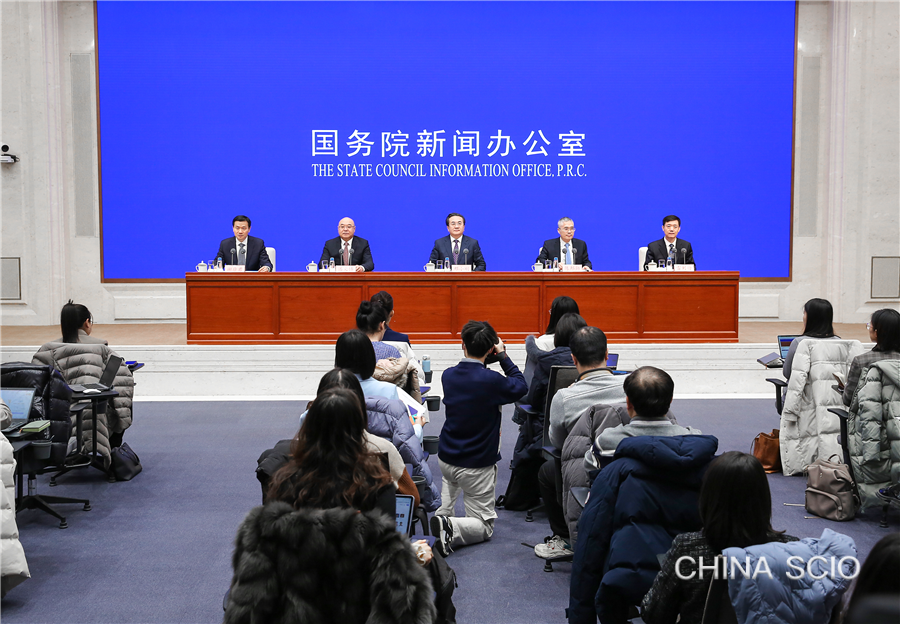
Speakers:
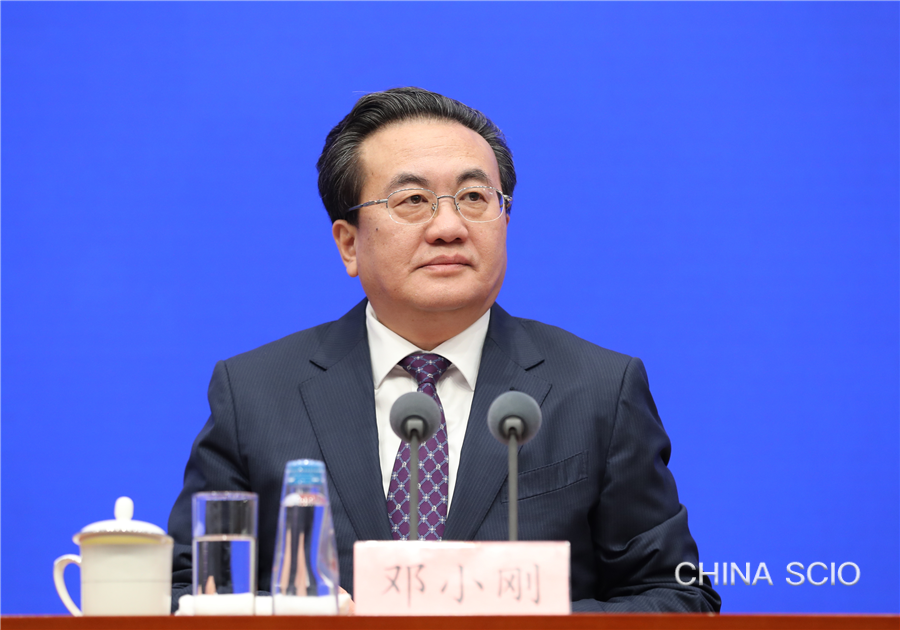
Mr. Deng Xiaogang, vice minister of agriculture and rural affairs
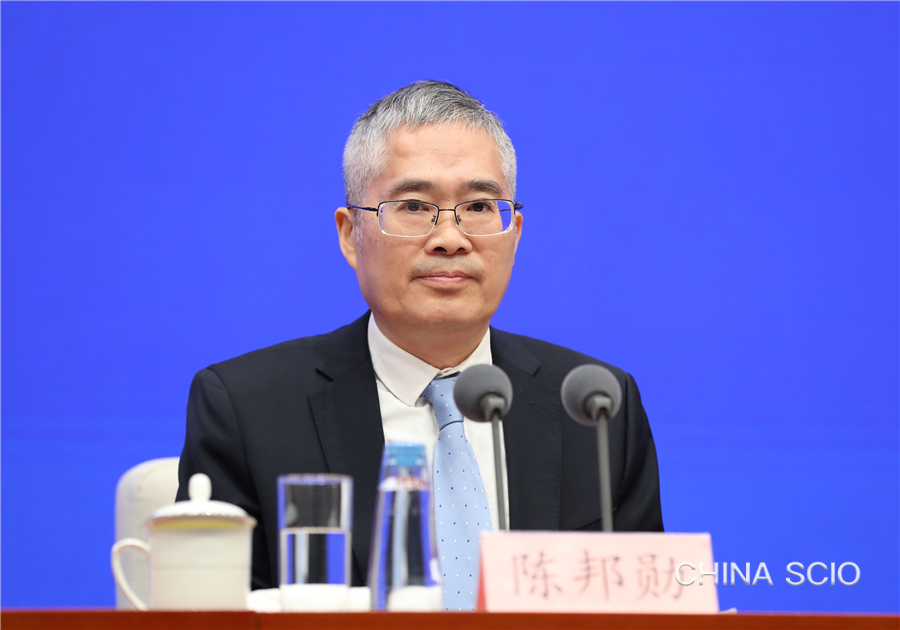
Mr. Chen Bangxun, director general of the Department of Development and Planning of the Ministry of Agriculture and Rural Affairs (MARA)
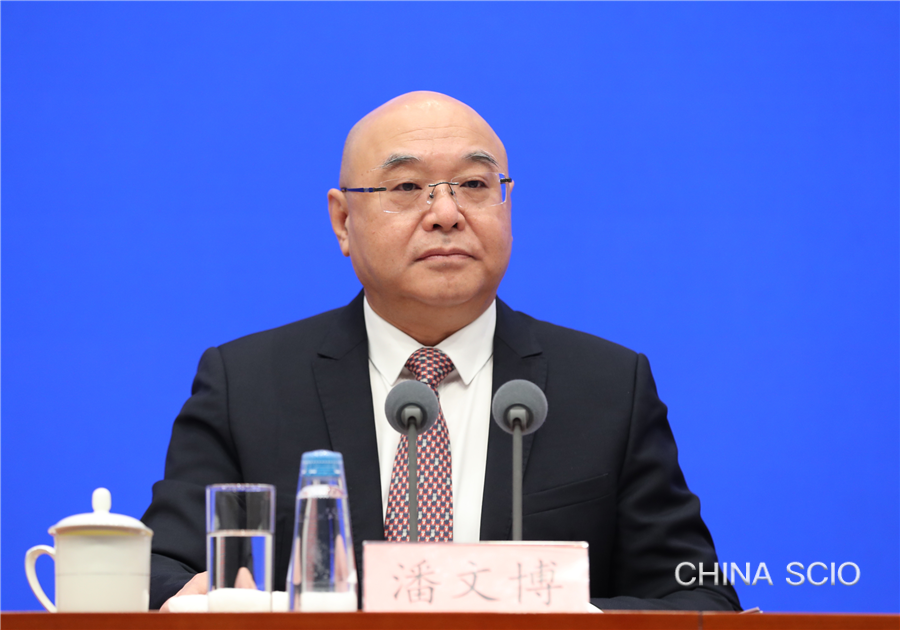
Mr. Pan Wenbo, director general of the Department of Crop Production of the MARA
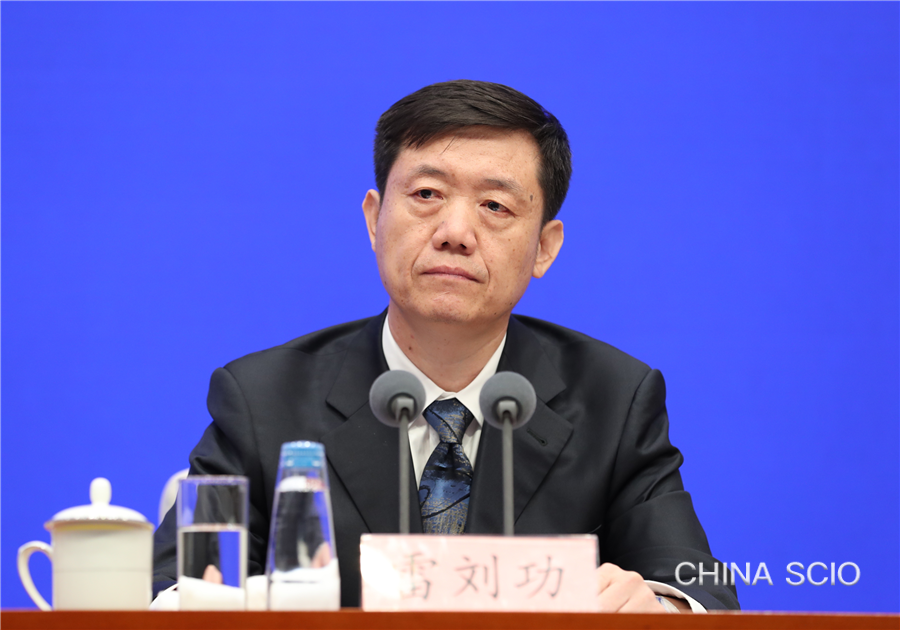
Mr. Lei Liugong, director general of the Department of Market and Informatization of the MARA
Chairperson:
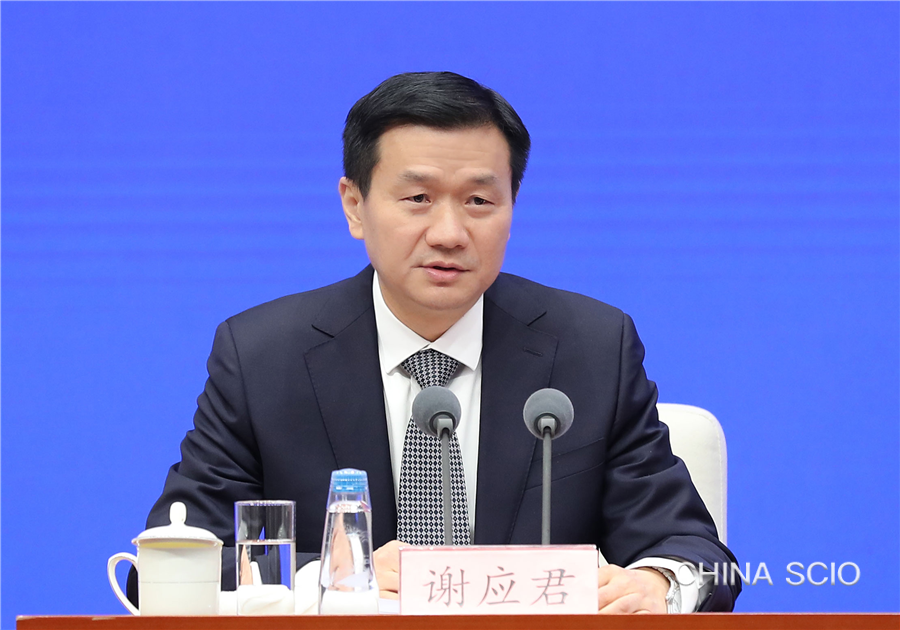
Mr. Xie Yingjun, deputy director general of the Press Bureau of the State Council Information Office (SCIO) and spokesperson of the SCIO
Date:
Jan. 23, 2024
Xie Yingjun:
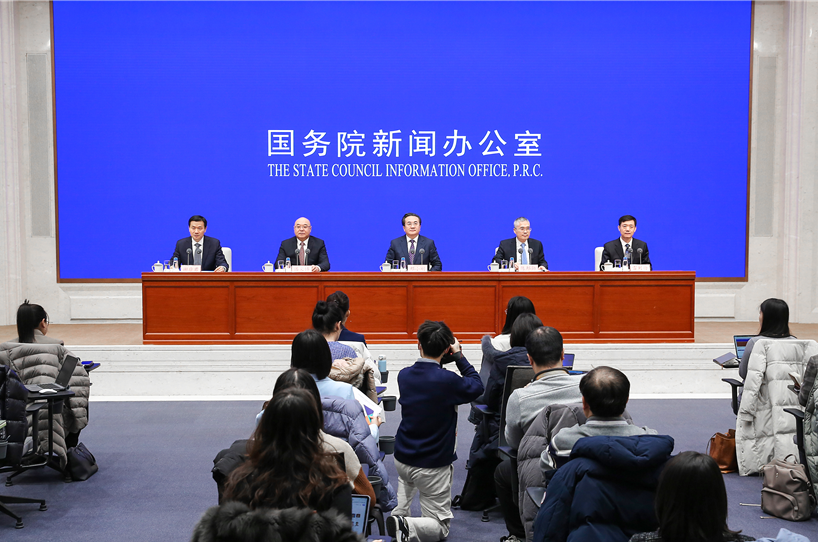
Ladies and gentlemen, good morning. Welcome to this press conference held by the State Council Information Office (SCIO). Today, we have invited Mr. Deng Xiaogang, vice minister of agriculture and rural affairs, to brief you on the performance of agriculture and rural economy in 2023, and answer your questions. Also present at today's press conference are Mr. Chen Bangxun, director general of the Department of Development and Planning of the Ministry of Agriculture and Rural Affairs (MARA); Mr. Pan Wenbo, director general of the Department of Crop Production of the MARA; and Mr. Lei Liugong, director general of the Department of Market and Informatization of the MARA.
Now, I'll give the floor to Mr. Deng for his introduction.
Deng Xiaogang:
Ladies and gentlemen, friends from the media, good morning. I would like to thank all friends from the media for their interest in and support for the work on agriculture, rural areas and rural people. Next, I will brief you on the performance of agriculture and rural economy in 2023.
In 2023, facing the complex and serious domestic and international economic situation as well as frequent and recurring natural disasters, departments of agriculture and rural affairs have thoroughly implemented General Secretary Xi Jinping's important remarks on work related to agriculture, rural areas and farmers as well as the guiding principles of his important instructions in this regard, and implemented the decisions and deployments of the Central Committee of the Communist Party of China (CPC) and the State Council. We have made all-out efforts to overcome difficulties and solve problems to maintain the momentum of steady performance in agriculture and rural development. The fundamentals of agriculture, rural areas and rural people have been further enhanced, providing strong support for economic recovery and solid progress in high-quality development.
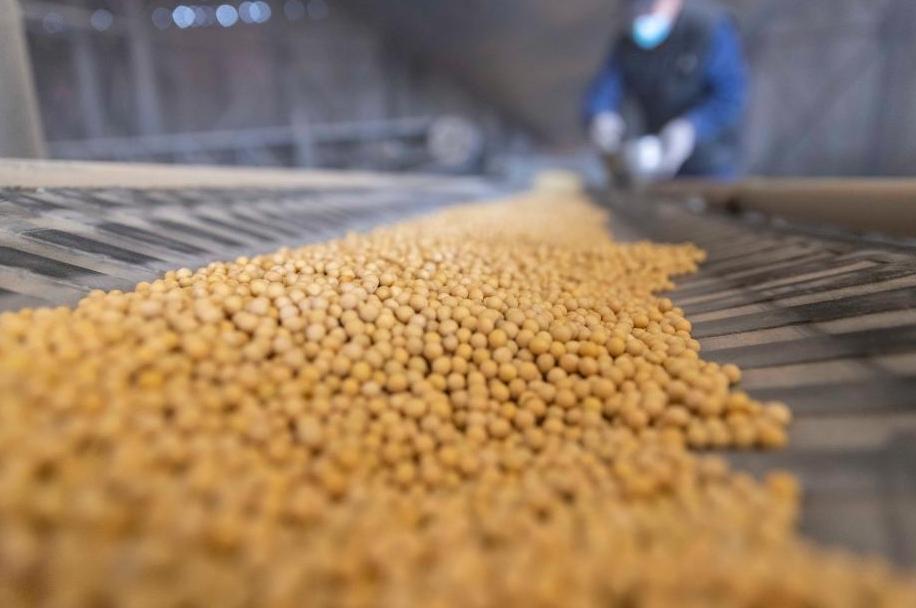
First, China secured another bumper grain harvest, with supplies of important agricultural products well guaranteed. We overcame the negative impacts of natural disasters, including rare protracted rainfall during the harvest period in the Huang-Huai region, severe floods in some regions of North and Northeast China, and droughts in some areas of Northwest China. The country's total grain output reached 695.41 million metric tons in 2023, an increase of 8.88 million metric tons over the previous year, hitting another record high. This is the ninth consecutive year that China has registered a grain harvest higher than 650 million metric tons. Significant progress was also made in expanding the planting of soybean and other oil crops. The total soybean planting area reached 157 million mu (10.47 million hectares) in 2023, staying higher than 150 million mu for the second consecutive year. The soybean output hit a record high of 20.84 million metric tons in 2023. The total planting area of oil crops crossed the threshold of 200 million mu. Hog production remained stable. Pork output reached 57.94 million metric tons, up 4.6% year on year. Meanwhile, outputs of beef, mutton and poultry, milk, as well as aquatic products all increased and the supply of fruit and vegetables was sufficient.
Second, achievements in poverty alleviation have been consolidated and expanded, ensuring that people do not sink back into poverty in large numbers. All localities improved monitoring and assistance mechanisms to prevent people lifted out of poverty from slipping back into it again, striving to spot trends early and intervene through support measures. The risk of slipping back into poverty was eliminated among over 60% of them, and support measures were implemented for all the others. We also put greater emphasis on providing assistance to develop local industries and boost employment. Among the central government funding for promoting rural revitalization, 60% was allocated for industrial development. Counties lifted out of poverty have developed a group of industries that leverage local strengths. A total of 33.969 million people who had been lifted out of poverty found employment, which is 3.777 million more than the annual target.
Third, science, technology and equipment have provided greater support, with solid progress made in the development of modern agriculture. We built and upgraded 86.11 million mu of high-standard farmland, and the high-efficiency water-saving irrigation area reached 24.62 million mu. Initial success was achieved in invigorating the seed industry. We completed the largest national census of agricultural germplasm resources, collecting more than 530,000 crop germplasm samples. Pilot projects were successfully completed for the commercial production of genetically modified corn and soybean varieties. We also made breakthroughs in shoring up weak links in agricultural machinery equipment, with 320-horsepower tractors with a continuously variable transmission, corn planters for mountainous areas, and other needed machinery entering mass production. Large high-horsepower farm machinery and small agricultural machinery for hilly areas have been made accessible.
Fourth, green agricultural development accelerated while the agricultural ecological environment continued to improve. We used fewer but more effective chemical fertilizers and pesticides. The comprehensive utilization rates of livestock and poultry manure and straw, and the agricultural film disposal rate exceeded78%, 88%, and 80%, respectively. The 10-year fishing ban on the Yangtze River led to significant achievements. The livelihoods of more than 230,000 affected fishermen were ensured, management of the waters under the fishing ban was generally stable, and the river's aquatic organism resources and diversity showed encouraging signs of recovery. Additionally, progress was made in agricultural production and the development of pollution-free, green, organic, and geographically indicated (GI) agricultural products. The number of newly certified and registered green and organic agricultural products, as well as those that are famous, special, novel, and high quality, reached 15,000. The percentage of agricultural products passing national quality and safety tests reached 97.8%.
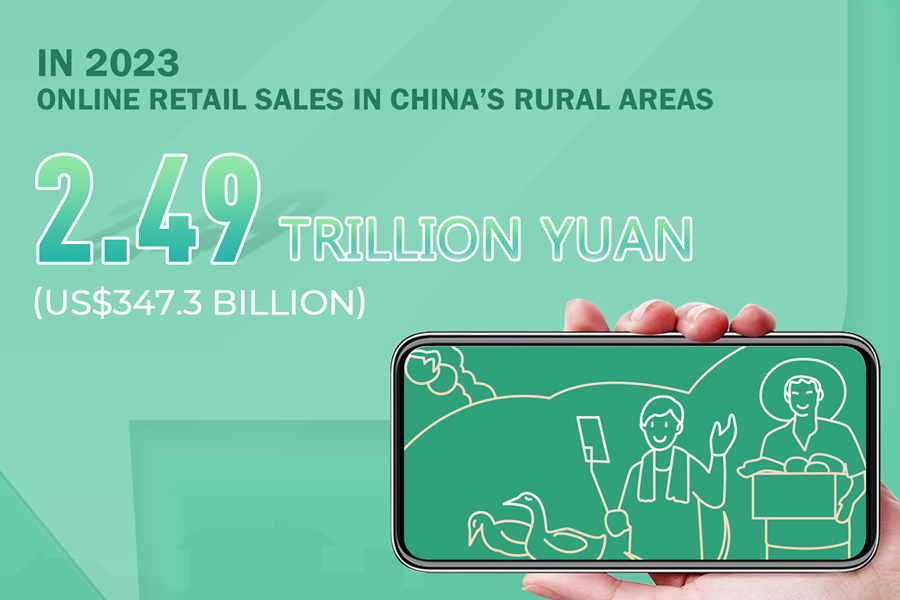
Fifth, rural industries experienced strong growth, providing rural residents with increased job opportunities and income. The agricultural product processing sector advanced smoothly, hosting more than 90,000 companies above the designated size. Rural e-commerce also saw robust development, with its annual online retail sales reaching 2.49 trillion yuan. We enhanced the construction of modern agricultural parks, building 50 new national modern agriculture industrial parks, 40 special industrial clusters with competitive edges, 200 towns with agricultural strengths, and 100 agricultural modernization demonstration zones. Commercial agricultural services were provided for more than 1.97 billion mu of land and over 91 million small agricultural households. Driven by industrial development and employment, the growth of farmers' incomes was sustained. According to the National Bureau of Statistics, rural residents' per capita disposable income reached 21,691 yuan, marking a year-on-year increase of 7.6% in real terms.
Sixth, we summarized and popularized the experience of the Green Rural Revival Program, which was initiated in 2003. This program aimed to renovate about 10,000 incorporated villages in five years, transforming about 1,000 central villages into models of all-round moderate prosperity. This contributed significantly to creating a beautiful and harmonious countryside, desirable for living and working. Rural development initiatives were thoroughly implemented, focusing on inclusive and fundamental public services that ensure basic living standards, thus addressing rural public infrastructure challenges more rapidly. Living conditions in rural areas continued to improve, with more than 73% of rural households having access to sanitary toilets, over 40% receiving domestic sewage treatment, and domestic waste from more than 90% of villages being collected, transported, and treated. Rural governance capacity also improved steadily. A total of 100 national rural governance demonstration towns and 1,001 demonstration villages were newly recognized. Governance approaches, such as list-based and point-based systems, continued to expand. In-depth rural reforms were sustained, with steady progress on pilot projects extending second-round rural land contracts for another 30 years upon expiration, as well as trials for reforming rural residential land.
The agricultural and rural economic achievements in 2023 did not come easily. In 2024, agricultural and rural departments will fully implement the guiding principles of the 20th CPC National Congress and the second plenary session of the 20th CPC Central Committee. We will thoroughly implement General Secretary Xi Jinping's important discourse on agriculture, rural areas, and rural residents. Following the deployments and requirements set at the Central Economic Work Conference and the Central Rural Work Conference, we will focus on building up China's strength in agriculture. Moreover, guided by the lessons and experiences from the Green Rural Revival Program, we will spare no effort to enhance agricultural production with an emphasis on food security. We will also advance rural revitalization in a coordinated manner, focusing on the construction and governance of rural development. This approach will promote sustained improvements in the work related to agriculture, rural areas, and rural residents. Thank you. My colleagues and I will now take your questions.
Xie Yingjun:
Thank you, Mr. Deng. The floor is now open for questions. Please identify the media outlet you represent before asking your questions.
_ueditor_page_break_tag_
21st Century Business Herald:
The Central Economic Work Conference and the Central Rural Work Conference in 2023 both made arrangements for studying and applying the experience of the Green Rural Revival Program, as well as for advancing all-round rural revitalization strongly and effectively. What are the priorities for this year's work on agriculture, rural areas, and rural residents? What specific arrangements will be made? Thanks.
Deng Xiaogang:
Thank you for your attention and questions regarding the work on agriculture, rural areas, and rural residents. The Central Economic Work Conference and the Central Rural Work Conference, held at the end of 2023, provided specific directives for this work, offering overarching guidance for us to perform well in related fields. The agricultural and rural departments will earnestly implement the decisive policies and arrangements of the Central Committee of the Communist Party of China and the State Council. We will make every effort to consolidate the foundation, stabilize production capacity, prevent risks, and stimulate vitality, advancing the work on agriculture, rural areas, and rural residents to achieve new improvements.
We will arrange our work by closely following two main tasks: advancing comprehensive rural revitalization and accelerating the building of China's agricultural strength. Two areas are priorities for our efforts. The first is agricultural production with a focus on food security, aiming to ensure a stable and secure supply of grain and other major agricultural products. The second is rural revitalization, emphasizing the construction and governance of rural development. This targets the consolidation and expansion of gains from poverty alleviation and creating a beautiful, harmonious countryside that is desirable for living and working.
We will adopt measures concentrating on the following "2+3+2" aspects and ensure their implementation.
The first "2" refers to two aspects: ensuring national food security and preventing any large-scale relapse into poverty. Regarding food security, we will launch a new round of actions to increase grain production capacity by 50 million metric tons and raise the per-unit crop yield of large-scale grain, oil, and other main crops nationwide. With such efforts, we will ensure the stable production of staple food, corn, and soybeans, continue to expand the planting area of oilseed rape, and increase per-unit crop yield, ensuring a grain output of over 650 million metric tons. We will prioritize work in several fields to consolidate and expand the gains from poverty alleviation. These include improving monitoring and assistance mechanisms to prevent any relapse into poverty, providing classified guidance to areas lifted out of poverty to develop supporting industries, stabilizing the employment of the workforce that shook off poverty, and pooling more resources to help areas and residents lifted out of poverty build their own momentum for growth.
The "Three Enhancements" aim to continuously promote rural industrial development, advance rural development initiatives, and improve rural governance. First, we will comprehensively promote the development of rural industries throughout the industrial chains, focusing on local specialty products. We will enhance the quality and competitiveness of rural industries with local features, develop and expand the industries that process agricultural products, and actively advance the integration of agriculture, culture, and tourism. This will facilitate the integrated development of rural areas' primary, secondary, and tertiary sectors. Second, we will advance rural development initiatives in a pragmatic way. Starting from farmers' most pressing needs, we will plan and promote key actions to ensure the widespread and inclusive availability of rural infrastructure and public services. These actions will have a substantial impact, starting from small-scale initiatives and expanding to cover a broader area. We will focus on building a beautiful and harmonious countryside that is desirable to live and work in. Third, we will continuously improve rural governance, and encourage a shift away from outdated social practices. We will implement practical and effective governance methods like checklists, point-based systems, and immediate response mechanisms, and increase the supply of cultural products that embody the charm and essence of rural areas.
The "Two Reinforcements" refer to strengthening technology development and deepening reform at the same time as well as reinforcing measures to increase farmers' income. The emphasis on technological innovation lies in its application-oriented approach, optimizing work mechanisms and enhancing the overall efficiency of the agricultural science and technology innovation system. At the same time, efforts will be made to develop high-quality farmland, accelerate the revitalization of the seed industry, and enhance research and development as well as the application of agricultural machinery and equipment. The focus of deepening rural reform is to prudently advance the pilot program of extending second-round rural land contracts by another 30 years upon expiration as well as developing new collective economies in rural areas based on local conditions. The key emphasis in increasing farmers' income is to create more channels for increasing rural incomes through industrial development, employment opportunities, and reforms, and allowing farmers to share more fruits of reform and development. Thank you.
_ueditor_page_break_tag_
Crnews.net:
In 2023, China achieved another abundant grain harvest, but the country still imports a considerable volume of grain. How does the MARA view this situation? Thank you.
Chen Bangxun:
The issue of grain is a matter of great concern for everyone, and the import and export volumes are also key focuses. As we all know, China is a populous country and a major grain consumer. The country's food security strategy is based on the principle of "prioritizing domestic production, relying on ourselves, ensuring production capacity, moderate imports, and technological support" to safeguard national food security. Appropriately utilizing international grain sources to fill the gap in production and demand for products in short supply and improve the variety structure has played a crucial role in ensuring the stability of grain supply and prices. According to data from the General Administration of Customs, China imported 160 million tons of grain in 2023, representing a year-on-year increase of 11.7%. In terms of structure, soybeans still dominate imports, accounting for over 60% of total grain imports. The total annual import volume of soybeans reached 99.41 million tons, a growth of 11.4% compared to the previous year. Importing such a large quantity of soybeans serves two purposes: meeting the demand for edible vegetable oil consumption and fulfilling the need for soybean meal in livestock and poultry feed.
Currently, China is deeply engaged in the international agricultural product market, both importing and exporting products. China's agricultural product imports rank first in the world, making it a major global market for agricultural products. Additionally, its agricultural product exports rank fifth in the world, as high-quality agricultural products such as fruits, vegetables, and aquatic products are exported to the international market. In 2023, China's agricultural product exports reached $98.93 billion, a 0.9% increase compared to the previous year.
How is the food security situation in China? It can be assessed from aspects such as production, structure, and inventory. First, there have been consecutive years of abundant harvests. China's grain production has remained stable at over 1.3 trillion jin (650 billion kilograms) for nine consecutive years, with a per capita grain availability exceeding 490 kilograms, surpassing the international food security standard of 400 kilograms per capita. Second, the variety structure has been optimized. The production of staple grains consistently exceeds demand, ensuring an absolute guarantee. The supply of high-quality rice and specialized wheat has increased. For corn, which has a high demand increment, there has been a significant increase in production, leading to a notable improvement in the supply-demand situation. The expansion of soybean cultivation has shown significant results, further improving self-sufficiency levels. Third, there is an ample grain inventory. Currently, China's grain inventory-to-consumption ratio is far higher than the safety level of 17% to 18% proposed by the Food and Agriculture Organization of the United Nations.
Therefore, it can be said that China's grain production has increased, the structure is optimized, and the reserves are sufficient, ensuring food security. In the next steps, we will further implement the strategy of sustainable farmland use and innovative application of agricultural technology for national food security, focusing on the key aspects of seeds and arable land, and strengthening supportive policies, so as to reinforce the foundations for food security on all fronts, and keep ourselves well-positioned for national food security. Thank you.
_ueditor_page_break_tag_
Sannongfabu:
Mr. Deng previously noted that China achieved record-high grain production last year. Could you provide an overview of the overall target for China's grain production in 2024? Additionally, what measures will be implemented to ensure the success of grain production? Thank you.
Pan Wenbo:
As you mentioned, achieving record-high grain production last year was no easy task for China, given the frequent occurrence of natural disasters. The central rural work conference, held at the end of last year, made it clear that annual grain output should continue to exceed 1.3 trillion jin (650 billion kg) this year. Focusing on this goal, the MARA will employ a two-pronged approach of stabilizing the cultivated land area and increasing yield per unit to ensure overall stability in the grain cultivation area, tap the potential and expand the cultivation area in regions where conditions permit, make steady progress in production, and strive to increase production while optimizing the structure of crop varieties and quality. As Mr. Deng mentioned earlier, specifically, this refers to the "Three Stabilities, One Expansion, and One Increase" approach. The "Three Stabilities" refer to stabilizing the production of staple grains, corn and soybeans. The "One Expansion" refers to expanding the cultivation area for oilseed rape. The "One Increase" focuses on increasing yield per unit. The key measures implemented will focus on the "One Foundation, Two Key Aspects."
The planting area is the foundation. First, we will make sure all parties fulfill their responsibilities. Under the requirements of the State Council, we will assign grain production objectives and tasks for 2024 to provincial governments. Together with other relevant departments, we will examine the farmland protection and food security-related work done by provincial Party committees and governments and see whether they fulfill their responsibilities. Second, we will offer more support and make sure of the lowest purchasing prices for wheat and rice as well as subsidies for corn, soybean, and rice producers. We will be more supportive of raising per-unit yields and encourage local governments and farmers to make more efforts related to grain production.
One important approach is to increase per-unit yields in large areas. The MARA sees this as the top priority for grain production, and it involves two aspects. One is to focus on major counties for grain and oil production and thoroughly promote the main planting varieties, technologies, and equipment in an integrated manner so as to fully elevate per unit yields. The other is to boost the production of individual farmers or farming households operating on larger scales. We will foster skilled grain producers to inspire and motivate small and medium-sized farming households to achieve high production, thus evenly increasing production across large areas.
Another important approach is to control losses through disaster prevention, mitigation, and relief. We will keep in mind that disaster mitigation leads to increased production, and preventive measures are more important than relief measures afterwards. We will do a good job in disaster mitigation to ensure agricultural production. The meteorological agency predicts that this year's meteorological situation is not looking good concerning agricultural production, so the task of disaster resistance and securing a bumper harvest will be strenuous. We will formulate disaster prevention plans and technical programs for different areas and crops, accelerate the construction of agricultural emergency disaster relief centers for both daily and emergency use, reserve supplies and prepare technologies beforehand, and implement other preventive measures. We will work on the frontline and be responsible for related work in different provinces and smaller regions, including coordination and offering guidance. We will assemble and deploy task forces and technical teams to work in disaster-stricken areas and offer guidance on implementing disaster mitigation measures in order to ease losses. Thank you.
_ueditor_page_break_tag_
China Media Group:
The bottom-line task of comprehensively advancing rural revitalization is to solidify and further the results of poverty alleviation and make sure no large groups of people sink back into poverty. What progress was made on this task last year? What's the next step? Thank you.
Deng Xiaogang:
I will answer these questions. As you said, as the bottom-line task of comprehensively advancing rural revitalization, the work to solidify and further the results of poverty alleviation is difficult and challenging. In 2023, the MARA coordinated different localities, government departments, and all sectors of society to earnestly implement the decisions and arrangements of the CPC Central Committee and State Council. We shouldered responsibilities, took a hands-on approach, and concretely advanced major tasks to solidify and further poverty alleviation results while promoting rural revitalization. The results of poverty alleviation have been solidified and furthered continuously. We secured the bottom line and prevented large groups of people from returning to poverty. In places that have shaken off poverty, farmers' revenue continued to grow at a faster pace than the average of all rural areas in the country. After being lifted out of poverty, people experienced continued improvements in living and production conditions, with the sense of gain, happiness and security continuing to grow.
This year, the MARA will focus on securing the bottom line, creating momentum, and boosting development. In making sure no large groups of people return to poverty, we will allot more resources and strive to invigorate the internal driving forces of previously impoverished places so that people can better develop.
First, we will monitor the situation and offer help to secure the bottom line. We will perfect dynamic monitoring, aid and support mechanisms to prevent poverty from reoccurring. We will expand the use of big data technology for predictions and early warnings to identify households that risk returning to poverty in a timely manner and put them onto a list for monitoring. For monitored households with the ability to work, we will take at least one development-oriented supportive measure and guide them to increase wealth through hard work. For monitored households without the ability to work, we will ensure their basic living standards. For farming households risking returning to poverty due to disasters, we will offer help to whoever is eligible and prioritize those who meet certain conditions.
Second, we will boost industries and employment to create more momentum. This is key to solidifying the results of poverty alleviation and will help to invigorate the internal driving forces of previously impoverished areas and people's development in the long run. In terms of industries, central government funding will help maintain a stable proportion of rural revitalization subsidies used for the development of industries. We will offer differentiated guidance to facilitate the development of industries, with some being solidified, some upgraded, some revitalized, and some restructured in order to improve quality and efficiency and realize sustainable development. We will perfect the mechanism for rural industries to unite farmers and help them develop so as to let previously impoverished people enjoy more benefits of industrial added value. In terms of employment, we will deepen the efforts to boost employment and prevent reoccurring poverty. We will strengthen labor service cooperation between the eastern and the western regions and utilize channels such as employment support workshops, public-benefit job positions, and work relief to ensure 30 million job opportunities for previously impoverished persons.
Third, we will boost development through policy implementation. We will assess the work of solidifying and furthering poverty alleviation results while promoting rural revitalization, monitor and evaluate the development of major counties receiving help to realize national rural revitalization strategies, and guide local governments to allocate more resources and energy to increase development capabilities. We will coordinate to utilize the resources such as east-west cooperation, targeted support by central authorities, resident working teams assigned to villages, and the private sector to offer support, creating a synergy to achieve better results. Meanwhile, we will study and design specific systems and arrangements for the post-transition period, explore how to align policies aimed at preventing reoccurring poverty and offering regular help to the rural low-income populations and move to establish a regular support mechanism for underdeveloped areas. Thank you.
_ueditor_page_break_tag_
Hong Kong Bauhinia Magazine:
A cold front has swept across the country recently, and the Spring Festival is coming. Given this, what is the current production and supply situation of "vegetable basket" products (non-staple foods) nationwide? What measures will be adopted to ensure supply? Thank you.
Lei Liugong:
Thank you for your concern about the work related to "vegetable basket" products. Non-staple foods, I would say, have always been closely related to people's wellbeing. The supply of meat, eggs, milk, as well as aquatic products and fruit and vegetables, is something that the public is most concerned about, especially before the approach of the Spring Festival. In this regard, the general offices of the CPC Central Committee and the State Council have jointly released a circular to ensure well-coordinated work on all fronts for the New Year's Day and the Spring Festival break, emphasizing efforts to enforce the system whereby city mayors assuming responsibility for the "vegetable basket."
The CPC Central Committee has always attached great importance to the stable and secure supply of non-staple foods for people's livelihoods. Generally speaking, the supply of non-staple foods was sufficient in 2023, and the overall operation of the market was stable. Last year, total acreage and output of vegetables continued to grow. The total vegetable acreage was over 78 million mu as of late December, with its output reaching more than 21 million tonnes, an increase of over 800,000 mu and 600,000 tonnes year on year, respectively. Meat output, including pork, beef, mutton, and poultry, was more than 96.41 million tonnes, an increase of 4.5% year on year. Moreover, the output of aquatic products witnessed growth as well. The wholesale price index of non-staple foods, which is compiled on the basis of data collected from around 200 agricultural wholesale markets, stood at 124.91 in 2023, edging down from the same period in previous years. Moreover, the prices of some expensive fruits decreased as well. All municipalities directly under the central government, cities specifically designated in the state plan, and provincial capitals have attached great importance to the work related to the "vegetable basket," and have therefore made great efforts to ensure production, transportation, quality, and price stability. By doing so, the supply has been sufficient, diversified, and remained at steady prices.
We have an overall judgment on the supply of non-staple foods during the Spring Festival that you expressed concern about. I would say that the total supply of "vegetable basket" products will be guaranteed. Production capacity of meat, eggs, and milk was sufficient in the first quarter of 2024, according to monitoring data. In January, vegetable acreage witnessed a steady increase, laying a solid foundation for the supply of "vegetable basket" products. However, short episodes of freezing weather or snowstorms might be witnessed in some areas in winter and spring due to the influence of both El Nino and global warming, which would pose some risks and challenges to the provision of agricultural supplies. Given this, the MARA has made some arrangements to ensure the supply of non-staple foods during the Spring Festival.
Going forward, we will make stepped-up efforts in the following five aspects. First, we will ensure that relevant parties shoulder their responsibilities. We will make sure that city mayors perform their due responsibilities for the "vegetable basket," and urge local governments, especially those of large and medium-sized cities, to improve their contingency plans for ensuring the provision of agricultural supplies. We will make sure that their response and measures adopted will be made based on different levels and categories. Second, we will ensure production stability. We will ensure the implementation of measures for preventing and mitigating disasters, as well as ensuring vegetable production according to different areas and categories. We will make coordinated efforts to ensure the production of pork, beef, mutton, poultry, and fresh milk, as well as aquatic breeding. Third, we will strengthen supervision. We will strictly fulfill our responsibilities for supervising the quality and safety of agricultural products and ramp up efforts to monitor risks in major areas, categories, and key links so as to ensure the quality and safety of agricultural products. Fourth, we will improve alignment. We will encourage local governments to implement the "green lanes" policy for fresh agricultural products transportation and help major producing areas establish stable cooperation with large and medium-sized cities. We will also improve trans-regional contingency mechanisms to ensure the provision of agricultural supplies and emergency response mechanisms for unsalable agricultural products. Fifth, we will make monitoring one of our top priorities. We will strengthen production scheduling for non-staple foods and market operation monitoring and release information concerning supply and demand in a timely manner to stabilize market expectations. Thank you.
_ueditor_page_break_tag_
Reuters:
China has completed pilot projects for the commercialization of genetically modified (GM) corn and soybeans, as you mentioned previously. Does this suggest that China is opening up to commercial cultivation of GM soybeans and corn? Are there any limitations that remain? Moreover, what is the plan for the next step in the commercialization of GMO varieties? Thank you.
Pan Wenbo:
Thank you for your questions. The CPC Central Committee and the State Council have attached great importance to scientific research concerning biological breeding and its industrial application, making a series of important arrangements. Major progress has been achieved, and we also made a comprehensive introduction in this regard in August 2023. The Central Economic Work Conference in 2020 pointed out that efforts should be made to move forward with industrial applications of biological breeding in an orderly manner and on the basis of respecting science and providing strict supervision. The "No. 1 Central Document" for 2023 called for enhanced efforts to accelerate the industrial application of biological breeding, expand the pilot scheme in an orderly manner, and regulate planting management. In accordance with arrangements made by the CPC Central Committee, China launched projects focused on the industrialization of GM corn and soybeans in 2021, and these projects have been expanded to 20 counties in five provincial-level regions as of 2023, including Hebei, Inner Mongolia, Jilin, Sichuan, and Yunnan. A seed production program has also been launched in Gansu province. The results of the pilot program show that [the GM varieties] performed well in terms of increasing production, reducing costs, and improving efficiency compared to conventional varieties. The ministry has recently approved some GM corn and soybean varieties [for commercial production] in accordance with national bio-breeding industrialization arrangements, relevant laws, and regulations and issued licenses for 26 companies to breed and sell GM corn and soybean seeds. All the planting areas for these varieties must be in line with the national arrangements regarding bio-breeding industrialization.
Going forward, the MARA will earnestly implement the decisions and arrangements made by the CPC Central Committee and the State Council. We will thoroughly draw from the experience of pilot projects and improve supporting technologies and management measures so as to move forward with relevant work on the basis of strict supervision and guarding against risks in a stable, cautious, and orderly manner. We will improve technological reserves and institutional systems, strengthen supervision, and expand the scope of application in accordance with regulations in an orderly and regulated manner. Thank you.
_ueditor_page_break_tag_
China Daily:
Last year, China imported large amounts of soybeans, mainly driven by the use of soybean meal for animal feed. What measures will be taken by the MARA to reduce soybean meal imports? And what is the current effect? Thank you.
Chen Bangxun:
China indeed imported large amounts of soybeans, which has attracted wide public attention. Soybean meal is an important protein source for feed. In recent years, with the increase in the number of livestock and poultry, the consumption of soybean meal has continued to rise, becoming a key factor for boosting soybean imports. Just as I mentioned, in 2023, China's soybean imports reached 99.41 million metric tons, up 11.4% over the previous year. At present, soybean meal accounts for a relatively large proportion of animal feed in China, and that could be further reduced based on the practice of large animal farming enterprises. In 2023, the MARA launched a three-year action plan on the reduction and substitution of soybean meal in animal feed, aiming to guide the sound use of feed in fish breeding and poultry raising, lower the use of soybean meal, and reduce consumption. This can be explained clearly in three points.
First, soybean meal reduction and substitution are sound and practicable. Soybean meal is a high-protein feed for animals to help supplement amino acids. According to relevant studies, livestock and poultry breeding actually do not require such a high level of protein consumption at present. According to the action plan on the reduction and substitution of soybean meal, we will promote the application of low-protein diet technology across the board. By adopting precise feed formulations and refined processing technologies, in combination with feed additives such as synthetic amino acids, we aim to meet the nutritional requirements of animals while reducing protein consumption. Practices have proved that application of this technology can reduce the consumption of soybean meal without affecting the efficiency of livestock and poultry production.
Second, besides reducing the use of soybean meal, we need to explore alternatives for it. In addition to soybean meal, there are also various resources, including byproducts of grain processing and microbial protein, which can be tapped into as feeds. We should make full use of these resources, expand alternative sources of protein feeds, and at the same time, try to increase the supply of high-quality forage to promote the "replacement of traditional feeds with forage" in cattle and sheep farming.
Third, soybean meal reduction and substitution have brought about conspicuous effects and will continue to be advanced. Since the launch of the action plan on the reduction and substitution of soybean meal, we have advanced the reduction of its use in animal husbandry, with its proportion in feed formulation dropping to 13%, down 1.5 percentage points compared with 2022. It is equivalent to a reduction of about 9 million metric tons of soybeans, calculated by annual consumption of feeds.
Next, the MARA will adopt a problem-oriented approach and work on both supply and demand sides. As well as consolidating and enhancing soybean production capacity, we will make efforts to reduce the consumption of soybean meal in animal feed. We will further advance the application of low-protein diet technology, explore and utilize resources of other protein feeds, increase the supply of high-quality forage, and continue to promote grain conservation and consumption reduction in livestock and poultry breeding. Thank you.
_ueditor_page_break_tag_
The Paper.cn:
We have noticed that pork prices are still low, and pig farming has suffered losses for a long time. How will this affect pig production? What measures will the MARA take to ensure the supply of pigs? Thank you.
Lei Liugong:
Thank you for your attention. The market supply of pork was sufficient in 2023. According to the data of the National Bureau of Statistics, annual pork output stood at 57.94 million metric tons, up 4.6% year on year, reaching the highest level since 2015. On the other hand, pork prices have stayed at a low level for a long time. For consumers, they can have access to affordable pork, while for farmers, it has brought a tough time. In terms of revenues of pig farming, the average loss per head throughout the year was 76 yuan. This was also the first year since 2014 that the general ledger suffered a full-year loss. It should also be noted that the industry has been advanced in adversity. As estimated, over 68% of pig farming was carried out on a large scale in 2023, an increase of about 3 percentage points from 2022. The production efficiency of breeding sows continued to improve, laying a solid foundation for the sustained and healthy development of the pig industry.
In response to the overproduction of pigs and continued losses in pig farming, the MARA has guided localities to strengthen regulations regarding pig production, ensure stability in fundamental policies concerning land use, environmental protection, and finance, continue to improve information monitoring and early warning systems, and encourage farmers to adaptively reduce production capacity and sell pigs in a timely manner, in a bid to accelerate the return of supply and demand to equilibrium. According to the National Bureau of Statistics, at the end of December 2023, the number of breeding sow stocks reached 41.42 million, which was 2.5 million fewer than the highest point at the end of December 2022.
With regard to the future development trend, we recently organized experts, industry associations, and key enterprises to hold a discussion about it. In December 2023, the stocks of big pigs in large-scale breeding farms grew 3.7% year on year. These pigs will be ready for slaughter in one to two months, so it's expected that pig supplies will still be sufficient and that pig farming is likely to continue to suffer losses after the Spring Festival. Meanwhile, we should also see that as the number of breeding sows decreases, the number of newborn piglets will fall accordingly. According to our monitoring, since last October, the number of newborn piglets nationwide has fallen year on year, indicating that we have made progress in production capacity reduction. As the pig production capacity gradually returns to a reasonable level, the pig market is expected to be better in the second quarter than the same period last year.
Next, we will focus on three aspects to advance the steady development of pig production. First, we will step up monitoring. We will guide farmers to sell pigs in a timely manner, in case they blindly delay sales so that pig prices could not return to normal. We will keep a close eye on the changes in the stocks of breeding sows nationwide, issue early warnings at appropriate times, and guide farmers to reasonably arrange production. Second, we will optimize production capacity. We will improve measures to regulate pig production, see that local governments fulfill their responsibilities for ensuring stable production and sufficient supply of pigs, stabilize long-term supportive policies concerning land, environmental protection, and finance, and urge timely adoption of policies and measures including subsidies, credit, and interest discounts to ensure that pig production stays in a reasonable range. Third, we will work to prevent animal epidemics. We will enhance guidance on the prevention and control of swine diseases in spring, focus on the prevention and control of major animal epidemics, carry out the monitoring and investigation of epidemics, step up supervision over key links, including quarantine, transportation, and slaughter, and verify and respond to epidemics in a timely manner. Thank you.
Xie Yingjun:
The last two questions, please.
_ueditor_page_break_tag_
Science and Technology Daily:
We know that with the improvement of living standards, people want to eat well and eat healthily. What considerations does the MARA have in promoting healthy food consumption among urban and rural residents?
Lei Liugong:
As we all know, food is something we consume every day. Sufficient food supply and continuous improvement in nutrition are the material basis to ensure the people's happy life. Currently, China's per capita supply of energy, protein, and fat has exceeded the world's average, but nutritional imbalance and inadequacy are relatively common, which can be summarized as either excessive or inadequate intake. Excessive intake refers to excessive consumption of edible vegetable oil. Currently, China's per capita consumption of cooking oil exceeds 40% more than what is recommended. Meanwhile, inadequate intake refers to the insufficient intake of healthy foods such as milk and dairy products and soybeans and soy products. Currently, China's per capita consumption of dairy products is only one-third of the world average and one-half of the Asian average, far below the recommended dietary amount of 110-183 kg. The intake of soybeans and soy products is less than 59% of the recommended dietary amount, and there is considerable room for growth in both these aspects.
Next, the MARA will work with relevant departments to integrate the construction of a healthy China and the development of a strong agricultural nation, taking a series of measures to promote healthy consumption in order to meet the needs of people's high-quality lives and high-quality population development. First, we will further promote improvements in variety and quality as well as brand building and standardized production. By developing new types of soy products, cheese, and other healthy foods, we will increase the supply of green and high-quality products to enrich consumers' dining tables from a production perspective. Second, we will strengthen the supervision of quality, safe agricultural products, fully implement the standard certification system of edible agricultural products, and ensure safety control so as to reassure consumers about food safety from a regulatory perspective. Third, we will strengthen the publicity of food and nutrition knowledge on key topics such as reducing oil intake and increasing beans, and guide urban and rural residents to adjust their dietary habits and food structure. We aim to make sure that the general public will make informed choices, eat healthily, and maintain their well-being. Thank you.
_ueditor_page_break_tag_
CNR:
Rural development is closely related to the vital interests of farmers and has received widespread attention. What is the next step in creating livable, business-friendly, and beautiful rural areas? Furthermore, how can we motivate farmers and encourage them to participate more actively in rural development? Thank you.
Deng Xiaogang:
Thank you for your questions. I will answer them. Rural development is an important task in promoting comprehensive rural revitalization, directly impacting farmers' production and livelihoods. While recent efforts of various parties have yielded positive progress, there is still a considerable gap compared to farmers' expectations. In implementing the decisions and arrangements of the CPC Central Committee and the State Council, the MARA, alongside other relevant departments, will target the goal of "ensuring modern standards of living in rural areas." Taking the experience of the "Million Project" (Green Rural Revival Program) as a guide, we will focus on several issues that have a strong impact, can be effectively implemented within a few years, and can achieve visible results. The aim is to improve the level of rural development and gradually enhance the completeness of rural infrastructure, convenience of public services, and comfort of living environment. The main work can be summarized in three aspects:
First, we will coordinate the advancement of rural development. Adapting to the evolving situation in the rural permanent population, we will focus on the crucial concerns voiced by residents, such as paving village roads and ensuring a reliable supply of tap water. We will work to foster coordinated and intensive development efforts by leveraging the rural devleopment project database and task list. At the same time, we will improve the rural public service system and enhance the quality of public services, such as education, healthcare, and elderly care.
Second, we will take the lead in improving the rural living environment. We will continue the rural toilet revolution in a steady and sustainable manner, establishing long-term management and maintenance mechanisms, and ensuring that each toilet is upgraded to the highest standard possible. We will also coordinate the treatment of rural domestic sewage and garbage, enhance the appearance of villages, and carry out village clean-up campaigns in an orderly manner.
Third, we will continue to strengthen the support and guarantees for rural development. We will strengthen the scientific and technological R&D, integration demonstrations, and promotion and applications in key areas of rural development. We will also promote the formulation and revision of standards for planning, design, engineering construction, operation, and maintenance, etc. We will involve various parties in rural development through initiatives including "10,000 private enterprises revitalizing 10,000 villages."
In rural development, it is important to note that farmers are both beneficiaries and key participants. We should adhere to building rural areas for farmers and establishing implementation mechanisms for bottom-up and villagers' self-governance so that farmers have the desire to build, are willing to do it by themselves and have the ability to participate. We will focus on three key points: First, enhance participation mechanisms. We will improve the leading mechanism of rural grassroots party organizations and enhance mechanisms for promoting implementation, such as village committees, as well as mechanisms for consultation and promotion, such as villagers' meetings, and organize farmers to participate in decision-making. Second, diversify participation methods. We will guide farmers to contribute labor and materials and engage in construction through measures like building first, followed by subsidies and using rewards instead of subsidies. We will also adopt methods such as party member responsibility zones, street and alley chiefs, as well as policies like the "three responsibilities in front of the door" so as to encourage farmers to participate in management and maintenance. Third, strengthen participation guarantees. Farmers' awareness, participation rates, and satisfaction levels will serve as important criteria for implementing rural development projects. We will provide clear and concise information to stimulate farmers' motivation for participation. Thank you.
Xie Yingjun:
Thank you for the introductions, and thank you to all the journalists for your participation. That's all for today's press conference. Goodbye.
Translated and edited by Yang Xi, Wang Wei, Zhou Jing, He Shan, Liu Caiyi, Huang Shan, Wang Qian, Liu Sitong, Gong Yingchun, Zhang Rui, Xu Kailin, Yan Xiaoqing, Li Huiru, David Ball, Tom Arnsten, and Jay Birbeck. In case of any discrepancy between the English and Chinese texts, the Chinese version is deemed to prevail.