China.org.cn | September 18, 2026


Dazhong Daily:
In May, China extended zero-tariff treatment to all 53 African countries that have diplomatic relations with China. What are the results so far? What new opportunities will this bring to China-Africa economic and trade cooperation? Thank you.
Yan Dong:
I would like to invite Ms. Li to answer these questions.
Li Li:
Thank you for your questions. Let me address these. Unilateralism and protectionism are on the rise, and against that backdrop, African countries face mounting risks and challenges. On May 1, 2026, China extended zero-tariff treatment to all 53 African countries that have diplomatic relations with China, while continuing to advance negotiations to sign agreements on economic partnership for shared development. This is an innovative step in China's steady expansion of high-standard opening up and timely support for African countries seeking faster development. It will inject strong momentum into Africa's development and China-Africa economic and trade cooperation.
First, it significantly lowers costs, providing a "fast track" for African products entering China. Customs data shows that China's imports from Africa reached 193.8 billion yuan in May and June this year, up 23.5% year on year. Within that total, imports of aquatic products and textile raw materials from Africa both posted double-digit growth. Imports of specialty fruits also rose, with avocados up 130%, apples 89.6%, oranges 27.9% and grapefruit 11.9%. With the implementation of more supporting measures such as the "Green Channel 2.0," we believe that the zero-tariff policy dividend will help more African products enter China's huge market.
Second, it stimulates investment in Africa, acting as an "accelerator" for Africa's industrialization. Zero-tariff measures will, to some extent, encourage investors from all countries, including companies from China, to increase their investment in Africa. This will improve Africa's infrastructure in terms of capital, technology, and equipment, create an integrated trade and investment mechanism, promote the upgrading of Africa's industrial chain, and better facilitate African countries' integration into the global industrial chain.
Third, it deepens institutional cooperation to provide a ballast for building an all-weather China-Africa community with a shared future in the new era. China and African countries continue to advance the negotiation and signing of agreements on economic partnership for shared development. Currently, 38 African countries have signed framework agreements with China, and some countries have completed negotiations on early harvest arrangements under the agreements. The zero tariffs that took effect on May 1 are an institutional innovation within that process, letting African countries benefit as early as possible while keeping the relevant arrangements consistent with WTO rules.
The year 2026 marks the 70th anniversary of the establishment of diplomatic relations between China and Africa. MOFCOM will work with relevant departments to make the zero-tariff measures more effective, guided by the principles of equal consultation and mutual benefit. We will advance the negotiation and signing of agreements on economic partnership for shared development with African countries that have diplomatic relations with China. We will also deepen institutional cooperation on trade and economic matters, sharing opportunities with Africa and pursuing common development. Thank you.
Jia Huili:
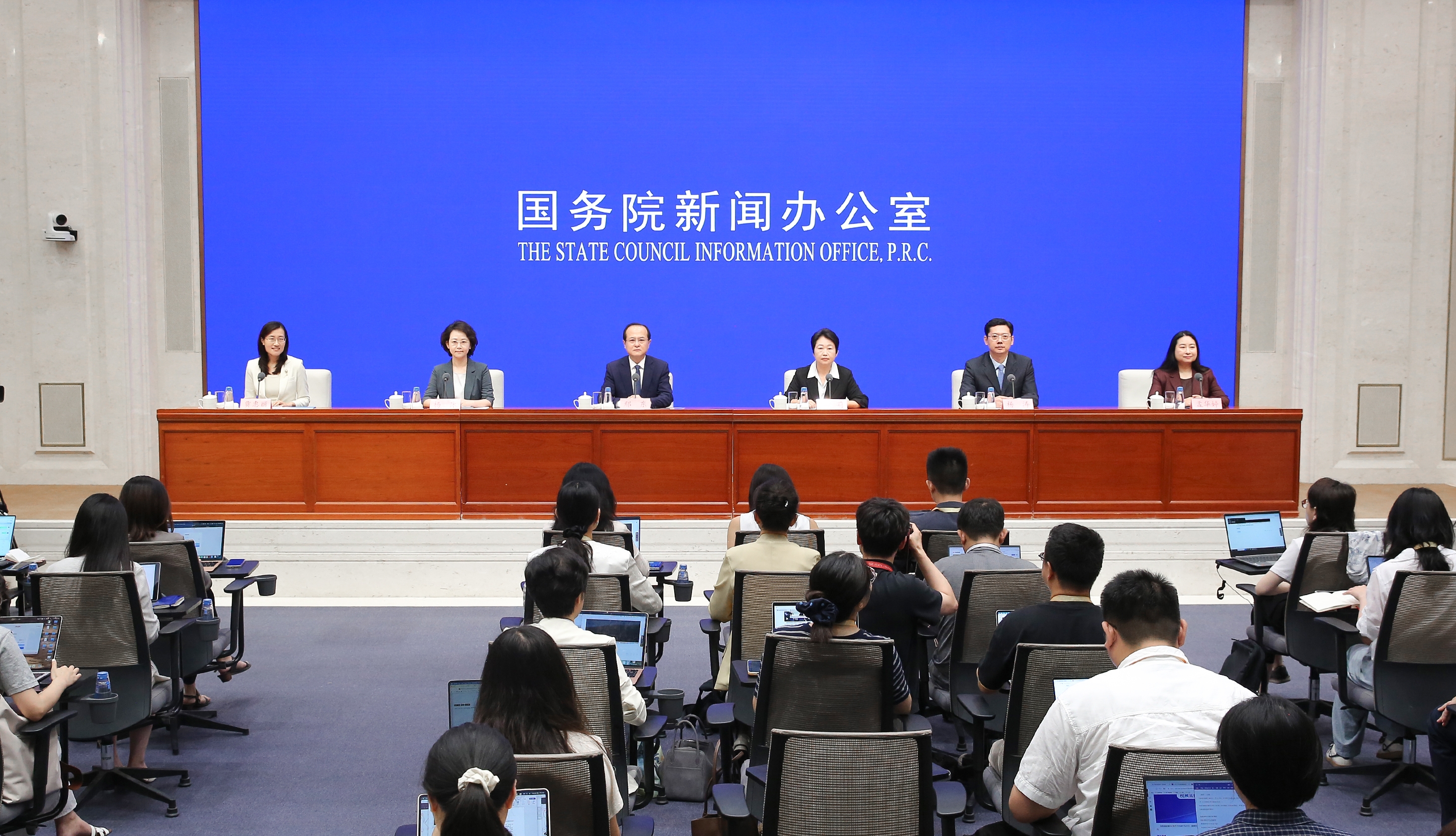
That concludes today's press conference. Thank you to our speakers and to all the journalists for your participation. Goodbye.
Translated and edited by Liu Caiyi, Yan Bin, Zhu Bochen, Yang Chuanli, Wang Yanfang, You Jiaxin, Wang Xingguang, Mi Xingang, Li Huiru, Liu Qiang, Gong Yingchun, Ma Yujia, Liu Sitong, Yuan Fang, David Ball, Jay Birbeck, and Tudor Finneran. In case of any discrepancy between the English and Chinese texts, the Chinese version is deemed to prevail.