China to expand training for new occupations as industries evolve
China SCIO | October 12, 2026

China will step up efforts to recognize new occupations and train workers for them as emerging industries and technologies reshape the labor market, a senior human resources official said Saturday.
Wu Liduo, director general of the Department of Professional Capacity Building of the Ministry of Human Resources and Social Security, said new occupations are becoming an important source of jobs, as well as a gauge of technological progress and industrial upgrading.
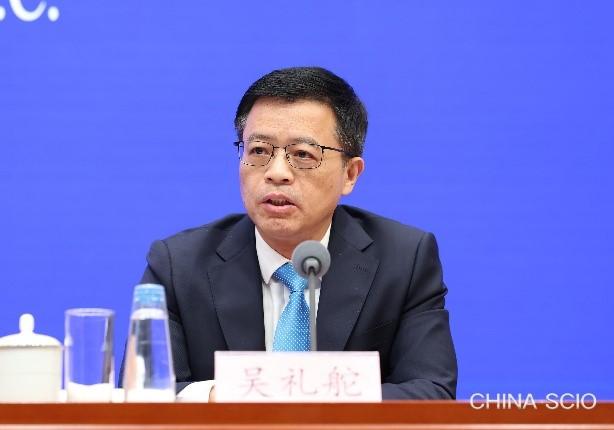
Wu Liduo, director general of the Department of Professional Capacity Building of the Ministry of Human Resources and Social Security, attends a press conference in Beijing, Oct. 10, 2026. [Photo by Liu Jian/China SCIO]
"New occupations are playing an important role in expanding employment, unlocking talent potential, and supporting industrial transformation and upgrading," Wu said at a press briefing held by the State Council Information Office.
During the 14th Five-Year Plan period (2021-2025), China added 72 new occupations and nearly 100 new job types to its national occupational catalog, including artificial intelligence trainers and carbon emissions managers, he said.
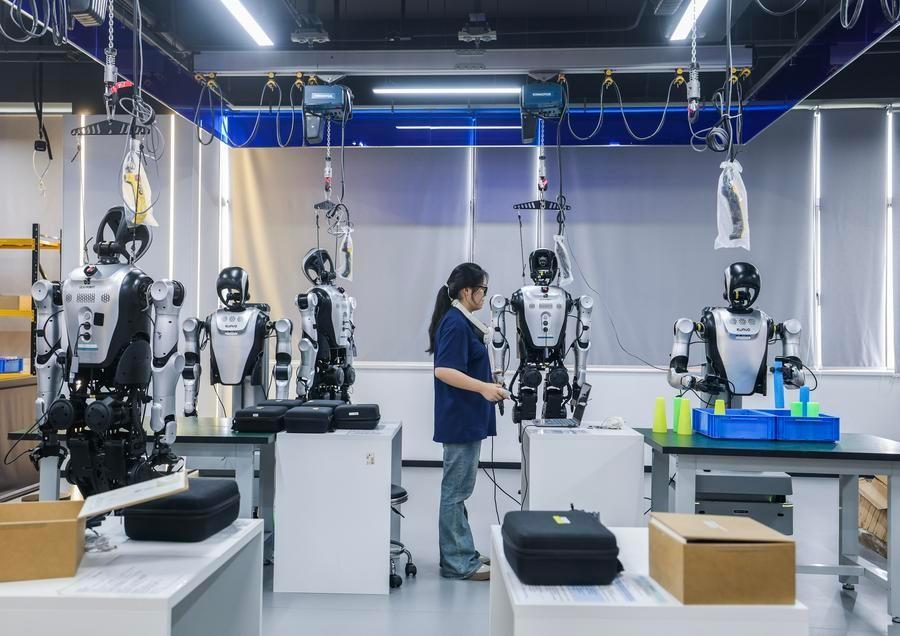
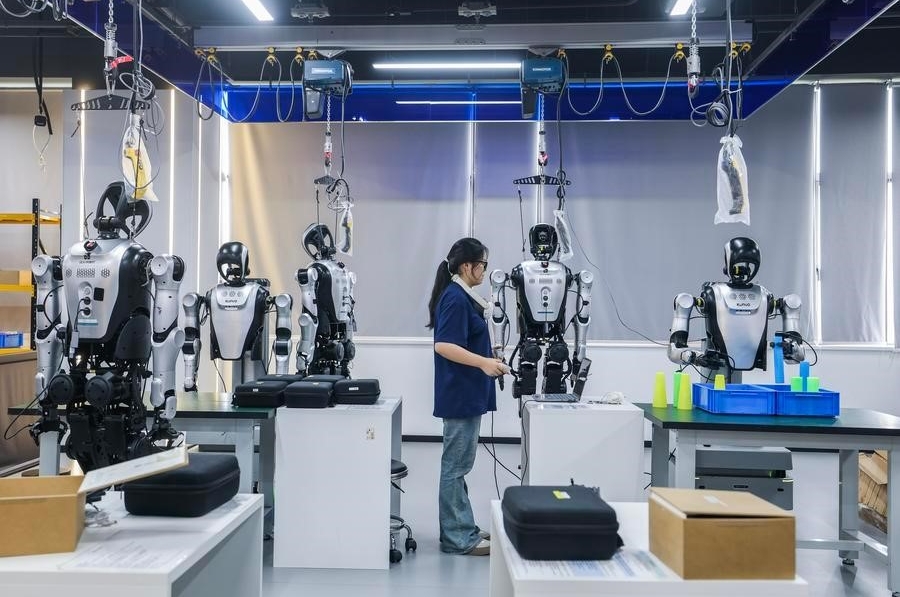
A staff member trains a humanoid robot to sort and arrange yarn tubes at a humanoid robot training facility in Cixi city, eastern China's Zhejiang province, Sept. 3, 2026. [Photo/Xinhua]
So far this year, authorities have recognized another 11 new occupations and 23 new job types, and issued 56 national occupational standards.
Wu said the government would focus on three areas: identifying new occupations in fast-growing sectors, improving occupational standards, and expanding training.
Authorities will pay particular attention to fields such as artificial intelligence, the digital economy, green and low-carbon industries, and modern services, and will assess emerging jobs with strong employment potential for possible inclusion in the national occupational system.
China also plans to develop or revise more than 200 national occupational standards during the 15th Five-Year Plan period (2026-2030), setting out job requirements as well as the knowledge and skills workers need.
Training programs and assessment standards will be developed alongside the new occupational standards, while vocational schools and professional training providers will be encouraged to offer more targeted courses.
Wu said new occupations would also be brought into the skills evaluation system to give workers clearer pathways from training and certification to employment, promotion, and higher pay.
In the first nine months of 2026, China created a total of 10.52 million urban jobs, reaching 87.7% of its annual target.