China unveils upgraded tax refund policy to boost inbound spending
China SCIO | May 19, 2026


China has rolled out a new package of measures to upgrade its departure tax refund policy, aiming to stimulate inbound consumption, improve the shopping experience for overseas travelers, and support the country's broader opening-up efforts.
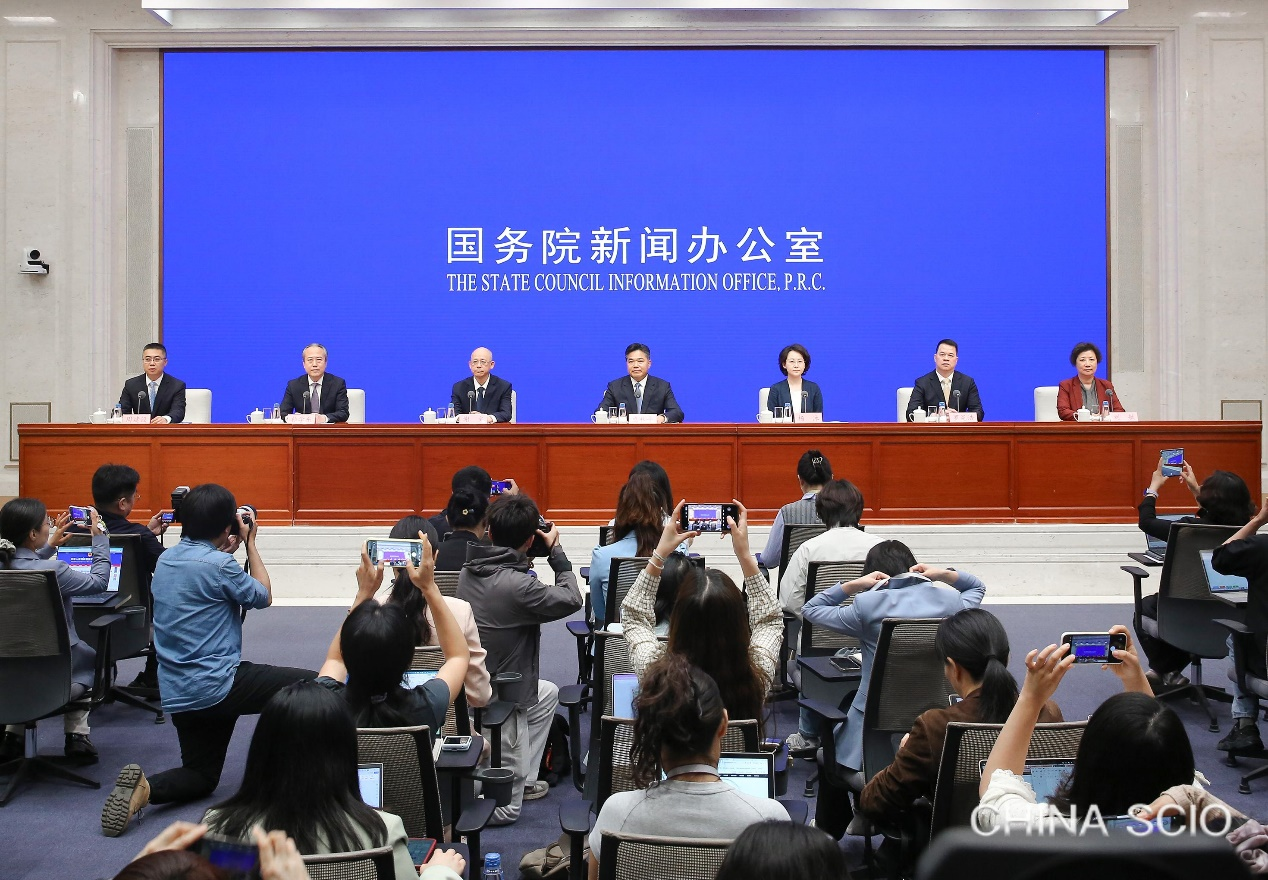
On May 18, 2026, the State Council Information Office holds a press conference in Beijing on further optimizing the departure tax refund policy to boost inbound consumption. [Photo by Zhang Xin/China SCIO]
At a press conference held by the State Council Information Office on Monday, officials from the Ministry of Commerce, the State Taxation Administration, and local authorities introduced the "2.0 version" of the policy, following an earlier round of reforms launched in 2025.
According to Vice Minister of Commerce Sheng Qiuping, the latest measures focus on expanding tax refund coverage, streamlining customs clearance procedures, and improving digital and standardized services.
"The policy is designed to make tax refunds more convenient and more accessible for overseas travelers, while further enhancing the inbound consumption environment," Sheng said.
China has accelerated efforts to attract foreign visitors in recent years through unilateral visa-free policies, 240-hour transit visa exemptions, and improved payment services. Officials said the combination of these measures and the "Shopping in China" campaign has helped drive strong growth in inbound spending.
In 2025, sales under the departure tax refund program nearly doubled year on year, while the number of overseas travelers applying for tax refunds reached 270,000, quadrupling the figure recorded in 2024, according to official data. The number of tax refund stores nationwide has jumped to around 14,000, about four times the level recorded at the end of 2024.
The new policy package seeks to build on that momentum, officials said.
One key measure is the expansion of tax refund stores in major shopping districts, tourist attractions, and ports of entry. Authorities said they aim to achieve near full coverage in areas frequently visited by overseas travelers, while also establishing dedicated tax refund service sections at major trade fairs such as the China International Import Expo and the Canton Fair.
The reforms also target bottlenecks in customs inspection procedures. Under the updated rules, refund applications involving purchases below 10,000 yuan (US$1,461) will be subject to random inspections instead of mandatory checks for every traveler, a move expected to significantly reduce waiting times at airports and border checkpoints.
Authorities are also pushing forward digitalization. Beginning July 1, travelers will be able to complete refund procedures without paper documents, as customs and refund agencies will retrieve invoice and application data electronically through integrated systems.
The policy further standardizes the nationwide refund-upon-purchase service, allowing travelers to process refunds across different departure ports and extending the departure period under the program to 28 days after purchase.

Foreign tourists visit a trendy and collectible toy store in Shanghai, eastern China, May 5, 2026. [Photo/Xinhua]
Experts say the reforms could generate broader economic benefits beyond retail sales.
Li Jun, director of the Institute of International Trade in Services at the Chinese Academy of International Trade and Economic Cooperation, said the new rules would improve overseas travelers' shopping experience and strengthen the "Shopping in China" campaign.
"The expansion of the refund stores itself is a policy dividend," Li said, adding that easier access to tax refunds and faster customs procedures would encourage more inbound consumption.
He also said that the policy could create a "multiplier effect" as travelers often continue spending after receiving refunds. He highlighted the growing appeal of Chinese products among overseas consumers, particularly competitively priced electronic devices, smart products, cultural and creative goods, and traditional handicrafts that showcase Chinese culture.
Li said he also expected to see the new measures would not only boost sales at tax refund stores, but also spur spending on services, including on dining, tourism, cultural performances, and sporting events.
Officials said the government will continue improving interdepartmental coordination and information sharing to ensure smoother implementation of the new measures.
"We hope travelers from around the world will come to China with excitement and leave with satisfaction," Sheng said.