How China's grassroots fitness boom has got nation moving
Xinhua | December 18, 2025

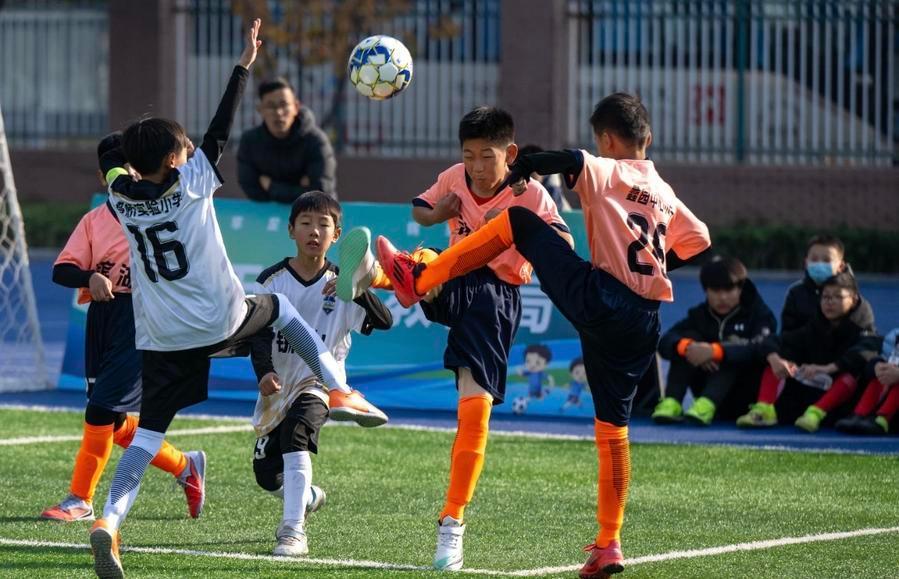
This photo shows children playing football in Nanjing, east China's Jiangsu Province. (Xinhua)
Even as winter tightens its grip, the football fields of east China's Jiangsu Province refuse to slow down. Breaths fog the air, studs thud against turf, and shouts and laughter echo across packed pitches as children and adults alike chase the ball with undiminished joy.
Nearly two months after the conclusion of the Su Super League, a grassroots football competition in Jiangsu that became a nationwide sensation, the fervor it ignited shows no sign of fading.
The league, whose players were mostly teachers, students, office workers and mechanics, captured the joy of participation rather than professional glory. During the tournament, which ran from May, its 85 matches drew a total of 2.43 million spectators - an average of 28,600 per game - while online livestreams amassed 2.22 billion views. Its influence was so pervasive that "Su Super League" even made the list of China's top buzzwords of 2025.
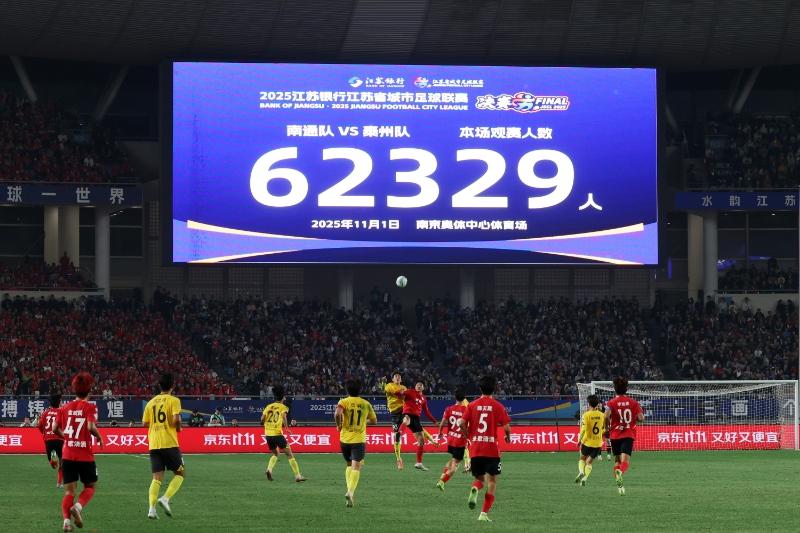
This photo shows the final match of the Su Super League. (Xinhua)
The surge extends far beyond football pitches. From jogging along rural trails to running marathons alongside humanoid robots, Chinese people are displaying an ever-stronger enthusiasm for fitness.
The country of more than 1.4 billion people saw its per capita sports venue area reach three square meters by 2024, while over 38.5 percent of the population engaged in regular physical exercise.
NATION IN MOTION
That energy was on full display at China's 15th National Games, held in November across Guangdong, Hong Kong and Macao. Alongside elite competition, the country's premier multi-sport spectacle featured mass-participation events that became a showcase of grassroots passion.
From dragon boat racing to lion dancing, over 11,000 competitors took part in the Games' diverse events.
On wintry weekends in Wuxi, hundreds of runners can be spotted circling the track at a local sports park. They belong to the city's largest running club, holding interval training sessions in preparation for next year's marathon season.
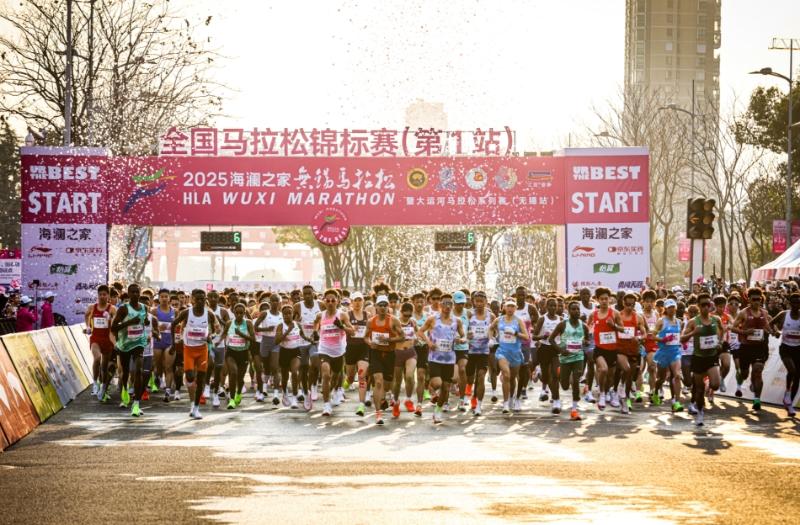
This photo shows the 2025 Wuxi Marathon. (Xinhua)
"Our club has grown to more than 1,000 members - over ten times what it was five years ago," said Jiang Wenhao, the group's organizer. "The number of people capable of finishing a full marathon has jumped from just over 20 to nearly 200."
Once the preserve of elite athletes, marathons are now magnets for mass participation. Registration for the 2025 Wuxi Marathon attracted a record 429,000 applicants, up 61 percent year-on-year.
"Getting into a marathon these days can be harder than snagging a concert ticket," joked Zhang Aiping, a marathon enthusiast, noting that slots for races in major cities often sell out within minutes.
For Zhang, running has been life-changing. "Four years ago, I was overweight and struggled with fatty liver disease and insomnia," he said. "I started long-distance running and now train more than 10 days a month. My health indicators have improved across the board and my mindset is better, too."
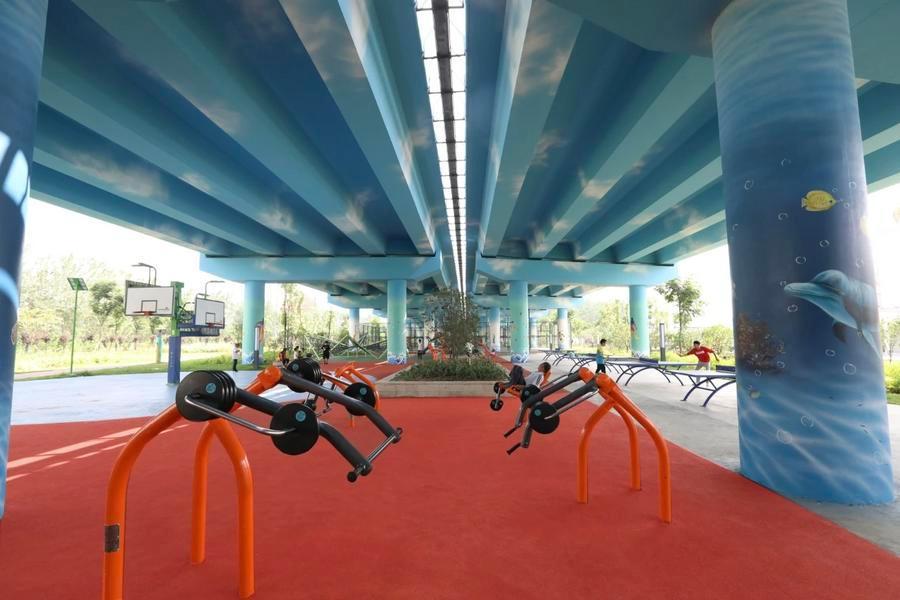
This photo shows sports facilities built under an elevated highway in Wuxi, east China's Jiangsu Province. (Xinhua)
Beyond running and ball sports, once-niche activities such as frisbee, skateboarding and rock climbing have also surged in popularity in China, reflecting a broader diversification of fitness culture.
To ensure safe and scientific exercise, China has expanded its network of certified social sports instructors. By the end of October, more than 3.9 million were registered nationwide. In 33,000 rural villages, 94,000 female instructors have been trained, bringing fitness guidance to communities that once lacked access.
The concept of exercise as health management is also gaining ground. In Jiangsu, 192 sports-for-health service institutions now operate across provincial, municipal and county levels, alongside 100 pilot programs offering exercise-based interventions for chronic diseases.
"People are motivated not only by better health, but also by the joy of doing sports itself and the social connections built through exercising together," Jiang said.
FOUNDATIONS OF A SPORTING POWER
The success of the Su Super League was no accident. Jiangsu boasts nearly 12,000 football pitches, among the highest totals in China, laying a solid foundation for grassroots development.
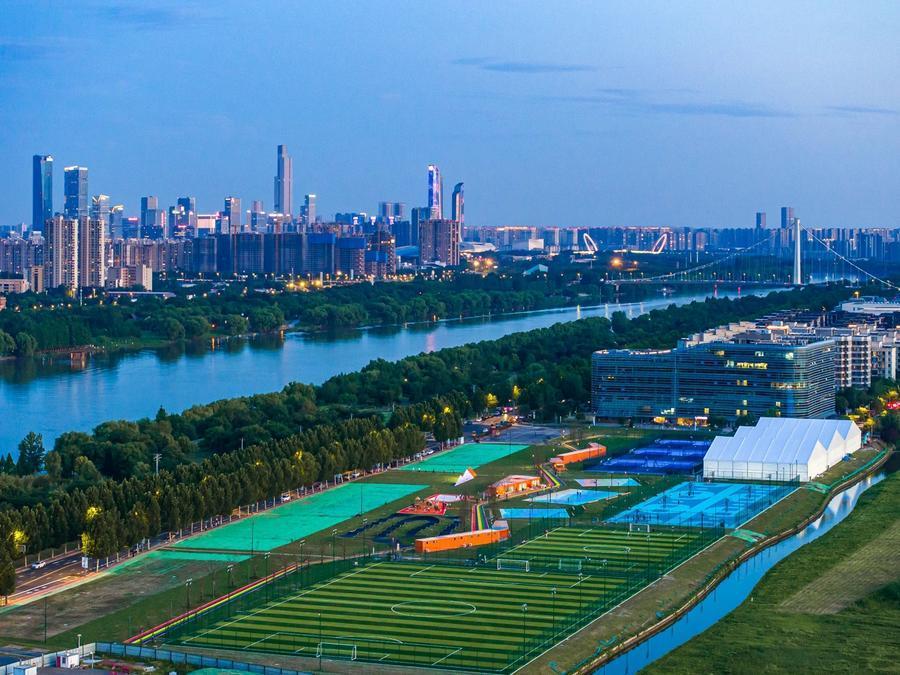
This photo shows a large sports park in Nanjing, east China's Jiangsu Province. (Xinhua)
As China accelerates its drive to become a sporting powerhouse, public fitness infrastructure has expanded rapidly. By the end of last year, the country had over 4.84 million sports venues, an increase of more than 30 percent from 2020. Jogging paths, courts and multipurpose facilities have been woven into both cities and villages.
In many urban areas, once-neglected spaces beneath elevated highways - formerly choked with weeds and potholes - have been transformed into vibrant fitness hubs. Nationwide, such redevelopment projects are reshaping everyday landscapes.
Under the 2025 plan of China's General Administration of Sport for mass fitness, local authorities are upgrading facilities, promoting free or low-cost access to public venues and narrowing the urban-rural gap in sports provision.
"Before, you had to travel north to ski. Now it's right on our doorstep," said Wang Lin, a Wuxi resident and beginner skier, after gliding down a 138-meter slope at a local indoor ski center which draws hundreds of visitors daily, a majority of whom come from the Yangtze River Delta.
The spread of facilities has made winter sports - once costly and exotic in China - more accessible than ever. Teenagers in warmer cities such as Shanghai and Shenzhen can now train regularly in skiing, skating, ice hockey and other disciplines.
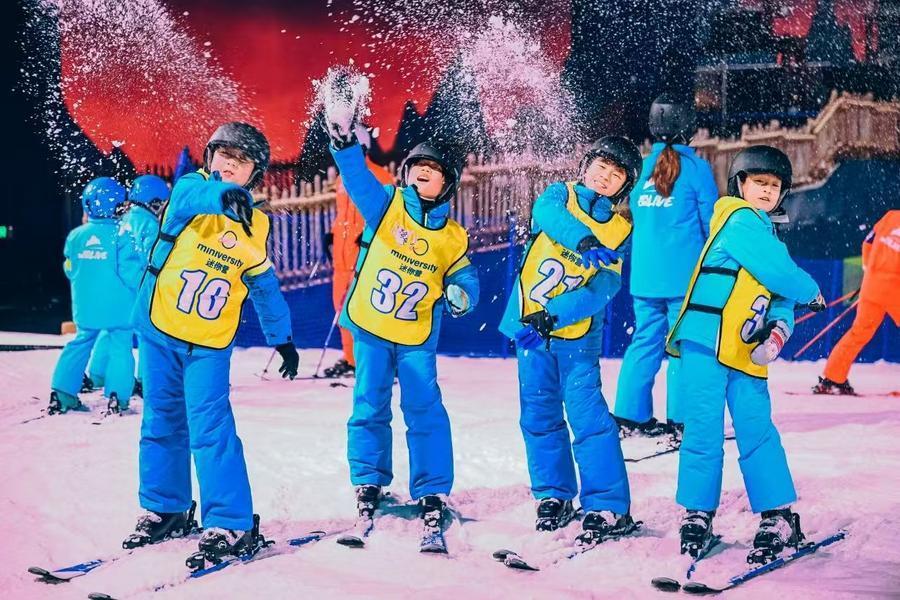
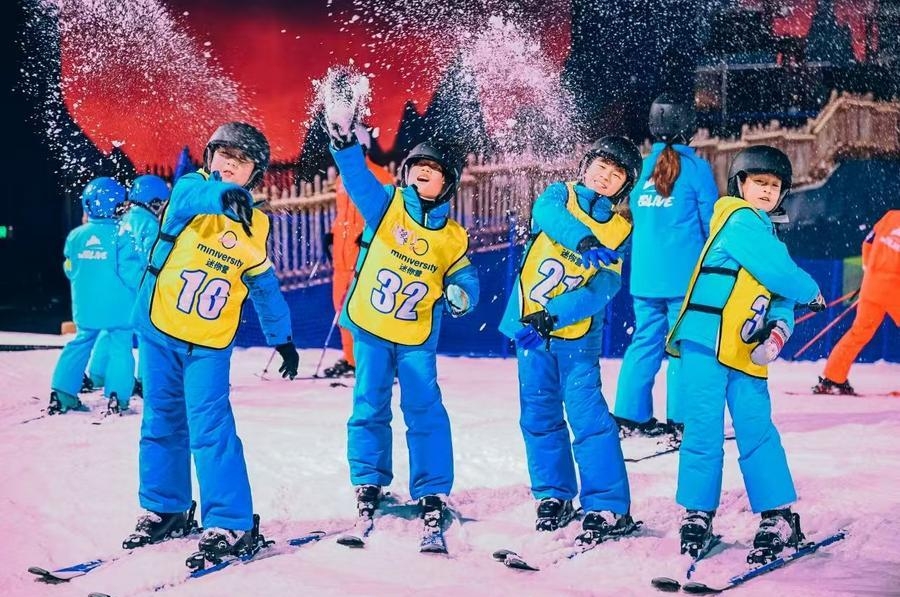
This photo show children enjoying skiing at an indoor ski resort in Suzhou, east China's Jiangsu Province. (Xinhua)
Greater accessibility has also fed elite success. Between 2021 and 2024, Chinese athletes claimed 519 world titles and broke 68 world records. Beijing 2022 delivered China's best-ever Winter Olympics performance, while Paris 2024 yielded its strongest overseas Summer Games showing.
Technology, meanwhile, has been sketching the future of mass fitness. AI-powered urban sports facilities are turning public spaces into futuristic playgrounds suitable for all ages.
At scenic sites like Mount Tai, elderly hikers now use exoskeleton robots resembling trekking poles. Capable of bearing bursts of up to 200 kilograms, the devices dynamically adjust assistance, reducing exertion by as much as 50 percent and enabling seniors to tackle steep climbs with ease.
Wearable devices, from smartwatches and fitness bands, have become indispensable tools for tracking health and performance. Tech firms are racing to innovate, embedding large AI models into smart treadmills and other equipment to deliver personalized training plans.
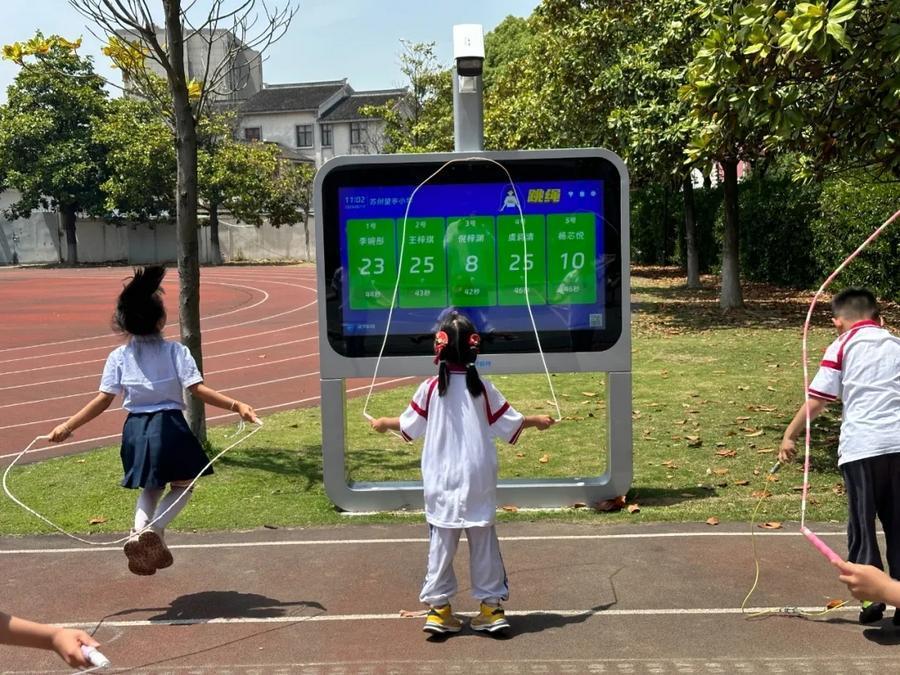
This photo shows school children in Jiangsu practicing rope skipping in front of an AI-powered counting equipment. (Xinhua)
"My AI fitness coach gets it just right," said Liu Xiaopeng, a regular gym-goer. "It balances cardio and strength training perfectly. And with VR, I can work out in virtual arenas. Exercise has never been this engaging."
"Advances in AI and robotics will lower the cost of sports training in the future," said Bao Mingxiao, a professor at Beijing Sport University. "They are likely to open the door for ordinary people to find fitness and health solutions better tailored to their individual needs."