Xinhua | August 18, 2026


My recent visit to China, including participation in the African Mainstream Media Workshop in Beijing and a visit to the Ningxia Hui Autonomous Region, offered me a valuable opportunity to observe firsthand one of the most remarkable development transformations in modern history.
Beyond official documents and statistical indicators, the visit provided deeper insights into the policies, institutions and governance practices that have supported the Chinese modernization and its successful fight against extreme poverty.
Conversations with government officials, academics, entrepreneurs, community leaders and ordinary residents highlighted not only China's economic achievements, but also the long-term vision, strategic planning and policy consistency that have sustained its development over several decades.
The most striking observation is the integration of economic growth with social development. Development is not confined to major cities but extends to rural communities through infrastructure, education, healthcare, agricultural modernization and digital technology.
The precision and targeted nature of China's poverty alleviation strategy provides one of the clearest examples of this approach.
Rather than applying a one-size-fits-all solution, every village, household and individual was assessed according to their unique circumstances. Local authorities identified the particular challenges facing families before designing targeted interventions, whether through improved housing, better healthcare, expanded educational opportunities, vocational training or agricultural assistance. Such precision helped address the structural causes of poverty instead of merely providing temporary relief.
Equally important was the accountability embedded throughout the process. Poverty alleviation is not treated solely as an isolated welfare program but as a national priority supported by clearly defined responsibilities, measurable targets and coordinated implementation across different levels of government. This institutional commitment ensured that policies were translated into concrete outcomes.
The experience in Ningxia is a vivid example.
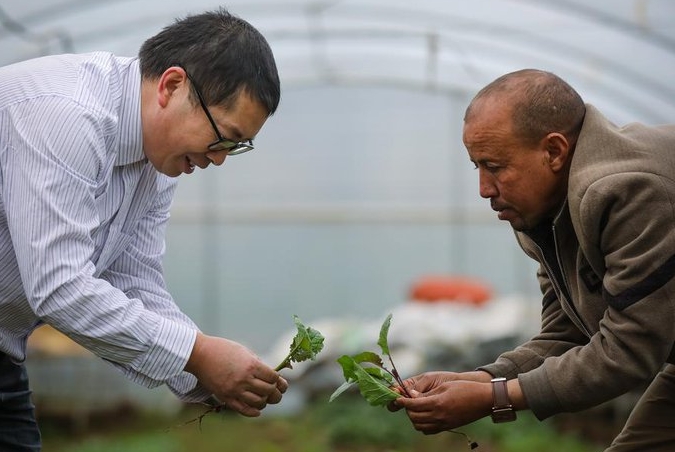
Once among China's relatively underdeveloped regions, Ningxia has combined rural revitalization with agricultural modernization, ecological conservation and industrial upgrading. Modern irrigation systems, improved farming techniques, agricultural processing facilities and stronger market connectivity have enabled local communities to transform traditional farming into competitive value-added industries. Rather than focusing solely on increasing production, emphasis has been placed on developing complete industrial value chains capable of generating sustainable incomes.
Education and vocational training have also played a central role in this transformation. Investment in human capital reflects the recognition that lasting poverty reduction depends not only on financial assistance but also on equipping people with the knowledge, skills and opportunities needed to participate in an increasingly modern economy.
Several factors are behind China's achievements.
Foremost is sustained political commitment. Poverty alleviation remained a national priority for decades, supported by long-term planning and consistent implementation; Second is evidence-based decision-making. Extensive data collection, household surveys and continuous monitoring enabled policymakers to identify local needs accurately and adjust interventions accordingly; Third is sustained investment in infrastructure. Roads, electricity, telecommunications, schools and healthcare facilities have connected rural communities with markets, public services and broader economic opportunities, laying the foundation for inclusive development; Fourth is the cultivation of industries based on local comparative advantages. Communities have been encouraged to develop sectors suited to their unique geographical conditions, whether agriculture, manufacturing or tourism; Technology has further strengthened these efforts. Digital platforms have expanded market access for farmers and small businesses while improving financial inclusion and the delivery of public services, particularly in rural areas.
China's experience challenges a common perception that poverty reduction on such a large scale would inevitably require decades of continuous financial support alone. Instead, the emphasis has been on creating opportunities through employment, entrepreneurship, education and market participation. This approach seeks not only to lift people out of poverty but also to enhance their capacity to achieve sustainable livelihoods.
The Chinese modernization also demonstrates that economic growth alone does not fully explain its development story. Behind the impressive statistics lies a governance model characterized by long-term planning, practical policymaking, continuous evaluation and the flexibility to adapt to changing circumstances. Economic development has been pursued alongside social stability, technological innovation, environmental protection and cultural preservation.
Africa's development path will inevitably differ from China's. Political systems, demographic structures, and historical experiences vary considerably across the continent, making it neither practical nor desirable to replicate China's model wholesale. Nevertheless, several underlying principles remain highly relevant.
Long-term national development planning provides policy continuity; Continued investment in infrastructure creates conditions for economic growth; Expanding education, vocational training and technical skills prepares young people for increasingly competitive economies; Strengthening agricultural value chains through local processing and industrialization can generate employment while retaining greater value within African economies; Equally important are effective governance, accountability and evidence-based policymaking to ensure that development initiatives produce measurable results.
The emphasis on tailoring development strategies to local realities may also offer valuable lessons for African policymakers. Development challenges differ significantly between regions and communities, making localized planning and targeted implementation particularly relevant across much of the continent.
China's poverty alleviation journey demonstrates what is possible when long-term planning, political commitment, effective implementation and broad public participation come together around a common national objective.
The experience shows that development is not achieved overnight. It requires persistence, investment in people, continuous innovation and the willingness to adapt policies as circumstances evolve.
While every country must develop according to its own realities, China's experience provides valuable lessons on strategic planning, infrastructure development, education, industrialization and good governance.