Xinhua | December 17, 2025


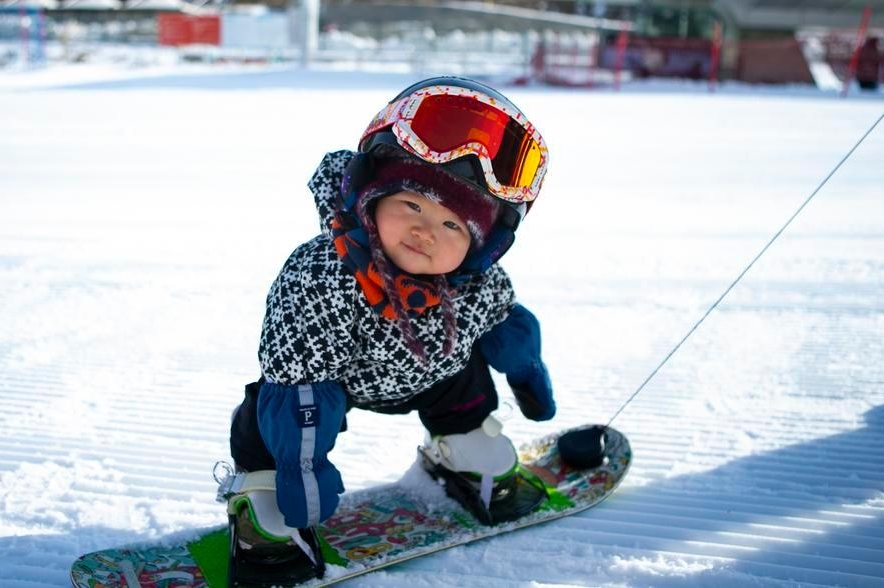

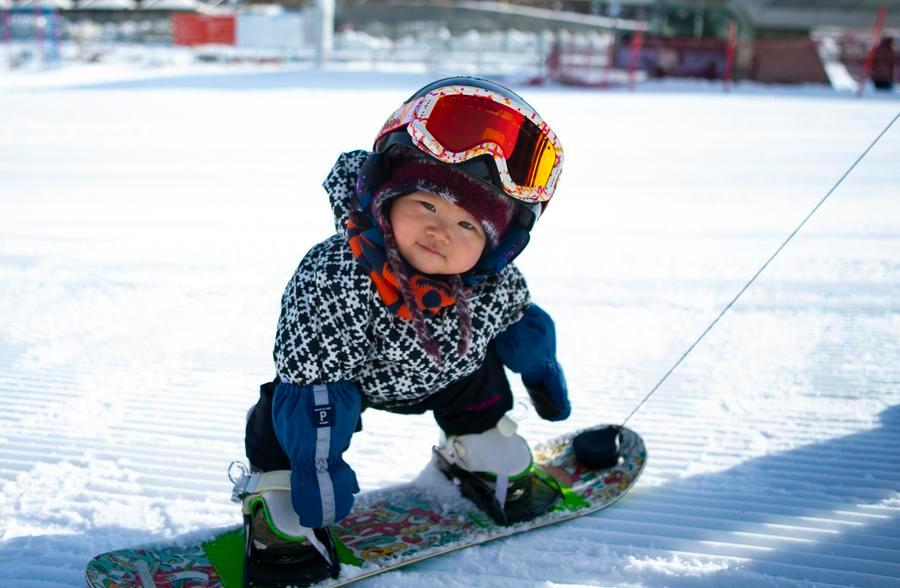
Eleven-month-old girl Wang Yuji enjoys snowboarding at Thaiwoo Ski Resort in Chongli District of Zhangjiakou City, north China's Hebei Province on Nov. 18, 2021. (Xinhua/Zhang Fan)
On a wintry weekend with temperatures hovering just above freezing, an indoor ski dome in the eastern Chinese city of Wuxi buzzed with the sound of beginners shrieking their way down the slopes, many of whom had never touched a pair of skis before.
"It's my first try," said local resident Wang Yue, still brushing off snow after a fall. "But I've already picked up the basics. I'm determined to become a cool, skilled skier this winter."
The Wuxi facility, mid-sized by regional standards, draws nearly half a million visits a year and generates more than 180 million yuan (25.5 million U.S. dollars) in sports-related spending. It is one example of how regions without natural snowfall are cashing in as China's winter sports season gains momentum.
As temperatures drop, more regions are turning ice and snow into economic activity. According to an official industry report, China's ice-and-snow sector is expected to surpass one trillion yuan this year.
SPORTS CONSUMPTION BOOM
Northern China, where winter arrives early and lasts long, remains the country's primary arena for winter sports. On Nov. 29, the northernmost city of Mohe welcomed its first snow-tourism charter train of the season as more than 300 travelers set out to chase ice sculptures, forest landscapes and fresh powder.
In Harbin's Yabuli, a steady stream of visitors has arrived since the ski resort opened its slopes on Nov. 7. "We now receive more than 2,000 visitors a day, up 12 percent from last year," said Yang Xiaodong of Yabuli's culture and tourism department.
As a competition venue for this year's Asian Winter Games, Yabuli plans to stage more than 30 professional events and public activities during the new snow season. It will also add acrobatic shows and other entertainment to enrich visitor experiences.
Data from travel platform Trip.com showed that from November to February, bookings for ice-and-snow attractions are expected to jump around 70 percent year on year, with inbound tour reservations rising by about half. Ski resort ticket bookings have surged more than twofold since early November.
Such sports fever is not limited to snowfields. Across stadiums, courts and parks in cities and villages, sports are increasingly being linked with travel, food and shopping in ways that are supporting domestic demand.
Few stories illustrate this better than Jiangsu's grassroots football sensation, the Su Super League. What began as a provincial competition this year exploded into a national phenomenon, with 85 matches, 2.43 million in-person spectators, average attendance nearing 30,000 and 2.2 billion online views.
To create a stadium atmosphere for fans unable to secure tickets, organizers set up 573 fan zones across the province, each with giant screens, food stalls, retail booths and late-night entertainment.
"Every one yuan spent on a ticket drove 7.3 yuan in additional consumption," said Wu Haiyun, a provincial commerce official, adding that the league brought more than 38 billion yuan in related spending.
Sports-led travel has become one of China's social trends. During the 15th National Games held across the Guangdong-Hong Kong-Macao Greater Bay Area in November, Guangzhou launched 50 sightseeing routes linking venues and city landmarks, alongside more than 2,000 cultural events.
Data from Douyin, the Chinese version of TikTok, showed that during the Games, hotel spending in Guangzhou rose 114.5 percent year on year, while leisure and entertainment consumption climbed more than 134 percent. Sales of Games-themed merchandise are expected to reach one billion yuan.
Shanghai delivered a similar surge during its National Day holiday sports calendar. Six major events, including the 2025 Shanghai Masters and the World Rowing Championships, drew more than 800,000 spectators. Luxury hotels hit near-full capacity, and sales in key commercial districts rose 42 percent year on year.
Beijing, hosting the 2025 China Open and WTT China Smash, also saw unprecedented crowds. The tennis tournament alone drew 360,000 spectators, generating record ticket revenue and brisk sales of licensed merchandise.
NEW ENGINE FOR GROWTH
"Sports events, culture and tourism have formed a new ecosystem," said Si Zengchuo, a professor at Jiangsu Normal University. "This integrated model - combining sightseeing, shopping and event experiences - is now spreading nationwide."
The rise in sports spending aligns with a broader push to upgrade the consumer economy. According to China's latest blueprint, the total output of the sports industry will exceed seven trillion yuan by 2030, driven by event-related spending and the fusion of sports, culture and tourism.
To accelerate that momentum, Jiangsu has announced plans to expand event-related consumption scenarios, turning stadiums, sports parks and outdoor campsites into immersive commercial hubs.
Local authorities are encouraging the rollout of sports vouchers, spending rebates and discount programs. Integrated packages bundling tickets, transport, hotels, dining and cultural attractions are being explored across the province.
The eastern manufacturing hub also aims to boost its sports equipment sector by building industrial clusters with annual output of more than three billion yuan each, focusing on outdoor gear, fitness facilities and materials for sports venues.
To spur winter consumption, several northern regions have introduced "snow break", encouraging schools and families to embrace winter sports programs. Ski resorts are offering winter camps, cultural workshops and discounted family packages.
Transport authorities, meanwhile, are adding seasonal trains and flights to meet travel demand. Some railway lines now allow passengers to carry ski equipment on board and offer designated storage space.
Experts say such measures are turning sports into a driver of economic vitality. According to China's General Administration of Sport, the country's sports industry has grown at an average annual rate of more than 10 percent over the past five years.
Expanded facilities have also boosted participation. By the end of 2024, China boasted 4.84 million sports venues, averaging three square meters of sports area per person. The number of ski resorts alone has jumped 136 percent since 2018, rising from 1,133 to 2,678.
"Venues are the foundation, but the real shift happens beyond the arena," said Ding Xiang, an associate professor at Nanjing University. "People are finding emotional connection and even cultural identity through sports in a city, and that's where the long-term economic value lies."

