China SCIO | October 27, 2025



As China's 14th Five-Year Plan (2021-2025) nears its conclusion, the country is taking stock of a time defined by resilience, innovation, and transformation, with ministries outlining progress at a series of press briefings hosted by the State Council Information Office since July.
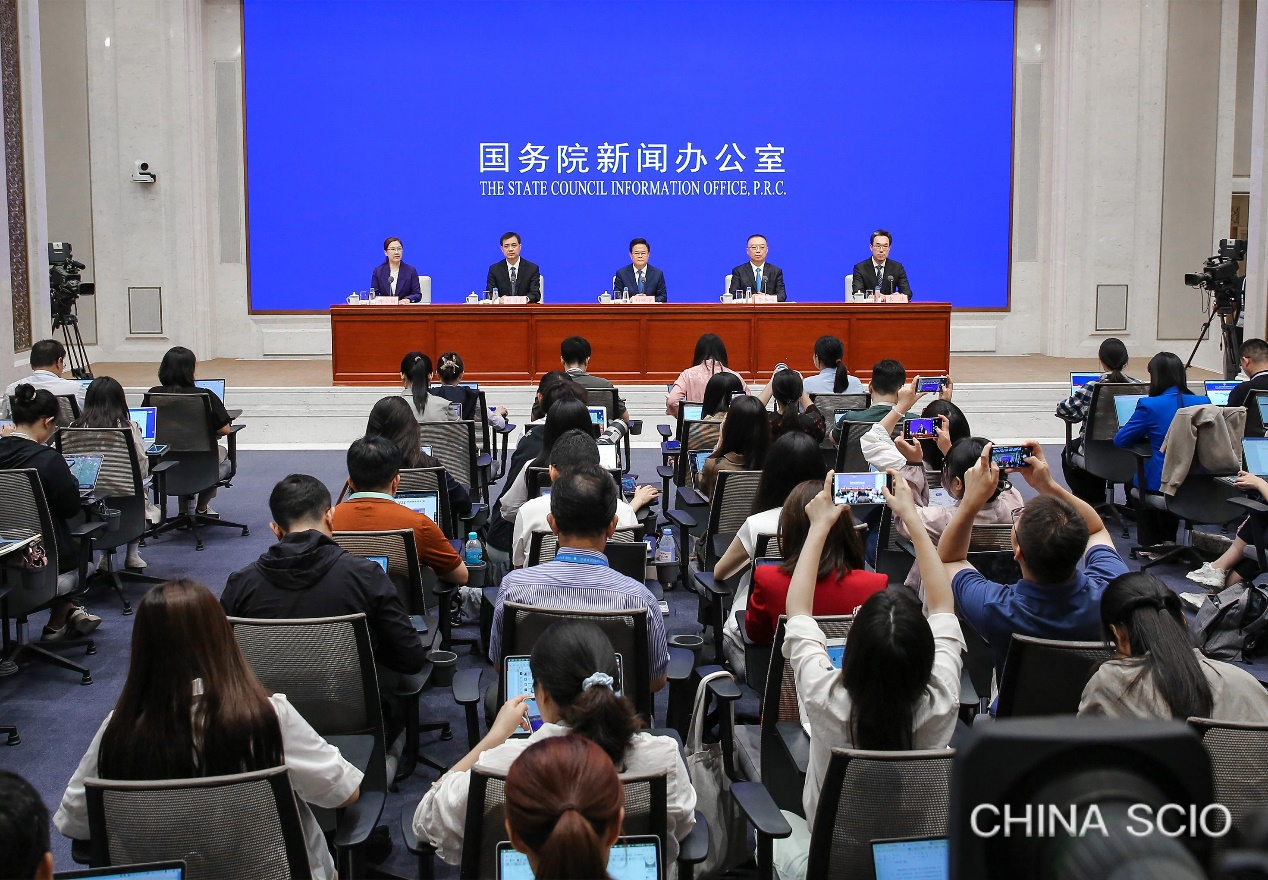
On July 9, 2025, the State Council Information Office holds a press conference in Beijing on China's economic and social achievements during the 14th Five-Year Plan period (2021-2025). This was the first of a series of press briefings on China's achievements during this period. [Photo by Liu Jian/China SCIO]
Reflecting on the five-year journey, Zheng Shanjie, chairman of the National Development and Reform Commission, said, "We've weathered storms and seen a rainbow," highlighting the groundbreaking progress, transformative breakthroughs and historic achievements made over the period.
Economy: Big numbers, bigger shifts
China's GDP is on track to hit 140 trillion yuan (US$19.65 trillion) by 2025, rising at an average annual rate of 5.5%, a standout performer in a challenging global environment. The increase in output over the five years is expected to match the combined GDP of Guangdong, Jiangsu and Shandong provinces, the country's top three provincial economies, said Zheng.
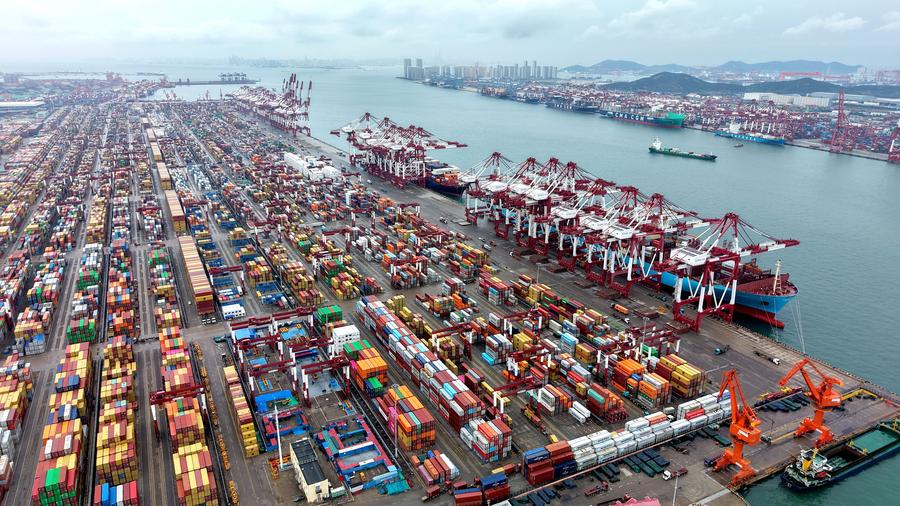
An aerial drone photo taken on Oct. 13, 2025 shows a view of the container terminal at Qingdao Port in Qingdao, eastern China's Shandong province. [Photo/Xinhua]
Foreign trade has remained robust. For eight straight years, China has led the world in goods trade, and its services trade topped US$1 trillion in 2024. From 2021 to June 2025, foreign direct investment exceeded US$700 billion, beating the Five-Year Plan target six months ahead of schedule, according to the Ministry of Commerce.
"China's economy didn't just grow; it evolved," noted Hong Junjie, president of Shandong University of Finance and Economics, in a recent interview. "The past five years show how China has smoothly shifted from old to new growth drivers, proving its resilience and huge potential."
Dong Yu, executive vice president of the China Institute for Development Planning at Tsinghua University, said China's achievements during the 14th Five-Year Plan period come from putting the new development philosophy into practice to promote innovation, coordination, green growth, openness, and shared prosperity.
Hong added, "The achievements exemplify what high-quality development means — 'innovation is the primary driver, coordination is an endogenous trait, eco-friendly growth prevails, openness to the world is the only way, and shared growth is the ultimate goal.'"
Innovation: Fuel for China's growth
During these five years, innovation has taken center stage, driving China's high-quality development. According to the Ministry of Science and Technology, the country's R&D spending surged 48% since 2020, surpassing 3.6 trillion yuan in 2024.
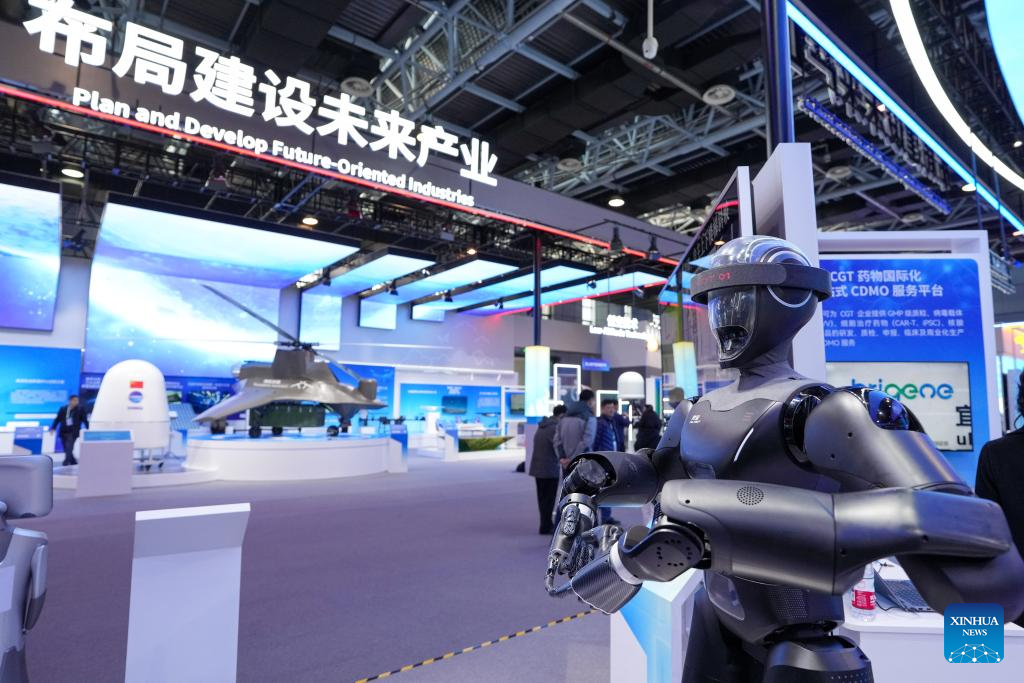
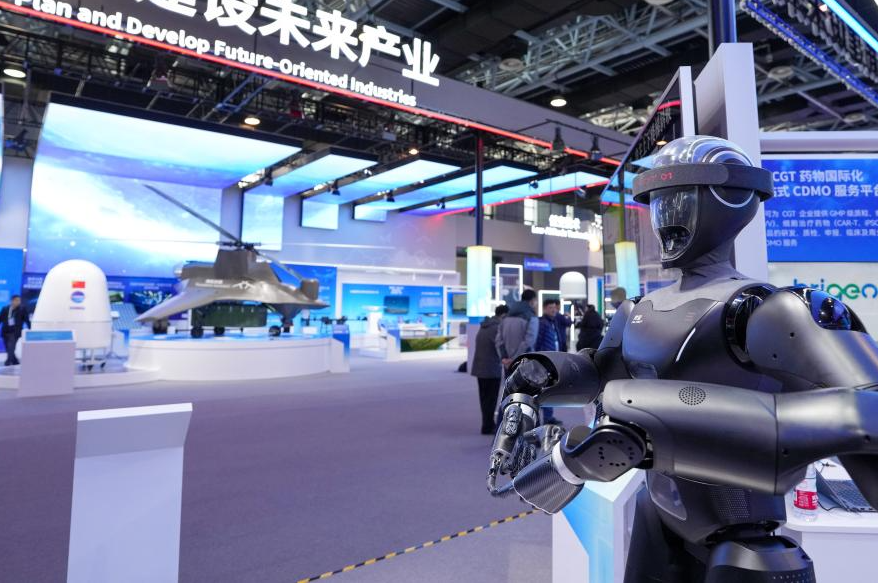
A humanoid robot poses during a permanent exhibition at the Zhongguancun Exhibition Center in Beijing, March 28, 2025. [Photo/Xinhua]
The results are evident in global rankings: China jumped four spots on the Global Innovation Index, ranking 10th worldwide in 2024. The country also leads globally in the number of R&D personnel and innovation clusters. The R&D intensity level has surpassed the EU average.
Breakthroughs like the first domestically built catapult-equipped aircraft carrier Fujian, the first domestically built large cruise ship Adora Magic City, and the world's first fourth-generation nuclear power plant Shidaowan marked China's leap forward. Milestones have also been crossed in aerospace with the Tiangong space station, the Chang'e-6's lunar far-side sample return, and the C919 passenger jet's commercial debut.
Emerging strategic industries outlined in the 14th Five-Year Plan such as new energy vehicles went from playing catch-up to leading globally. "These are industries where China wasn't a leader five years ago, and now, they are," Dong said.
"Many things in science and technology that seemed unimaginable just five years ago have now become reality," he noted. "China's achievements in the past five years have included not only planned structural upgrades but also breakthrough advances, which are visible across every field and together form solid steps toward high-quality development."
"And it's not just about breakthroughs, but about a stronger innovation system led by companies, guided by the market, and powered by deep collaboration among industry, academia, and research," Hong said. "Innovation in China has shifted from sheer expansion to a transformation in quality, efficiency, and momentum, creating new quality productive forces that are redefining the country's growth engine."
Data from the Ministry of Science and Technology shows that new industries, new business formats, and new business models now make up 18% of GDP.
Greening China: From environment to industries
China's green push has yielded more results over the years. Air and water qualities continue to improve, with the 2024 data showing that PM2.5 levels dropped 16.3% since 2020, and days with excellent or good air quality accounted for over 87% of that year. For the first time, more than 90% of surface water sections meet excellent or good quality standards, according to the Ministry of Ecology and Environment.
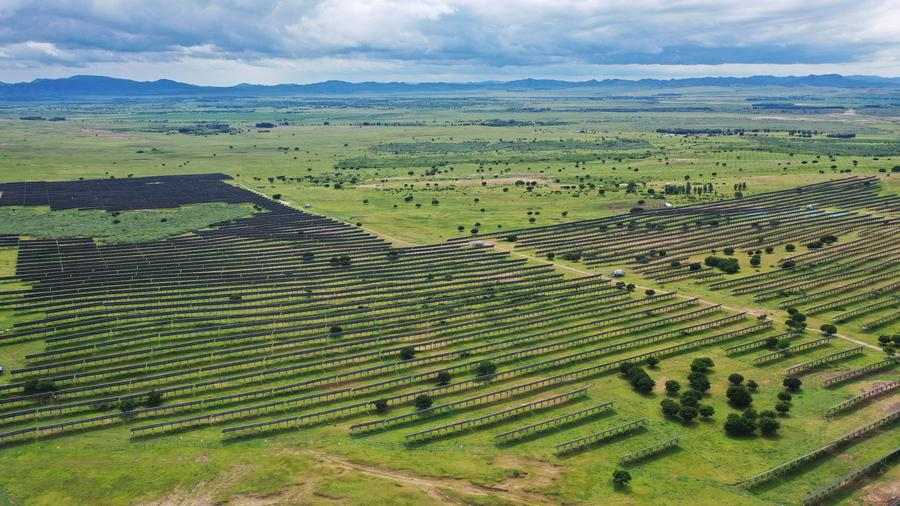
An aerial drone photo taken on July 29, 2025 shows photovoltaic panels at the site of a desertification control project integrated with wind and solar power facilities in Hinggan league, northern China's Inner Mongolia autonomous region. [Photo/Xinhua]
Clean energy is reshaping China's power mix. Renewables now account for about 60% of total installed capacity, up from 40% in 2020, forming the world's largest and fastest-growing renewable energy system. One-third of China's electricity comes from green energy, according to the National Energy Administration.
Green transformation is also changing industries. In northern China's Tangshan, steelmakers have adopted cleaner smelting and desulfurization technologies, cutting emissions and energy use. In eastern China's Qingdao, textile producers use supercritical carbon dioxide dyeing, saving 100,000 metric tons of water a year and eliminating wastewater discharge.
China is also building the world's largest carbon trading system, covering over 60% of national CO2 emissions. Meanwhile, according to China National Intellectual Property Administration, green innovation is surging, with low-carbon patents doubling since 2020 at 19.2% annual growth, and international patent applications more than doubling, ranking first for four straight years. These advances are powering both China's transition and the global shift to a cleaner future.
"This transformation is not a passive response that sacrifices development, but a proactive choice that advances economic and social development and environmental protection hand in hand, opening up new paths and spaces for high-quality development," Hong said.
Opening up: A wider, smarter global embrace
Amid global headwinds, China has strengthened its opening-up drive. According to the Ministry of Commerce, the negative list for foreign investment has been cut to just 29 items, with all restrictions in manufacturing scrapped.
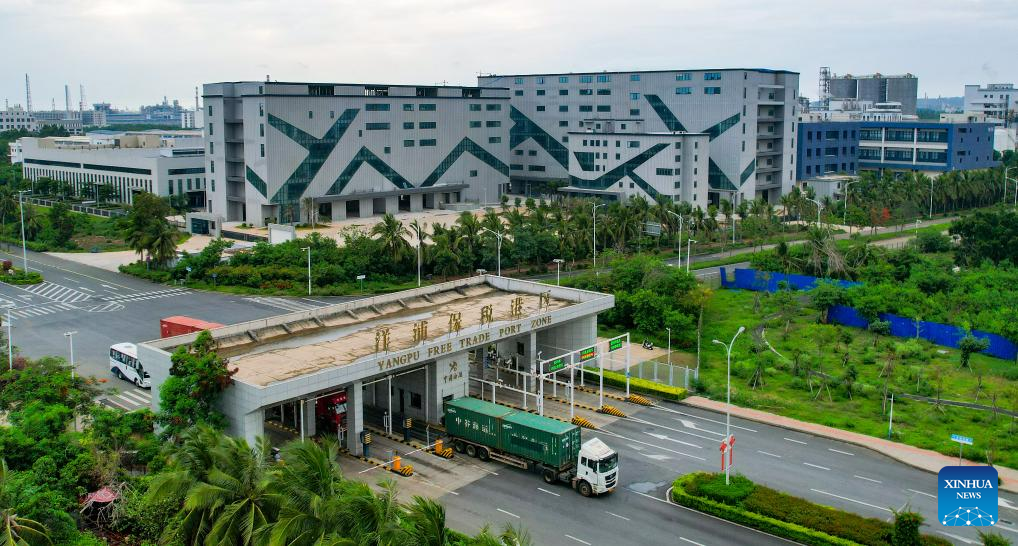
An aerial drone photo taken on May 27, 2025 shows a view of the Yangpu Free Trade Port Zone administered under the Yangpu Economic Development Zone in southern China's Hainan province. [Photo/Xinhua]
Pilot programs have been carried out to expand opening up in value-added telecommunications and biotechnology, while 22 free trade zones are testing 110 reform policies to align with international high-standard economic and trade rules.
China has also extended zero-tariff treatment to cover 100% of tariff lines for all 53 African countries that have diplomatic ties with China.
With the Regional Comprehensive Economic Partnership in force and active steps toward joining the Comprehensive and Progressive Agreement for Trans-Pacific Partnership and the Digital Economy Partnership Agreement, China's opening up is becoming broader, smarter, and built for the long term.
By June 2025, actual foreign direct investment during the 14th Five-Year Plan period had reached US$708.73 billion, achieving the Five-Year Plan target of US$700 billion six months ahead of schedule. More than 229,000 new foreign-invested enterprises were established, signaling a strong vote of confidence from global investors.
Hong noted that China has "shifted from moving goods and capital to opening up in rules, management, and standards — a fundamental leap," adding that greater attention has been given to coordinated opening up between coastal, inland, and border regions.
He went further: "The high-level opening up isn't just about 'bringing in' or 'going out;' it drives deeper reform in the country and strengthens China's role as a stabilizer and growth engine in the global economy."
People first: Delivering shared benefits
China's progress has brought real improvements to people's lives. Over 12 million new urban jobs were created annually. Income gaps are narrowing, with the urban-rural income ratio dropping from 2.56:1 in 2020 to 2.34:1 last year, reflecting more coordinated, inclusive growth.
Housing conditions improved significantly, with more than 11 million affordable units built during the 14th Five-Year Plan period, helping more than 30 million people. Over 240,000 communities were renovated, and 129,000 elevators and 3.4 million parking spaces were added.
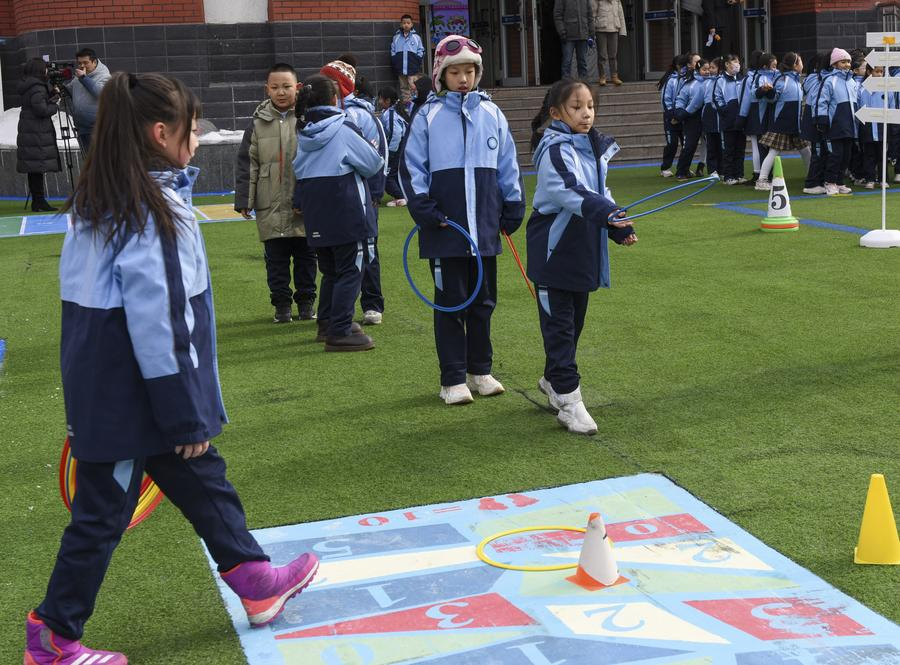
Students play games at a primary school in Urumqi, northwestern China's Xinjiang Uygur autonomous region, Feb. 17, 2025. [Photo/Xinhua]
Education access grew rapidly. Over 97% of children — an increase of 11.2 percentage points since 2020 — are now joining their migrant parents to study in public schools or government-subsidized private schools in cities. From 2021 to 2024, financial aid supported 150 million students of all age groups annually, and this year, more than 12 million children are benefitting from one year of free pre-school education.
Health care coverage expanded, with the total number of medical institutions across urban and rural China surpassing 1.09 million. More than 90% of residents now live within 15 minutes of medical care facilities. Primary-level care facilities and health care workers greatly increased. China has built the world's largest health care service network, offering higher-quality and more efficient medical services.
The country now boasts the world's largest high-speed rail, highway, and postal express networks, while sports facilities have also expanded rapidly, making an increase of 1.13 billion square meters since 2020.
"Development in people's well-being has become more balanced, and support for vulnerable groups is growing," Dong noted. According to the China Disabled Persons' Federation, from 2020 to 2023, the average annual net income of households with persons with disabilities grew by more than 6.9% a year, nearly keeping pace with national GDP growth.

