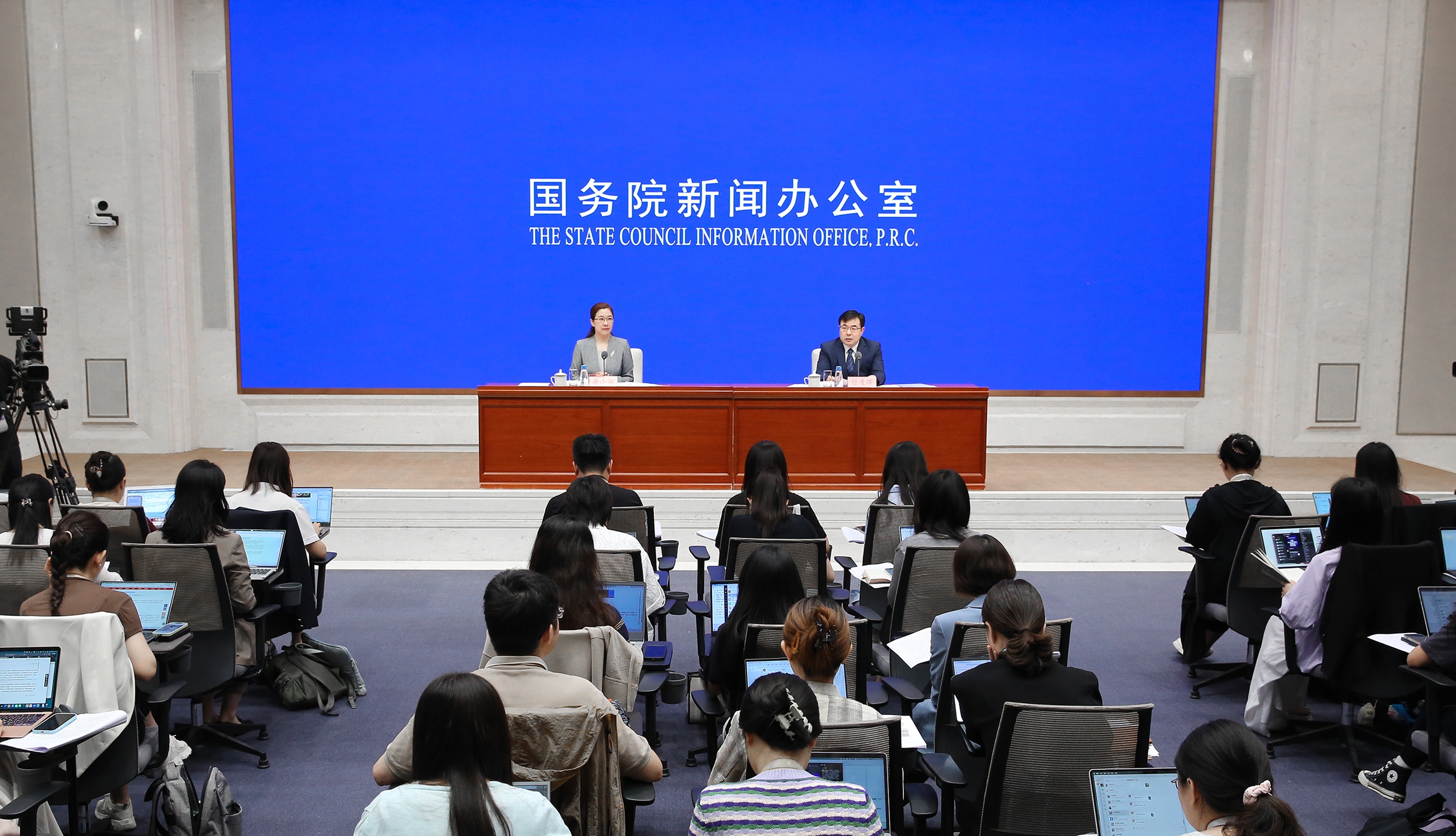

SCIO briefing on China's economic performance in July 2025
Beijing | 10 a.m. Aug. 15, 2025
Speaker

Fu Linghui, spokesperson and chief economist of the National Bureau of Statistics (NBS) and director general of the Department of Comprehensive Statistics of the NBS
Chairperson
Speaker:
Mr. Fu Linghui, spokesperson and chief economist of the National Bureau of Statistics (NBS) and director general of the Department of Comprehensive Statistics of the NBS
Chairperson:
Ms. Shou Xiaoli, director general of the Press Bureau of the State Council Information Office (SCIO) and spokesperson of the SCIO
Date:
Aug. 15, 2025
Shou Xiaoli:
Ladies and gentlemen, good morning. Welcome to this press conference held by the State Council Information Office (SCIO). This is a regular briefing on China's economic data. Today, we are joined by Mr. Fu Linghui, spokesperson and chief economist of the National Bureau of Statistics (NBS) and director general of the Department of Comprehensive Statistics of the NBS. Mr. Fu will brief you on China's economic performance in July 2025 and then take your questions.
Now, I would like to give the floor to Mr. Fu for his introduction.
Fu Linghui:
Thank you. Next, I will first report the main data indicators for July as usual, and then answer the questions that people are concerned about.
In July, the national economy maintained a steady growth momentum.
In July, under the strong leadership of the Communist Party of China (CPC) Central Committee with Comrade Xi Jinping at its core, all regions and departments conscientiously implemented the decisions and deployments of the CPC Central Committee and the State Council. Adhering to the general principle of seeking progress while maintaining stability, we fully and accurately implemented the new development philosophy on all fronts, accelerated the building of a new development pattern, stepping up the implementation of more proactive and effective macro policies, and deepened the construction of a unified national market. The national economy saw steady growth — production demand continued to grow, employment and prices remained stable, new quality productive forces became stronger, and high-quality development delivered new results.
First, industrial production grew fast, with equipment manufacturing and high-tech manufacturing showing good growth momentum.
In July, the total value added of industrial enterprises above designated size grew by 5.7% year on year, or 0.38% month on month. Between the three major sectors, the value added of mining went up by 5.0% year on year, that of manufacturing was up by 6.2%, and that of the production and supply of electricity, thermal power, gas and water was up by 3.3%. The value added of equipment manufacturing went up by 8.4% year on year, and that of high-tech manufacturing was up by 9.3%, which were 2.7 percentage points and 3.6 percentage points higher than the total value added of industrial enterprises above designated size. In terms of ownership, the value added of state holding enterprises went up by 5.4% year on year; that of share-holding enterprises was up by 6.5%; that of enterprises funded by foreign investors or investors from Hong Kong, Macao and Taiwan was up by 2.8%; and that of private enterprises was up by 5.0%. In terms of products, the outputs of 3D printing devices, industrial robots and new energy vehicles (NEVs) grew by 24.2%, 24.0% and 17.1% year on year, respectively. In the first seven months, the total value added of industrial enterprises above designated size went up by 6.3% year on year. In July alone, the Manufacturing Purchasing Managers' Index stood at 49.3%, and the Production and Operation Expectation Index was 52.6%. In the first six months, the total profits of industrial enterprises above designated size were 3.4365 trillion yuan, down by 1.8% year on year.
Second, the service sector grew rapidly, with modern services maintaining a good development momentum.
In July, the Index of Services Production grew by 5.8% year on year. In terms of sectors, the production index of information transmission, software and information technology services was up by 11.9%, that of financial industry grew by 8.7% and that of leasing and business services was up by 8.0% year on year, which were 6.1 percentage points, 2.9 percentage points and 2.2 percentage points higher than the Index of Services Production, respectively. In the first seven months, the Index of Services Production increased by 5.9% year on year. In the first six months, the business revenue of service enterprises above designated size grew by 7.5% year on year. In July, the Business Activity Index for Services was 50.0% and the Business Activity Expectation Index for Services was 56.6%. Specifically, the business activity index for railway transportation, air transportation, postal services, and culture, sports and recreation stayed within the high expansion range of 60.0% and above.
Third, market sales registered continued growth and spending on services grew quickly.
In July, the total retail sales of consumer goods reached 3.878 trillion yuan, up by 3.7% year on year, or down by 0.14% month on month. Analyzed by different areas, the retail sales of consumer goods in urban areas reached 3.362 trillion yuan, up by 3.6% year on year, while the figure for rural areas reached 516 billion yuan, up by 3.9%. Grouped by types of consumption, the retail sales of goods were 3.4276 trillion yuan, up by 4.0%; the income of catering was 450.4 billion yuan, up by 1.1%. Sales of basic consumer goods and certain upgraded products posted solid growth. Retail sales of units above designated size rose 8.6% for grain, oil and food; 8.2% for daily necessities; 13.7% for sports and recreational articles; and 8.2% for gold, silver and jewelry, respectively. The consumer goods trade-in initiative continued to show results, with the retail sales of household appliances and audiovisual equipment, furniture, communication equipment, and cultural and office supplies by units above designated size growing by 28.7%, 20.6%, 14.9% and 13.8%, respectively. In the first seven months, the total retail sales of consumer goods reached 28.4238 trillion yuan, up by 4.8% year on year. The online retail sales were 8.6835 trillion yuan, up by 9.2% year on year. Specifically, the online retail sales of physical goods were 7.079 trillion yuan, up by 6.3%, accounting for 24.9% of the total retail sales of consumer goods. In the first seven months, the spending on services grew by 5.2% year on year. Among them, the spending on cultural, sports and leisure services, communication information services, tourism consulting and rental services, and transportation services grew rapidly.
Fourth, fixed-asset investment continued to expand, with investment in manufacturing growing fast.
In the first seven months, investment in fixed assets (excluding rural households) reached 28.8229 trillion yuan, up by 1.6% year on year; and investment in fixed assets was up by 5.3% with the investment in real estate development deducted. Specifically, investment in infrastructure grew by 3.2% year on year, that in manufacturing grew by 6.2%, and that in real estate development declined by 12.0%. The floor space of new commercial buildings sold was 515.6 million square meters, down by 4.0% year on year; the total sales of new commercial buildings were 4.9566 trillion yuan, down by 6.5%. By industry, investment in the primary industry went up by 5.6% year on year, that in the secondary industry up by 8.9%, and that in the tertiary industry down by 2.3%. Private investment declined by 1.5% year on year, and increased by 3.9% with investment in real estate development deducted. In the high-tech sector, investment in aerospace vehicle and equipment manufacturing, information services, and computer and office device manufacturing increased by 33.9%, 32.8%, and 16.0% year on year, respectively. In July, fixed-asset investment (excluding rural households) fell 0.63% month on month.
Fifth, imports and exports of goods grew quickly, and the trade structure continued to be optimized.
In July, the total value of imports and exports of goods was 3.9102 trillion yuan, up 6.7% year on year. Specifically, the total value of exports was 2.3077 trillion yuan, up 8.0%; and the total value of imports was 1.6026 trillion yuan, up 4.8%. In the first seven months, the total value of imports and exports of goods reached 25.6969 trillion yuan, up 3.5% year on year. Specifically, the total value of exports was 15.3048 trillion yuan, up 7.3%; and the total value of imports was 10.3922 trillion yuan, down 1.6%. In the first seven months, the imports and exports of general trade went up 2.1%, accounting for 64% of the total value of imports and exports. Imports and exports with Belt and Road partner countries grew 5.5%. Imports and exports by private enterprises went up 7.4%, accounting for 57.1% of the total value of imports and exports, 2.1 percentage points higher than that of the same period last year. Exports of mechanical and electrical products grew 9.3% year on year, accounting for 60% of the total value of exports.
Sixth, employment remained stable overall, and the surveyed urban unemployment rate experienced a seasonal increase.
In the first seven months, the average surveyed urban unemployment rate was 5.2%. In July, the surveyed urban unemployment rate was 5.2%, 0.2 percentage point higher than that of the previous month, and flat compared with the same month last year. The surveyed unemployment rate of population with local household registration was 5.3% and that of population with non-local household registration was 5.1%, among which the rate of the population with non-local agricultural household registration was 4.9%. In 31 major cities, the surveyed urban unemployment rate was 5.2%, up 0.2 percentage point from the previous month but down 0.1 percentage point compared with the same period last year. Employees of enterprises worked an average of 48.5 hours per week.
Seventh, consumer prices were flat year on year, while the core consumer price index (CPI) has risen for consecutive months.
In July, the CPI maintained the same level year on year, and rose by 0.4% month on month. By category, prices for food, tobacco and alcohol decreased by 0.8% year on year, clothing increased by 1.7%, housing rose by 0.1%, household goods and services grew by 1.2%, and transportation and communication declined by 3.1%. Prices for education, culture and recreation increased by 0.9%, health care rose by 0.5%, and other goods and services went up by 8.0%. In terms of prices for food, tobacco and alcohol, prices of pork went down by 9.5%, fresh vegetables down by 7.6%, grain down by 1.0%, and fresh fruits up by 2.8%. The core CPI excluding the prices of food and energy went up by 0.8% year on year, 0.1 percentage point higher than that of the previous month. In the first seven months, the CPI went down by 0.1% year on year.
In July, the producer prices for industrial products went down by 3.6% year on year, or down by 0.2% month on month. The purchasing prices for industrial producers went down by 4.5% year on year, or down by 0.3% month on month. In the first seven months, the producer prices and the purchasing prices for industrial products dropped by 2.9% and 3.2% year on year, respectively.
Overall, in July, macro policies took effect, the national economy overcame the adverse effects of a complex and volatile external environment and extreme domestic weather, maintained a steady and progressive development trend, and demonstrated strong resilience and vitality. It should also be noted that the external environment is complex and severe, and economic operations still face many risks and challenges. In the next stage, we must adhere to the guidance of Xi Jinping Thought on Socialism with Chinese Characteristics for a New Era and maintain the general approach of seeking progress while ensuring stability. We must fully and accurately implement the new development philosophy, and accelerate the construction of a new development pattern. We must fully implement the decisions and deployments of the CPC Central Committee and the State Council, promote the implementation of various policies, focus on stabilizing employment, enterprises, market and expectations, effectively unleash the potential of domestic demand, strongly promote the domestic and international dual circulation, and foster stable and healthy economic development. Thank you.
Shou Xiaoli:
Now, the floor is open to questions. Please identify your media outlet before raising your questions.
_ueditor_page_break_tag_CCTV:
Since the beginning of this year, China's national economy has withstood pressure and overcome difficulties, demonstrating strong resilience and vitality. How do you evaluate the economic performance in July? Thank you.
Fu Linghui:
Thank you for your question. In July, the international environment was complex and severe, while the impact of trade protectionism and unilateralism continued. Some regions in China experienced extreme weather events, such as heatwaves, rainstorms and floods, which caused short-term shocks to the economic performance. In the face of the complex situation, under the strong leadership of the CPC Central Committee, all regions and departments have taken actions, overcome difficulties, accelerated the implementation of more proactive macro policies, and advanced the construction of a unified domestic market. Production and demand continued to grow, employment and prices remained generally stable, new drivers of growth expanded, and the economy maintained a stable performance with steady progress. The main features are as follows.
First, production supply maintained stable growth. Industrial production grew quickly, with the value added of industrial enterprises above designated size growing by 5.7% year on year in July, maintaining rapid growth. Driven by industrial upgrades and development, the equipment manufacturing industry saw good development, strongly supporting industrial growth. In July, the value added of equipment manufacturing enterprises above designated size increased by 8.4% year on year, significantly faster than the overall growth of industrial enterprises above designated size. The service sector maintained strong growth in July, with its production index increasing by 5.8% year on year. Increased summer travel boosted rapid growth in related services. In July, the production index of transportation, warehousing and postal services increased by 5.5% year on year, accelerating by 0.4 percentage point from the previous month.
Second, consumption and investment have continued to grow. Policies to boost consumption have shown to be effective. Cultural, sports and entertainment demand has increased, and both goods sales and service consumption have continued to grow. In July, the total retail sales of consumer goods increased by 3.7% year on year, with retail sales of goods growing by 4%. In the first seven months, the retail sales of services grew by 5.2% year on year, demonstrating overall stable growth. Affected by factors such as high temperatures and heavy rains in some regions and a slowdown in project construction, the growth rate of investment declined, but the scale of investment continued to expand. From January to July, fixed-asset investment rose by 1.6% year on year. The policy of large-scale equipment renewal has continued to take effect, further supporting investment growth. From January to July, investment in purchases of equipment, tools and instruments increased by 15.2%, maintaining rapid growth.
Third, foreign trade has demonstrated resilience. In the face of a complex and volatile international environment, various regions and departments have increased their efforts to stabilize foreign trade. Many foreign trade enterprises have taken proactive steps to expand foreign trade opportunities. Imports and exports of goods have continued to grow. In July, the total value of goods imported and exported increased by 6.7% year on year, up 1.5 percentage points from the previous month. The diversification of China's foreign trade has continued to advance. From January to July, China's imports and exports with Belt and Road partner countries increased by 5.5% year on year, continuing to outpace the overall growth rate of foreign trade.
Fourth, employment and prices have remained stable overall. Affected by factors such as the graduation season, the national surveyed urban unemployment rate showed a seasonal rise. In July, the national surveyed urban unemployment rate was 5.2%, unchanged from the same period last year, while overall employment remained stable. Employment of key groups remained basically stable. In July, the surveyed urban unemployment rate of the population with non-local agricultural household registration was 4.9%, lower than the national surveyed urban unemployment rate. Affected by the decline in food prices, the consumer price index (CPI) turned from a year-on-year rise to a flat reading in July, compared with a 0.1% increase in the previous month. The core CPI, excluding food and energy, rose by 0.8% year on year. The growth rate expanded by 0.1 percentage point from the previous month, marking the third consecutive month for growth rate expansion and indicating positive changes.
Fifth, new growth drivers have grown steadily. High-tech manufacturing has developed positively. In July, the added value of high-tech manufacturing above designated size increased by 9.3% year on year, continuing to outpace the growth rate of industrial enterprises above designated size. The modern service industry has maintained rapid growth, with the index of service production (ISP) for information transmission, software and IT services, and for leasing and business services growing by 11.9% and 8%, respectively. Smart and green new industries have grown rapidly. In July, the added value of integrated circuit manufacturing increased by 26.9% year on year, and the production of new energy vehicles increased by 17.1%. Online consumption has developed rapidly. From January to July, the online retail sales of physical goods increased by 6.3% year on year, which was 0.3 percentage point higher than the first six months.
It should also be noted that there are many external instabilities and uncertainties; domestic supply exceeds demand; some structural issues are still emerging; and the foundation for the economy's rebound and improvement needs to be consolidated. In the next stage, we will fully implement the decisions and arrangements of the CPC Central Committee, maintain policy continuity and stability, and enhance flexibility and foresight. We will focus on stabilizing employment, businesses, markets and expectations, vigorously promote the dual circulation of domestic and international markets, and promote steady and healthy economic development. Thank you.
_ueditor_page_break_tag_National Business Daily:
What are the characteristics of the consumption data in July? How do you view service consumption in July? What is the outlook for consumption overall? Thank you.
Fu Linghui:
Thank you for your questions. Expanding consumption is an important measure to strengthen domestic circulation and continuously improve people's lives. Since the beginning of this year, various regions and departments have resolutely implemented the decisions and arrangements of the CPC Central Committee and the State Council, actively promoted special actions to boost consumption, and intensified and expanded the implementation of the consumer goods trade-in policy. These efforts have helped unleash consumption potential and promoted stable economic performance. Looking at the situation in July, the growth rate of commodity market sales slowed down. In July, the total retail sales of consumer goods increased by 3.7% year on year, which was 1.1 percentage points lower than the previous month. However, service market sales remained generally stable. From January to July, service retail sales increased by 5.2%, which was basically the same as that from January to June. If the retail sales of goods and services are combined, preliminary estimates show a year-on-year increase of about 5% from January to July. Overall, a steady upward trend has been maintained since the beginning of the year, indicating that the expansion of consumption is unchanged. Looking at the overall performance of market sales in July, there are several key characteristics. These are as follows:
In terms of goods retail sales, goods related to the trade-in programs and upgraded categories recorded good sales. First, policies to boost consumption have continued to take effect. The enhanced and expanded trade-in programs for consumer goods have continued to demonstrate a driving effect on the sales of related products. In July, the retail sales of household appliances and audiovisual equipment, cultural and office supplies, furniture, and communication equipment in units above designated size increased by 28.7%, 13.8%, 20.6% and 14.9% year on year, respectively, all significantly higher than the growth rate of goods retail sales, continuing to support the growth of goods sales. Second, the retail sales of some upgraded categories of goods have grown rapidly. Consumption upgrades among residents have driven expanded demand for cultural, sports and entertainment goods, boosting the sales growth of related goods. In July, retail sales of sports and entertainment goods, as well as gold, silver and jewelry by units above designated size rose by 13.7% and 8.2% year on year, respectively.
In terms of service retail sales, the retail sales of services related to residents' intellectual and cultural needs have grown rapidly. First, the retail sales of cultural and tourism services have shown sound growth momentum. During the summer, there was a surge in travel demand among residents. Various regions actively developed new models of cultural and tourism consumption, injecting new momentum into expanding consumption with diversified supply. Markets related to sporting events, movies and performances were relatively active, contributing to rapid growth in cultural, tourism and recreational consumption. From January to July, the retail sales of travel consulting rental services, transportation services, and cultural and sports recreation services all maintained double-digit growth. Second, the retail sales of information services have grown rapidly. The demand for services such as digital audiovisual content and online entertainment has continued to expand, contributing to the growth in retail sales of household information services. From January to July, the retail sales of communication and information services grew by more than 10%, which was 0.2 percentage point higher than the growth rate in the first half of the year. Since the beginning of this year, the total business volume of telecommunications services and software business revenue both maintained rapid growth, also reflecting the sound development momentum in the communication and information services sector.
In terms of development trends, online consumption and emerging consumption are developing well. New business models such as online retail and instant retail are convenient and efficient, and have been well-received by consumers. In the first seven months, online retail sales of physical goods increased by 6.3% year on year, which was 0.3 percentage point higher than the growth rate in the first half of this year. New models and forms of consumption, such as livestreaming sales, are becoming increasingly mature. The silver economy and the debut economy are developing rapidly, with new growth drivers for consumption constantly emerging.
Overall, the growth rate of commodity market sales slowed in July, while service retail remained generally stable. Driven by special actions to boost consumption, the trend of expanding consumption has not changed, and new growth drivers for consumption have continued to strengthen. However, it should also be noted that external instabilities and uncertainties are increasing, the consumption capacity and confidence of domestic residents still need to be improved, and the internal driving force for consumption still needs to be strengthened. In the next stage, we will further implement the special actions to boost consumption. While expanding the consumption of goods, we will cultivate new growth areas in service consumption, continuously improve the consumption environment, and promote the stable development of the consumption market. Thank you.
_ueditor_page_break_tag_CNR:
Based on July's economic data and your judgment of the current situation, what are your predictions and outlook for the economic trajectory in the second half of 2025? Thank you.
Fu Linghui:
Thank you for your question. Affected by multiple factors, some economic indicators fluctuated in July. However, the cumulative growth rate of key indicators has remained generally stable. Employment and prices were generally stable; and the steady economic performance remained unchanged. At the same time, driven by innovation, new growth drivers have been growing and expanding, high-quality development has been steadily advanced, and solid steps have been made in economic development. The national economy maintained a trend of steady progress. Looking ahead, despite facing various risks and challenges in economic operations, the fact that China's economy is underpinned by a stable foundation, multiple advantages, strong resilience and significant potential remains unchanged. The supporting conditions and fundamental trends for long-term sound economic development have not changed. With macro policies taking effect and proactive actions taken by all parties, market demand has expanded, new quality productive forces have developed, and market vitality has improved, which will strongly support the stable operation of the economy and steadily improve the quality of development. The second half of the year has the support of the following factors:
First, there is support for the expansion of market demand. In terms of consumption, the special actions to boost consumption have continued to take effect, and the consumption potential has been continuously released. From January to July, the total retail sales of consumer goods increased by 4.8% year on year, and service retail sales grew by 5.2%, with both remaining generally stable. As efforts to boost goods consumption and to cultivate new growth drivers for service consumption steadily progress, the expansion of consumption will continue to be supported. In terms of exports, despite the impact of high tariffs from individual countries, China's foreign trade entities have actively expanded into diversified markets, with increases in both the quantity and quality of goods exports, continuing to demonstrate the resilience of foreign trade. From January to July, China's goods exports grew by 7.3%, with exports of mechanical and electrical products growing by 9.3%. The expansion of market demand has created favorable conditions for stable economic operation.
Second, new quality productive forces have been actively developed. Various regions and departments have actively promoted the integrated development of scientific and technological innovation with industrial innovation, cultivated and strengthened new quality productive forces, and continuously expanded new growth drivers. High-tech industries have grown rapidly, and provided stronger support for economic growth. From January to July, the value added of high-tech manufacturing industries above designated size increased by 9.5% year on year, of which the value added of electronic and communication equipment manufacturing and aerospace vehicle and equipment manufacturing increased by 12.8% and 8.6%, respectively. The digital and intelligent transformation of industries has been accelerated, promoting the development of emerging industries. From January to July, the manufacturing of digital product equipment and intelligent unmanned aerial vehicles maintained rapid growth. The widespread application of large-scale AI models has significantly increased the demand for computing power, driving a substantial increase in server production.
Third, reform and opening up has continued to be deepened. Facing the complex and severe domestic and international situation, China has stayed firmly committed to deepening reforms and expanding high-standard opening up, thereby improving economic circulation, and boosting the resilience and vitality of foreign trade. In the first half of the year, the final consumption expenditure contributed 52% to economic growth, up 7.5 percentage points from the previous year. From January to July, the total value of imported and exported goods increased by 3.5% year on year, and both the freight turnover of goods and passenger turnover maintained rapid growth. As the construction of a unified national market advances, disorderly competition among enterprises is being regulated in accordance with laws and regulations, integrated development of domestic and foreign trade is being promoted, the vitality of business entities is being vigorously stimulated, and the dual circulation of domestic and international markets will be smoother.
Fourth, macro policies have continued to take effect. Since the beginning of this year, more proactive macro policies have been implemented, driving the expansion of production demand and promoting steady economic growth. From January to July, the retail sales of household appliances and audiovisual equipment, and communication equipment, supported by consumer goods trade-in policies, increased by 30.4% and 22.9% year on year, respectively. Under the two major initiatives of implementing major national strategies and building up security capacity in key areas as well as the policy of large-scale equipment renewals, the added value of the equipment manufacturing industry increased by 9.9% year on year from January to July, and investment in water conservancy and electricity grew rapidly. As policies to expand consumption demand in ensuring and improving people's livelihoods and to promote the high-quality implementation of the "Two Major Initiatives" policies yielded results, it will contribute to stable economic performance.
Recently, the International Monetary Fund (IMF) in its latest report, raised its China's economic growth forecast this year by 0.8 percentage point, which also reflects the international community's growing confidence in China's economic development. Thank you.
_ueditor_page_break_tag_Beijing Youth Daily:
We have noticed that the data shows China's CPI rose 0.4% month on month, shifting from a 0.1% decrease in June. Meanwhile, the growth rate of the core CPI has also been accelerating for three consecutive months. What according to your analysis are the main reasons for this? Additionally, what will be the future trends in CPI in the next stage?
Fu Linghui:
Thank you for your questions. July witnessed positive changes in consumer prices in China, characterized by a shift from a month-on-month decrease to increase, and continuously expanding growth the in the core CPI year on year.
On a month-on-month basis, the CPI rose 0.4% in July, compared with a 0.1% decline in June. The month-on-month price shift from decline to growth was primarily driven by increases in the prices of services and industrial consumer goods. First, driven by the peak summer travel season, prices of transportation-related services increased significantly, leading to a rebound in service prices. In July, the prices of air tickets, travel, hotel accommodation and vehicle rentals rose by 4.4%-17.9% month on month, collectively pushing up the monthly CPI by around 0.21 percentage point. In July, service prices increased by 0.6% month on month, expanding significantly compared with the previous month. Second, policies aimed at boosting consumption took effect, leading to a rebound in the prices of some industrial consumer goods. The monthly CPI rose by approximately 0.05 percentage point in July, driven by price increases ranging from 0.5% to 2.2% for items such as household appliances, daily necessities, recreational durables and personal care products. In July, the prices of industrial consumer goods excluding energy increased by 0.2% month on month, expanding slightly compared with the previous month. In addition, driven by changes in international oil prices, rising energy costs also contributed to the month-on-month increase in the CPI. In July, energy prices increased by 1.6% month on month.
Given that food and energy prices in the CPI are more susceptible to short-term factors, analyzing price changes requires looking not only at the headline CPI but also at the core CPI, which provides a better reflection of the underlying inflation trend. On a year-on-year basis, despite the impact of a larger fall in food prices, the headline CPI remained flat in July. However, the core CPI excluding food and energy was up 0.8%, representing a 0.1 percentage point acceleration in the pace of increase from the previous month and the third straight month of widening gains. Overall, since the beginning of this year, it has shown a trend of stability with a moderate increase, indicating positive changes in market supply and demand.
The year-on-year increase in core CPI has continued to expand, mainly due to the effective implementation of special actions to boost consumption since the beginning of this year. Potential for goods and services consumption was gradually released, which helped drive price up. The steady advancement of the construction of a unified national market, along with efforts to curb cutthroat low-price competition in accordance with laws and regulations, also promoted the price rebound. First, the expansion of the trade-in policy for consumer goods and the regulation of corporate competition have driven a rebound in the prices of related industrial consumer goods. In July, the prices of industrial consumer goods excluding energy increased by 1.2% year on year. The growth rate accelerated by 0.2 percentage point from the previous month, marking the third consecutive month of expansion, and contributed 0.29 percentage point to the year-on-year increase of the CPI. Specifically, the prices of household appliances increased by 2.8% year on year, while the declines in prices for fuel-powered cars and new energy cars narrowed by 0.8 percentage point and 0.6 percentage point, respectively, compared with the previous month. Second, as household consumption upgrades and demand for services continue to grow, service prices have remained firm with an upward trend. In July, service prices increased by 0.5% year on year, a growth rate that outpaced the headline CPI and contributed about 0.19 percentage point to its change. This rise continues the upward trend observed since March. Specifically, household services and education services rose by 1.7% and 1.1% year on year, respectively, higher than the overall price increase for services. In addition, the prices of gold and platinum jewelry rose 37.1% and 27.3% year on year, respectively, in July, also contributing to the year-on-year increase in core CPI.
In summary, July saw generally stable operation of consumer prices and the continued emergence of positive changes. However, the market remained characterized by supply outstripping demand, keeping prices at low levels. Going forward, the results from policies including expanding domestic demand and advancing the development of a unified national market are expected to become more evident, and positive forces supporting a reasonable rise in the general price level will keep building up. Thank you.
_ueditor_page_break_tag_Market News International:
This week, China and the U.S. agreed to extend their escalatory tariff truce by a further 90 days. How does this impact China's export performance over the remaining months of the year? What is your view that the possibility that the front-loading effect seen earlier in the year will weaken export performance in the second half? And, what will be the source of export growth in the months ahead?
Fu Linghui:
Thank you for your questions. Since the beginning of this year, despite a rapidly changing trade environment and a significant increase in uncertainties and instabilities, China's imports and exports of goods have continued to grow, showing strong resilience and vitality. In July, China's total value of imports and exports of goods grew by 6.7% year on year, accelerating by 1.5 percentage points from the previous month. The value of goods exports increased by 8% year on year, accelerating by 0.8 percentage point from the previous month and marking the second consecutive month of acceleration. As exports continue their rapid growth, China's imports are also steadily rebounding. In July, the value of goods imports increased by 4.8% year on year, accelerating by 2.4 percentage points from the previous month, marking the second consecutive month of expansion. This rise is conducive to expanding global market demand and injecting Chinese strength into the global economic recovery. The strong resilience of China's goods imports and exports can be attributed to its unwavering commitment to high-level opening up and diversification of foreign trade partners, coupled with industrial optimization and upgrading, enhanced market competitiveness and the joint efforts of stabilizing foreign trade policies to create a good environment for foreign trade enterprises. Looking ahead to the second half of the year, China's export growth is still supported by a number of favorable conditions.
First, the strategy of foreign trade diversification is continuing to yield positive results. Affected by high tariffs, China's exports to the United States have declined. Nevertheless, China remains committed to expanding high-standard opening up and promoting trade exchanges with countries around the world on the basis of mutual benefit and win-win outcomes. Exports to traditional major trade partners and emerging trade partners have continued to grow. From January to July, China's exports to ASEAN, the EU, and Belt and Road partner countries increased by 14.8%, 8.2% and 11.7%, respectively. As China continues to deepen its economic and trade cooperation with countries around the world, the support of foreign trade diversification for exports will become increasingly evident.
Second, the competitiveness of export goods has been enhanced. Chinese enterprises have been actively improving their independent R&D capabilities, accelerating transformation, optimizing product structures, and upgrading technological content. Their international competitiveness has been continuously strengthened, which has also contributed to export growth. From January to July, China's exports of electromechanical products increased by 9.3% year on year, with exports of integrated circuits up 21.8%. Exports of high-tech products also performed well, growing by 7.2% during the same period.
Third, foreign trade enterprises have remained highly dynamic. Since the beginning of this year, in the face of external market fluctuations, a wide range of foreign trade enterprises, particularly private ones, have taken active and forward-looking steps under the support of various policies promoting private sector development. They have worked to consolidate existing markets and explore new ones, providing strong momentum for the growth of foreign trade. From January to July, exports by private enterprises increased by 8.7% year on year, outpacing the overall growth rate of goods exports. The adaptability and innovation of foreign trade entities have also created favorable conditions for expanding trade opportunities.
It should also be noted that local governments and relevant departments across the country have continued to intensify efforts to promote high-quality development of foreign trade, helping enterprises stabilize orders and expand markets. The positive effects of these policies will continue to emerge. The global economy remains weak and there are many unstable and uncertain factors in the external environment. This brings additional pressure on China's foreign trade and poses greater challenges to certain enterprises. In spite of this, our commitment to high-standard opening up remains unchanged. The country's comprehensive industrial system offers distinct advantages, foreign trade enterprises are actively adapting to changes, and the continued implementation of policies to stabilize foreign trade will keep supporting its steady and sound development. Thank you.
_ueditor_page_break_tag_Jiupai News:
Developing new quality productive forces is an intrinsic requirement and an important focus of promoting high-quality development. Since the beginning of this year, various regions have been actively fostering new quality productive forces. Could you please brief us on their development in July? Thank you.
Fu Linghui:
Thank you for your question. The development of new quality productive forces has attracted a great amount of attention. Since the start of this year, China has been promoting the deep integration of scientific and industrial innovation, advancing high-end, intelligent, and green industrial transformation, and facilitating the application of scientific and technological achievements. These efforts have led to steady progress in cultivating new quality productive forces, injecting strong momentum into high-quality development. Let me give you some details.
First, a steady stream of innovation outcomes has emerged. China has continued to increase R&D investment and advance self-reliance and self-strengthening in science and technology, achieving a number of breakthroughs. In 2024, national R&D spending exceeded 3.6 trillion yuan, with an intensity of 2.68%, surpassing the overall level of the EU and approaching the OECD average. This year, from the domestic boom in large AI models to the "Robot Marathon," a series of technological innovations have captured global attention.
Second, emerging industries have maintained a robust growth. Emerging industries serve as key arenas for fostering new quality productive forces. The deep integration of scientific and industrial innovation has enhanced the supply of high-quality innovation, continuously driving the growth of emerging industries. High-tech industries with higher technological content and added value have maintained rapid growth since the beginning of this year. In July, the value added of integrated circuit manufacturing and electronic special materials manufacturing above the designated size increased by 26.9% and 21.7% year on year, respectively.
Third, the digital economy has grown rapidly. In the digital era, digital technologies have become a key driving force, increasingly empowering a wide range of industries. In July, the value added of digital product manufacturing above the designated size increased by 8.4% year on year. Artificial intelligence has developed rapidly and become more deeply integrated with the real economy, with application scenarios continuing to expand and smart terminal products becoming increasingly popular. In July, the value added of intelligent unmanned aerial vehicle manufacturing and intelligent in-vehicle device manufacturing rose by 80.8% and 21%, respectively. Industrial robots and civilian drones output increased by 24% and 18.9% respectively.
Fourth, green development has gained both quality and efficiency. In line with the global trend toward green and low-carbon growth, China has been fostering new growth drivers in green development and has achieved remarkable results, with the green content of its economy continuing to rise. In July, the output of new energy products such as new energy vehicles and lithium-ion batteries increased by 17.1% and 29.4% year on year, respectively. The output of green materials such as carbon fiber and bio-based chemical fibers rose by 43.8% and 19.8% , respectively. The green transformation has also created new opportunities for the development of the circular economy, as the value added of the waste resource comprehensive utilization industry increased by 11.7% in July.
In addition, the effects of large-scale equipment renewal policies continue to be realized, creating favorable conditions for traditional industries to accelerate equipment upgrades and technological transformation. Some enterprises in traditional sectors have introduced new processes, technologies, and concepts, leveraging the advantages of flexible production and rapid response to establish core competitiveness in a highly competitive market environment. Thank you.
_ueditor_page_break_tag_South China Morning Post:
You've shared your analysis on the CPI data. Could you please provide your perspective on the PPI figures and their outlook in the coming months? The Commission for Finance and Economy under the CPC Central Committee held a meeting on July 1, emphasizing the need to regulate enterprises' low-price disorderly competitions in accordance with laws and regulations. Given this, has there been any visible effect of the measures to eliminate rat race competition in the recent economic data? Thank you.
Fu Linghui:
Thank you for your questions. Recently, as the policies to expand domestic demand and spur consumption began taking effect, the building of unified domestic market advanced. Our regulation of enterprises' low-price, disorderly competition in accordance with laws and regulations has improved the supply and demand dynamics of certain markets. This has led to some positive changes in prices. The CPI rose 0.4% month on month in July, reversing the 0.1% decline seen in June. Notably, the price of industrial consumer goods increased by 0.5% from the previous month, with the growth rate accelerating by 0.4 percentage points. In July, prices of fuel-powered and new energy vehicles shifted from a month-on-month decline to a flat trend, halting the previous consecutive downward momentum. The PPI decreased by 0.2% month on month in July, with the rate of decline narrowing by 0.2 percentage points compared to June. This marks the first time the monthly decline has slowed since March. Notably, price declines in key sectors such as coal, steel, cement, photovoltaic products and lithium battery manufacturing narrowed by 0.1 to1.9 percentage points, compared to the previous month. Such moderation in price decline across these sectors reduced their downward drag on the overall PPI by 0.14 percentage points from the level of June.
Despite the complex and volatile external environment with lingering uncertainties from international commodity price fluctuations, coupled with significant competitive pressures in certain domestic sectors, the foundation for a reasonable price recovery is being steadily enforced. This is driven by incremental macroeconomic policies that sustain efforts to boost consumer spending. It also relies on proactive regulation to curb disorderly low-price competition among firms, the promotion of capacity management in key industries, and the growing influence of new economic drivers. Thank you.
_ueditor_page_break_tag_The Paper.cn:
What were the changes in the investment data for July? What are the reasons behind these changes? How do you assess the investment outlook in the coming months? Thank you.
Fu Linghui:
Thank you for your questions. From January to July, fixed asset investment increased by 1.6% year on year, showing a slowdown compared to the January to June period. The actual growth rate of fixed asset investment, after deducting price factors, is estimated to be4% to5%. The decline in the nominal growth rate of investment can be attributed to several factors: including short-term influences such as frequent high temperatures and heavy rainfall in some regions, which impact the project construction; the complex and volatile external environment, intensified competition among domestic enterprises, and declining returns on investment; as well as structural reasons related to China's transition process, where the investment momentum in traditional industries is weakening, with emerging sectors that are not currently able to fully compensate for the shortfall. Although the nominal growth rate of investment has slowed, the physical investment remains substantial after deducting price factors. The guidance of innovation-driven development and the policy for large-scale equipment renewal policy, as well as the investment structure continues to be optimized, which in turn creates favorable conditions for economic transformation and upgrading. The key aspects are as follows:
First, investment in manufacturing registered fast growth. Driven by the steady advancement of the efforts to build China into a manufacturer of quality, the upgrading of traditional manufacturing industries and the accelerated development of emerging manufacturing industries have supported the rapid growth in manufacturing investment. From January to July, investment in manufacturing increased by 6.2% year on year, significantly outpacing overall investment growth. Investment in the textile, clothing, and apparel industry increased by 25.2%, investment in the automobile manufacturing industry increased by 21.7%, and investment in the general equipment manufacturing industry increased by 14.8%.
Investment in high-end industries has increased. Scientific and technological innovation is guiding industrial innovation, while the cultivation and growth of new quality productivity driving investment growth in high-end sectors. During the January to July period, investment in the aerospace and equipment manufacturing industry rose by 33.9% year on year, investment in computer and office equipment manufacturing increased by 16%, and investment in information services grew by 32.8%, all maintaining a rapid growth momentum.
Third, investment in key sectors witnessed rapid growth. With continued progress in the implementation of major national strategies and building up of security capacity in key areas, investment in infrastructure in key areas expanded rapidly. Investment in the water conservancy management industry increased by 12.6% from January to July, and investment in information transmission grew by 8.3%. Large-scale equipment renewal has significantly bolstered investment, with investment in purchasing equipment, tools and instruments rising by 15.2% year on year during this period. This category accounted for 16.2% of the total investment, contributing 2.2 percentage points to overall investment growth.
Fourth, investment in the green transformation of energy registered steady growth. As China continues to deepen the green transformation of its energy supply, investment in clean energy-related sectors has been expanding, strongly supporting and ensuring the country's energy security. From January to July, combined investment in solar, wind, nuclear, and hydropower generation increased by 21.9% year on year, maintaining a rapid growth.
Overall, China's investment scale continues to expand, and the investment structure is constantly improving. The pressure facing investment growth is temporary and should be viewed comprehensively. Looking ahead, the country still possesses great potential for investment. There remains significant gap in our per capita capital stock compared with developed countries. Going forward, the accelerated development of new quality productive forces, promoting coordinated development between urban and rural areas and between regions, whilst addressing inadequacies in public well-being all require increased investment. In the next stage, we must adhere to high-quality development, deepen the construction of a unified national market, further improve the investment environment, mobilize investment enthusiasm from all sectors, stimulate vitality of private investment, expand effective investment, promote continuous optimization of the supply structure, and promote the healthy and stable development of the economy. Thank you.
_ueditor_page_break_tag_Jinan Times APP:
How did the industrial enterprises above the designated size perform in July? What were the key characteristics of their performance? What is the outlook for industrial production in the coming months? Thank you.
Fu Linghui:
Thank you for your questions. In July, industrial production maintained rapid growth and high-quality development steadily advanced, showing strong resilience and potential. The main features are as follows.
First, industrial production recorded steady and relatively rapid growth. In July, the value added of industrial enterprises above designated size rose 5.7% year on year. Although it fell slightly from the previous month, it still represented rapid growth. Among them, the value added in the manufacturing industry increased by 6.2%, continuing to outpace the overall growth of industrial enterprises above designated size. The equipment manufacturing industry showed strong growth, continuing to serve as a stabilizing ballast for industrial production. In July, the value added of equipment manufacturing enterprises above designated size increased by 8.4% year on year, clearly supporting the overall growth of industrial enterprises above designated size.
Second, the trend toward high-end and green development continued. The integration of technological and industrial innovation is further developing, and the new quality productive forces represented by high-tech manufacturing and green products are steadily growing. In July, the value added in high-tech manufacturing enterprises above designated size increased by 9.3% year on year. Within this, industries such as integrated circuits and the manufacture of electronic specialty materials grew by 26.9% and 21.7%, respectively. Output of 3D printing equipment and industrial control computers and systems increased by 24.2% and 21.4%, respectively. Production of green and low-carbon products rose rapidly: in July, output of new energy vehicles, lithium-ion batteries, and wind turbine generators increased by 17.1%, 29.4%, and 19.3%, respectively.
Third, digital and intelligent transformation advanced steadily. Driven by the wave of informatization and intelligence, digital product manufacturing and intelligent product production performed well. The value added of digital product manufacturing enterprises above designated size increased by 8.4% year on year, continuing to outpace the growth of industrial enterprises above designated size. Among them, manufacturing of intelligent equipment and electronic components and devices increased by 13.4% and 11%, respectively. AI applications advanced rapidly, promoting favorable development in related industries. In July, production of industrial robots and service robots rose by 24% and 12.8%, respectively.
Fourth, the stimulative effects of policies continued to emerge. Major national projects and programs, including those aligned with major national strategies, which also focus on building security capacity in key areas, as well as the large-scale renewal of equipment and the trade-in of consumer goods, have driven industrial production. Driven by equipment renewal, in July, the value added of industries such as shipbuilding and related equipment manufacturing and motor manufacturing increased by 29.7% and 15.9%, respectively. Under the trade-in policy for consumer goods, output of electric bicycles and 5G smartphones in July increased by 45.3% and 8.1%, respectively.
Overall, industrial production in July was generally stable, and the quality of development continued to improve. However, it should also be noted that the external environment remains complex and severe. There remains a prominent imbalance in supply and demand for a few industries. The profitability of industrial enterprises continues to be placed under pressure. Looking ahead, there are many favorable conditions for the improvement of industrial production. We should act based on current realities, while keeping long-term goals in mind. We must also further expand domestic demand and strengthen innovation-driven growth. We should vigorously cultivate new quality productive forces, promote the transformation and upgrading of traditional industries, and advance sustained and healthy industrial development. Thank you.
Shou Xiaoli:
Let's continue with the questions. Due to limited time, we will take one last question.
_ueditor_page_break_tag_China News Service:
On July 31, the State Council executive meeting deployed the implementation of personal consumption loans interest subsidies and service industry business operators loan interest subsidies policies to reduce the cost of resident credit, stimulate consumption potential, and promote the development of the service industry. In the second half of the year, can the service industry become the main driving force of economic growth? Thank you.
Fu Linghui:
In recent years, China's industrial structure has been adjusted and optimized, and the share of the service industry in the national economy has steadily increased, making its support for economic growth increasingly evident. In the first half of this year, the value added of the service industry increased by 5.5% year on year, and contributing 60.2% to economic growth, making it an important driving force in economic growth. In July, with the sustained effects of macroeconomic policy package, the service sector production index rose 5.8% year on year, maintaining rapid growth whilst strongly supporting stable economic operations. From the operating conditions of the service sector in July, the following features can be observed.
First, modern services registered increasingly fast growth. The role of innovation leadership continues to strengthen, and the integrated development of technological innovation and industrial innovation has a significant driving effect on related service industries. In July, the production index of information transmission, software, and information technology services rose 11.9% year on year, significantly faster than the overall growth rate of the service industry production index. In July, the production index for leasing and business services increased by 8% year on year, maintaining rapid growth.
Second, emerging service industries were nurtured and continue to grow. New quality productive forces such as large AI models and humanoid robots are developing rapidly, strengthening their driving effect on producer service industries like scientific research and technical services. From January to June, operating revenues of information services, R&D and design services above designated size achieved double-digit growth. The pace of digital transformation is accelerating, and digital culture and sports services are growing rapidly. From January to July, the transaction volume of leading cultural and sports service platforms increased by more than 10%.
Third, tourism and travel-related services were active. Summer tourism and travel activities have increased, driving the growth of related industries. In July, the production index for transportation, storage, and postal services rose 5.5% year-on-year, accelerating by 0.4 percentage point from the previous month. In July, railway passenger volume increased by 6.6% year on year, 3 percentage points faster than the previous month, and international route passenger volume grew by 15.7%.
In addition, financial services grew rapidly. The financial industry production index rose 8.7% year on year in July, accelerating by 1.4 percentage points from the previous month. These indicate that the service industry maintained rapid growth in July, with new momentum expanding and their supporting role in economic growth continuing to be demonstrated. Looking at the situation in the second half of the year, China's service sector has many favorable conditions for development. For example, industrial upgrading will expand demand for producer services such as R&D and design, while upgrades in household consumption structure will increase demand for lifestyle services such as culture, sports and leisure. Together with various measures to promote the service sector, these factors will support sustained growth and improvement of quality and efficiency in services. As for business expectations, the business activity expectation index for the service sector in July was 56.6%, 0.6 percentage point higher than the previous month, and remaining in a relatively high expansion range of 56% and above, indicating that service-sector enterprises are optimistic about future development. In the next stage, various policies and measures promoting the development of the service industry will be implemented to consolidate and enhance the positive development momentum of the industry, and promote high-quality economic development. Thank you.
Shou Xiaoli:
Thank you to all the speakers and friends from the media. That concludes today's press conference. Goodbye, everyone.
Translated and edited by Liu Sitong, Yan Xiaoqing, Xu Kailin, Ma Yujia, Liu Caiyi, Gong Yingchun, Liu Jianing, Zhang Junmian, Fan Junmei, Ma Yujia, Li Huiru, Wang Qian, Zhang Rui, David Ball, and Tudor Finneran. In case of any discrepancy between the English and Chinese texts, the Chinese version is deemed to prevail.

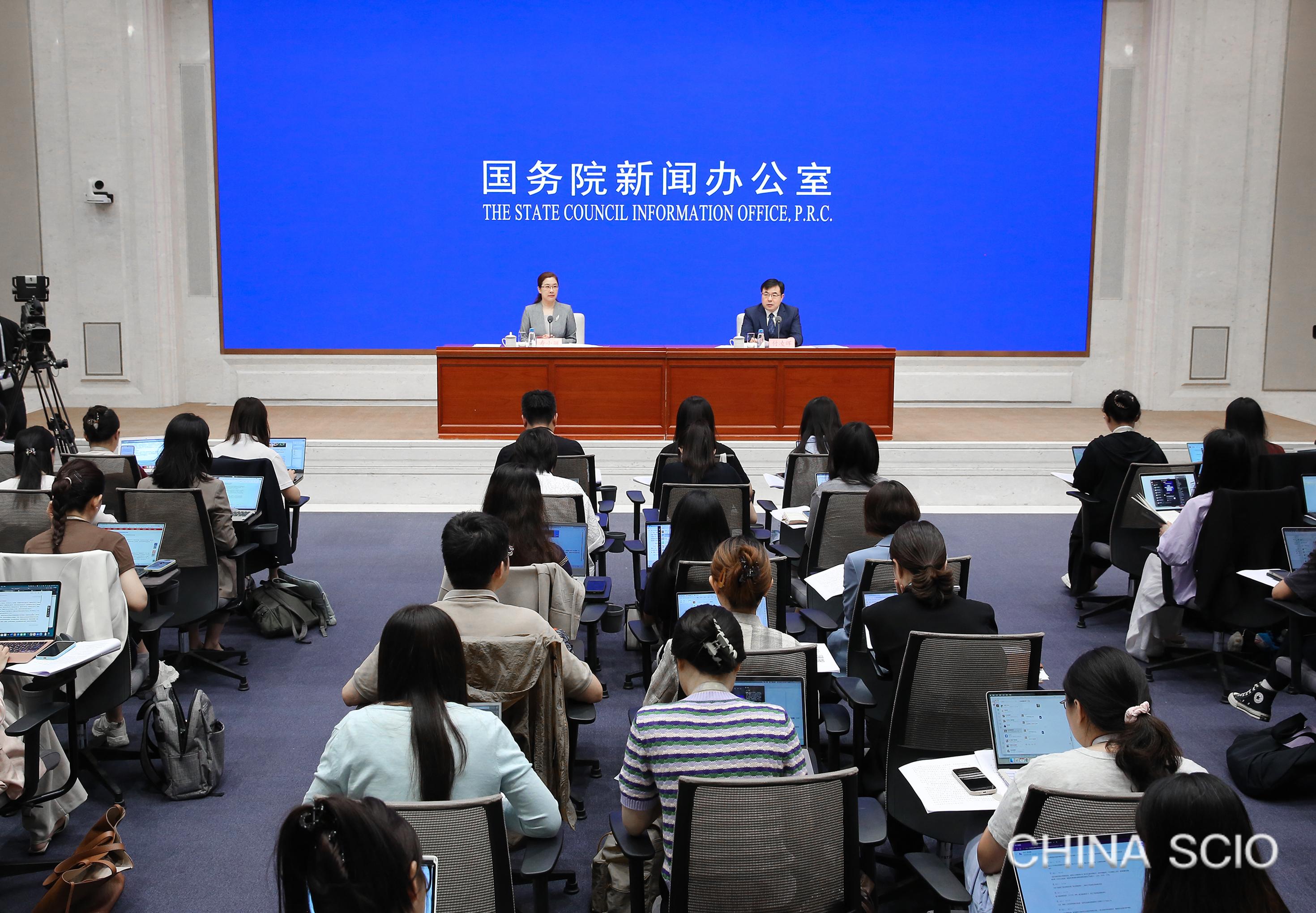
/3 Group photo
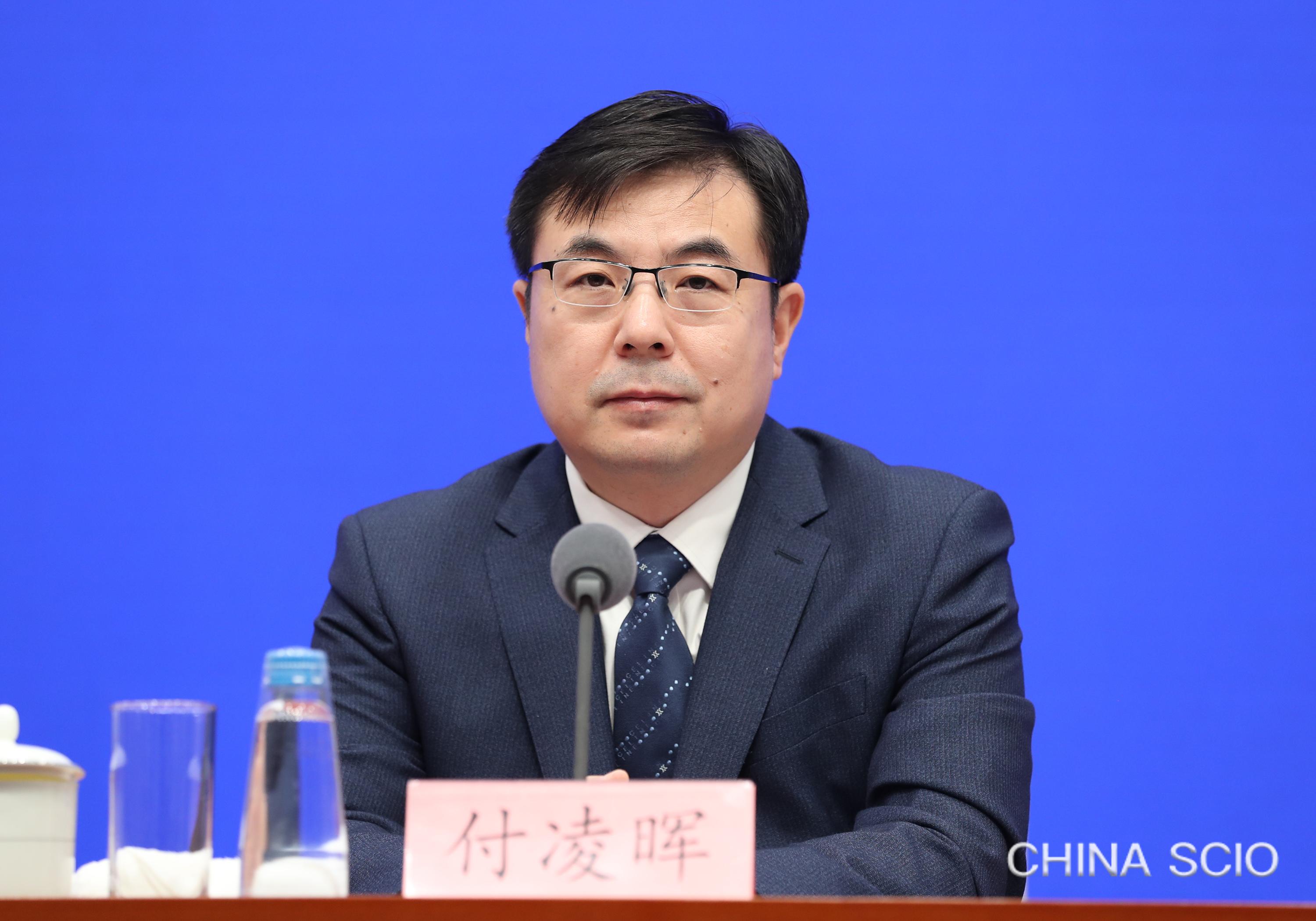
/3 Fu Linghui
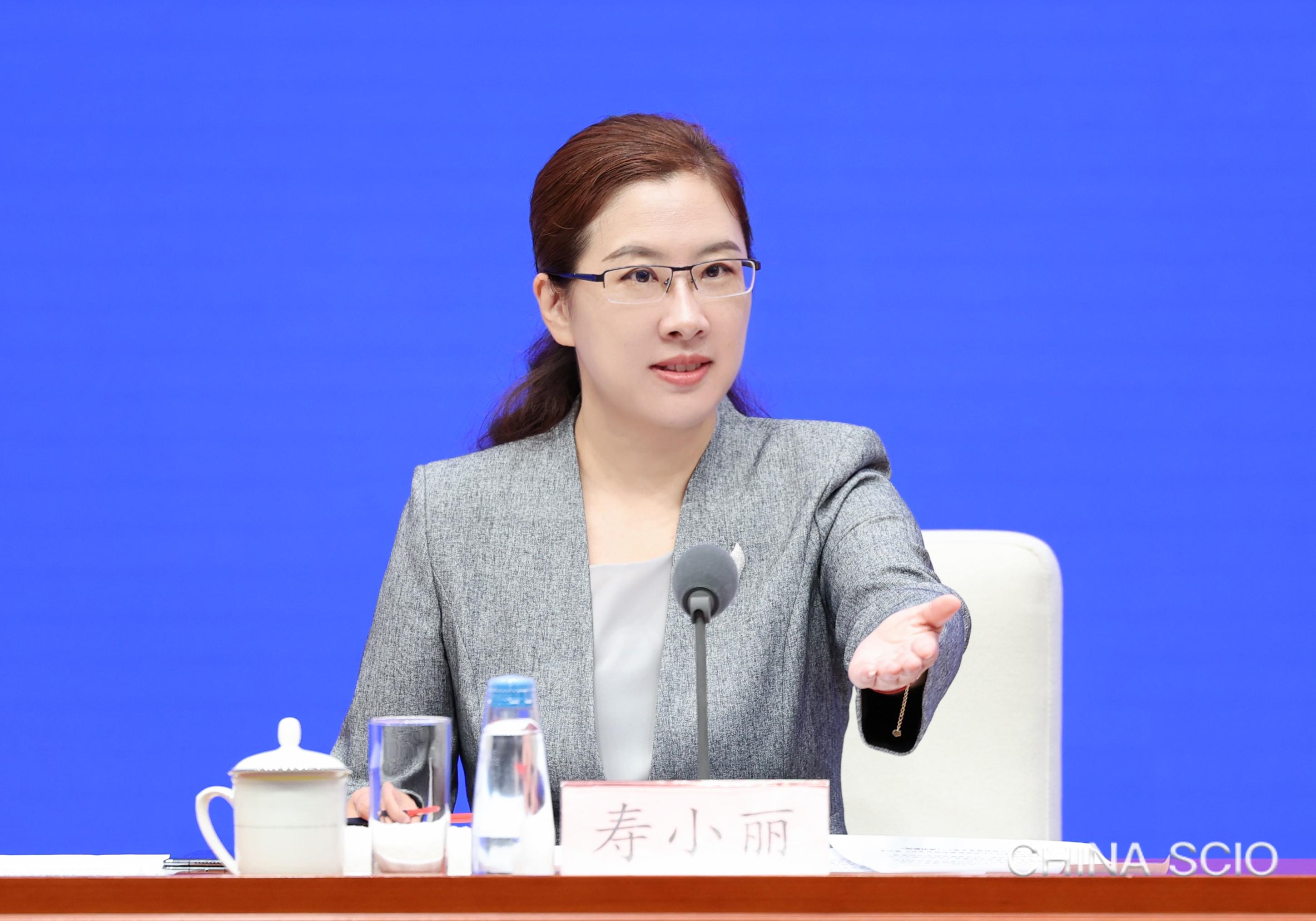
/3 Shou Xiaoli
SCIO briefing on achievements in Digital China development during the 14th Five-Year Plan period
August 14, 2025