China SCIO | October 22, 2026


China is calling for next month's COP31 climate summit in Türkiye to focus on implementing existing commitments and addressing both longstanding gaps in emissions cuts and climate finance, as well as new challenges from unilateralism and protectionism, a senior environment official said Wednesday.
Li Gao, vice minister of ecology and environment, said COP31 should give particular attention to inadequate emissions reductions and financial support from developed countries, while also discussing trade and policy measures that could undermine collective climate action.
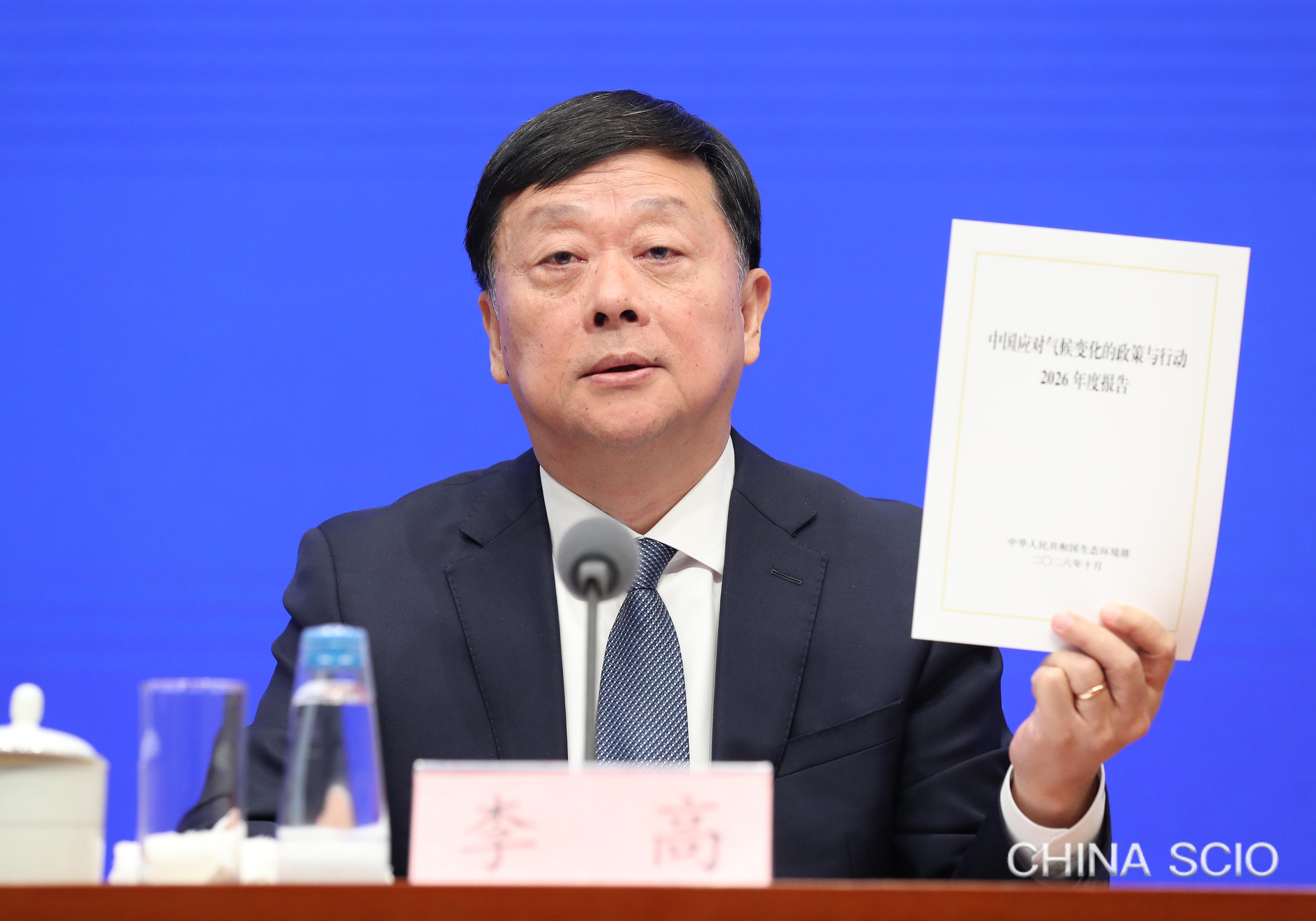
Li Gao, vice minister of ecology and environment, attends a press conference in Beijing, Oct. 21, 2026. [Photo by Xu Xiang/China SCIO]
COP31 will be held in Antalya from Nov. 9 to 20 and will cover nearly 100 agenda items under the United Nations Framework Convention on Climate Change (UNFCCC) and the Paris Agreement, including mitigation, adaptation, finance, and just transition.
Li, who will again head the Chinese delegation to the summit this year, said global climate governance has shifted from negotiating rules to implementing them, and that COP31 should help countries, particularly developing economies, deliver on their nationally determined contributions (NDCs).
China is also calling for detailed discussions on a roadmap for developed countries to meet the US$300 billion annual climate-finance goal by 2035 and to triple adaptation finance.
Li said the summit should also advance an international mechanism for a just transition to help countries, especially developing countries, manage the economic and social challenges of the green transition and narrow the gap between the Global North and South.
On trade, Li said COP31 should encourage greater dialogue on climate-related trade issues and support the free flow of green and low-carbon technologies and products.
He said the climate conference should uphold multilateralism and the principle of "common but differentiated responsibilities," while sending a clear signal that the global shift toward green and low-carbon development is irreversible.
Asked about Türkiye's voluntary proposal to raise the global electrification rate to 35% by 2035, Li said China supports higher levels of electrification as part of the energy transition, but noted differing views among countries regarding the initiative's target focus and assessment mechanisms. He recommended that Türkiye take into account varying national circumstances and seek the broadest possible consensus.
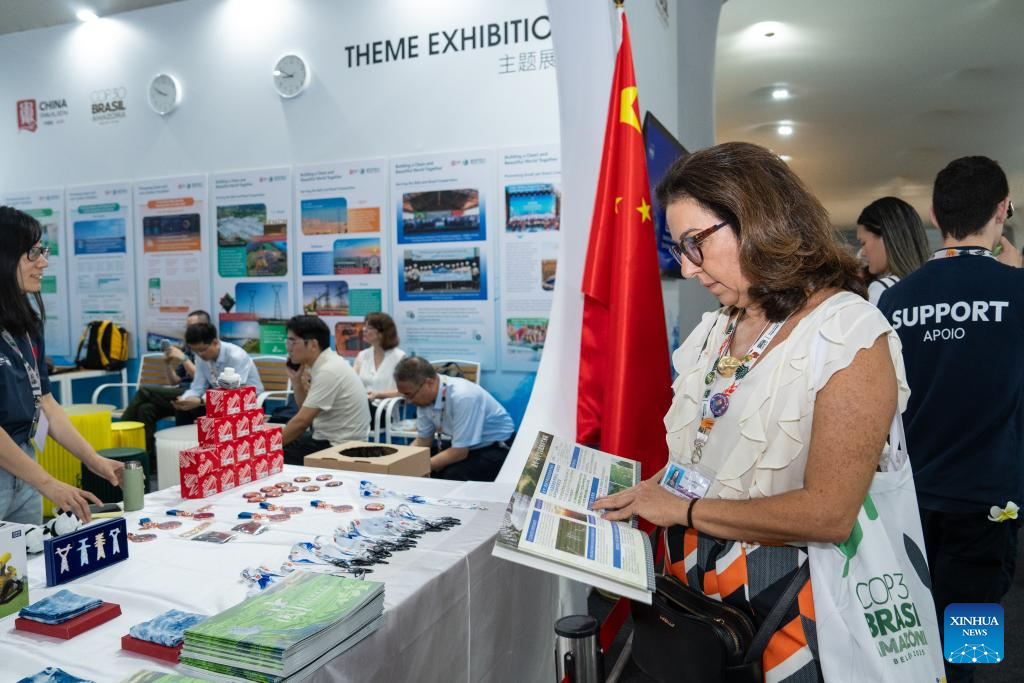
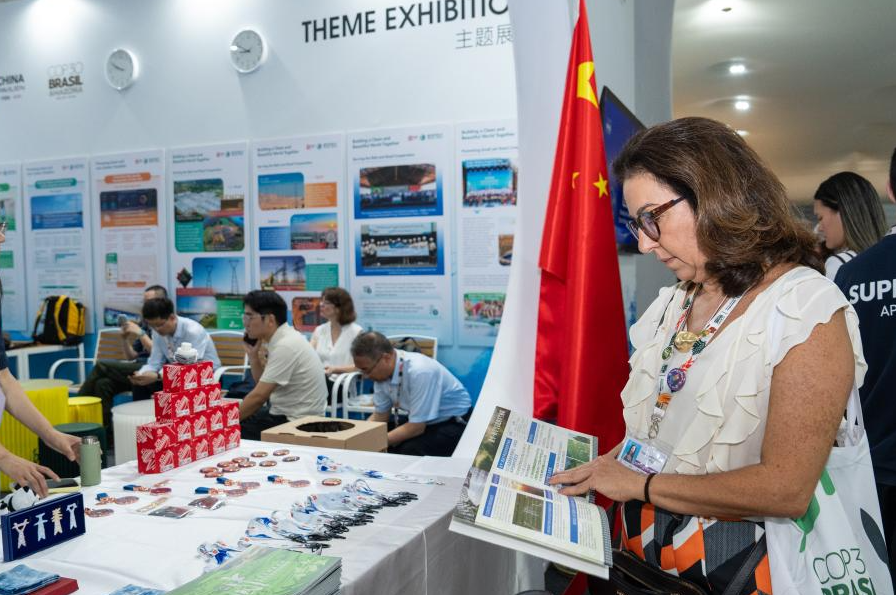
A guest reads a brochure at the China Pavilion during the 30th United Nations climate change conference in Belem, Brazil, Nov. 12, 2025. [Photo/Xinhua]
China will host a series of events at its pavilion during the summit, including 10 themed days, 36 side events, and 10 special activities covering carbon markets, renewable energy, South-South cooperation, climate adaptation, and green digitalization.
A high-level forum on South-South climate cooperation will also be held, alongside a new international initiative on capacity building for developing countries.
Li said China will continue to take an active and constructive role in international climate negotiations, work to narrow the trust, cooperation, and support deficits between developed and developing countries, and contribute to the success of the summit.