China SCIO | October 20, 2026


China expects its production of humanoid robots to surpass 100,000 units this year, as the country accelerates efforts to bring embodied artificial intelligence (AI) from laboratories into factories, retail stores, and everyday life, an official said at a Monday press conference.

Wei Wei, director general of the Department of Science and Technology of the Ministry of Industry and Information Technology, attends a press conference in Beijing, Oct. 19, 2026. [Photo by Xu Xiang/China SCIO]
By the end of June, China had developed more than 400 humanoid robot models, with production exceeding 40,000 units, Wei Wei, director general of the Department of Science and Technology of the Ministry of Industry and Information Technology, said at the briefing introducing newly released guidelines on boosting technology-driven commerce.
Wei described embodied AI, represented by humanoid robots, as a key vehicle for bridging digital AI and the physical world, highlighting its growing role in fostering technological innovation and industrial development.
China has stepped up efforts to advance core technologies, including motion control, simulation, and tactile sensing, while accelerating the commercial deployment of humanoid robots.
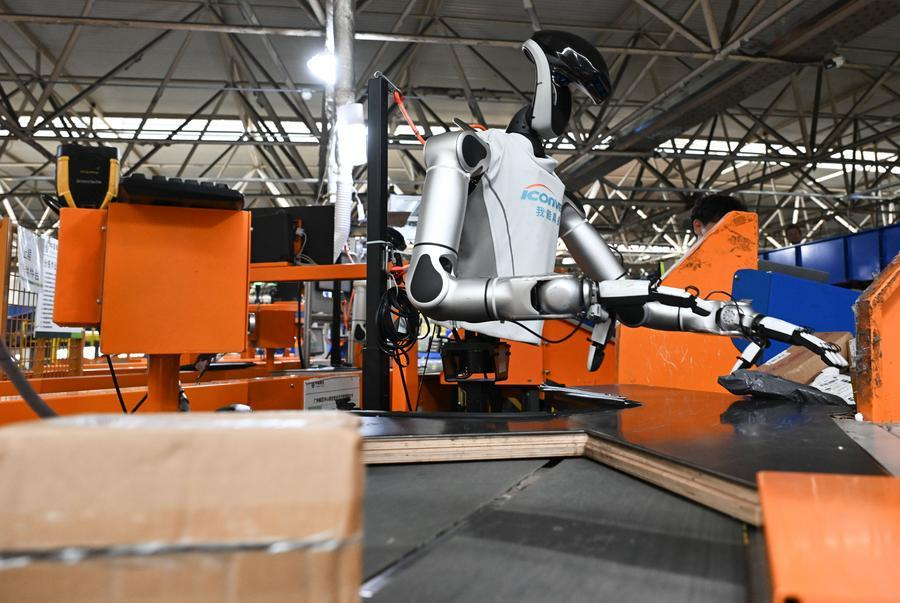
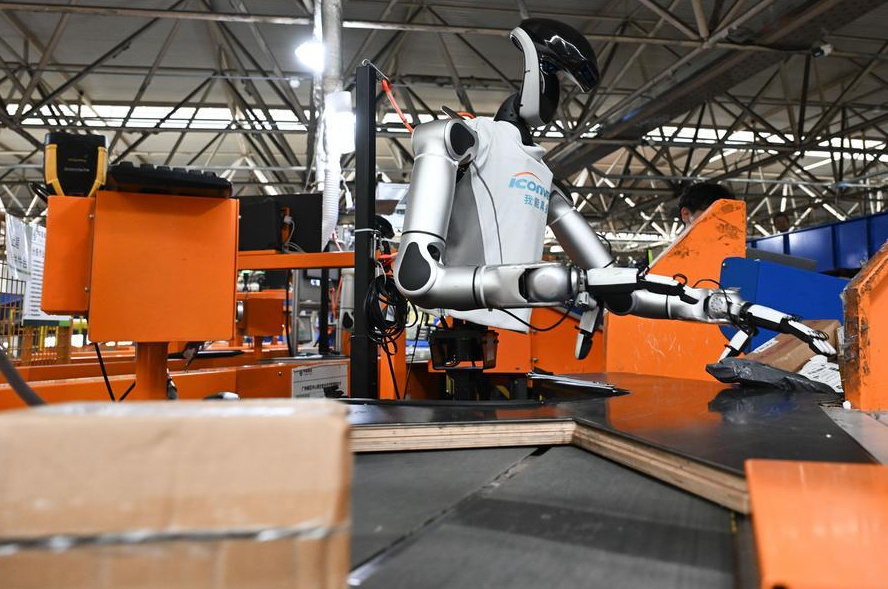
A humanoid robot sorts out parcels at a logistics site in Guangzhou, southern China's Guangdong province, May 29, 2026. [Photo/Xinhua]
Under a government initiative focused on real-world training and testing, embodied AI products are being tested and deployed across more than 300 priority scenarios, including warehousing, logistics, catering, retail, and household services.
The Ministry of Industry and Information Technology will further expand commercial applications by encouraging retail and other businesses to open up their facilities for robot testing and real-world applications, Wei said.
It will also support targeted research into key technologies, develop solutions tailored to specific operational needs, and promote benchmark applications across industrial, specialized, and consumer-facing sectors.
To strengthen the industry's ecosystem, the ministry plans to release the 2026 edition of the national guidelines for building a humanoid robot industry standards system, accelerate the development of application-specific standards, and establish a high-level open-source community.
Wei added that the ministry will strengthen industry monitoring and testing related to product quality, cybersecurity, and data security, while advancing ethical governance.
The broader goal is to use humanoid robots as an entry point to drive the development of the embodied AI industry, translating technological advances into practical applications, and providing fresh momentum for technology-driven commercial growth, he noted.